
Belvedere Palace – Appreciating the Genius of Klimt

In 2024 I made my first trip to Vienna and immediately fell in love with the city describing that first encounter in this post. I visited the world class Kunsthistoriches Museum with its fabulous collection of Brueghels and the Leopold Museum which features the works of Egon Schiele. In May 2026 I returned again, this time determined to visit the Belvedere Palace to see its collection of paintings by Gustav Klimt, which I did. So please join me in viewing the works of an artist whose star has continued to rise exponentially over the past few decades.
History of the Belvedere Palaces
There are actually two palaces that comprise The Belvedere, the Lower completed in 1716 and the much larger Upper completed in 1723. They were both commissioned by Prince Eugene of Savoy who was the greatest military leader of he Hapsburg empire during a period of great upheavals that included the Ottoman siege of Vienna in 1683 and the War of Spanish Succession. He served three Hapsburg emperors over a period of almost sixty years and was well rewarded for his efforts. Originally planned as the Prince’s summer residence because it was outside the city, the Belvedere is today surrounded by the modern city with no traces of the country side to be found.
After Prince Eugene died without an heir, his niece Princess Maria Anna moved in, but didn’t have the wherewithal to maintain it. In 1752 Maria Theresa, the Hapsburg ruler from 1740 to 1780 acquired it and did not use it as a residence, but rather made it the Imperial Art Gallery, one of the first public art galleries in the world. During the French Revolution the Lower Belvedere housed members of the royalty including the only surviving child of Louis XIV and Marie Antoinette. In 1889 the Kunsthistoriches Museum opened and the art works were transferred there leaving the Belvedere with no official purpose for a time until Archduke Franz Ferdinand moved in to the Upper Belvedere in 1896.
The Lower Belvedere became the world’s first modern art museum in 1903 with works by Van Gogh and Monet among others.
As we all know Franz Ferdinand was assassinated in 1914 sparking the start of WWI after which the Hapsburg Empire was finished. Both Belvedere palaces continued as art galleries in one form or another since that time with the Upper Belvedere eventually designated as home to the permanent collection which includes the world’s largest collection of works by Gustav Klimt which is the principal reason Alison and I are here today.
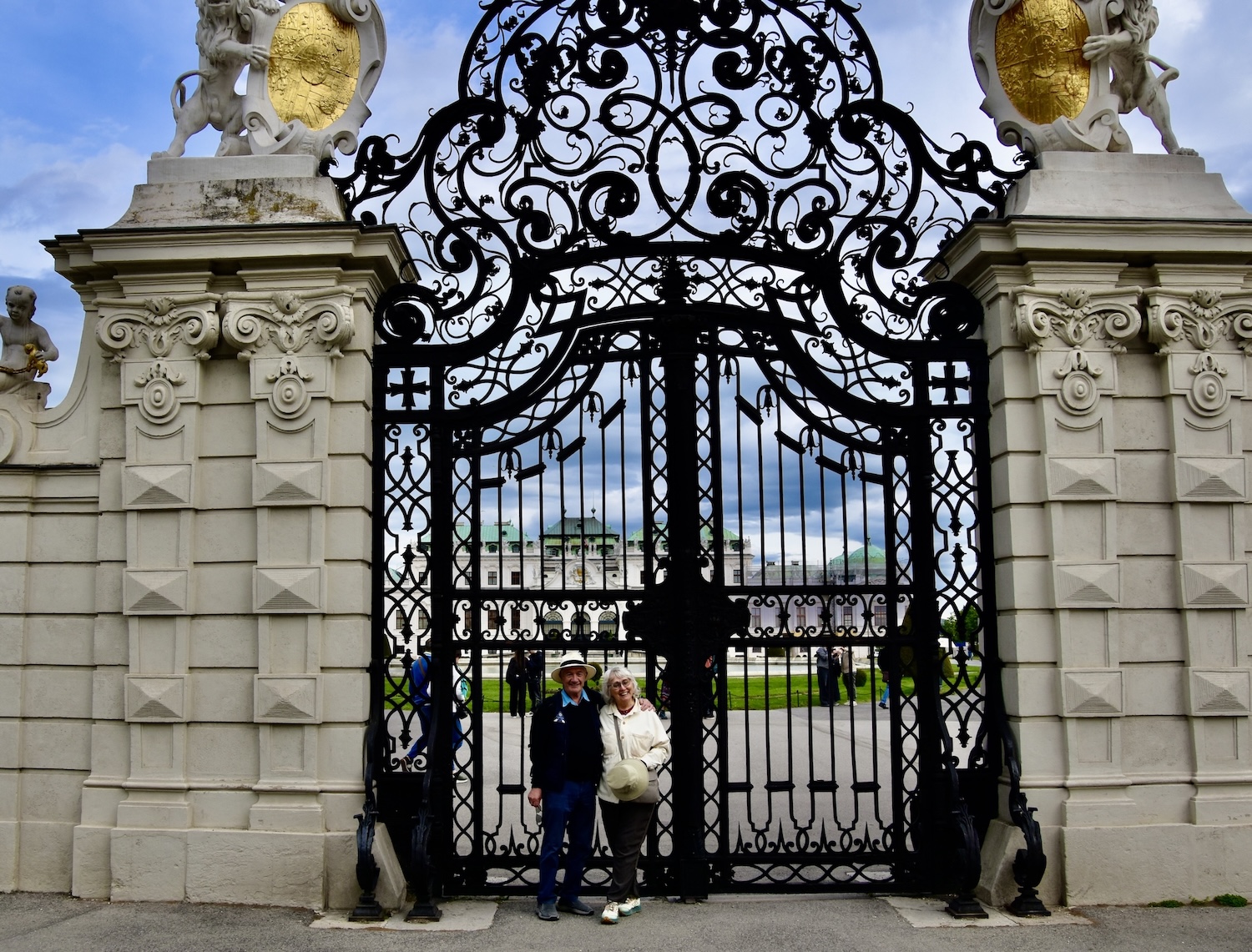
But first let’s take some time to appreciate the beauty of the Upper Belvedere. You first past through this massive gate to enter the grounds.
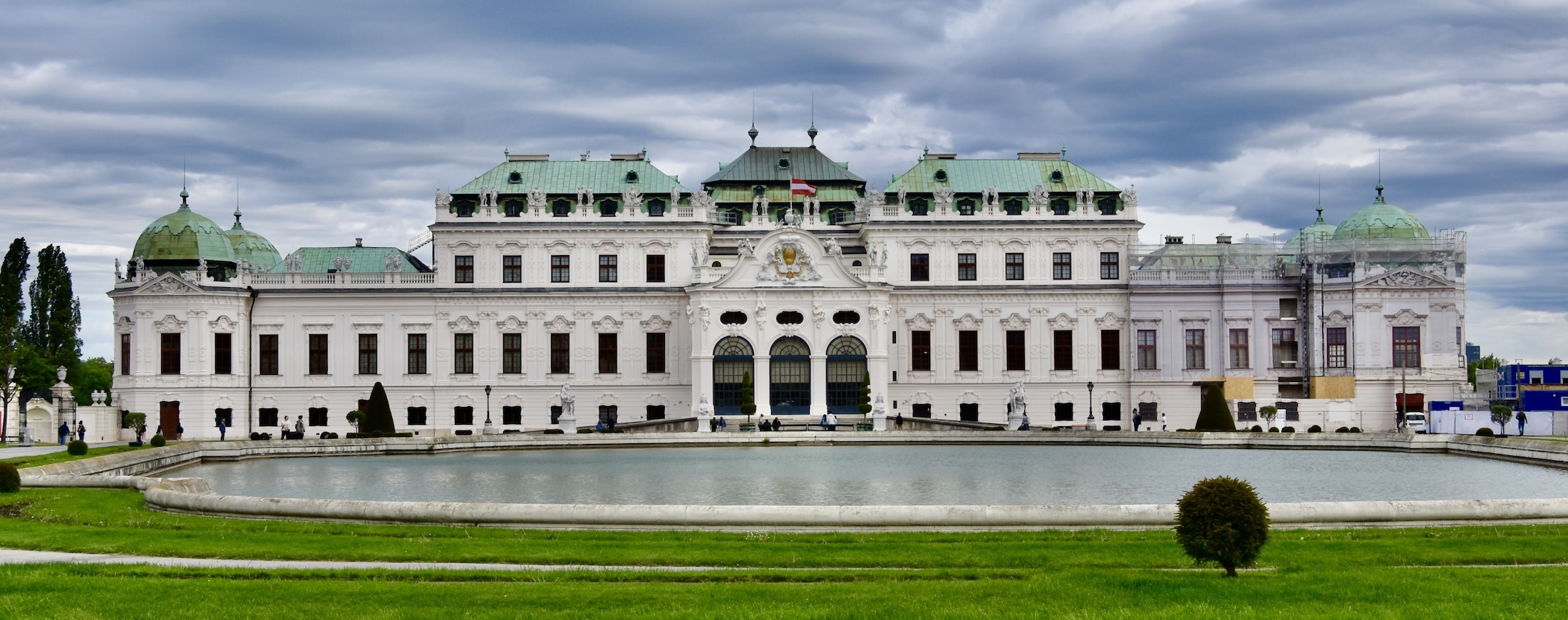
Once through the gate there is a huge circular reflecting pool with this view of the Upper Belvedere behind it. The symmetry created by architect Johann von Hildebrandt is very pleasing to the eye as is the contrast between the white stone facade and the copper roof.
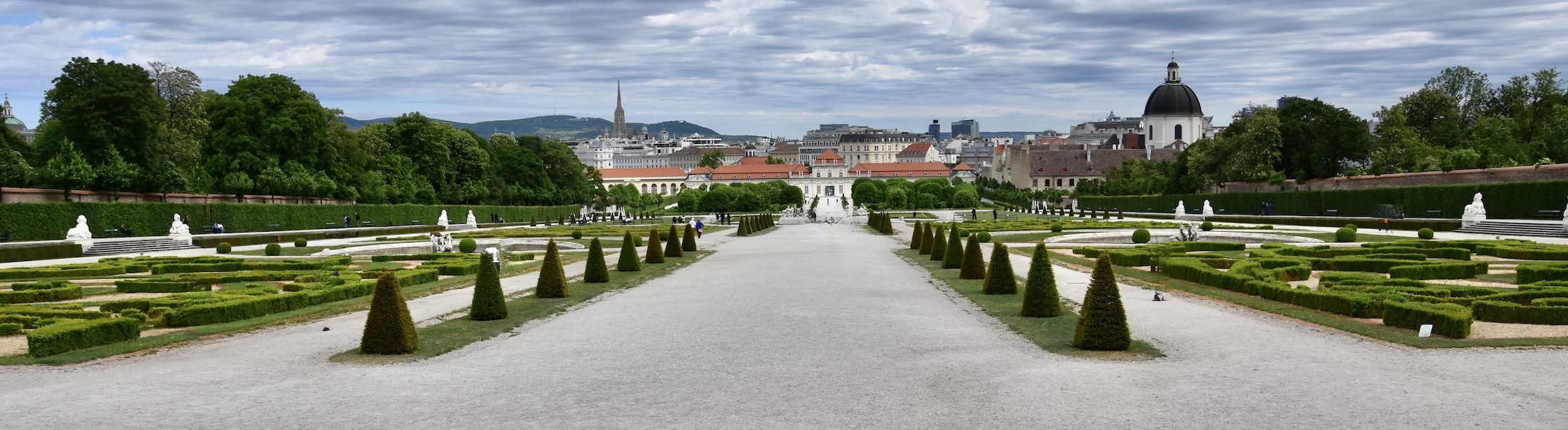
We had arrived before the gallery was to open to have time to explore the grounds. This is the view of the formal gardens from the back of the Upper Belvedere.
And after walking through the gardens down to the Lower Belvedere you get this view looking back up.
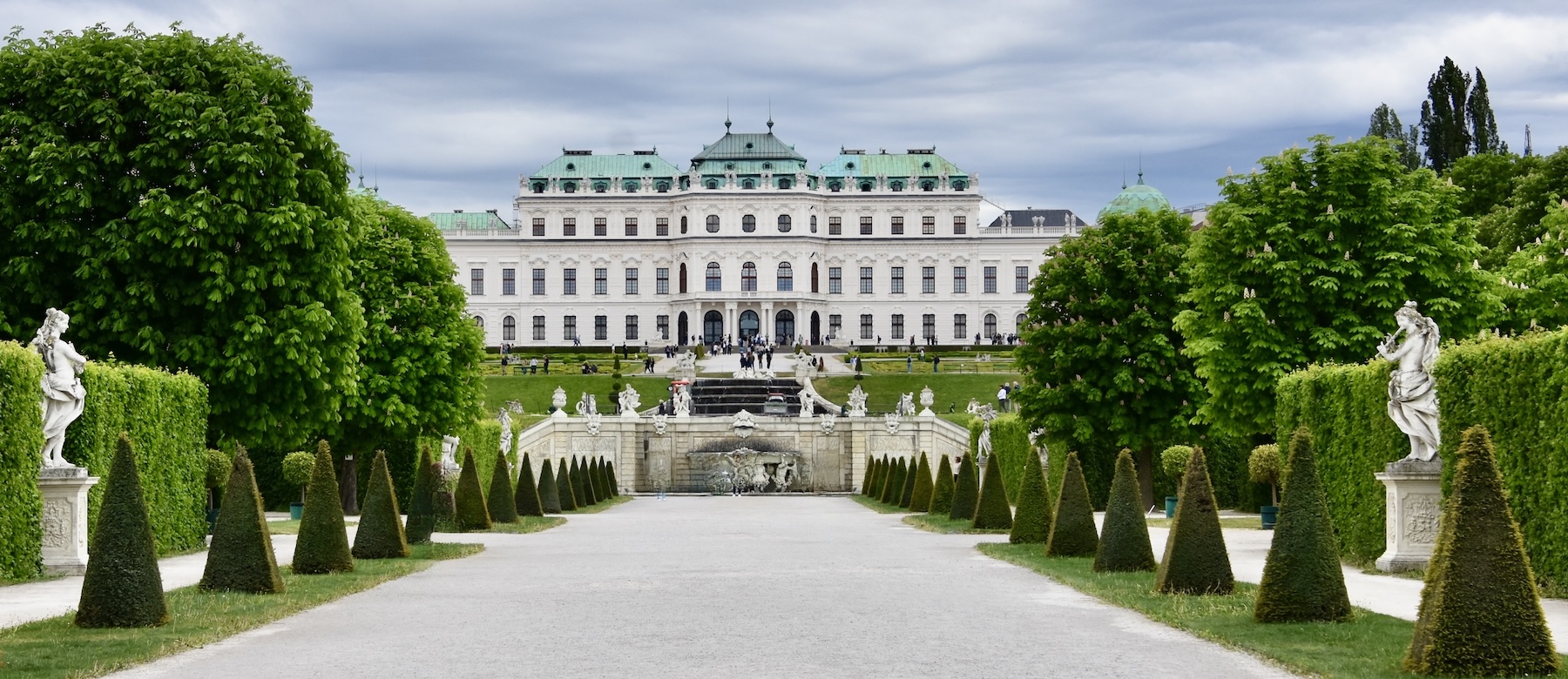
So even if you aren’t interested in what’s inside these buildings, it’s more than worth the time just to explore the grounds. The Belvedere palaces became part of the UNESCO World Heritage Site Historic Centre of Vienna in 2001 with this description:
Vienna developed from early Celtic and Roman settlements into a Medieval and Baroque city, the capital of the Austro-Hungarian Empire. It played an essential role as a leading European music centre, from the great age of Viennese Classicism through the early part of the 20th century. The historic centre of Vienna is rich in architectural ensembles, including Baroque castles and gardens, as well as the late-19th-century Ringstrasse lined with grand buildings, monuments and parks.
But we are more than interested in what’s inside so let’s get a move on before the crowds arrive.
As noted it is the works of Gustav Klimt we are primarily here to see, but there are some other notable works we passed along the way to the Klimt’s including this famous work by Jacques-Louis David.
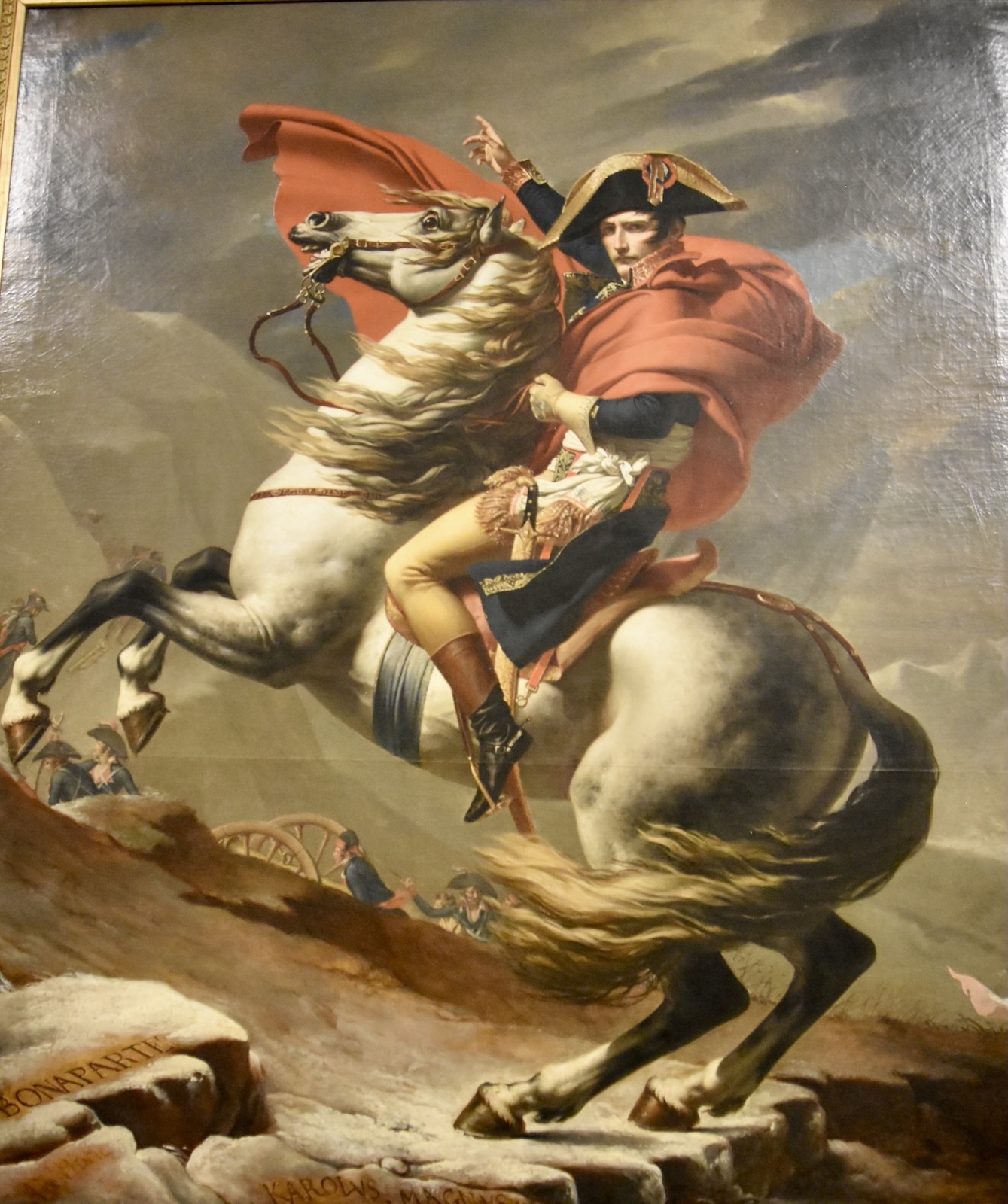
It is one of five versions ordered by Napoleon. This one was destined for the Palace of Milan where it was confiscated by the Austrians in 1816 and since 1834 it has graced the Belvedere.
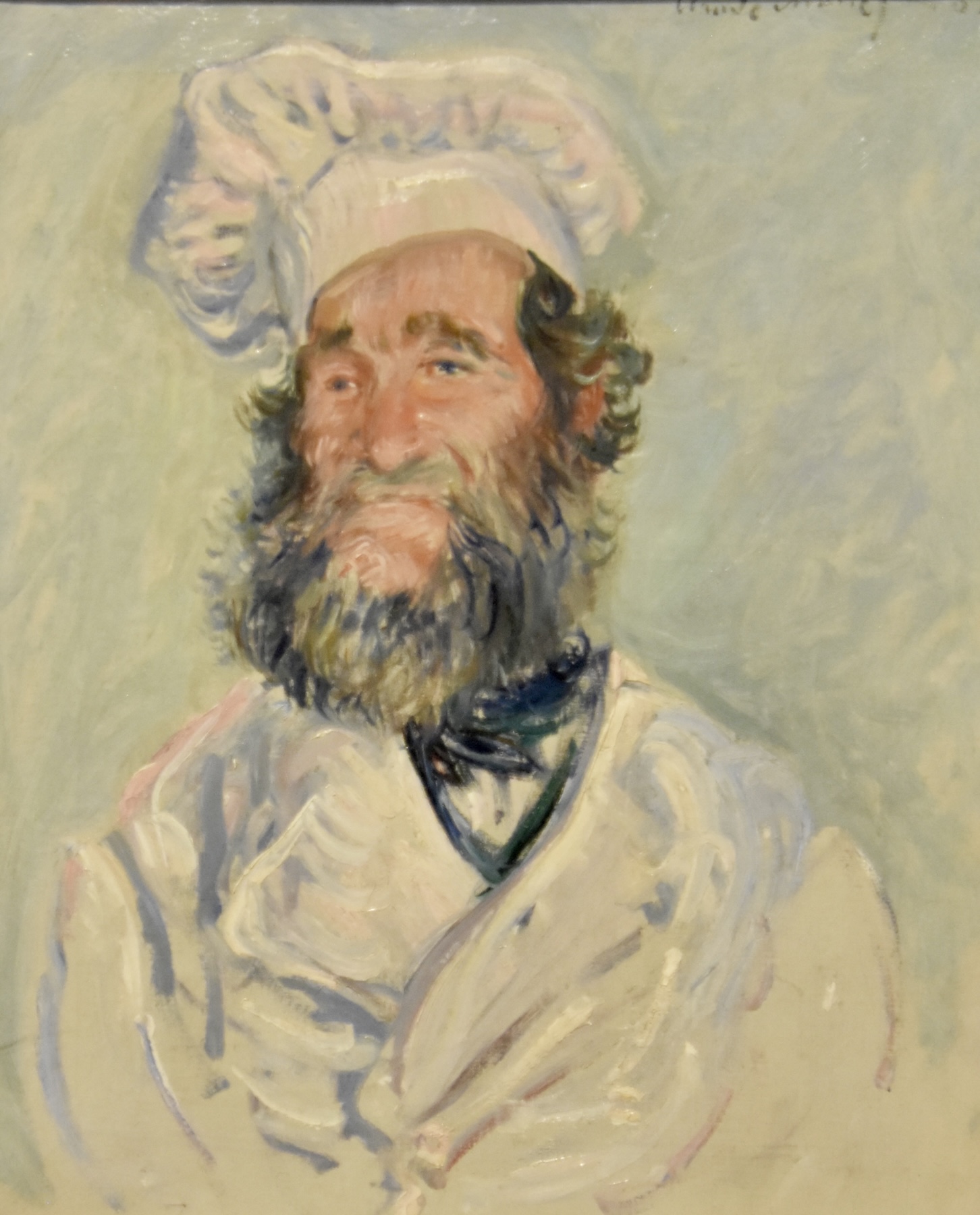
As noted, at one point the Lower Belvedere was the world’s first modern art gallery and it was during this period that works by Monet and Van Gogh were acquired. This is Monet’s Portrait of Chef Paul Graff who was the owner of a hotel Monet stayed at in Pourville in 1882.
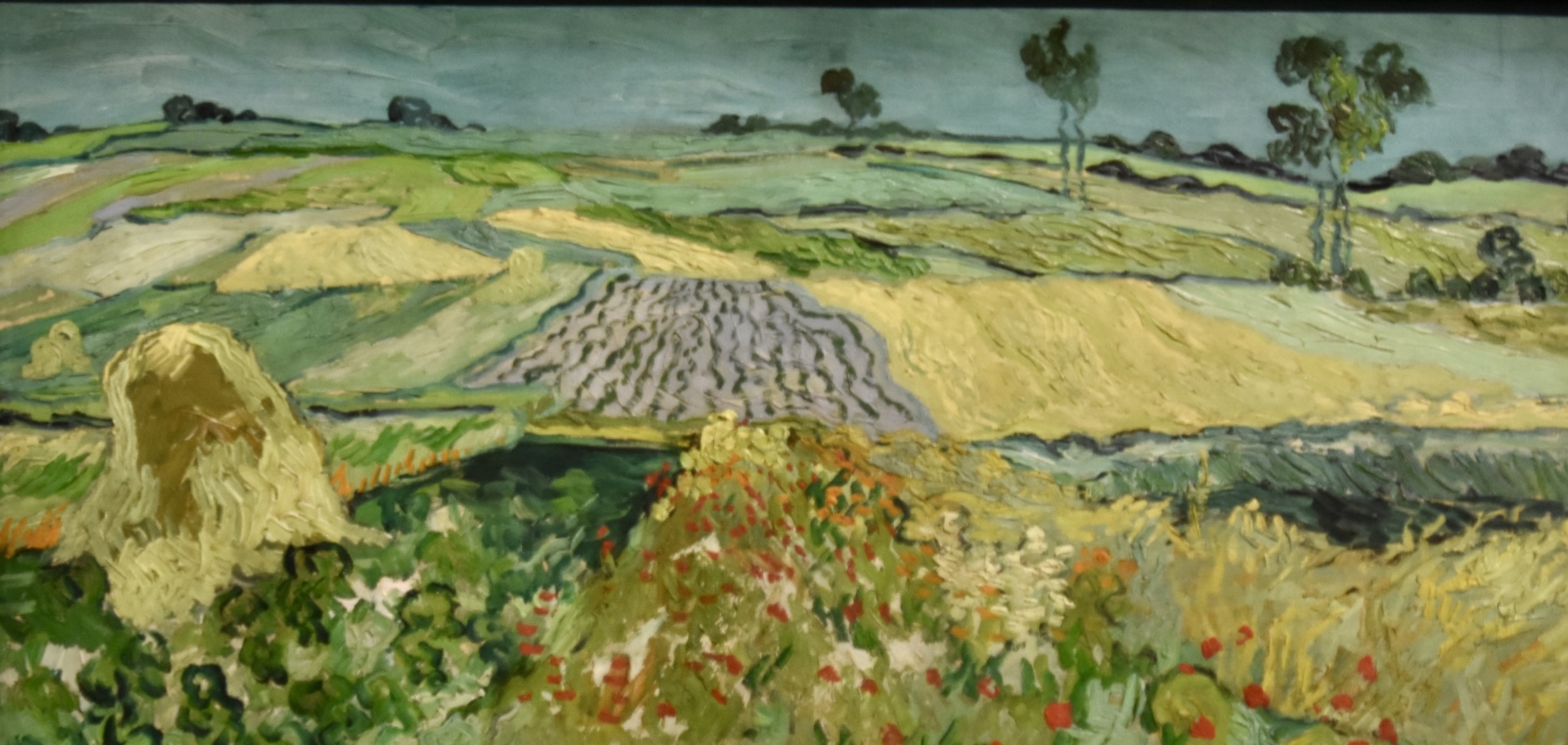
And this is Van Gogh’s Wheat Field outside Auvers which was the last place he lived. He is buried there alongside his brother Theo.
OK, on to the Klimts.
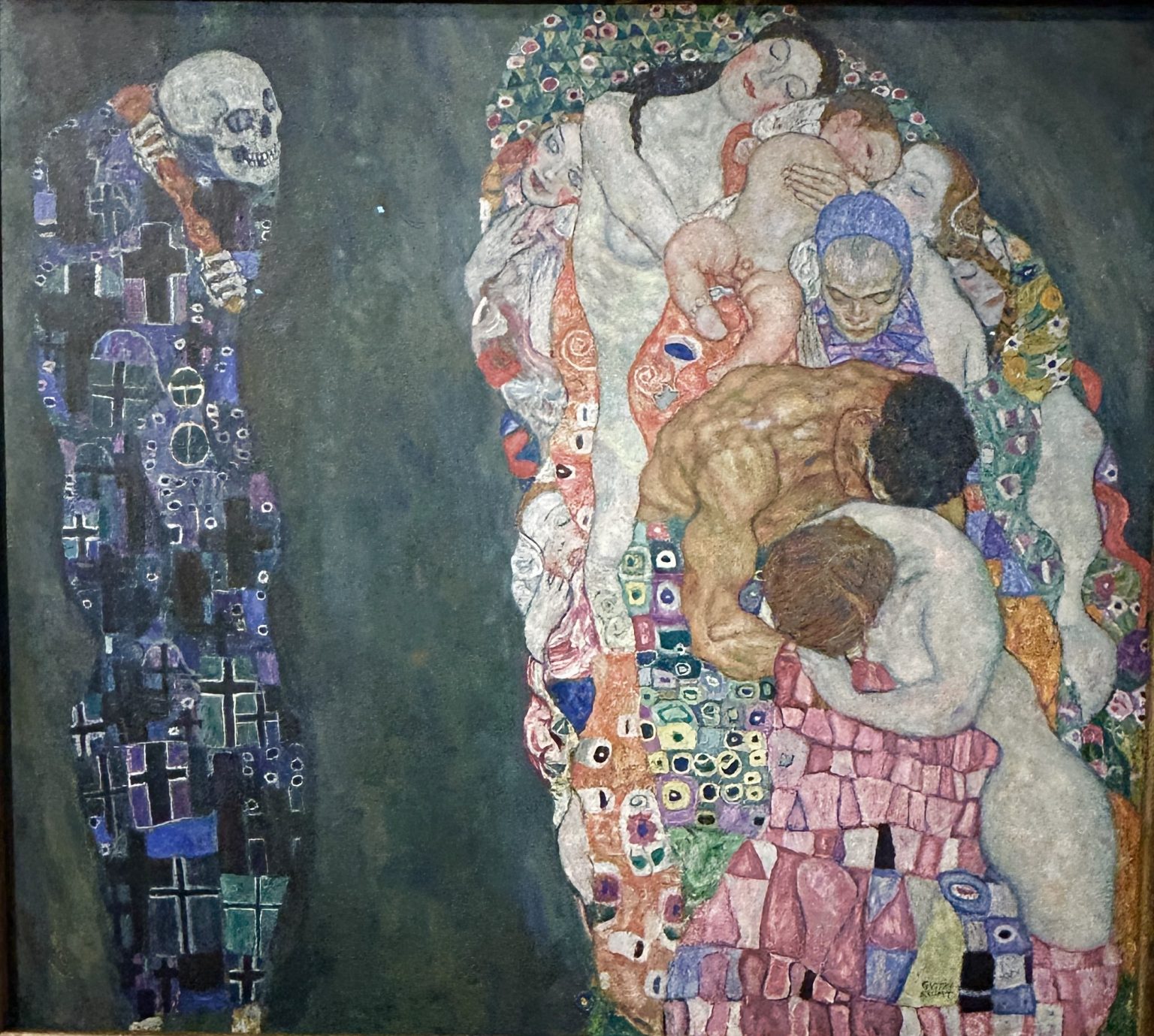
I first encountered the works of Gustav Klimt in Vienna at the Leopold Museum which holds a couple of his works including the absolutely astounding Death and Life that won 1st place at the World Exhibitions in Rome in 1911. However, that version had a golden background and in 1915 Klimt changed to to gray.
I’m going to feature six works by Klimt at the Belvedere in ascending order of importance (according to me) starting with Avenue of Schloss Kammer Park.
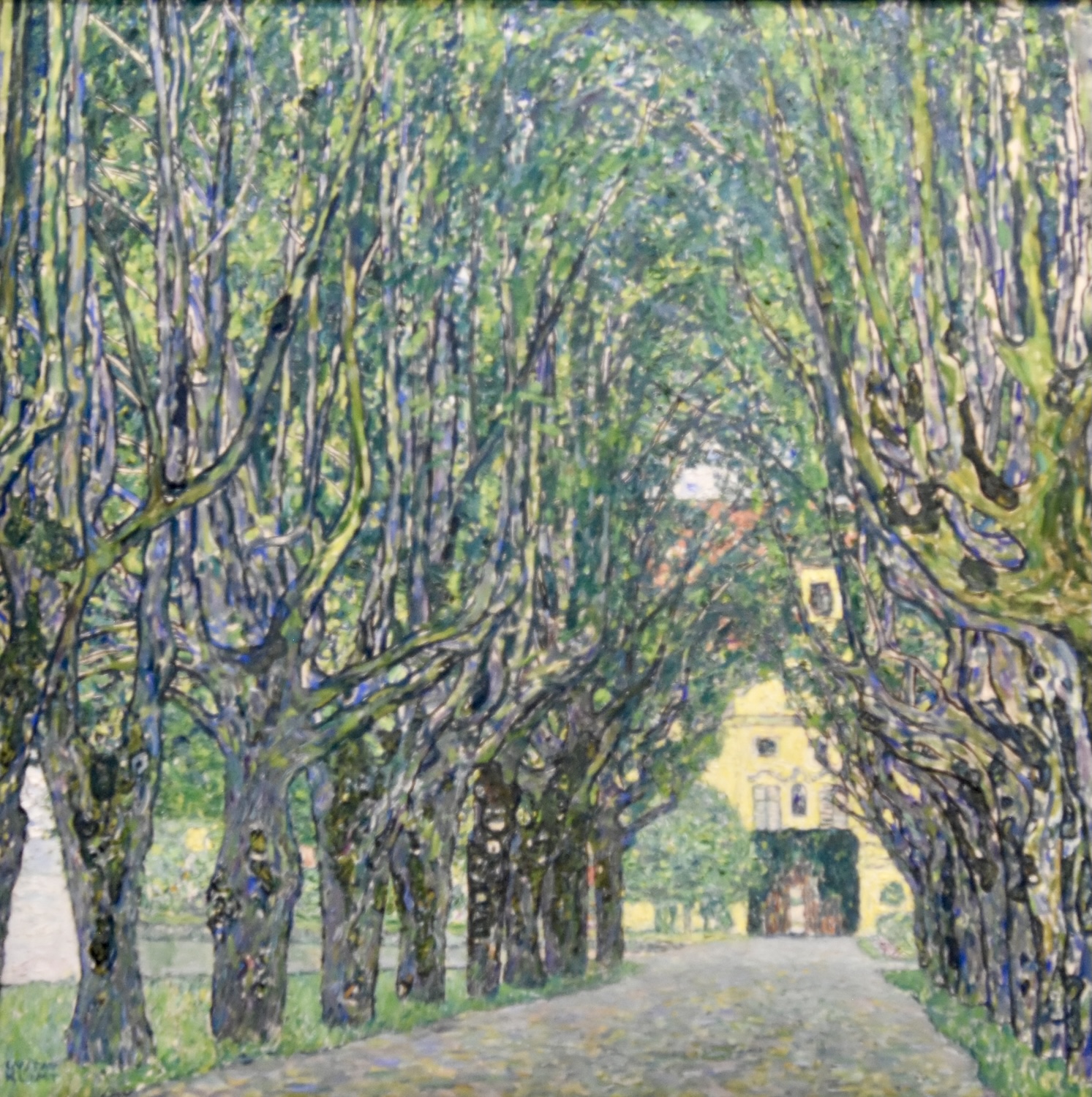
Klimt painted this in 1912 during one of his frequent sojourns to Salzburg. It was long after he had become famous and landscapes like this were an important source of income that did not require the time and effort required to produce his truly monumental works.
Next is Cottage Garden with Sunflowers, one of his many paintings that were inspired by a Van Gogh exhibition of flower paintings in Vienna in the early 1900’s. In 2017 one these paintings sold for $59.3 million USD at a Sotheby’s auction in London. This one draws your eye just to try to identify how many different species of flowers are in this painting.
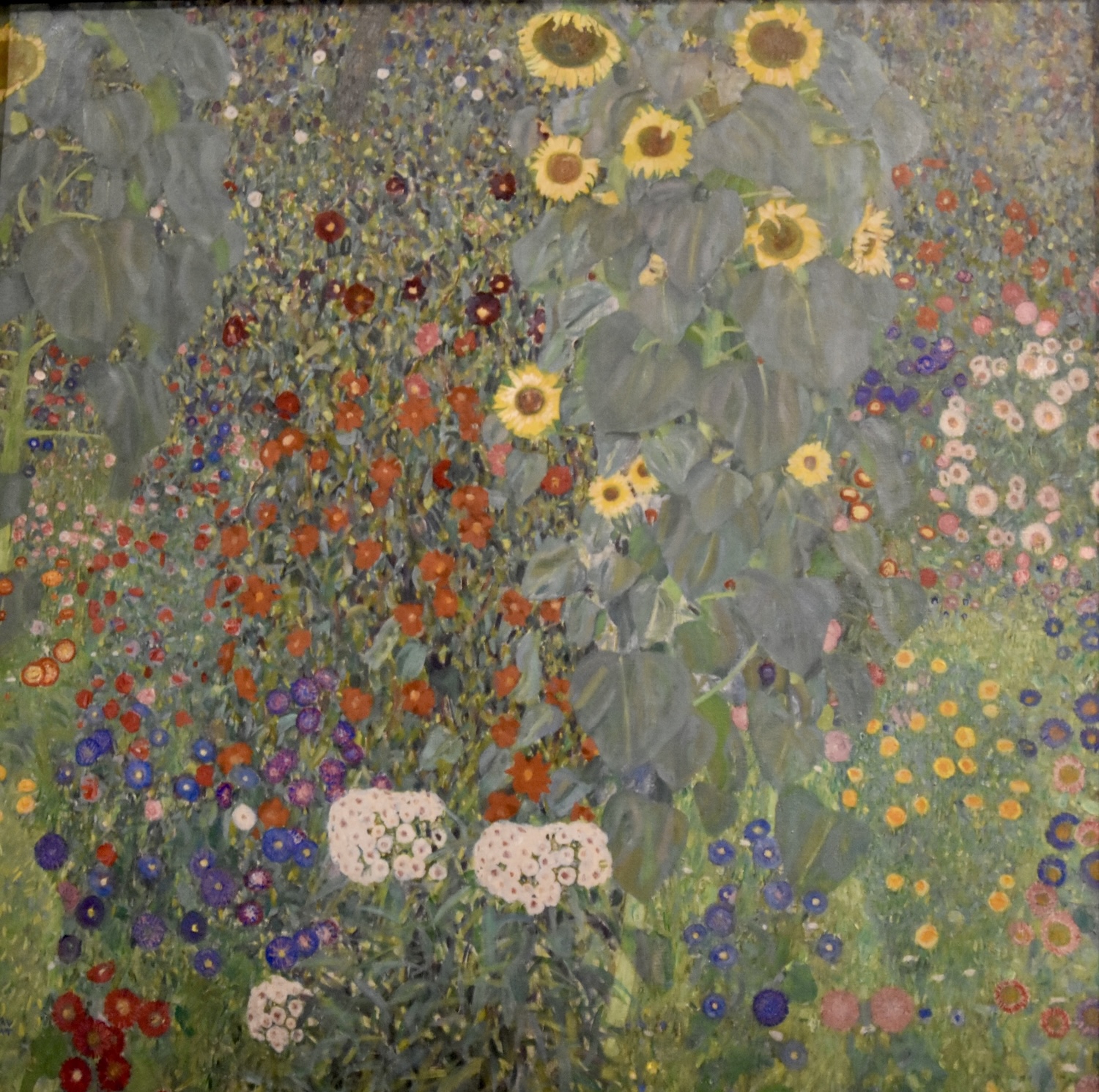
Ok, now we get to the portraits of women he was most famous for, starting with Fritza Riedler.
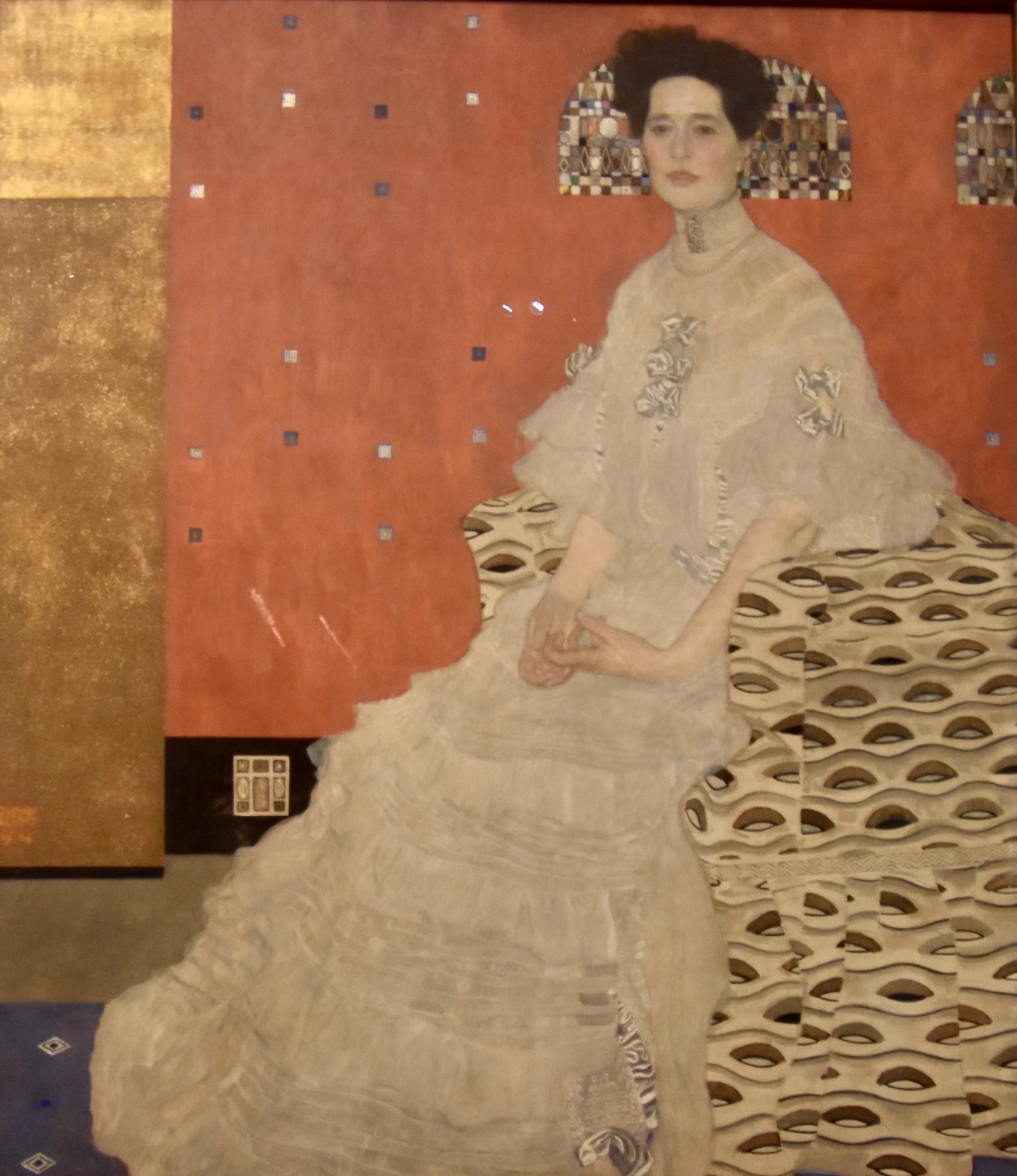
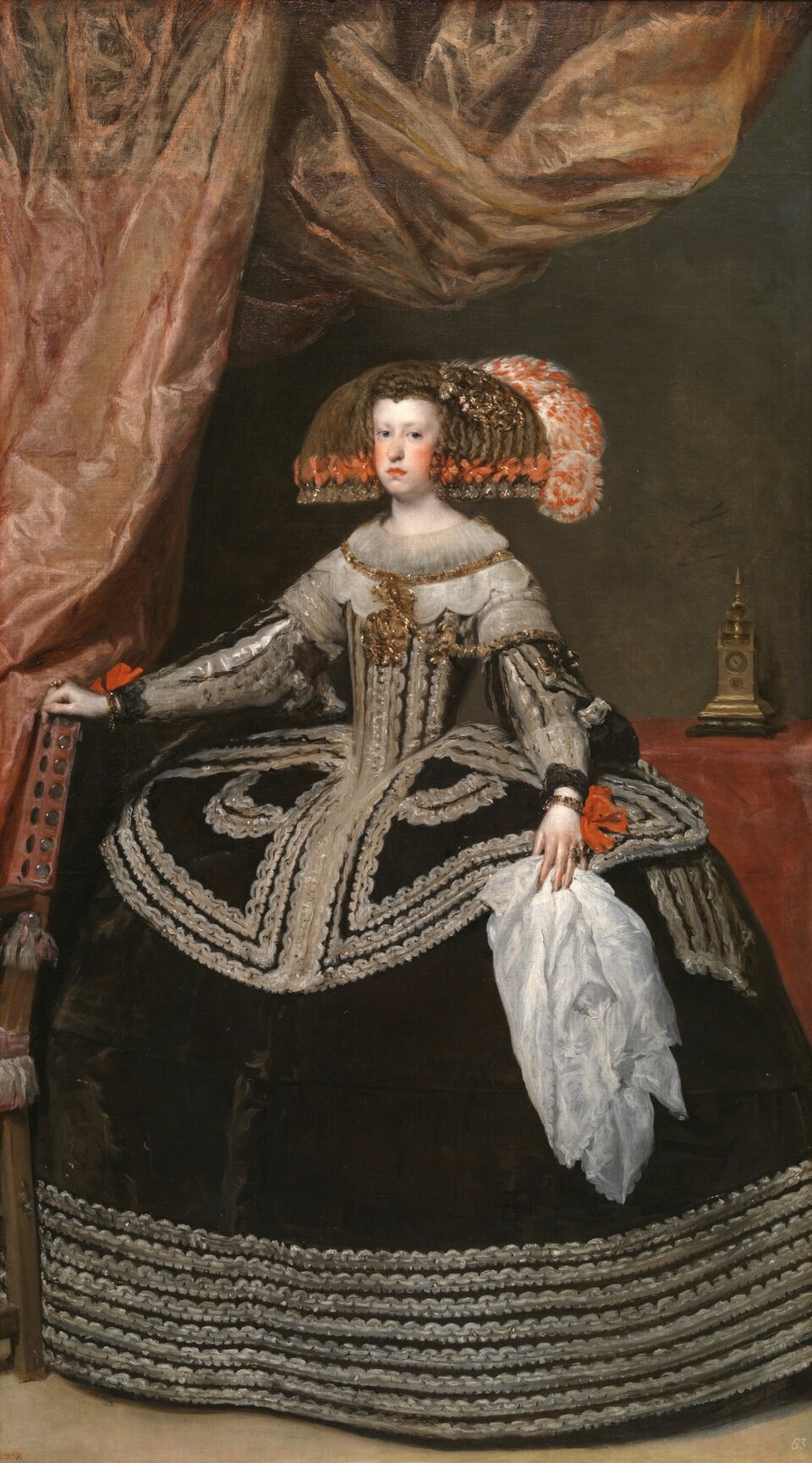
Klimt painted this in 1906 and more than a few people have noted the similarity to the portrait of Queen Mariana of Austria by Velasquez in the Kunsthistoriches Museum. What do you think? Certainly Fritza is a hell of a lot better looking than frumpy Mariana.
Here is another full on portrait that I think is the best of this genre that Klimt produced. This is Amalie Zuckerkandl and her story is tragic. She was born Amalie Schlesinger, the daughter of a prominent Viennese playwright who commissioned Klimt to paint here portrait in 1913. There were several sessions before WWI broke out and Amalie left to become a nurse, and when Klimt died in 1918 it remained unfinished.
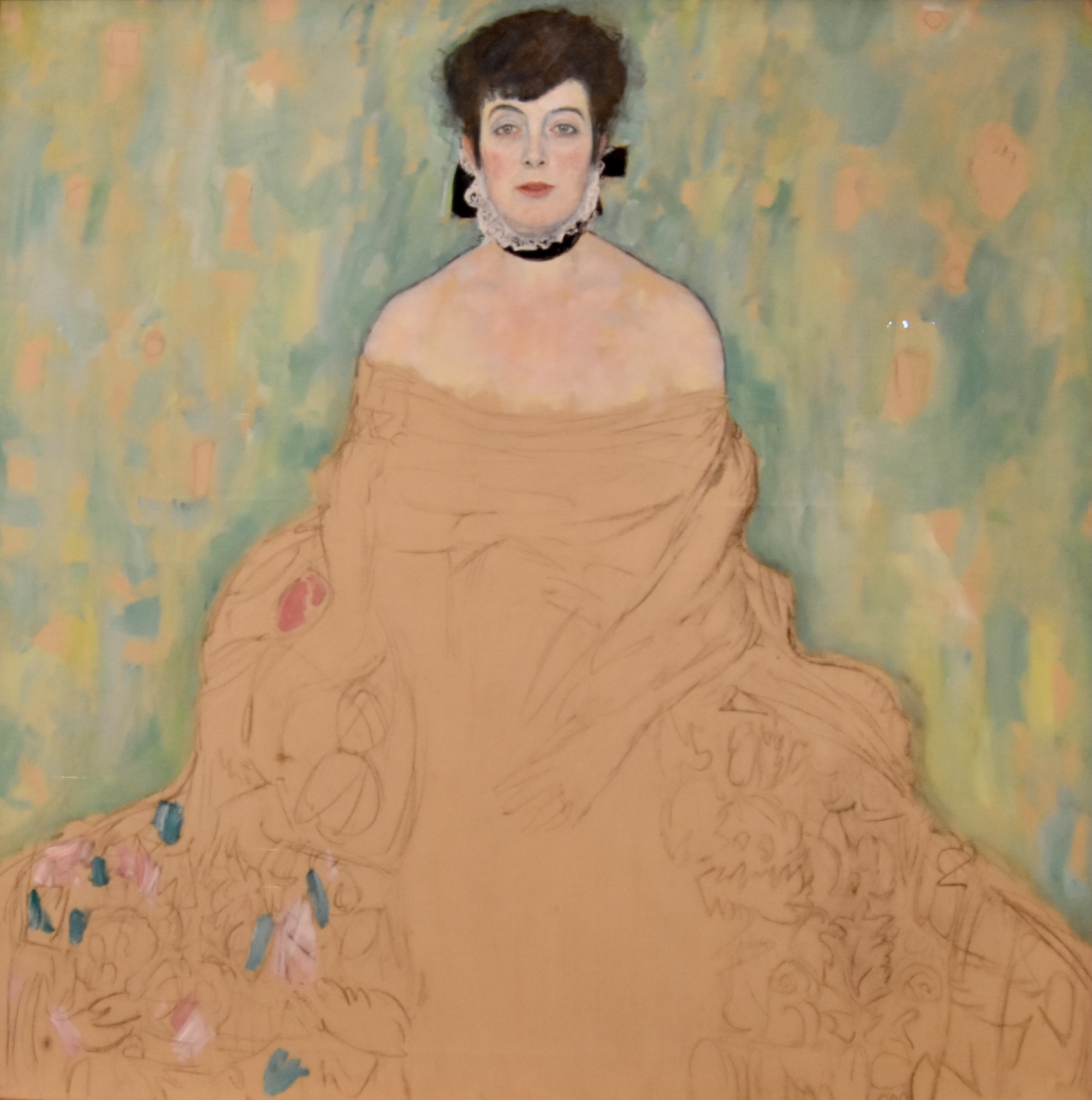
Unfinished or not, her face has to be one of the great ones in all of portraiture.
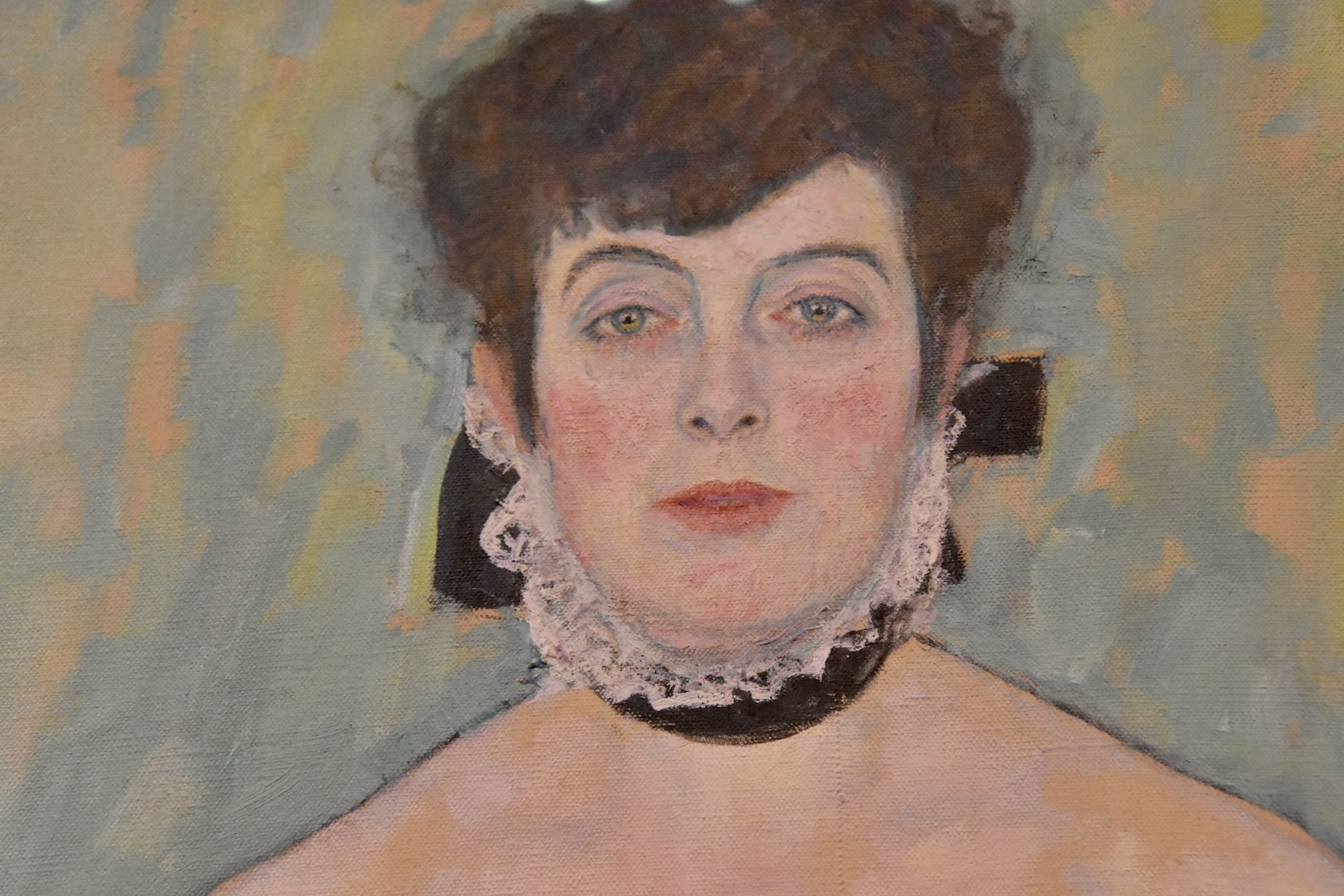
Amalie had converted to Judaism in 1895 when she married a prominent Jewish doctor and it was acting as his nurse during WWI in Lviv that prevented her from sitting for any more sessions with Klimt. Sadly, Zuckerkandl divorced her after the war and she was left alone with their two daughters. In 1942 Amalie, despite not actually being Jewish, along with one of the daughters was deported to Poland and murdered at the Belzec concentration camp.
We now come to what most, but not me, consider to be Klimt’s finest work and the Belvedere’s most valuable painting, The Kiss.
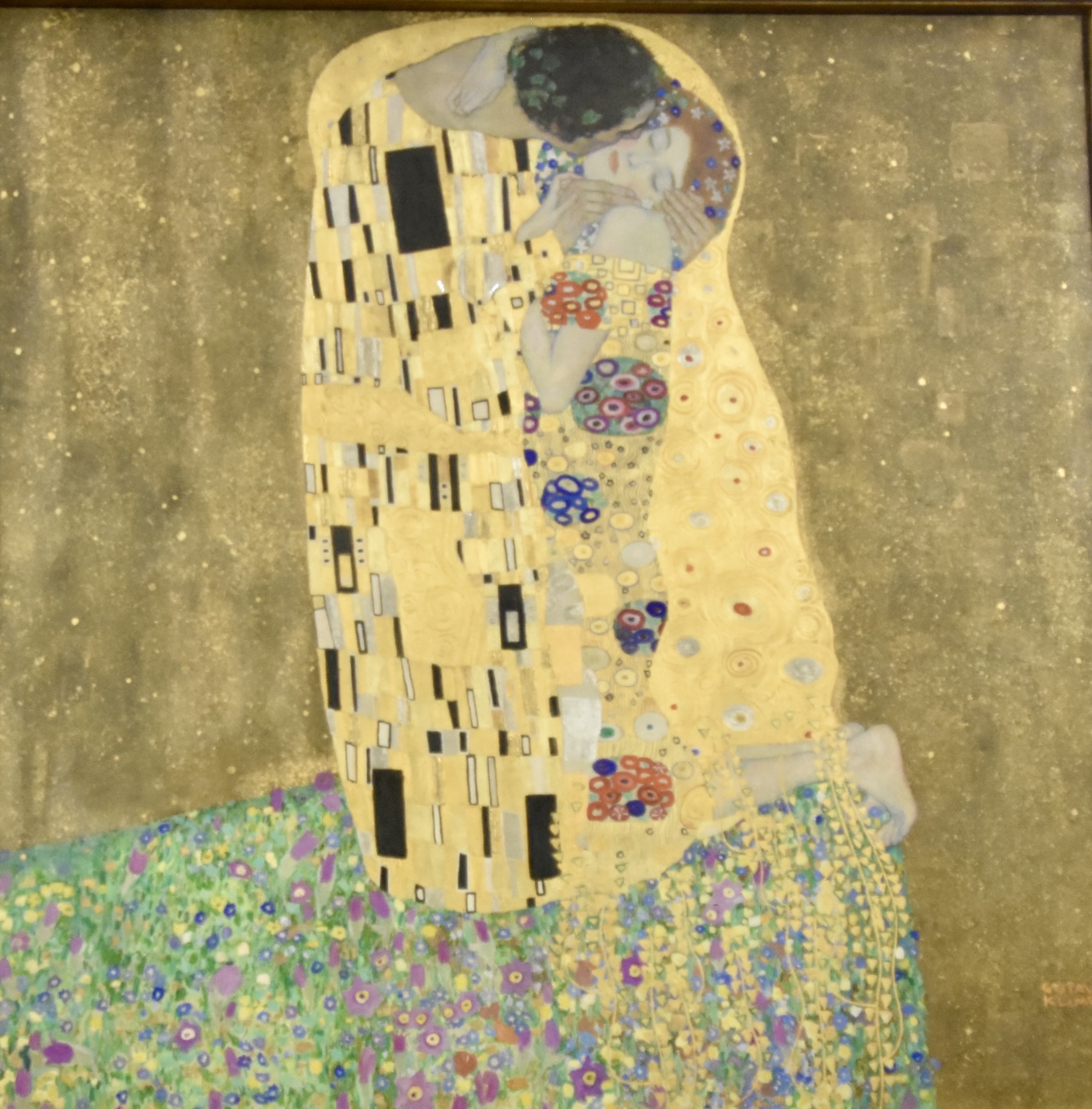
In 1903 Klimt travelled to Ravenna where he became engrossed by the Byzantine mosaics found there and soon entered his golden period whereby he adorned his paintings with gold leaf with The Kiss being the ultimate expression of this style.
The figures are life size and the painting is arresting. It was purchased by the Belvedere even before it was finished at a price five times higher than any other painting ever sold in Vienna to that time – talk about prescience!
No question The Kiss is a magnificent painting that some art critics say is much better than the Mona Lisa, but here’s the one that struck me the most at the Belvedere.
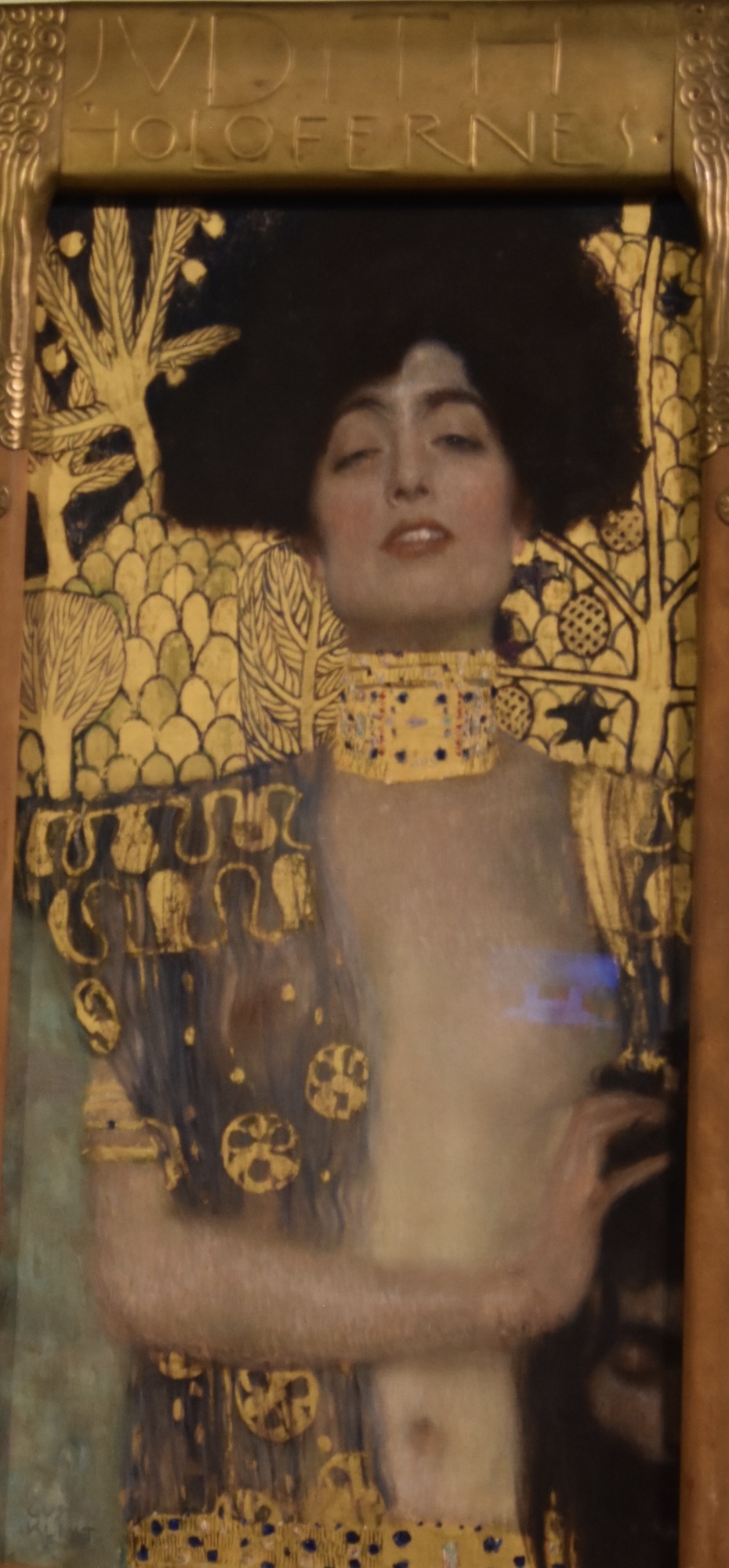
This is Judith of the Judith and Holofernes story that was very popular during the Renaissance, but I’m not aware of any other modern artists using it. Judith was a Jewish widow in the city of Bethulia which was being beseiged by the Assyrian army led by Holofernes. Judith agreed to seduce him and get him drunk which she did and after he fell asleep she decapitated him with his own sword. Every other version shows Judith holding up Holofernes’ severed head, but Klimt didn’t think that was necessary. This woman is so intoxicatingly erotic that she would be impossible to resist and at first you don’t even see the head because you can’t take your eyes off her. But then there it is in the lower right corner, barely visible.
To me this is one of the greatest paintings of the 20th century and I would travel to the Belvedere from Canada if it was the only painting in the gallery.
Well that wraps up this post from Vienna. In the next one from Europe Alison and I will head to Slovenia to begin a tour with Adventures Abroad. I hope you’ll join us.