
Essaouira – My Favourite Moroccan City

In the last post from the October 2025 Quintessential Tour of Morocco by Adventures Abroad we returned to the Atlantic coast at Agadir and stopped at the surfing mecca of Taghazout before ending the day at Essaouira. In this post we’ll explore Essaouira, the only city I can think of that has all five vowels in its name. But that’s not Essaouira’s only claim to fame as we’ll find out as we tour the medina and the outer fortifications with our local guide Hammam. It promises to be yet another great day in sunny Morocco so please join us and find out why this was my favourite city in Morocco.
Riad Mimouna
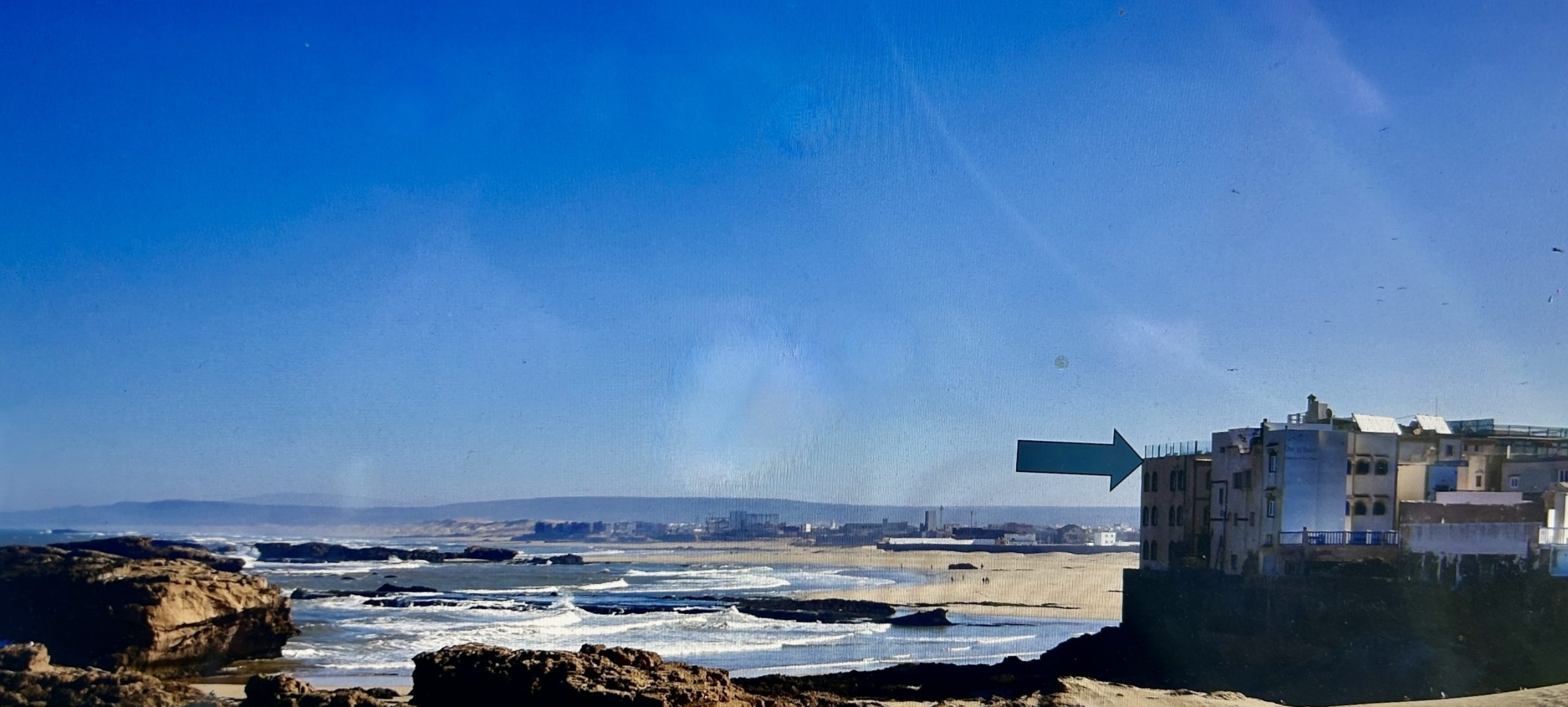
For the duration of the trip we will be staying in riads, rather than the kasbah style hotels of the last five nights. Readers of my post from Fes may recall that riads are former upper class or bourgeois dwellings within the walls of a medina that have been converted into boutique hotels. As noted in that post the rooms in these riads vary greatly and some couples luck out and others do not, but I also noted it evens out over the trip. In Essaouira we will be staying at the Riad Mimouna which was a former grand residence built right into the walls of the medina where it overlooks the Atlantic Ocean. Getting there involved leaving the bus outside the medina and following the hotel porters that were waiting for us through a maze of narrow streets. I really wondered if we could ever find our way back out without a guide.
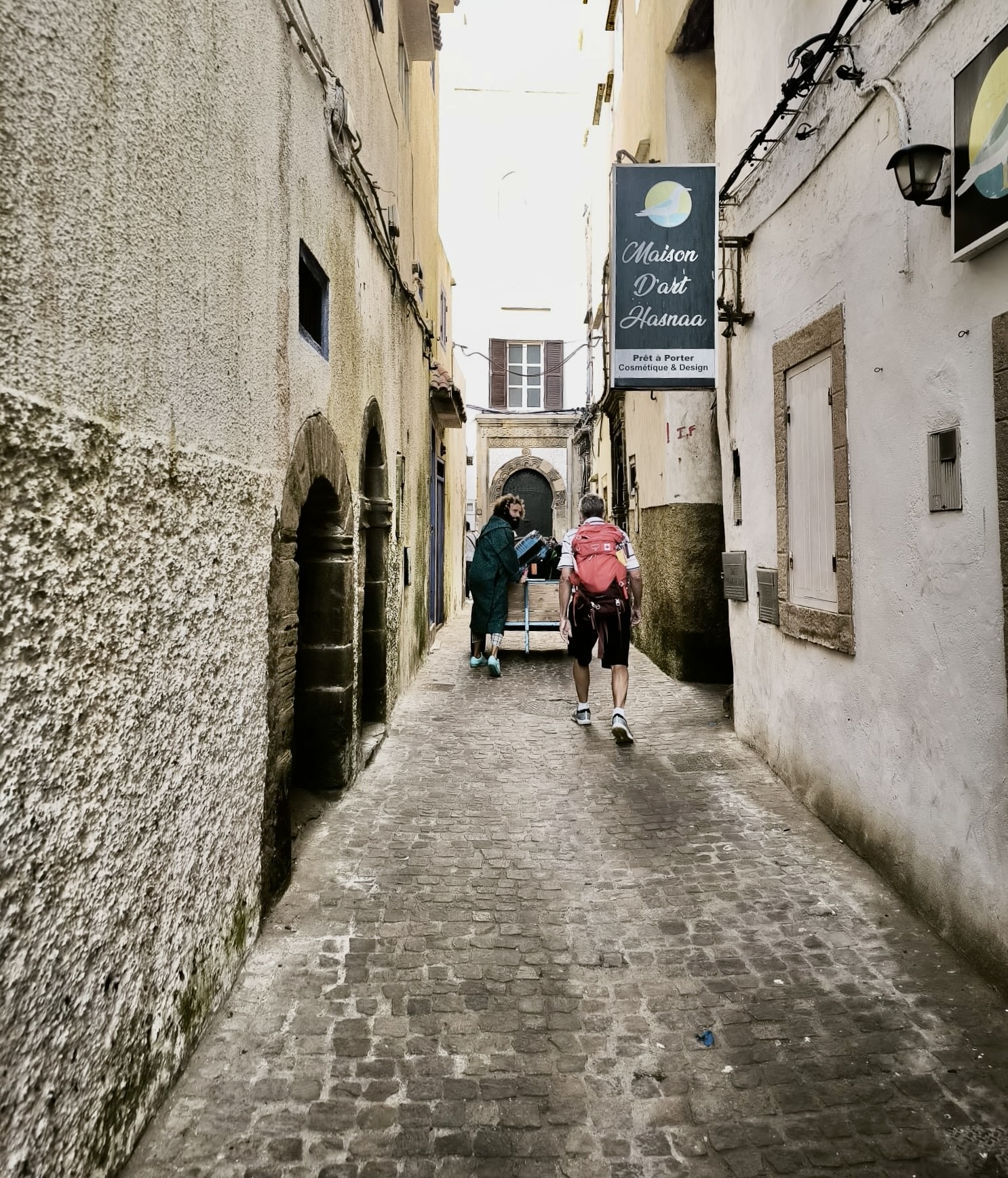
In terms of the rooms, this time Alison and I lucked out with this lovely corner room.
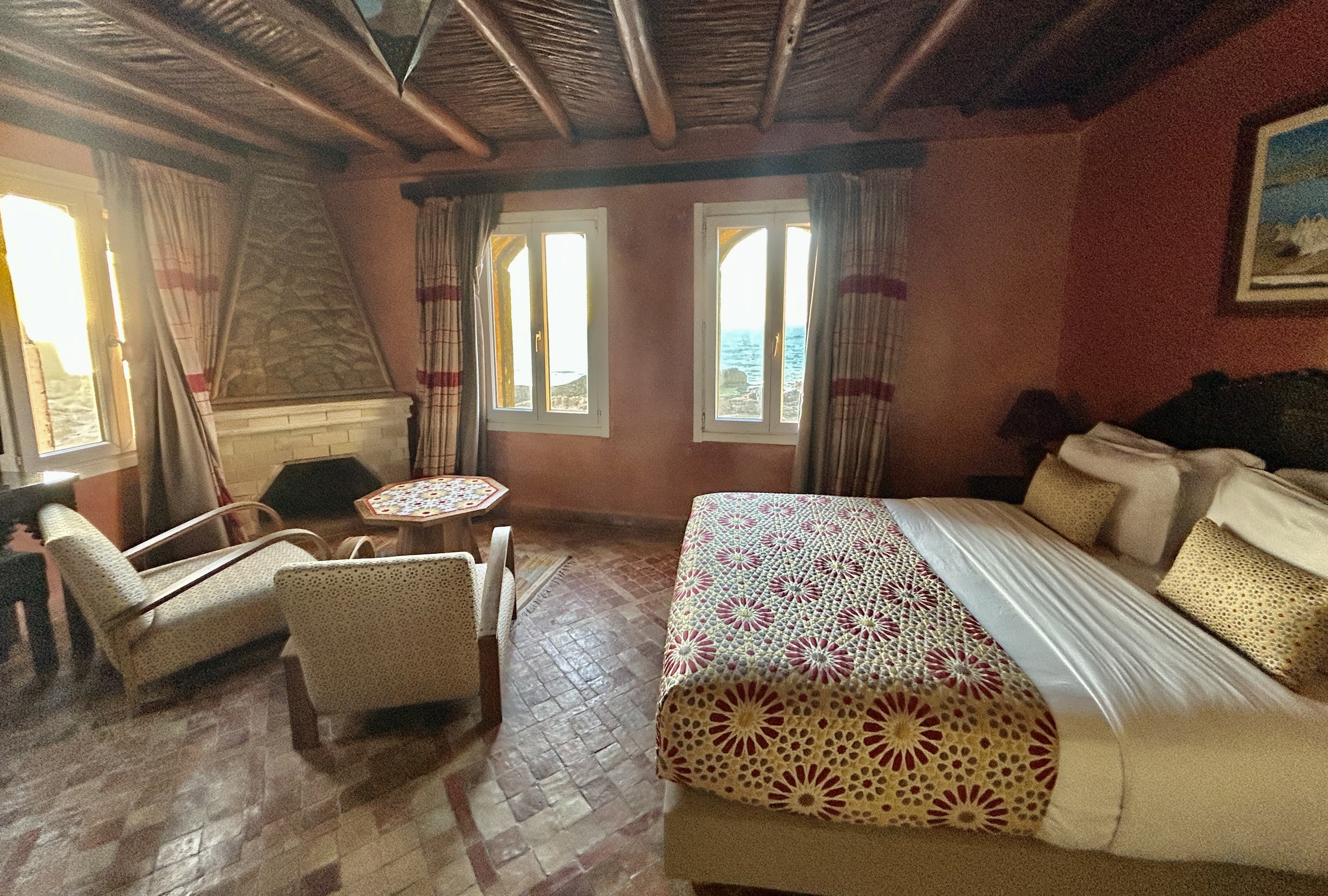
With this spectacular view of the Atlantic.

One of the things that Laura Caballo, our Adventures Abroad guide and former resident of Morocco, did that made our evening meals much less of schmozzle than they could be, was to send us copies of the menus in advance by Whats App and have us send back our choices. When we got to the restaurant there was no need to order and the meals were generally on our plates much faster than otherwise. Of course, there were those including me, who sometimes forgot what they ordered and usually it turned out to be a pleasant surprise.
The meal that evening was among the best I had in Morocco with a great selection of fresh seafood cooked properly i.e. not over cooked. Sadly there was no wine to accompany it.

The Riad Mimouna has a breakfast restaurant on the top floor with this amazing view that makes you more than ready to get out and explore.
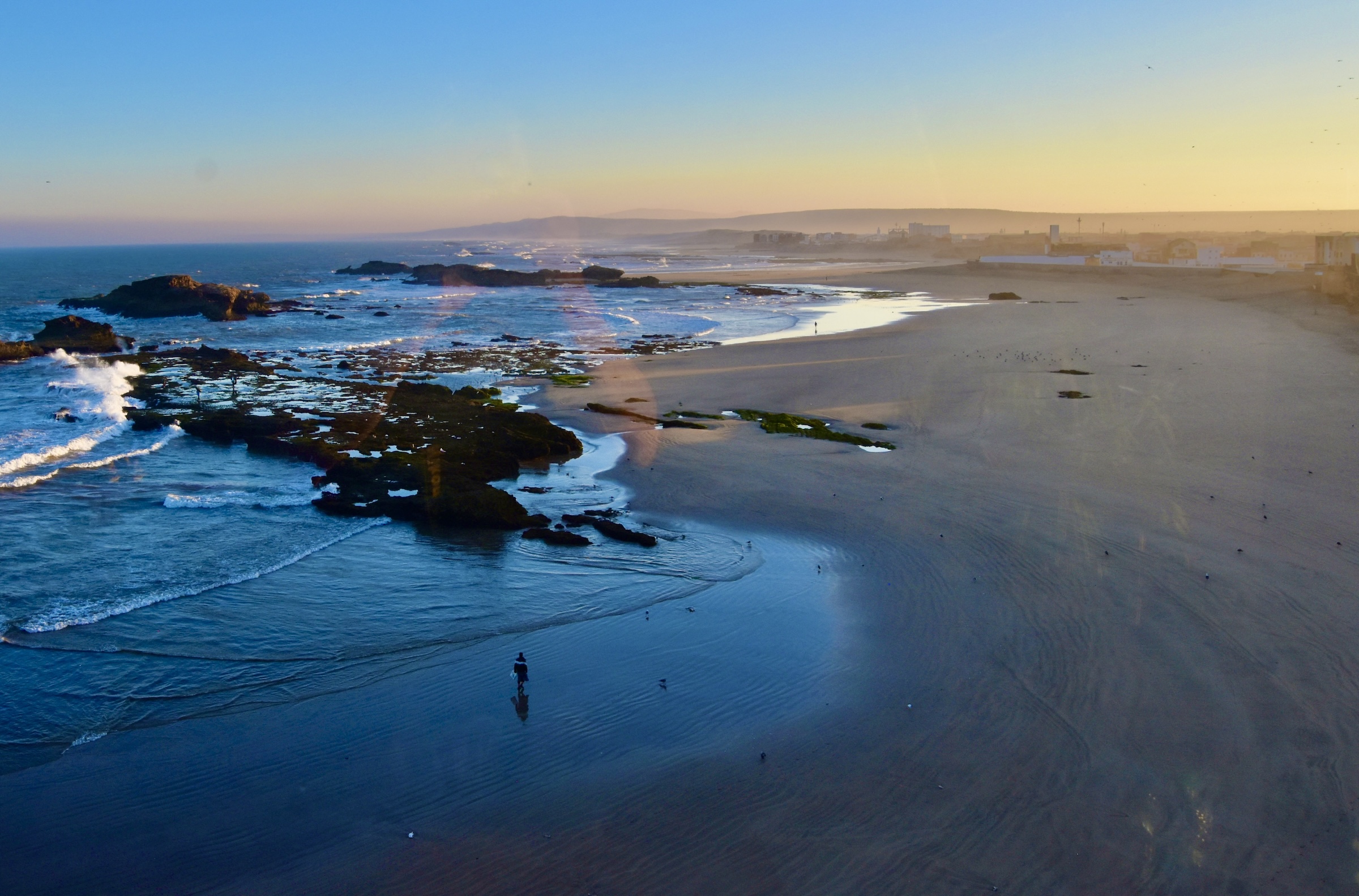
History of Essaouira
Let’s start off with how to pronounce Essaouira, which trust me, is not easy.
Ok, after finally finding out how to pronounce Essaouira correctly, I find out it wasn’t even called that until the 1960s. For the first 3,000 or so years of its existence it was the much more sensible to pronounce, Mogador. Here’s what happened before the name change.
As usual anywhere on the Atlantic or Mediterranean coasts of Morocco it was the Phoenicians who first made recorded history here although Berber tribes were certainly here before that. Items of Phoenician manufacture have been found here going back to the 8th century BCE. The Phoenician traveller Hanno established a trading post here in the 5th century BCE and the name Mogador is probably a corruption of the Phoenician word migdol which means little fortress, although others claim it was named after a Muslim saint. Either way it doesn’t matter because it’s now Essaouira.
Well maybe it does because the island at the entrance to Essaouira harbour is still called Mogador.
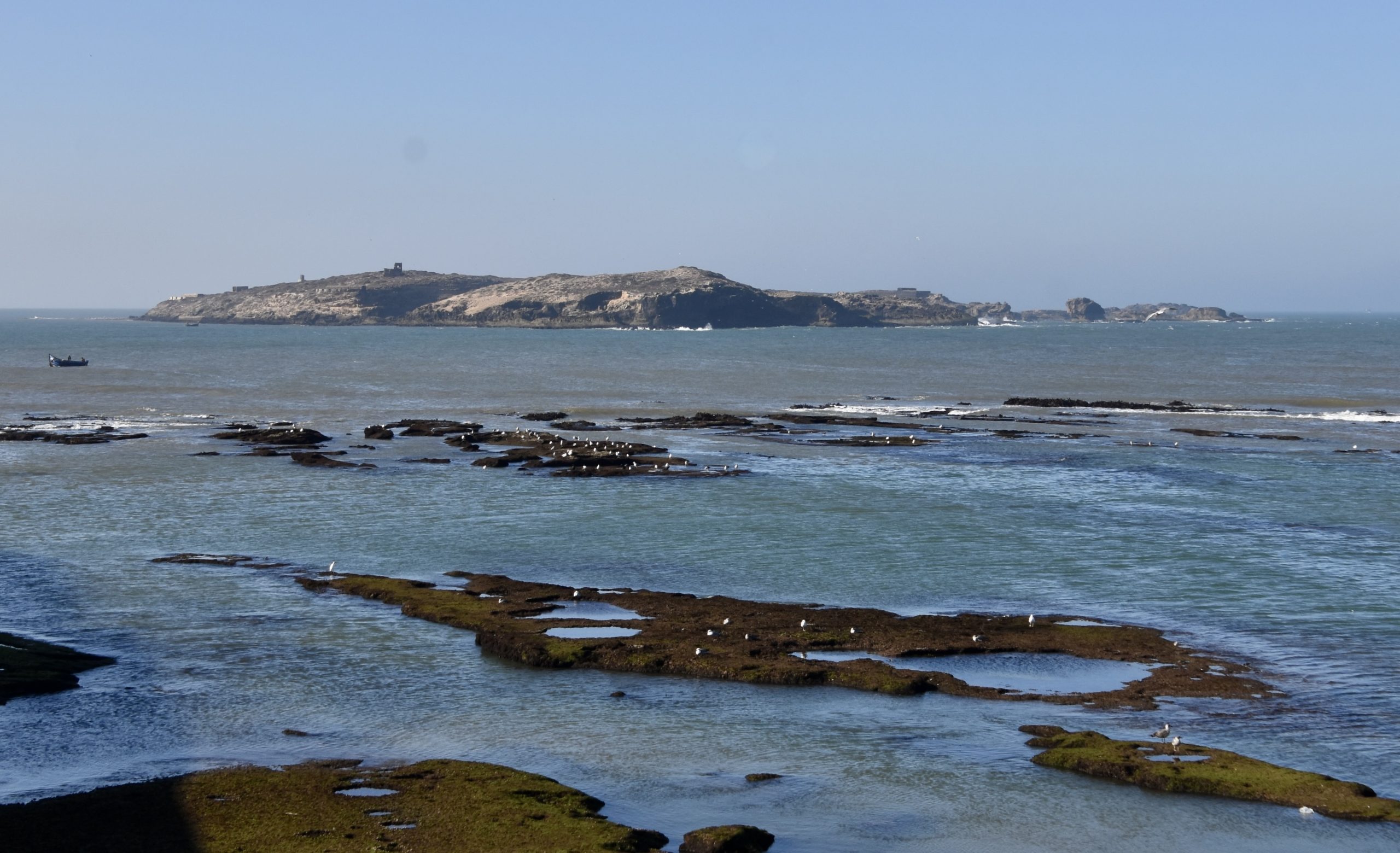
It was here that the remains of a Roman villa were found and that Juba II, the Berber monarch that we first encountered in the city of Volubilis, established a Tyrian purple dye factory. The shores and shallow waters around Mogador and other inshore islands were once teeming with the murex shells from which this dye was extracted. It was used to dye a stripe on the togas of senators and other high-ranking Roman officials, but eventually became so expensive that only the Roman emperor was permitted to wear clothes dyed with it, thus the designation, Royal purple.
After the end of the Roman Empire not much seems to have happened in Mogador of historical note until the Portuguese arrived in 1506 and built the short-lived Castelo Real de Mogador which was captured in 1510 by the same tribesman that drove them out of Agadir. As noted in previous posts these tribesmen became the forebears of the Saadi dynasty that made Marrakech the capital of Morocco. Based well in the interior away from the Atlantic coast the Saadis were content to let Mogador become a pirate haven for the next century or so.
Now here’s where things get really interesting because there’s a direct connection between what happens next and my home province of Nova Scotia. In 1629, fed up with the piracy and hoping to establish a French colony on the Atlantic coast of Morocco, Cardinal Richelieu, right hand man to Louis XIII sent Isaac de Razilly to Mogador to straighten things out, which he apparently did. Although he did not set up a colony, his efforts led to a treaty with the Sultan of Morocco giving France ‘preferred nation’ status.
So what was Isaac de Razilly’s next assignment? Go to a place called Acadia in the New World and set up a colony there which he did at La Have in modern day Nova Scotia, only about 30 minutes from where Alison and I live. He died there in 1535. This is a cairn marking his place in Canadian history.
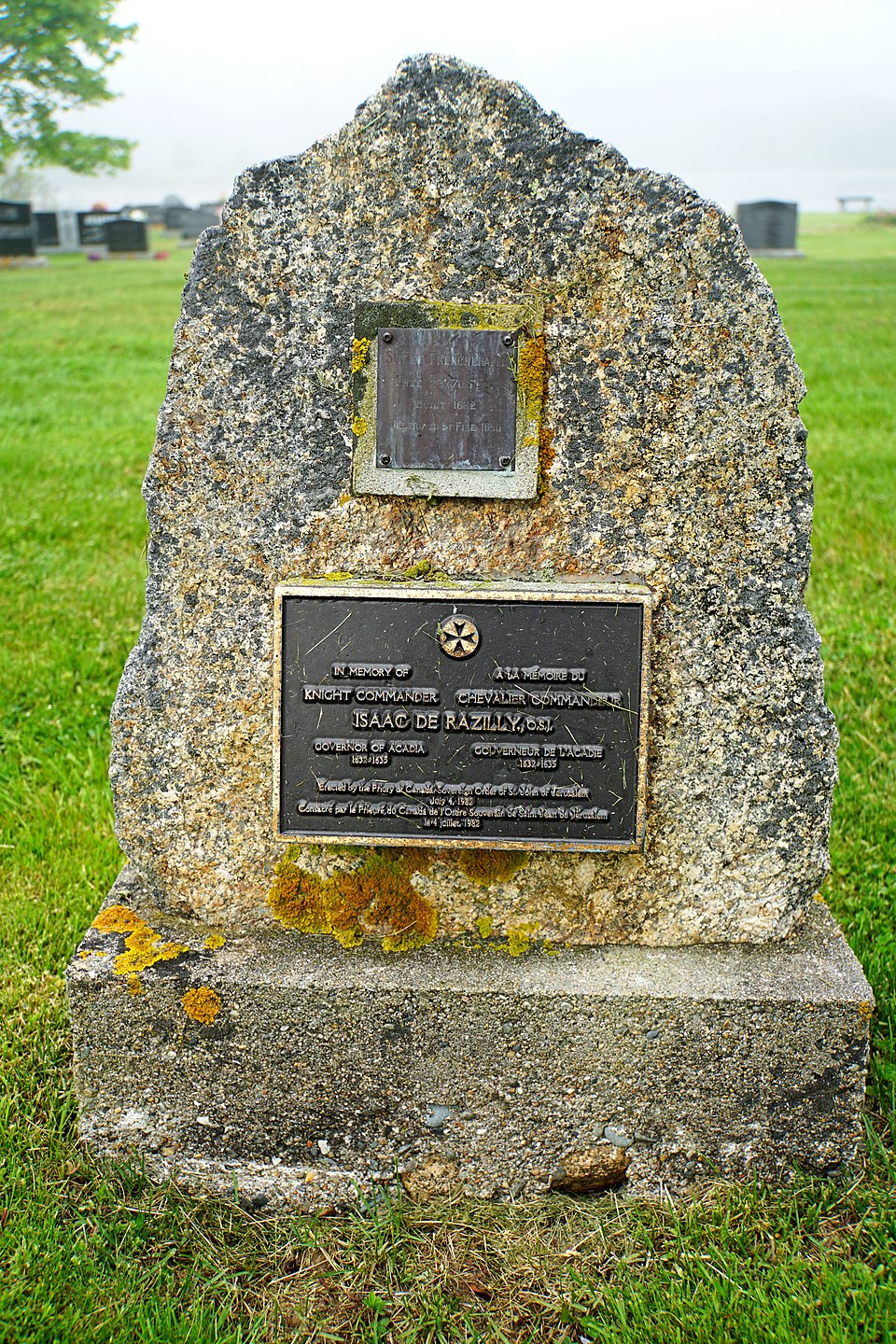
What a small world!
The history of modern Essaouira begins at a very specific time. In 1760 Alawite Sultan Mohammed III hired French architect Theodore Cornut to design a modern fortress at the harbour mouth and over the next ten years the fortress, kasbah and medina took shape. Originally called the Souira or little fortress, the named evolved to become Essaouira and for the next 130 years the city was the principal port of Morocco. It was the end point for the Saharan caravan routes that brought goods from sub-Saharan Africa for export to the rest of the world. However, by the end of the 19th century caravans were being supplanted more modern and faster means of transporting goods and Essaouira went into a slow decline that continued through the French Protectorate.
At the same time that Mohammed III was promoting Essaouira as a major port he encouraged Jewish families to emigrate to the city to handle the port’s business dealings. As incredible as it seems today, up until the end of WWII up to half the population of Essaouira were Jewish. Today there are less than a handful left.
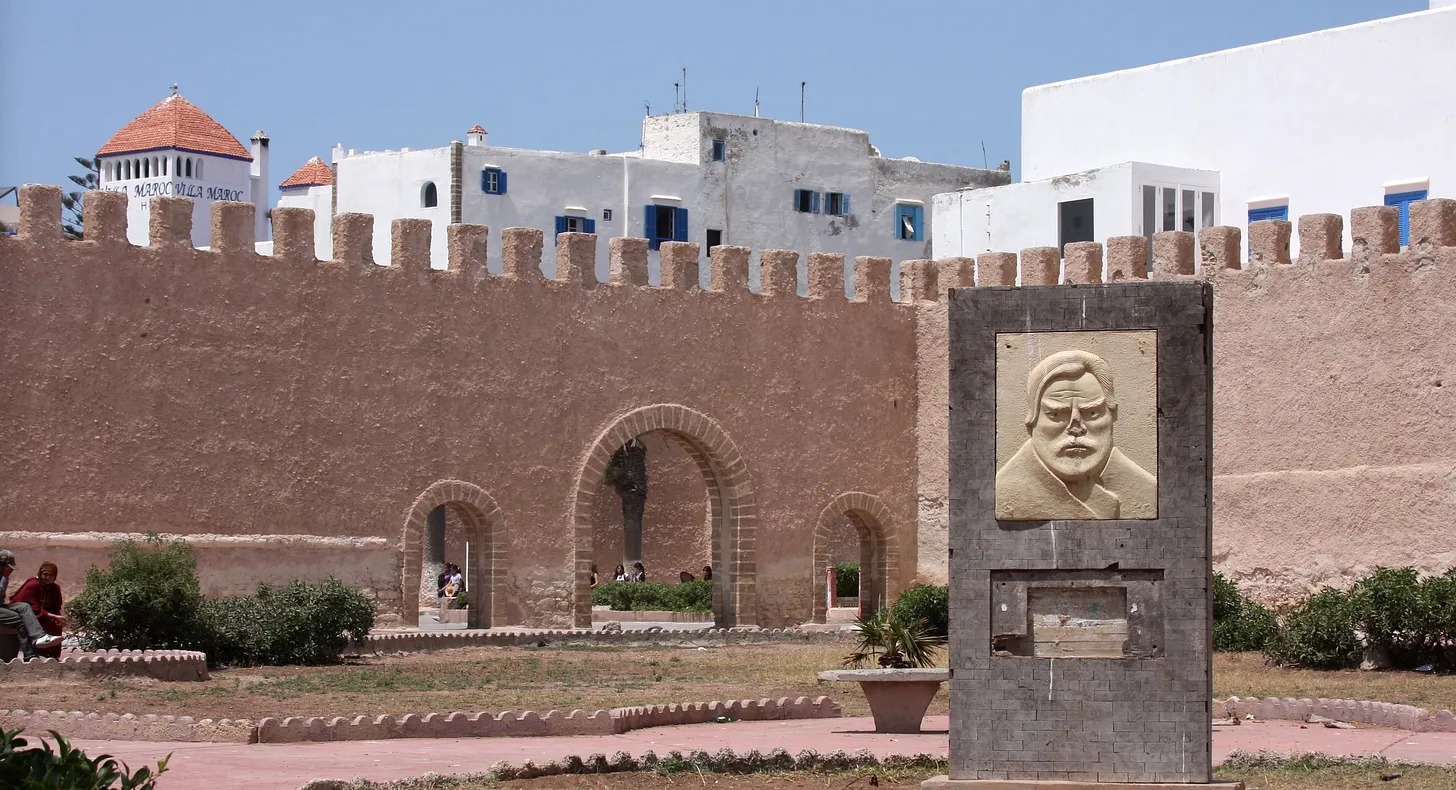
In 1951 Orson Welles, looking for a cheaper place to film than Italy or France, arrived in Essaouira to finish filming his controversial interpretation of Shakespeare’s Othello and it appears as the backdrop for many of the scenes in that movie. Welles had such an impact on the city that they named a plaza after him with a monument to his posterity in the middle.
In the 1960s Essaouira became a stop on the so-called ‘hippie trail’ which included Taghazout, Agadir and Marrakech. Jimi Hendrix, Cat Stevens, Frank Zappa and other notables came here to smoke dope and chill out.
In 2001 Essaouira was inscribed as a UNESCO World Heritage Site with this description:
Essaouira is an exceptional example of a late-18th-century fortified town, built according to the principles of contemporary European military architecture in a North African context. Since its foundation, it has been a major international trading seaport, linking Morocco and its Saharan hinterland with Europe and the rest of the world
This will be our sixth World Heritage Site on this tour with one more to come at Marrakech.
This will also be our third filming location in Morocco for Game of Thrones. In Season 3 Essaouira becomes Astapor in Slaver’s Bay where Daenerys comes to buy an army of ‘The Unsullied”.
Well with that extensive background let’s meet our local guide Hammam and begin our tour.
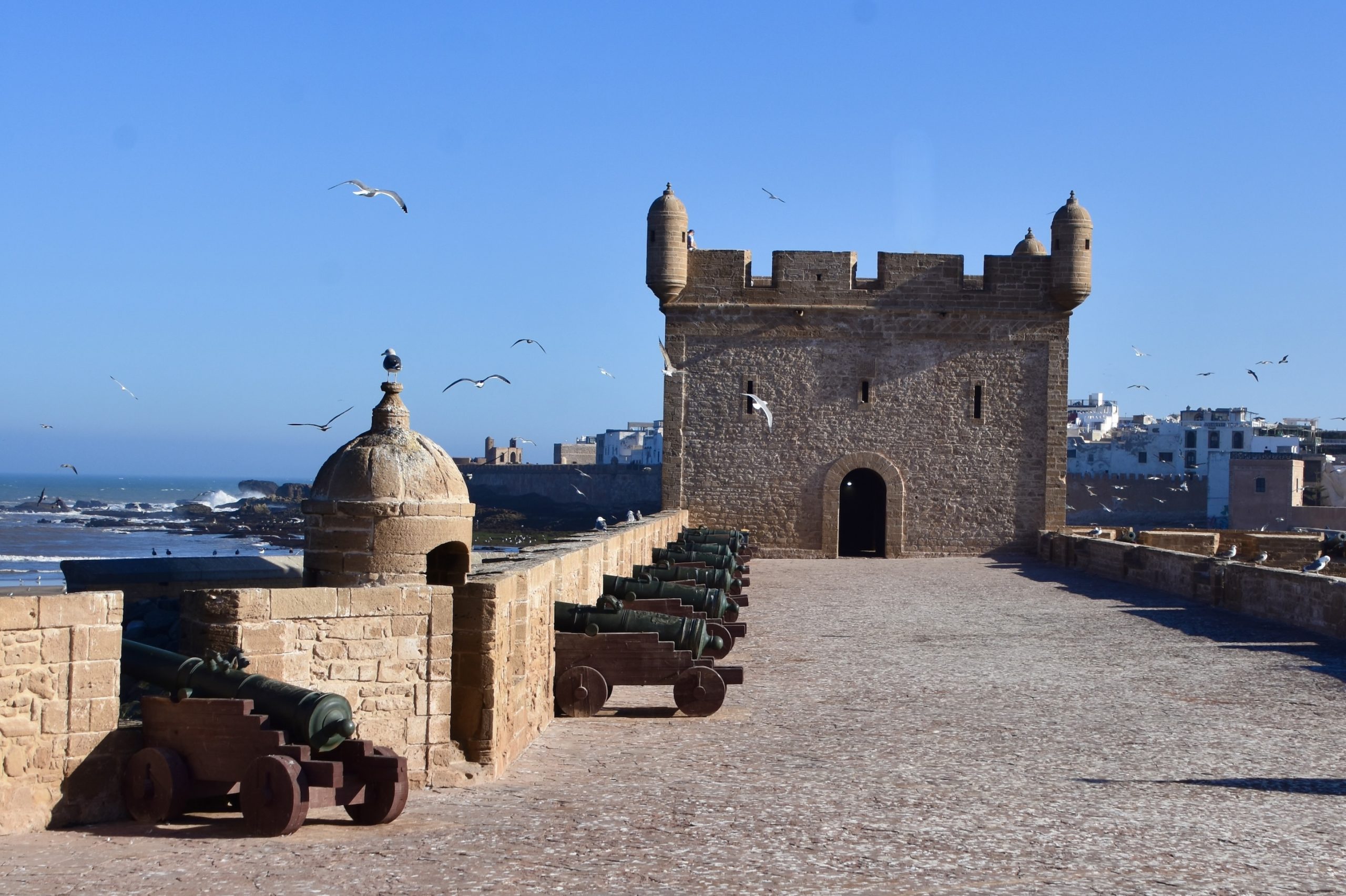
We meet Hammam at the entrance to the medina and begin the tour in the area known as the Sqala du Port which is where Englishman turned Muslim renegade Ahmed el Inglizi built the harbour fortifications that are one of the main attractions of Essaouira and something quite different than anything else we’ve seen in Morocco. The cannons are of Dutch manufacture.
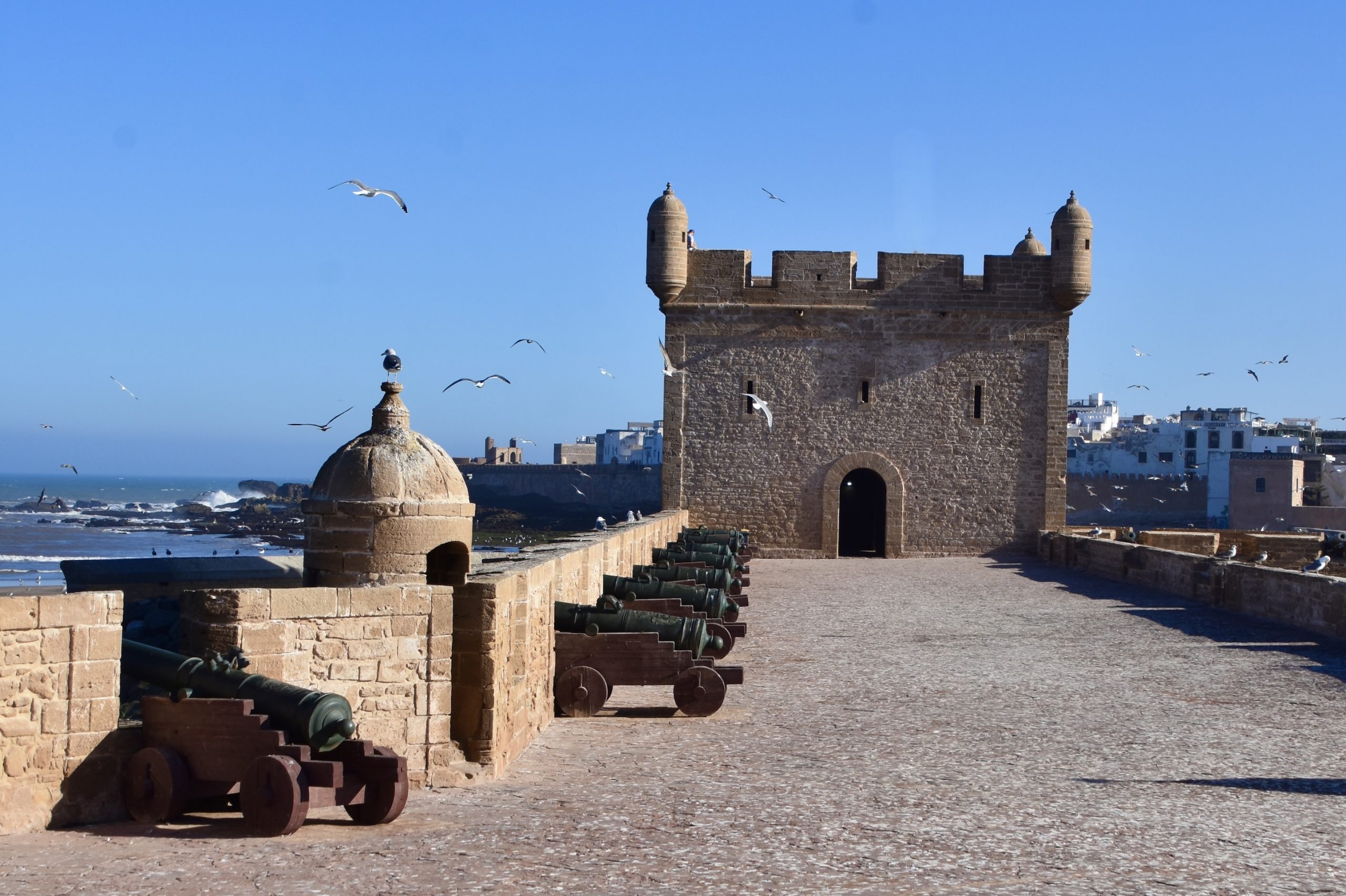
As you can see, there are not many tourists about this early in the morning. In fact, one of the reasons I really liked Essaouira was that even though it had great photographic appeal it was possible to get great shots like this without having to edit out a lot of bothersome interlopers. Just kidding.
Here are a few other photos from this most interesting area of Essaouira.
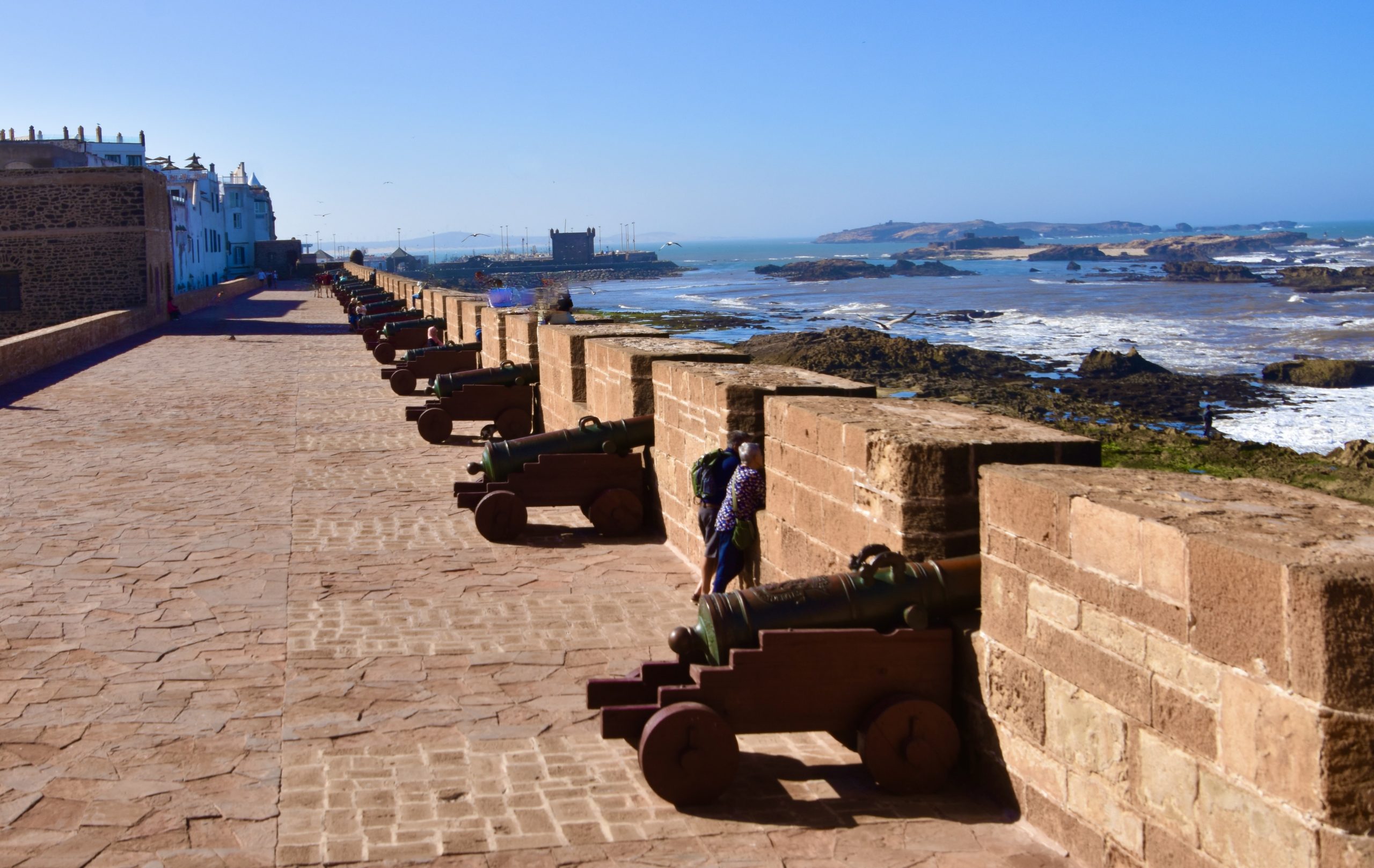
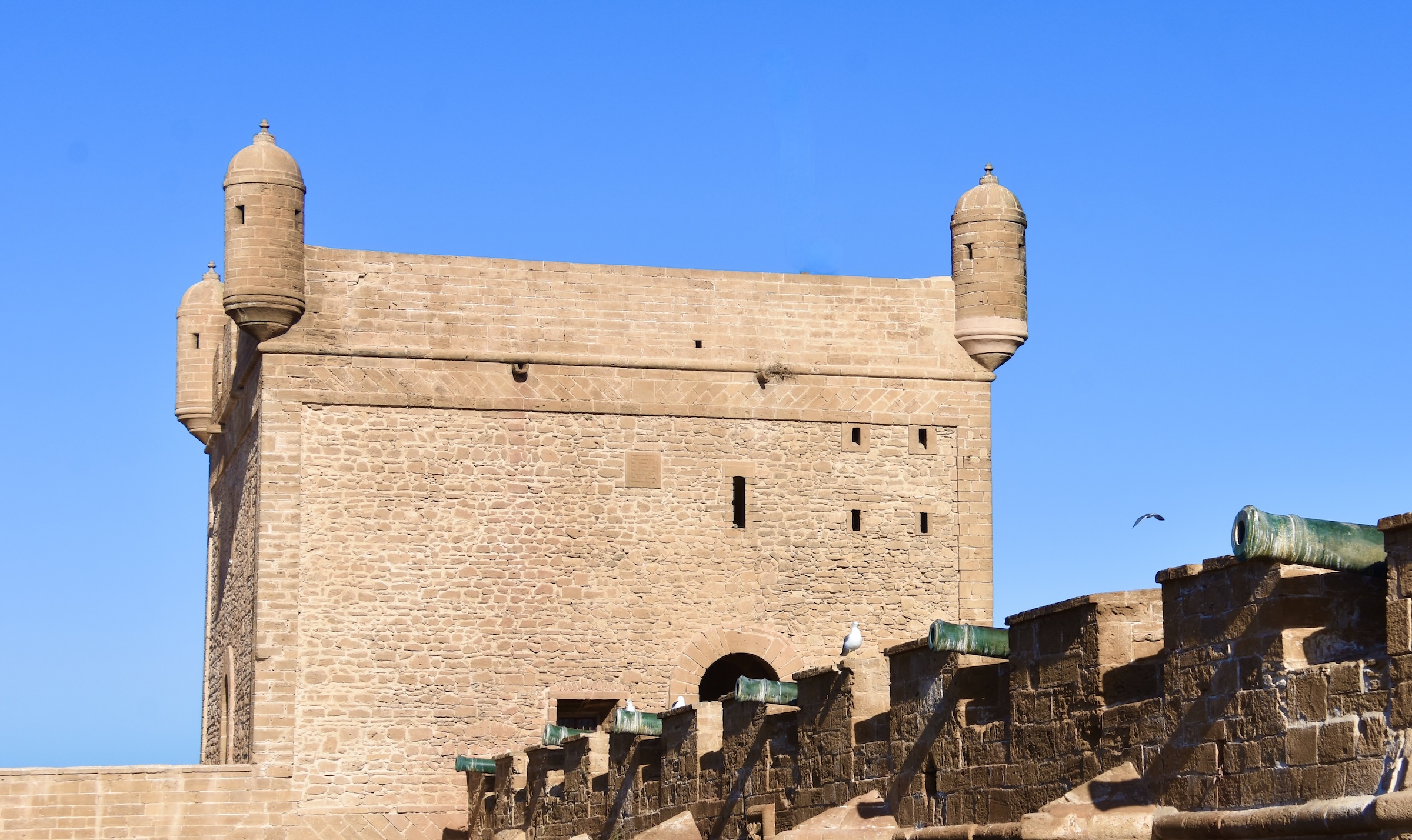
This is the view looking towards the medina from the top of the tower. The arrow I have inserted is pointing to the Riad Mimouna so you can see why it has such great views from its rooms and the rooftop terrace.
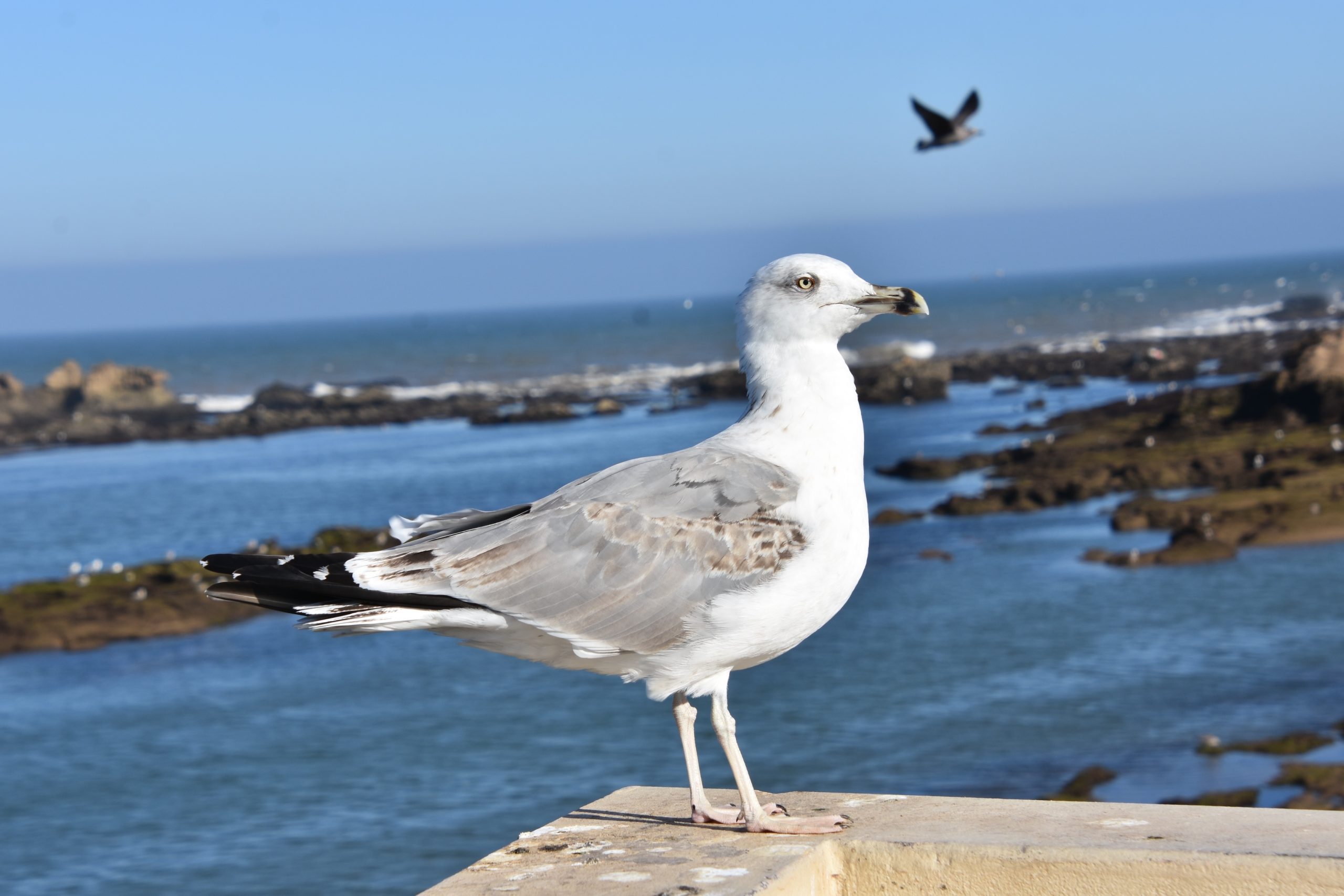
I couldn’t help but notice that the Sqala du Port area is inundated with gulls to the point of bringing Alfred Hitchcock’s The Birds to mind. They have absolutely no fear of humans and you could practically grab one with your bare hands. This is a juvenile yellow-legged gull which has not yet developed the distinctive yellow legs.
It’s not just the fortifications that are interesting in the Sqala du Port. It’s also the home to Essaouira’s large fishing fleet.
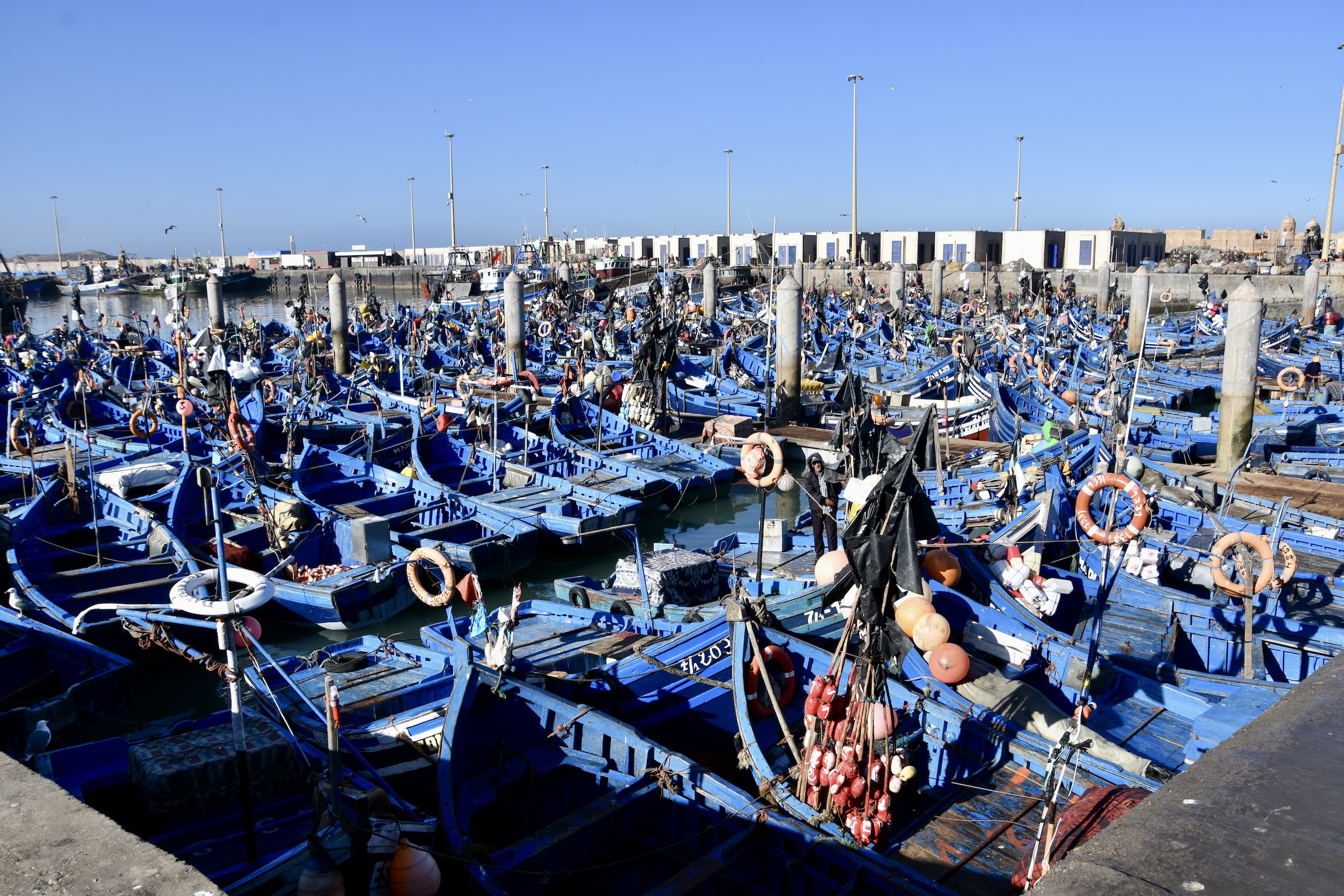
If you look closely you’ll get a glimpse of these blue boats in the GOT video above.
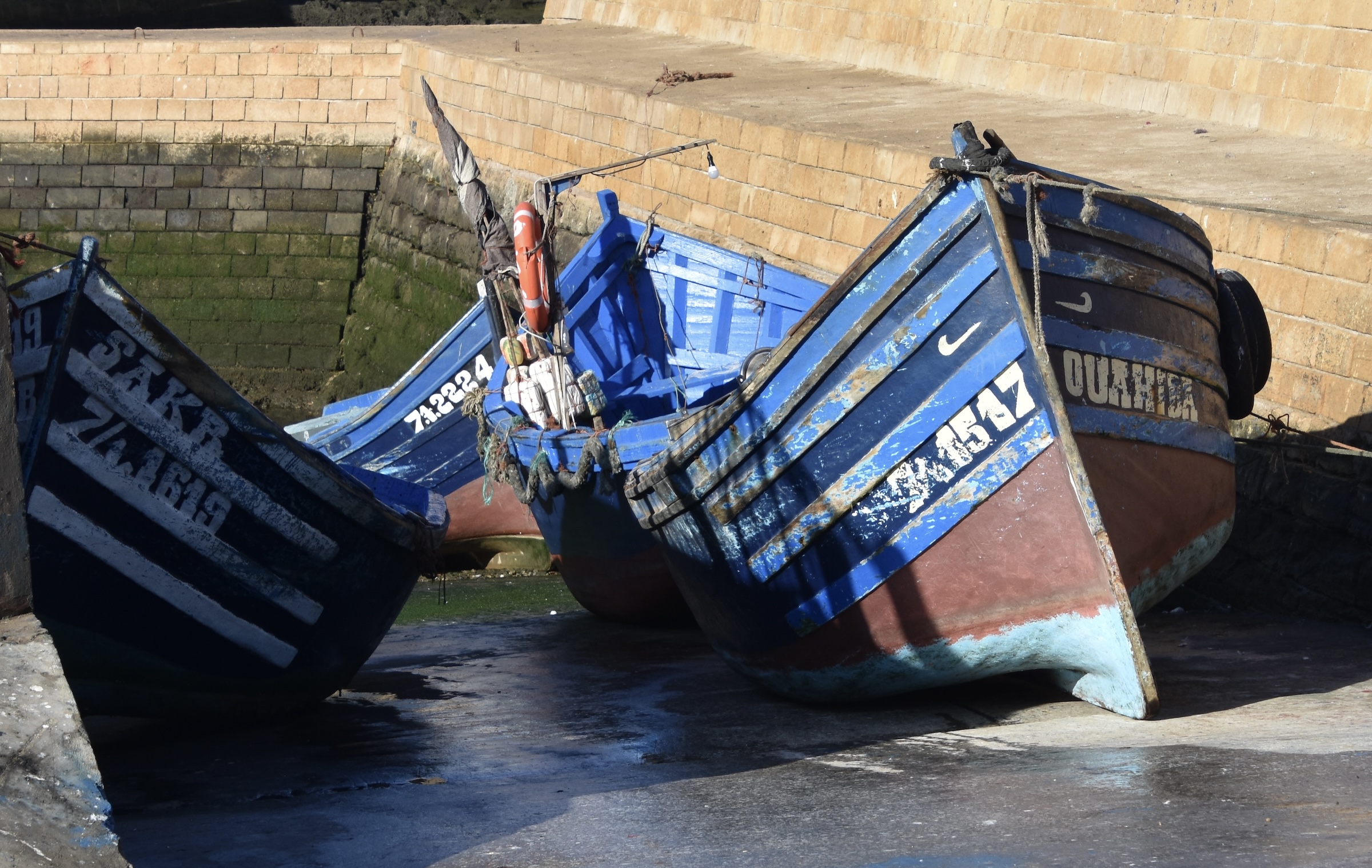
Obligatory boat closeup. While I noted in the post from Taghazout that Moroccan fishing boats don’t carry the Eye of Osiris as a protection from evil, apparently the colour blue serves the same purpose.
You couldn’t ask for anything fresher than these fish that had just come off the boat.

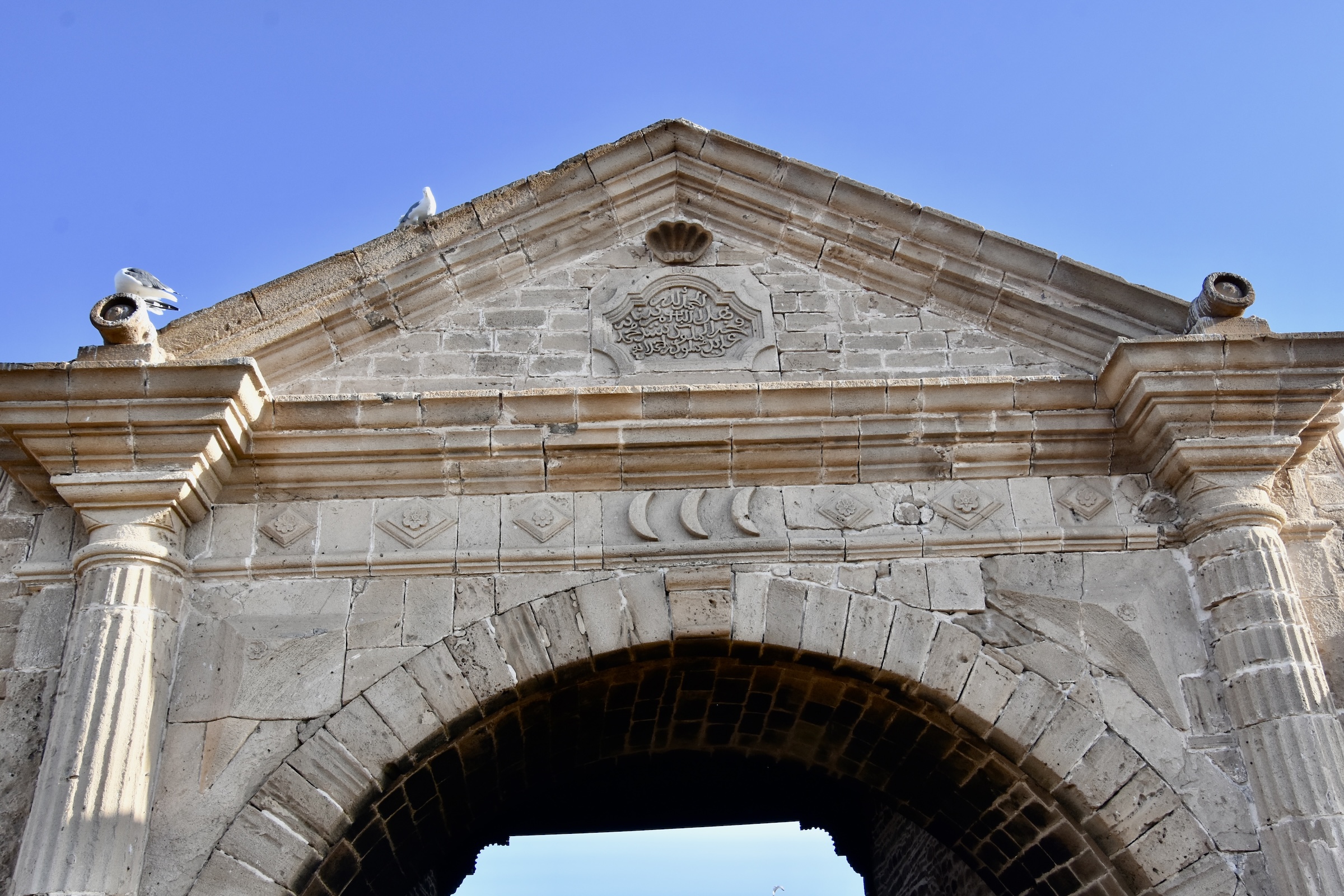
After out tour of the Sqala du Port area, Hammam led us to the entrance to the medina through the Bab el-Marsa, aka The Gate of Tolerance because it contains symbols of Christianity, Judaism and Islam. It was designed by the same Englishman turned Muslim who built the fortifications we have just toured.
From here we made our way towards the Mellah or Jewish quarter. This place has a completely different ambience than any of the previous medinas we have visited. For one thing it’s not overrun by tourists.
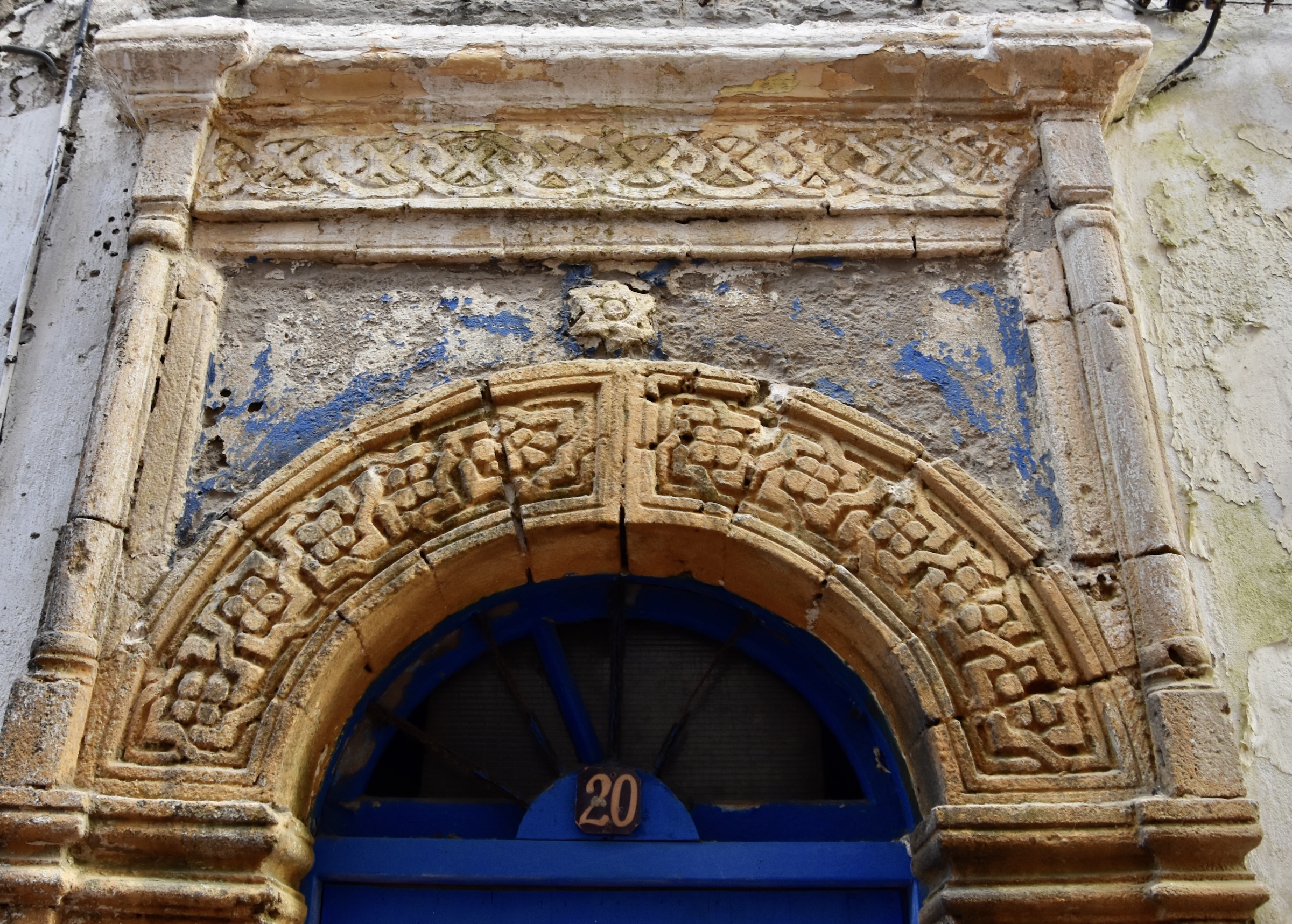
Hammam points out a number of doorways that once marked the entrance to Jewish homes with The Star of David overhead.
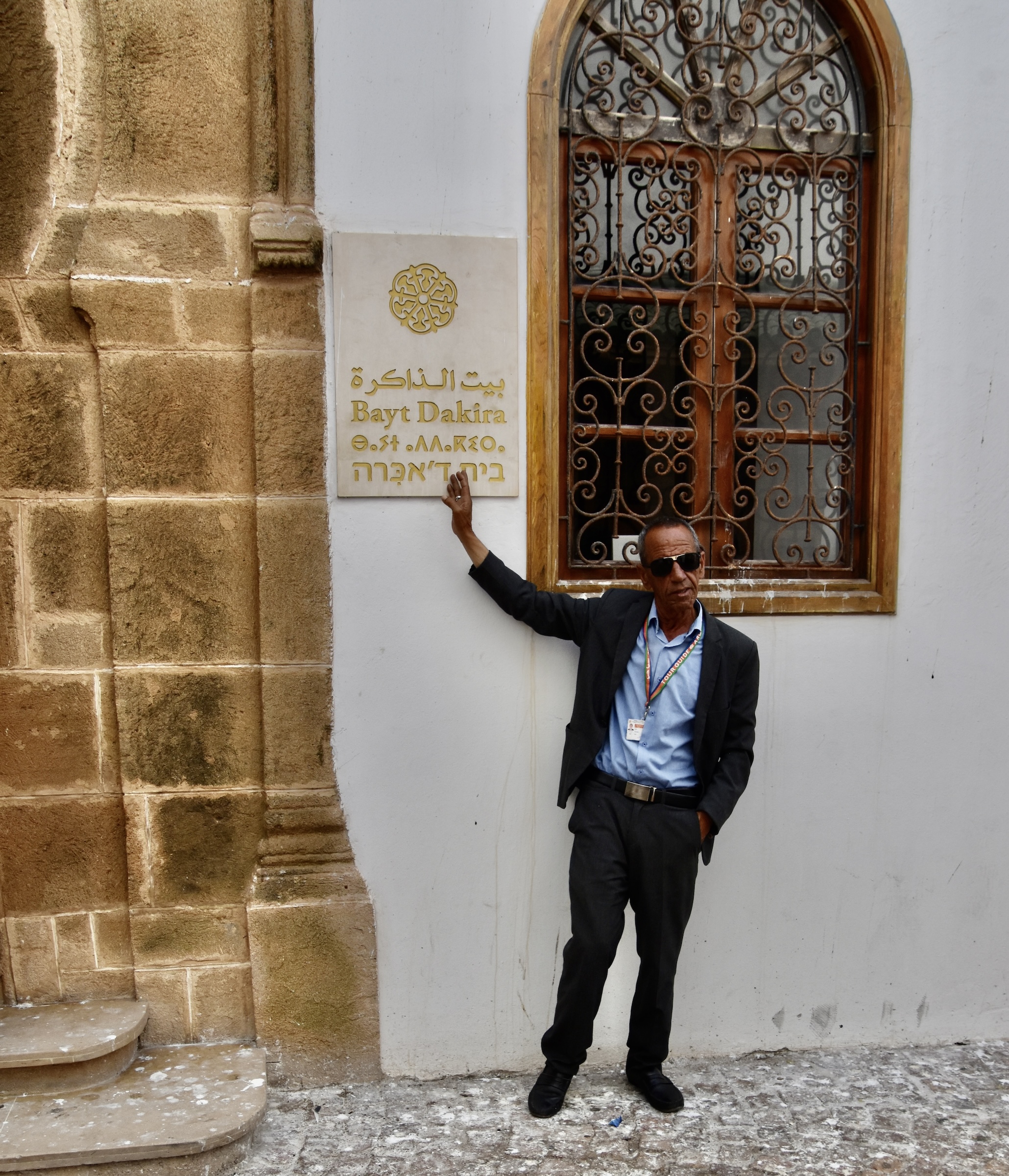
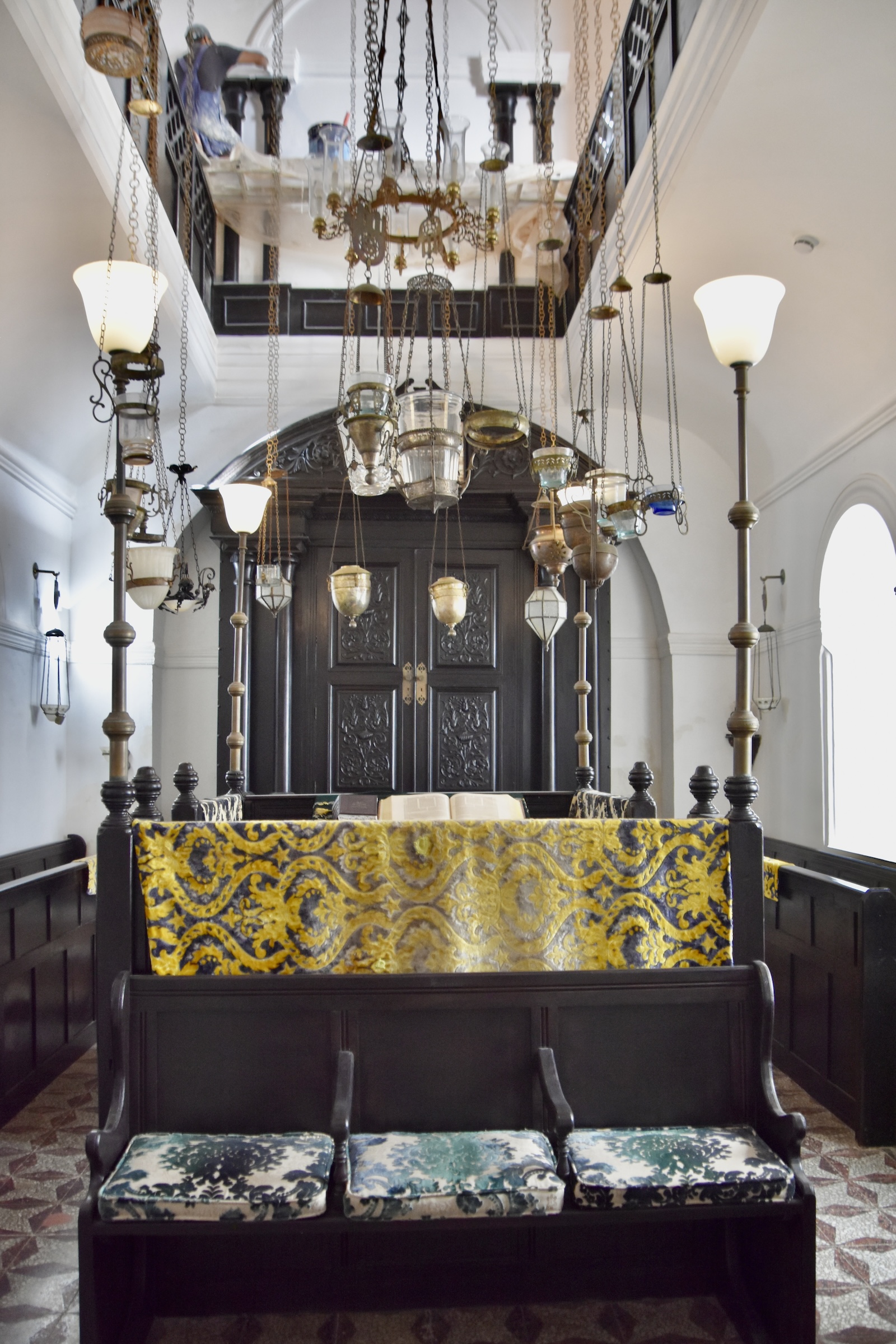
As I noted, there are next to no Jews left in Essaouira, but there are a number of former synagogues, one of which is now Bayt Dakira or The House of Memory. Like most mosques, non-Jews are only permitted to look inside the former synagogue.
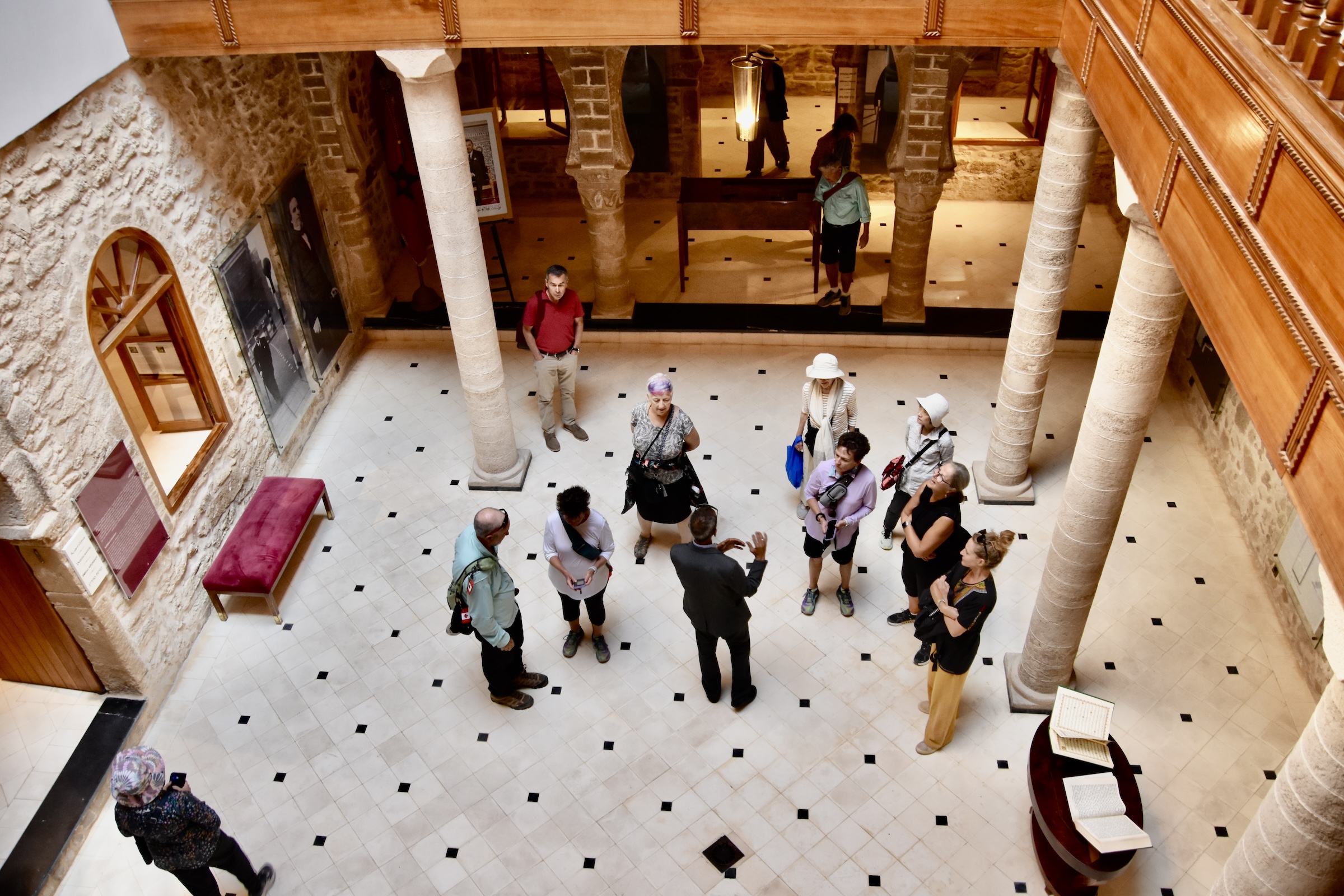
However, there are two floors of displays highlighting the former large presence of Jews in Essaouira. This is looking down at our group from the upper floor.
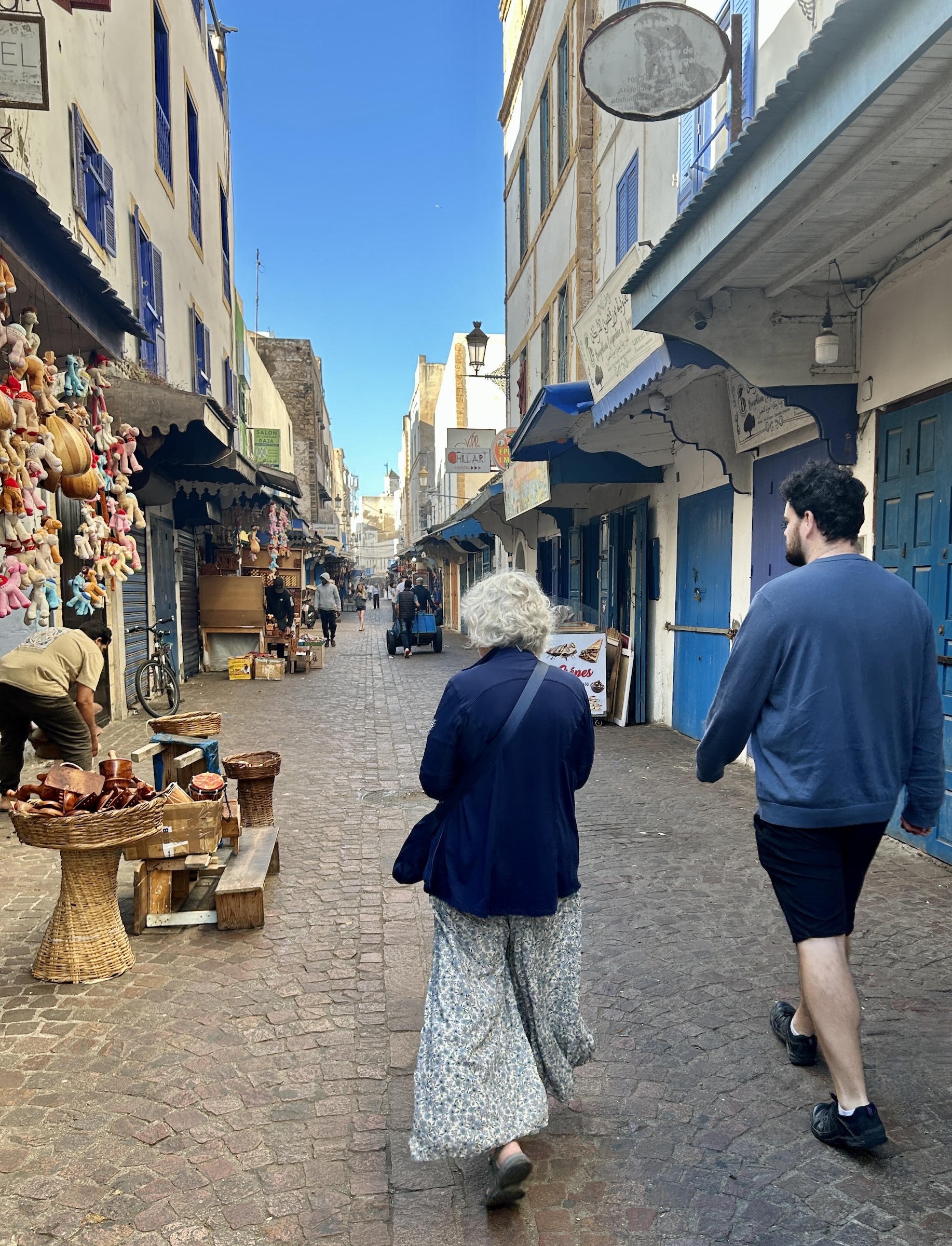
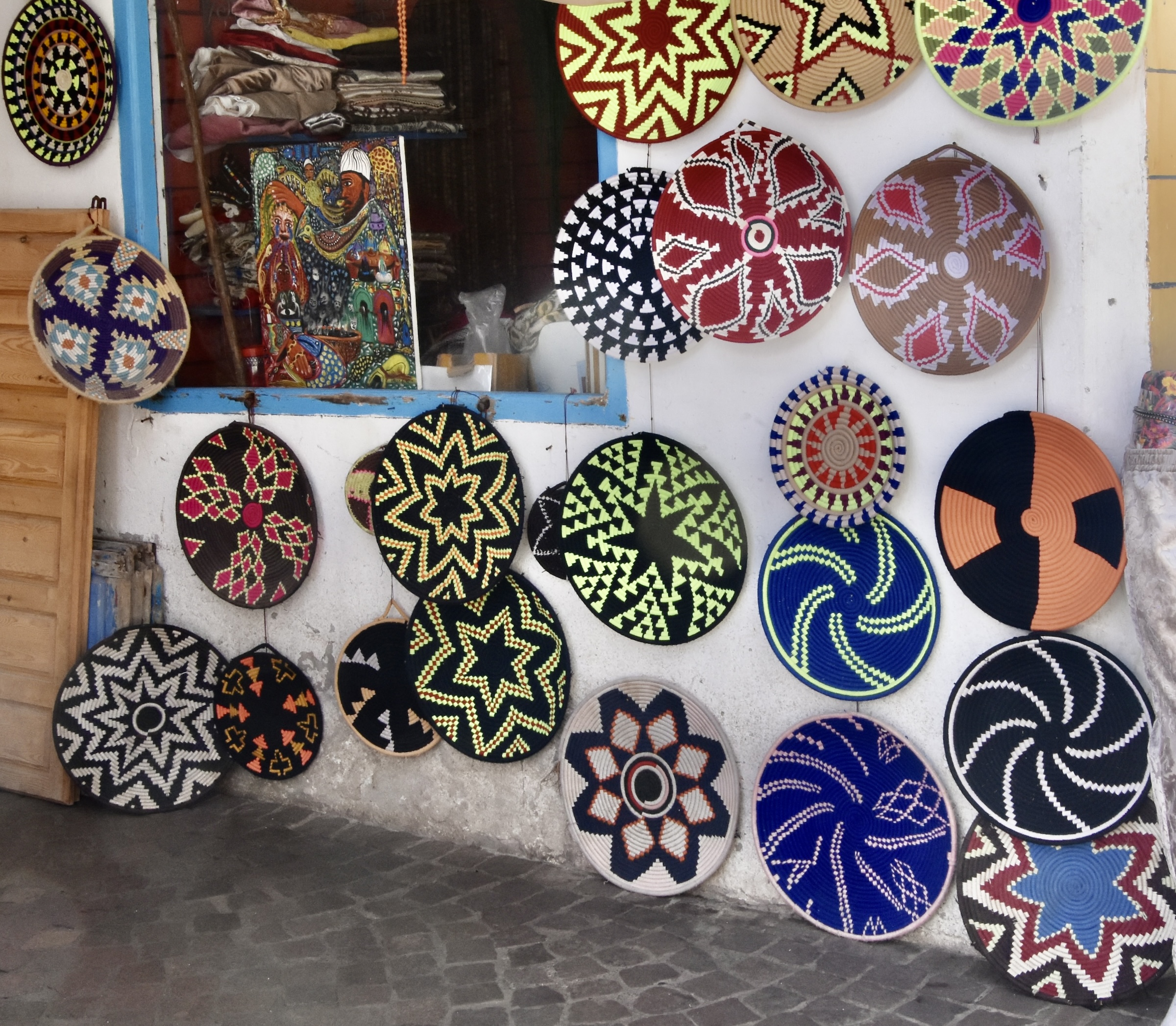
We then make our way from the Mellah to inside of the medina walls were there are any number of colourful crafts on display.
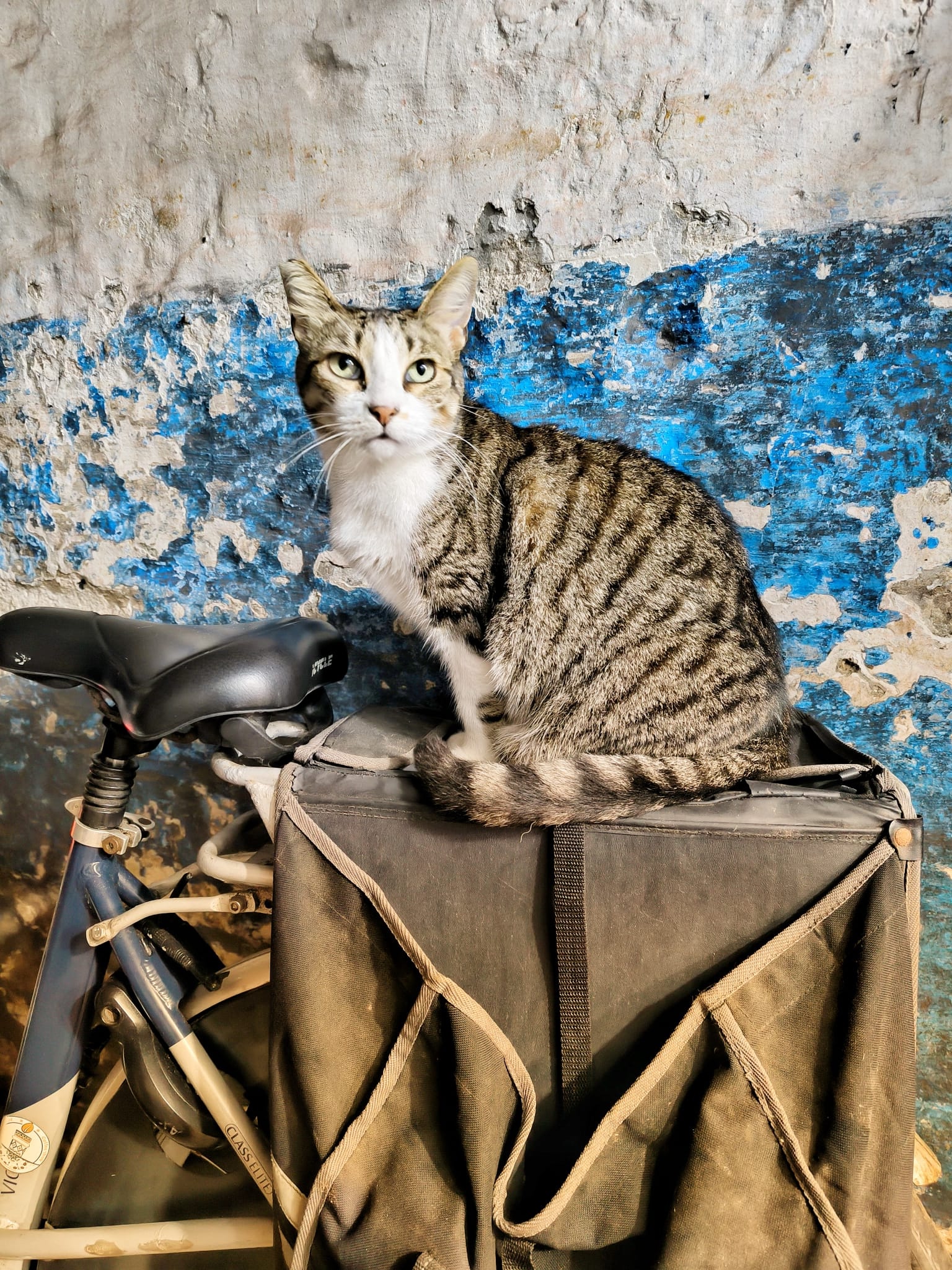
And lots of opportunities to get your daily cat photos.
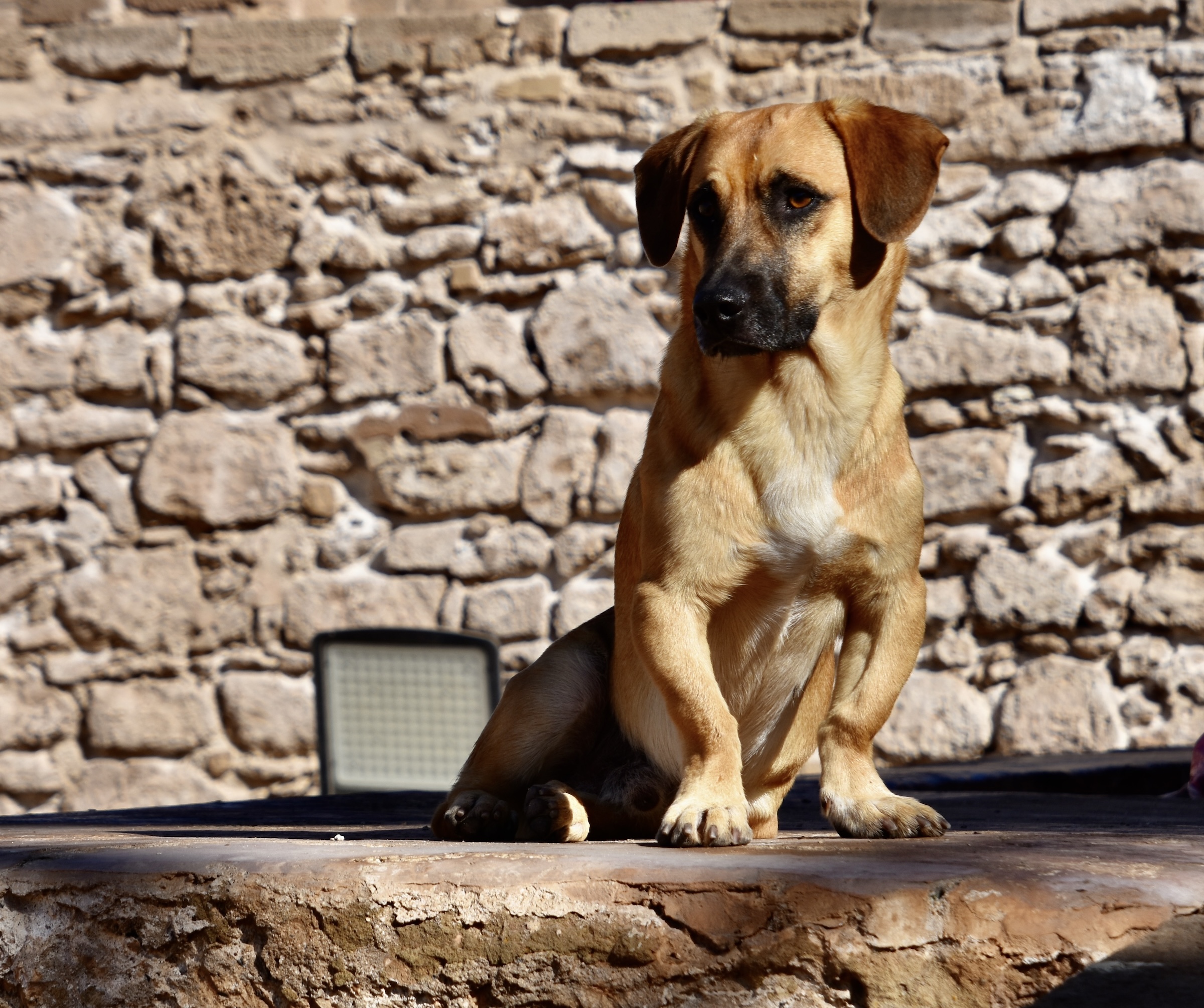
And a rarity in Morocco, a cute pet dog.
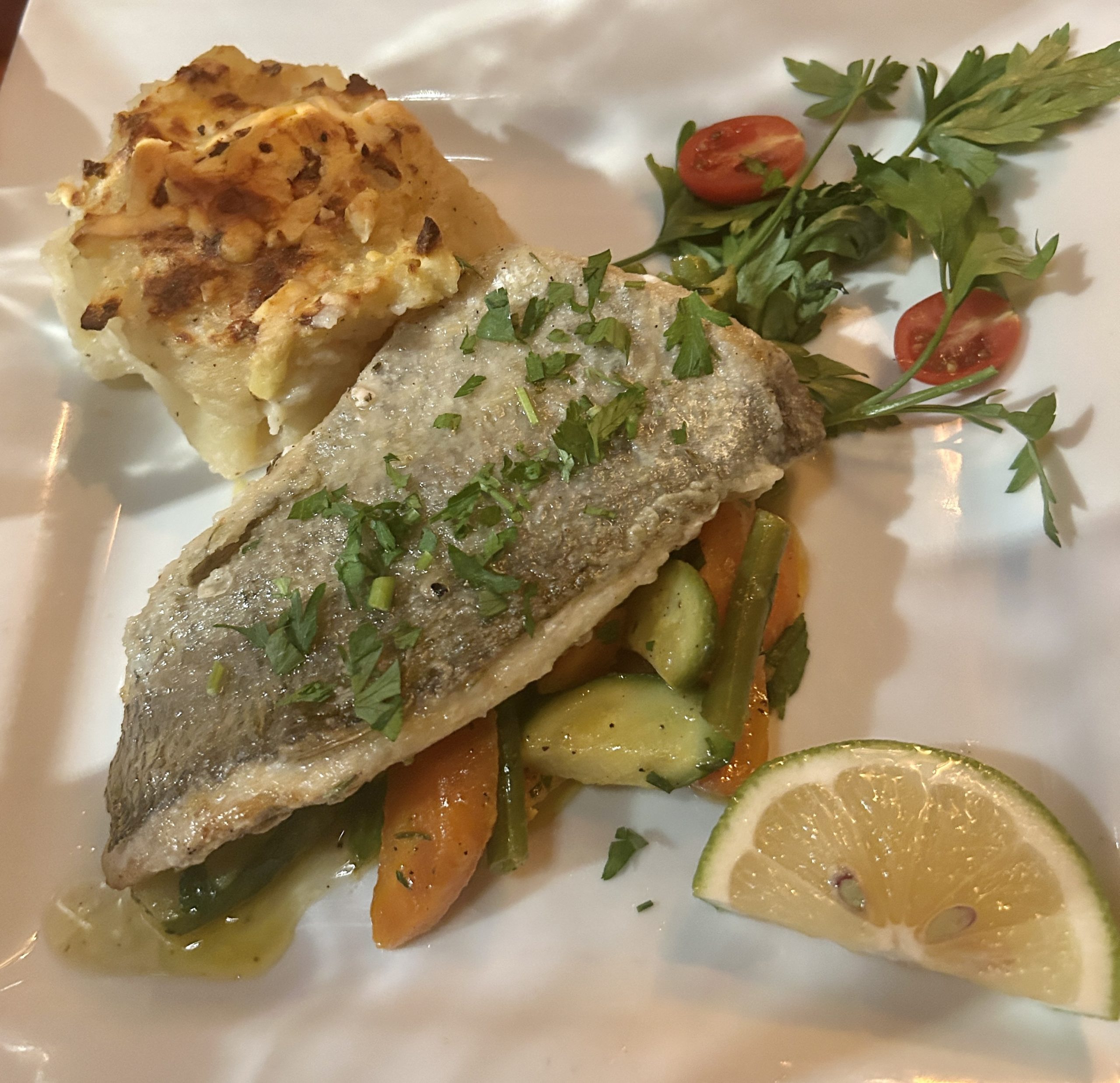
That evening we had another great meal at the Le Sirocco Restaurant, where fresh seafood was once again perfectly cooked.
I hope this post will give the readers some idea why Essaouira was my favourite city in Morocco.
Alas all good things must come to an end and in the next post we’ll make our final stop on what has been another great Adventures Abroad trip. Please join us in the magical and mysterious city of Marrakech.