
Ait Benhaddou – Morocco’s Ultimate Ksar

In the last post from the October 2025 Adventures Abroad Quintessential Tour of Morocco our group visited Atlas Studios, the largest movie studio in Africa where movies like Gladiator and The Mummy were filmed. It was a fun and entertaining experience. In this post we’ll continue heading west to the city of Taroudannt where we will stay for two nights in the Hotel Dar Zitoune, one of the nicest accommodations I can remember on any AA trip – I’ll provide details when we get there. But first, we will stop at yet another UNESCO World Heritage Site, the fifth so far on this trip. Ait Benhaddou is considered to be the best preserved example of a Moroccan ksar in the world and continuing with our movie set theme, the site where some of the most famous movies of all time were shot. It promises to be another great day in Morocco, so please join us.
History of Ait Benhaddou
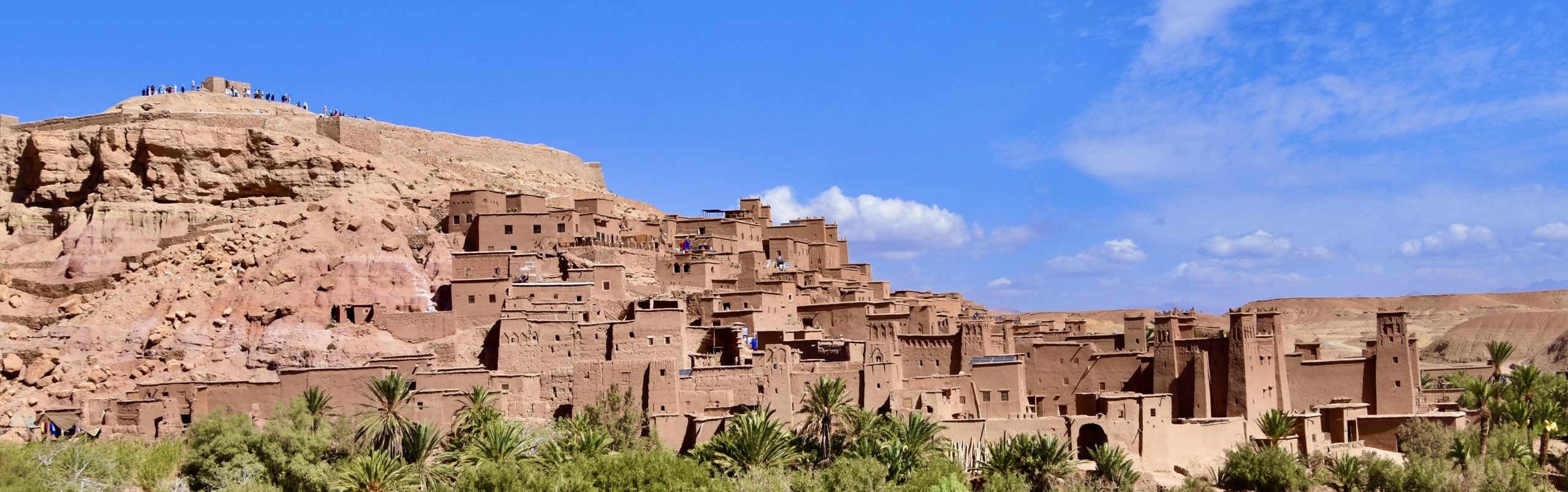
During our stay in the Talifalet oasis we learned that a ksar is a fortified village that houses many different families in contrast to a kasbah which is the stronghold of one powerful family or clan. Many of these ksars are still occupied today and a few days ago we visited one near Rissani. Ait Benhaddou has its origins in the 11th century when its strategic location on the Ounila River made it a frequent stop on the caravan route between Marrakech and the Draa River Valley. The term ‘ait’ means son of or descendants of, in this case Ben Haddou, a legendary Berber chieftain, about whom I could find nothing more than his name. The construction materials used are identical to those used to build the Kasbah Amridil – compressed brick made from mud, clay, straw and water. Since these bricks are very susceptible to erosion they need constant repairs and even though Ait Benhaddou has been continuously occupied for a thousand years it is estimated that the oldest buildings today date from the 17th century.
It is considered to be the best preserved example of a classic ksar in the world and in 1987 that distinction was recognized by UNESCO when it was inscribed as a World Heritage Site. It’s authenticity was described as such:
In comparison to other ksour of the region, the Ksar of Ait-Ben-Haddou has preserved its architectural authenticity with regard to configuration and materials. The architectural style is well preserved and the earthen constructions are perfectly adapted to the climatic conditions and are in harmony with the natural and social environment.
Chances are that you might have seen Ait Benhaddou before without knowing it. UNESCO was not the only organization that recognized the uniqueness of Ait Benhaddou. In 1962, well before Atlas Studios was founded in nearby Ouarzazate, British director David Lean took his cast and crew here to film substantial parts of Lawrence of Arabia and ever since it has been the stand in place for a typical desert fortress. Later in this post I’ll provide more details on Ait Benhaddou’s illustrious film career.
Today only a few families still live in Ait Benhaddou, most having moved across the river to the more modern town of the same name. It is here that our driver lets us off and we must make our way to the entrance by descending down onto the dry river bed and crossing it to the traditional entry point.
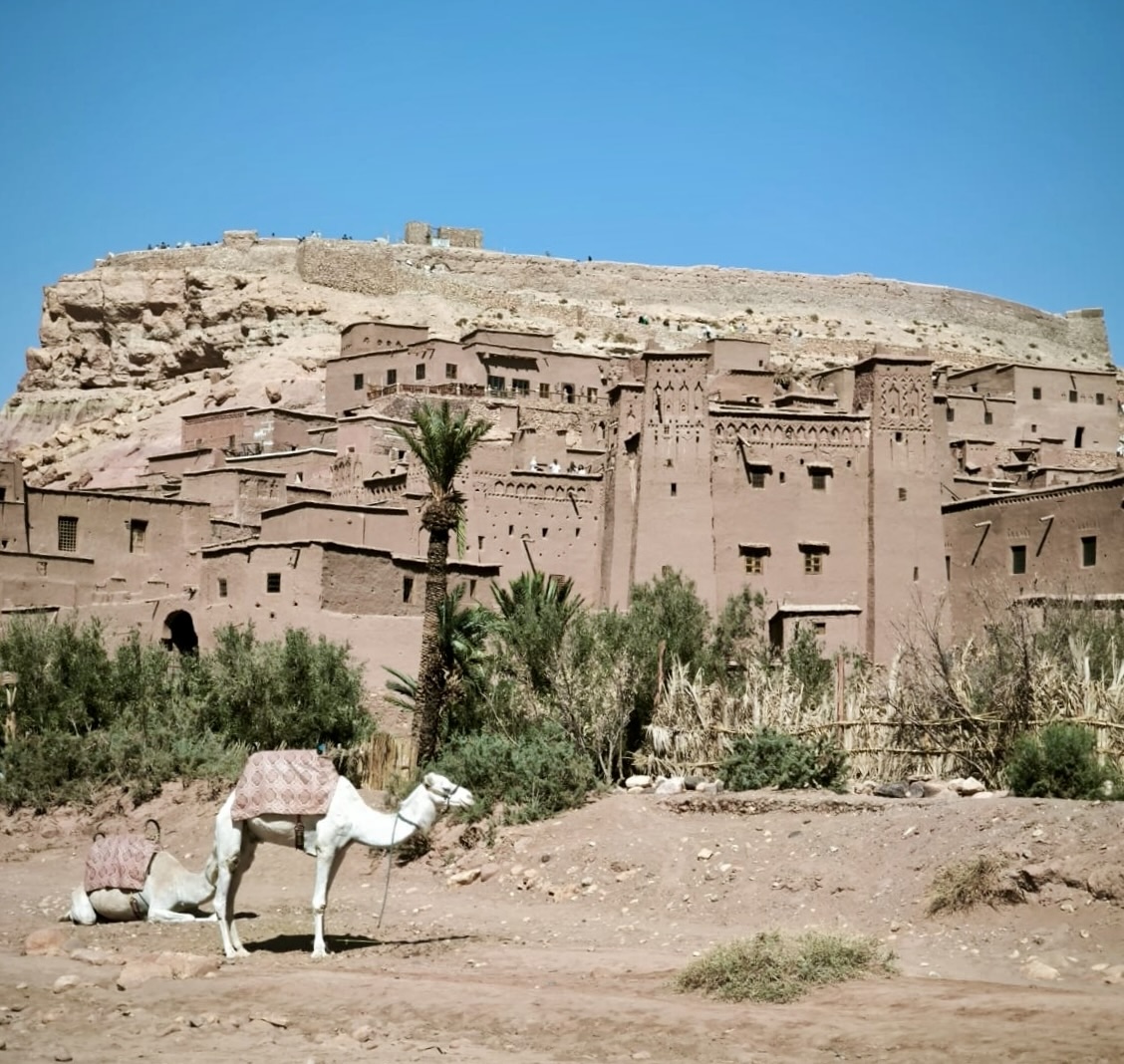
Could there be anything more evocative of Morocco than this photo taken from the river bed?
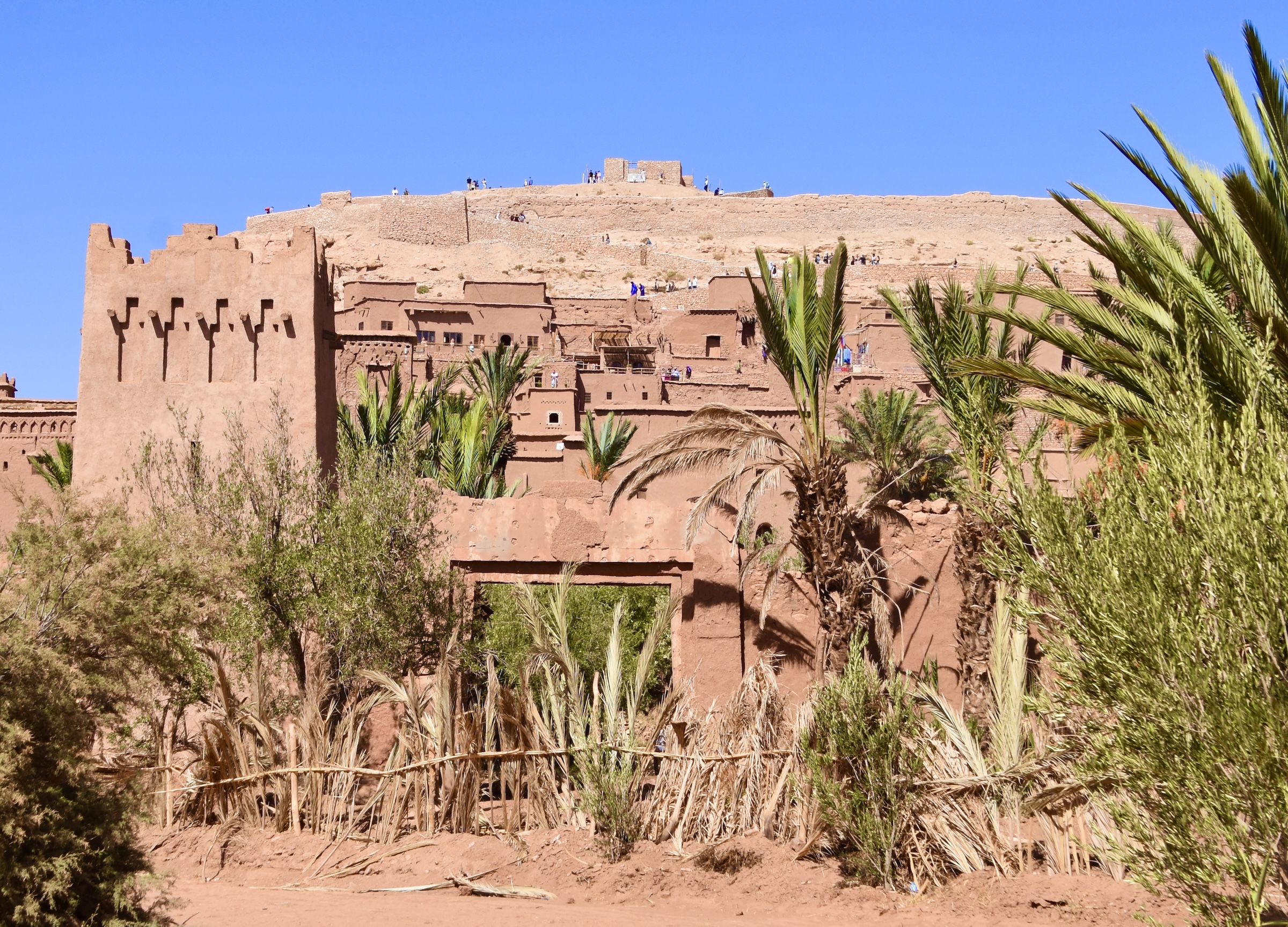
Not all is as authentic as it looks. Our local guide tells us that this abandoned gate was built specifically for Lawrence of Arabia in 1962. Apparently the rule is that if it was here before 1987 when Ait Benhaddou became a UNESCO World Heritage Site, it can stay, but anything erected after 1987 by movie or TV producers needs to be removed after filming is complete. Here is an example of that.
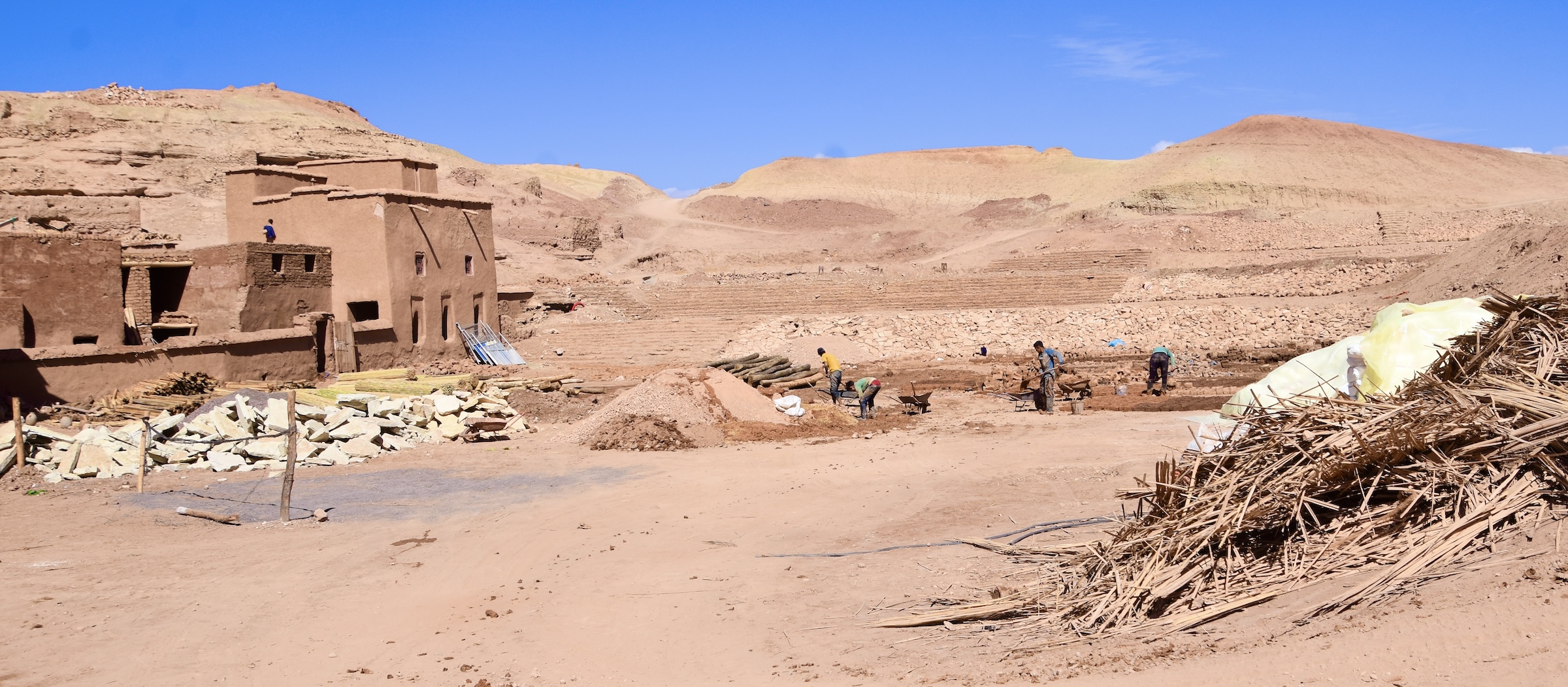
Believe it or not, this nondescript piece of land just outside the entrance to Ait Benhaddou was the site of the arena in Gladiator where Maximus fought his first battle.
Here is the scene. If you look closely you will clearly see Ait Benhaddou in the background of a few shots. BTW it’s pretty bloody so if you are a bit squeamish take a pass.
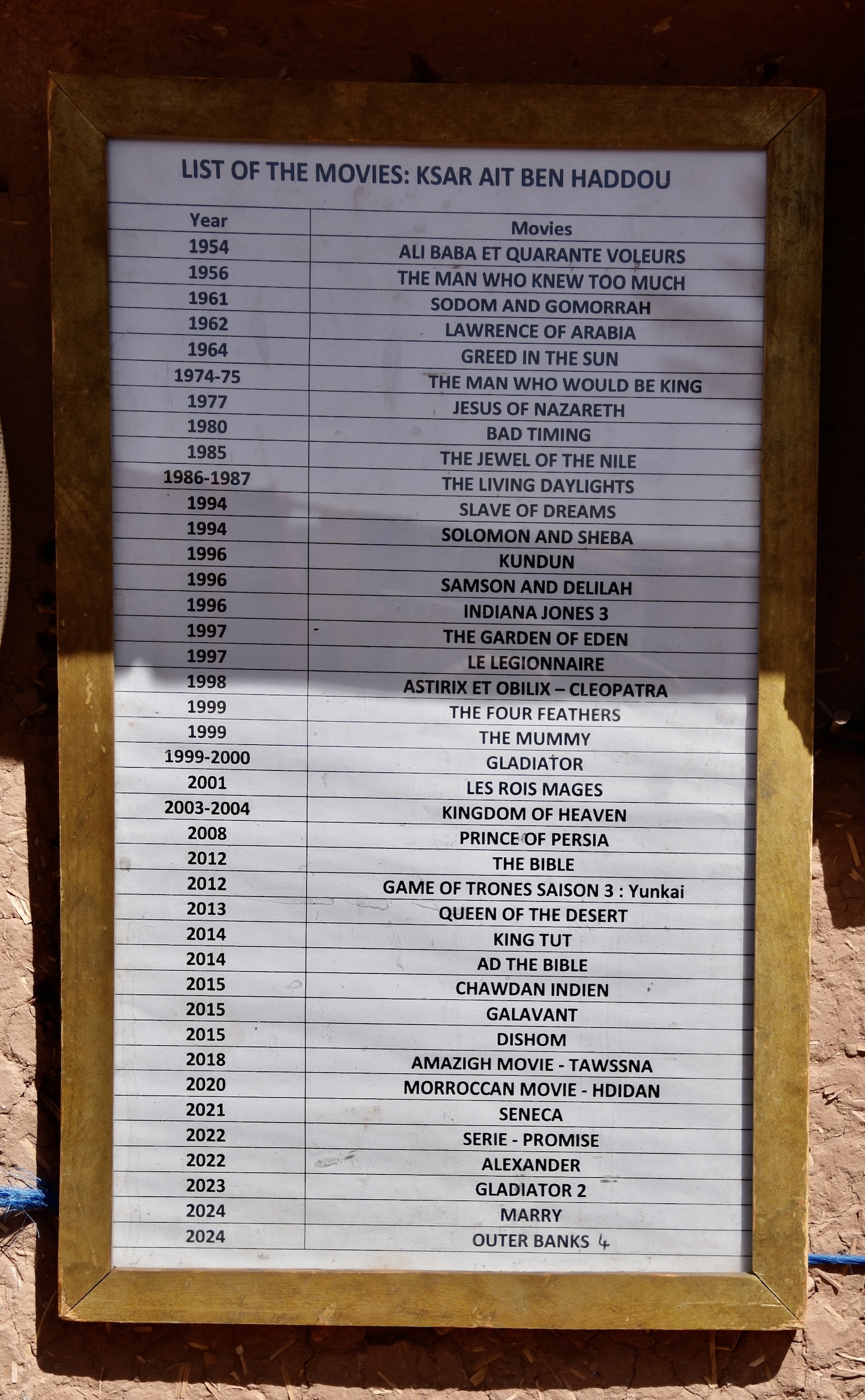
At the entrance there is this sign identifying all the movies and TV shows filmed here to date starting way back in 1954. GOT fans like me can add this as another location where that amazing series was shot.
Technically a typical ksar would have only one entrance and in the case of Ait Benhaddou this is it. Recently a pedestrian bridge has been constructed that allows for easier access and you can now make your way through Ait Benhaddou in a circular manner rather than return through the main gate.
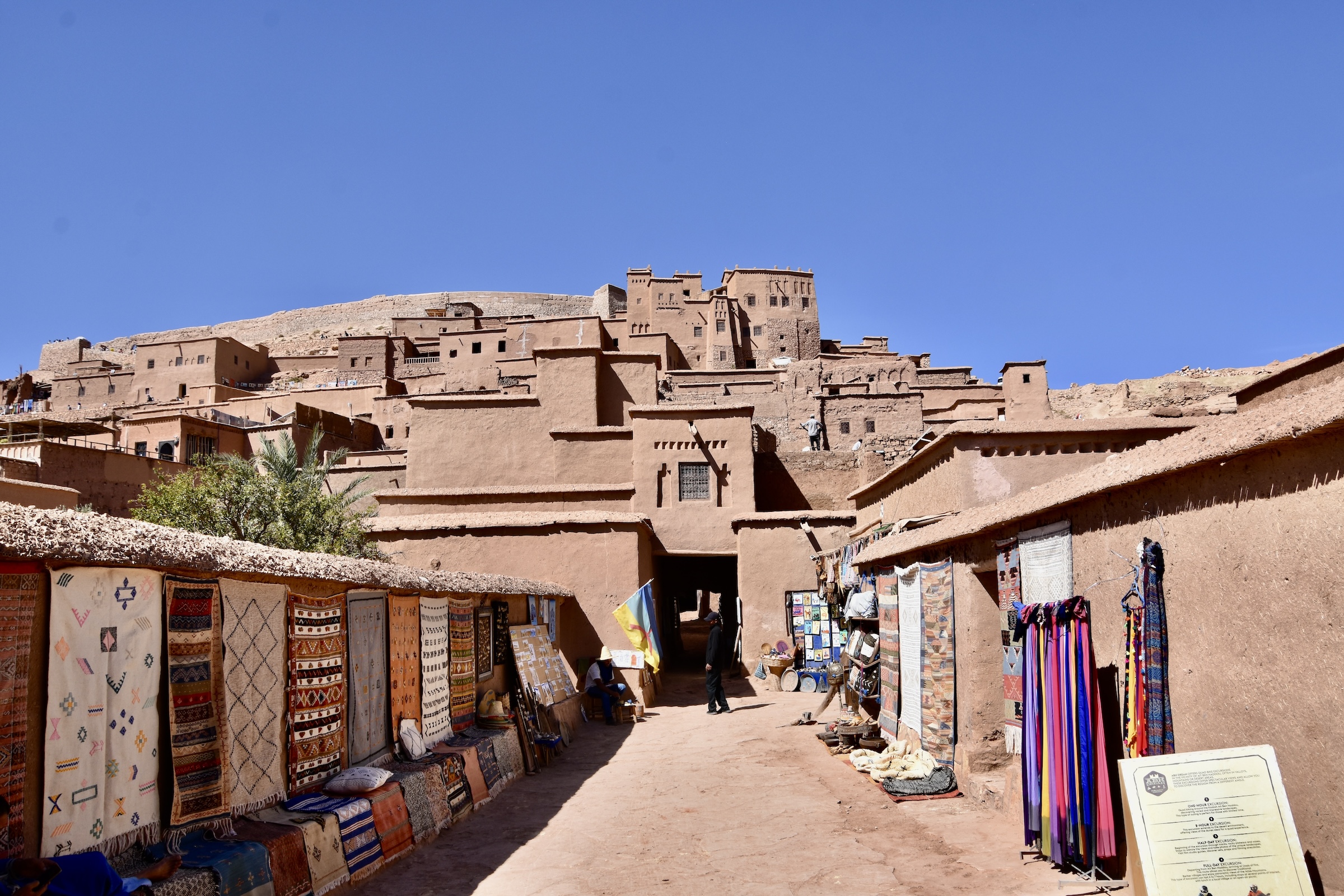
Now here I made a very wrong assumption. This being a World Heritage Site, I assumed these vendors outside the entrance would be it, thinking that the actual interior would be off limits to commercial enterprises, like just about every other WHS I have ever visited. A lot of us bought what turned out to be very overpriced souvenirs.
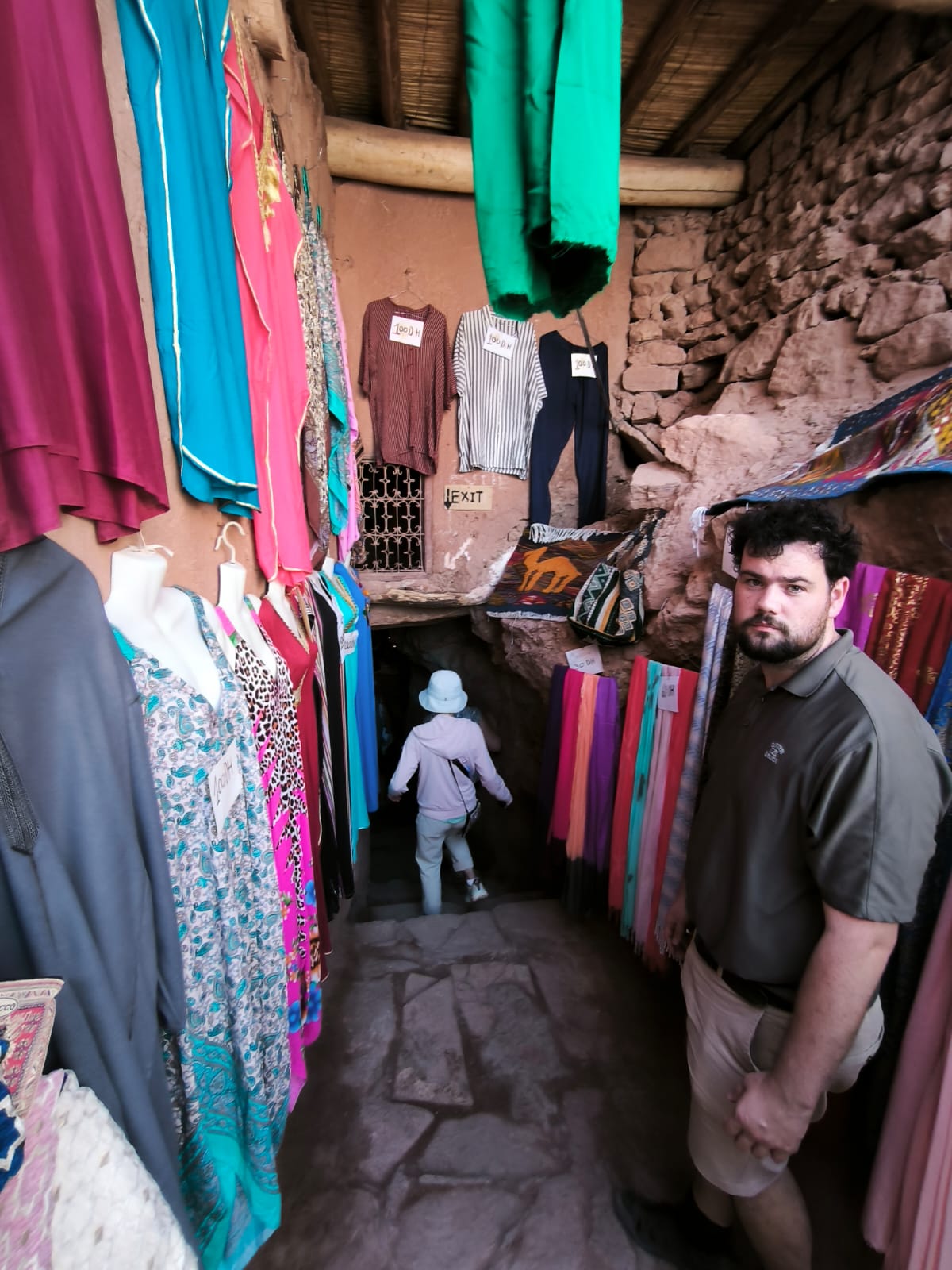
There are three types of people inside Ait Benhaddou – tourists, lots of them, workmen and hawkers, too many by far. It seemed that every single building inside the ksar was some type of shop selling everything from trashy trinkets to some genuinely fine art work and jewelry. I found I could have bought that fridge magnet inside for a third of what I paid outside.
I have to say that the overwhelming commercialization of Ait Benhaddou did take some, but not all of the shine off the place. I think George had the same opinion.
Our group split into two camps – those who wanted to climb to the very top and those who didn’t. I was in the former group and while it was hot going it was worth the effort to get there.
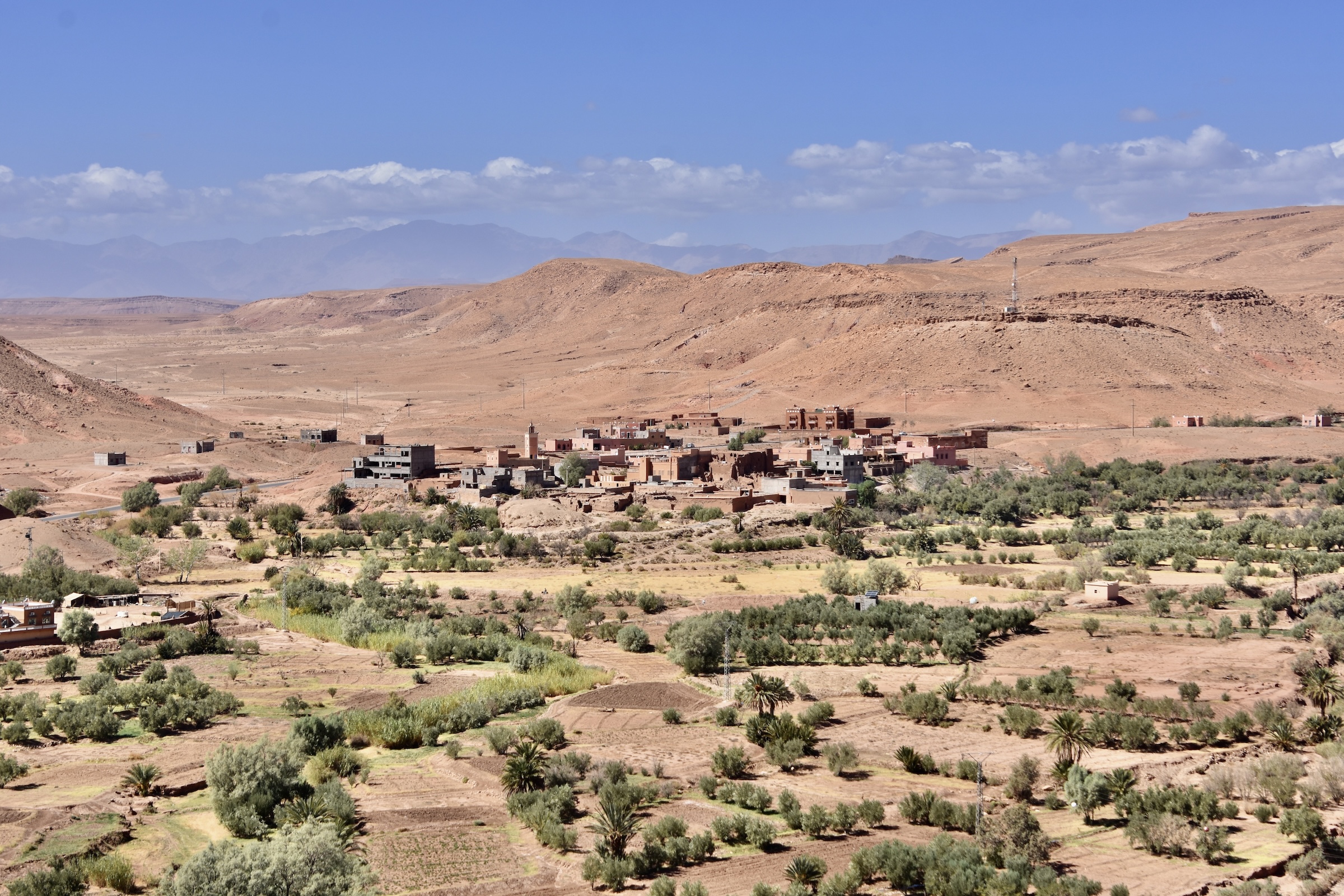
This would not have been a place upon which you could spring a surprise attack which helps explain its longevity and decent state of repair.
I also took this long range photo of the restaurant where we were to meet for lunch.
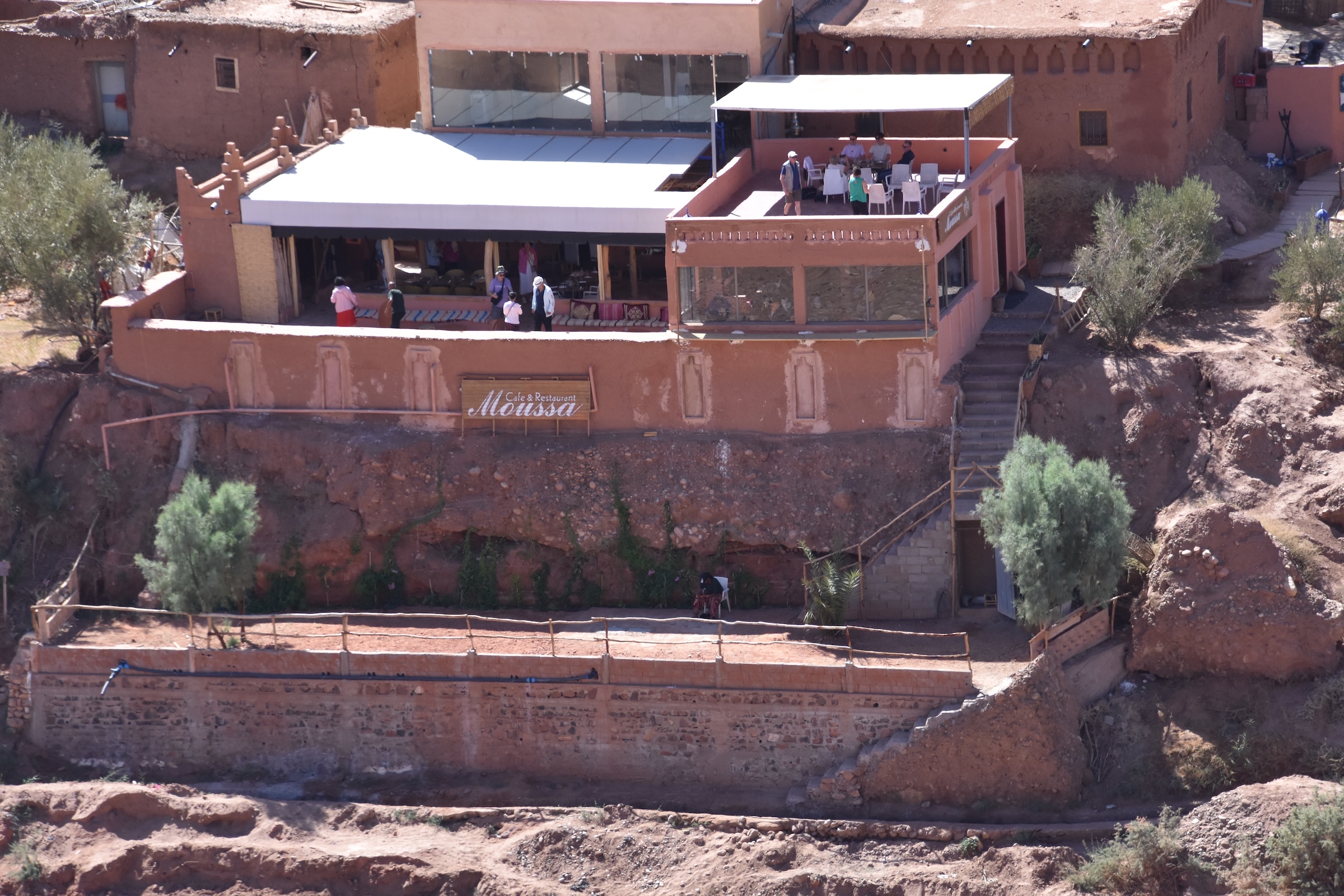
Once back down to Ait Benhaddou proper some in the group wanted to do some more foraging, but I was still ticked at getting ripped off on my fridge magnet purchase so decided to head back on my own. The local guide was adamant that I would get lost, but Laura intervened and I went on my way, not getting lost.
Like Kasbah Amridil, the secret to the allure of Ait Benhaddou is the stunning appearance from the outside, not necessarily what’s inside.
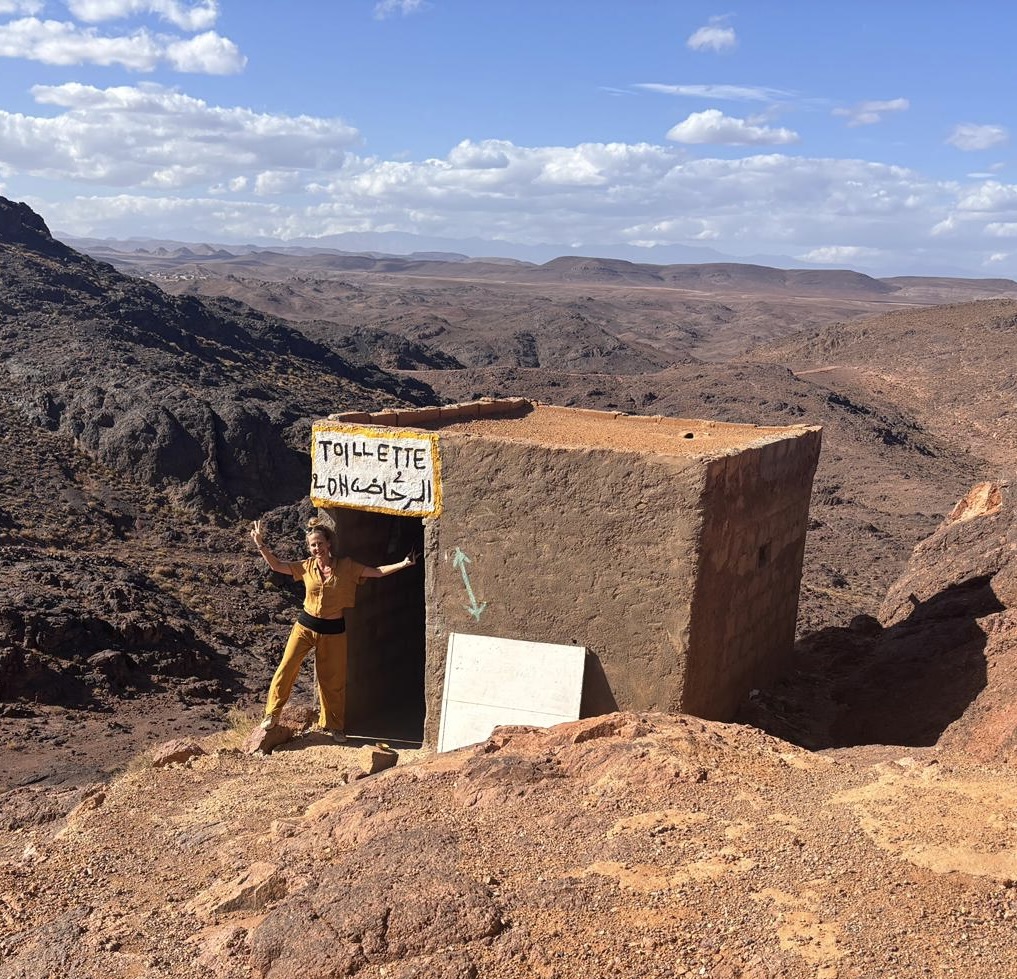
From Ait Benhaddou to the our final destination today, Taroudannt, it’s a fair distance with some nice High Atlas scenery and one bathroom break in this quite unusual setting.
Hotel Dar Zitoune
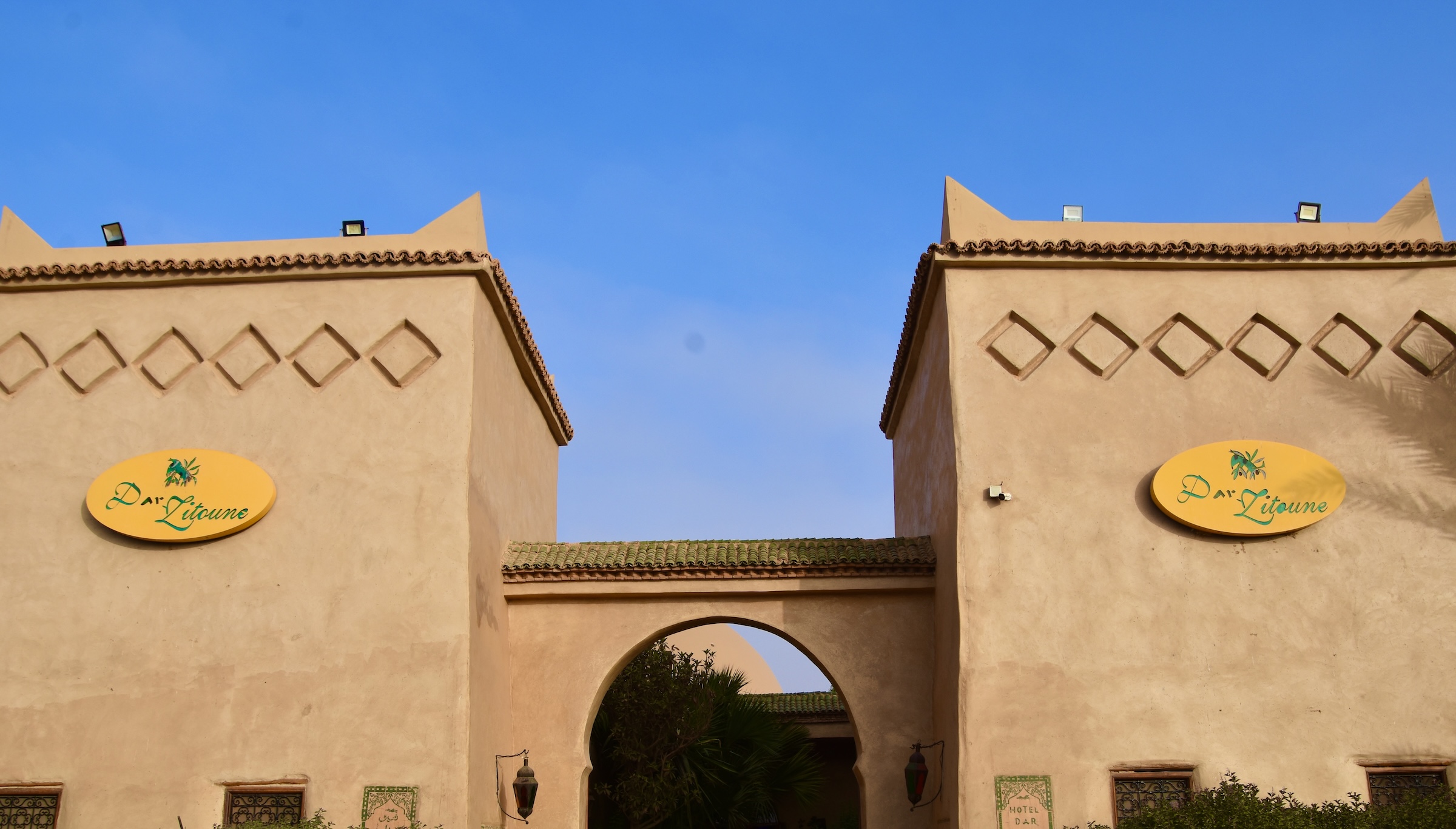
On pretty well every Adventures Abroad trip there is always one hotel that stands out as truly exceptional and on this tour it’s the Hotel Dar Zitoune in Taroudannt. We’ve had a good run of these kasbah styled hotels and the Dar Zitoune cranks it up to another level. We are here for two nights in what really is an oasis of tranquility with only a few other guests, some wonderful gardens to explore, two swimming pools, a spa and some fine dining.
Some of the crew got to stay in the Berber Village.
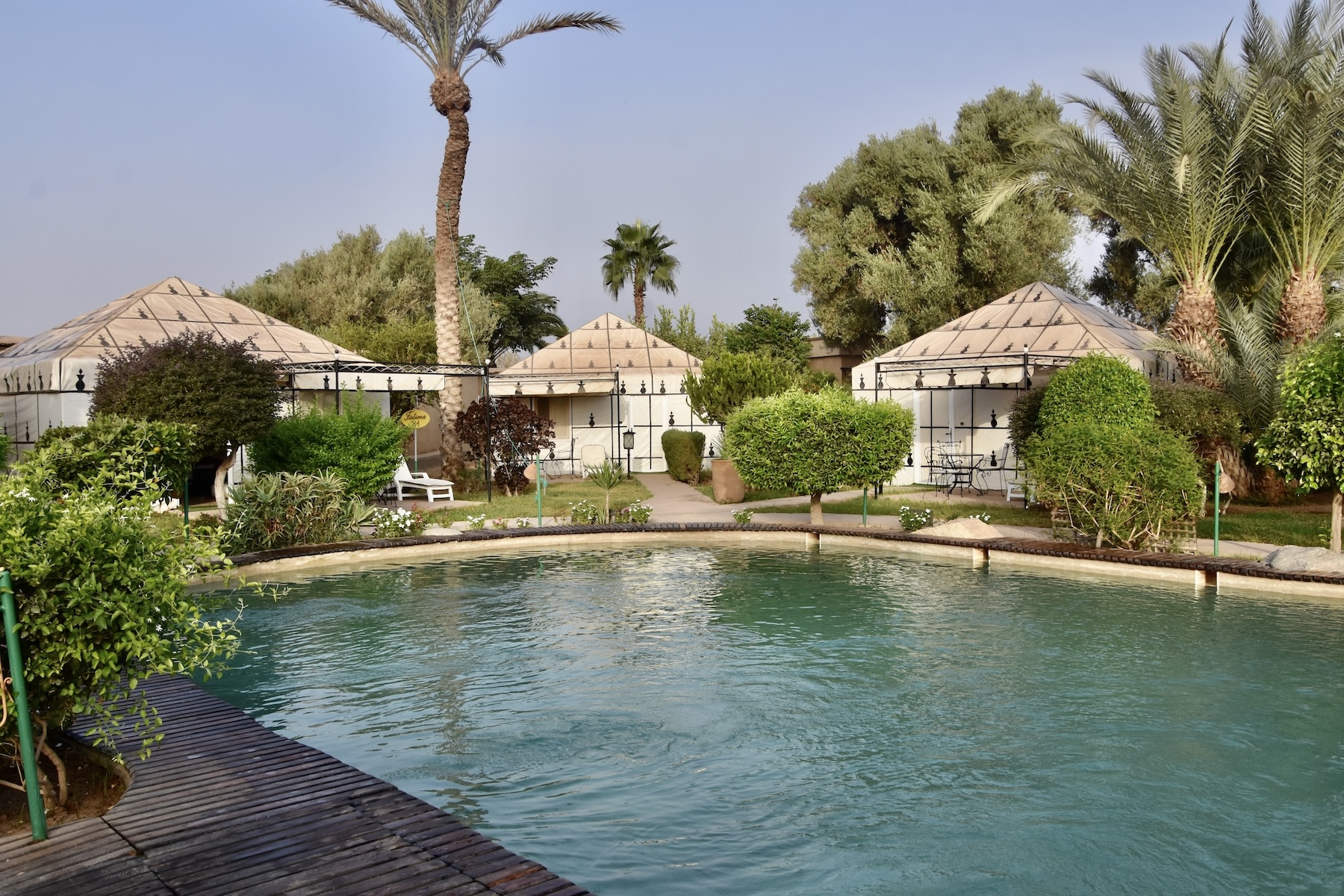
While others, including Alison and I each got our own spacious individually named accommodations. Ours was Peche, which was interesting because I had peche for dinner.
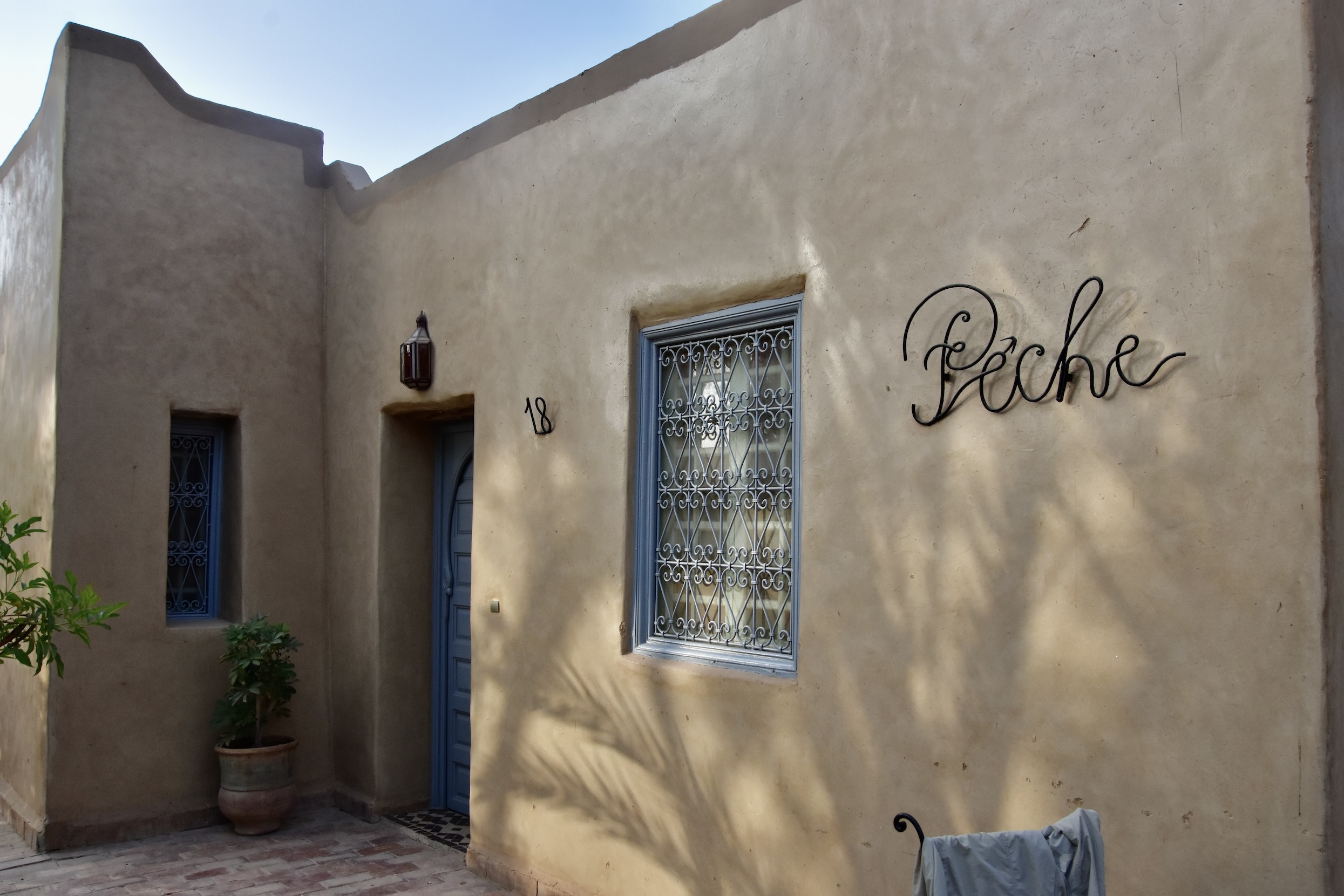
Here is a gallery of photos I took at Dar Zitoune which I hope give some idea of how relaxing this place was. Double click to open one and double click again to enlarge.
-
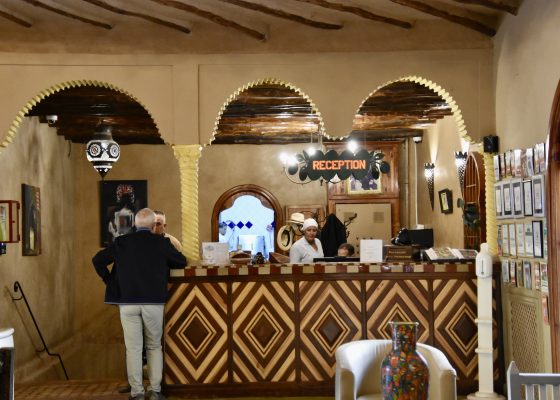
- Reception
-
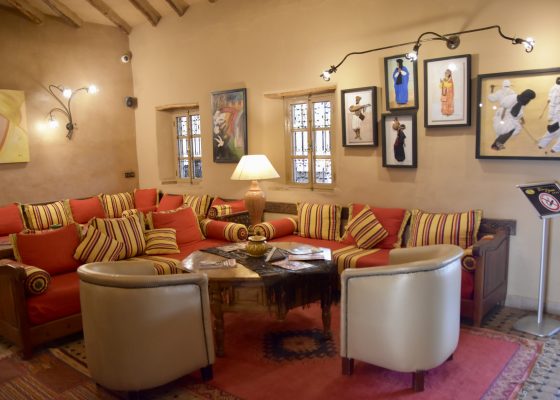
- Lobby
-
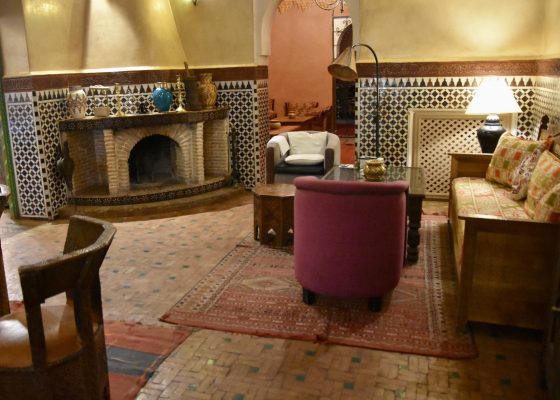
- Lounge
-
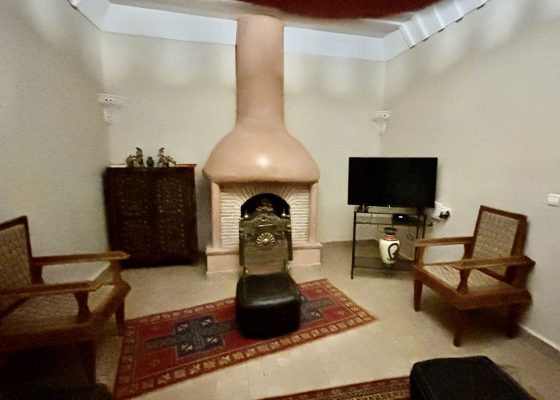
- Sitting Room
-
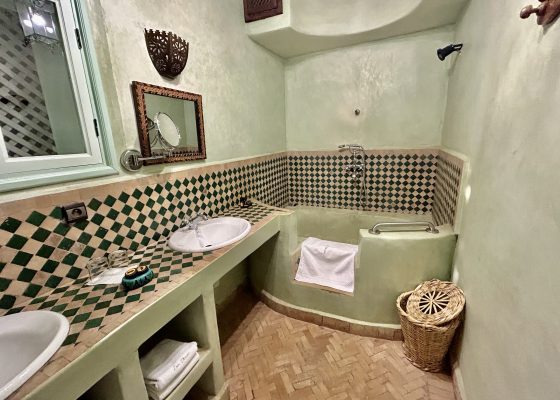
- Bathroom
-
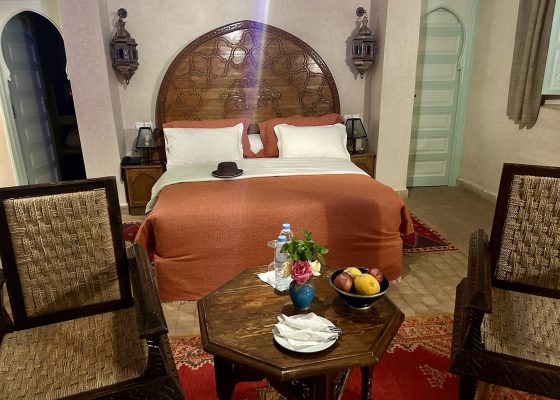
- Bedroom
-
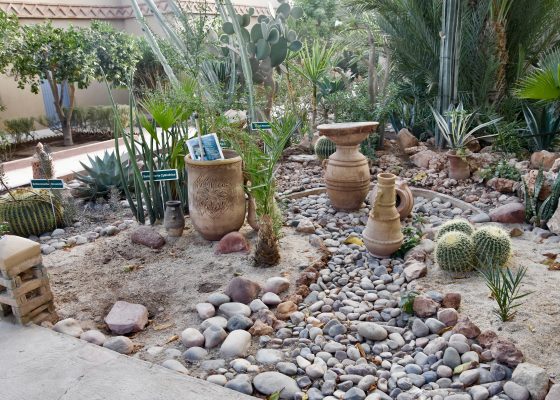
- Cactus Garden
-
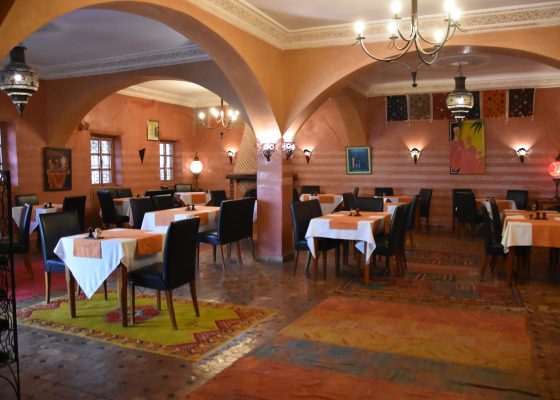
- Dining Room
-
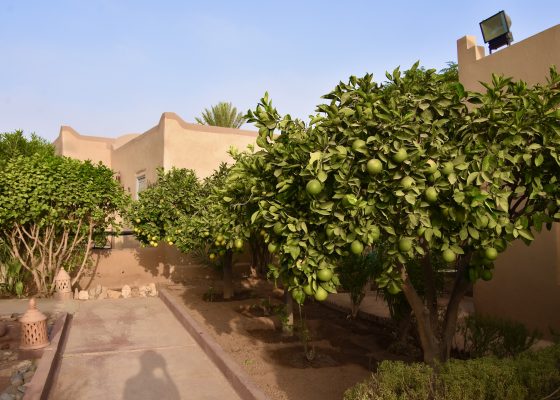
- Citrus Walk
-
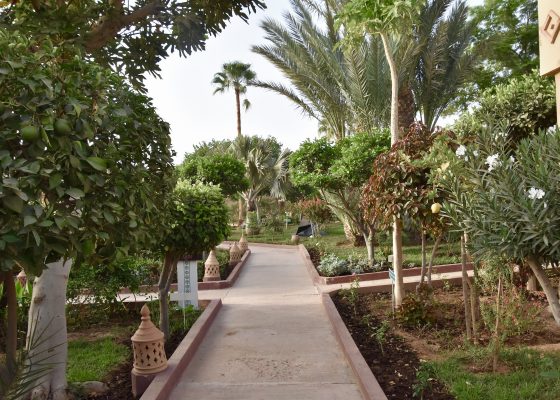
- Grounds
-
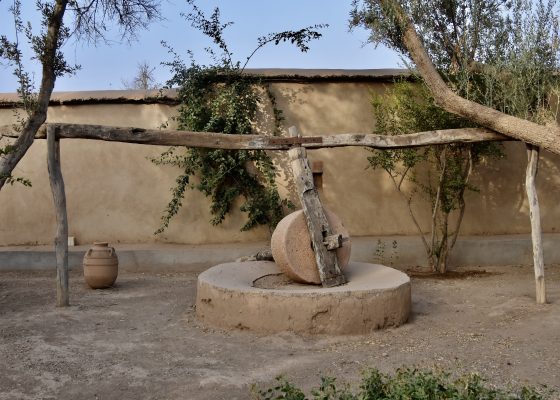
- Old Grindstone
-
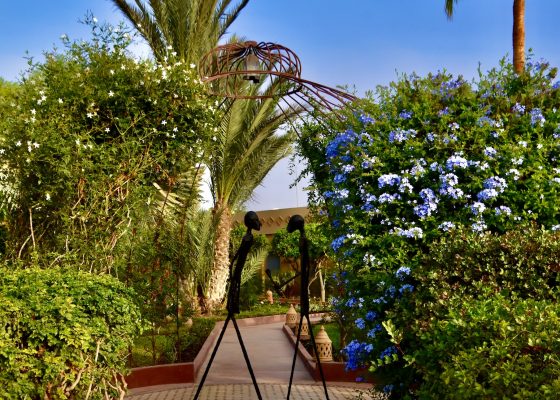
- Sculpture Garden
-
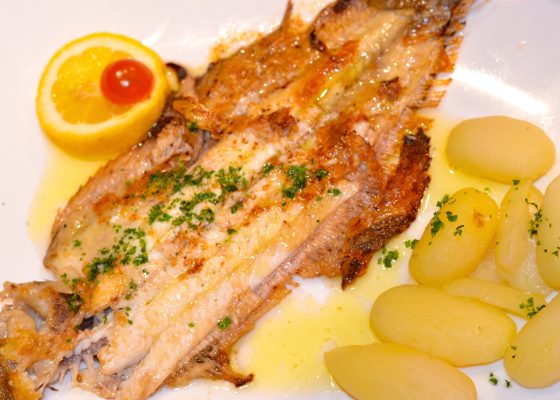
- Sole Meuniere – My Peche
-
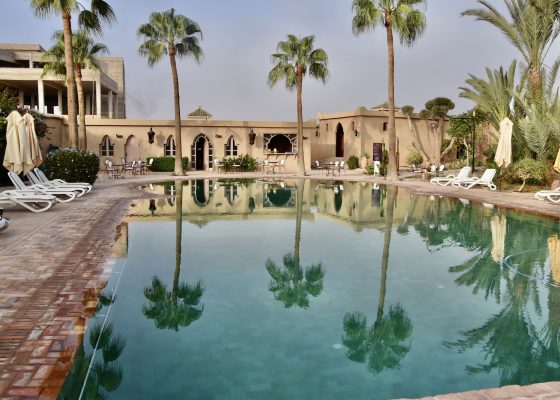
- Swimming Pool
It’s been an interesting and informative day with more to come tomorrow as we explore Taroudannt, a city that is off the radar for most Morocco tour companies.