
Australia with Adventures Abroad

Alison and I have just completed another journey of a lifetime with Adventures Abroad. This time it was the vast continent of Australia and in this post I’ll explain why I thought this itinerary was about the best way to get an introduction to The Land Down Under. Realistically, just as you could not expect to see all the highlights of a trip to Canada or the United States in one go, so with Australia. But I thought AA did a really great job of not only getting pretty well all of Australia’s iconic attractions included while also featuring its many, many different environments. I consider myself a student of geography, but I was very pleasantly surprised to learn that my thoughts of Australia as basically one giant desert were completely inaccurate. Yes, most of it is arid, but that still leaves room for tropical rainforests, temperate rainforests, stunning seascapes and beautiful cityscapes.
So with that brief intro, let’s delve into why this was one of the best Adventures Abroad trips Alison and I have ever been on.
It all starts with the group. AA limits their tours to 18 participants and there are often less as was the was the case on this trip. All told there were only ten of us. Seven had come from the AA New Zealand tour that Alison and I did last year. Here is a link to my post on the New Zealand AA itinerary and why that too is a fantastic destination. For many people New Zealand and Australia are so far from North America that combining both countries into one trip makes sense and this itinerary does just that in a month long tour. The group of seven included two American couples, two single American women travelling together and one lone Canadian. Besides Alison and I our group now included one more single Canadian lady from Richmond, BC where Adventures Abroad is based. In my last Adventures Abroad trip to Peru and Bolivia, only a month before, there were only two Americans vs. 15 Canadians and I ventured to think it was because they either weren’t travelling as much or that given the current state of Canada/US relations, they did not feel comfortable travelling with a mostly Canadian group. Well, clearly that thinking was wrong and I’m glad it was. By the end of this trip the group was as tight knit and friendly as any we’ve ever been on. As with most AA patrons, this group was well travelled, knowledgable and open to new experiences. There were no discussions of politics or religion for that matter, but lots about history, nature and the arts.
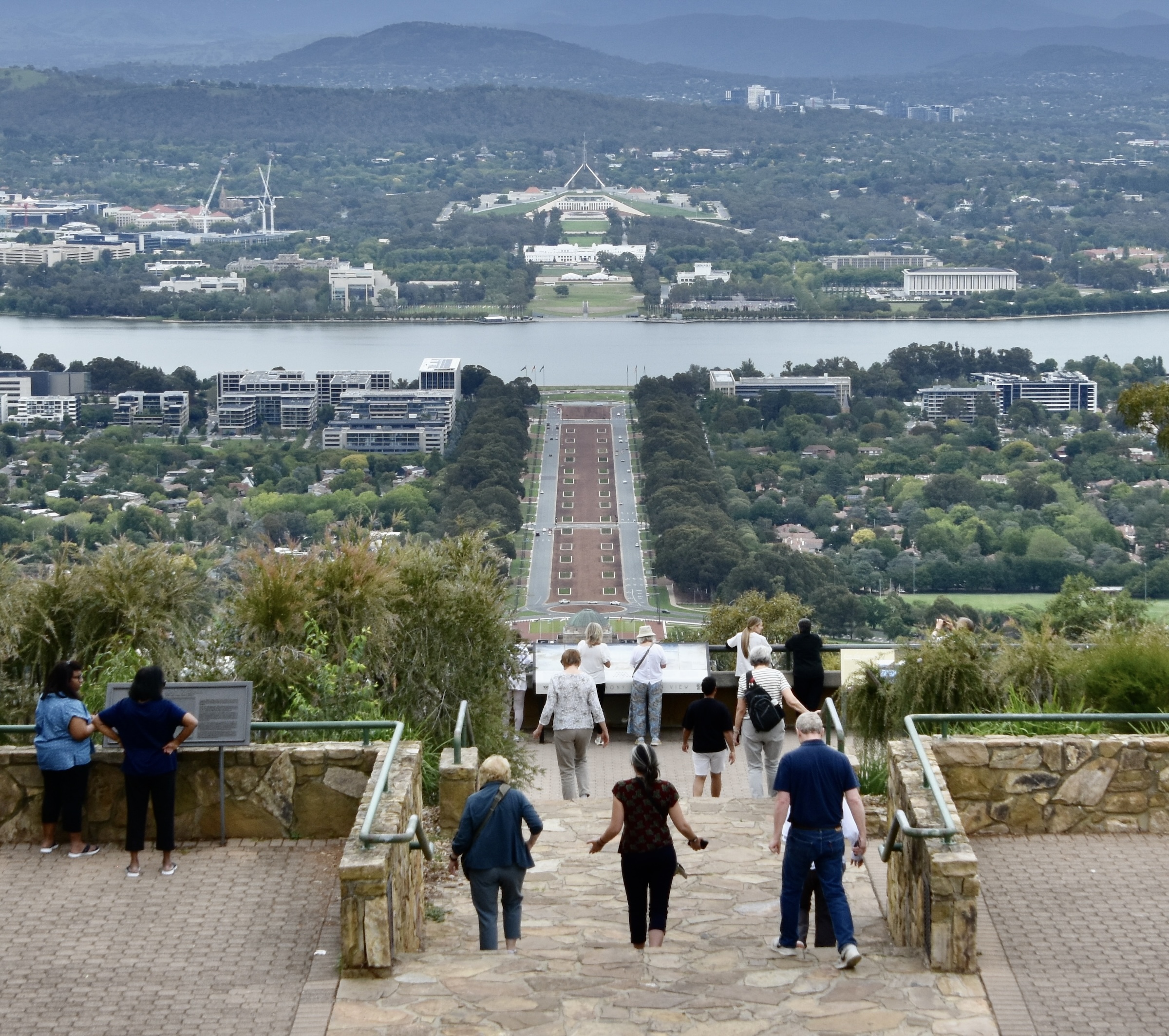
In addition to the the fact that the group bonded very well, there was the expert leadership of our tour guide Brandi McCarthy, a fellow Nova Scotian who is now a digital nomad leading AA trips around the world. This was our first trip with Brandi and I hope it won’t be our last. After this trip she was booked for seven straight AA trips from Africa to Europe to the South Pacific which tells me that she is held in high regard by the people at Adventures Abroad and capable of leading trips anywhere in the world.
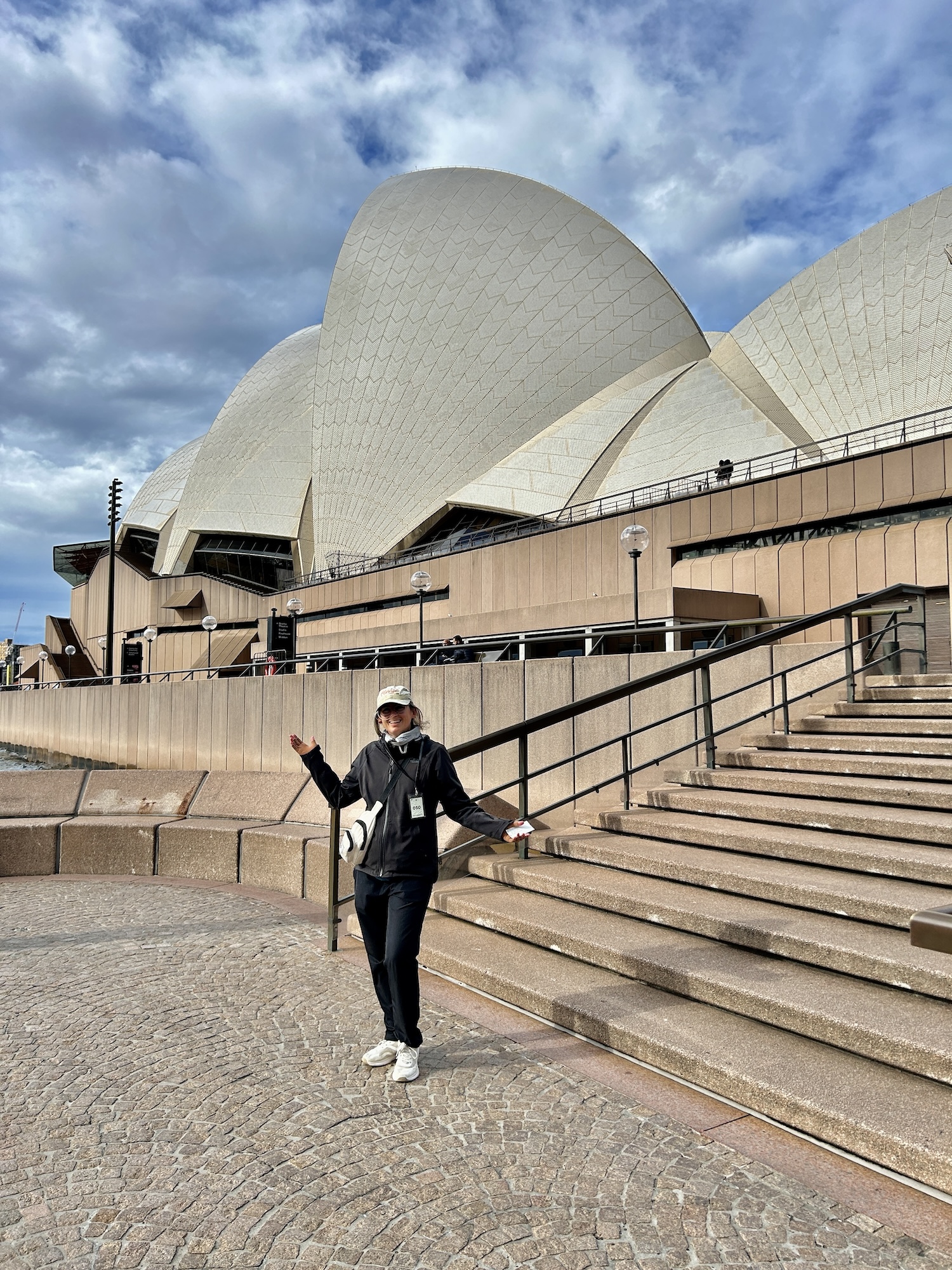
There were five internal flights on this tour and Brandi utilized group check in on all but one, including fast lines at security, which made the whole airport experiences seamless and unstressful. She also sent us copies of the evening restaurant menus a day in advance so that we could order a day ahead which cut the time at restaurants almost in half. I’d much rather have free time to explore a place rather than scouring a menu and then waiting for my food to arrive.
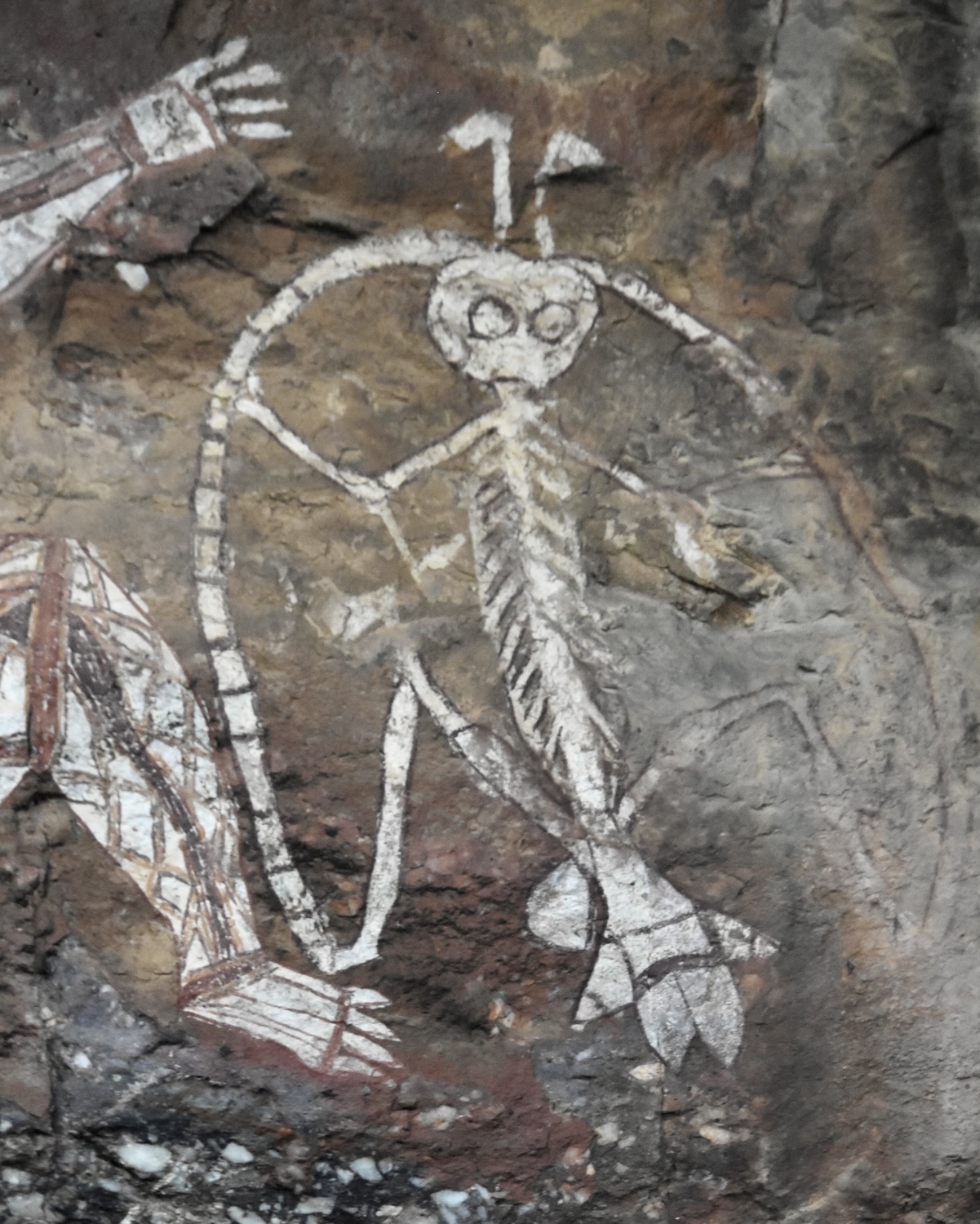
As good as any tour leader might be they need ground support in the form of local guides and drivers. On this trip we had local guides and drivers in Melbourne, Canberra, Cairns, Darwin, Alice Springs, Uluru and Sydney. Each one was an expert in their immediate area and greatly enhanced our experience, whether it was finding kangaroos in Canberra or explaining the significance of the Lightning Man to the Kunwinju people of Kakadu.
Getting Around
Another consistent feature of Adventures Abroad tours is the use of the great variety of transportation they use. Of course there were the expected plane and bus trips, but we also used a duck boat, a heritage train and the world’s steepest train, several trams, the magnificent Cairns Skyrail, boat excursions to the Great Barrier Reef, the remote Alligator River and Sydney Harbour. Here is a gallery of some of those methods of getting around Australia. Double-click to open and double-click again to enlarge.
-
- On the Alligator River
-
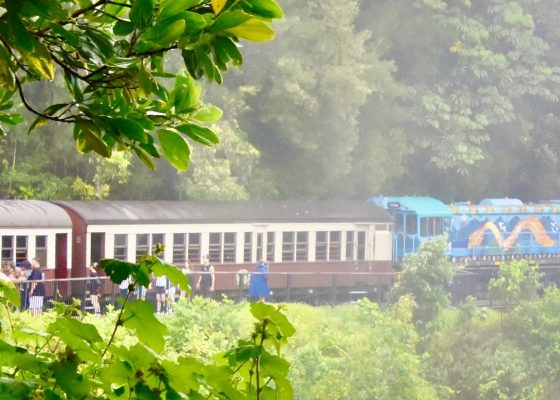
- The Kuranda Train
-
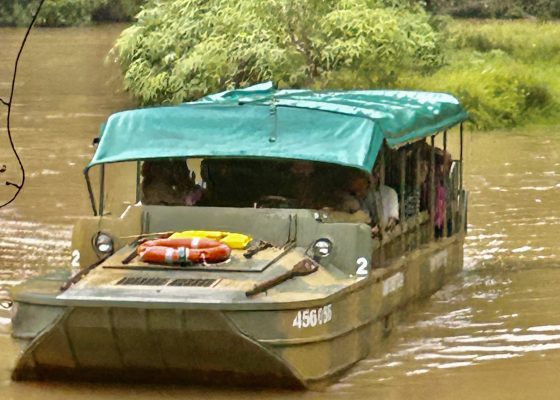
- The Duck Boat
-
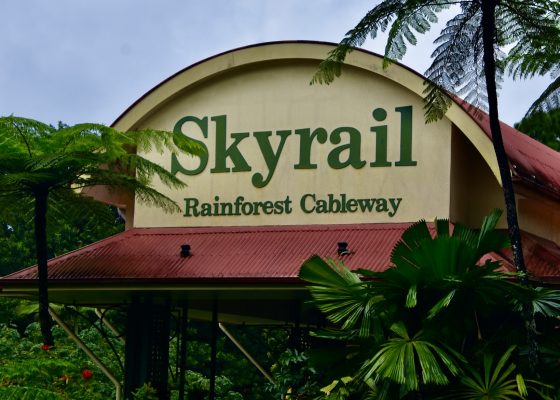
- Skyrail Entrance
-
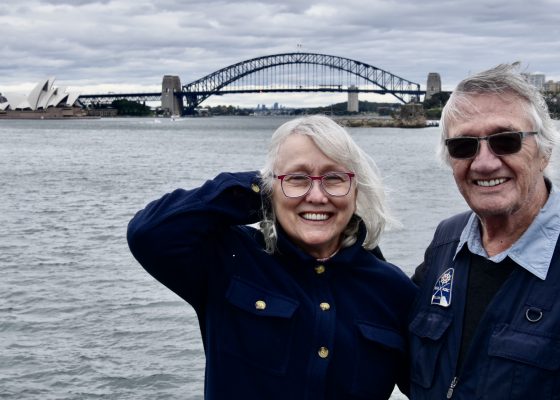
- On Sydney Harbour
-
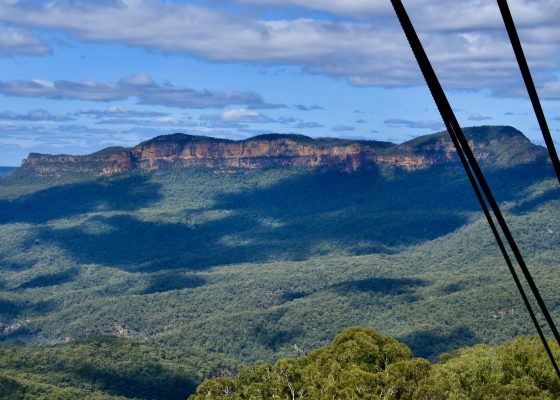
- Blue Mountains from the Cableway
-
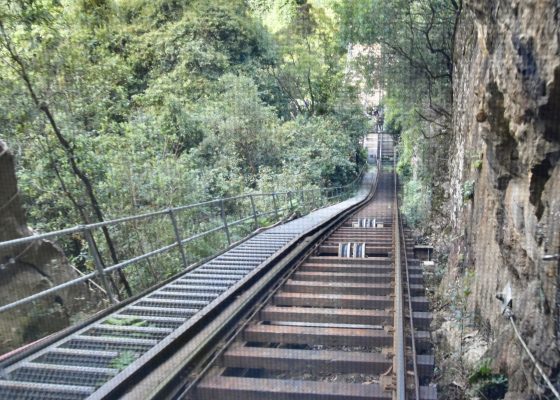
- World’s Steepest Train
Australia World Heritage Sites
Anyone who follows my travels will know that I absolutely put UNESCO World Heritage Sites near the top of my bucket list when visiting a new country and Australia was no exception. The Adventures Abroad itinerary includes seven of these sites, some of which I had no idea about such as the Melbourne Great Exhibition Building or Kakadu in the Northern Territory. Collectively these were all highlights of a trip with a surfeit of same. Here is a gallery with one photo from each World Heritage Site. I will go into greater detail about each in future posts.
-
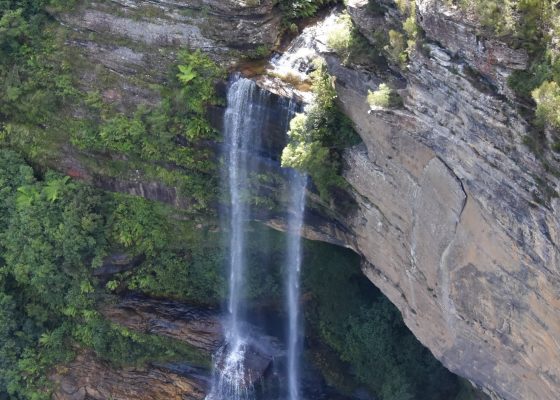
- Serenity Falls, Blue Mountains WHS
-
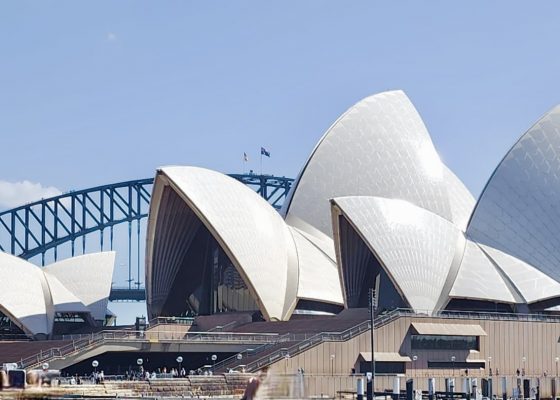
- Sydney Opera House WHS
-
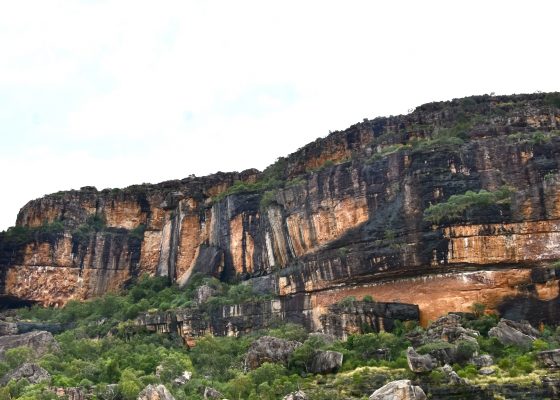
- The Feather, Kakadu WHS
-
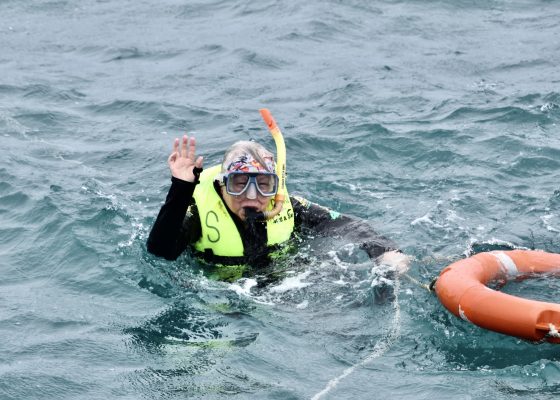
- Alison at the Great Barrier Reef, WHS
-
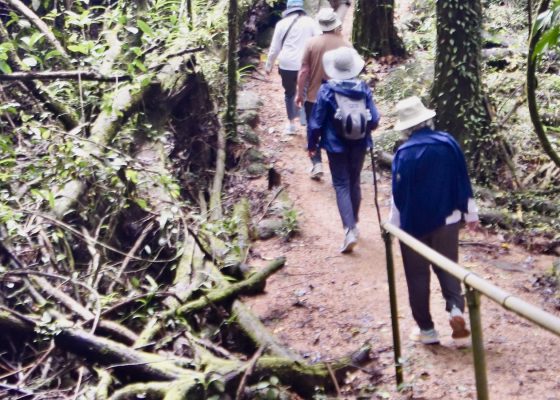
- Mossman Gorge, Wet Tropics of Queensland WHS
-
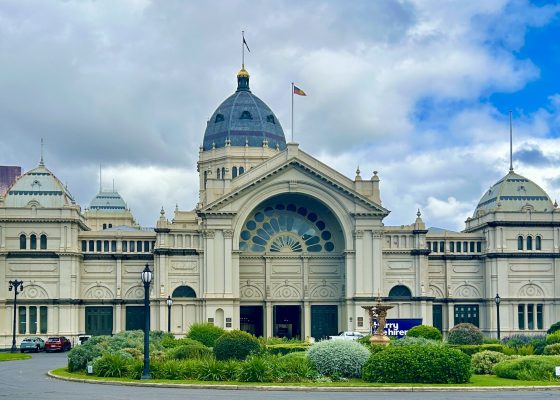
- Melbourne Exhibition Building, WHS
-
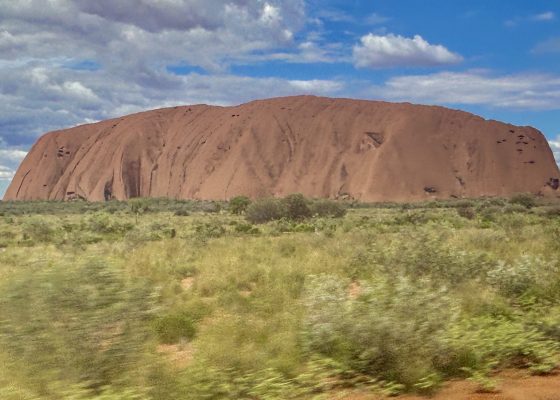
- Uluru, Uluru Kata Tjuta WHS
Australian Wildlife
As important as the World Heritage Sites were, the trip would not have been the same without spotting some of Australia’s unique wildlife. Aside from stops along the way to seek out koalas, kangaroos and wallabies and a river excursion to look for saltwater crocodiles, the itinerary included two excellent wildlife parks – Alice Springs Desert Park and Featherdale, just outside of Sydney. As a birder, I was thrilled to add quite a number of new life listers, both in the wild and at the parks. Here is a gallery of just a tiny fraction of the birds, marsupials, reptiles and other creatures observed on this trip.
-
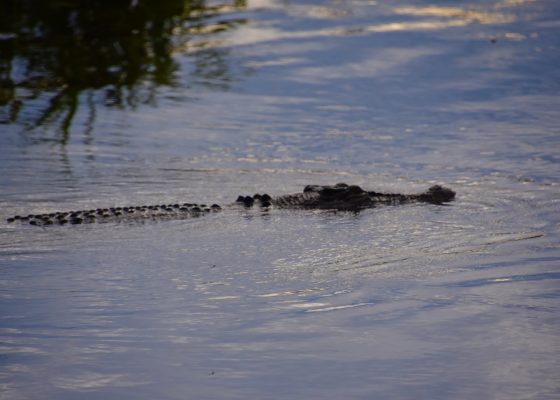
- Salt Water Crocodile
-
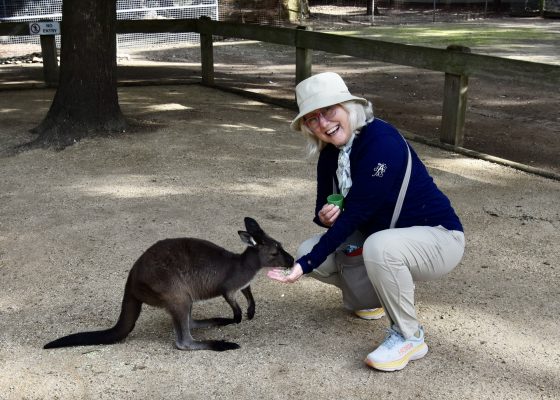
- Alison Feeding a Wallaby at Featherdale
-
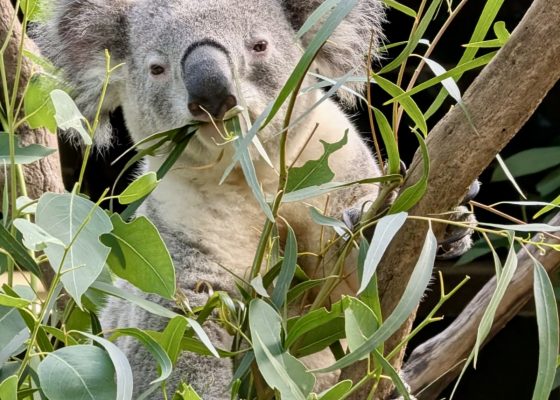
- Koala
-
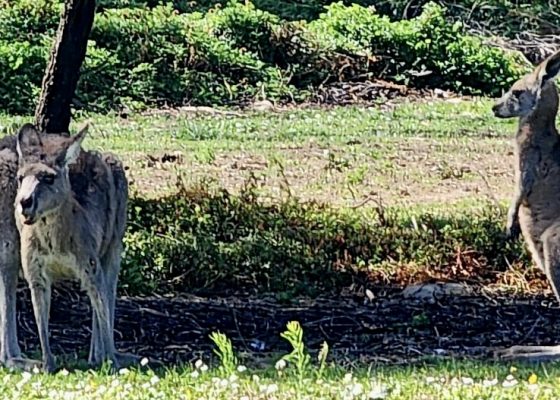
- Great Grey Kangaroos
-
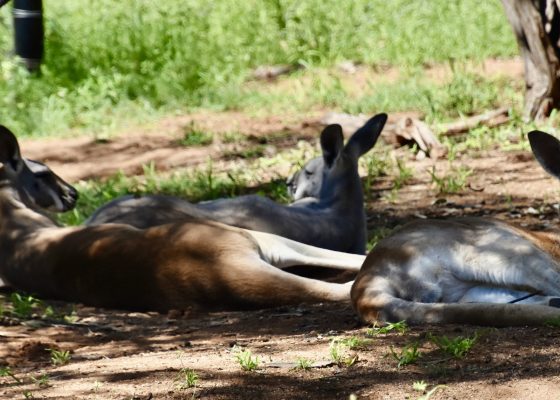
- Red Kangaroos
-
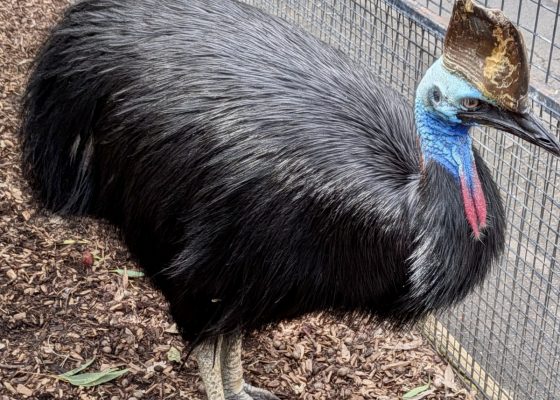
- Cassowary
-
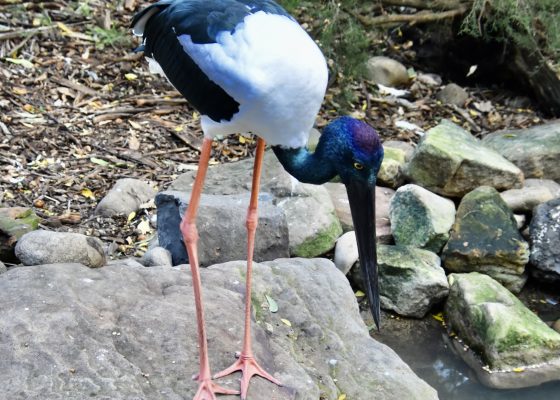
- Black-Necked Stork
-
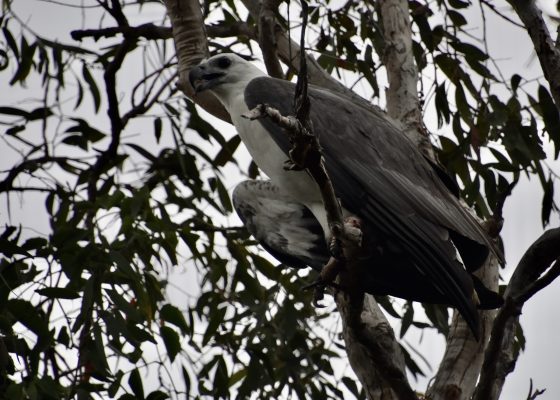
- White Bellied Sea Eagle
-
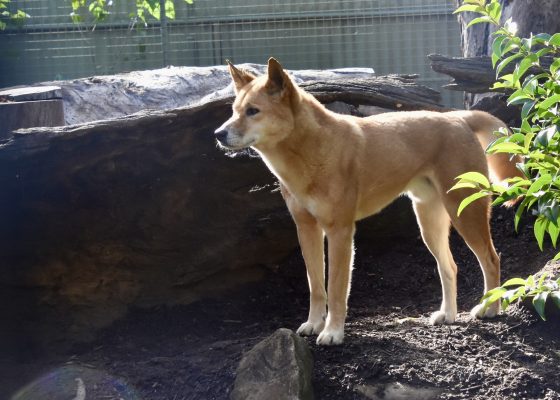
- Dingo
-
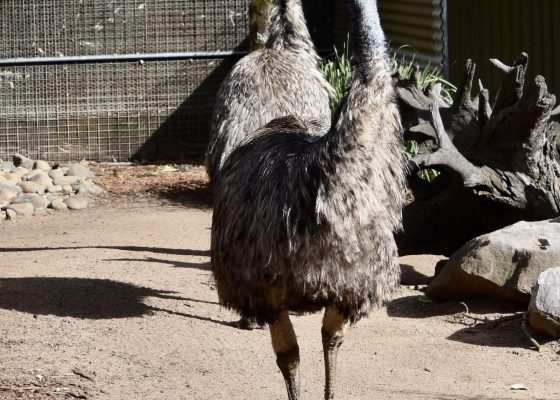
- Emu
Last and certainly not least in terms of tourist attractions, were our several interactions with the Australian Aboriginal community. There are over 500 Aboriginal First People’s on the continent, most with their own recognized territorial boundaries as defined by this map from the First Nations Heritage Protection Alliance.
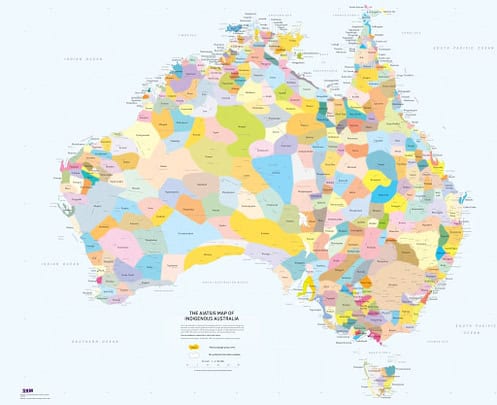
As is happening in Canada, United States and throughout many parts of Central and South America, Indigenous tourism is really taking off in Australia and Adventures Abroad made sure our group got to experience it at a number of locations including Mossman Gorge and Rainforestation Nature Park where we learned the proper way (or not) to throw a boomerang.
No doubt everyone has heard the sound of a didgeridoo, the iconic musical instrument of the Aboriginals, but trust me, until you’ve heard an expert play one for you in person you have no idea of the complexity of the sounds this instruments can make. Have a listen.
In addition to direct interaction with Aboriginal people at Mossman Gorge and Rainforestation, we also had a guided tour of Aboriginal rock art in Kakadu National Park and learned about sacred sites and creation stories in Uluru/Kata Tjuka National Park. I came away with a much better appreciation of how the reconciliation process between Aboriginals and the descendants of the European colonists is ongoing and while it still has a long way to go, it is well on its way.
Food & Drink in Australia
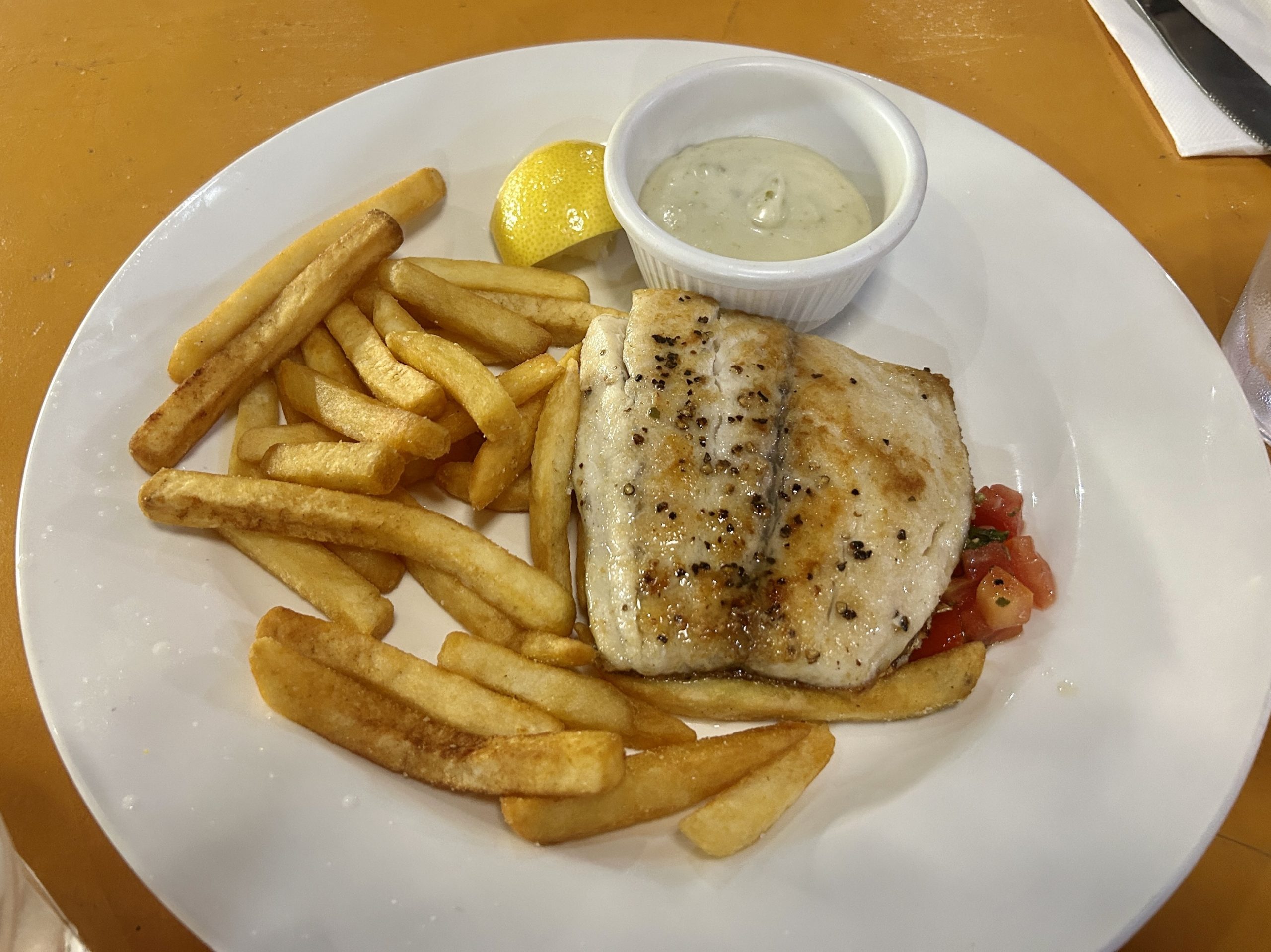
On many Adventures Abroad tours the local food and drink is a new and usually for Alison and I, exciting part of the tour. That is not the case in Australia where it’s hard to say if there is a home grown cuisine that you won’t find anywhere else. The truth is that Australia has very high food standards, but it consists of almost any worldwide cuisine you can think of. Melbourne and Sydney are famous for their myriad of different restaurants, literally in the thousands. If I had to put my finger on one thing that you should try in Australia and won’t find elsewhere, it is barramundi, a native fish found on almost every menu, either as a grilled fillet or in fish and chips. It has a beautiful solid white flaky texture that is delicious.
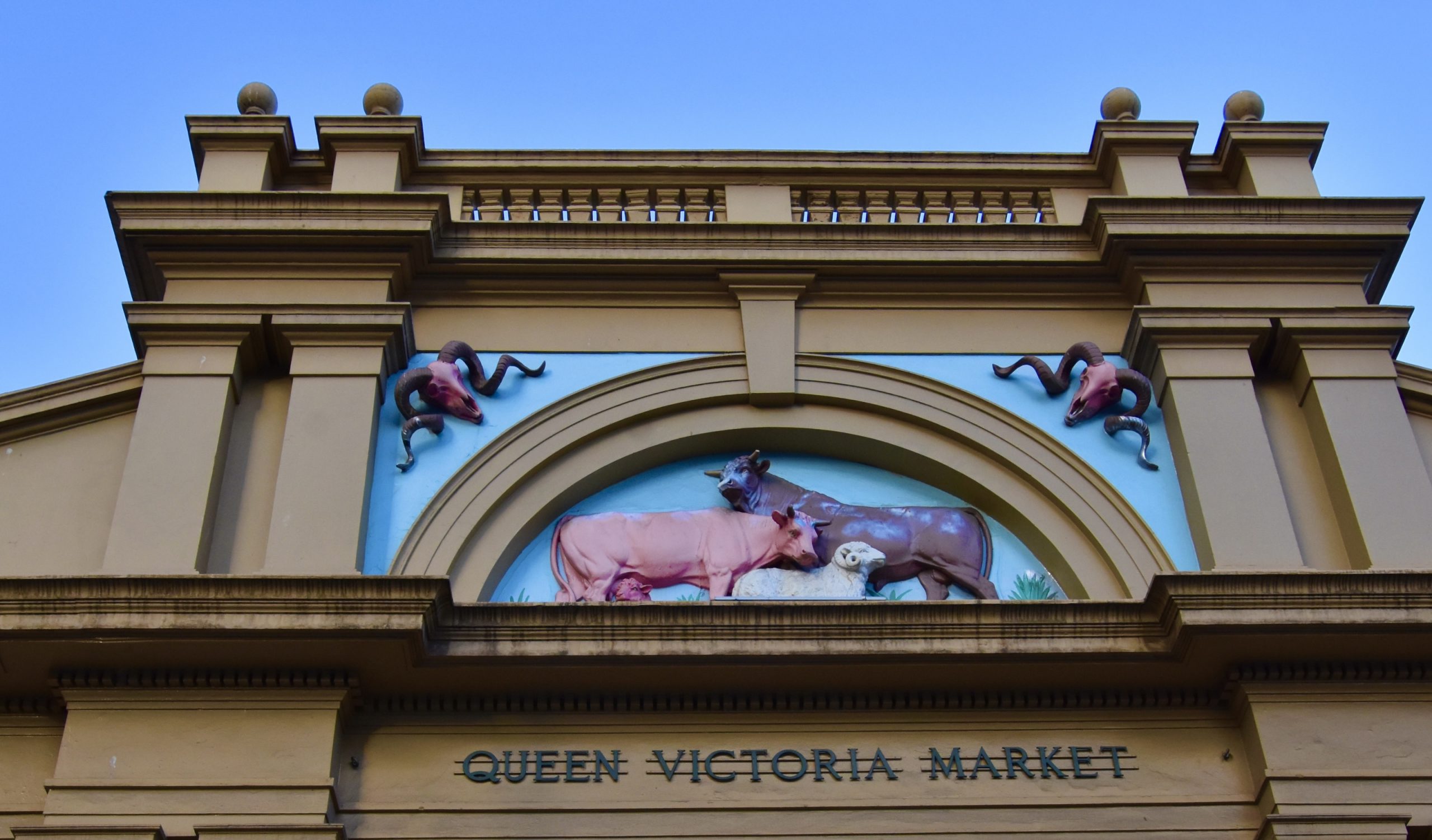
One thing you will not forget are the incredible food shops in the Victoria Market in Melbourne.
-
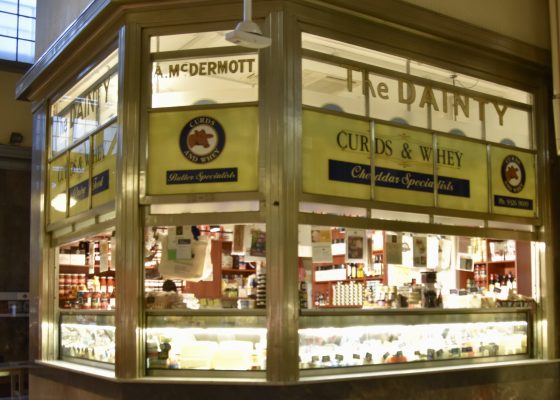
- The Dainty Curds & Whey
-

- Polish Deli
-
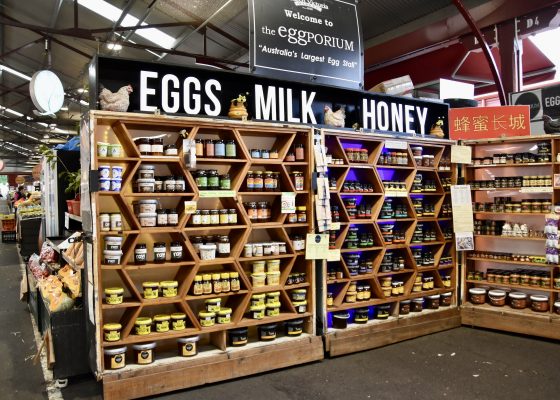
- Australia’s Largest Eggporium
-
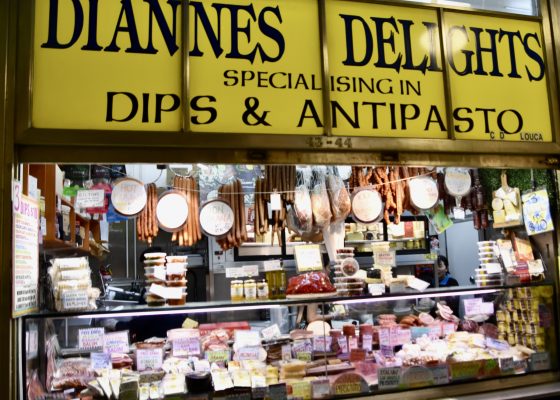
- Diannes Delights
Here is a gallery of just a few meals that Alison and I and others enjoyed on this tour.
-
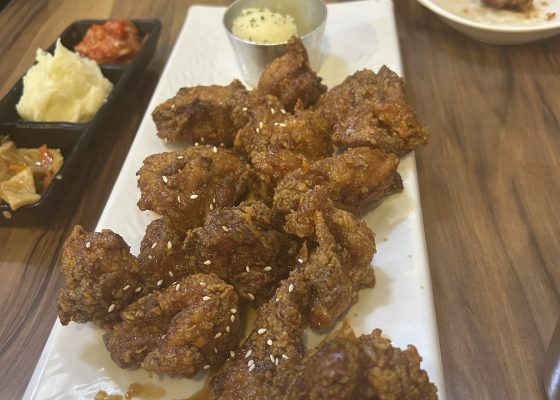
- Garlic SoyKorean Fried Chicken at By Korea, Melbourne
-
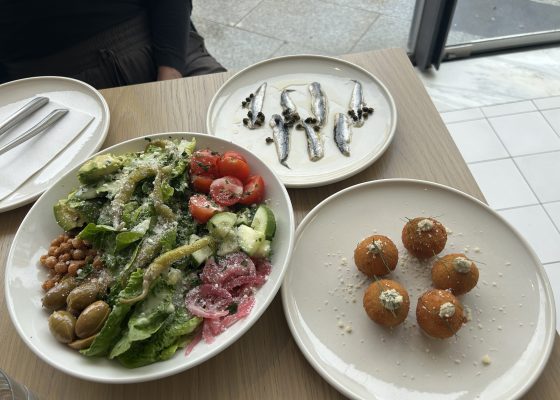
- Chopped Salad, Arancini & White Anchovies, Observatory, Royal Botanic Gardens
-
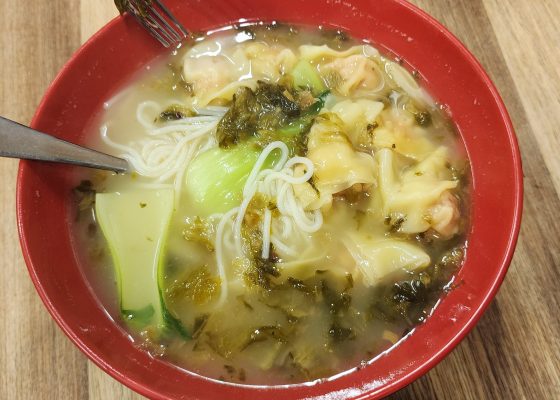
- Dumplings
-
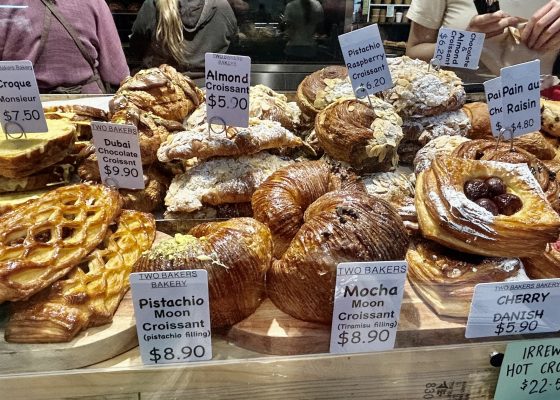
- Fabulous Pastry
-
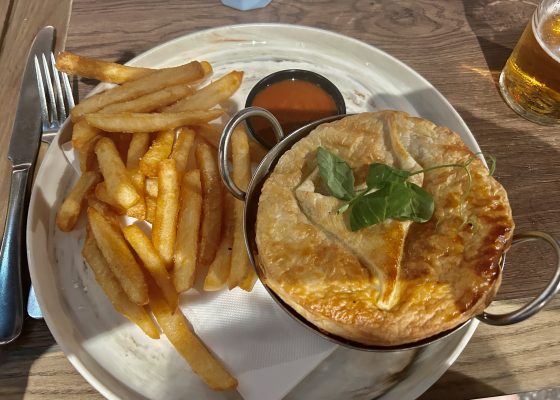
- Mushroon & Steak Pie
-
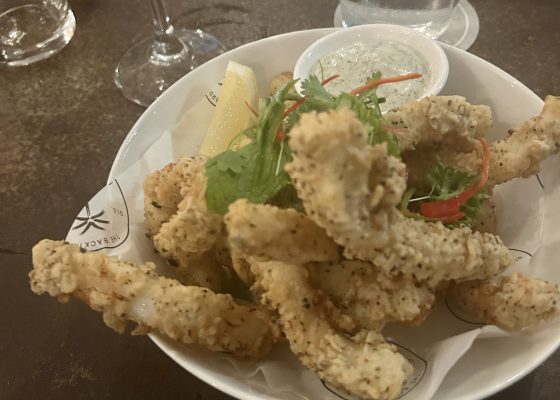
- Squid
-
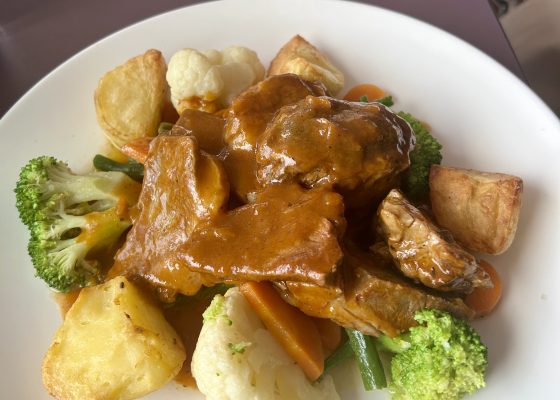
- Sunday Roast,Great Ocean Road Brewhouse, Apollo Bay
-
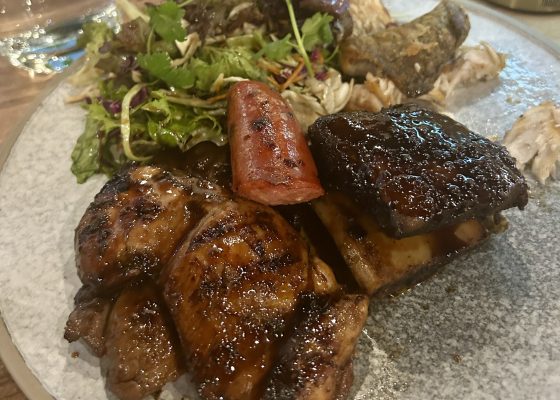
- Mixed Grill, Ginger & Olive, Melbourne
-

- Burrito Bowl, Darwin Botanical Gardens
-
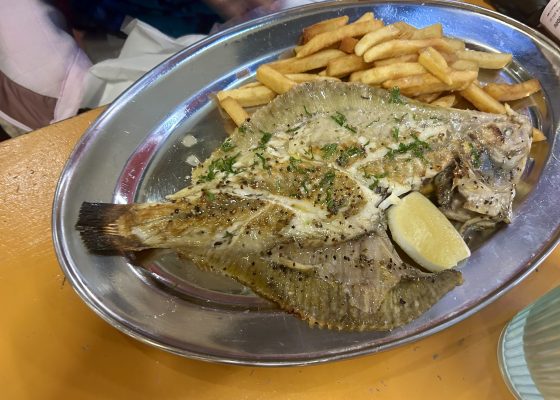
- Sole – Rossini Cafe
-
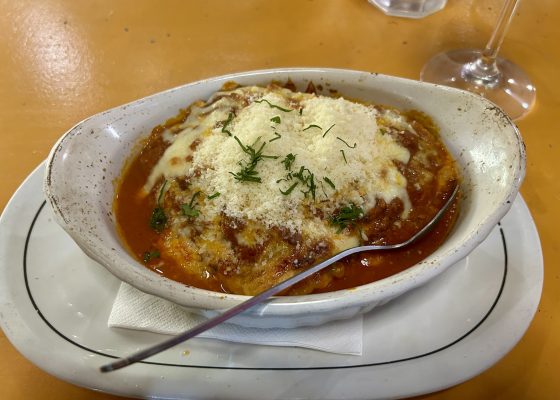
- Lasagna, Rossini Cafe, Sydney
In terms of beverages, the standard morning hot beverage is flat white which is about the equivalent of cafe au lait. If you are a fan of North American drip style coffee as I am, you will be out of luck. Almost all the coffee comes out of espresso type machines and is incredibly strong. The alternative is, of course, tea.
Later in the day it will be time for some of that famous Australian beer, which BTW is definitely not Foster’s. There will be any number of local craft beers to sample, both on draft and in bottles. Believe it or not they still have stubbies here in places and if you are too young to know what a stubby is, you aren’t old enough for this trip.
And then there are the fabulous wines of Australia. Before the tour started Alison and I took a wine tour to the Yarra Valley outside of Melbourne which I’ll describe in an upcoming post. That was just the beginning of a trip long love affair with Australian wine. Bottom line, if you like wine you’ll love this tour. If you don’t, every restaurant has complimentary bottles of water which you’ll usually find in a fridge if they don’t bring it to the table.
Now I’ve barely touched on the highlights of this tour which also includes lots of historic sites I haven’t mentioned, some moving visits to Australian war memorials and scenic drives like the Great Ocean Road, but next I’m going to talk about the weather.
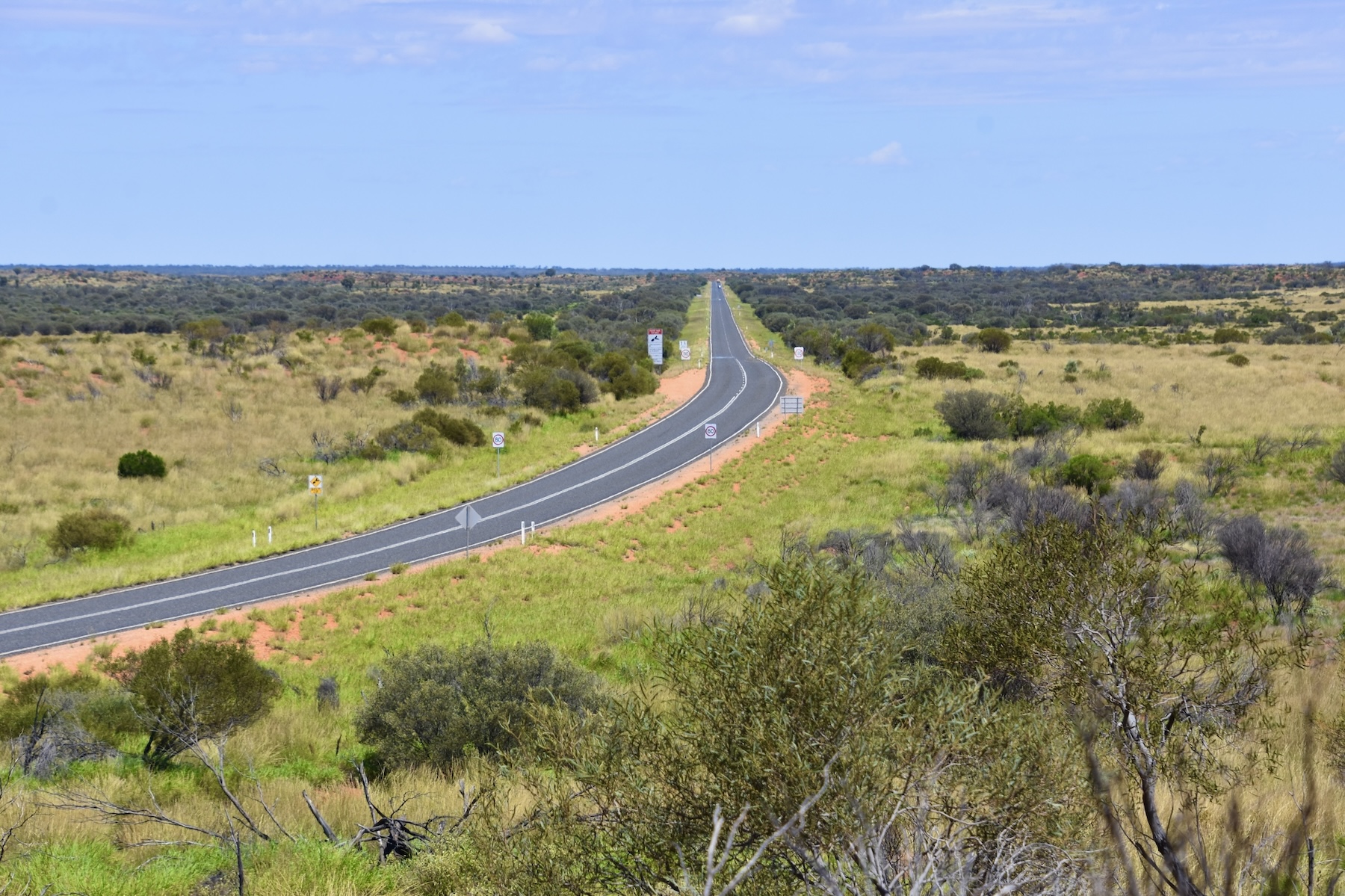
Adventures Abroad offers this trip twice a year – once in October and once in March. Chances are that your experience will be completely different depending on which trip you take. Remember that seasons are reversed Down Under with summer taking place from December through February which is also the busiest tourism season. Winter takes place from June through August and is the most popular time for visitors to the tropical north. So both March and October are shoulder seasons which I always think are the best times to travel. The summer season in Australia is also the rainy season – yes they have a rainy season in Australia, particularly up north. By March the rains are usually abated although this year they were extraordinarily heavy. The result was that places I expected to be bone dry, like the drive from Alice Springs to Uluru, looked like this.
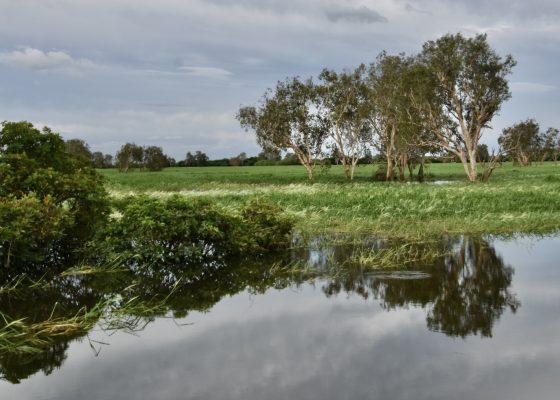
And up north it was a veritable water wonderland.
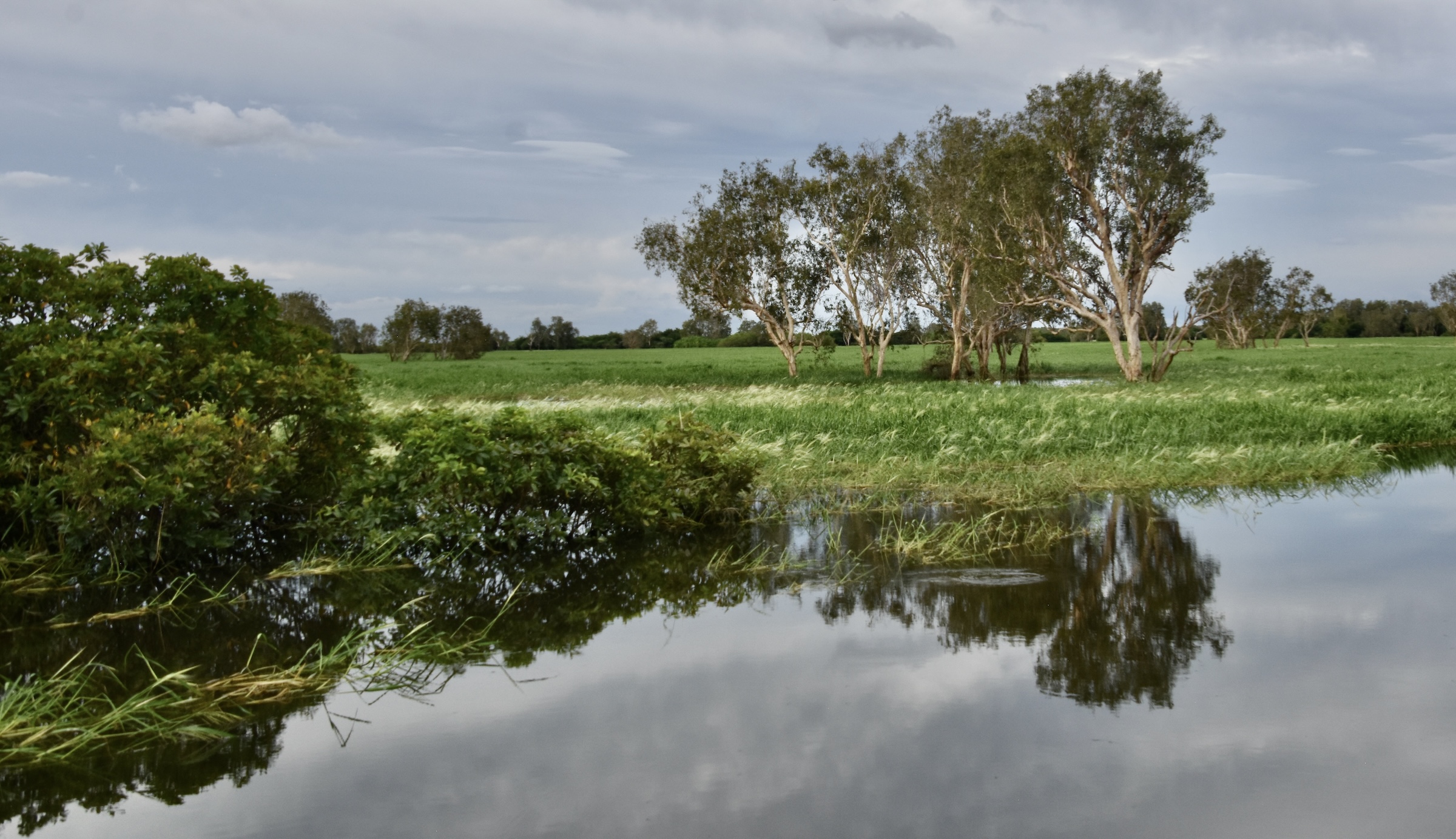
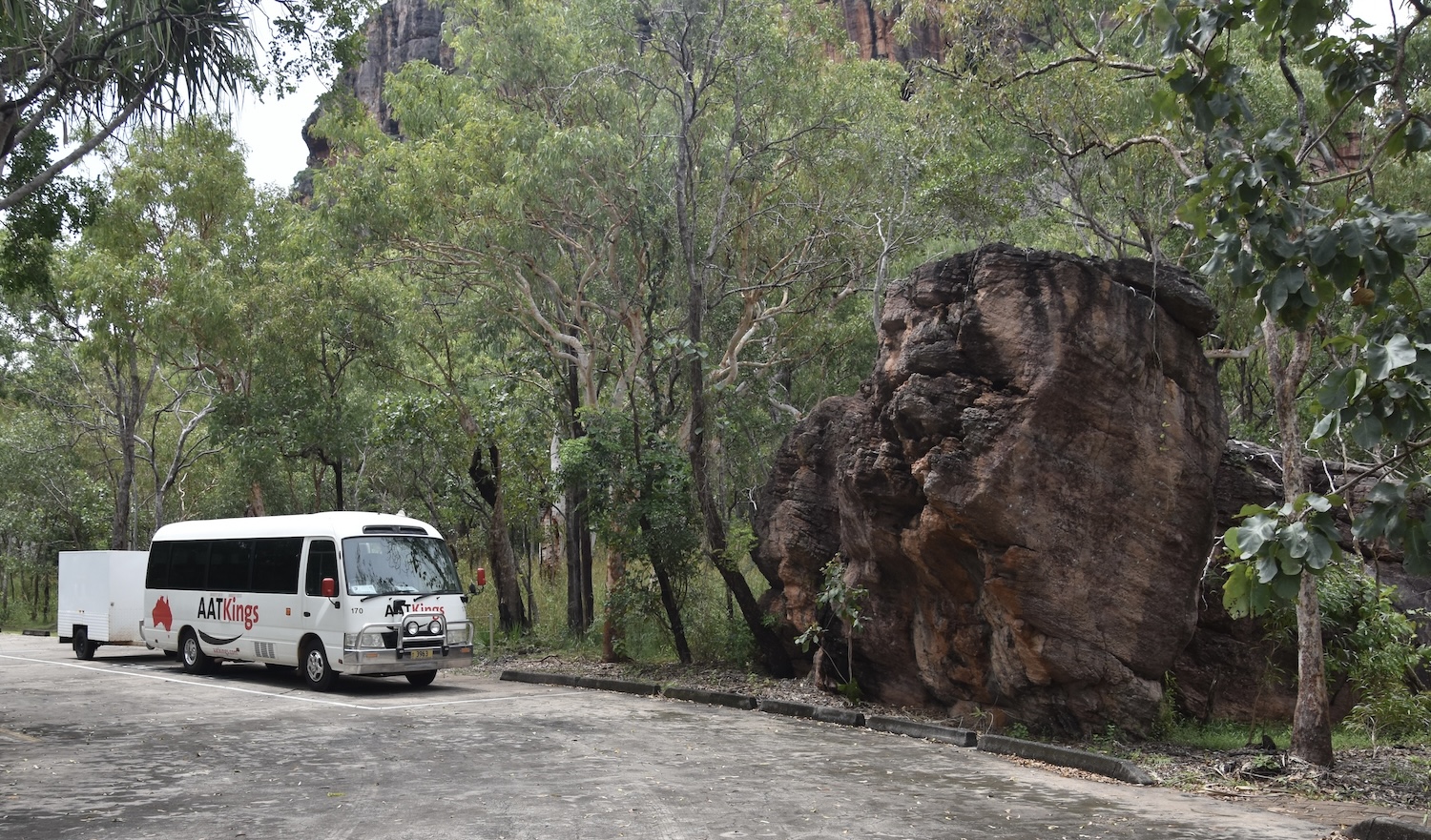
These wet conditions had their benefits, aside from the profusion of vegetation they produced. There were many places we went where we were the only tourists there, especially Kakadu National Park. Here is our bus in the parking lot at the Kakadu rock art site, one of the most important in Australia.
Yes there were places where there were a lot of tourists, but just as many where there were not. Of particular note was Uluru. I had no idea that it is a five hour drive from Alice Springs to Uluru (Ayer’s Rock). From people who had been there, I assumed it was quite close as everyone seemed to be using Alice Springs as the springboard to Uluru (pun intended). The actual tourist site at Uluru is purpose built Yulara which has only a few hotels, not nearly enough to accommodate all the people who want to visit this iconic place, even in the shoulder season. The reality is that the vast numbers of tourists who visit Uluru do so by enduring that five hour drive both ways with only a short amount of time at the site. The fact that AA is able to get accommodations at Uluru makes all the difference and is a fitting way to end this post.
In the upcoming weeks I’ll be going into a lot more detail about the Australia trip, but I hope this post has piqued your interest enough to check things out for yourself.