Ica Peru – Wine, Mummies & Mystery

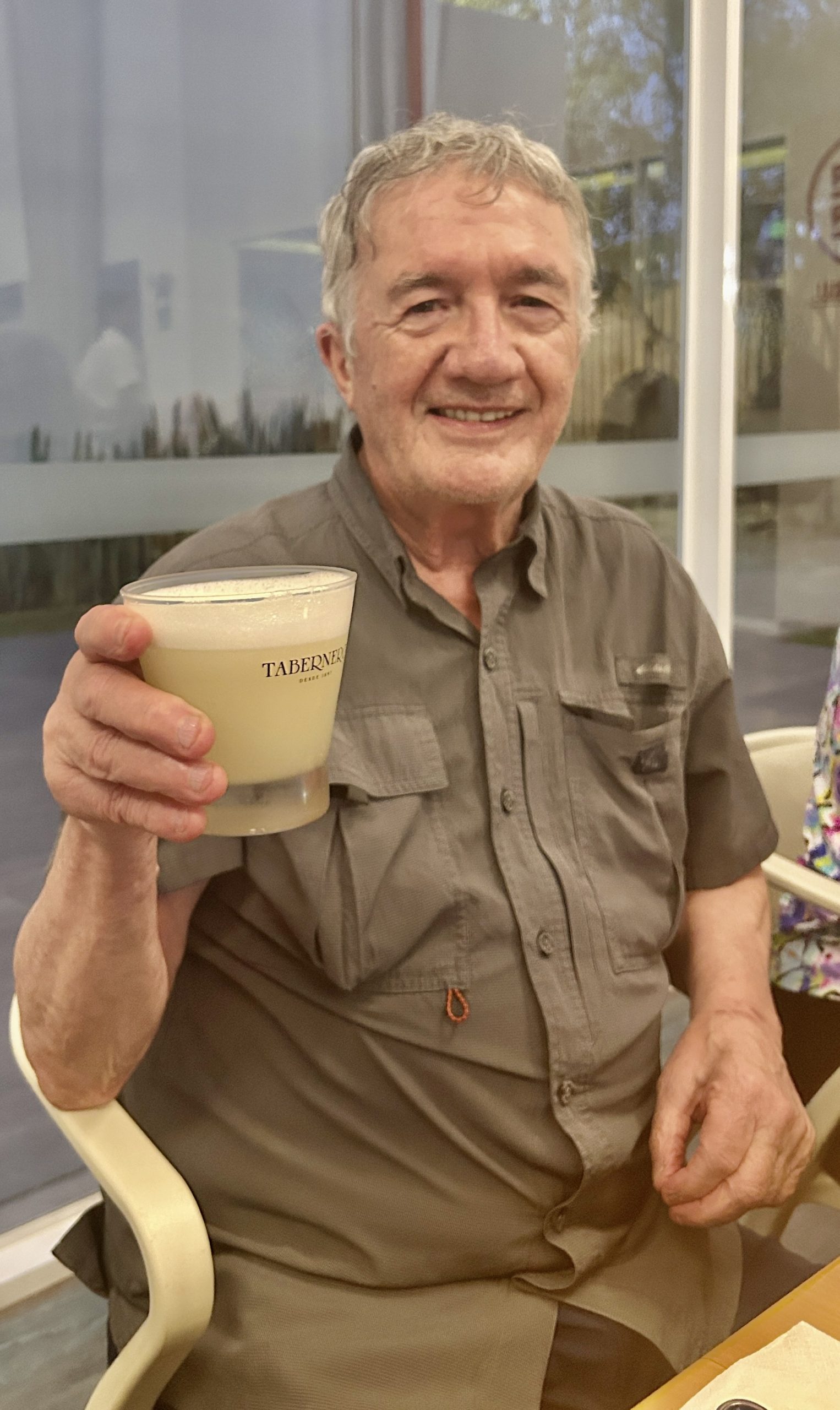
This is my fifth post from the February 2026 trip to Peru and Bolivia with Adventures Abroad. In the first post I gave an overview of the entire tour and in the next three extolled the virtues of Lima’s Miraflores district, overflew the mysterious Nazca lines and then added life listers to my birding atlas with a boat trip to the Ballestas Islands. Wow! That’s a trip and a half and we’re just getting started. In this post our group will head to the small city of Ica where we’ll visit the oldest winery in the Western Hemisphere, learn how to make Peruvian chocolates, visit a museum that contains mysteries and mummies as weird as you’ll find anywhere and conclude in an honest to goodness oasis where you’d least expect it. If that sounds like fun, then hop aboard and join us on yet another great Adventure Abroad. At the end of the day we’ll celebrate with a pisco sour in Pisco on National Pisco Sour Day. How cool is that?
Tacama Winery
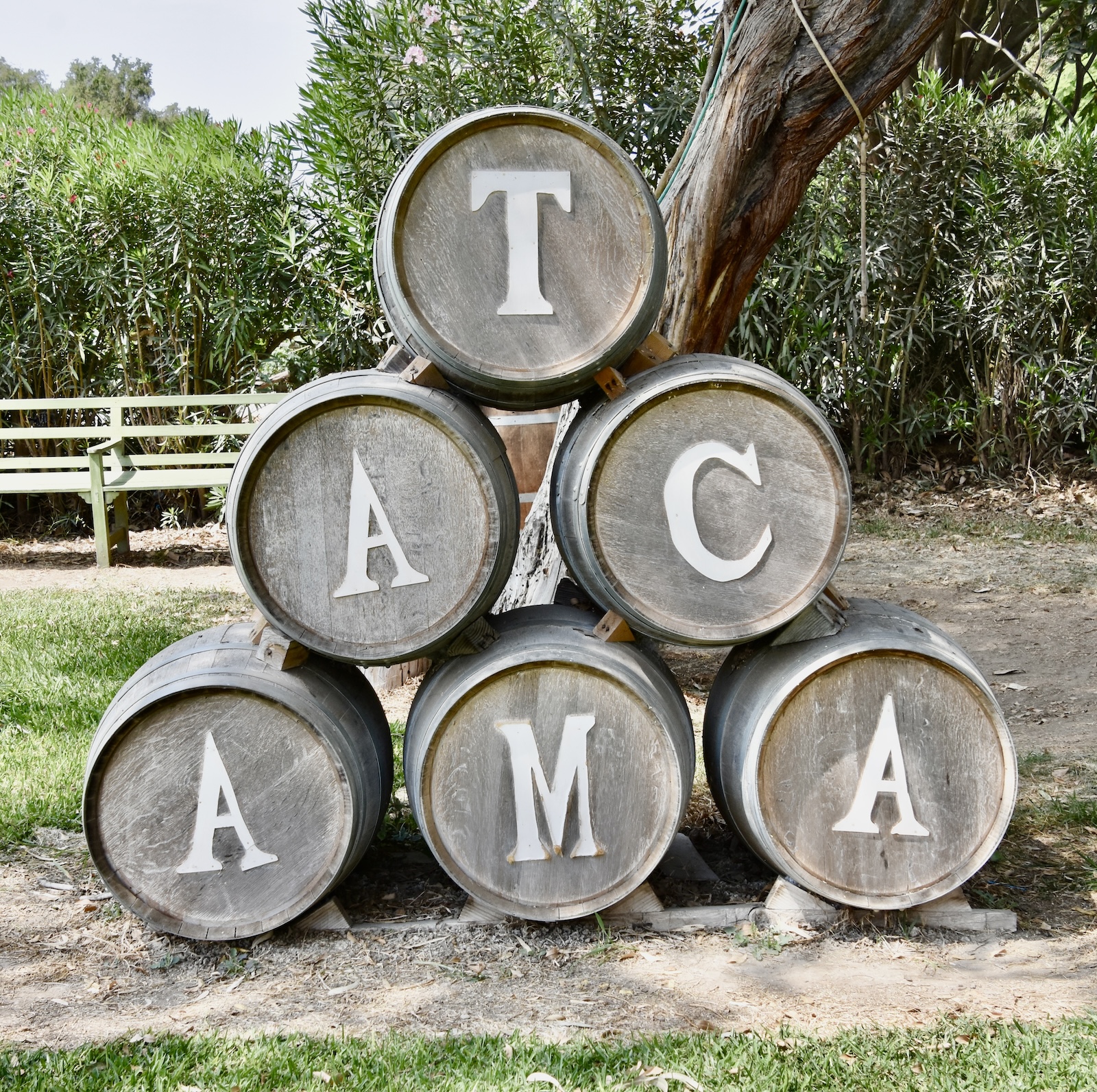
While everyone knows that Chile and Argentina are famous for their wineries, who knew that the oldest winery in the New World is in Peru? Tambo de Tacama winery was founded in 1540 by Francisco de Carabantes with vines he apparently brought from the Canary Islands. Think about that. Some 64 years before Champlain founded the first European settlement in Canada or 67 years before the English settled in Jamestown, Virgina, the Spanish were already thousands of miles further away from Europe on the other side the Andes growing grapes.
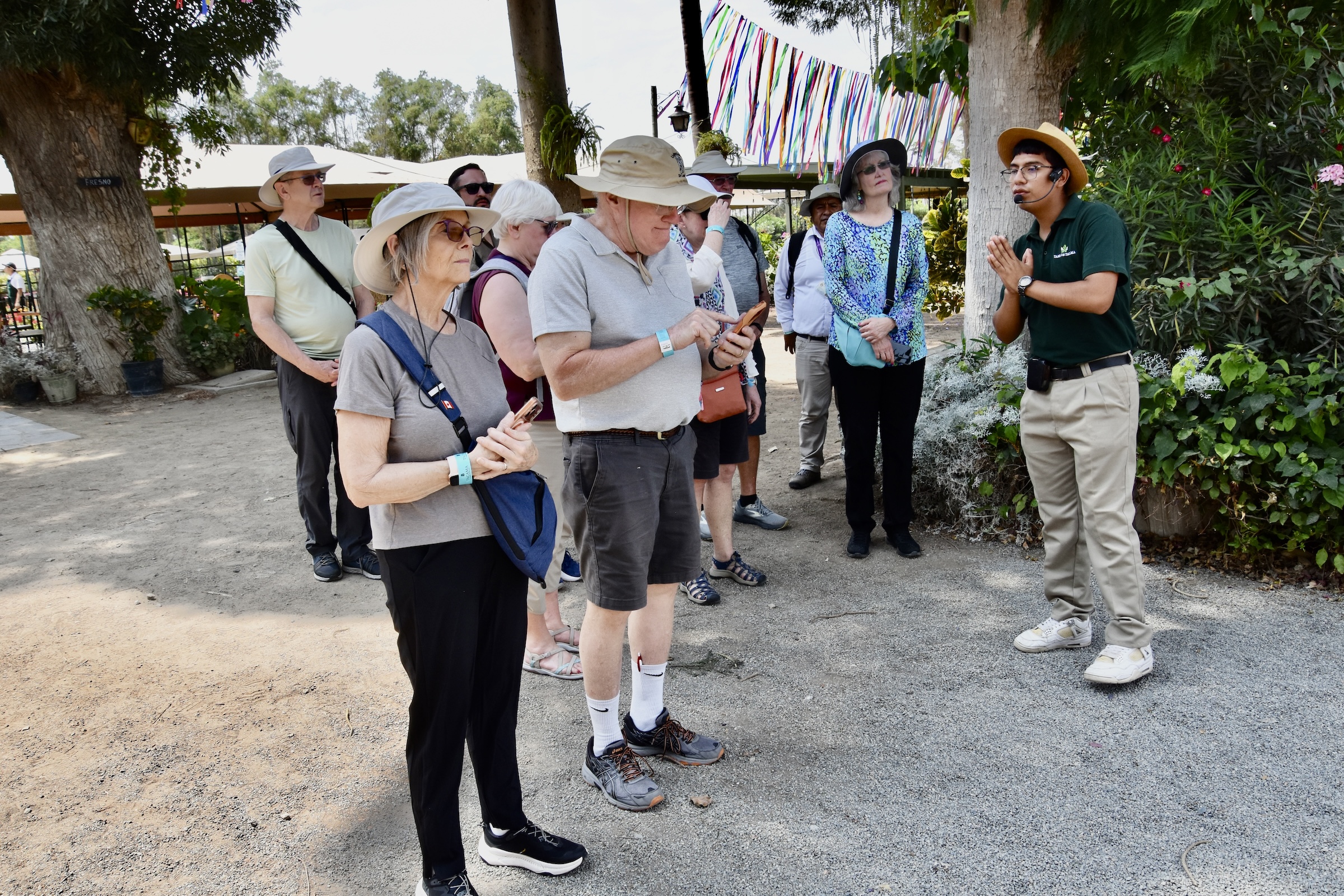
We arrive at the winery a little too early to begin imbibing and embark on a tour with Gustavo.
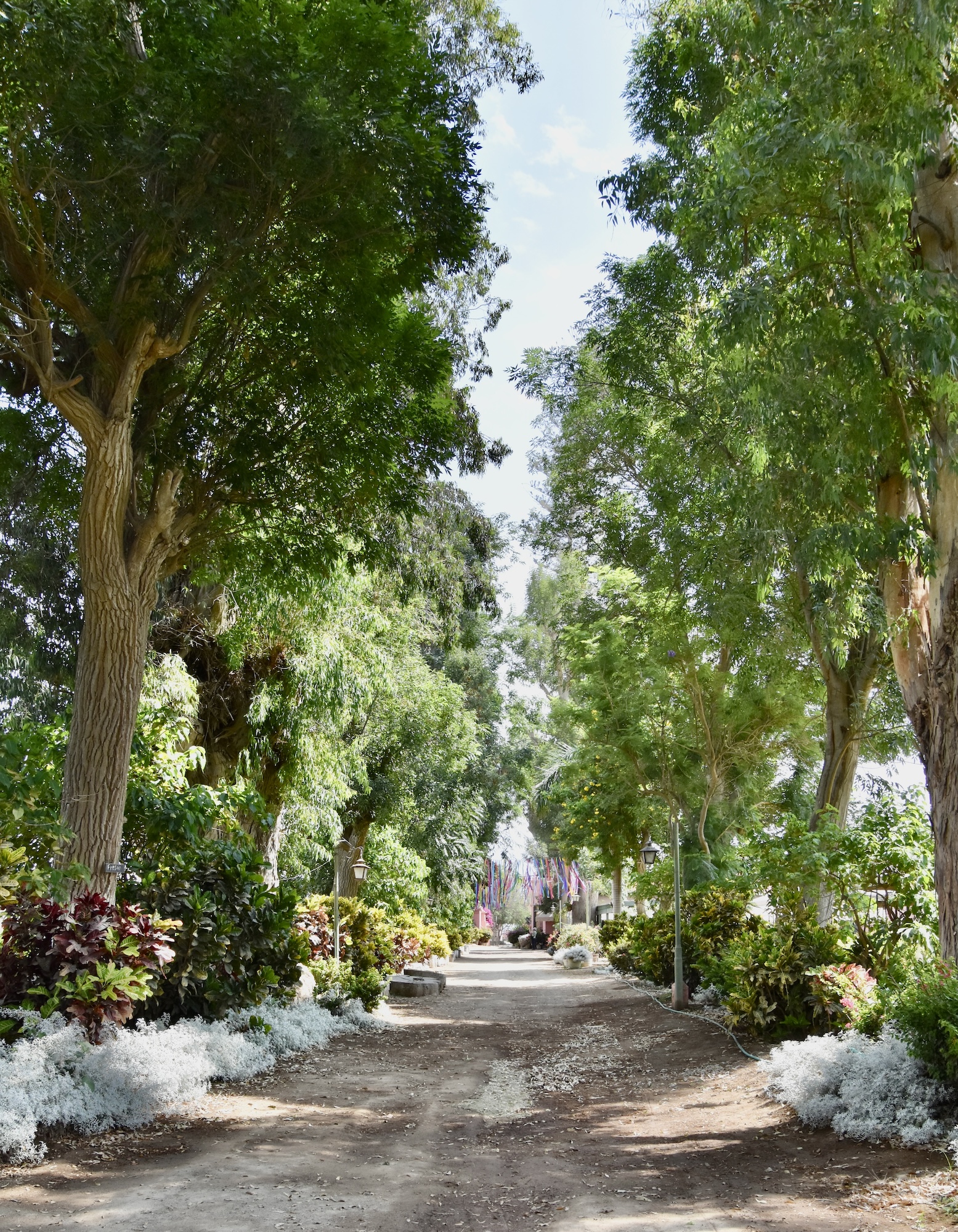
Tacama is among the prettiest wineries I’ve ever visited with specimen trees lining the entrance way and flowers everywhere.
There has been a church on site at Tacama from the time the winery was founded and although it is not included in today’s tour, it creates a great backdrop for the visit. Literally, pretty as a picture.
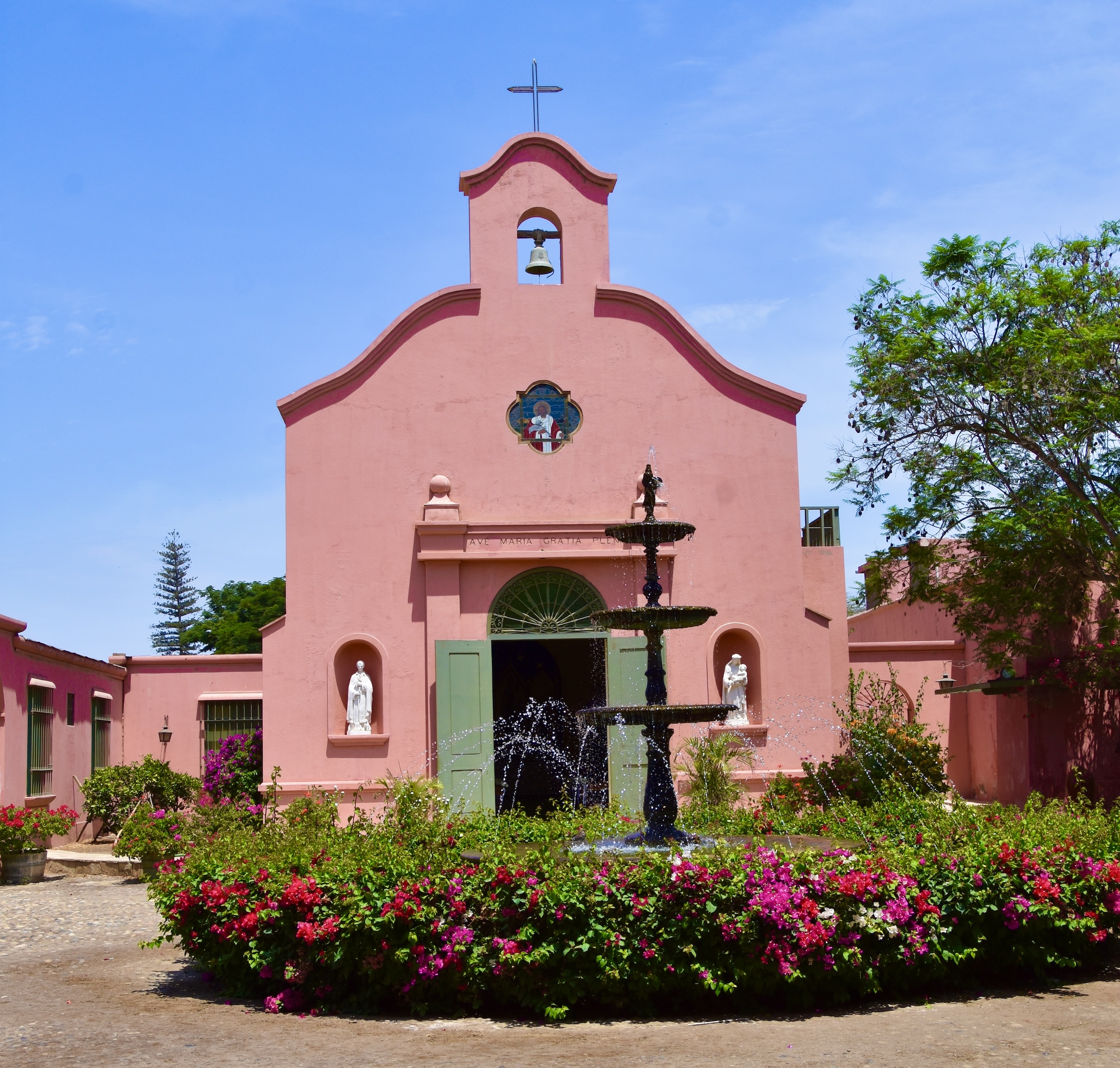
Incredibly they grow over 23 varieties of grape here of which 18 are used for wine production. The quebranta variety, which is too sugary for ordinary wine is used to make pisco, the Peruvian national drink that is similar to brandy and which we’ll try later.
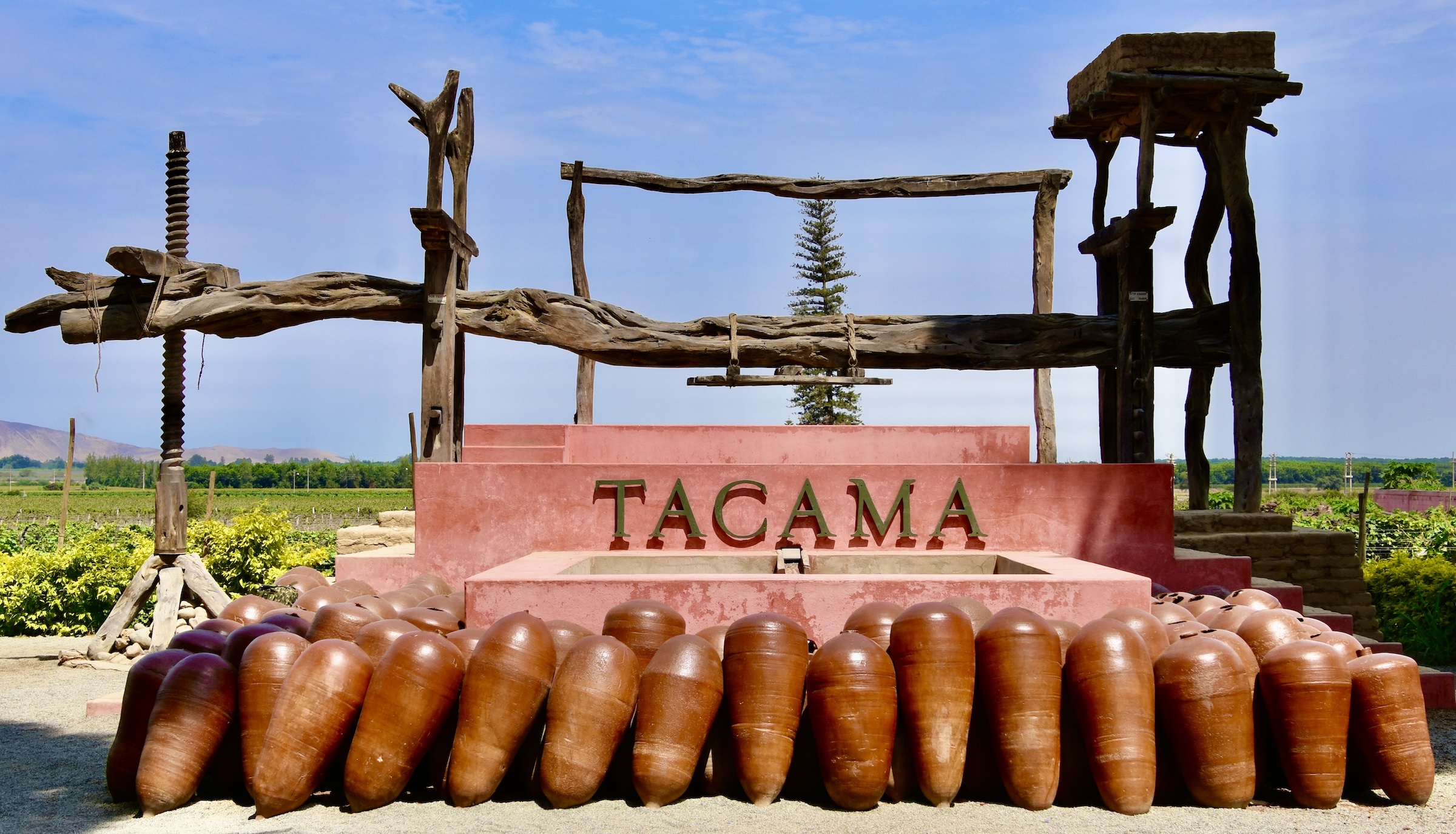
Unless Gustavo had told us, I would not have realized that this contraption was actually a giant wine press, in use for hundreds of years before more modern methods made it redundant. It is surrounded by amphora shaped wine containers that have a history that goes back thousands of years.
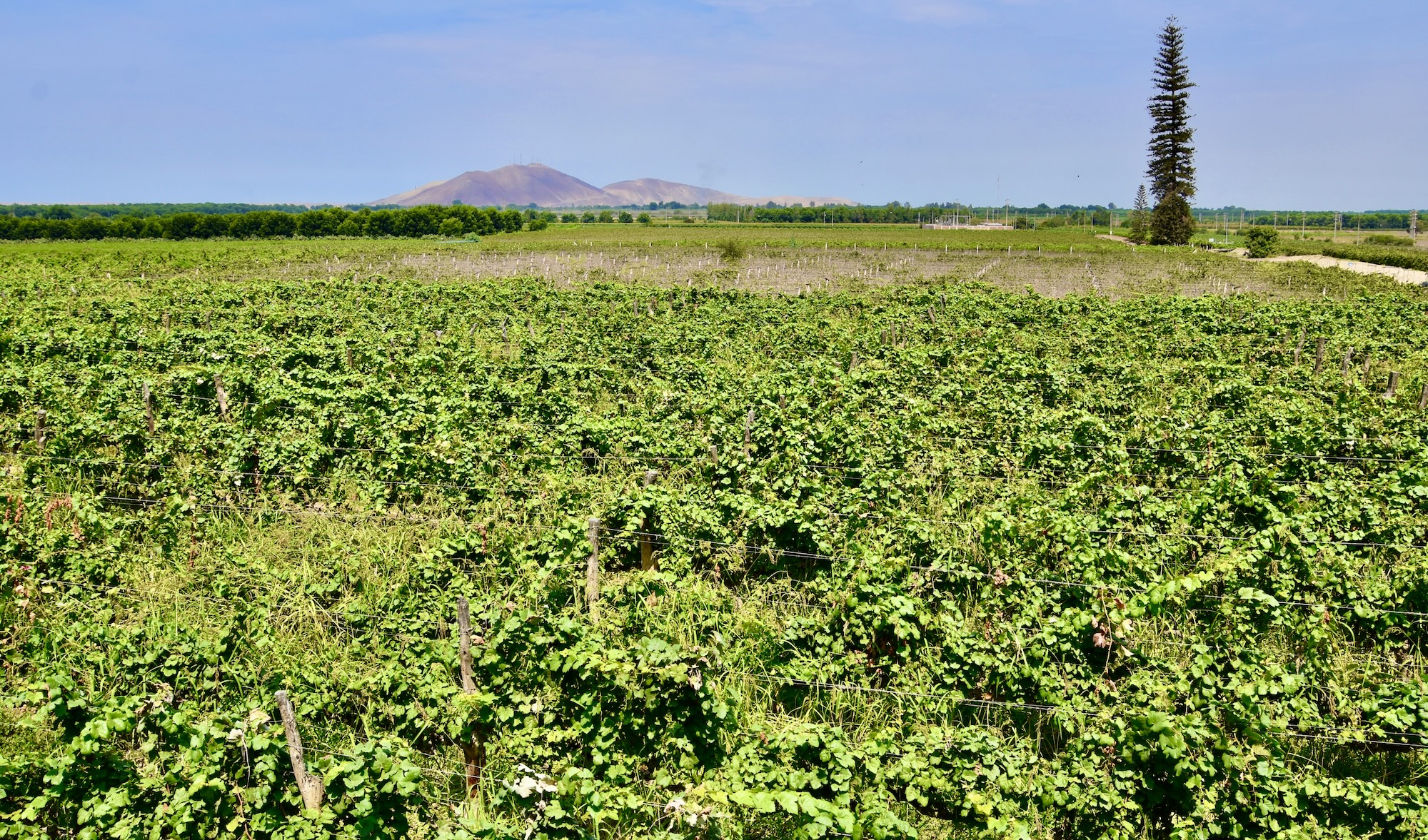
Standing on the platform beside the wine press you get this view of the Tacama vineyard with grapes as far as you can see and one lone pine.
After touring the grounds of the winery we are taken inside an enormous building which houses some equally enormous wine barrels as well as the tasting room.
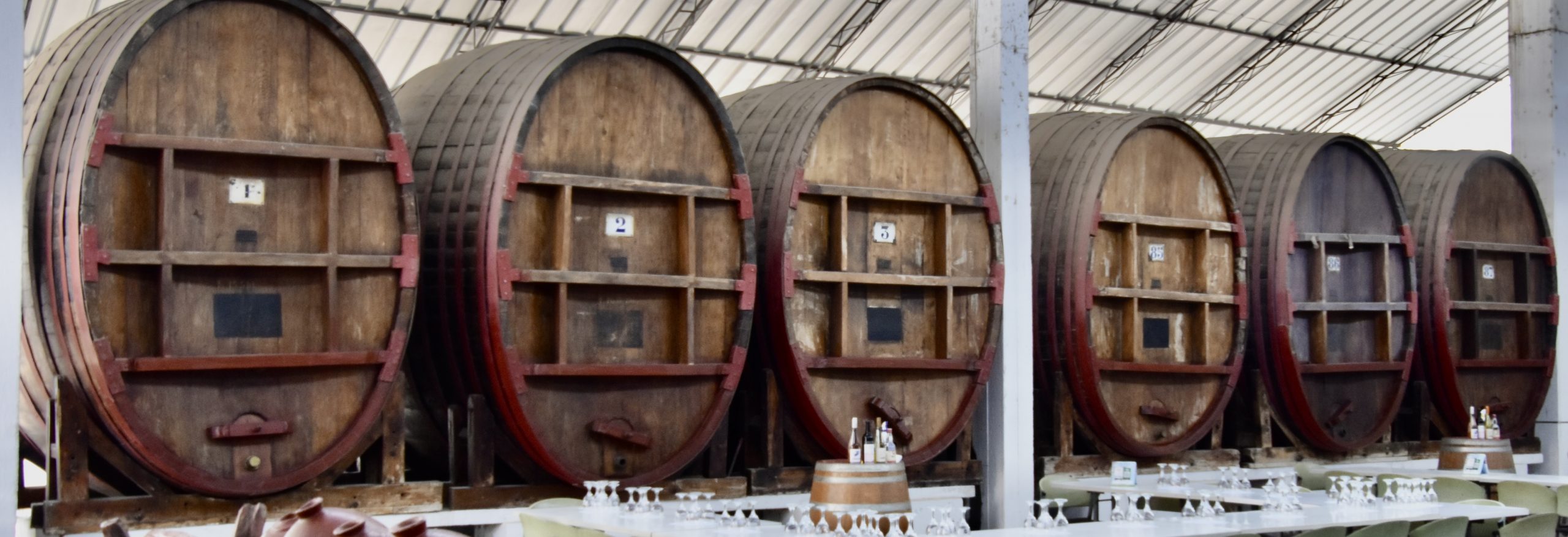
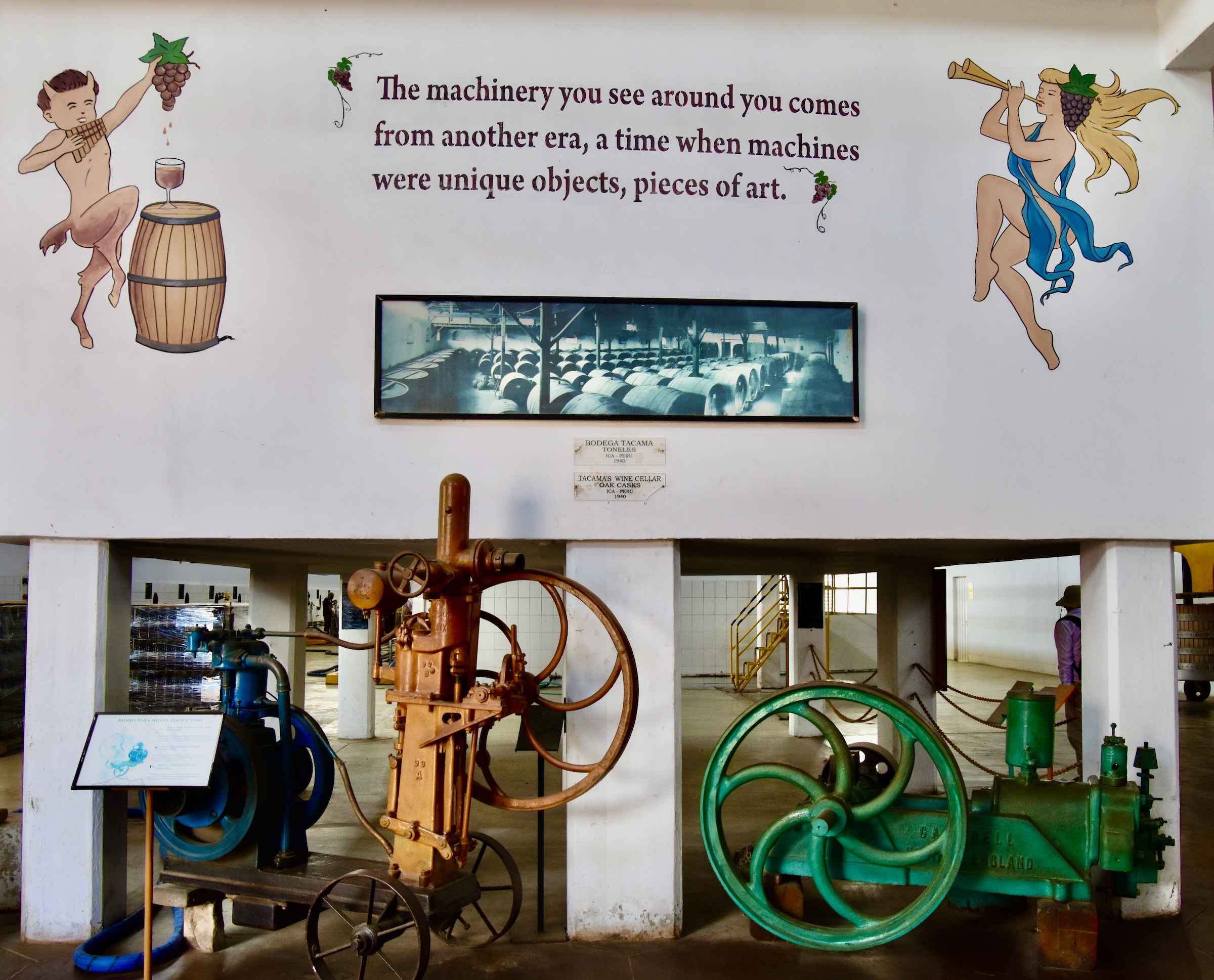
Surrounded by vintage wine machinery, fauns and nymphs we settle in for a tasting of four different wines and then pisco.
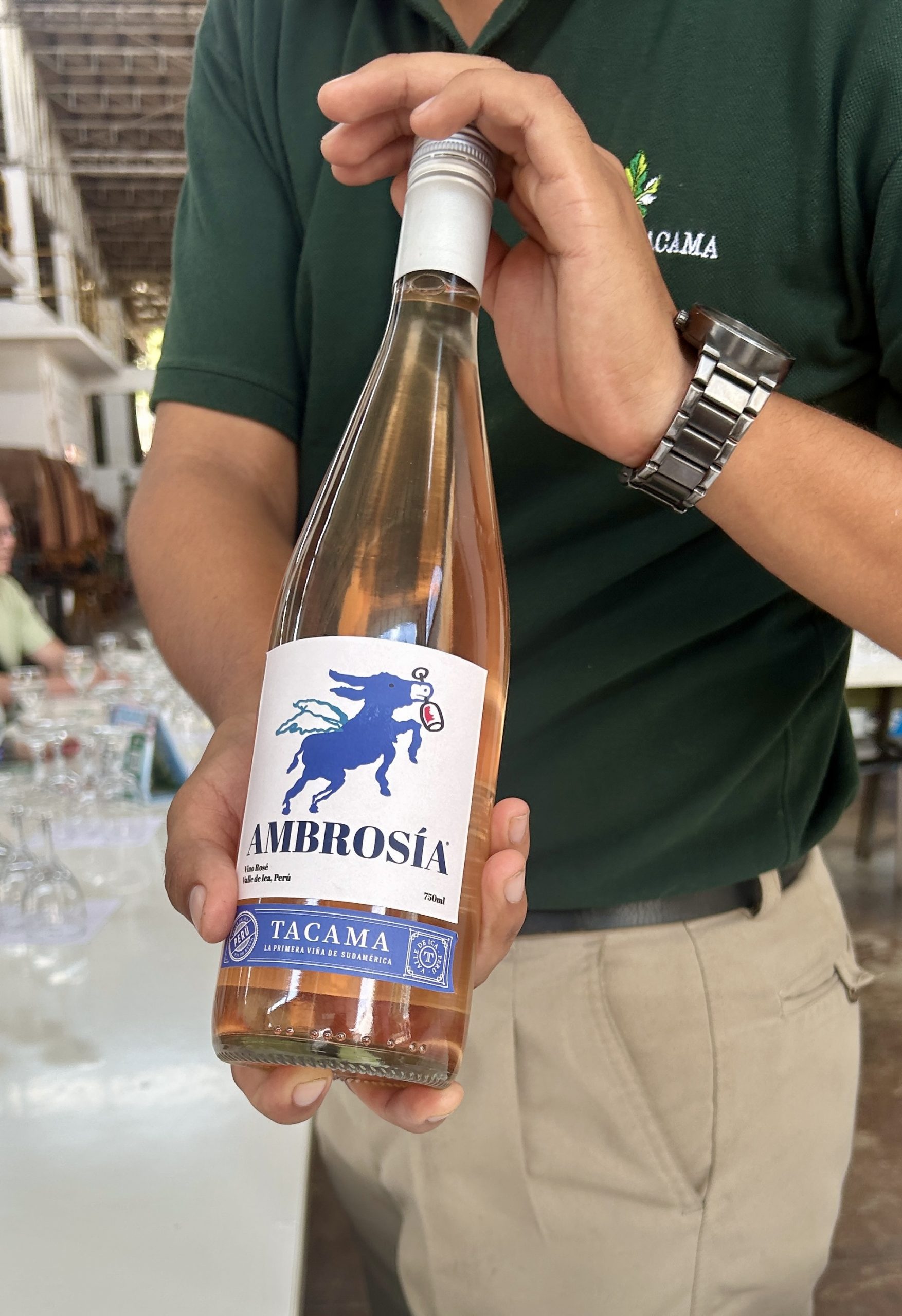
This is Gustavo introducing us to Ambrosia, a Peruvian rosé, with a flying donkey label, the first wine up on the tasting.
This is our group, all smiles, before the pisco was rolled out.
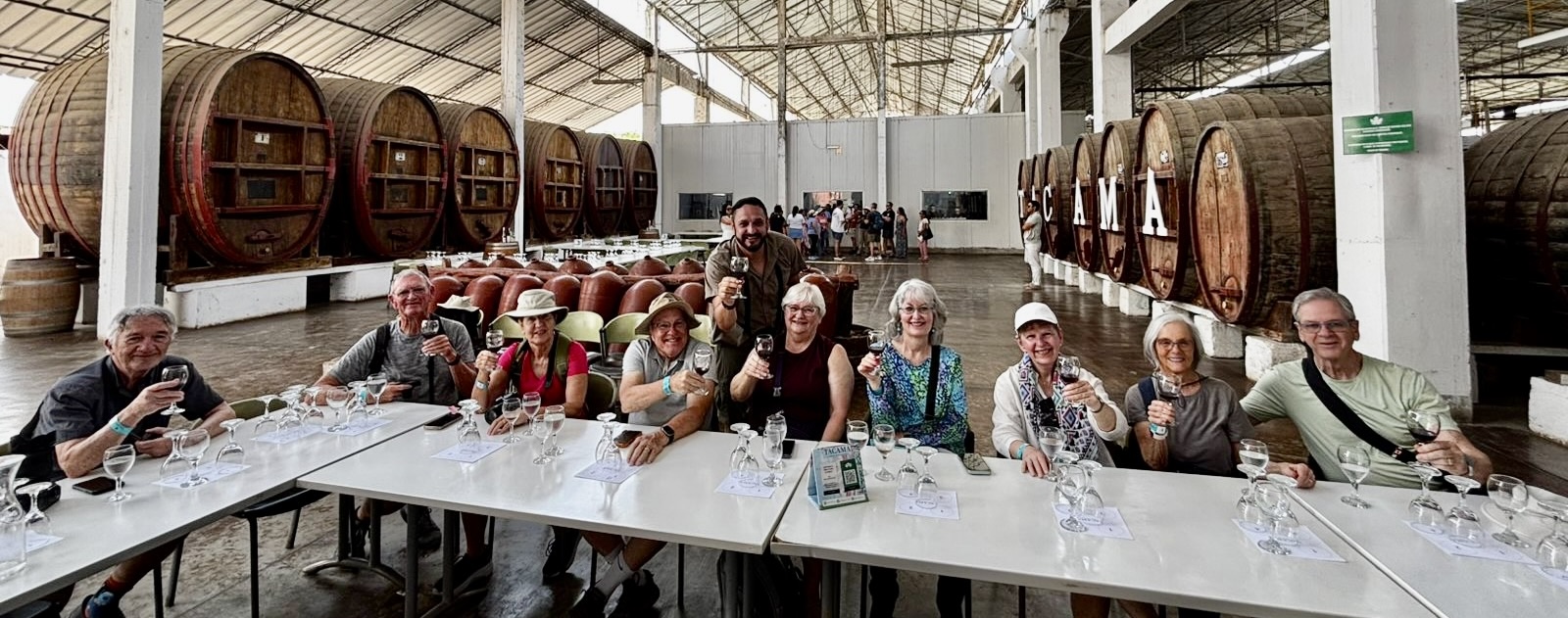
Being early in the day, the pourings were not over the top and by the time we got to the pisco no one was piscoed.
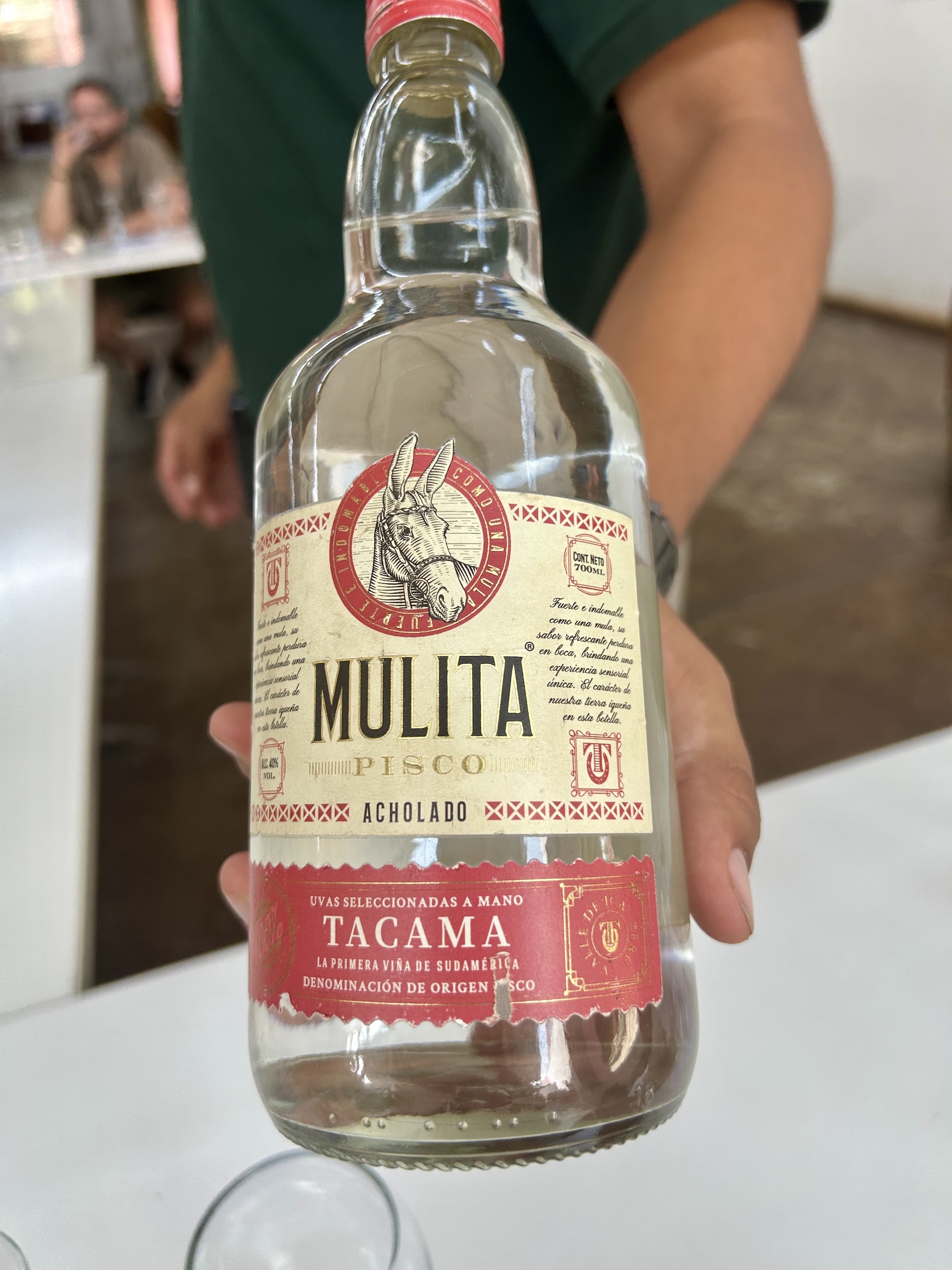
The cute flying donkey was now replaced by a stubborn looking mule and the pisco did have a kick like a mule. While I really got to like the pisco sour cocktail during my time in Lima before joining the group, I can say that straight pisco must be an acquired taste; one I doubt I will ever acquire. Whoever figured out how to make it palatable by way of the pisco sour deserves a medal.
All told the visit to the Tacama winery was an excellent start to the tour of the Ica region.
La Casa De Las Tejas, Ica
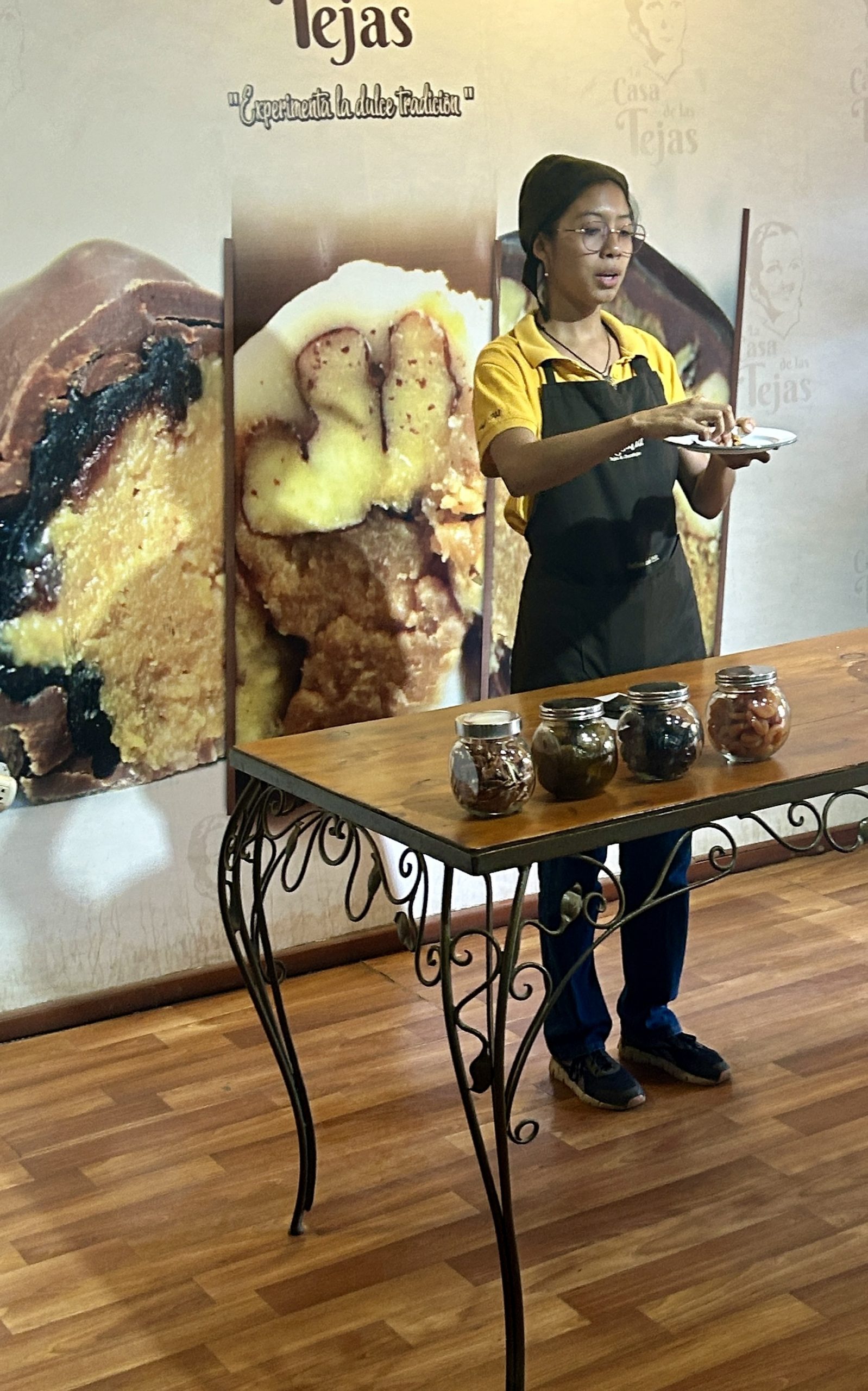
For our next stop we went into Ica proper to La Casa de las Tejas, which its Facebook page euphemistically calls a health food store and I guess if you think that candies are health food, then it is. Tejas are a Peruvian confection specific to the Ica area that mixes nuts or dried fruits with a delicious caramel concoction manjar blanco and then covered in a white icing. We are here to learn how to make them, which apparently means donning an apron and a goofy looking hat. This is our instructor.
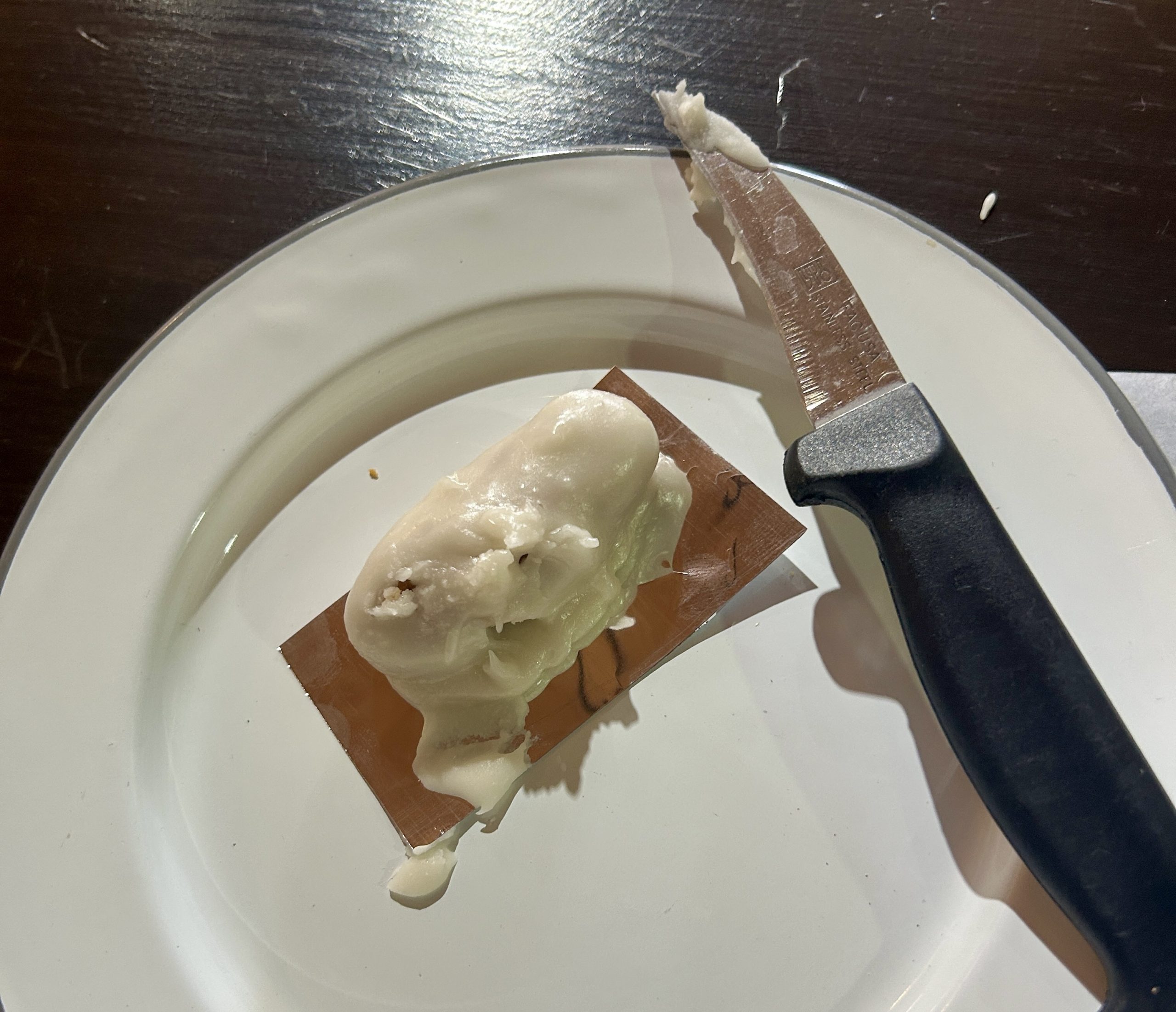
And this was my finished product.
Actually it looks better with a wrapper.
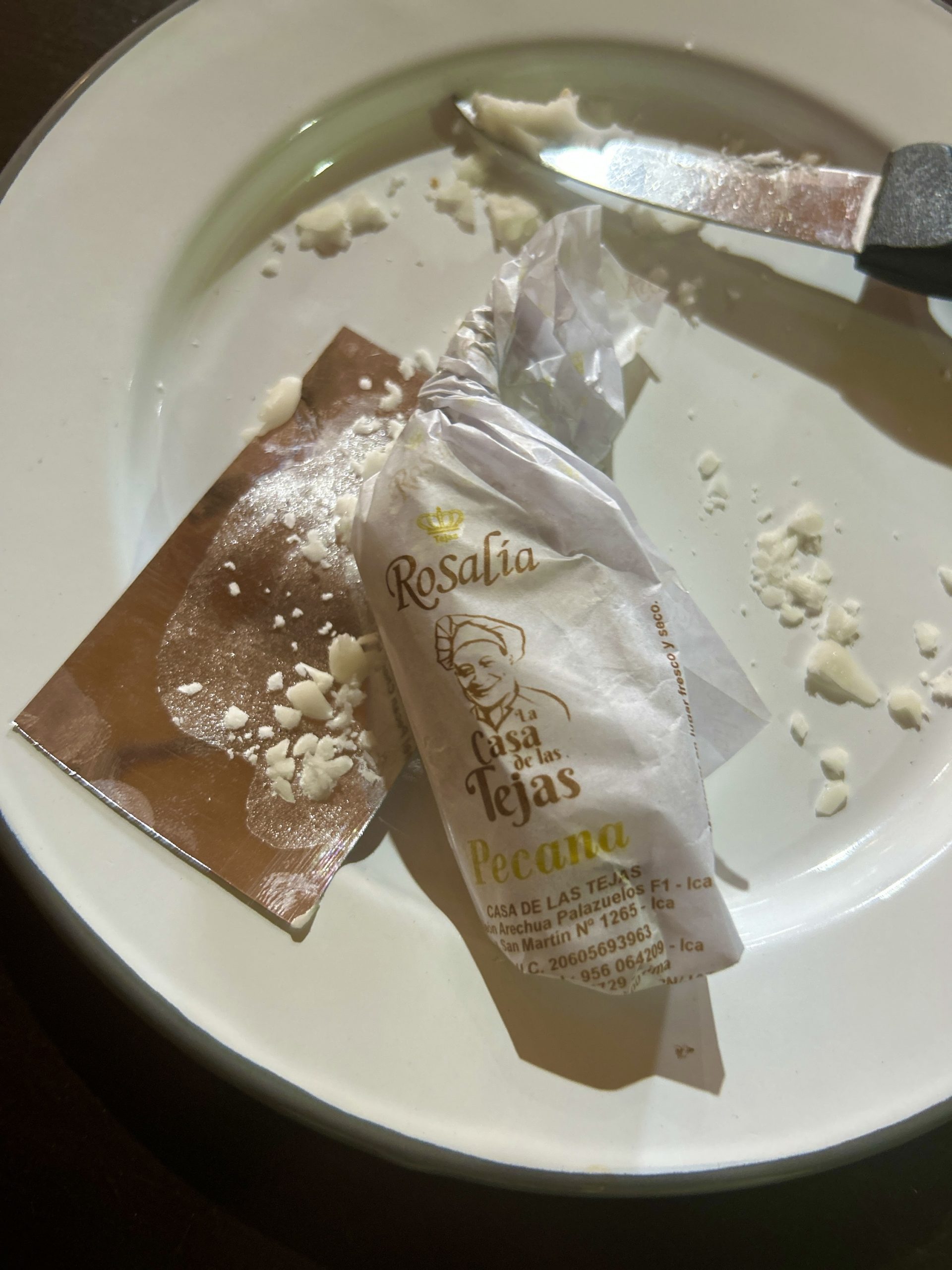
This was a fun way to spend an hour and the end result was a variety of tejas that were really good tasting, if not quite in the health food category.
The next place we would go in Ica was deadly serious compared to La Casa de las Tejas.
Adolpho Jenkins Museum, Ica
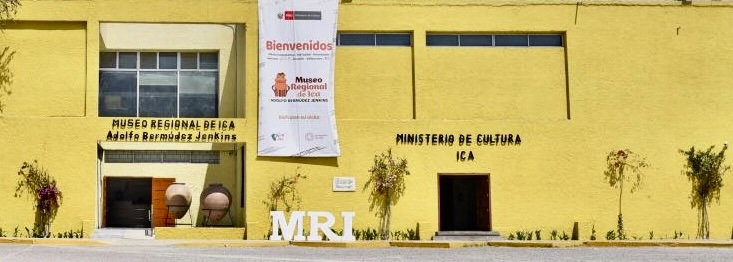
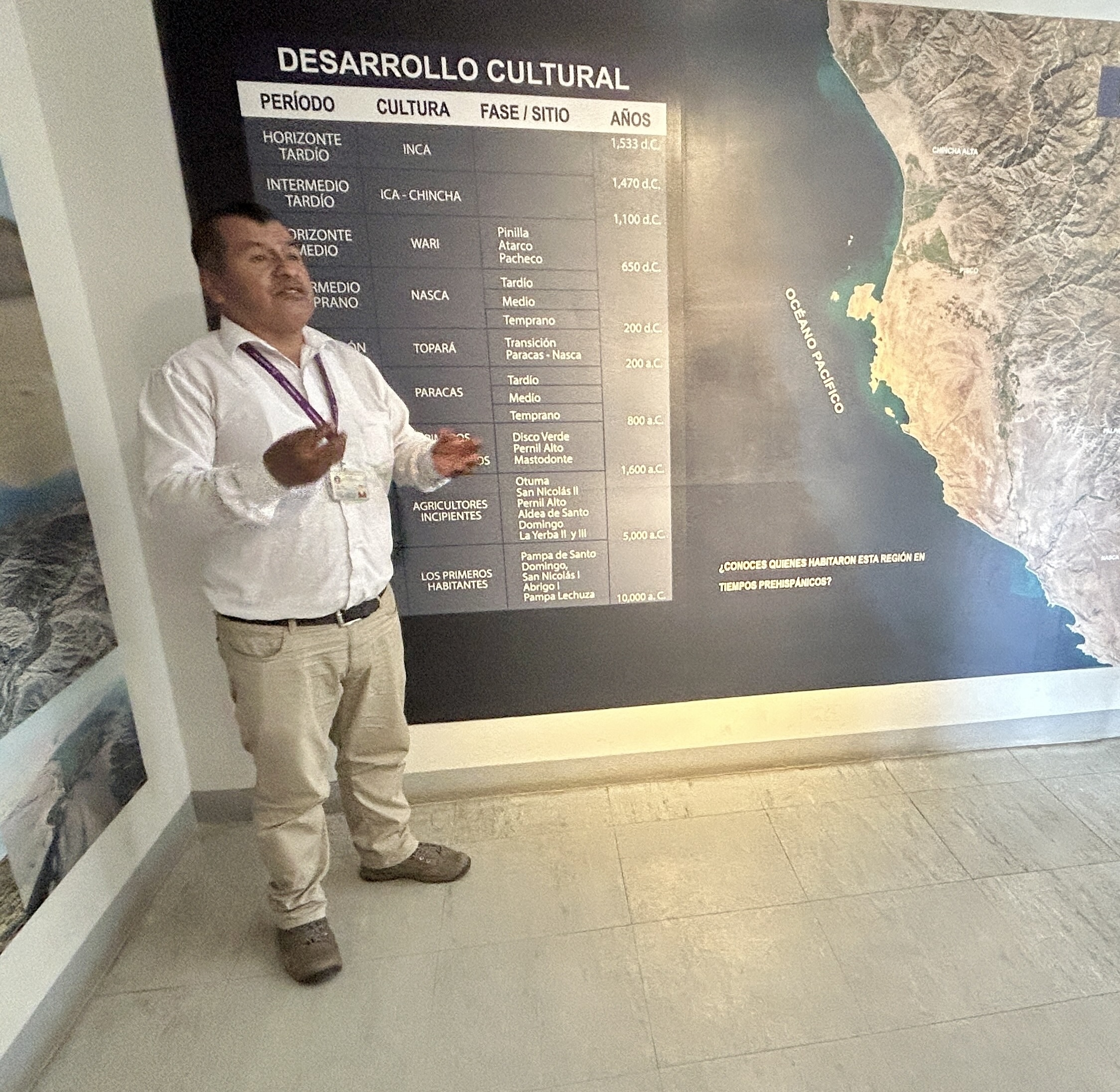
The Adolfo Jenkins Museum in Ica is one of a number of regional museums throughout Peru that feature, among other things, the pre-Hispanic cultures of the surrounding area. In the case of Ica that is the Paracas and Nazca cultures which I discussed in the post on the Nazca Lines. as well as the Wari, Ica, Chincha and Inca cultures, all of which post-dated the Paracas and Nazca cultures. We were taken on a guided tour by our local guide Jose Luis who did his best to explain the differences between the various pre-Columbian groups that inhabited this coastal area of Peru. Behind him is a timeline that goes back as far as 10,000 BCE, but most of what is on display dates from about 800 BCE to the Inca conquest in the 14th century.
The museum itself is divided into two major sections – the first contains pottery and other artifacts made by the various cultures that once inhabited the Ica area. Here is a gallery of some the best which were pretty well all from the Nazca culture. Double-click to open and double-click again to enlarge.
-
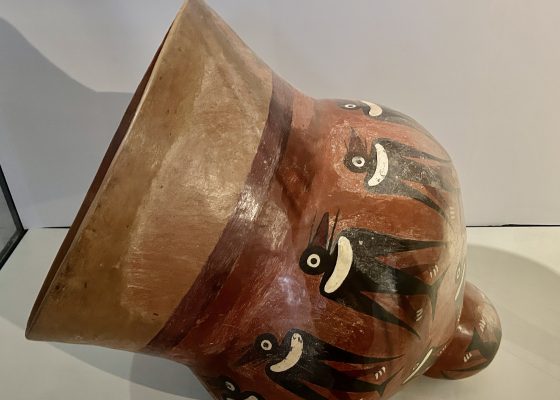
- Large Nazca Pot
-
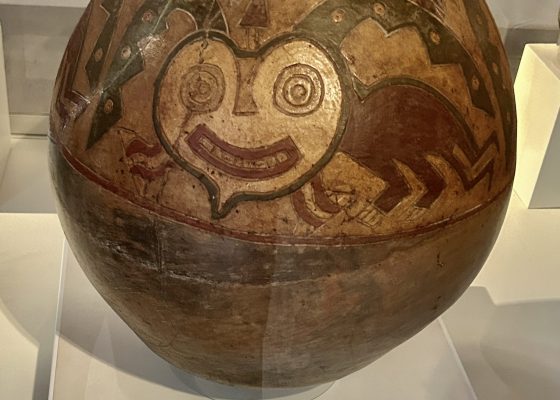
- Paracas Bowl
-
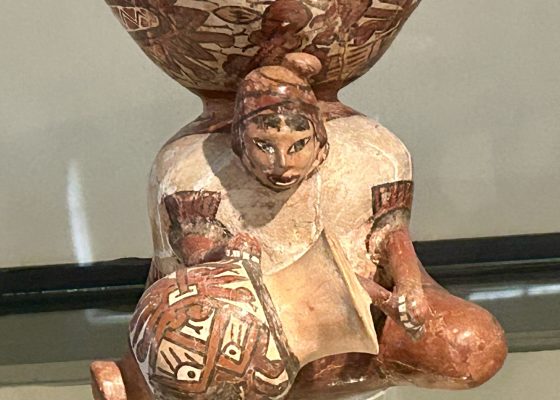
- Nazca Bowl
-
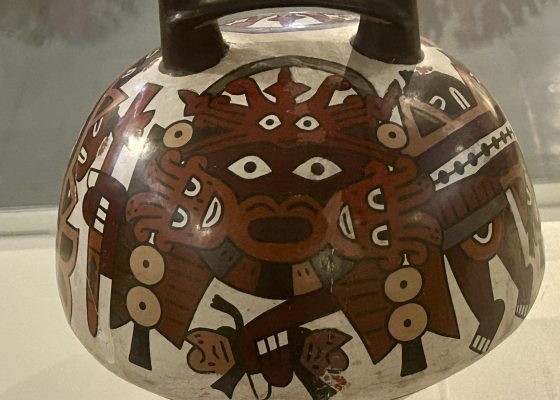
- Nazca Pottery
-
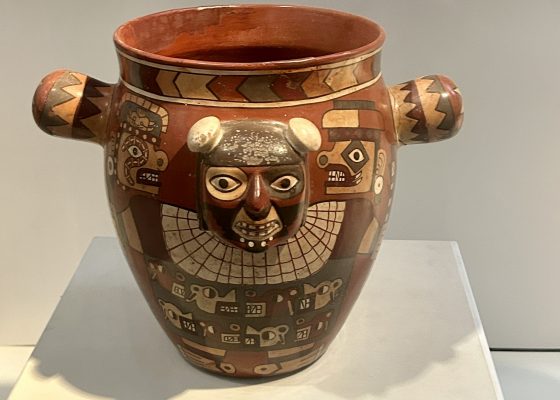
- Nazca Pot
-
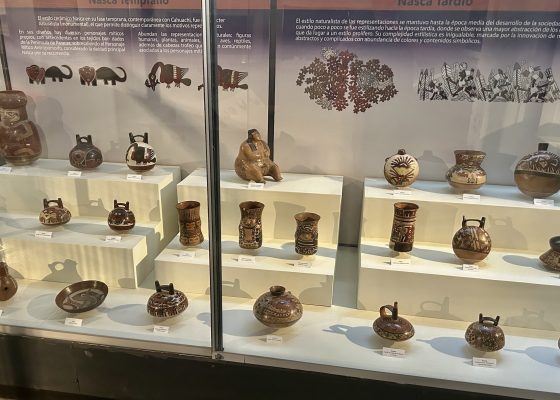
- Nazca Ceramics
Okay, I know you’ve seen one piece of pottery and by the time you get to the fiftieth your eyes are glazing over, but what comes next will keep you awake or maybe give you nightmares. The second part of the museum is dedicated to the people who lived in the Ica area and I mean literally. Their bodies or at least parts of them are still here.
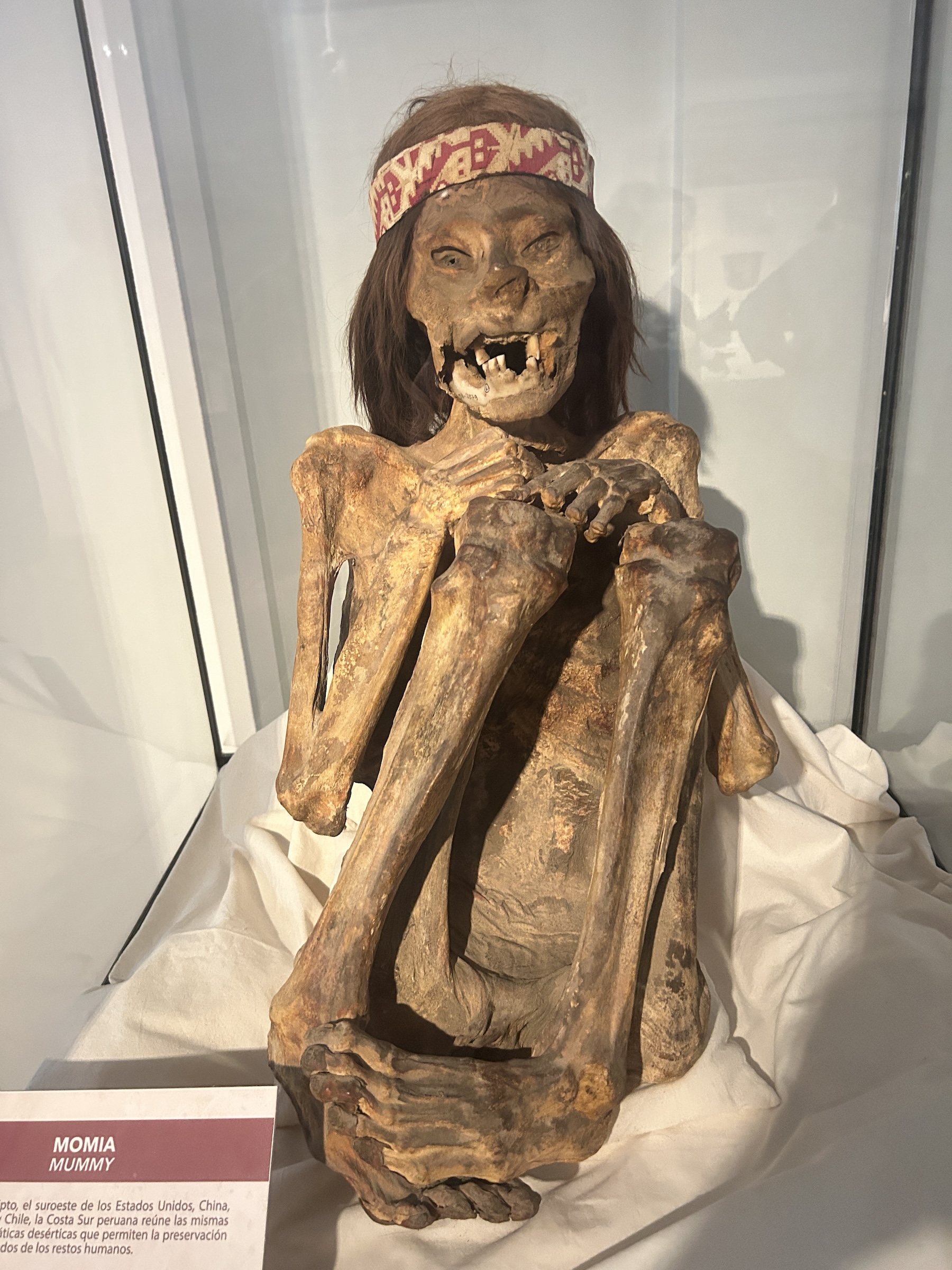
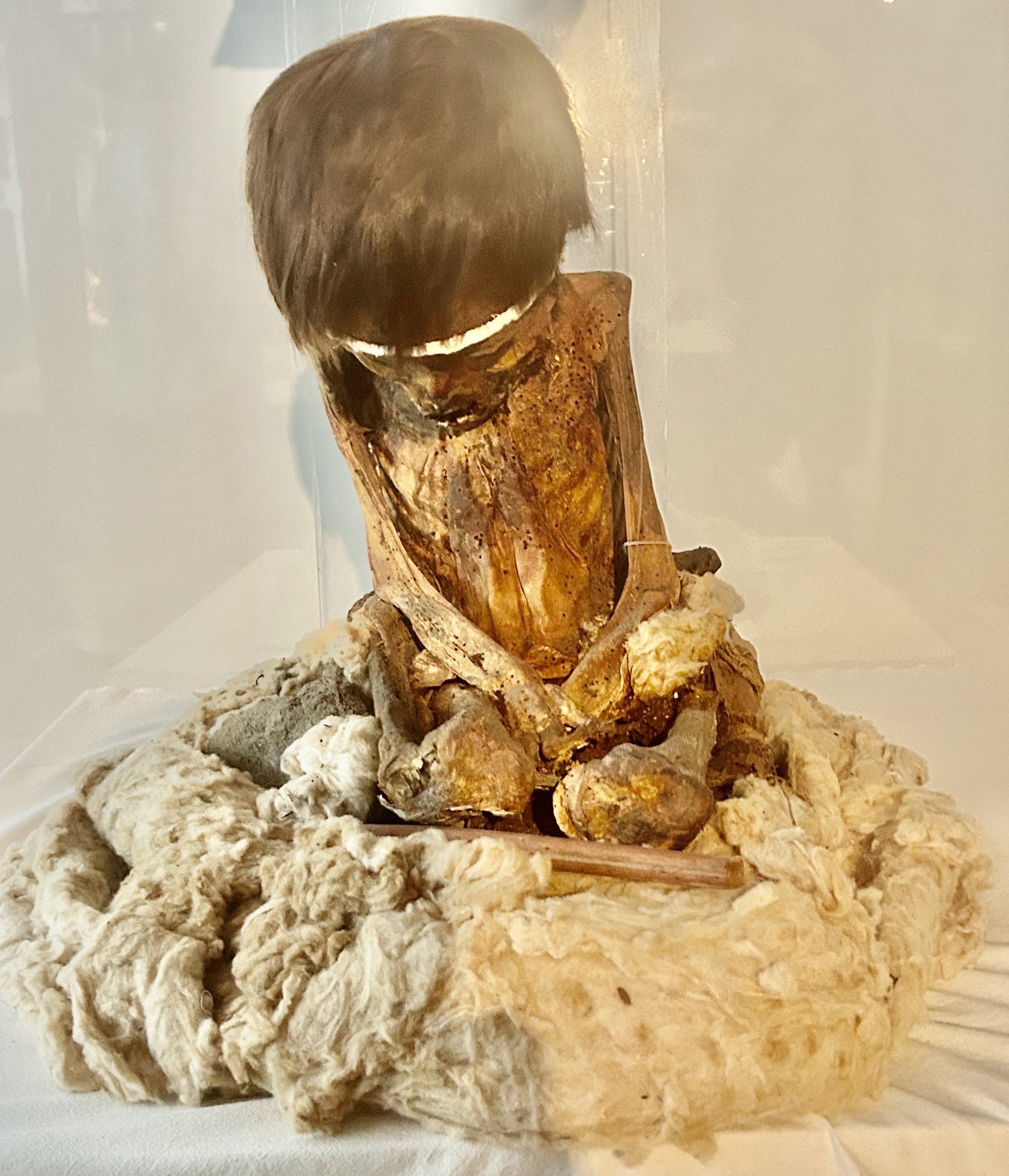
Let’s start with the mummies. Yes, Peru has mummies and some of them date much farther back than their more famous Egyptian relatives. Peru has two things going for it when it comes to making mummies. The first is the incredibly arid climate of the Peruvian coastal desert that can literally desiccate a body in no time. These are the type of mummies on display in Ica. The second type are those that become freeze dried by the high altitude and we’ll see some of those later on this tour.
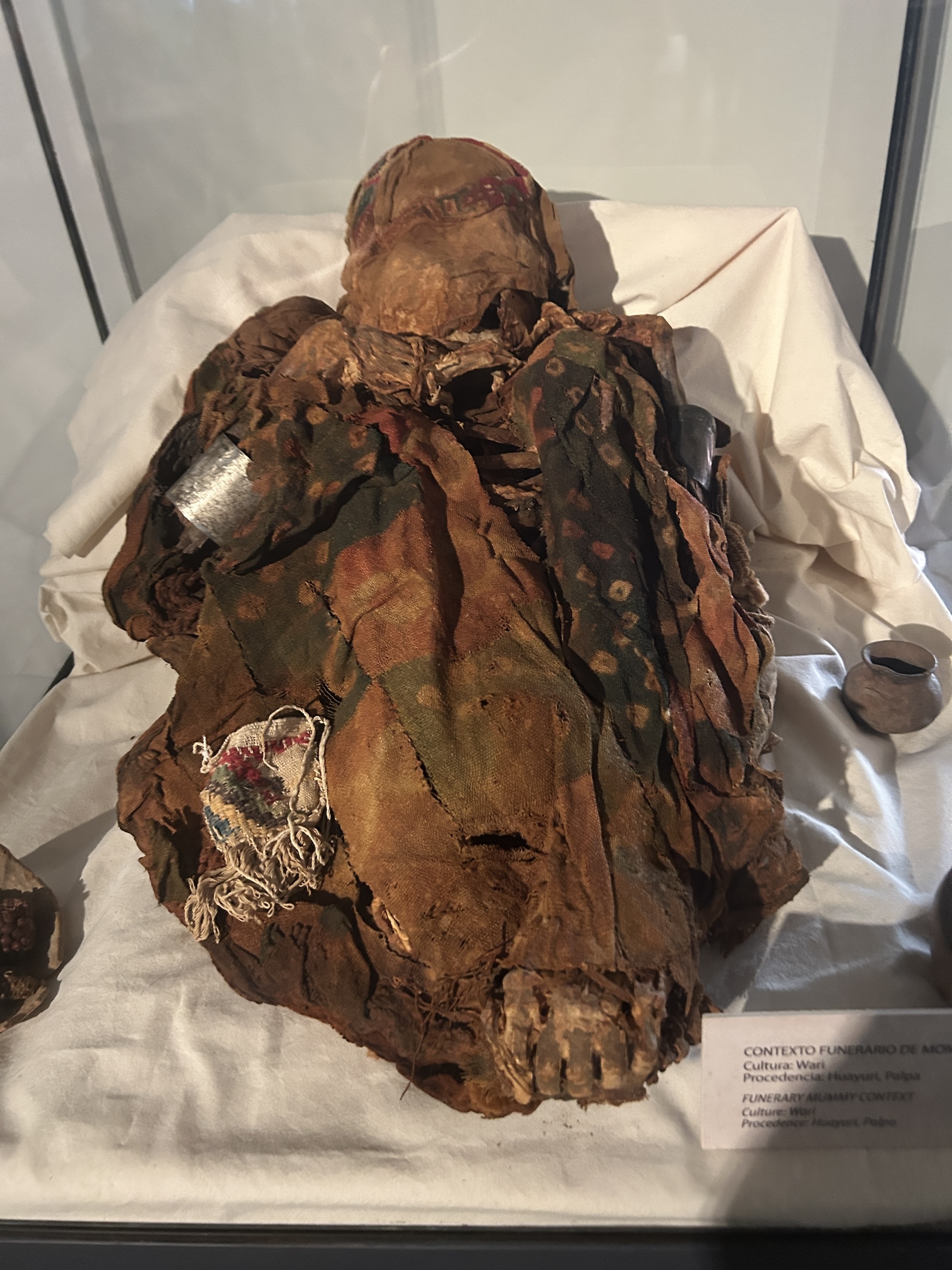
This is a mummy from the Wari culture and even though it’s over a 1,000 years old the clothes are in remarkable condition.
Next is this guy that is straight out of a horror movie. His body might be a bit thin, but his hair is perfect.
This is an 8 year old boy.
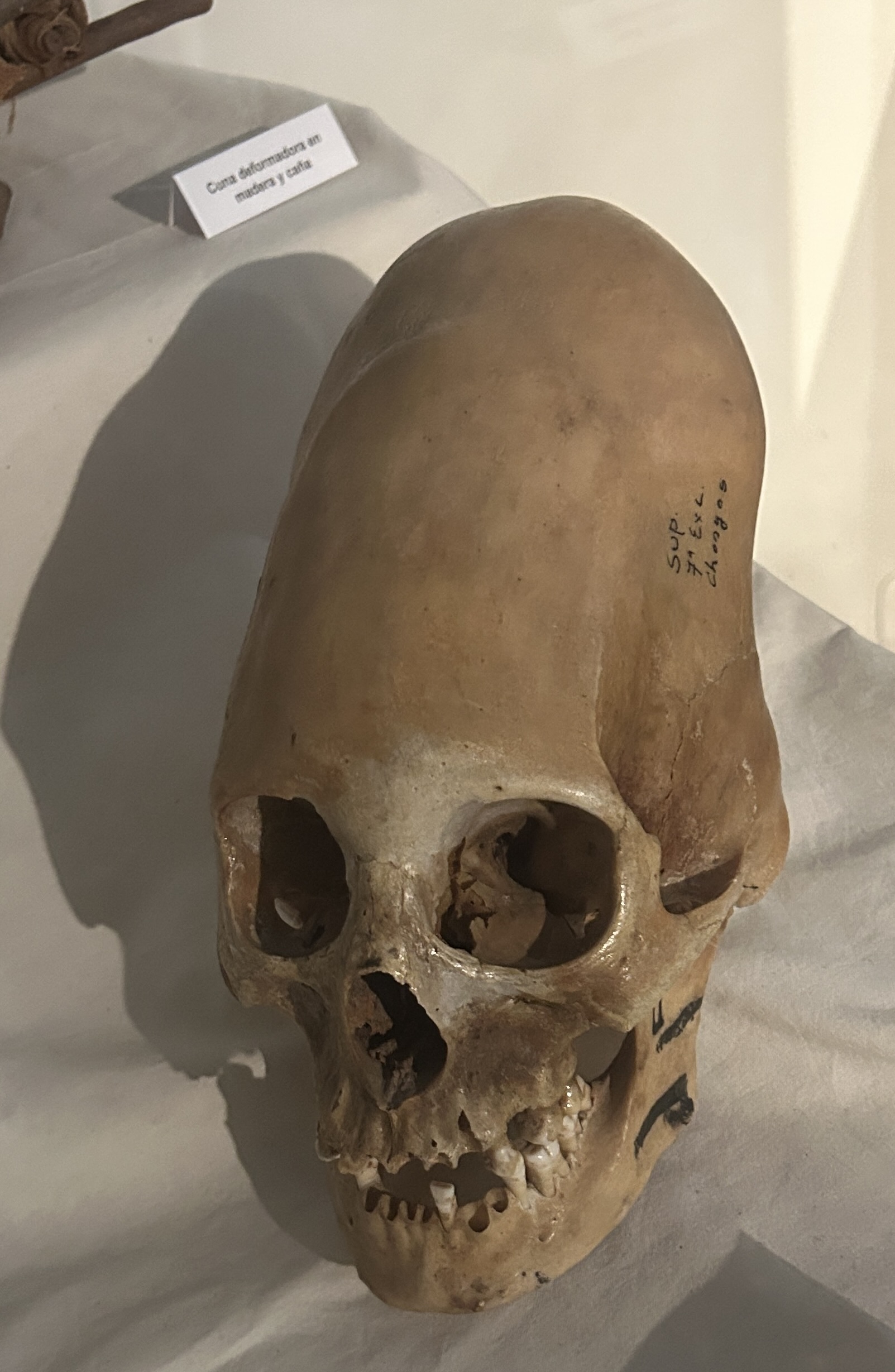
If the mummies don’t give you the heebie-jeebies maybe this will. For some reason people on all continents and races once thought that deforming your skull was a good idea. Why you would want to look like some kind of alien is beyond me, but this guy clearly succeeded.
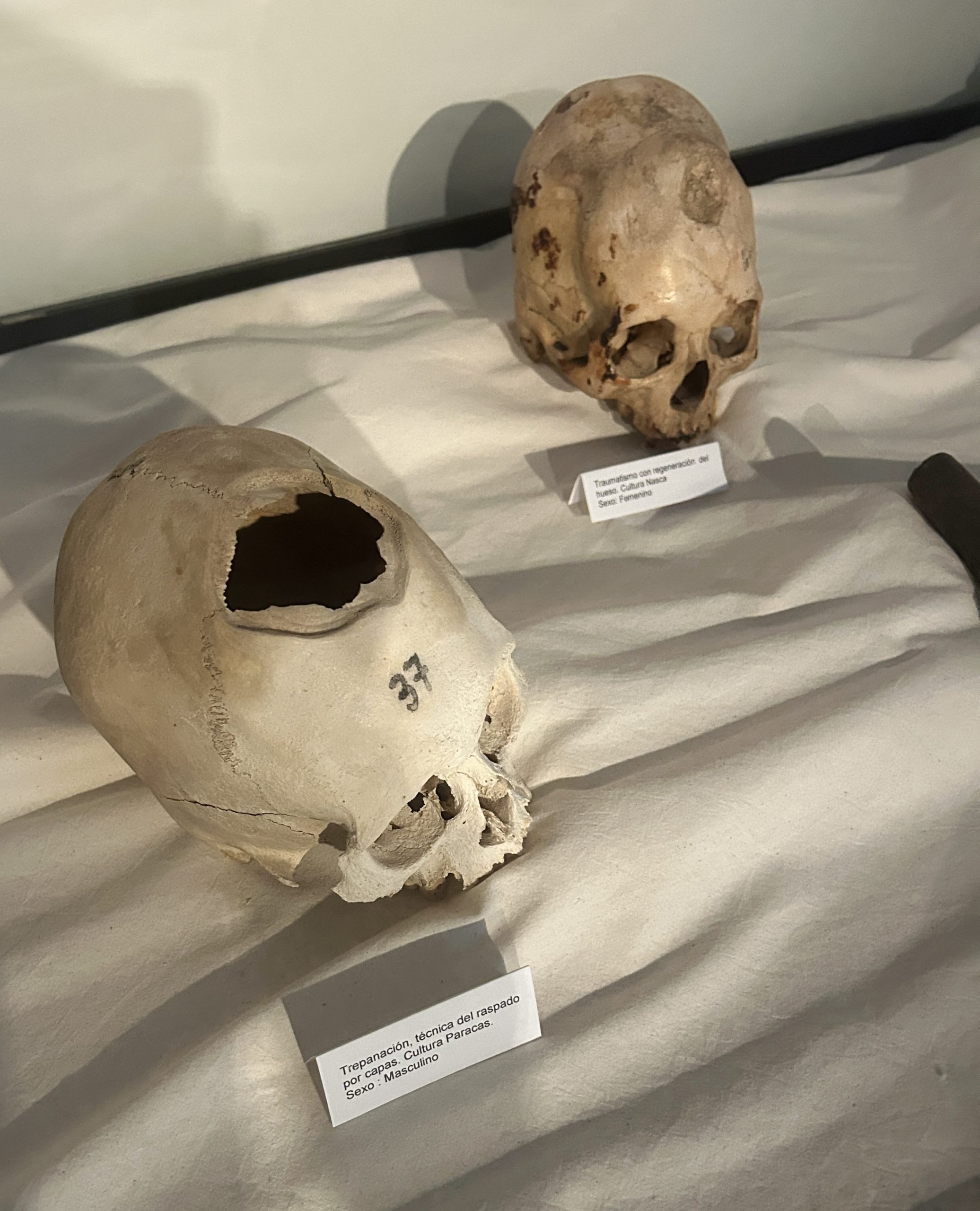
Another weird thing with the skull that has been going on for over 10,000 years is trepanation, whereby a hole is literally cut out of the skull to expose the brain matter to the open air. Apparently it sometimes even worked as there are examples of people with trepanned skulls living for decades after the ‘operation’.
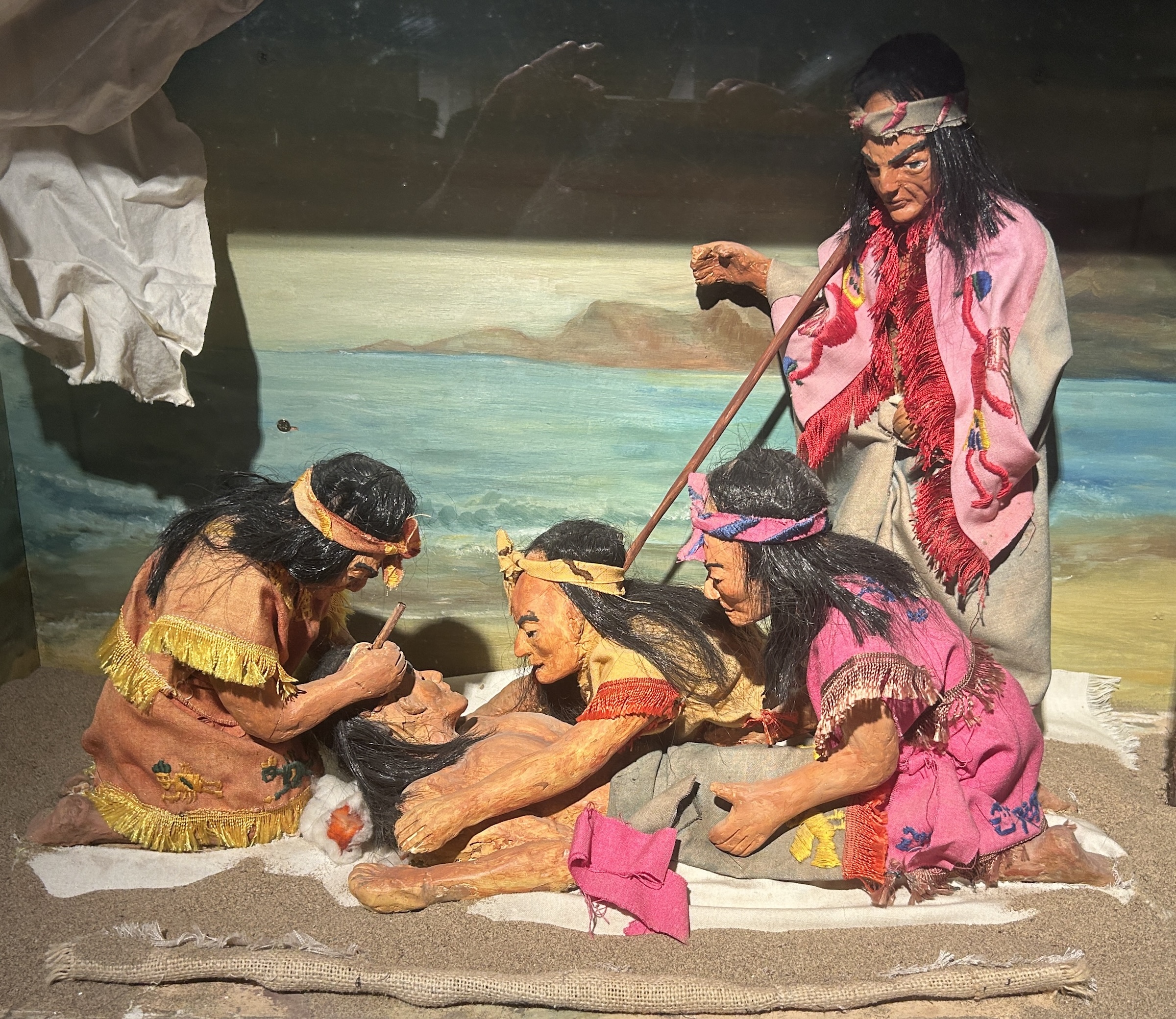
This museum even has a diorama of a trepanation. The Nazca people were apparently quite enamoured of this practice and theymay have passed it on to the Incas who also practised it.
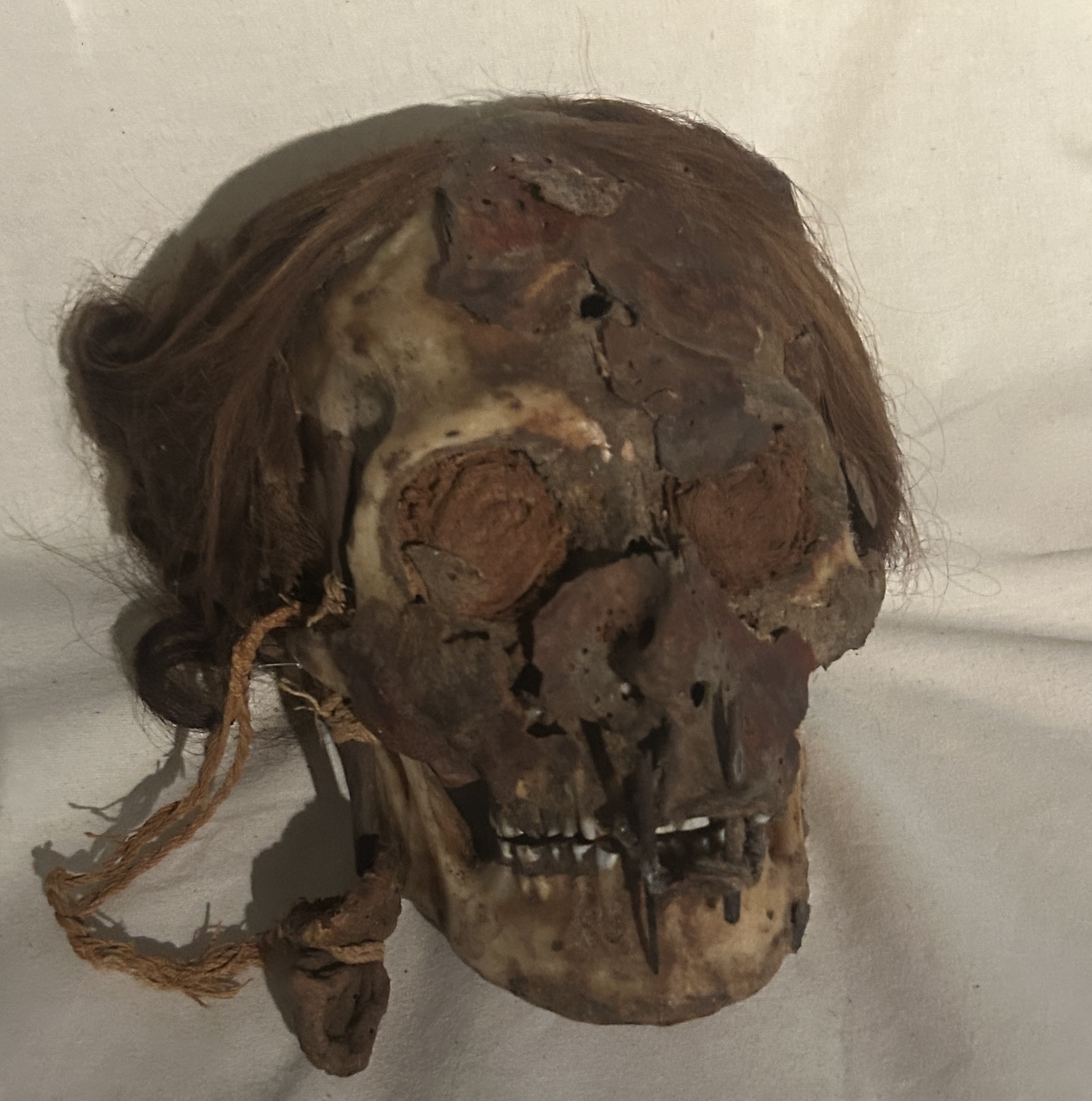
And there was more thing you could do with a skull back in these good old days – carry it around as a trophy.
There are a few more human items in this part of the Adolfo Jenkins Museum that is not as outré as the rest, but equally fascinating.
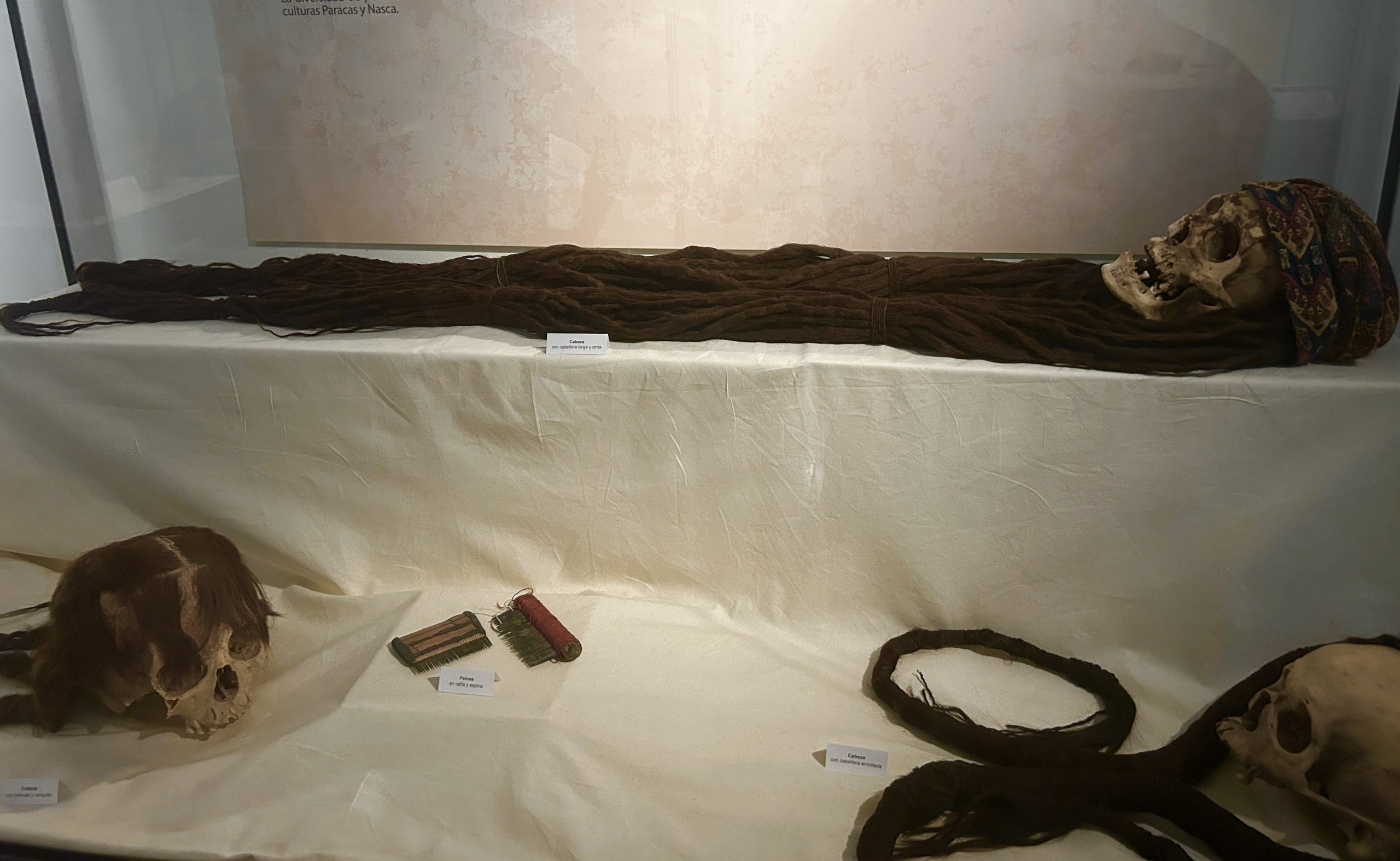
Long before Rastafarians were featuring dreadlocks these guys had it down pat.
There is one final mysterious object I want to discuss before leaving the museum for lunch. It is now generally conceded that there once might have been direct contact between Polynesian groups and South American groups. This is based on the fact that sweet potatoes are found naturally only in the New World. However, they started to be grown in Polynesia around 1000. How did these plants cross thousands of miles of ocean unless they were transported by humans? There is one artifact in this museum that helped convince me that this must have been the case.
There is a display of traditional oars that are decorated on the handle with various figures. Diego pointed out one in particular and I took a photo of it, but in a Twilight Zone type of moment it turned out blurry, even though none of my other photos did. What it shows, and I saw this clearly, was that this oar was decorated with what were unquestionably moias of Easter Island. Their distinct shapes were unmistakeable. For better or worse, here is that photo.
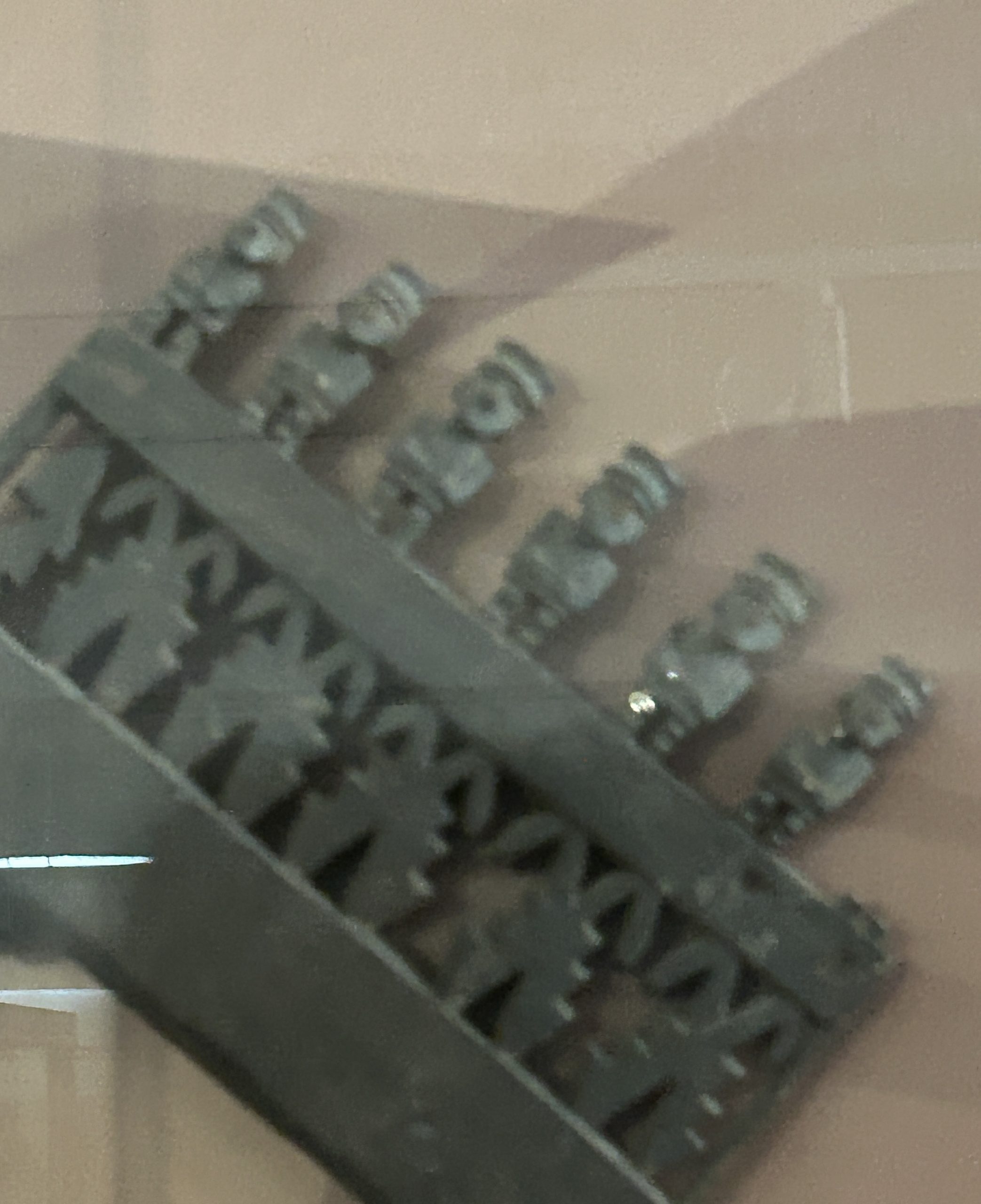
I have tried in vain to find a better photo anywhere on the internet and if anyone reading this has one, please share it with me.
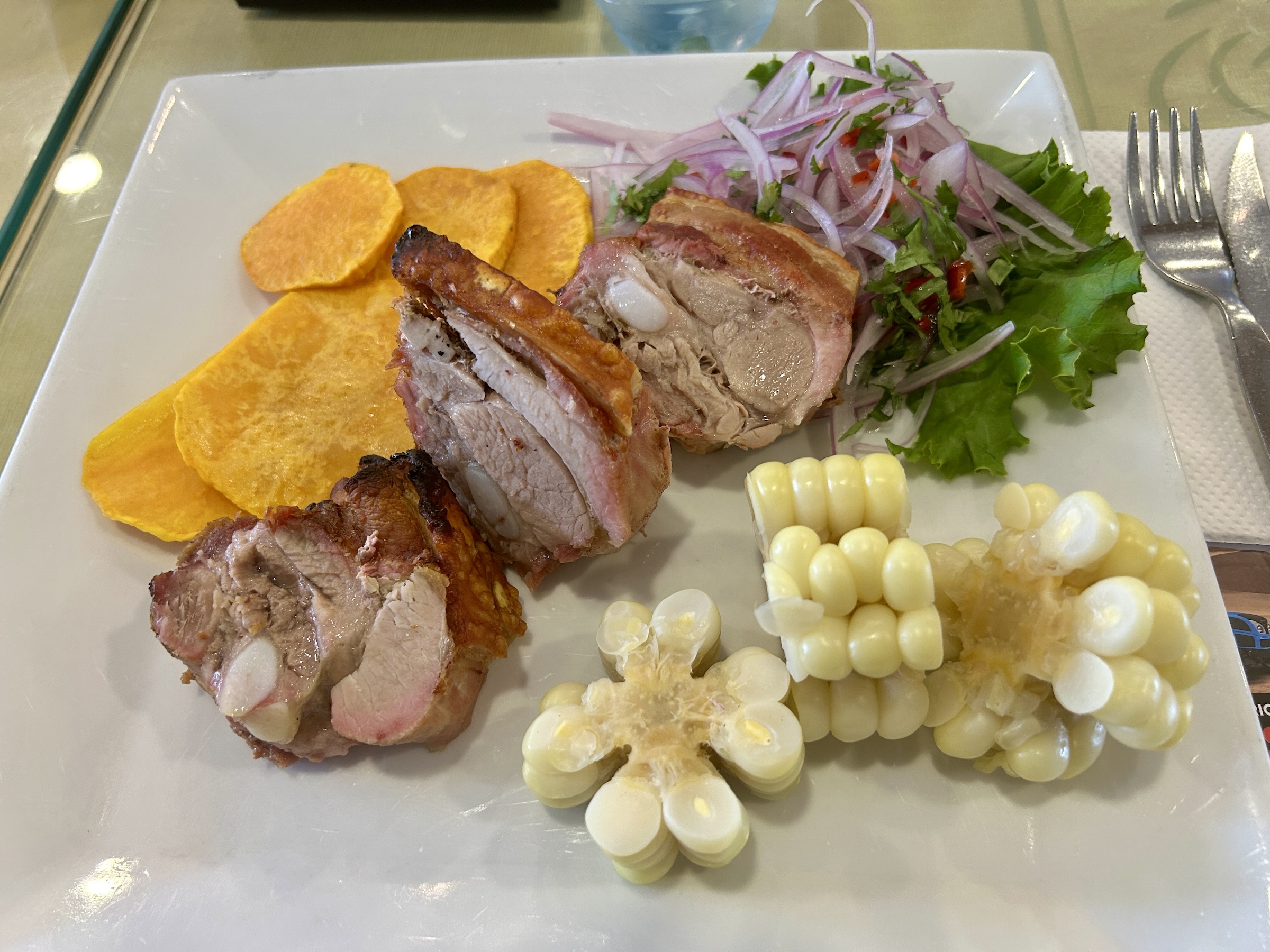
It was now well past lunch time and we had a fine meal at a restaurant in Ica that I negligently forgot to remember the name of. Anyway the roast pork was excellent.
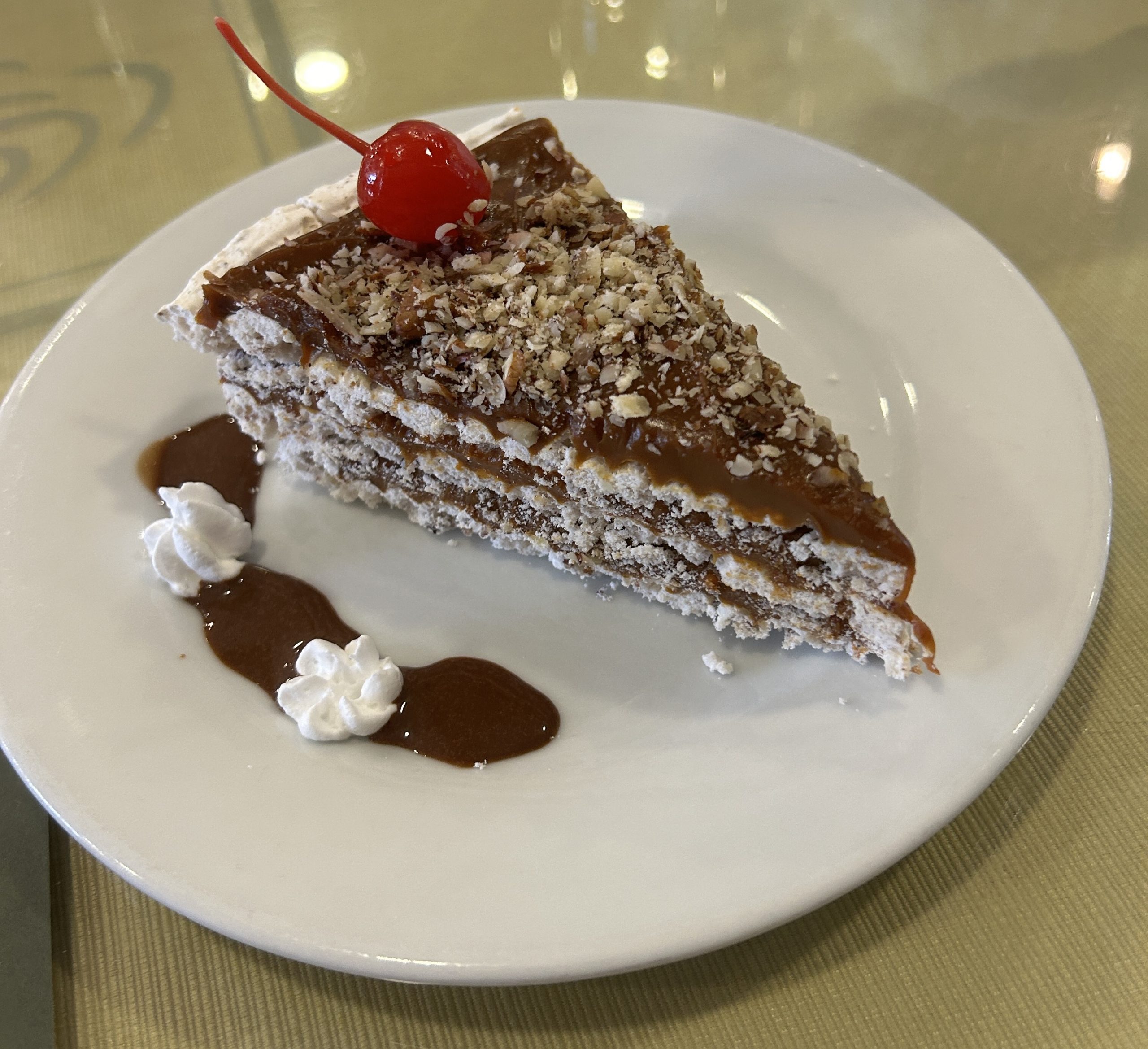
As was the meringue and caramel dessert.
Huacachina
Our last stop on this adventure filled day is at the only natural oasis in South America. Just a few miles from Ica there rises a series of mighty sand dunes that totally encircle a small lake that is surrounded by palm trees in a setting that seems more out of the Arabian Nights than anything in South America.
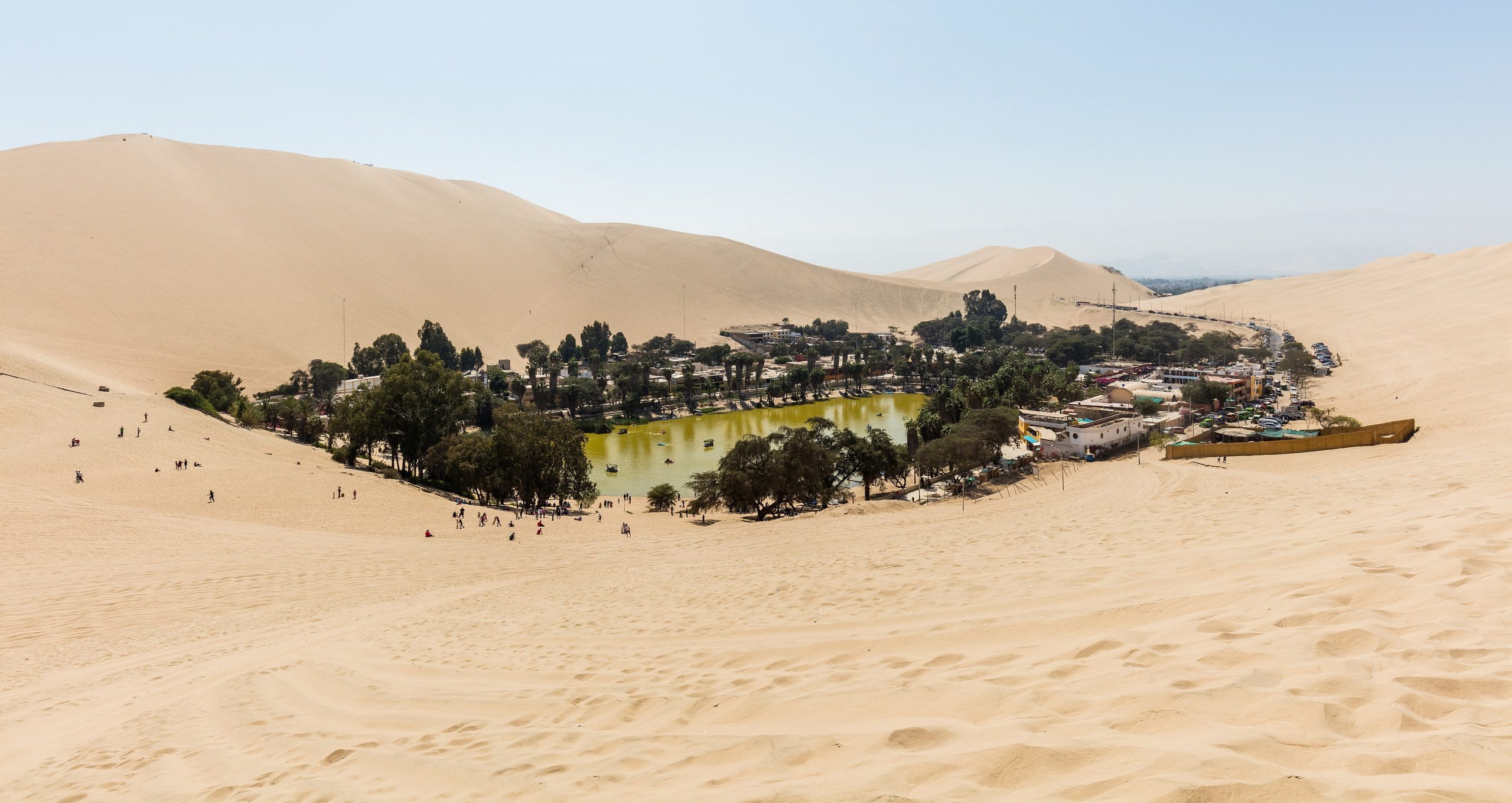
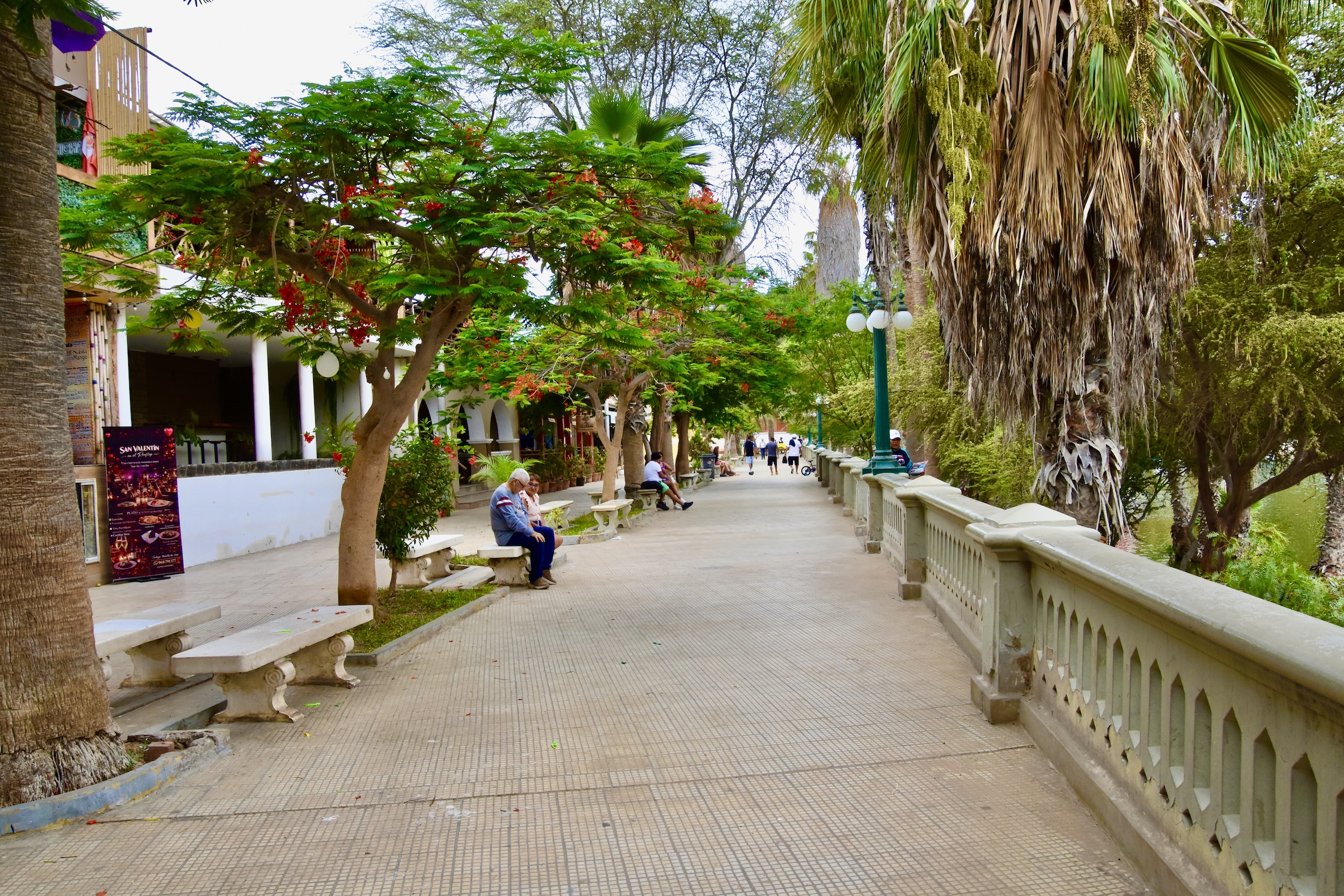
There’s a traffic jam getting in and out of this place where only about 100 people live, but once we are parked and walking around the promenade that surrounds most of the lake, it’s worth it.
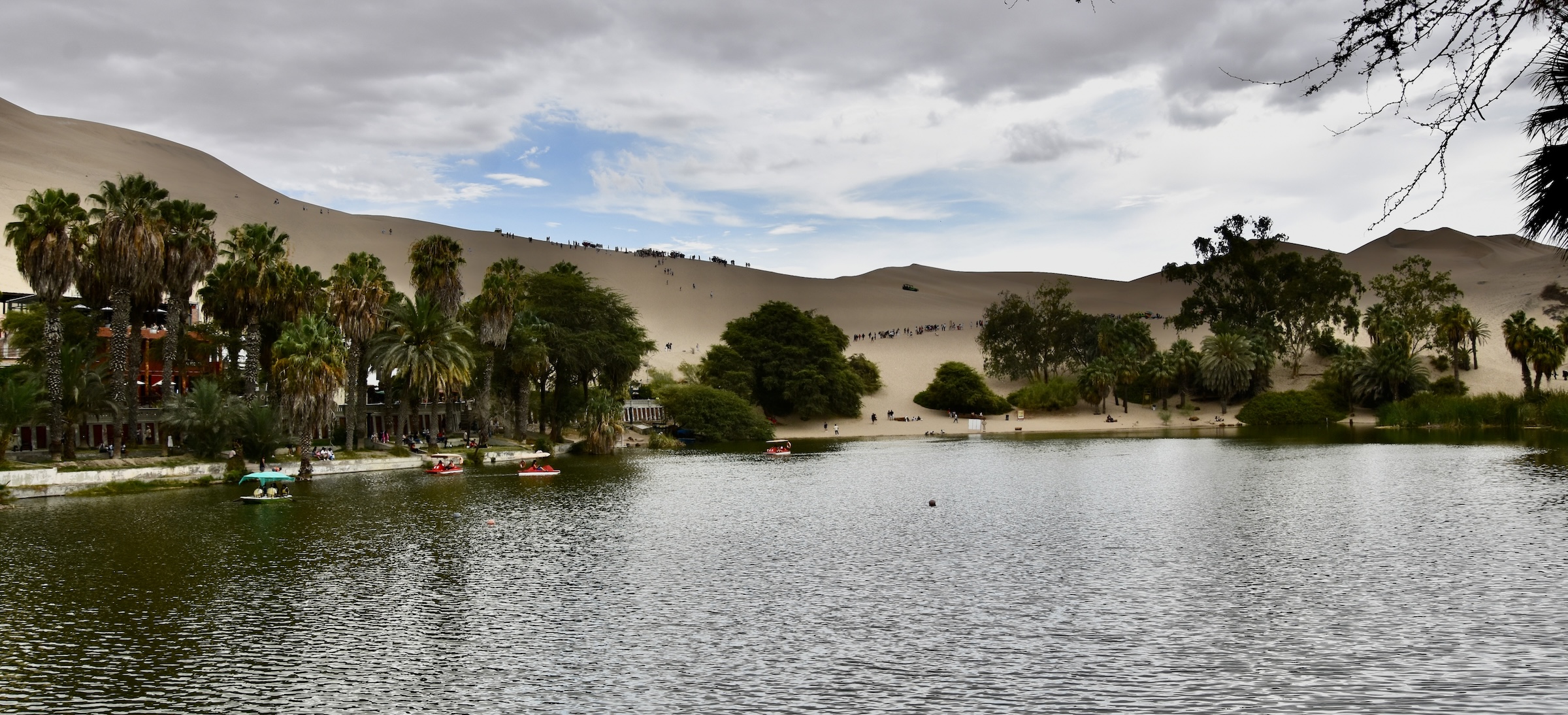
There are people here for the dune buggy rides or sandboarding, but I’m content just to walk around the lake with my binoculars looking for birds.
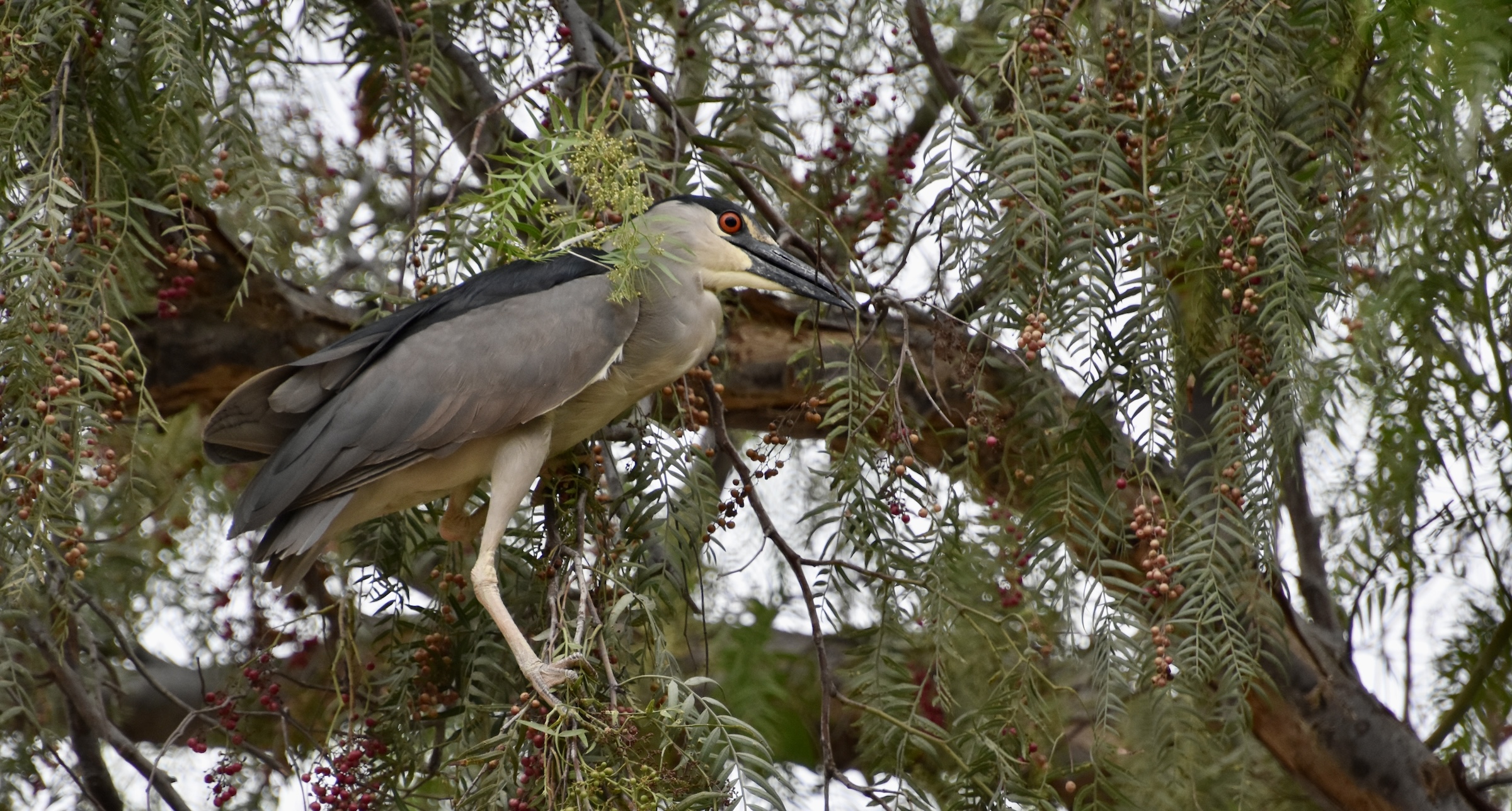
It’s a pretty nice scene and I’m not disappointed with the birding as there are more night=crowned herons than I’ve ever seen in one place. These normally fairly secretive birds are clearly inured to the human presence here and there seems to be one in every tree.
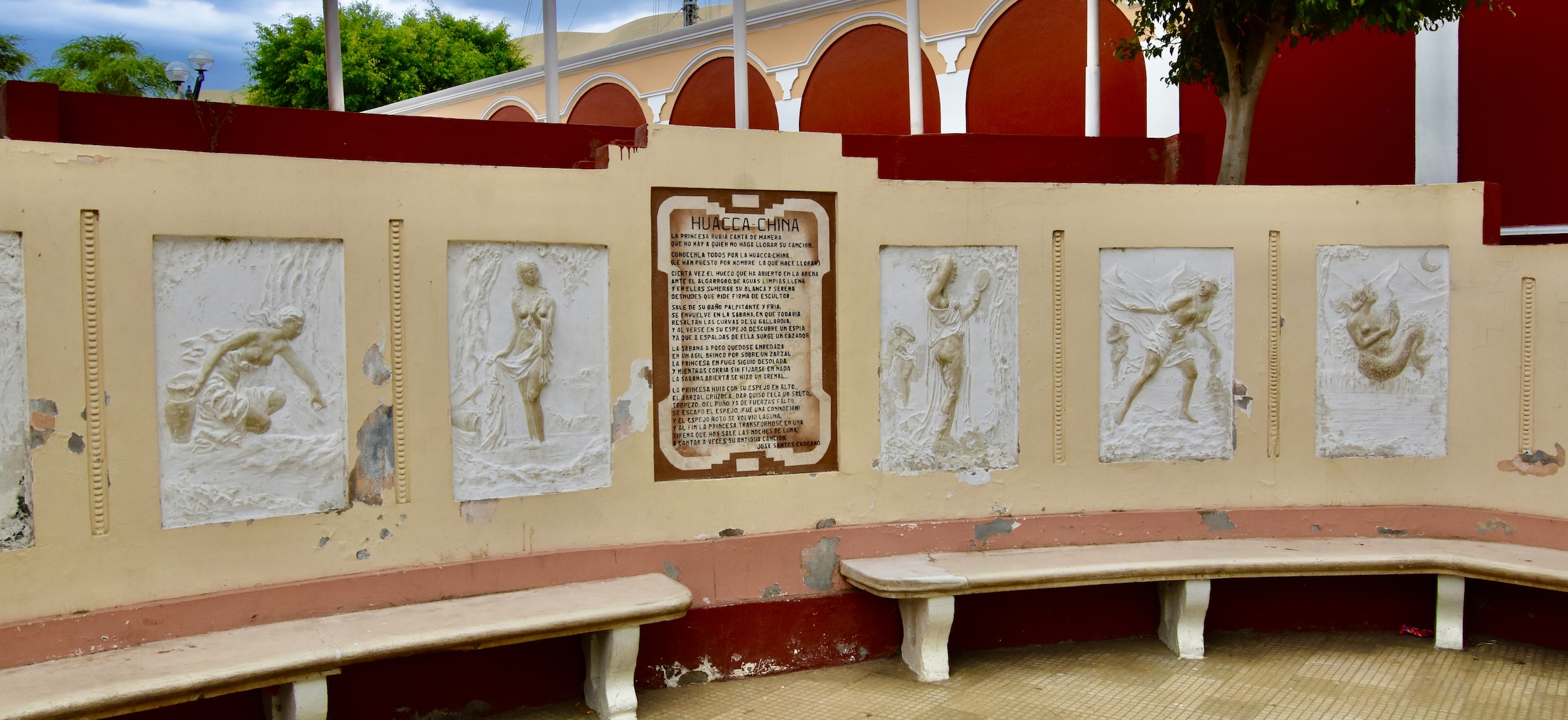
There’s also a legend associated with Huacachina, which means ‘crying woman’ in Quechua, as told by this series of bas reliefs. Essentially it’s a boy meets girl, in this case an Inca princess, they fall in love, he dies, she cries and voila the oasis is created from her tears. More elaborate versions have her eventually becoming a mermaid as depicted in the panel on the right.
After our walk around the lake we gather for a group photo to mark the end of a great day in the Ica area of Peru..
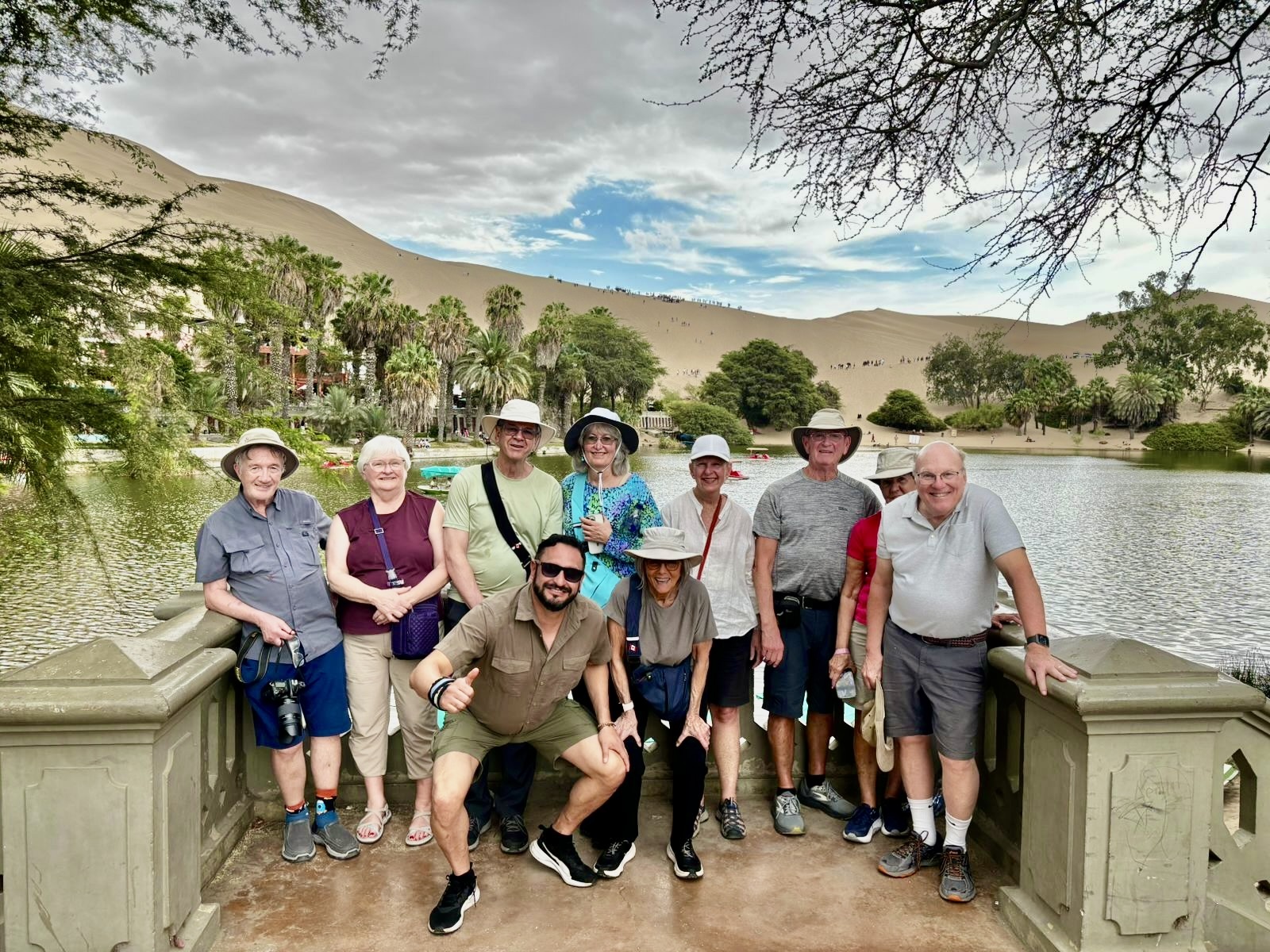
Well, it’s not quite the end, because this is after all Pisco Sour Day so salut, I’ll see you in Lima for the next post.