
Copacabana – Bolivia’s Sacred City

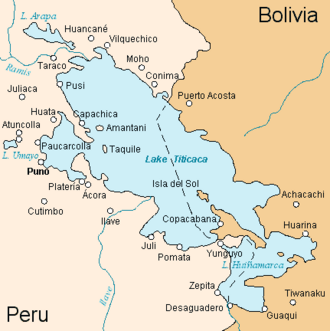
This is my first post from Bolivia as the Adventures Abroad Kingdoms of the Andes tour enters its final stage in the Altiplano, the world’s second highest plateau. With an average elevation of 3,750 metres (12,300 feet) it is where most of the country’s population resides even though it covers less than a third of the total land mass. It is home to the world’s highest capital city and many important archaeological sites including the pre-Incan city of Tiahuanaco which we will visit in a few days. It also shares the world’s highest navigable lake with its neighbour Peru, Lake Titicaca which we explored from Puno, Peru in the last post. We will be journeying to the Isla de la Sol in the next post, but in this one we’ll stay on land and check out the really interesting small city of Copacabana which is one of Latin America’s most important pilgrimage sites. I hope you’ll join us.
But first we need to cross the border from Puno into Bolivia which is an interesting journey in itself.
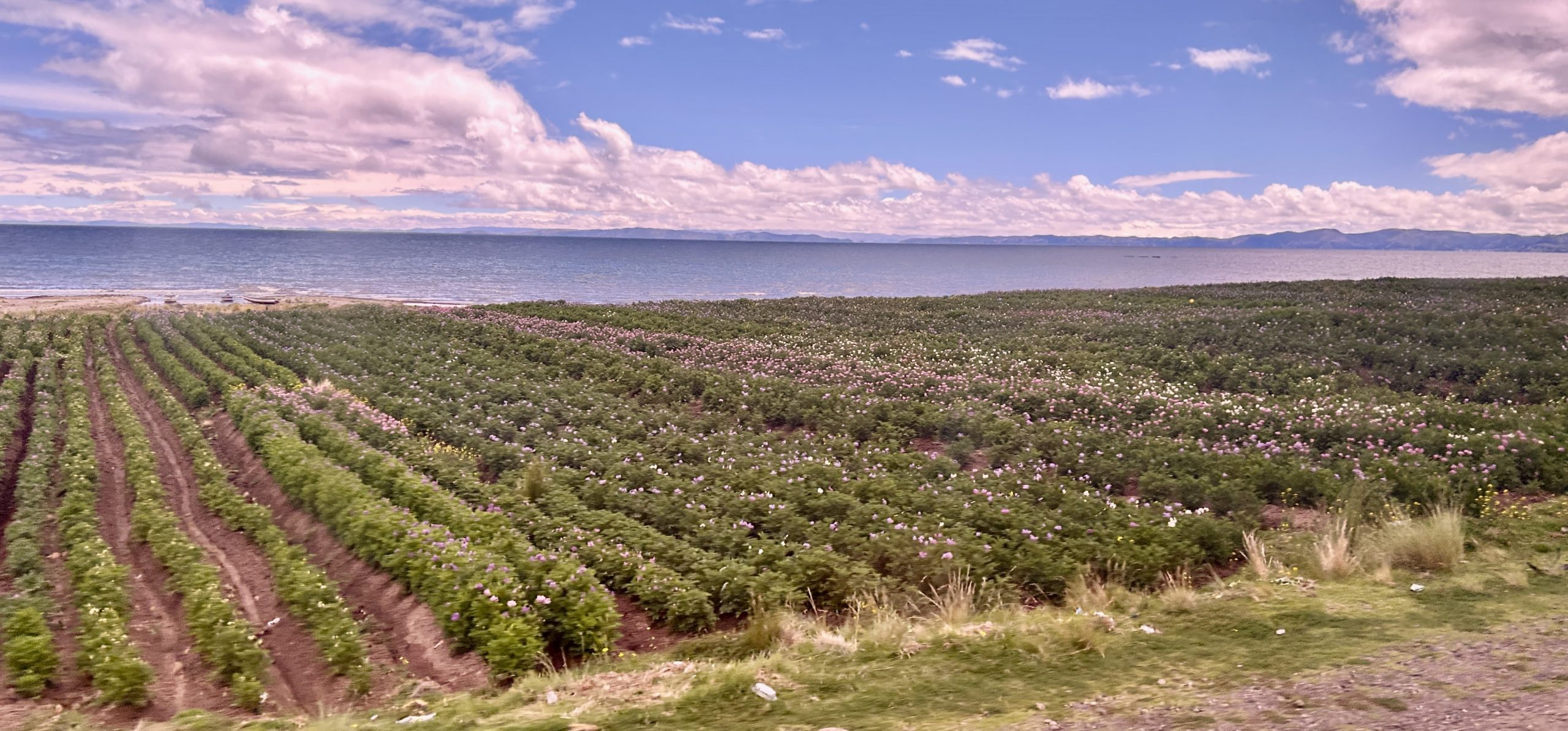
It’s just over a two hour drive to the border crossing at Yuncuyo and there are two main crops being grown. There are endless and quite colourful fields of potatoes.
And innumerable fish farms where rainbow trout are grown for both domestic and international consumption.
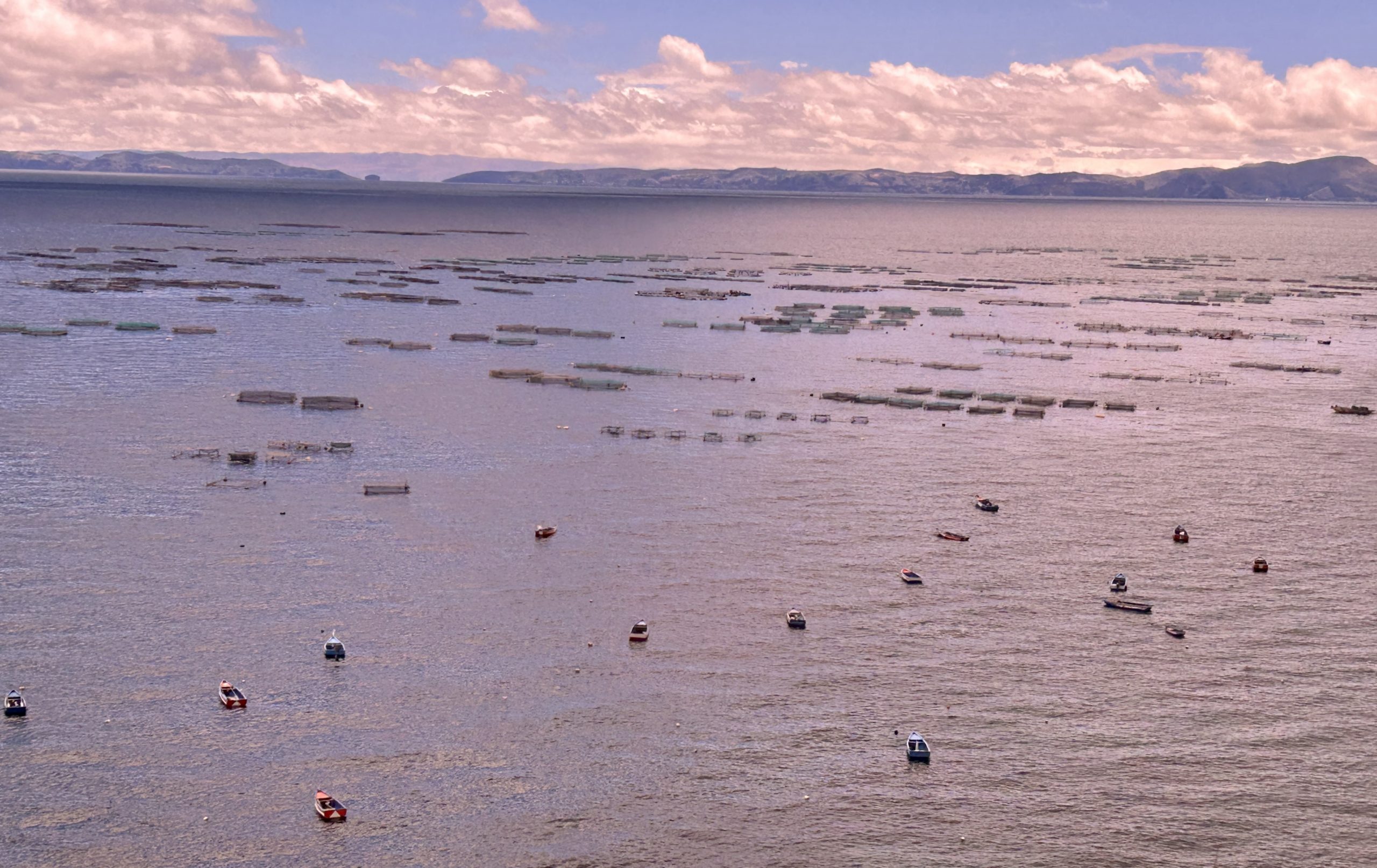
While the aquaculture does provide significant employment and jobs for the locals who live alongside the lake, there are also the usual problems associated with these enterprises. I know because we have the same issues in Nova Scotia with Atlantic salmon farms and there are ardent advocates on both sides of the coin.
These land crossings always involve checking out of one country and then checking into the other and usually a change of buses.
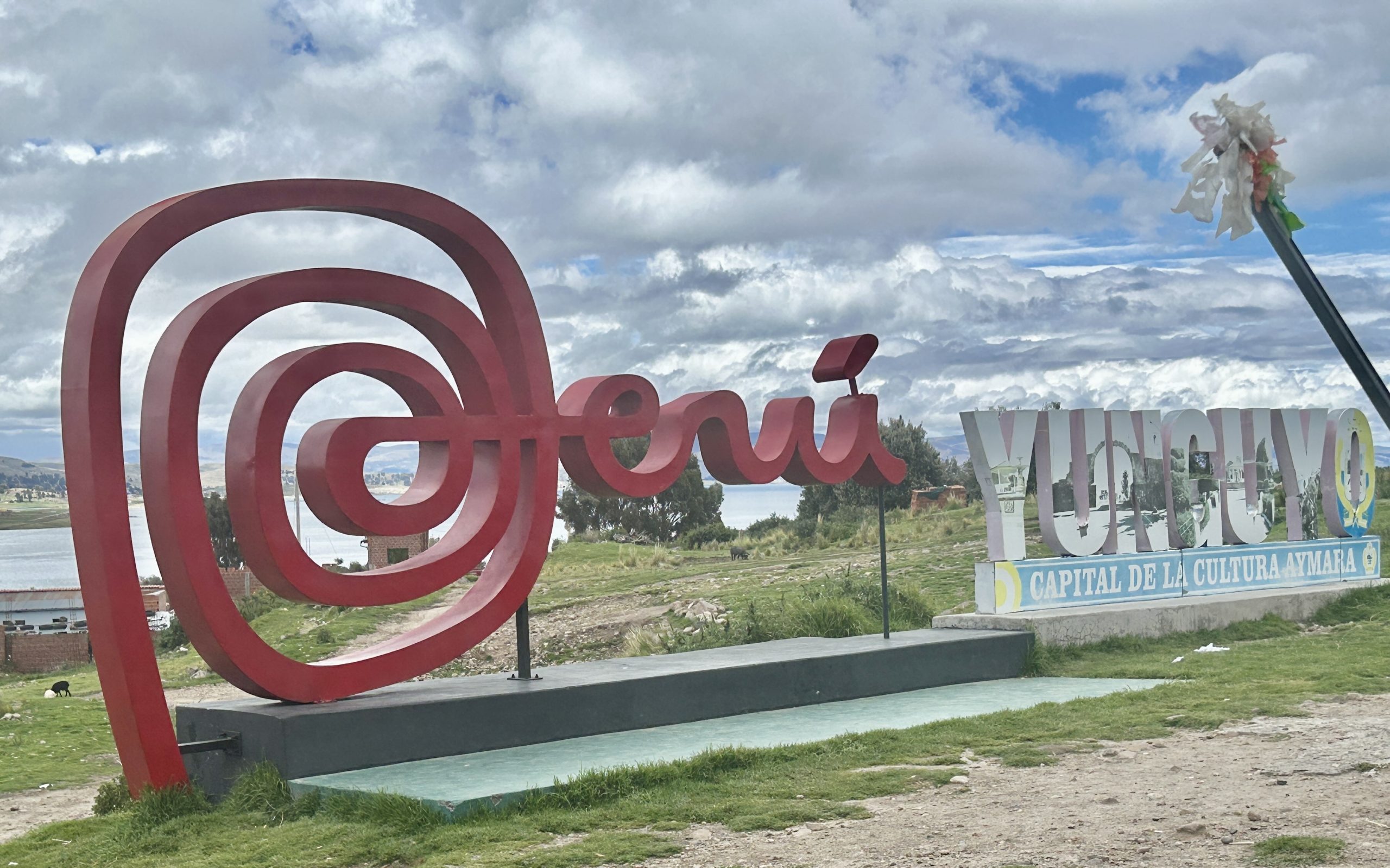
There are no issues first on the Peru side where I finally get the passport stamp I was expecting on the way in and didn’t get.
Leaving the Peru customs house we have this walk to the Bolivian side.
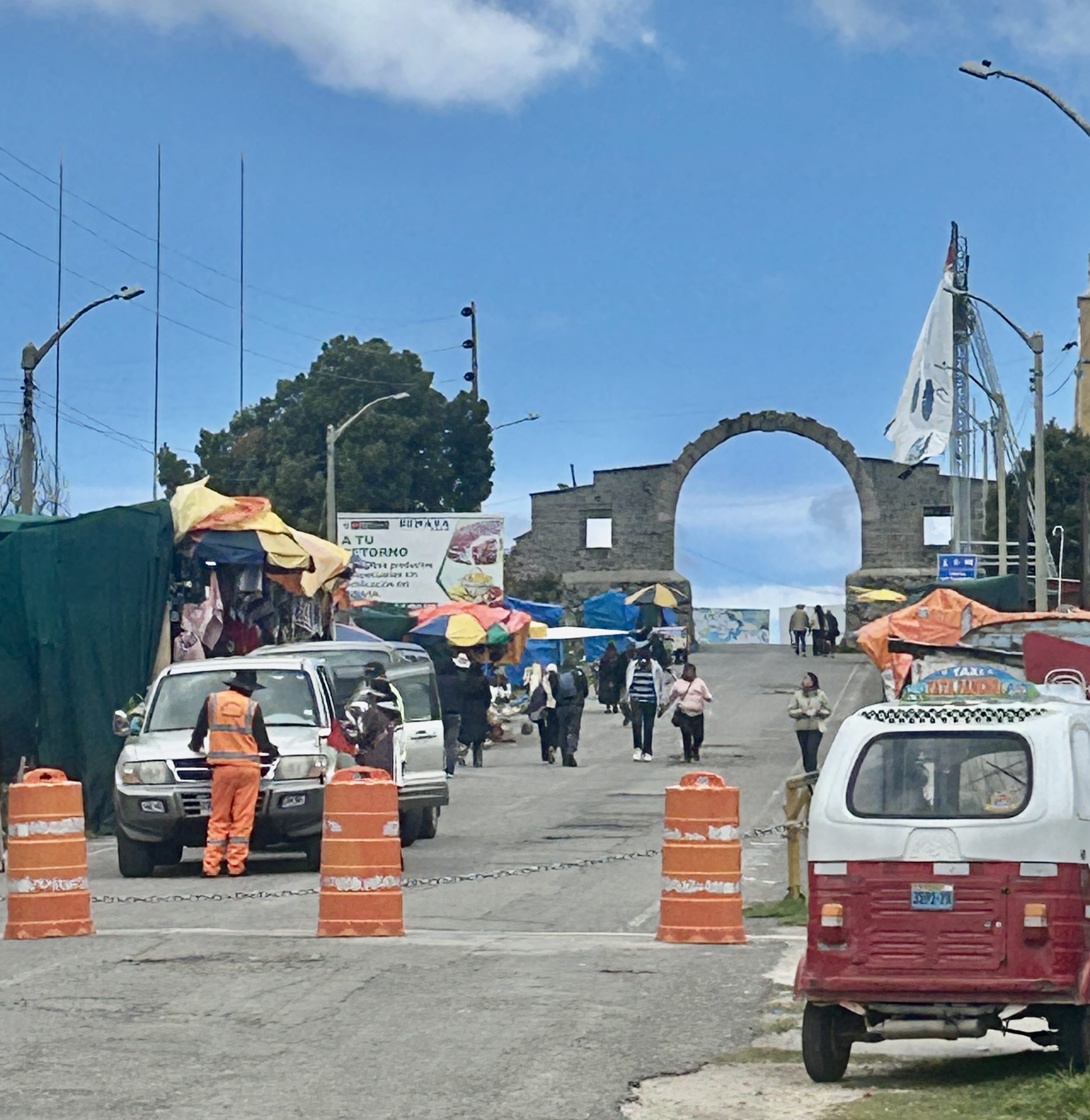
Once again things go quite smoothly with two stops here instead of just one. In total it took us about 45 minutes to do the crossing and that is most mostly because we arrived just behind a large group of students.
Now in Bolivia we all get into this ridiculously large bus and head for Copacabana.
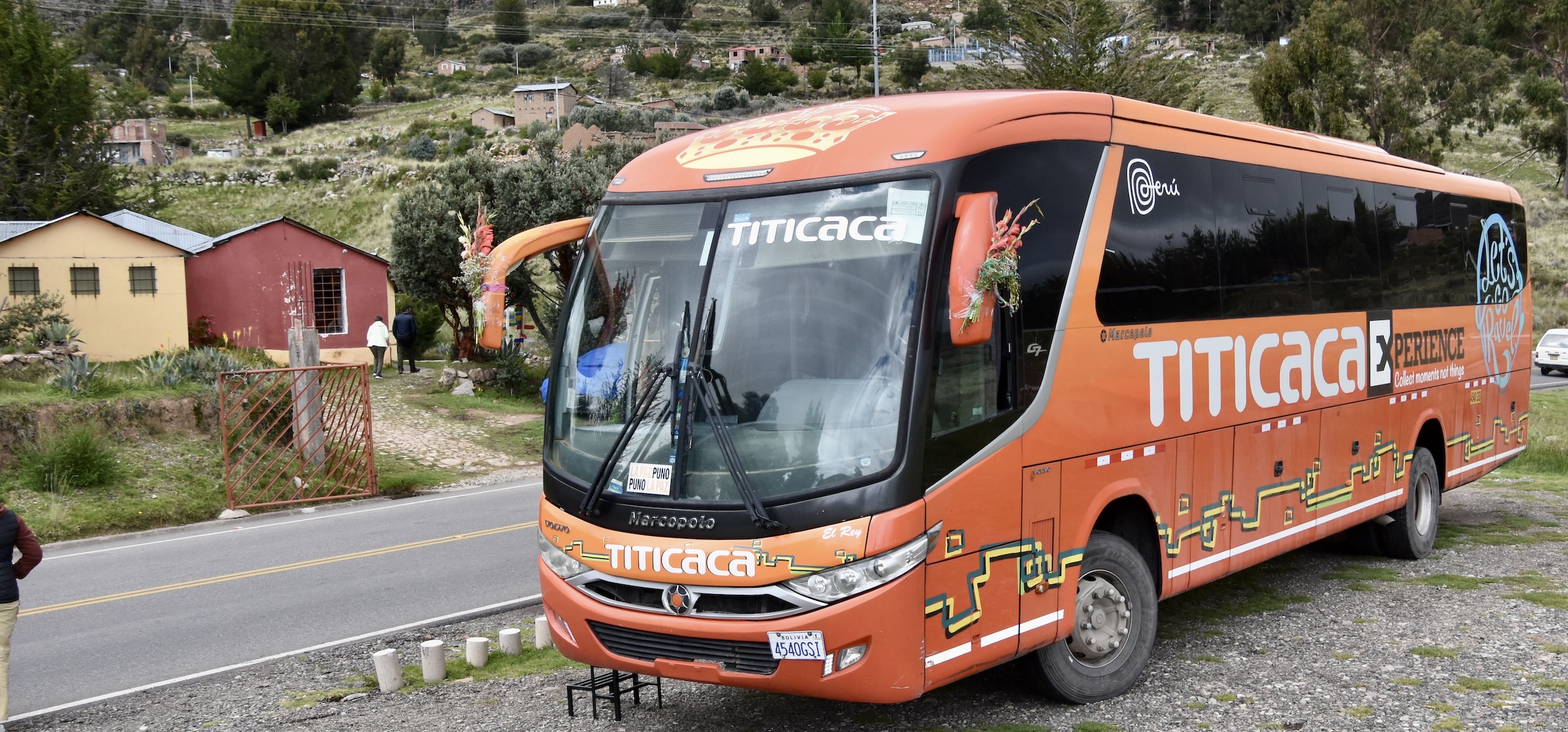
Once again my preconceptions about Bolivia were wildly offtrack. I was expecting a third world country with poor highways, run down villages and other effects of the years of rule under the Socialist regime of Evo Morales from 2006 to 2019 which North American right wing media had painted as disastrous. Instead there were very good highways and quite prosperous farms and villages on the way to Copacabana,
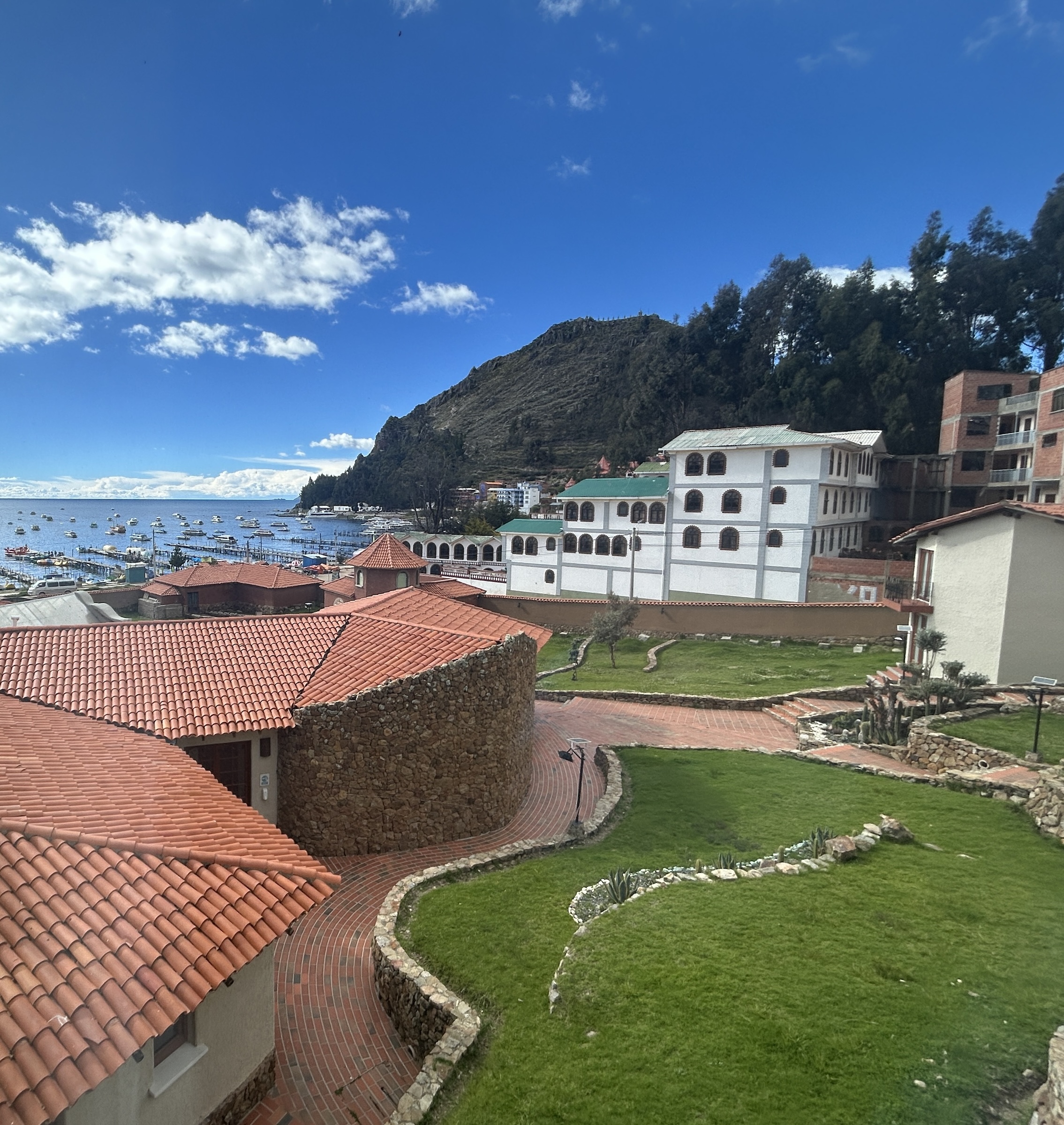
We arrived for an early check in to the Hotel Rosario del Lago which was one the nicest on the tour. Just up from Lake Titicaca I had this view from my room.
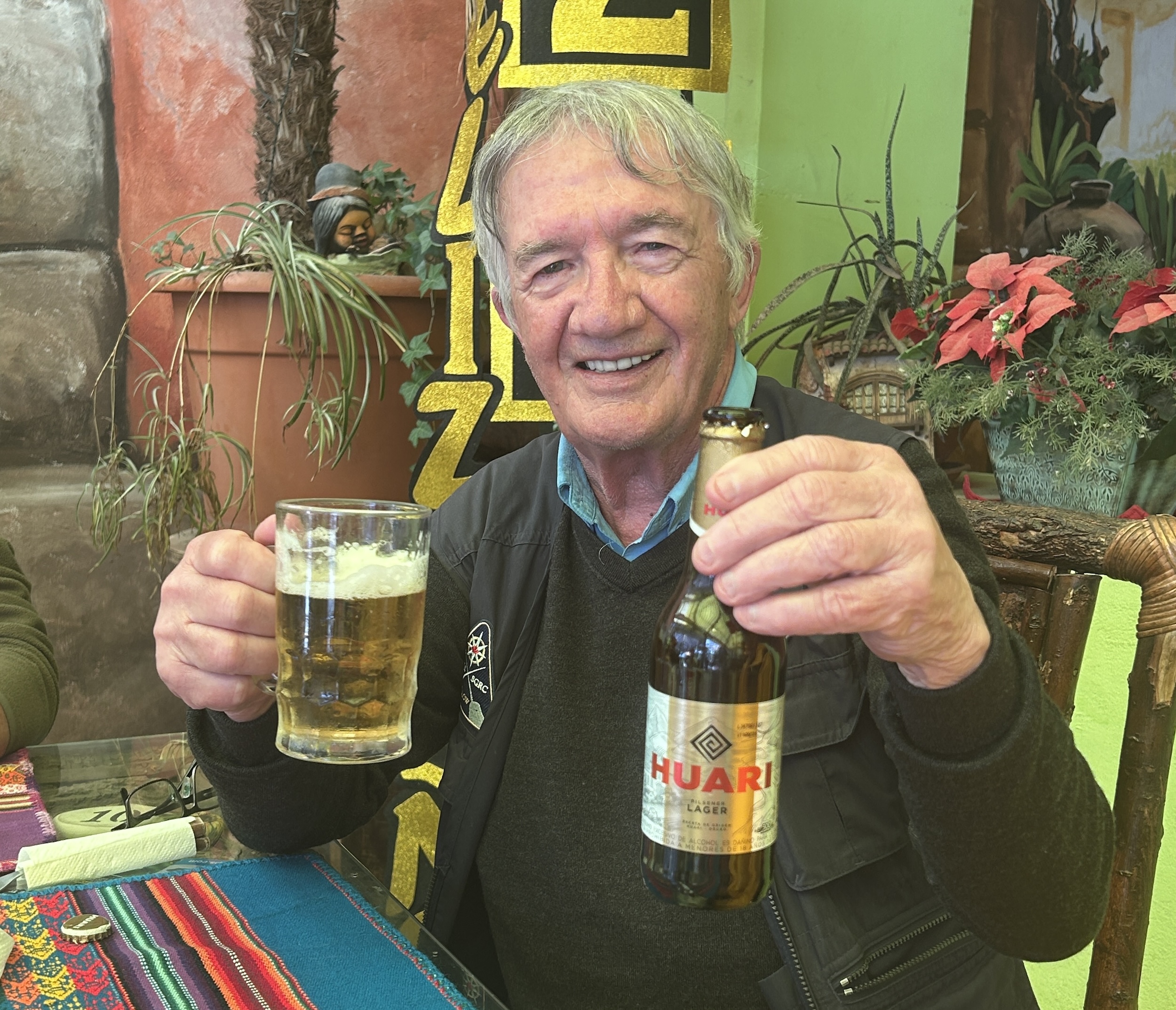
After a quick refresher our tour leader Diego Vidal led us to Cafe Europa for lunch where I tried my first Bolivian beer, Huari which I would not rate as one of the best beers on this tour.
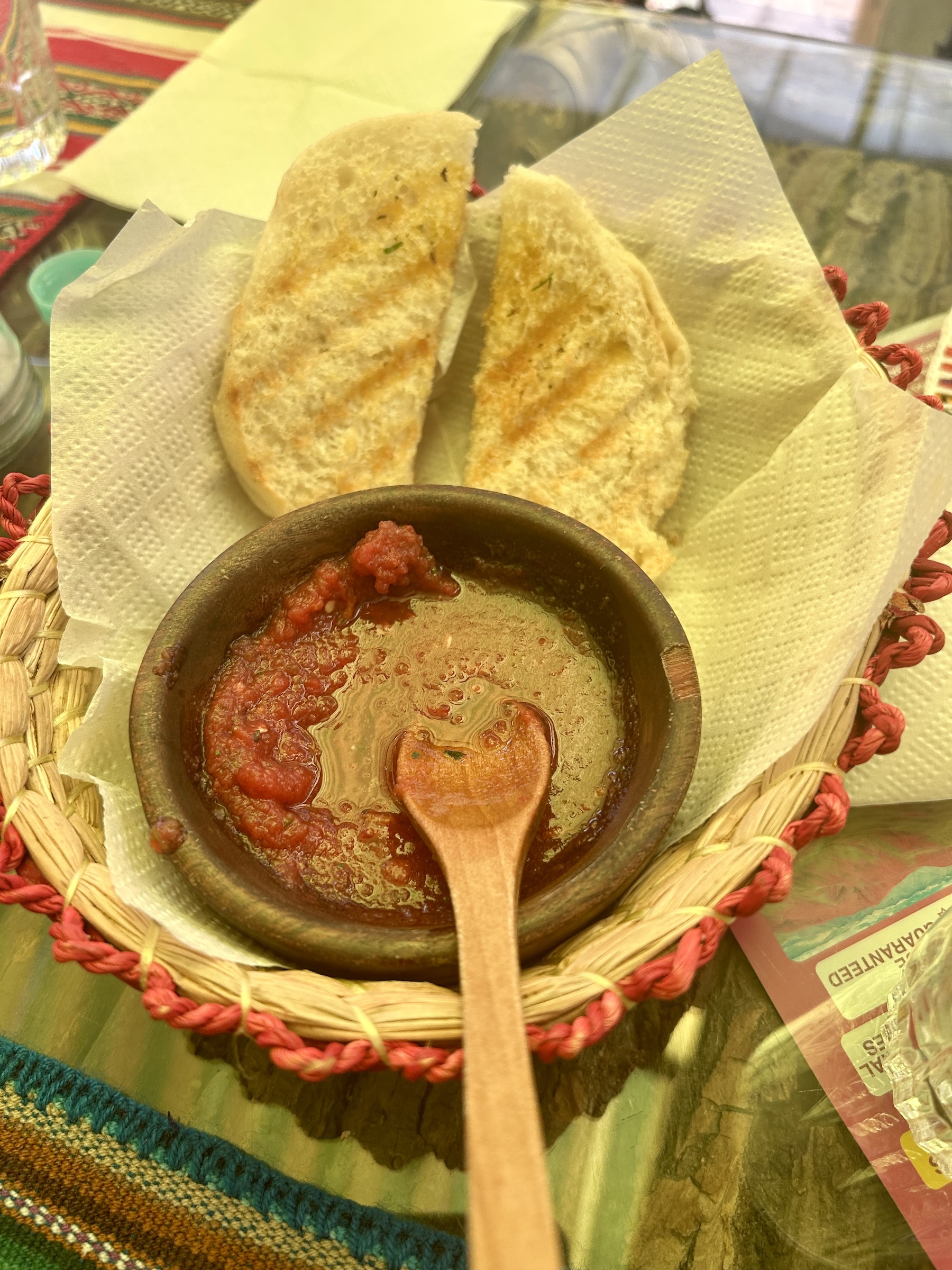
We all got to try a Bolivian starter that is the equivalent of salsa and tortilla chips found in Mexican restaurants, only this features toast and pretty amazing hot sauce to put on it. Trust me I was glad I had a cold beer to wash it down with.
History of Copacabana
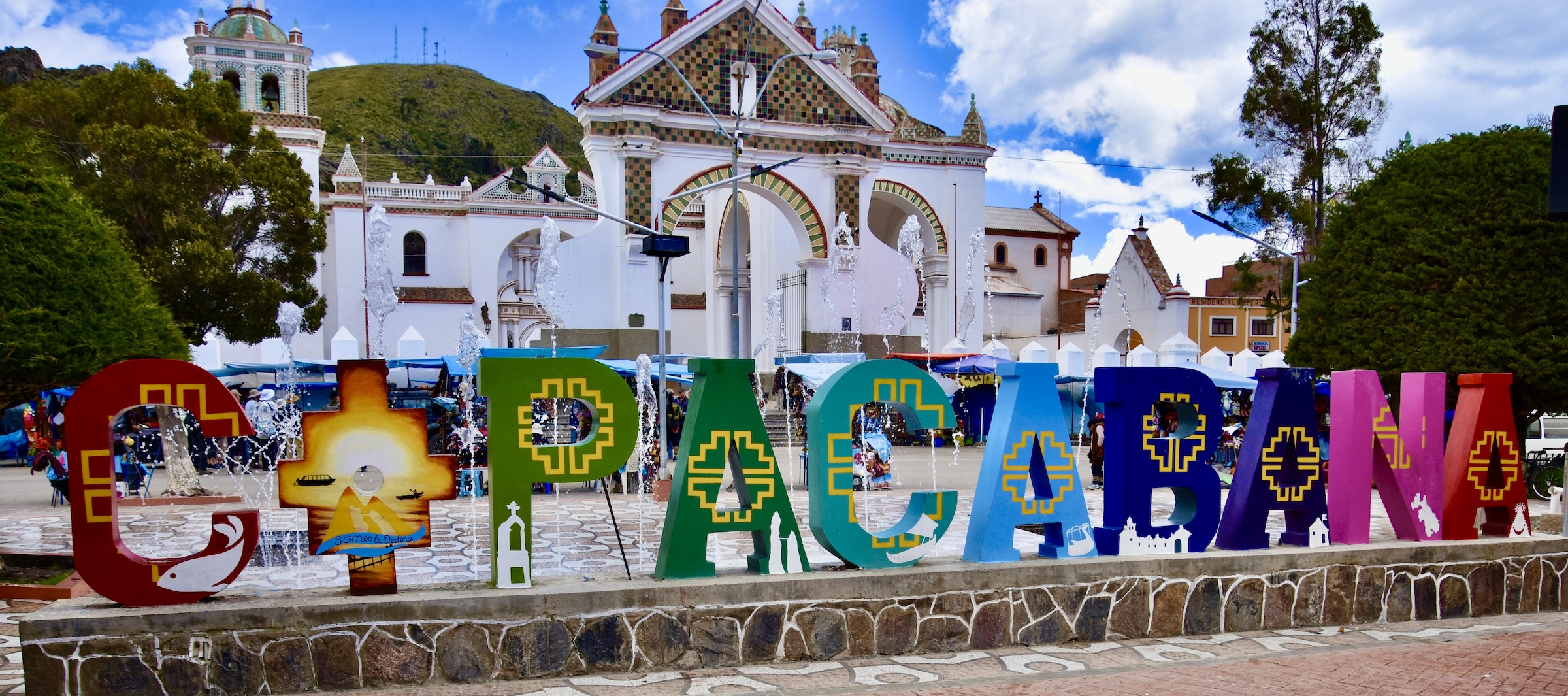
Ok, everybody’s heard of Copacabana right? It’s that famous beach in Rio. No it’s that nightclub that Barry Manilow sings about. Wrong. It’s a small city of about 6,000 that the Spaniards couldn’t pronounce correctly.
The area has been inhabited for at least 9,000 years and unlike much of what we have seen so far on this tour where one culture is succeeded by another and then another etc. etc., the Aymara people have been here as a recognizable group for that entire time. Millenia before the Incas arrived they were venerating the Isla del Sol as a sacred place and the settlement on the bay on which Copacabana is located as a religious centre. The Aymara name for the place was kota kahuana which means ‘view of the lake’ and it certainly does have a great view if Lake Titicaca.
The Incas arrived in the mid-1400s and by 1500 had adopted the Aymara vision of Isla del Sol not only as a sacred place, but the very place from where the Incan people first arrived on earth. The Spanish arrived in the area in 1534 and bastardized the pronunciation of kota kahuana to, you guessed it, Copacabana. The place being important both to the Aymaras and the Incas as a religious site, the Spanish did their thing and started making it an important Catholic site, first by Dominicans and later Augustinians. In 1583 they got a big helping hand when the grandson of one of the last Inca rulers, Francisco Tito Yupanqui created a wood and polychrome statue of the Virgin Mary holding the baby Jesus. Yupanqui was not a professional artist and at first his statue was ridiculed as amateurish, but then the miracles starting happening. Fisherman on Lake Titicaca claimed that a vision of the statue appeared to them during a storm and calmed it for them. Others soon followed and a chapel was built to house the statue and it immediately became a place of pilgrimage for others seeking miracles.
By the 17th century the numbers of pilgrims required greatly expanding the site where the statue was placed and the result was a basilica that today is one of the most important shrines in the Western World. In fact, the famous Copacabana Beach in Rio was named for this place. In 1925 this statue, now known as Our Lady of Copacabana, was made the patron saint of Bolivia by Pope Pius XI, the only case I’ve ever heard where the saint was never actually a real person.
OK, let’s go visit this famous statue.
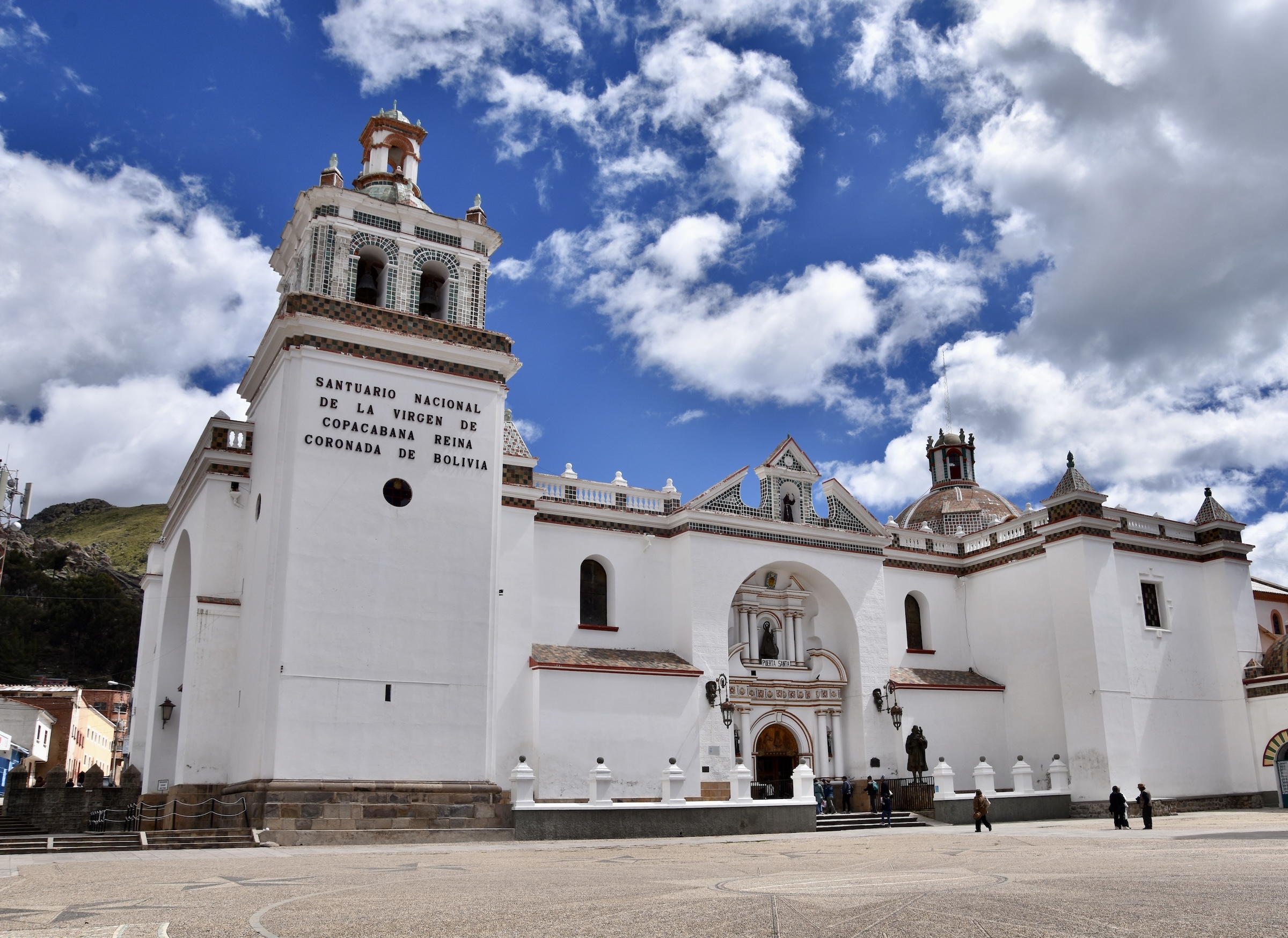
Built in a unique combination of Renaissance and Moorish styles, the basilica with its whitewashed exterior is quite impressive.
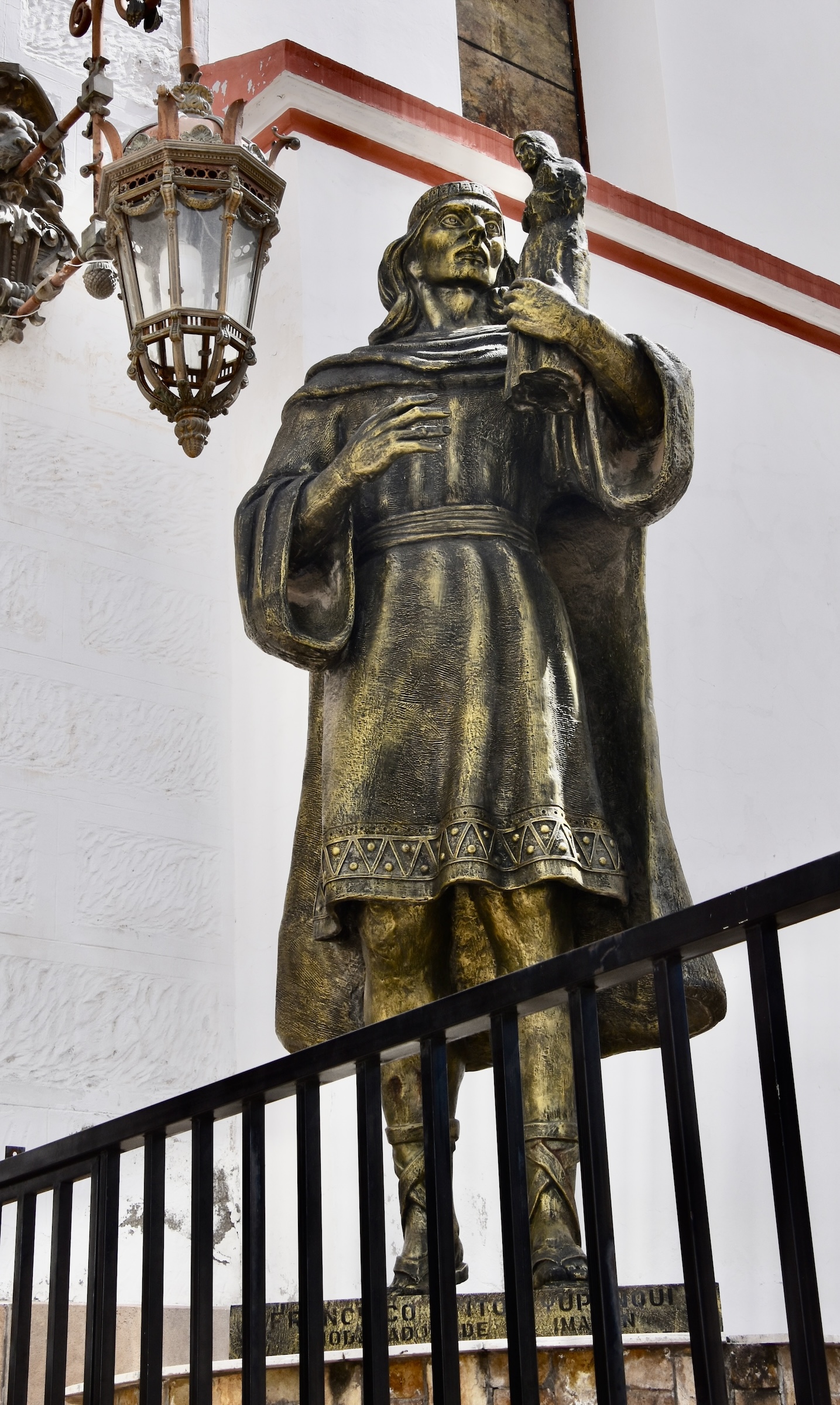
At the entrance is this statue of Franciso Tito Yupanqui holding the statue he created.
This is the entrance to the basilica and shrine and the last place you can take a photograph. No photos of the actual statue, which never leaves this place, are allowed.
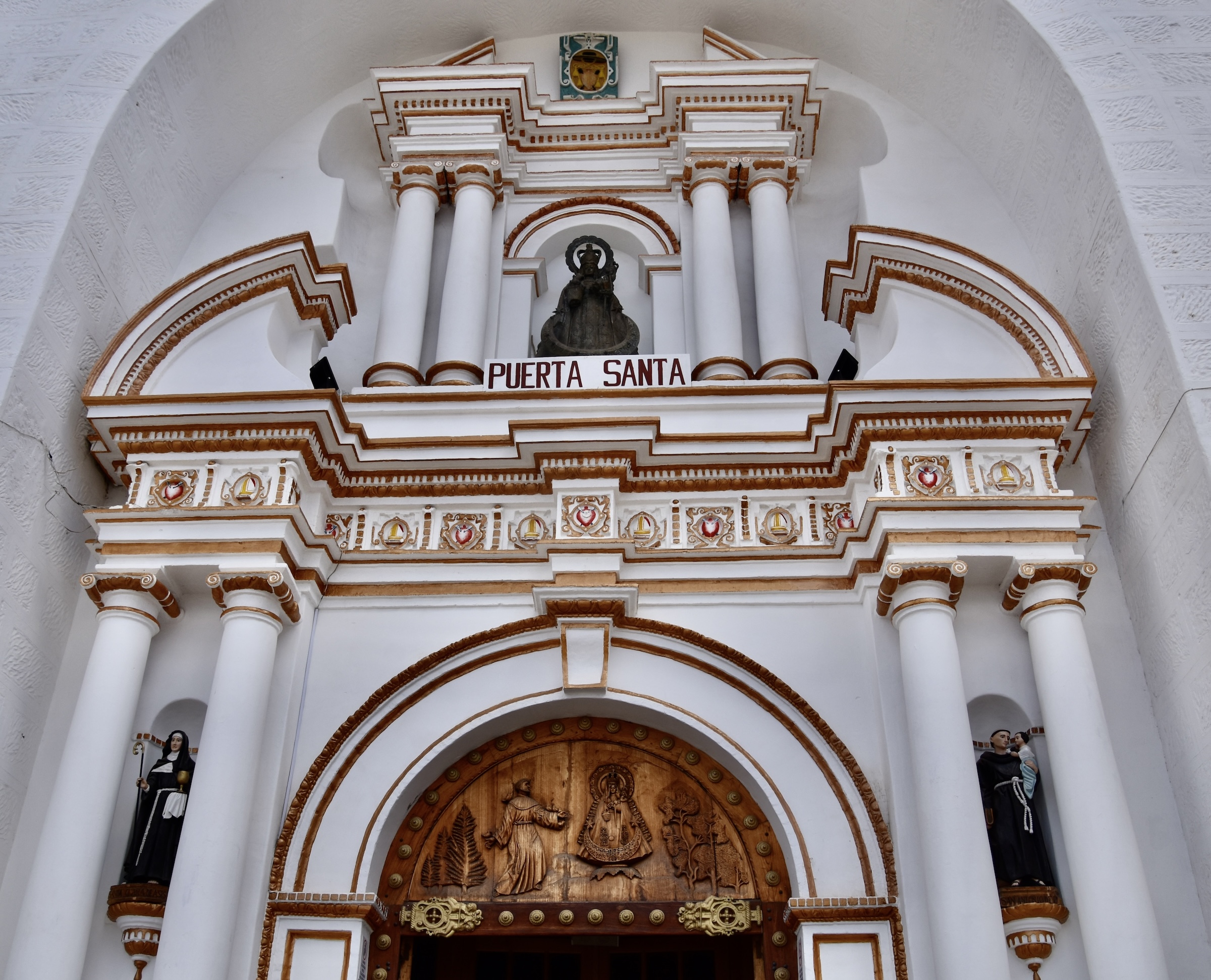
But there is a consolation prize. Adjacent to the basilica there is a replica of the statue and this is where you can take a photo and make your plea for whatever remedy you may require. Luckily there’s a little something you can buy to assist you in that task.
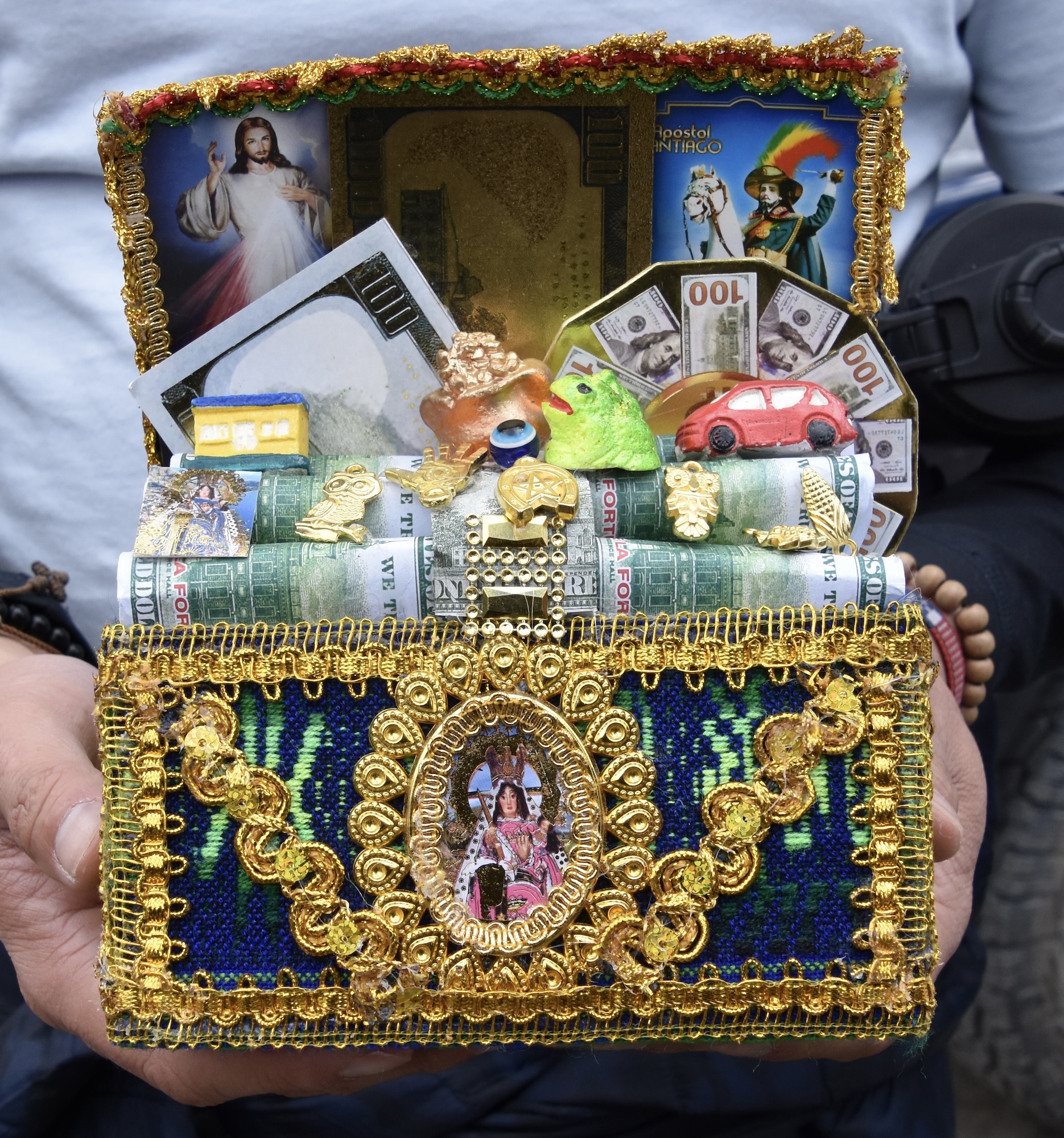
For just a few bolivianos you can buy a wish chest which has all the things you might want – a new car or house, a cure for blindness, to find wisdom, a good crop, but mostly money,money, money. Armed with this helpful talisman we’re off to see the Virgin.
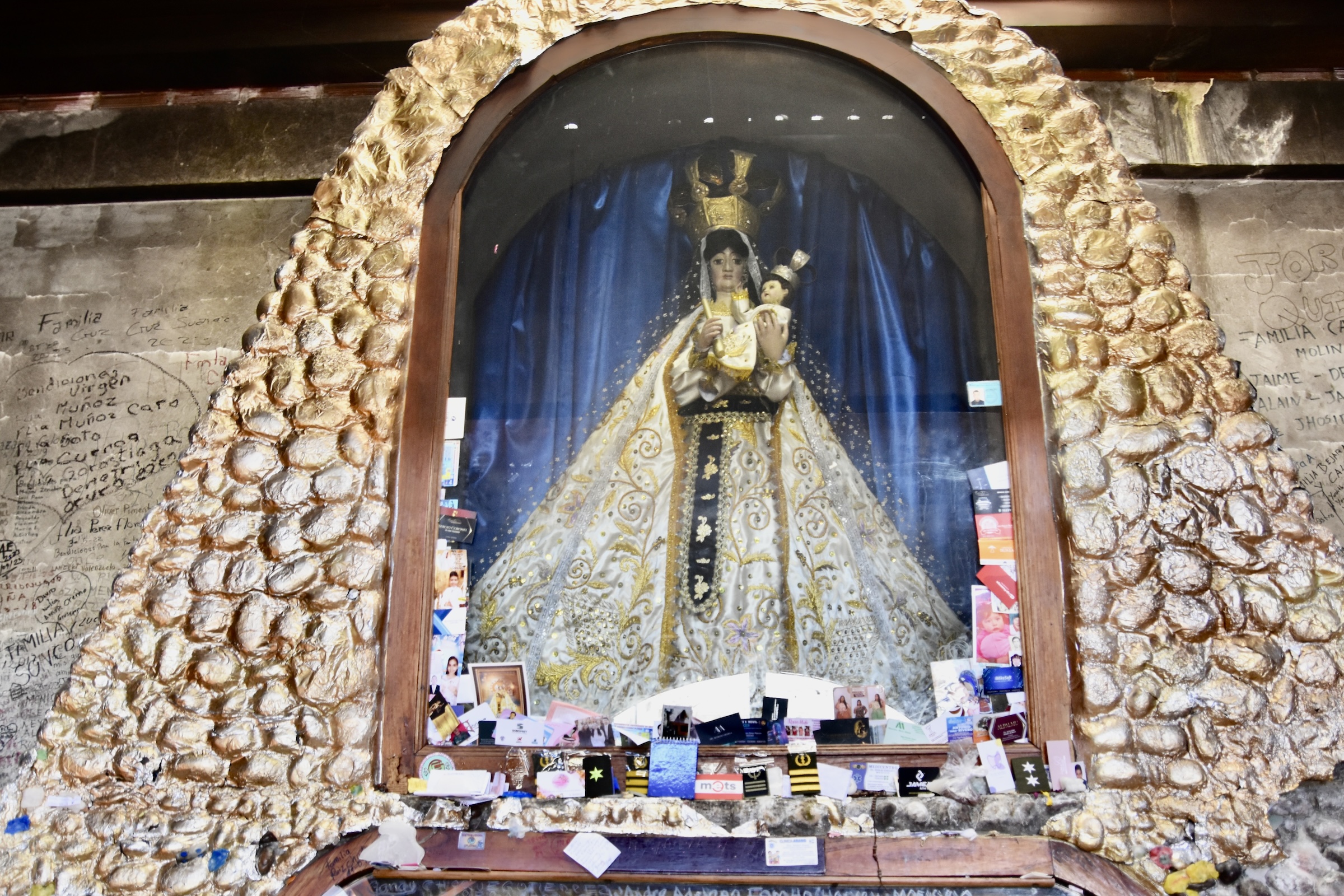
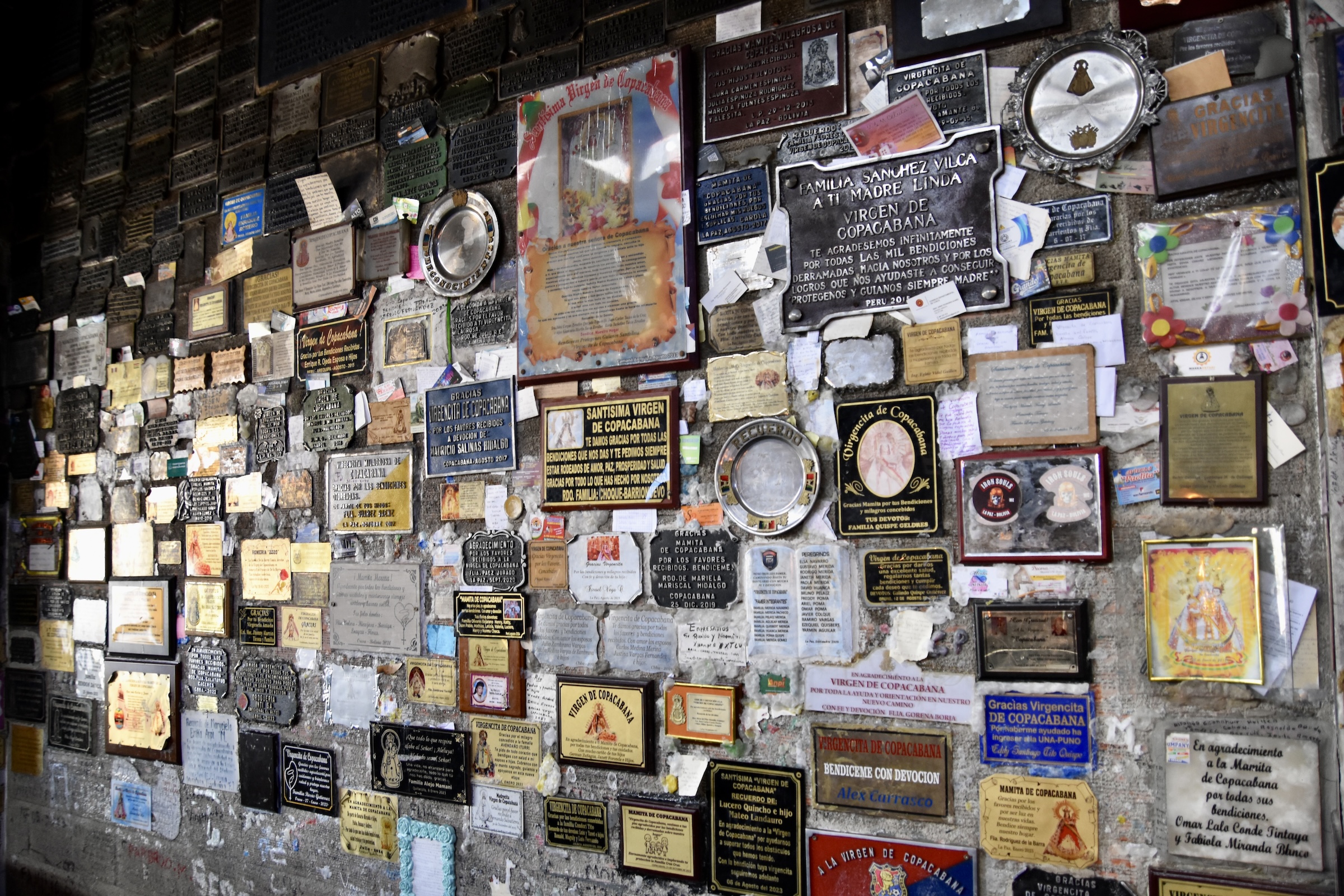
And her she is. You can see that people have left items from a wish chest asking for her favour. And apparently some people do get it. Like all famous religious shrines there are offerings galore and hundreds of thank-you notes of all sorts for answered prayers.
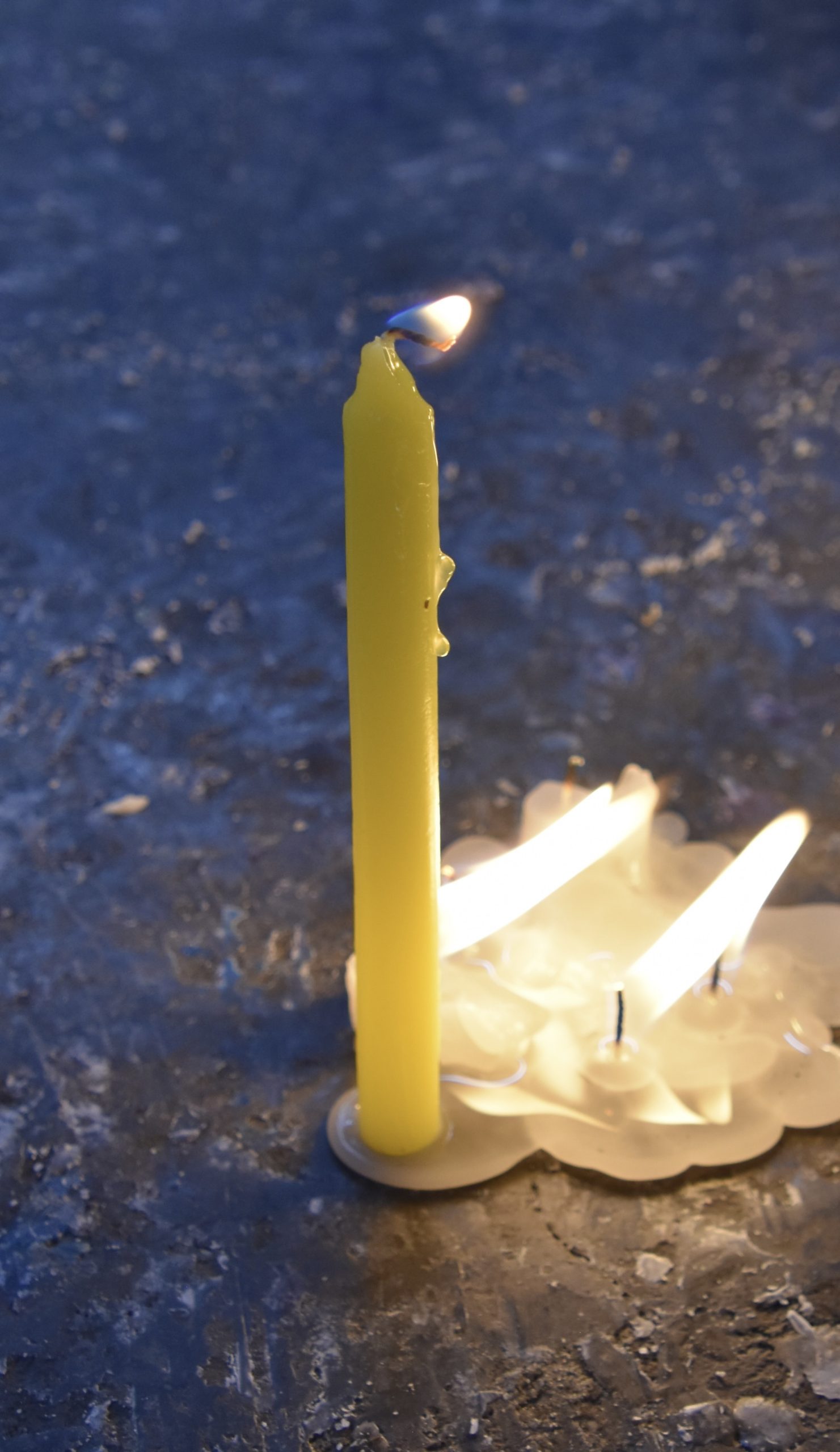
There are a variety of different coloured candles that Diego hands out to each of us, each representing a different request. As it turns out my colour was yellow, which was used to pray for money. So far it hasn’t delivered.
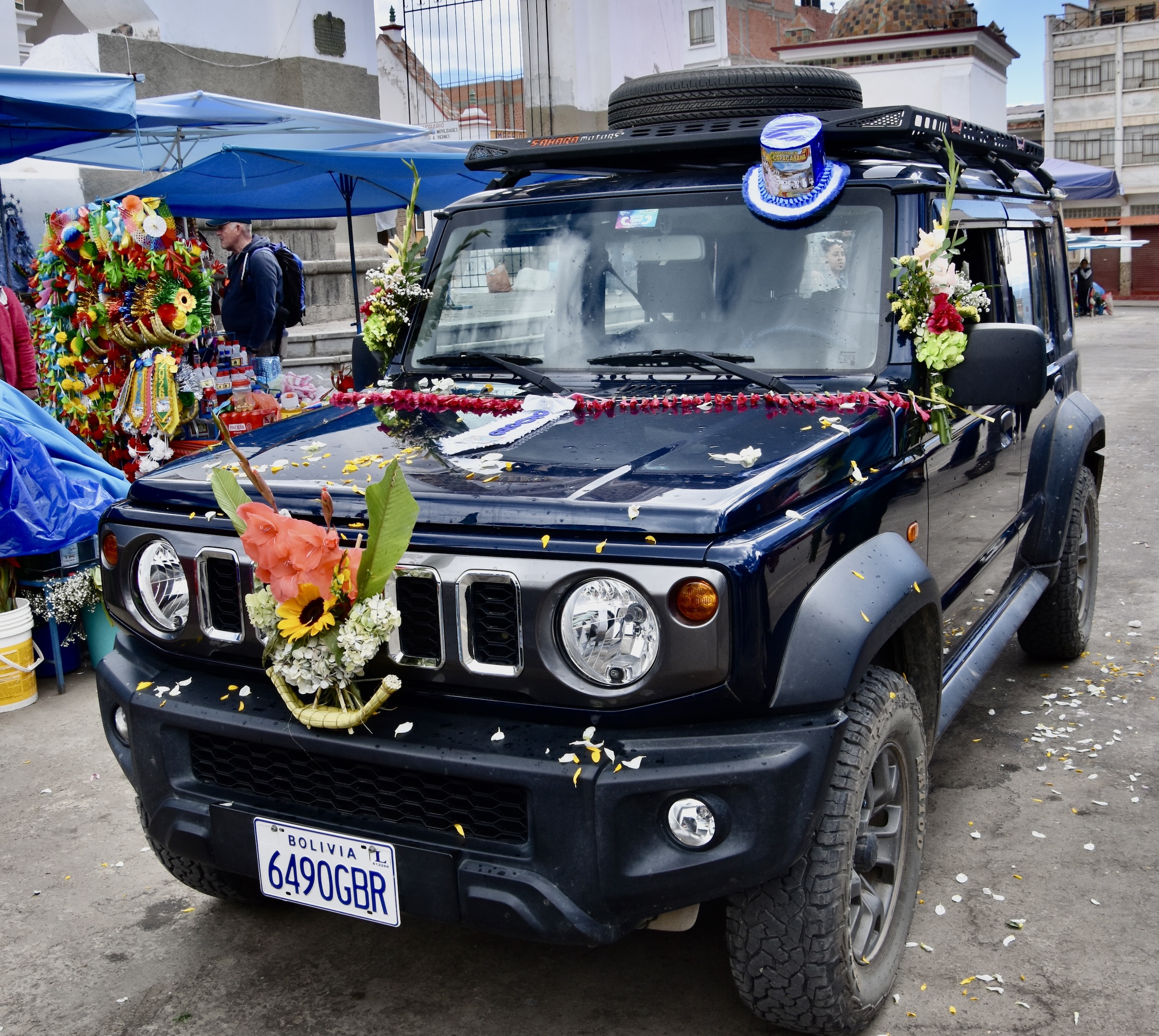
We now head to the most bizarre reason for making a pilgrimage to Copacabana – to get your car blessed. You read that right. Long before motor vehicles were invented the Aymara people had been bringing their horses and livestock to the shrine to get blessed to ensure a safe journey. By the 1940’s this had evolved to include automobiles as well.
As it turns out we just missed a car blessing ceremony which is done by a priest putting holy water over the engine and then walking around the vehicle. However, before the priest does this the vehicle must be decorated and here is a Jeep that has been done up for the blessing.
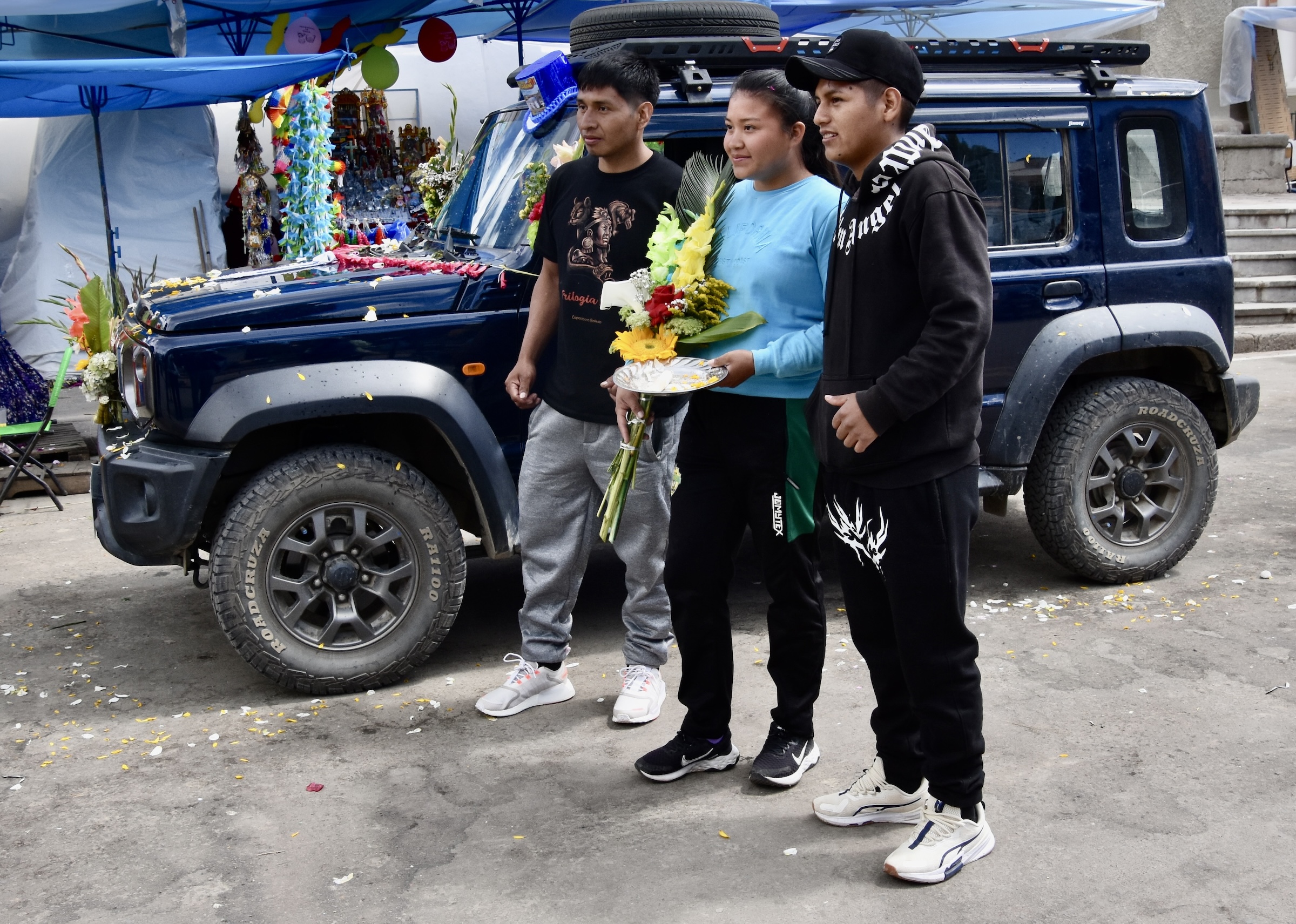
And here are the proud owners. They can now drive at whatever speed they want knowing that Our Lady of Copacabana is keeping them safe.
I’ve seen a lot of strange rituals in my travels, but this one might top the list.
Prying ourselves away from the goings on outside the basilica, Diego takes us into a small market where a women is preparing buenelos, the Bolivian version of donuts and they are delicious.
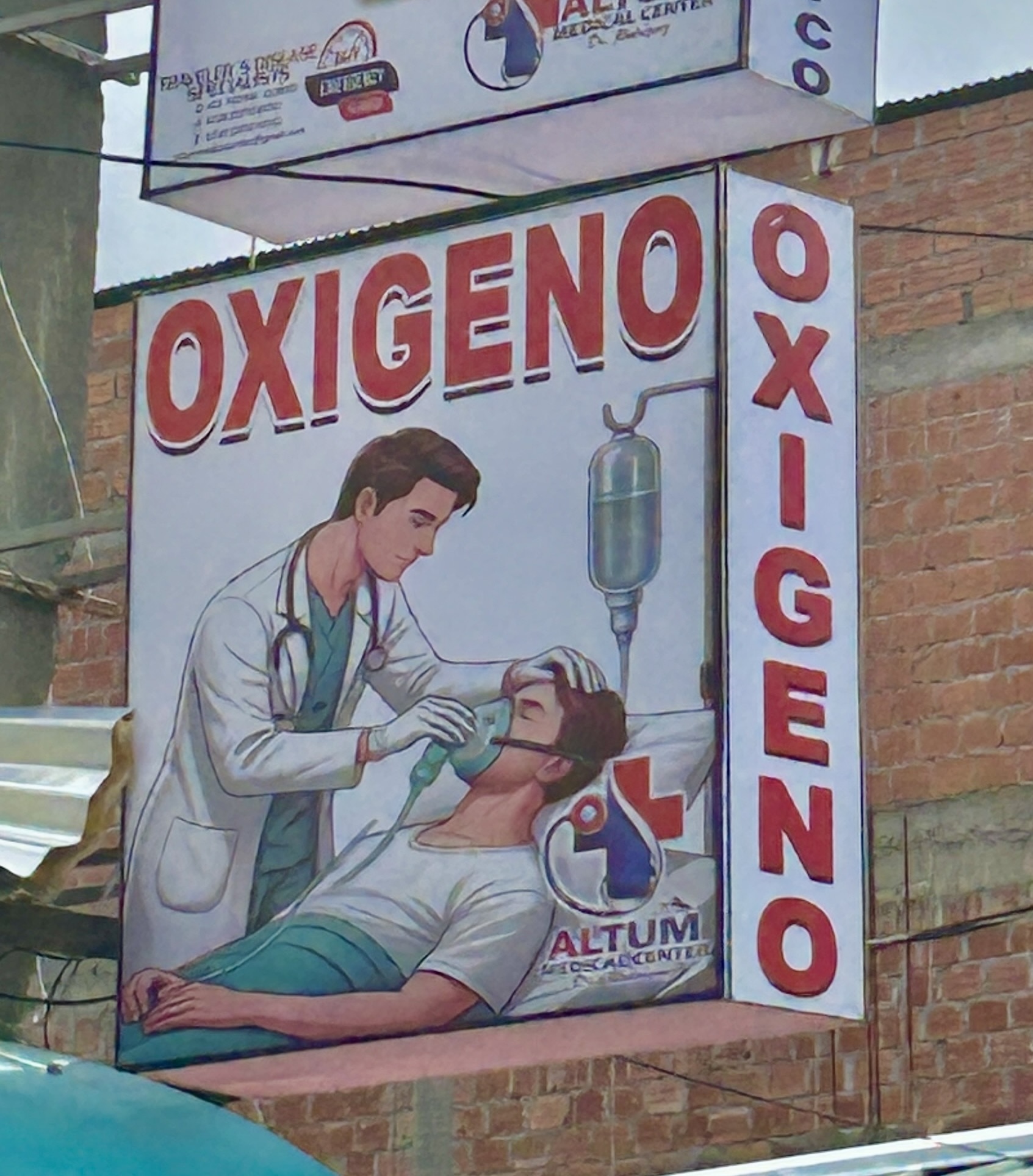
After this we are free to explore Copacabana on our own before meeting for dinner in the hotel restaurant. It really is an interesting place with shops catering to the pilgrims and tourists, some of whom might need the occasional shot of oxygen.
That night we had one of the best meals of the tour, starting with singani sours, Bolivia’s answer to Peru’s pisco sour. Singani is a brandy made from Muscat of Alexandria grapes that are among the oldest cultivars in existence. Even though they originated in the Mediterranean, they do well a high altitudes as well.
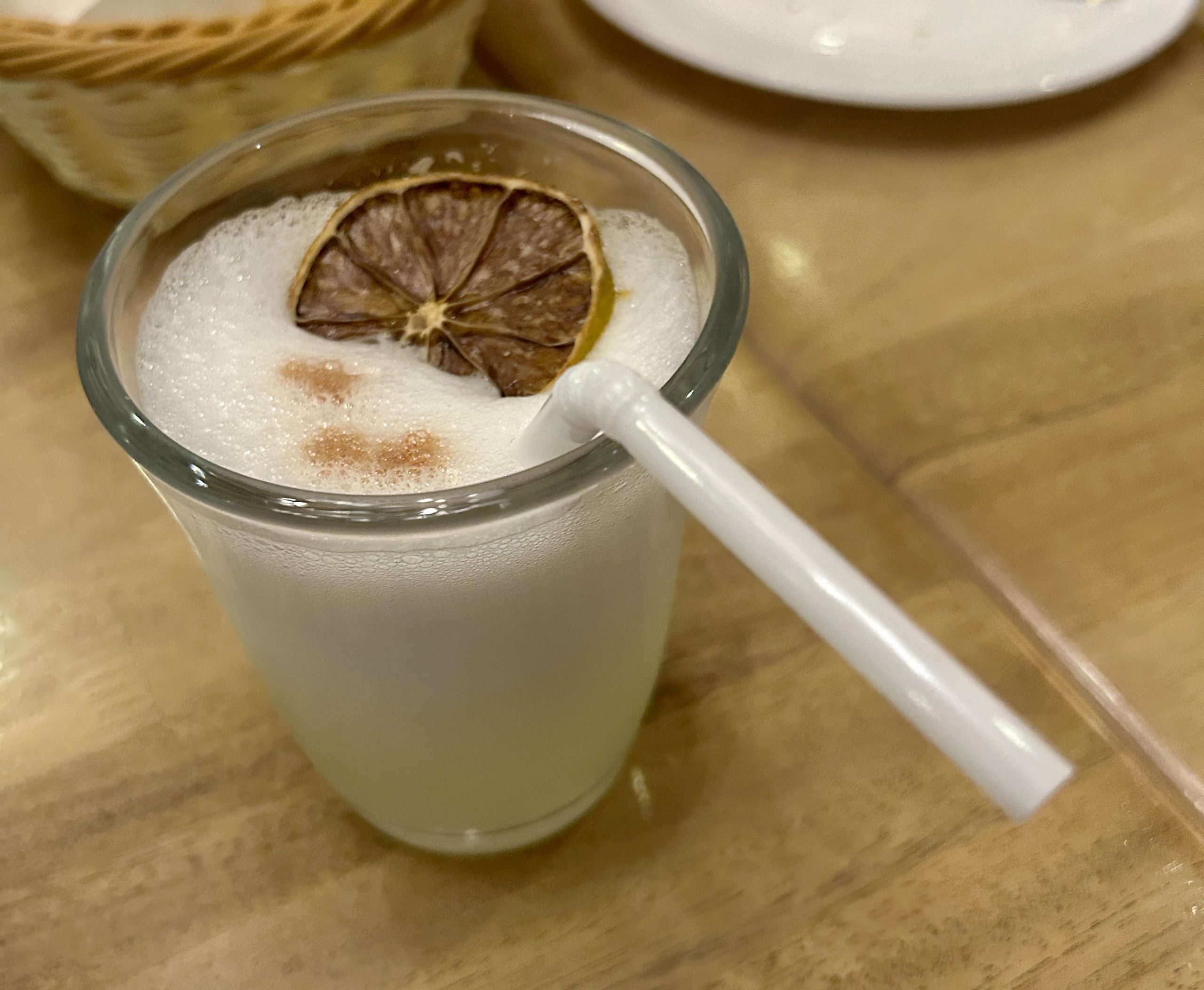
The result was pure cocktail heaven. Don’t leave Bolivia without trying one of these.
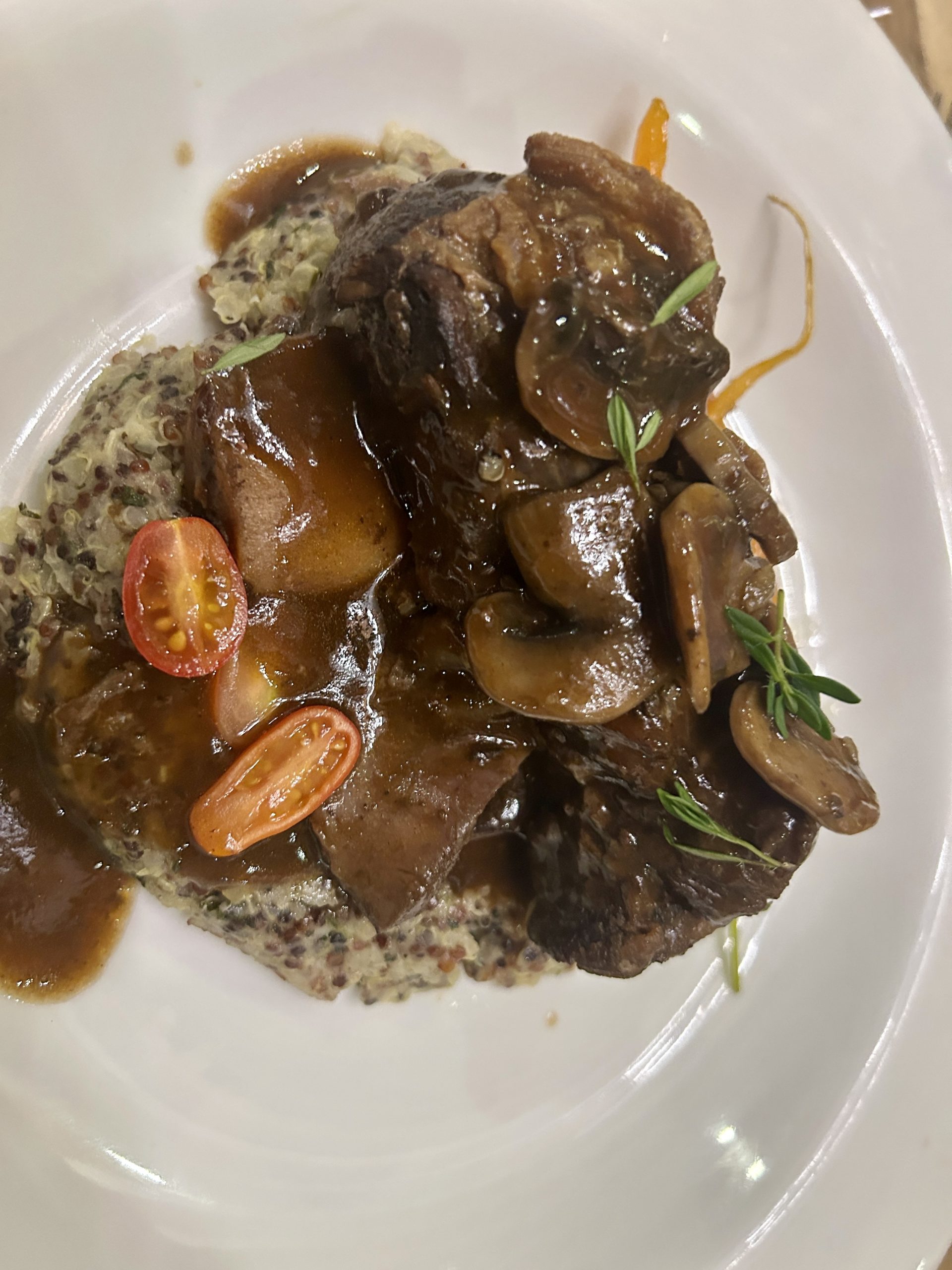
The main course was short ribs in a wonderful mushroom gravy.
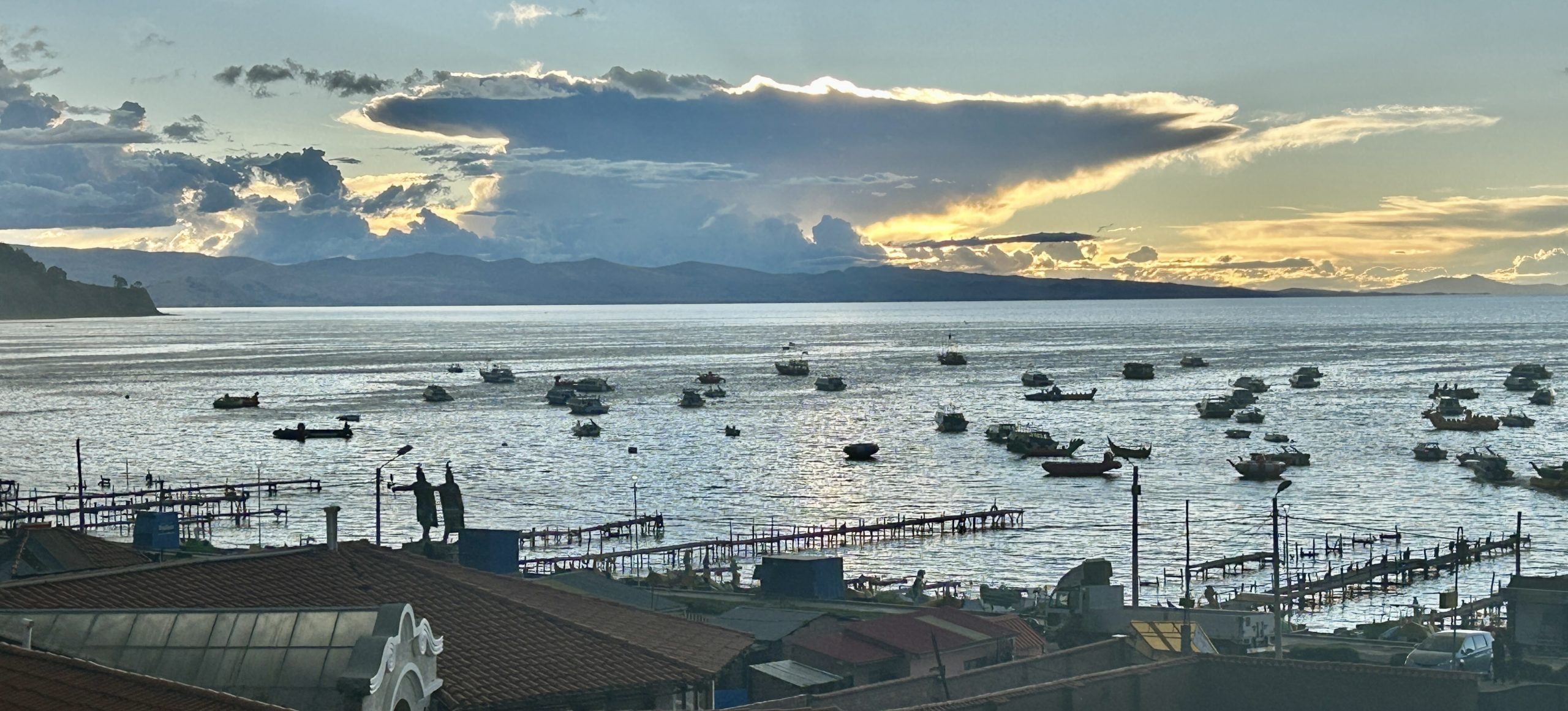
It was the perfect ending to my first day in Bolivia as I watched the sun go down over Lake Titicaca from the hotel terrace.
In the next post we’ll head out on Lake Titicaca once again, this time to visit the Isla del Sol, legendary home of the Incas. I hope you;ll come aboard.