
Ministers Island – St. Andrews Must Visit Estate

This is another in my continuing series on Canadian National Historic Sites and this time it’s coming from one of my favourite places in all of Canada, the beautiful seaside town of St. Andrews-by-the-Sea, New Brunswick. I’ve already featured St. Andrews in three previous posts – a walking tour of the town, a hole by hole description of the Algonquin Golf Course and a visit on multiple occasions to the delightful Kingsbrae Gardens. In this post Alison and I will visit Ministers Island where we will find Covenhaven, the estate of Sir Willian Van Horne the man most instrumental in building the transcontinental railway as well as establishing St. Andrews as Canada’s oldest seaside resort town. Please join us as we cross the causeway to another era of Canadian history about which far too little credit is given for making Canada into the country it is today.
History of Ministers Island
Ministers Island has a human history that dates back 13,000 years when the Passamaquoddy people, for whom the bay that surrounds the St. Andrews peninsula is named, arrived here after the last glacial retreat. They were still here when the first Europeans arrived some 12,500 years later. The Indigenous name for the island was Chamcook and the mainland area adjacent to the island still bears that name.
The first European to settle on the island was Jon Hanson, a Loyalist from Gouldsboro, Maine who fled from the American Revolution going on there in 1777 and in 1778 was granted the island by Governor Parr of Nova Scotia as New Brunswick was not yet recognized as a separate colony. He and his son-in-law Ephraim Young spent six years clearing land and establishing their families on the island, all for nought as it turned out. In 1784 New Brunswick became a bona fide British colony with its own governor, Sir Thomas Carleton who did not recognize the validity of previous land grants made by the Nova Scotia governor. Hanson and Young were given grants at nearby Bocabec while Chamcook Island was given to Captain Samuel Osborn of the British navy.
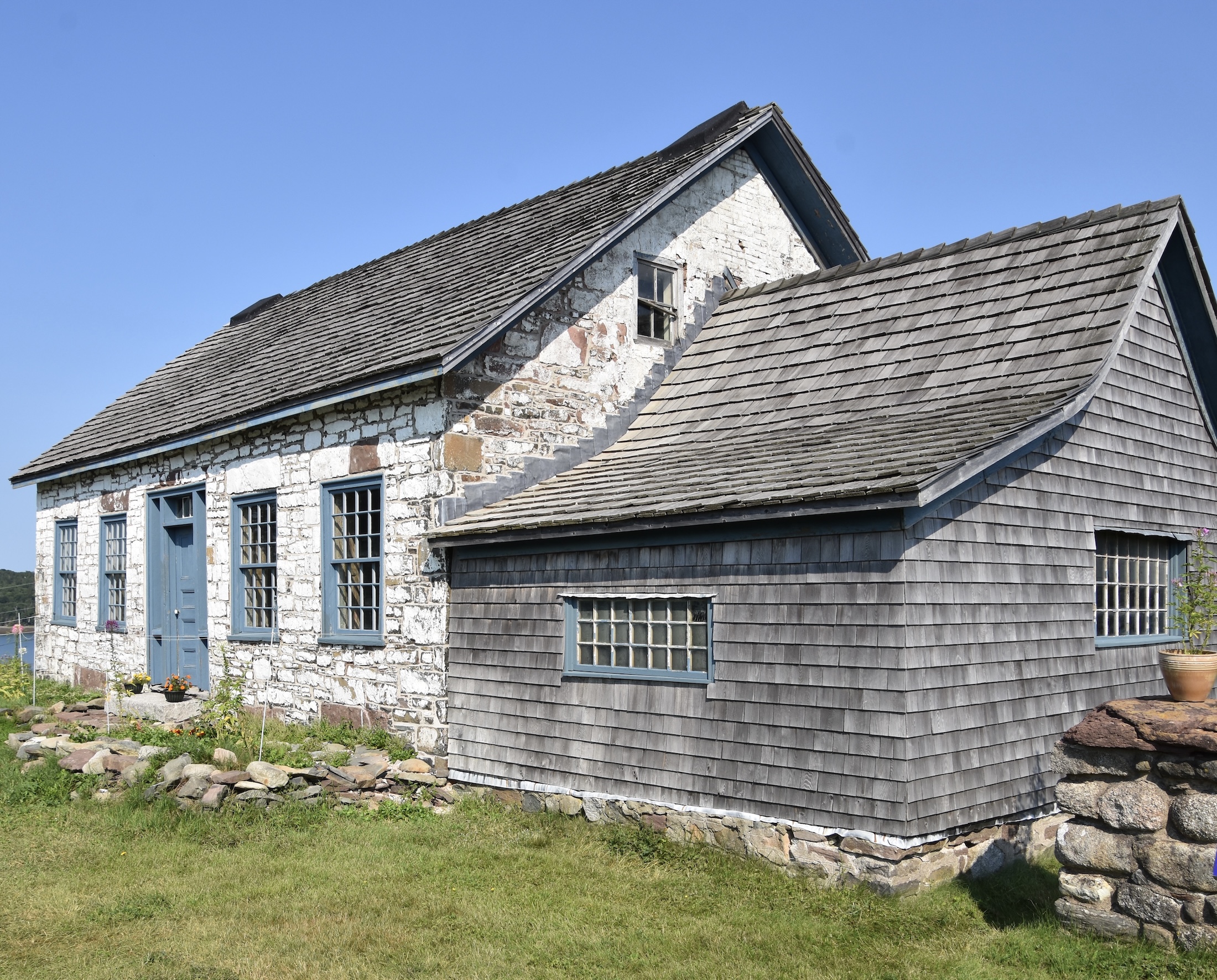
Osborn doesn’t seem to have done much with it and in 1791 sold it to Reverend Samuel Andrews who built the stone and wood residence pictured above. It remained in his family for a century until a great grandson sold 150 acres to Sir William Van Horne in 1891, who over the years acquired all of it. The name Chamcook gradually faded away, being replaced by Ministers Island until by the time Van Horne began buying land there, it became the official name of the place.
Sir William Cornelius Van Horne
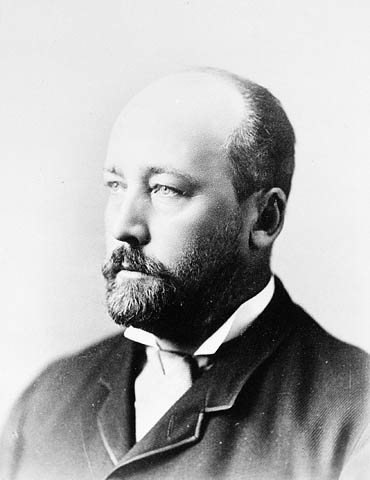
Sir William Van Horne is one of the most important figures in Canadian history, yet although he spent most of his life in Canada he was never a Canadian citizen. He was born in a small village in Illinois and grew up in the city of Joliet where his father was a lawyer and eventually the mayor. When his father died of cholera in 1854, William left school at age 14 and sought work carrying messages for a telegraph company. In 1857 he got his first job as a railway employee and literally worked his way up from telegrapher and ticket agent to superintendent at age 29, the youngest in the country. After turning several failing railroad companies around he was generally agreed to be the best railway operator in the United States.
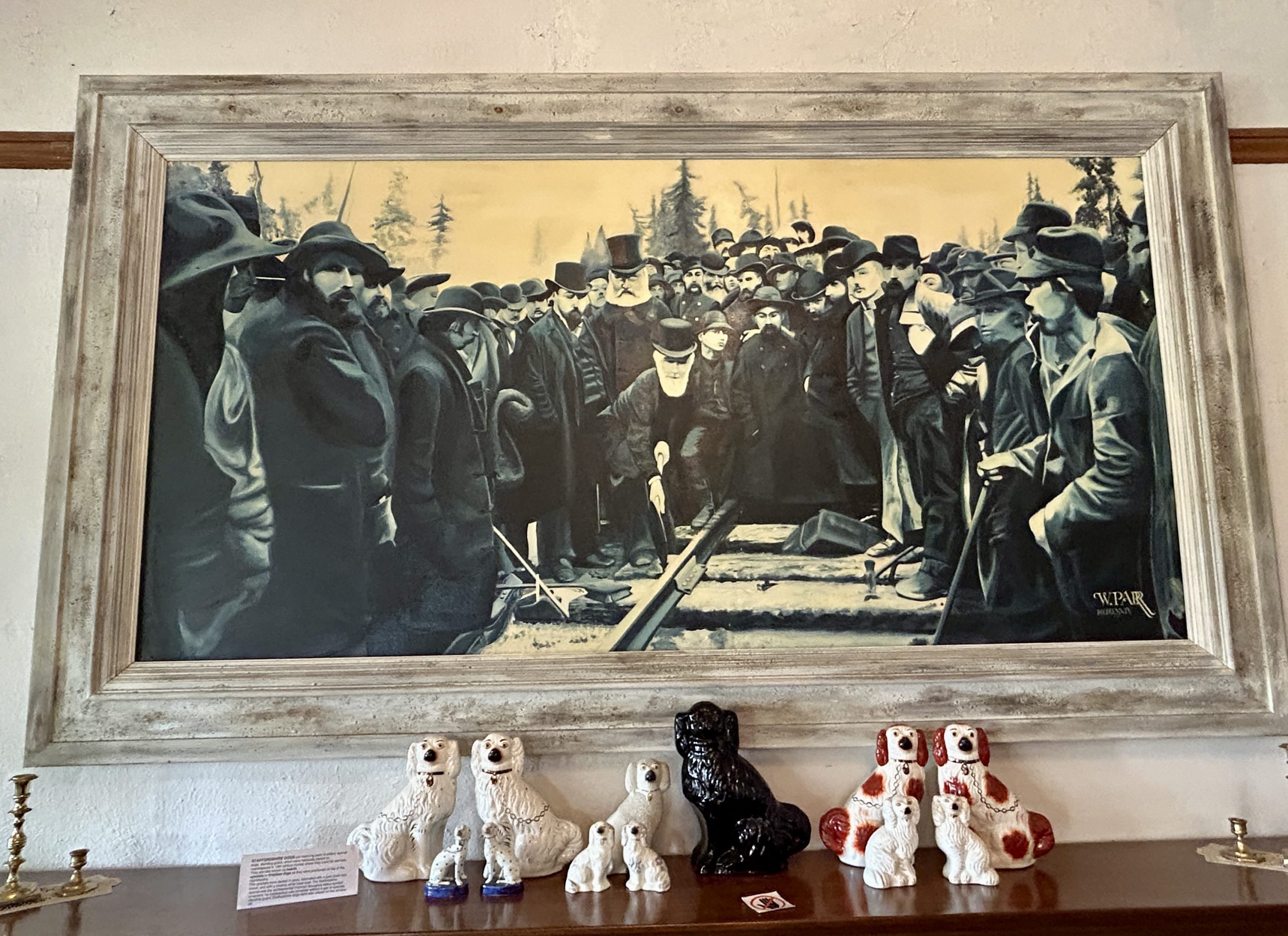
It was this reputation that led Sir John A. MacDonald to hire him to get the floundering transcontinental railway back on track (pun intended). Van Horne fired the entire engineering staff of the Canadian Pacific Railway, reorganized the company, changed the route through the Rockies and got the project completed in 1885, five years ahead of schedule.
You can see this picture of the driving of the Last Spike by Lord Strathcona in the Minister’s Island estate, Covenhaven. Van Horne is the man with the goatee immediately to the left of Lord Strathcona.
As General Manager of the CPR he made it into a tremendously profitable operation that spread out into telegraph lines, luxury hotels (he is the man responsible for the classic CPR hotels like the Chateau Frontenac that we are so proud of today), shipping lines and more. He was rewarded with great wealth for his efforts and despite a lack of formal education became a great patron of the arts and astute collector. He was also a gifted artist as we shall see. Sir William Van Horne was a true Renaissance man in all aspects and Canada is the better off for it.
He died at his estate in Montreal in 1915 and is buried back in his home town of Joliet, Illinois, never having sought Canadian citizenship.
After his death his daughter Adeline inherited Ministers Island and lived there off and on until her death in 1941. After that things went downhill as various descendants of the Van Horne’s showed less and less interest in the place until it was sold to an American concern in 1961. It and several successors tried to turn Ministers Island into a world class resort without success. In 1977 the last private owner auctioned off the contents and sold the island to the Province of New Brunswick which had salvaged a few notable pieces at the auction.
After purchasing the property the New Brunswick government didn’t seem too interested in making the investment required to maintain the buildings and for roughly three decades it was not open to visitors. In 1996 it was designated a National Historic Site, which gave it some added protection. In 2004 the Van Horne Estate on Ministers Island was formed as a non-profit organization that took over operations on the island in 2006 and has run it ever since, making substantial investments in the maintenance of Covenhaven and the out buildings. It’s members have also set about reaquiring many of the original furnishings and art works that were sold off in the 1977 auction.
Visiting Ministers Island
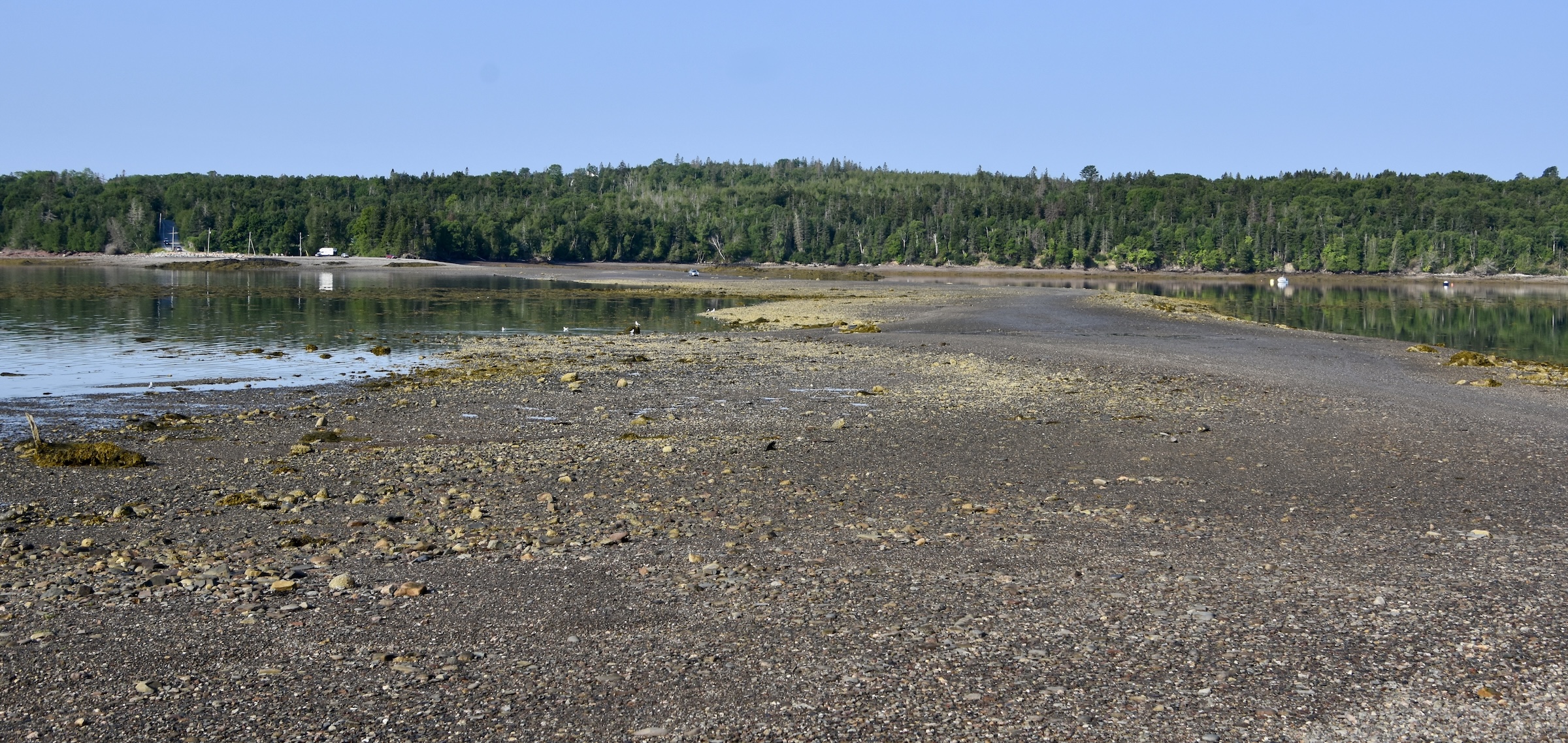
Visiting Minister’s Island is not as straightforward as most national historic sites. Its visitor hours change literally almost every day depending on the tides. The Bay of Fundy’s famous tides inundate the causeway between the island and the mainland twice a day. There is a six hour window each day in summer upon which the causeway can be crossed in safety. It’s a bit rough in places, but any type of vehicle should be able to manage it.
The island is open to visitors from mid-May to mid-October. Check the Ministers Island website for the specific daily opening times and to buy tickets in advance, although you can buy them at the kiosk on the day you arrive.
OK, let’s visit Ministers Island.
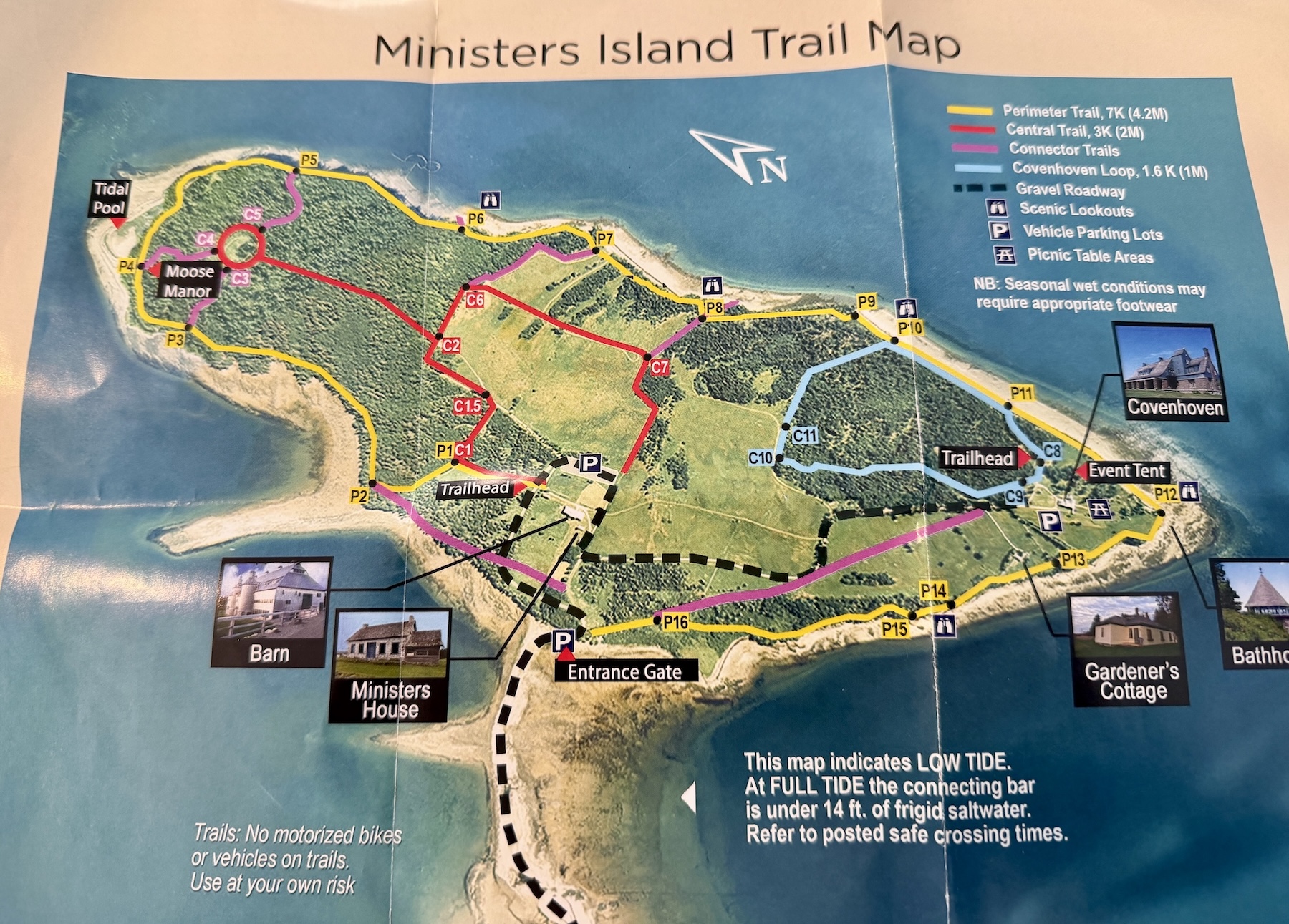
You receive this map upon checking in and as you can see Ministers Island is not just about the Van Horne buildings. There are a number of hiking trails that take one around the island’s shore, through the woodlands and the fields. While hiking is not on today’s agenda, it is something to keep in mind on a future visit.
Covenhaven
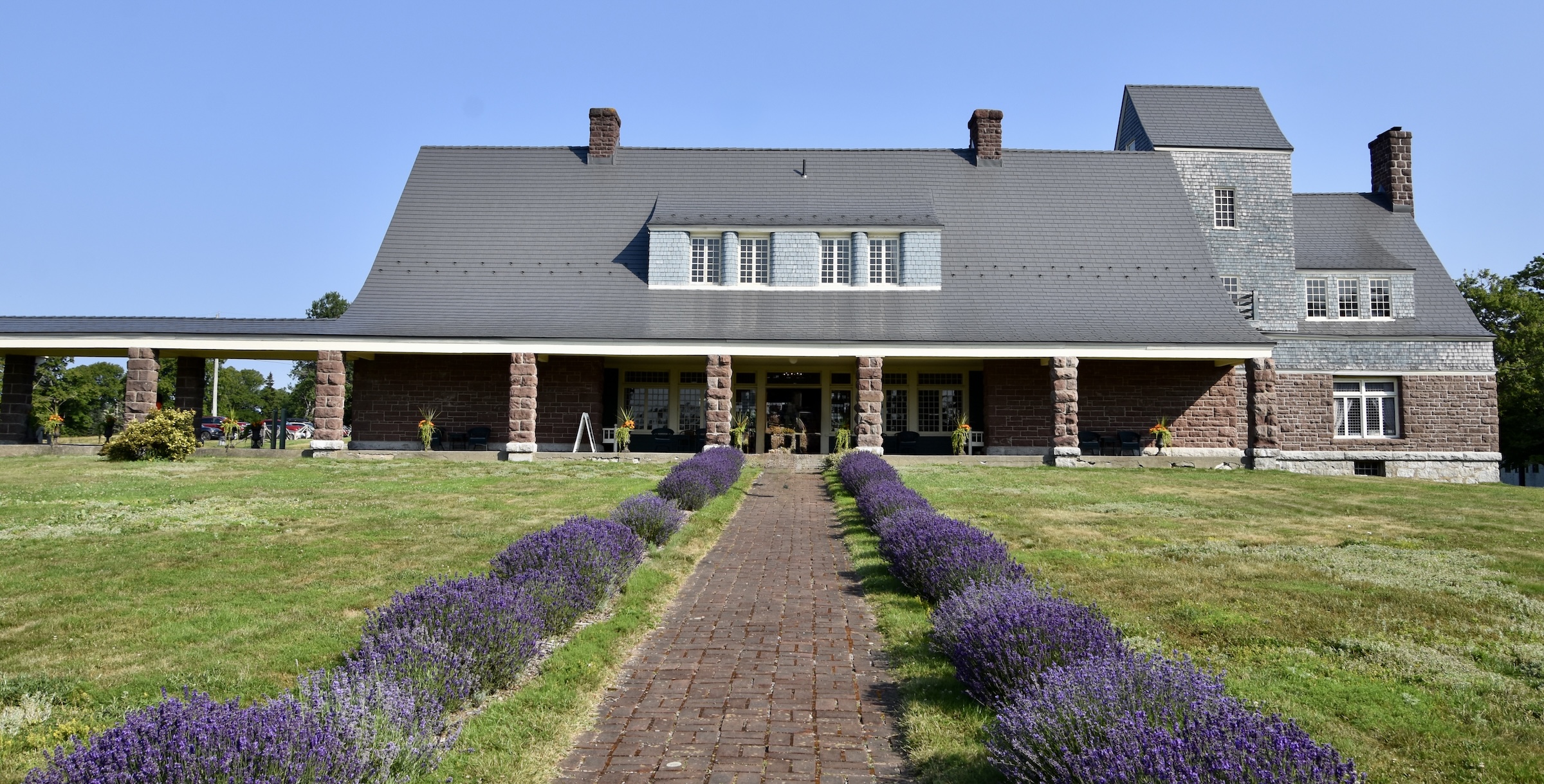
Covenhaven is a massive 50 room mansion that is the centre piece of what is really almost like a baronial estate with a carriage house, windmill, huge barn, bath house and other trappings of wealth and prestige. Built almost entirely out of the sandstone that underlies Ministers Island it became a magnet for the Van Horne family friends from Montreal and elsewhere who built their own fine homes that now make St. Andrews such a unique and charming town.
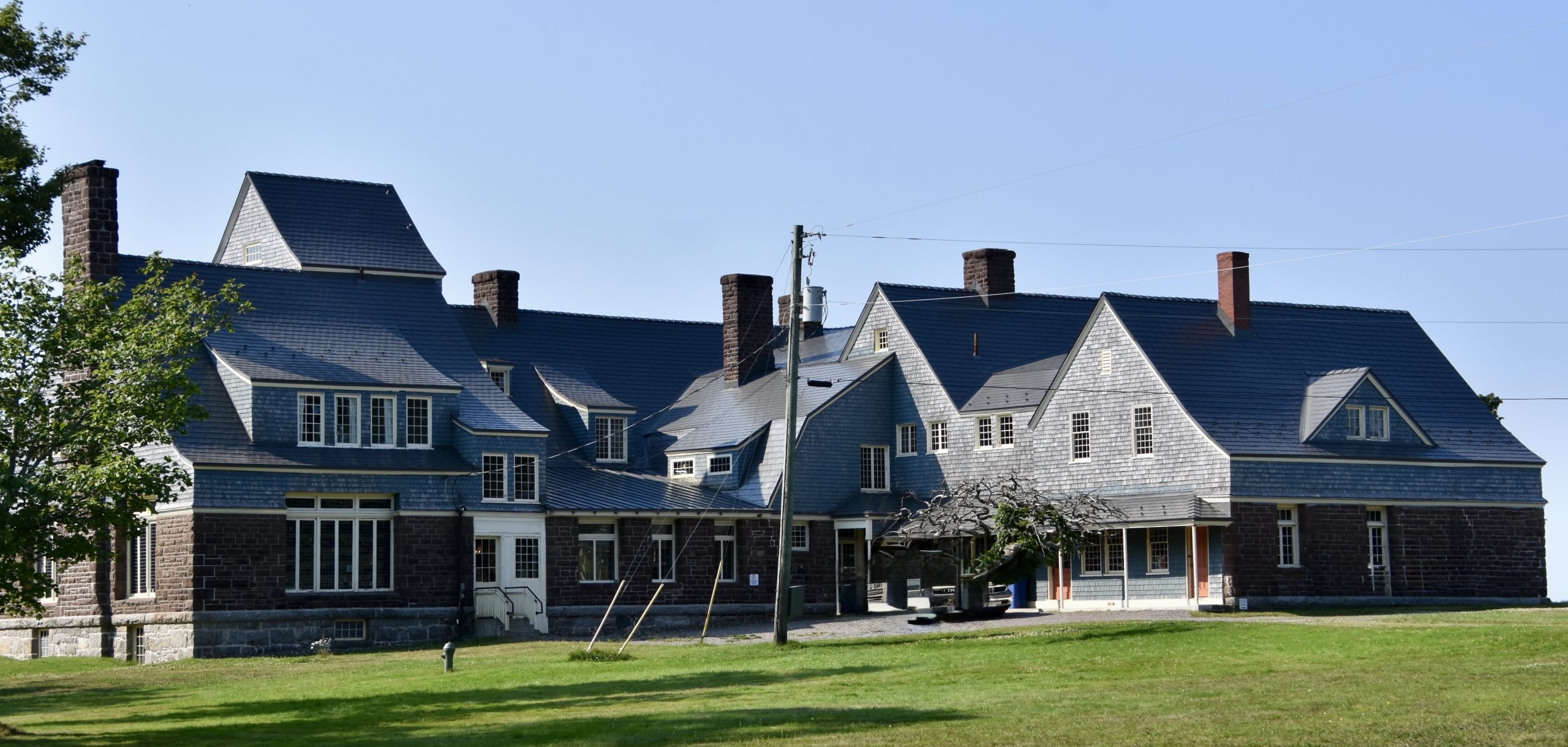
This view from the back side gives a better idea of just how large it is. The only thing comparable in New Brunswick is the Roosevelt ‘cottage’ on nearby Campobello Island.
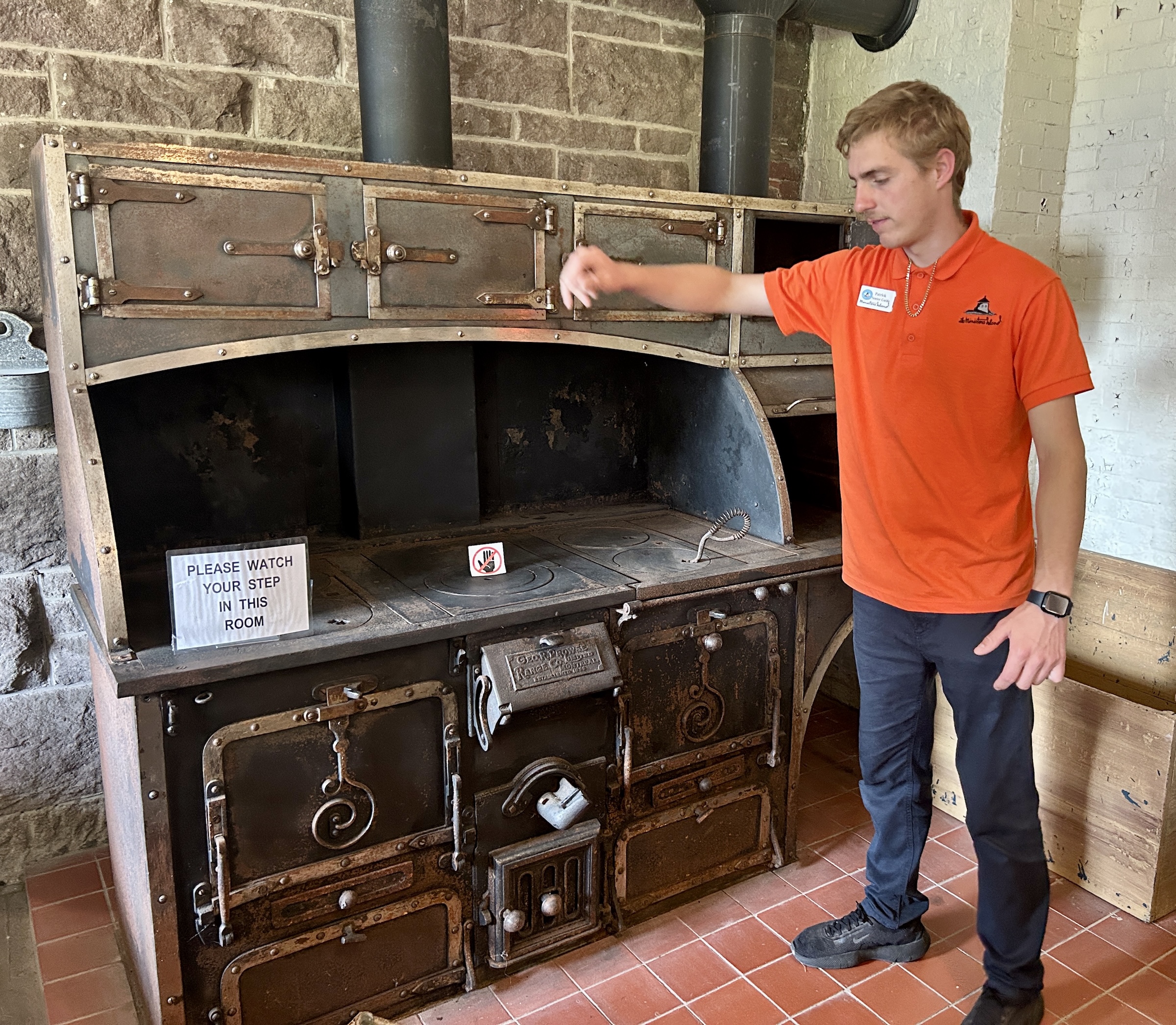
After passing the entrance kiosk you drive a fair distance to the far side of the island passing the barn, Andrews house and creamery along the way. These are better appreciated after visiting Covenhaven where you will be offered a guided tour. This was our guide Patrick on a recent visit in August 2026.
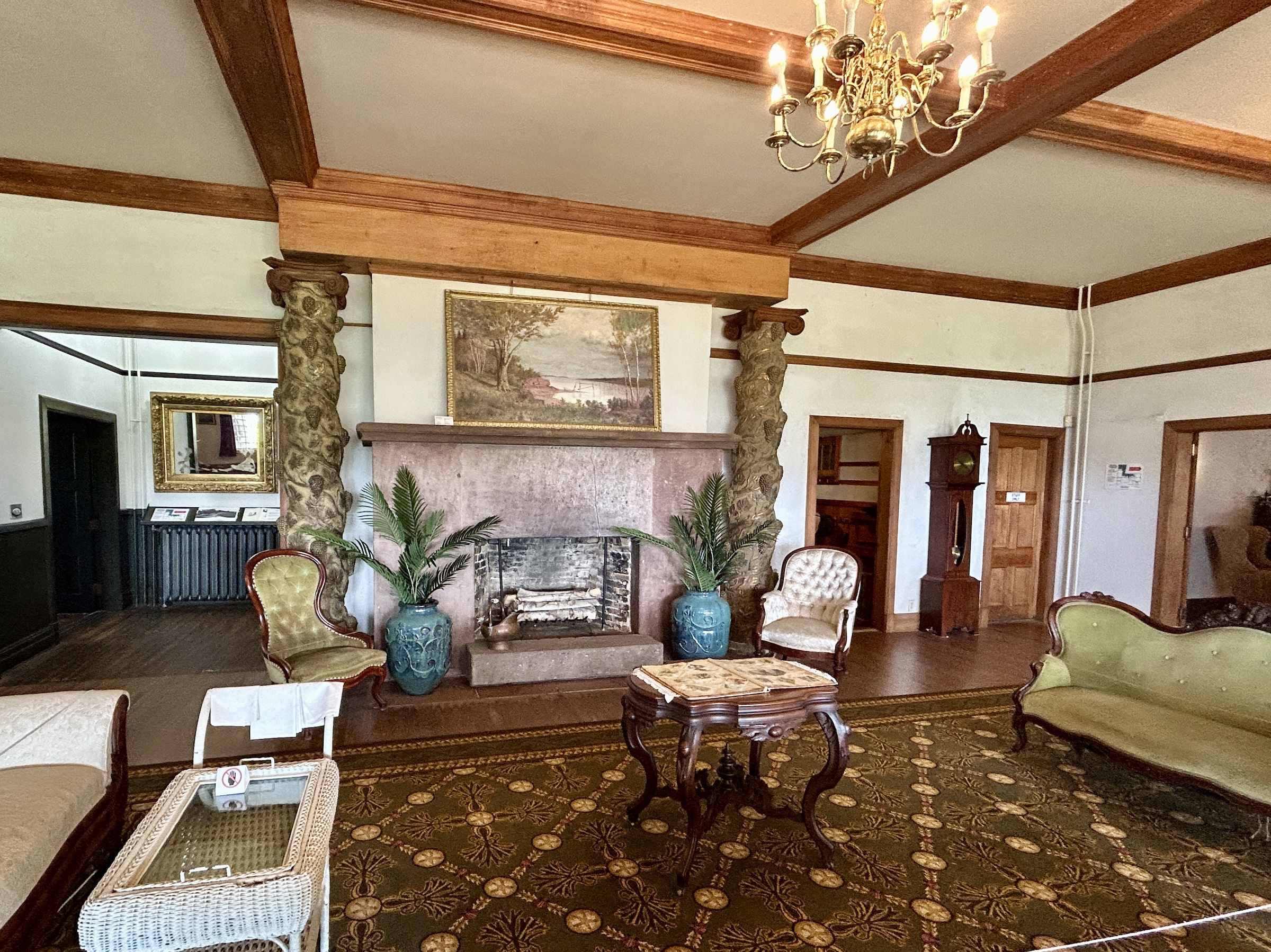
This is the great room that you enter first and it’s really quite something to see. Van Horne was not only a great art collector, owning works by Velasquez, Rembrandt, Constable, Turner and many other great artists whose works today sell in the many millions, but a very good artist in his own right. You see one above the fireplace as you enter and many more throughout the house.
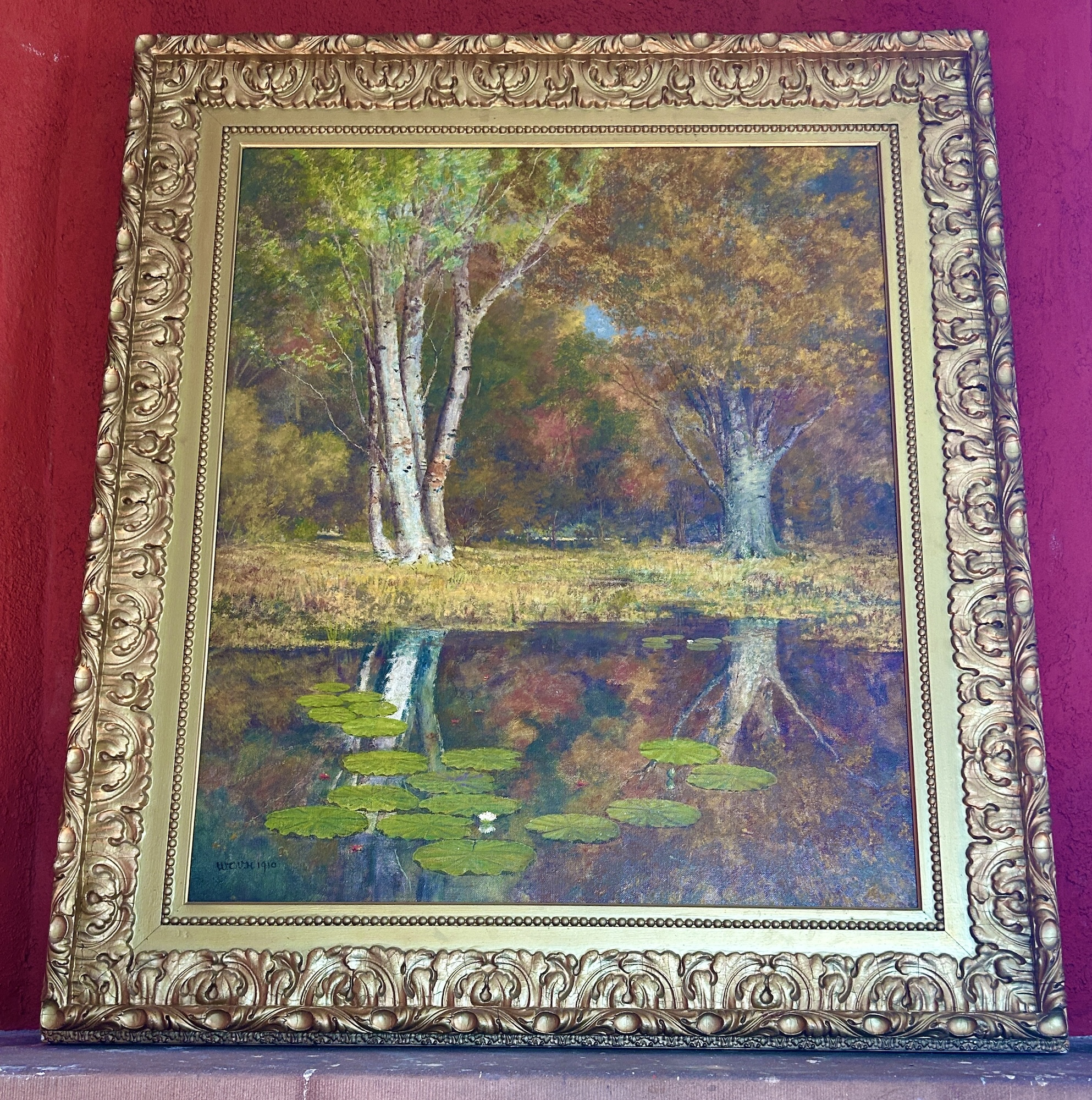
And this is a closer look at one of Van Horne’s paintings. You can see he was no amateur.
I’m not going to go through Covenhaven room by room, but will include a gallery of many of them. You know the old story of a picture versus words.
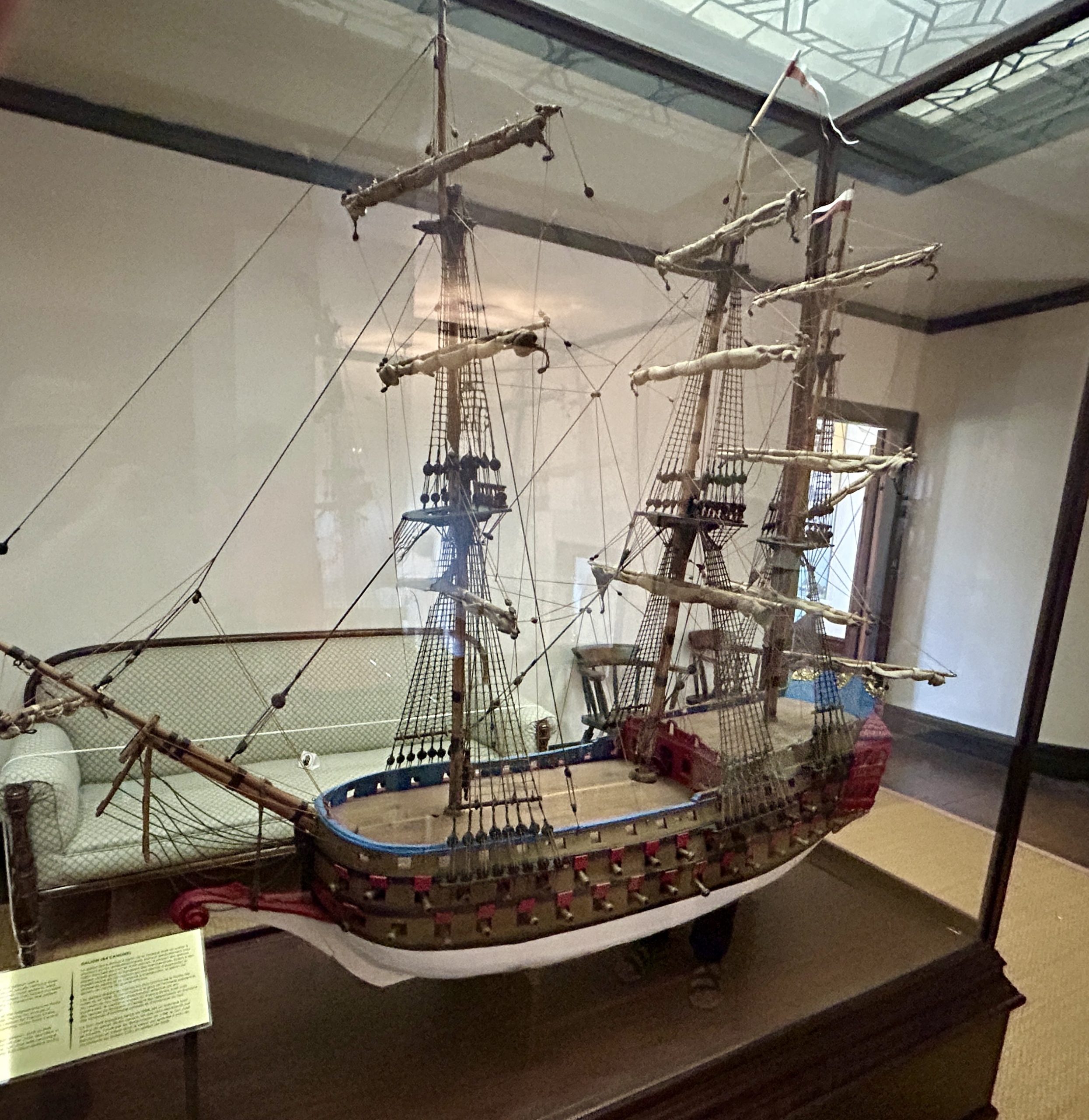
However there are some noteworthy items to highlight before that, starting with this photo of one of the 57 ship models found within the house. Van Horne was an inveterate collector and his tastes included more than just art, although the model ships definitely are works of art.
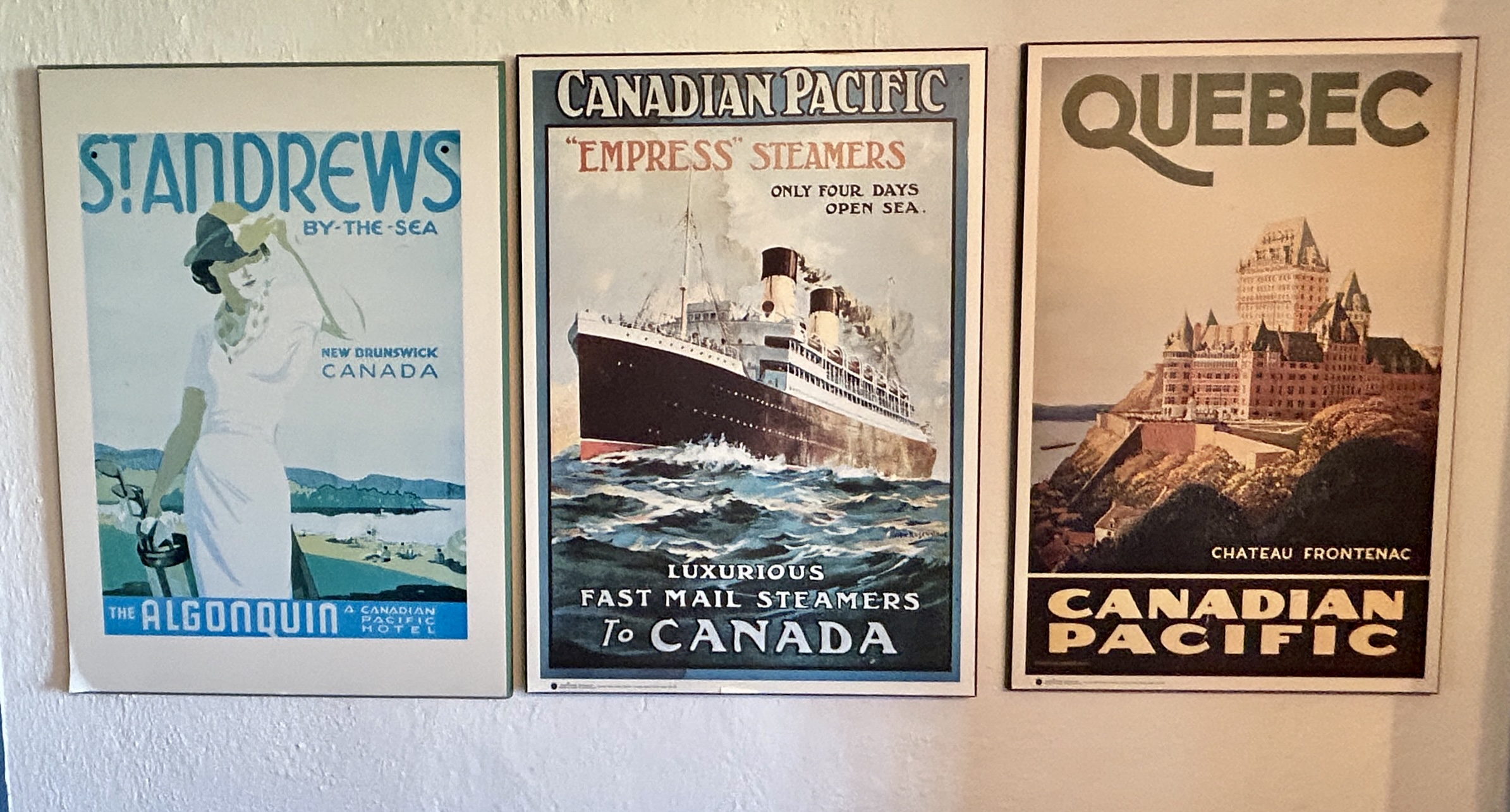
There are also posters of the many ships and hotels that the CPR was responsible for creating including St. Andrews’ own iconic Algonquin which was rebuilt by it after the original building was destroyed in a 1914 fire.
Alright let’s have a look at some of the rooms and their contents. Double click to open a photo and double click again to enlarge it.
-
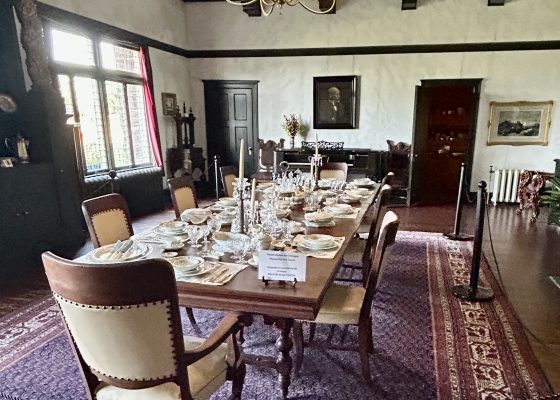
- Dining Room
-
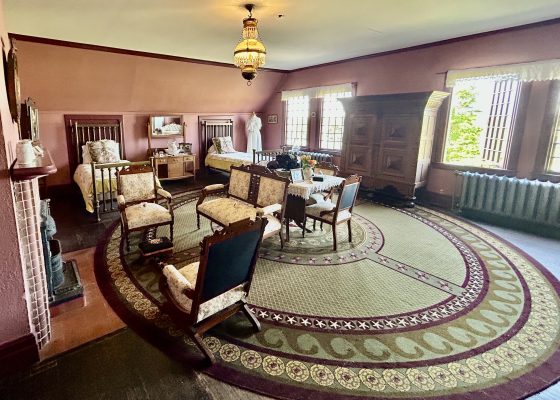
- Mrs. Van Horne’s Bedroom
-
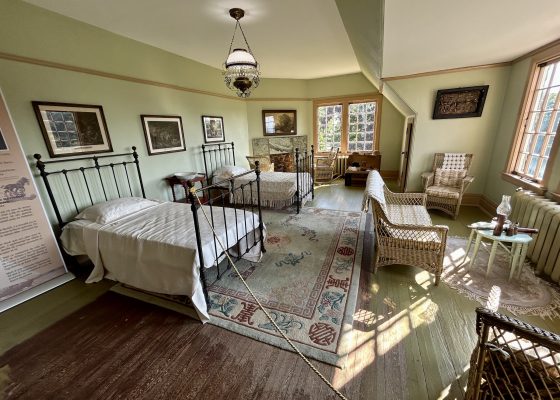
- Guest Bedroom
-
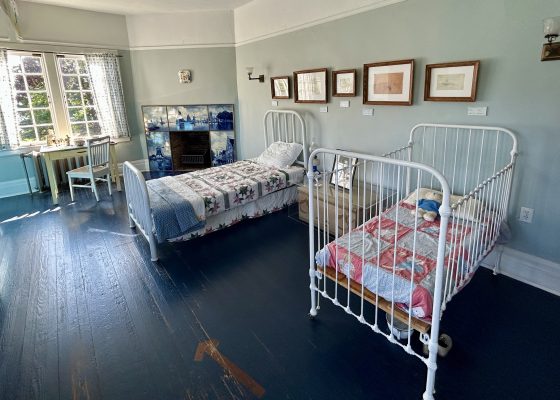
- Bennie’s Room
-
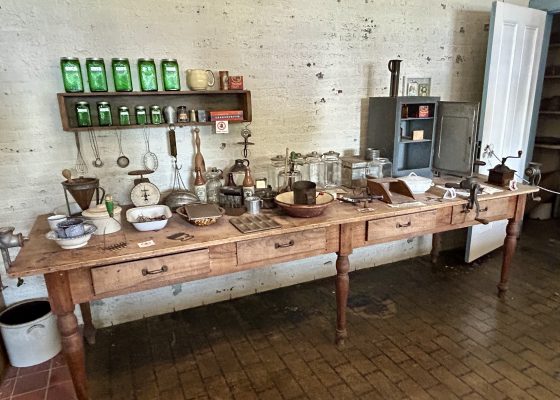
- Butler’s Pantry
-
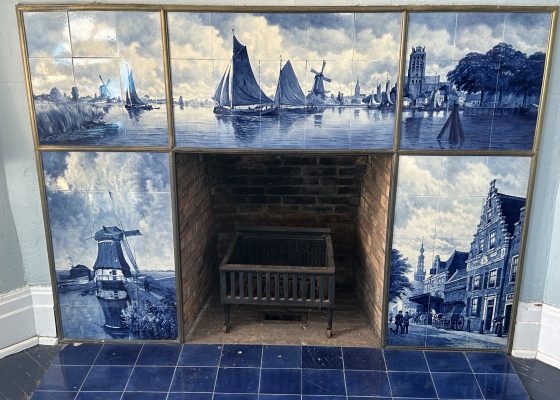
- Delft Fireplace
-
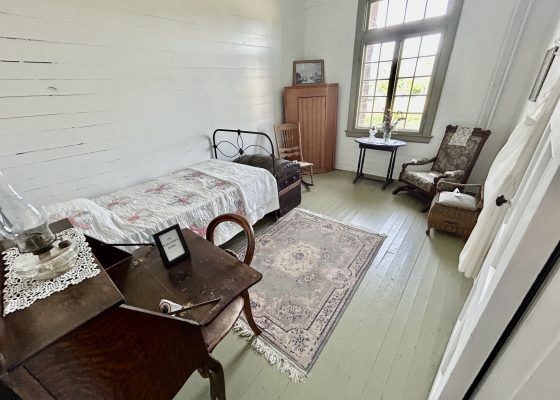
- Head Cook’s Room
-
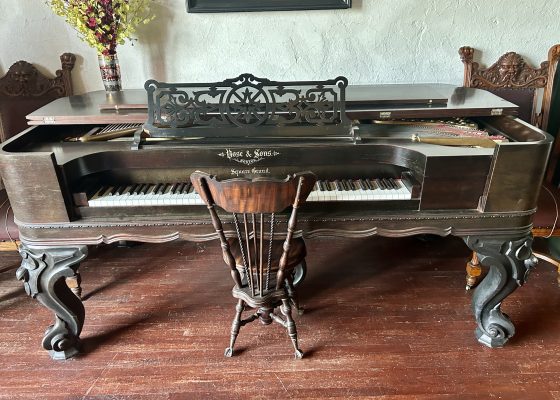
- Square Grand Piano
-
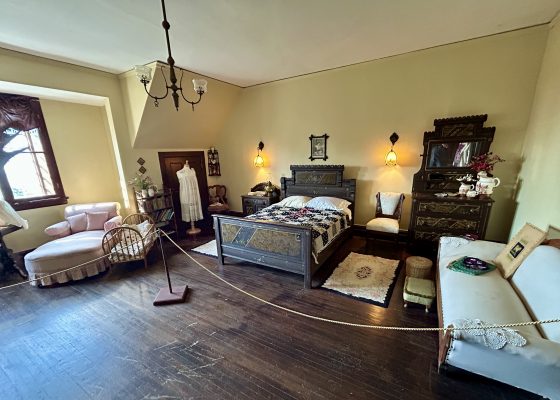
- Adeline’s Room
-
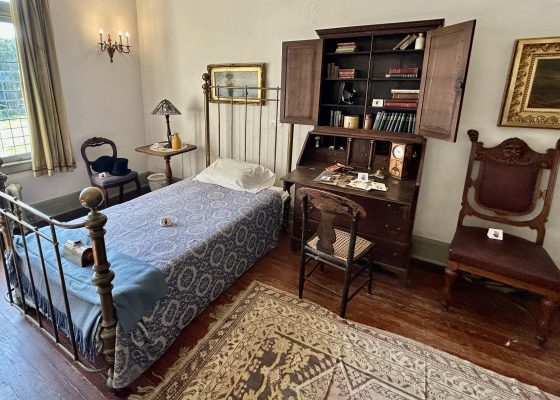
- Van Horne’s Bedroom
-
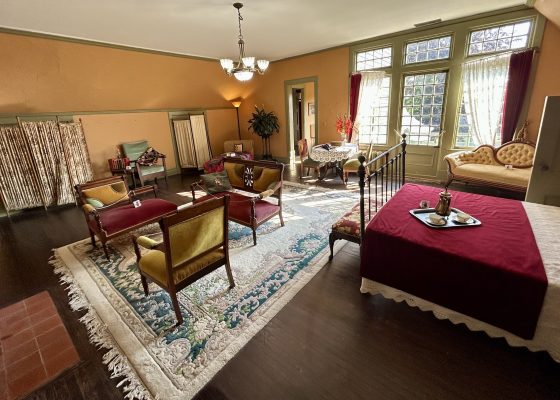
- Sun Room
-
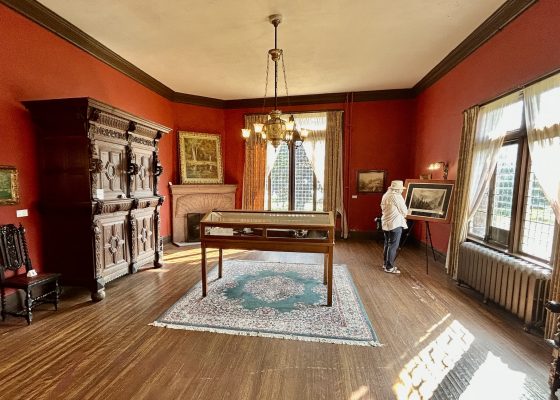
- Studio
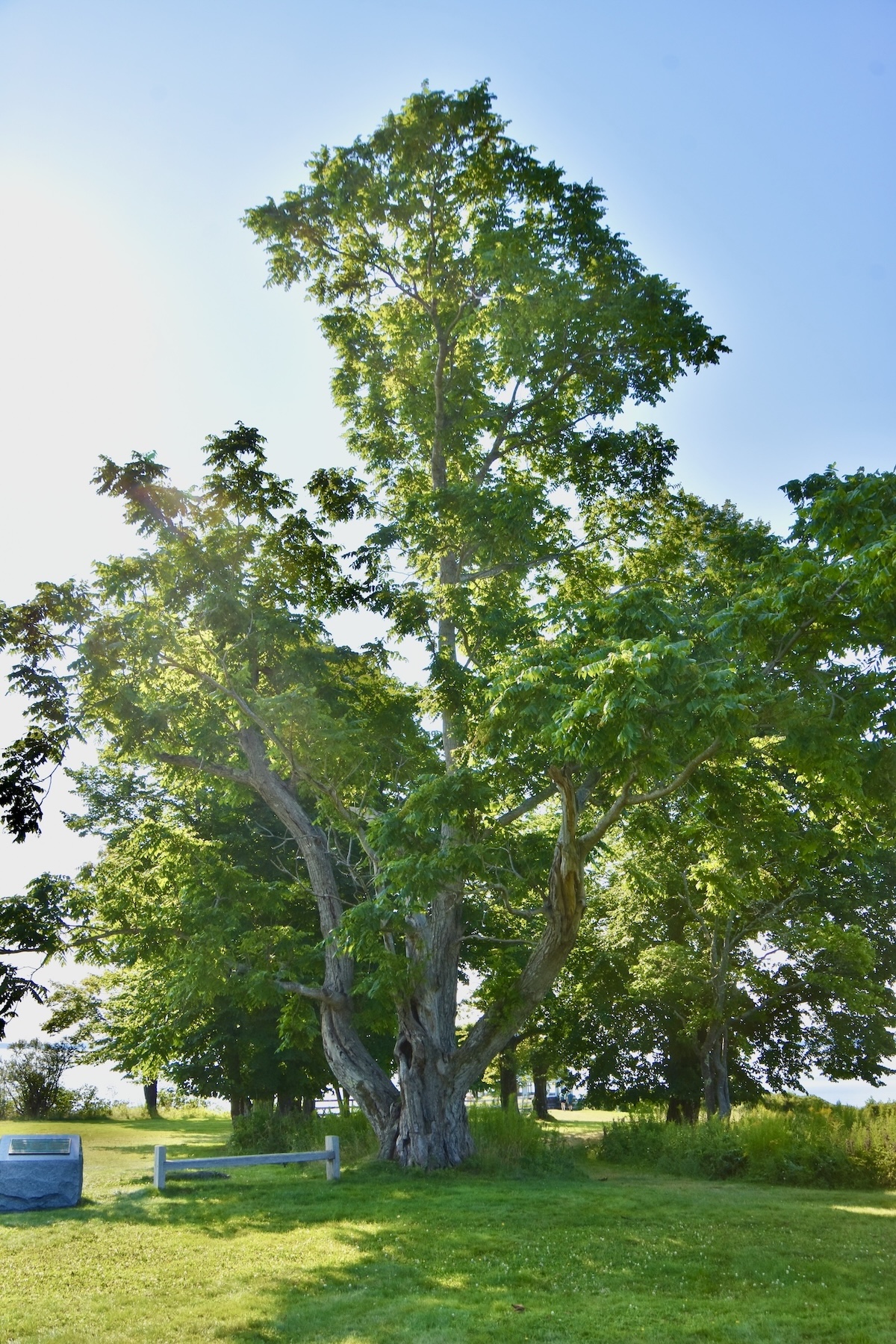
After touring Covenhaven it’s a short walk to the bath house passing by this ancient butternut tree on the way. I only mention this because butternuts were found at L’Anse aux Meadows the UNESCO World Heritage Site on the very northern tip of Newfoundland that is the only definitive Viking settlement ever found in North America. The only thing is that butternut trees are not found in Newfoundland and the closest that the range of this species comes to Newfoundland is right here in a small area of New Brunswick. So there’s a very good chance that 500 years before the British first arrived in this area, the Vikings were plying these shores.
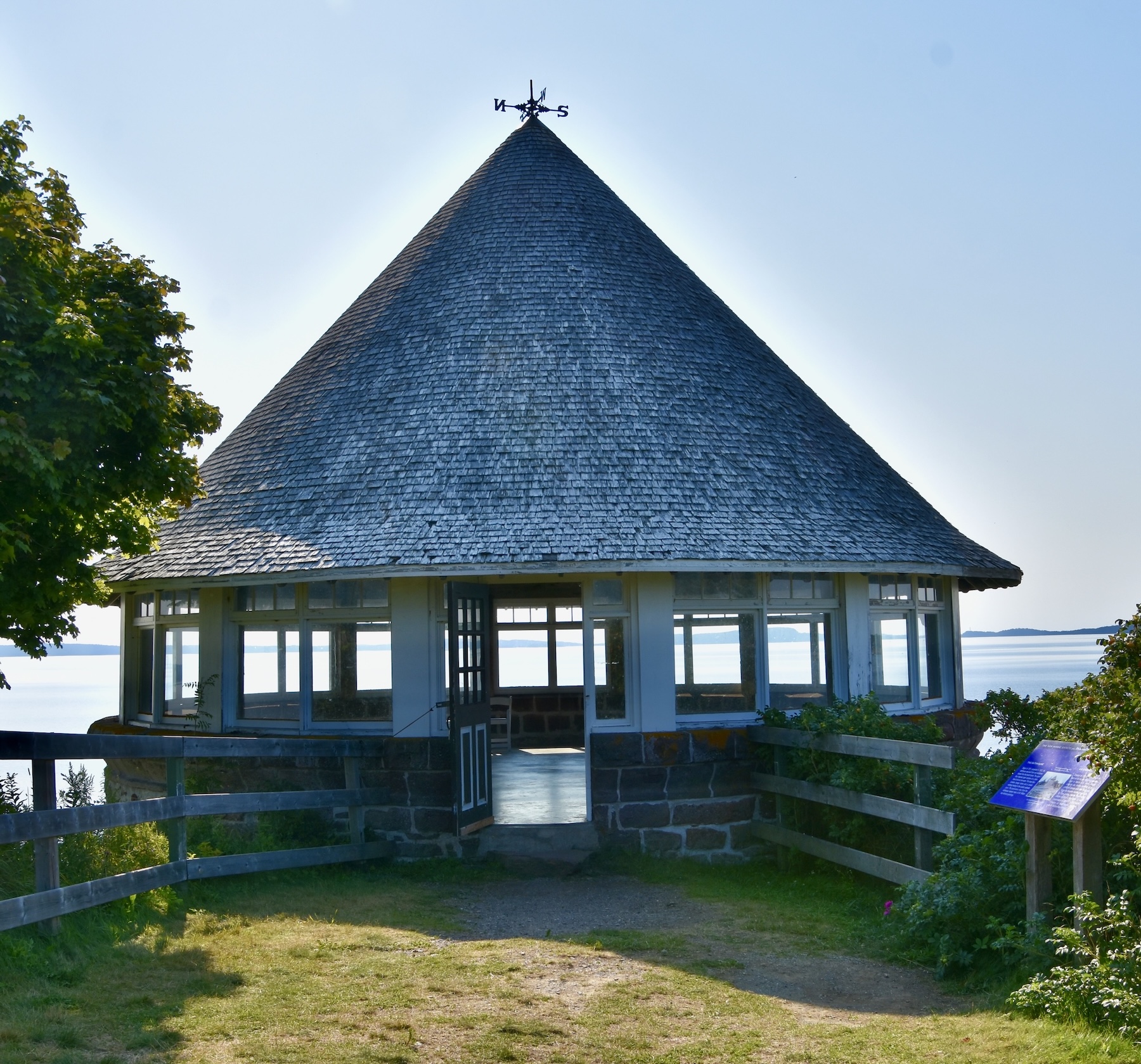
This is the bath house where the Van Horne’s and guests at Ministers Island would change before descending down to the shoreline where an immense salt water swimming pool was carved out of the sandstone.
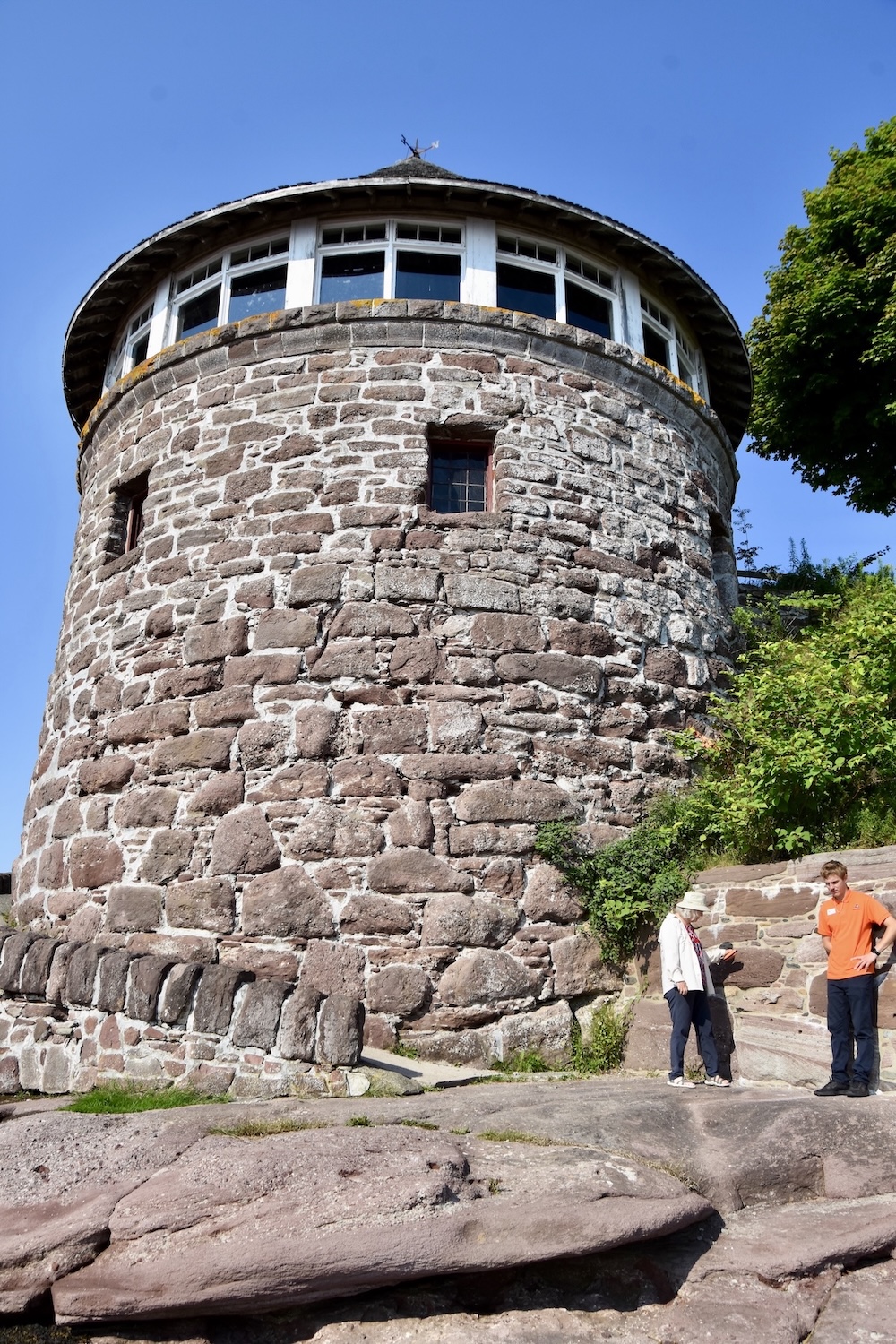
This is the view of the structure from the waterfront.
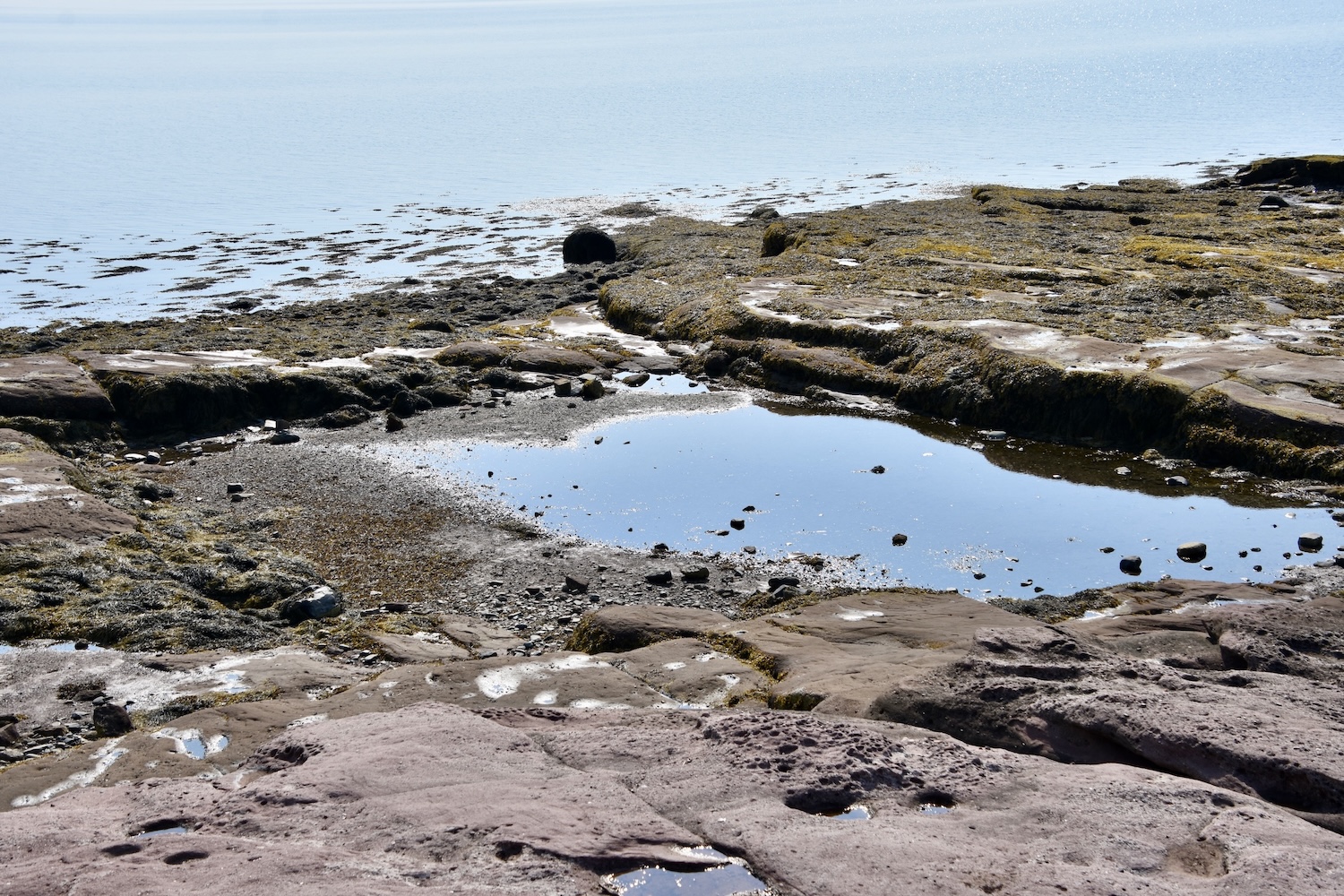
And this all that remains of the swimming pool.
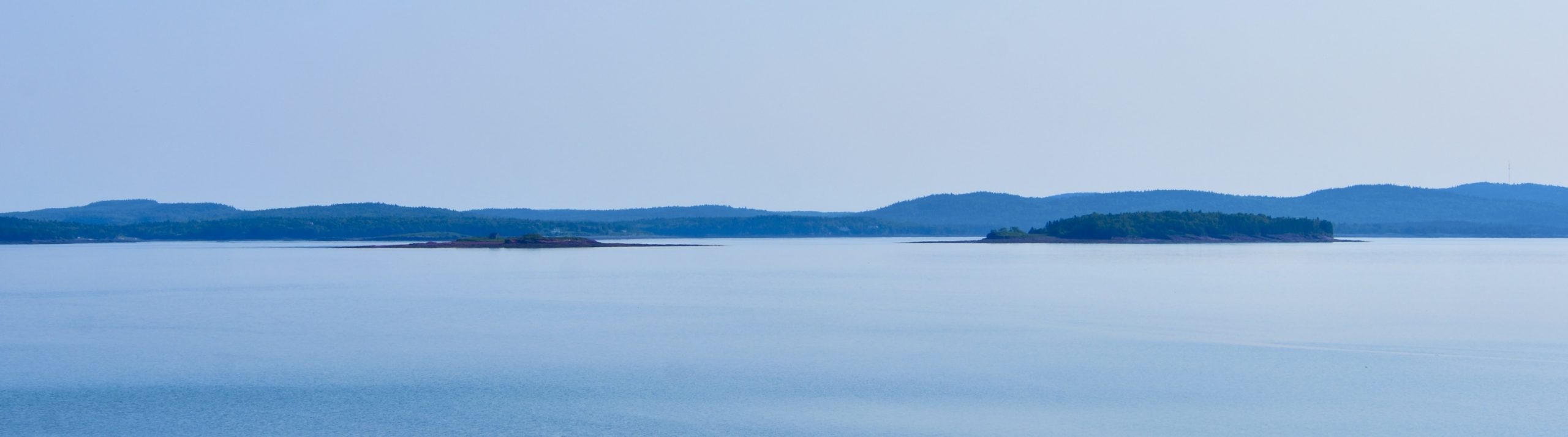
From here Patrick pointed out Hospital Island which was once a quarantine station for incoming immigrants, particularly the Irish from 1832 until around 1870. It is the tiny 3 acre island on the left and believe it or not over 400 people who died from smallpox, typhus and other diseases are buried there. Today it is abandoned and home to a bird sanctuary.
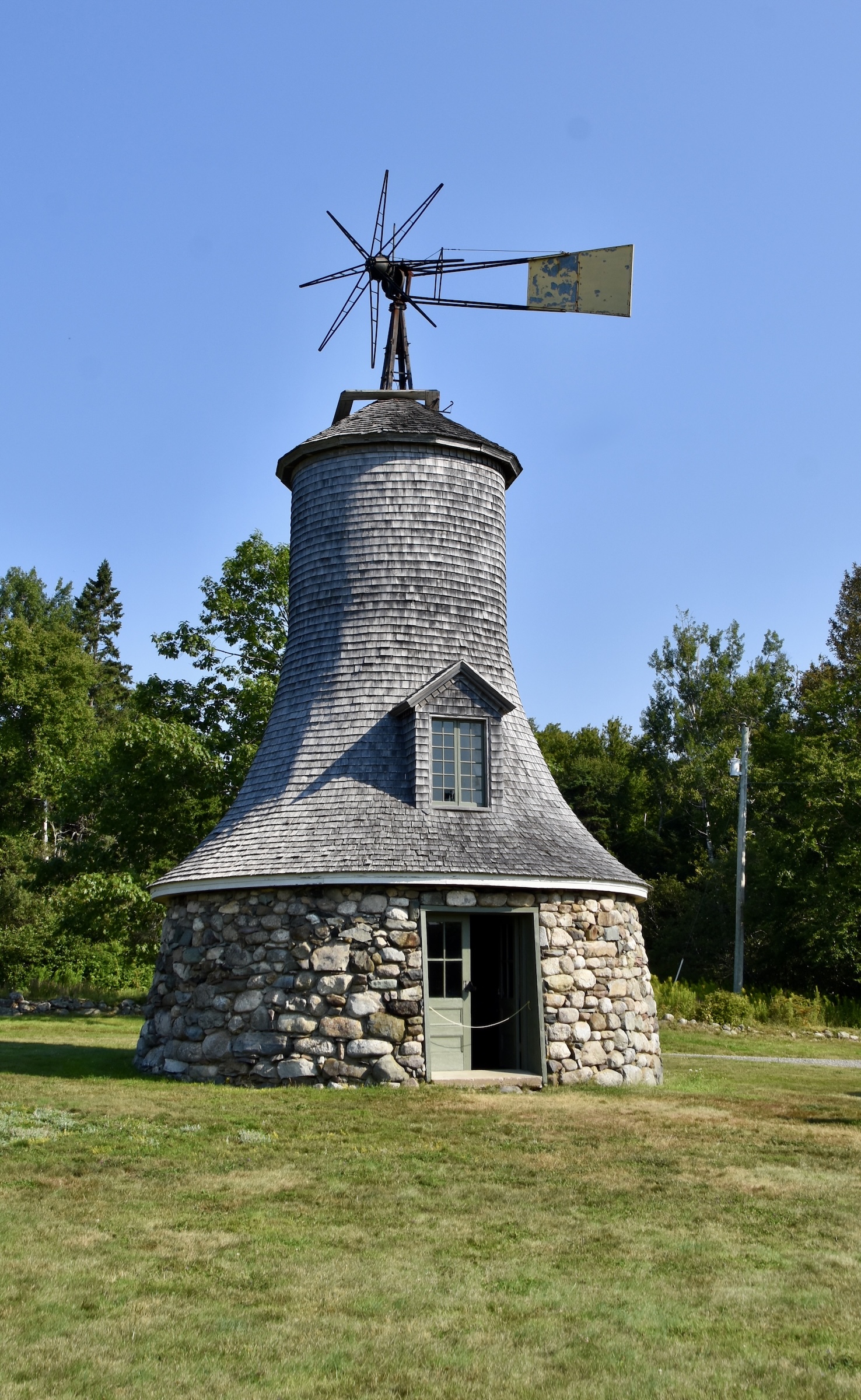
This is where the guided tour ends and you are free to explore the rest of Ministers Island at your own pace. Other notable buildings adjacent to Covenhaven include the windmill which pumped water from an underground storage tank to the main house using kerosene powered engines and not wind power.
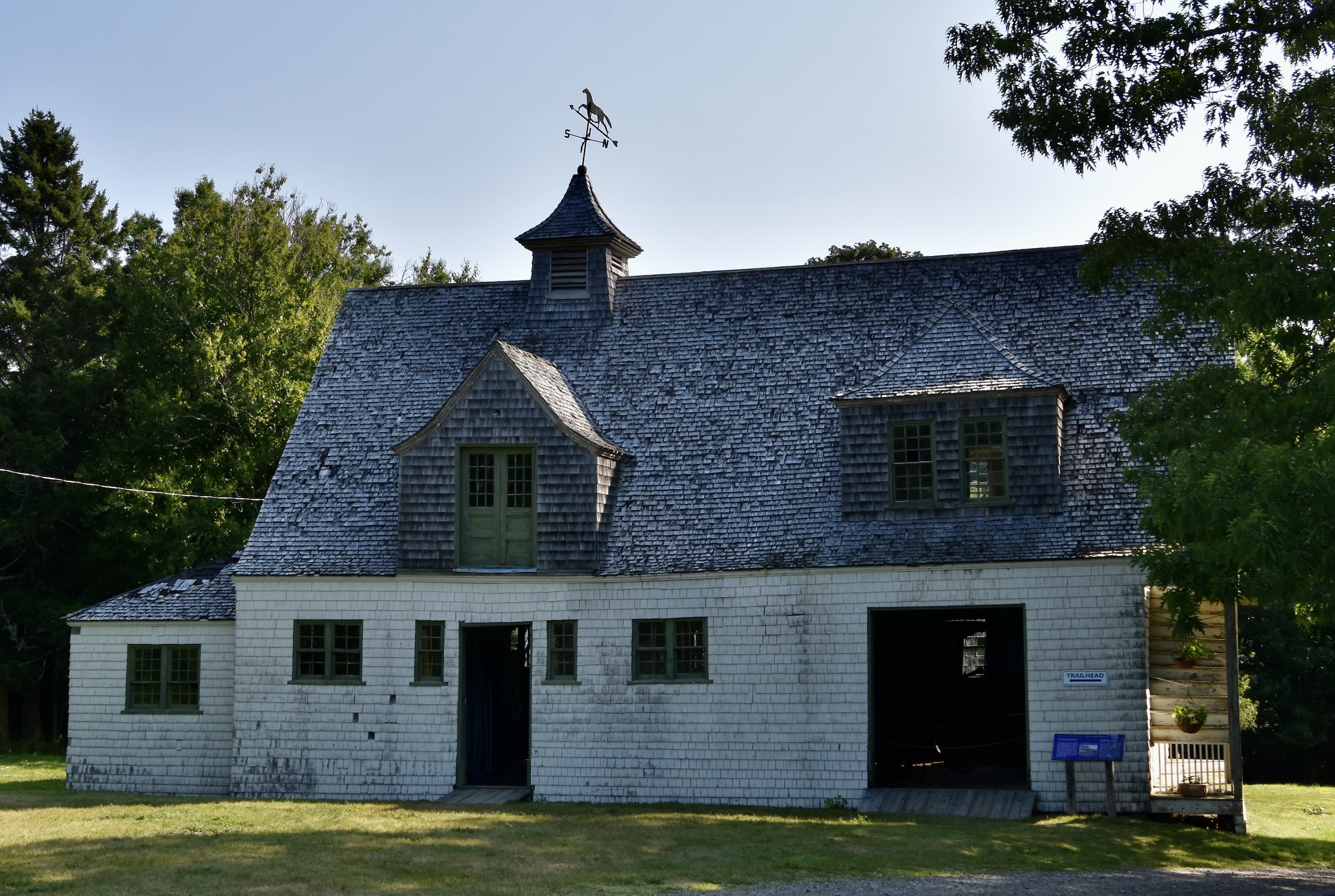
Every respectable manor in the 1800’s had a carriage house and Ministers Island was no exception.
Leaving the Covenhaven area you drive to the parking lot where the barn and creamery are found along with Reverend Andrews’ house that we passed earlier.
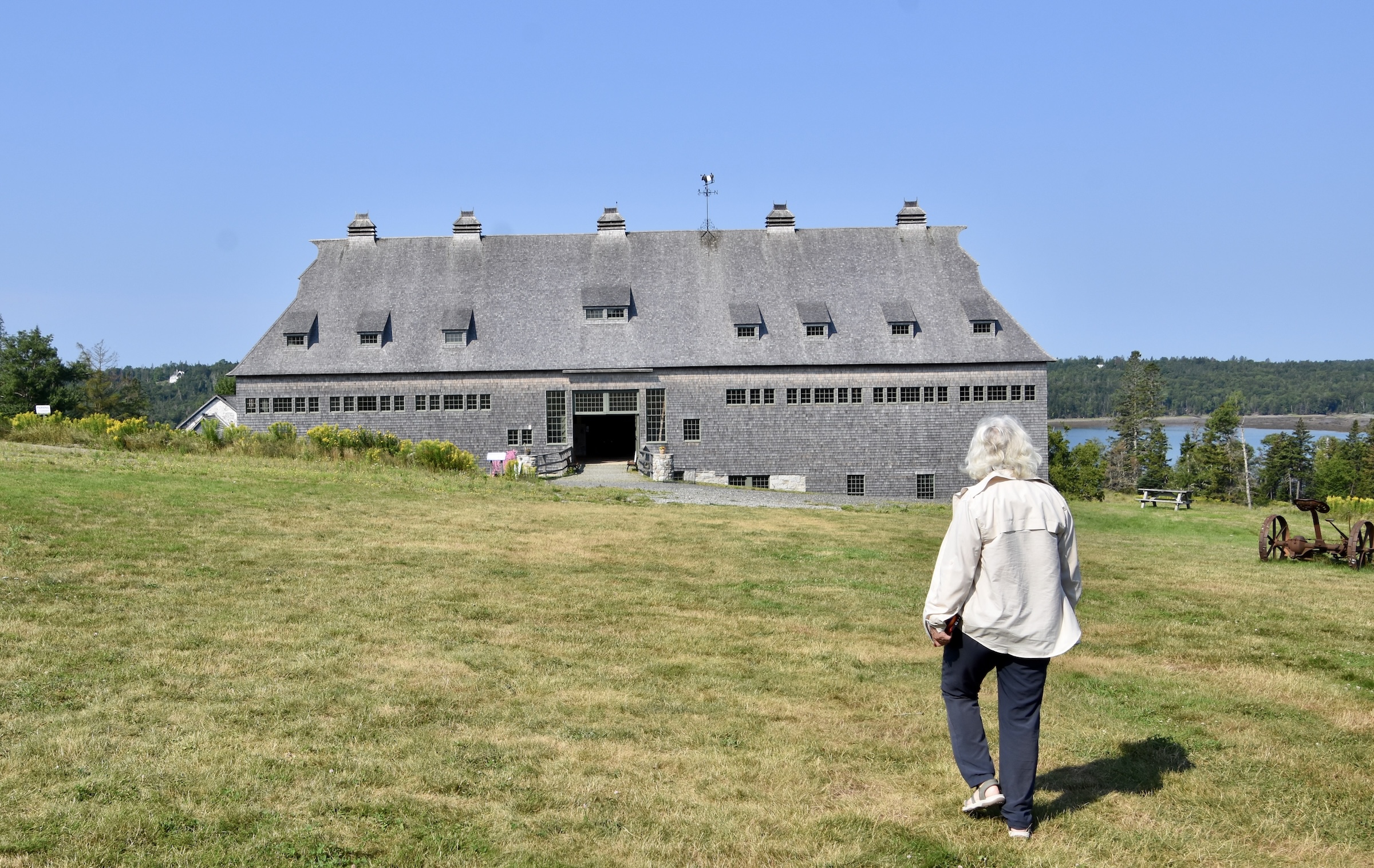
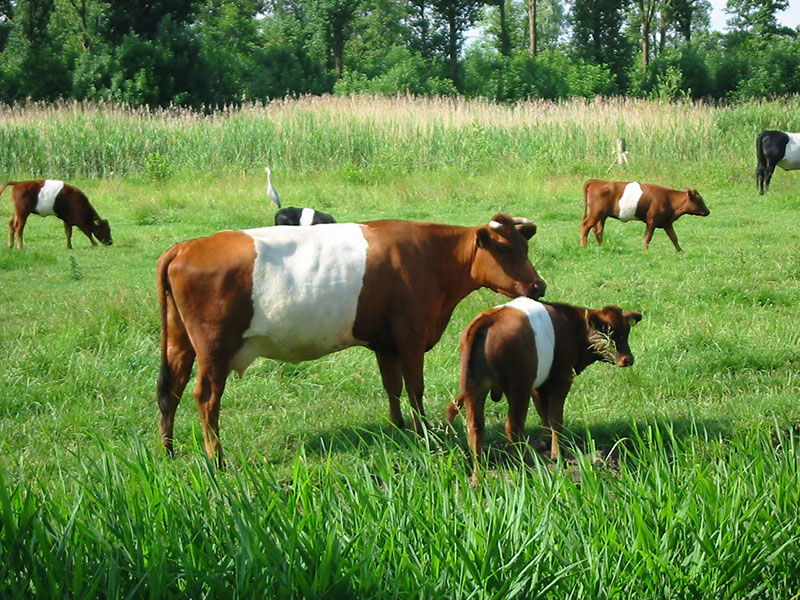
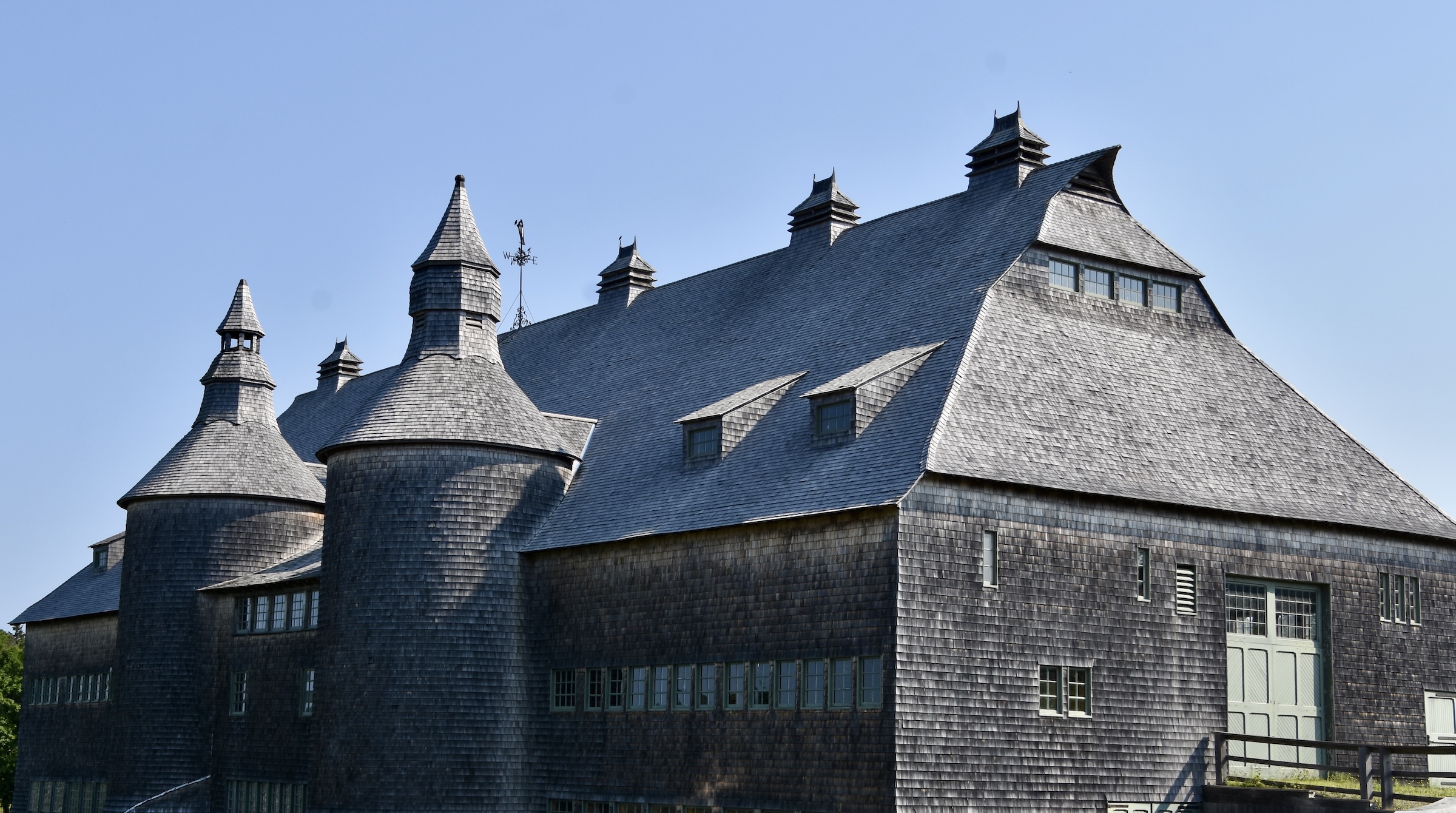
The barn is an incredible structure designed by Montreal architect Edward Maxwell that is unlike any barn I have ever seen in Canada. Touring the interior you will learn the story of Van Horne’s Dutch Belted cattle that won many awards for the quality of their milk and cream. They were later supplanted by the more prolific Holsteins that we see all over North America and are virtually near extinction today.
This is the view of the barn from the back and its even more impressive than the front view. It was severly damaged by Hurricane Arthur in 2014, but has now been fully restored.
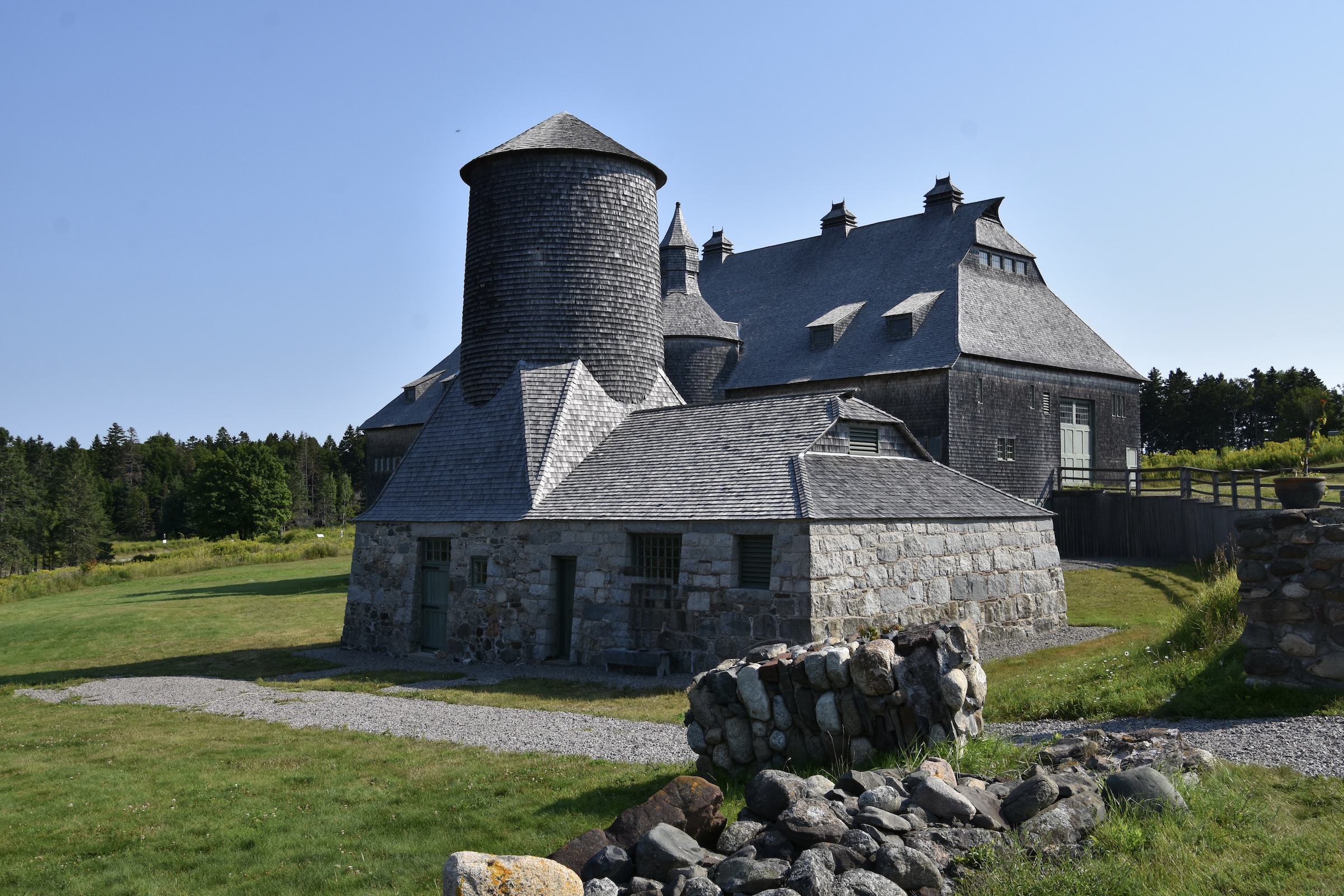
The last building of note on Ministers Island is the creamery where lab coated workers once produced pasteurized milk and cream that was shipped to Montreal and New York for consumption.
Driving back over the causeway, Alison and I could only imagine what Ministers Island must have been like in its heyday when the elites of the East Coast and Montreal were frequent visitors and the champagne flowed freely. This truly is a place that deserves to be better known and is definitely another of the many reasons to visit St. Andrews-by-the-Sea.