
Taroudannt – A Medina Without Tourists

Chances are that when you think of the tourist hot spots in Morocco, Taroudannt would be far down the list. In fact, I bet it wouldn’t even be on the list; I know it wasn’t on mine. And yet, this turned out to be one of the most interesting days on this Adventures Abroad Quintessential Tour of Morocco precisely because it was not overrun with tourists and had an authenticity that comes precisely because it has no one single must-see attraction. Here’s why I really enjoyed our stay in Taroudannt.
In the last post we did visit one of Morocco’s must-see attractions, the UNESCO World Heritage Site of Ait Benhaddou which was crowded, but definitely worth visiting. Afterwords we made our way to Taroudannt for a two night stay at the wonderful Hotel Dar Zitoune where we were practically the only guests.
History of Taroudannt
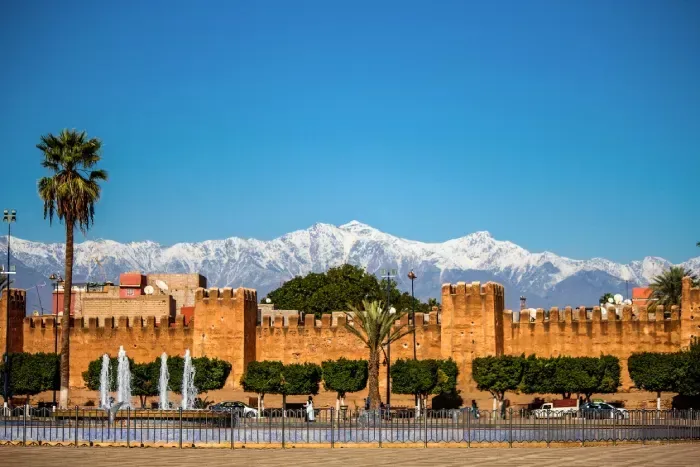
Unlike many of the cities we have visited and will visit on this tour, Taroudannt does not seem to have a history that dates back thousands of years, but rather first came to prominence in the 11th century when the Almoravids made it a regional trading centre. Not much seems to have happened of historical note for the next four hundred years until the founders of the Saadi dynasty established themselves in the Sous valley near Taroudannt. By now we are familiar with Moroccan dynasties starting out from small communities and launching invasions that ultimately result in control of the entire country – think of the Alawites’ origins in the Tafilalet oasis. Like the Alawites, the Saadis were Arabs who traced their roots back to Muhammad.
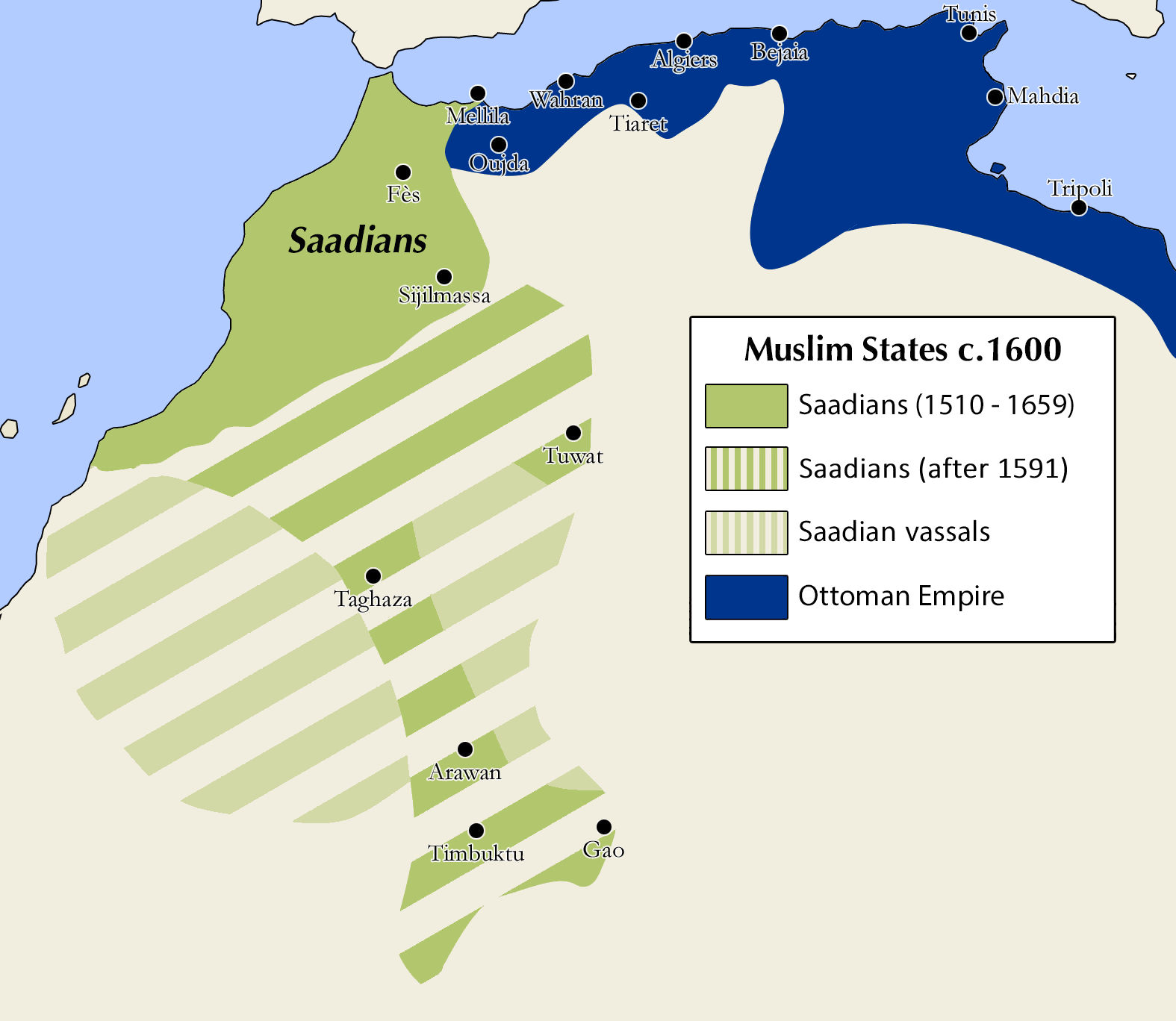
By the 14th century the Portuguese had become a major problem for the reigning Wattasid dynasty whose base was in Fes, well inland from the Atlantic coast. The Portuguese captured Agadir in 1505 and began a long, in effect, guerilla warfare with the inland tribes who were increasingly led by Saadi leaders. Long story short, the Saadis eventually expelled the Europeans and then turned their sights on the Wattasids and Fes which they captured in 1549 after which they were the principal dynasty in Morocco until ousted by the Alawites in 1659. This map shows the extent of the Saadian dynasty of which Taroudannt was near the southwest edge.
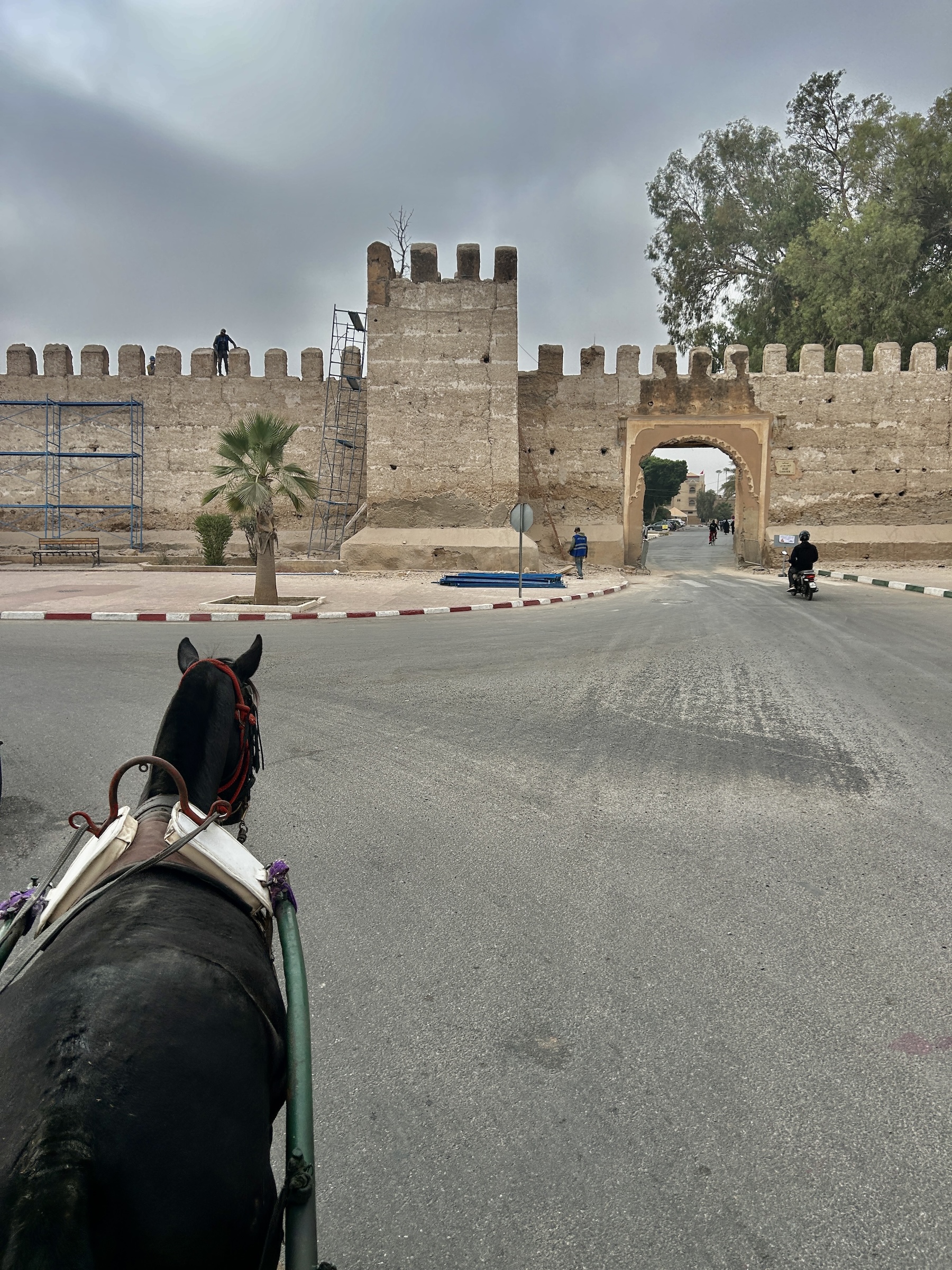
For reasons that I could not readily identify, the Saadis decided to build a wall around Taroudannt in the 16th century and what a wall it is. It stretches for 8 kms. (five miles), has 130 towers like these three, 19 bastions and a number of impressive gates. The walls of Taroudannt easily qualify as the greatest walls you’ve never heard of. And they are in great shape.
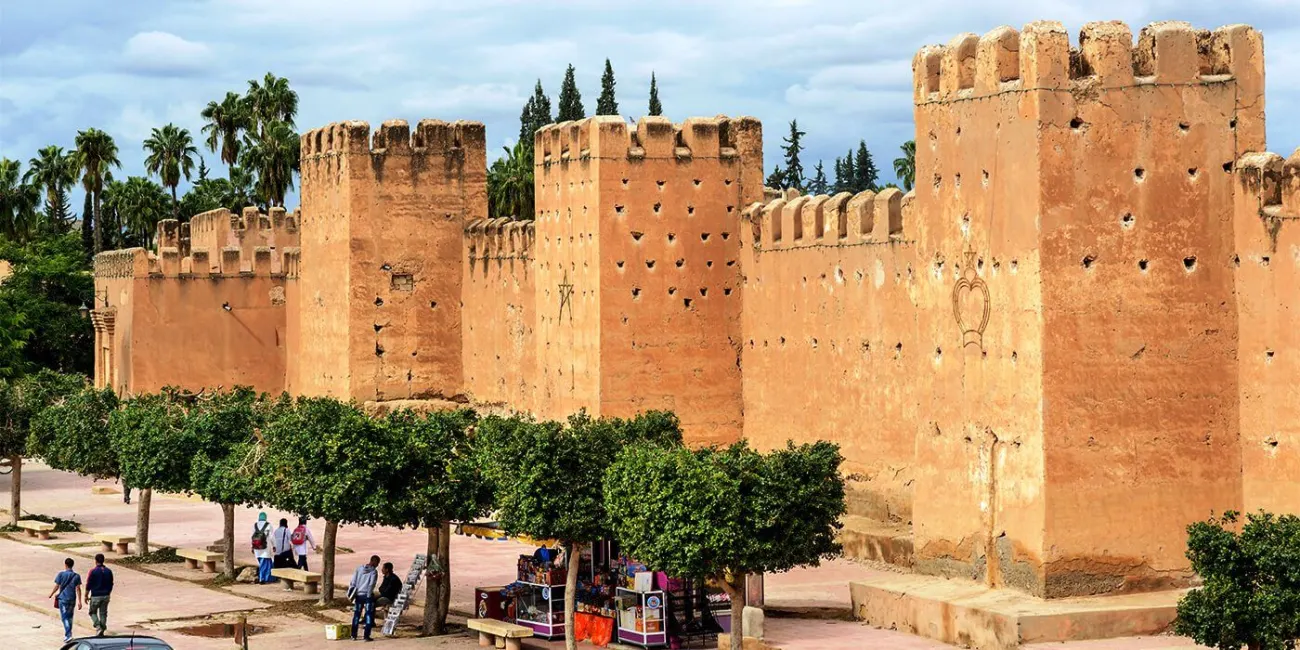
Inside the walls there is a 2 sq. km. medina where up to 6,000 people still reside.
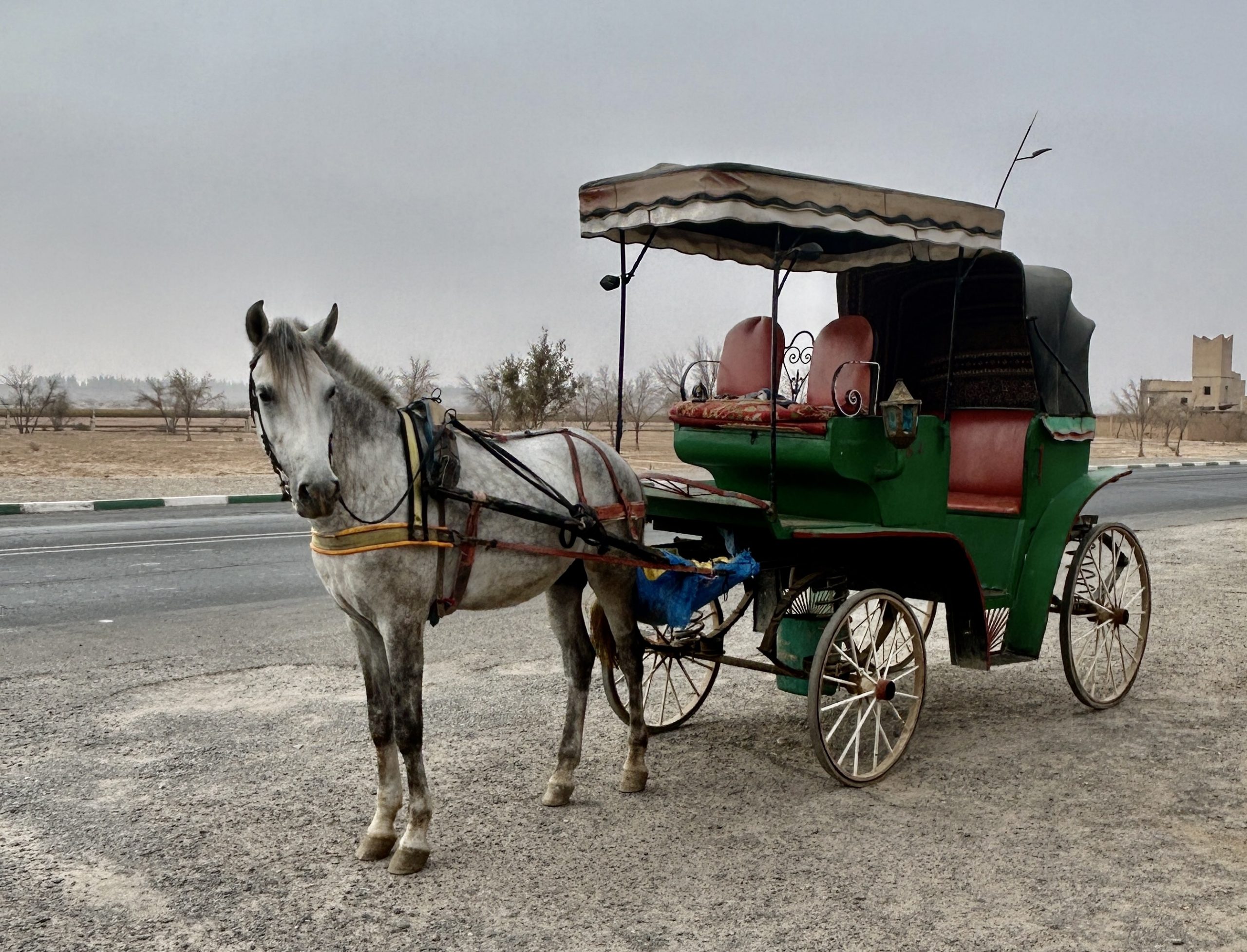
This morning we will start with a caleche ride from the hotel into the city proper, take a ride around the outside of the walls and then disembark for a tour of the medina on foot. Ok, I know what you’re thinking – if Taroudannt is not really a tourist town why are there caleches, which we all know are strictly for tourists? Well, not in the case of Taroudannt, where they are still important conveyances for local people going to the souks and generally getting about. They are dirt cheap and and remember, very few people who live in a medina have access to a motor vehicle.
Here is one of our Taroudannt caleches waiting for us at the hotel entrance. I do note that the horses pulling these caleches look very healthy and well cared for, which is not always the case.
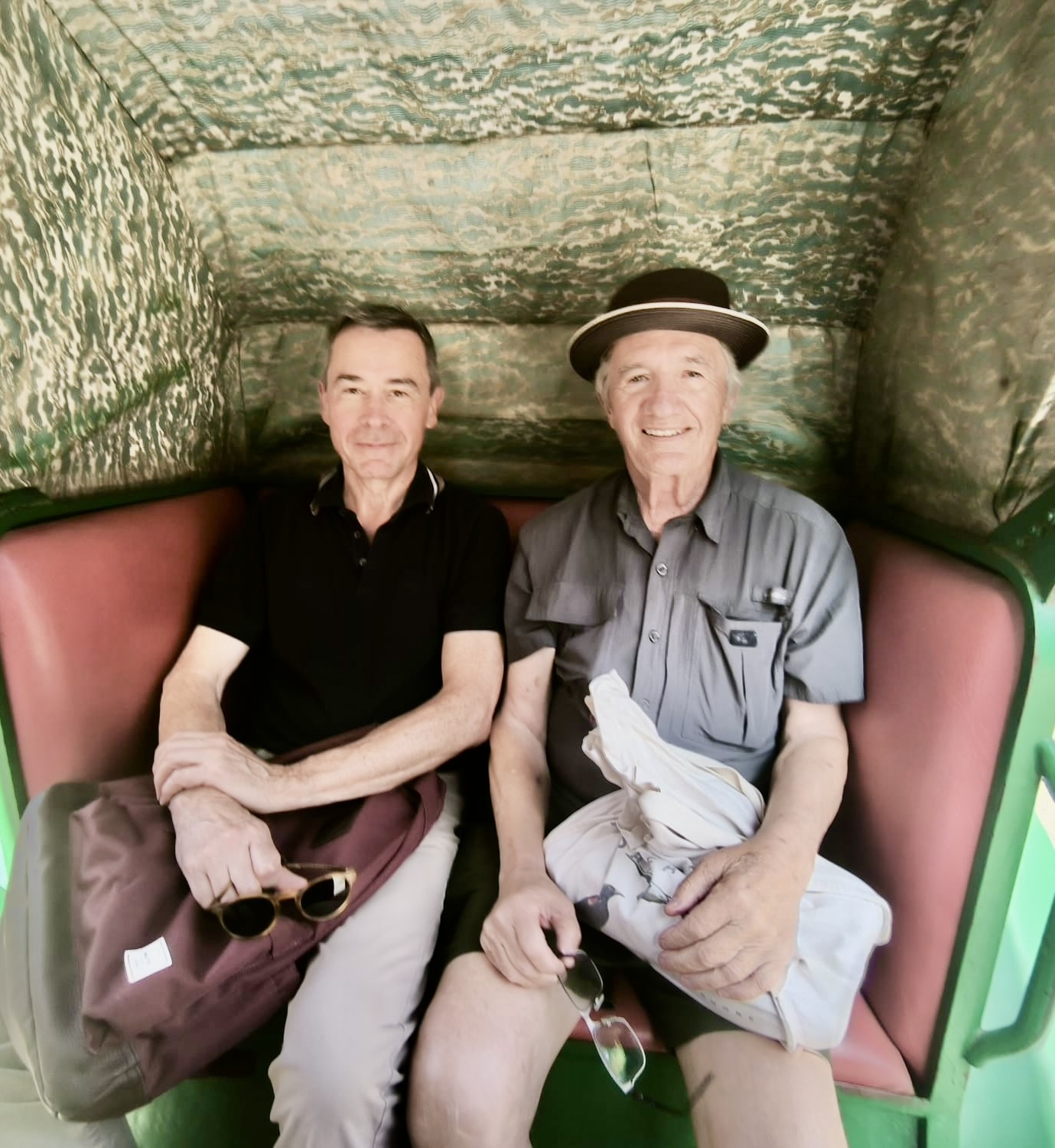
Alison is still feeling a bit under the weather and decides to stay at the hotel so I share a caleche with Brian, a retired architect from Chicago who volunteers as a guide at the Frank Lloyd Wright Robie House in that city.
I think I spoke too soon in saying that Taroudannt doesn’t have one single attraction that draws tourists – these walls are pretty damn impressive in their own right as you can see from this short video I took while circling them. Double click on the screen to expand it to full size.
After an hour or so circumnavigating the walls we enter through one of the many gates and head for the Taroudannt medina which is a smaller walled compound within the confines of the city walls.
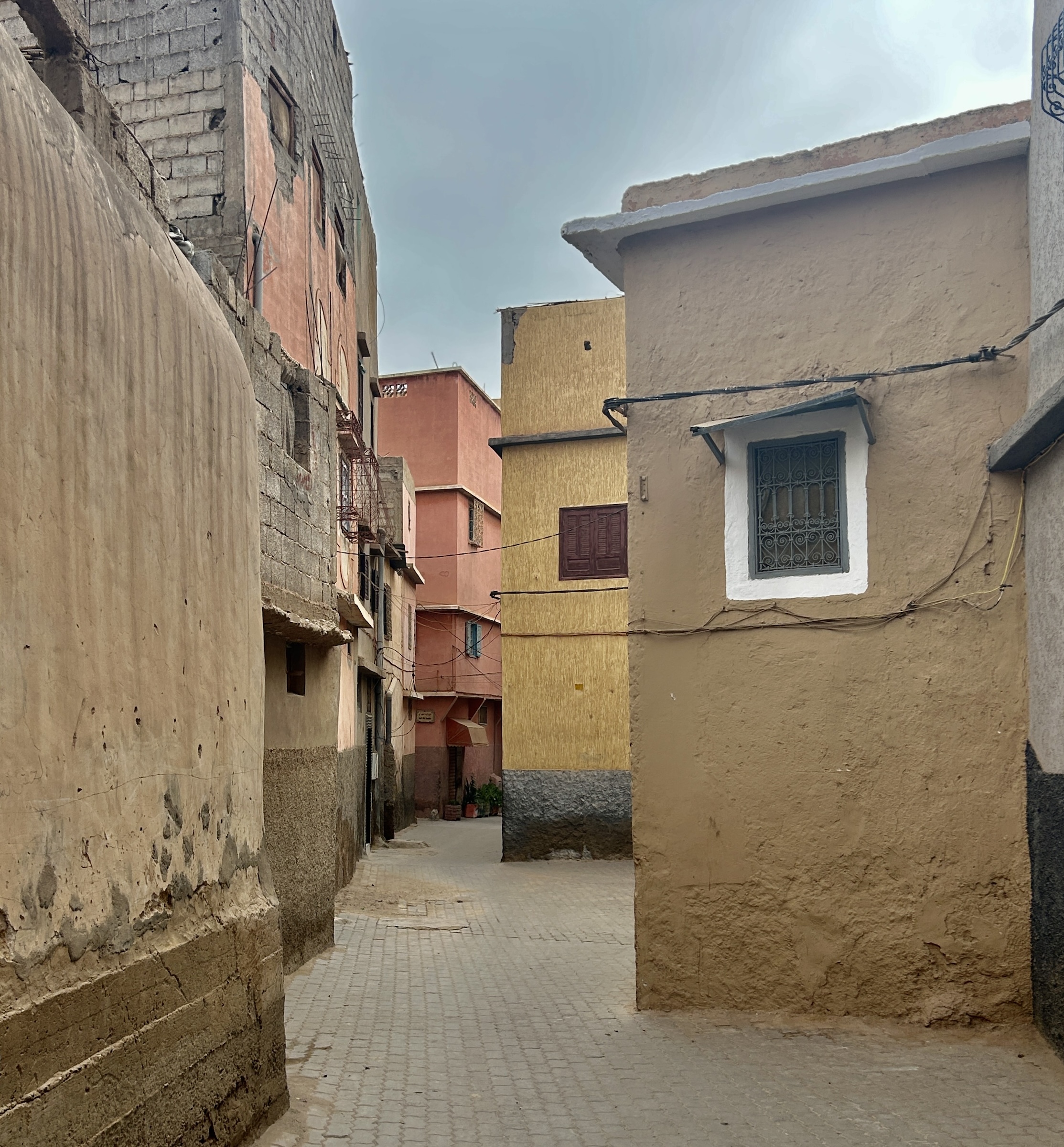
This is inside the medina where our local guide tells us that up to 6,000 people live. As is typical of Muslim dwellings, there is no outward ostentation. Unlike the Fes or Meknes medinas, Taroudannt is relatively free of tourists, other than us, and is much quieter and more sedate.
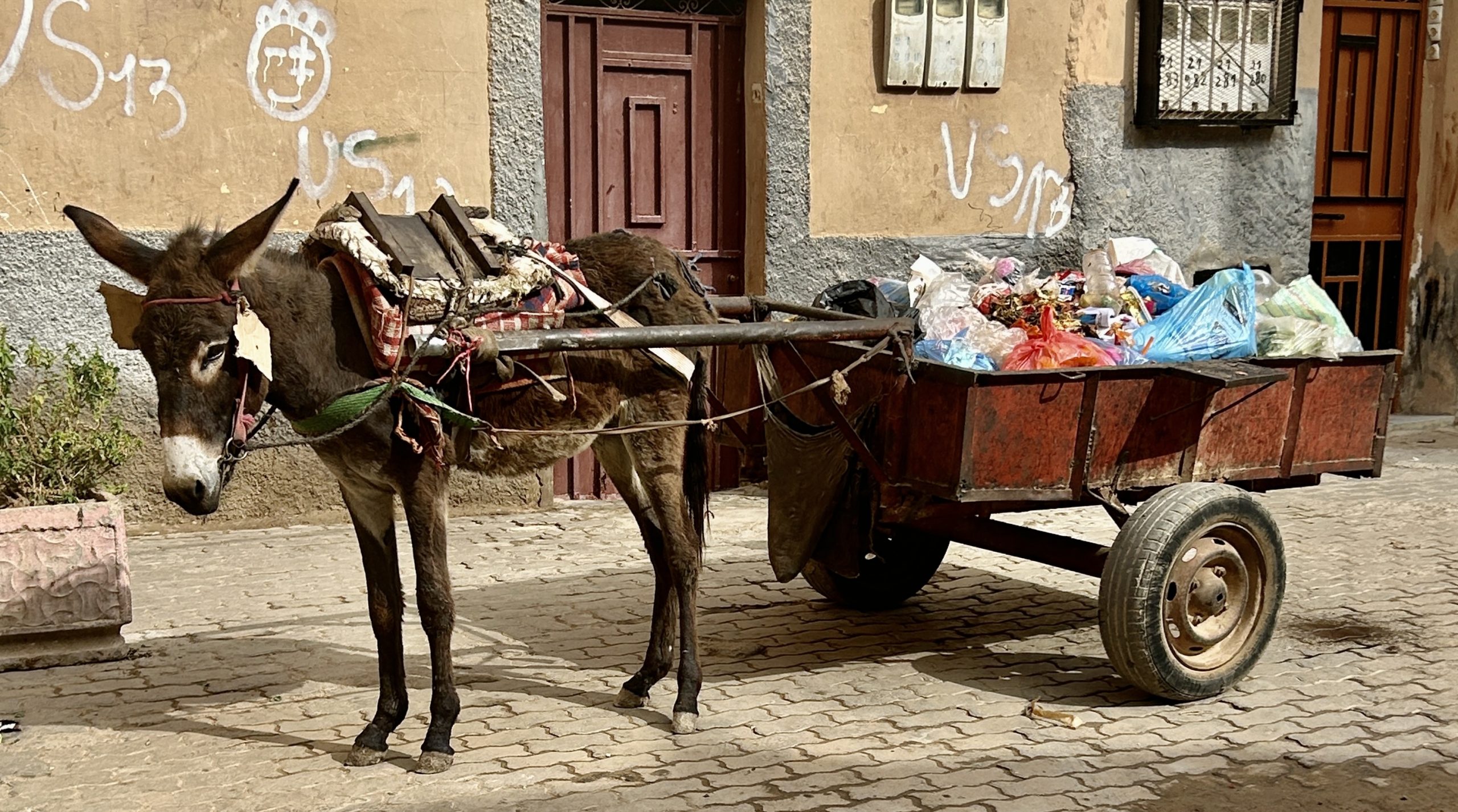
It’s garbage day in the medina and here’s the local version of a Taroudannt garbage truck.
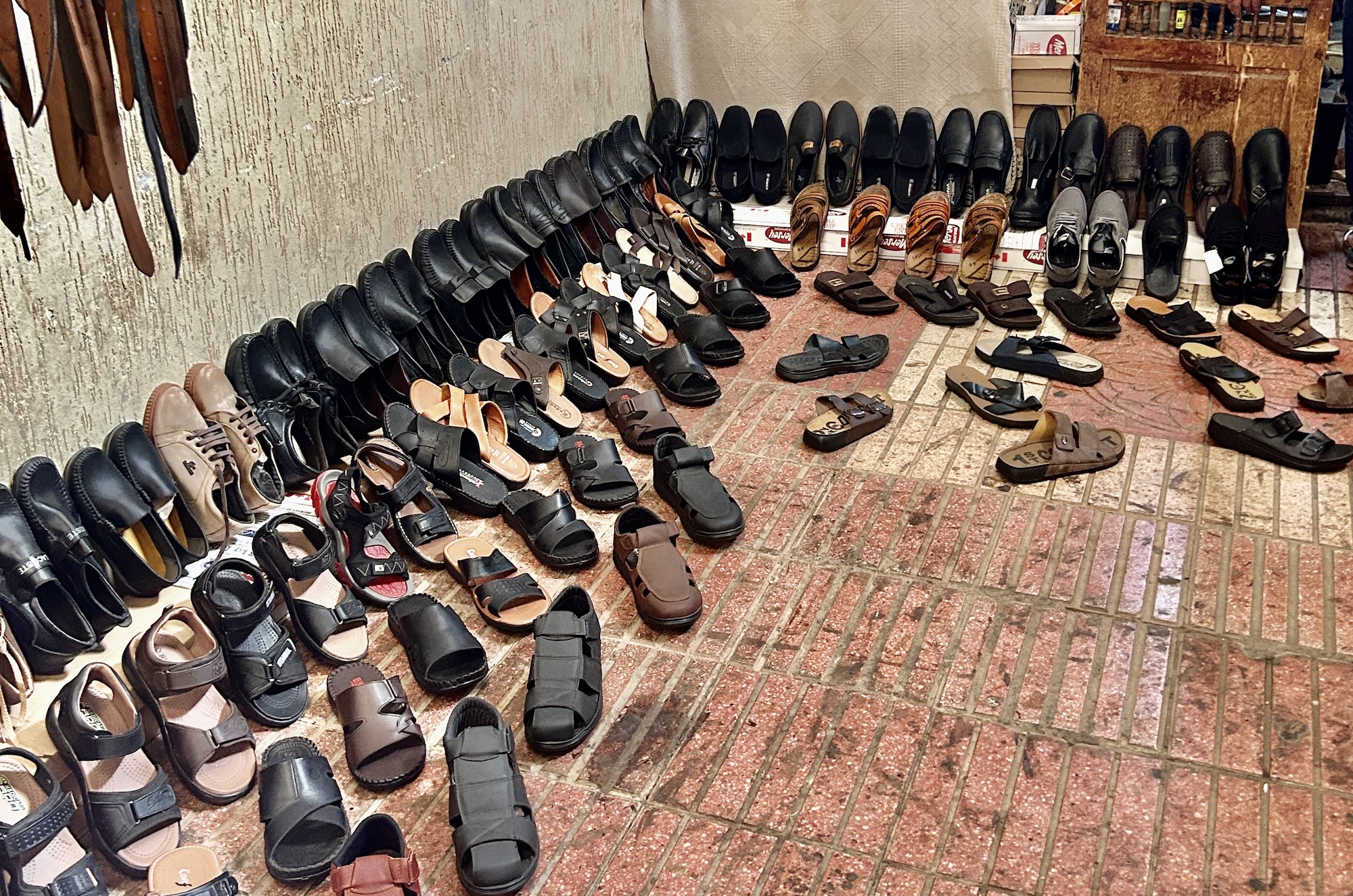
There are any number of shops selling products that are clearly aimed at the local market and not tourists, like these shoes for sale.
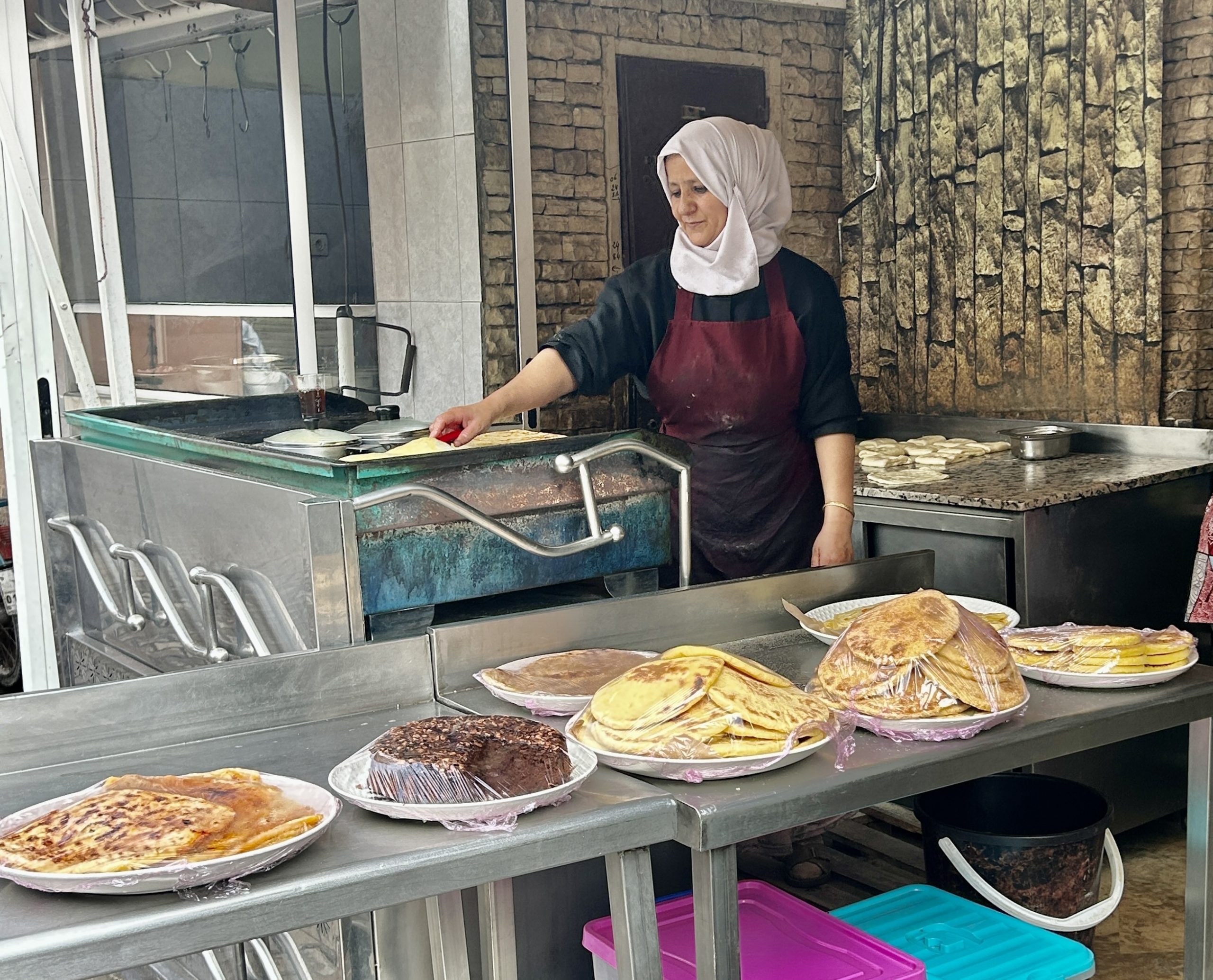
Every medina we have been in has a number of businesses specializing in making Moroccan pancakes and Taroudannt is no exception.
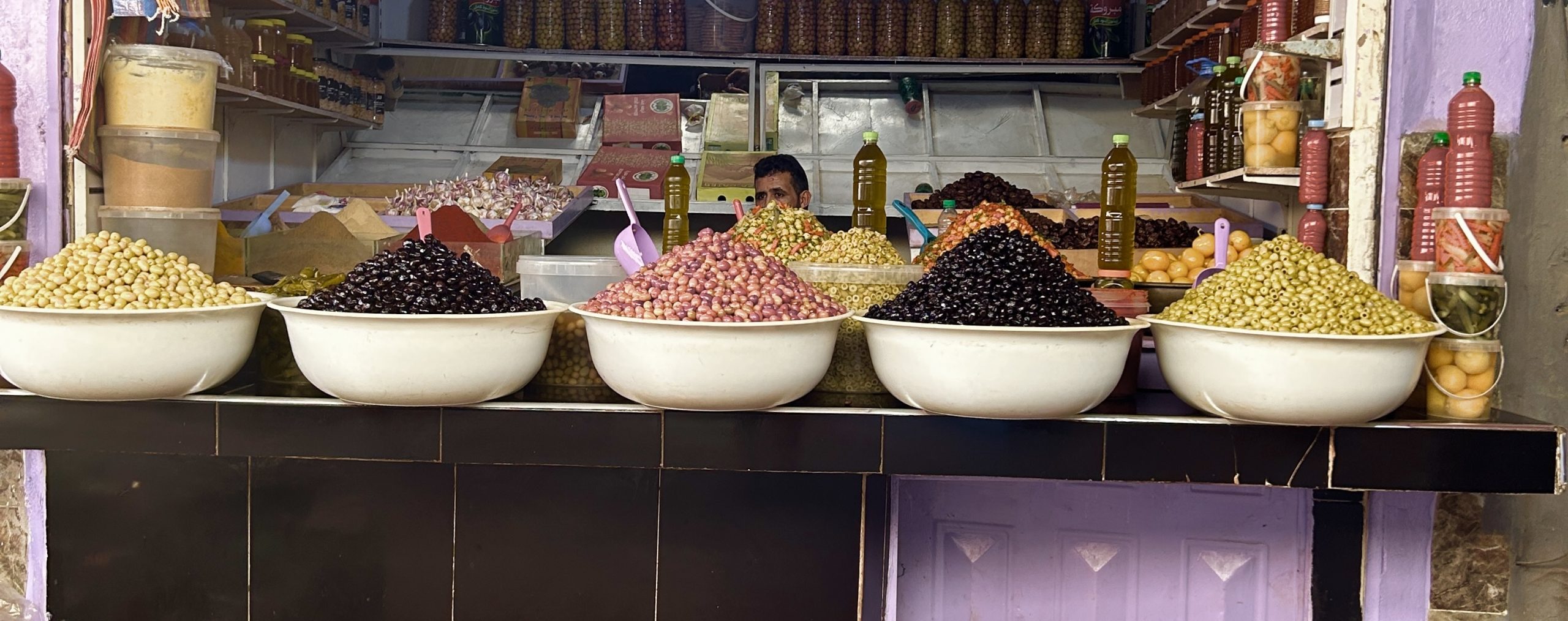
And of course there are olives of every sort.
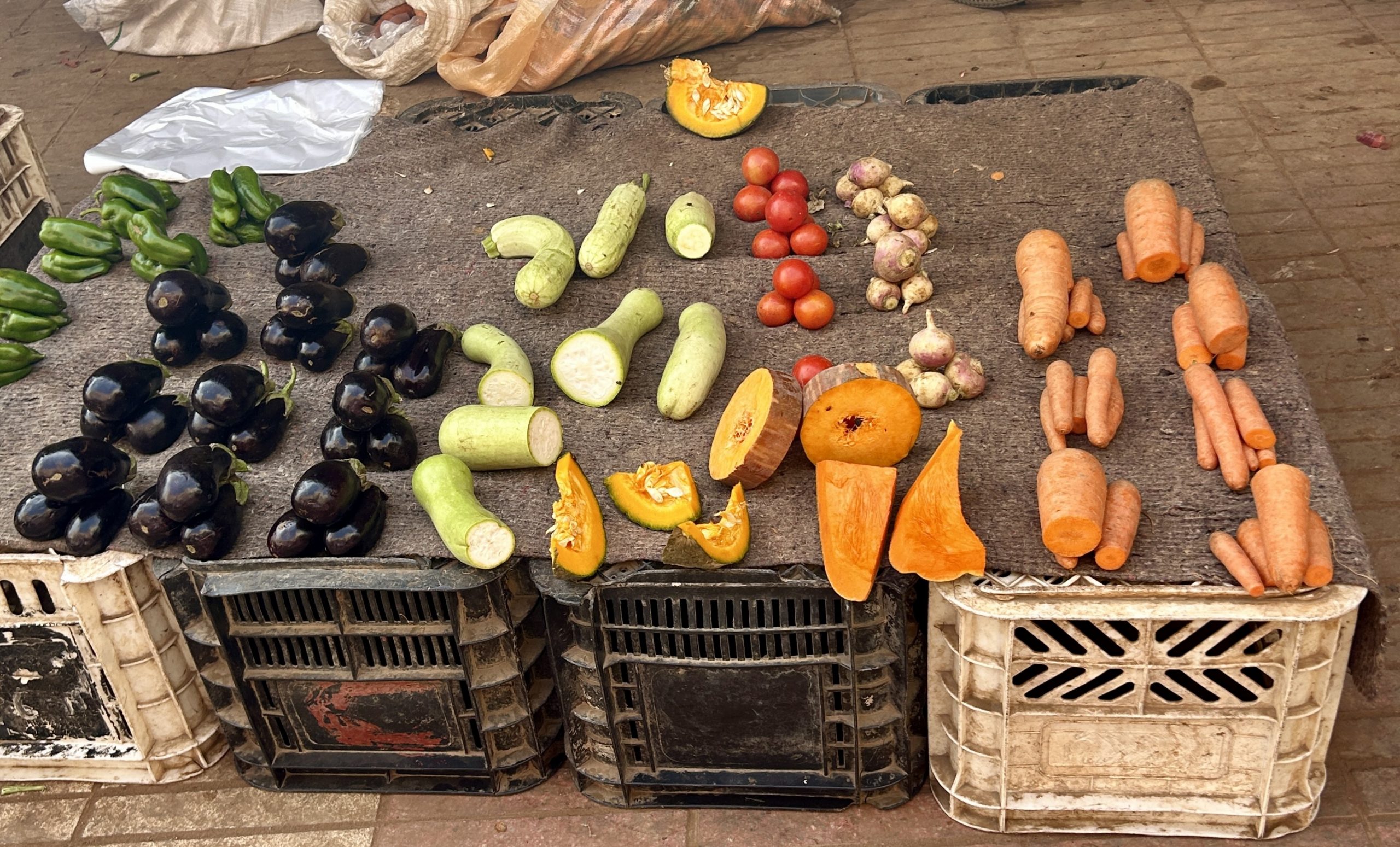
We do see something new in this medina about which you would have no idea if not for the local guide. This quite artistic looking display of vegetables apparently indicates that they are day old and on sale.
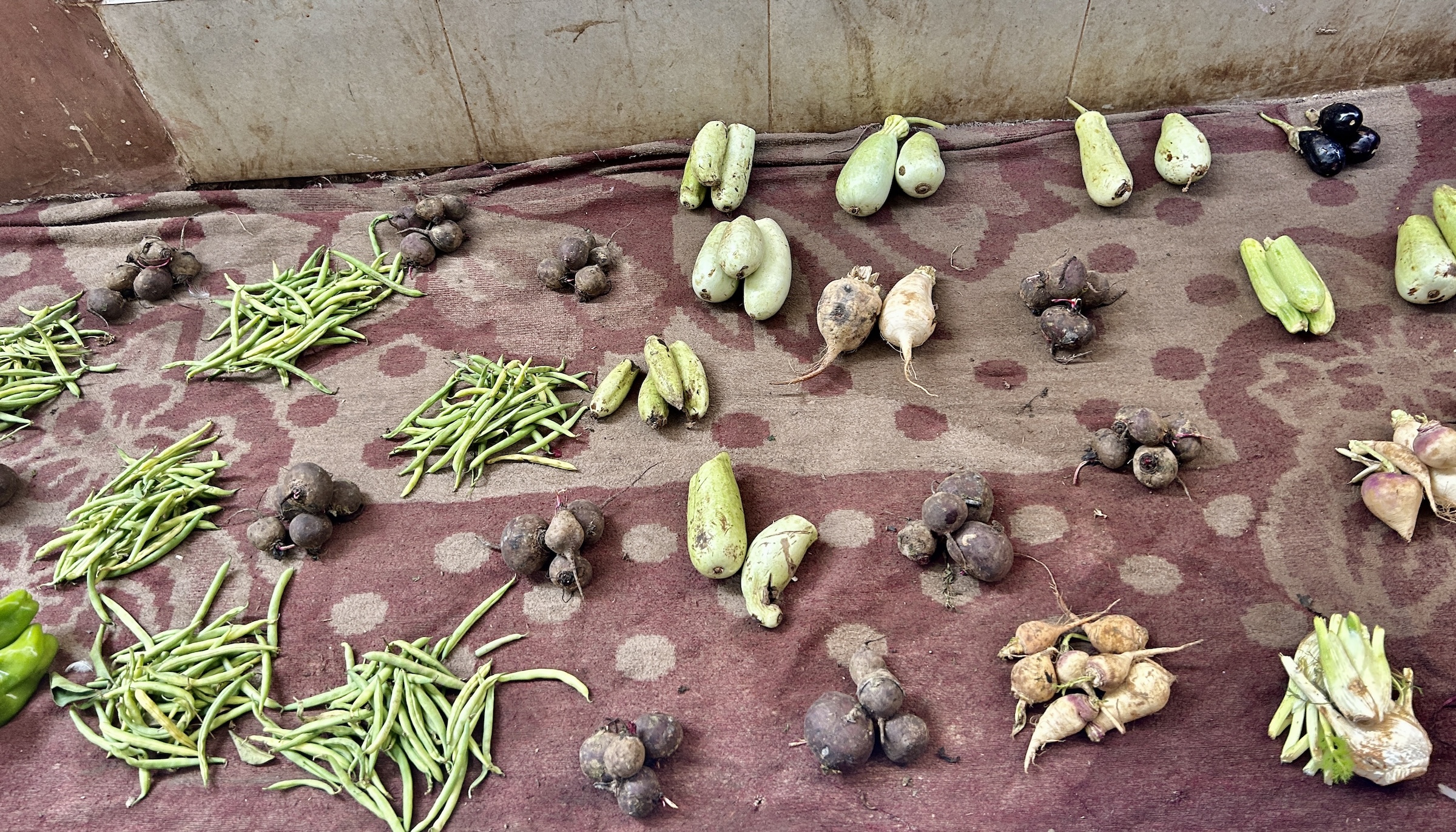
Here’s another example.
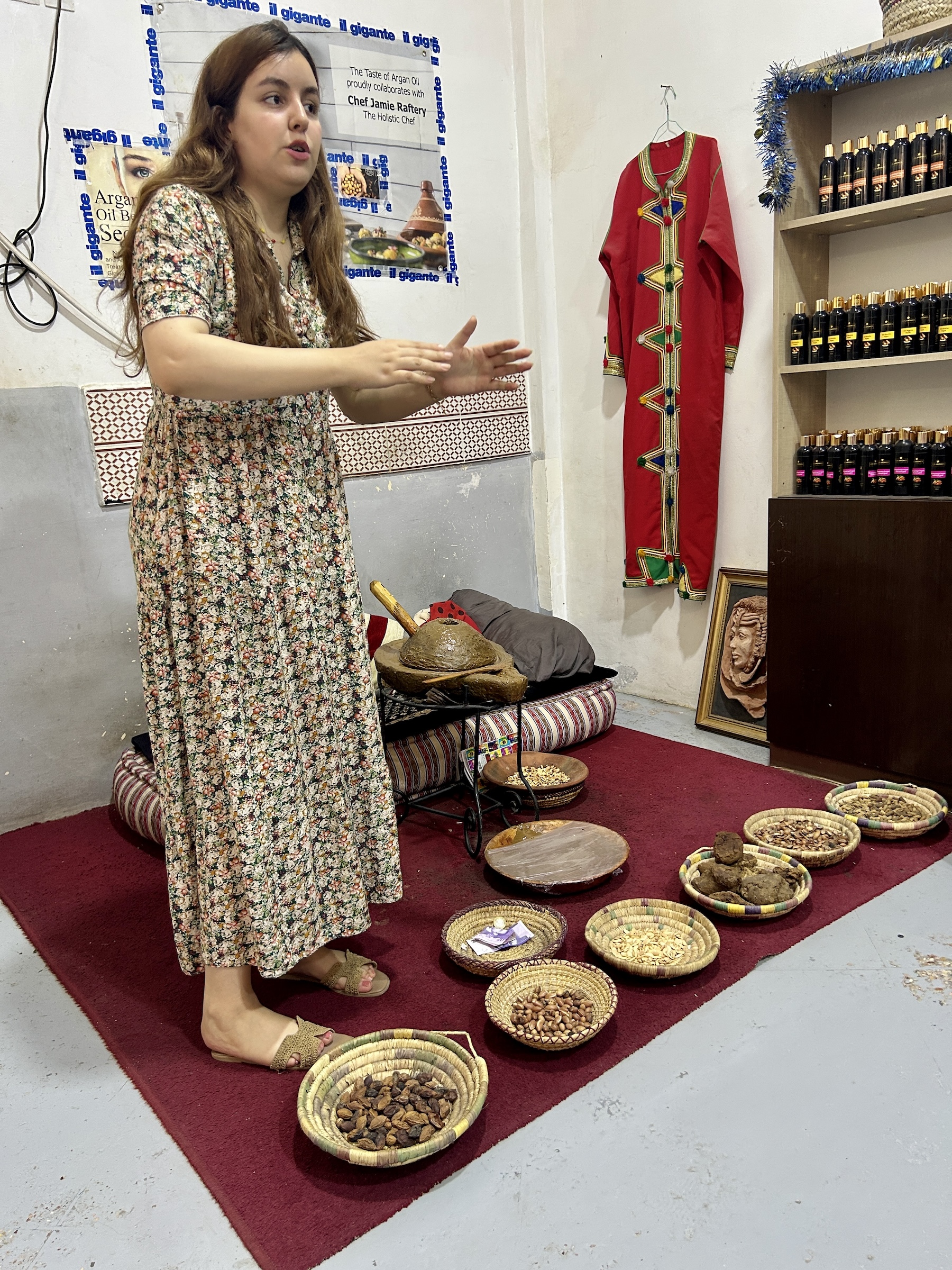
There is one store in the medina that might be aimed at the tourist market. Argan oil is a multi-use non-refined product from the argan trees that are native to Morocco and nowhere else in the world. It has obtained superstar status as both a skin care product and a food source. If you go on line you will find claims that it can cure almost anything, some of which are actually true. The production of argan oil is a major contributor to the Moroccan economy and the fact that most production is done in women’s cooperatives with the profits staying local is a good news story.
This is a small store within the medina that specializes in the sale of argan oil and we are given an explanation of how the various products are made, whether it be to apply to the hair or skin or to be ingested. I have to say I had heard of argan oil before this visit, but had no idea it was a uniquely Moroccan product and thus one of the must buy things to take home as gifts for those won’t get to visit Morocco.
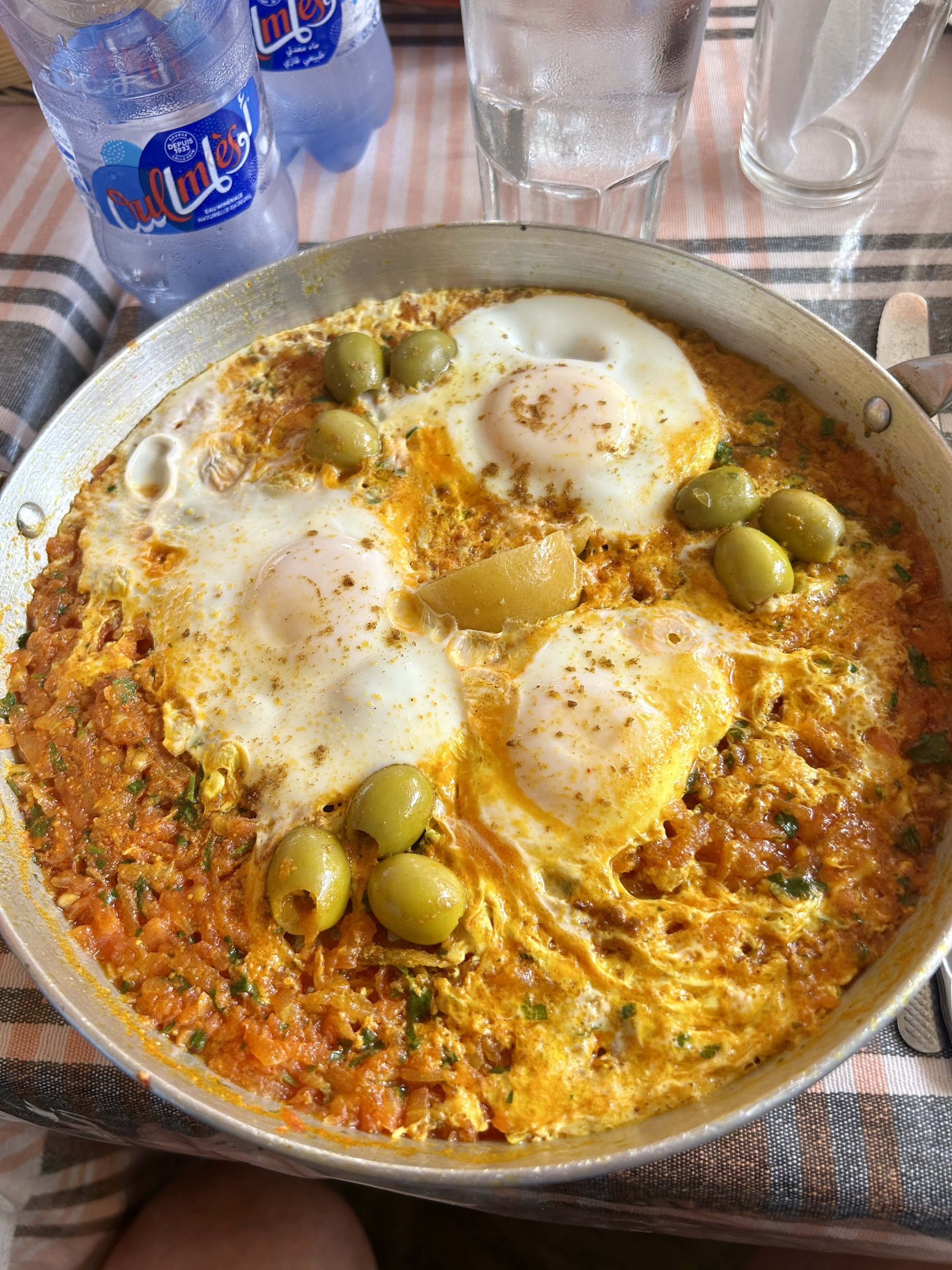
By now it was lunch time and we took a seat at one of the few restaurants inside the medina. I ordered the Berber omelet, not having a clue what it contained and was delighted by what appeared. It was one of the best things I ate on the entire trip.
We had a free afternoon and as I mentioned in the last post, there was no better place to spend it than at the Hotel Dar Zitoune in the surprising city of Taroudannt.
In the next post we’ll reach the Atlantic Ocean at Agadir and then make our way to the surfing town of Taghazout. After days in the desert it will be a pleasant change and I hope to see you there.