
Marrakech – Magical, Mysterious and Maddening

This is my 18th and final post from the October 2025 Quintessential Tour of Morocco by Adventures Abroad. It will feature Morocco’s most popular tourist destination, Marrakech which at over 10 million overnight stays in 2024 accounts for fully 40% of all overnight stays in Morocco. As I have noted in previous posts, Morocco is by no means an under the radar tourist destination, although AA has done a good job of getting us to places like Rissani, Rabat, Taroudannt and Meknes that are not as overrun as Fes or as we shall see, Marrakech. There was no city on this tour that I was more conflicted about than Marrakech – there were times I could scream and others where I was almost dumbstruck. In the end I made my peace with Marrakech. Please read on to find out how.
It is perhaps unfair to Marrakech that our previous stop was in the city of Essaouira which has a truly beautiful location on the Atlantic coast with a great set of fortifications and a relatively uncrowded medina. As I noted in my post it was my favourite city in Morocco. But enough about Essaouira, what is about Marrakech that makes it so popular?
History of Marrakech
Unlike the other three Imperial cities Fes, Meknes and Rabat, Marrakech does not have a history that goes back millennia. There were no Phoenician or Roman predecessors. Instead one Abu Bakr inb Umar specifically founded the place in or about 1070 to become the capital city of the Almoravid dynasty which stretched from Spain to modern day Senegal.
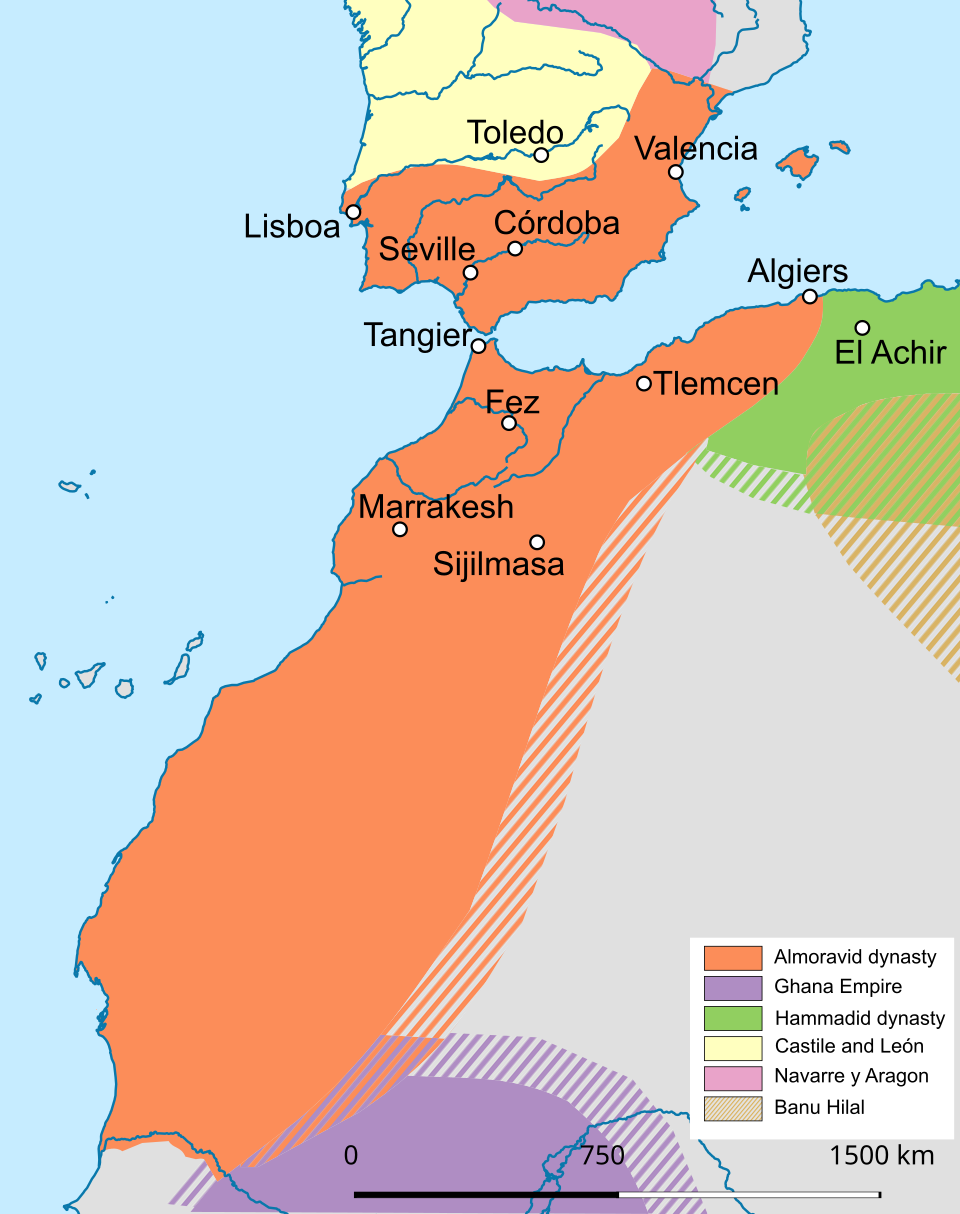
Marrakech grew rapidly and began a long rivalry with the former Imperial city Fes with the two switching places as the capital of Morocco a number of times until the French put them both out of the picture when they chose Rabat as the capital in 1912.
The first city walls were erected between 1126-27 and a system of khettaras, the unique Moroccan underground aqueducts which we explored a few days ago, ensured a plentiful water supply. The city attracted many artisans from Andalusia who gave the architecture of Marrakech a distinctly Cordoban appearance. All was going well until the 1140’s when the Almohads came on the scene. They were Berbers like the Almoravids, but much more strict in their religious beliefs. After conquering most of the northern part of the Almoravid empire in Morocco and Algeria including Fes, they arrived at the gates of Marrakech in 1847. The siege lasted almost a year and after the city was taken the Almohads systematically executed all the male Almoravid Berbers with estimates of the deaths running as high as 120,000.
The Almohads kept Marrakech as their capital, but completely remade the city by demolishing the Almoravid mosques and building new ones including the Kutubiyya mosque with its minaret that dominates the old section of the city to this day.
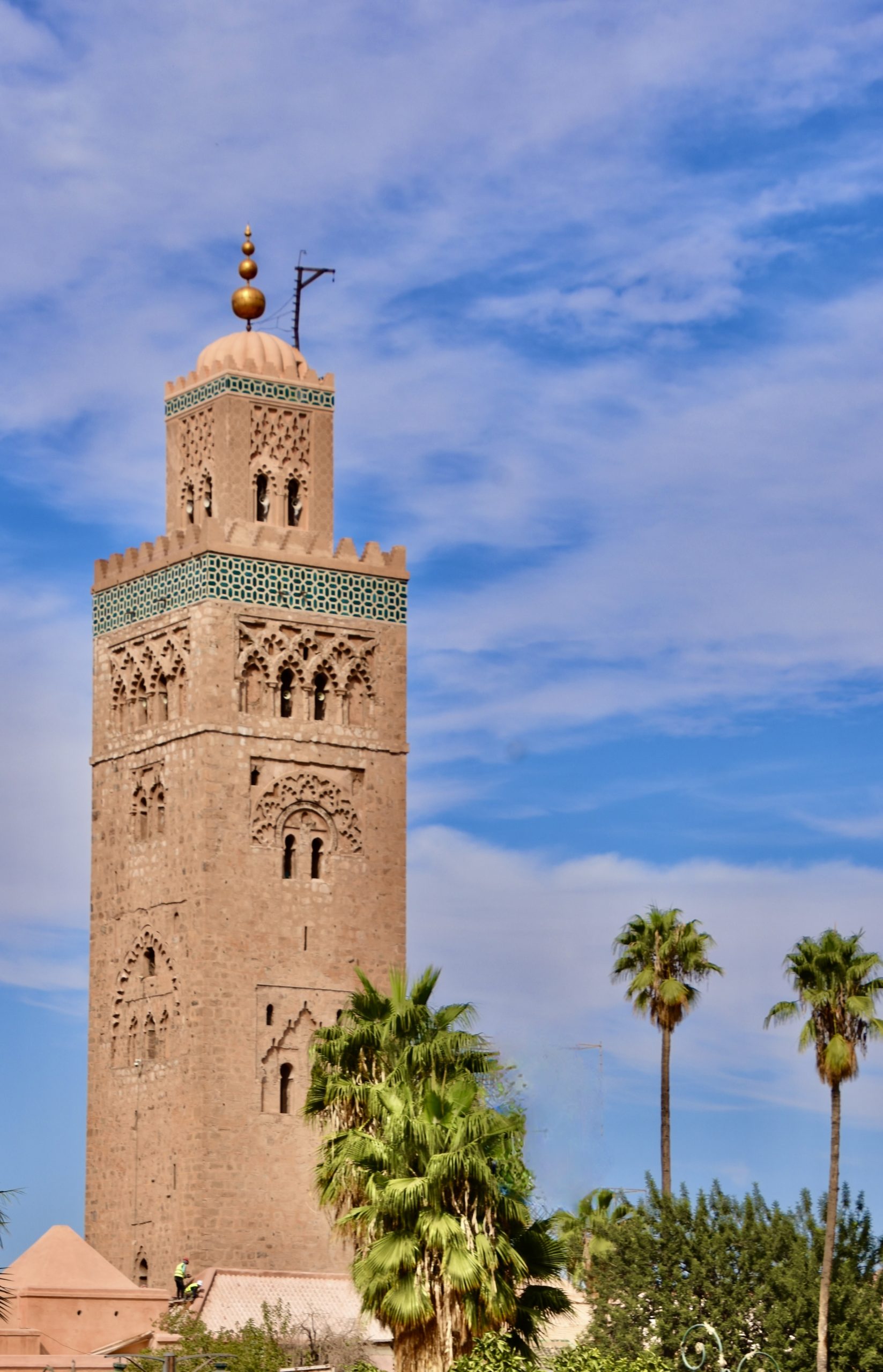
It was during the Almohad Dynasty that Marrakech furthered its reputation as a haven for Andalusian artists, intellectuals and philosophers including Averroes who we first encountered in Fes. This lasted until 1269 when the Almohads were shown the door by the Marinids who moved the capital back to Fes.
But Marrakech was nothing if not resilient. After centuries of decline it returned to the spotlight when the Saadi Dynasty took control in the 16th century and once again made Marrakech their capital city. What followed was Morocco’s golden age with the city becoming a centre of pilgrimage to the tombs of seven famous Muslim saints whose remains were brought here by the Saadi rulers. Like Mecca, Christians were barred from the city until 1867, although exceptions were made for ambassadors and other high officials. It did lose its status as capital when the Alawites took control in 1668 and moved it back to Fes.
The French seized the city in 1912 and held it until 1956.
In the 1960s Marrakech once again gained the spotlight when it became the major stop on the ‘hippie highway’ that we encountered in Taghazout, Agadir and Essaouira. The Beatles, Rolling Stones and other groups spent time here.
And who can forget Crosby, Stills & Nash smash hit Marrakesh Express? BTW both spellings of Marrakech/Marrakesh seem to be OK.
Yves St. Laurent bought and restored the famous Majorelle Gardens and in 2017 the YSL Museum was opened. Both are major tourist attractions. Alison and I will be visiting Majorelle Gardens later in this post.
In 1985 the Medina of Marrakech was inscribed as a UNESCO World Heritage Site with this description:
Founded in 1070–72 by the Almoravids, Marrakesh remained a political, economic and cultural centre for a long period. Its influence was felt throughout the western Muslim world, from North Africa to Andalusia. It has several impressive monuments dating from that period: the Koutoubiya Mosque, the Kasbah, the battlements, monumental doors, gardens, etc. Later architectural jewels include the Bandiâ Palace, the Ben Youssef Madrasa, the Saadian Tombs, several great residences and Place Jamaâ El Fna, a veritable open-air theatre.
This will be our seventh World Heritage Site on this trip.
So let’s get on with our tour of Marrakech.
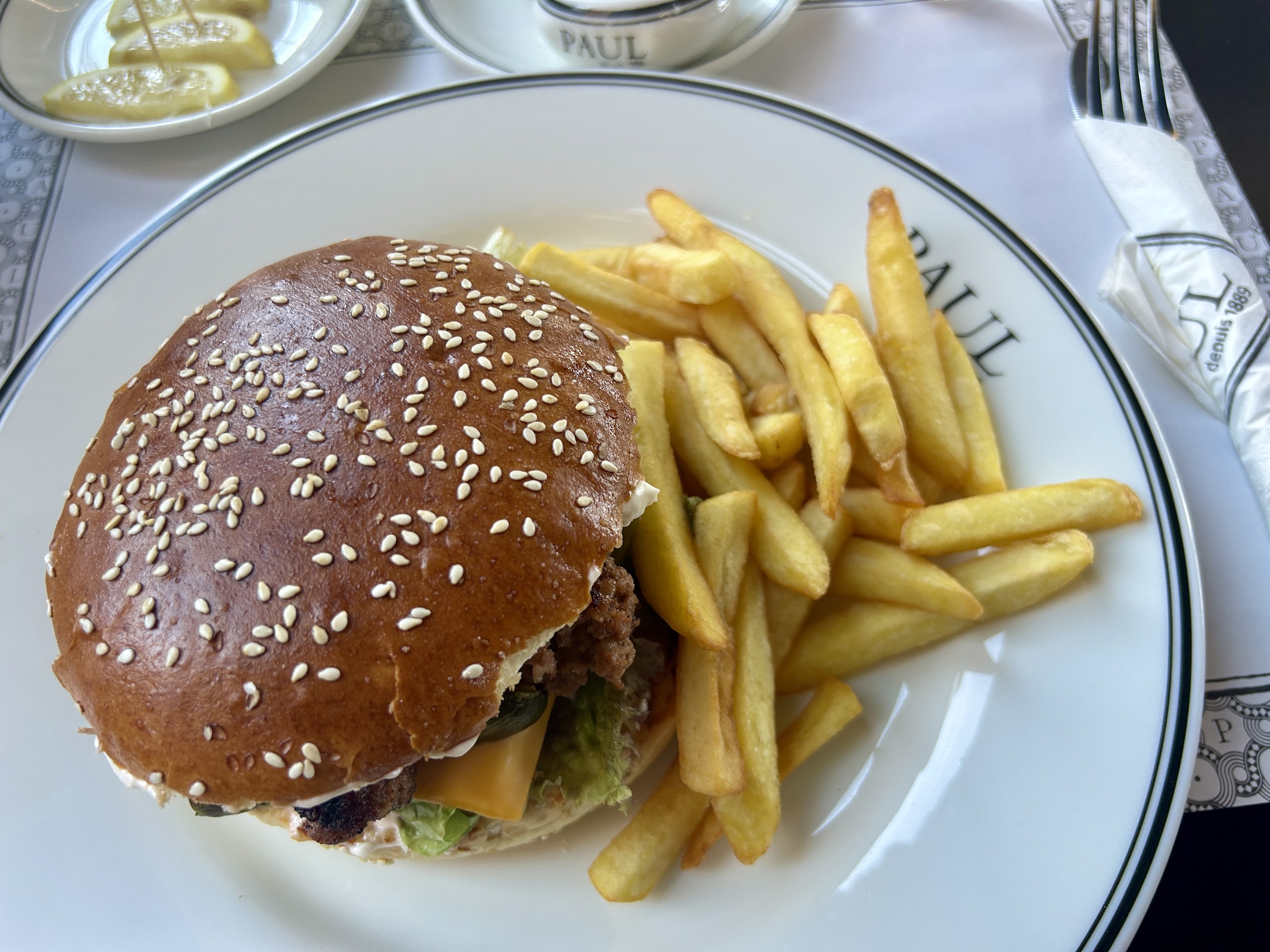
Our drive from Essaouira to Marrakech was relatively uneventful, arriving at the outskirts around lunch time. We stopped at the modern Menera Mall where we had about 90 minutes of free time. Alison and I had lunch at Paul restaurant, both enjoying the one and only cheeseburger we had in Morocco and boy did it taste good.
There was also a liquor store in the mall where we could pick up supplies as there would be none inside the medina where we would be staying for the last two nights of the trip.
At the entrance to the medina we said our farewells to our driver Hassan as for the next two days we would be in areas that buses could not enter.
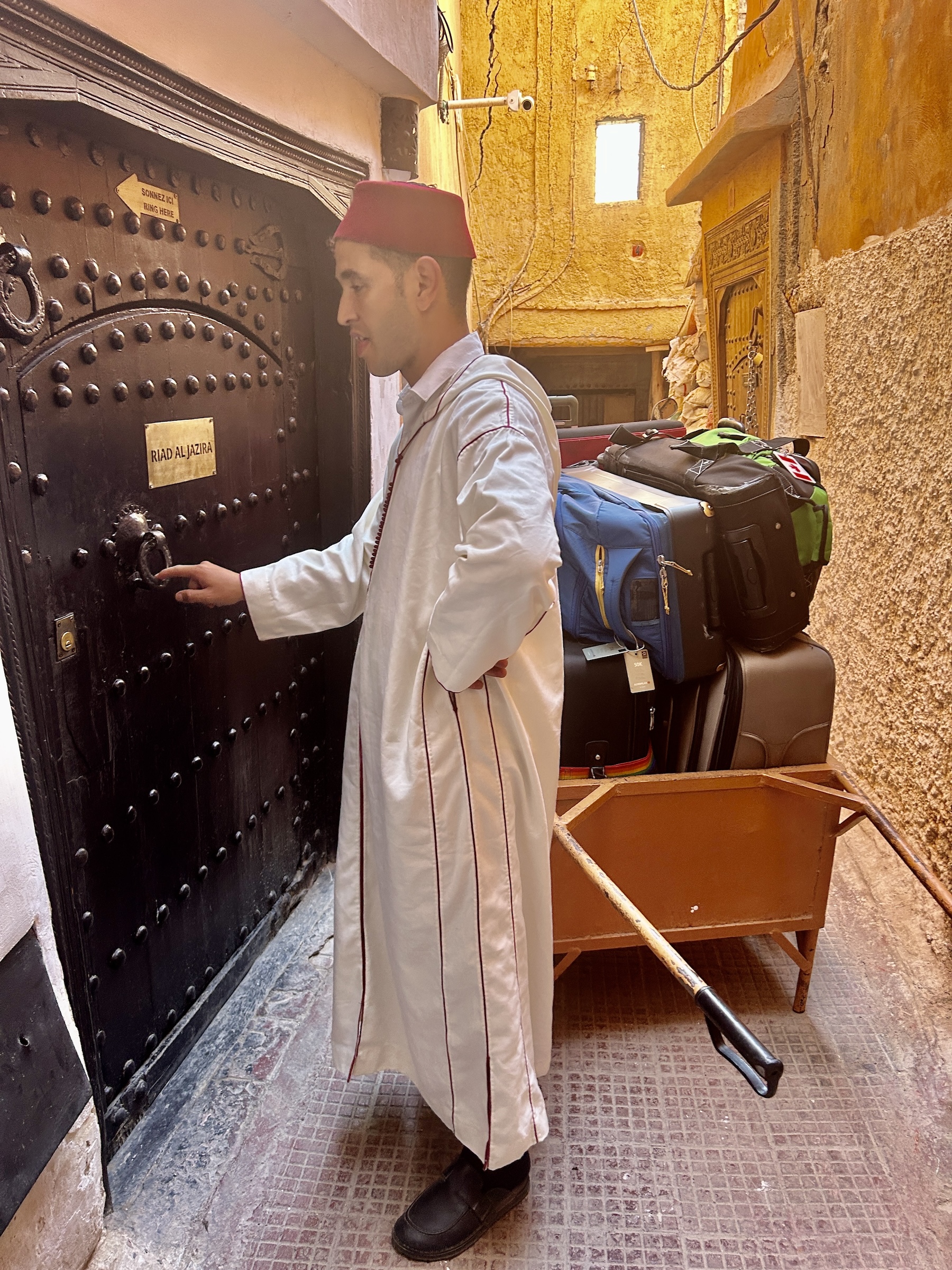
Once again we would be staying in a riad inside the walls of the medina, in this case the Riad Al Jazira. As in Essaouira, porters met us at the medina entrance and took us through a series of lanes to the door of the riad. Unlike a hotel or an inn, you don’t just walk into a riad. You have to knock on the door or ring a bell to gain entrance.
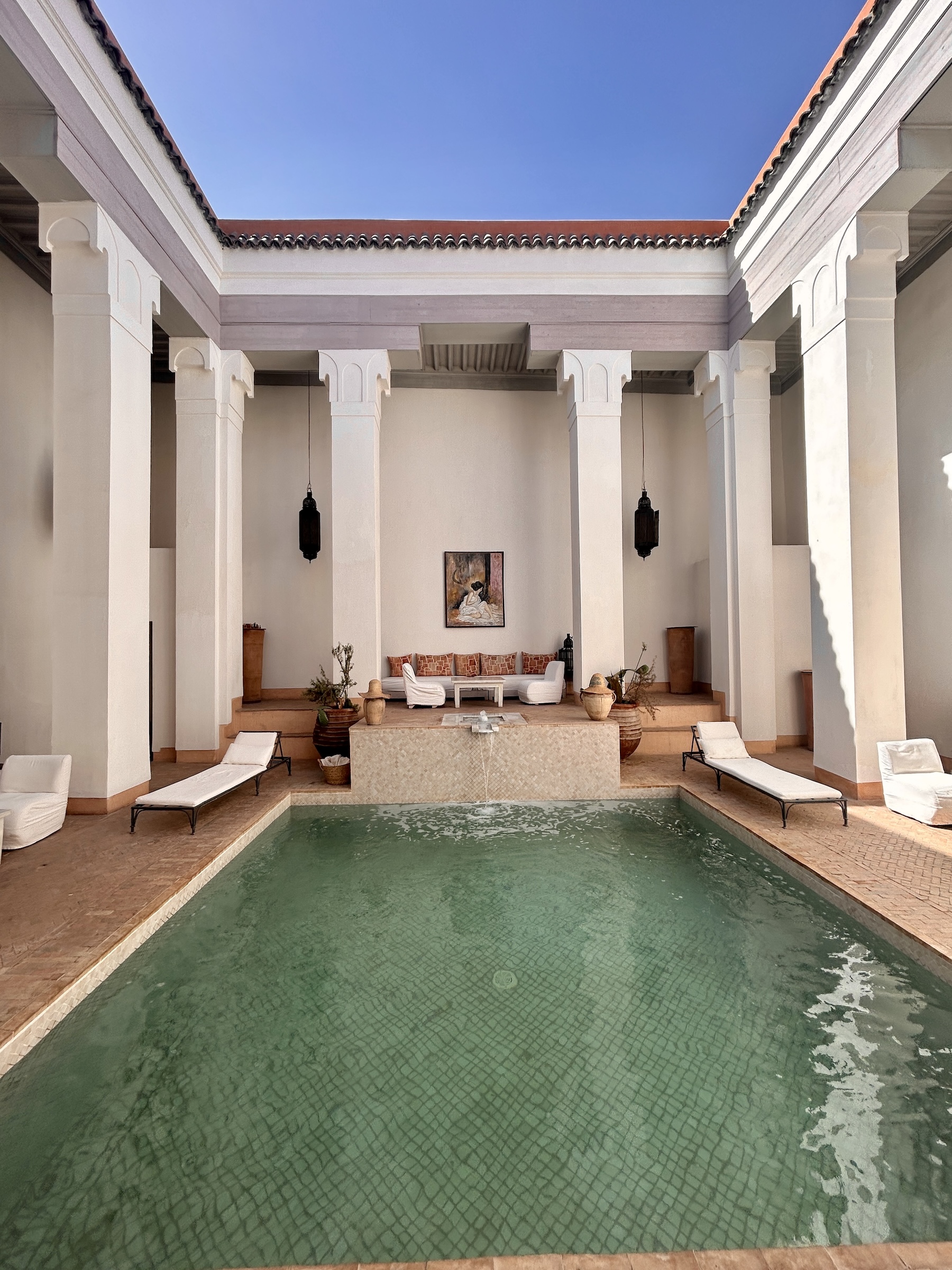
As with the riads in Fes and Essaouira, there was a central pool which was more for looks than swimming. For some reason this one brought to mind a Roman both, probably because of the columns.
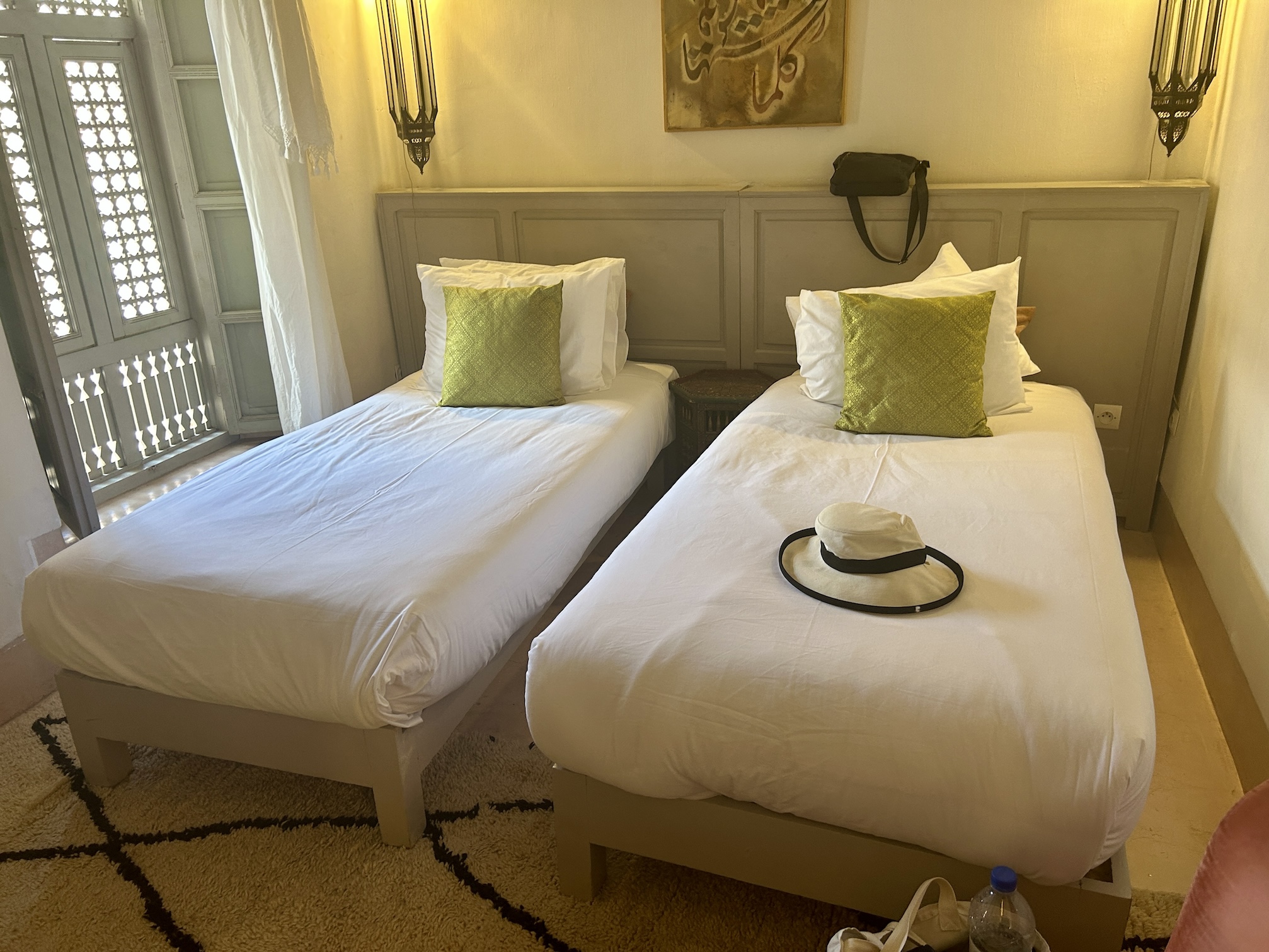
Our room was small, but comfortable.
After settling in we met our local guide in the lobby for a tour of the Marrakech medina.
Now I have to be honest – I hated the Marrakech medina and for one good reason. Whereas the Fes and Essaouira medinas were basically pedestrianized and you could get the feeling of being in the middle of something that dated back a thousand years, the Marrakech medina was the opposite. The motorcycle or motorbike with their unrestrained mufflers belching fumes and ear splitting noise are the kings here.
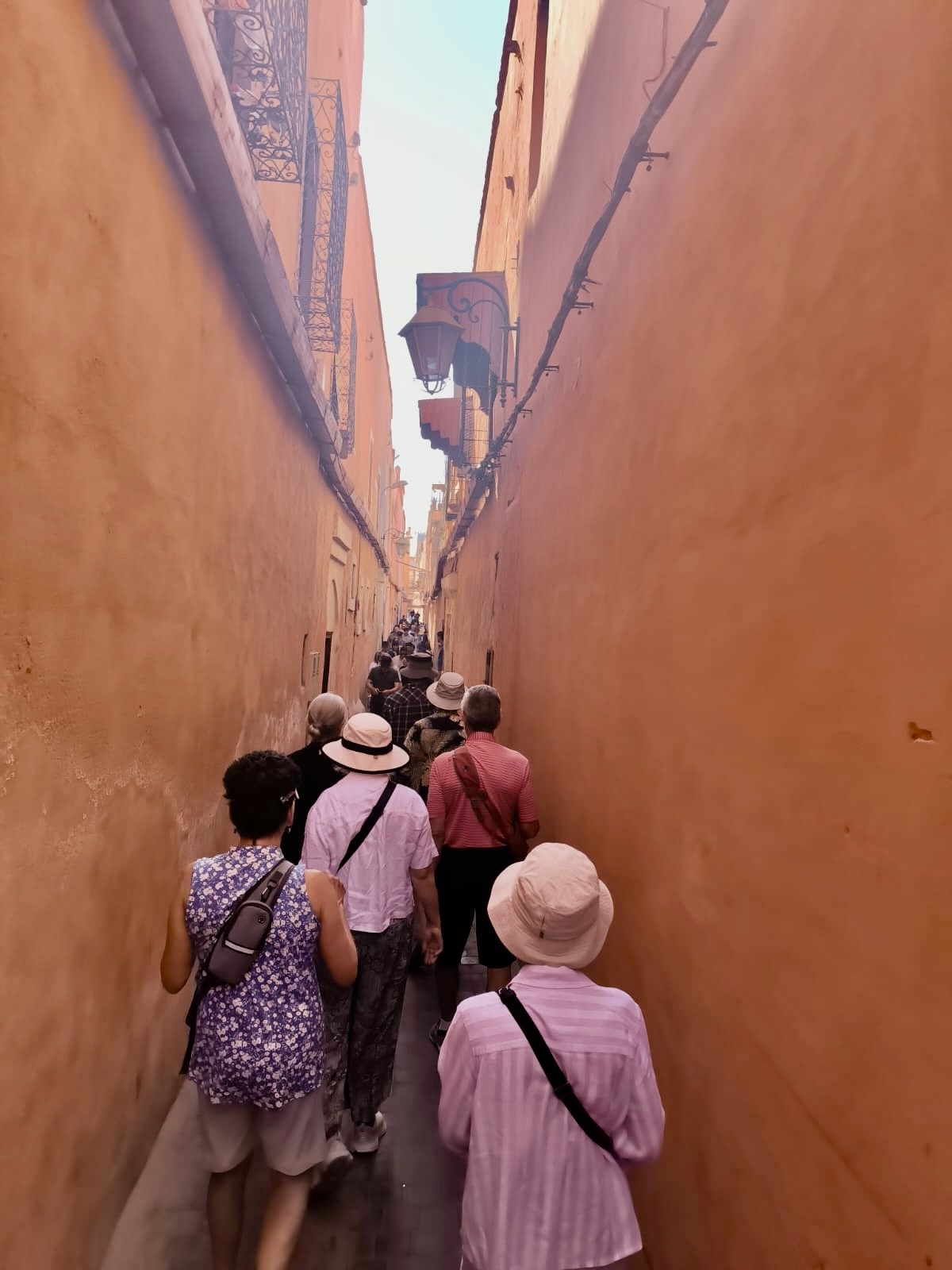
This is our group in one of the narrow lanes of the Marrakech medina. Now imagine some guy roaring up behind you expecting to get by. Worse, you had to prepare to jump out of the way at every corner because you never knew who would be coming around it in complete disregard of who might be on the other side. Honestly, I felt safer crossing the streets of Hanoi and Saigon with there seemingly millions of motorbikes than inside the Marrakech medina.
Only after we finished the tour and we were back outside did I realize I had not taken a single interesting photo.
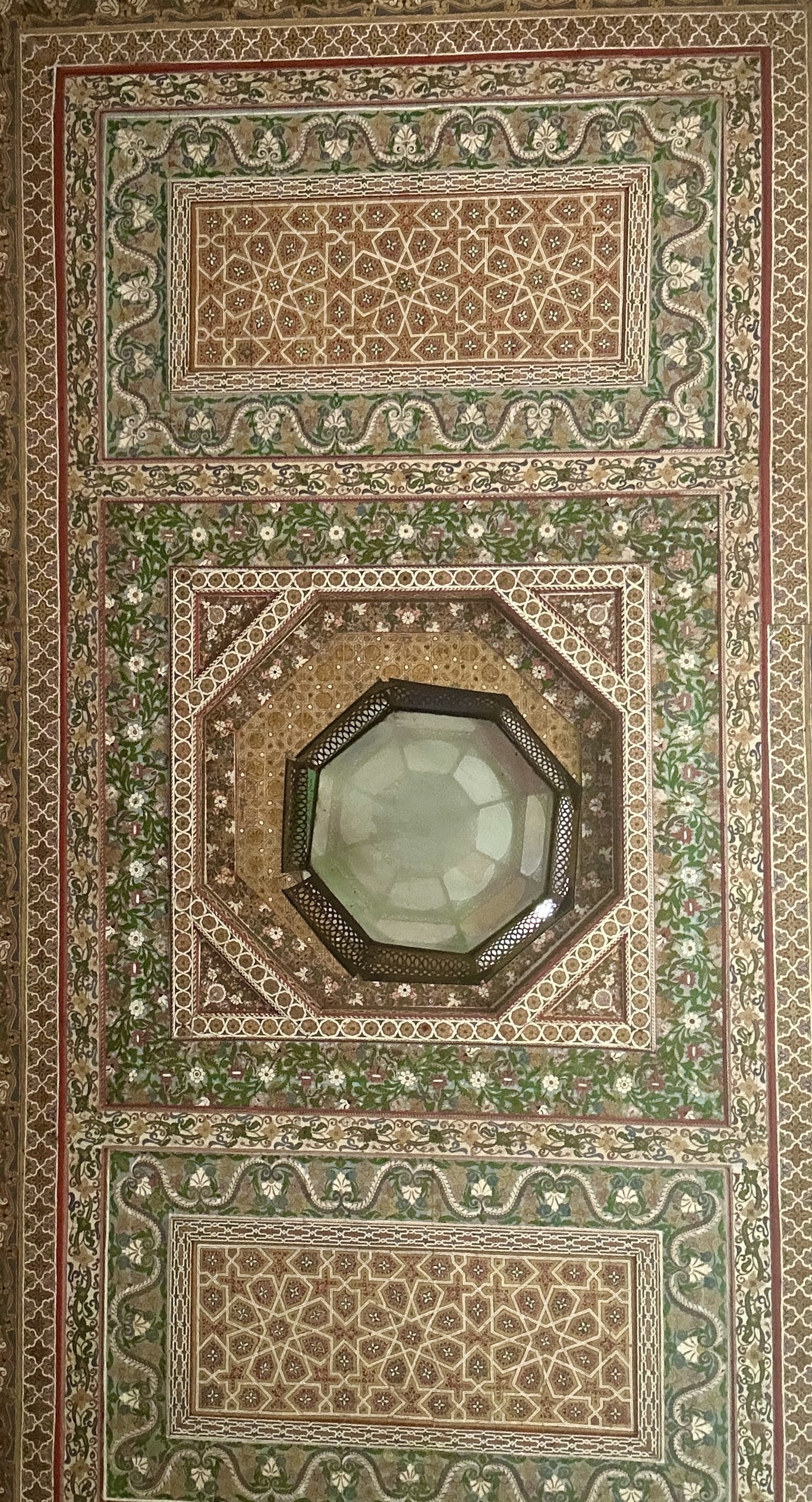
Our tour also included a visit to the Bahia Palace which was built in the late 19th century by the Grand Vizier of Marrakech and later became the headquarters of the French Resident General. The name means ‘brilliance’ and I’m sure it is, but it was so crowded that about the only things I could appreciate were the ceilings, which were brilliant.
Ok, I’ve explained the maddening part about Marrakech, what about the magical and mysterious?
Well, even though it’s another circus in terms of being overrun by tourists, the Jemaa el-Fnaa is something truly unique. It is a massive open area somewhat akin to the Zocalo in Mexico City. Whereas that is fronted on one side by the massive Metropolitan cathedral, the Jemaa el-Fnaa is dominated by the Kutibayya mosque with its minaret that is the second tallest in Morocco. That’s not it in this photo.
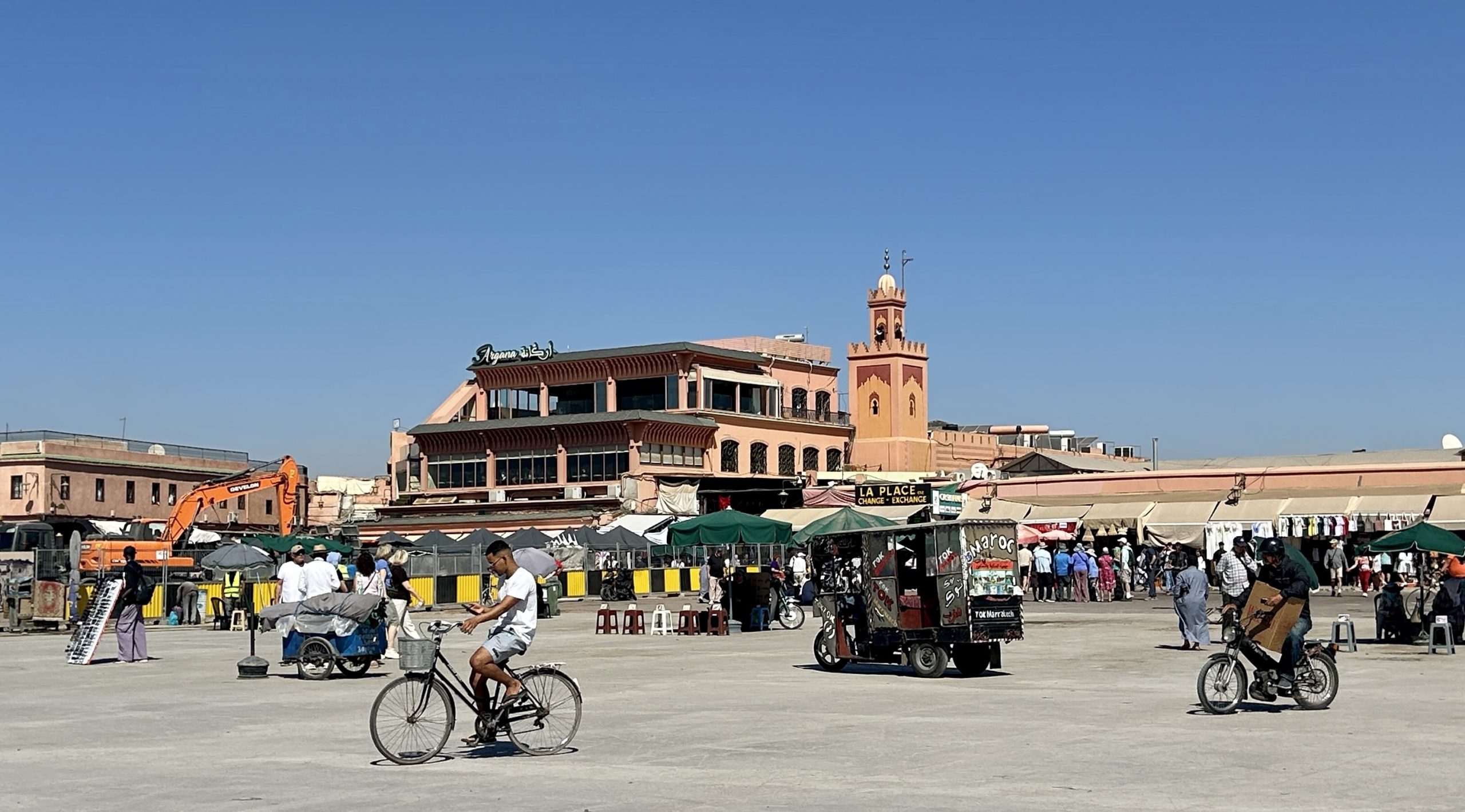
You really cannot get an idea of the scope of this place from a photo like the one above which I took with my iPhone. You need something like this public domain photo to get a better idea of the immensity of the Jemaa el-Fnaa.
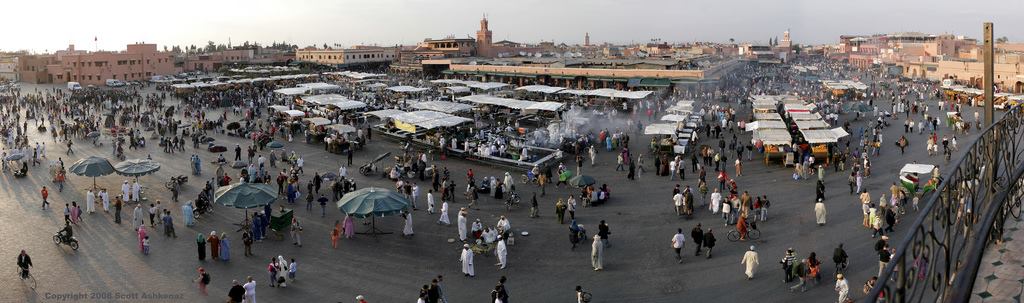
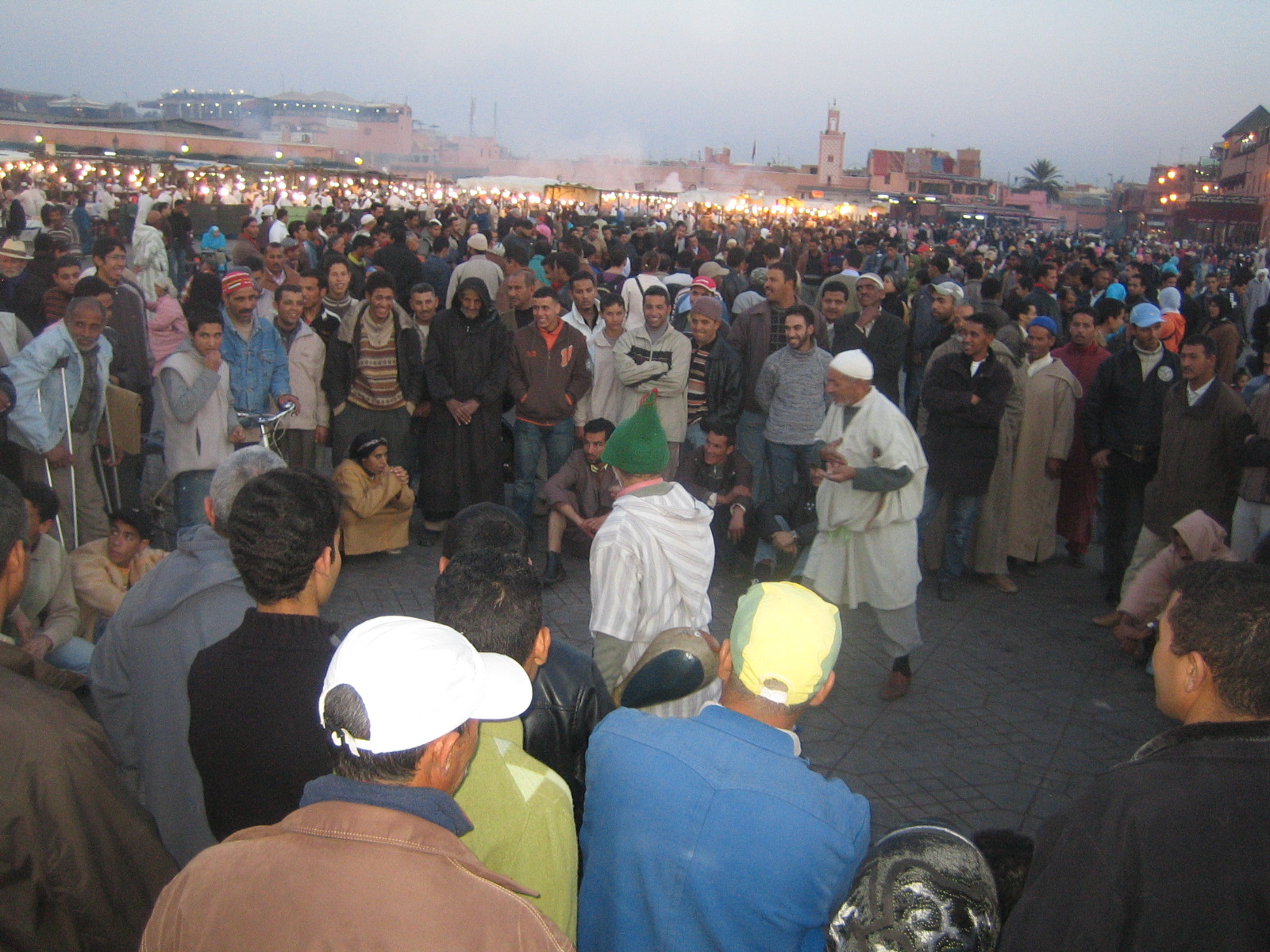
In 2oo8 Jemaa el-Fnaa was listed as a UNESCO Intangible Cultural Heritage Site which contrasts with the UNESCO World Heritage Sites designation. The latter preserves manmade and natural physical sites while the former seeks to preserve strictly cultural practices. To give a few easily recognized examples; mariachi music in Mexico, dragon boat festivals in China or truffle hunting in Italy. The cultural aspect being preserved and celebrated in Jemma el-Fnaa is a bit more ephemeral and revolves around the centuries long tradition of story telling by hylakias, as well as the presence of street performers and musicians.
Here is a public domain photo of a traditional hylakia surrounded by hundreds of listeners.
We visited the Jemaa el-Fnaa during both the day and in the evening and I’m conflating the two visits. In terms of mysterious you can’t beat a genuine snake charmer with his cobra dancing to the music of his pungi. The problem is that they want exorbitant amounts if you want to take a photo or video so you’ll just have to see for yourself. There are lots of videos from Jemaa el-Fnaa on Youtube.
There are also macaques to be handled and paid for, acrobats, musicians, you name it. And then there are the food stalls and the aromas emanating from them.
In terms of photo ops the fruit juice seller’s stands are probably the best. They also make a variety of fruit juices which were a hit for a number of our group.
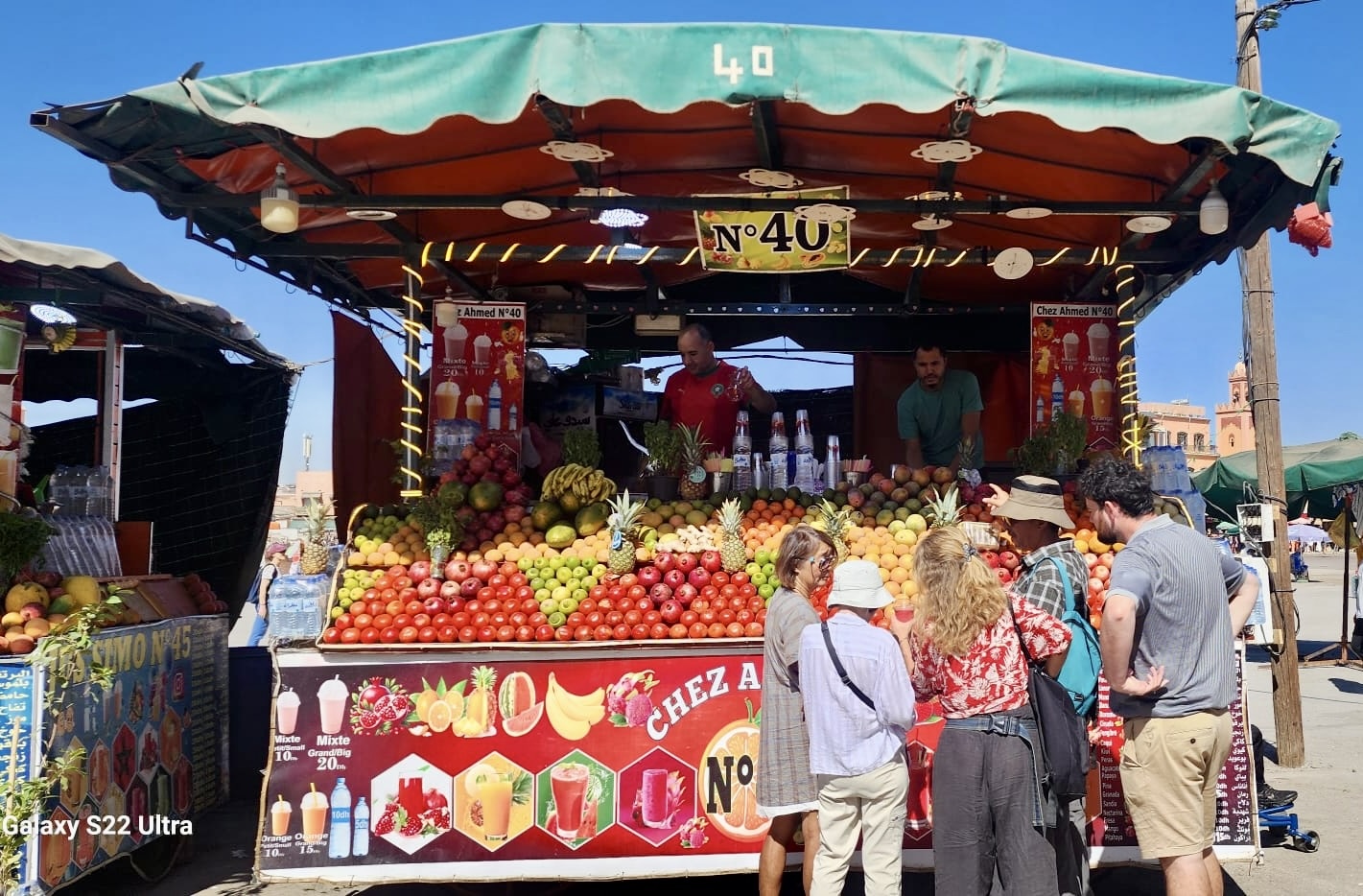
There is a certain je ne c’est pas about Marrakech’s Jemaa el-Fnaa and the whole is definitely greater than the parts. Like the medina in Fes, the Jemma el-Fnaa is about as uniquely Moroccan as you can get.
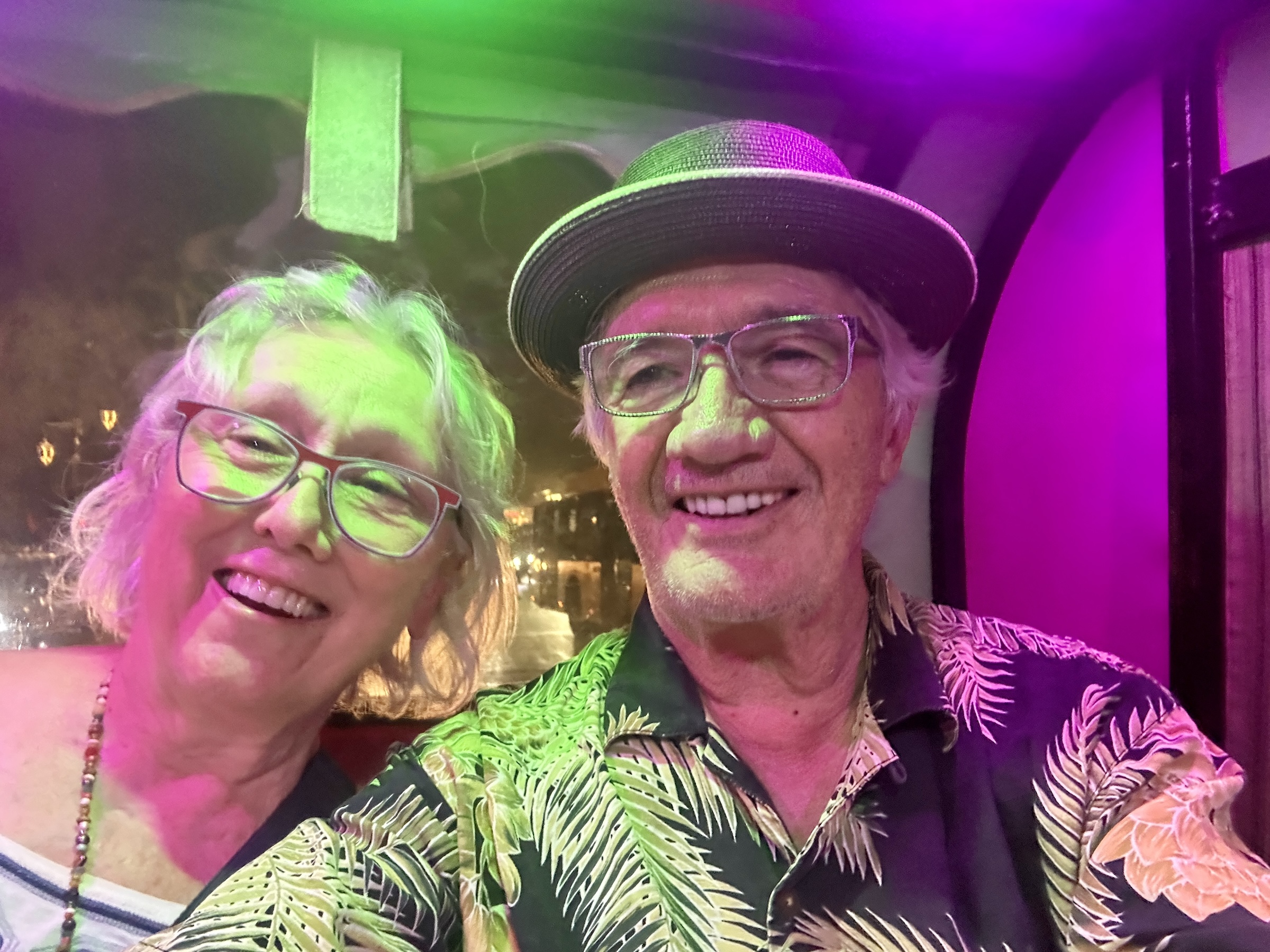
Also, what would an Adventures Abroad trip be without a tuktuk ride? On our evening visit to the Jemaa el-Fnaa we headed back to the our Marrakech riad in a tuktuk.
So that’s Marrakech for better or worse, but there’s more. We had a free afternoon and the itinerary suggested visiting Majorelle Gardens. We did not do it that afternoon because we were staying in Marrakech for an extra four days after the AA trip. However, the itinerary has changed since our trip and it now starts and ends in Casablanca so the only opportunity to visit will be on that free afternoon. I really think that should be on your radar. Yes, it’s very crowded and you must book you tickets online for a specific entry time using this website.
But trust me, if you like gardens and the colour blue, along with a touch of modern history via the Yves St. Laurent connection, this is a must visit. Here’s a gallery of photos I took at Majorelle Gardens in Marrakech. Double click to open a photo and double click again to enlarge.
-

- Blue Canal
-
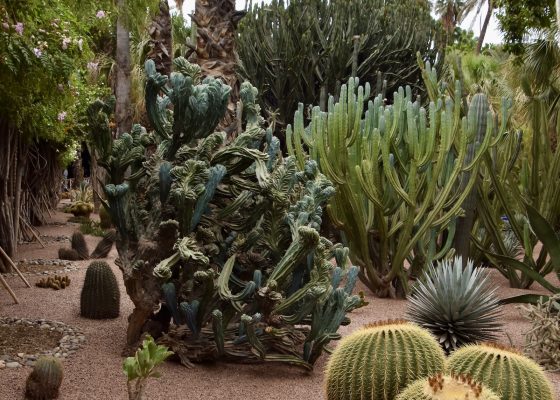
- Barrel Cactus
-

- Amazing Cactus
-

- Blue Vase
-

- In the Majorelle Garden
-

- Gold & White
-

- The Blue House
-
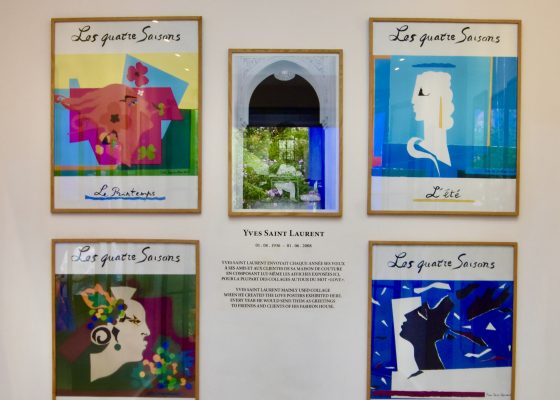
- Yves Saint Laurent Four Seasons
-

- Yves Saint Laurent Memorial
It also has a very nice cafe on site.
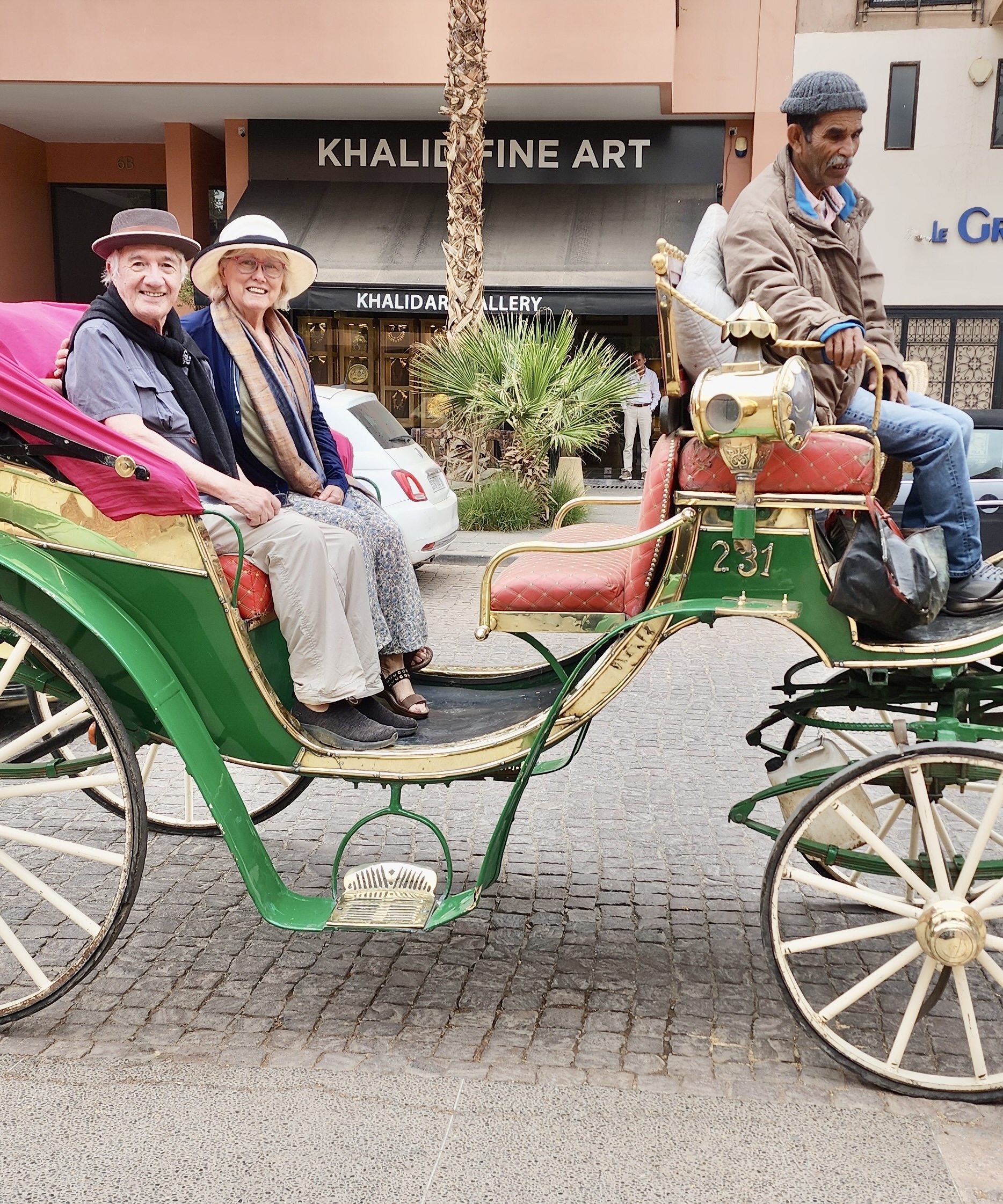
After saying a fond farewell to our fellow travellers and especially our fantastic AA guide Laura Carballo and her able assistant George Alexander we decamped to the Eden Andalou resort just outside Marrakech. Even though it’s primarily a family resort we enjoyed ourselves immensely. For an all inclusive the food was exceptional, the alcohol was free and the gardens very relaxing. As noted we returned to Marrakech proper to visit Majorelle Gardens and take a caleche ride around the medina perimeter.
We also got in a round of golf at the Jack Nicklaus designed Samanah course.
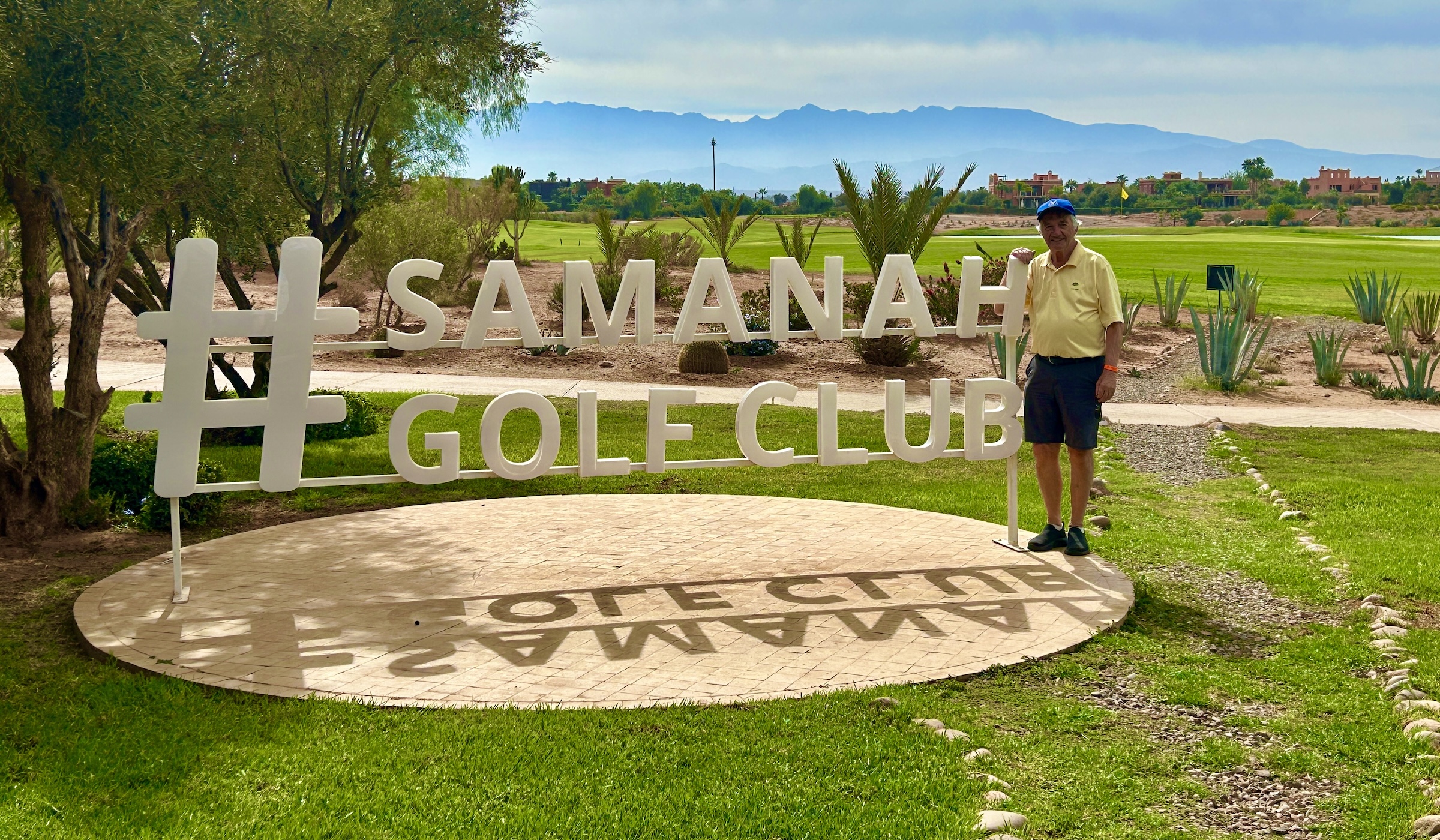
If possible, we always like to take a few extra days after an AA tour ends and in Marrakech the Eden Andalou was the perfect place to do it, unless you hate kids. With the tour now ending in Casablanca, if you want a little more time in Morocco I would suggest checking into one of the upscale resorts in Rabat for a few days.
Well that’s all from Morocco folks, but not all from Adventures Abroad. In just over five weeks I’ll be heading to Lima, Peru to join the 17 Day Peru and Bolivia Tour where I’ll see the Nazca lines, Cuzco, Machu Picchu, Lake Titicaca and Tiahuanaco. I’ll be drinking pisco sours and eating ceviche and I can’t wait to tell you about it.