
Tiahuanaco – Bolivia’s Top Archaeological Site

This is my third post from Bolivia from the February 2026 Kingdoms of the Andes tour by Adventures Abroad. In the last post we had a magical visit to the Isla del Sol in Lake Titicaca and were blessed by an Aymara shaman. It was an experience I think we all will remember vividly for years to come. In this post we’ll visit the UNESCO World Heritage Site of Tiahuanaco which I’ve been hoping to visit for longer than I care to admit after reading Erich von Daniken’s Chariots of the Gods as a gullible teenager. In that book he hypothethized that aliens had visited earth in the distant past and provided them with advanced technology. One of his examples was Tiahuanaco, which he claimed could not have been built without advanced building techniques not known to the people of the altiplano at the time it was allegedly constructed. Oh, and he also claimed that there were two alien faces portrayed in the famous Semi-Subterranean Temple of 170 tenon heads. Now that’s reason enough alone to check this place out, so let’s head for Tiahuanaco!
Once again, here’s a map of Lake Titicaca which has featured prominently in the last three posts.
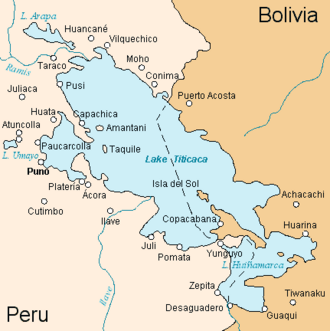
You can see that Copacabana, where we have been for the last two days, is actually located on a Crimean type peninsula that does not connect with the rest of Bolivia. To get to the other side we’ll need to take a ferry or go back into Peru and drive around the eastern end of Lake Titicaca and re-enter Bolivia again. Our tour leader Diego Vidal opts for the much easier and shorter ferry crossing.
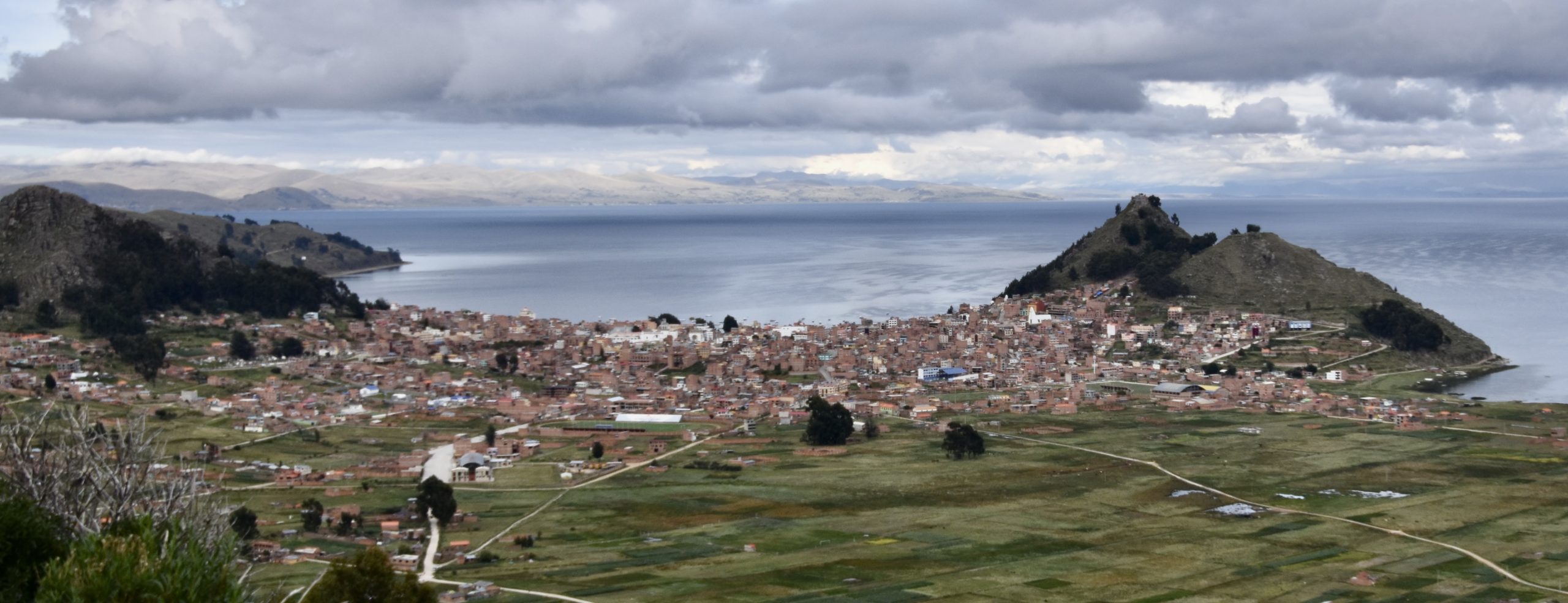
This entails taking a road that climbs up well over 4,000 metres (13,200 feet) for a final look back at Copacabana far below.
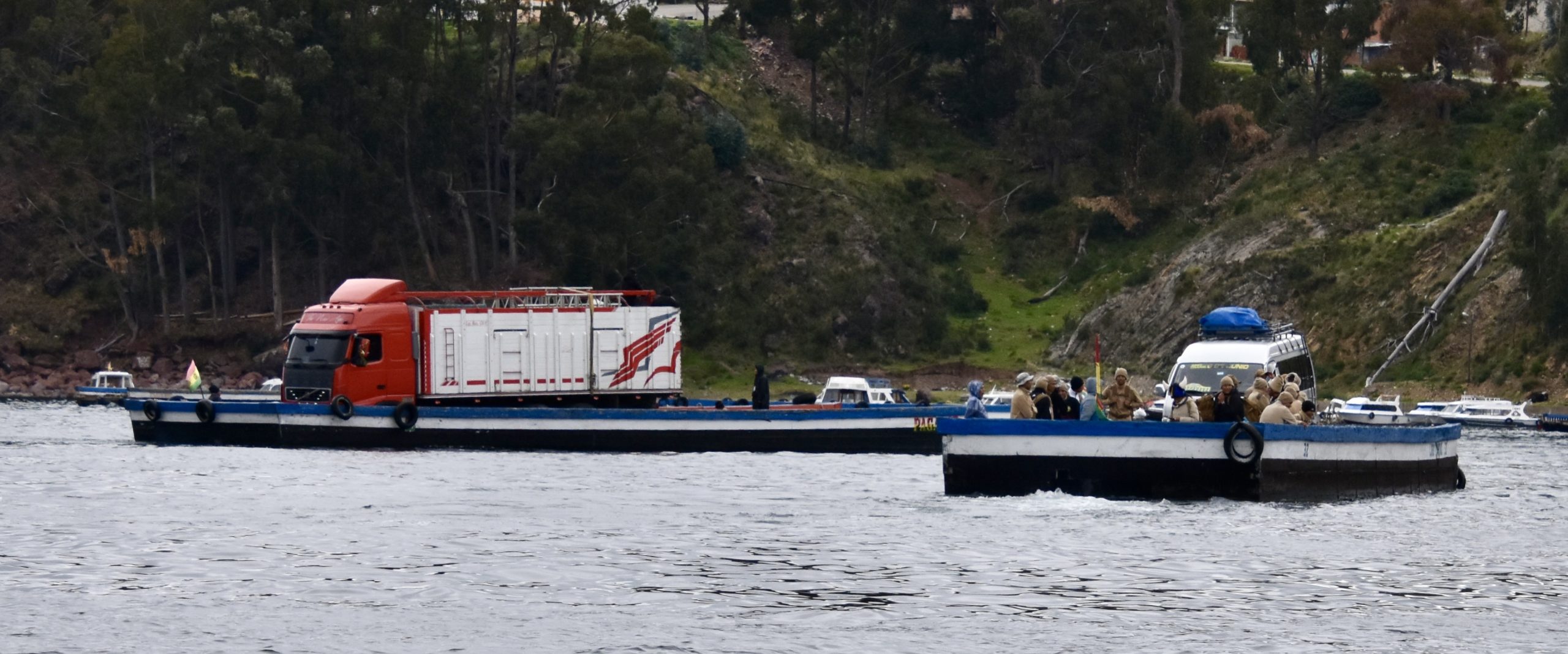
It’s not far to Tiquina Strait where San Pablo sits on one side and San Pedro on the other, but it’s not your ordinary ferry crossing. We have to leave the bus and it is transported on a large flat bottomed boat like the one carrying the truck in the photo below.
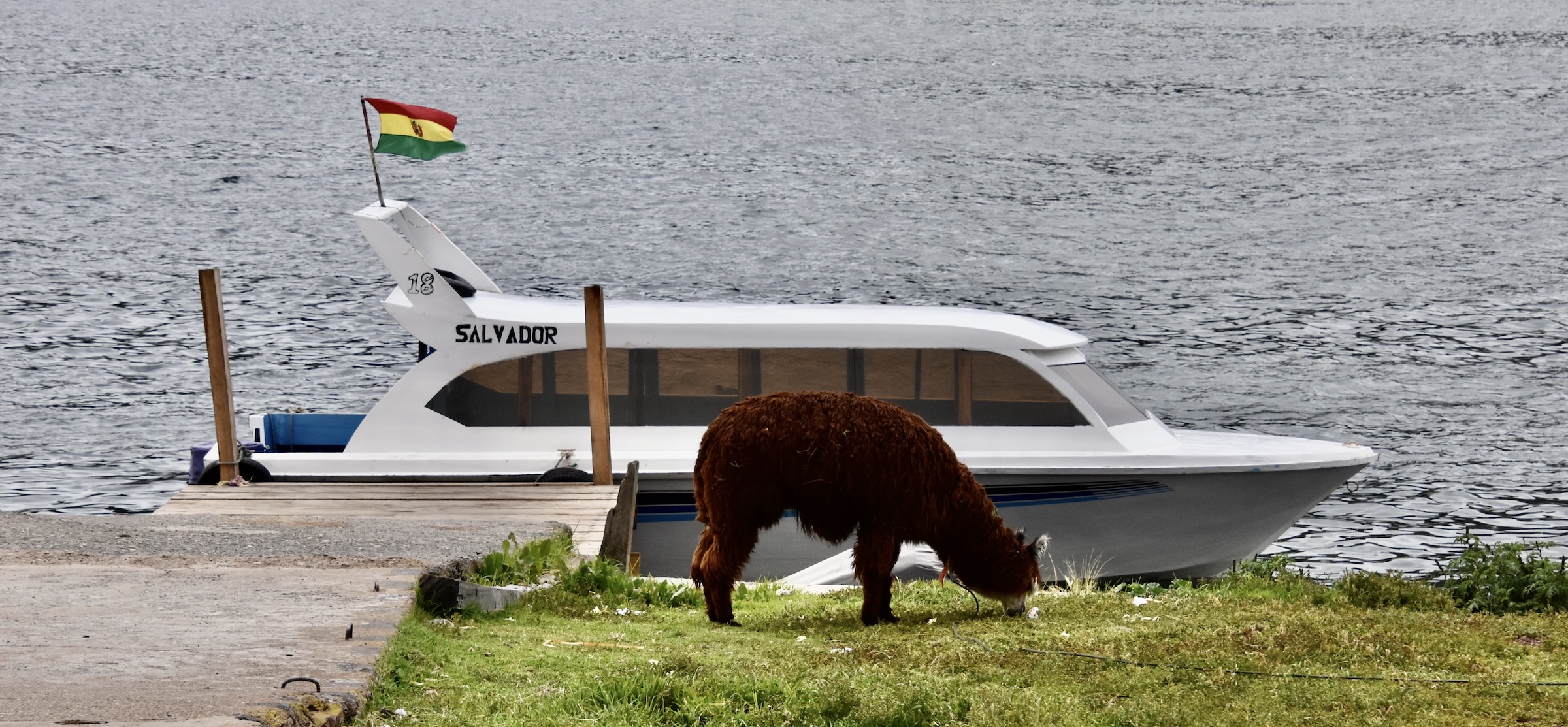
We are transported in a much smaller boat that lands us on the other side where this grazing alpaca blithely ignores us.
From San Pedro it’s about a 2½ hour drive to Tiahuanaco which is basically in the middle of nowhere on the altiplano at an altitude of 3,850 metres (12,600 feet), making it the highest major archaeological site in the world.
Who Really Built Tiahuanaco?
Tiahuanaco was not built with the aid of alien technology, but it might as well have been for all we know about it today. It first appeared in the historical record in 1549 when Spanish conquistador Pedro Cieza de Leon stumbled across the ruins while searching for Incan city of Qullasaya. He knew this wasn’t a place associated with the Incas and in fact nobody in the area seemed to know much about it other than that the local Aymara people called it the ‘Stone in the Centre’ which in their language was Tiwanaku, which the Spanish pronounced as Tiahuanaco. What the actual name of the place was to the people who lived here will probably never be known.
Theories about who built Tiahuanaco and how old it was started to abound and up until 1945 some archaeologists were claiming it might be 17,000 years old. Modern dating techniques now place the origins of the site at around 100 CE with steady growth to about 10,000 people in around 750 CE. Tiahuanaco then thrived for another 250 years before abruptly collapsing around 1,000 CE for reasons that are still debated; unfavourable climate change is the usual culprit, but that’s only a theory. The bottom line is that there was a distinct Tiahuanaco culture that preceded the Incas by a thousand years and had a knowledge of advanced building techniques that somehow may have been passed on to the Incas or their forebears.
What was there about Tiahuanaco that made a German hoaxster use it at as a premise for alien intervention in his book that sold over 30 million copies? Quite a few things actually, starting with the Akapana Pyramid which has seven levels and sandstone blocks that weigh as much as 65 tons. The aforementioned Semi-Subterranean Temple with its mysterious carved heads. The Gateway of the Sun which has astronomical significance. And the Kalasasaya, an open air temple with giant monoliths that nobody knows what they were meant to signify. We started this tour with one of the world’s most enigmatic sites, the Nazca Lines and we are now about to end it at another one.
In 2000 Tiahuanaco was inscribed as a World Heritage Site with this description:
The city of Tiwanaku, capital of a powerful pre-Hispanic empire that dominated a large area of the southern Andes and beyond, reached its apogee between 500 and 900 AD. Its monumental remains testify to the cultural and political significance of this civilisation, which is distinct from any of the other pre-Hispanic empires of the Americas.
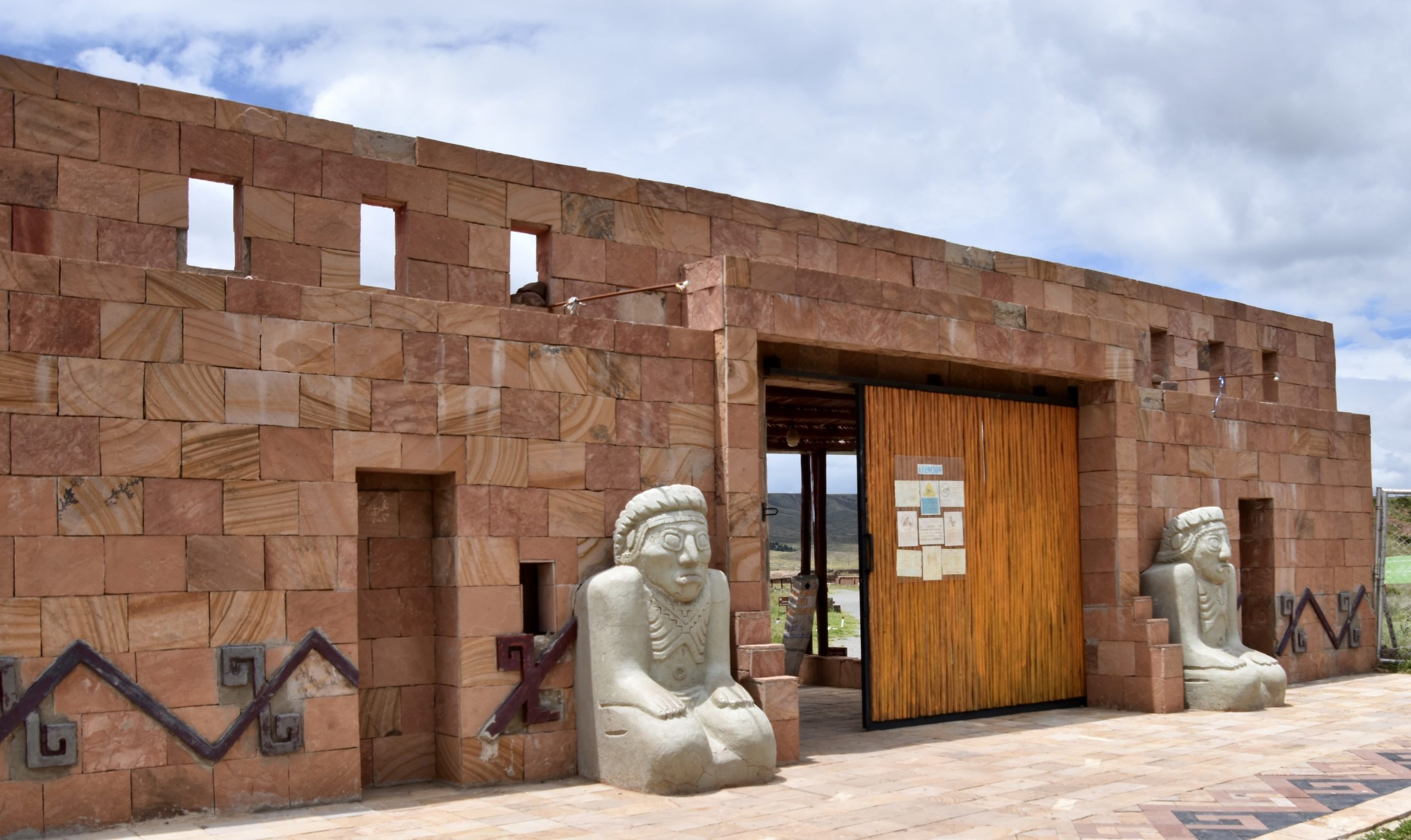
A visit to Tiahuanaco entails visiting the archaeological site first and then the museum which contains most of the monoliths and other large figures unearthed over the years. The site itself is so large that we enter via the building pictured above and will be picked up by the bus on the other side and taken to the museum.
Here is a site map. We will start at the Akapara, then proceed to the Semi-Subterranean Temple and lastly the Kalasasaya where the Gateway of the Sun is located at the southeast corner.
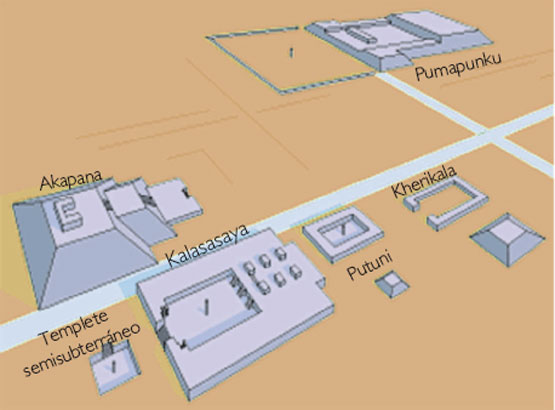
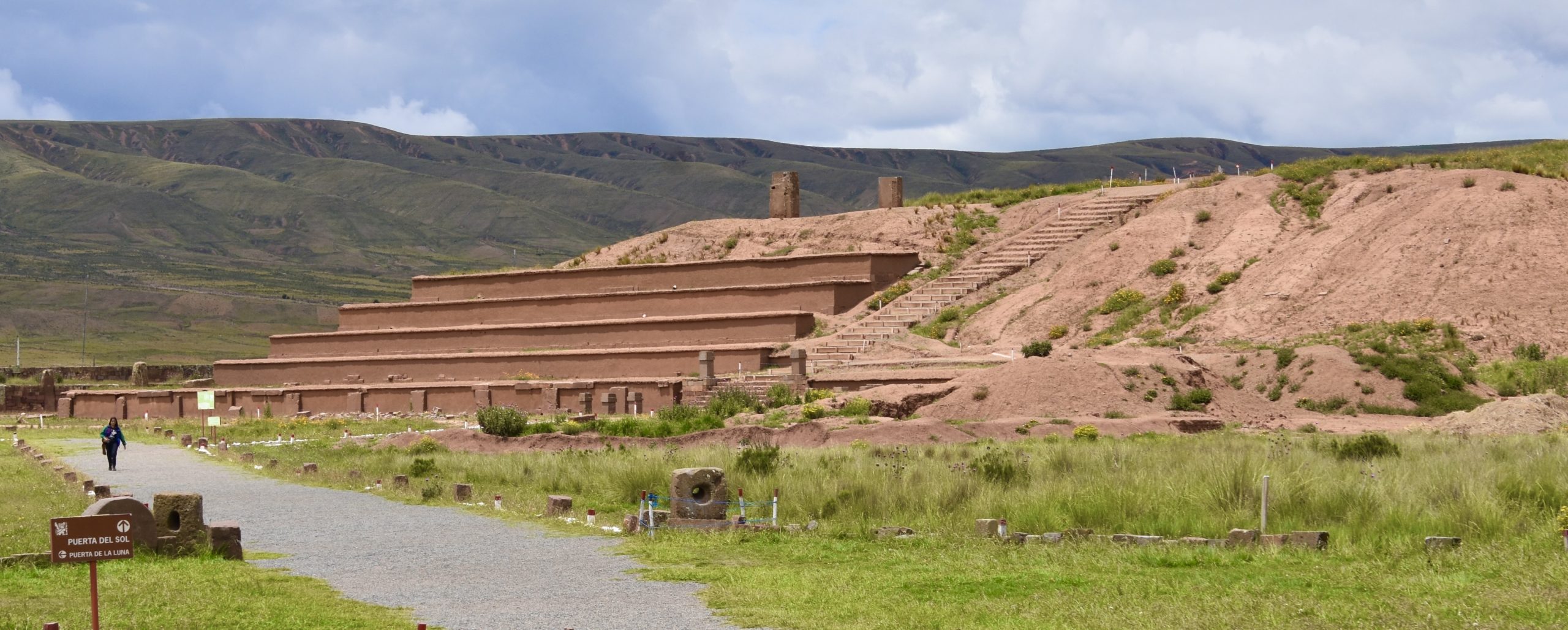
It doesn’t look like much from the map, but then when you emerge from the entrance building you see how vast the site really is. That’s the Akapana Pyramid which has only been partially excavated. And once again, our AA group finds itself almost the only visitors here. Later a Chinese tour group arrives, but for the first hour or so we have the place to ourselves.
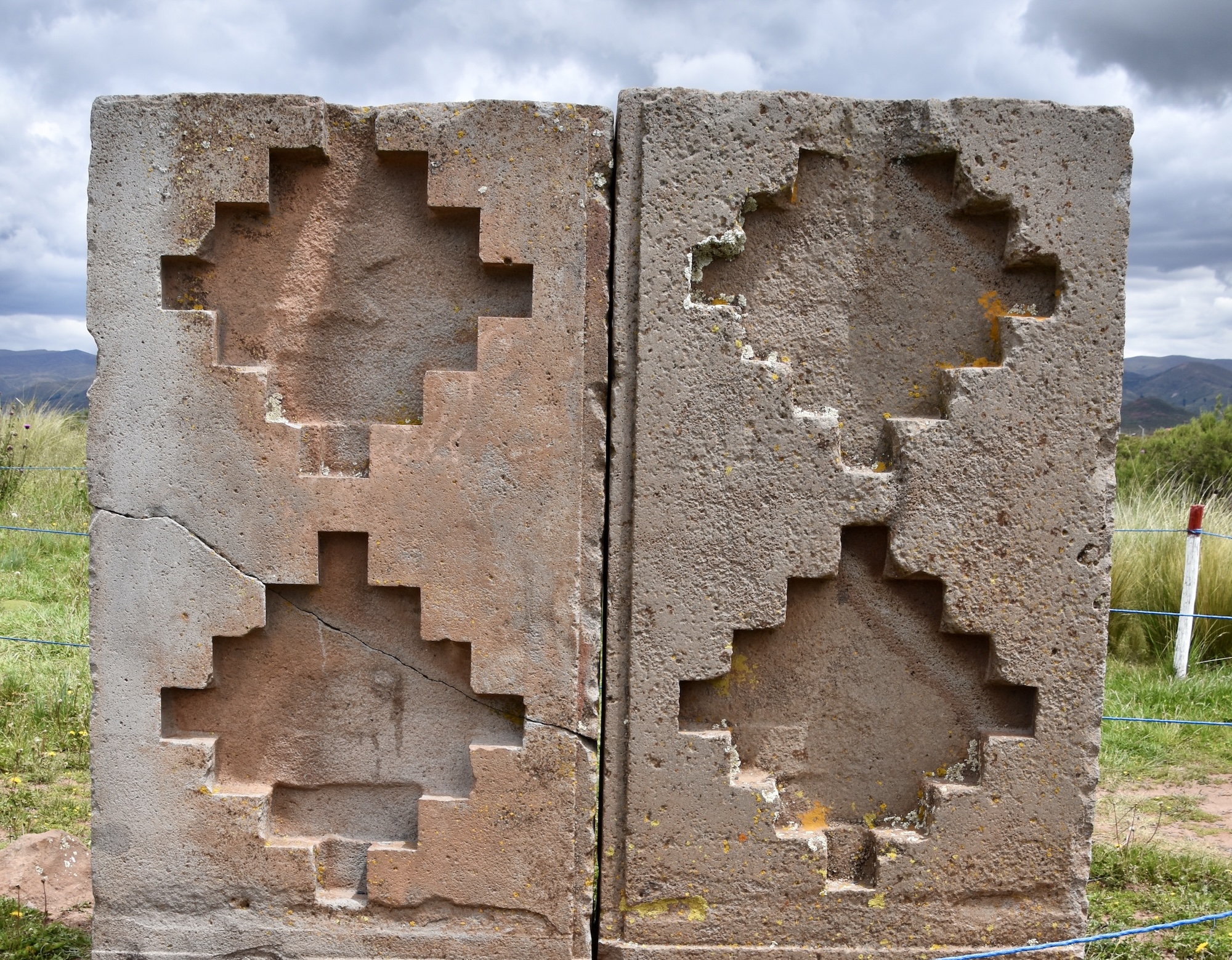
The Andean Cross or chakana is a symbol that is found throughout many Andean cultures and is believed to be as old as 4,000 years. It is prominent in Tiahuanaco, although there is no agreement as to what it symbolized.
The Akapana Pyramid is in the shape of a half-Andean Cross that is 257 metres (843 feet) wide by 197 metres (646 feet) broad and 16.5 Metres (54 feet) high. That doesn’t seem like much, but climbing to the top in this elevation is not to be taken lightly.
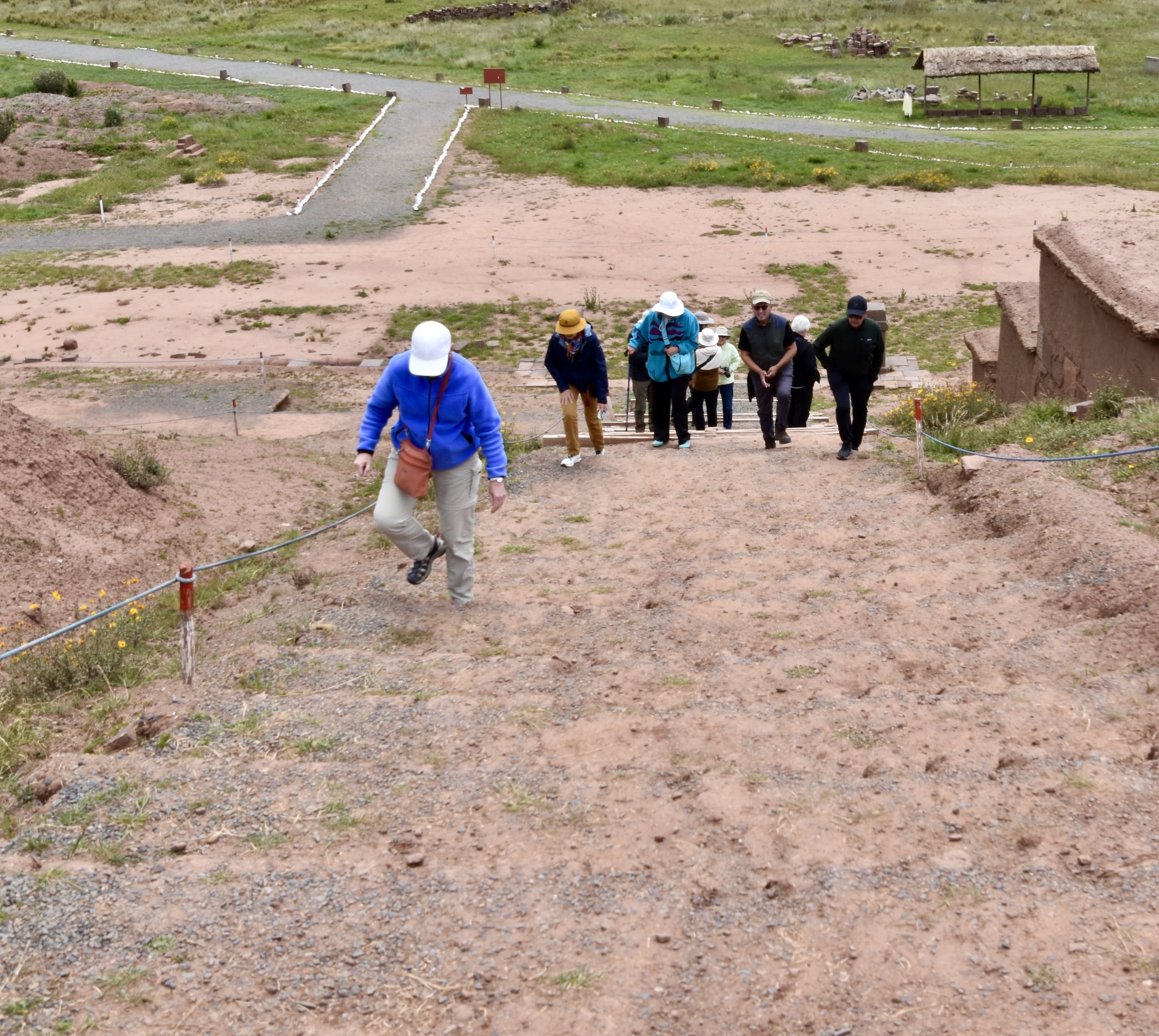
There’s not much up at the top, but you do get a good view of the Kalasasaya Temple below. As you can see Tiahuanaco is no Machu Picchu.
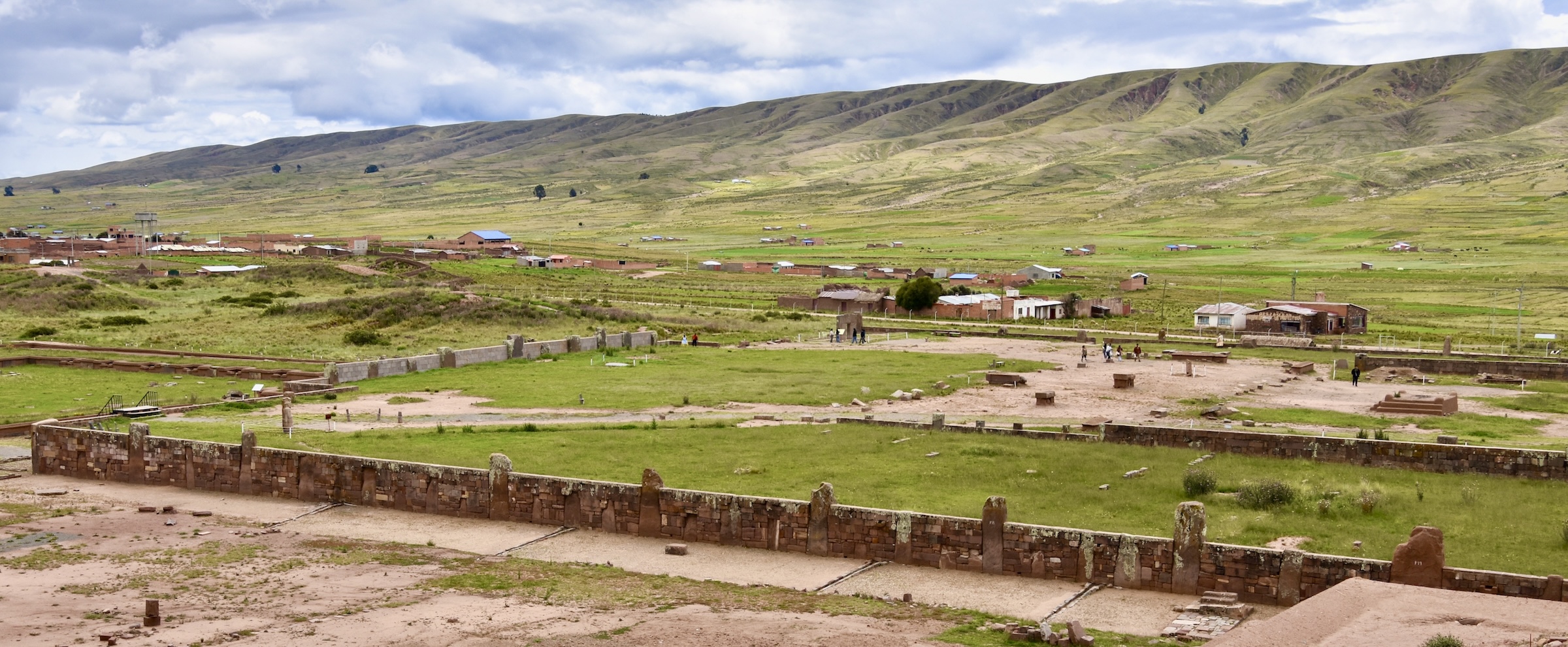
It’s setting is not majestic, nor are its remains as visually stunning, but it does have a sense of mystery which is amplified by the fact that human sacrifices were once made on the very spot we are standing.
The Semi-Subterranean Temple with its carved stone heads only adds to the aura. This short video gives you a better idea of what it’s like to be inside this crazy place. I have no idea why I was pronouncing the place Tiahuanaca rather than Tiahuanaco, when I have known the correct pronunciation since I was 17.
I’ve been to dozens of the world’s most famous archaeological sites and documented my visits on this website, but I’ve never seen anything like the Semi-Subterranean Temple. For starters when one thinks of a temple you think of something elevated not sunken. Secondly, nobody has any rational or widely accepted opinion as to what these heads symbolize.
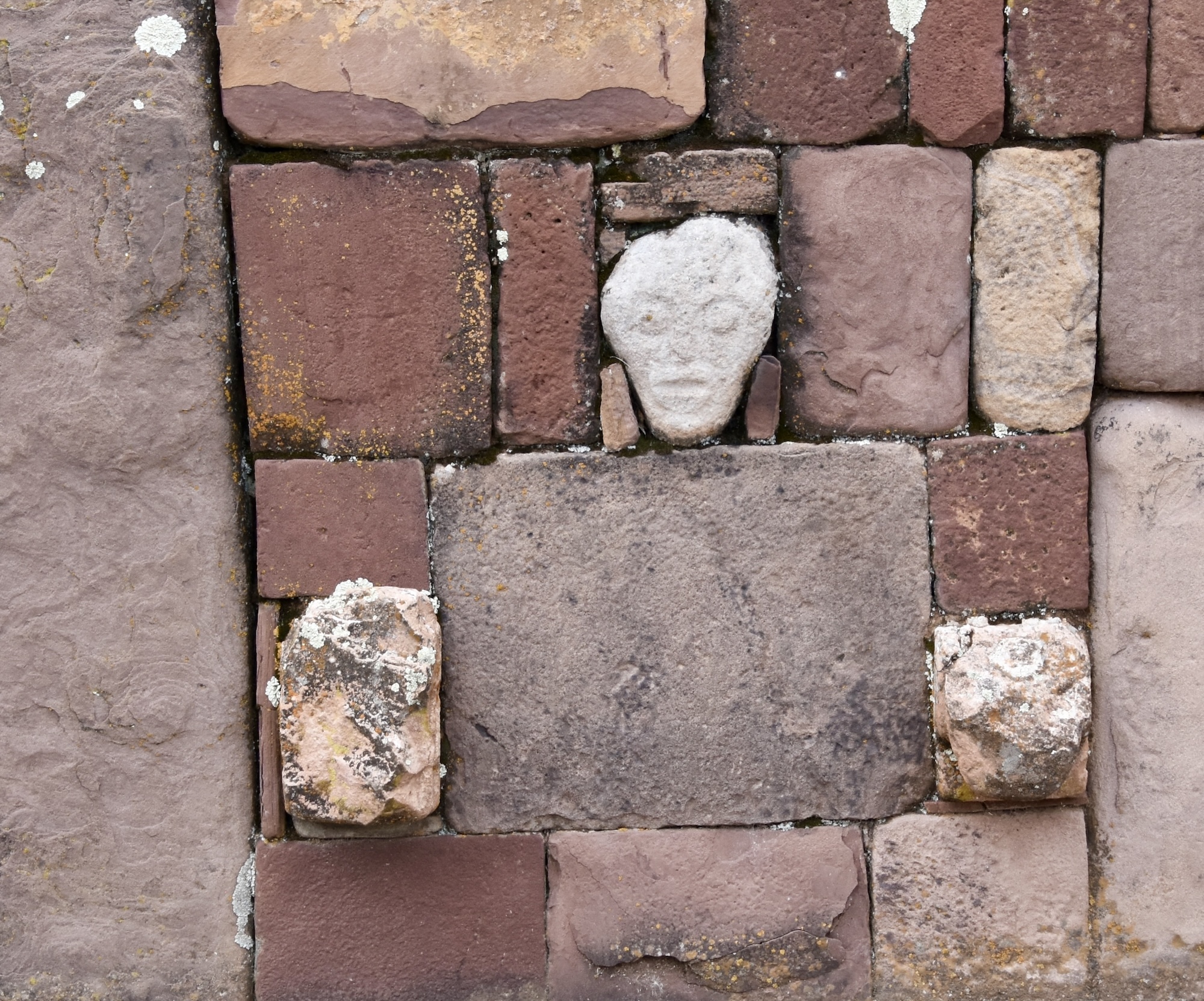
This is the first so-called alien head which is definitely very different from the others and might have served as the template for Edvard Munch’s The Scream.
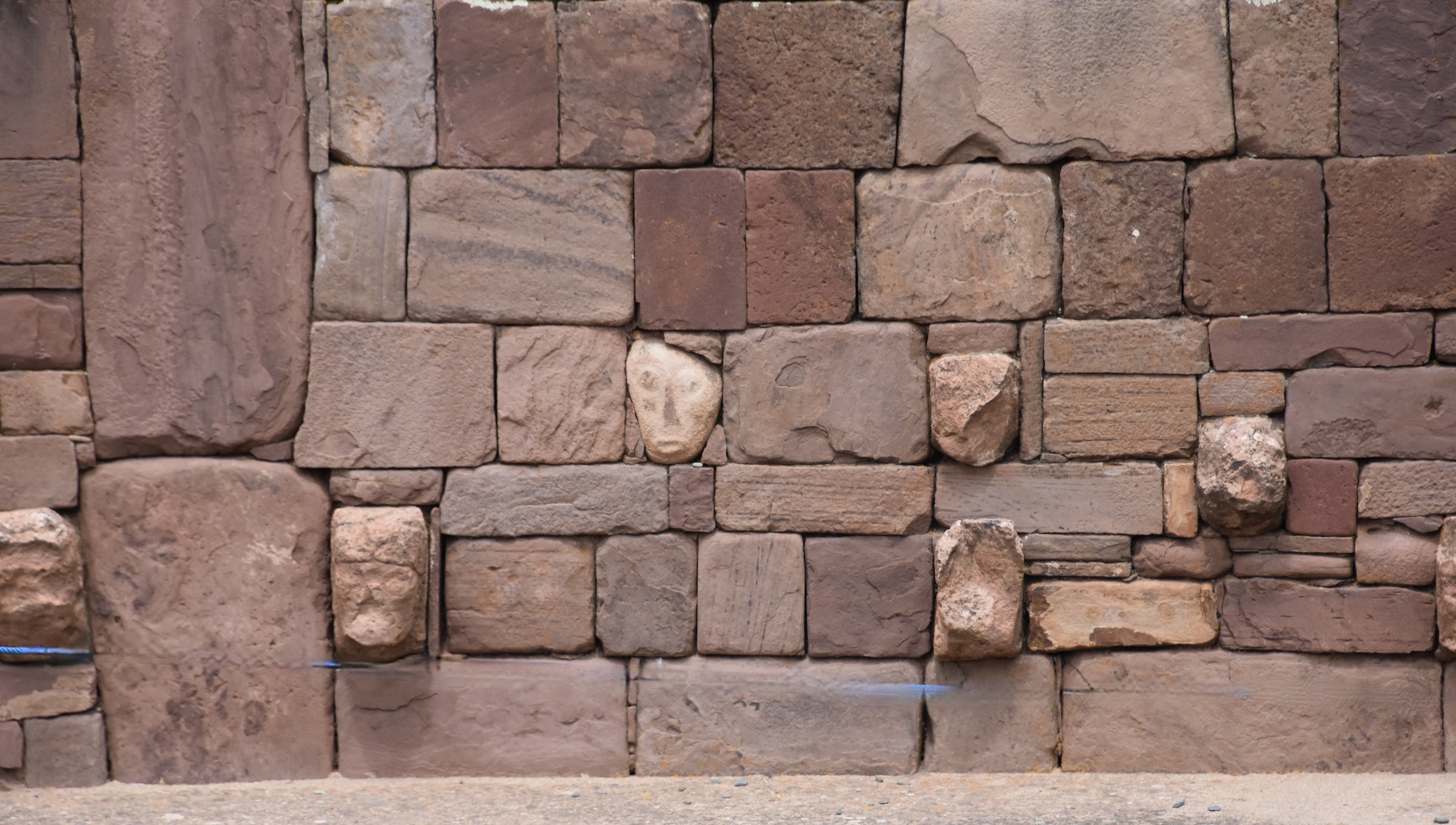
This is the second of the mysterious faces. What makes them stand out is that, unlike almost all the other faces, they were not defaced by the bloody Catholic priests who desecrated most of the rest.
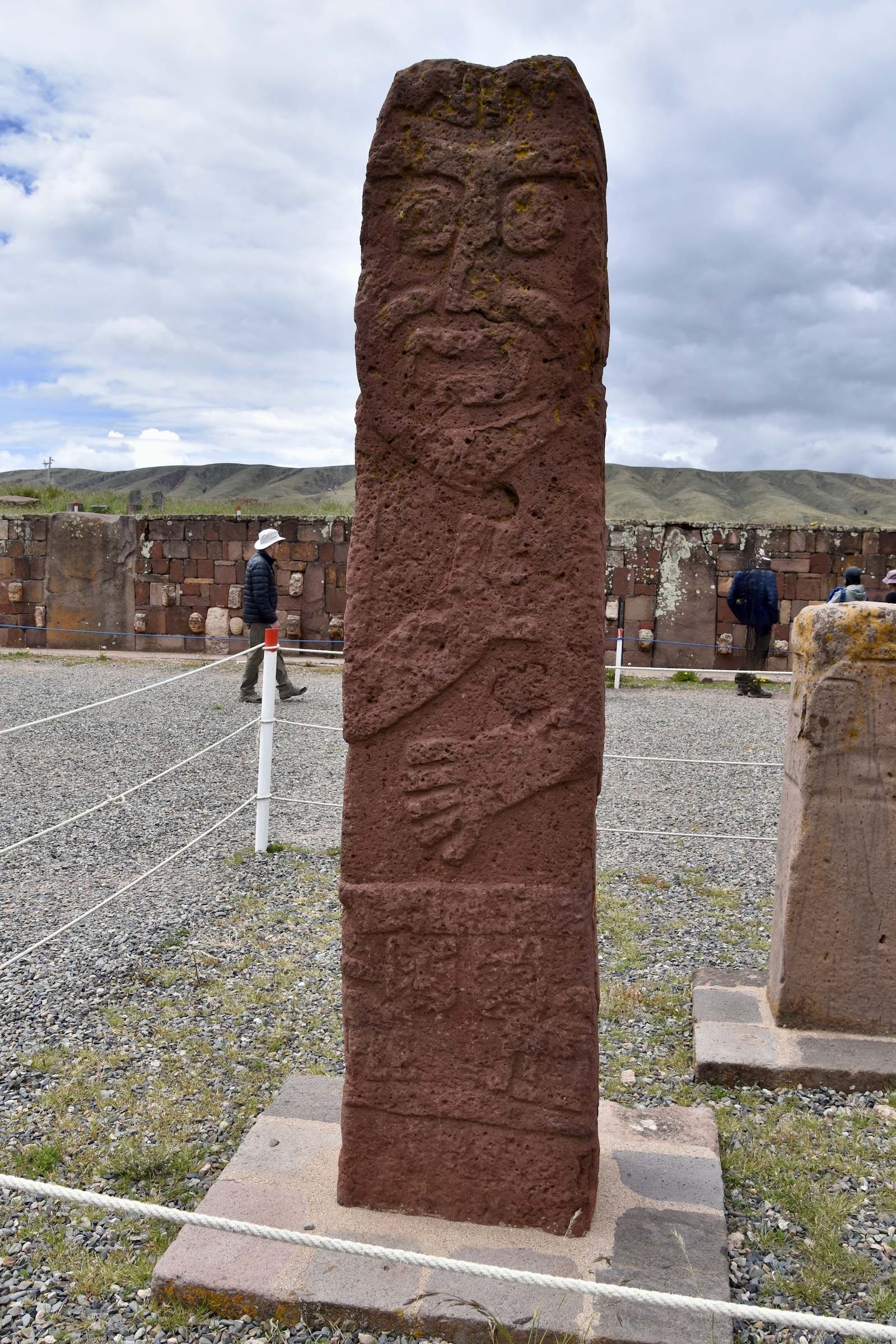
And then there are the monoliths. This one stands in the middle of the Semi-Subterranean Temple and guess what? It’s not from Tiahuanaco, but rather the much older site of Chiripa some 20 kms. away along the southern shore of Lake Titicaca. This culture dates back to 1400 BCE and lasted over a millennia to around 100 BCE. As I have learned during this tour, there were a great many distinct cultures that preceded the Incas in the Andean highlands, but each one appears to have influenced the culture that followed it and in the case of the Tiahuanaco culture it was the Chiripas.
Once again, like the mysterious heads, there is no widely accepted theory as to what the monoliths of Tiahuanaco are meant to symbolize.
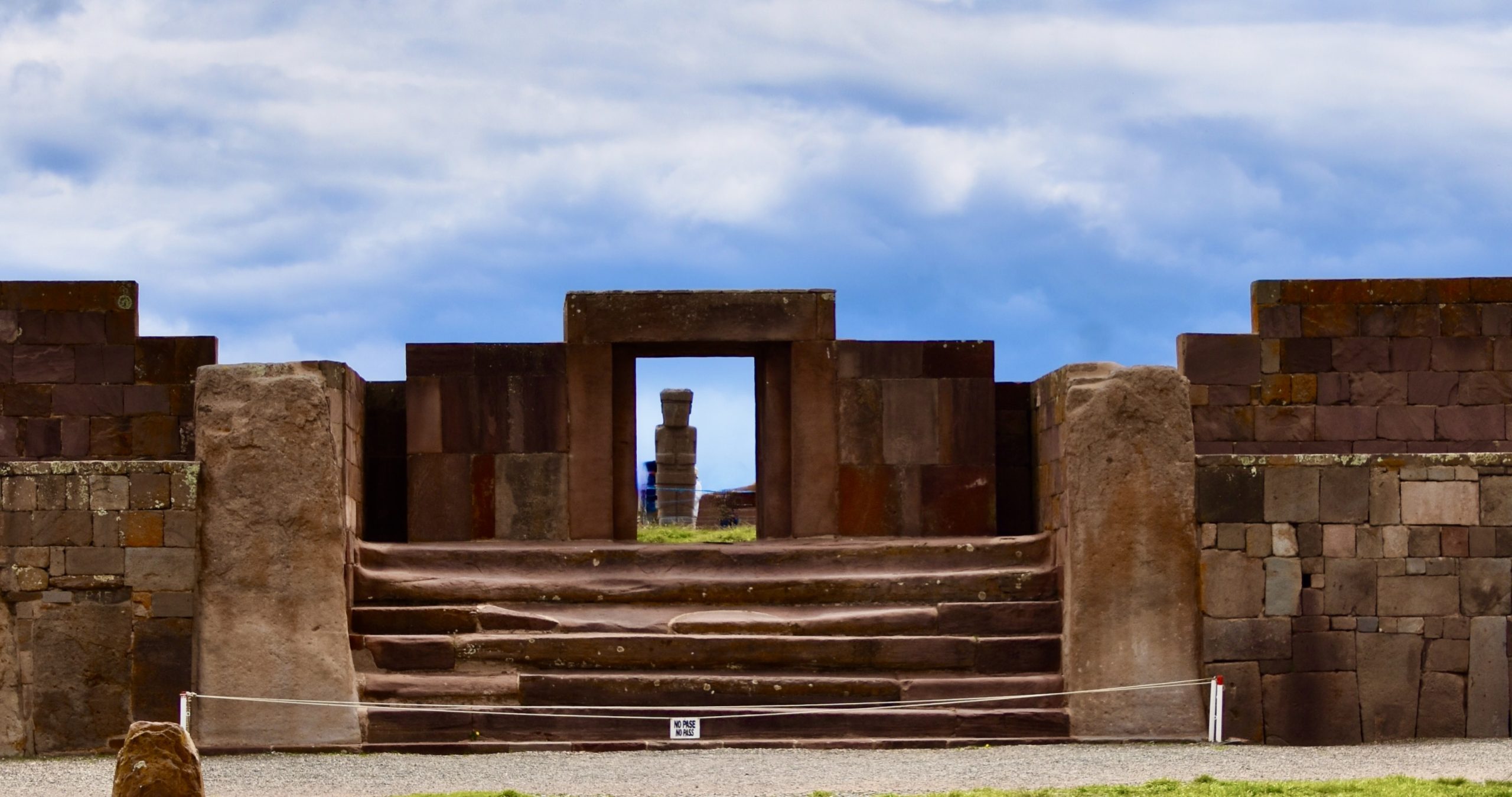
We do know that the monoliths at Tiahuanaco became progressively larger over time and that they were placed in positions that had astronomical significance. This is looking at the Ponce monolith from the floor of the Semi-Subterranean Temple. Let’s go take a closer look.
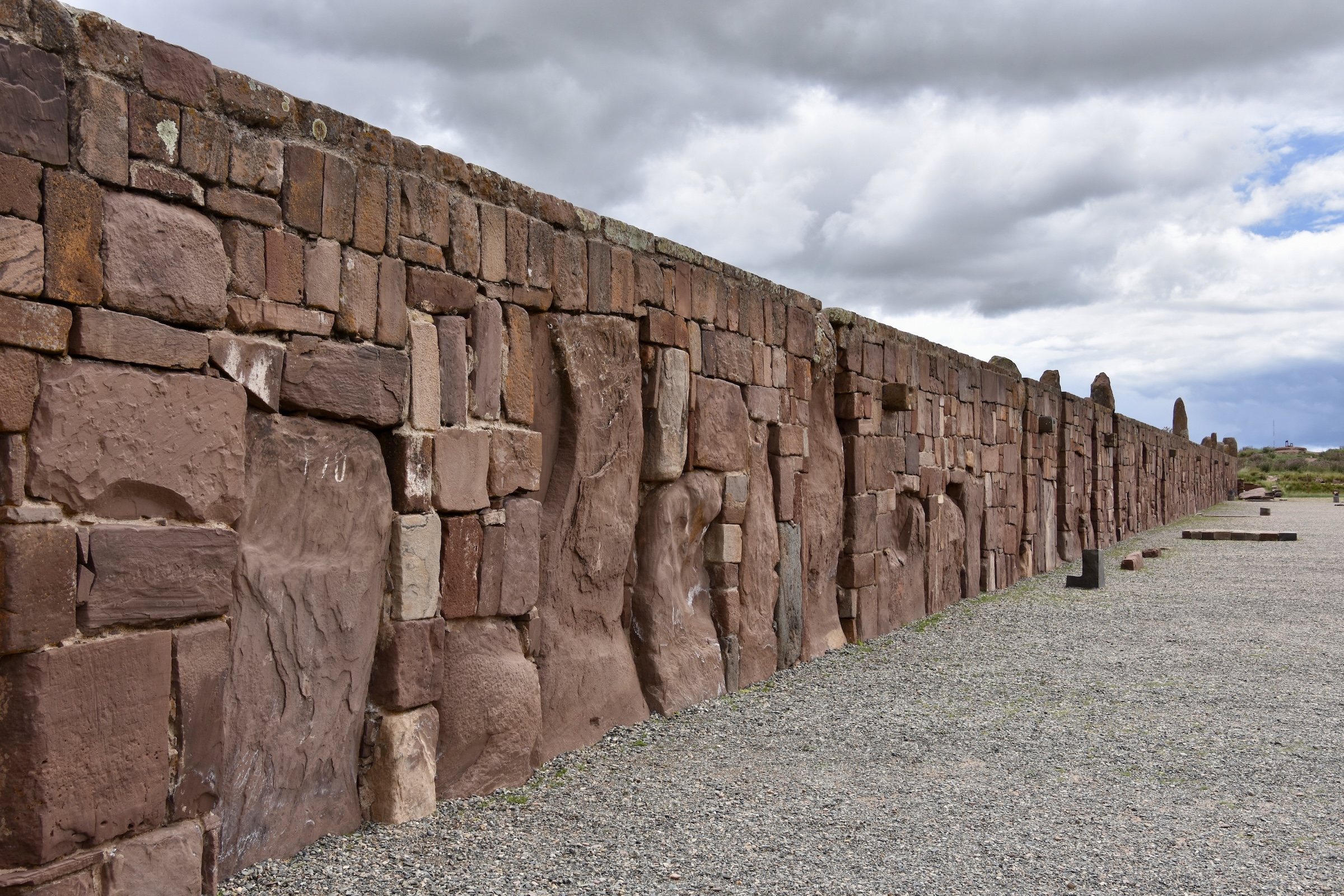
Leaving the Semi-Subterranean Temple we walk alongside the walls of the Kalasasaya and marvel for the last time on this tour at the precise workmanship in creating these walls that have stood without falling for 1,500 years or more. However, these are a far cry from the quality of workmanship we saw at Cusco and Saqsaywaman.
Entering the temple complex we can see that there are several huge monoliths.
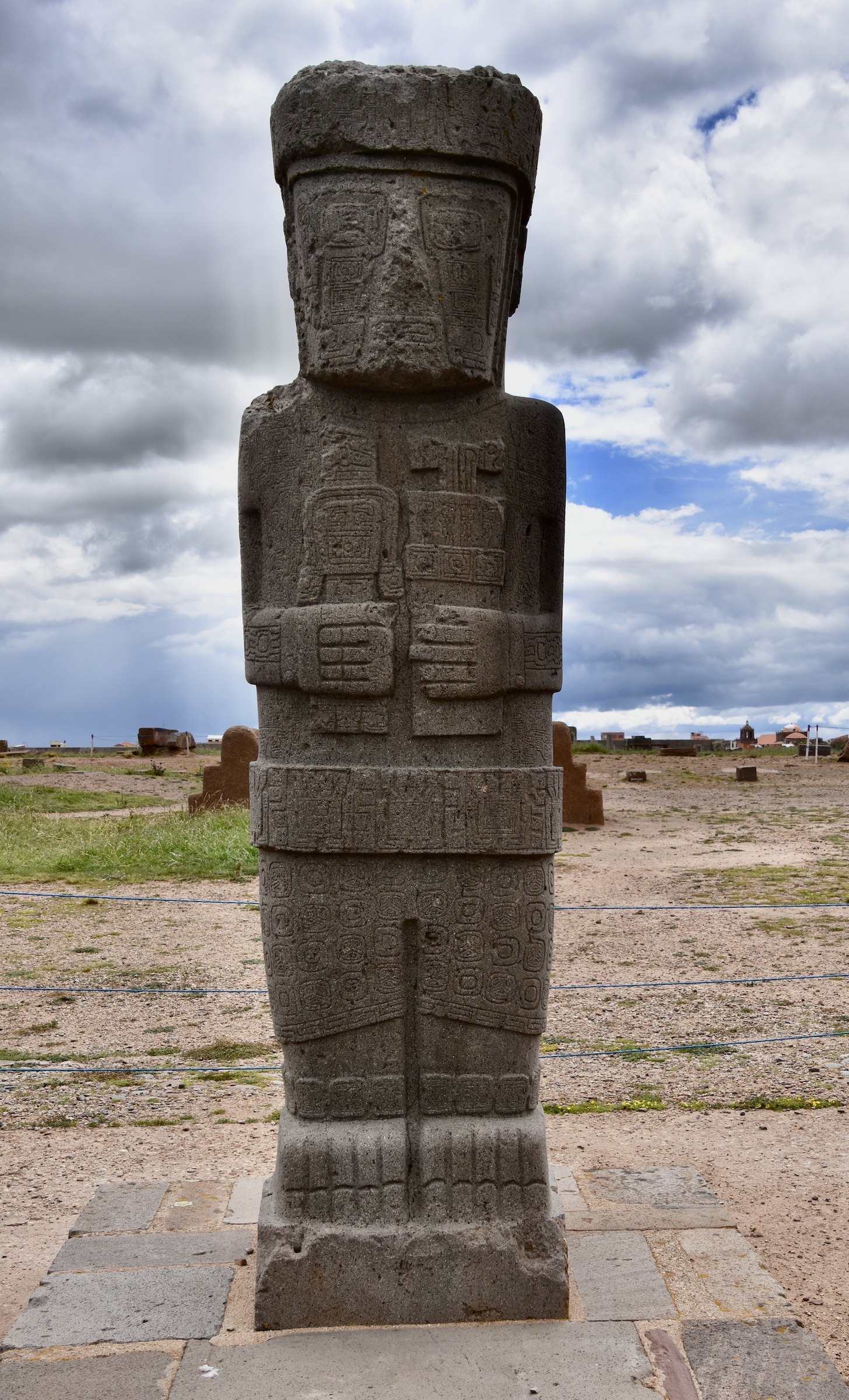
This is the Ponce monolith, named for the archaeologist who excavated it in 1957. Apparently this and other monoliths were once painted in bright colours and some were even clothed in textiles. Once again there is no consensus as to whether they represent real figures, gods or a race of giants. All three have been proposed.
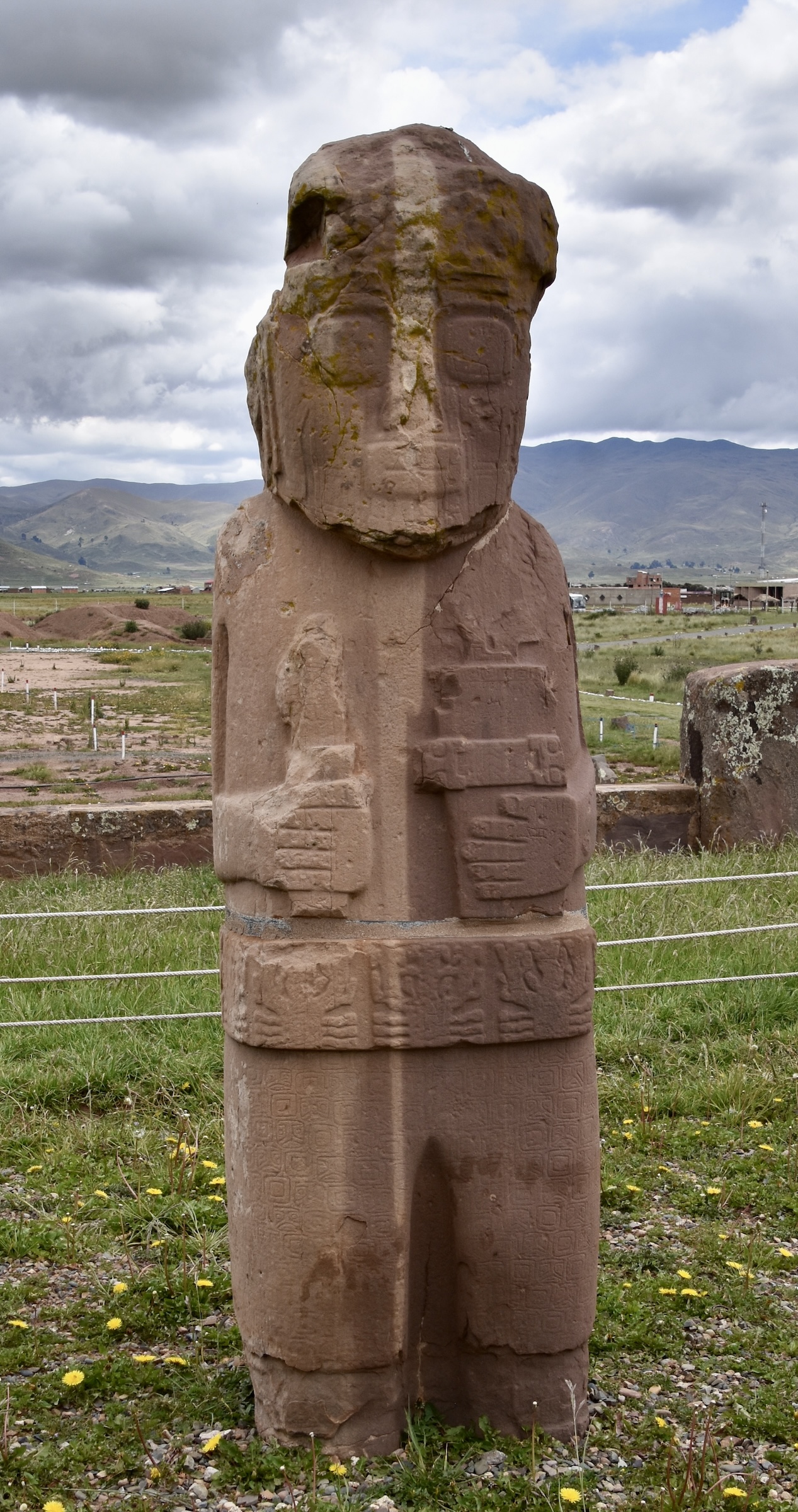
This is the other monolith on the Kalasasaya Temple which the Spaniards dubbed ‘The Friar’.
If there was one thing at Tiahuanaco I was disappointed in it was the Gate of the Sun. Described in literature I had read as monumental, gigantic and astounding, I was expecting something about the size of the Arc de Triumphe. Instead, it stands rather forlornly on the southeastern corner of the Kalasasaya resembling not so much a gate as a miniature version of Napoleon’s arch.
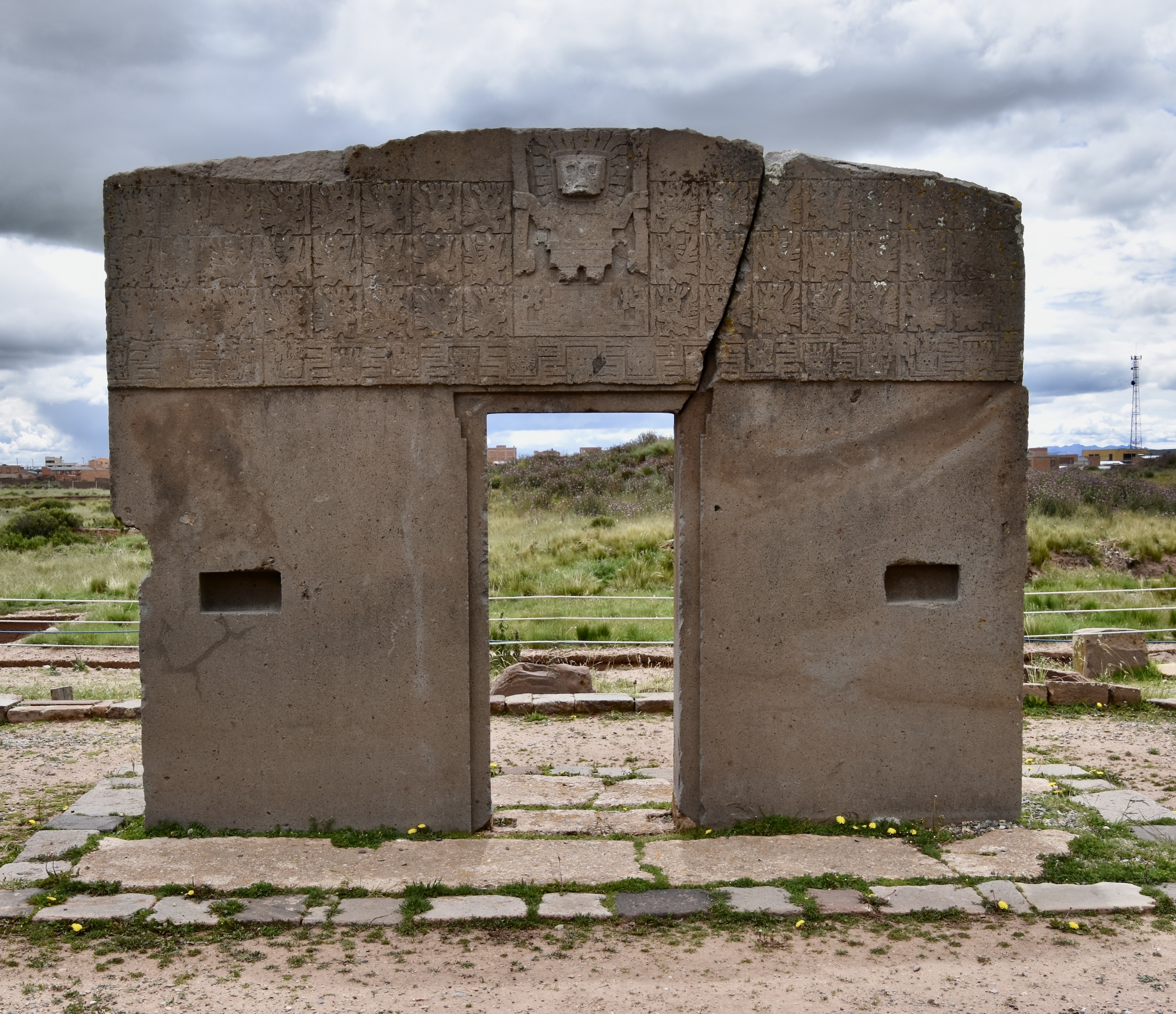
It’s not even 10 feet tall.
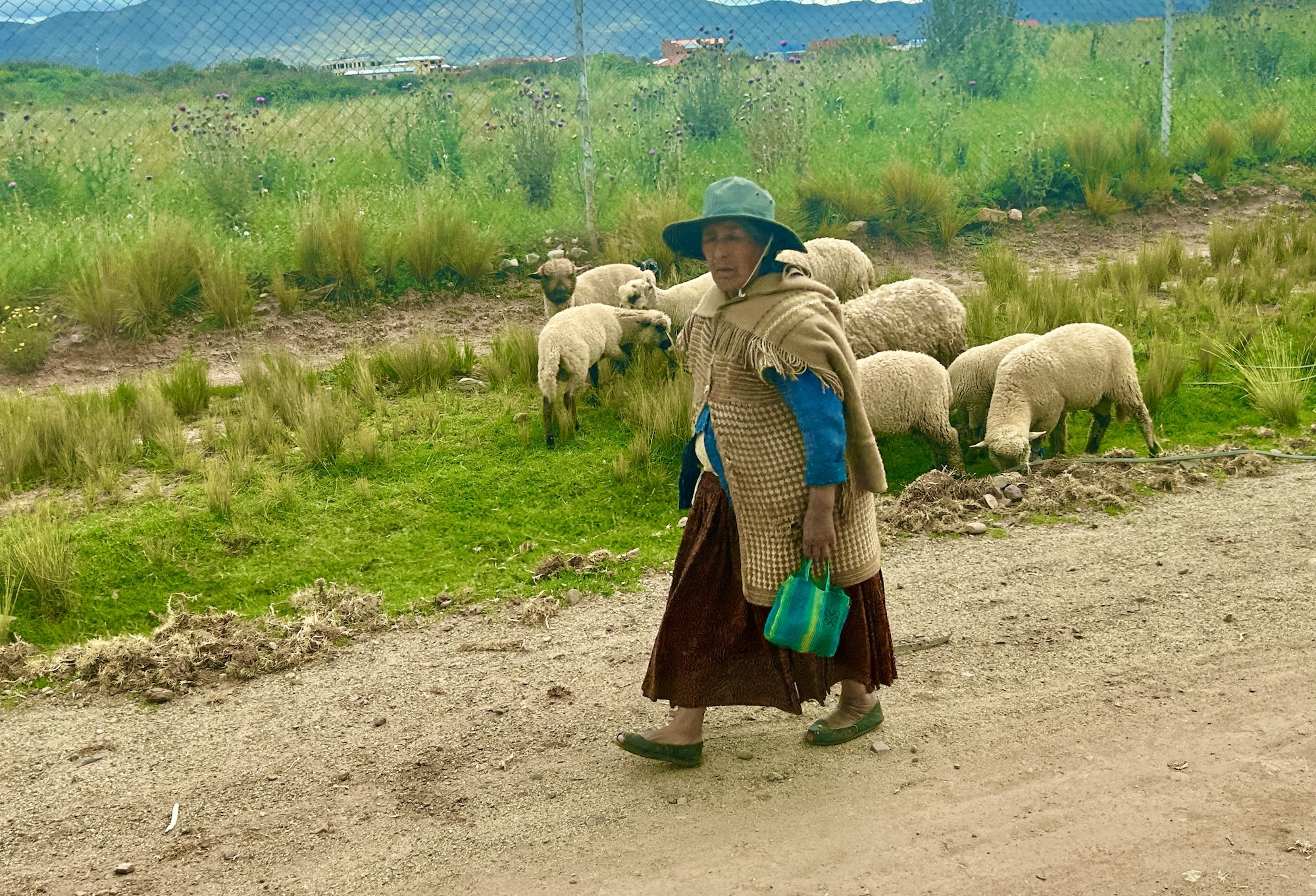
From the Kalasasaya we boarded the bus to take us to the museum passing this Bolivian shepherdess along the way.
The museum is a modern structure designed to display the many monoliths and other statues excavated from Tiahuanaco over the last century. Why they thought they needed a Piet Mondrian background is beyond me.
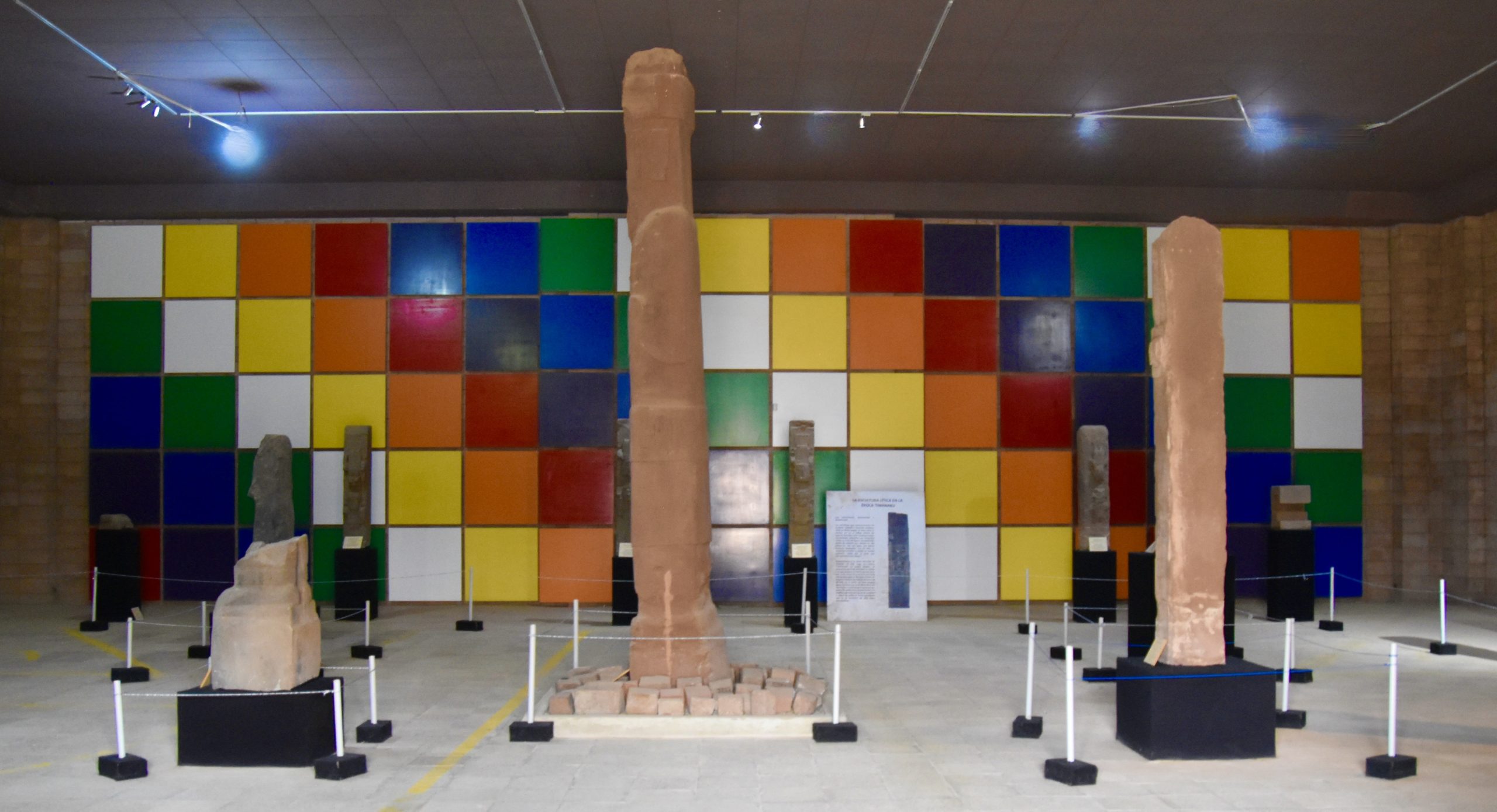
The star of the museum is the Bennett monolith which is 7.3 metres (24 feet) tall and weighs twenty tons. It has its own room and more than makes up for the puniness of the Gate of the Sun.
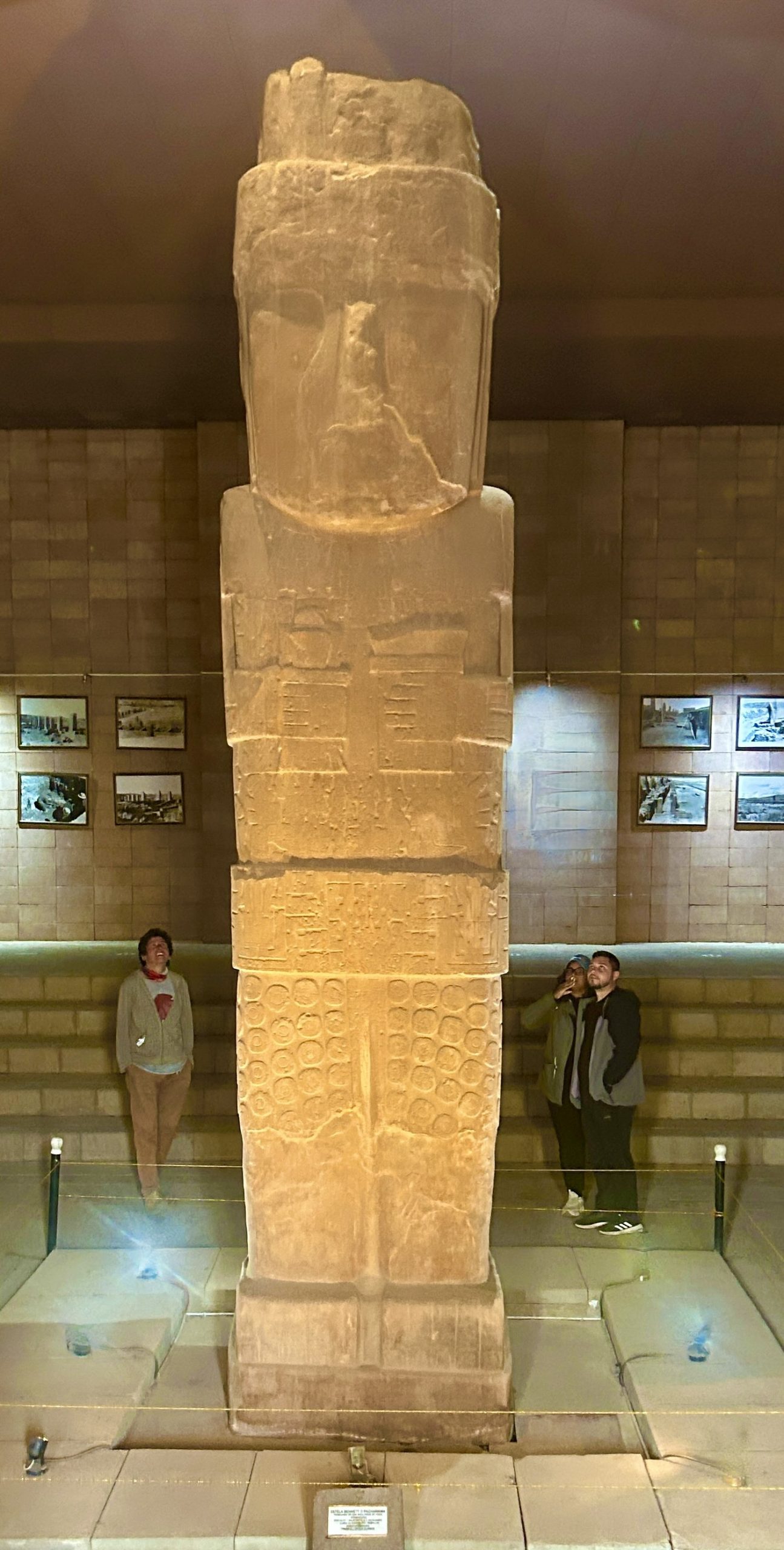
It was found in the Semi-Subterranean Temple by archaeologist Wade Bennett in 1932 and is the largest monolith ever found in the Western Hemisphere. Looking at it, I couldn’t help but think of the moias of Easter Island, particularly the head. Nobody knows what they were meant to represent and neither do we know why the monoliths of Tiahuanaco were created. Erich von Daniken was right about one thing – Tiahuanaco is truly a place of unexplained mysteries.
In my final post from this amazing tour we’ll visit the city of La Paz and for one final time, I’ll have my presumptions shattered. I hope to see you there.