
Lachine Fur Trade National Historic Site

In the summer of 2025 I made a trip to Quebec for the express purpose of visiting and writing about a number of National Historic Sites that I had long wanted to see. These included Grosse Ile, Chateau Saint-Louis in the heart of old Quebec City, Fort Levis No. 1 and the very much underrated Forges du Saint-Maurice where the Canadian iron and steel industry was born. This summer I returned to La Belle Province for a different reason, to visit my son and his family in Beaconsfield and to evaluate some golf courses for SCORE Golf. I did accomplish those goals and I have already put up my hole-by-hole description of the Green course at Laval-sur-le-Lac. However, on the exit on the TCH before Beaconsfield where my son lives I saw a sign for a National Historic Site but didn’t quite catch the name. I sought it out next day and it turns out it was the National Field of Honour, Canada’s only national military cemetery. After this surprise find I asked myself what other National Historic Sites there were in the Montreal area – lots it turns out including one that I think should be on every Canadian’s bucket list. Here’s why the Lachine Fur Trade NHS is a must visit.
Every Canadian learns early in their education that the fur trade was a major factor in the early European chapter of our history. That may be a bit difficult to understand today, after all, who the hell wears furs anymore? How could that possibly be the foundation of a colony’s economy? Well make a visit to the Lachine Fur Trade NHS and you’ll find the answer.
History of the Lachine Fur Trade
The first question answered is why Lachine? That one is pretty straightforward. In the 17th, 18th and early 19th century, European ships could sail up the St. Lawrence River only to this point where the Sault St. Louis (aka Lachine rapids) formed an impassible barrier. Samuel de Champlain, who gave the rapids their European name, discovered this in 1611 and it remained a point of no return so to speak until the Lachine Canal, also a National Historic Site, was opened in 1825.
Europeans had been using furs as part of their culture for thousands of years and around 1550 someone discovered that beaver pelts could be used as the material for durable waterproof hats. The craze for beaver hats lasted for over three hundred years and by the 17th century the animals were becoming scarce in Europe. Apropos of nothing, here is a link to my visit to Kastoria, Greece which was and still is the main fur trading city in Europe even though the kastors, Latin for beaver, are long gone.
The early French colonizers of New France quickly discovered that there were an abundance of fur bearing animals in the New World and pretty well from day one began exploiting them, with the Saguenay River area becoming the first hub of the trade. By the mid 17th century explorers like Étienne Brûlé and Jean Nicollet had pushed well past New France into the Great Lakes area and brought back tales of great riches to be had in the fur trade in these nether regions. Thus was born the legend of the voyageurs, short stout men of French-Canadian or Metis extraction who could paddle for up to 16 hours a day and carry immense loads of packed furs on their backs over portages sometimes many kilometres long. They would set out in canoes above the Sault St. Louis, with trade goods and return, sometimes over a year later, with their huge birchbark canoes loaded to the gunnels with furs that had been bartered from the Indigenous people who actually did the trapping.
In the early 18th century Pierre Gaultier de la Vérendrye ventured even farther into what is now modern day Manitoba setting up a number of forts including Fort Paskoya which became the modern town of The Pas where I mostly grew up. He brought back tales of even better fur trading to be found the further west you went. The English had already discovered this when Henry Kelsey, working for the Hudson’s Bay Company and entering the area via Hudson Bay in 1690, ventured further into the Canadian west than any European had to date. So because of Kelsey and La Verendrye, both of who incidentally have lodgings named after themselves in The Pas, the English and the French began the largest exploitation of wild animals ever attempted up to that time.
However, in 1763 everything changed as the Seven Years War concluded with New France being ceded to Britain and essentially the Scots took over from the French as the main purveyors of furs to the Old World. In 1779 the Northwest Company was founded in Montreal as a rival to the Hudson’s Bay Company and this is where the story of the Lachine fur trade really takes off. It was here that the goods were provided to the voyageurs to exchange for furs and here where the furs were received before being shipped to Europe.
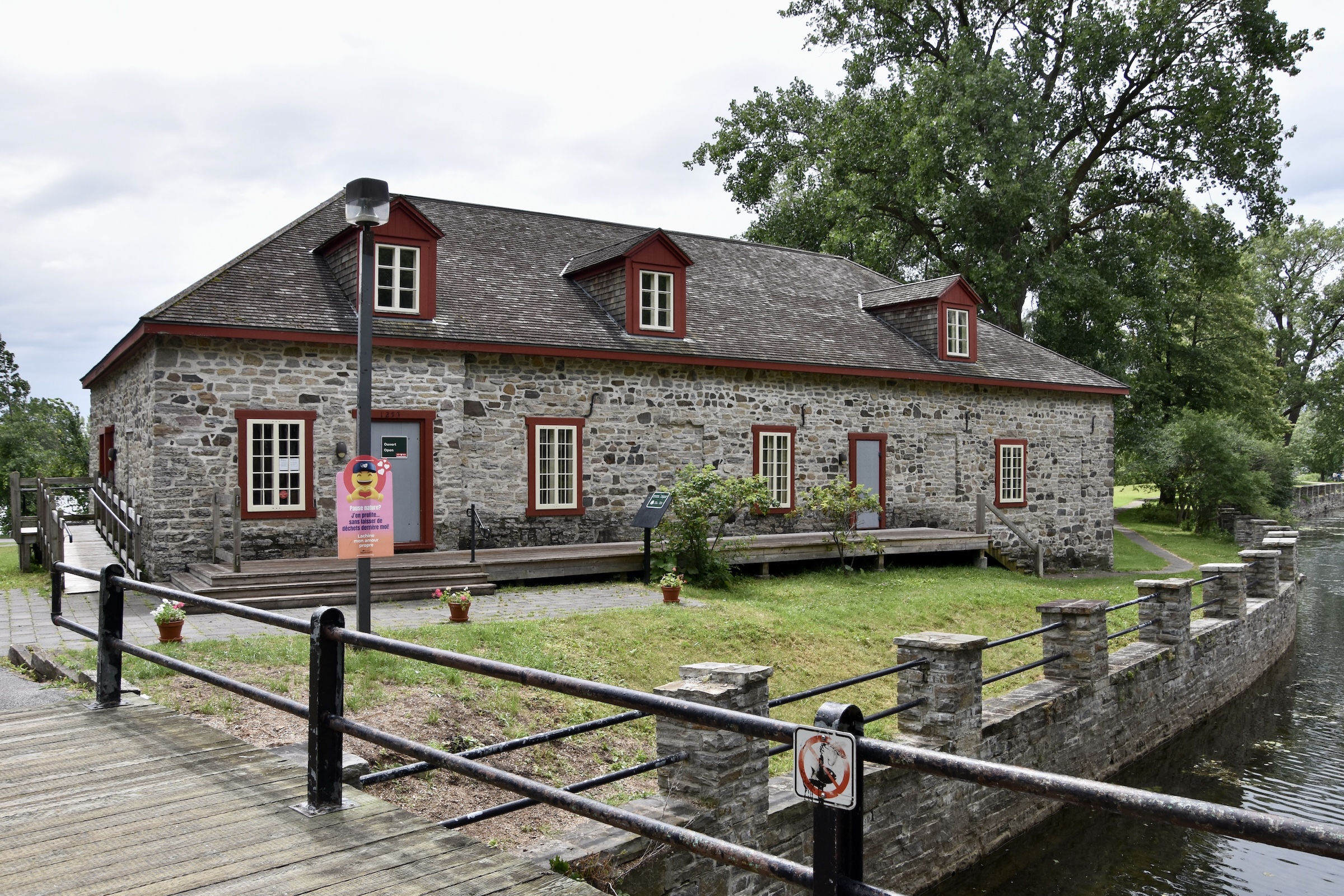
This handsome stone and mortar building dates from 1803 and after crossing the Lachine Canal is where we will continue our story of the Lachine fur trade.
Inside, other than the small entry room, the building is one huge warehouse and the story is told in chronological order on an easy to follow counterclockwise route through the building.
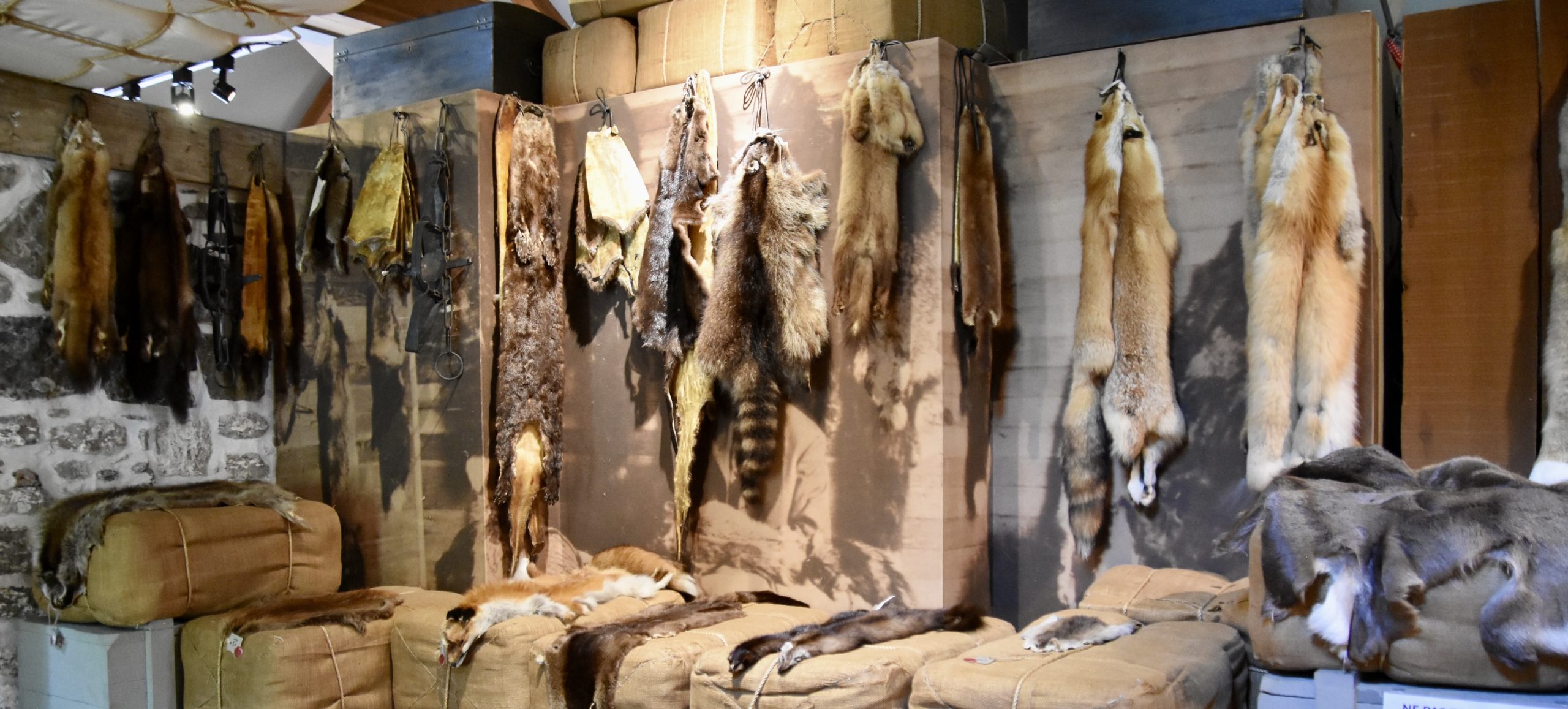
The first thing you see is a collection of the many types of furs that were collected. Although beaver pelts are most commonly associated with the fur trade they were but a small part of it as this exhibit demonstrates. You will also learn that the Canadian climate made for silkier and thicker furs than those found in Europe.
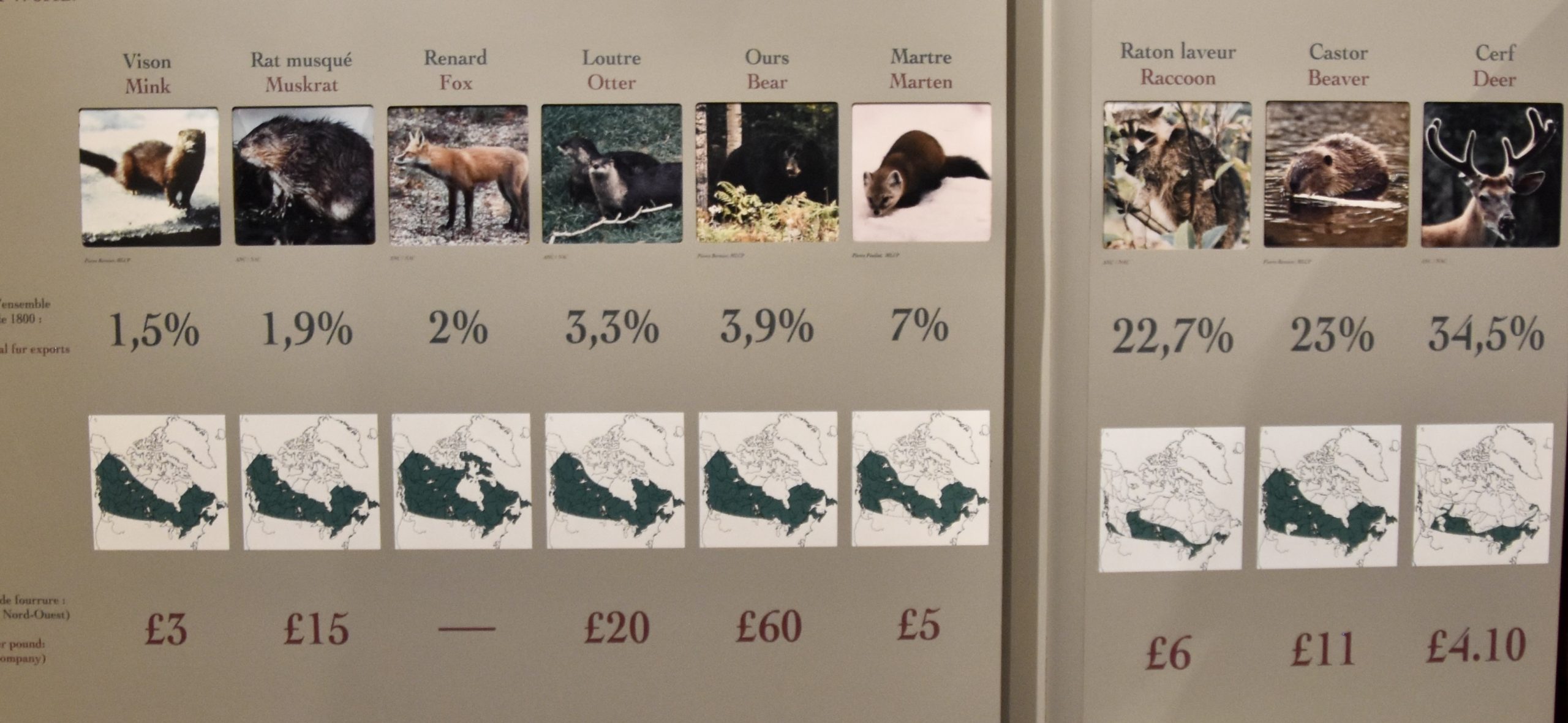
More popular than beavers were deer hides which accounted for over a third of all furs, although the value of a deer hide was considerably less than a beaver pelt. The most valuable hide was from the black bear, roughly five times that of a beaver and both otter and muskrat pelts bought more than a beaver. The map also shows the extent of the territory from which the furs were gathered; in most cases pretty well all of Canada. The richest area of all turned out to be the Athabaska region which lay some 3,600 kms. (2200 miles) from Lachine. Furs trapped there would be shipped by one group to Lake Superior and another group would transport then from there to Lachine.
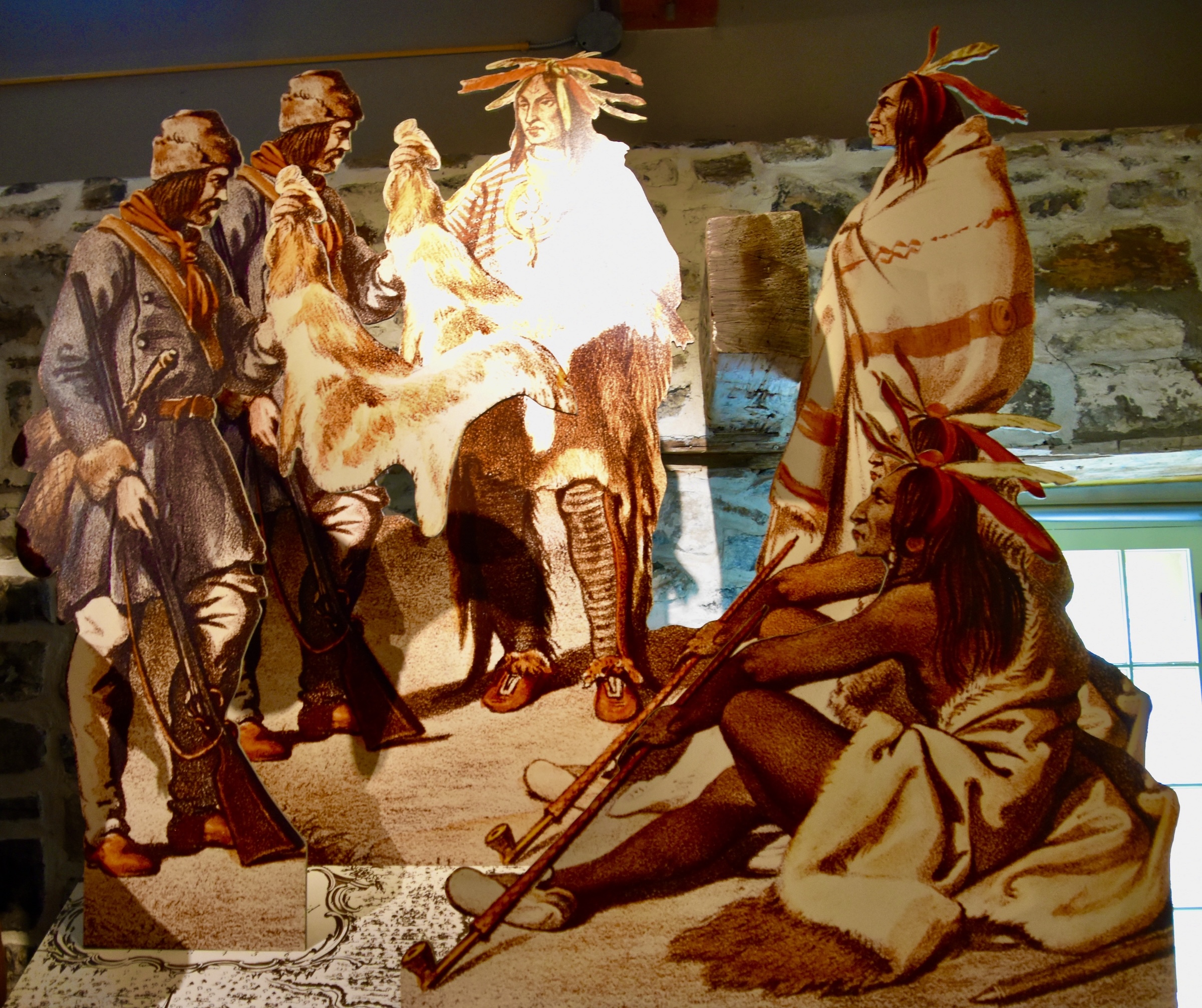
Well over a dozen major Indigenous peoples provided the majority of the furs in exchange for European goods. Initially the animals were captured using traditional Indigenous methods, but these were supplanted by manufactured steel traps not unlike those still in use today, which made the slaughter that lasted over 300 years much more deadly and proficient.
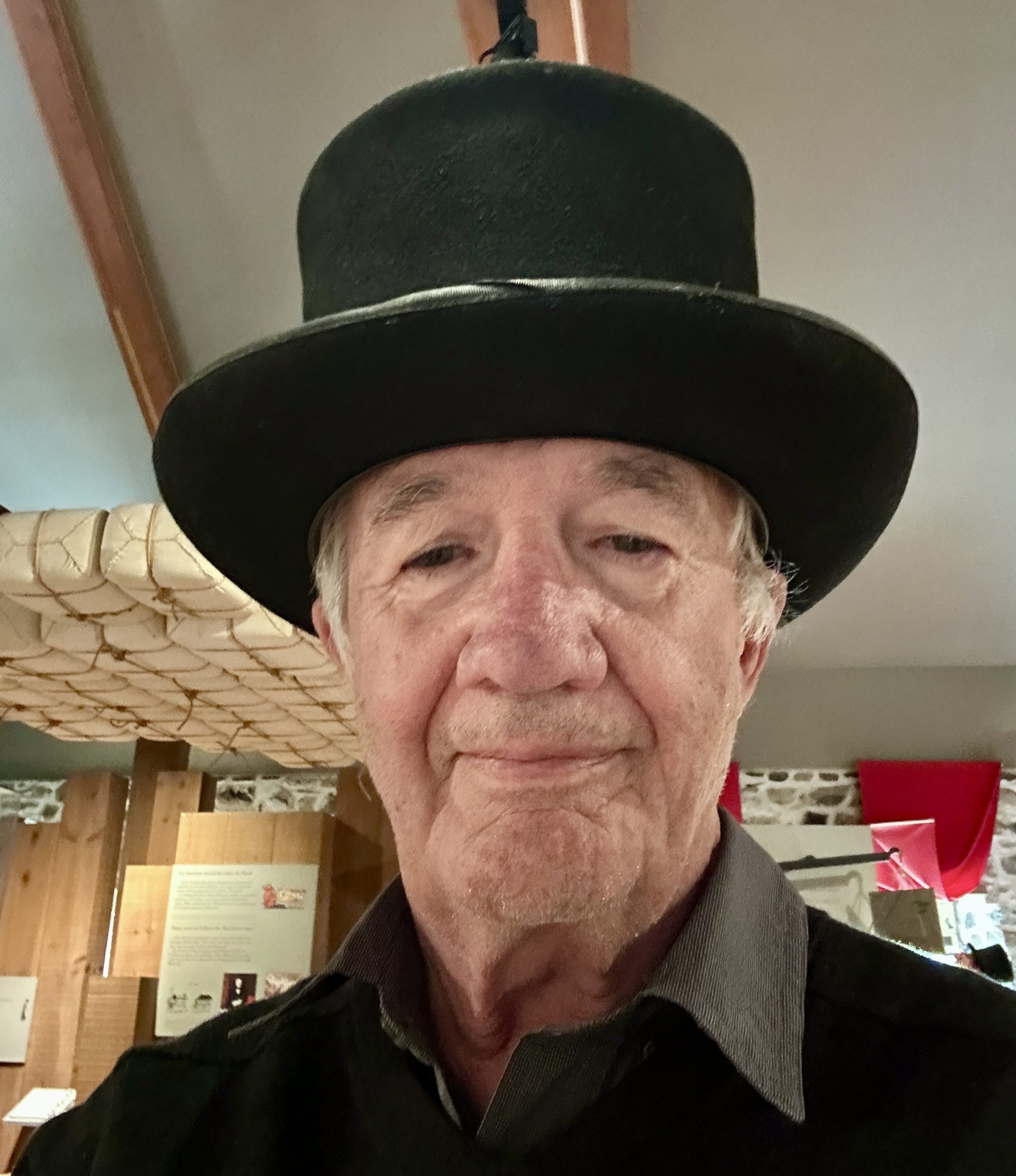
You will get a chance to try on a beaver hat at the Lachine Fur Trade NHS. How do I look?
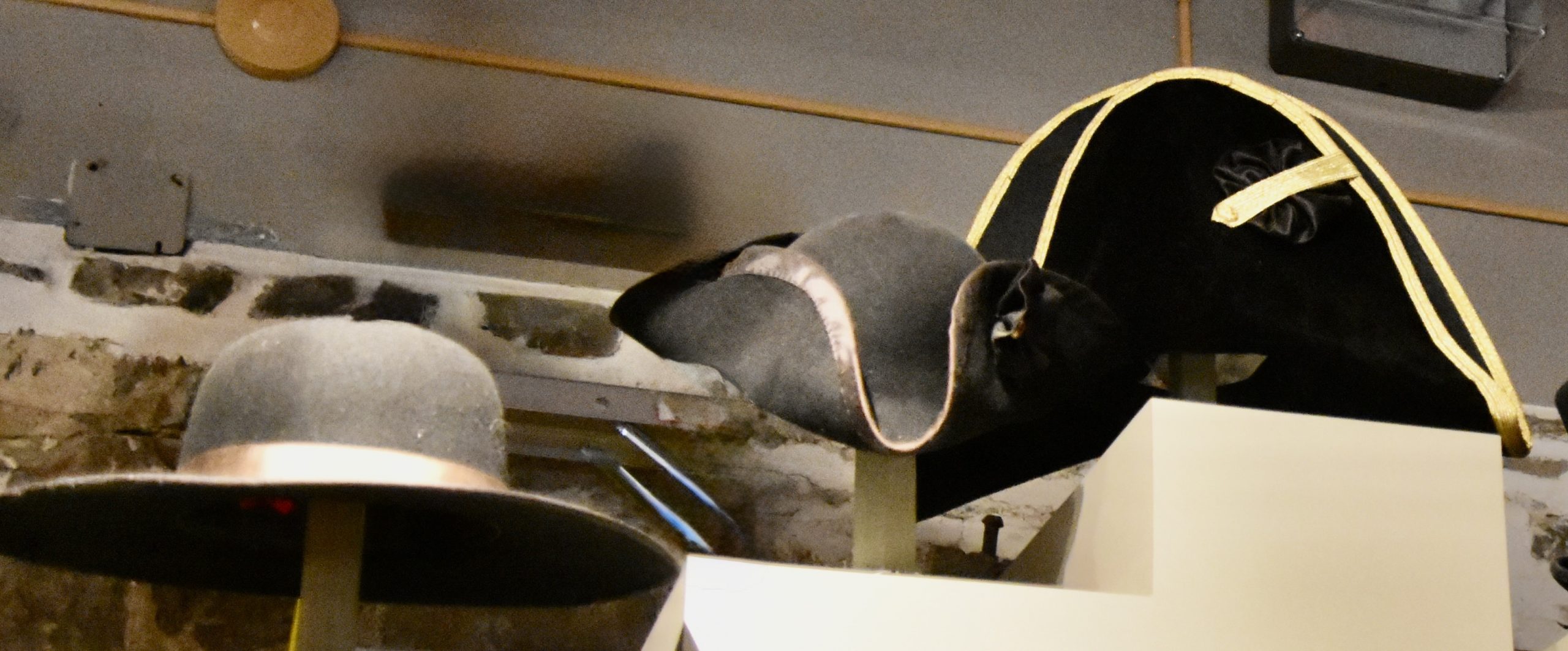
I had no idea that the famous tricorne hats worn by European nobility and the bicorne hats worn by the likes of Lord Nelson and Napoleon were often made from beaver pelts. So were the undertaker hats, still worn by the wrestler today.
For some reason Parks Canada decided to use muppet like figures to depict some of the important figures in the Lachine fur trade like these Indigenous fur trappers.
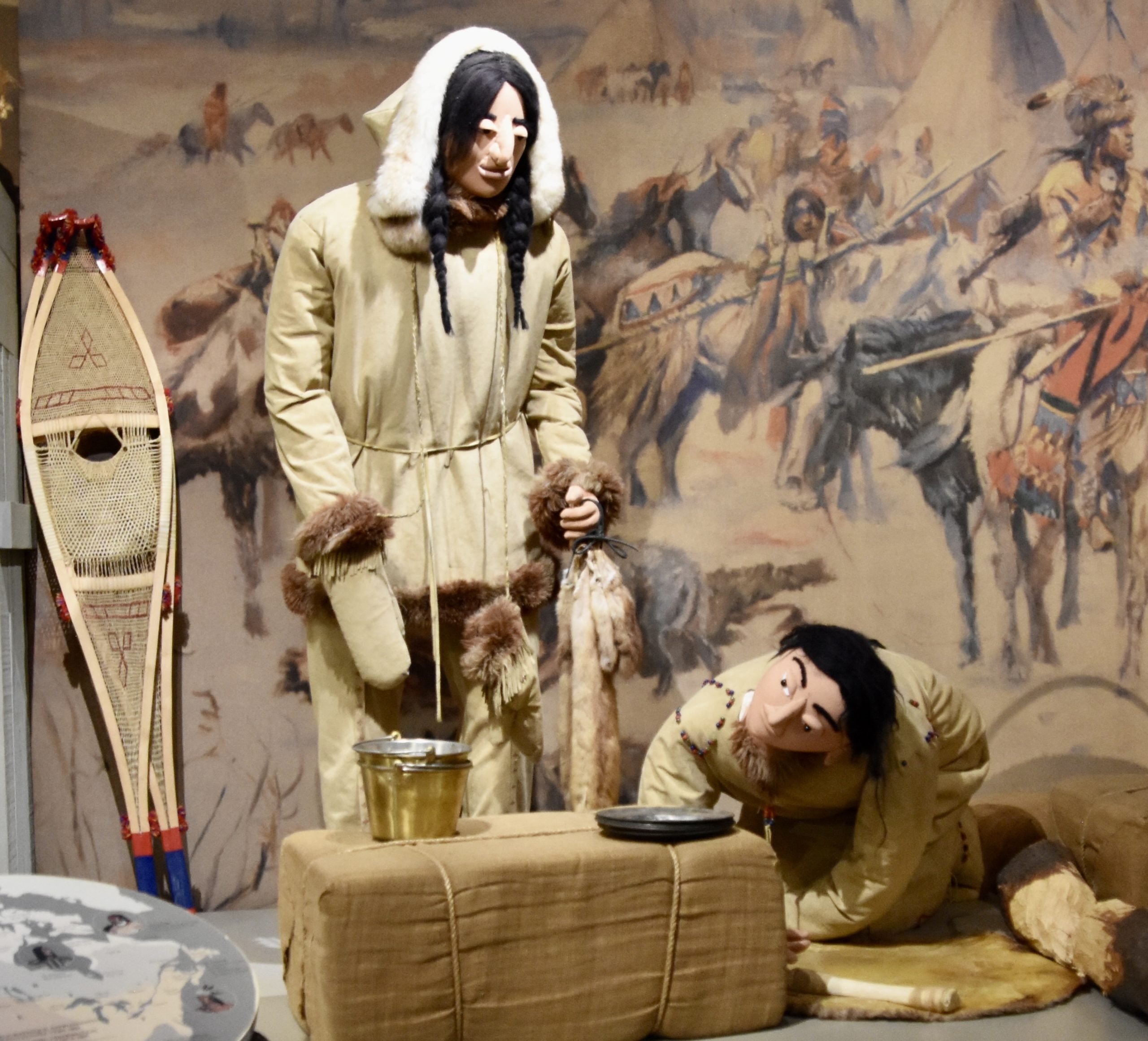
Or this Voyageur.
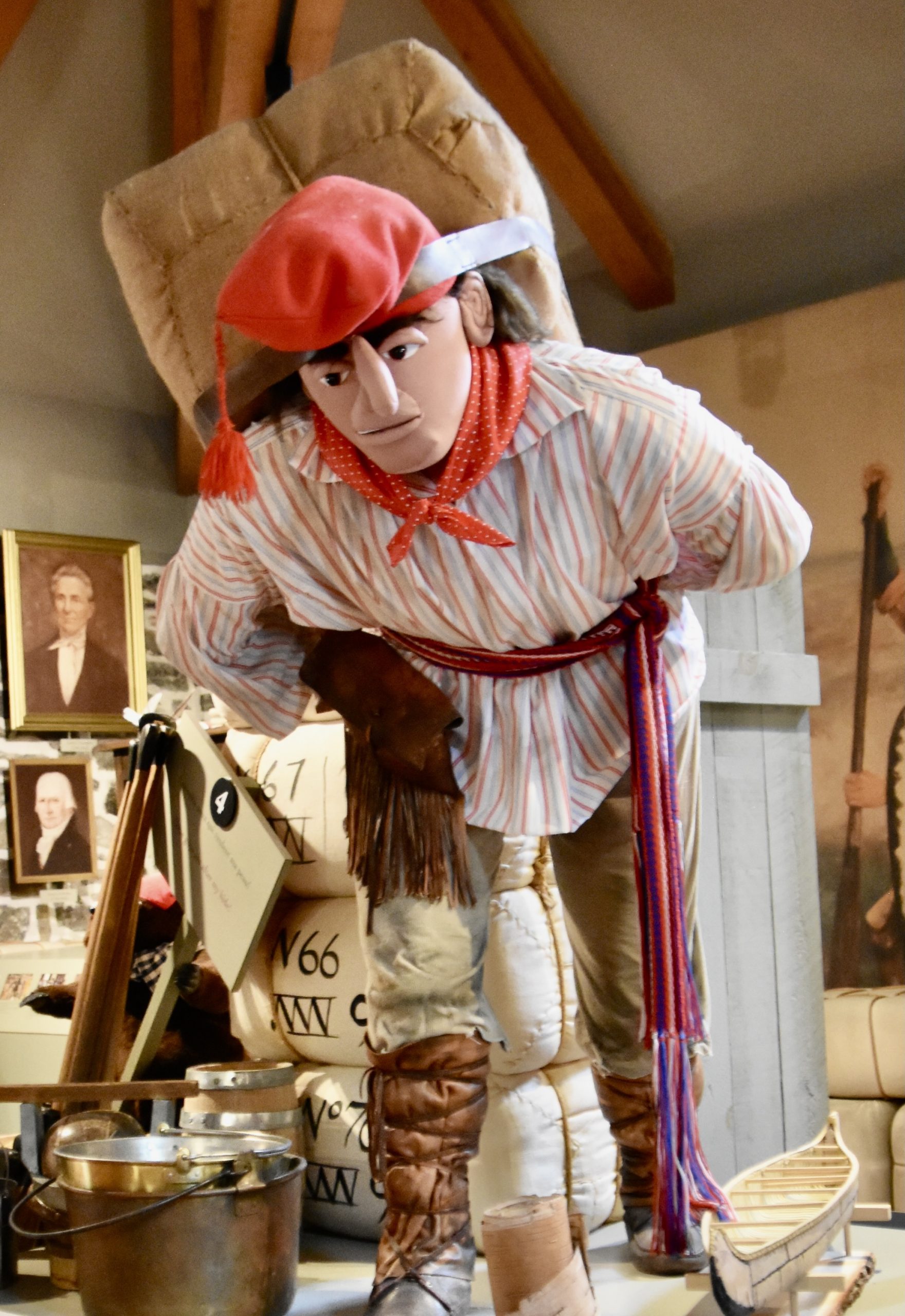
I had always though that the terms ‘voyageur’ and ‘coureurs du bois’ were synonymous, but they’re not. The coureurs du bois originated in the 17th century as traders delivering goods to Indigenous people in exchange for furs, much as the voyageurs also did. However in 1681 a licensing system was brought in to regulate the trade. Those who obtained licenses and were legally part of the Lachine fur trade were independent contractors who became the voyageurs. Those without licenses remained coureurs du bois and outside of the system.
The first half of the exhibits focus on the exchange of goods for furs and the transport of them from vast distances to the warehouses in Lachine.
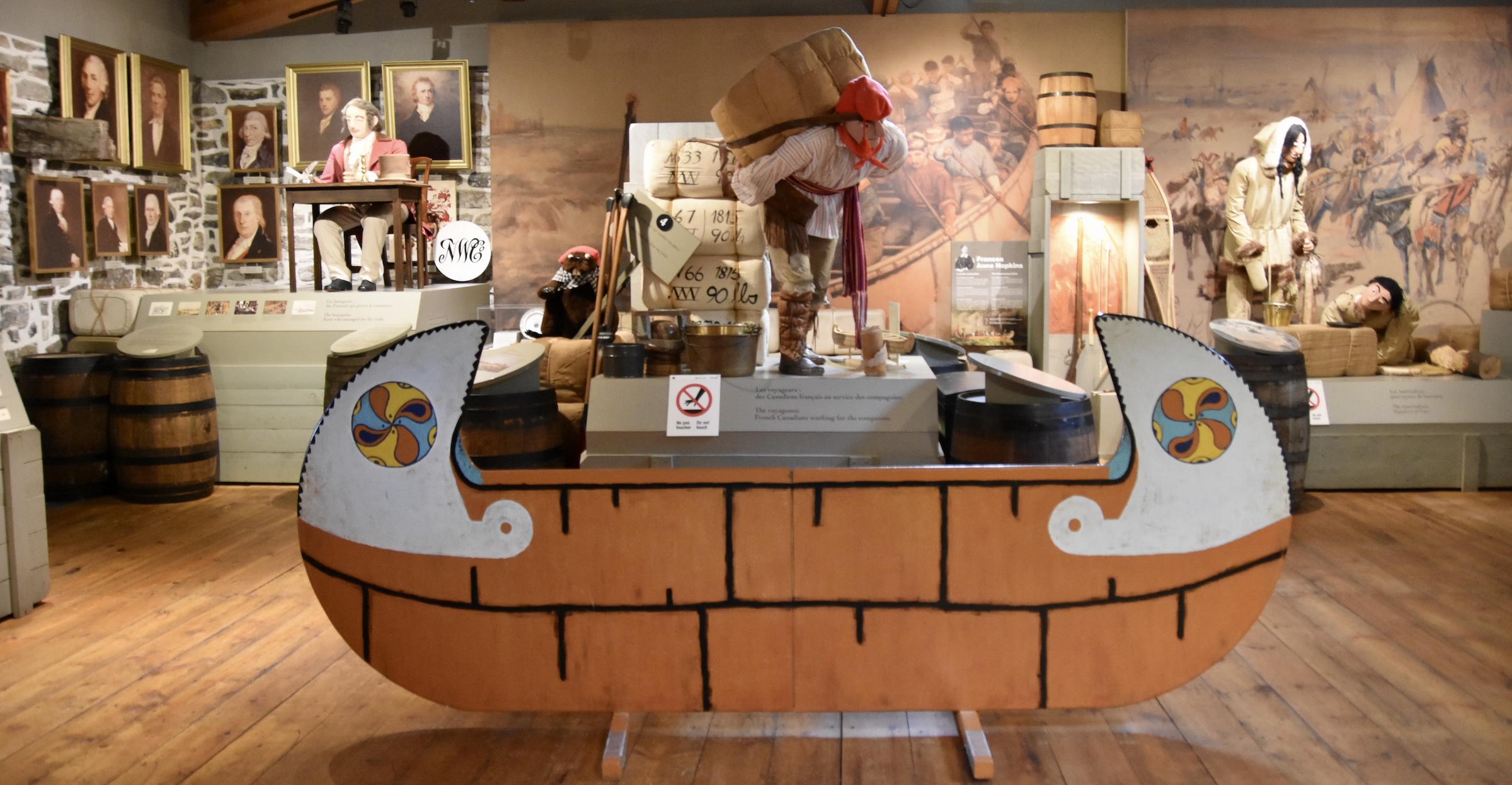
The second part focuses upon the companies and the men who benefitted the most from the Lachine fur trade.
The Hudson’s Bay Company was founded in 1670 in London by a royal charter from Charles II. Ironically the two men who pitched the idea to him through Prince Rupert were French Canadian traders Médard Chouart des Groseilliers and Pierre-Esprit Radisson who had tried and failed to convince the French court that using Hudson Bay was a quicker way to get furs from the west to Europe than the St. Lawrence. For over a century the Hudson Bay Company had free reign in the lucrative western fur trade, all from forts and posts on Hudson Bay that are largely forgotten today. One day I plan to make a visit to some of them like Fort Prince of Wales, York Factory and Moose Factory. In total the Hudson’s Bay Company at its peak had almost 500 fur trading posts across Canada.
It was a group of Scots who had settled in Montreal after the British takeover who incorporated the NorthWest Company to compete with the HBC in 1779. They are depicted in this corner of the Lachine Fur Trade NHS.
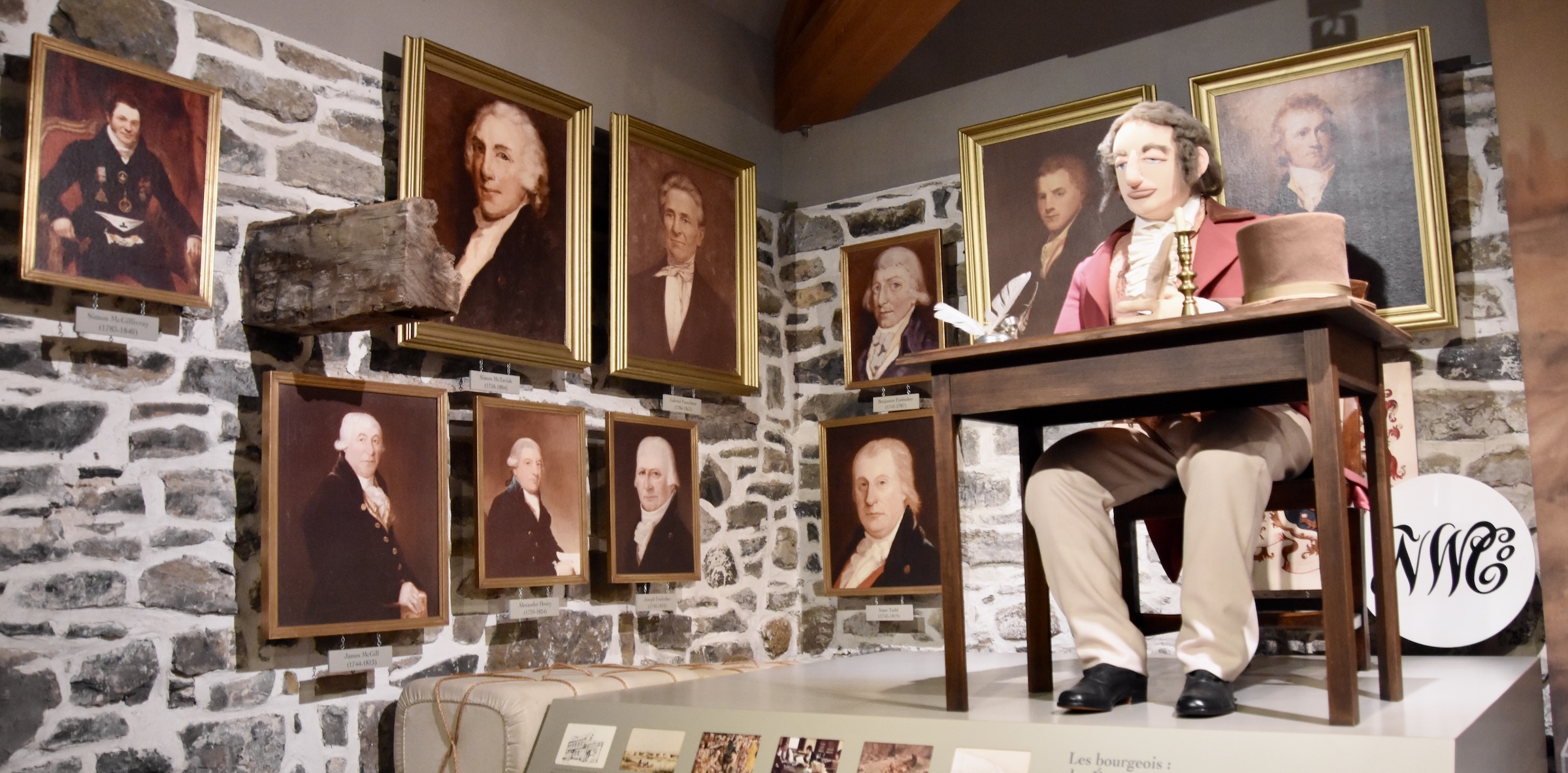
Seeming underdogs the Northwest Company had a couple of aces up their sleeves. One was Alexander Mackenzie who explored and opened up new areas to exploit, getting all the way to the Arctic Sea on the river that is named after him. Another was the propensity to use every trick in the book to succeed including violence and other skullduggery. The result was that by 1800 the Northwest Company was controlling three-quarters of the volume of furs being shipped to Europe.
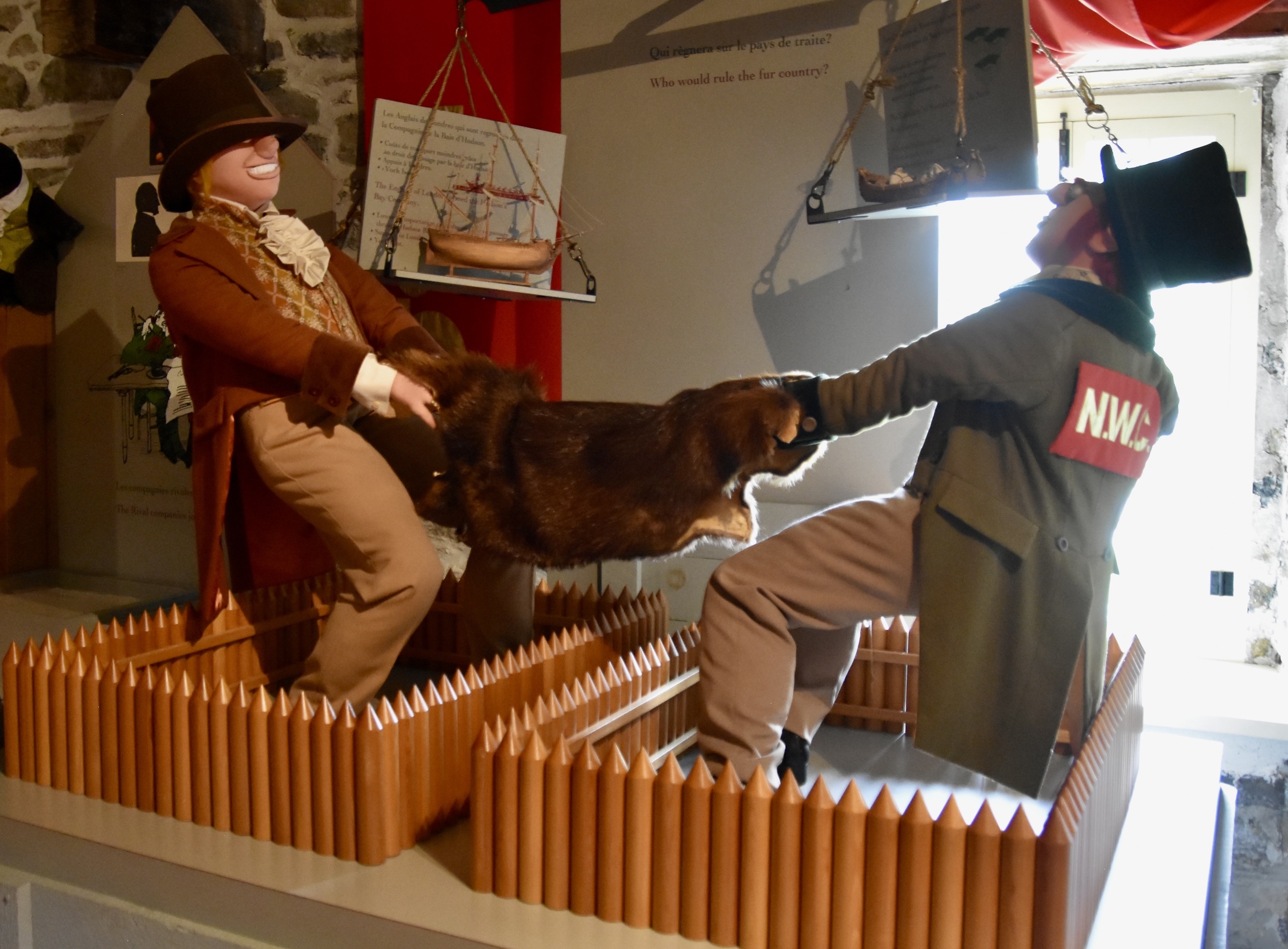
In 1821 the two companies called a truce and united as just the Hudson’s Bay Company. This was the death knell for the Lachine fur trade as now the Hudson’s Bay route was the quickest and cheapest to Europe and in a few years less than 5% of furs were shipped through the St. Lawrence route. But in 1826 Lachine kept its hat in the ring as it were when George Simpson became the head of HBC, a position he held until his death in 1860. He decided to make Lachine the headquarters of the HBC and he acquired a mansion across from the warehouse that he lived in until his death, entertaining people like the Prince of Wales there.
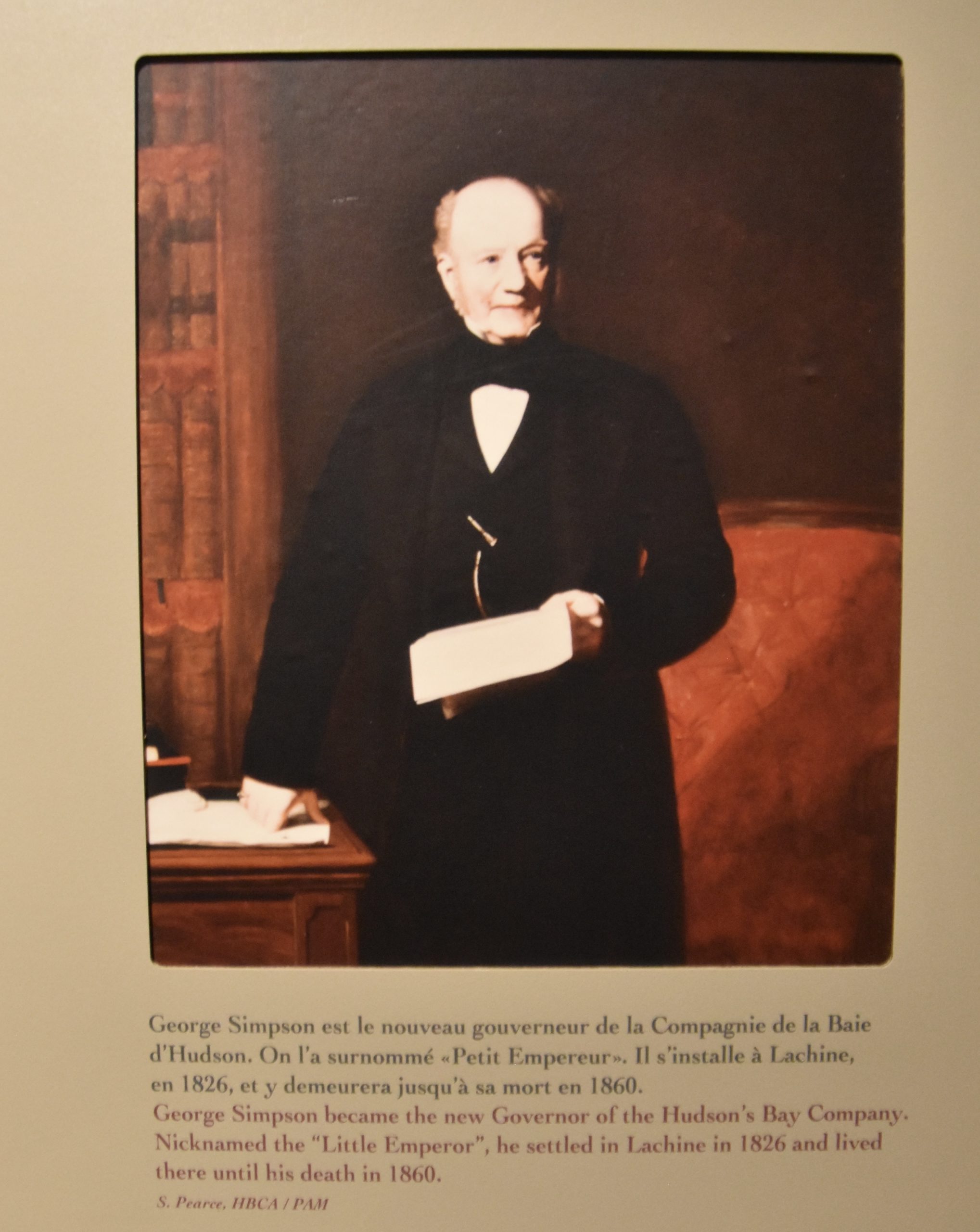
The mansion was torn down in 1888 and as well know, sadly after 355 years as North America’s longest running corporation, the Hudson’s Bay Company was liquidated in 2025, leaving a huge hole in the Canadian psyche.
If you live anywhere the Montreal area the Lachine Fur Trade NHS is a must visit for students of Canadian history.