
Beaconsfield G.C. – Hole by Hole

In August 2026 I was fortunate enough to play three of SCORE Golf’s Top 100 courses in the Montreal area starting with the Green course at Laval-sur-le-Lac which is rated # 46, followed by the Blue course at Laval-sur-le-Lac which is rated #28 and last and certainly not least in my opinion, Beaconsfield which jumped from #98 in 2024 to #63 in 2026. In this post I’ll do a hole-by-hole desription of this course which has a storied history both before and after the course was built. So grab your clubs and let’s tee it up.
History of Beaconsfield Golf Course
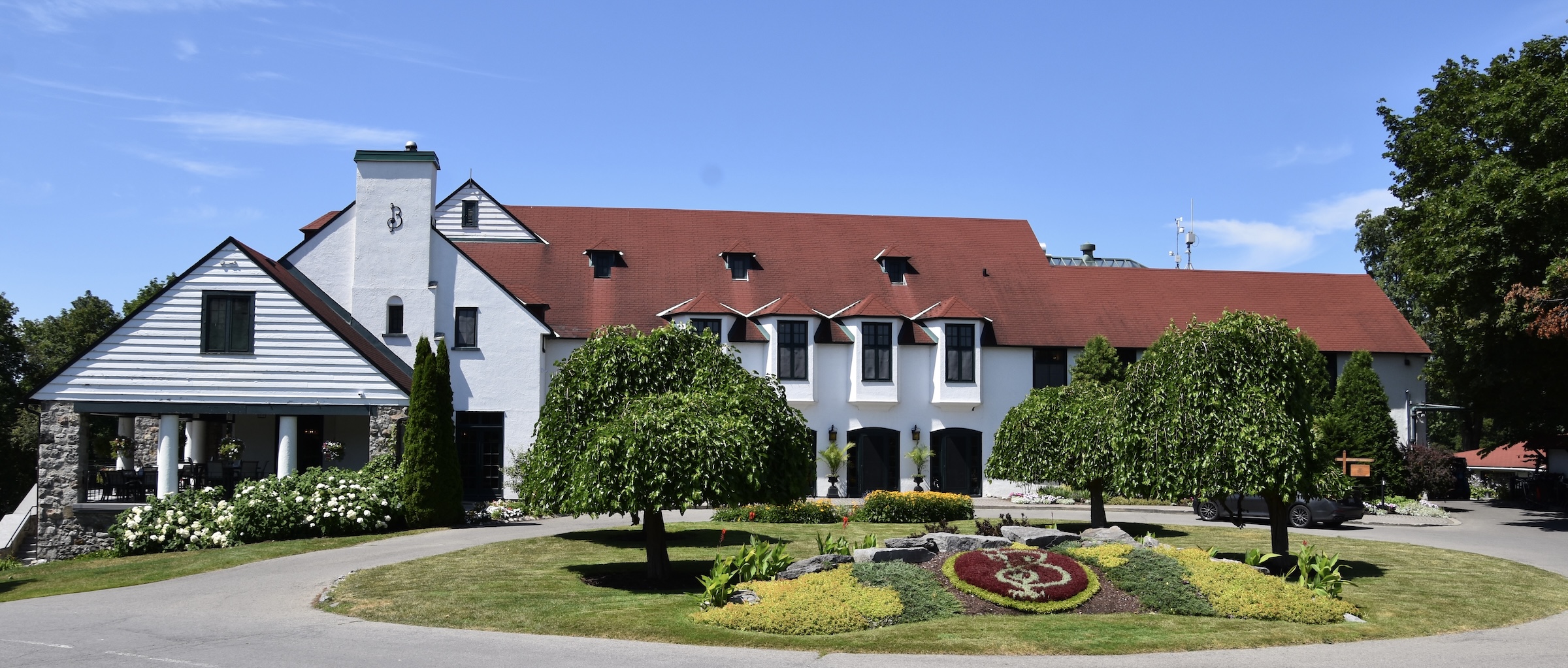
The history of the Beaconsfield Golf Club can be divided into two eras – before and after Stanley Thompson. The club was founded in 1904 on lands that had once been Charlebois farm and included the remnants of a quarry from where material for the Victoria bridge had been excavated in the 19th century. As we shall see, this is an important feature in the course’s design. The barracks used by the quarrymen became the first clubhouse and we’ll pass it during the round.
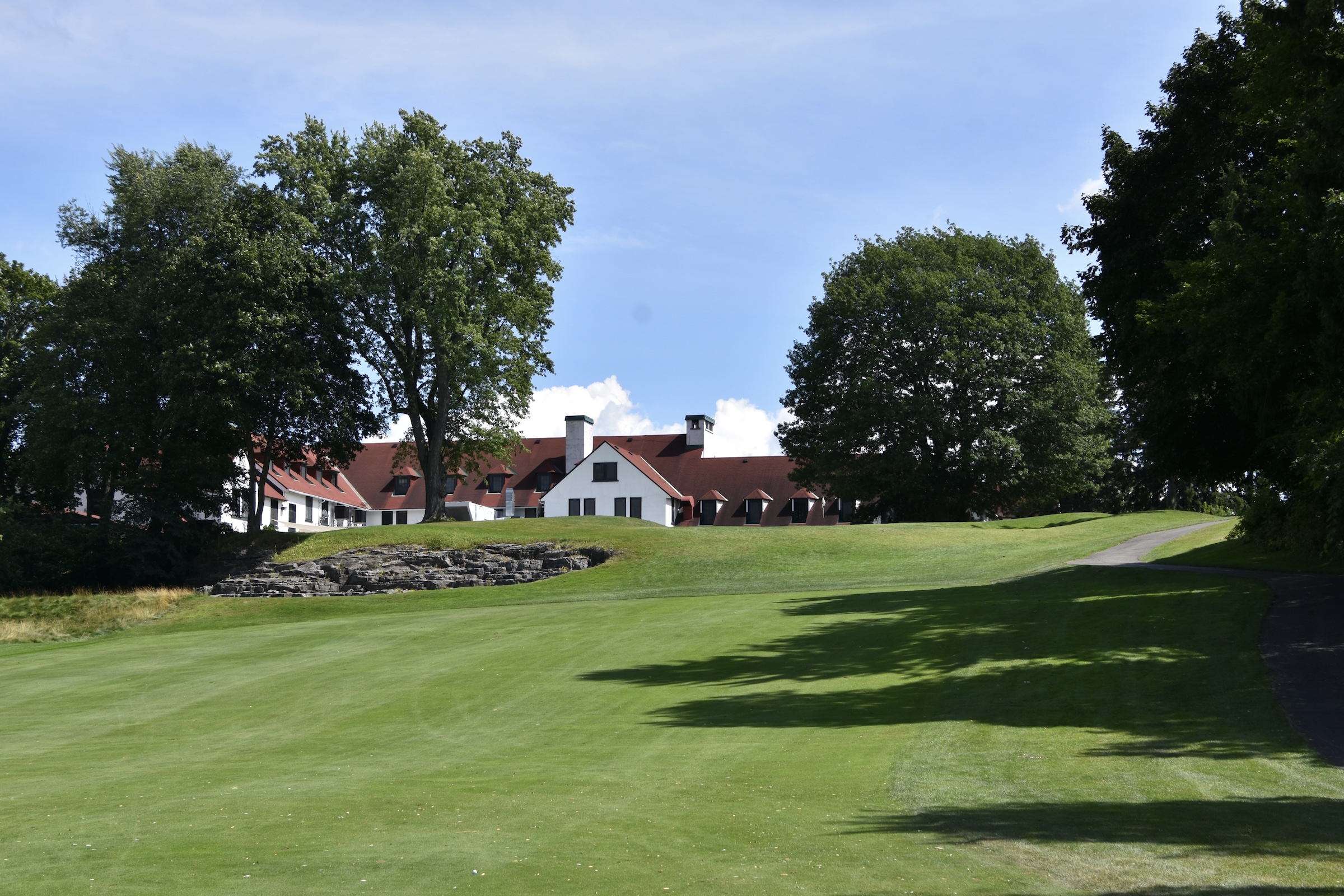
The first course architect was the renowned Willie Park Jr. whose Canadian achievements I described in the post on the Laval-sur-le-Lac Green course which he also designed. This first design was strong enough to host a number of national events including the Canadian Women’s Championship, the Canadian Amateur and the CPGA. The current clubhouse, shown above, dates from 1930 which replaced the second clubhouse that was destroyed by fire in 1929.
In 1941 Stanley Thompson, Canada’s most revered golf architect was hired to redo the Park Jr. layout and it is generally accepted that he, in fact, created an entirely new course and it is considered to be one of his best works. The ‘new’ Beaconsfield attracted even more prestigious tournaments than the old including the Canadian Open in 1946 and 1956, the latter being won by Doug Sanders when he was still an amateur. In 1953 Beaconsfield became the first club in the world to host a multi-country competition, the Canada Cup which evolved into the World Cup which was played until 2018. The PGA has announced plans to revive it in 2028. That first Canada Cup was won by Argentina which was the only team out of seven to break par. The United States team of Julius Boros and Jim Turnesa were a whopping +16. Other well known competitors included Bobby Locke, Peter Thomson and Canada’s own Stan Leonard.
In 2003 the club became a certified Audubon Society Sanctuary which means that it is maintained in accordance with strict environmental standards that do not negatively affect the wildlife that coexists with the golfers and actually enhances it.
The club has just completed an extensive renovation which has restored a number of the original bunkers, improved drainage and other improvements that have not in any way detracted from the Thompson design. This is perhaps the reason why Beaconsfield has made such a significant jump in the SCORE Golf ratings in only two years. Well I’m, about to find out.
Beaconsfield #1 Grand Trunk – 355 Yard Par Four
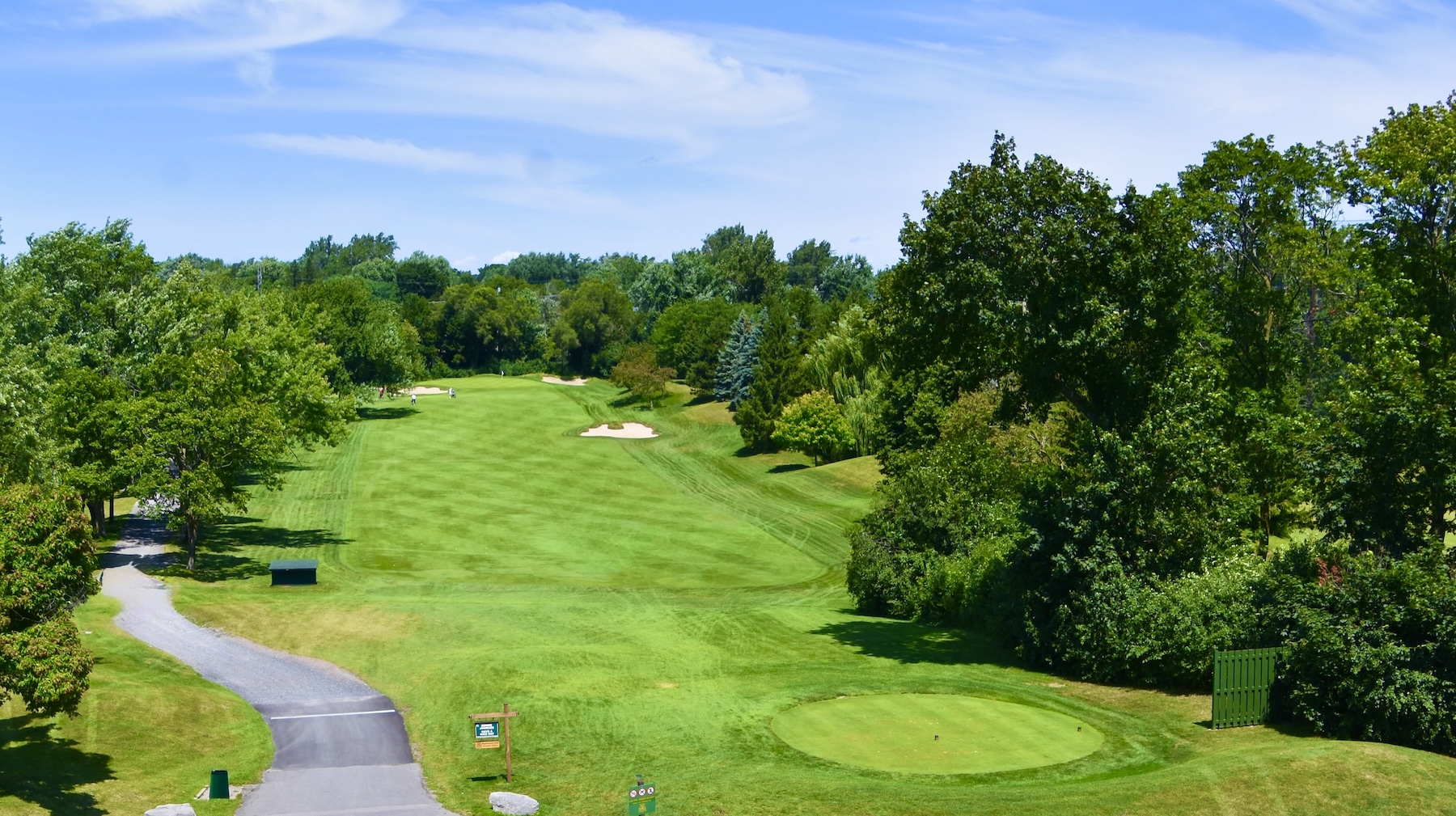
From the tips Beaconsfield comes in at only 6,501 yards which explains why it no longer hosts major events. I’ll be playing from the white tees which are 5,587 yards which is plenty for me. I’ve been teamed with three much younger and better golfers who are clearly good friends and don’t take the game too seriously, although there’s definitely money on the line.
The defining feature of this golf course is the man made plateau that rises pretty well in the middle of the club’s terrain. This was created when much of the limestone around it was removed as part of the quarrying process. The name comes from the Grand Trunk Railway (later the CNR) which was responsible for quarrying the limestone.
I love opening holes that feature a significant drop in elevation and Beaconsfield opens with this dramatic par four with the tee box on the top of the plateau. It has a pretty generous landing area with my target being the trap on the right that I can’t reach. My right to left ball flight should leave a decent approach that will take the bunker on the left side of the green out of play. At least that’s the plan.
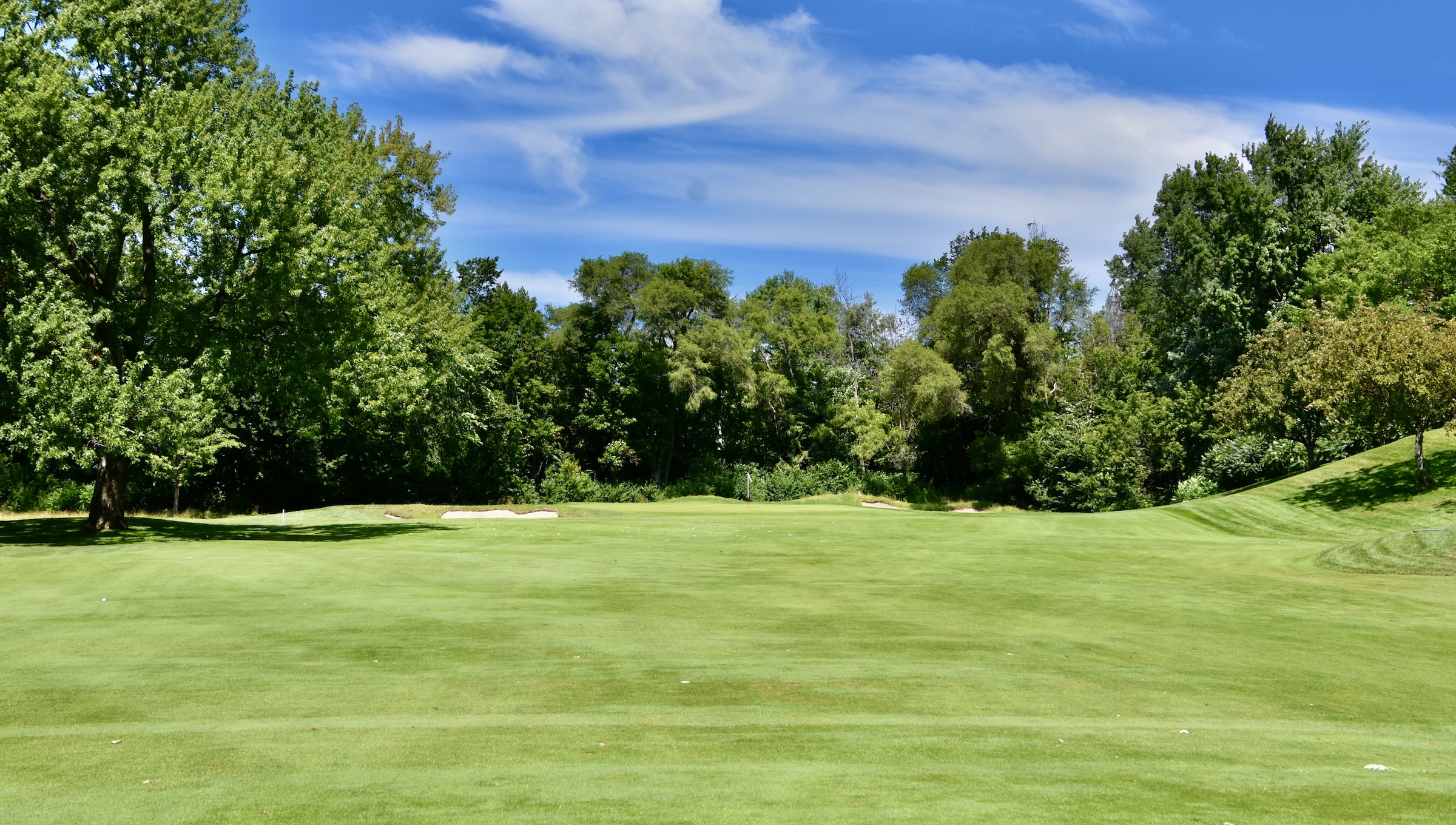
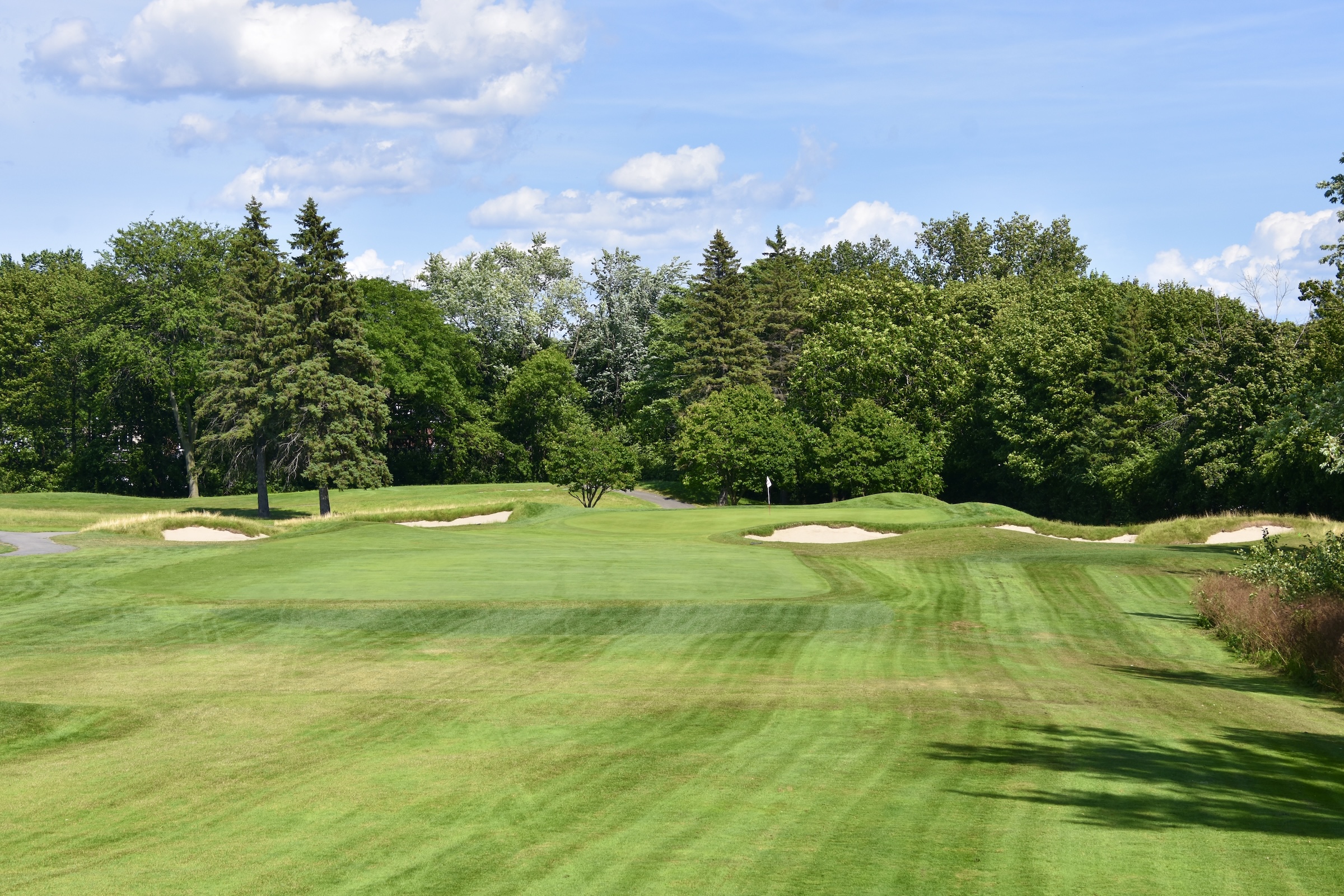
That did work, leaving this approach shot to a smallish green with the pin dead in the middle. Notice that the fairways have gentle undulations that can kick a drive forward or to the left or right depending on how the ball lands. This is typical of a lot of Stanley Thompson courses including my home course Old Ashburn in Halifax.
The greens at Beaconsfield were both fast and fair. They are Poa annua (annual Bluegrass) that is considered a weed in some places, but with a superintendent that knows what he/she is doing, it can be made into a high density putting surface. Perhaps the most famous club using poa annua greens is Oakmont. Thompson greens are typically subtle, rather than overly undulating like a lot of modern courses.
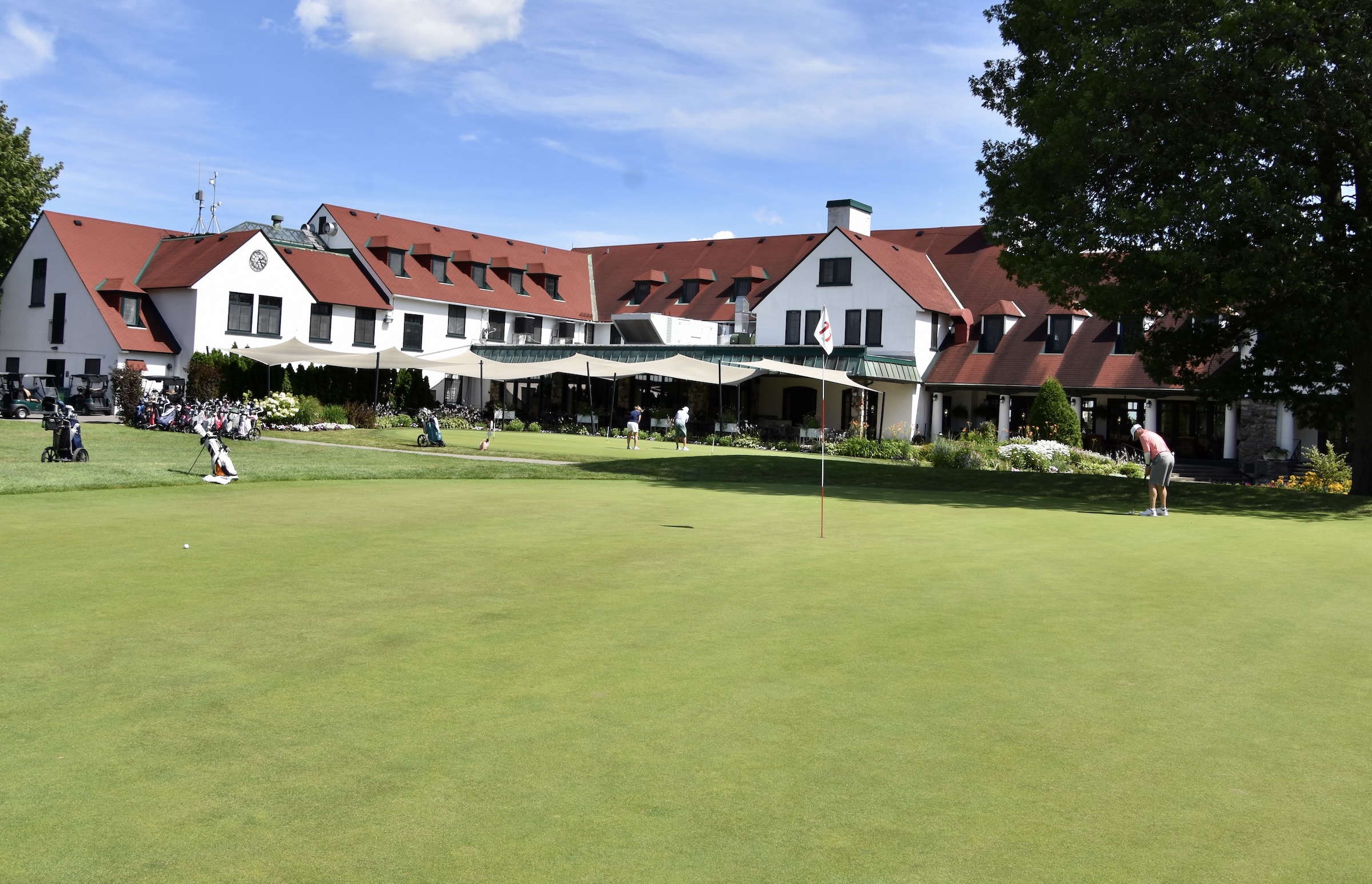
Okay the first hole is in the bag with no damage done.
#2 The Gap – 293 Yard Par Four
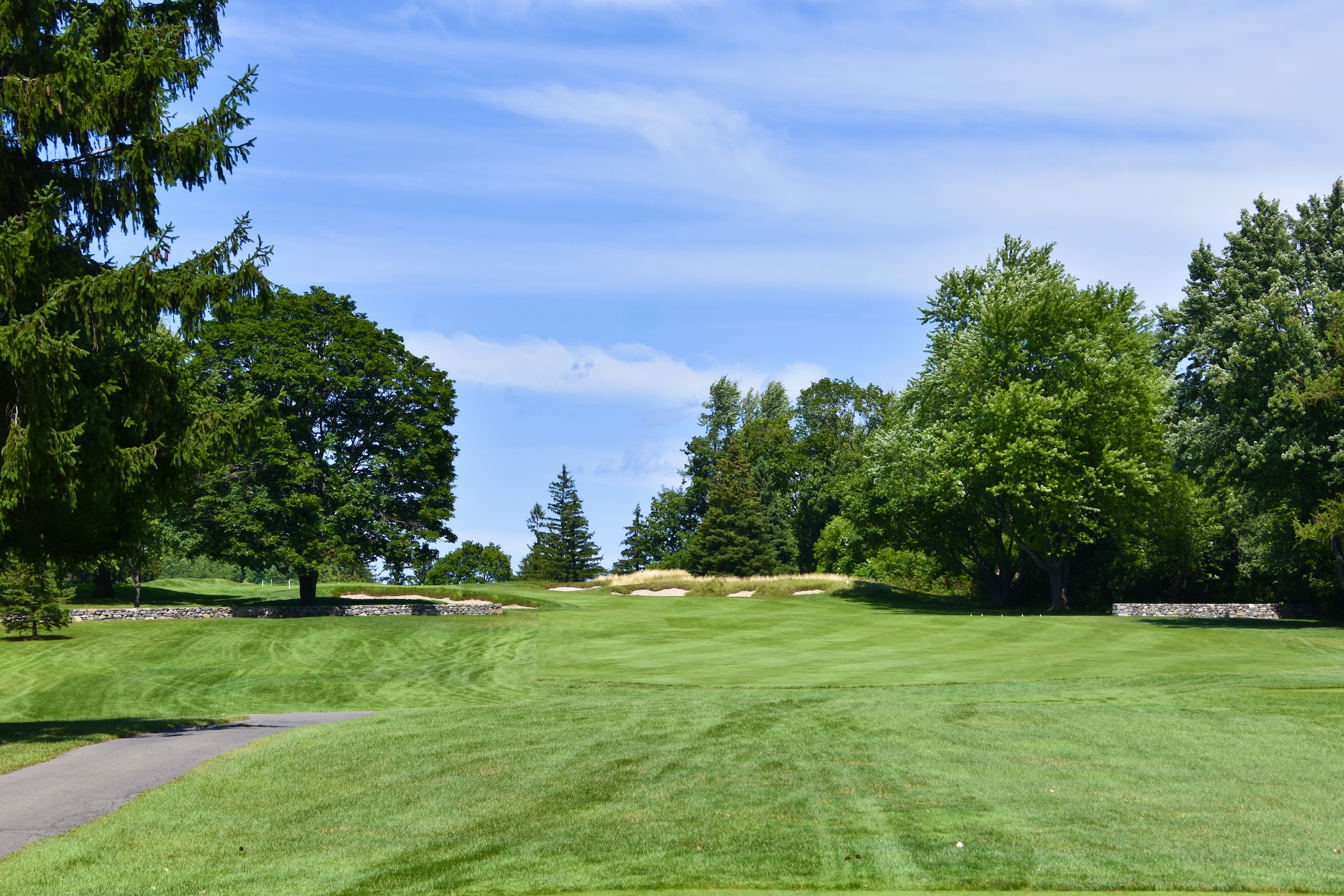
For the next hole you use a tunnel to go under Autoroute 20 and play most of the rest of the front nine on that side.
While this hole is very short, it is also quite deadly. The Gap is the narrow fairway that passes between the two old stone walls. It’s a blind tee shot with trouble seemingly everywhere. If I did not have my companions I would not have had a clue where to aim. Turns out the fairway snakes a bit to the left and once again suits my right to left ball flight. I used a five wood and underestimated how much elevation there is to this hole, coming up woefully short for the approach shot.
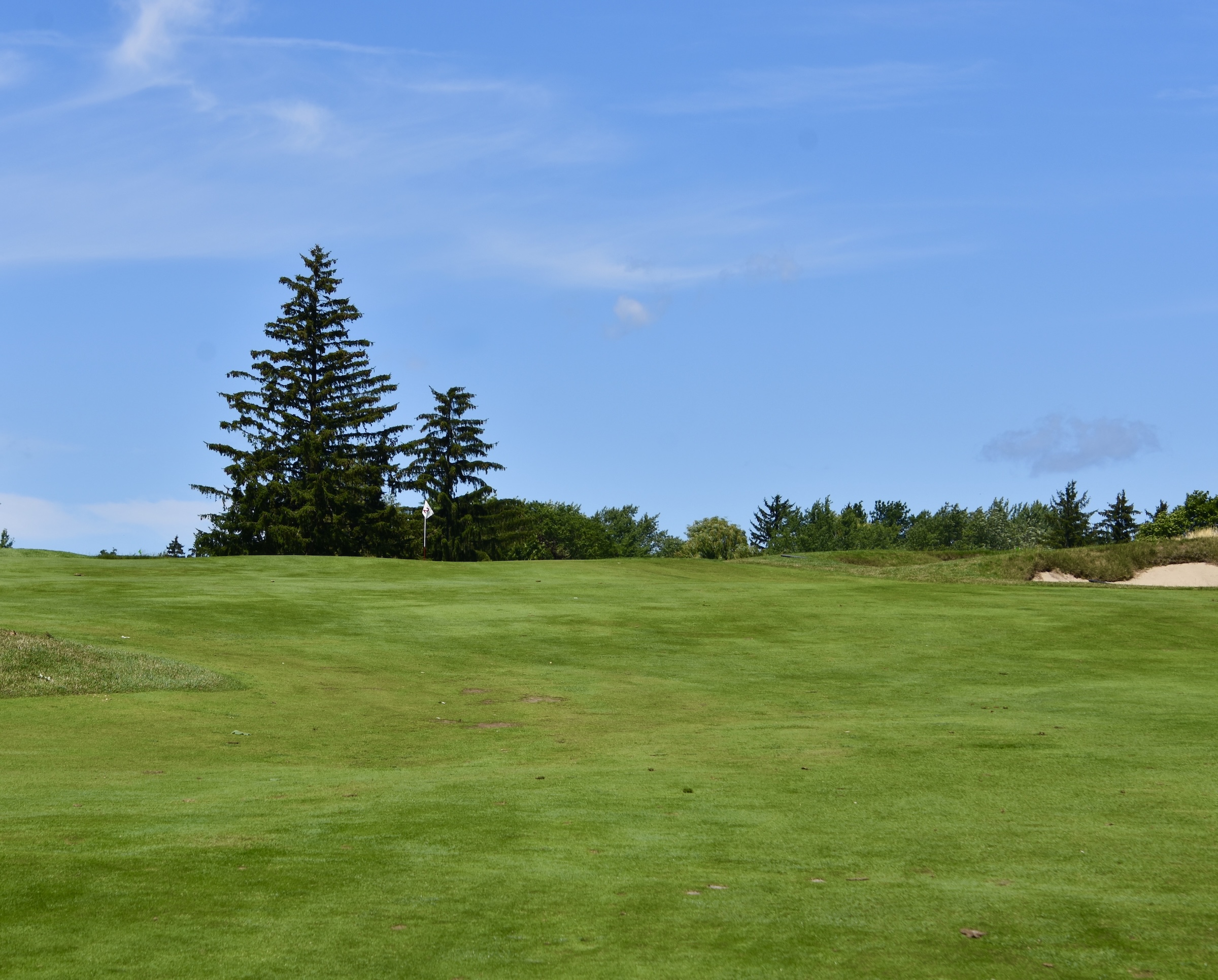
Still it was a short iron to a green that slopes quite severely from back to front. You definitely do not want to be above the hole here. This is really a great short par four and a great one-two opening duo at Beaconsfield.
Beaconsfield #3 Corner – 367 YardPar Four
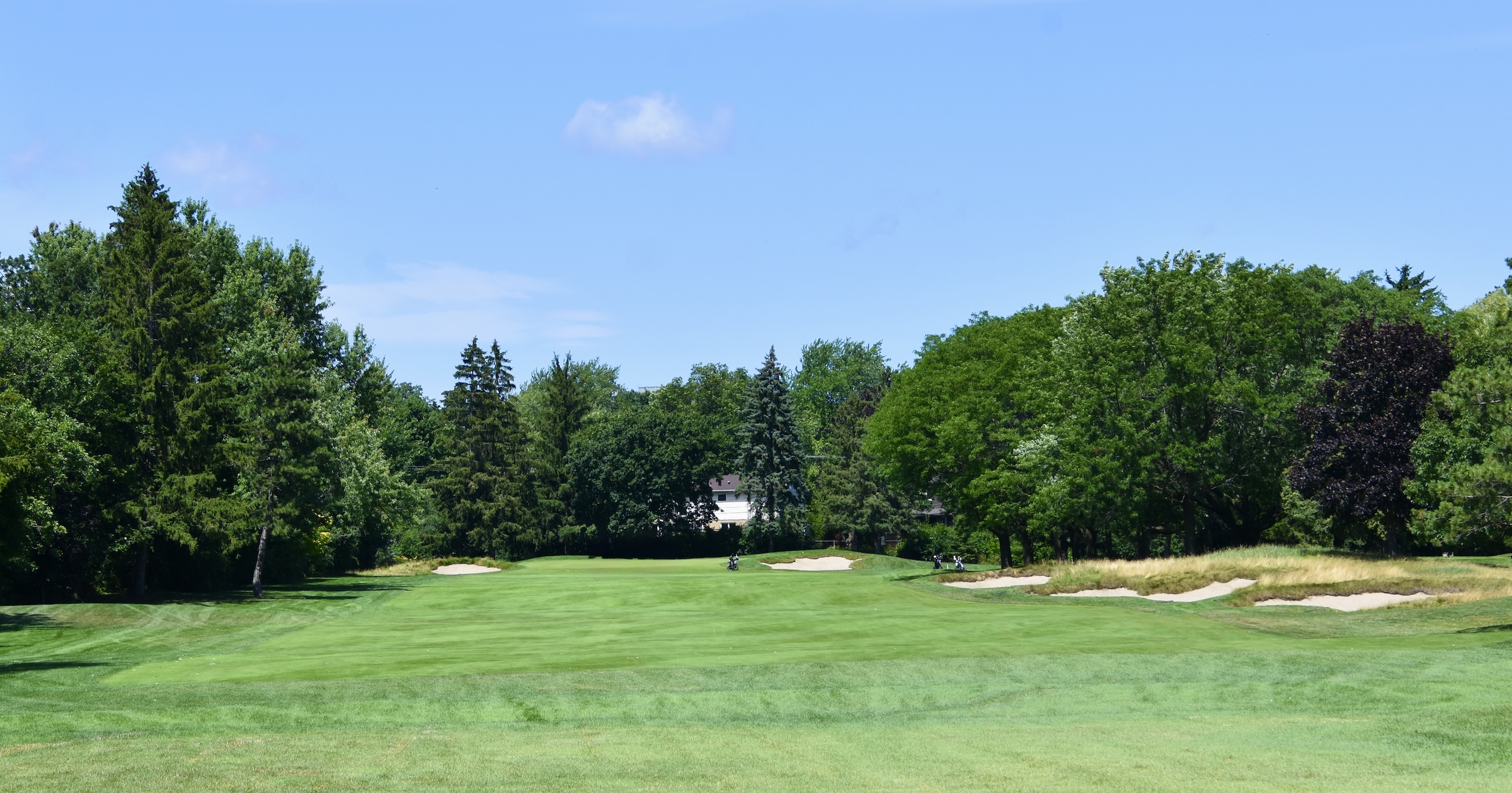
The Corner does not refer to a dogleg as the name might imply, but rather that it is on the northwest corner of the course. It is much longer than this photo would lead you to believe and those fairway bunkers are definitely in play, but once again I’m in luck because they are on the right side. My target with a driver is the left edge of the third fairway bunker.
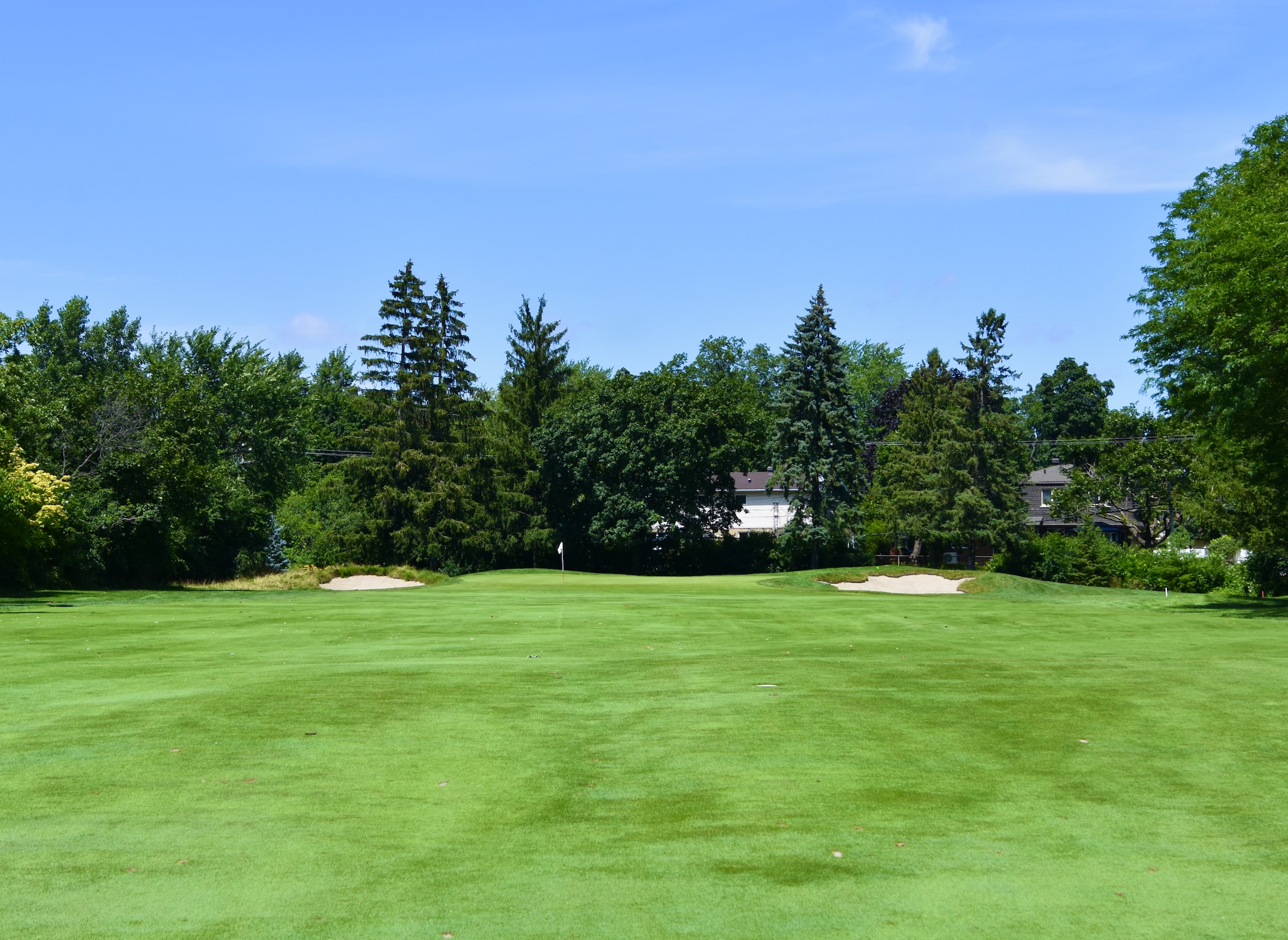
That leaves this mid iron approach to a small green. My paranoia about bunkers leads me to take a low running approach shot that lands well short and results in a bogey. Not the worst result on this challenging par four.
#4 Oasis – 159 Yard Par Three
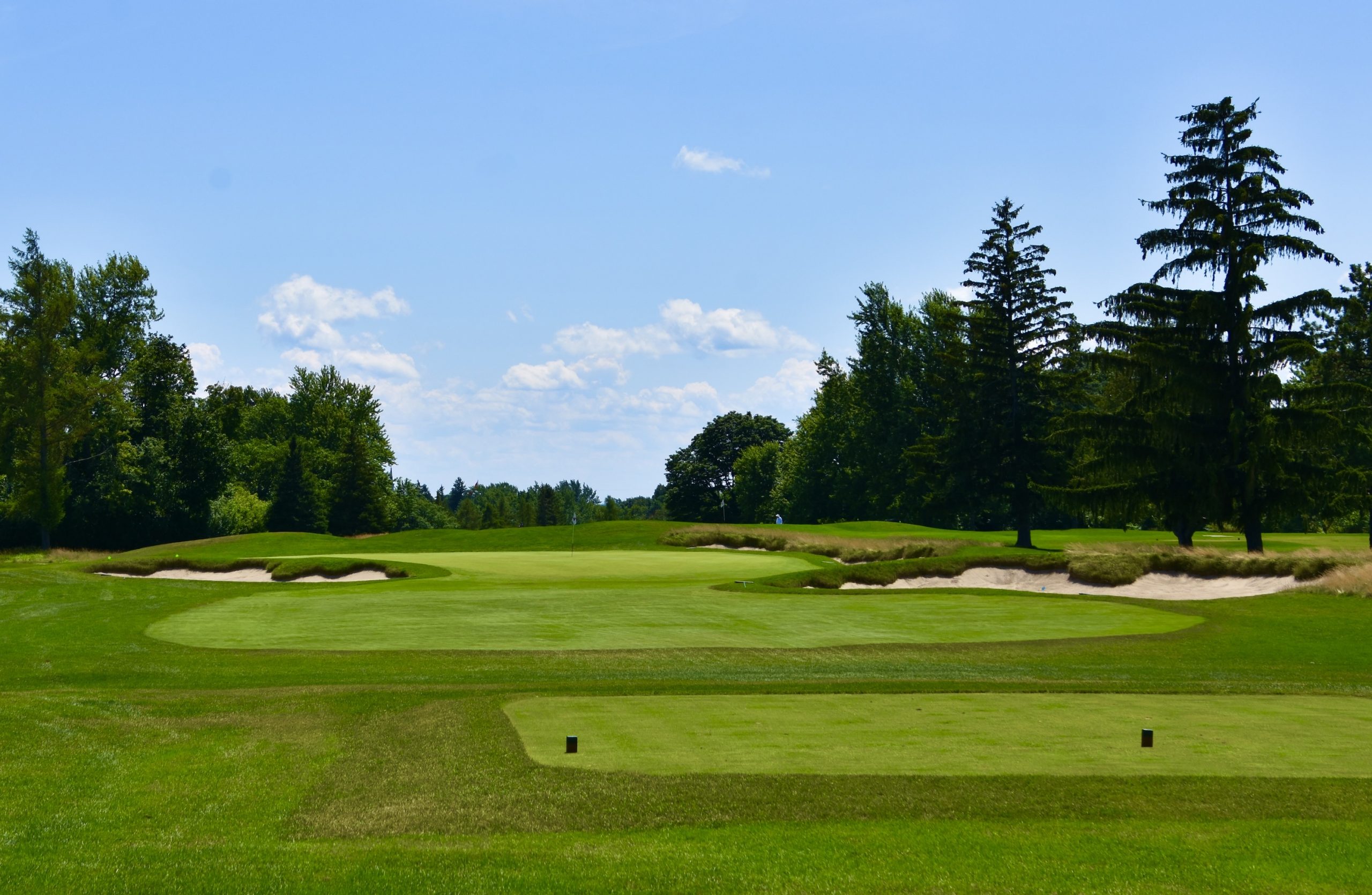
There are five par threes as Beaconsfield and collectively they represent one of the strongest sets that Thompson has produced on any of his courses. He did not have the majestic backdrop of the Rockies such as at Banff Springs or Jasper Park or the Atlantic Ocean as at Highlands Links, yet he has created a really memorable fivesome starting with this hole.
It plays a crazy 230 yards from the red tees which really brings those bunkers into play and those are typical Thompson bunkers with their ragged edges and very natural look that makes them so deadly. There is a backstop behind the green so I’m taking one more club than might be necessary to take the front left bunker out of play. It works, but a three putt puts another bogey on the ard.
Beaconsfield #5 Faraway – 461 Yard Par Five
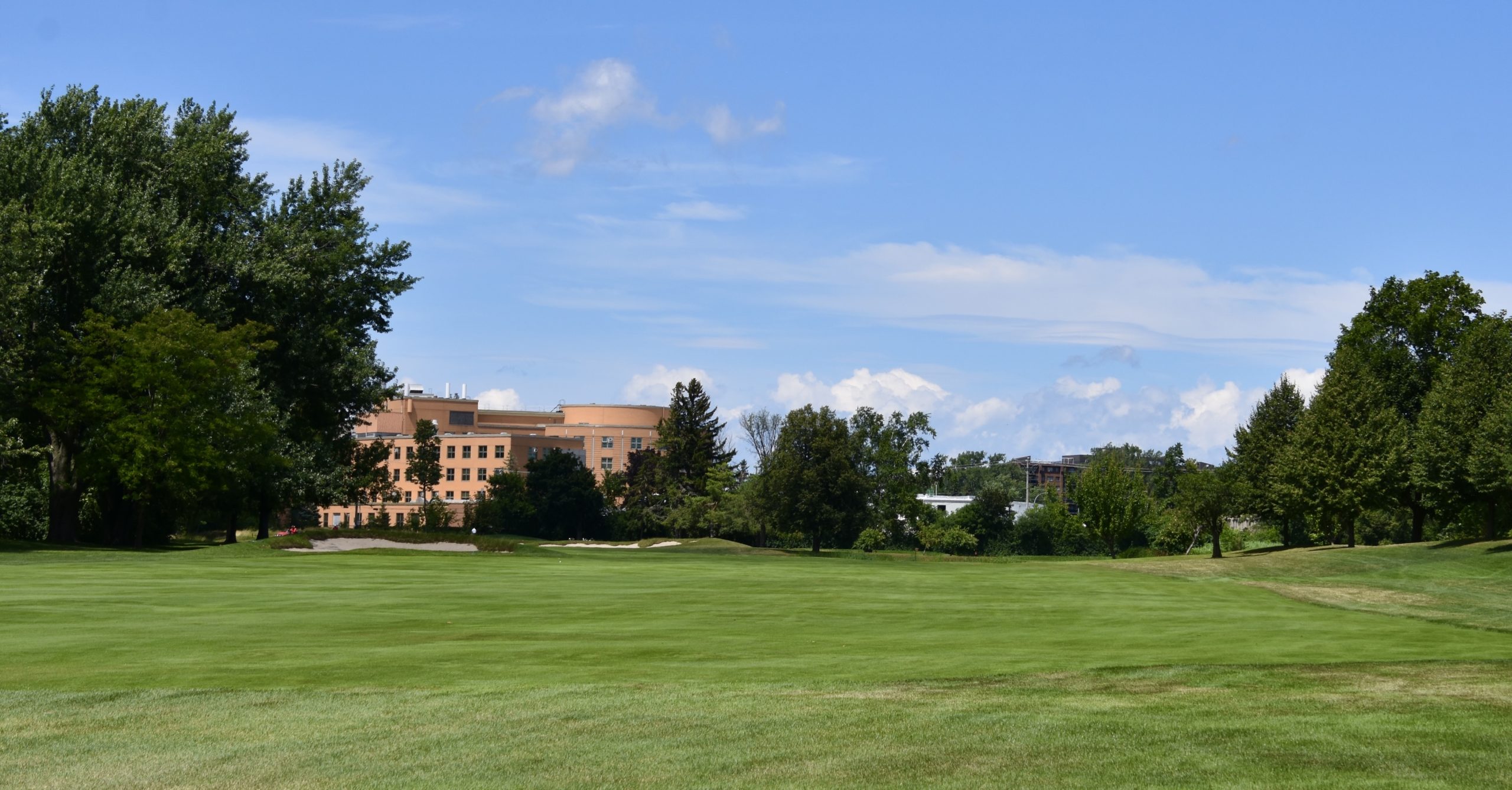
This is the longest hole on the course no matter which set of tees you choose to play. My days of reaching par fives in two are long gone, if they ever existed and I play all par fives as three shot holes. That allows me to put the driver away and use three wood off the tee in most cases like here because now the bunkers are in my danger zone.
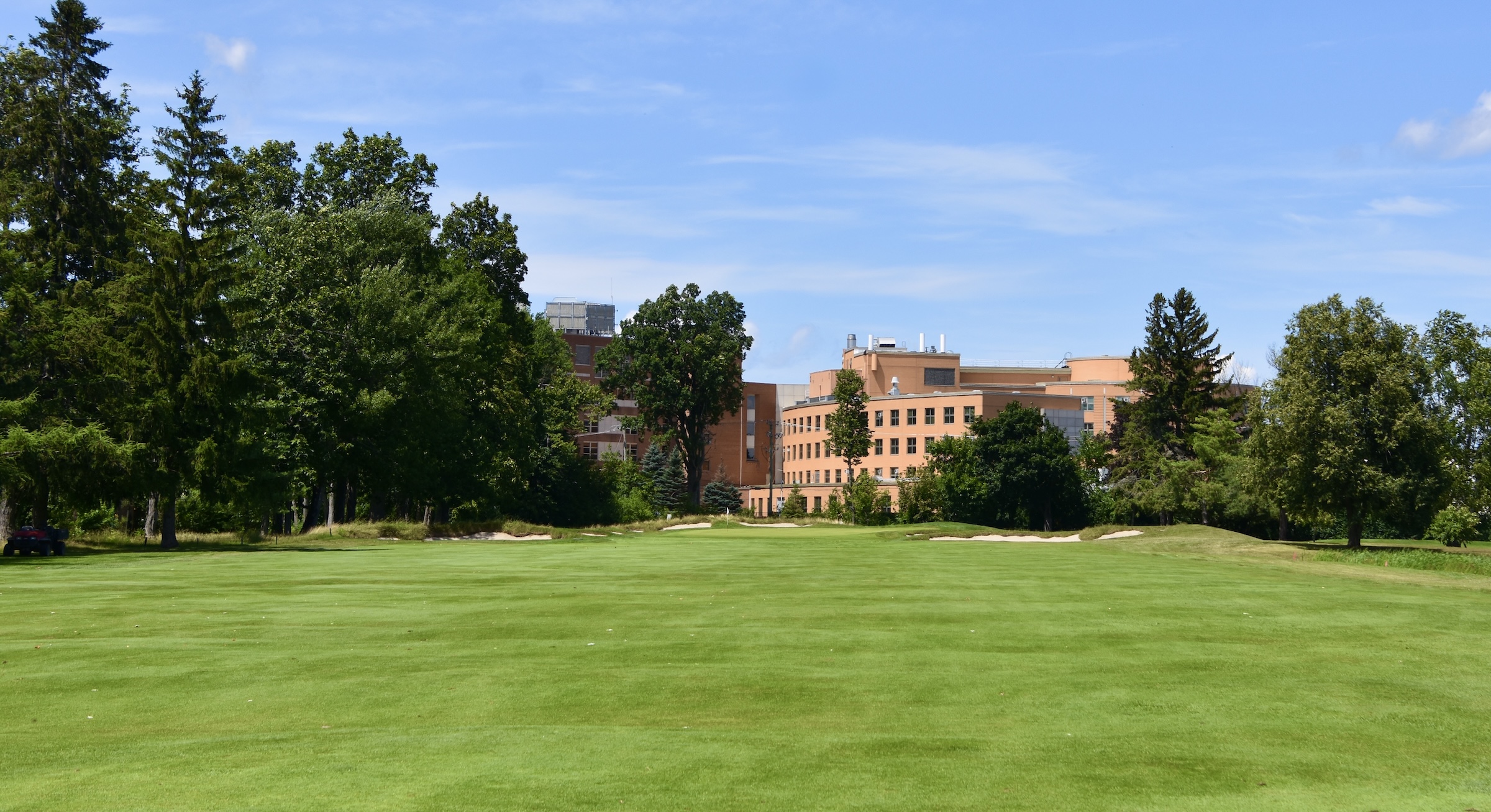
This is one of the few holes at Beaconsfield where the outside world intrudes such as the hospital above. The important thing on this second shot is to stay in play so I use a hybrid to maintain accuracy over distance.
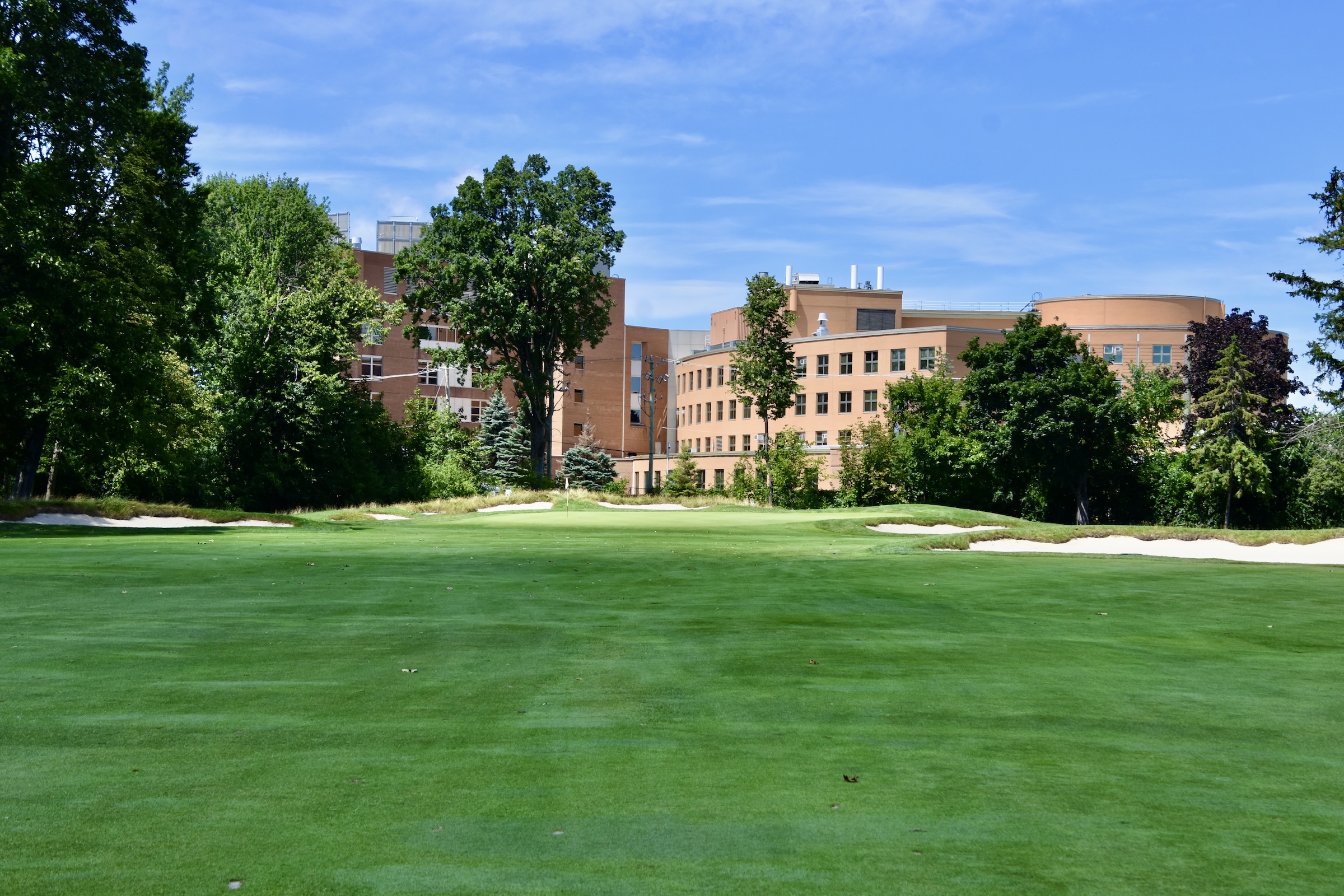
There are no less than five traps lurking around this green, but I’ve positioned myself to use a gap wedge to the centre. This is my first real birdie opportunity, but that doesn’t happen. However, it’s nice to be back on the par train.
#6 Hoodoo – 370 Yard Par Four
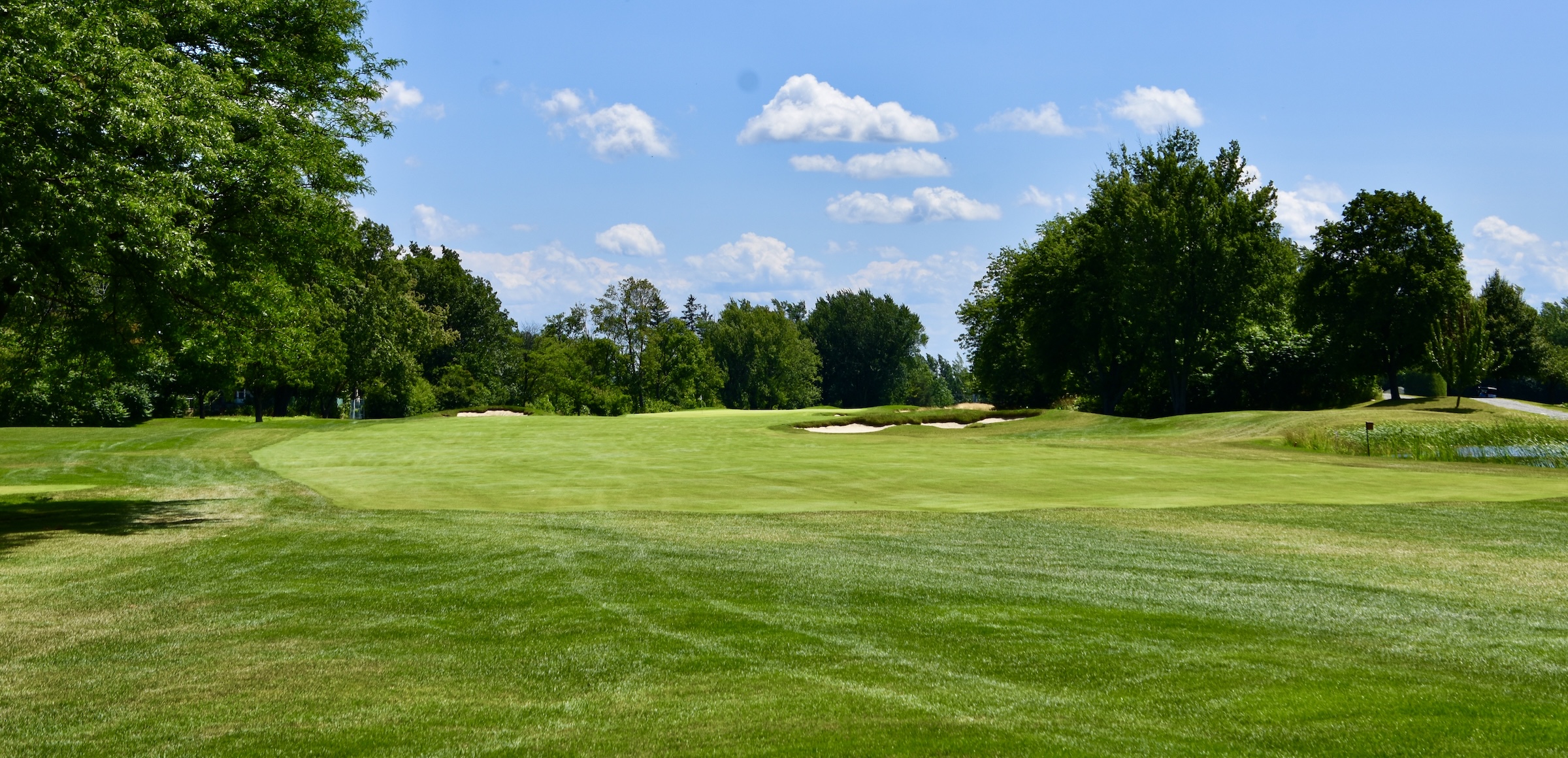
This is the #1 stroke hole at Beaconsfield and it plays like it. It plays long, increasingly narrow and slightly uphill. There’s also water trouble on the right as well as a very well positioned bunker. The only trouble I didn’t see was a hoodoo. Once again I had to rely on the members to help line up this tee shot.
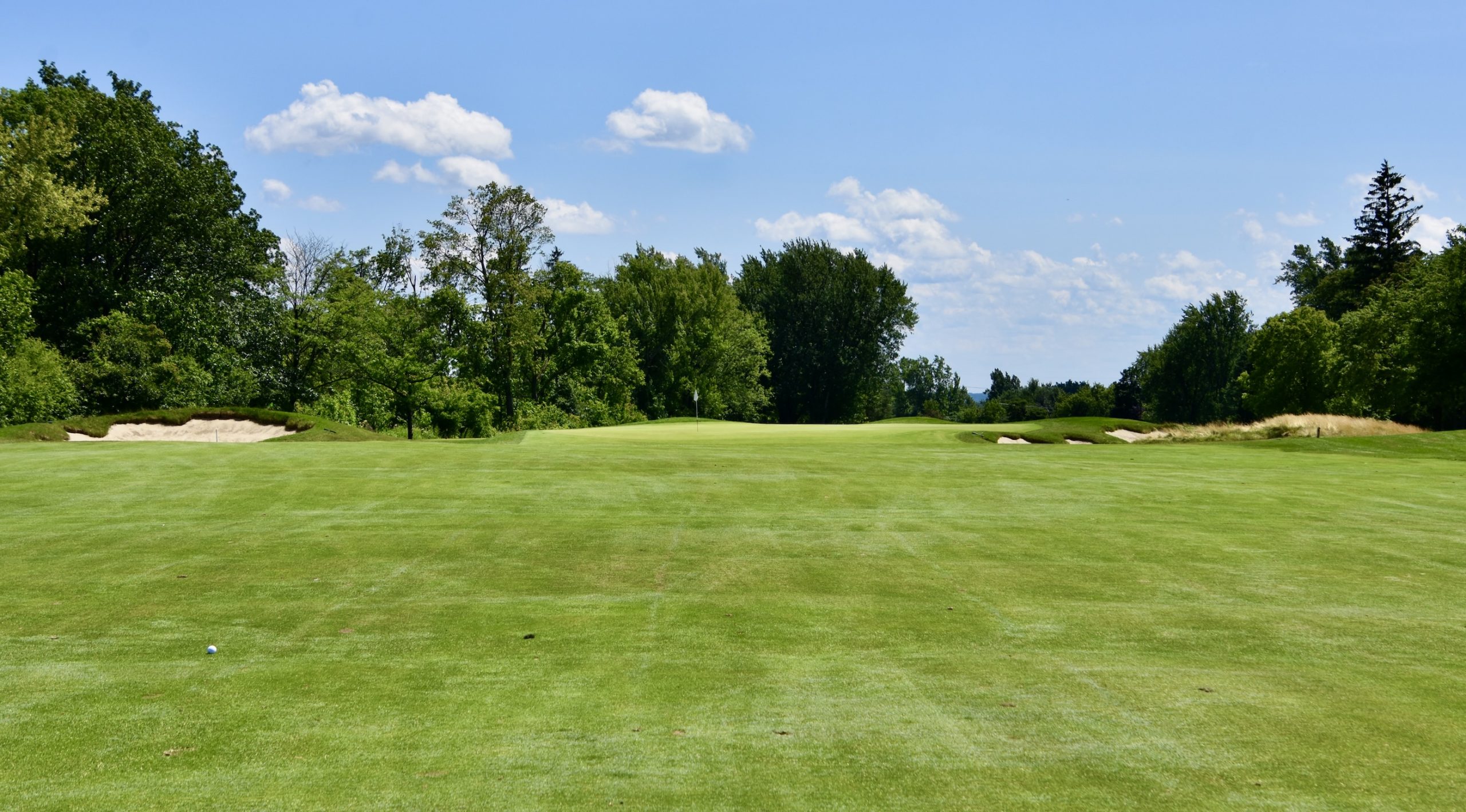
Even with a decent drive I still had this long approach, but fortunately the pin was placed well away from the right hand bunker. Another bogey, but I was not unhappy with it.
Beaconsfield #7 Lakeview – 342 Yard Par Four
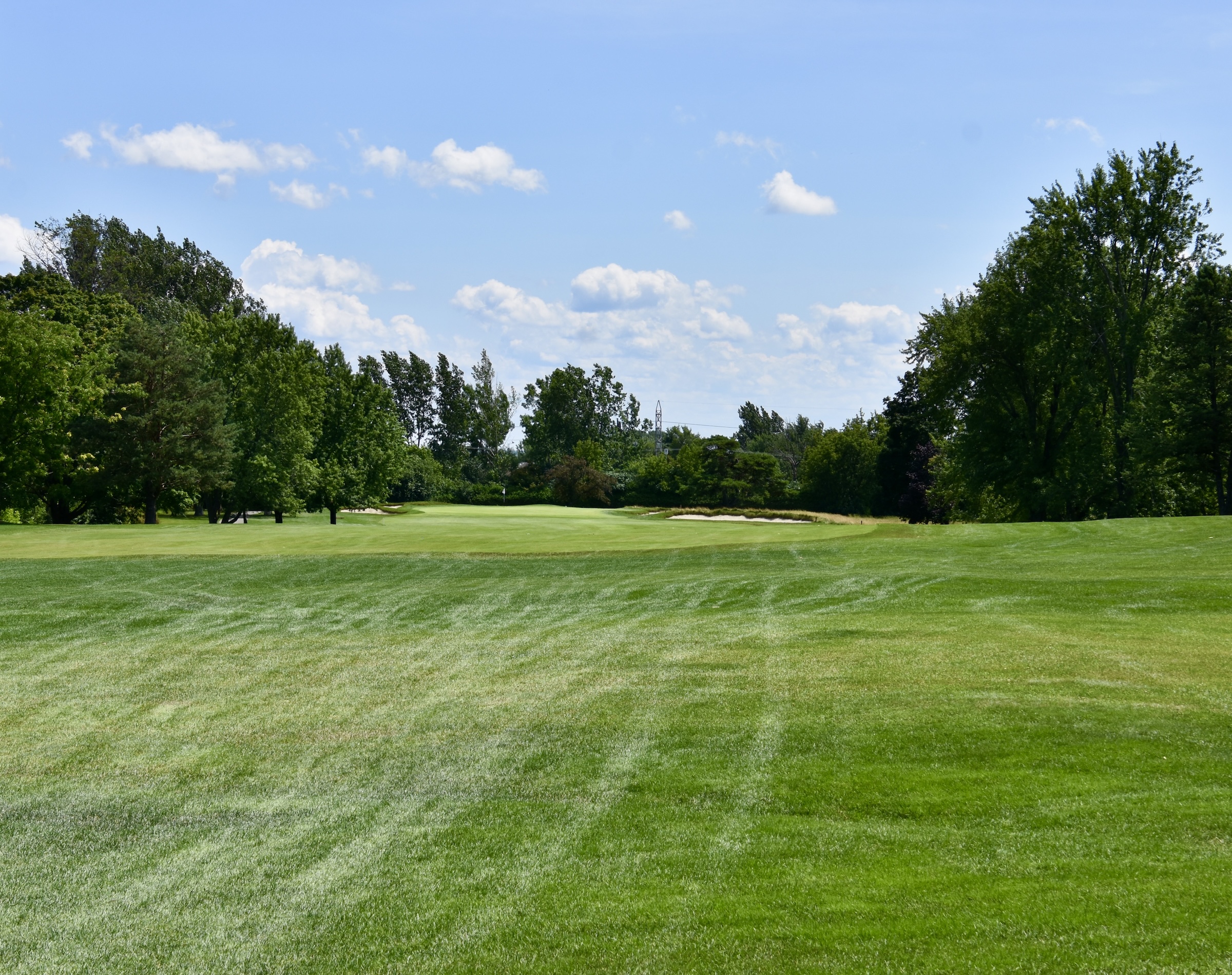
This slight dogleg left is perfect for my ball flight and I have my longest drive of the day here.
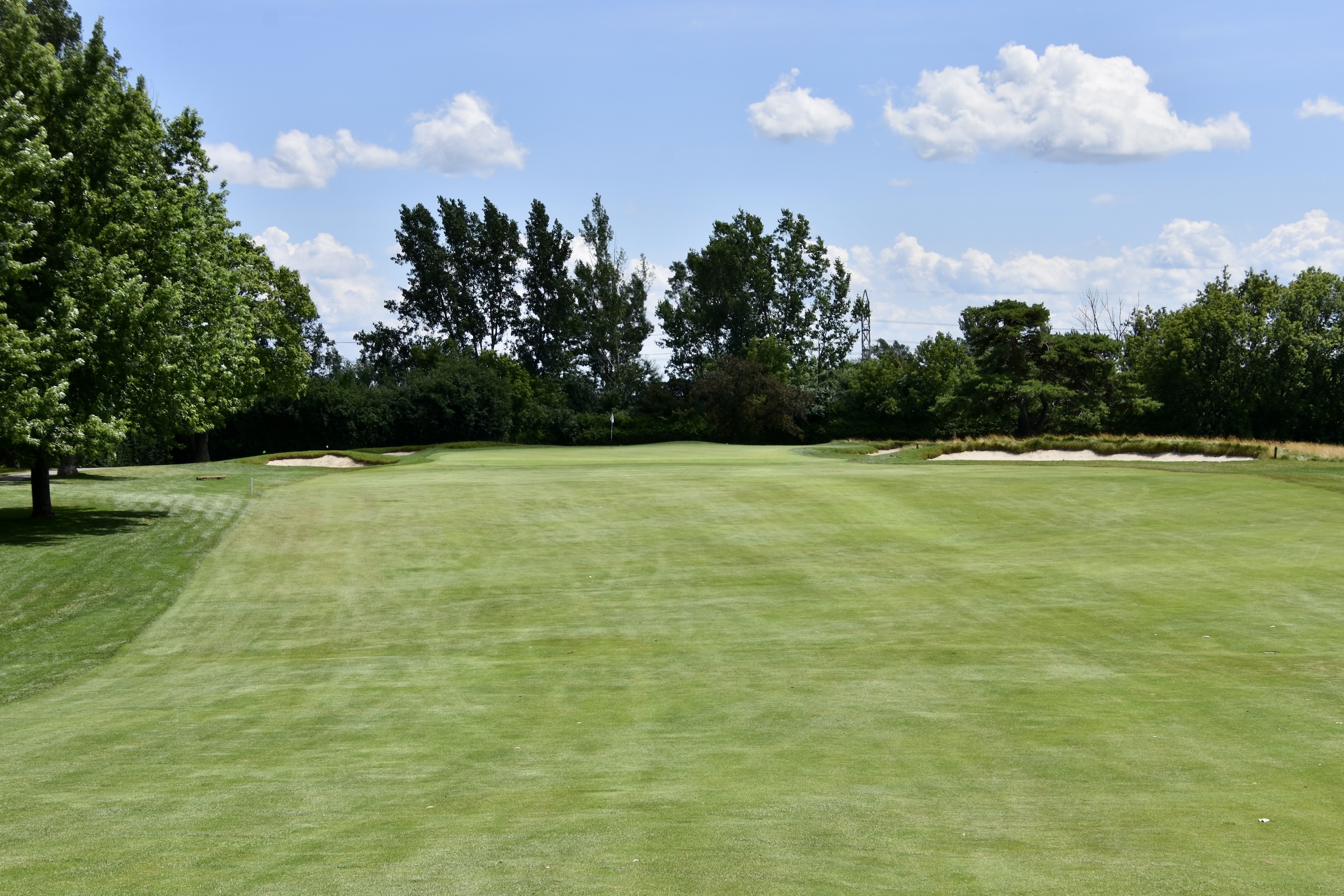
Leaving this seven iron in for a fairly benign par. The last three hole stretch could be a game wrecker, but I have managed it, no small thanks to the tips I have been receiving from my playing partners.
#8 High Ball – 130 Yard Par Three
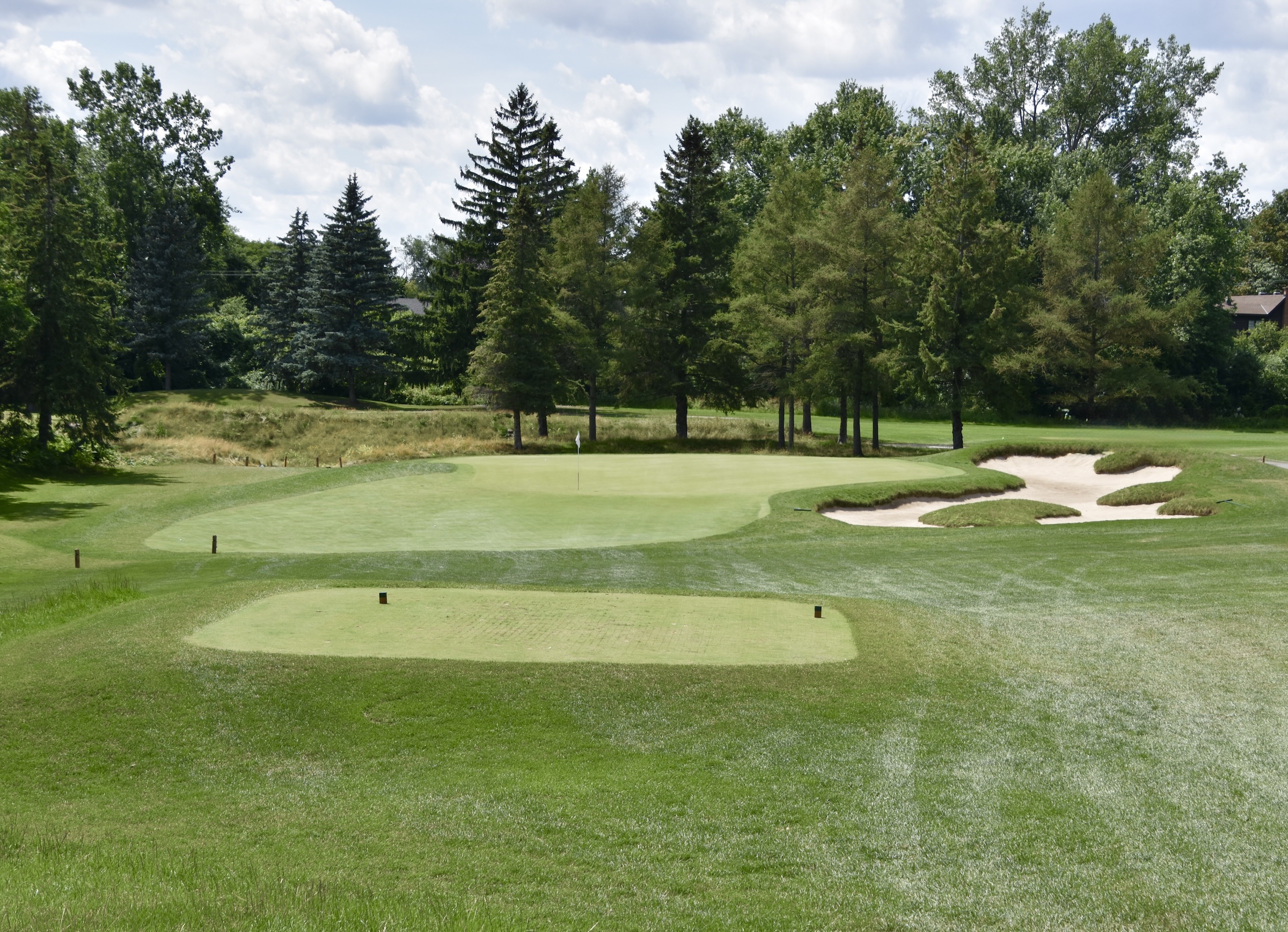
This is the easiest of the par threes at Beaconsfield in my opinion. You cannot be long, but with no trouble in front and a forgiving pin placement this is a birdie opportunity. That doesn’t happen, but par is no sweat.
Beaconsfield #9 Pond – 280 Yard Par Four
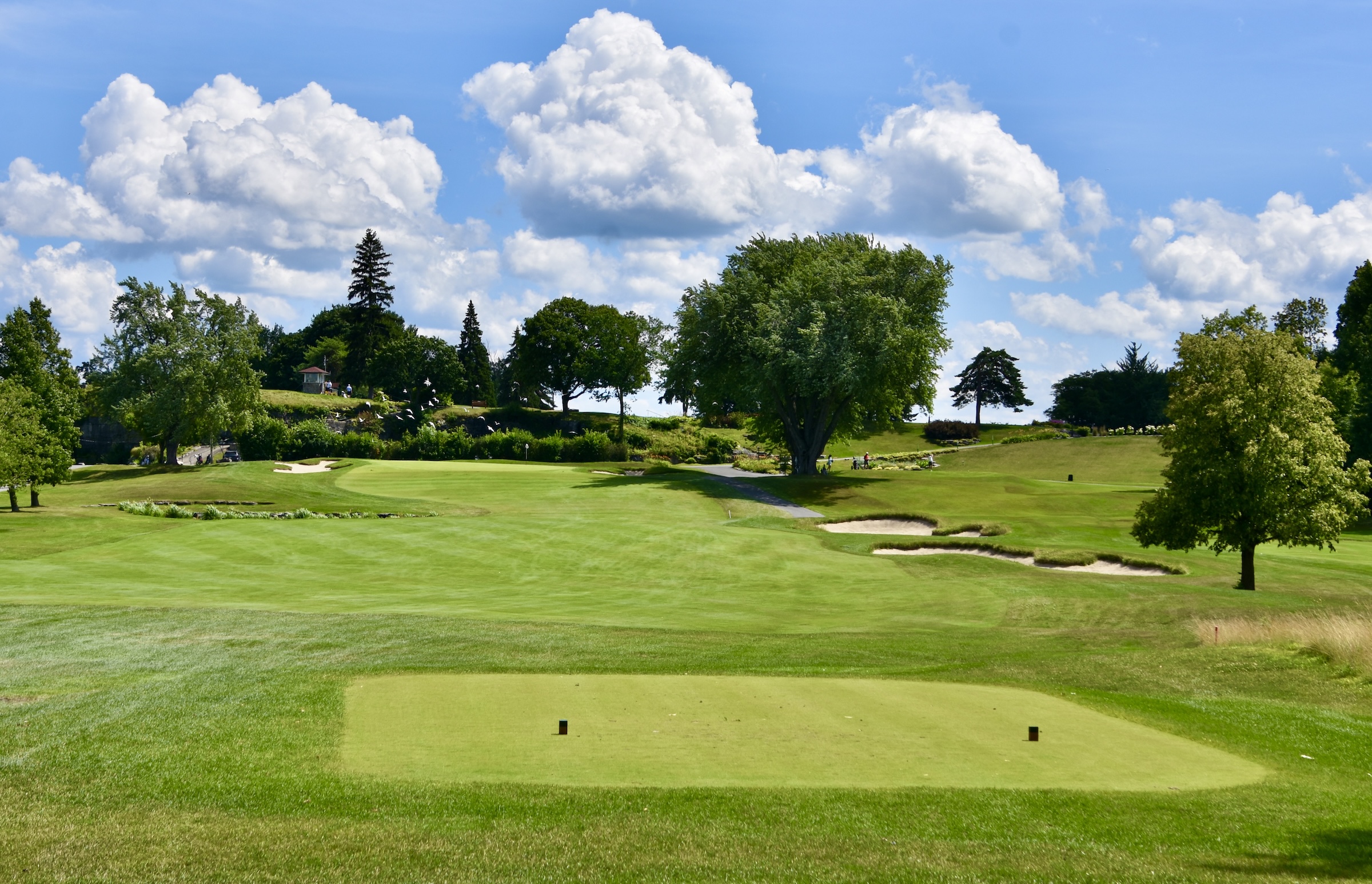
After #8 you go through the tunnel again to return to the last 10 holes. This is a short beauty that requires not yielding to the temptation of trying to clear the pond. Instead a five wood or even a hybrid should come up well short.
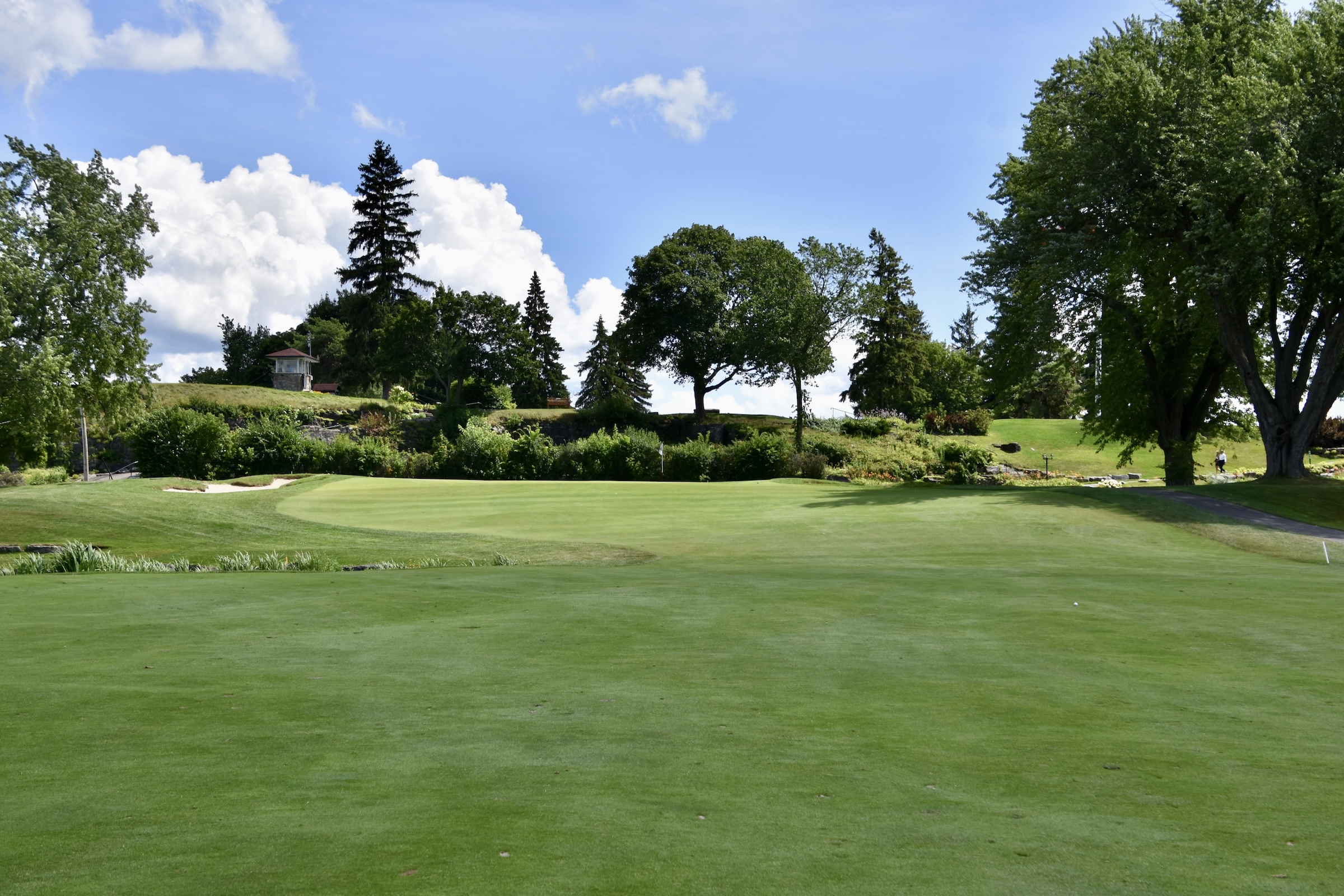
That leaves this gorgeous looking approach shot to an uphill green that has traps on both sides of it. However, with no real trouble long you can take that extra club and put it to the back of this green for a two putt par.
BTW you can see one of my companion’s tee shot some 2o yards ahead of mine even though he teed off 40 yards further back.
#10 Westward Ho! – 450 Yard Par Five
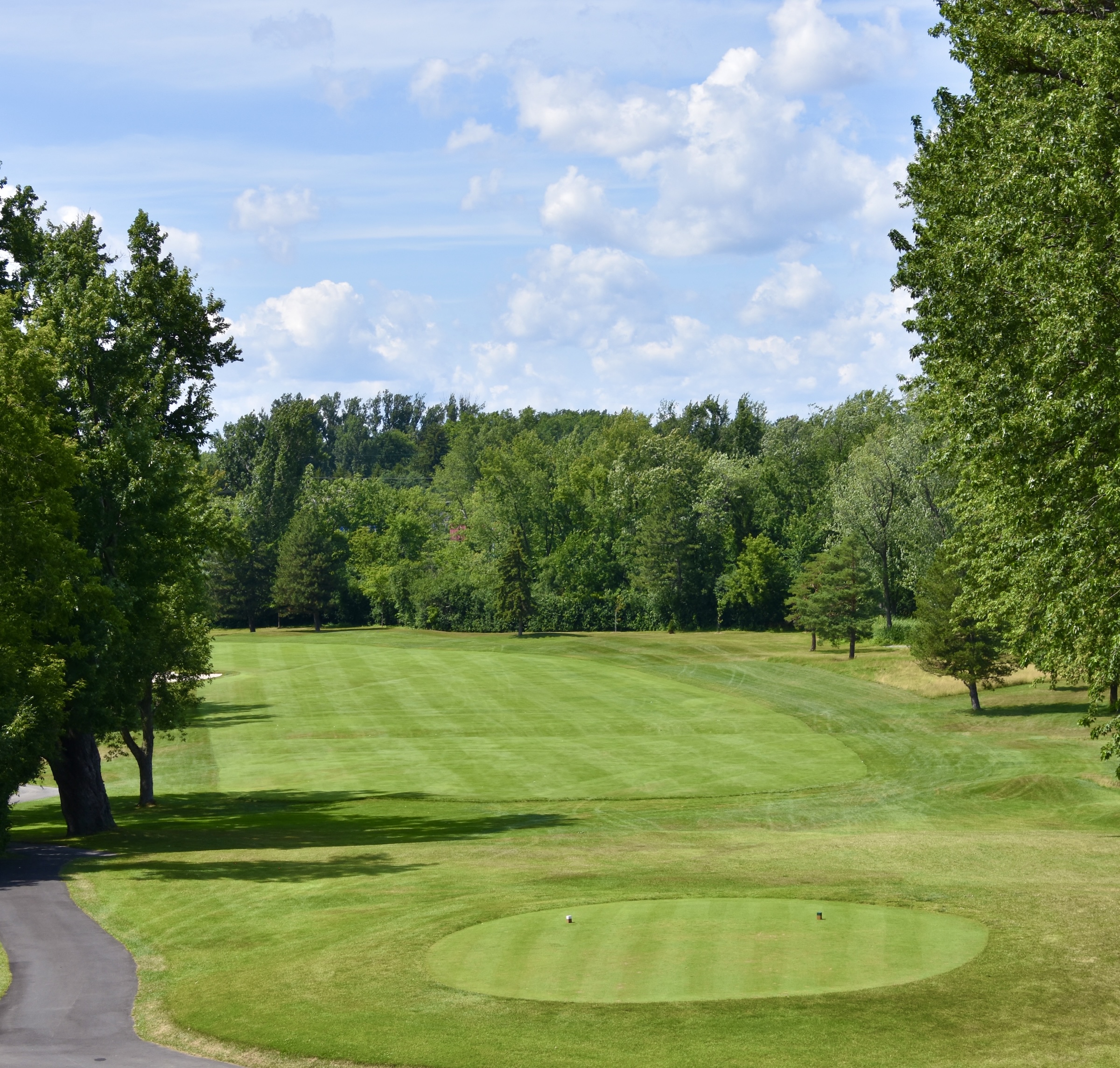
To start the back nine you once again climb the plateau and my playing partners get to tee off from here.
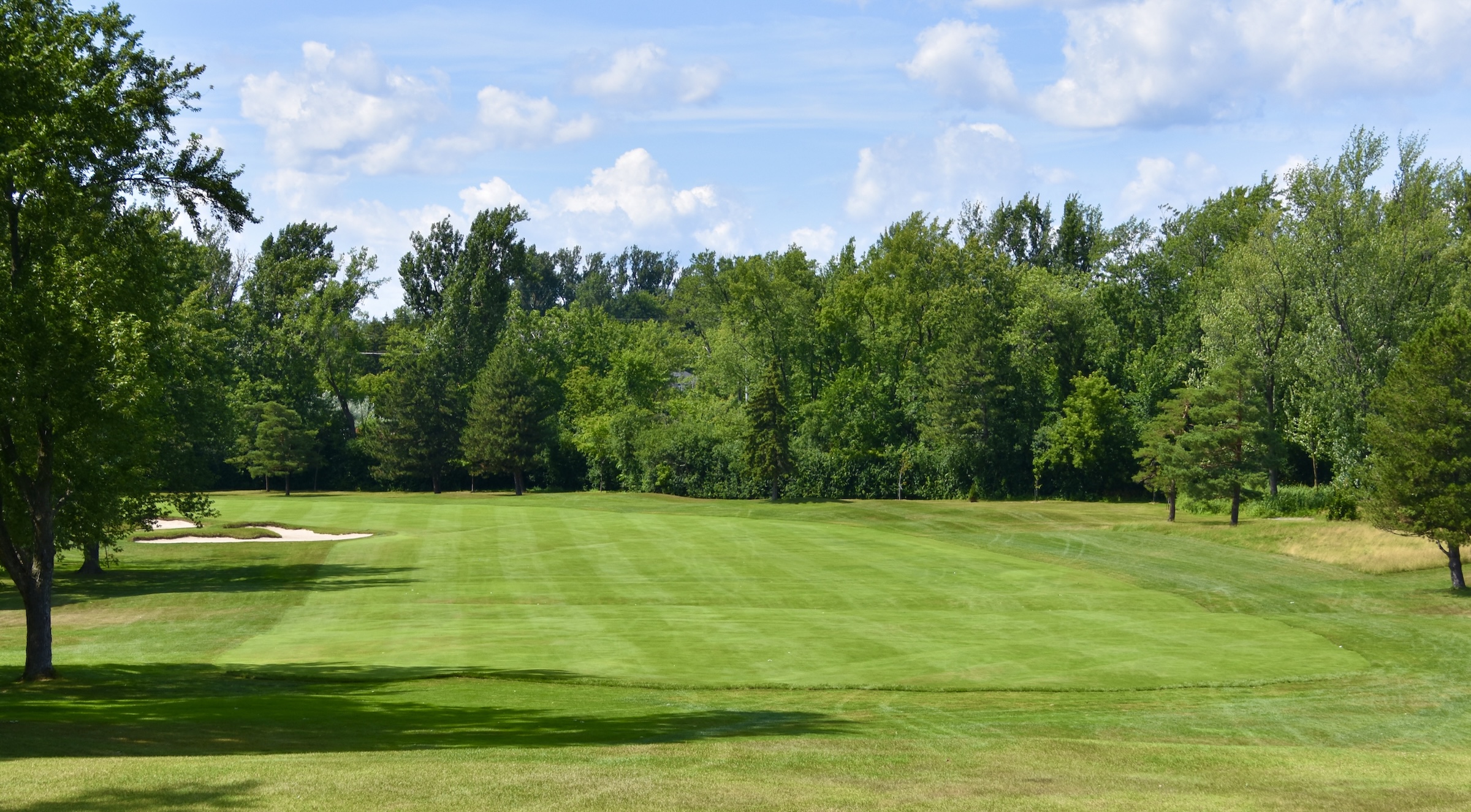
For old farts like me, the tee box is below which very much brings these newly renovated traps on the left into play. I aim down the right tree line with a three wood in an attempt to stay as far away from them as possible.
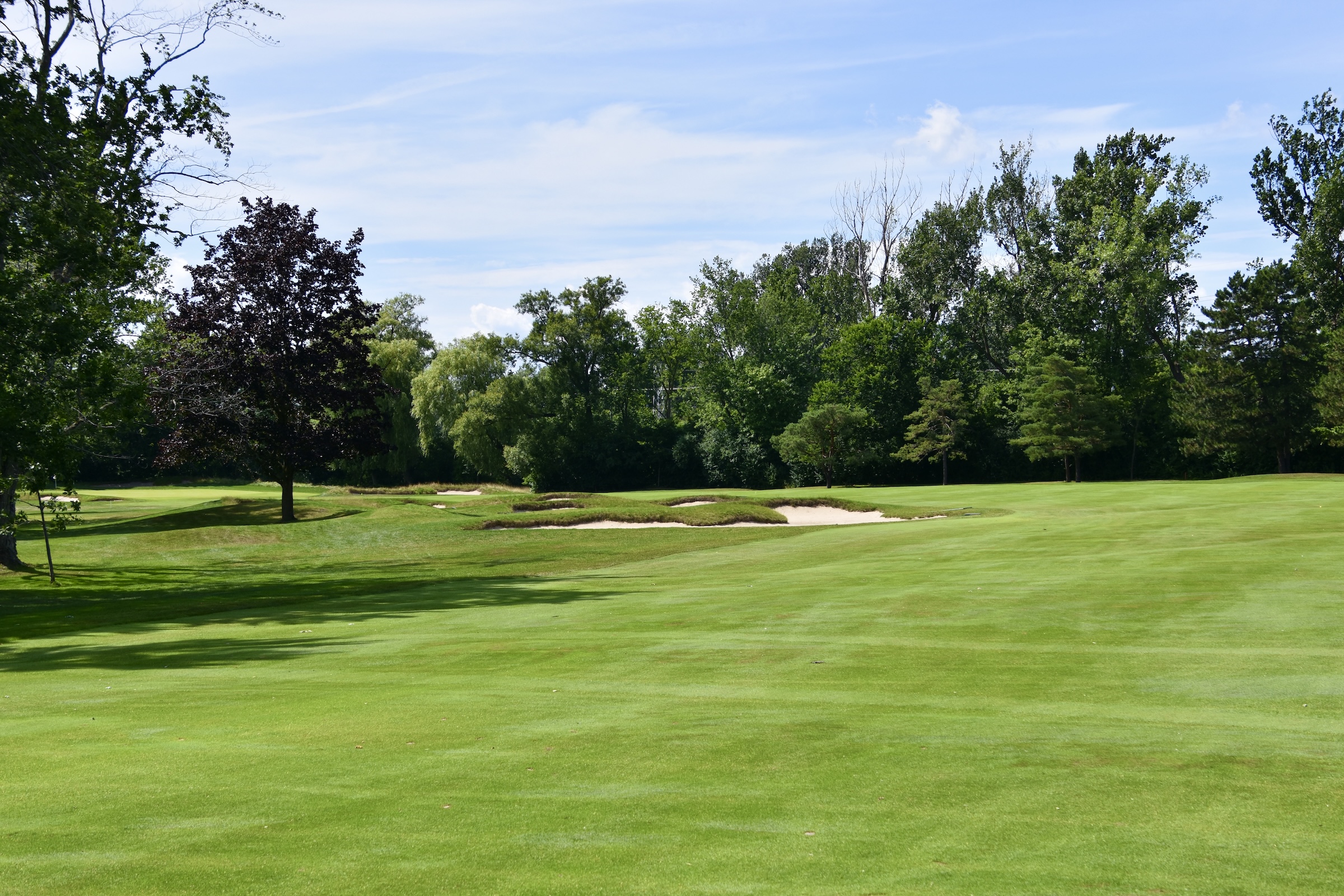
Turns out the traps were a lot farther than I thought and now I’m left with this rather daunting second shot. It’s definitely a risk/reward shot, but being risk averse the first time I play a course, I’m not tempted.
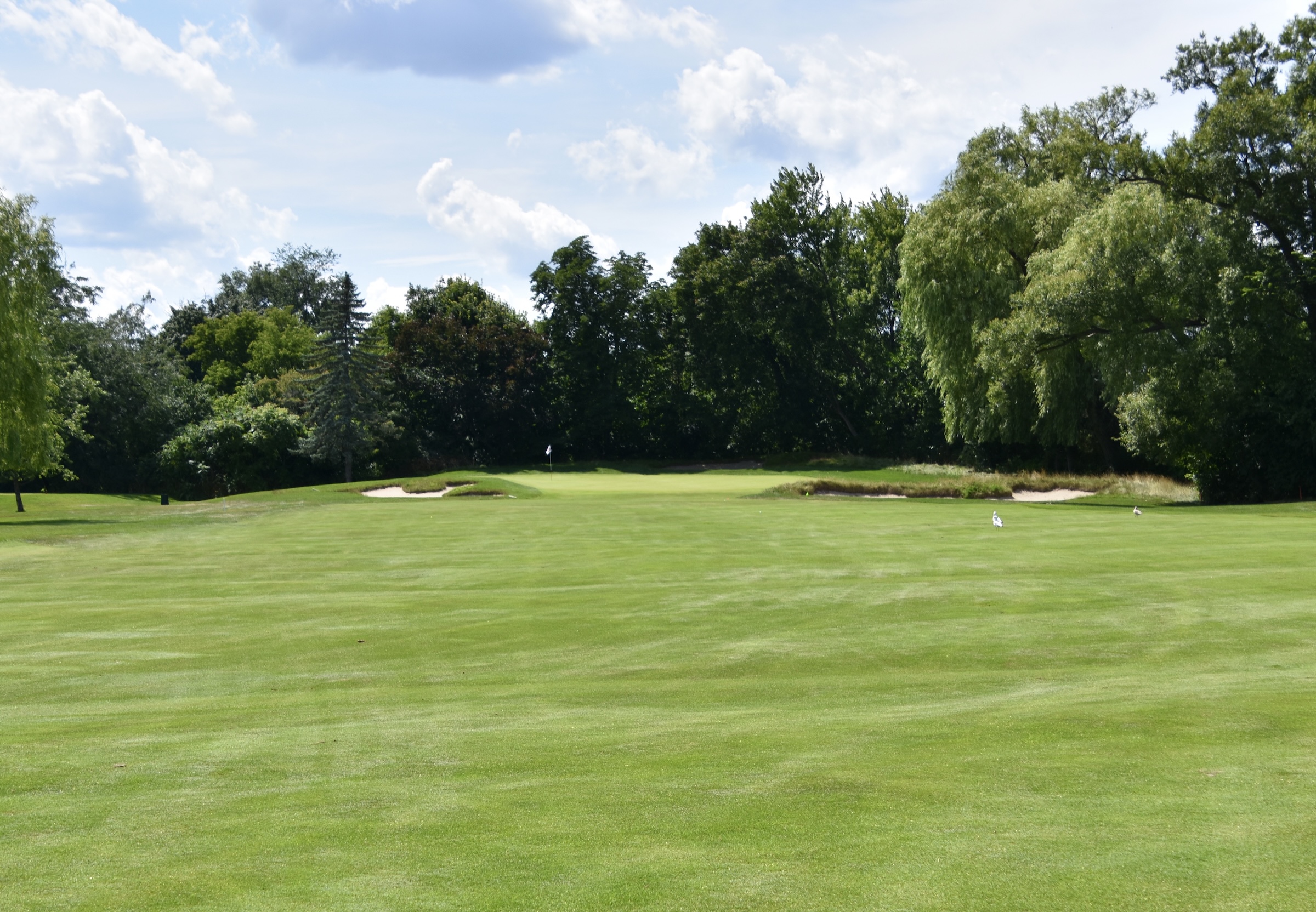
That leaves a much longer approach shot than if I’d played with a little less cowardice and results in another bogey.
Beaconsfield #11 Willow – 292 Yard Par Four
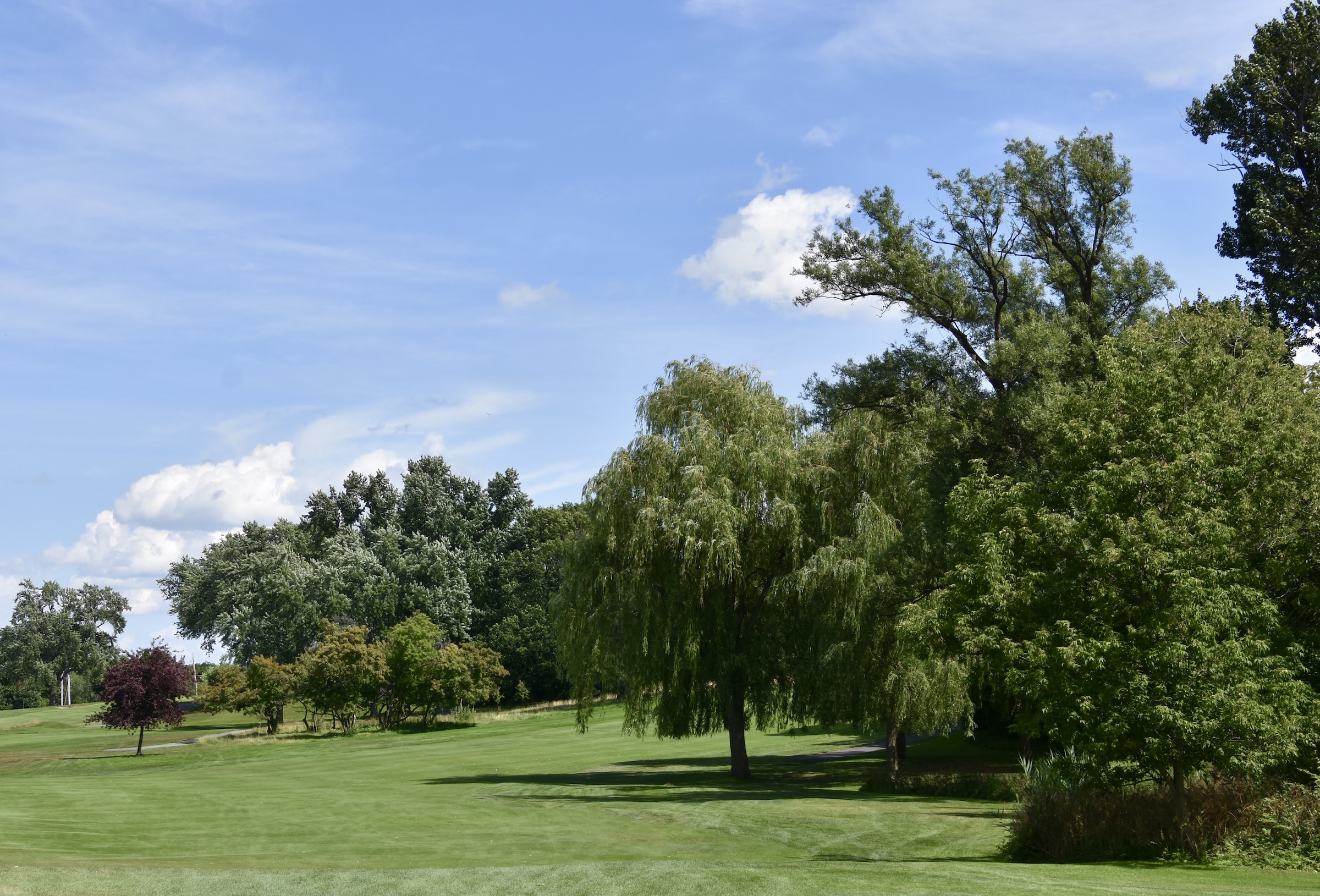
This is a truly diabolical short par four that doglegs almost 90° to the right with a green elevated 40 feet above the fairway below. Big hitters might challenge the willow for which the hole is named, but not me. I just need to make sure I have a clear second shot which means getting past the willow and short of the trees straight ahead.
I do manage it, barely, and have this approach. Guessing how much extra club to take to account for the elevation change results in flying the green and another bogey.
#12 Plateau – 458 Yard Par Five
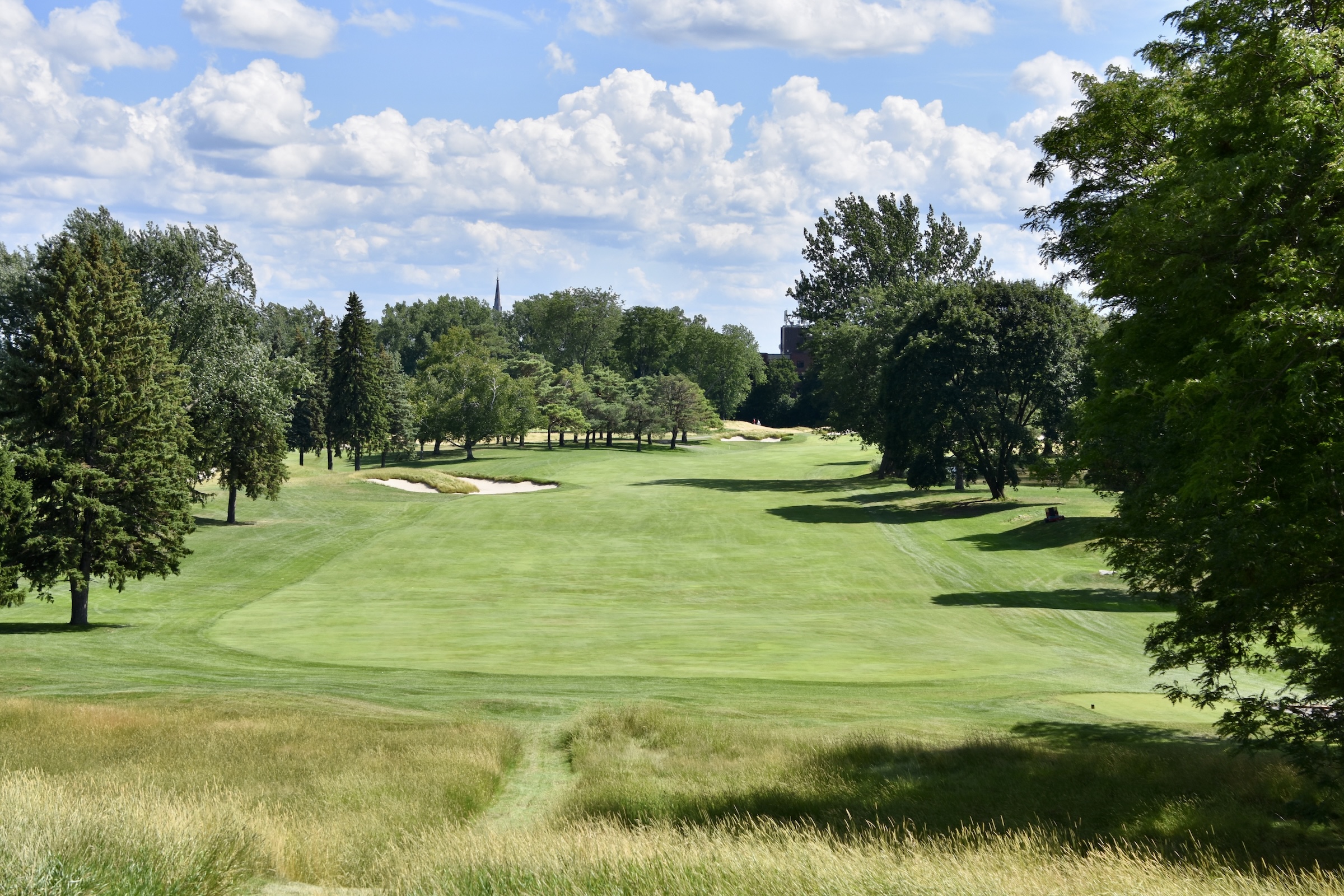
This is another elevated tee shot to a narrow landing area where distance is not as important as staying out of trouble. Put the driver away and play it safe.
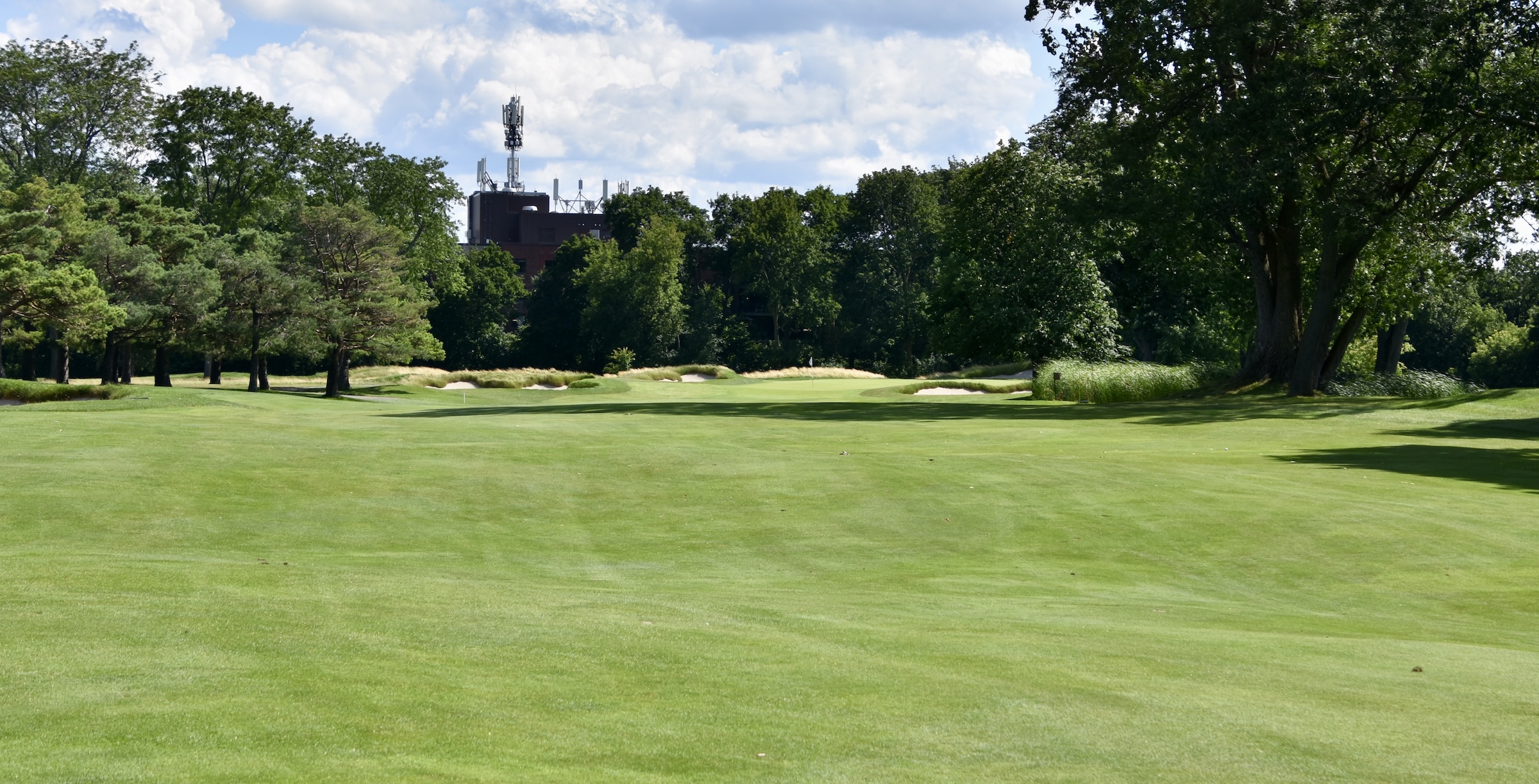
I have avoided the left side bunkers and have this very doable second shot. There are no less than seven bunkers around this green, but none in front. Another three wood won’t reach any of them.
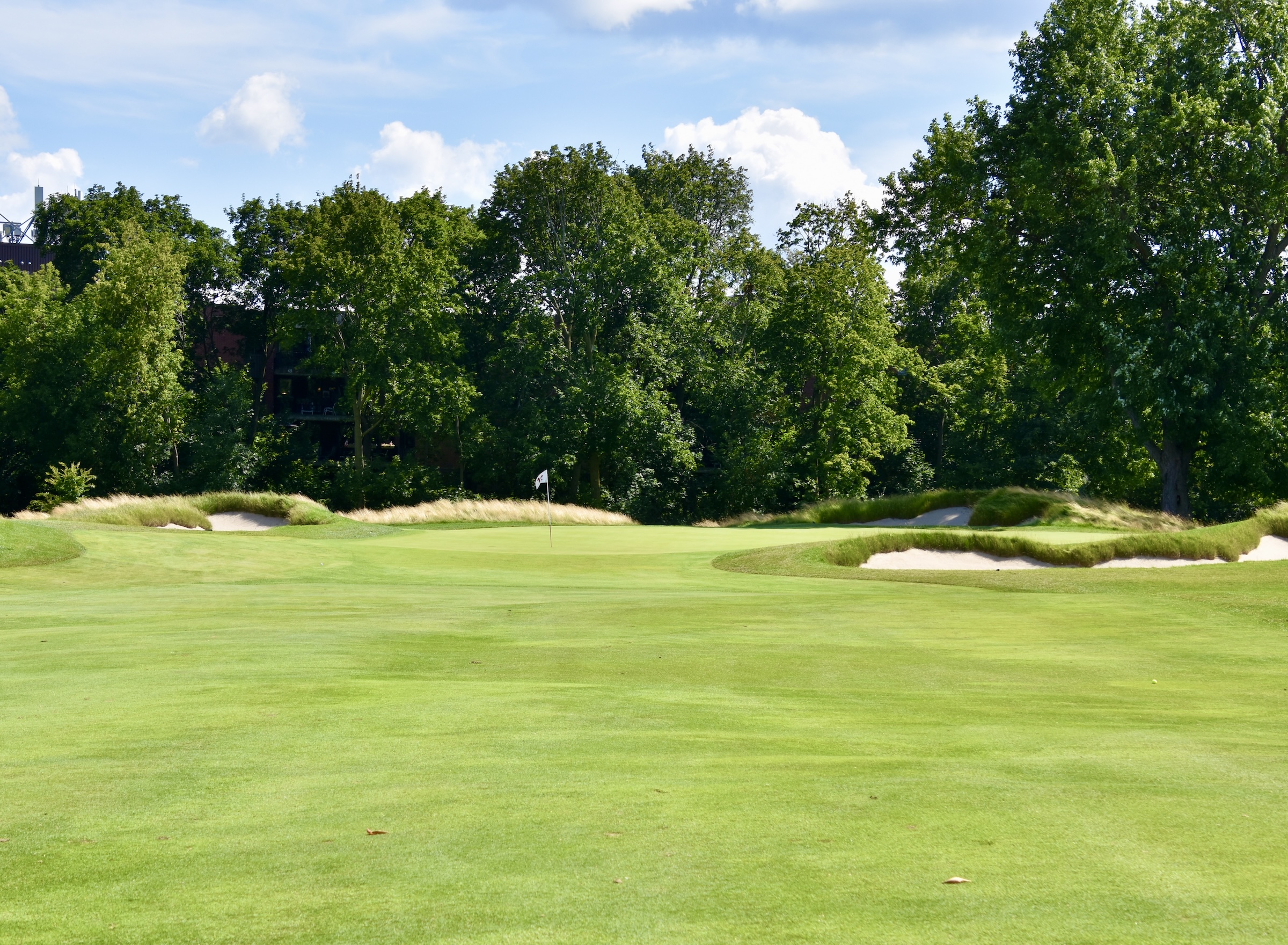
That leaves this short approach for a potential birdie. As usual it doesn’t happen, but it’s a tap in par. Happy days are here again.
Beaconsfield #13 Village – 175 Yard Par Three
It doesn’t look like it from the tee, but this is often described as one of the most difficult par threes Stanley Thompson ever designed. It is long, has a bunker that guards three quarters of the green which is very sloped. I got lucky or maybe actually good on this tee shot which landed on the front left of the green for a relatively easy two putt par. Surprisingly, none of my companions parred it, but they were playing from 209 yards.
#14 Barn – 376 Yard Par Four
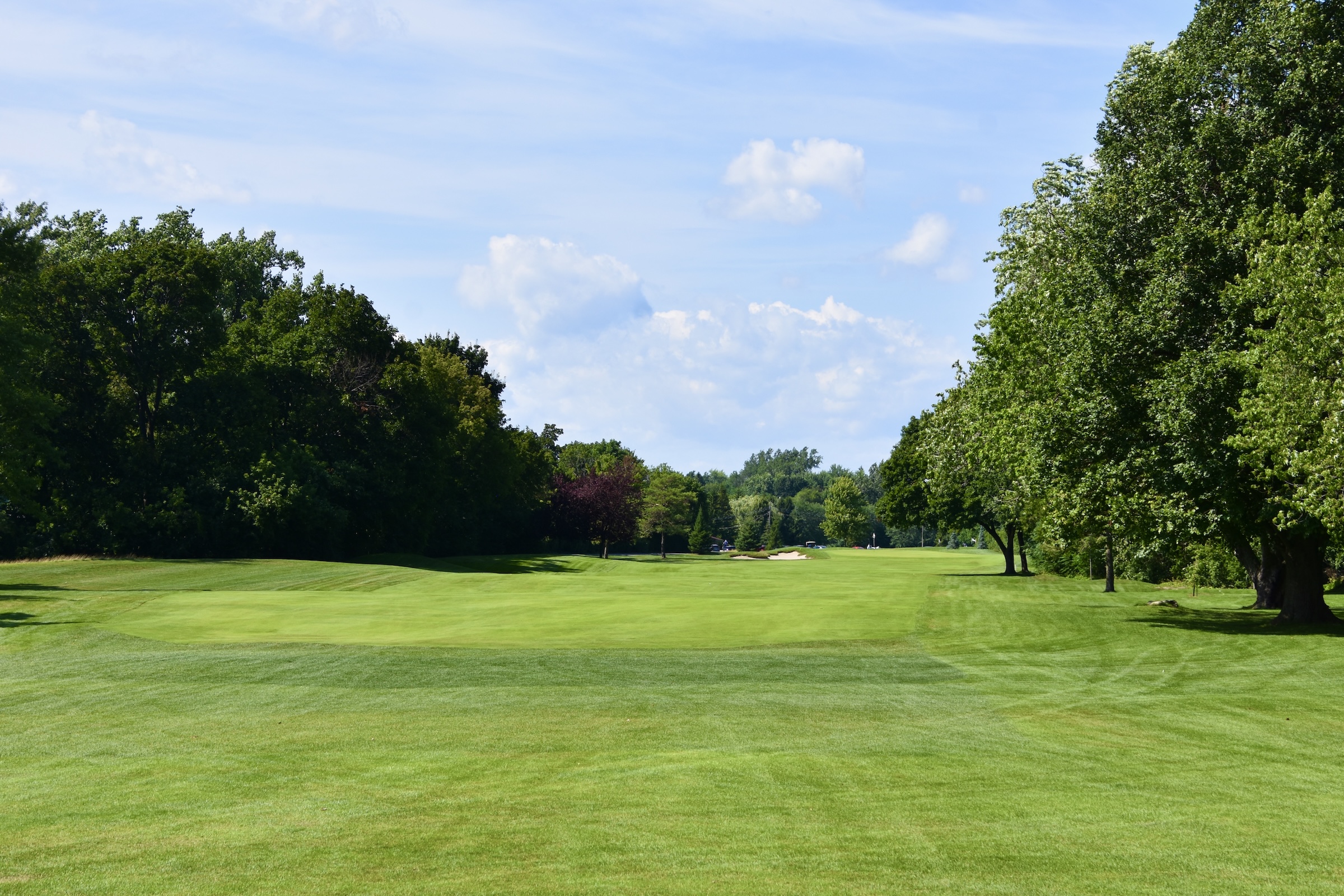
This is the toughest hole on the back nine although that’s not readily apparent from the tee. There are two fairway bunkers on the left side that you can’t see in this photo. To avoid them I will have to aim down the right tree line with the driver.
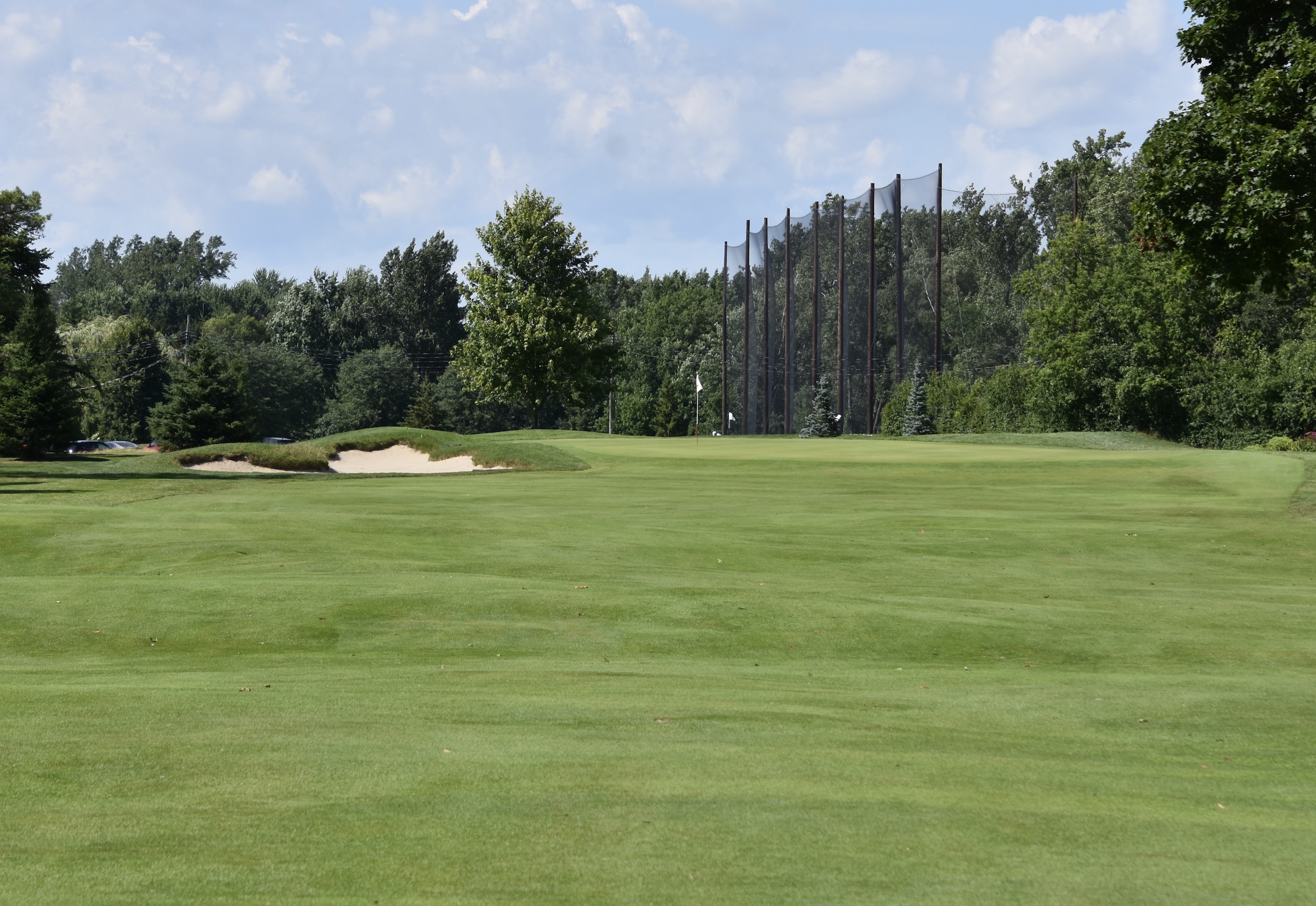
I did manage to get one of my rare 200 + yard drives on this hole which left this 6 iron in and another par. Miracles do happen.
Beaconsfield #15 Gibraltar – 150 Yard Par Three
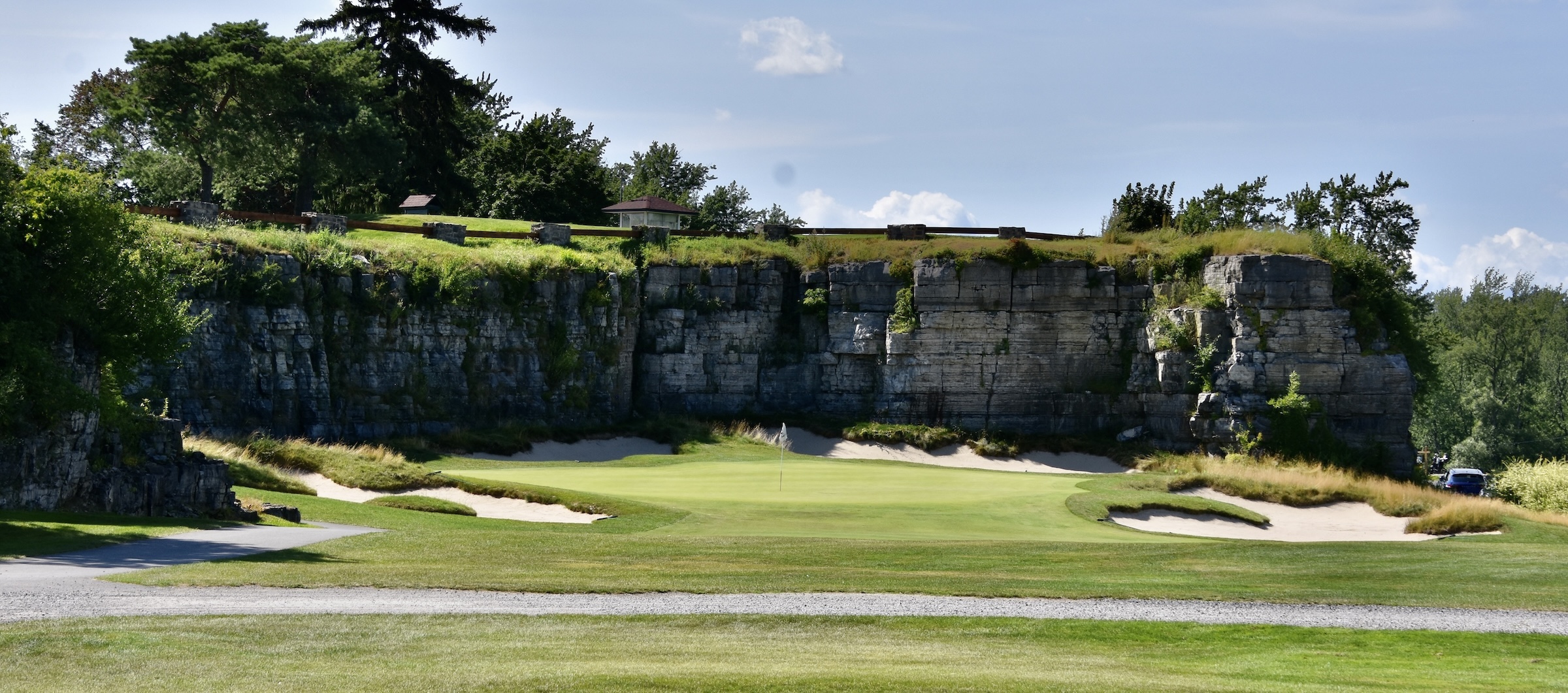
We now come to the signature hole at Beaconsfield and one of Thompson’s all world par threes. You would almost think they had quarried this configuration just to make a golf hole rather than the other way around. Here the challenge is just to hit a straight shot as every part of the green but the front is guarded by traps. In my younger days this would have been a perfect 7 iron, but now it’s a five hybrid which does the job nicely.
You must try to wrangle an invitation to Beaconsfield just to play this hole.
#16 Steeple – 375 Yard Par Four
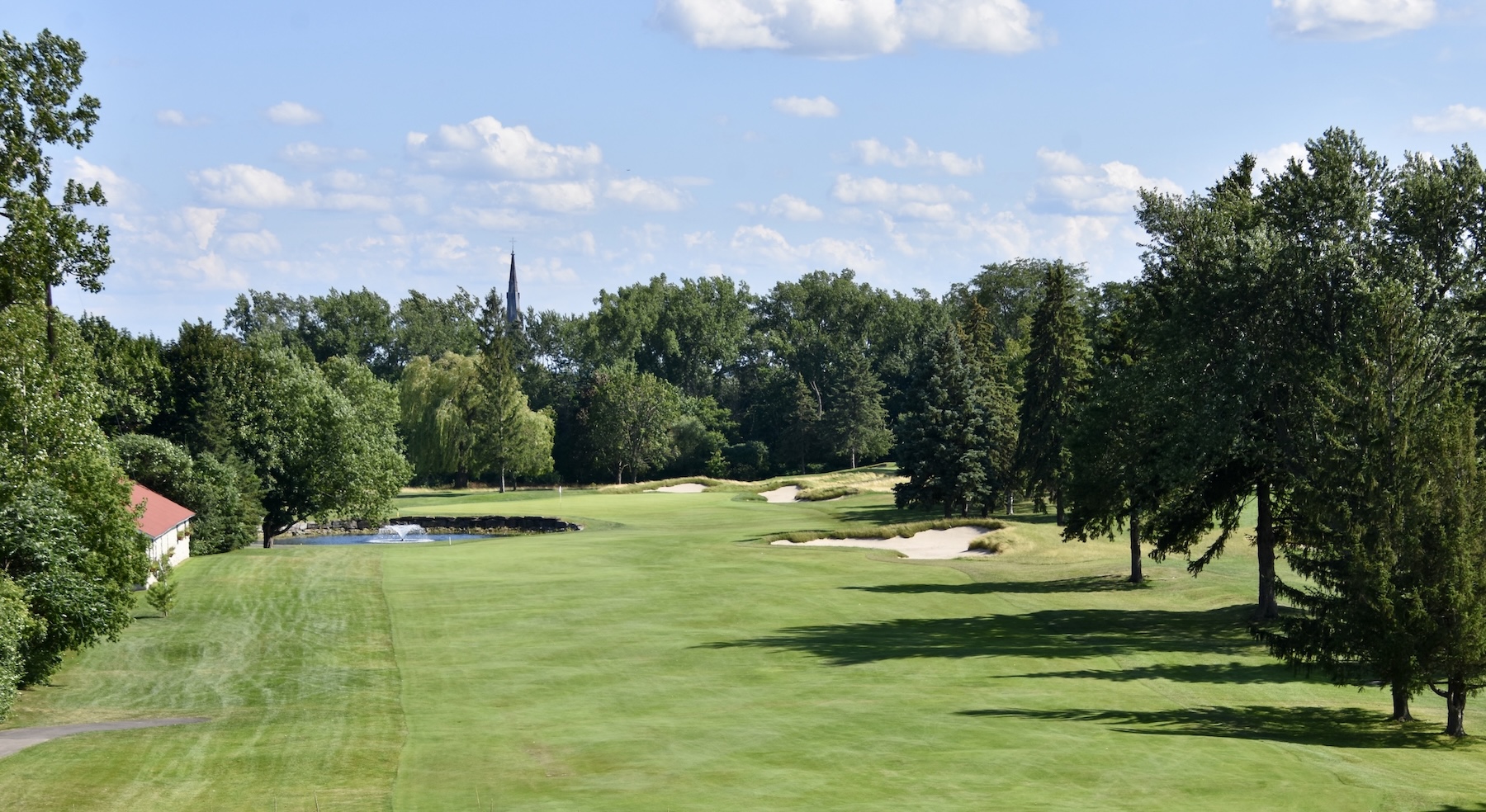
This was my favourite par four at Beaconsfield. It has a beautiful look from an elevated tee box with the steeple in the background adding the perfect touch.
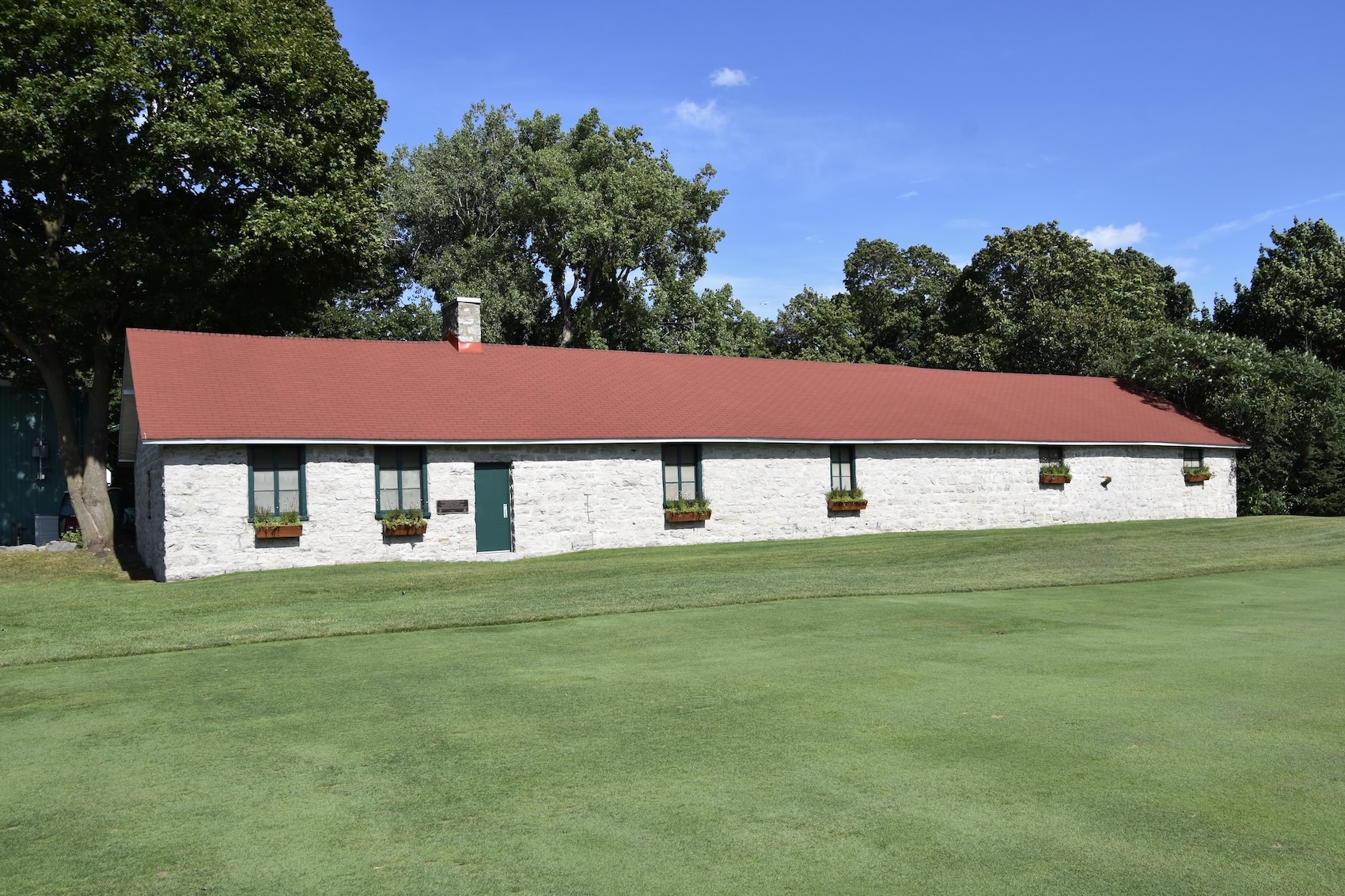
That building you saw on the left from the tee box is the original barracks for the Grand Trunk quarrymen. Built in 1860 it later served as the original clubhouse and now is the equipment barn.
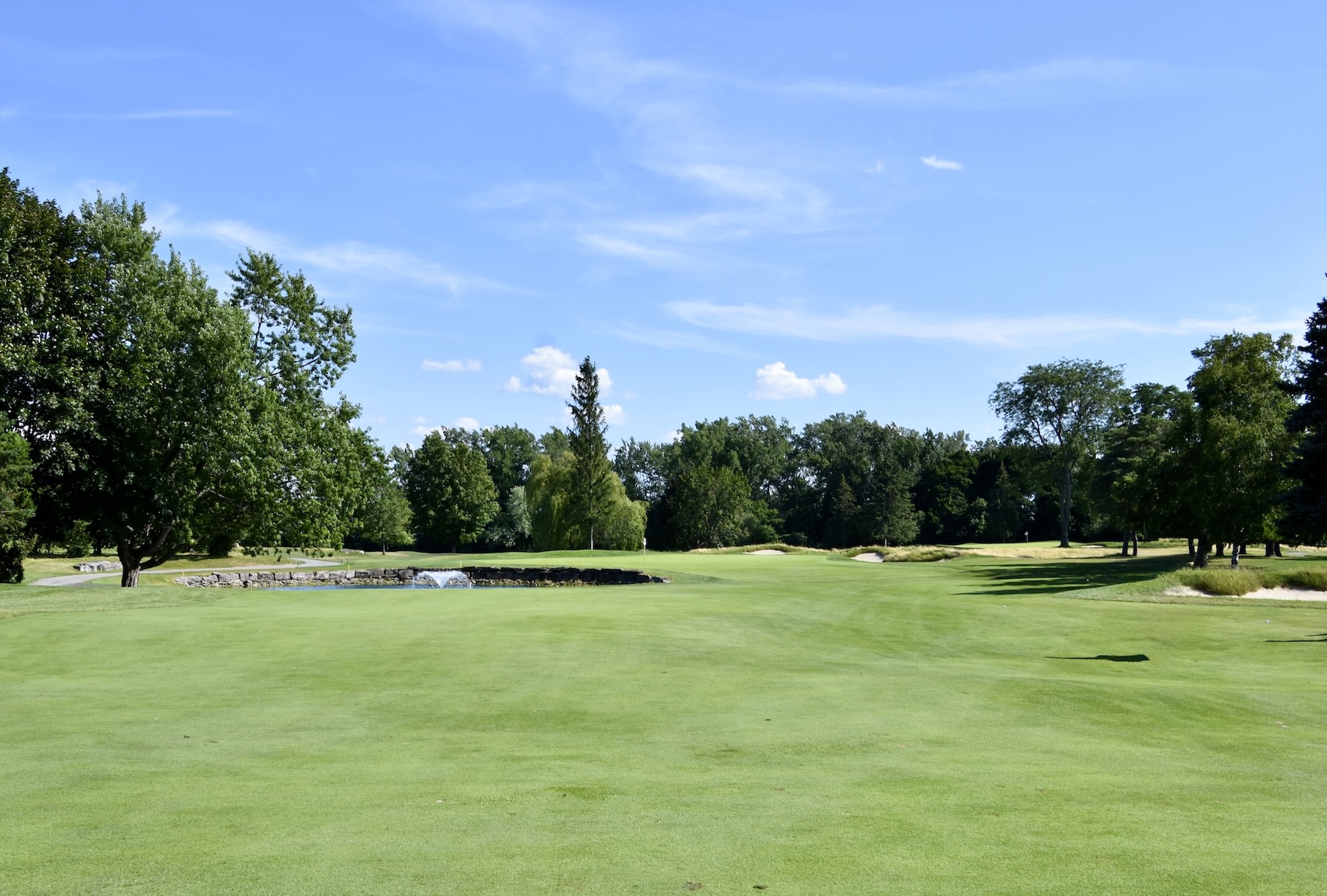
Even with a decent drive I still faced this long second shot with trouble in the form of that large pond lurking largely. As much as I do everything to avoid traps, I do even more to avoid water. You can at least play out of bunkers. So I stay so far right of the pond that I still need a decent chip to save a two putt bogey.
BTW the pond was added in 2004 on the 100th anniversary of Beaconsfield and is not a Thompson creation.
Beaconsfield #17 Sniper – 136 Yard Par Three
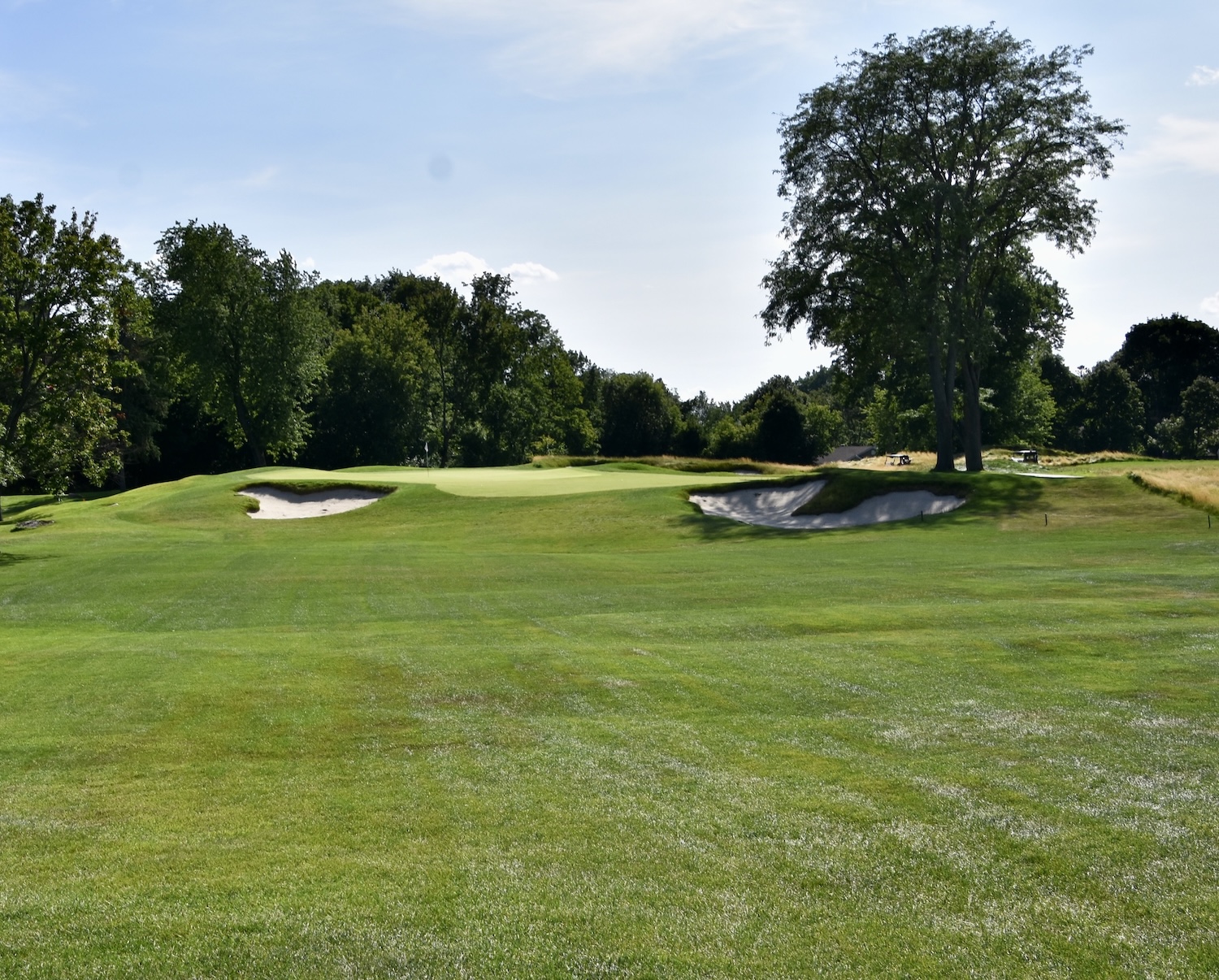
To me this was the most difficult looking tee shot of any of the par threes and I’m not saying that for what happened next. It’s probably the most elevated green on the course in terms of its relationship to the fairway. You either stick it here or accept the consequences. The only saving grace for me was the short yardage and I was able to avoid trouble and land on the front edge of the green some 30 feet from the pin.
And by some miracle I sank the putt for my one and only birdie at Beaconsfield.
#18 Home – 418 Yard Par Five
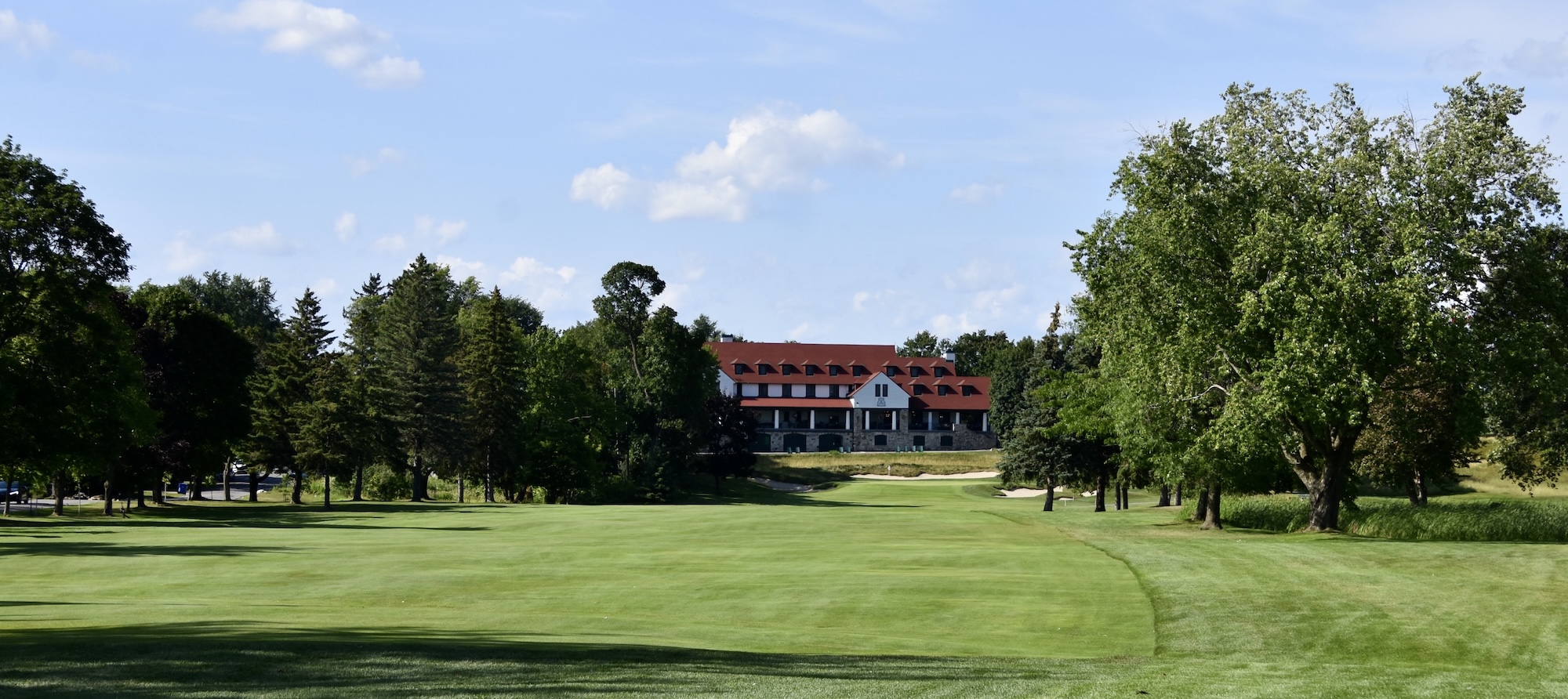
This baby par five is not dissimilar to #18 at Laval-sur-le-Lsac Green with a magnificent view of a classic clubhouse being the eye candy that makes the finishing hole memorable. It’s a tried and true feature around the world and I never get tired of it.
This is one par five where I did seriously think about eagle, but thoughts and actions do not always mesh. When I try to grip it and rip it, it seldom works out as planned.
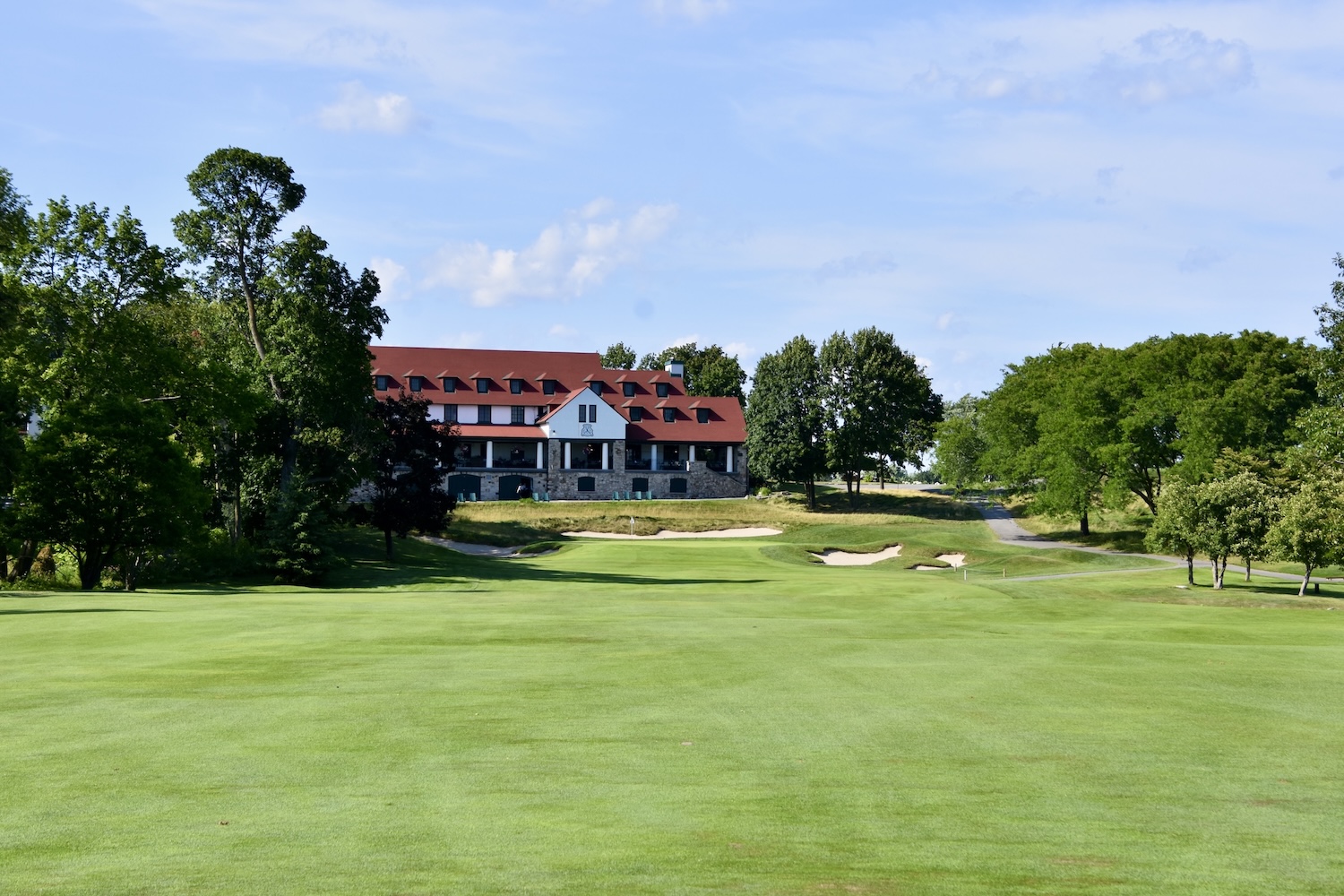
This was the second shot on #18 after a popped up drive.
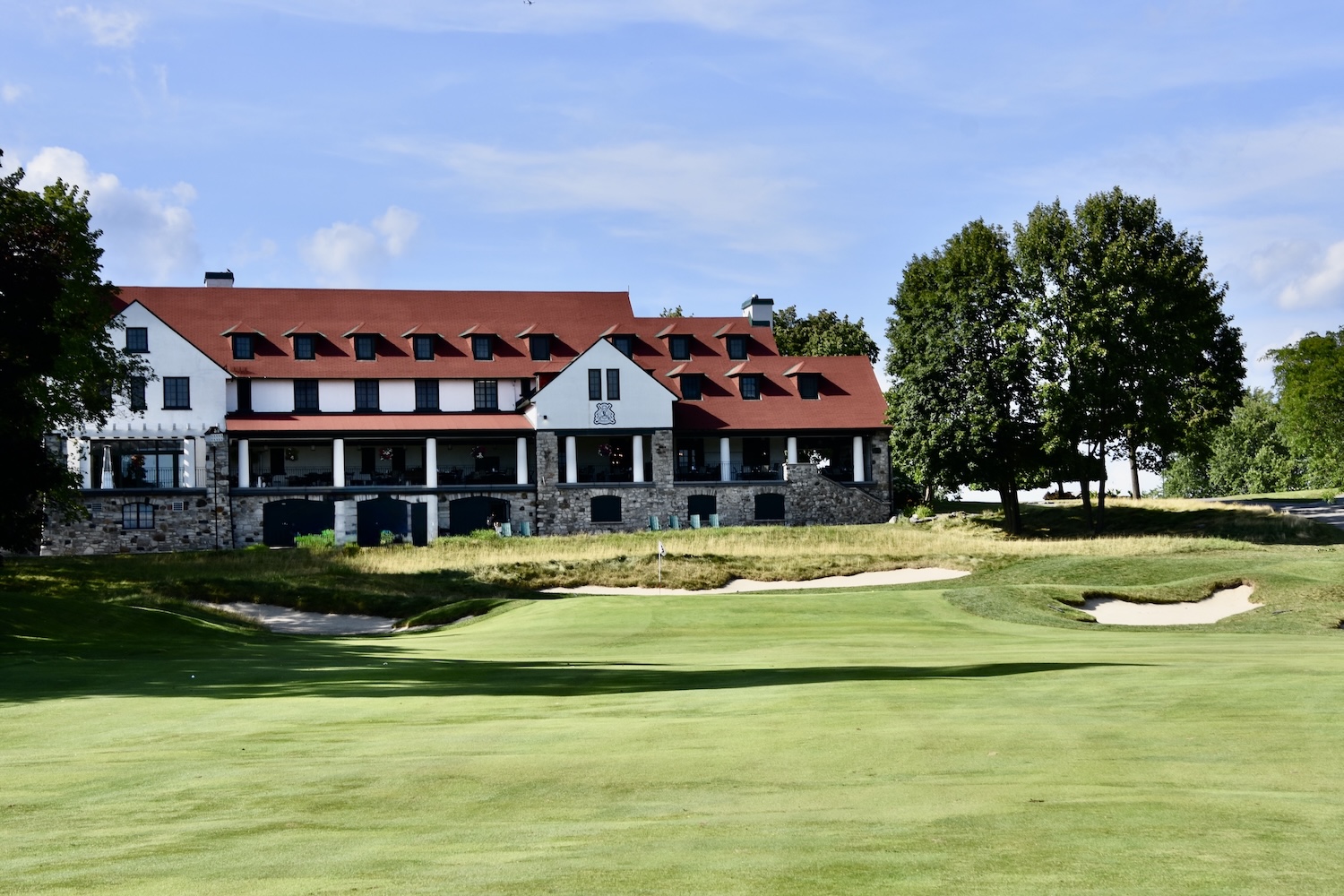
After a decent three wood I still had this wedge in for a finishing par on what should have been a birdie hole.
All in all I loved Beaconsfield from beginning to end and have no qualms about rating it among Canada’s top private clubs.