
Kakadu National Park

In the last post from the March 2026 Adventures Abroad tour of Australia we arrived in Darwin, the northernmost city on the continent and the capital of the Northern Territory. In this post we’ll leave Darwin for a day and head to one of least visited areas in Australia, Kakadu National Park. We will hike to see Aboriginal rock paintings that are 20,000 years old and take a boat trip on the Alligator River where we might see some of the biggest crocodiles in the world. Then we’ll spend the night in one of the most unique hotels in the world. It promises to be a one-of-a-kind day so I hope you’ll join us.
We leave Darwin fairly early as this will be a long day with multiple stops, our first one being at Howard Springs Nature Park where our local guide Mel tells us we’ll get a chance to feed some barramundi. We are the only ones here on a beautiful sunny morning that is cooler than you might expect given that we are in the tropics. Mel brings along a large package of frozen smelts and we head for the bridge that will take us across to the barramundi feeding area.
This sign at the entrance to the bridge is intriguing.
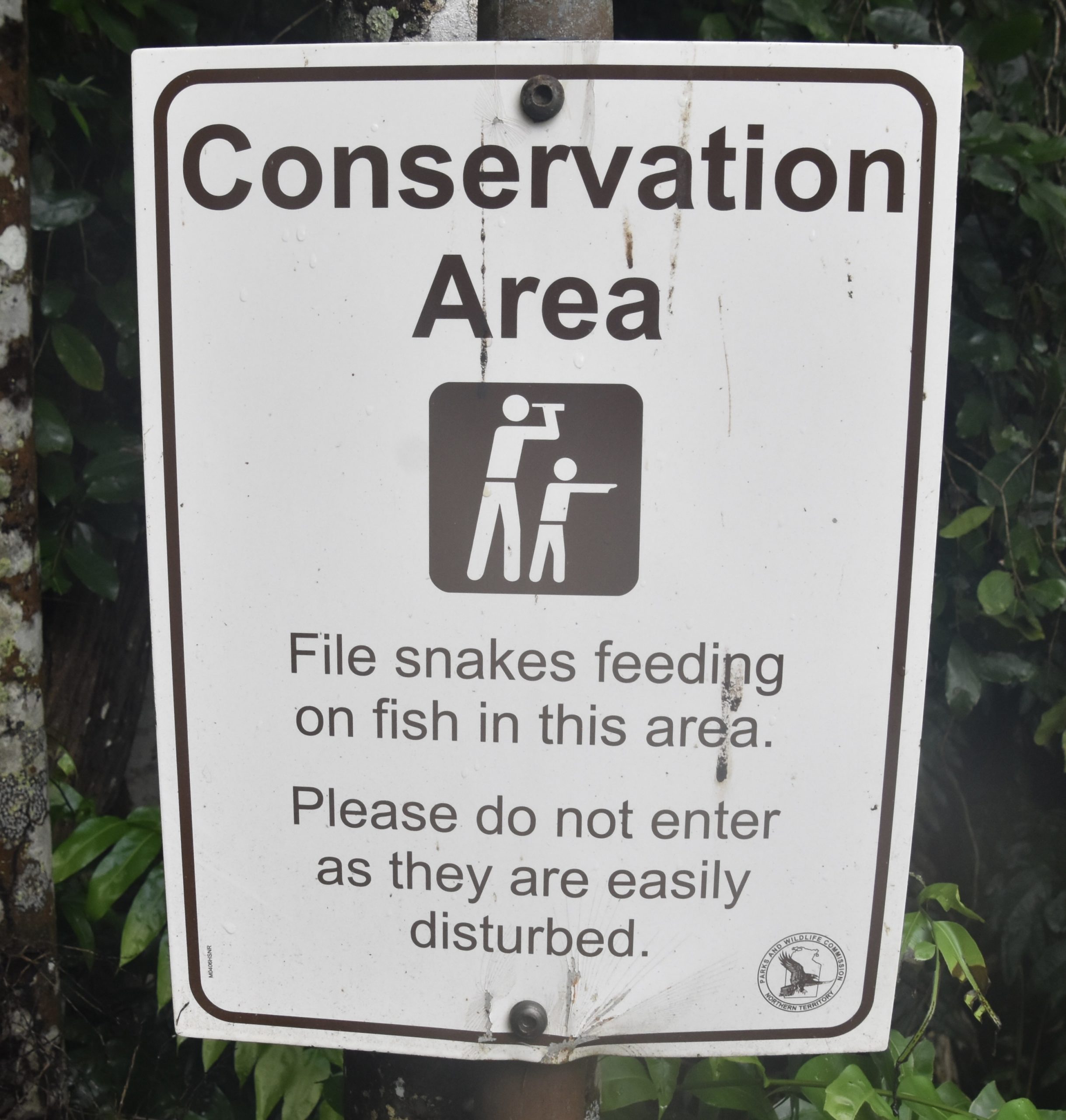
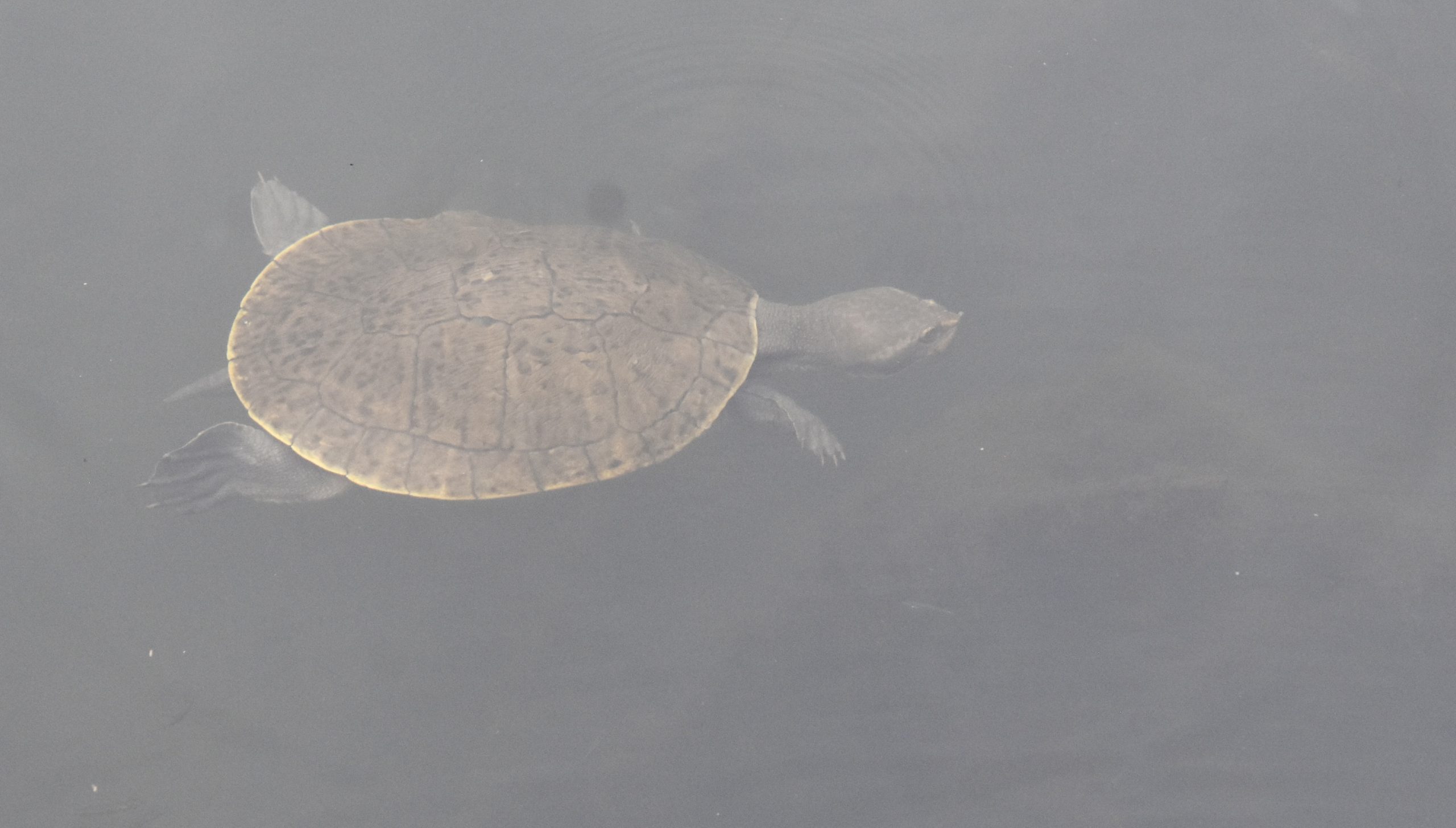
I had never heard of file snakes, but now I know they are almost exclusively aquatic snakes that can grow as large as 2.5 metres (8 feet). The ones that live here are also called elephant trunk snakes and they can get as big as an elephant’s trunk. They eat fish almost exclusively. I would love to have seen one, but no such luck this morning. A consolation prize is this Northern Yellow-Faced Turtle just poking along minding its own business.
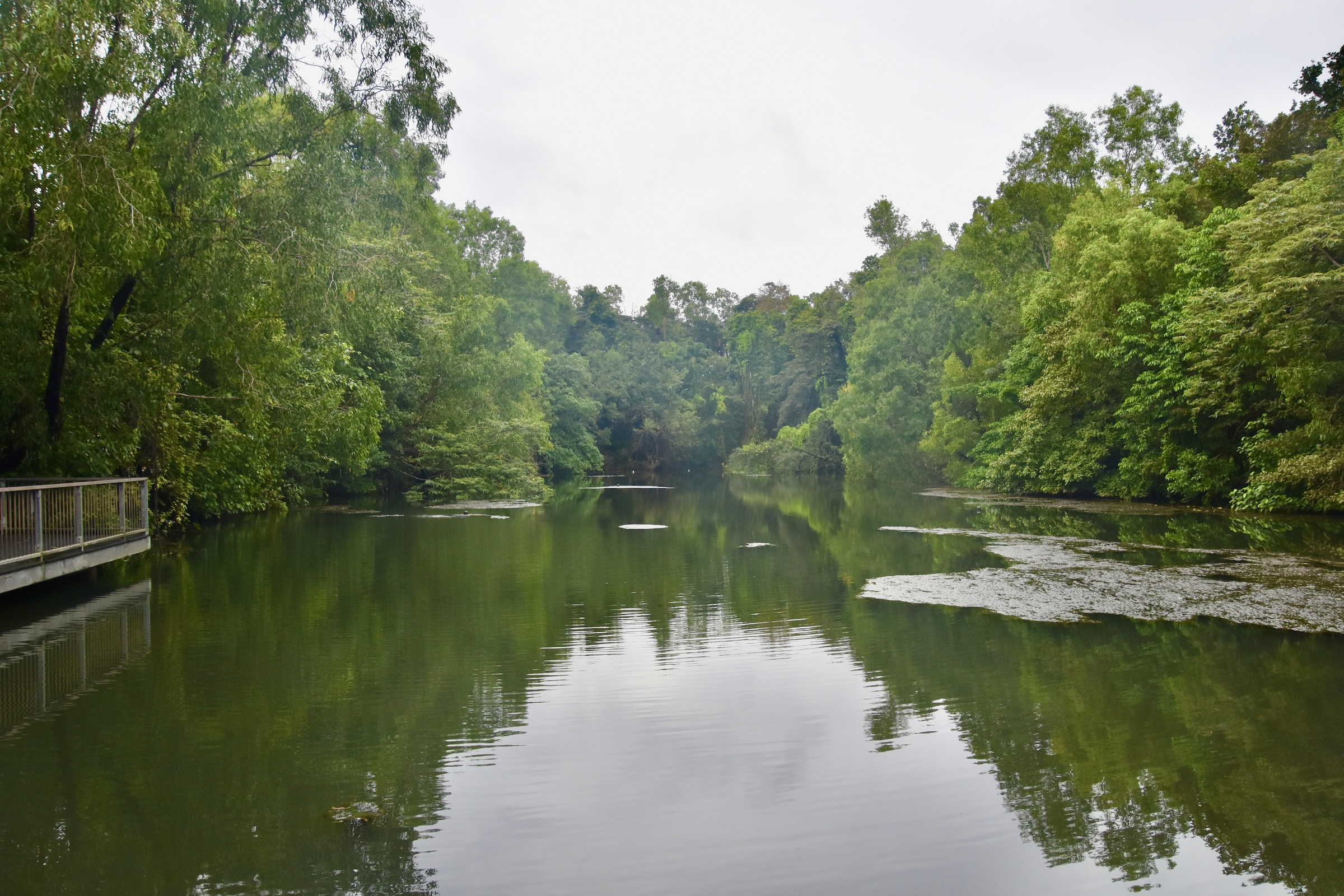
This is the barramundi pond where we will see if we can attract a few to feed on our smelts.
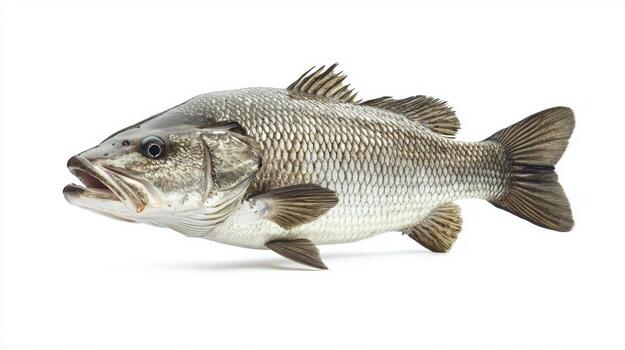
In case you are wondering, barramundi are to Australians as salmon are to North Americans – the go to fish for many people. Like salmon, they can survive in both fresh and salt water and also like salmon, are a very sought after sport fish. Finally, like salmon, they are raised commercially. Alison and I have already had it a few times and it has white flaky texture that I much prefer to the oily texture of salmon.
Oh, and here’s what they look like. They can get up to 65 kg. (130 lbs.) in the wild.
Mel starts by throwing out a few smelts and within seconds the barramundi appear to wolf them down – apparently they are used to this. They appear so fast that it is next to impossible to get a good photo.
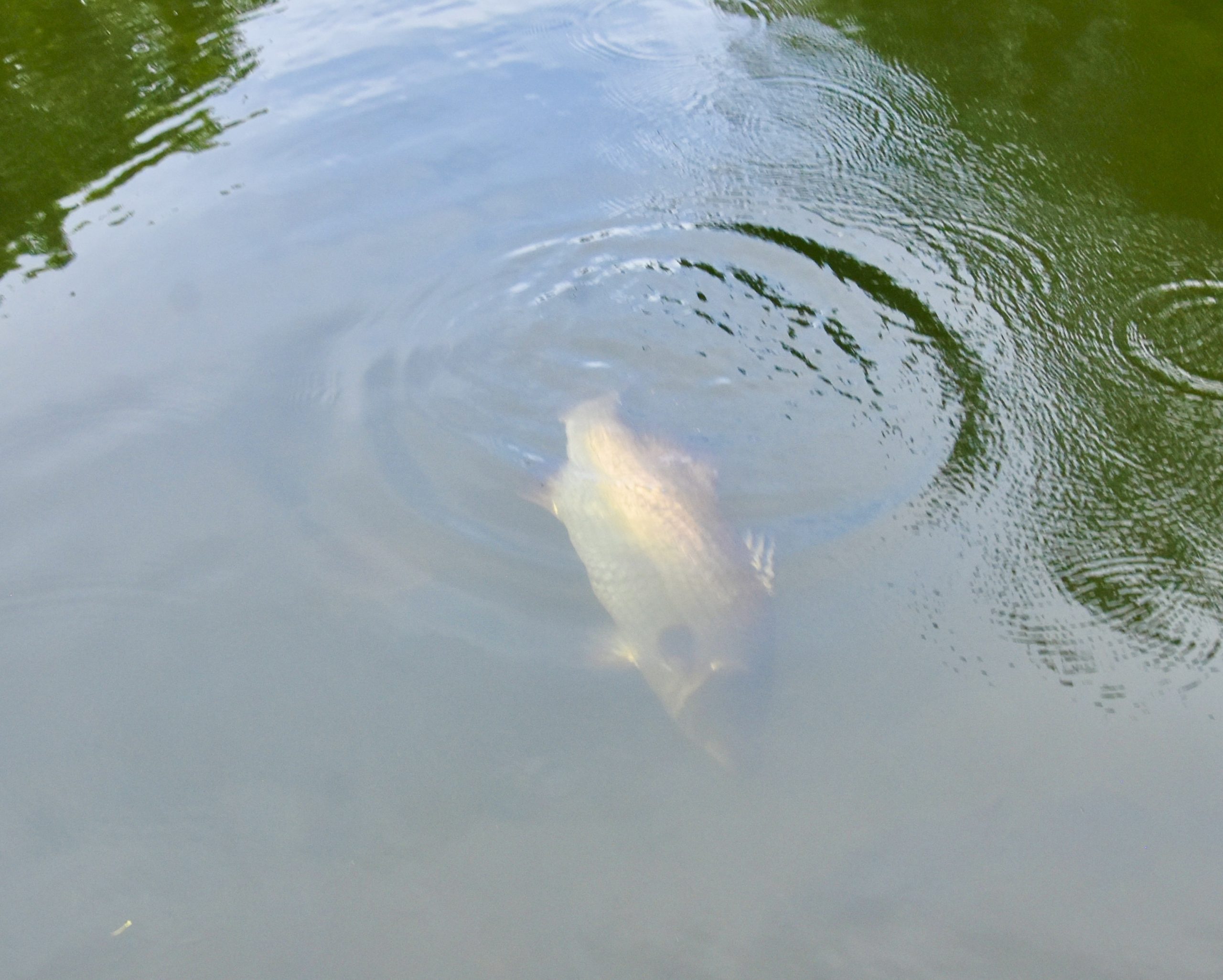
Mel offers us our chance to feed the barramundi and I take up the challenge. Here I’ve just tossed the smelt and it’s gone within a second of hitting the water.
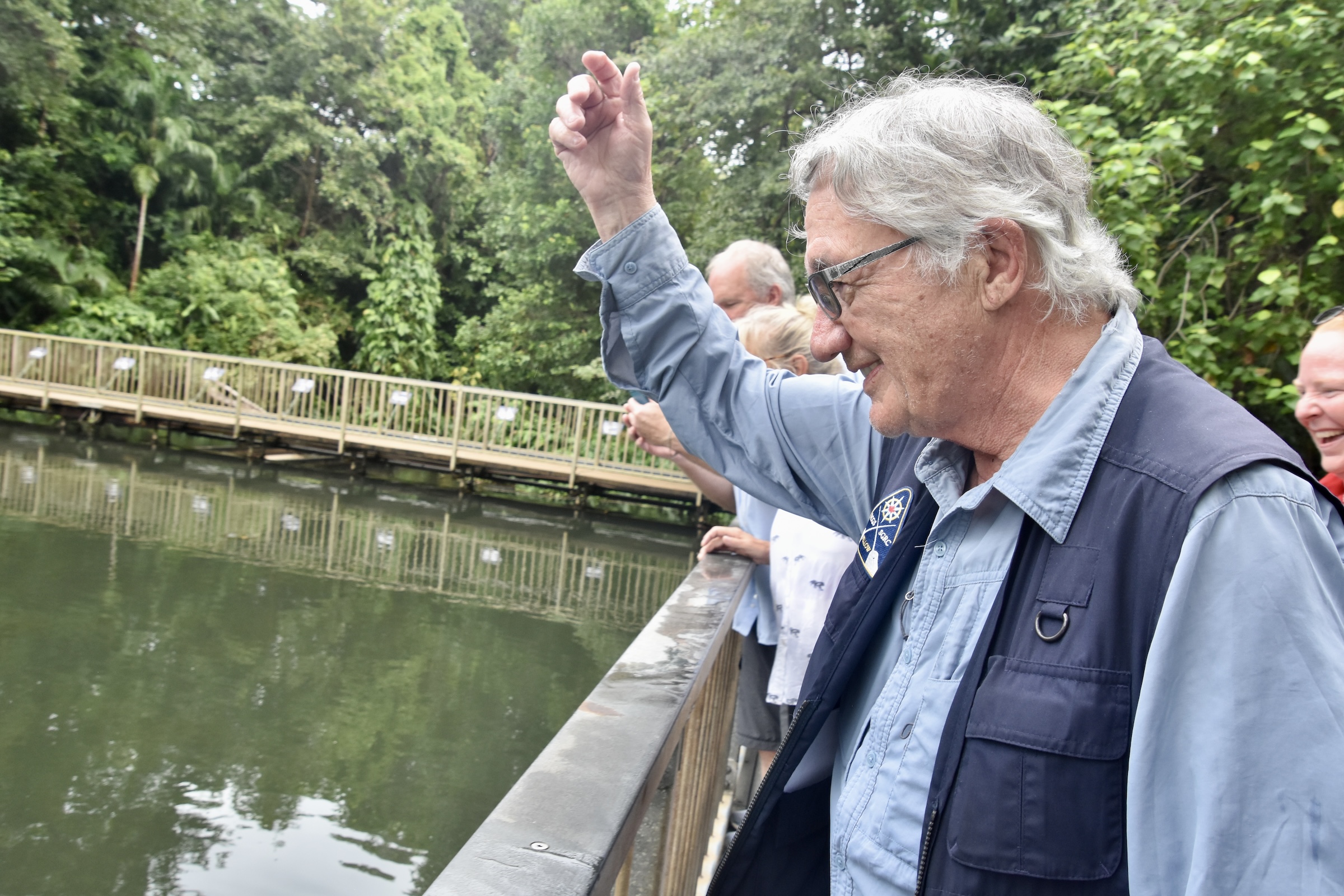
Back in the bus we drive for about an hour to our next stop which will be the last one before entering Kakadu NP. The Bark Hut Inn offers the last washrooms we will see for a while and they have some unique signage – Aussies love these type of things.
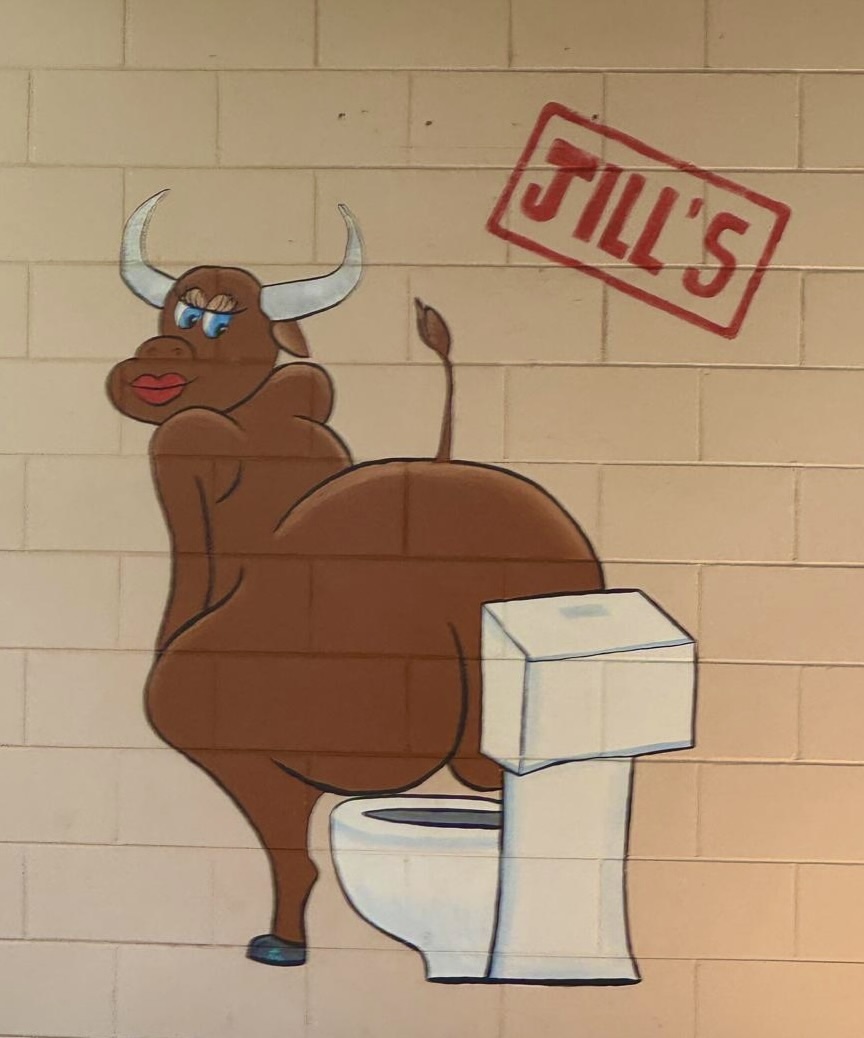
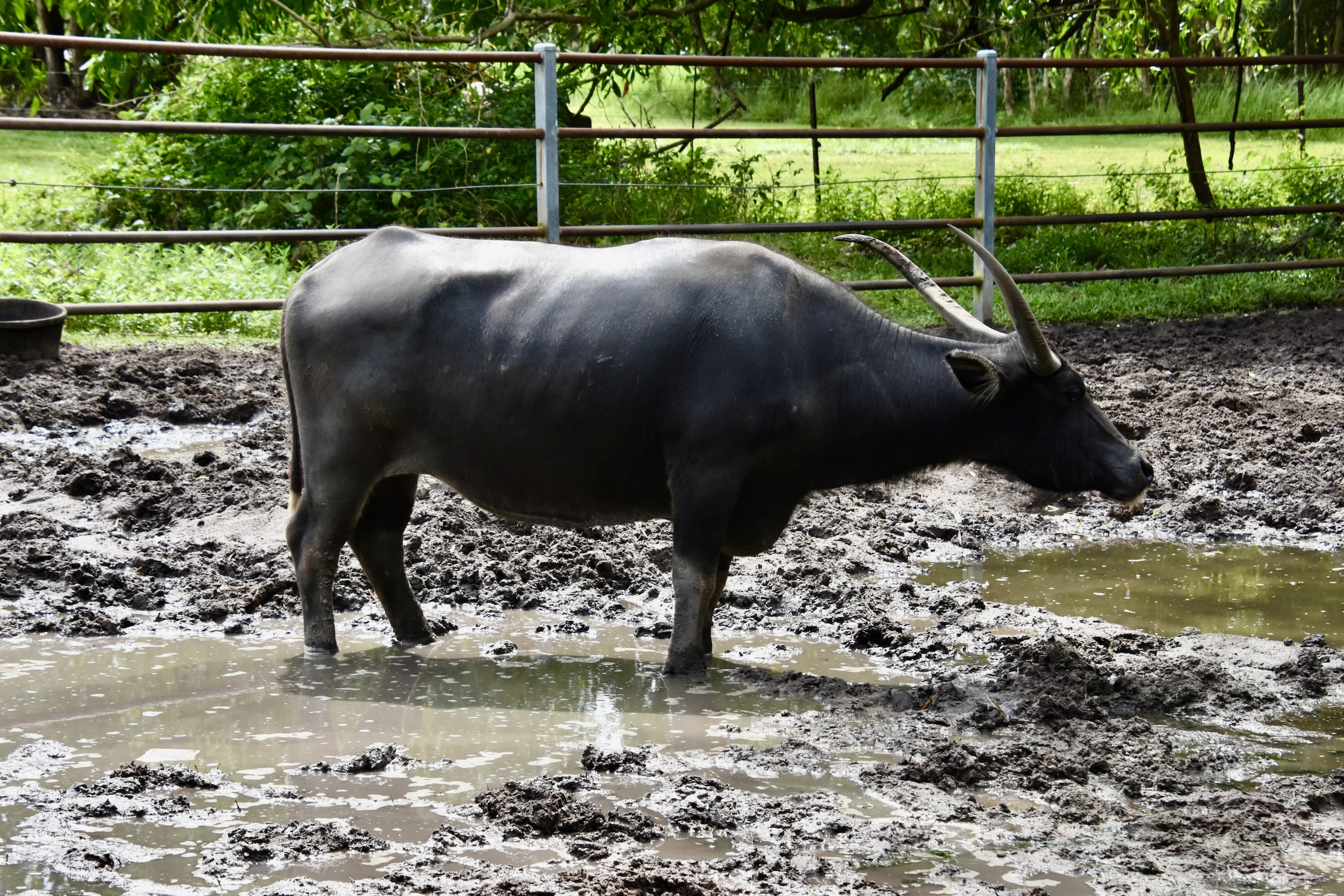
Turns out Jill is a real thing – this water buffalo in a pen outside the inn.
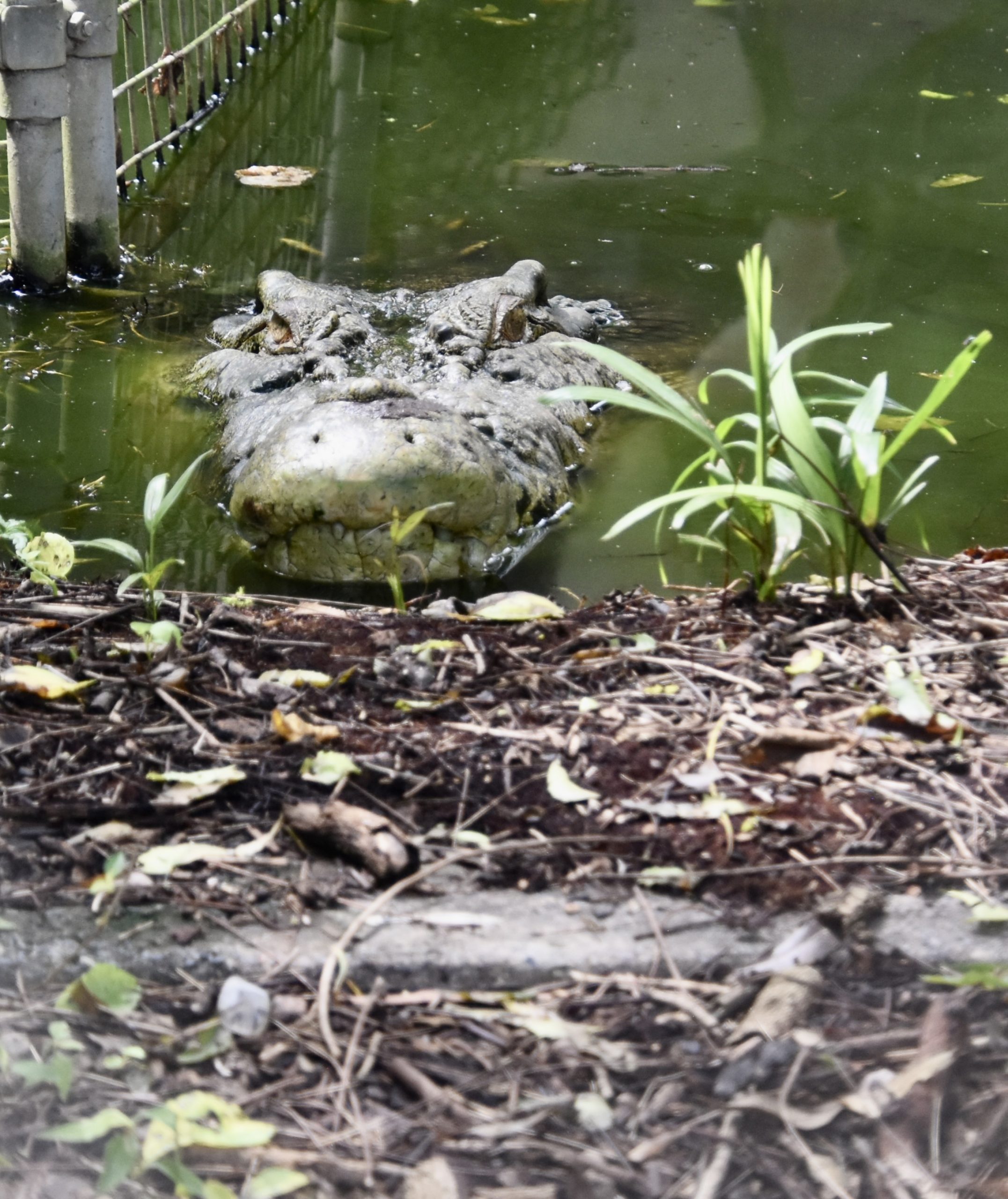
Also outside is this bruiser of a salt water croc, aptly named Brutus. He seems to be trying to hypnotize me to come just a bit closer. Not today Brutus.
Kakadu National Park
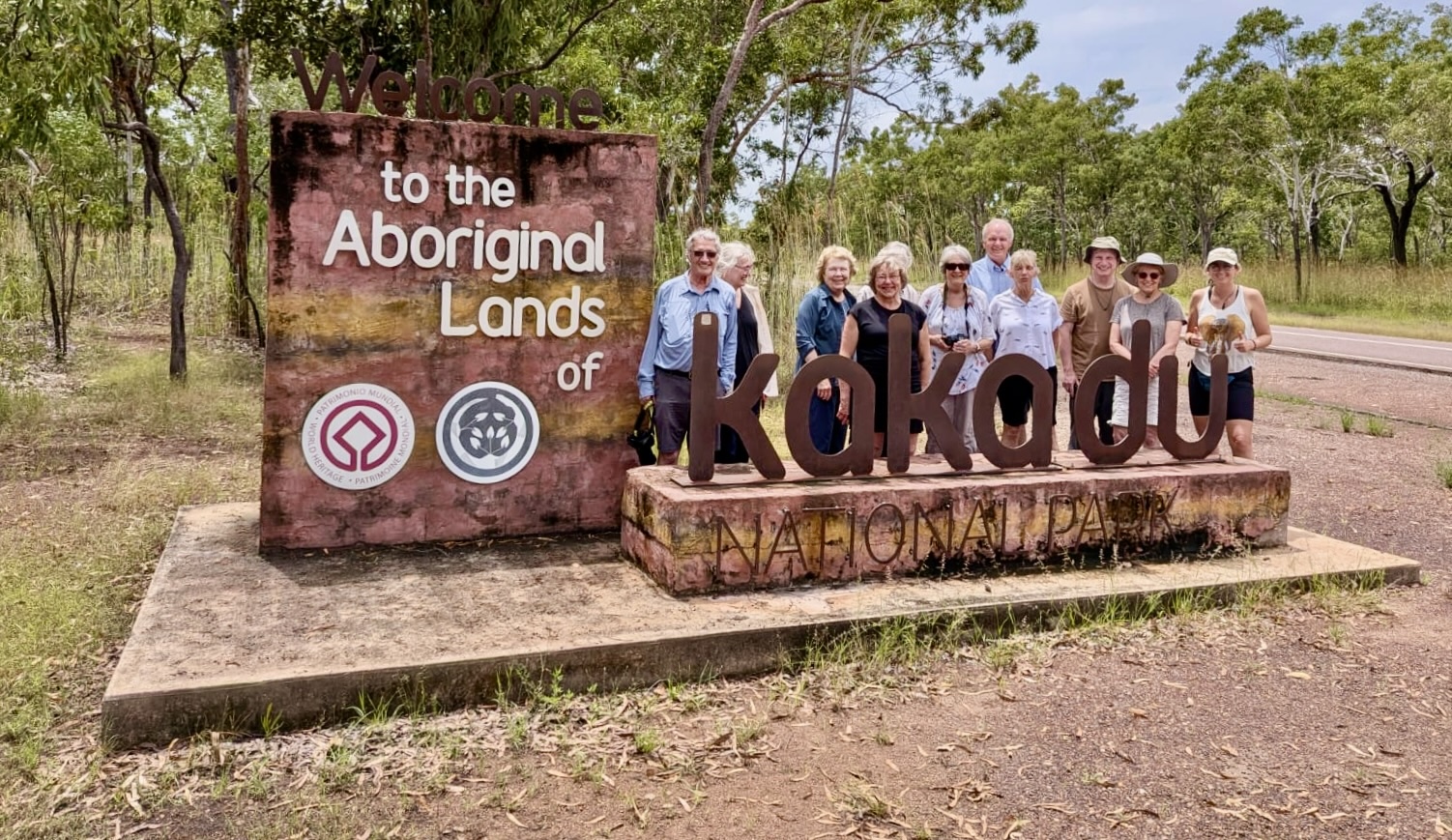
Kakadu National Park is the second largest national park in Australia at almost 20,000 sq. kms. (7,700 sq. miles) which makes it as large as Wales. Yet just over 300 people live inside its boundaries. If you are looking to get away from it all, this is the place to come.
Almost all the land inside the park is owned by Aboriginal groups who have inhabited the area for 60,000 years and according to anthropologists this may well be the longest continual occupation of land by one group on the entire planet. The park is managed by these groups in cooperation with Parks Australia and boy are there a lot to interesting things to manage.
Firstly there are the rock paintings and landscapes that tie in directly with the Aboriginal myths and legends about Kakadu which go back further in time than it is possible for the human mind to grasp. By comparison, the beginning of agriculture around the world started about 12,000 years ago in the Fertile Crescent. At that time the ancestors of the same people who live here today had already been on the land for at least 40,000 years. Think about that. There are over 5,000 documented rock art sites in Kakadu.
Secondly there are the extensive wetlands. Over 70% of the park is lowland that becomes extensively flooded during the wet season which extends from January through April. Since it is March we are definitely here in the wet season and that becomes apparent almost immediately as in places, on both sides of the road there is nothing but water as far as the eye can see. In one place the bus has to pass over a portion of the road that is completely flooded and we all hold our breaths for the minute or so it takes to get back on dry land. This truly has become an adventure abroad!
With the wet season comes an abundance of bird life which I will get to later in this post.
I’ve not done a good job in explaining the sense of wonder that Kakadu evokes. In 1981 it was inscribed as a UNESCO World Heritage Site so I’ll let that organization explain why this place is so special:
This unique archaeological and ethnological reserve, located in the Northern Territory, has been inhabited continuously for more than 40,000 years. The cave paintings, rock carvings and archaeological sites record the skills and way of life of the region’s inhabitants, from the hunter-gatherers of prehistoric times to the Aboriginal people still living there. It is a unique example of a complex of ecosystems, including tidal flats, floodplains, lowlands and plateaux, and provides a habitat for a wide range of rare or endemic species of plants and animals.
So let’s start exploring Kakadu now that we’ve got past that washout.
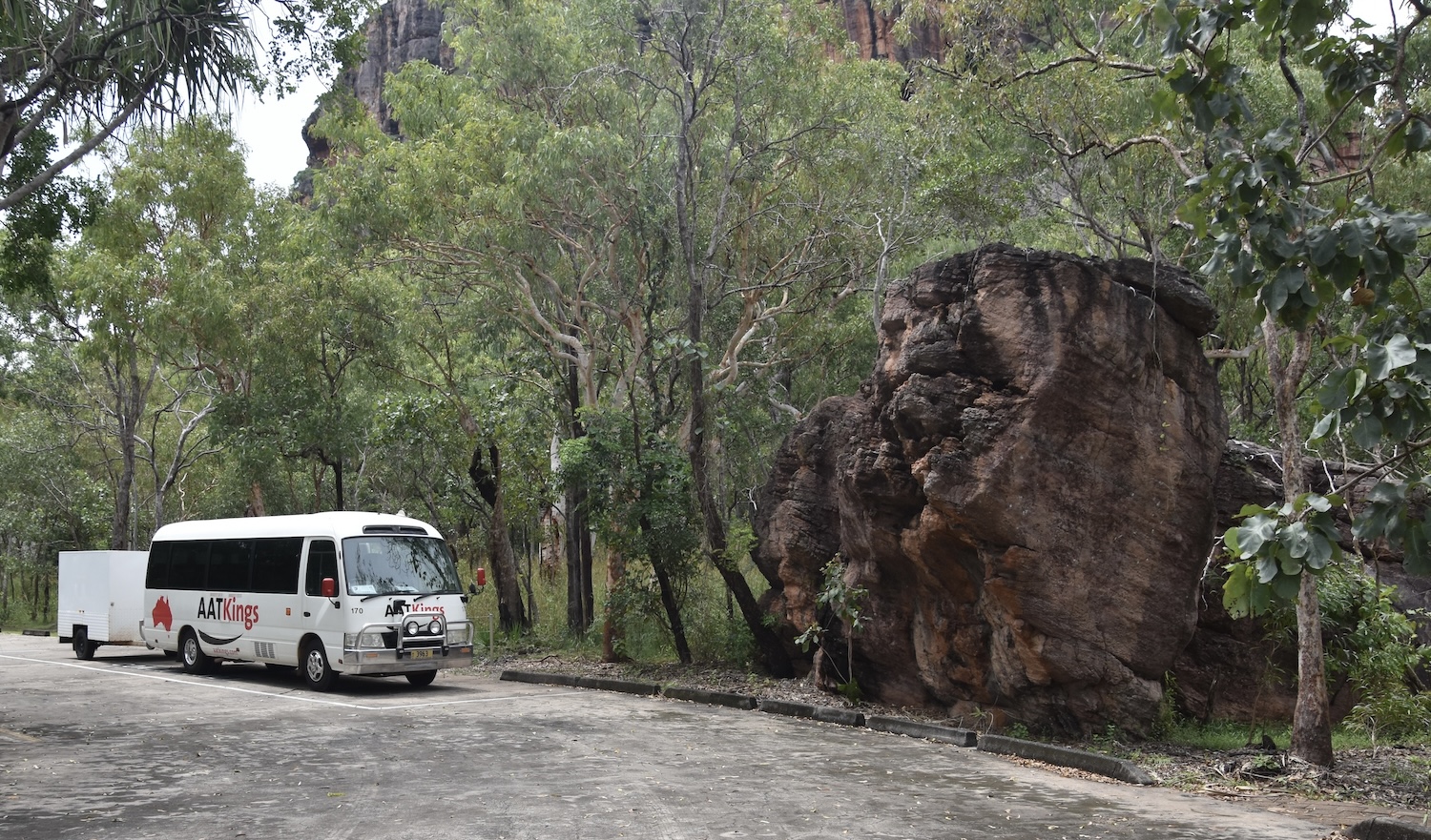
Our first stop takes us higher up from the flooded plains to the sandstone highlands where we will walk to the rock art paintings at Anbangbang and then view the sacred site of Burrungkuy. We are the only ones here which adds to both the solemnity and mystery of this ancient place.
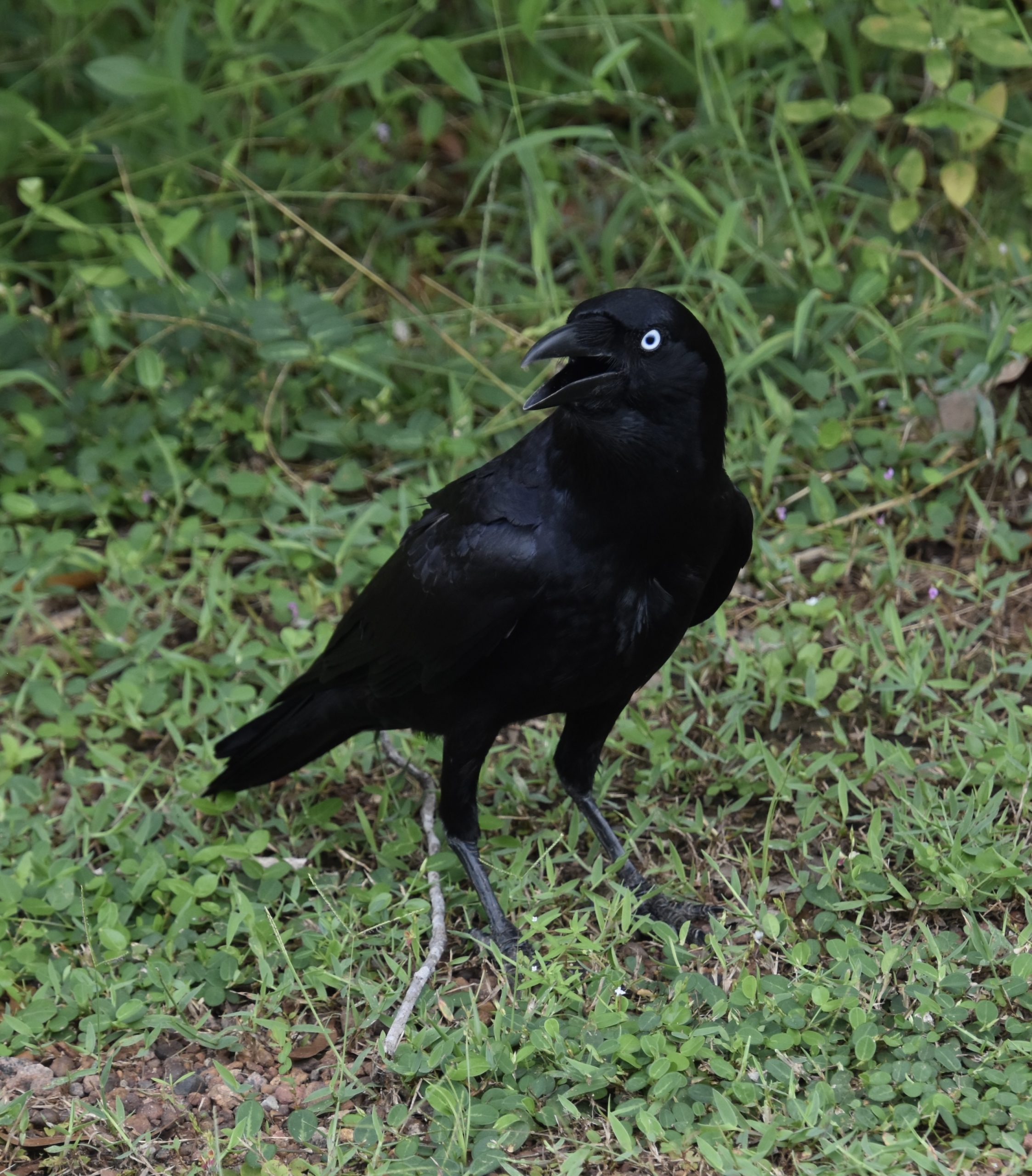
We are greeted by a Torresian crow which is another life lister for me. Check out his beautiful eyes.
Mel then leads the way into the scrubland that leads to the most famous rock paintings in Australia.
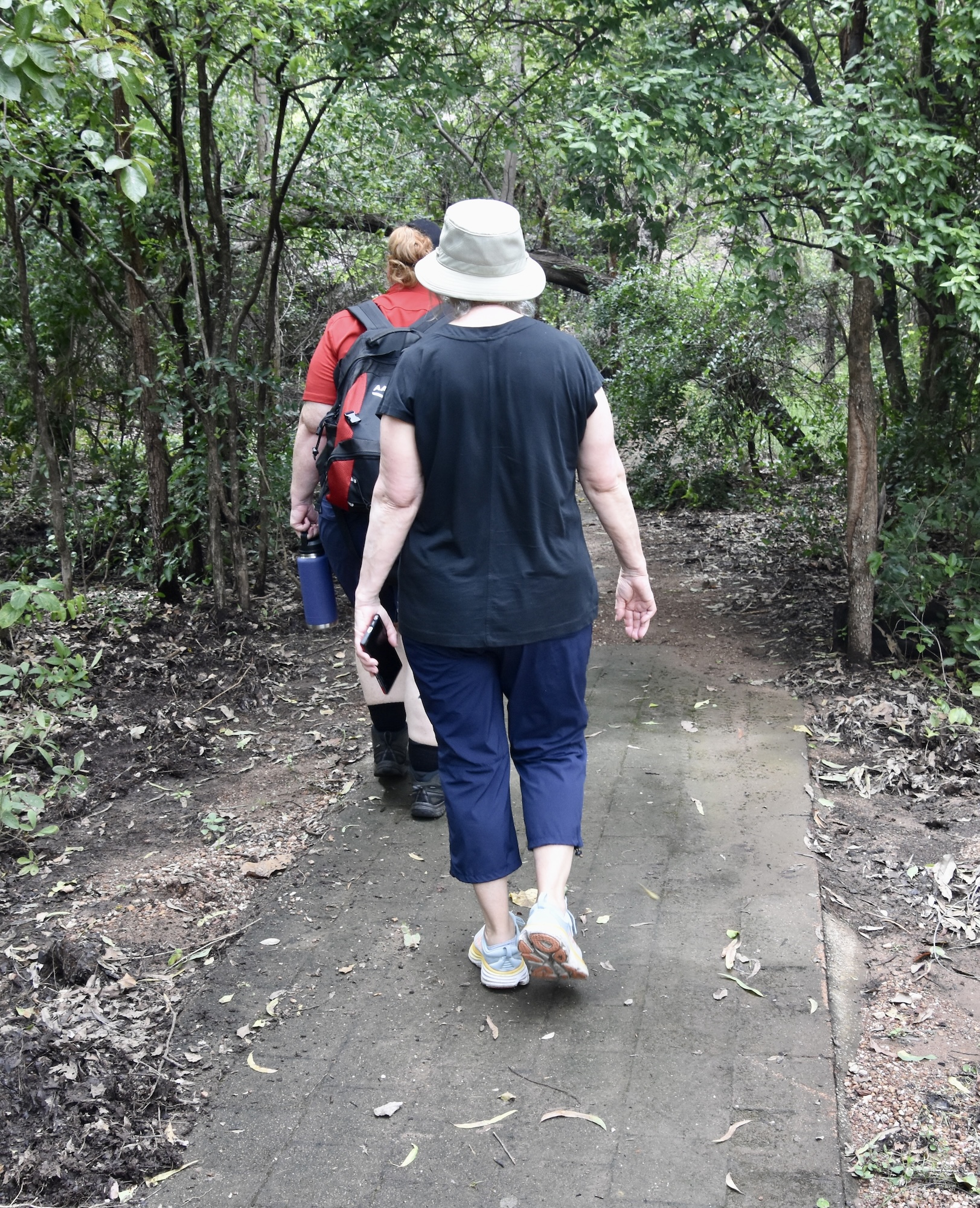
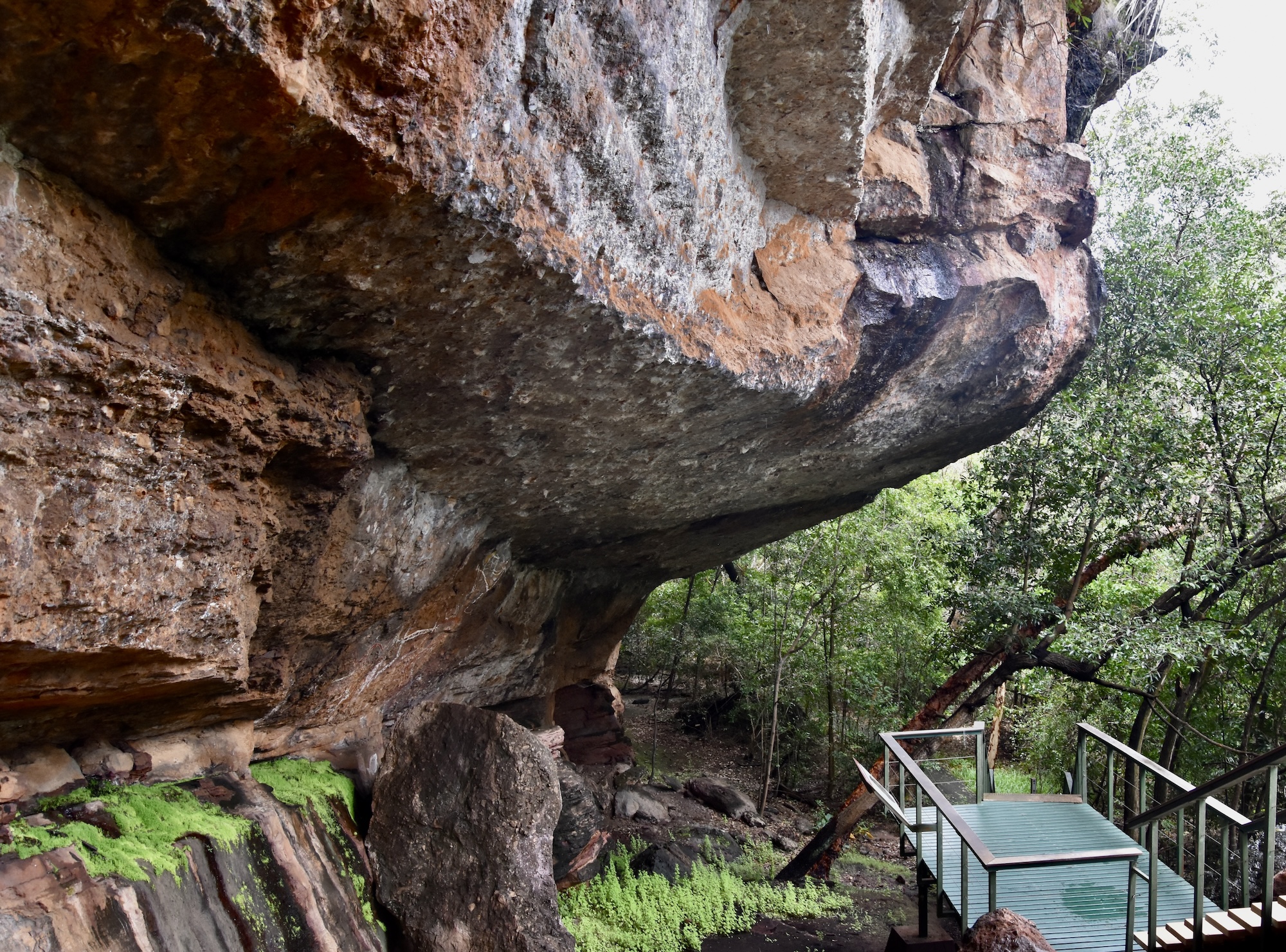
Most of the rock art is underneath sandstone overhangs which helps explain why some of these paintings or drawing that are up to 20,000 years old, have been preserved. They were created using pigments obtained from clay, white kaolin, charcoal and haemetite. Native tree orchid juice was used as a binding agent on the artwork at Anbangbang.
Our first work depicts a kangaroo hunt. The kangaroos are in white and the hunters in red.
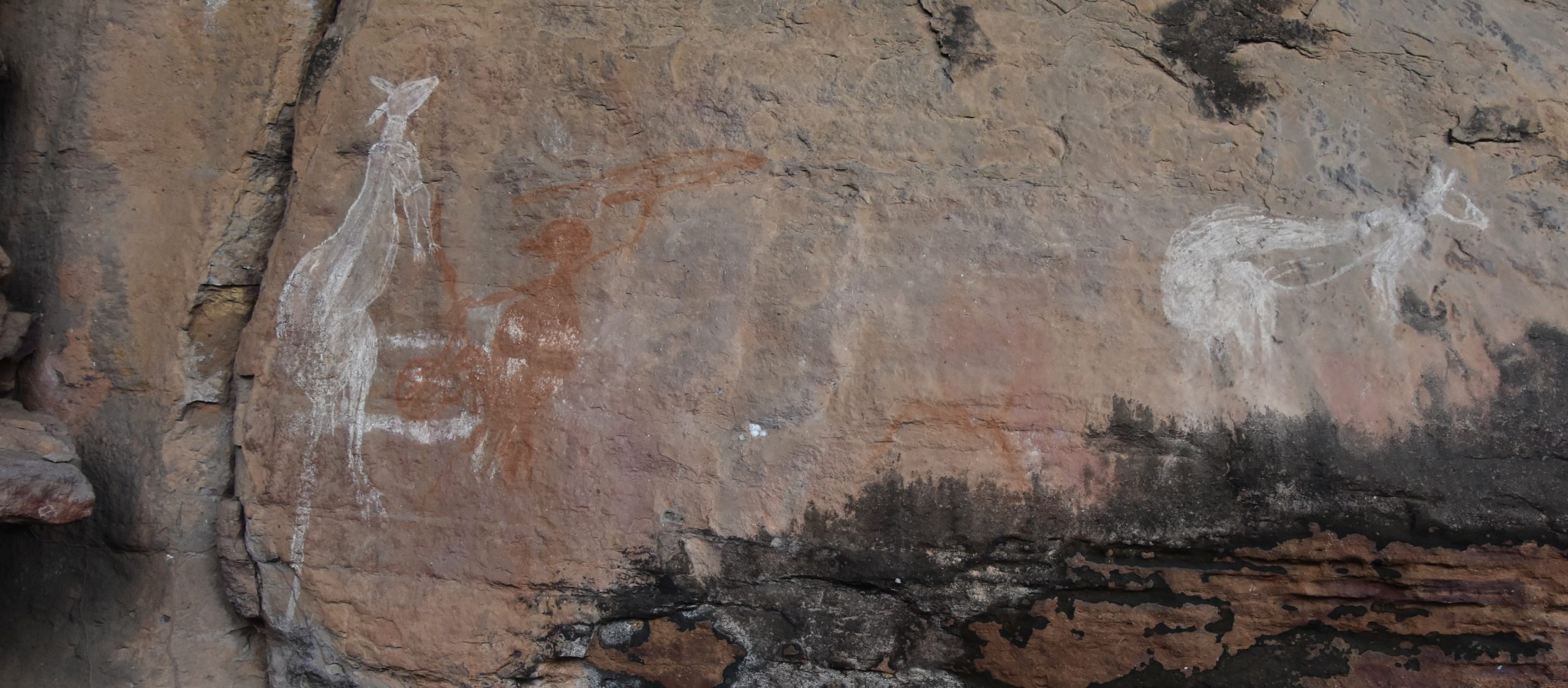
While this first panel was fairly easy to understand, the rest of the Kakadu rock art was not and without the expertise of Mel in explaining what we were seeing the experience would not have been anywhere near as fulfilling.
The next rock painting featured white and red figures in seeming disarray, but Mel explained that it is actually depicting a wild celebration by what are known as Mimi spirits, who the Aboriginals believe taught them how to hunt, create art and cook. They exist in another dimension and are akin to legends about elves, leprechauns and other creatures you cannot see, but know are there. If you are asking yourself “How do we know what these really mean since they were done so long ago?”, the answer is the continuity of the Aboriginal occupation of this area and the passing down of the stories and legends associated with this rock art.
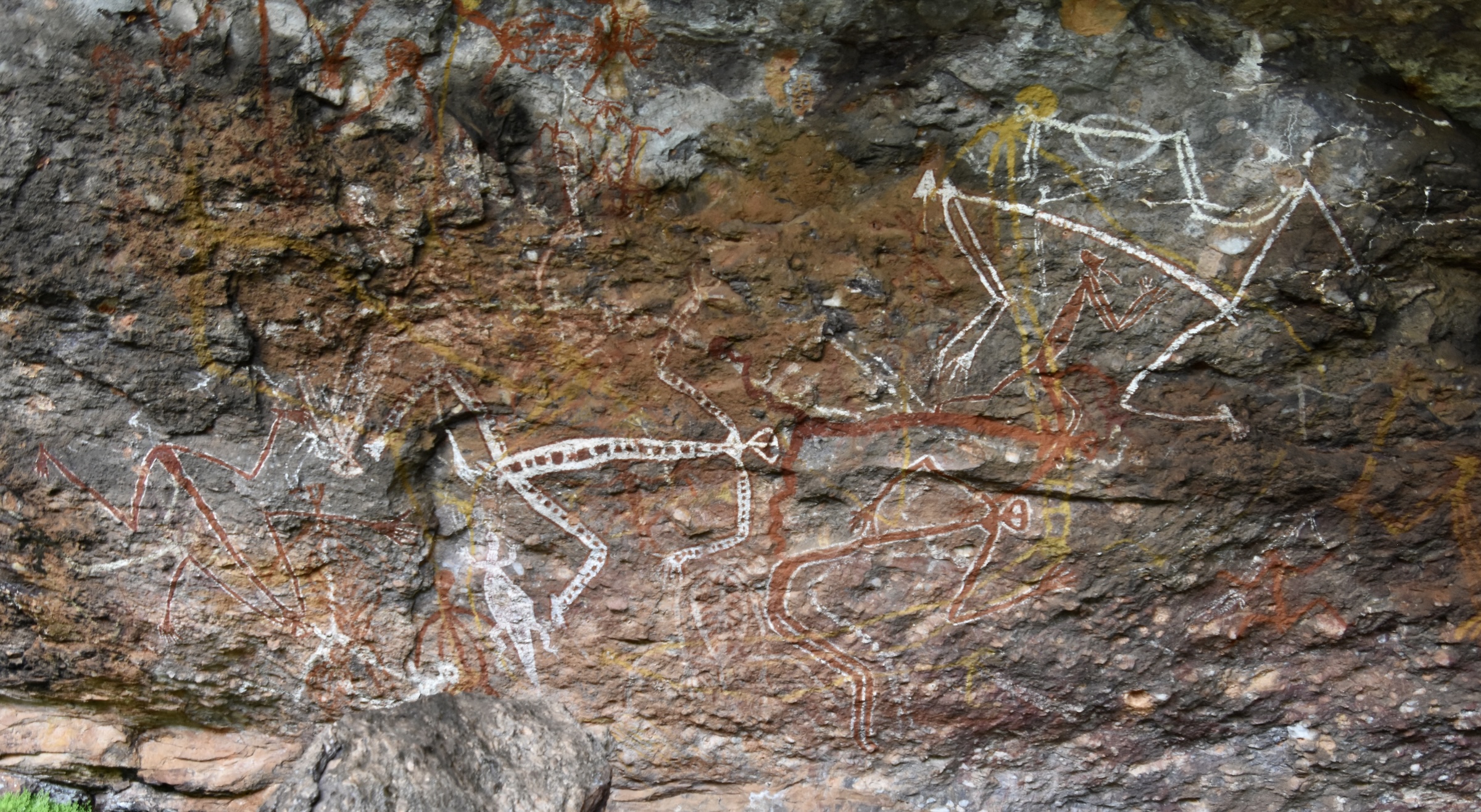
Next is a large rock wall with a number of figures that I’ll examine separately. The largest figure in the white, red and black is a prime example of what is called X-ray rock art with the internal organs, bones and blood vessels plainly visible. The figure is Namonjok who is a sky ancestor who can only be seen in the night sky.
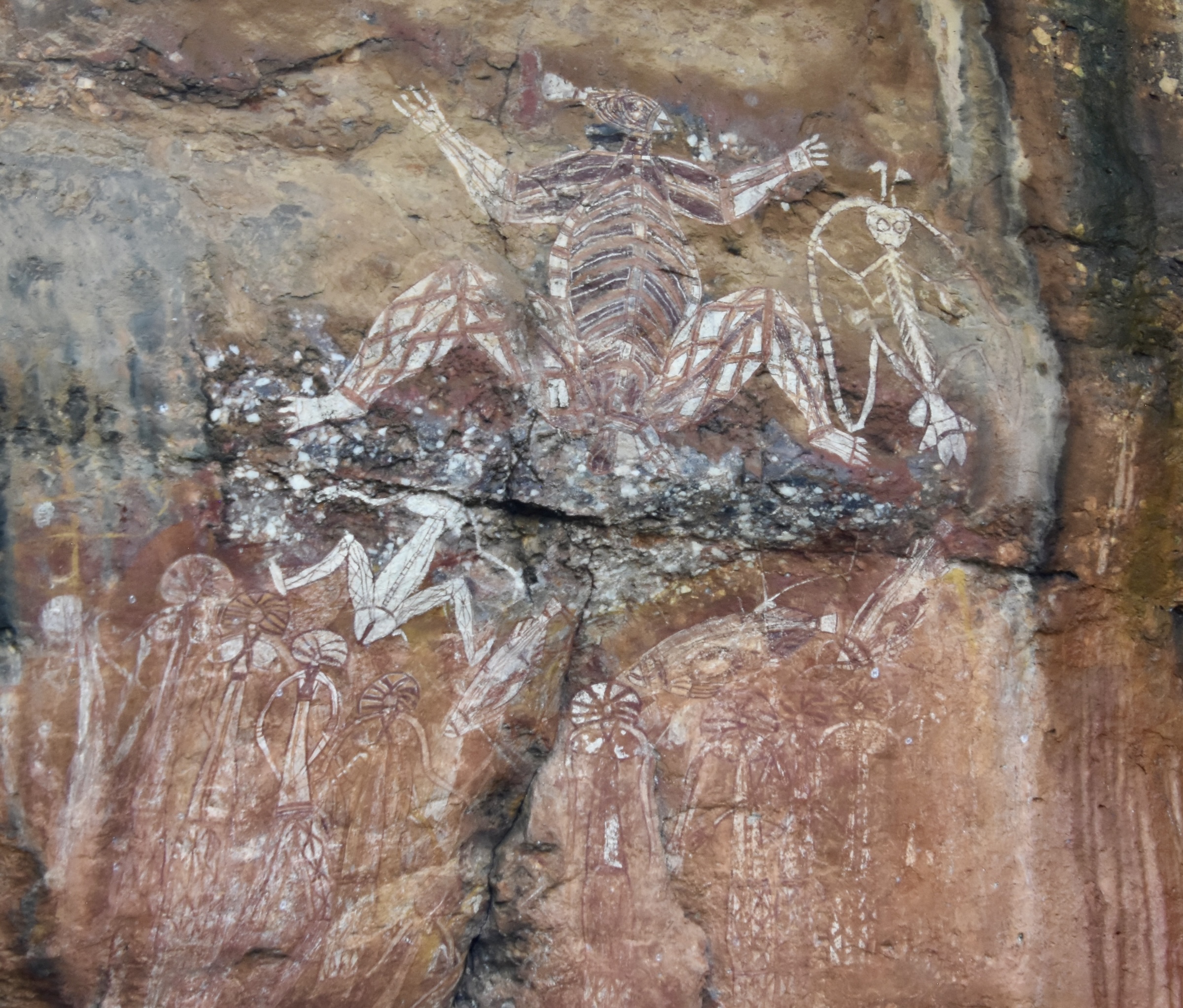
Next is Mamaragan/Namarrkon the lightning man who speaks as thunder and appears in the pre-monsoon season. This area of Australia has a high propensity for lightning and it is a major part of the Dream Time mythos for the Aboriginal people of Kakadu. You see this figure in many representations throughout the Northern Territory, but this one at Kakadu is the most common.
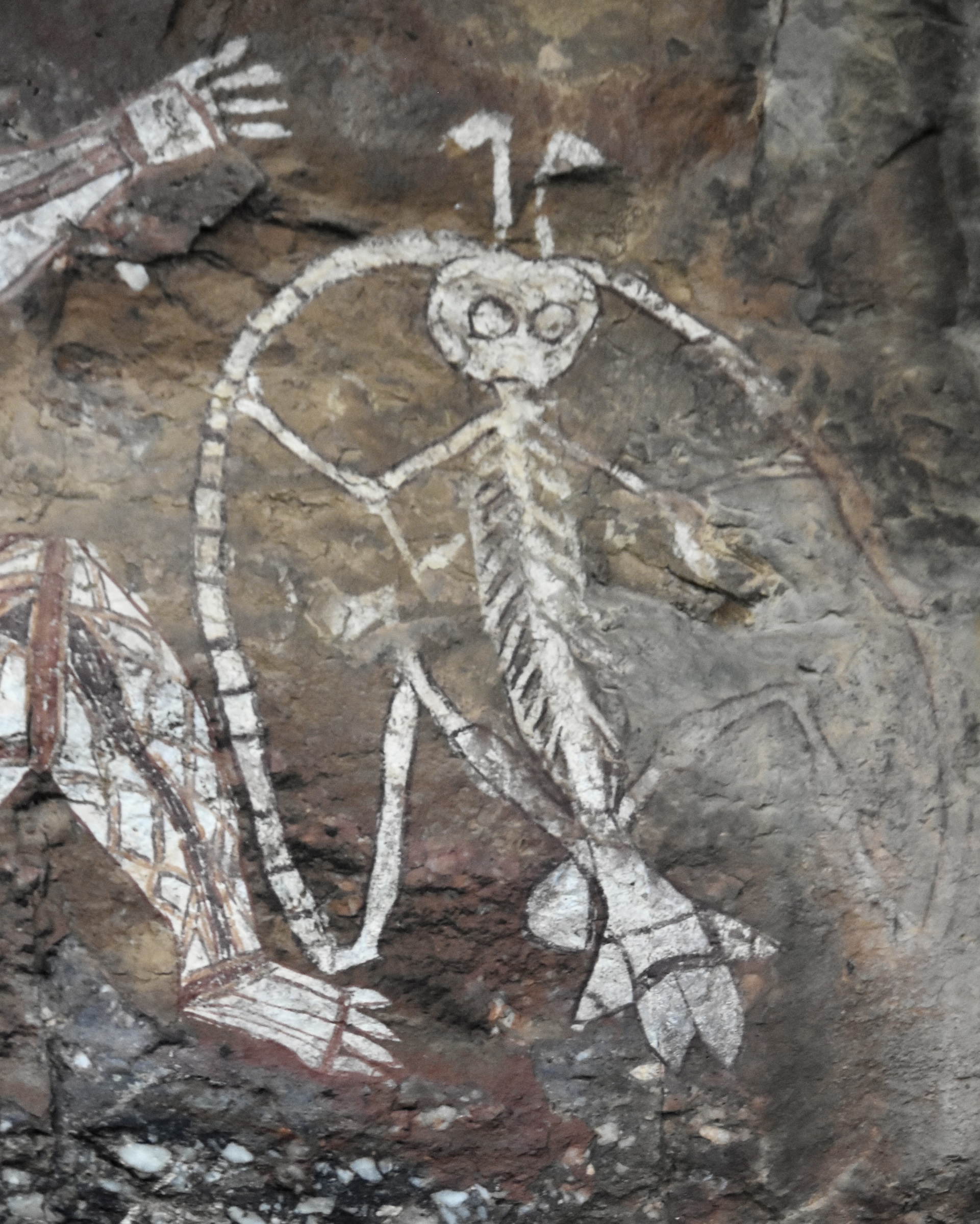
Lastly we have Warramurrungundji giving birth to the Aboriginal people as well as the animals and plants. She is the creation figure for many of the Aboriginal groups in Australia.
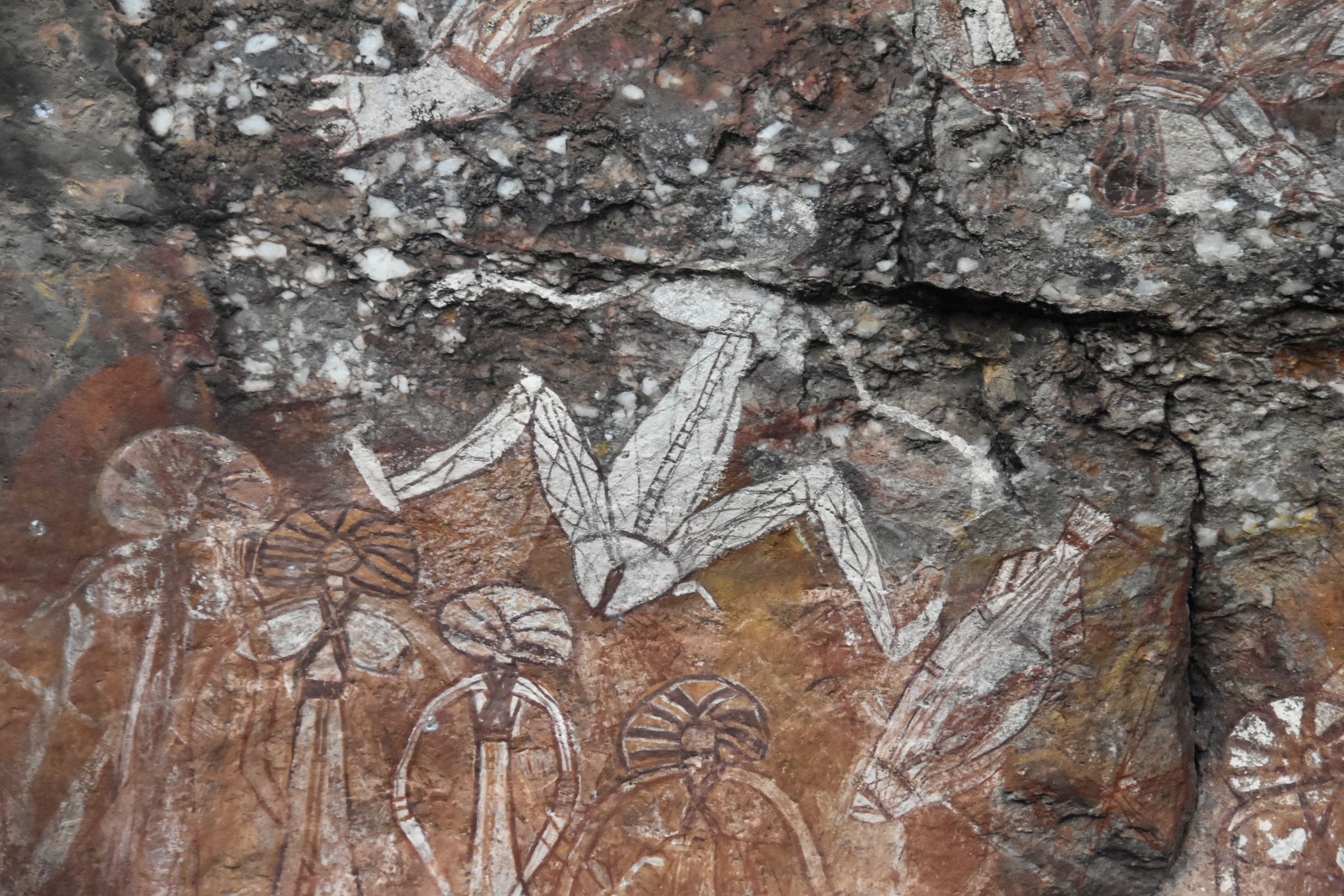
The fact that all three of these figures are in one gallery makes this one of the most important rock art sites in Australia.
There is more to be seen in this area and Mel leads us on the climb up higher to view several rock formations that are of great significance to the Aboriginal people.
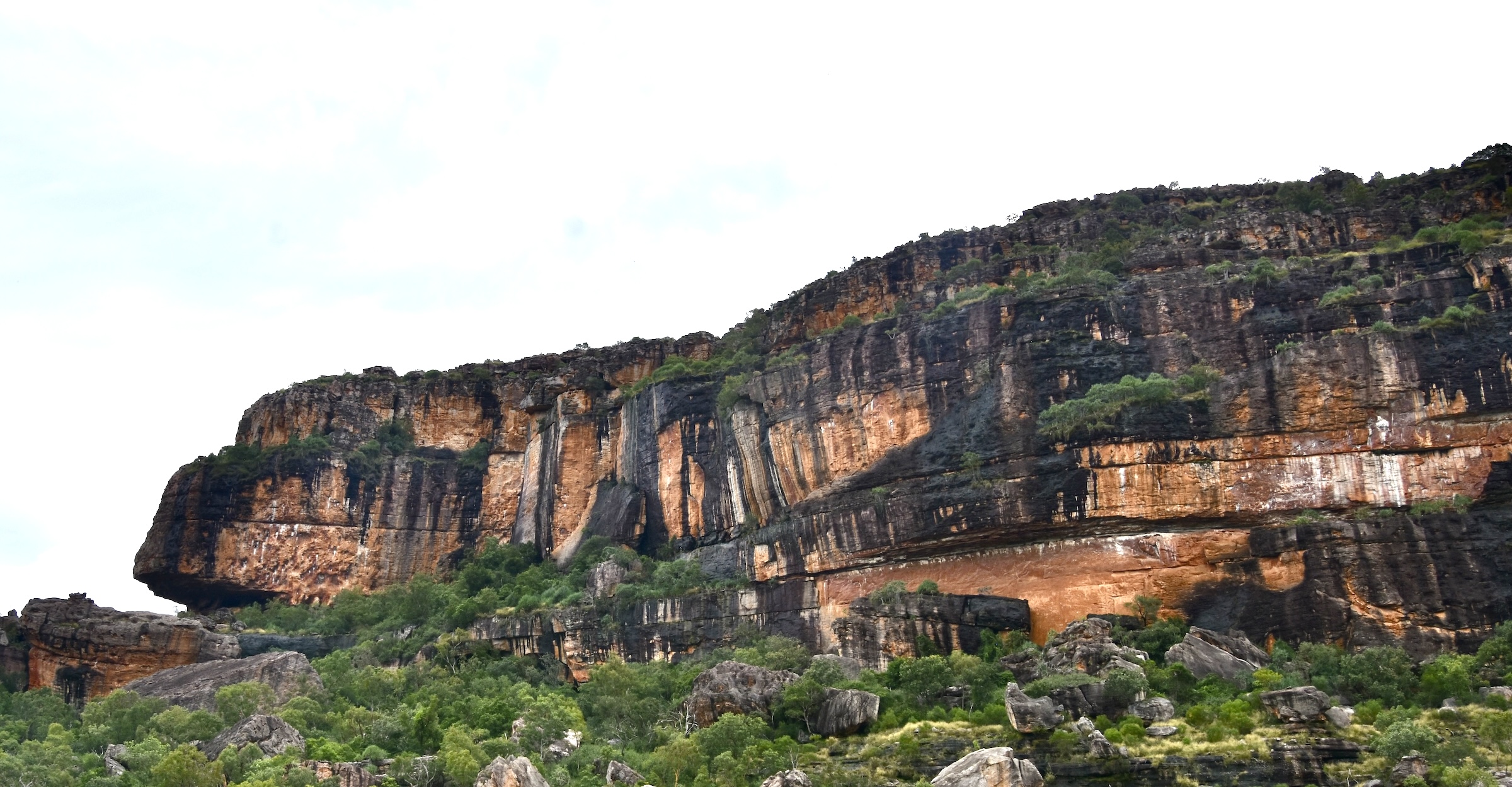
In the Dream Time Namanjolg, a Creation Ancestor, broke the laws against incest with his sister who plucked a feather from his headdress and placed it here where it turned into stone as a permanent reminder not to break this sacred law.
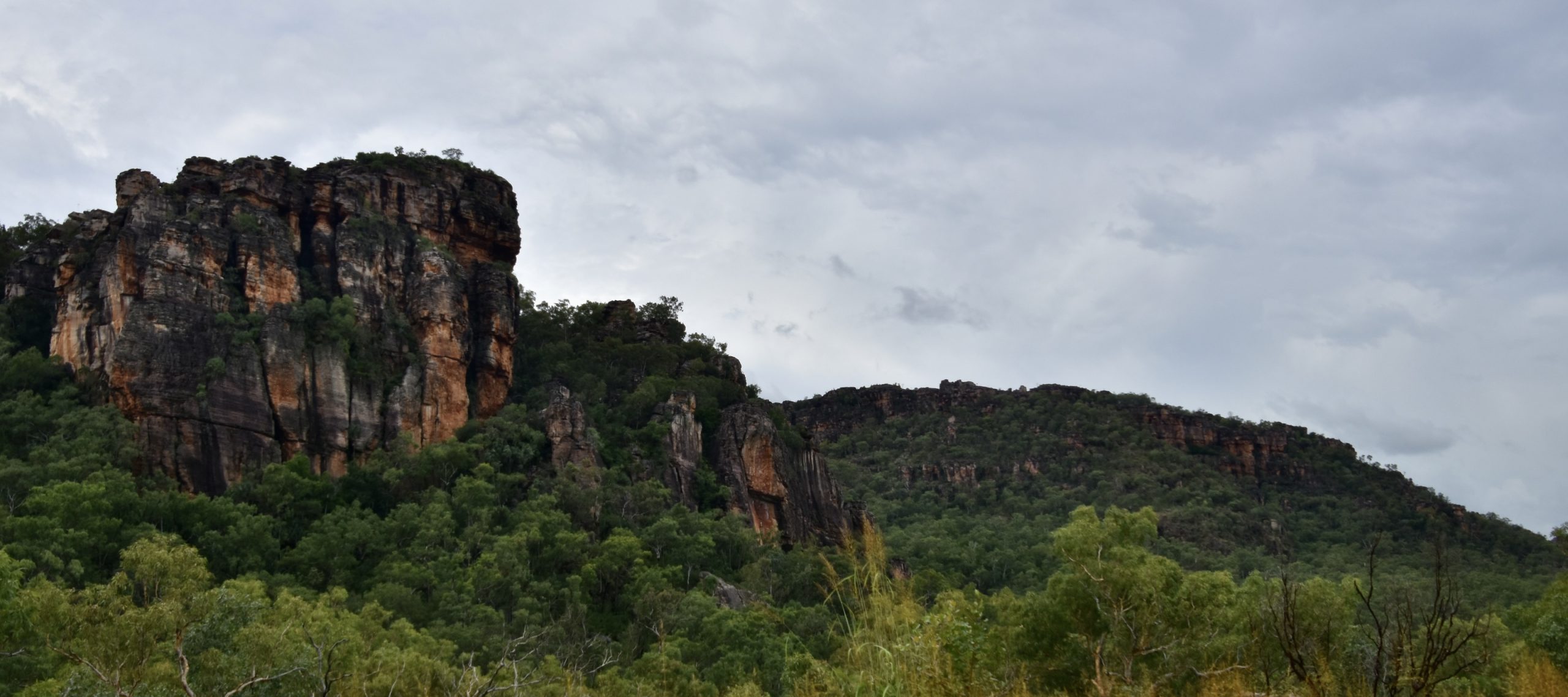
This is Burrunggui or Nourlangie Rock which is believed to be the home of the lightning man and according to signage at the site, a dangerous place not to be disturbed. Being the only ones here and miles from anywhere, it definitely felt a bit eeerie.
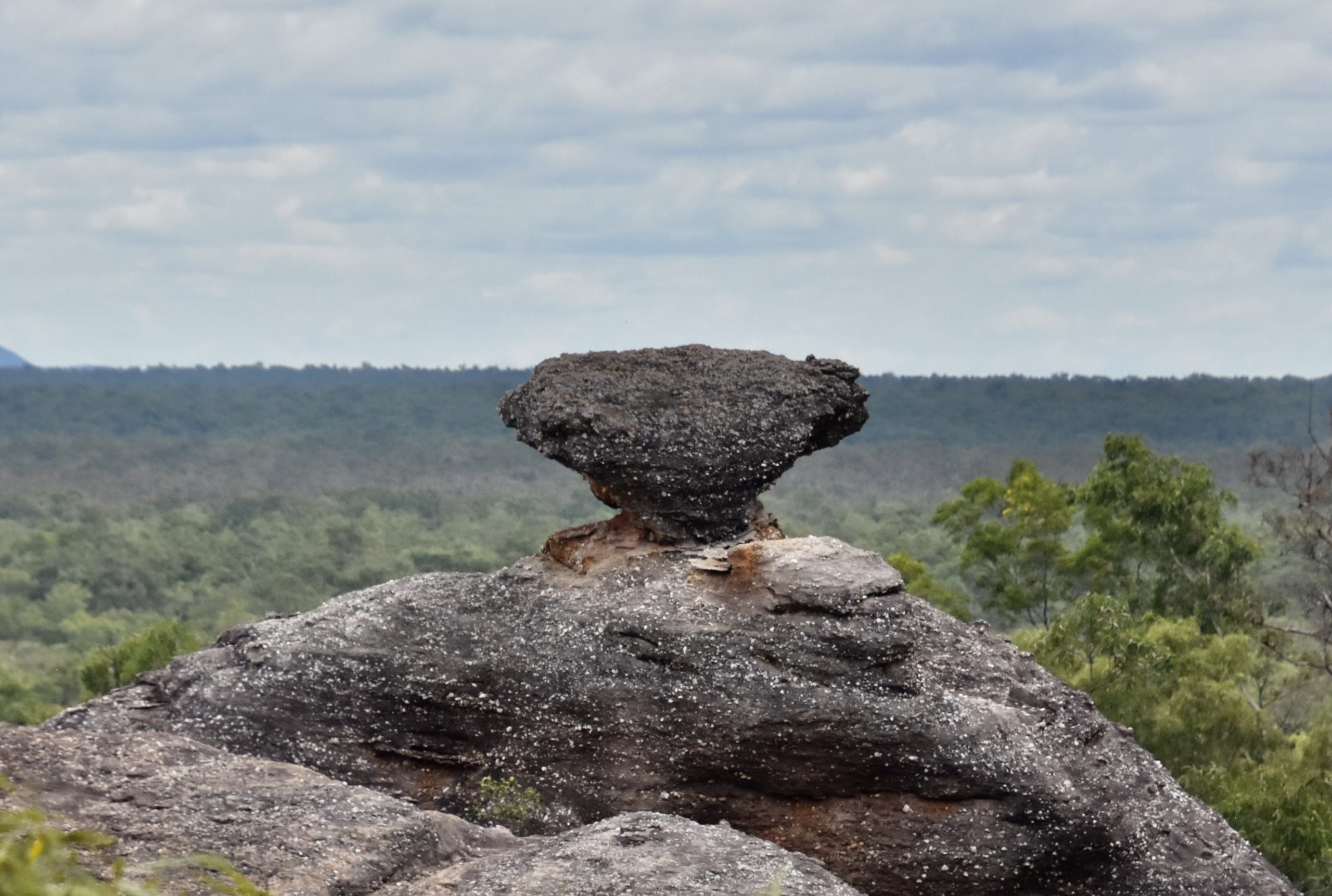
Returning to the bus we passed this interesting hoodoo on the way.
While our first Kakadu adventure featured Aboriginal art and the Dream Time, our next featured the wildlife and in particular the bird life of the park. We descended back down to the lowlands of Kakadu and made our way to Yellow Water on the South Alligator River for an almost 2 hour cruise with Yellow Water Cruise. Now the first thing to clear up is that there are no alligators in Australia, but the Englishman who named the river didn’t know that. He thought the salt water crocodiles were alligators and the name stuck.
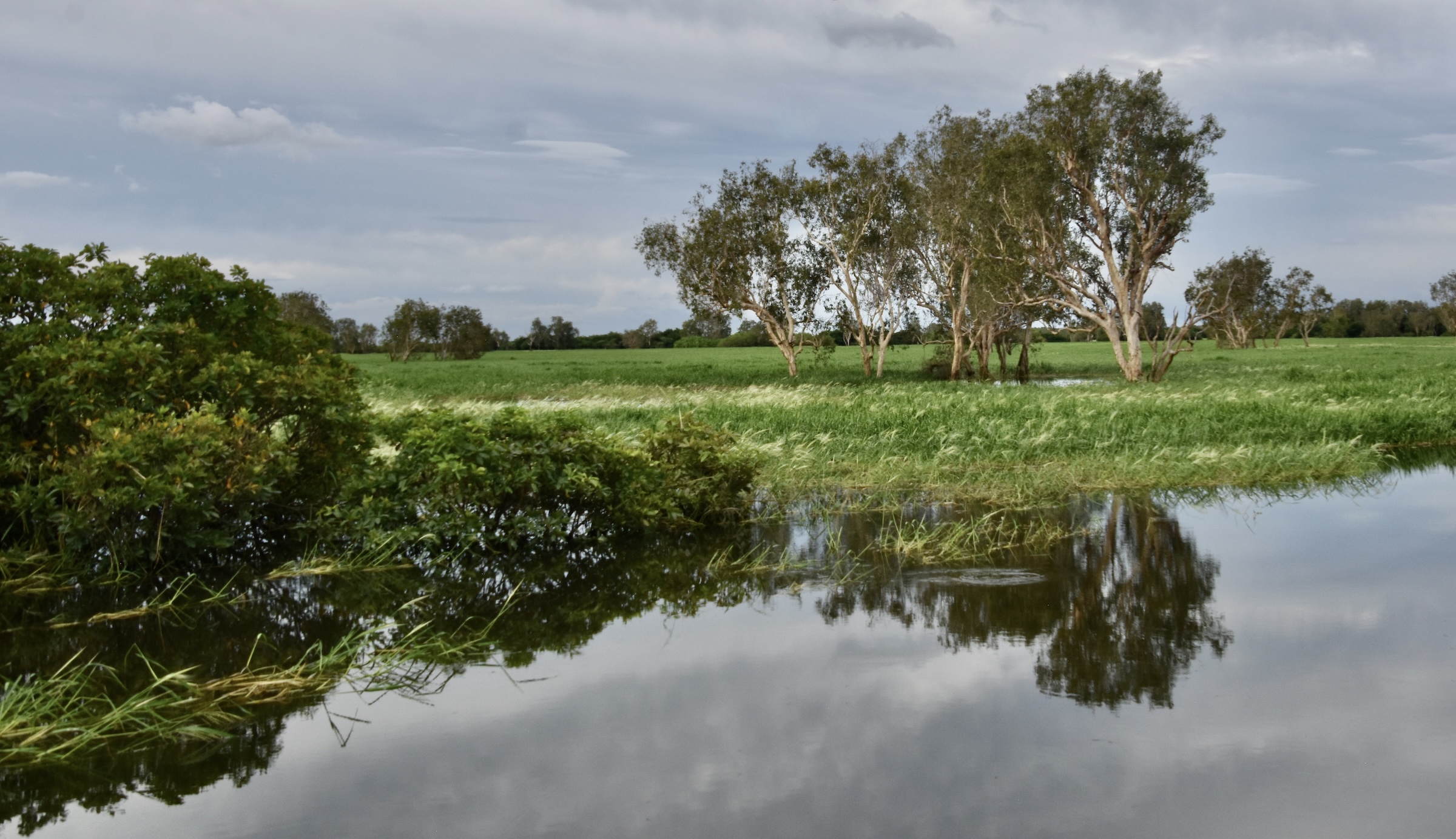
This cruise was one of the highlights of the entire Australian tour. For one thing the scenery was ethereal as you can see from this photo. Australia has such a reputation for being a dry continent that this cruise broke all the stereotypes.
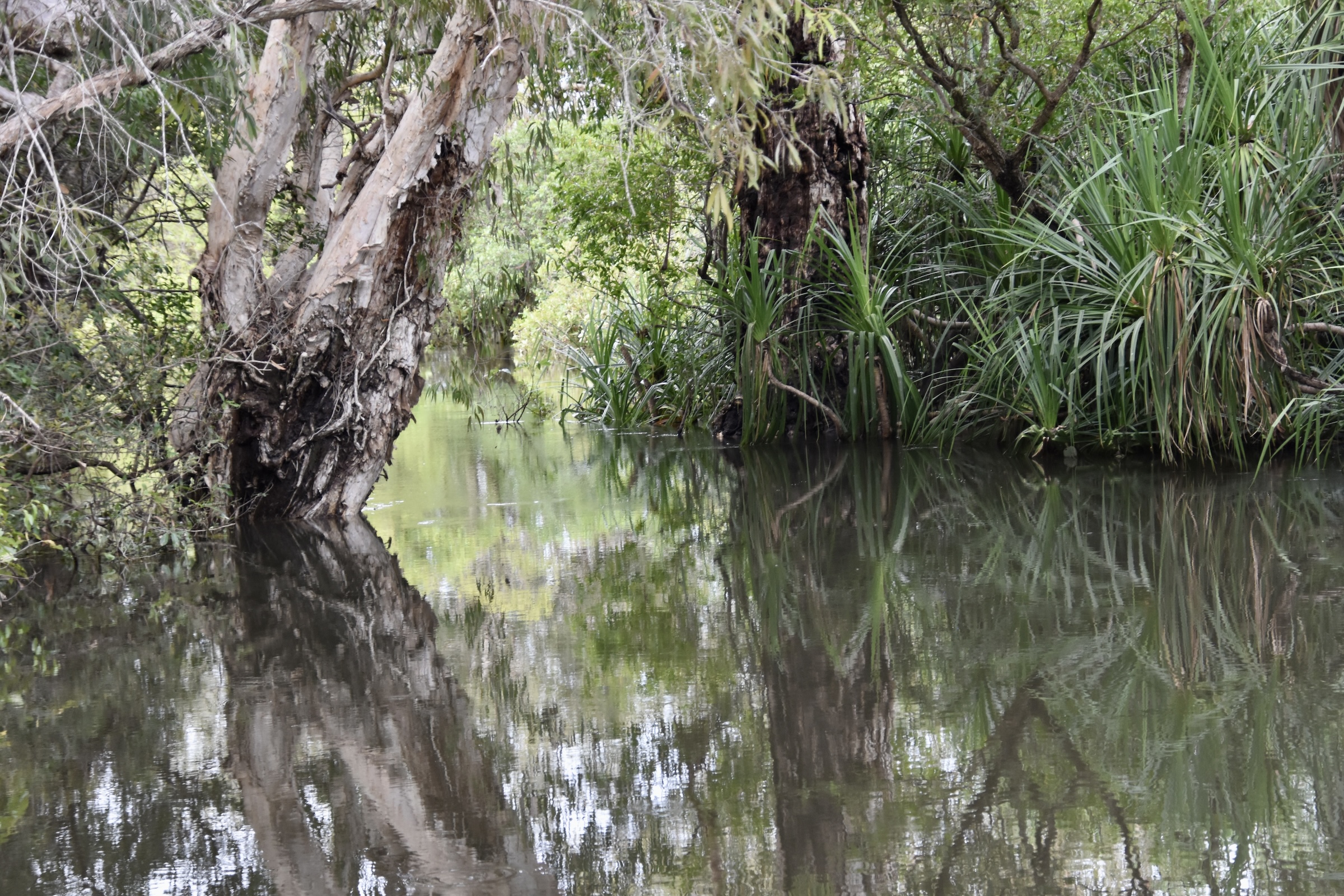
Here’s another look at this water wonderland.
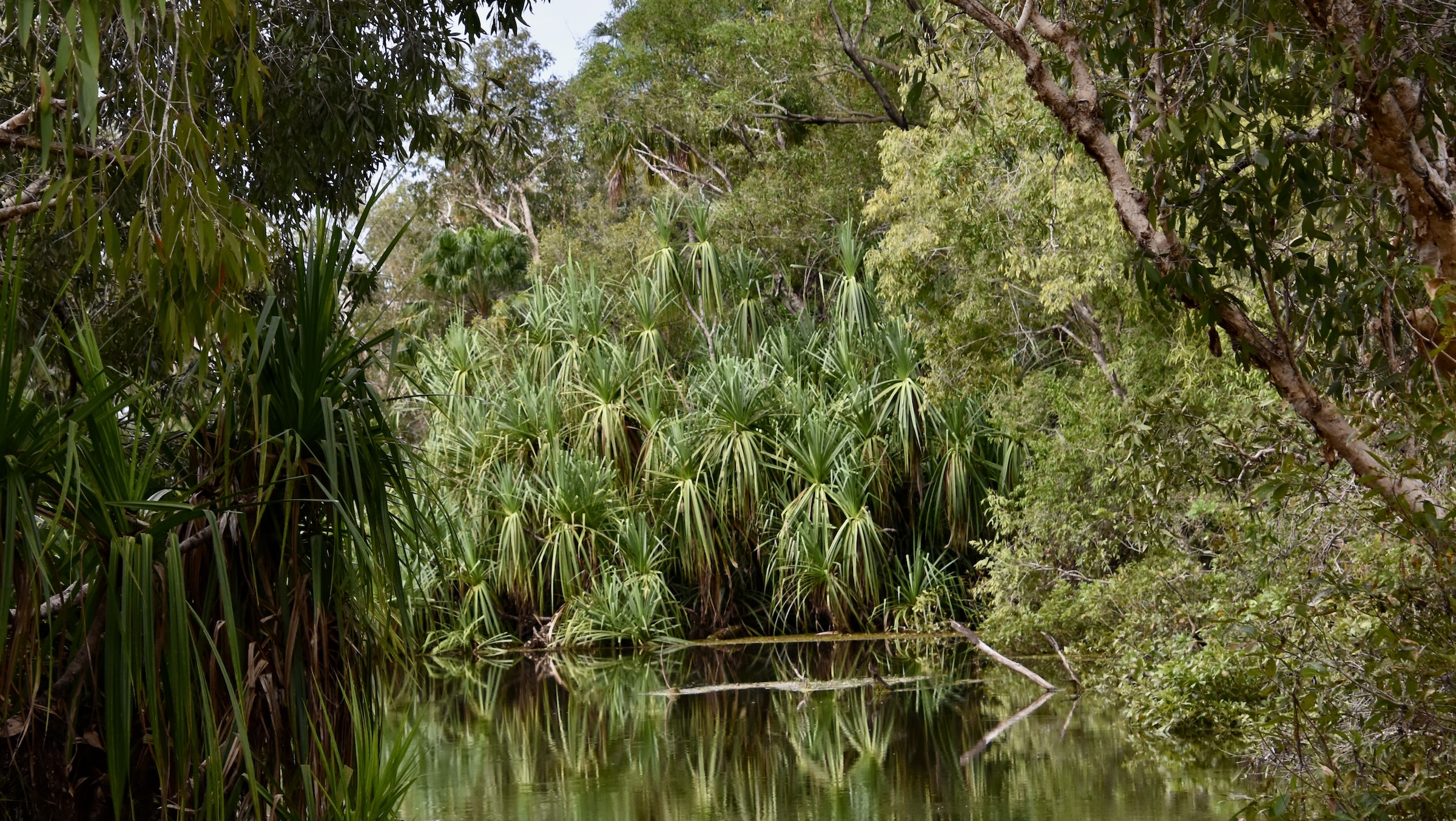
Here’s a short video to help appreciate this place as well.
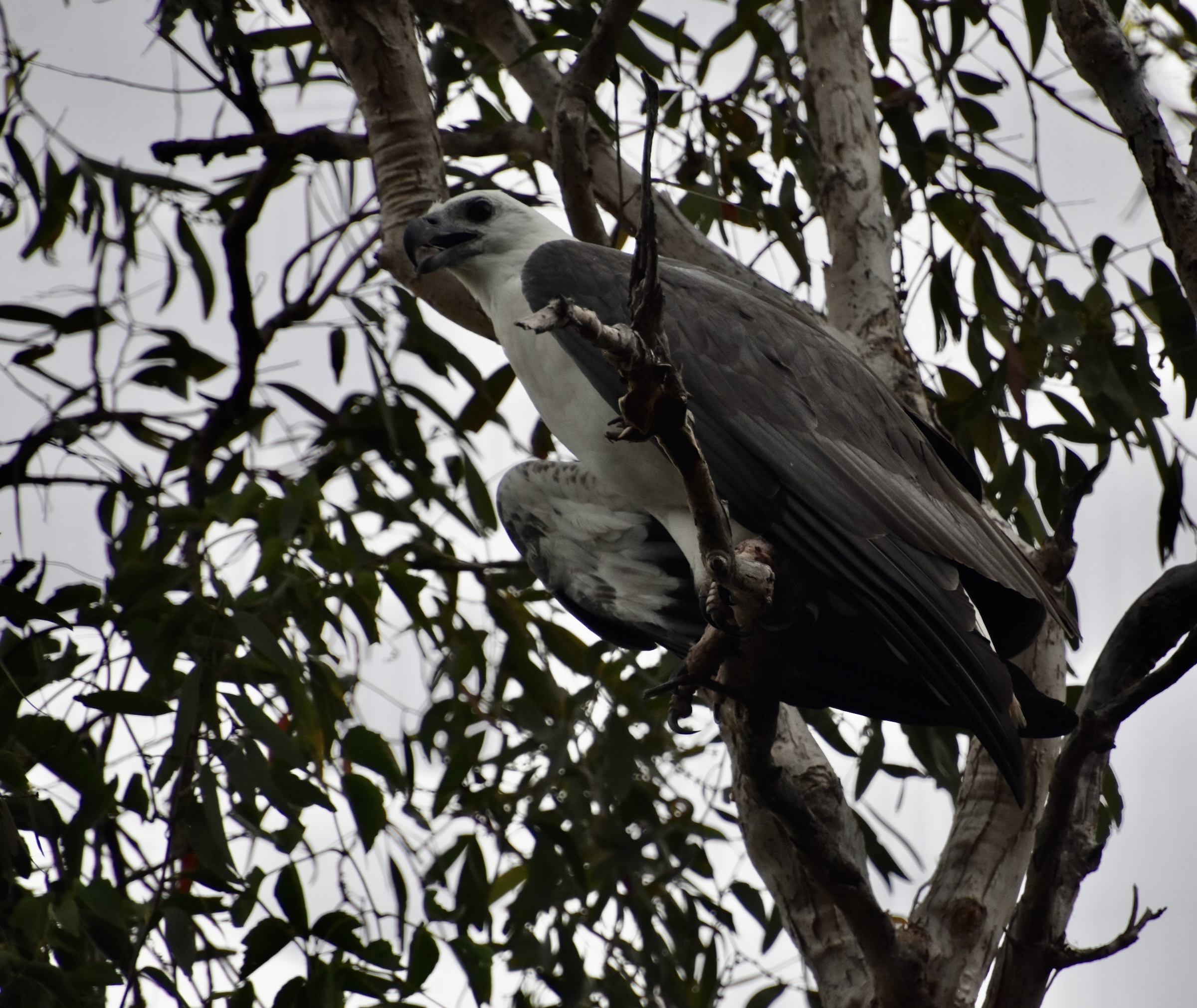
But what made it super special for me as a life long birder was the number of new species we came across, many of them like the white-bellied sea eagle, truly magnificent birds.
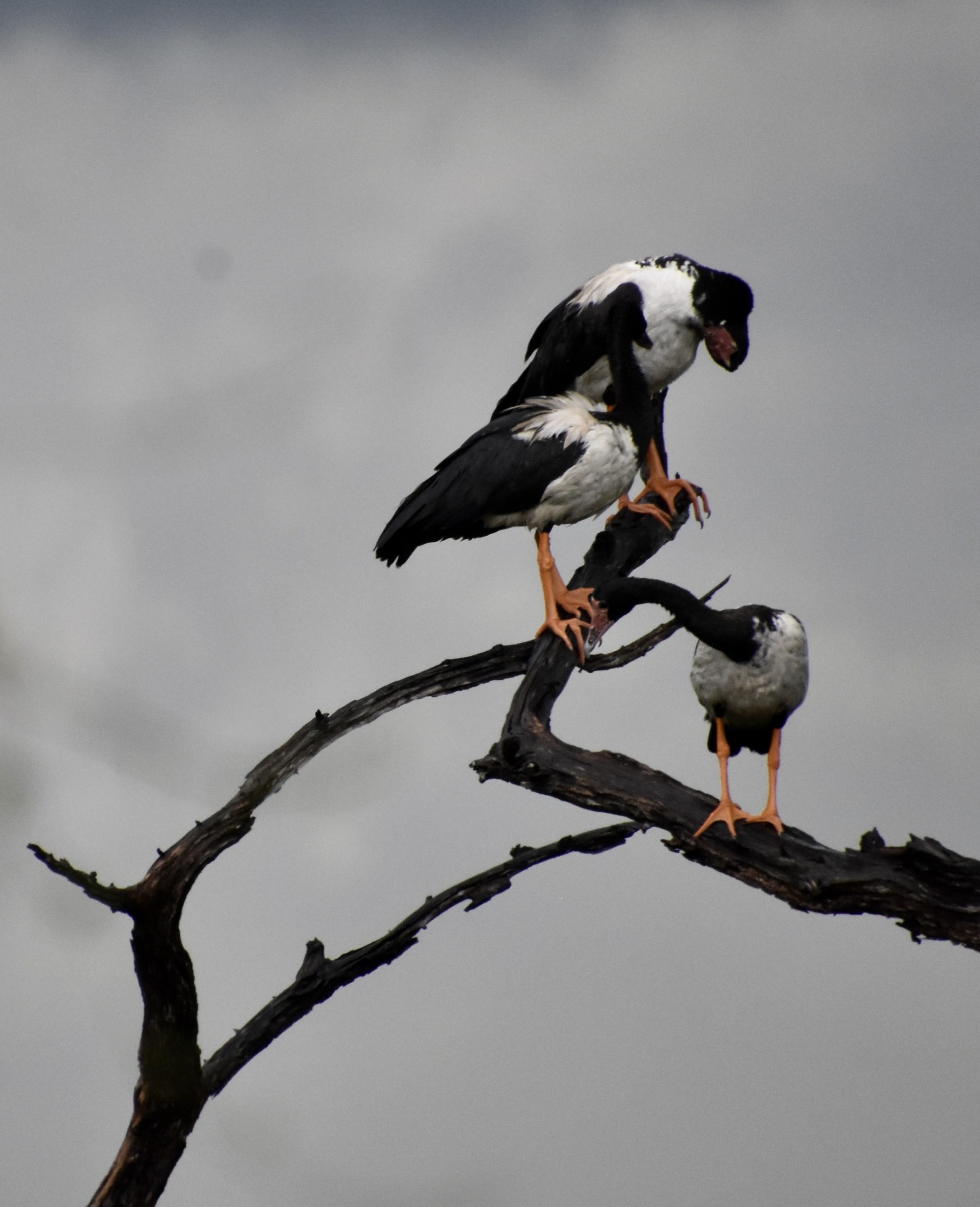
How about magpie geese hanging about in trees?
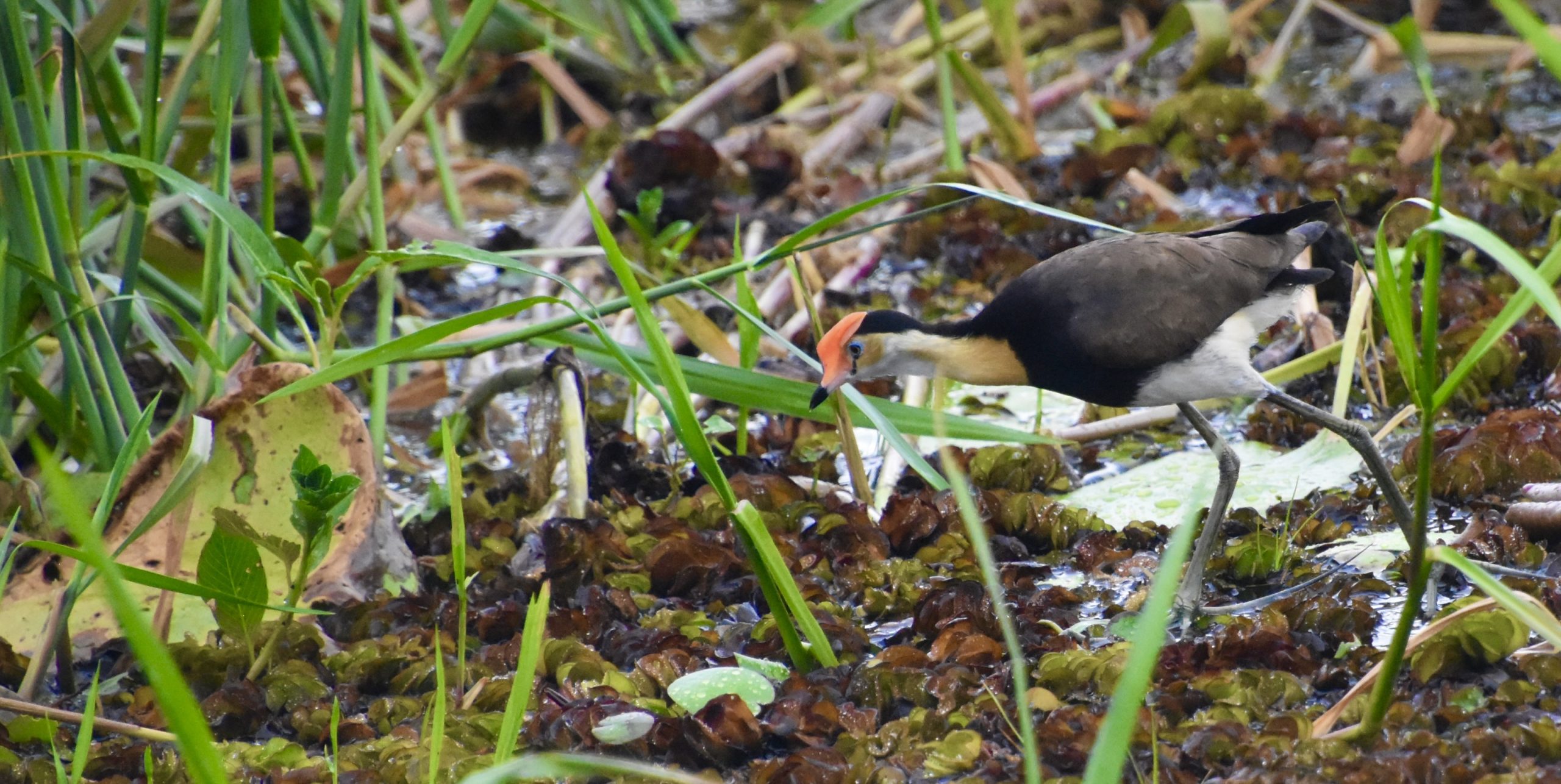
Or this tiny comb-crested jacana.
Also spotted were a eurasian darter, little eagle and huge flocks of egrets. If you are a birder, this excursion is almost reason enough alone to sign up for this trip.
But what about the crocodiles? They were there, patrolling the waters like stealthy assassins, but none the size of Brutus. Still, this would not be the place to go for a dip as you see from this video. I love the captain’s voice – he literally could be Crocodile Dundee.
One last look as we head back to the landing.
We had one more stop before heading to that unique hotel I mentioned at the beginning of this post.
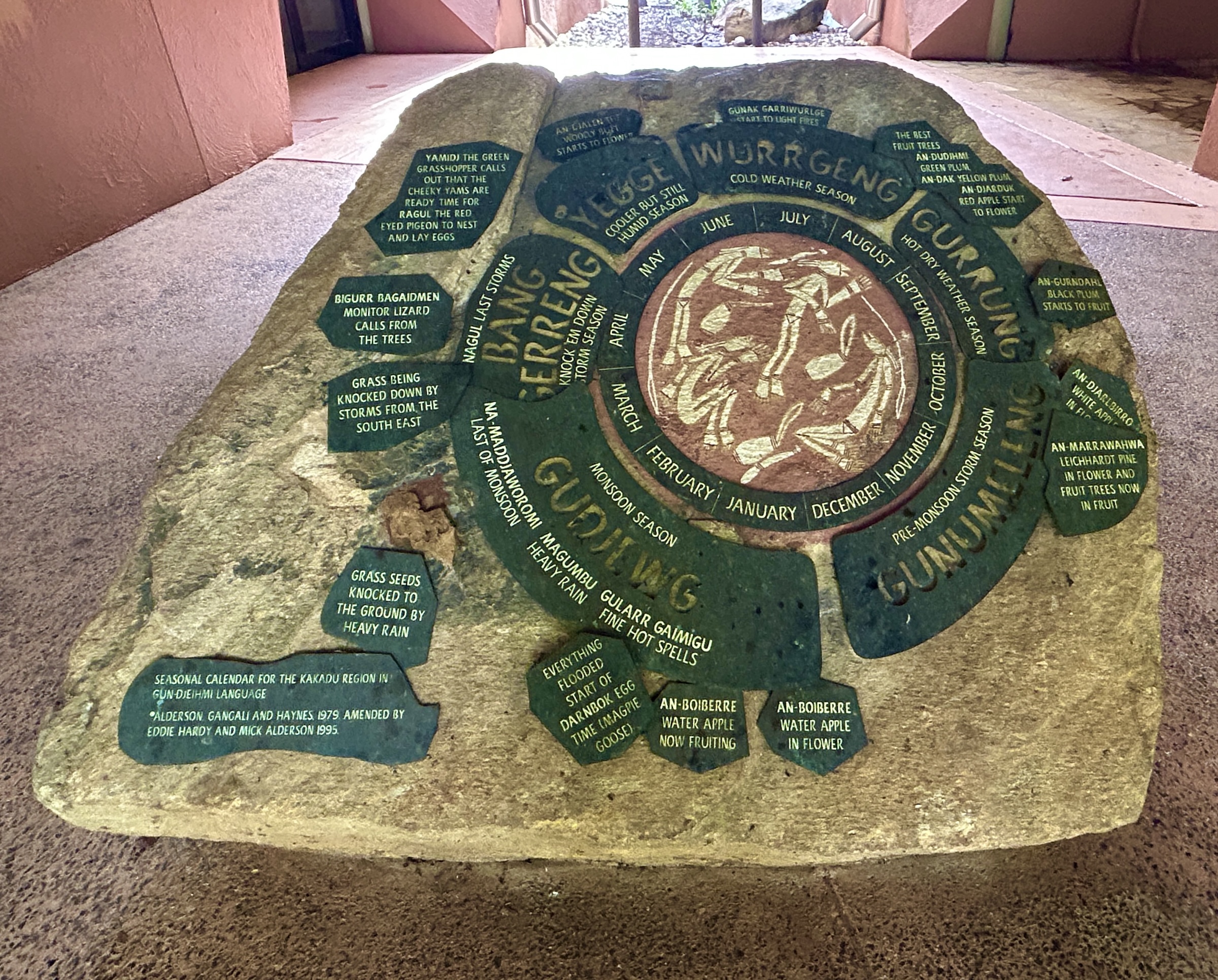
The Warradjan Aboriginal Cultural Centre is described on its website as follows:
Nestled near the lively Ngurrungurrudjba (Yellow Water Billabong) in Kakadu National Park, Warradjan Cultural Centre is a living space for sharing culture, history, and art. Created by the Bininj/Mungguy people, Warradjan tells the stories of Country, Dreaming, and the unbroken connection of Aboriginal people to these lands for over 65,000 years.
Here, visitors can walk through interactive displays, meet artists, and discover weaving, painting, and sculpting traditions that continue to thrive today.
Unfortunately photography is not allowed so I have no pictures, but you should check out the website to get an idea of the type of artwork available for purchase. If you are looking for a genuine memento from Australia this might be the place to acquire it.
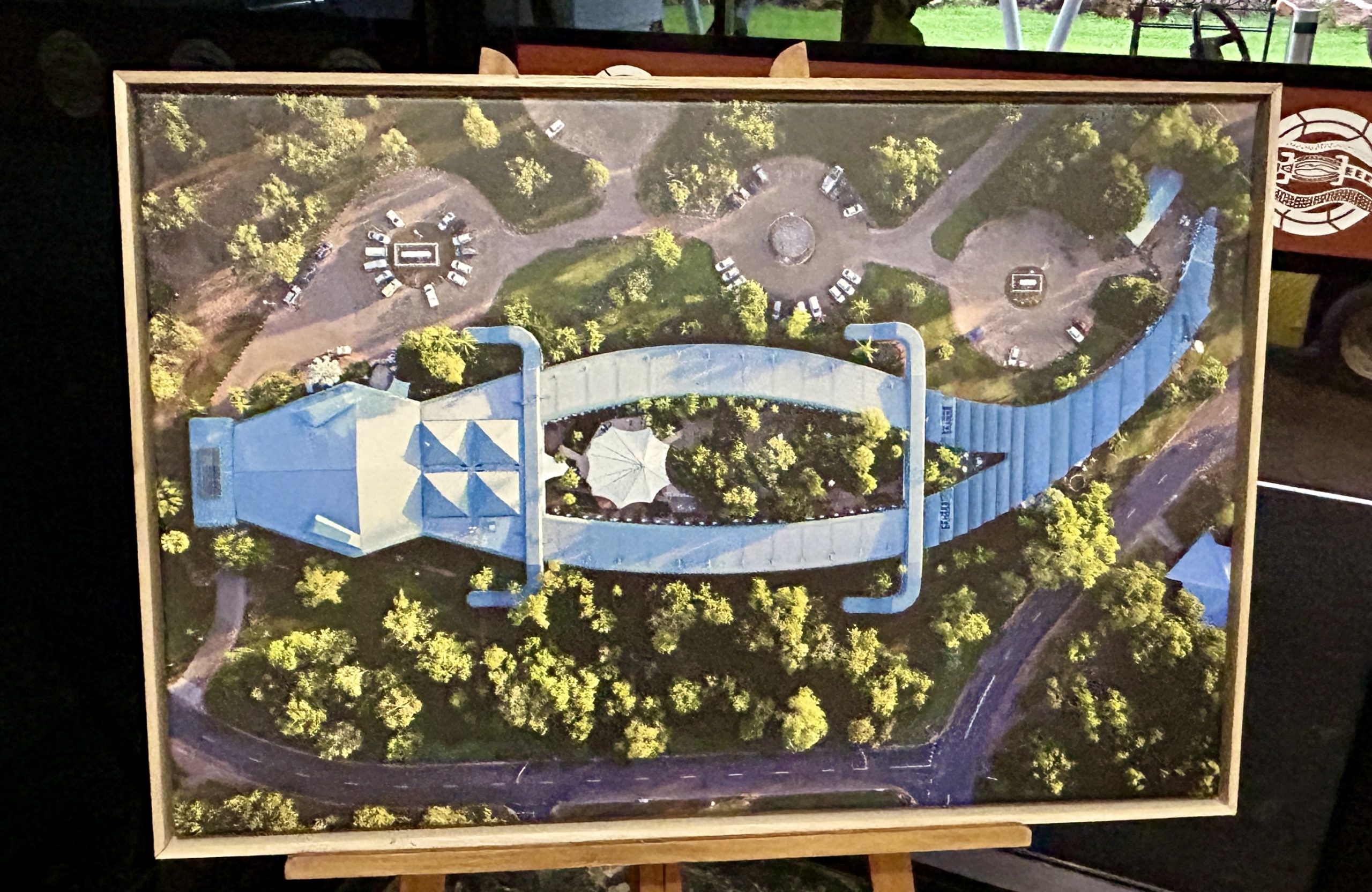
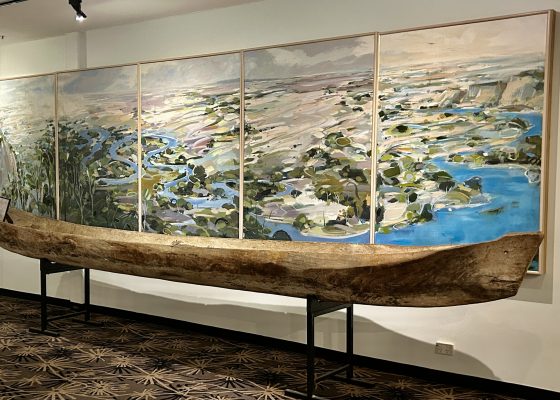
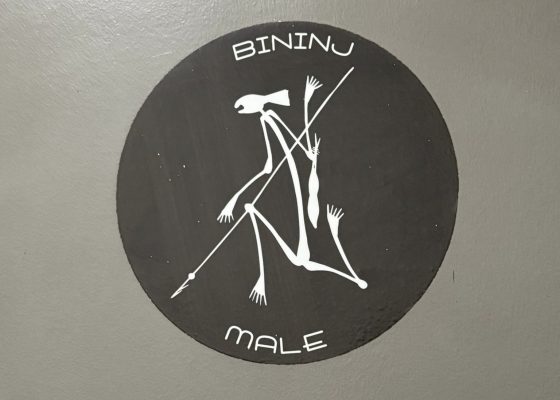
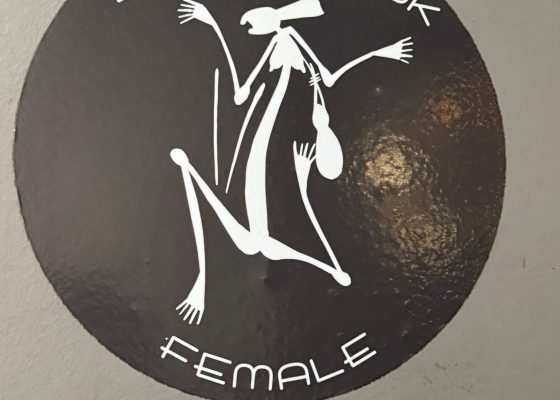
This is an aerial photo of the Kakadu Crocodile Hotel in Jabiru which as you can see is literally in the shape of a crocodile. Everything about this place was interesting. Check out this gallery by double-clicking to open a photo and double-clicking again to enlarge.
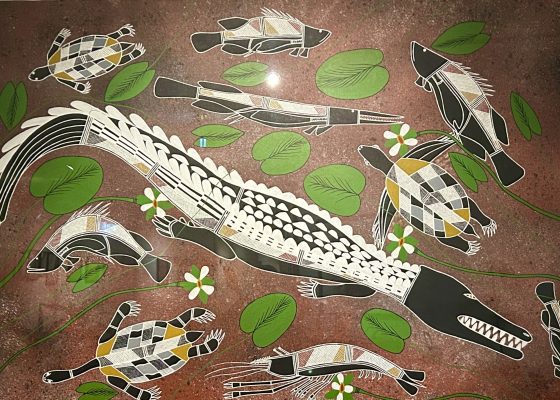
-
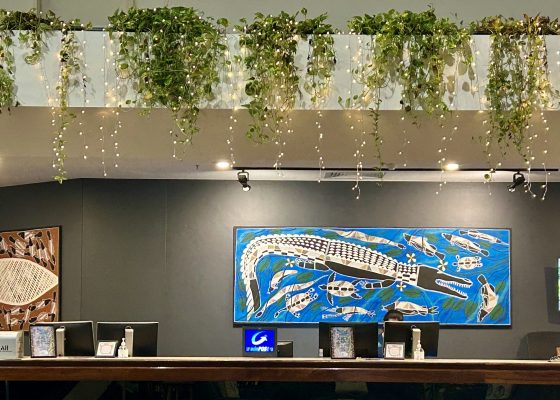
- Lobby
-
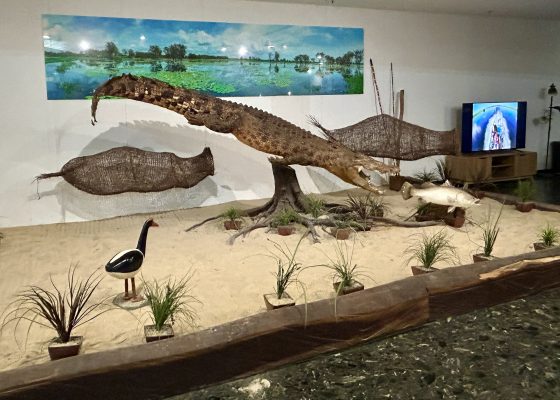
- Lobby Diorama
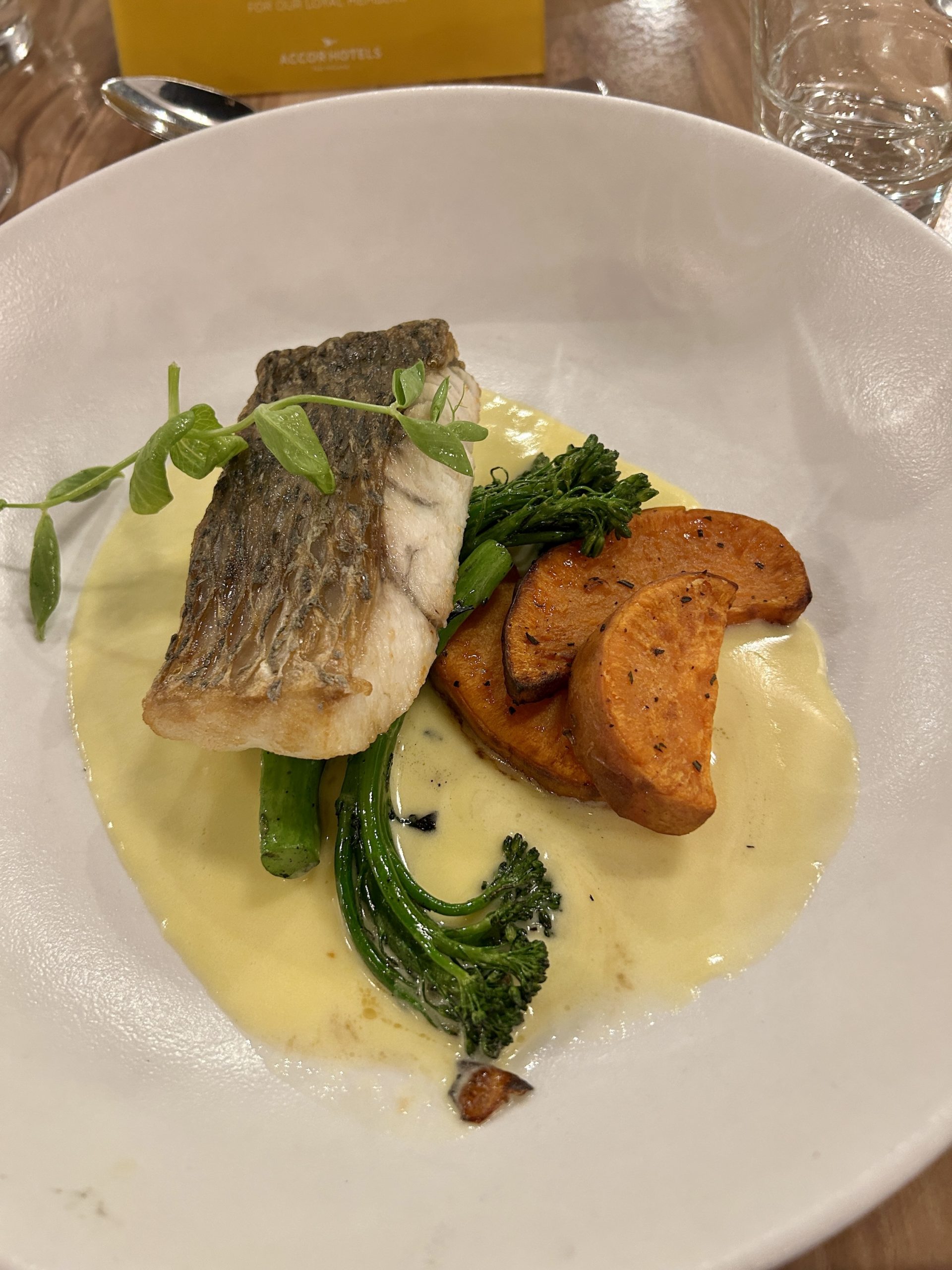
It had been a long day and I ended it where I started, with barramundi.
This was definitely a day to remember, but there is a lot more to come. Tomorrow we’ll return to Darwin and then fly to Alice Springs. I hope to see you on board.