
Alice Springs – Into the Australian Desert

In the last post from the March 2026 Adventures Abroad tour of Australia led by fellow Nova Scotian Brandi McCarthy we ventured deep into Kakadu National Park to view ancient Aboriginal rock art, search for salt water crocs and generally get as far off the beaten track as possible. It was a day Alison and I will never forget, but it’s time to move on. In this post we’ll fly to Alice Springs in the very centre of the continent and visit the telegraph station where the settlement began, the headquarters of the Flying Doctor Service and a great wildlife park. Ever since I watched the great Australian mini series A Town Like Alice in the early 1980’s, I have wanted to visit this place. Now I’m getting my chance and I hope you’ll join me and the rest of our AA group.
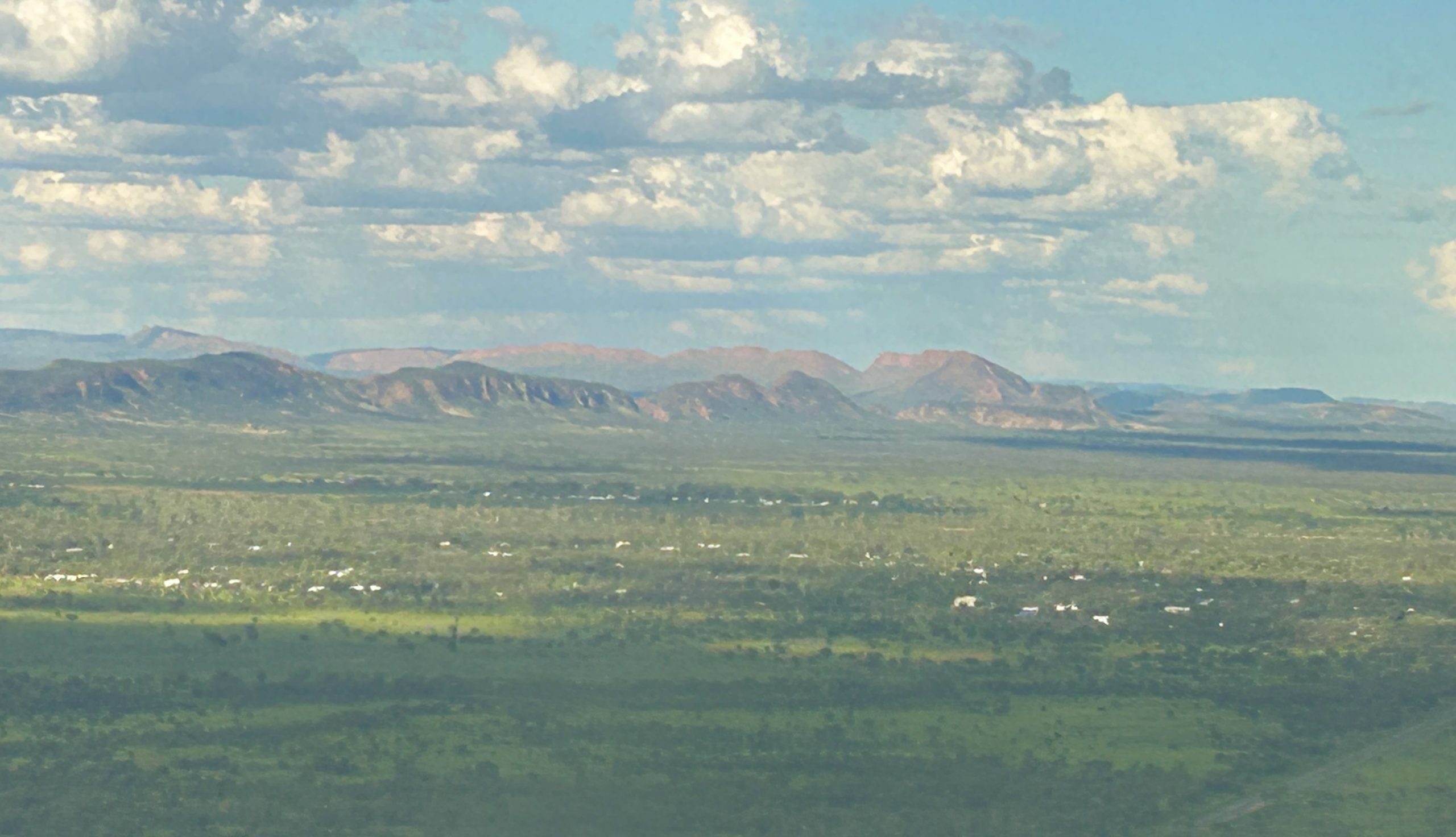
It’s just over a two hour flight from Darwin to Alice Springs and my first impression is completely at odds with what I was expecting. This is supposed to be the heart of the Red Centre of Australia, an area with little rainfall and searing heat, but what I’m seeing as we descend into the airport is nothing but greenery.
The second surprise comes at the airport where there are signs advertising the Fab Alice Festival that describes itself as ‘A unique showcase of Drag, Family and Cabaret events, celebrating the inclusivity and diversity of the Red Centre‘. So much for the stereotype of Alice Springs as the home of rugged outsiders not particularly open to new ideas.
History of Alice Springs
Alice Springs has two histories. The first began 30,000 years ago with the arrival of the Arrernte people who have been here ever since. It is impossible for me to get my head around the fact that one society can exist that long and here it’s actually far less than the 65,000 year span of people of the Kakadu region where we just came from. To the Western mind, Australia is supposed to be a ‘young’ continent when in fact it is the opposite. It contains the oldest continual civilizations in the world.
The second history did not begin until 1862 when Scottish explorer John McDouall Stuart became the first person to lead an expedition across the heart of Australia from Adelaide to Darwin. Near present day Alice Springs he found, probably with help from the Arrernte, a spot in the usually dry Todd River where water could be found year round. Ten years later Stuart’s route was used for the construction of the Australian Overland Telegraph Line and a telegraph station beside the water hole was built. Let’s make that our first stop in the area.
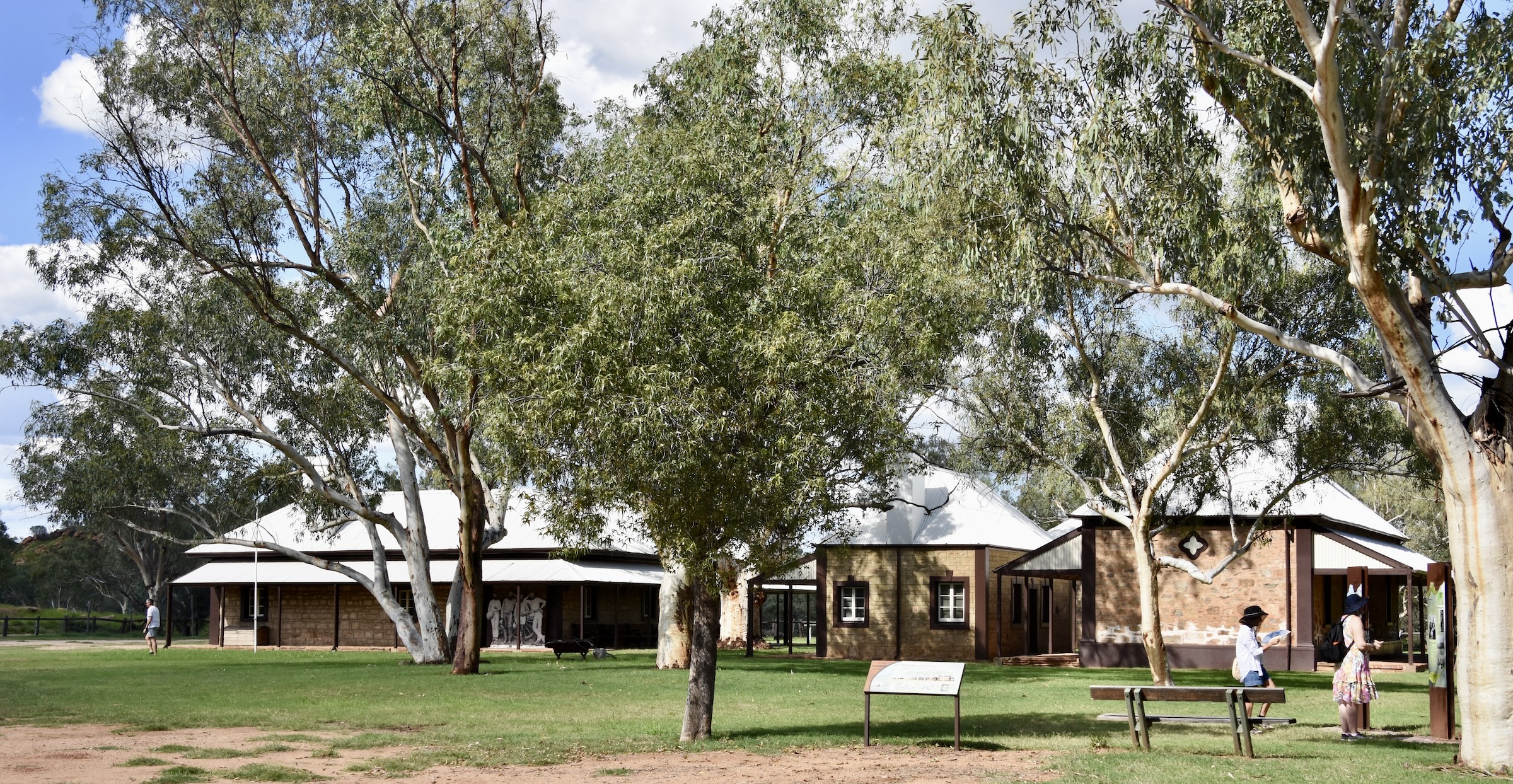
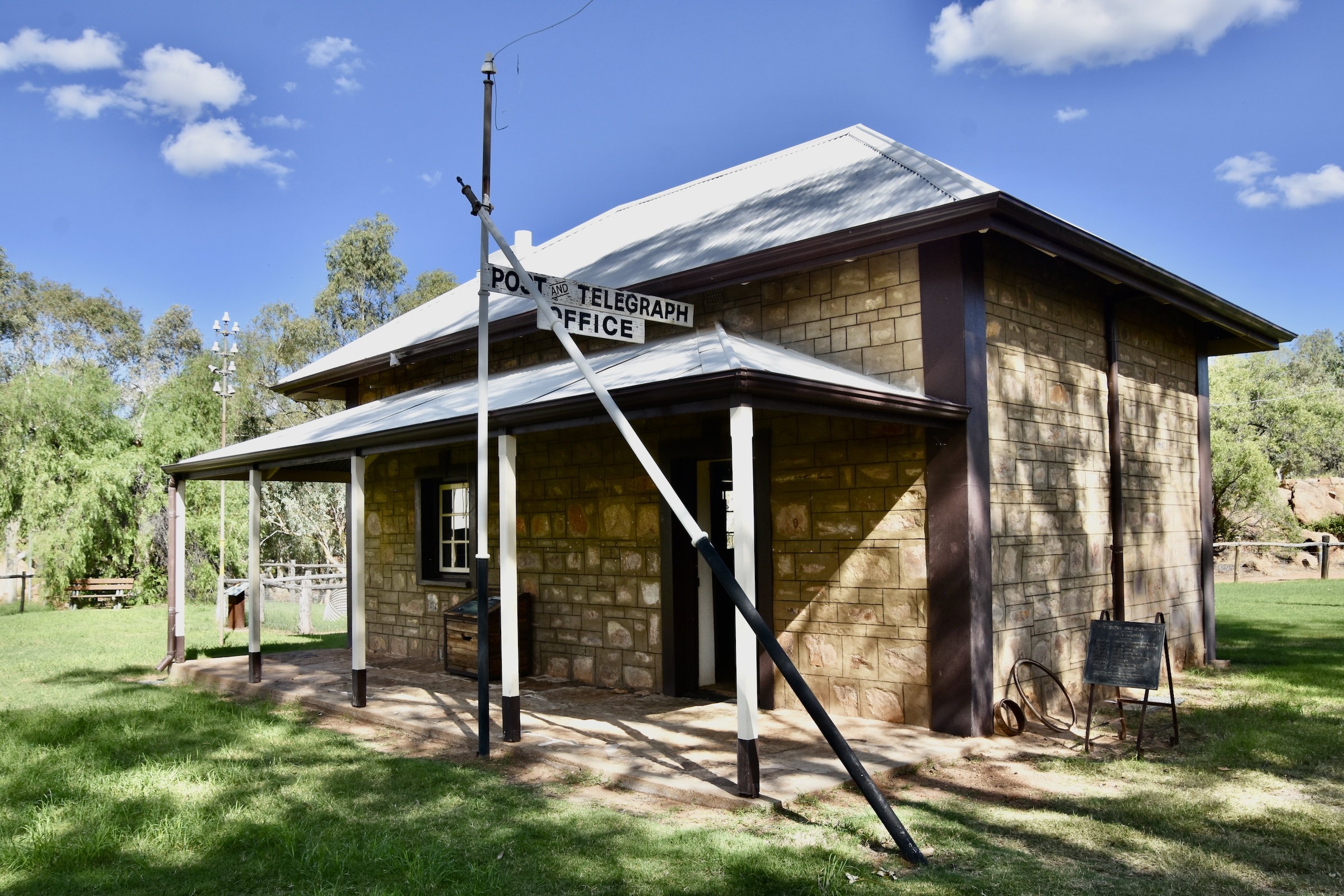
This is the telegraph office which is about 4 kms. (2.5 miles) from present day Alice Springs. There are other buildings here as well that now comprise the Alice Springs Telegraph Station Historic Reserve.
However, the most interesting thing was this muddy patch of water that in fact is not a spring, but just a part of the Todd river that is the last to dry up in the summer heat.
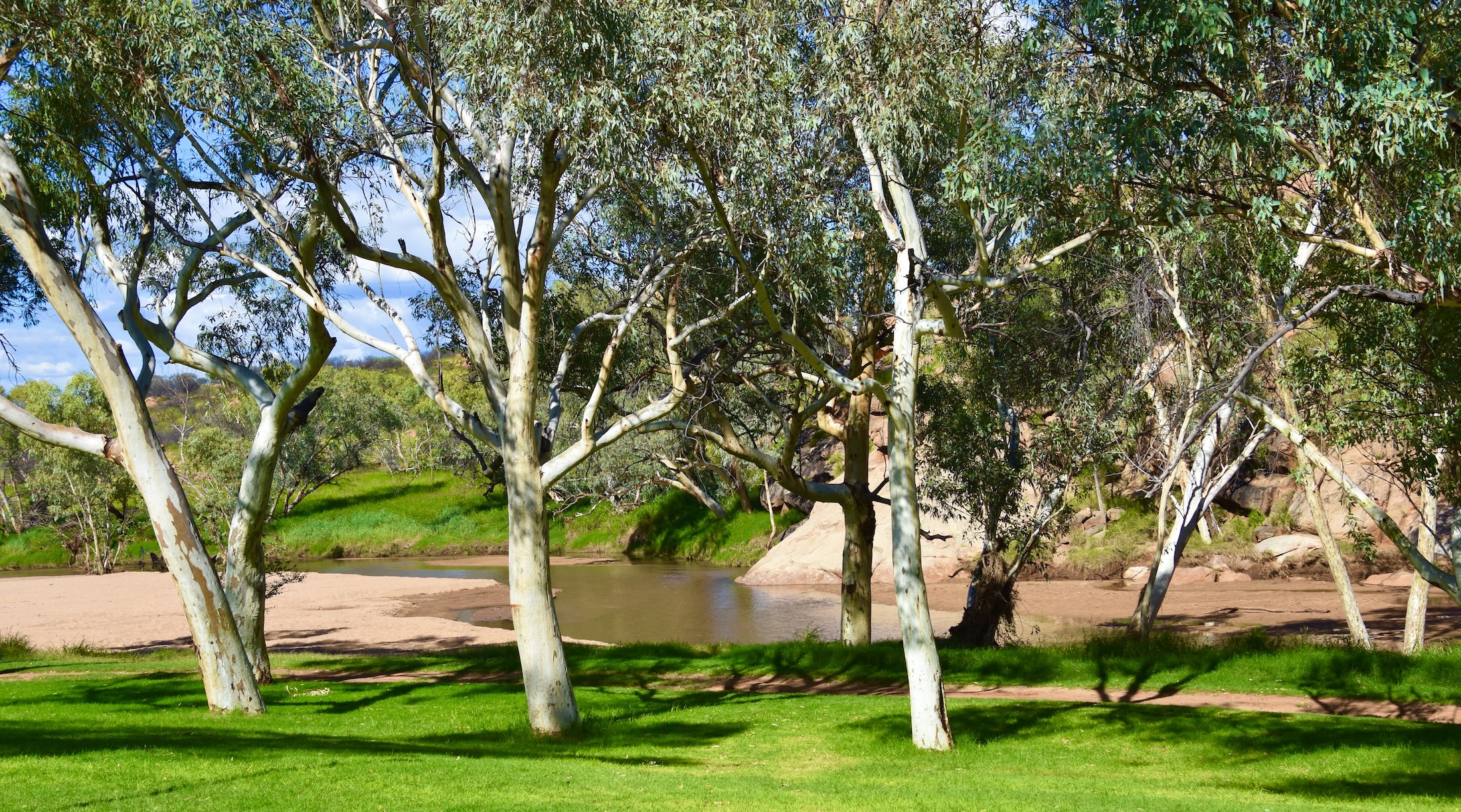
The Todd River was named for the guy who was the driving force behind the creation of the Overland Telegraph Line and this small piece after his wife Alice.
There was no town of Alice Springs, but rather one called Stuart named after the explorer which didn’t exactly thrive. By 1926 it had only about 40 people. Then the railway arrived in 1929 and growth exploded – not. By the start of WWII there were still only 400 inhabitants, but in 1933 they did change the name from Stuart to Alice Springs. In compensation Stuart got himself a statue which had to be repositioned because tourists trying to get a photo of it were stepping in front of traffic, forgetting that in Australia people drive on the opposite side of the road.
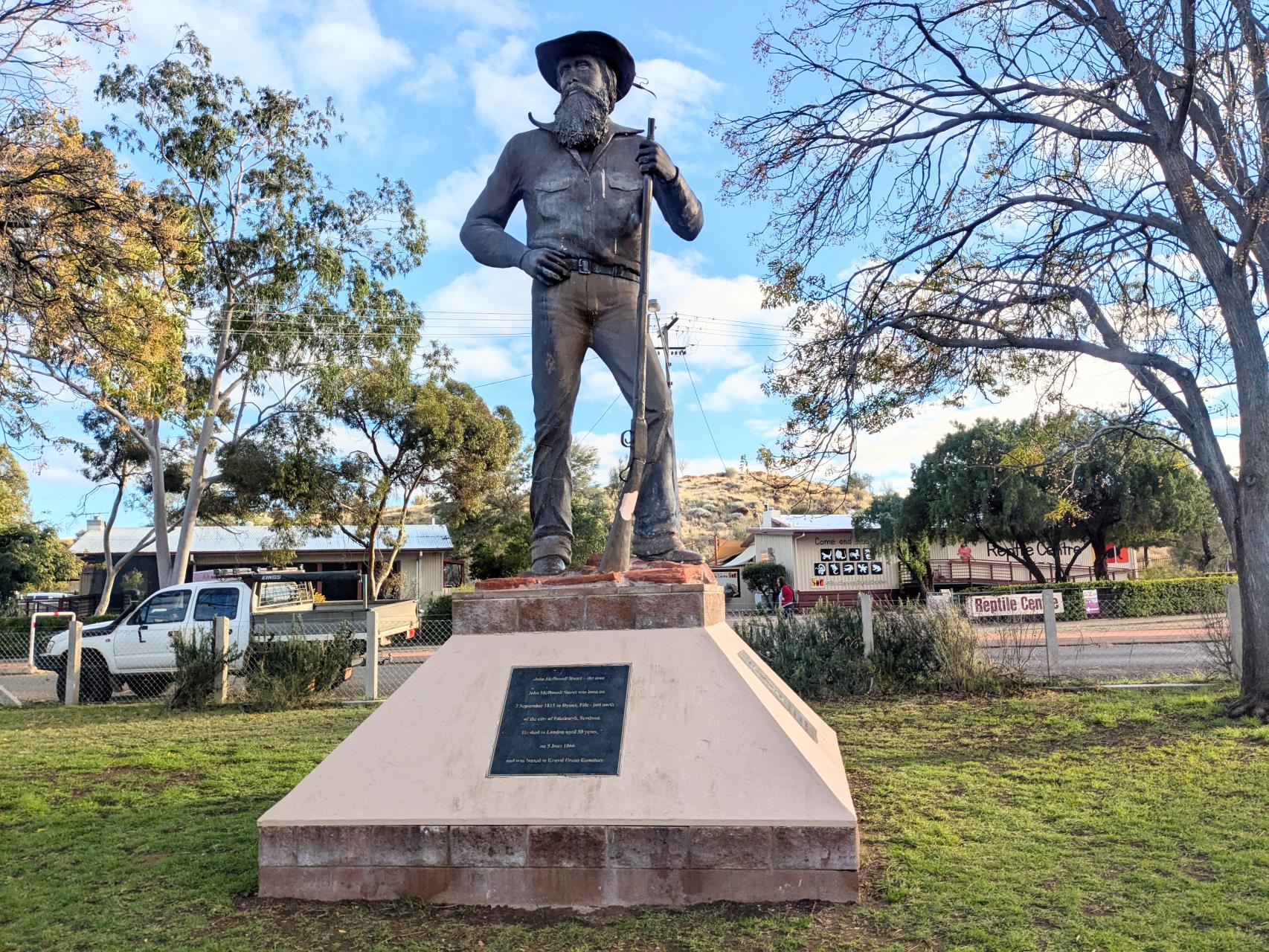
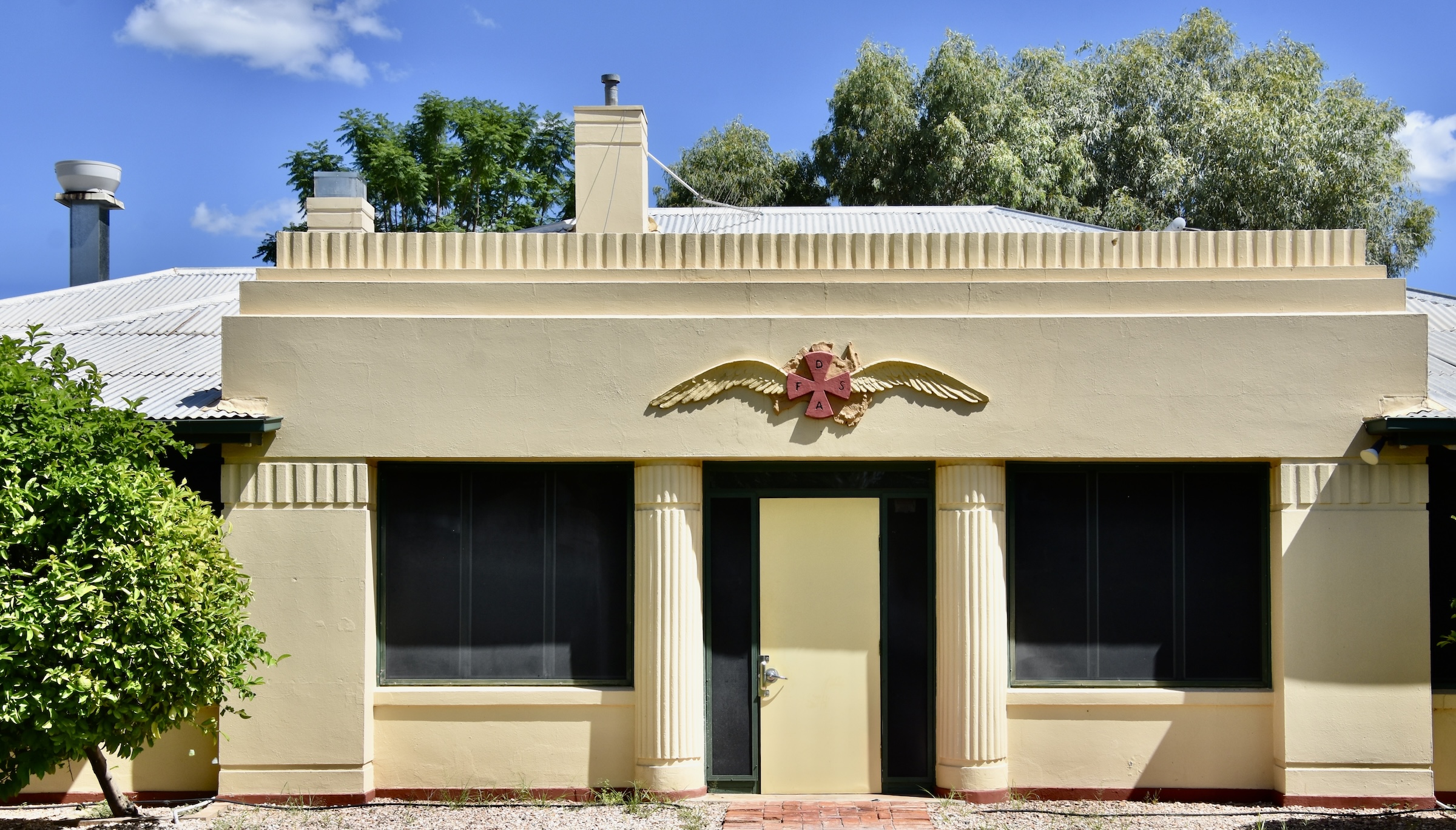
Across the street from this statute is the local headquarters of an Alice Springs institution that has also been made into a famous TV series, the Royal Flying Doctor Service.
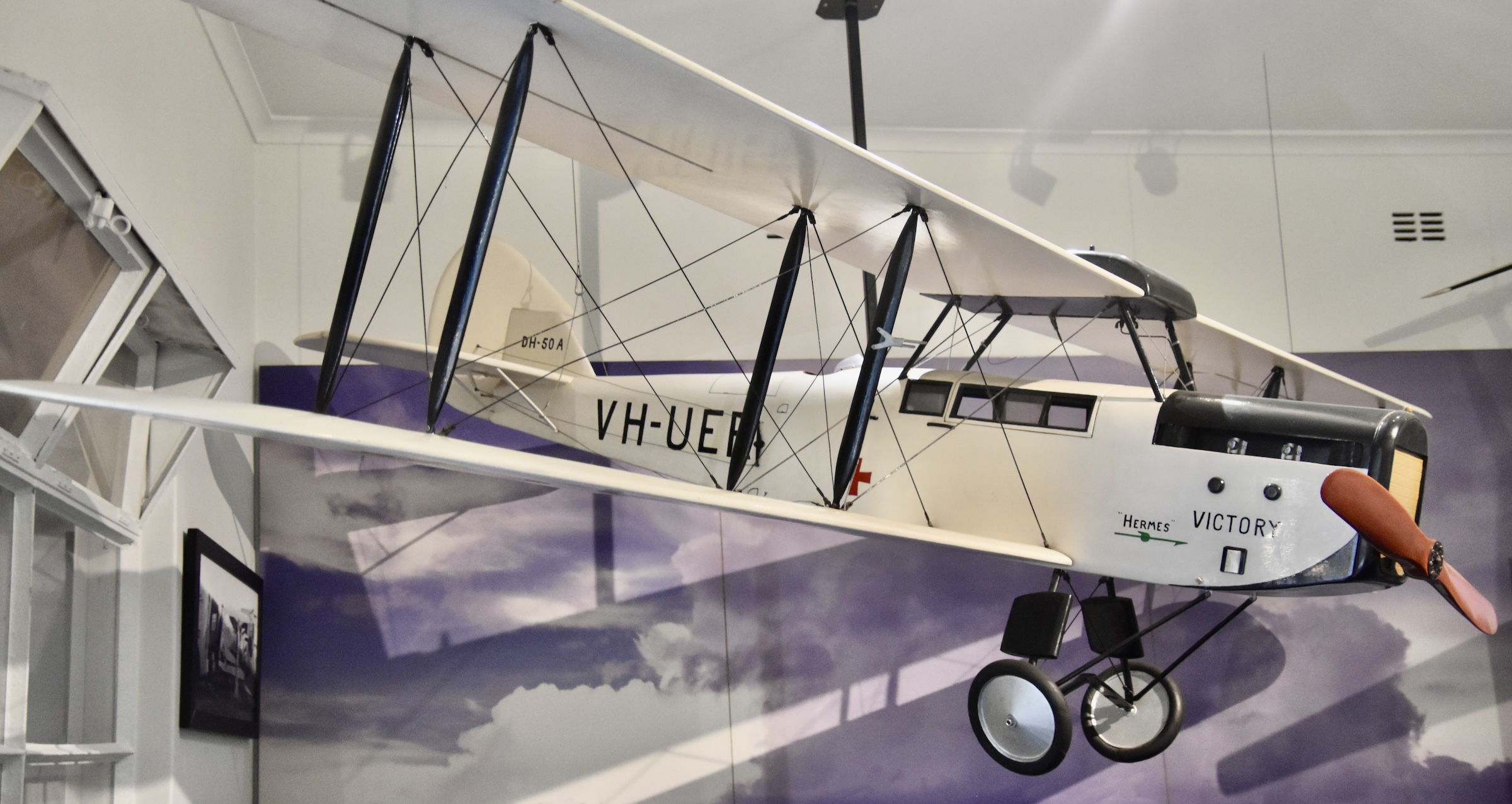
It includes a small museum that we drop into to see a model of the first airplane used by the service in 1928.
There is also one of the modern planes used by the service that has a Canadian connection. The engine is a Pratt and Whitney PT6 manufactured in Longueuil, Quebec considered to be one of most reliable turbo prop engines in the world.
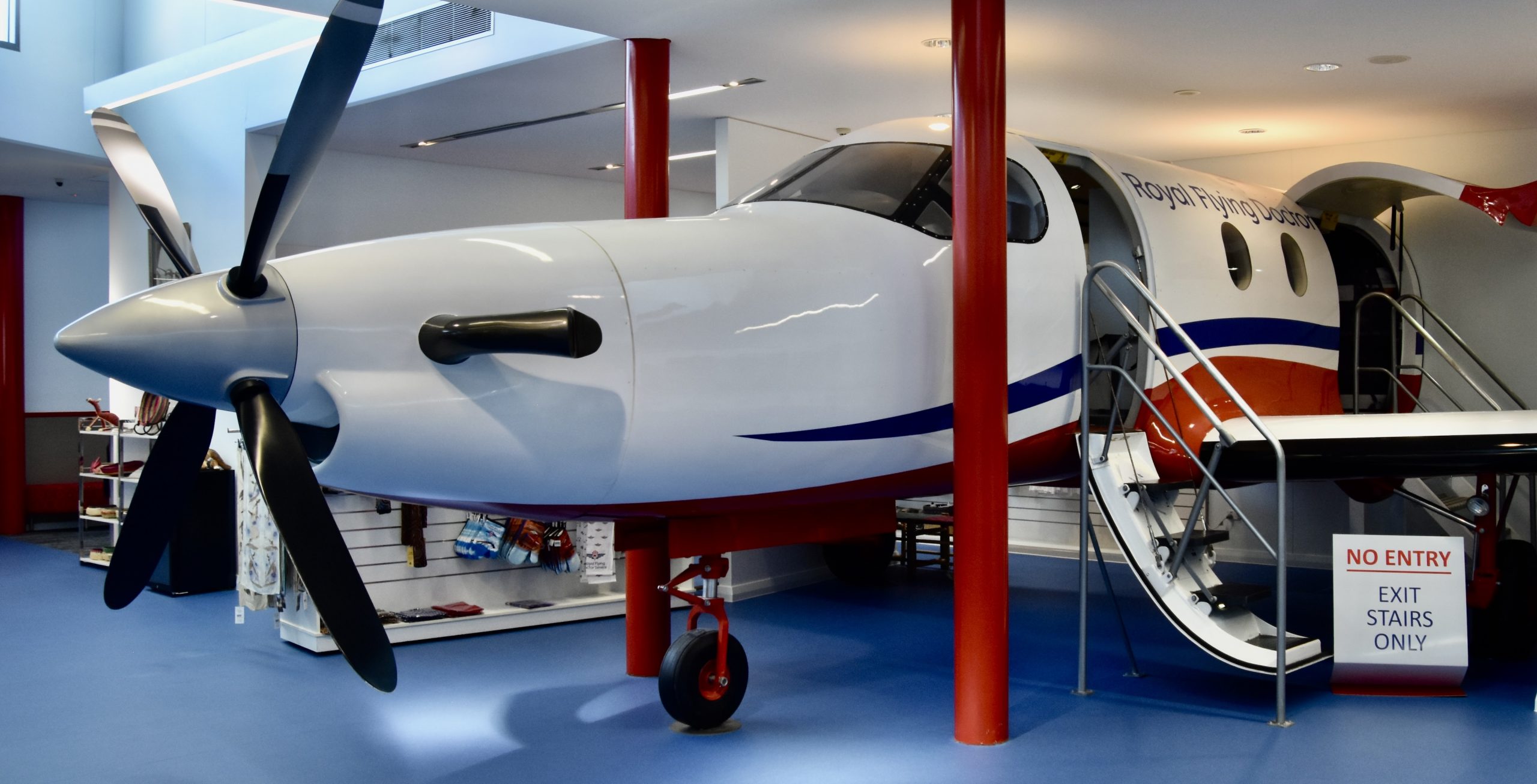
This was the same type of plane seen in The Flying Doctors an Australian TV series about the service that ran for nine seasons and was broadcast in many countries around the world. I hate to admit it, but I’m old enough to remember the earlier series The Flying Doctor, which starred Richard Denning, the same guy who played the governor in the original Hawaii Five-O.
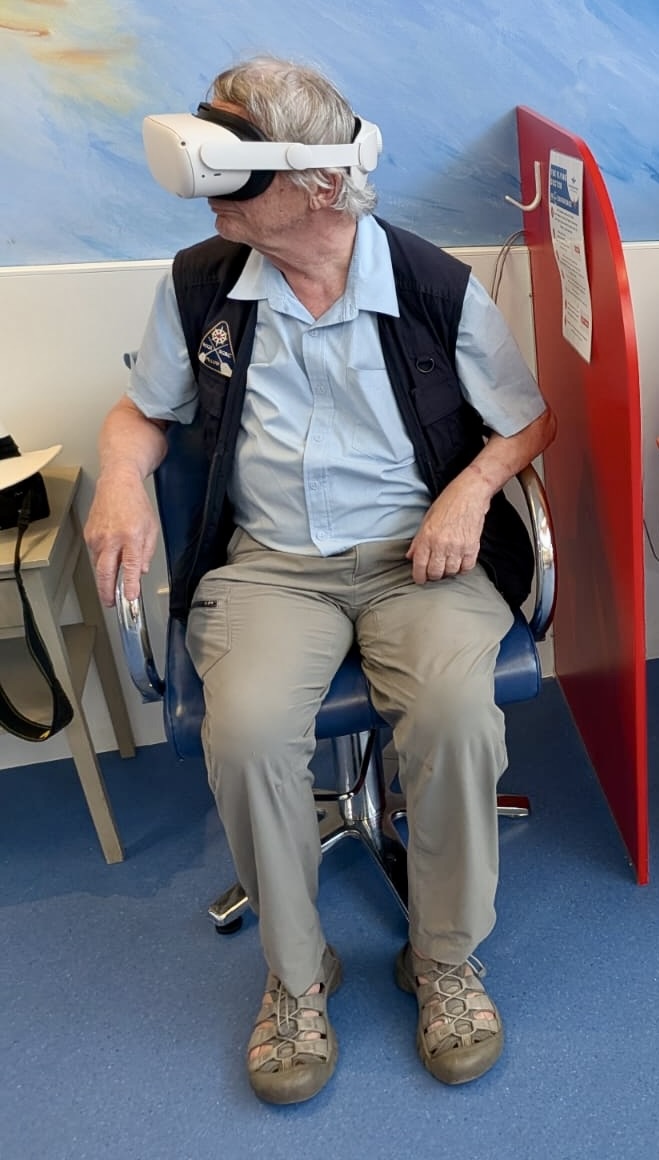
The most interesting part of the visit was putting on a device that created a hologram of the founder of the RFDS Reverend John Flynn and having him take you on a virtual historical tour of the service. Not the most flattering looking thing to do, but looking like an ass was worth it.
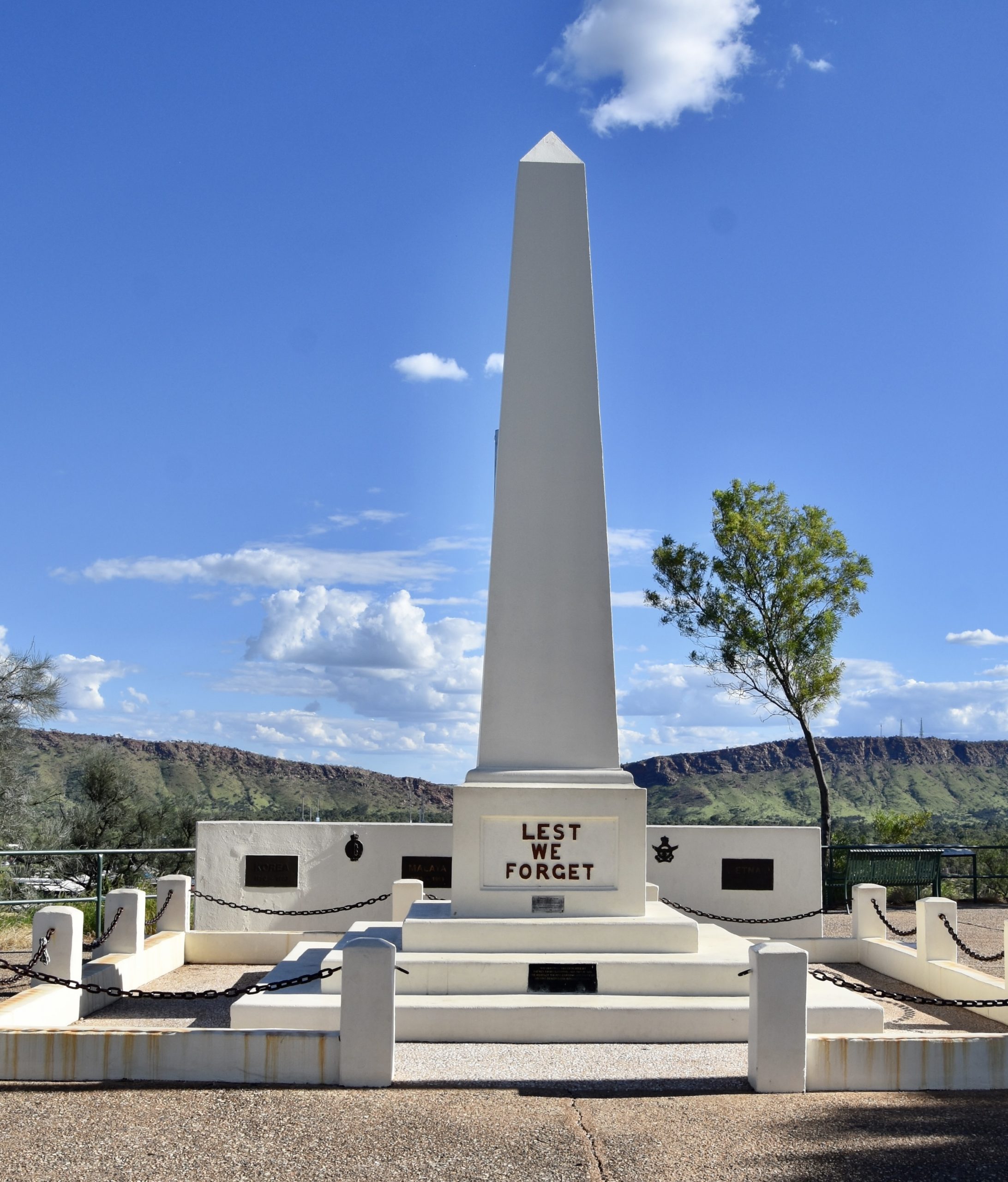
Most visitors to Alice Springs make their way up to ANZAC Hill where a cenotaph honours the Australians from this area who died in WWI and our group was no exception.
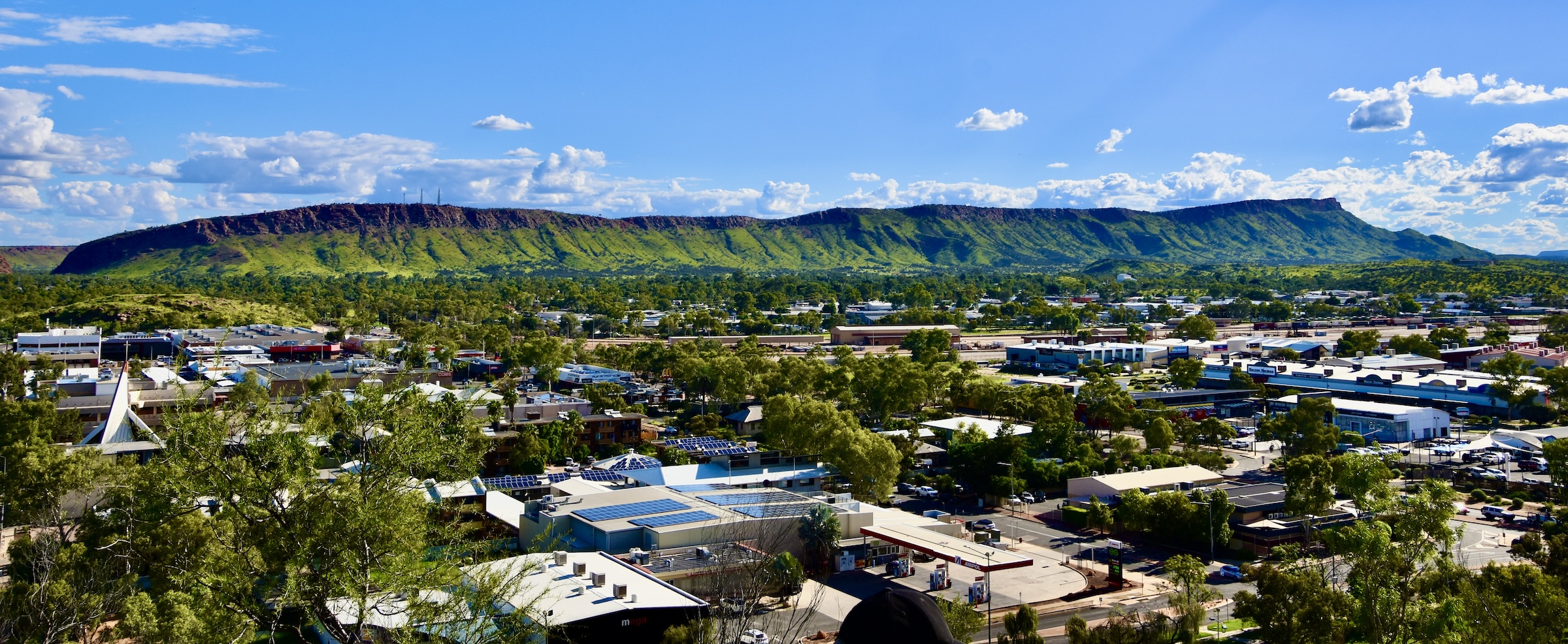
At 605 metres (1,995 feet) there is a great panoramic view of the city from the top.
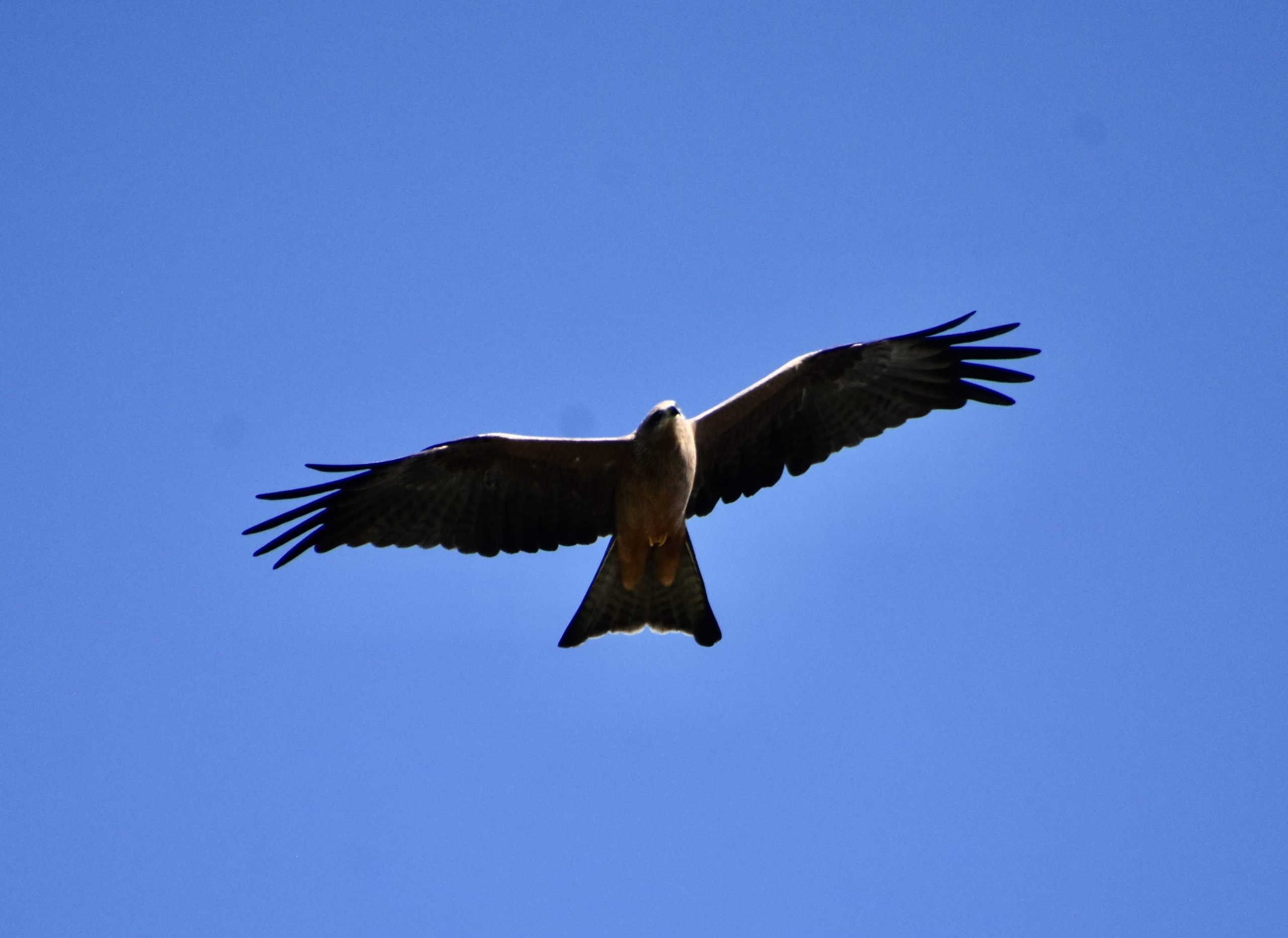
I also spotted a whistling kite soaring overhead which was a nice preview of our next Alice Springs adventure.
Alice Springs Desert Park is a 1,300 hectare nature park just outside the city that features three distinct desert habitats and the creatures who live there. For me, as a birder and lover of nature this was the highlight of our visit to Alice Springs. I’ve created this gallery of birds plus a few other species. Double click to open and double click again to enlarge.
-
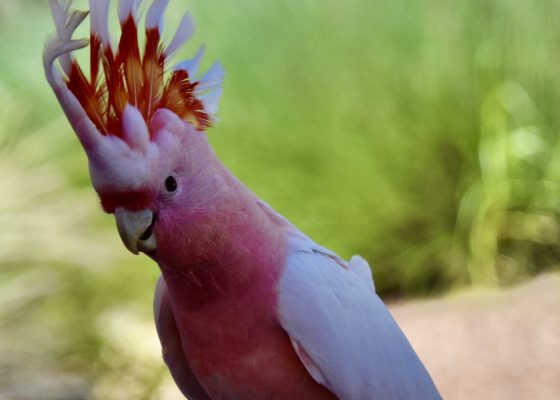
- Major Mitchell’s Cockatoo
-
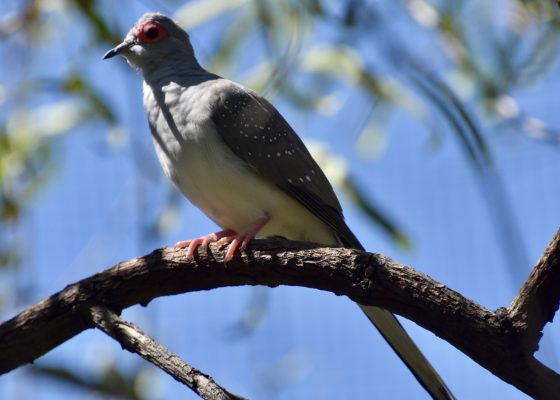
- Diamond Dove
-
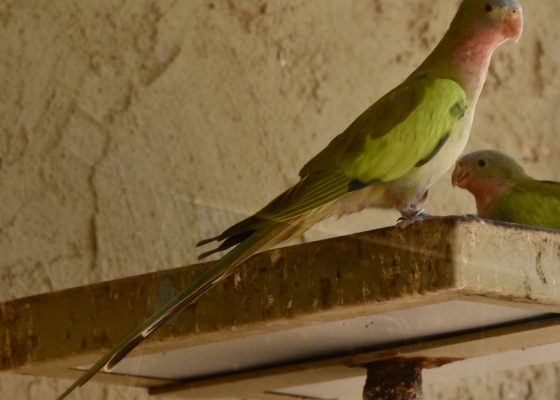
- Princess Parrot
-
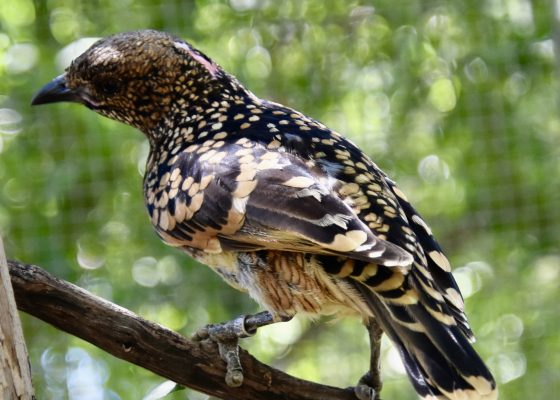
- Western Bowerbird
-
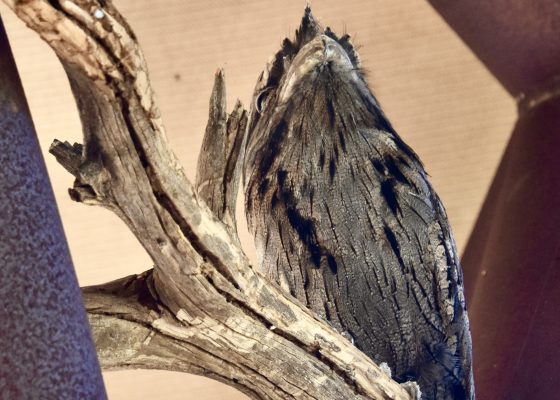
- Tawny Frogmouth
-
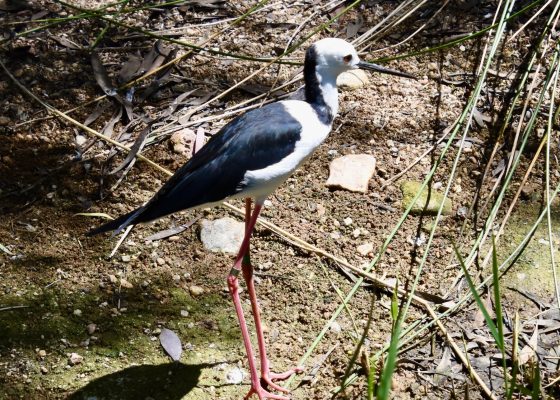
- Pied Stilt
-
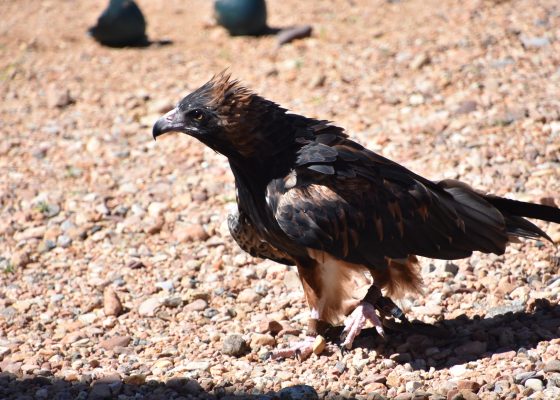
- Black-Breasted Buzzard
-
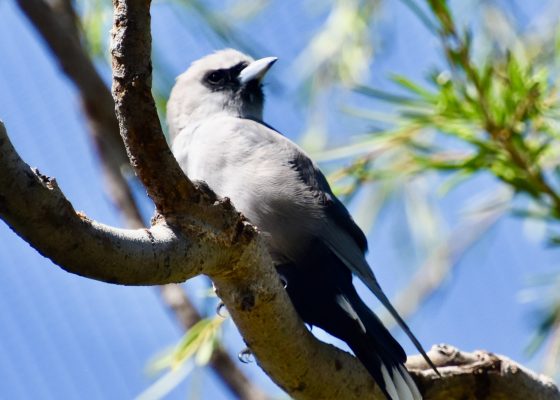
- Black-Faced Wood Swallow
-
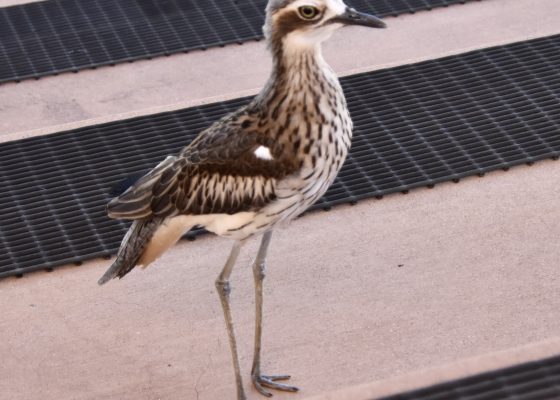
- Bush Stone-Curlew
-
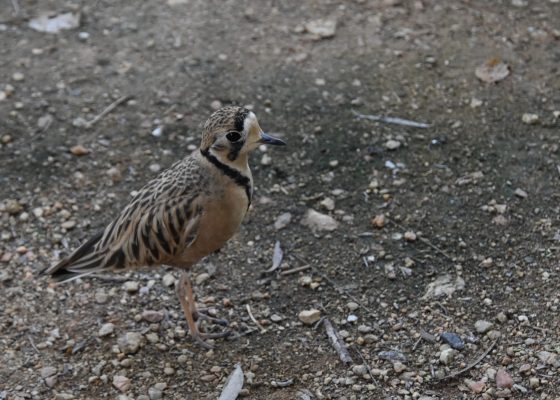
- Inland Dotterel
-
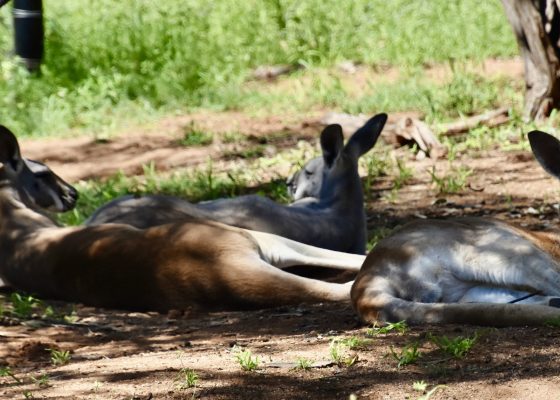
- Red Kangaroos
-
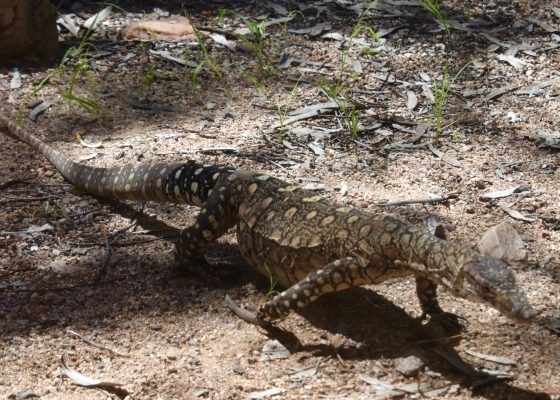
- Perentie – Australia’s Largest Lizard
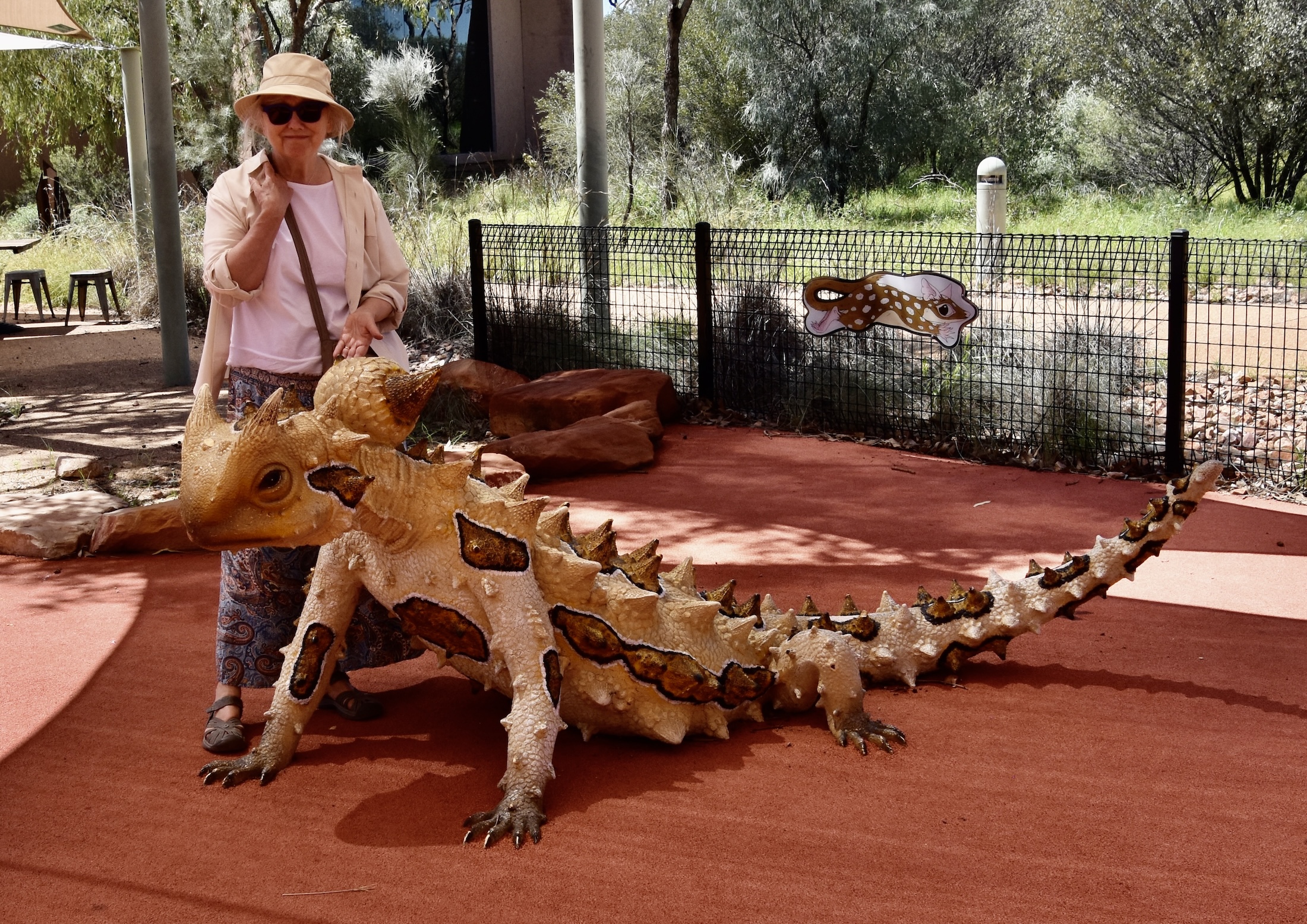
I’ll end this post with Alison beside a thorny devil.
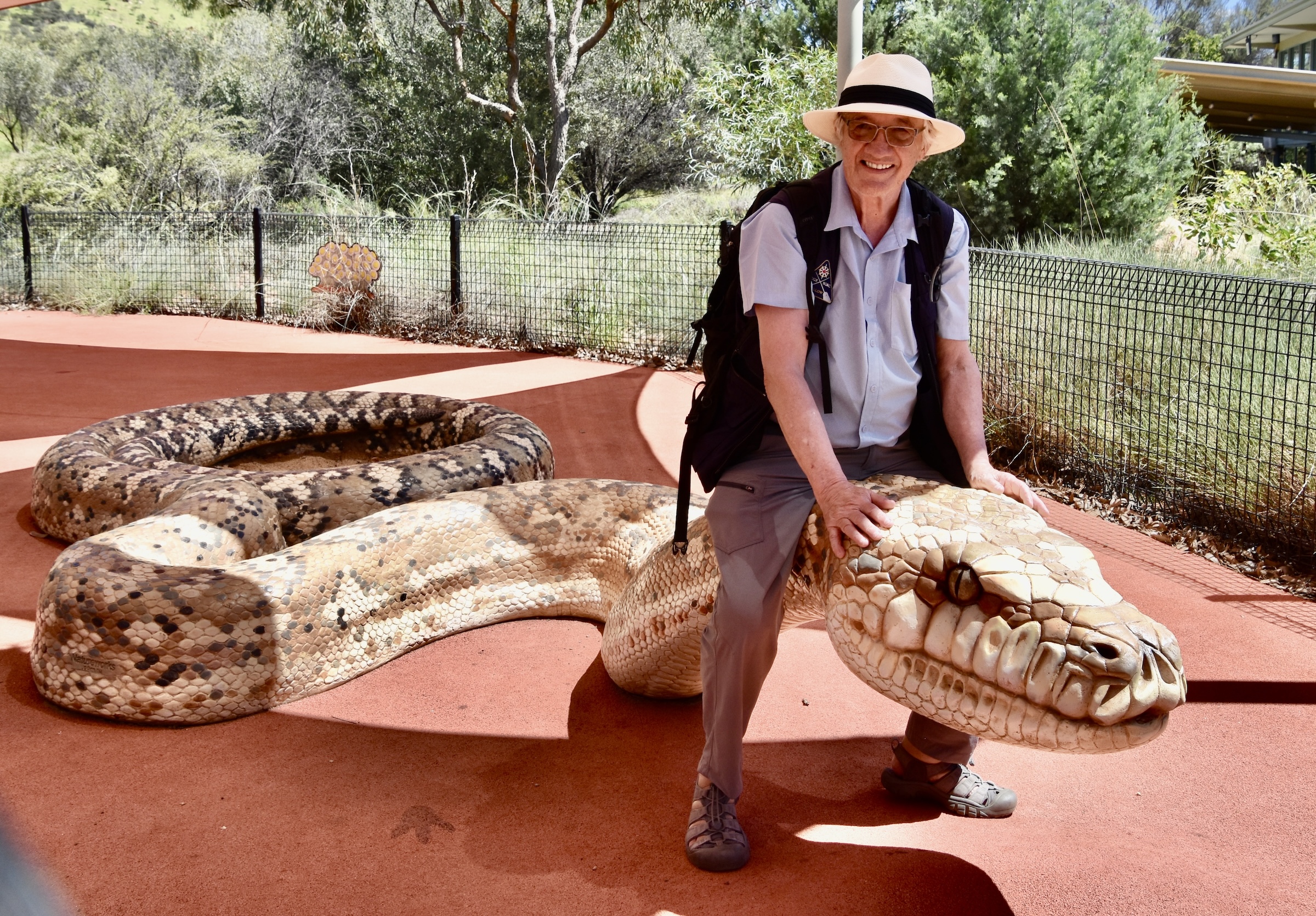
And me astride a larger than life and very venomous looking snake.
In the next post we’ll visit one of Australia’s holy grails of tourism, Uluru or as it was formerly called, Ayer’s Rock. I hope to see you there.