
Hobbiton – Well Worth a Visit

In 2025 Alison and I visited the Weta Workshop in Wellington where most of the props for the Hobbit and Lord of the Rings movies were created. In 2026 I returned to New Zealand a few days ahead of Alison with the intention of visiting another place associated with these great fantasy films, Hobbiton. In this post I’ll describe why this was time and money well spent, especially if you are Tolkien fan.
What Exactly is Hobbiton?
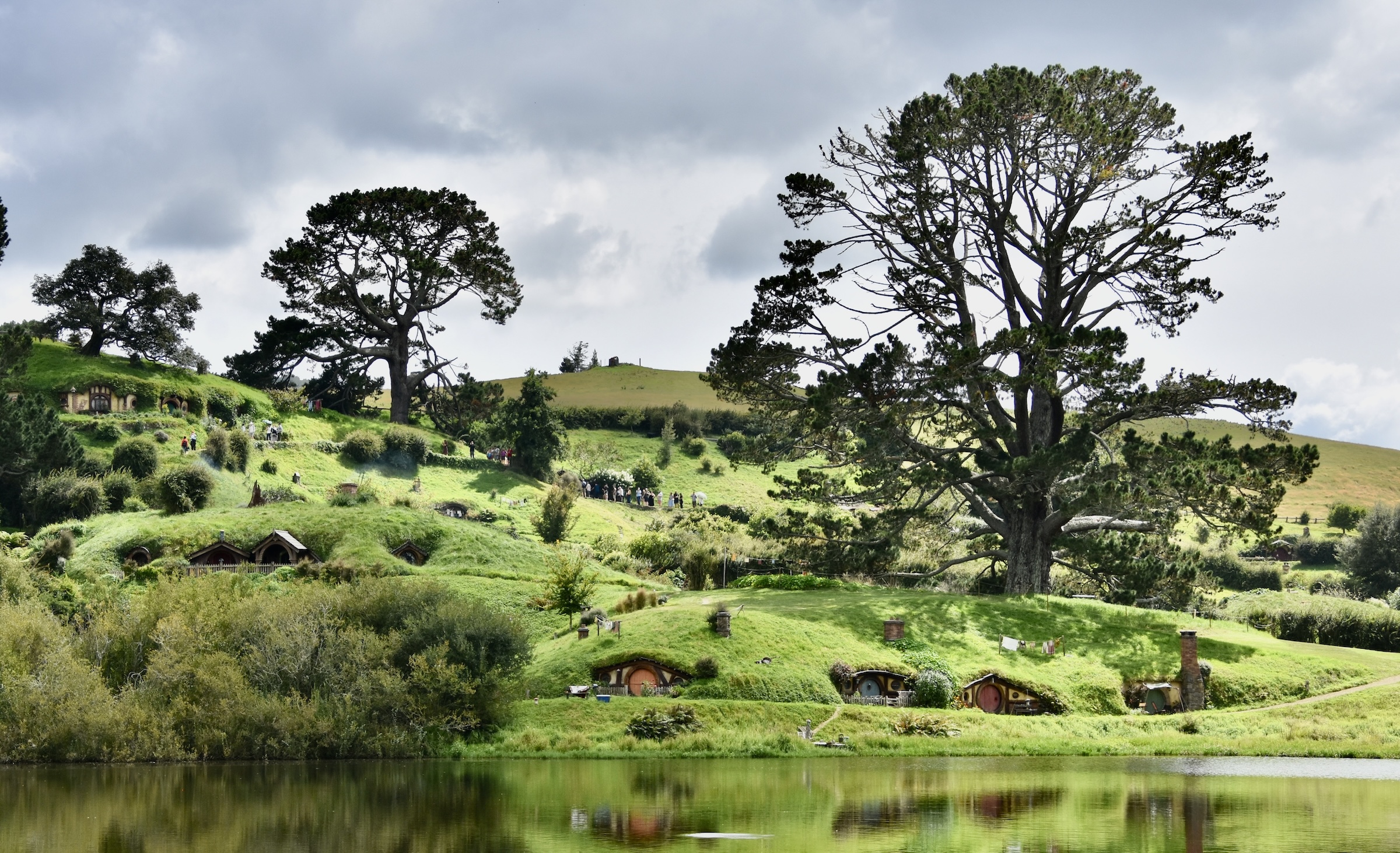
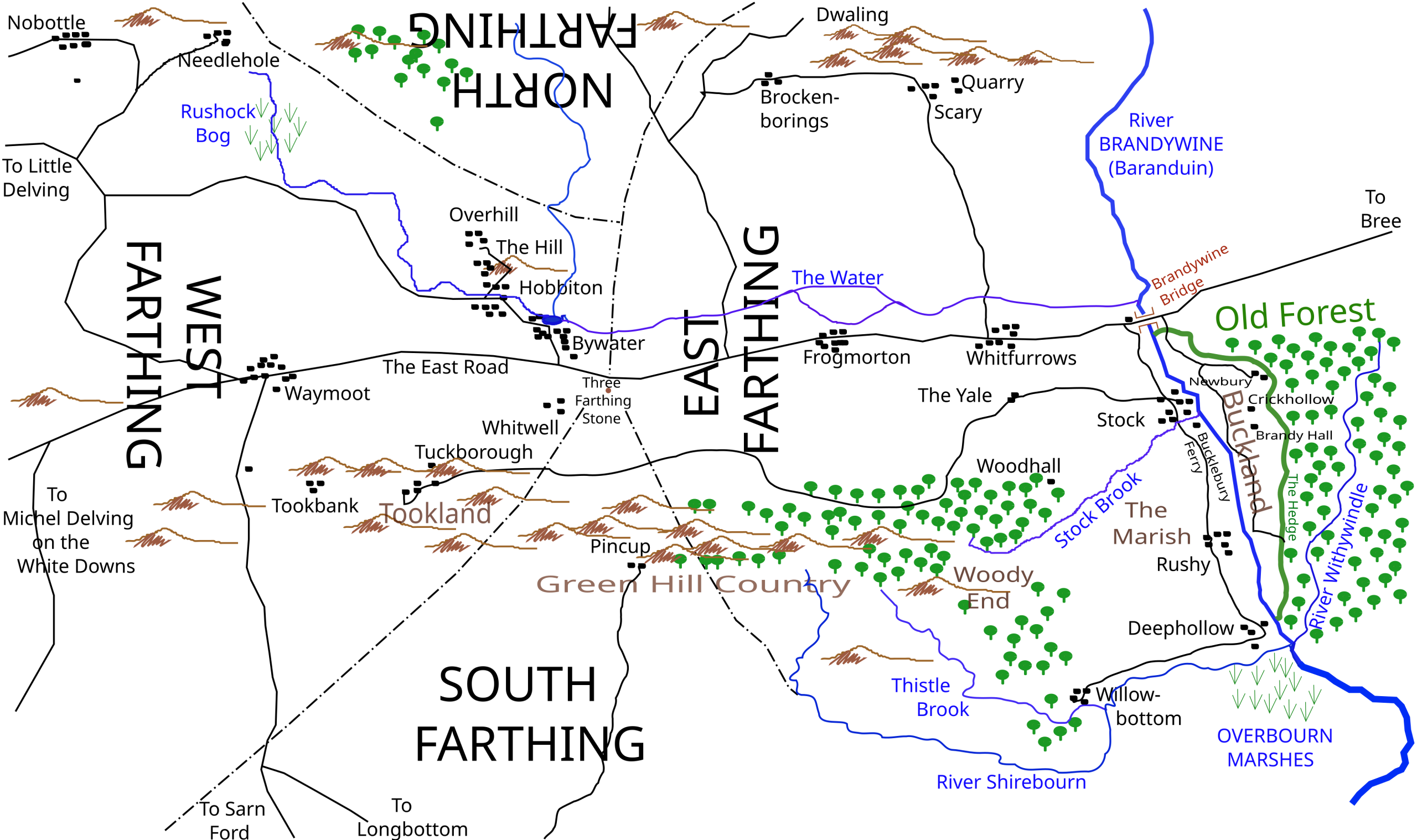
J.R.R.Tolkien created Middle-earth, the original fantasy world that has captured the imagination of millions of followers ever since the publication of The Hobbit in 1937. He populated that world with creatures already known in folklore such as elves and dwarfs, but made up one entirely new race, the hobbits. These gentle folk are short, peaceful and not in any way adventuresome. They literally love their ‘creature comforts’. They live in The Shire, an inland pastoral land largely removed from the goings on in the rest of Middle-earth and they like it that way. Hobbiton is one of a number of Hobbit communities in The Shire and the home of Bilbo Baggins, the chief protagonist in The Hobbit.
Creating a realistic, aka not obviously fake, fantasy world was something that had alluded film makers from almost the time that cinema was invented over 125 years ago. Given the massive following of Tolkien’s works, creating the world of Middle-earth on screen was always on the radar for directors and producers, but the enterprise was just too big and sprawling for anyone to undertake. Initial efforts were restricted to animation and not real life figures. However, with the financial success of the Star Wars and Indiana Jones franchises, people began to get serious about translating the Tolkien books onto the big screen.
Peter Jackson, a New Zealand native with a history of low budget film making, managed to convince a couple of Hollywood producers that if they made all three books of the Lord of the Rings trilogy into three separate films, but all shot at the same time, it could work. He had already determined that New Zealand had all the right landscapes for Middle-earth and with the New Zealand government getting on board with tax breaks, the project was a go.
Both the beginning and the end of The Hobbit and The Lord of the Rings start in Hobbiton so Jackson needed to find a place that was bucolic enough to represent The Shire and he did so at a farm in Matamata some two hours southwest of Auckland. Here in 1999 and with the help of the New Zealand army, his crew built 39 Hobbit holes which were mostly dismantled after filming was complete. However, given the success of the Lord of the Rings trilogy, Jackson returned to the site in 2009 to film The Hobbit trilogy, this time building 44 permanent Hobbit holes and later the Green Dragon Inn. These have now become the Hobbiton that has transformed from a movie set to a permanent tourist attraction. And that’s where I’m headed today.
Hobbiton is an immensely popular tourist attraction so you need to book your tickets well in advance at this site. Each visit begins and ends at The Shire’s Rest where you redeem your ticket and can have a bite to eat or drink before boarding the bus that will take you into Hobbiton proper. Most people arrive by bus in group tours, but I have arrived on my own in a rental car after a drive of just over two hours from Auckland, the last half hour of which is through rolling green farmland.
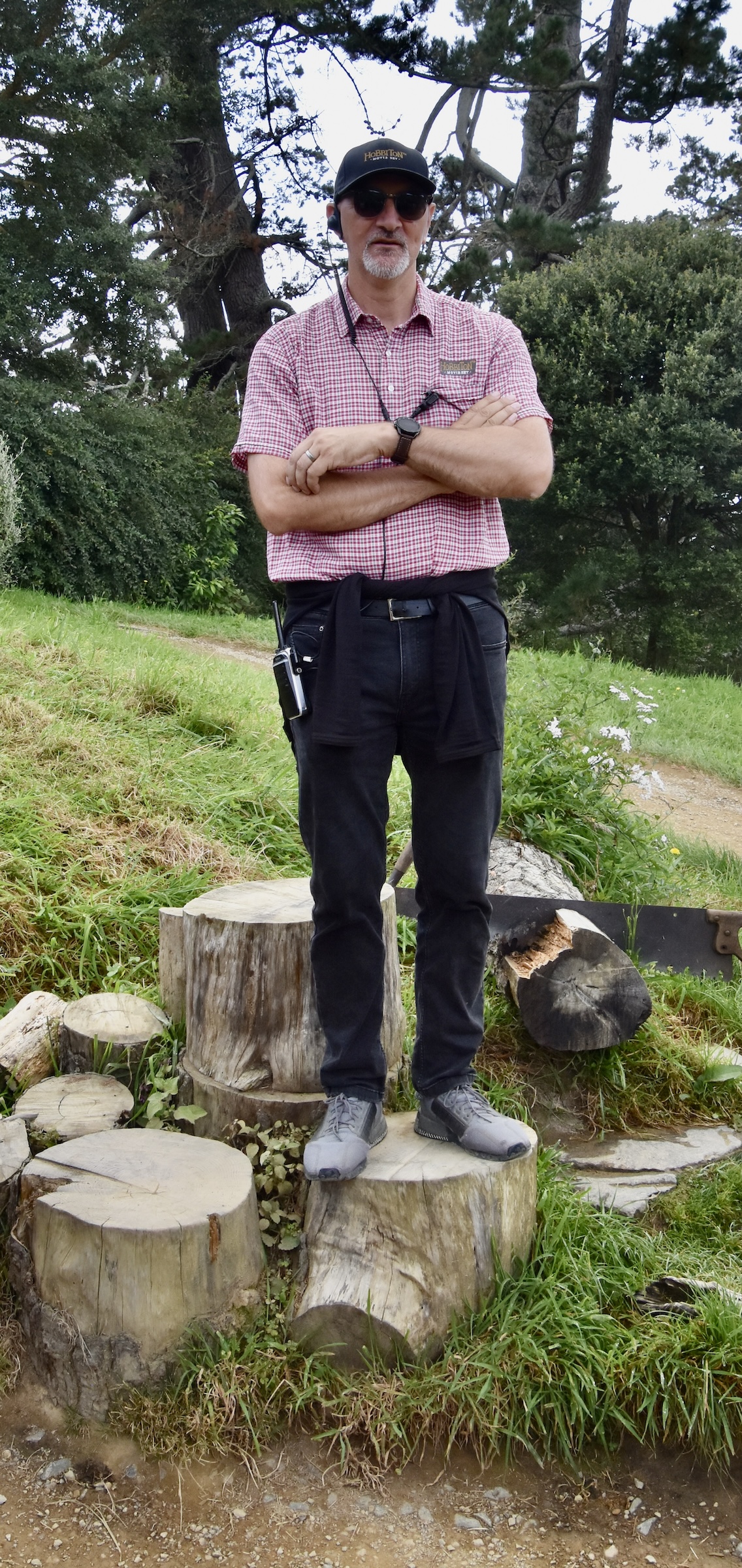
The tours leave every half-hour and there are a maximum of 41 people per tour and each has their own guide, in our case Mike, who was great.
There is dedicated route through Hobbiton that lasts about two hours after which you stop for a pint at the Green Dragon Inn. From the moment you get off the bus and walk up to your first Hobbit hole you are transported into a fantasy world unlike any other I have ever encountered at any theme park or movie set. The sheer size of Hobbiton and the attention to detail in every aspect of this place is astounding. Add to that, that many of the visitors are decked out in wizard’s costumes or dressed like Hobbits and it’s easy to imagine this really is Middle-earth. All told I photographed 23 separate Hobbit holes and every one has its distinct look. Here is a gallery of all of them. Double-click to open one and double-click again to enlarge.
-
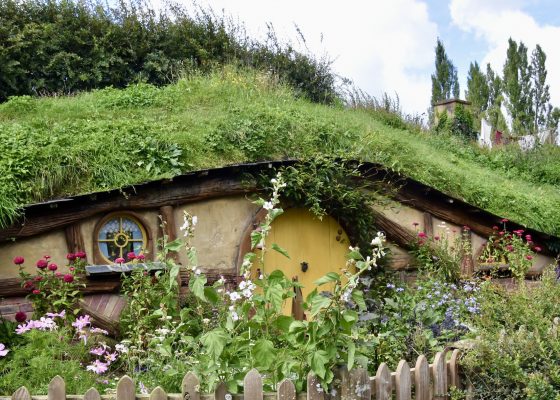
- Hole #1
-
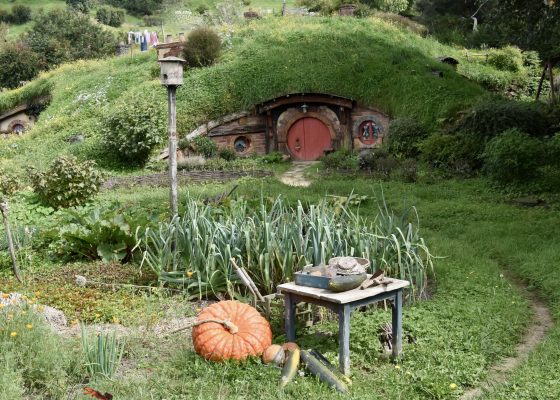
- Hole #2
-
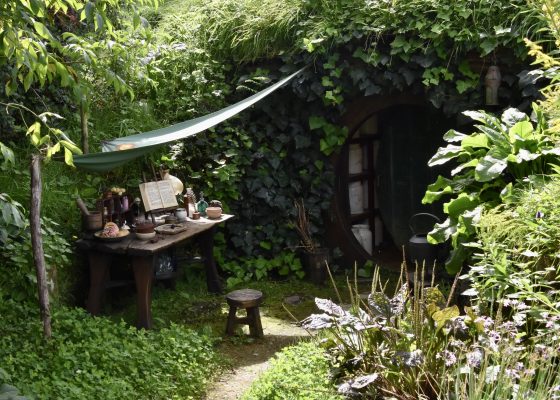
- Hole #3
-
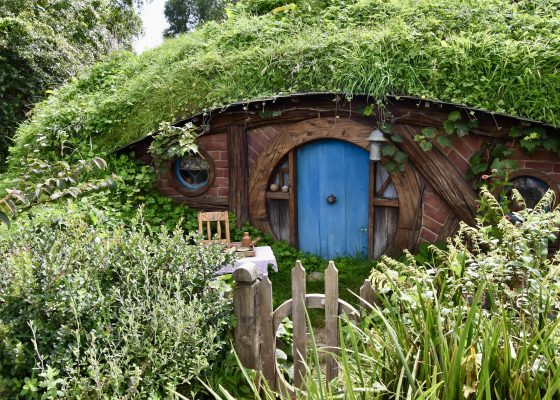
- Hole #4
-
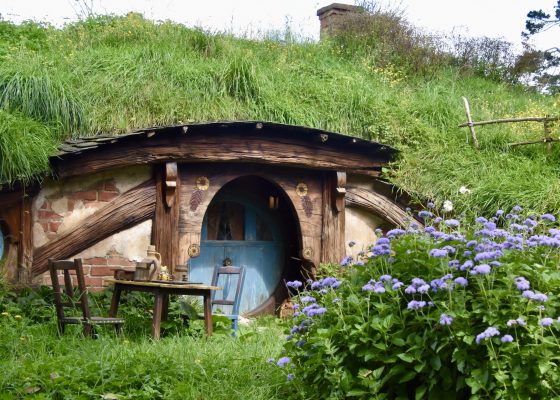
- Hole #5
-
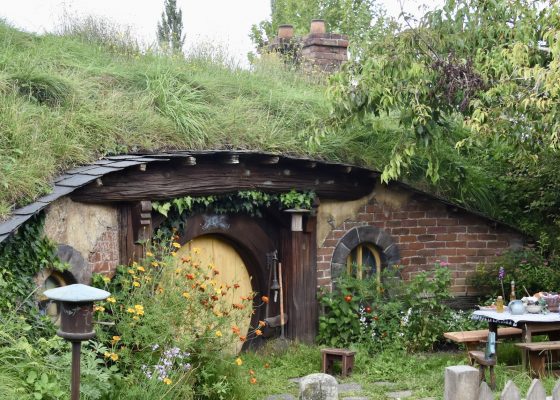
- Hole #6
-
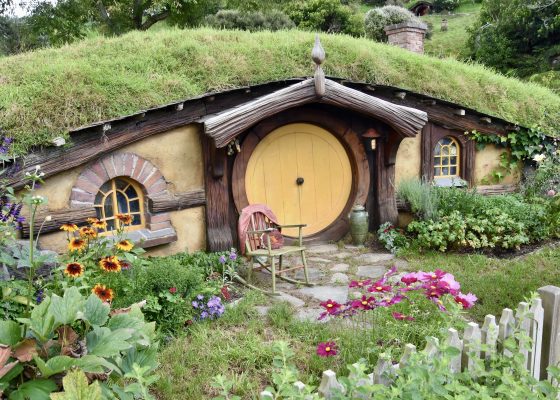
- Hole #7
-
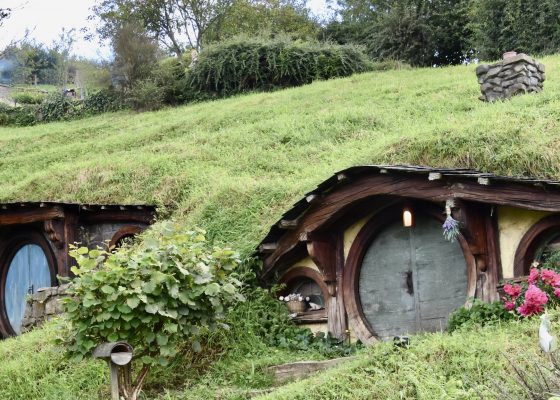
- Holes #8 & 9
-
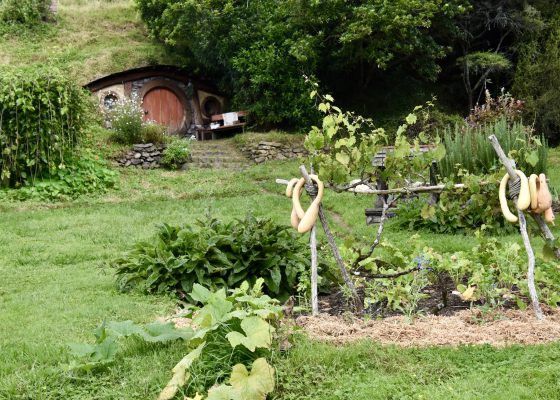
- Hole #10
-
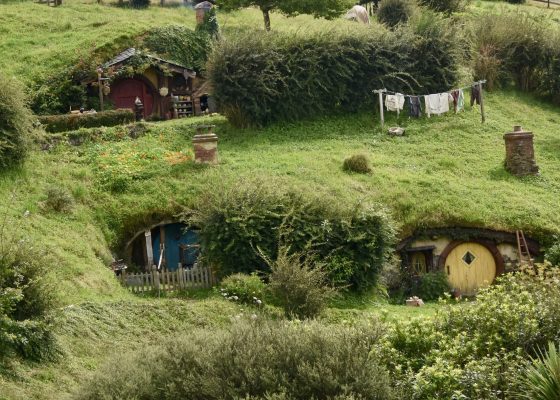
- Holes 11, 12 & 13
-
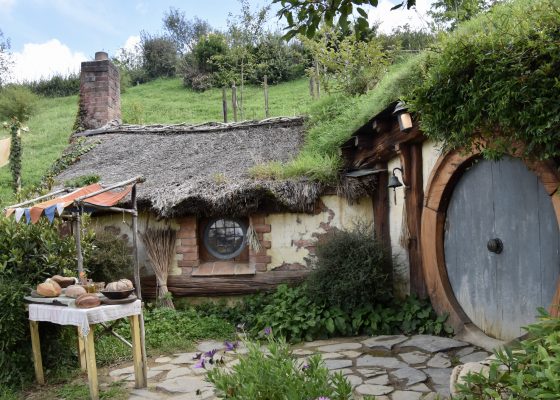
- Hole #14 the Baker
-
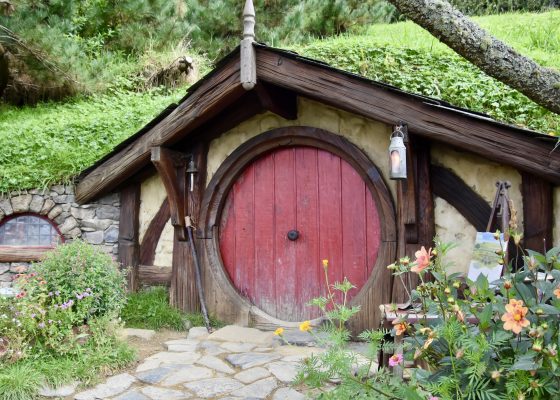
- Hole #15
-
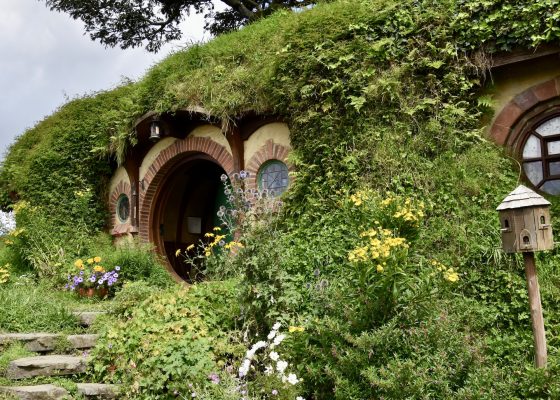
- Hole #16
-
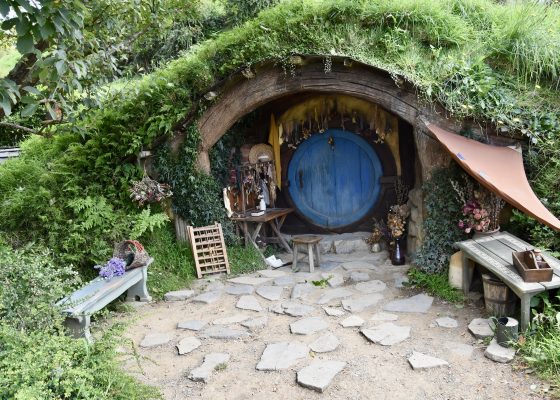
- Hole #17
-
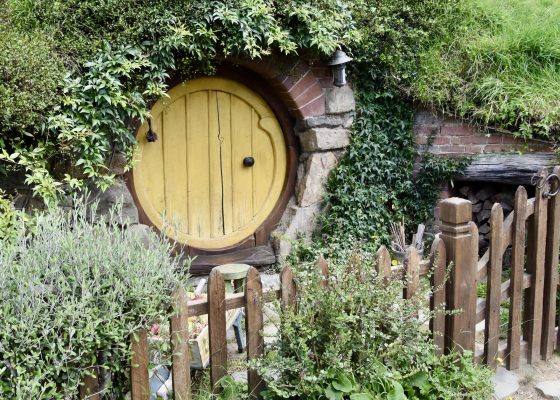
- Hole #18
-
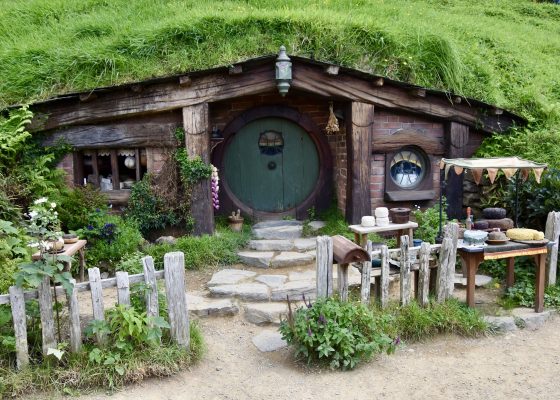
- Hole # 19 the Cheesemaker
-
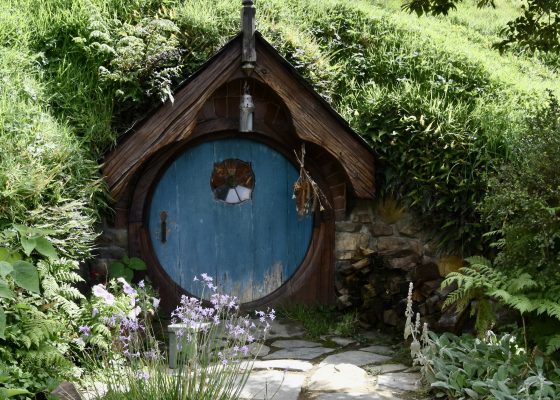
- Hole #20
-
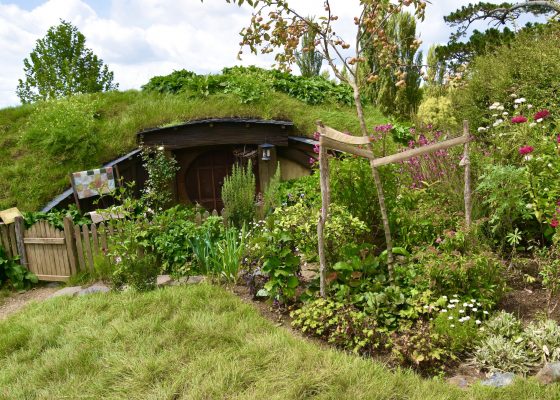
- Hole #21
-
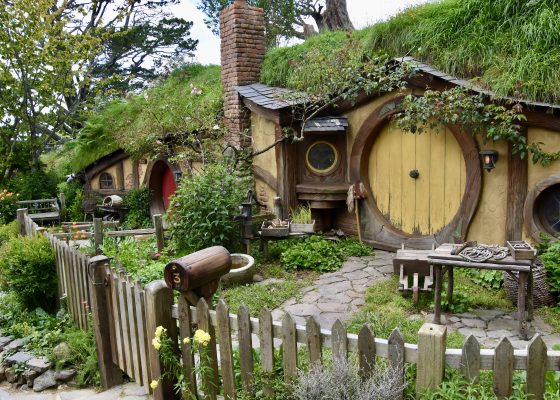
- Holes #22 & 23
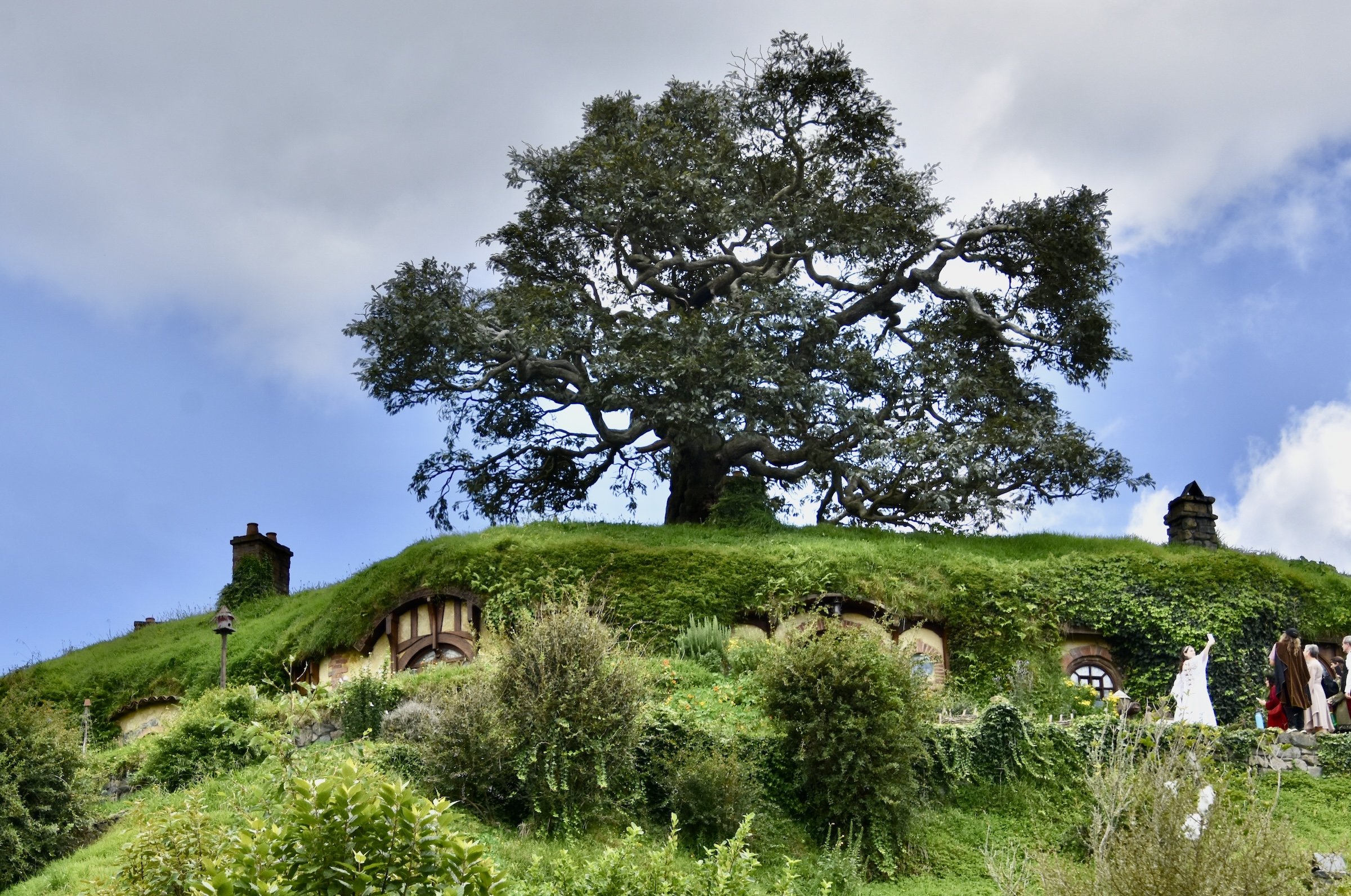
And it’s not just the Hobbit holes that add to overall feeling of actually being in Hobbiton, it is the entire landscape that includes the Sacred Tree.
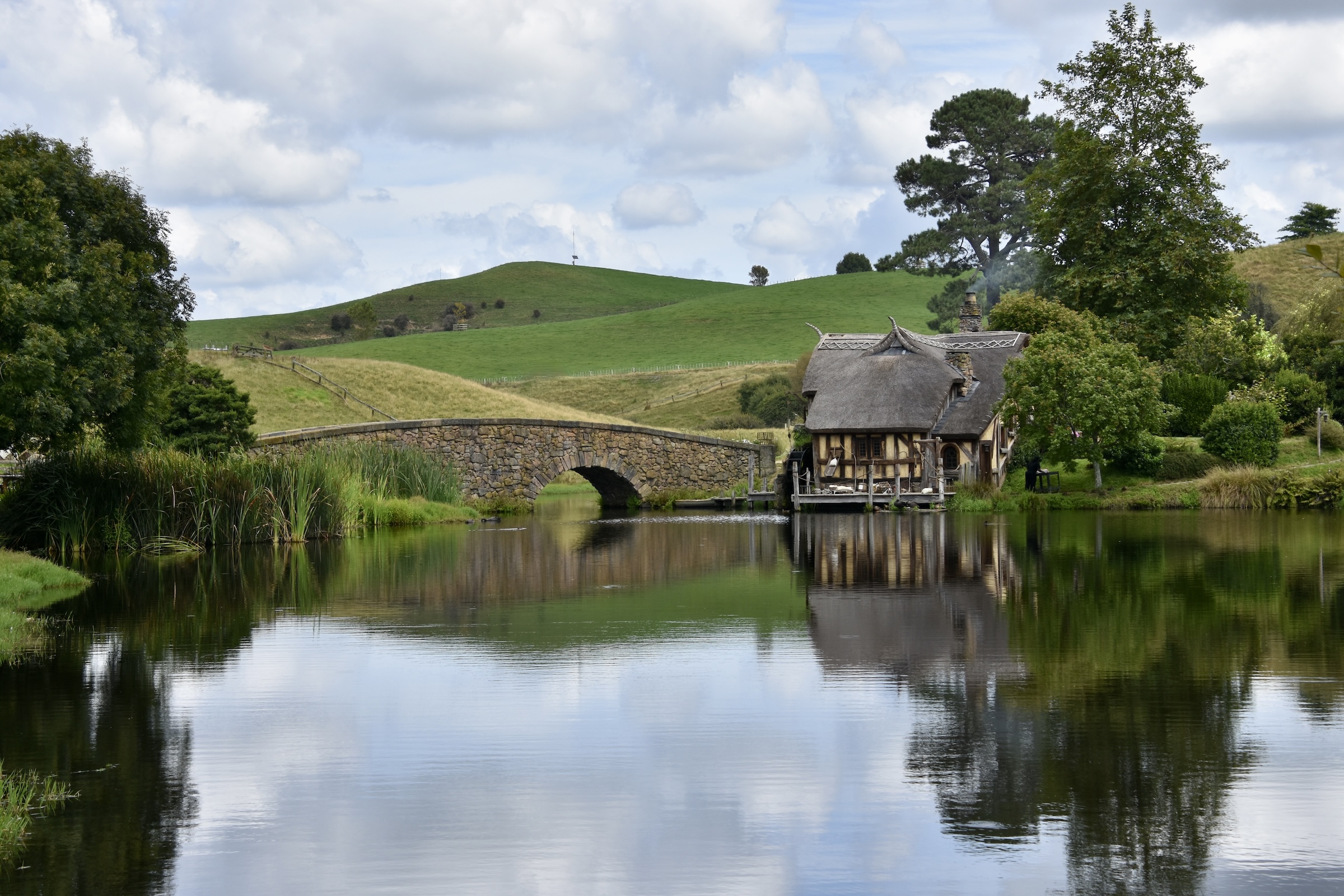
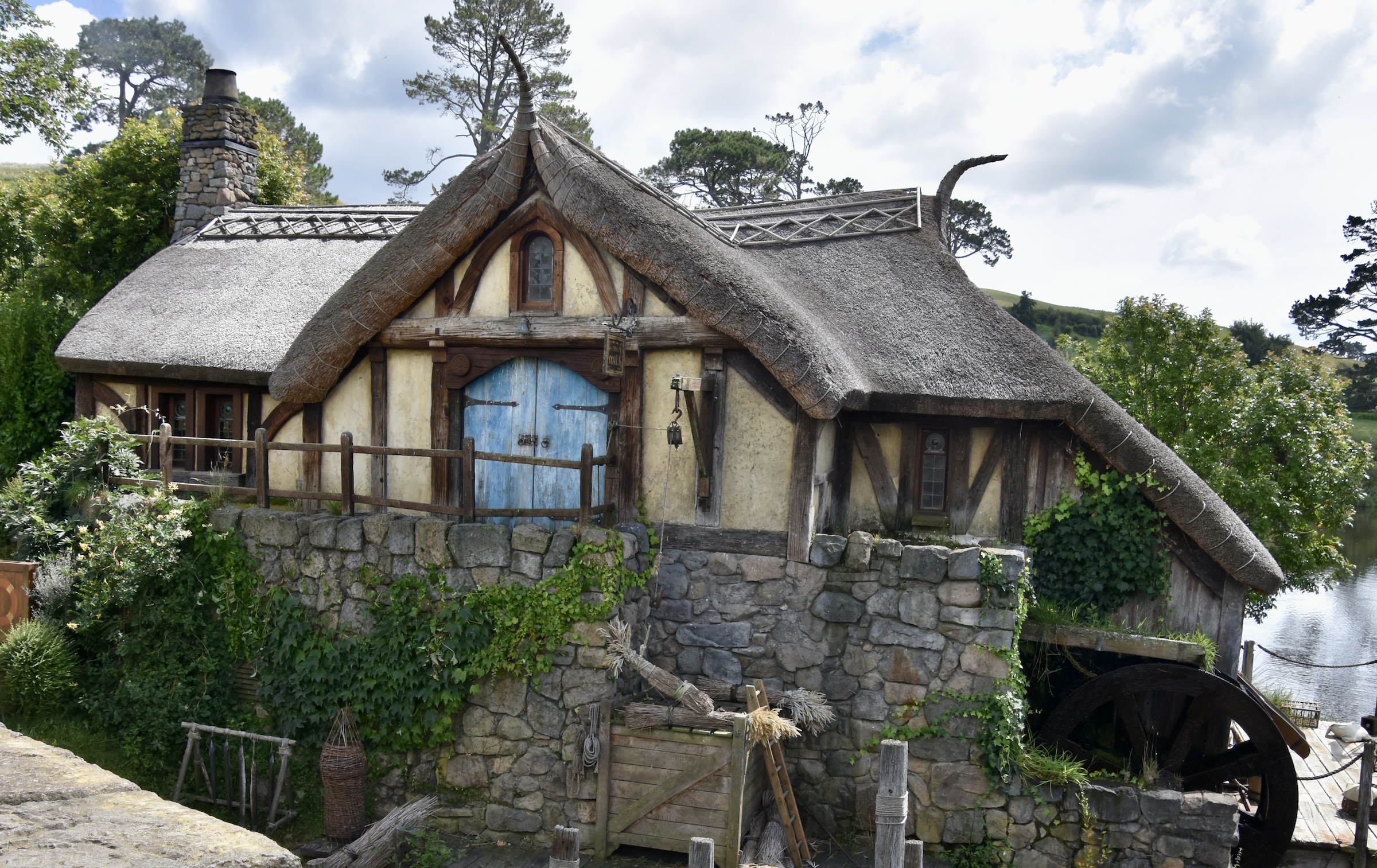
And the view across the pond to the mill.
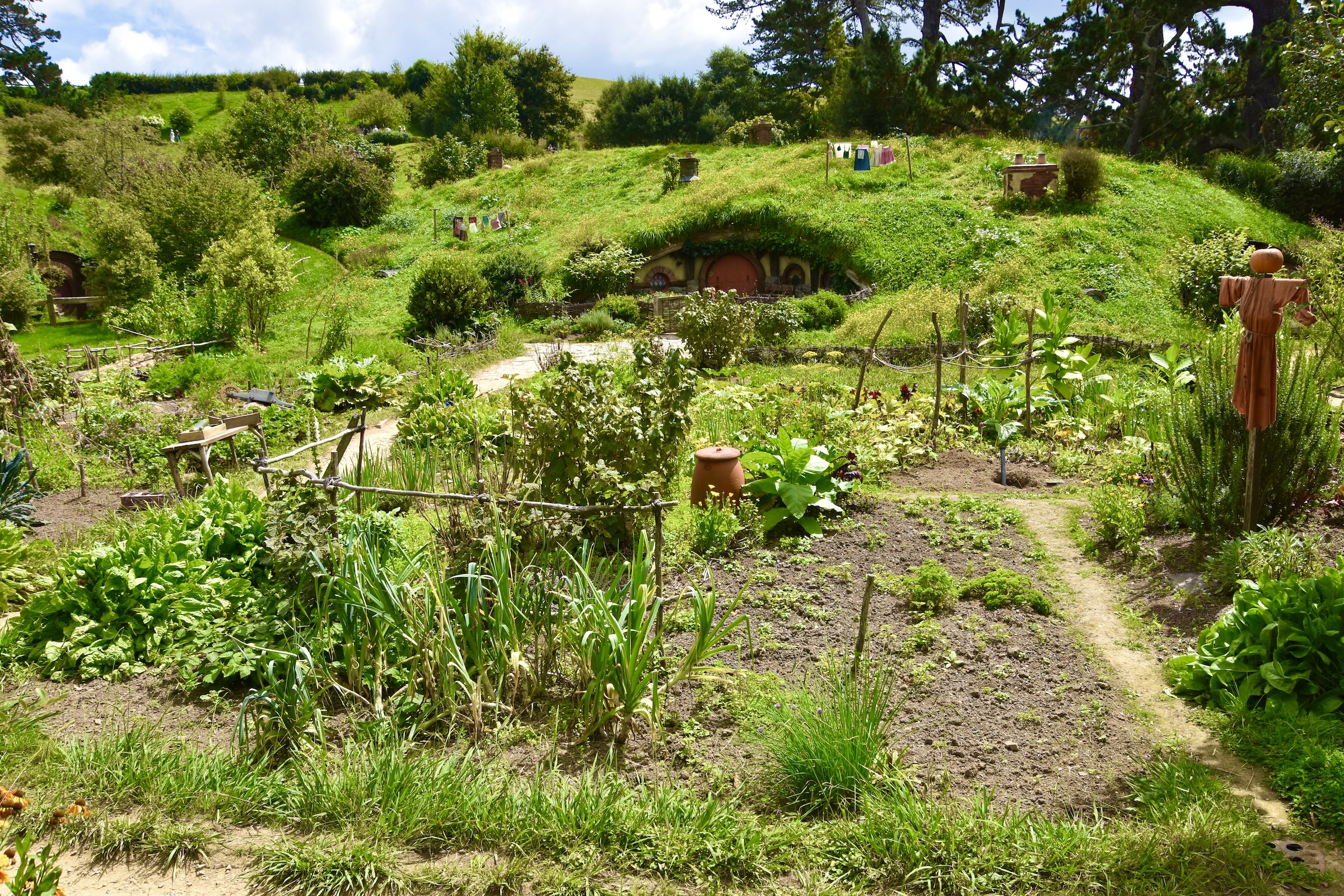
The well tended gardens of Hobbiton.
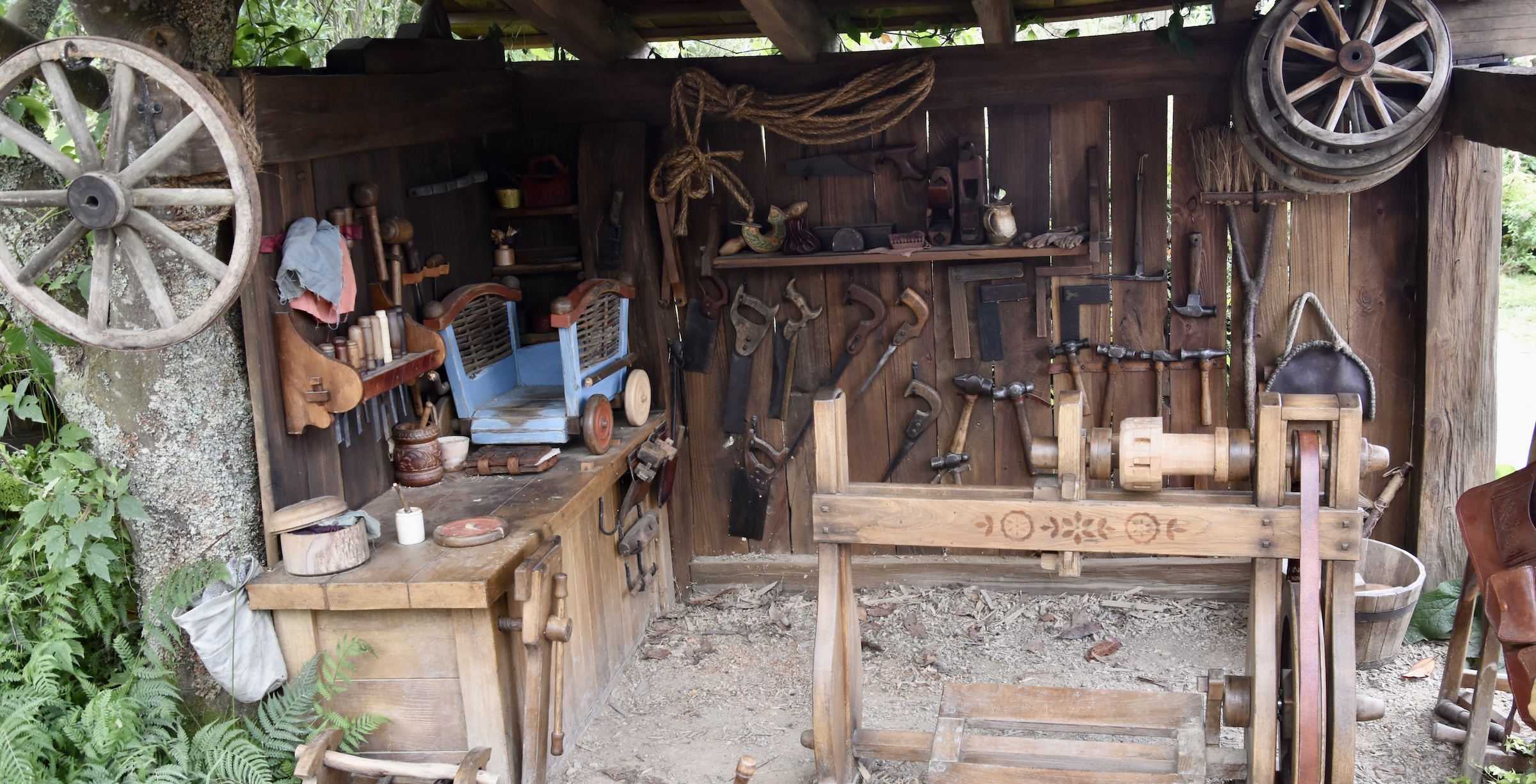
And shops.
But the ultimate delve into unreality comes near the end of the tour with a visit to the interior of one of the Hobbit holes on Bagshot Row. I could almost picture myself meeting up with the late great Sir Ian Holm as the elderly Bilbo Baggins living out his final days in the coziness of this wonderful home. So join me as I enter the Baggins homestead.
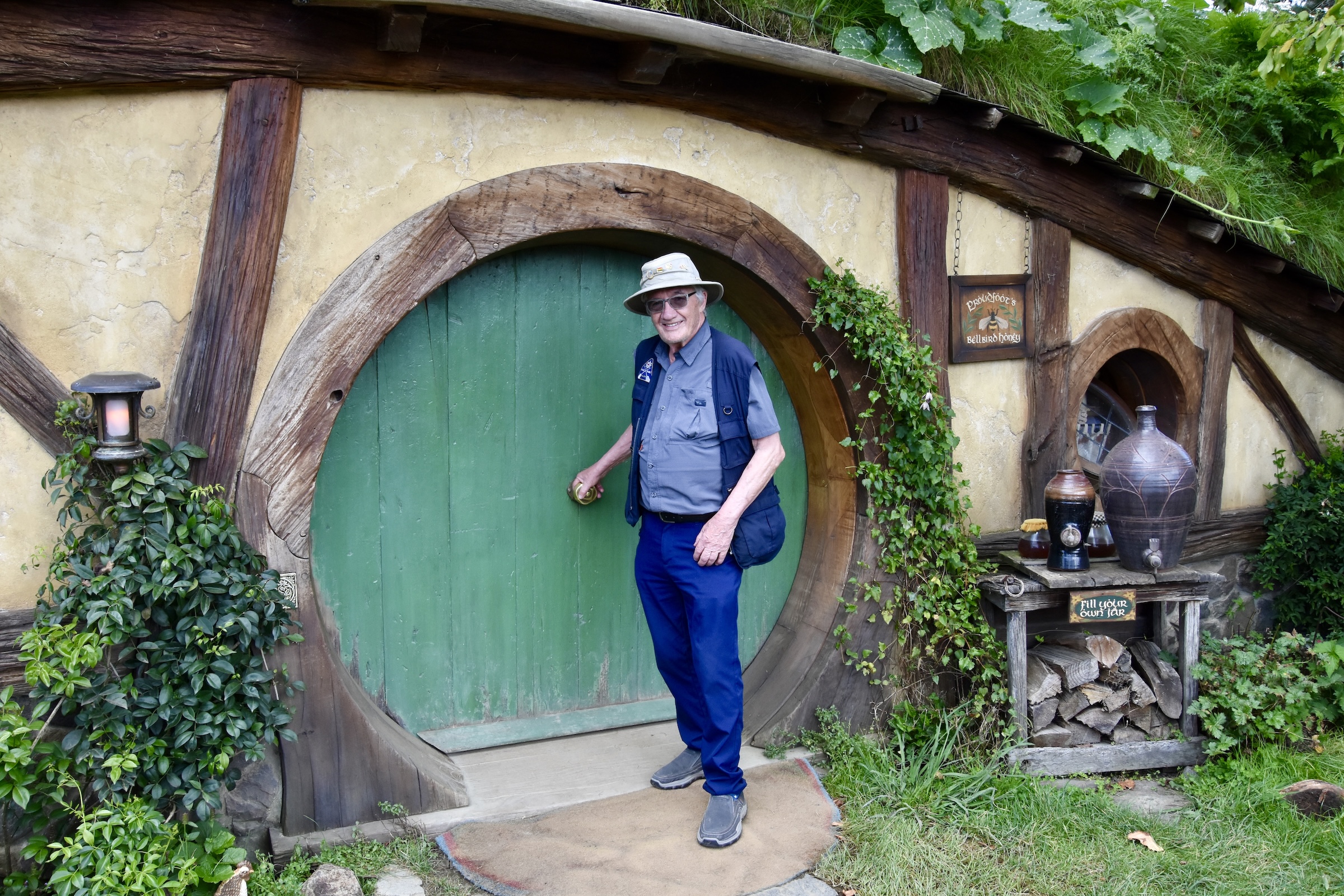
Once again it will take a gallery to do it justice.
-
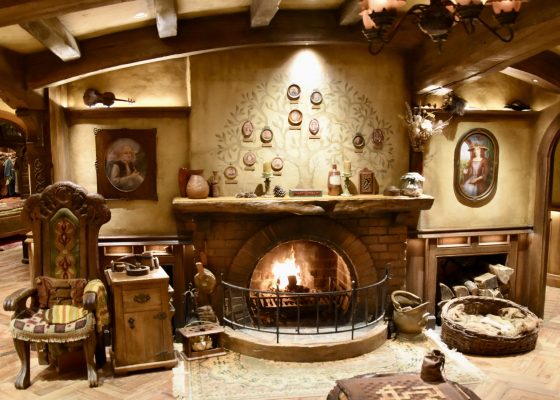
- Living Room
-
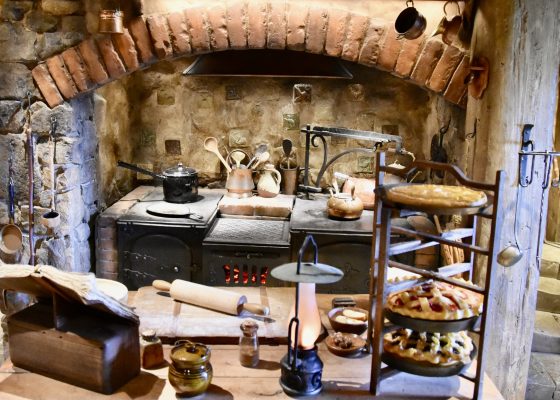
- Kitchen
-
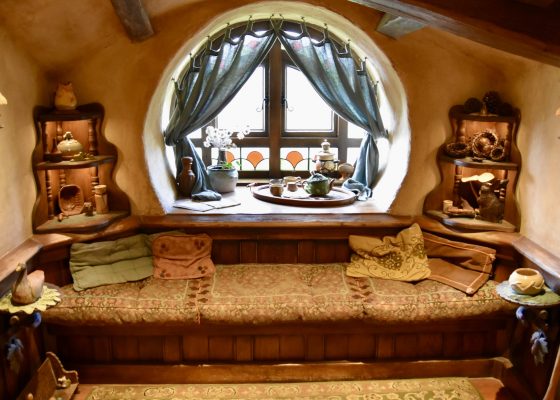
- Kitchen Nook
-
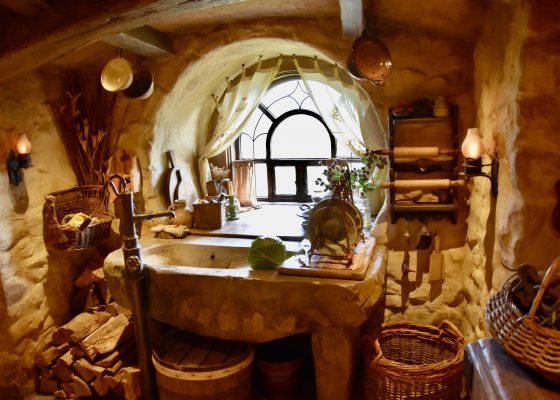
- Indoor Pump
-
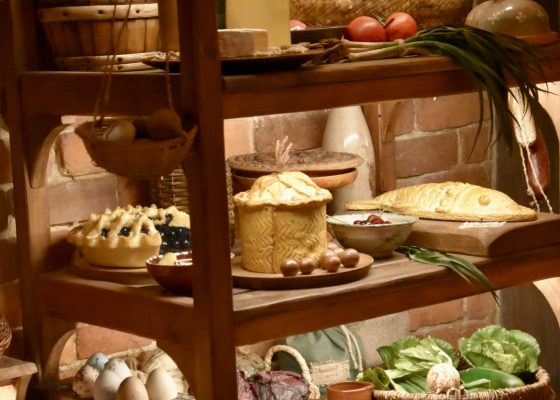
- Pantry
-
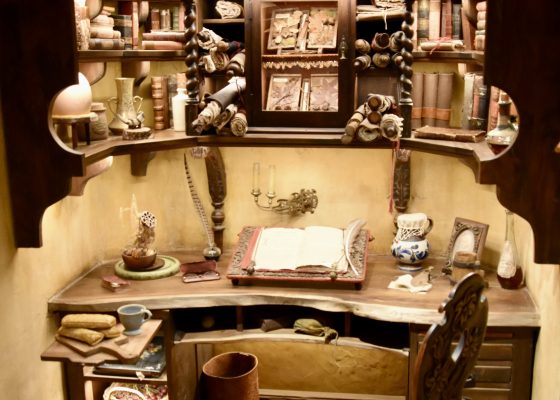
- Writing Room
-
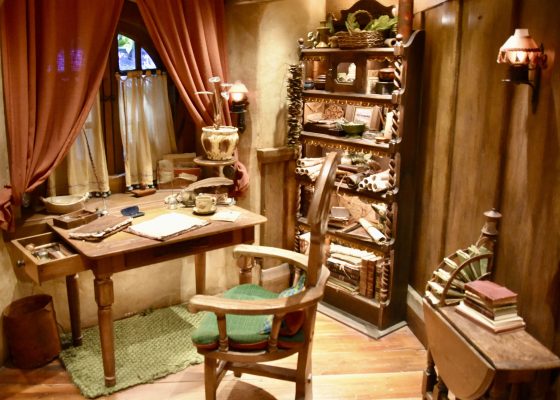
- The Study
-
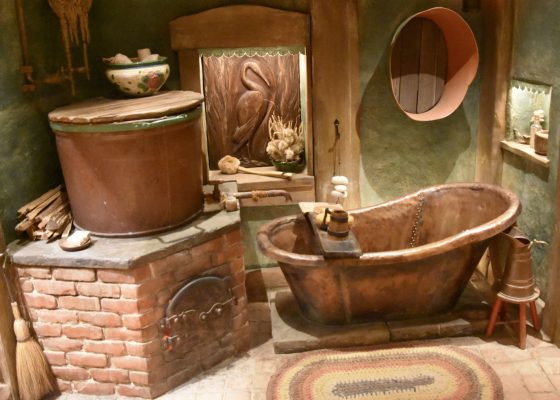
- Bathtub
-
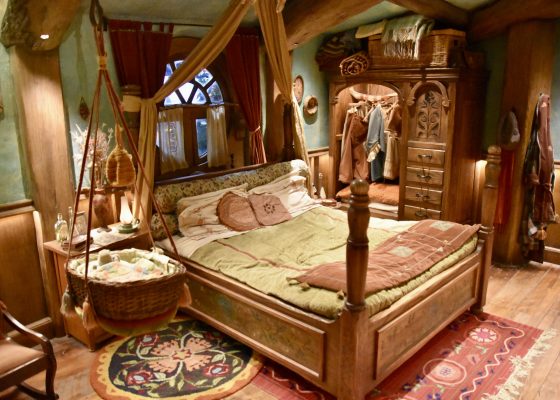
- Bedroom
-
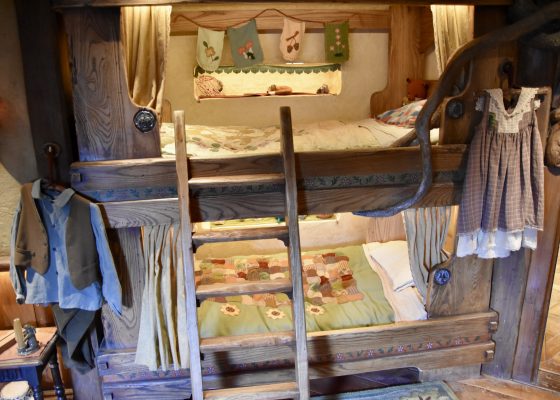
- Children’s Bunk Beds
-
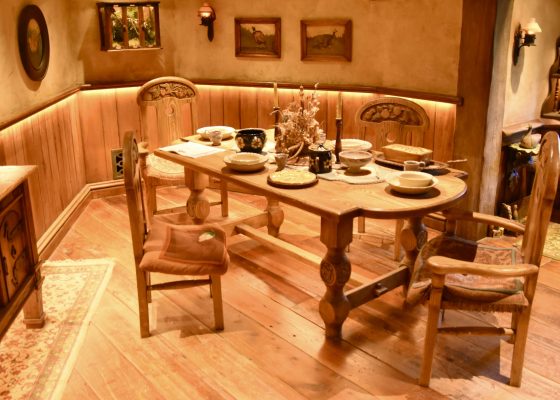
- Dining Room
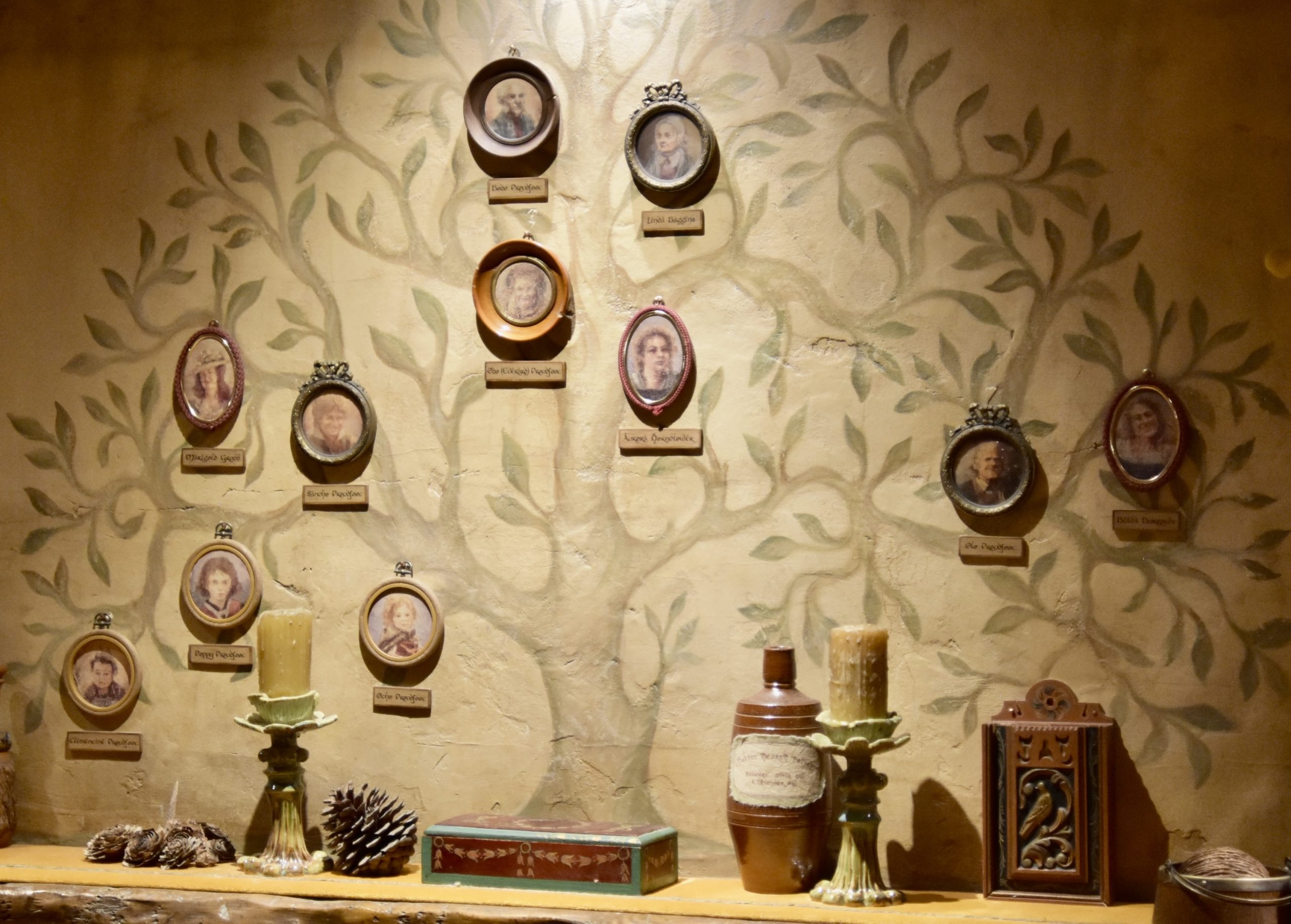
The attention to detail includes the Proudfoot/Baggins family tree.
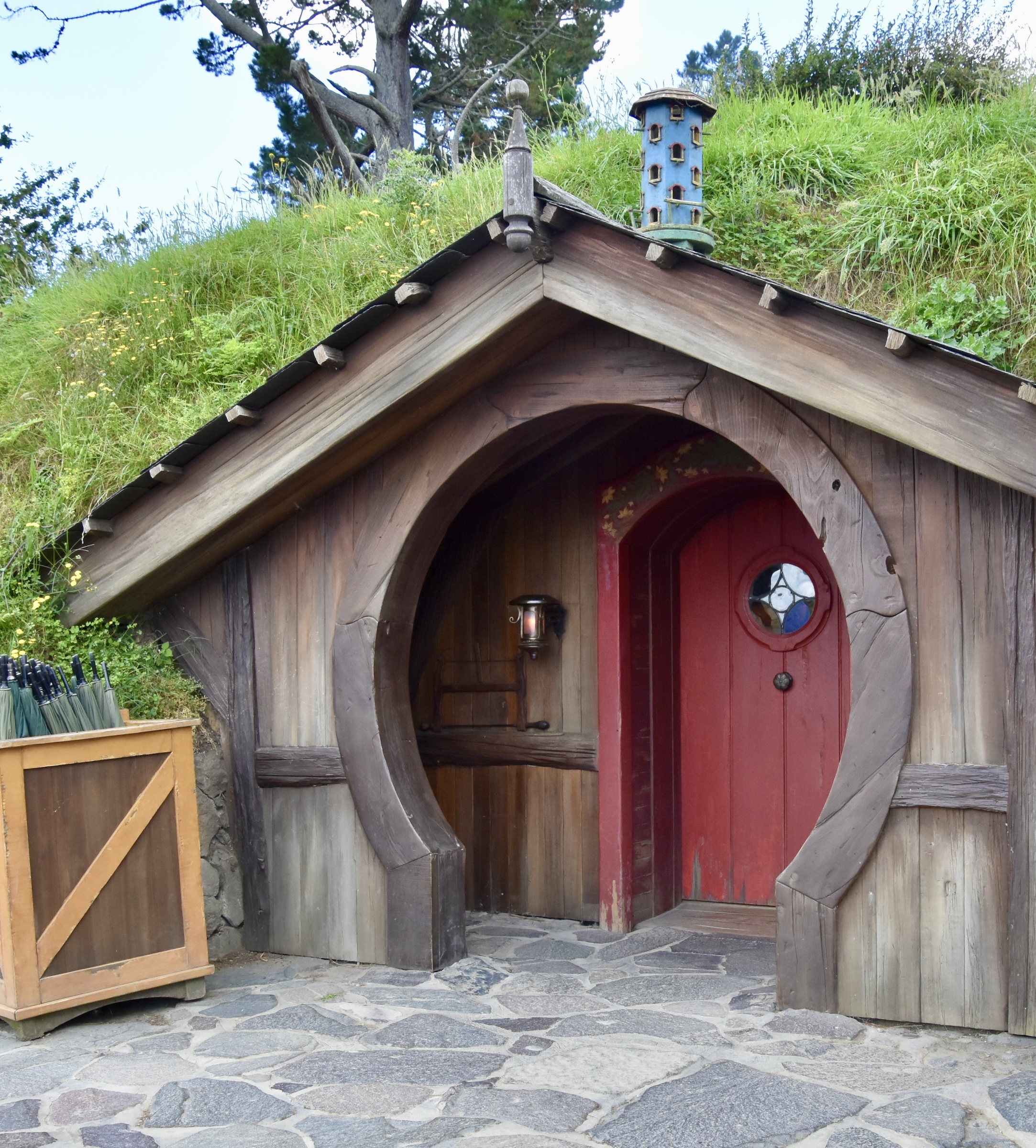
You exit Bilbo’s residence through the back door.
From here the group makes its way past the mill and over the bridge to the Green Dragon Inn.
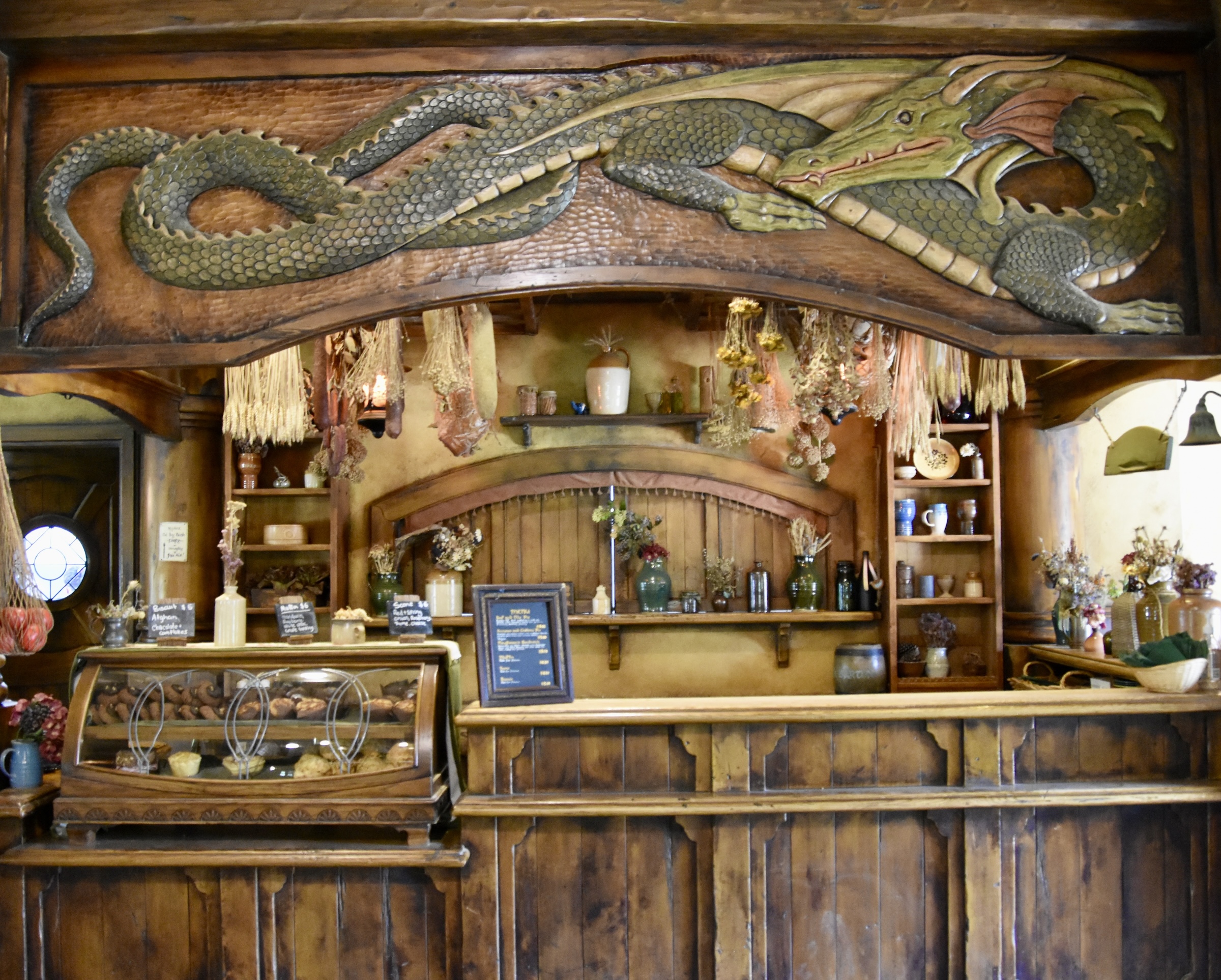
Inside the Green Dragon Inn there is time for a pint of ale before boarding the bus back to Shire’s Rest.
Even if you are not a fantasy fan, a trip to Hobbiton will make you marvel at the genius of Peter Jackson and the entire crew who have made this into a into a world where war, famine and pestilence have no place and you can forget about the real world, if only for a few hours.
In the next post I’ll meet Alison and we’ll head to the Northland Peninsula and the surprisingly interesting city of Whangarei. I hope you’ll join us there.