
Cairns – Gateway to Northern Australia

This is my sixth post from the March 2026 Adventures Abroad tour of Australia led by fellow Nova Scotian Brandi McCarthy. In the last post we visited Australia’s capital city Canberra and were very pleasantly surprised by the views from the Commonwealth Parliament building to the Australian National War Monument and vice versa. The thoughtful planning that has gone on to create this city from scratch has turned out admirably. In this post we are going to change direction completely as our focus changes from the urban delights of Melbourne and Canberra to the natural marvels of northern Queensland using the city of Cairns as our base. Please join us as we explore the Great Barrier Reef, the world’s oldest forest and much more in this and upcoming posts.
There is no direct flight from Canberra to Cairns, so we transited through Brisbane and still arrived in time for an afternoon excursion to Mossman Gorge which I’ll describe a little later in this post. But first a word or two about Cairns.
History of Cairns
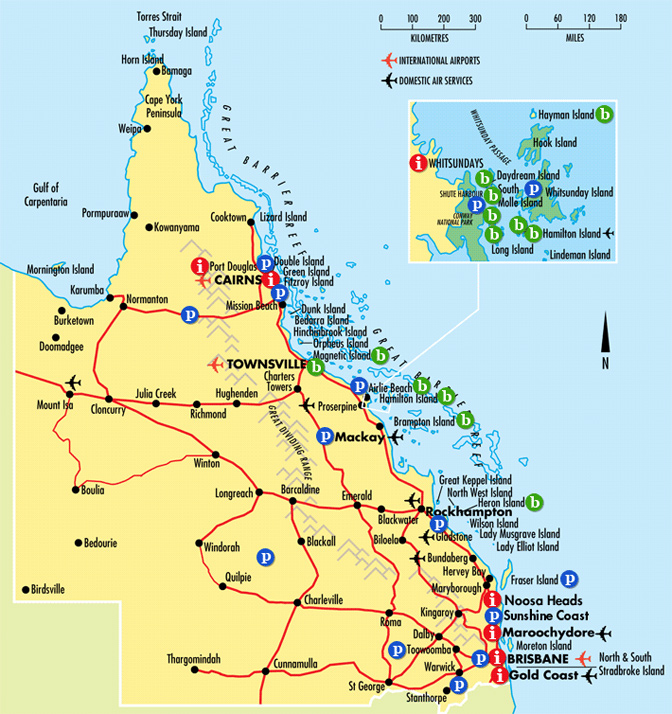
Even though Cairns is a relatively young city by European standards, it can also claim to be among the oldest places to be inhabited in the entire continent. It is generally now accepted that the Aboriginal migration to Australia occurred at least 60,000 years ago and that the Cape York Peninsula, which is at the very top of the map above, was one of the most important landing points. From here over many thousands of years the entire continent was populated.
So there were people living in the area that became Cairns from really time immemorial when who else but James Cook landed in the bay where the city is located in 1770 and gave it the name Trinity Bay. However, nothing much happened from a settlement perspective for another 100 years when prospectors arrived in the area in 1872 and found some promising gold fields in the nearby hills. That led to an influx of settlers and the official establishment of Cairns in 1876, named after the then Governor-General of Queensland, William Cairns.
Aside from the goldfields, the area around Cairns was found to be very suitable for growing sugar cane and other agricultural crops that would not grow in the colder southern parts of the country. Still, by 1903 Cairns only had 3,500 residents. Growth continued in spurts, but was often halted by a series of cyclones that hammered the place numerous times in the 20th century. In 1954 Queen Elizabeth paid a visit and that kind of put Cairns on the world stage for the first time.
Only in the late 20th century did Cairns emerge as a major tourist destination. It’s proximity to the Great Barrier Reef and the Wet Tropics Rainforest World Heritage Sites led to the construction of tourist attractions such as the SkyRail and Kuranda Railway. The opening of a number of Aboriginal communities to the public have made the area popular with tourists seeking unique cultural experiences. Today Cairns has a population of around 180,000 and receives almost 3 million tourists a year, mostly from other parts of Australia, but at least half a million come from places as far away as Canada.
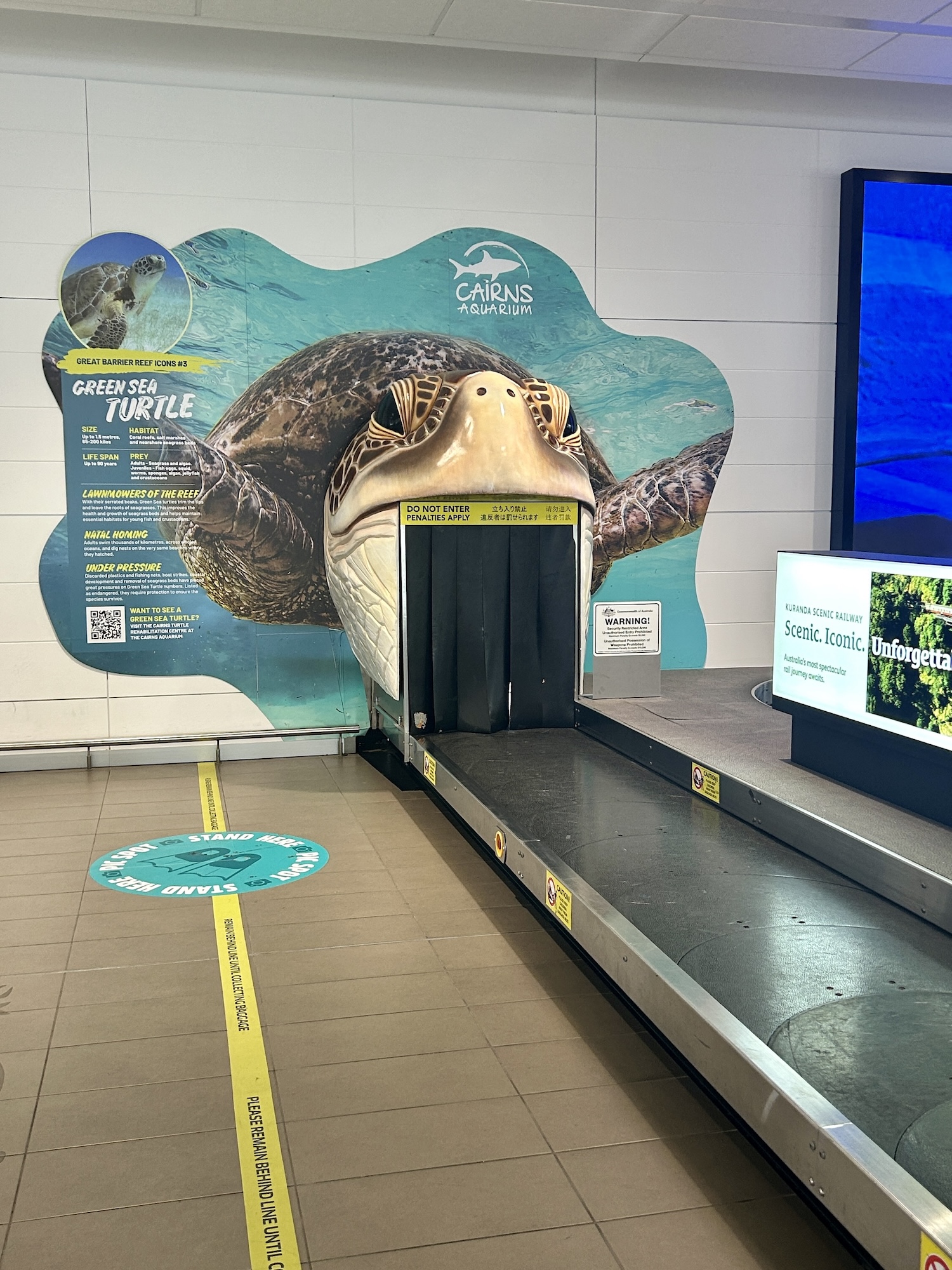
From the moment you land in Cairns you get the sense that this place is very different from any of the places we have already been in Australia. It’s much hotter and the humidity immediately let’s you know you are in the tropics. This baggage dispenser also reminds you of that as well. I must say, I never really thought of Australia as being a tropical country with rainforests, but I’m about to be disabused of my ignorance.
Mossman Gorge
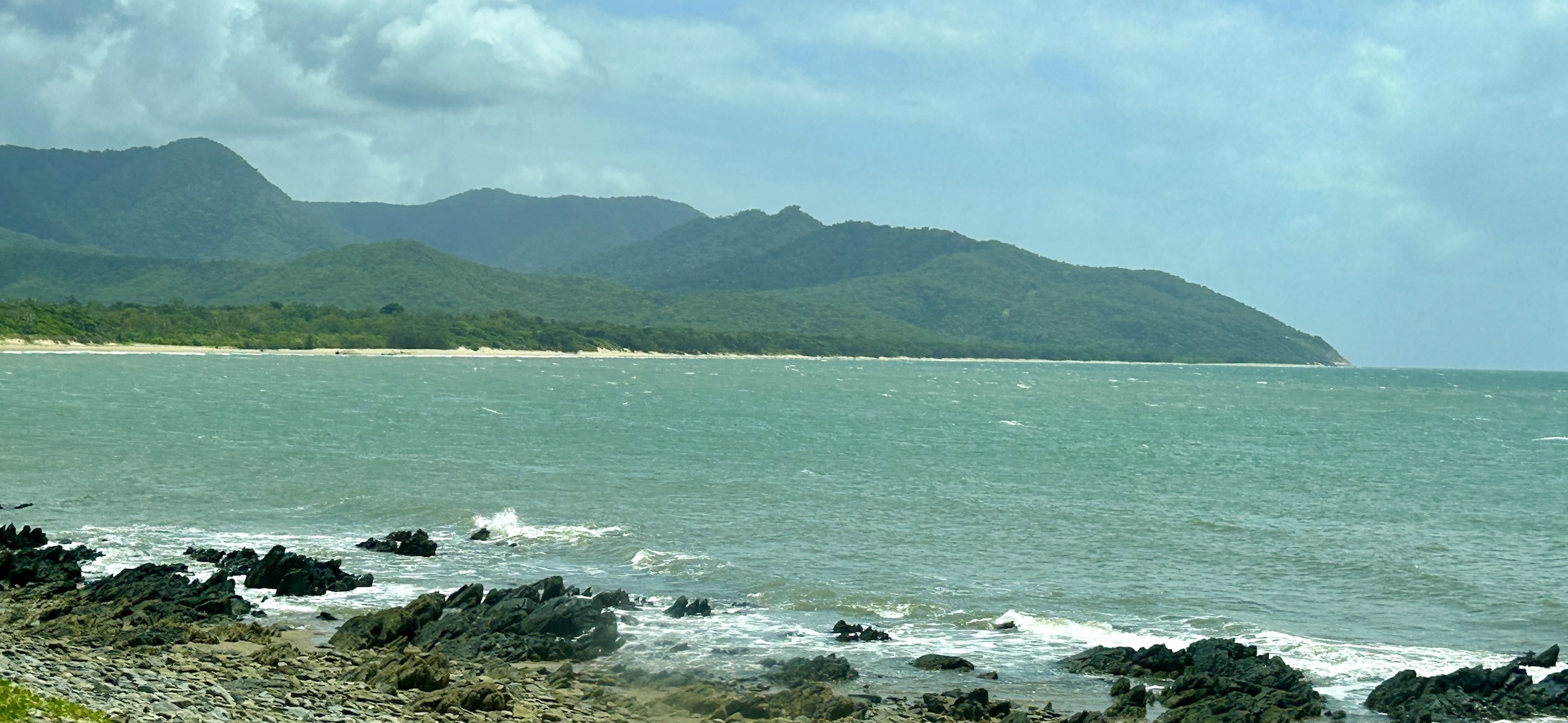
From the airport we board a bus and drive north from Cairns on Captain Cook Drive that provides great views of the ocean and the lush rainforest that covers much of the York Peninsula. Our destination is the Mossman Gorge Cultural Centre where we will have our first Aboriginal cultural experience.
This is our Aboriginal guide Skip and he will be taking us on an hour long Dreamtime Walk through the forest where his ancestors have dwelt for countless generations. He is both humorous and deadly serious at the same time.
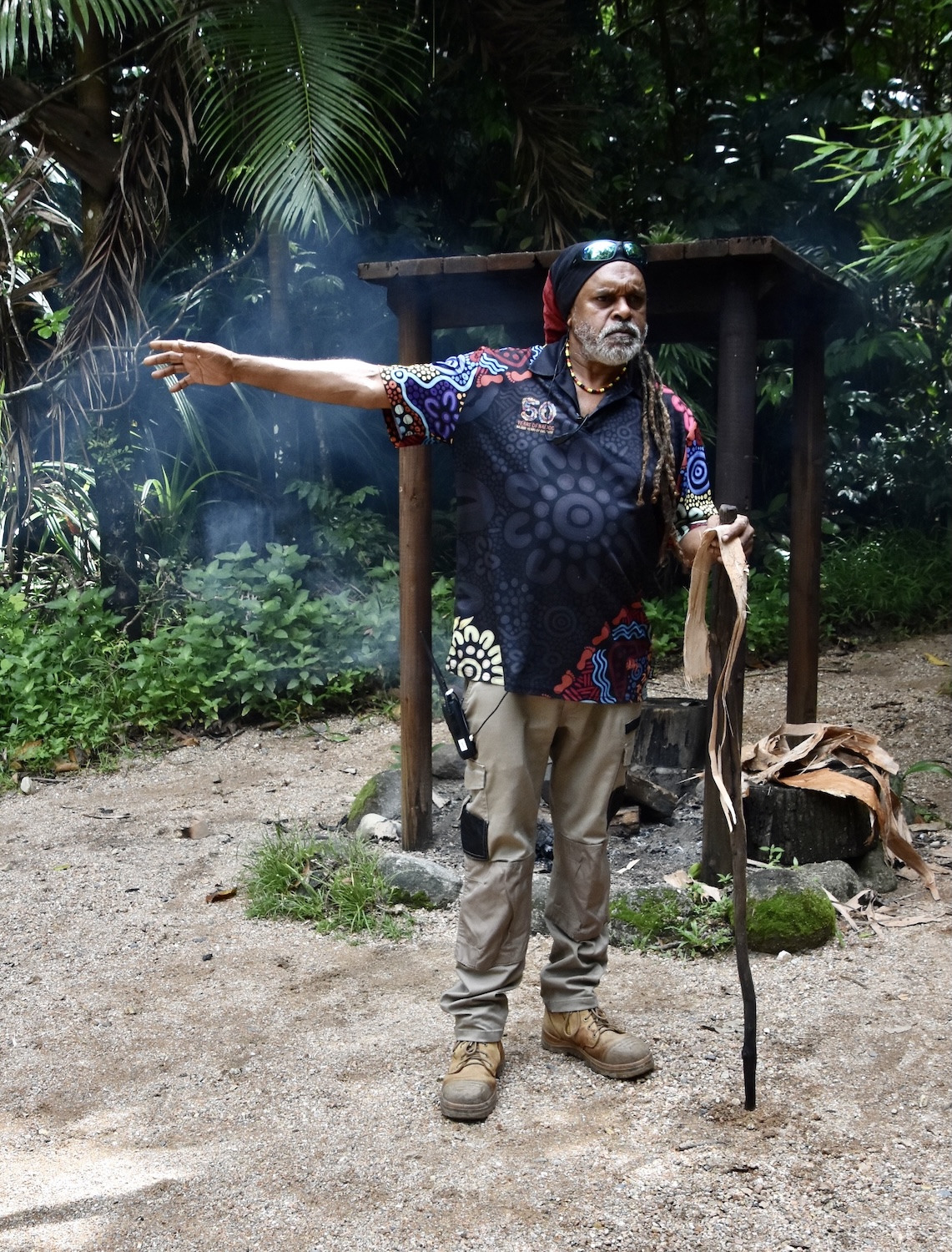
Before we begin the walk he has us walk in a circle around a smoking fire to cleanse us of bad vibes.
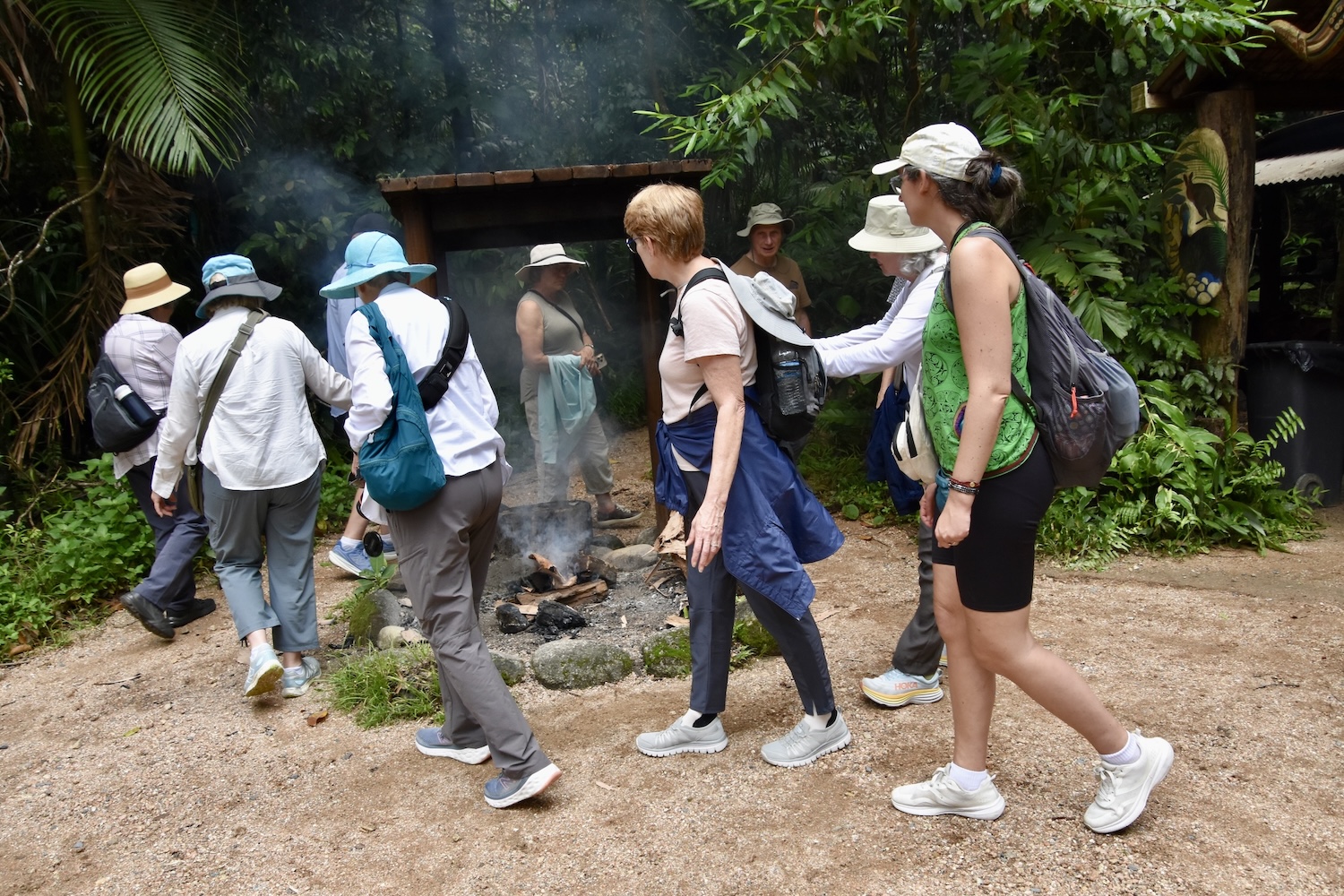
It works because one of our group almost backs into a Gympie-gympie tree that has the ominous pseudonym ‘suicide plant’. It is one of the most poisonous plants on earth with stinging nettles that are extremely painful and almost impossible to get out. One touch and that might have been the end of the tour for this traveller, but Skip quickly intervenes to pull him back and we learn that this is only one of dozens of things that can kill or seriously harm you in this part of Australia.
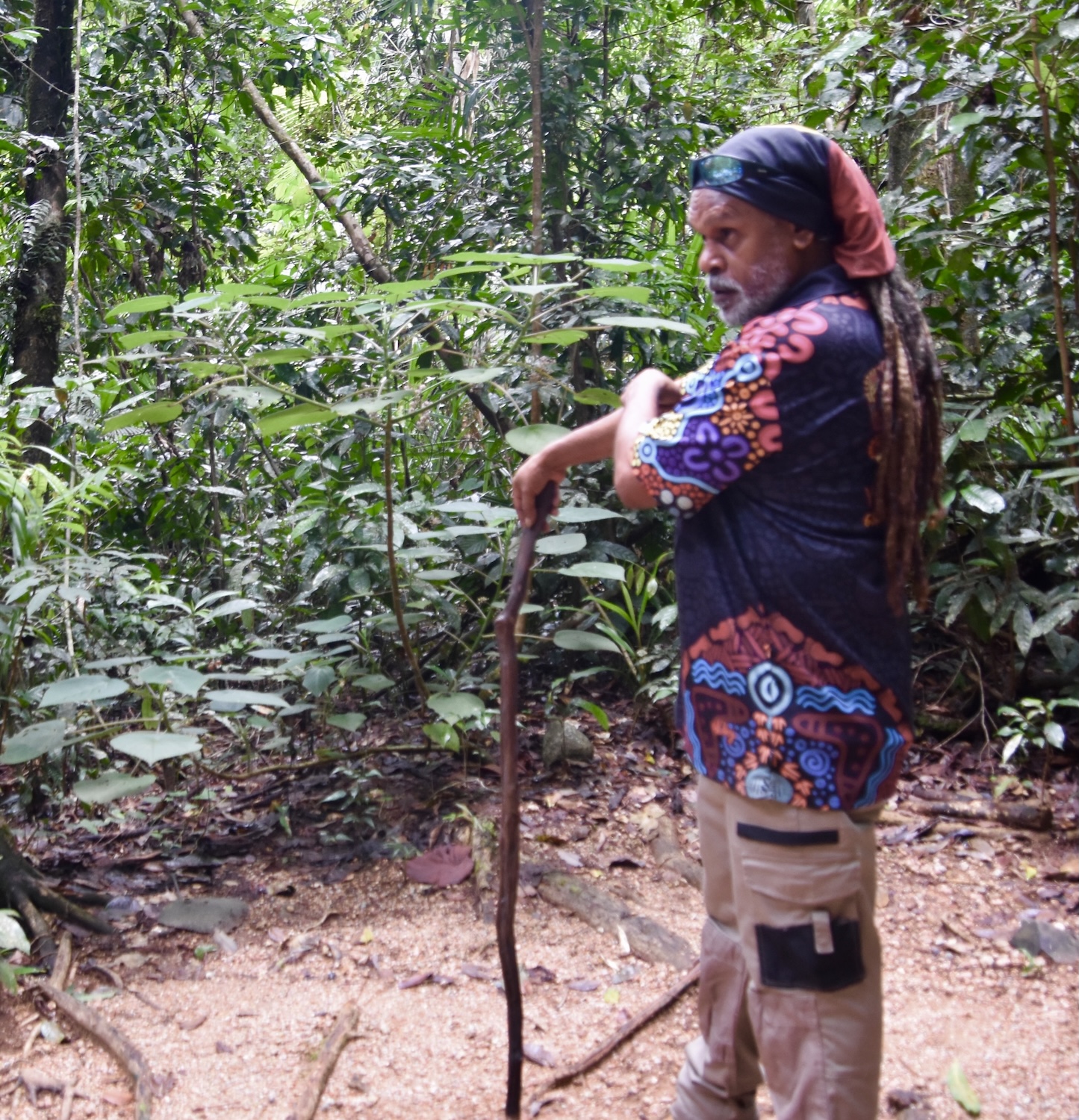
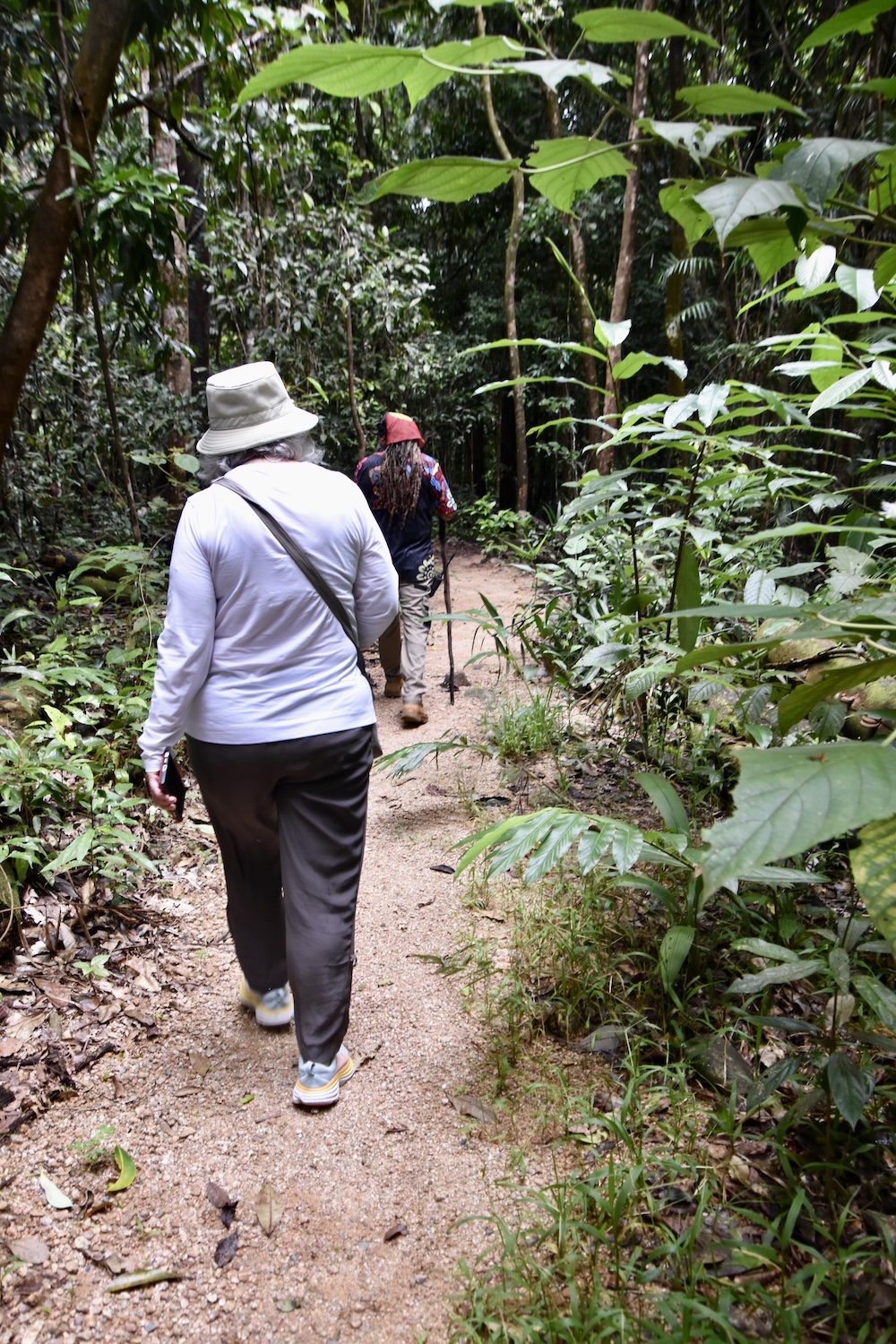
With that narrow escape we begin our trek through the Daintree Rainforest National Park of which Mossman Gorge is a small part.
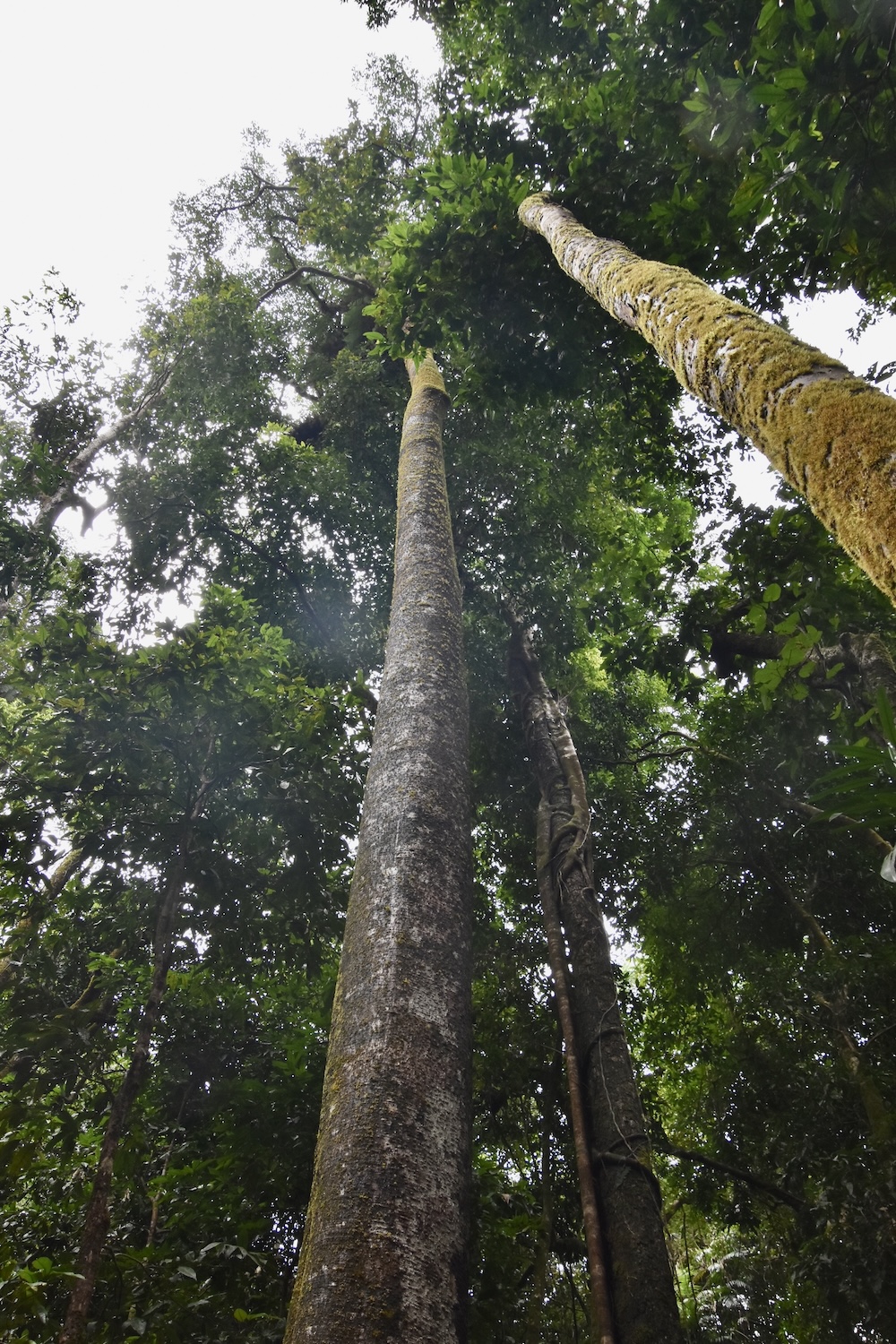
Almost the first thing I noticed on this walk was how tall and straight many of the trees were and how many different species. In our native Acadian forests of the Maritimes or what’s left of it there are 32 species of trees. In the Daintree Rainforest there are over 900.
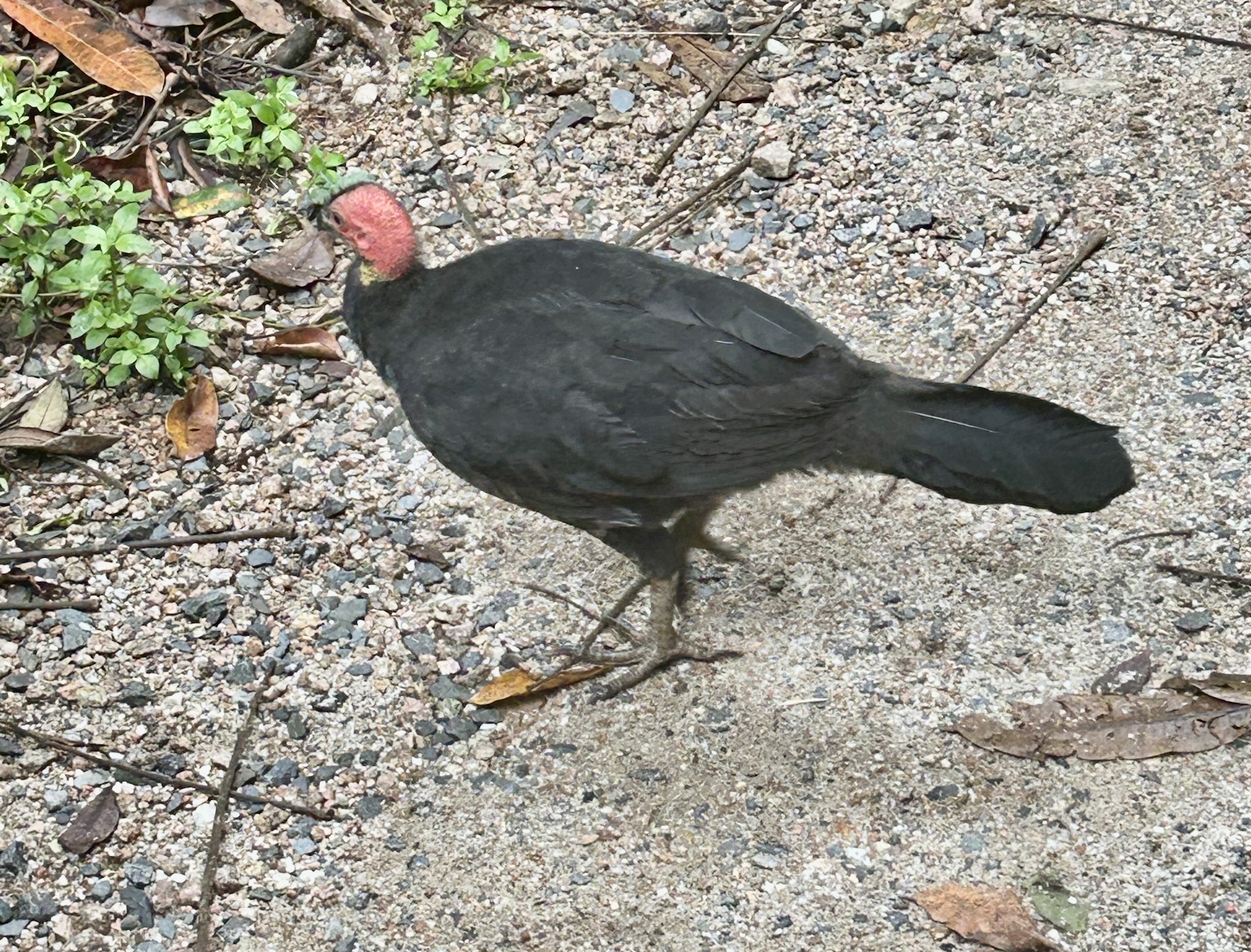
At our first stop we encounter one of the gentler denizens of this forest, the Australian brush turkey.
Skip brandishes an Aboriginal war club that he assures us is as lethal as it looks. These are used for hunting things like the brush-turkey and in the past for tribal warfare. However, most inter-tribal warfare on the York Peninsula was more ritual than real, with disputes being settled by displays of force more than actual combat.
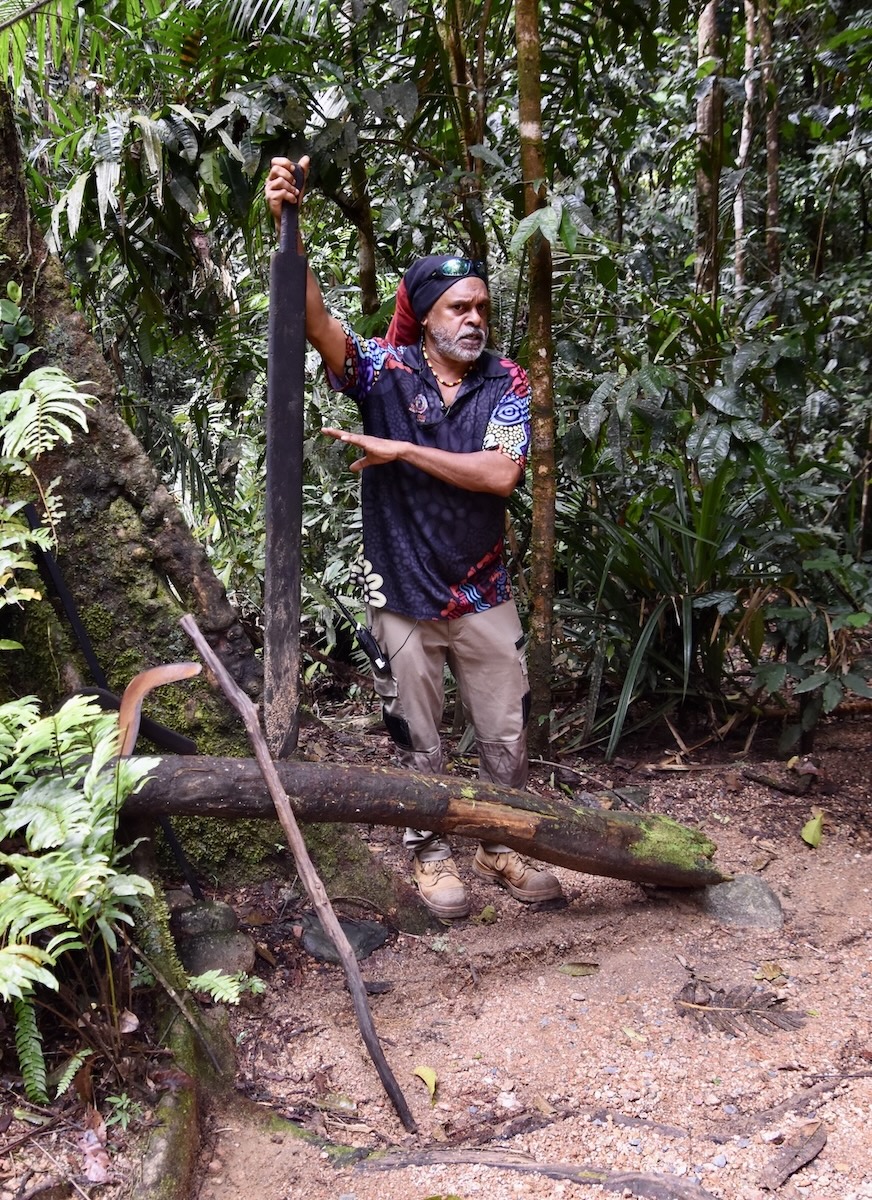
He also explained the significance of the boomerang that you see at his feet. They have multiple uses as hunting weapons, combat weapons, digging tools and even a musical instrument when clacked together. Today they are also used in very serious boomerang throwing contests. Later on this tour we will get a chance to demonstrate our prowess with this iconic piece of wood.
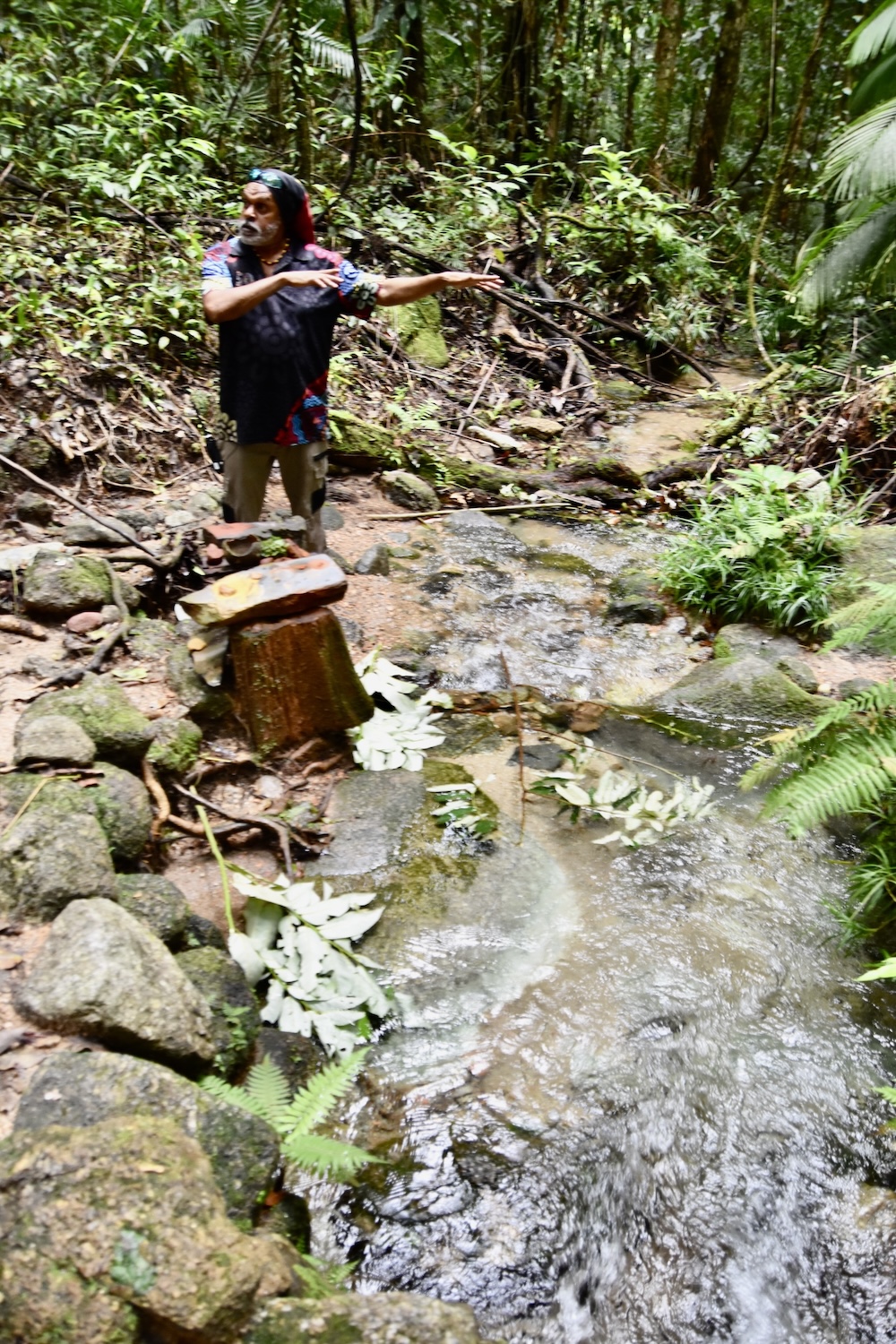
We now passed by a narrow stream where Skip demonstrated the various plants and earthen material that the Aboriginal people use to create the colours for their art work.
Our Dreamtime walk concluded with Skip demonstrating the use of another iconic Aboriginal artifact, the didgeridoo. I had always thought that these were rather monotonal instruments sort of like an alpenhorn, but boy was I wrong. Just listen to what Skip did with what really is a glorified hollowed out log – simply amazing and a fantastic introduction to Aboriginal customs and practice.
We returned to Cairns to check into our hotel and then we got a chance to stroll along the city’s waterfront which is exceptional. Oddly, I never took any photos, so you’ll just have to trust me that it’s a happening place with tons of restaurants and bars. What was even more remarkable was the evening flight of flying foxes over the city. In all my travels it occurred to me that I had never seen a flying fox aka fruit bat before. They are actually quite eerie in that they did bring to mind vampires much more readily than their much smaller cousins.
Check them out on this video.
Well that wraps up our first day in Cairns. Tomorrow we’ll go to the Great Barrier Reef. Bring your snorkelling gear.