
Canberra – Australia’s Surprising Capital City

This is my fifth post from the March 2026 tour of Australia with Adventures Abroad, led by fellow Nova Scotian Brandi McCarthy. In the last post we spent the day exploring Victoria’s most popular tourist destination, the Great Ocean Road which was definitely a trip highlight. Prior to that there were two posts from the wonderful city of Melbourne, the first featuring the Victorian nature of the city and the second venturing further afield to Brighton Beach and other spots. Now after almost a full week in Melbourne it’s time to take our first of six internal flights on this tour that covers literally over 6,000 kms. (3700 miles) in total. We are headed to Canberra, the capital of Australia and it’s just over an hour away by air so please hop aboard and we’ll discover a very different side to Australia.
History of Canberra
Based on archaeological evidence, humans have inhabited the area that became known as Canberra for as long as 21,000 years, but never apparently in large numbers. The first Europeans did not arrive until 1820 and they estimated that there were 300-400 Aboriginal people in the area. With the disease that accompanied these first white occupants the Aboriginal population was essentially gone by the 1880s. Those that hadn’t died from disease moved to better hunting grounds after sheep took over their traditional lands. I had always assumed that Canberra was an Aboriginal word, but it is actually a bastardization of Canberry, the first European name for the place which was more of a sheep station than a town for most of the 19th century.
If not for the rivalry between Melbourne and Sydney, Canberra would probably never have become more than a small town in New South Wales. However, when Australia became an independent country in 1901 both major cities demanded to become the new capital and neither would accept the other. The result was a legislated compromise that saw Melbourne become the first capital (we saw the capital building while there), but only until an entirely new capital city was built roughly halfway between Melbourne and Sydney. One cannot help but think of the competition between New York and Philadelphia that led to the decision to build an entirely new city as capital of the United States, or Ottawa instead of Montreal or Toronto.
Here’s a map that shows Canberra’s position relative to Melbourne and Sydney.
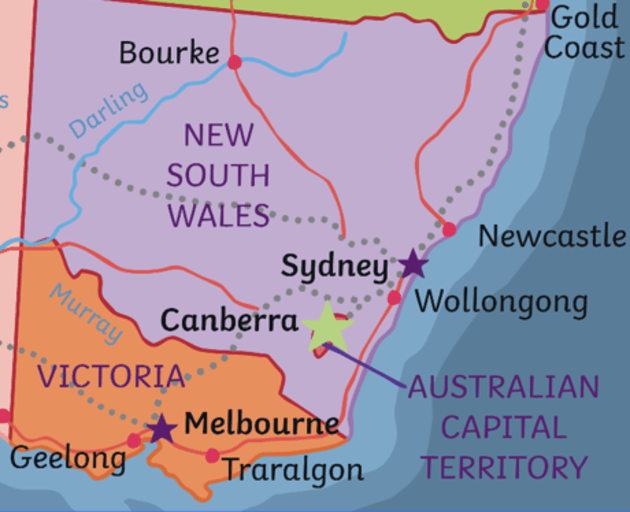
The site of Canberra as the new capital was chosen in 1908 after extensive surveys throughout southern New South Wales and in 1911 2,360 sq. kms. (911 sq. miles) were carved out of that state and designated the Australian Capital Territory. Then a worldwide competition was held to create a design for the new capital. Just as the Americans did in choosing the French architect Charles L’Enfant to design Washington D.C., the Australians looked outside their country and chose Walter Burley Griffin from Chicago to design Canberra. What Griffin did not advertise was the fact that he worked in collaboration with his wife Marion Mahony Griffin who was also an architect. Whether the design still would have been chosen if the judge’s knew the plan was largely the work of a woman, we will never know.
There was also a great controversy about the name. In this late Edwardian era highfalutin names were all the rage and some of the candidates were Olympus, Paradise, Shakespeare, Eucalypta and Captain Cook. Finally when no one could agree they just went with what it was already called, Canberra.
Canberra’s progress as a capital city was slow. It was not until 1937 that the Parliament House (now the Old Parliament House) was opened. In the 1930’s Britain, Canada and United States opened embassies in the city and gradually that expanded to the 114 embassies and high commissions found their today. We did take a bus tour past many of these including the Canadian embassy, but we did not stop for pictures.
The original Griffin plans called for the creation of a lake around which many of Canberra’s major buildings would be situated. However work on what became Lake Burley Griffin did not start until the 1960’s with the construction of the Scrivener Dam and today this lake is a major feature of the capital.
Gradually national departments were moved from Melbourne including the National Library which opened in 1968 and is one of the major buildings on the banks of Lake Burley Griffin.
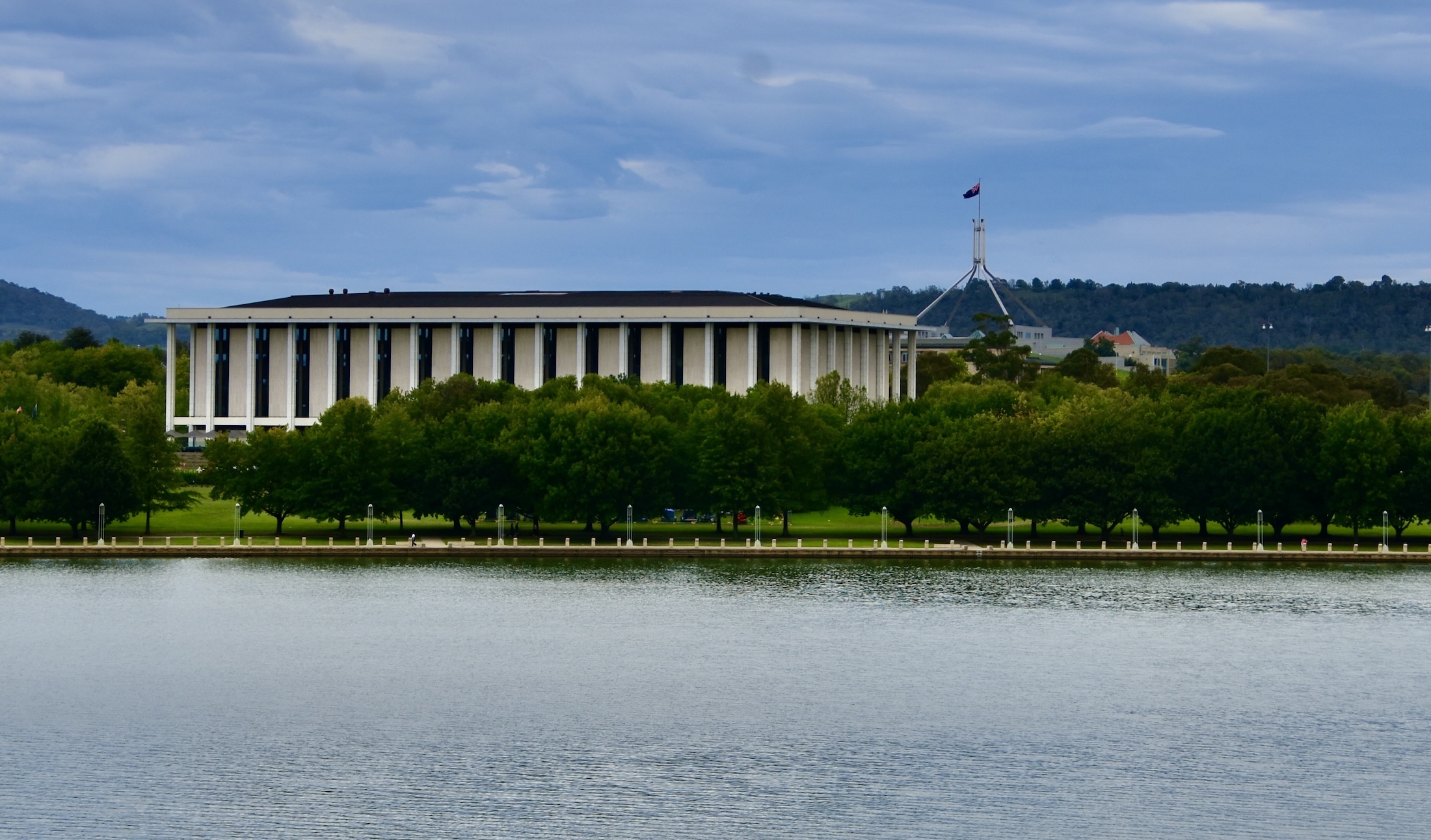
Others followed including the High Court of Australia, the National Museum and the National Gallery making Canberra into a truly national capital in every sense of the word.
The final touch was the opening of the new Commonwealth Parliament House in 1988 and that’s where we’ll start our tour.
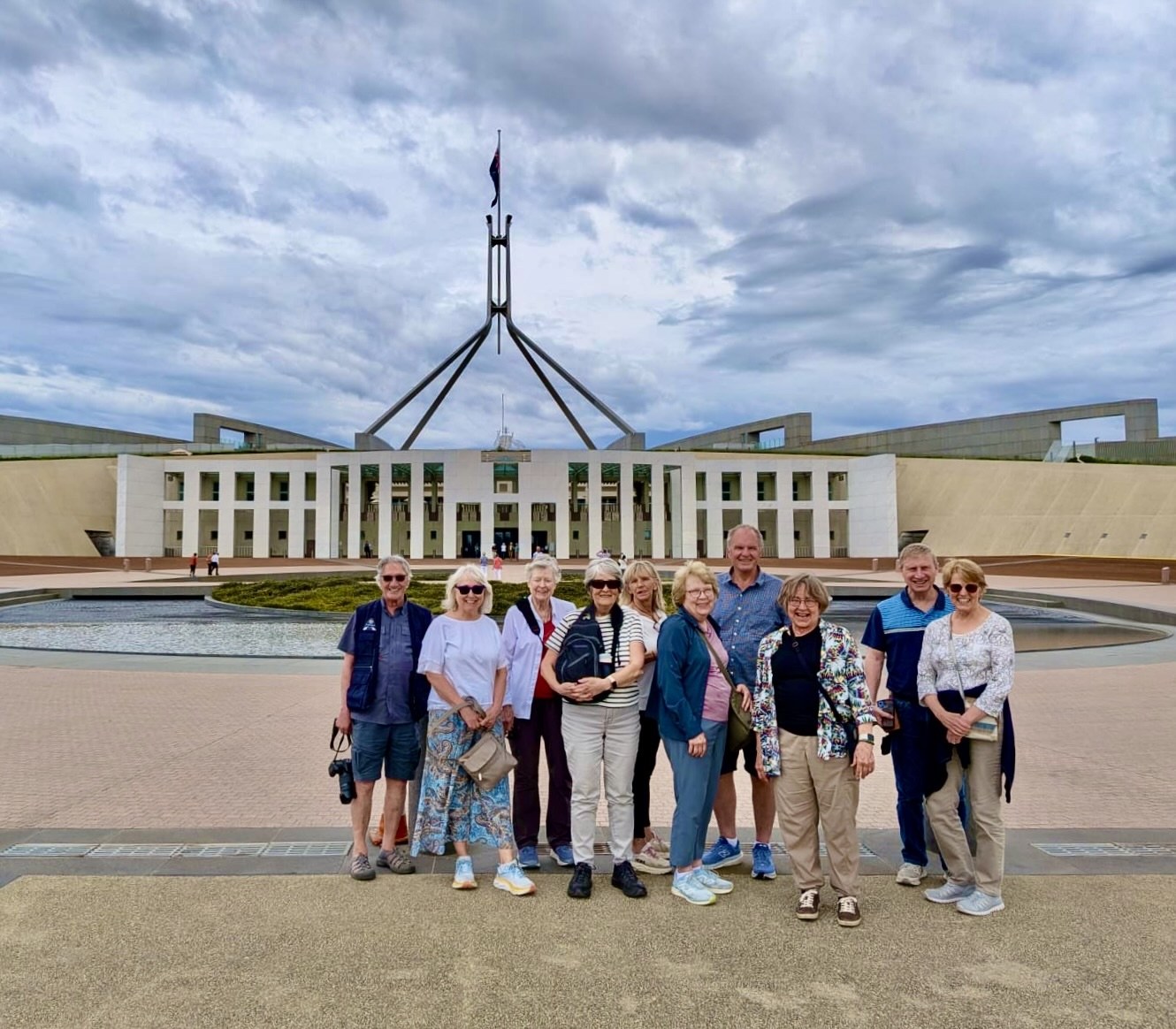
The new parliament building doesn’t look that big from the outside, but it is built into the side of a hill and is much larger inside than it at first appears.
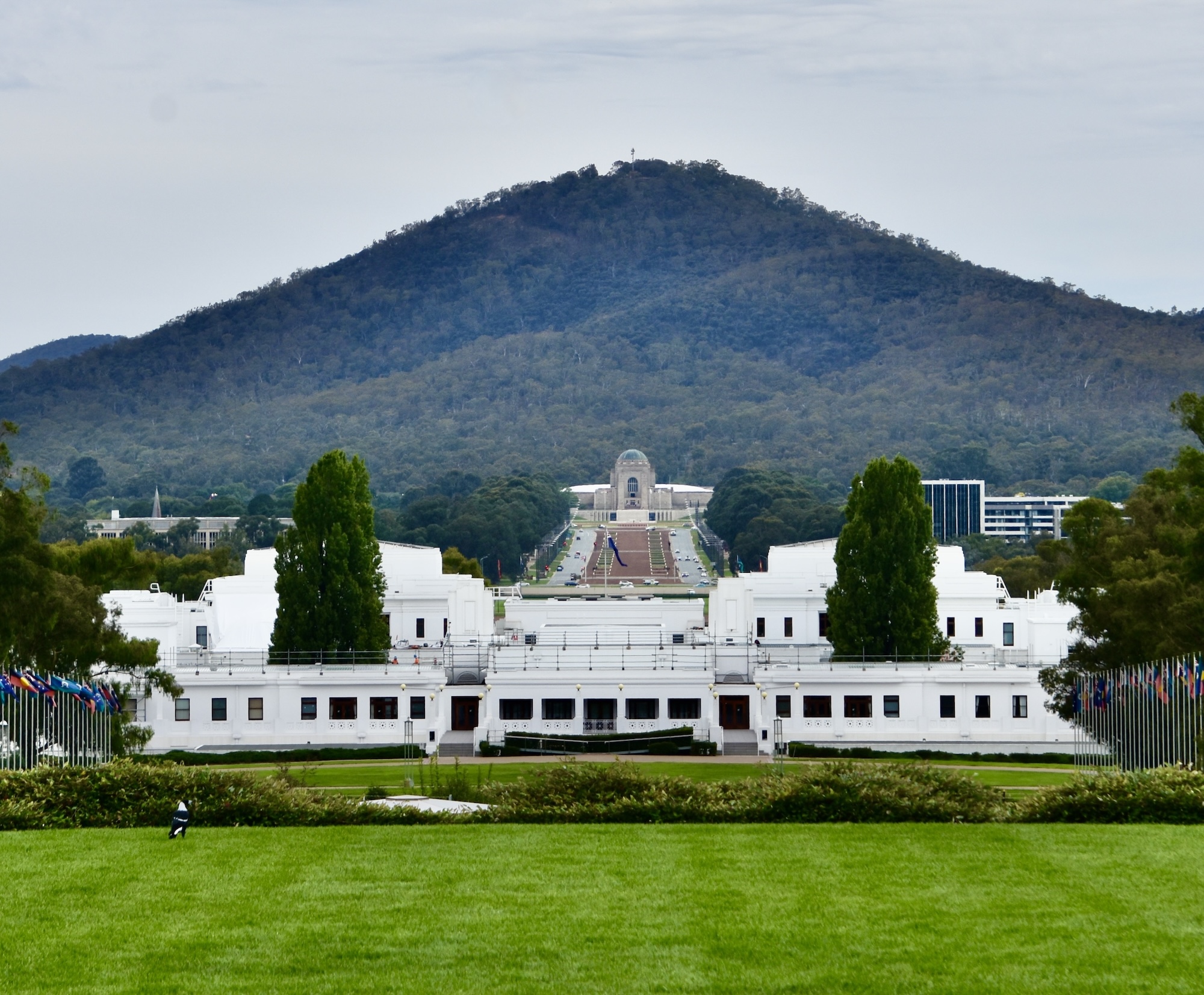
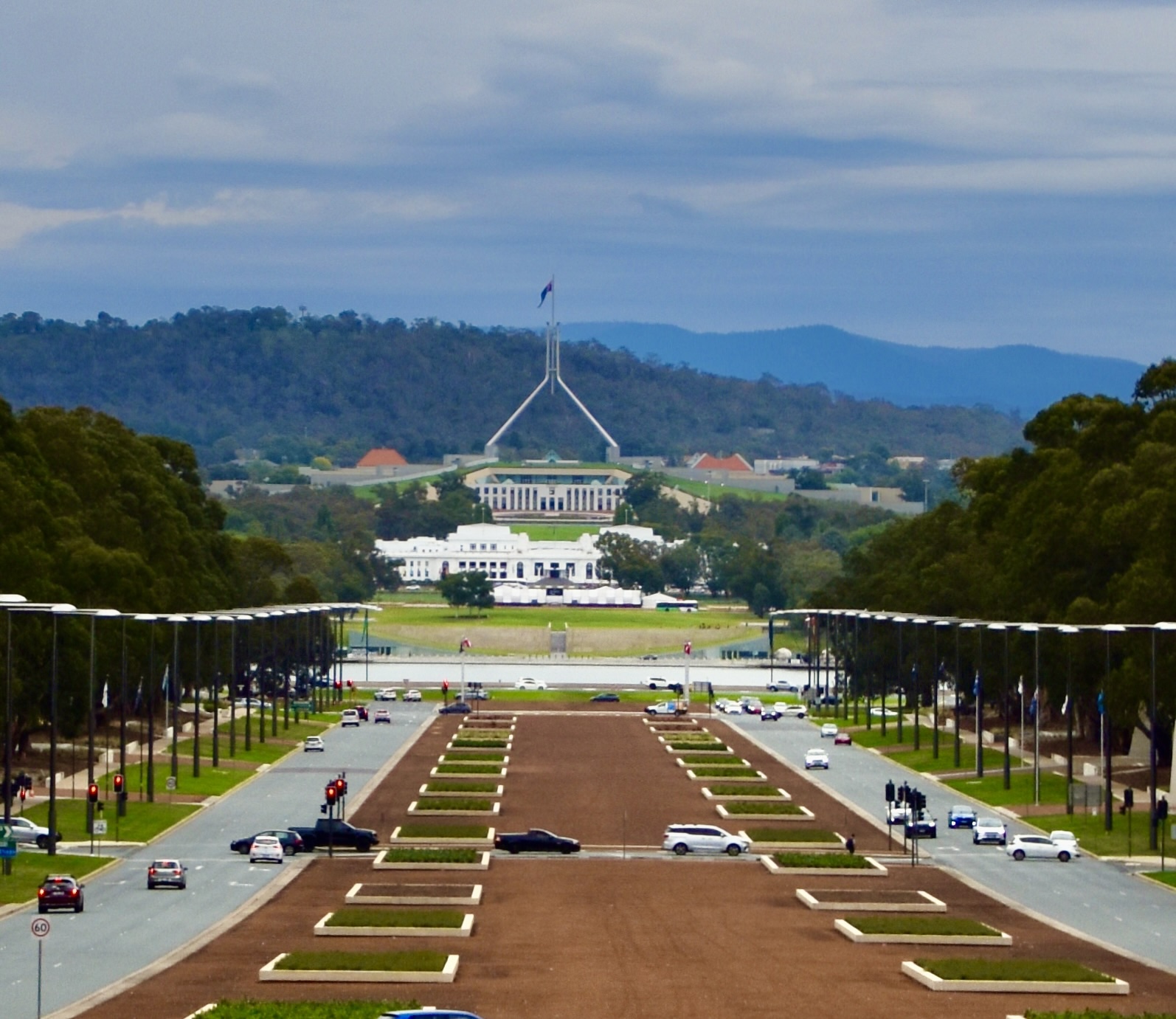
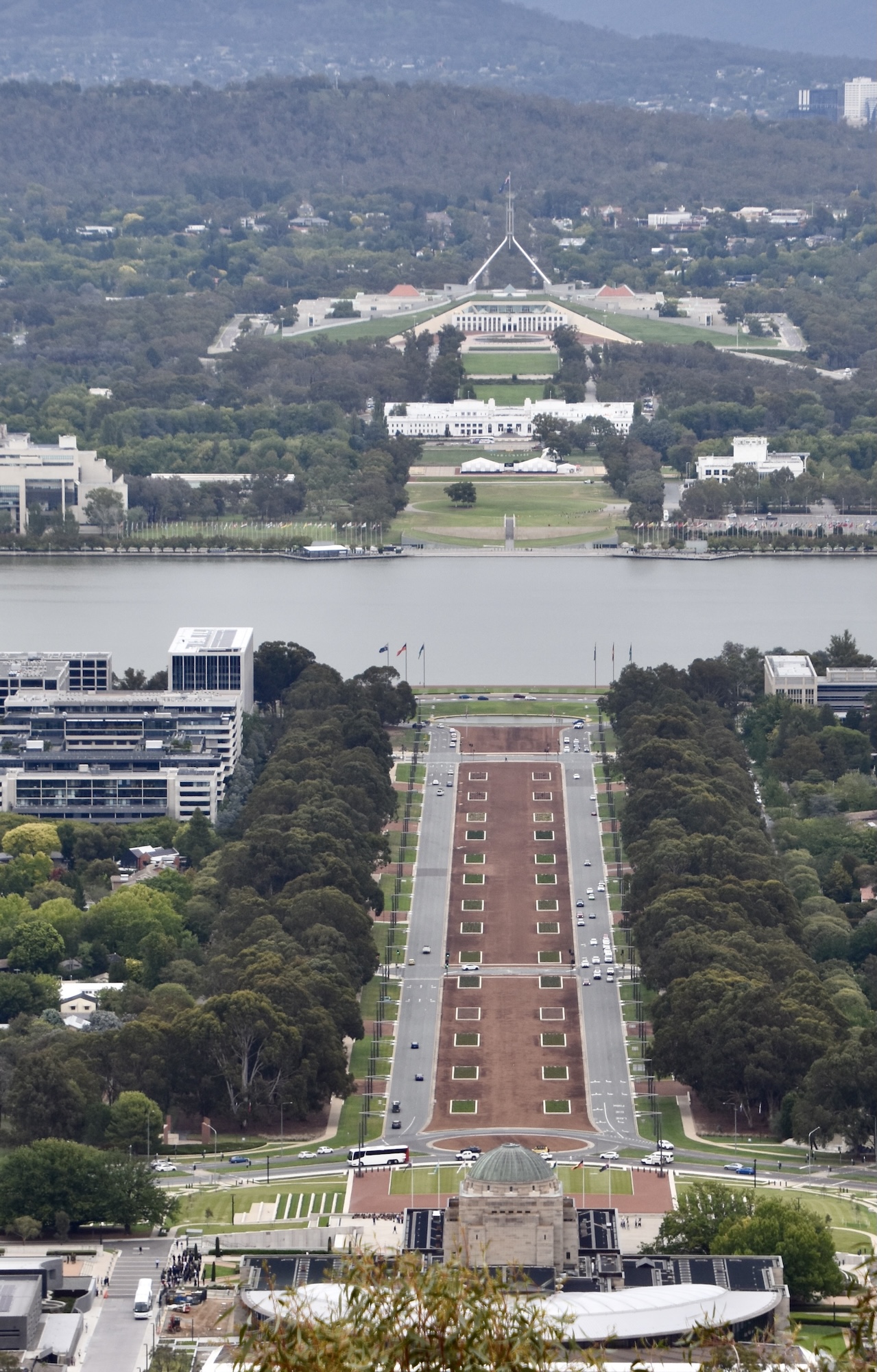
It is also situated so that from its entrance you can look back at the old Commonwealth Parliament building and then on to the Australian War Memorial with Mount Ainslie in the background. It is a pretty impressive site.
We were given a tour of the interior of the Commonwealth Parliament building by a very nice young man. This is the Australian Senate that, like the Canadian, is decorated in red.
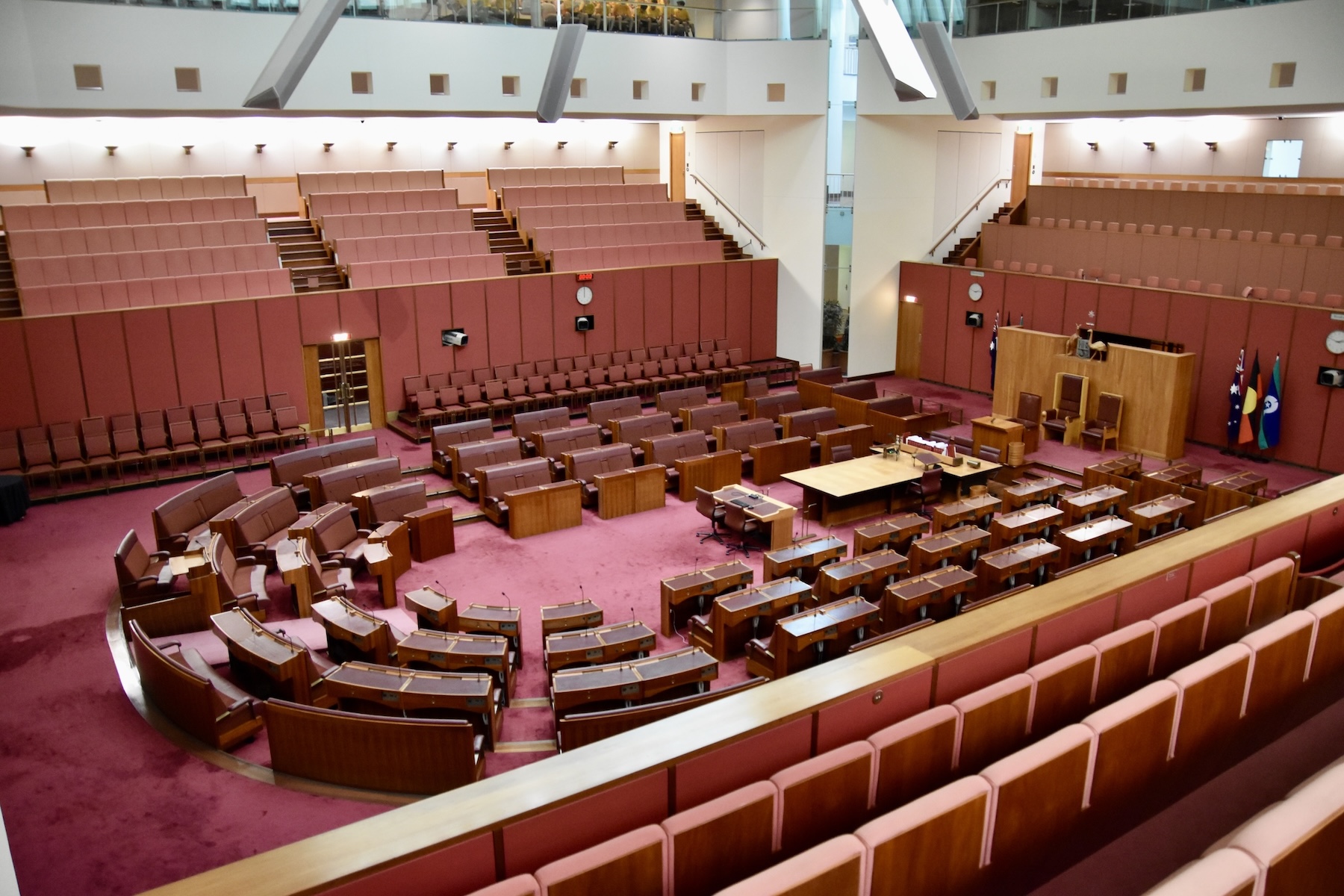
From the Commonwealth Parliament Building we made our way toward the Australian War Memorial for a special ceremony, but toured Embassy Row first and then had an unplanned stopped. Our local guide Michael described himself as a ‘kangaroo whisperer’ and he took us to an area on the outskirts of Canberra where he walked right up to a mob of Great Grey kangaroos that didn’t flinch or run away as he approached them.
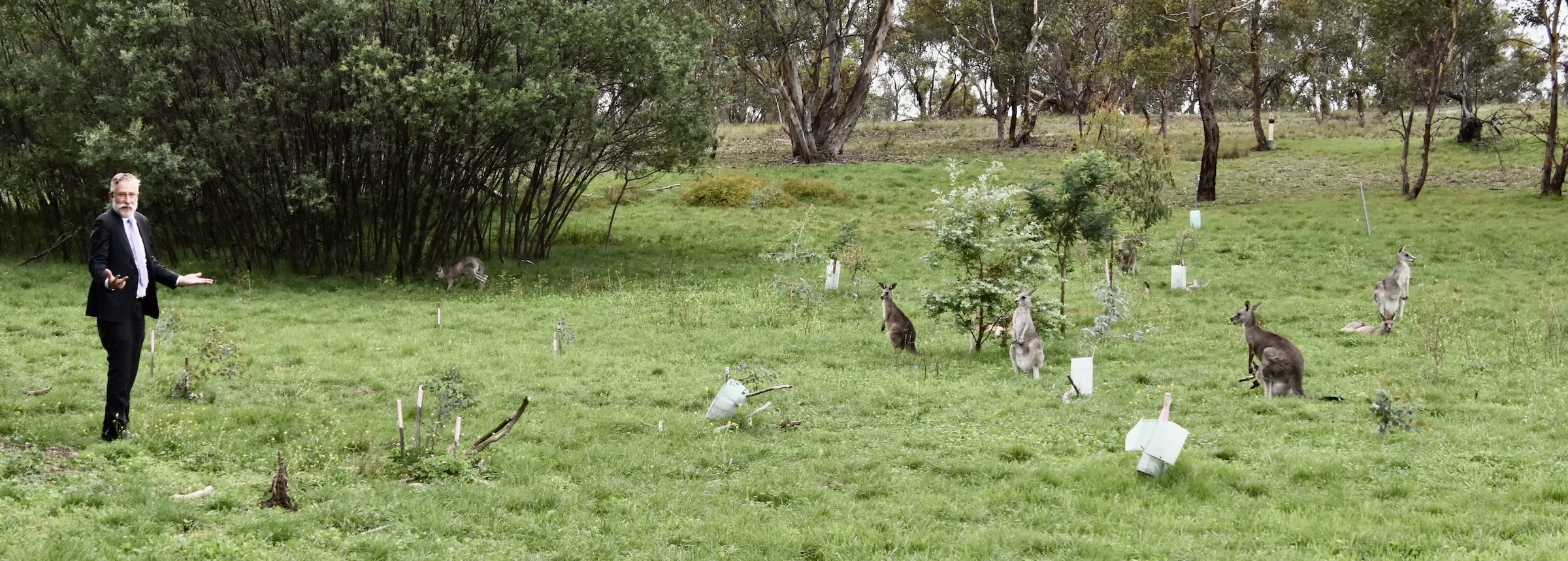
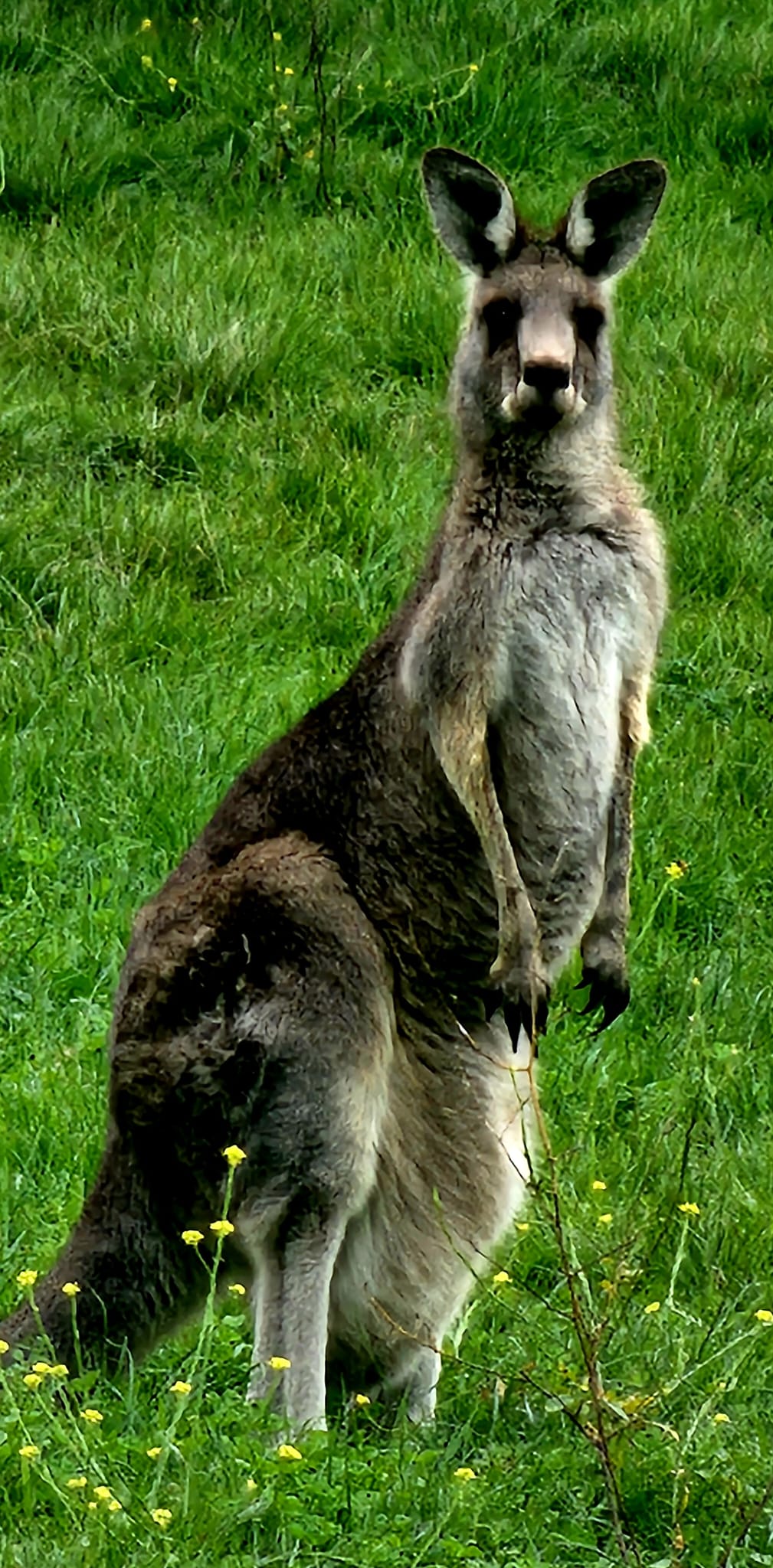
Yesterday we had seen the largest of the kangaroos the eastern red and today we are seeing the second largest.
The Australian War Memorial was opened in 1941 when the Australians were in a life and death struggle with the Japanese which at the time they were losing. When we get to Darwin we’ll learn more about Japanese attacks on Australia during WWII.
It serves a similar purpose to the Shrine of Remembrance we visited in Melbourne, but represents the entire country and not just one state. It’s also equally impressive.
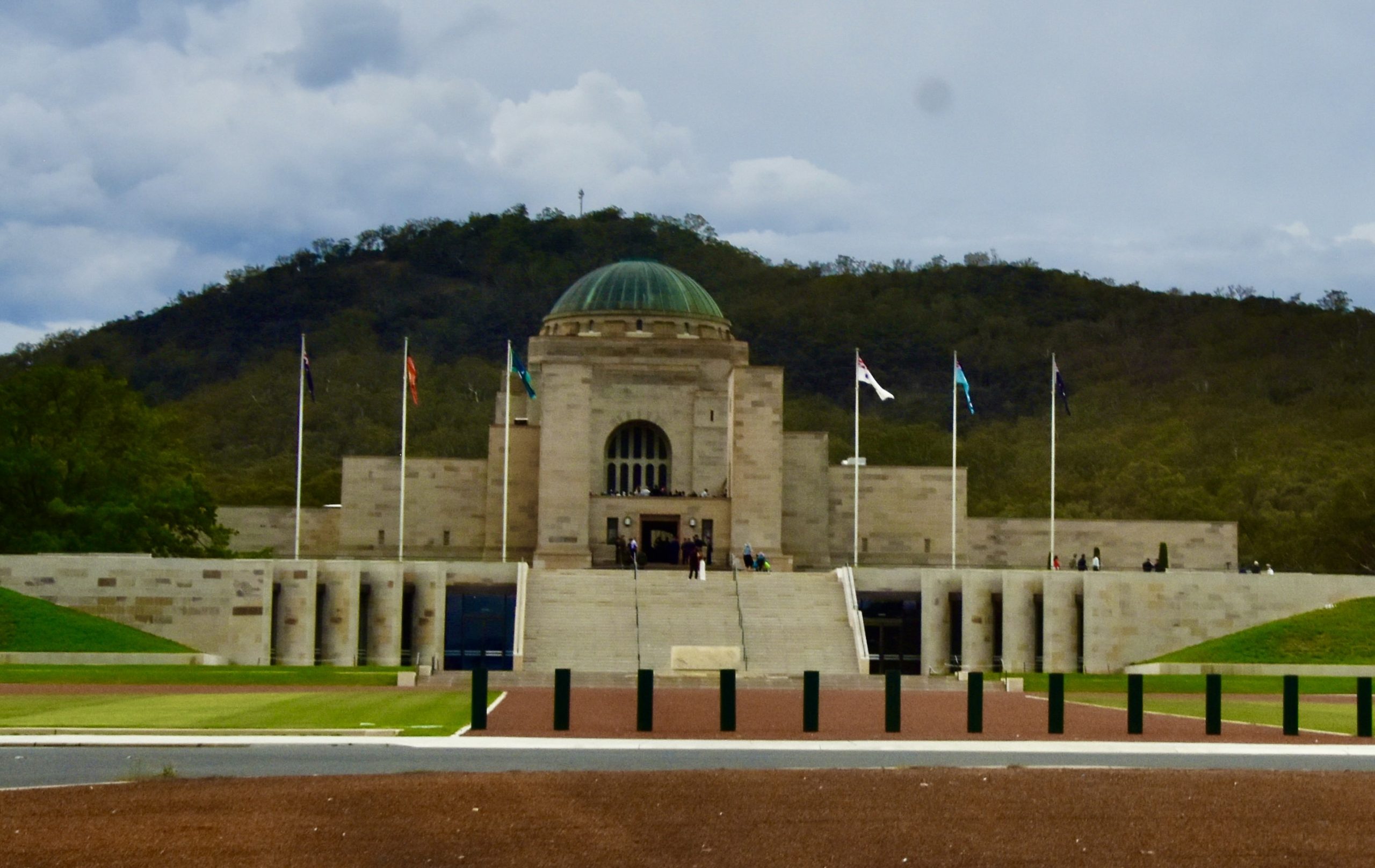
This is the view looking back to the Commonwealth Parliament building from the entrance to the War Memorial.
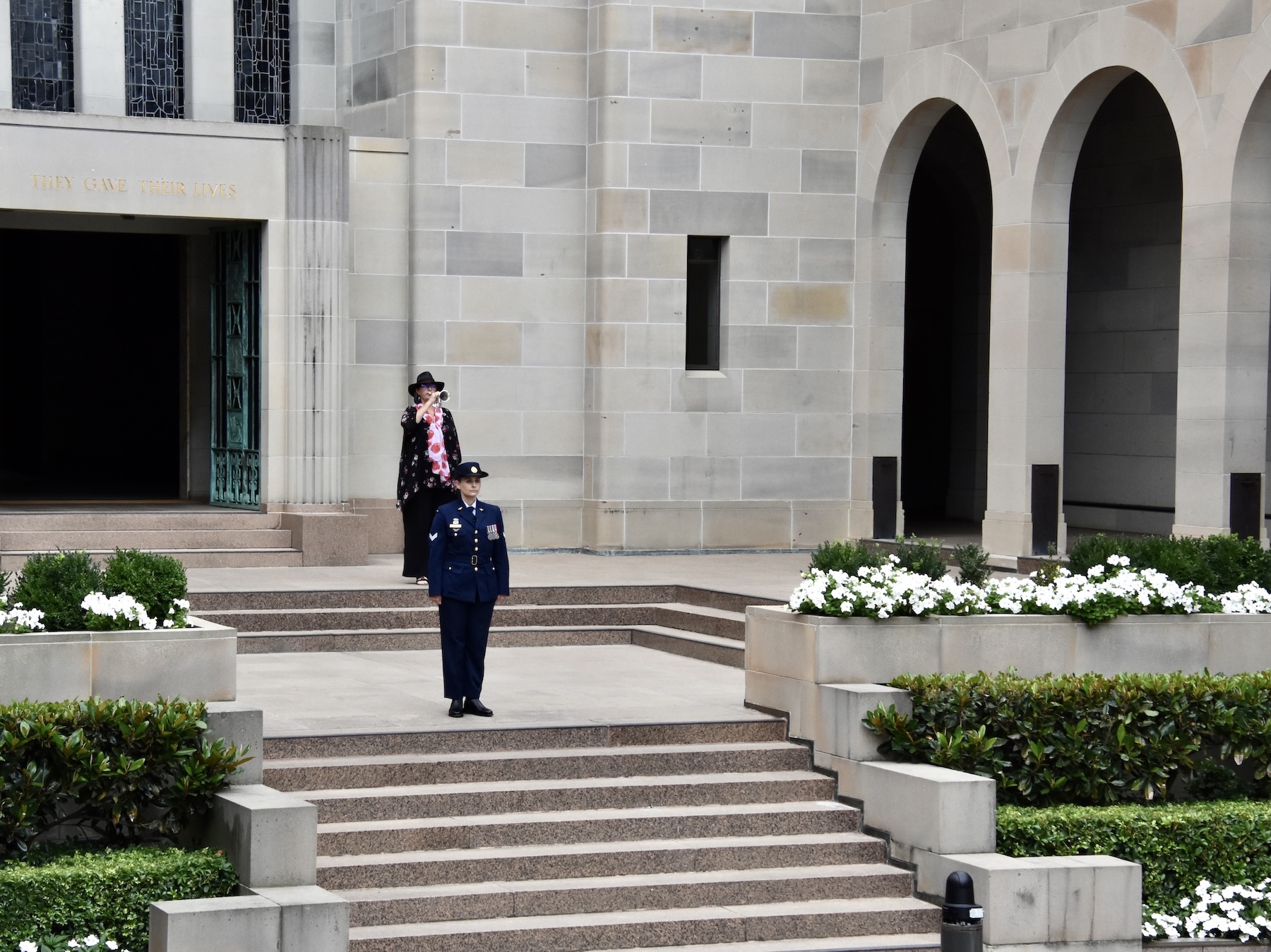
We had arrived at 4:30 where every day the Last Post ceremony is held. Alison and I have been to the one held every day at the Menin Gate in Ypres, Belgium and this one in Canberra was equally moving.
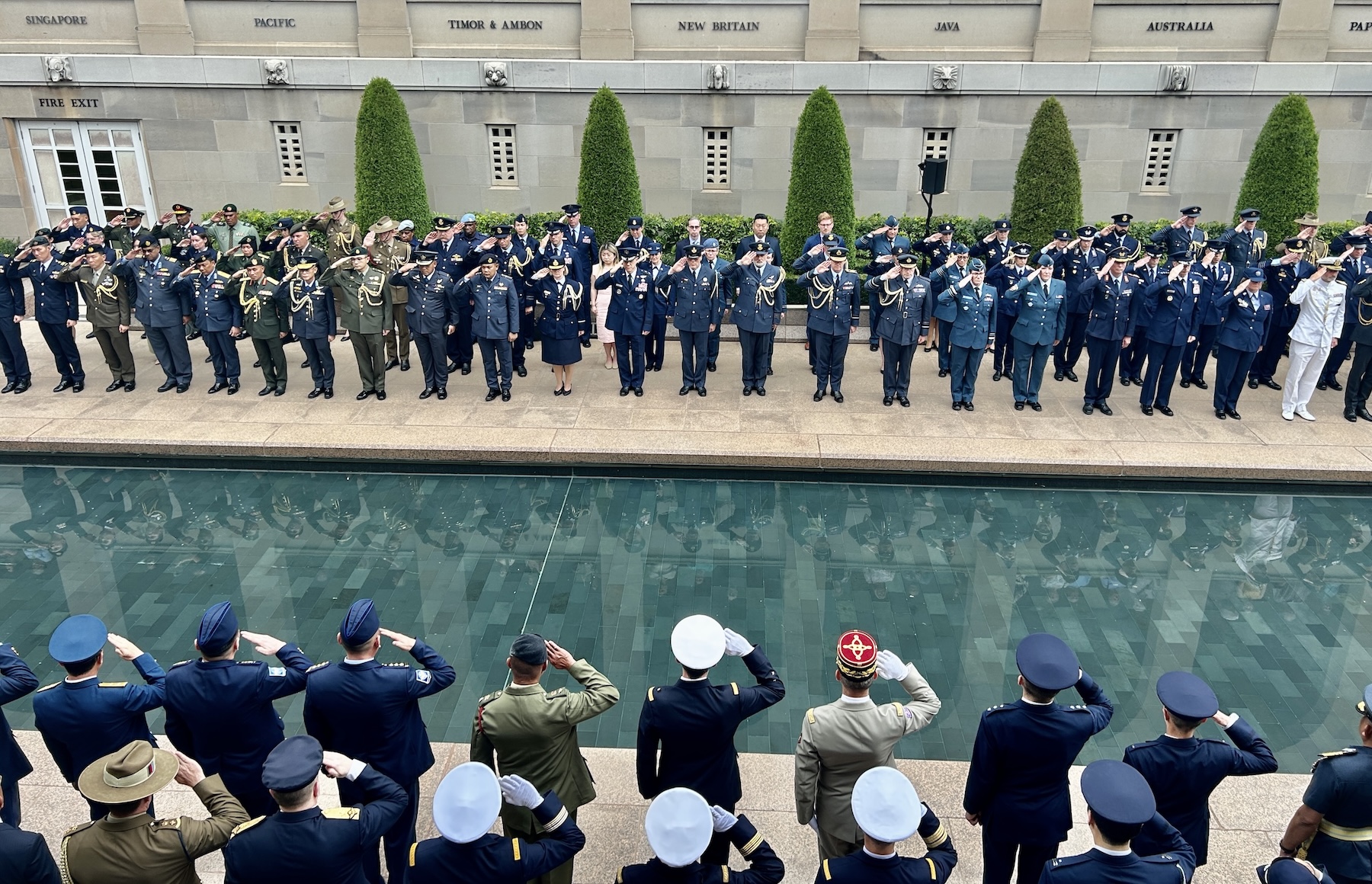
Today was a special occasion as the King and Queen of Denmark were visiting. We had spotted them briefly in the Parliament building and now we gathered in the upper viewing area inside the memorial where military personnel from at least thirty different countries were gathered around both sides if the reflecting pool. There were a number of speeches and presentations honouring veterans and their family descendants which really brought home just how much the sacrifice these men and women is still remembered in Australia.
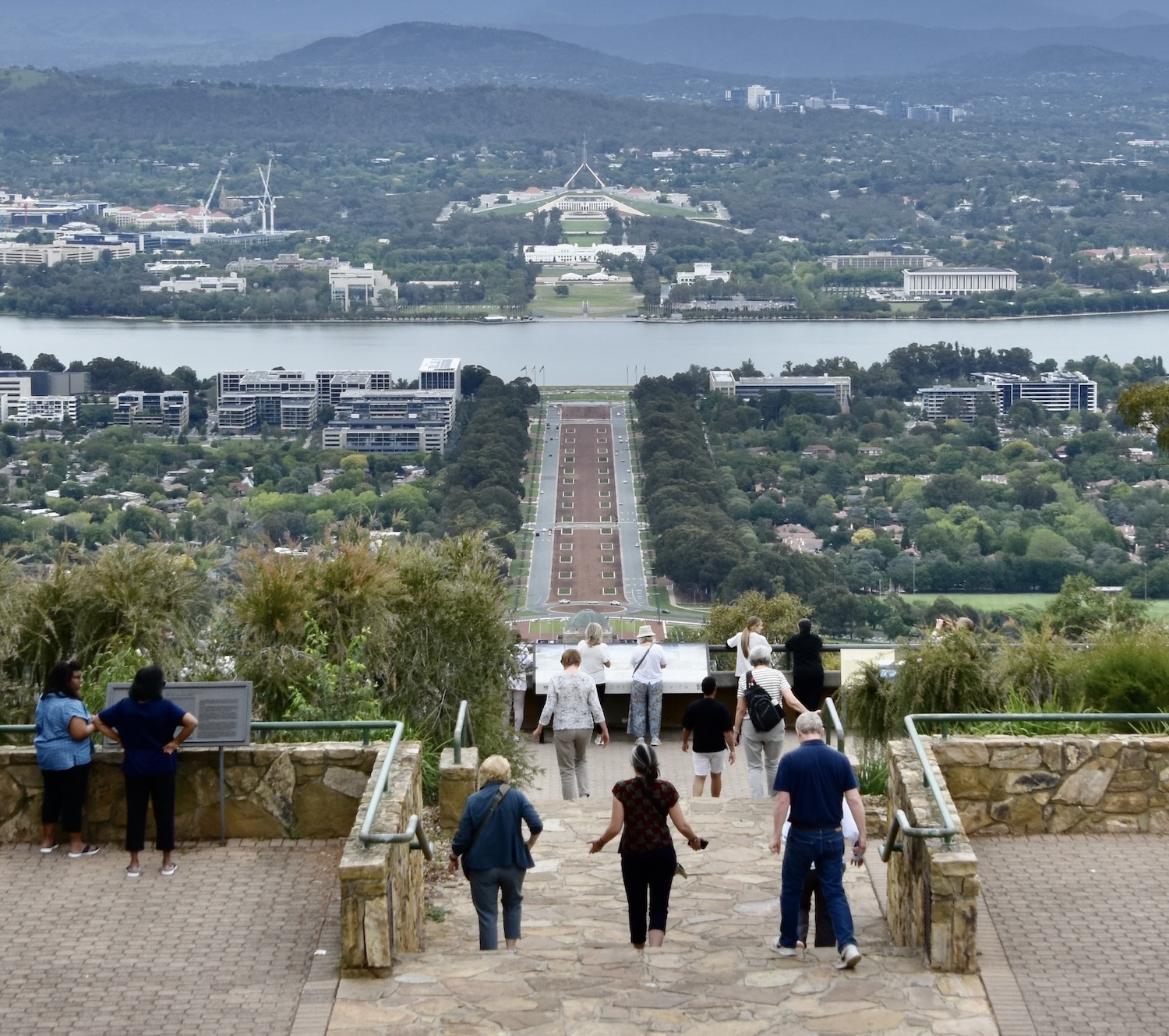
Our final stop in Canberra was at Mount Ainslie where there is the best viewpoint of all for appreciating the majestic layout of Canberra.
And here is the AA group enjoying that view.
In the next post we’ll fly to Cairns by way of Brisbane and begin our multi-day exploration of northern Queensland starting with our first Aboriginal experience at Mossman Gorge. Bye bye kangaroos, hello saltwater crocs.