
Miraflores – Lima’s District of Love

This is the first of many posts to come which will feature the great South American country of Peru which I will be touring with Adventures Abroad. It is the first AA tour out of over twenty in which I will be travelling solo. My wife Alison does not handle high elevations well and this tour involves some very substantial elevation in both Peru and later Bolivia. However, it is with her blessing that I am on this trip and I thank her for that. As with almost every destination I visit, I like to arrive at least one day early to get acclimatized and Peru is no exception. I arrived from Canada on an Air Canada flight to Bogota and then on to Lima with Avianca. That gave me time to stay in the Miraflores area and explore its famous malecon before joining the tour.
A few words about where to stay in Miraflores and why.
Like all major South American cities there some excellent neighbourhoods and some no go zones. Safety is a prime concern for any discerning traveller and in the case of Lima, that means staying in Miraflores. It is an upscale district that fronts on the Pacific Ocean and features an extensive promenade or more properly in Spanish speaking countries, a malecon, that is probably the most popular attraction in the city. It runs for many kilometres through a series of interconnected parks and gardens with glorious ocean vistas and one of the most unique shopping malls in the world. Almost all the major hotel chains are found here although only a few actually directly face the ocean. Most, like the Holiday Inn where our AA group will stay, are further inland around Kennedy Park, an area that is also very nice, but I did want to spend one night in an oceanfront hotel with easy access to the malecon.
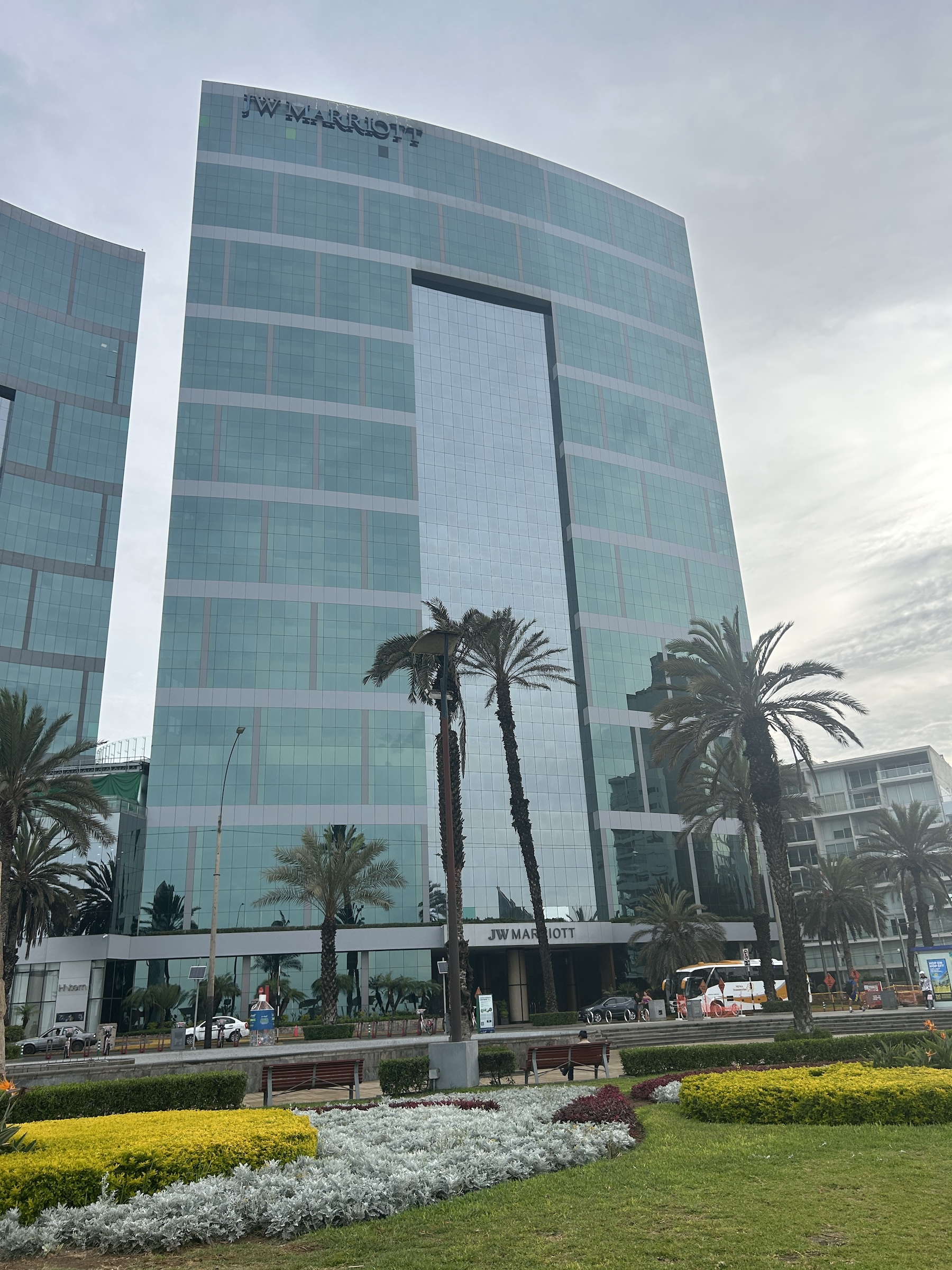
The JW Marriott fit the bill perfectly, being directly across the street from a park that was part of the malecon. Yes, it’s expensive, but for one night it was definitely worth it.
Now a little history about the Miraflores area. I’ll get into a more general history of Lima when I do the post on it after joining the Adventures Abroad group.
The first thing any first time visitor to Peru needs to get out of his/her head is that the country’s history is not all about the Incas. The fact is that the Incas were a very late developing society and that there were dozens of distinct cultural groups that preceded them by as much as 4000 years. The Lima culture were one of those groups, flourishing along the Pacific coast in the present day Lima area from about 100 to 650. Although not that much is known about them, they did leave one substantial archaeological site in the Miraflores district. Huaca Pucliana was a substantial clay and adobe pyramid which you can visit today.
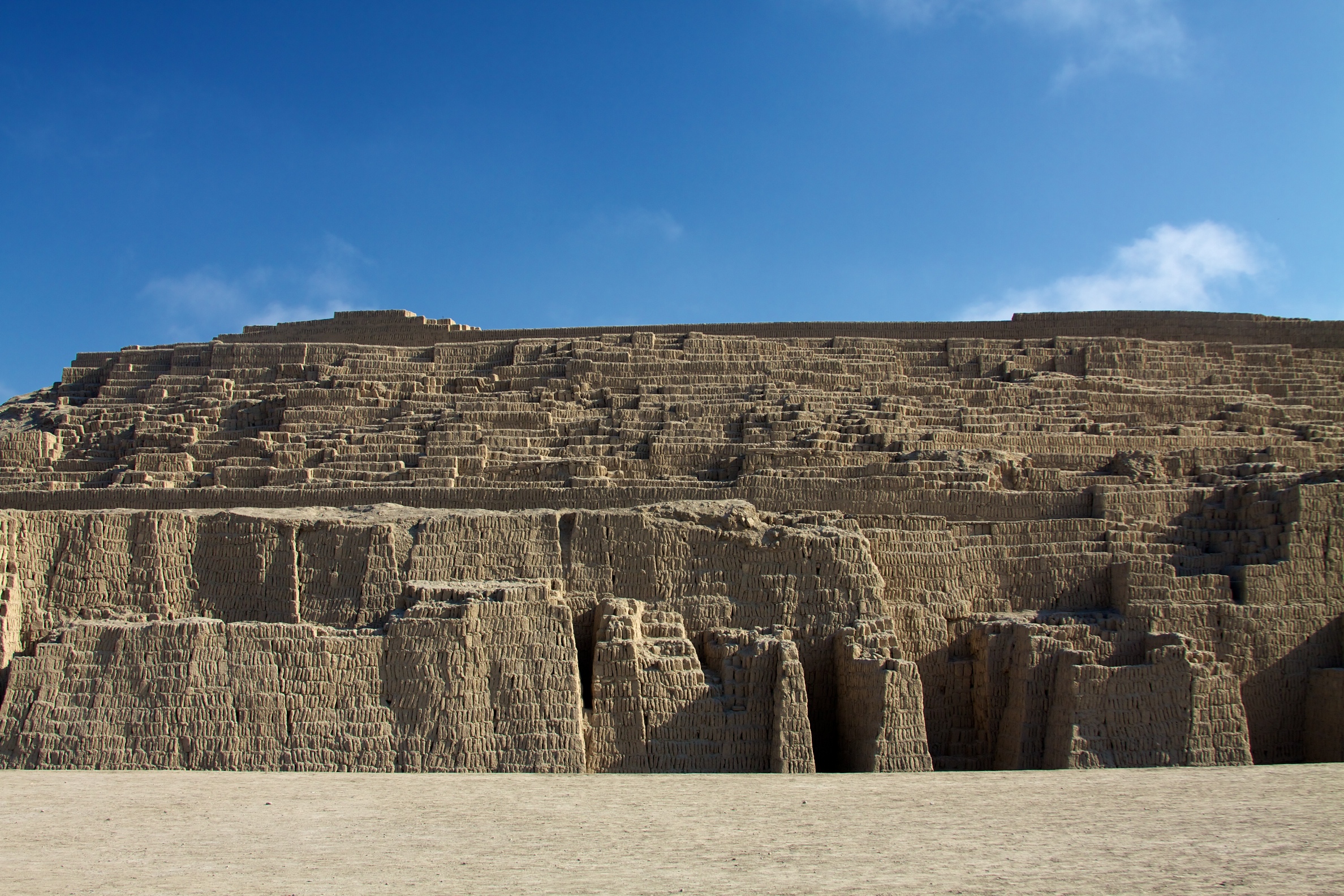
There is a small museum that displays artifacts unearthed during a 1981 archaeological dig. I had planned to visit, but got so caught up in exploring the malecon and Kennedy Park that I ran out of time.
The Lima culture was long gone by the time the Incas arrived in 1460 and barely had time to settle in before Francisco Pizarro arrived in 1635 and founded the city he named Lima. The city gradually expanded from its central core along the Rimac River and being situated on high ground overlooking the Pacific Ocean the area that became known as Miraflores attracted wealthy families from almost day one. In 1820 a conference was held in Miraflores between delegates of the independence movement led by Jose de San Martin and the Spanish Viceroy which did not succeed, but in the following year San Martin did lead Peru to independence.
With no Spanish to fight against anymore, the newly independent Latin American countries commenced a series of wars against each that lasted on and off well into the 20th century. In the middle of these, Miraflores became an official district of Lima in 1847 and began its reputation as the most upscale area in the city. That didn’t help it much when on January 15, 1881 Chilean forces attacked the Peruvian army in what became known as the Battle of Miraflores. Losses on both sides were enormous with over 5,00 casualties, but the majority were Peruvian and it was the worst defeat in the country’s history, leading to the occupation of Lima for the next four years.
Miraflores last made the news in a negative sense with the July 16, 1992 terrorist attack known as the Miraflores bombing that killed 25 and injured 155 more when two trucks packed with explosives were detonated on upscale Avenida Larco by the Shining Path terrorist group. The only thing good that came out of it was that it enraged the public so much that they turned a blind eye to the tactics needed to finally put down this insurgent group and bring peace to Peru for the first time in living memory.
Since the early 20th century the cliffs of Miraflores were a popular spot for walks, strolls and trysts. In the 1990’s the city got serious about making it a world class seaside destination and thus the Malecon of Miraflores was born. Since then its reputation has only grown and today it is a must visit attraction in Lima.
OK, with that short history, let’s find out if Miraflores lives up to the hype.
I had arrived at the JW Marriott around noon and after checking in I headed across the street to the Larcomar mall. Now if this was a North American mall you would probably be looking at a huge multi-story parking garage, but instead all I see is a park with lots of flowers and trees. Where’s the mall I wondered?
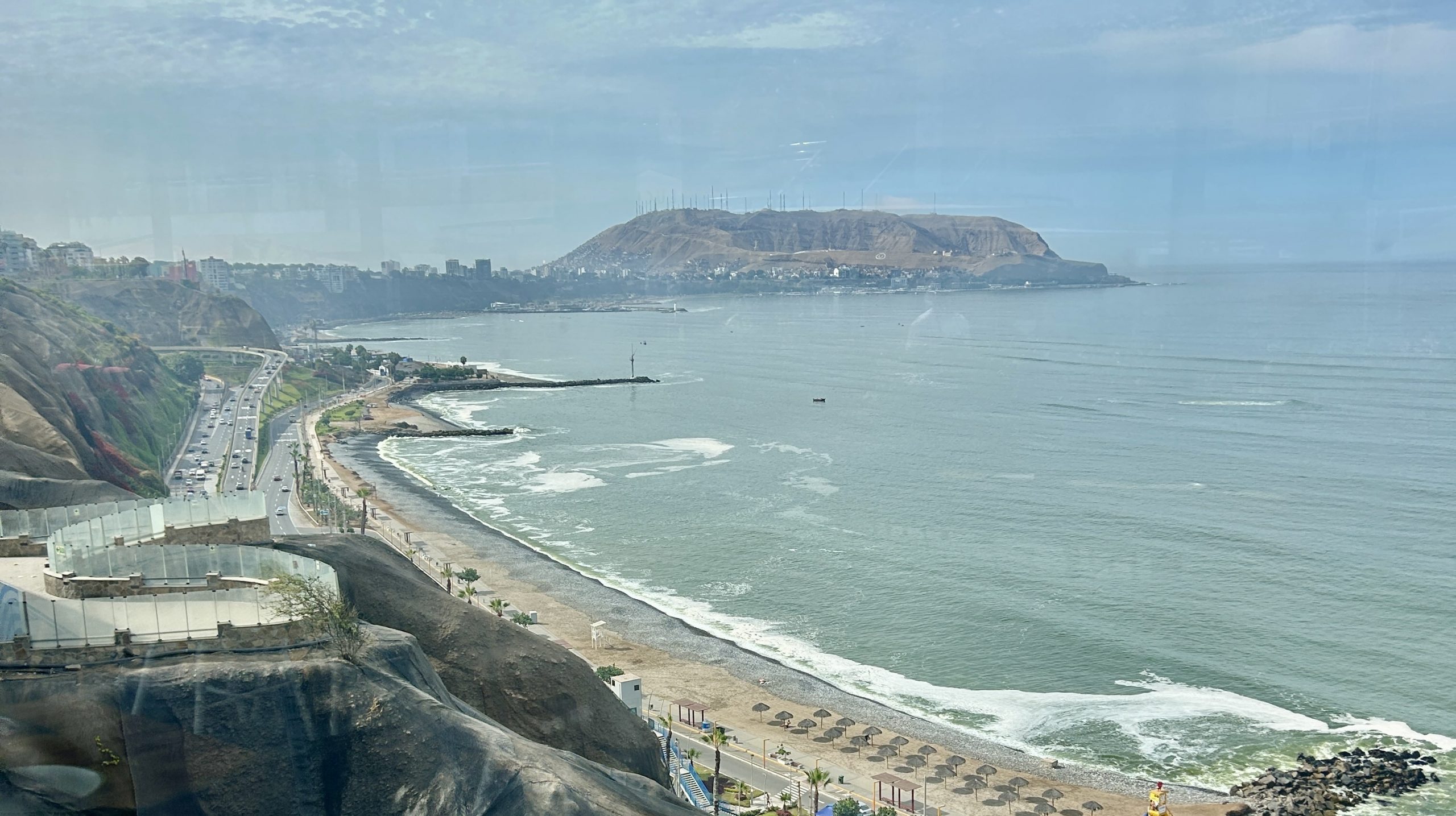
Turns out it is underneath the park, built entirely into the side of the cliffs that rise steeply from the oceanfront in the Miraflores district. Instead of being an eyesore, it is actually for someone like me who ordinarily avoids malls at all costs, a not bad place to explore. This is the view looking down to the first of four stories.
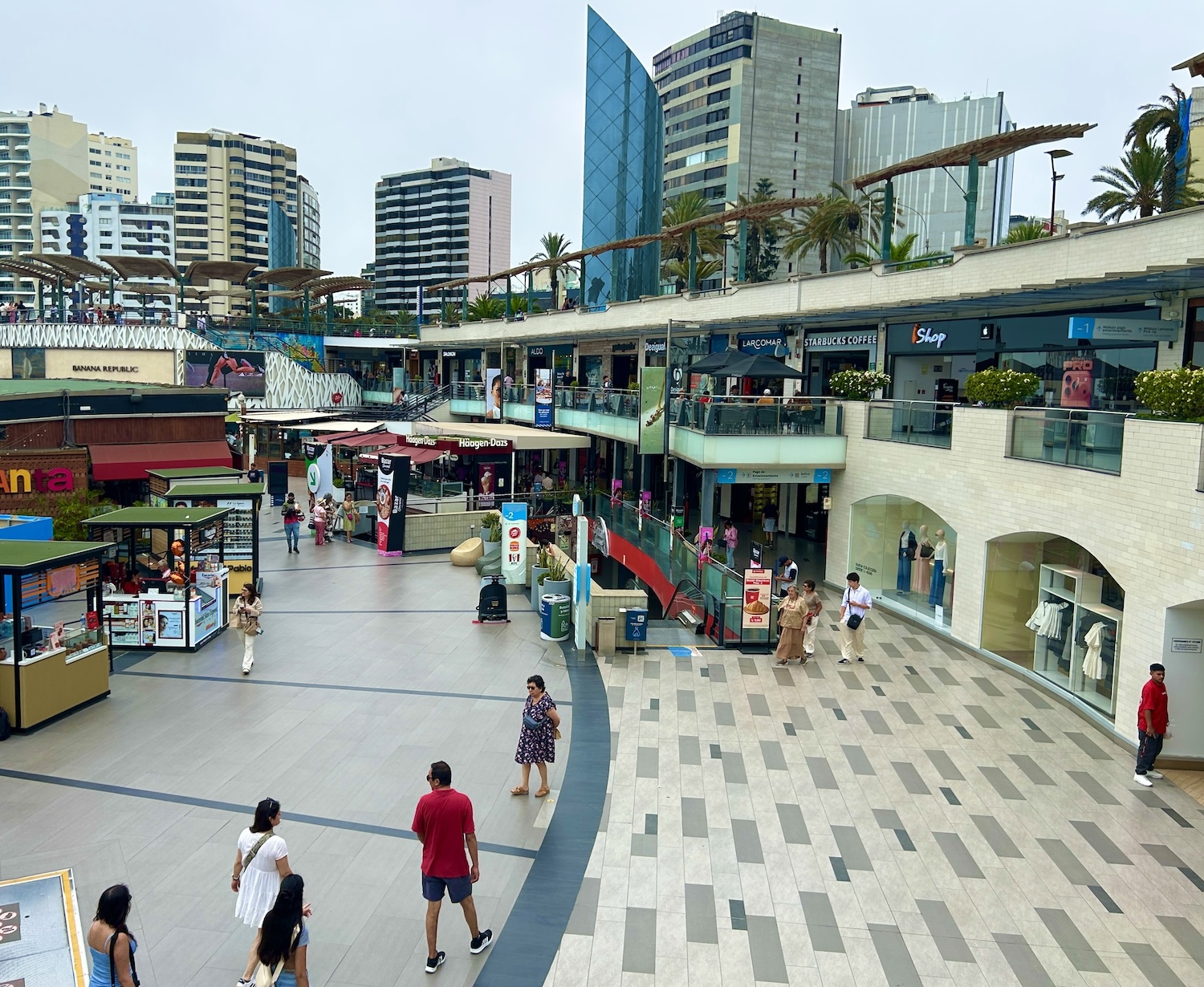
Larcomar has many of the typical mall chain stores plus a number of the ubiquitous and crappy restaurant franchises like Chili’s, KFC etc., but it also has some genuine Peruvian outlets and restaurants as well. In particular, Popular is a Peruvian owned restaurant that has an extensive menu and a fabulous view. This is looking south from my window seat.
I am here for two reasons besides the view – to have my first Peruvian beer and to have the first of what I expect to be many ceviches. Most people would agree that Cusqueña Dorado is the national beer of Peru. I am not a beer snob and enjoy a nice lager, especially if it is served ice cold and mine was.
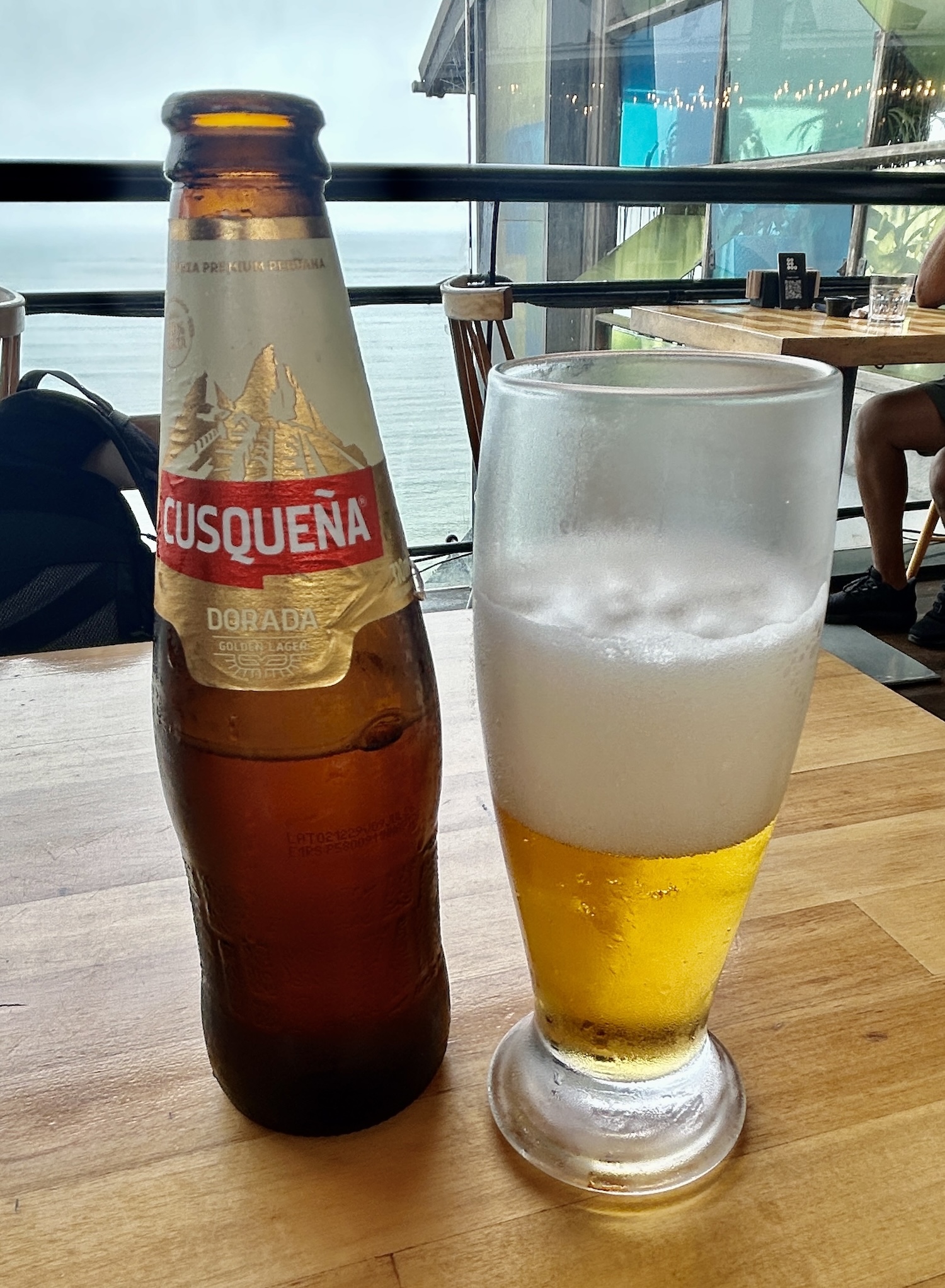
Although I tried a few other Peruvian beers over the next few weeks none, other than some craft blondes, exceeded Cusqueña Dorado so it became my beer of choice in Peru and I recommend starting with it on your Peruvian adventure.
Ok, now to the ceviche. Although technically lomo saltado is considered the national dish of Peru, most people outside of the country would consider it to be ceviche. Lomo saltado is good, but it has not attracted the international following that ceviche has. So what exactly is ceviche? This is the definition AI comes up with and for once, it’s pretty accurate.
Ceviche is a popular Latin American dish, originating in Peru, consisting of fresh raw fish or shellfish “cooked” (denatured) in citrus juice, typically lime or bitter orange, mixed with onions, chili peppers, and salt. It is served cold, often as an appetizer, with accompaniments like sweet potato, corn, or plantain chips.
So it’s not sushi or sashimi as the seafood is not raw, but it’s pretty damn close which is why some people won’t try it. That’s their loss. I fell in love with ceviche the first time I had it maybe 20 or 30 years ago and seek it out whenever I am in South America. I can’t wait to sample it in its country of origin.
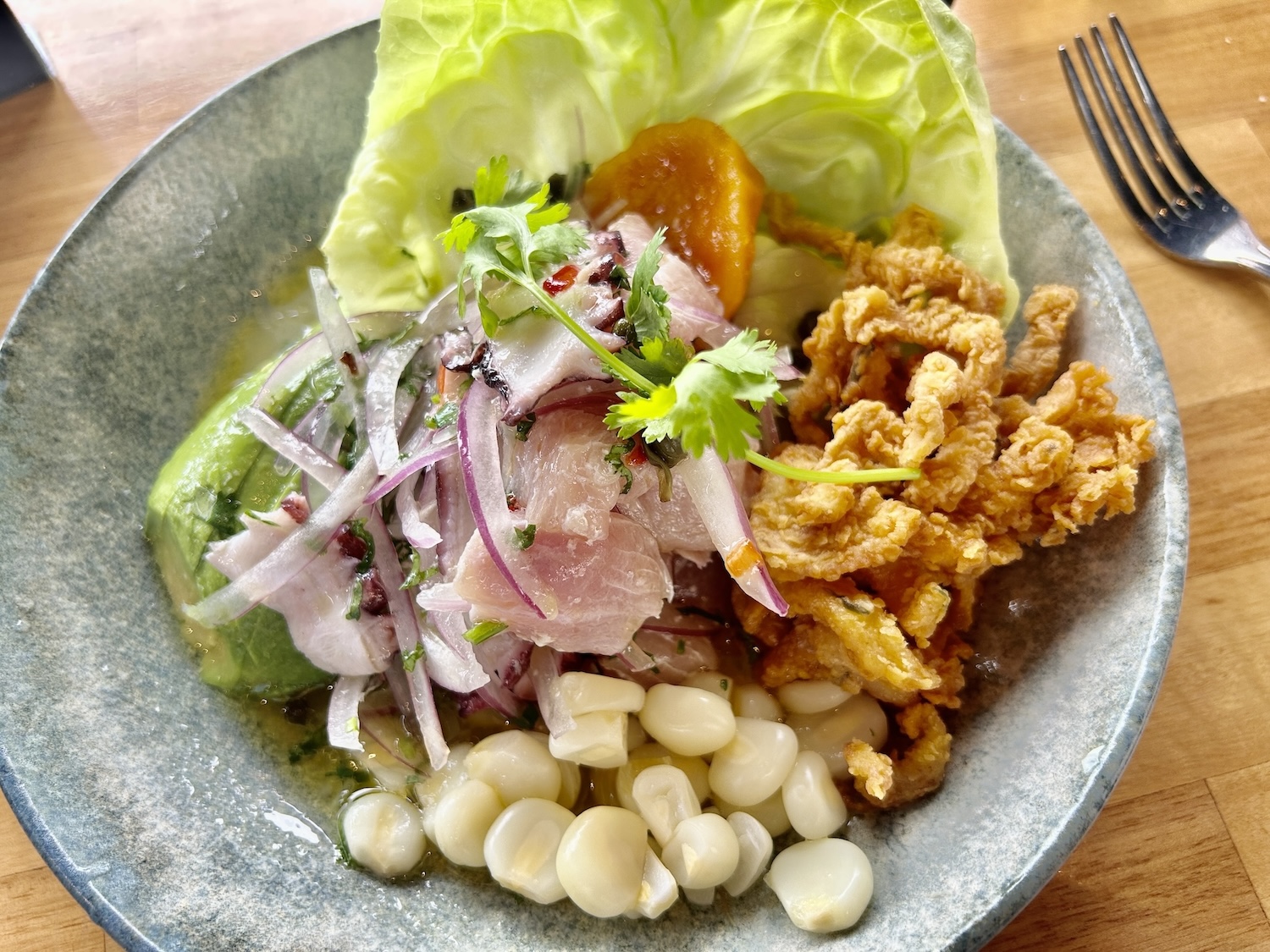
Popular offers six different ceviches and I opt for their special version which features both traditional denatured fish and octopus, some fried fish and half an avocado as well. I am not disappointed. Note the huge kernels of white corn that come with almost all Peruvian dishes.
Miraflores Malecon
Now that I am sated, it’s time to go out and walk the Malecon of Miraflores. There is a map near the entrance to the Larcomar which helps me plan out my route. Note that everything in green is parkland.
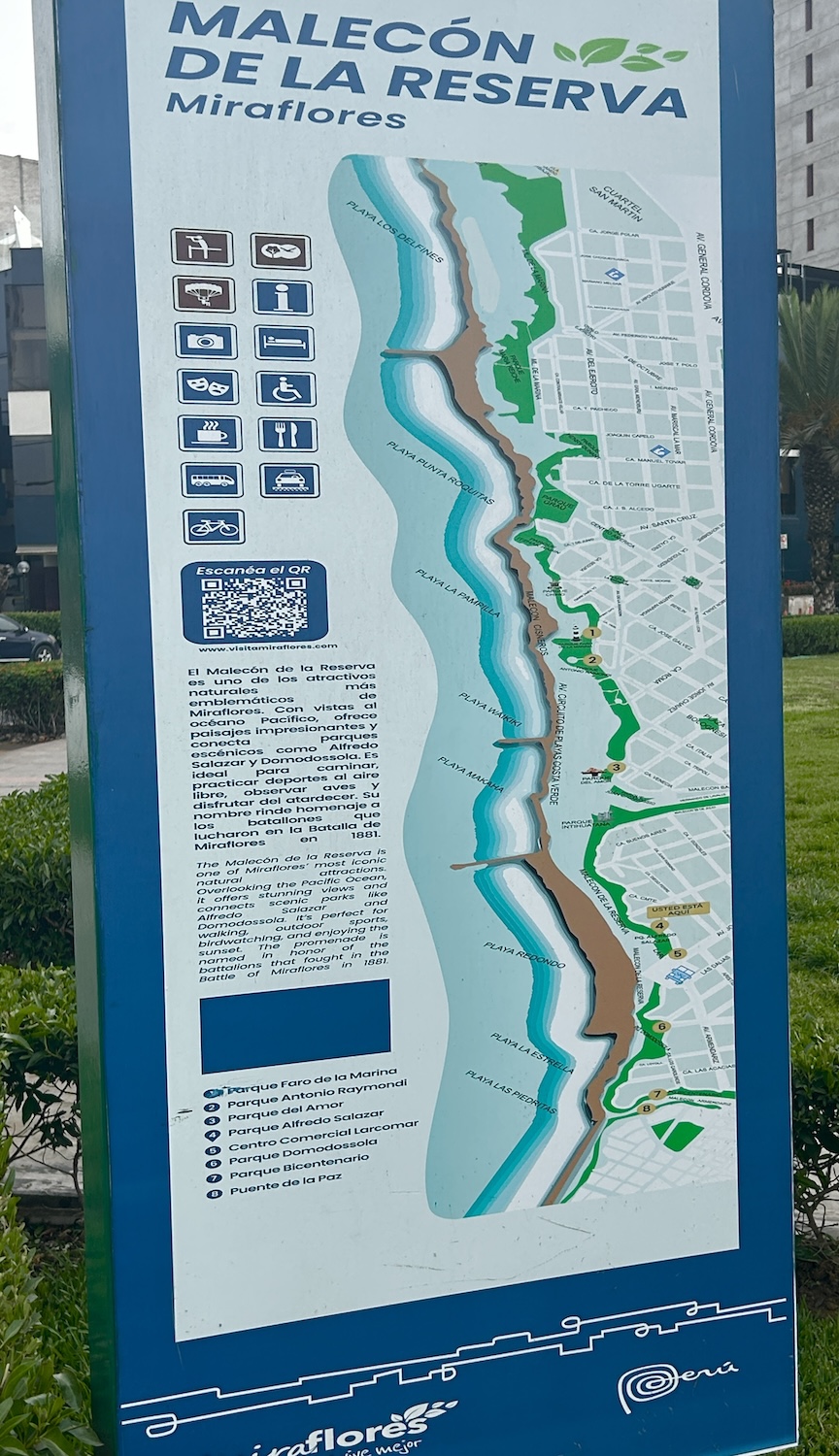
#5 on the map is my starting point and I will walk north as far as the lighthouse which is marked as #1 on the map and then return by taking a detour into the heart of Miraflores and visiting the cats at Kennedy Park which is not shown on the map. It’s an absolutely gorgeous afternoon in what is the heart of the Peruvian summer and I only wish Alison was here to enjoy it with me.
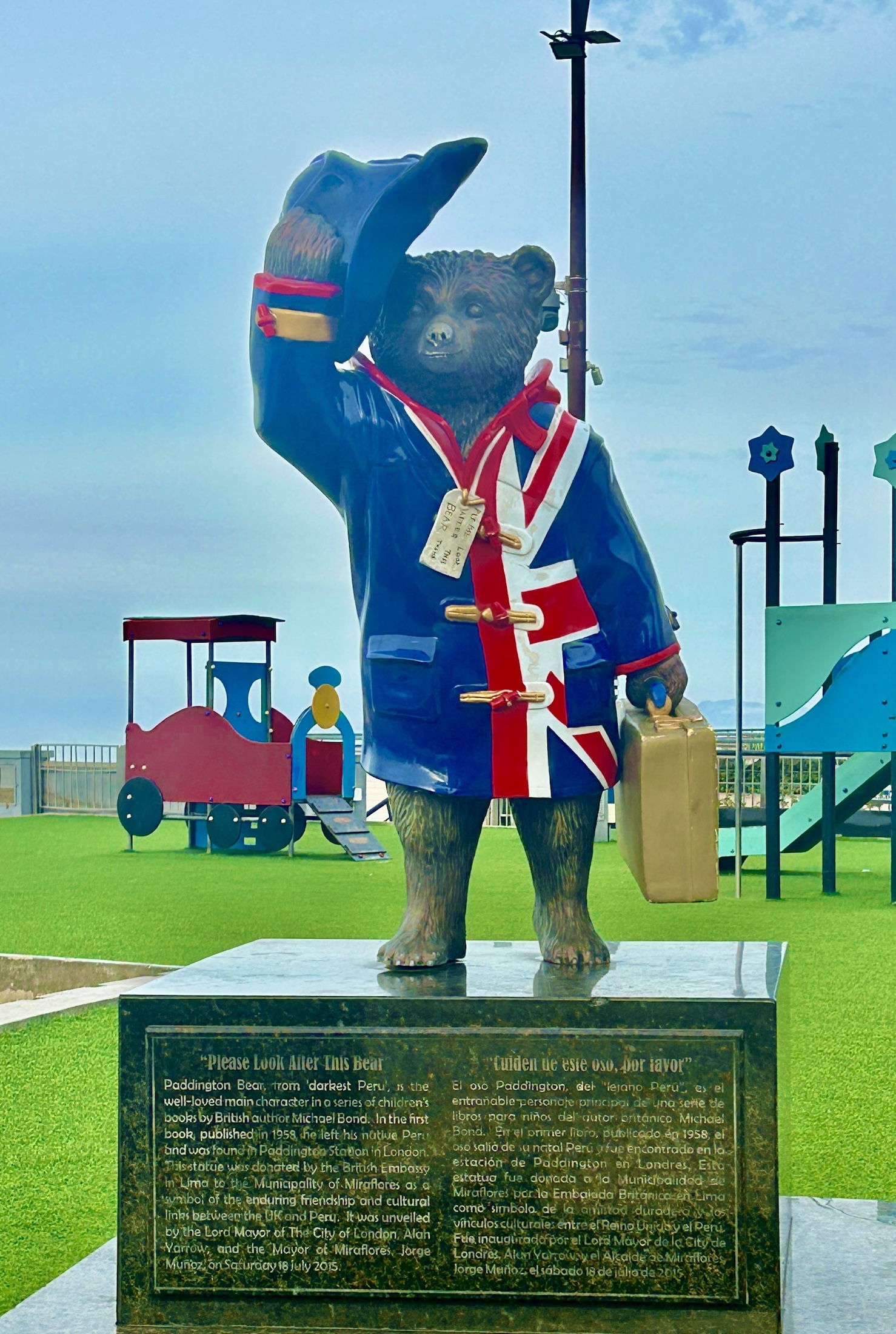
The first person I meet is Paddington Bear who is a spectacled bear hailing from Peru, although most people think he’s English. His suitcase is packed and he’s off to Merry Old England.
In my travels around the world I divide countries into two categories – dog countries and cat countries. Peru is definitely the most dog oriented country I have ever visited. The ratio of dogs to cats has to be at 100 to 1. There are dog walkers everywhere on the malecon and the variety of species is amazing. Also amazing is that all the dogs get along with almost no barking and lots of chasing, play fighting and zooming. The dog’s sense of joy and exhilaration is catching and it pervades the entire atmosphere of the malecon. A plus is that the walkers pick up after their dogs and there’s no need to watch where you are stepping.
Almost every second person seems to be a civic worker either sweeping, raking or gardening, keeping the malecon spotless. I mistakenly come to the opinion that this will be the standard in Peru when in fact it’s the very opposite. The cleanliness is one of Miraflores main assets that sets it aside from many of Lima’s other districts.
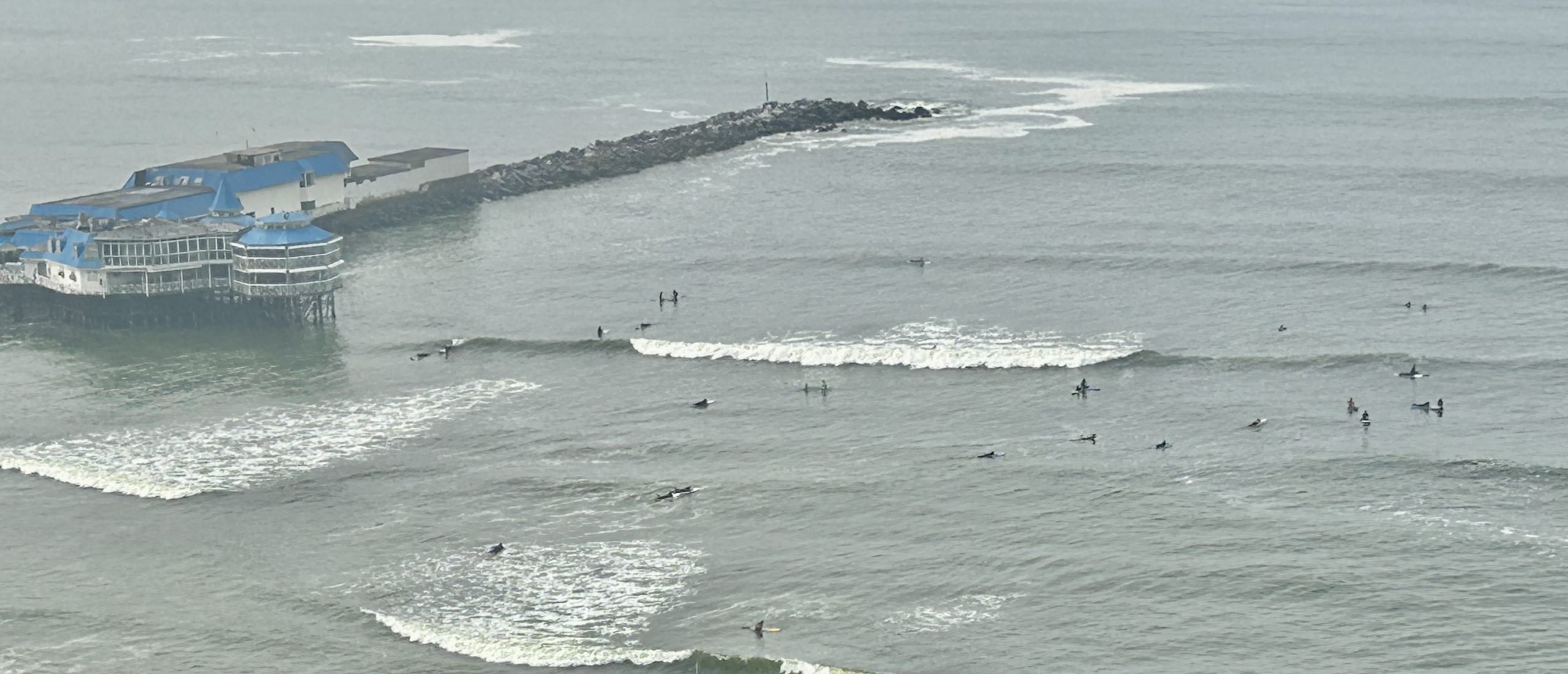
Speaking of opposites, the Humboldt current which sweeps northward along the South American coast bringing frigid waters from the Antarctic Ocean is the opposite of the Gulf Stream bringing warm water north from the Caribbean Sea all the way to Europe. Even at the height of summer the water off Lima’s beaches is too cold to swim in for all but the bravest. But that doesn’t stop the hundreds of surfers who don wet suits to enjoy the steady waves that break beneath the cliffs of Miraflores.
The malecon has a great number of statues and for me this is always a good way to learn about local and national heroes that I wouldn’t necessarily be familiar with but for these monuments. Let’s check out a few.
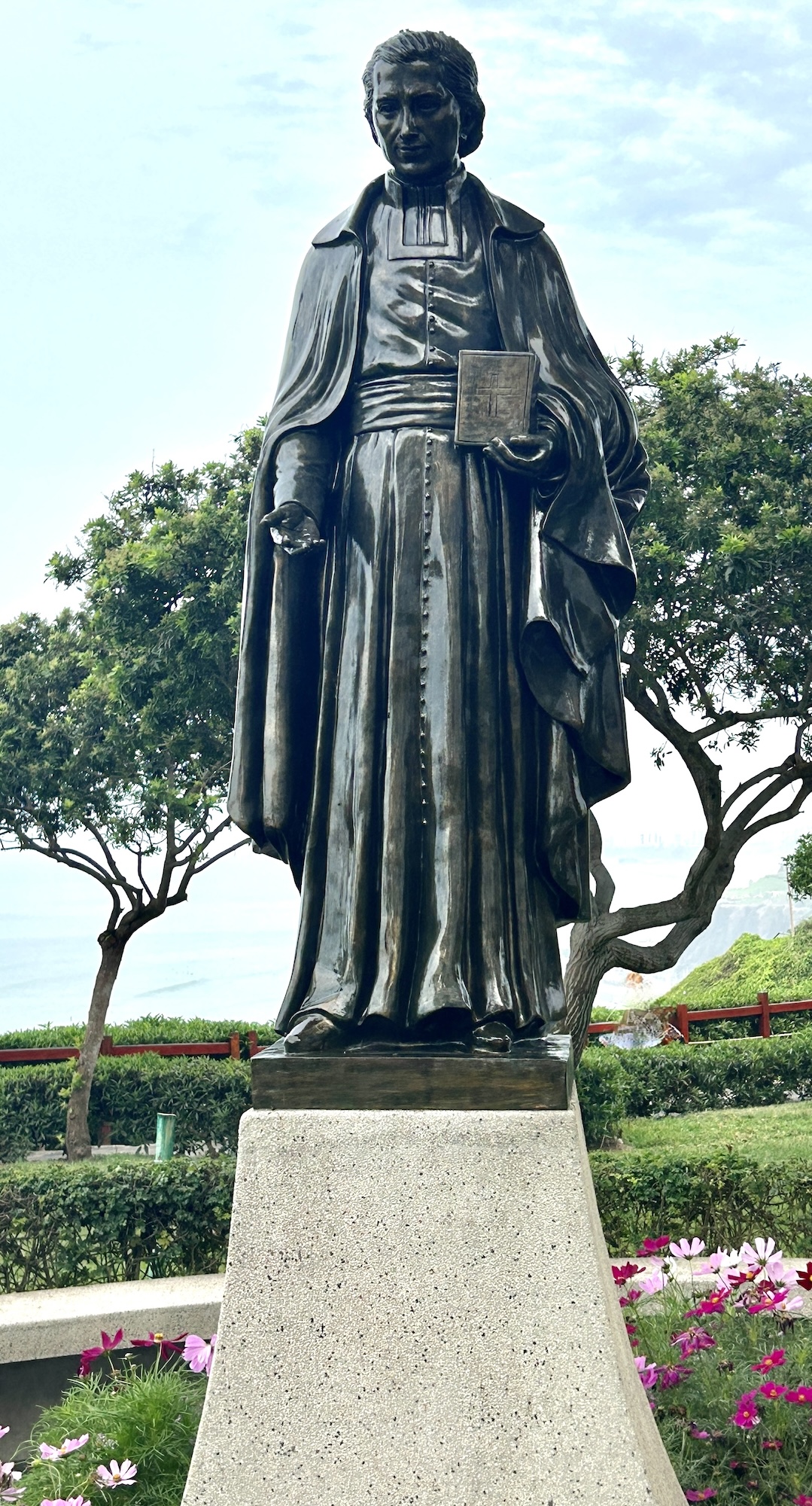
This is San Marcelino Champagnat who actually never set foot in Peru, but did found the Marist brothers who have played a significant role in the education of poor youth.
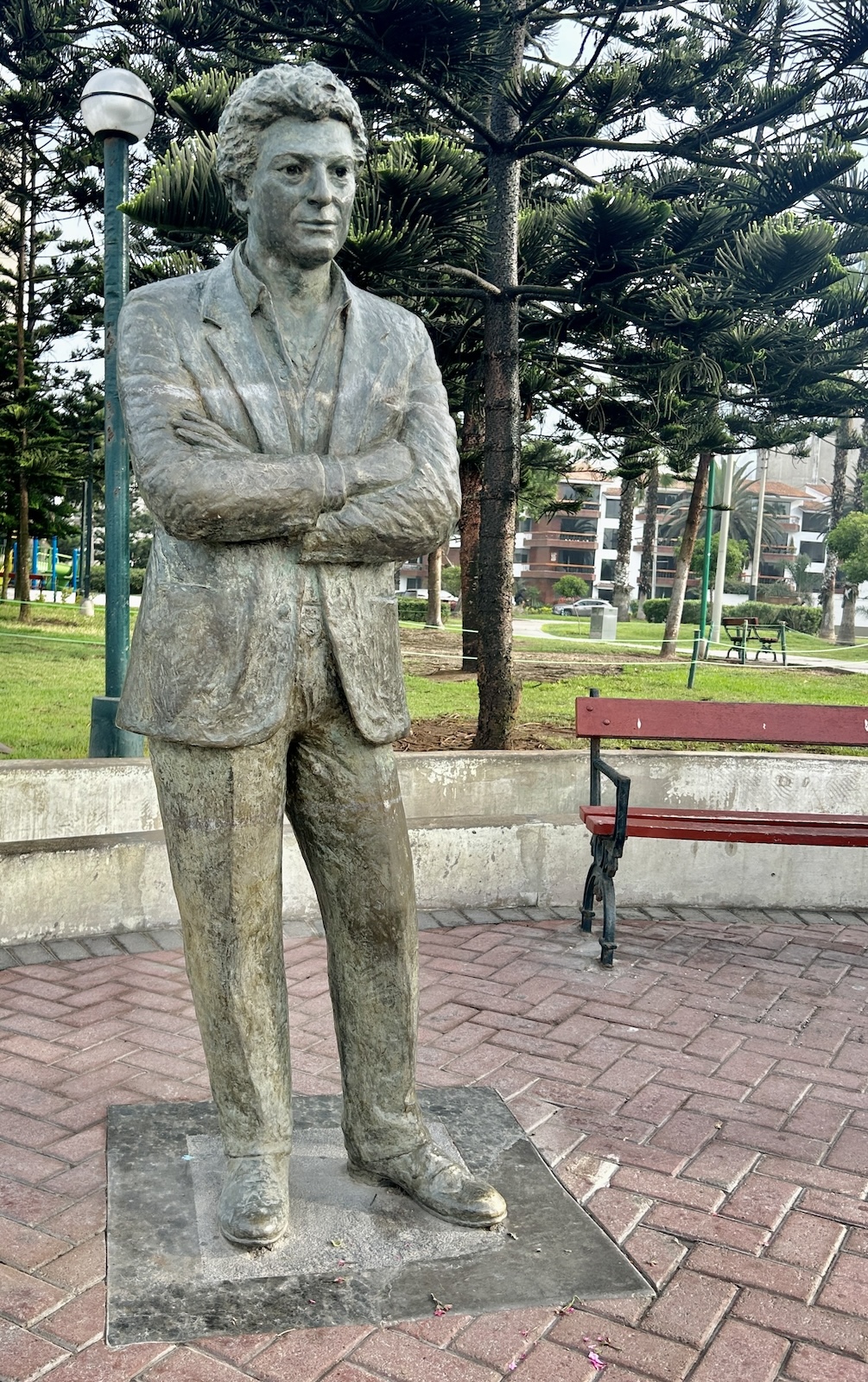
This cool looking dude is Antonio Cisneros, one of Peru’s most famous poets and a noted wit. Here’s a typical set of his lines:
Sitting in your wooden chair,
Lord Priest,
you tell me that when I die
I shall see God.
I’d like to exchange my heaven
for your wooden chair!
This next character definitely would not approve of Cisneros poetry.
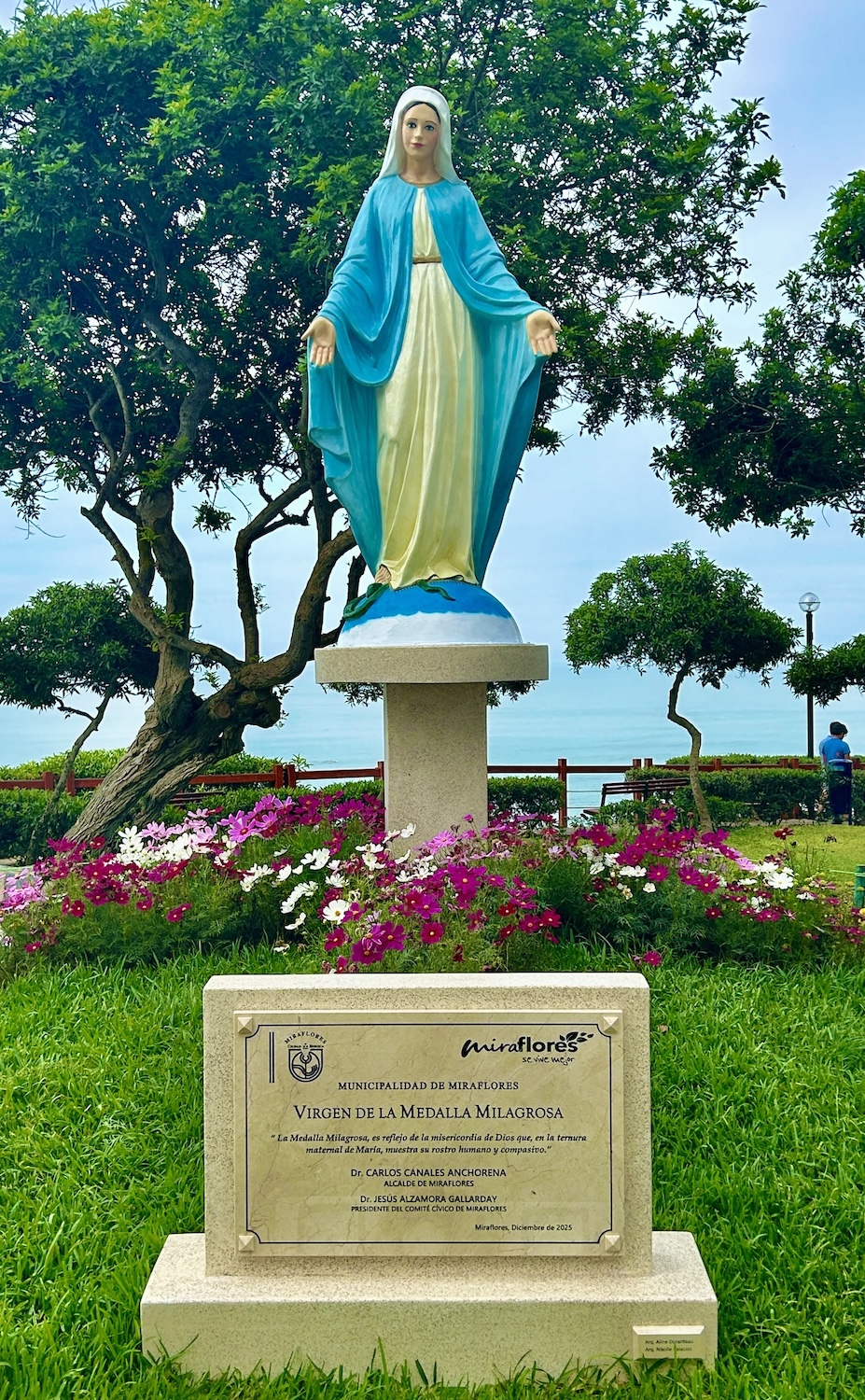
This is the Miraculous Virgin who appeared to a nun in France on several occasions in 1830 within a rotating frame revealing various aspects of Christianity. The nun’s description of what she saw led to the creation of a medal that became a talisman to ward off evil. Over 1,000,000 of these were minted and many are in existence today.
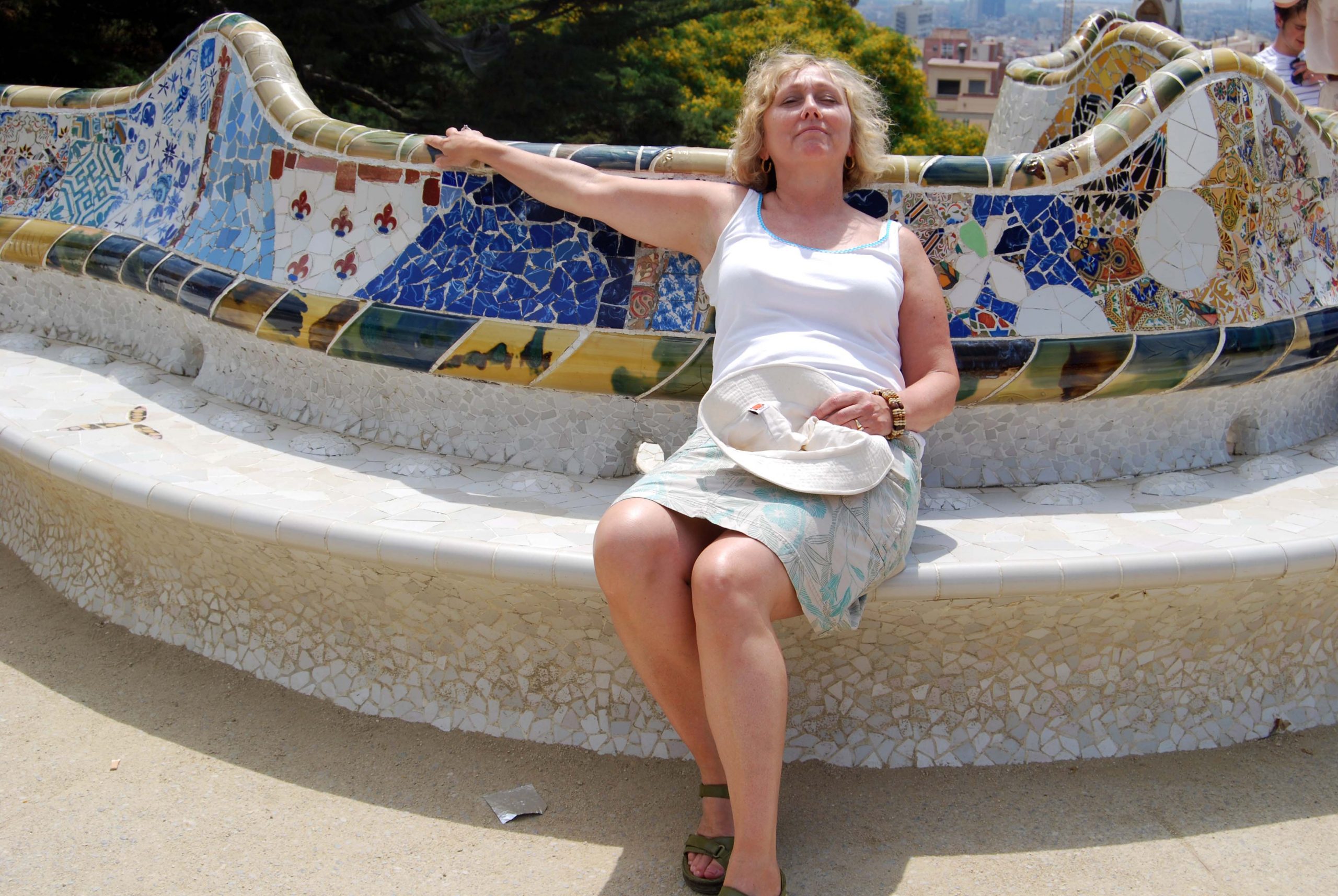
We now come to the centrepiece of the Miraflores malecon – Love Park. Inaugurated on Valentine’s Day in 1993 the idea for the park was inspired by Antoni Gaudi’s Park Güell in Barcelona which Alison and I visited some years ago. Gaudi used a technique known as trencadís that incorporates broken tiles, shards etc. to create a mosiac like effect.
Here is a photo of Alison sitting on the Gaudi version.
And this is the Love Park homage,
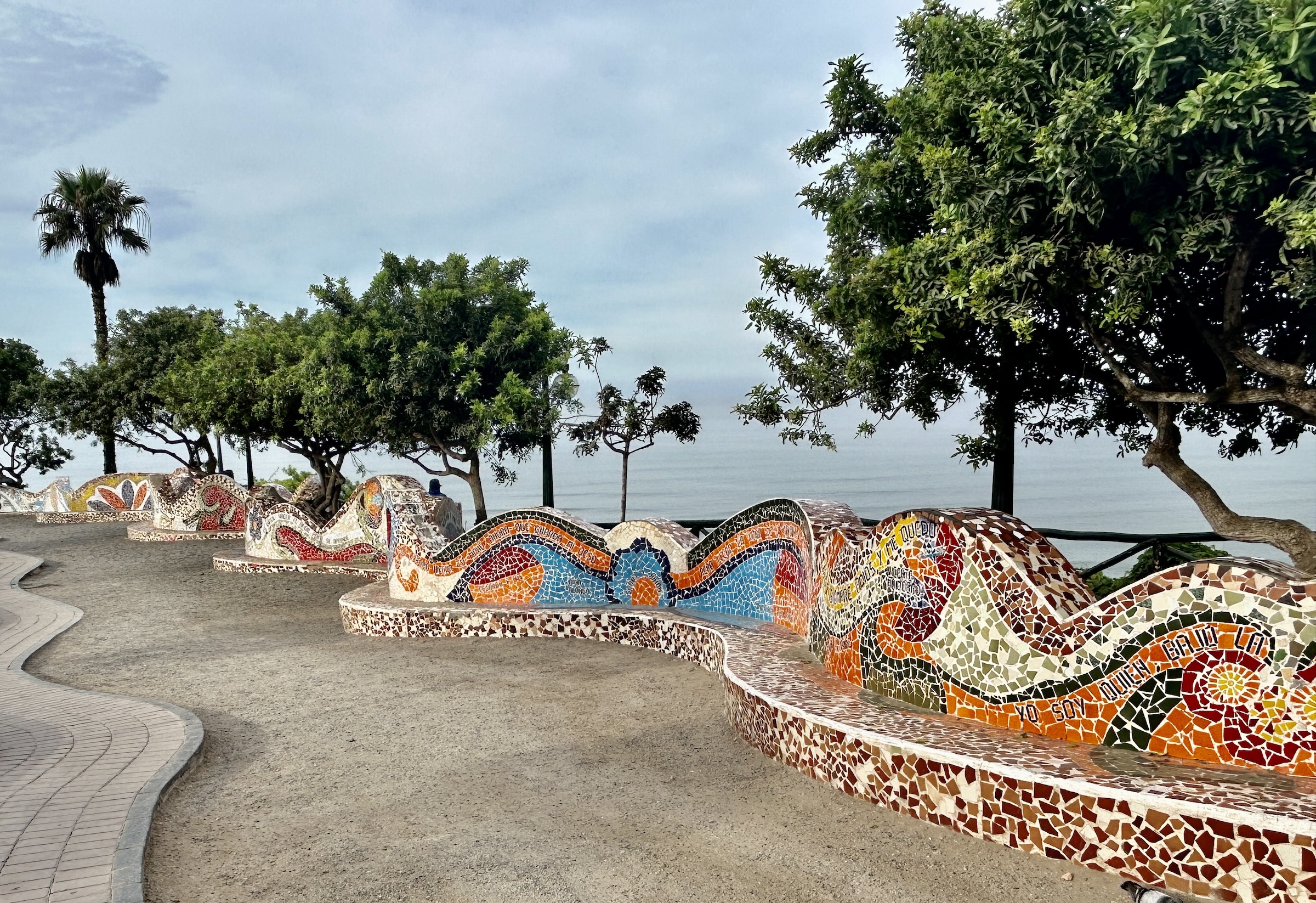
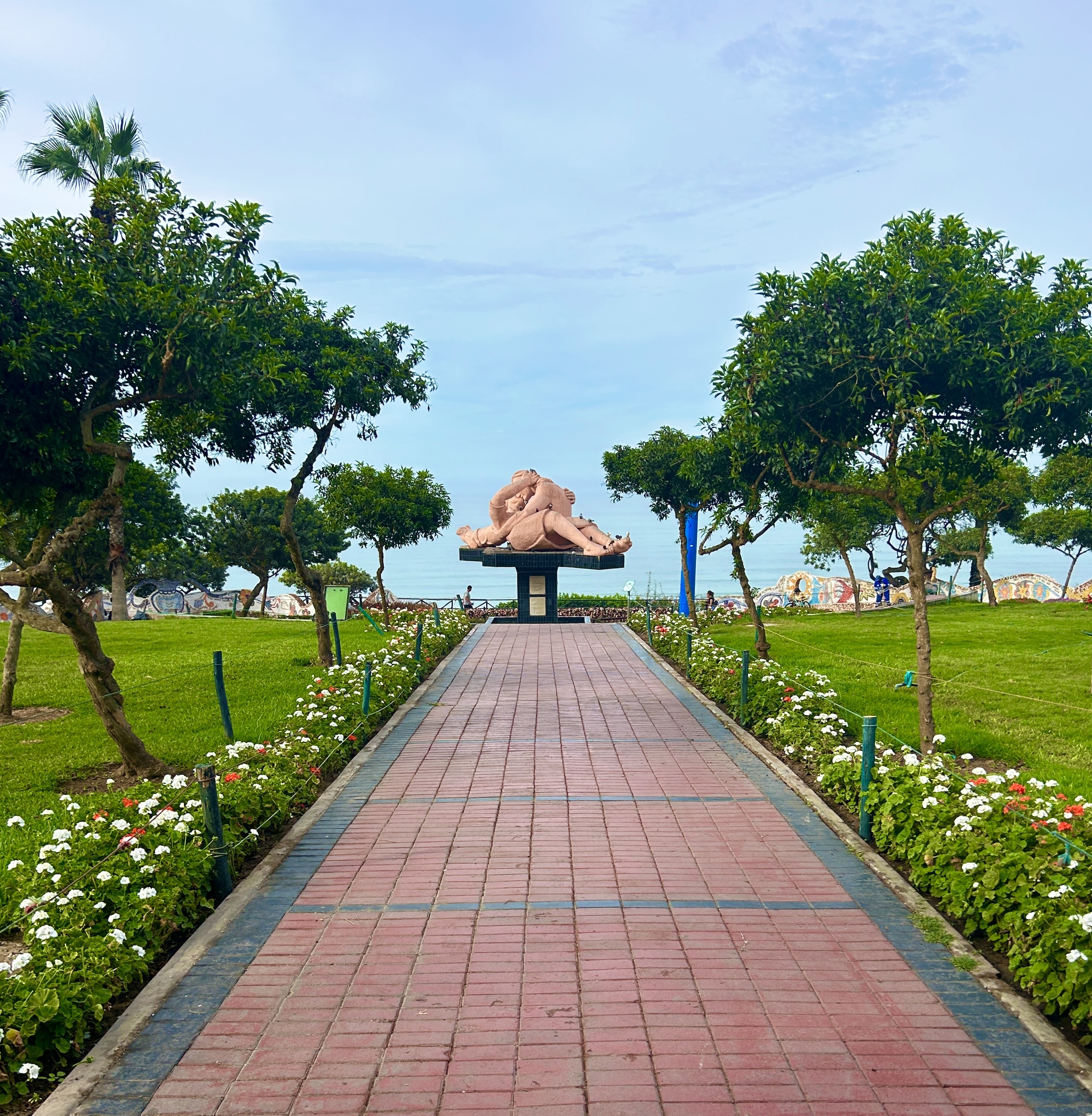
This wall surrounds the most famous statue on the malecon, El Beso by Victor Delfin which features himself in an intimate embrace with, I guess, his wife.
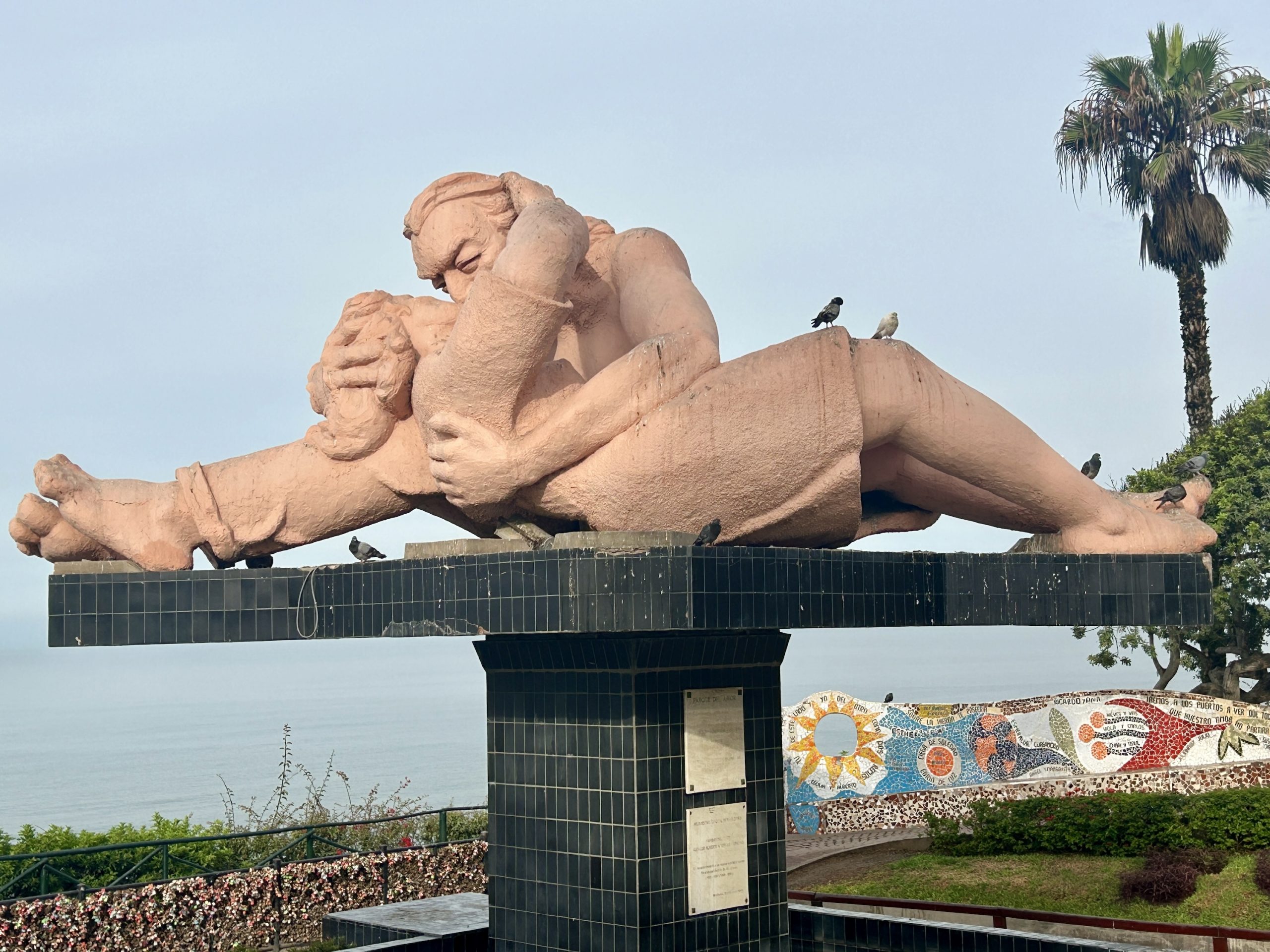
It became an immediate sensation with newly weds who pose before it after their wedding. On Valentine’s Day it is thronged with couples expressing their devotion. As you can see, pigeons are fond of it as well.
This is the view from a distance which is equally evocative.
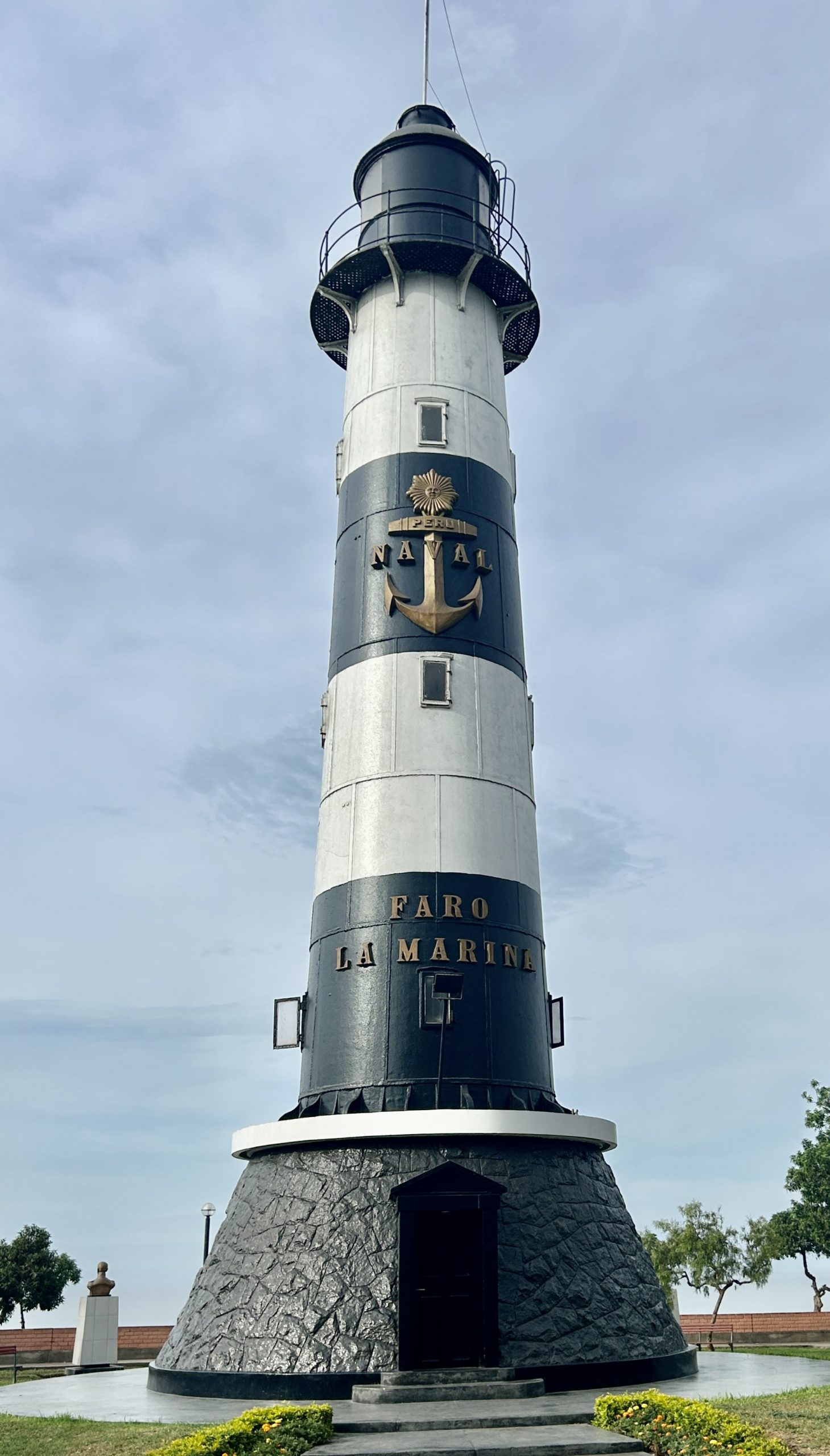
From Love Park you continue north through a series of gardens to arrive at La Marina Lighthouse which originally stood elsewhere until being moved to it present sight in 1973. It is active and its beam can be seen for 18 nautical miles offshore.
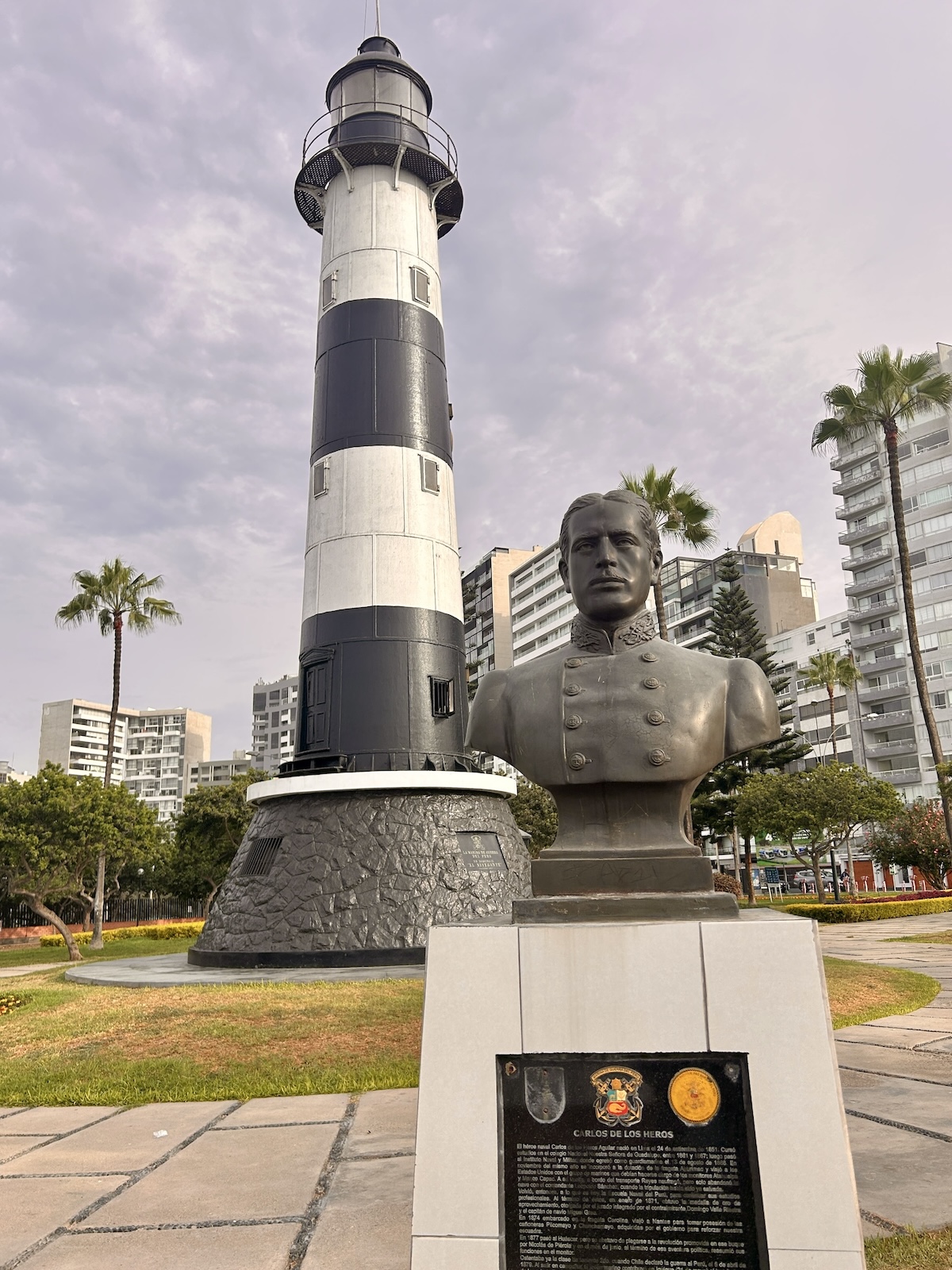
The lighthouse is surrounded by a number of busts of famous Peruvian heroes. This is Carlos de Los Heros which is a great name for someone actually becoming a hero. For a brief period he was the terror of the Peruvian navy, capturing a number of Chilean vessels during the War of the Pacific, until a cannonball made a direct hit on him during the Second Battle of Antofagasta. He was immediately canonized in the Peruvian press and remains a major figure in Peruvian historical folklore.
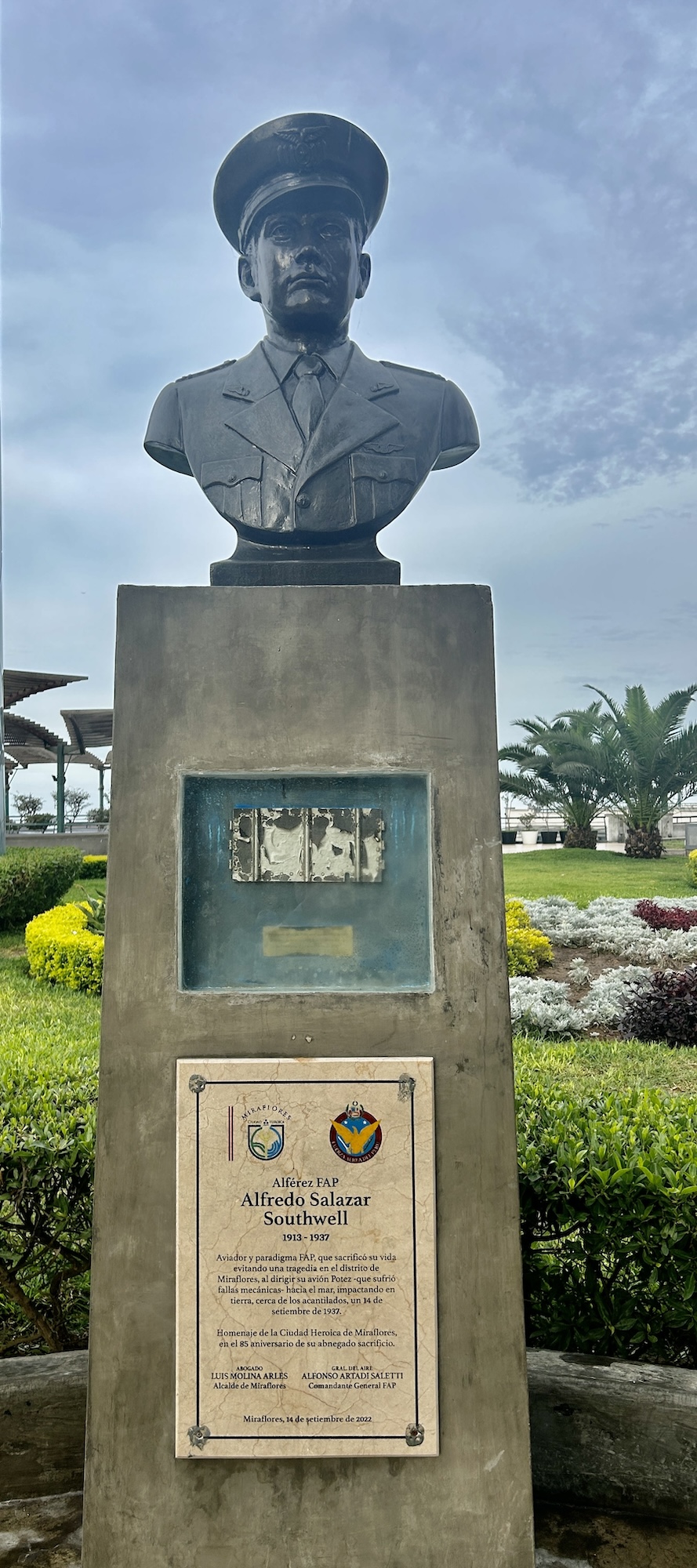
Alfredo Southwell’s story has more of a connection to Miraflores. He was a Peruvian airforce flight officer who was rehearsing for an airshow on September 14, 1937 when his engine caught on fire. After letting his co-pilot parachuted to safety he steered the plane away from a residential area and crashed it near this spot in Miraflores and was killed instantly.
I retrace my steps back to Love Park and descend several sets of stairs to reach the park that now heads due east perpendicular to the malecon. I am headed for Kennedy Park, the only place in Lima where you’ll see a lot of cats. It’s not part of the malecon, but still very much in Miraflores. It’s about 1.5 kms. (1 mile) and pretty well all uphill.
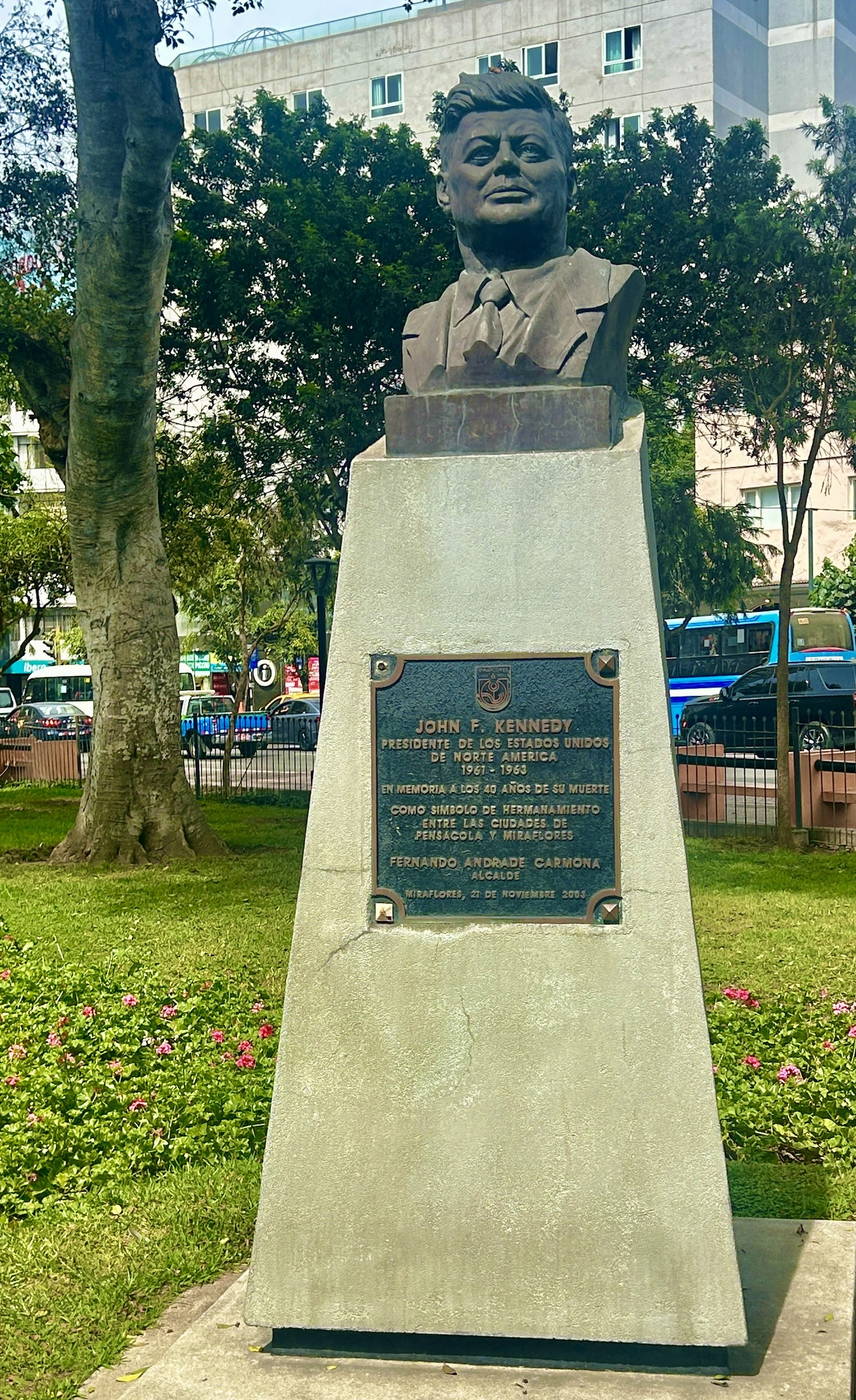
The park was here long before it was renamed for President Kennedy after his death and along with the malecon is one of the most popular attractions in Lima. Why? Because of the cats.
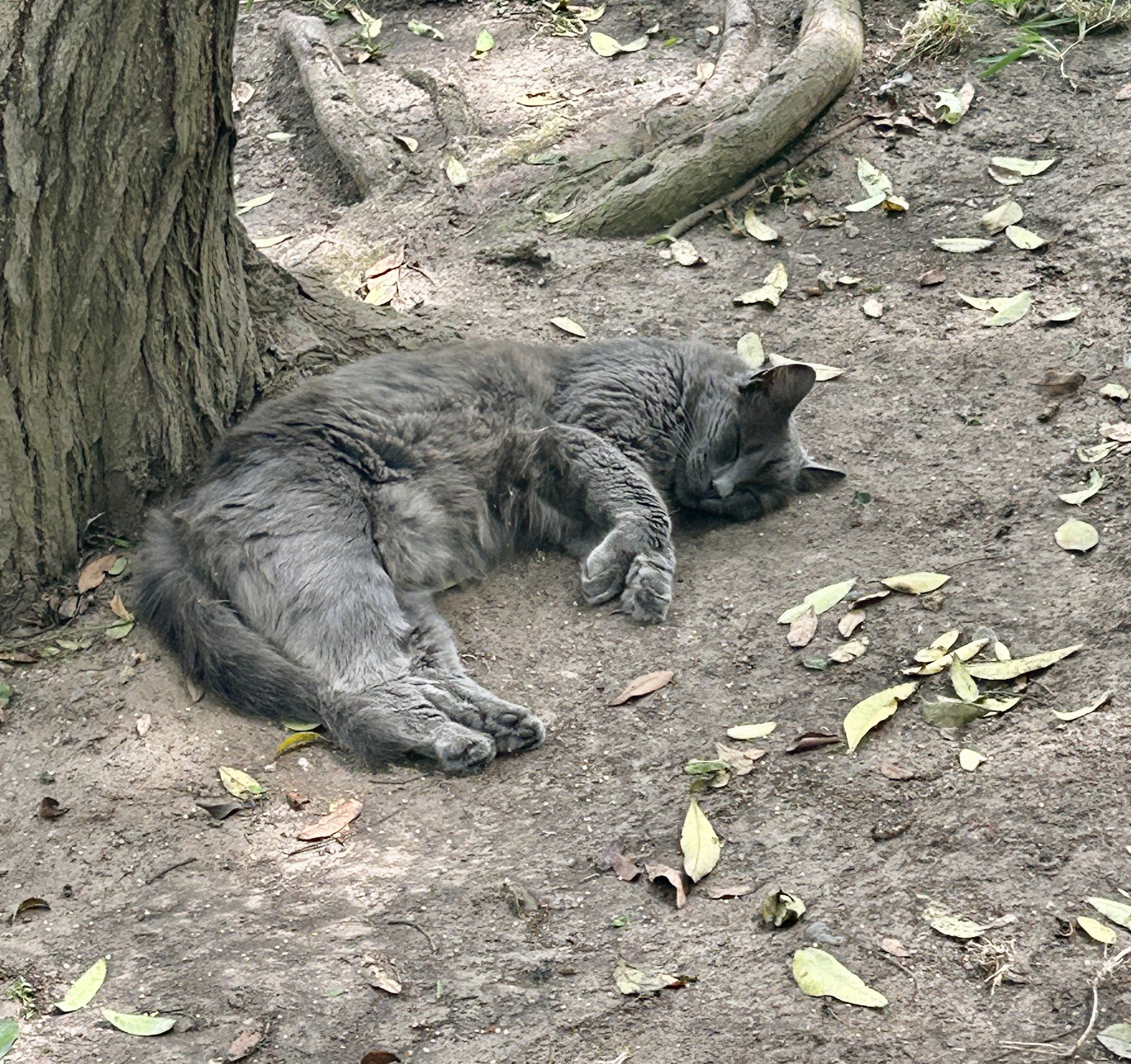
Apparently this area was once overrun with rats/mice take you pick and people started dropping off cats to deal with them. The cats did their job and opted to stay. Today there are dozens roaming and loafing about like this guy.
They are well fed and even have their own condos.
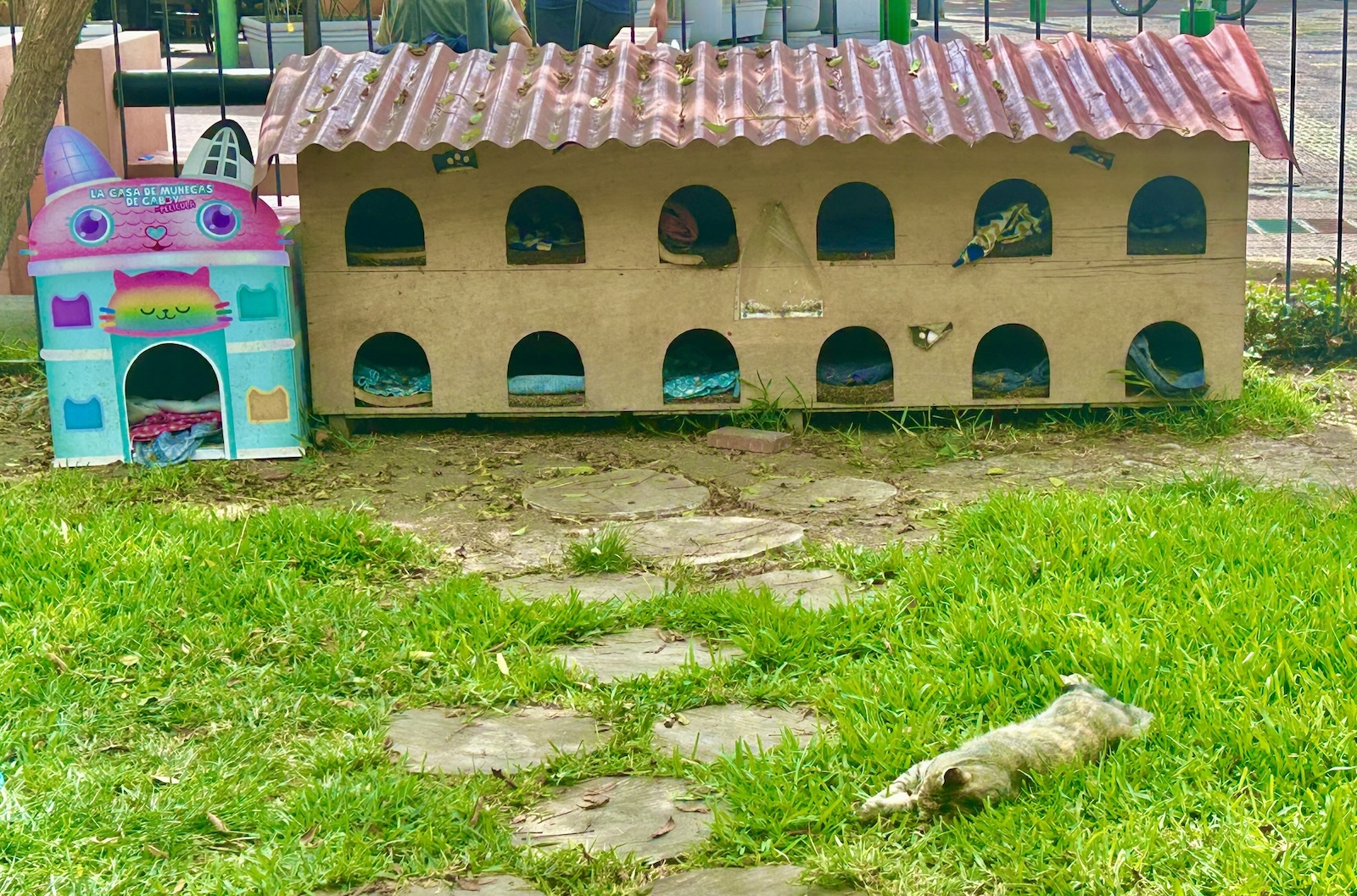
As I noted earlier in this post Peru is definitely a dog country, but if you are a cat lover this place is for you.
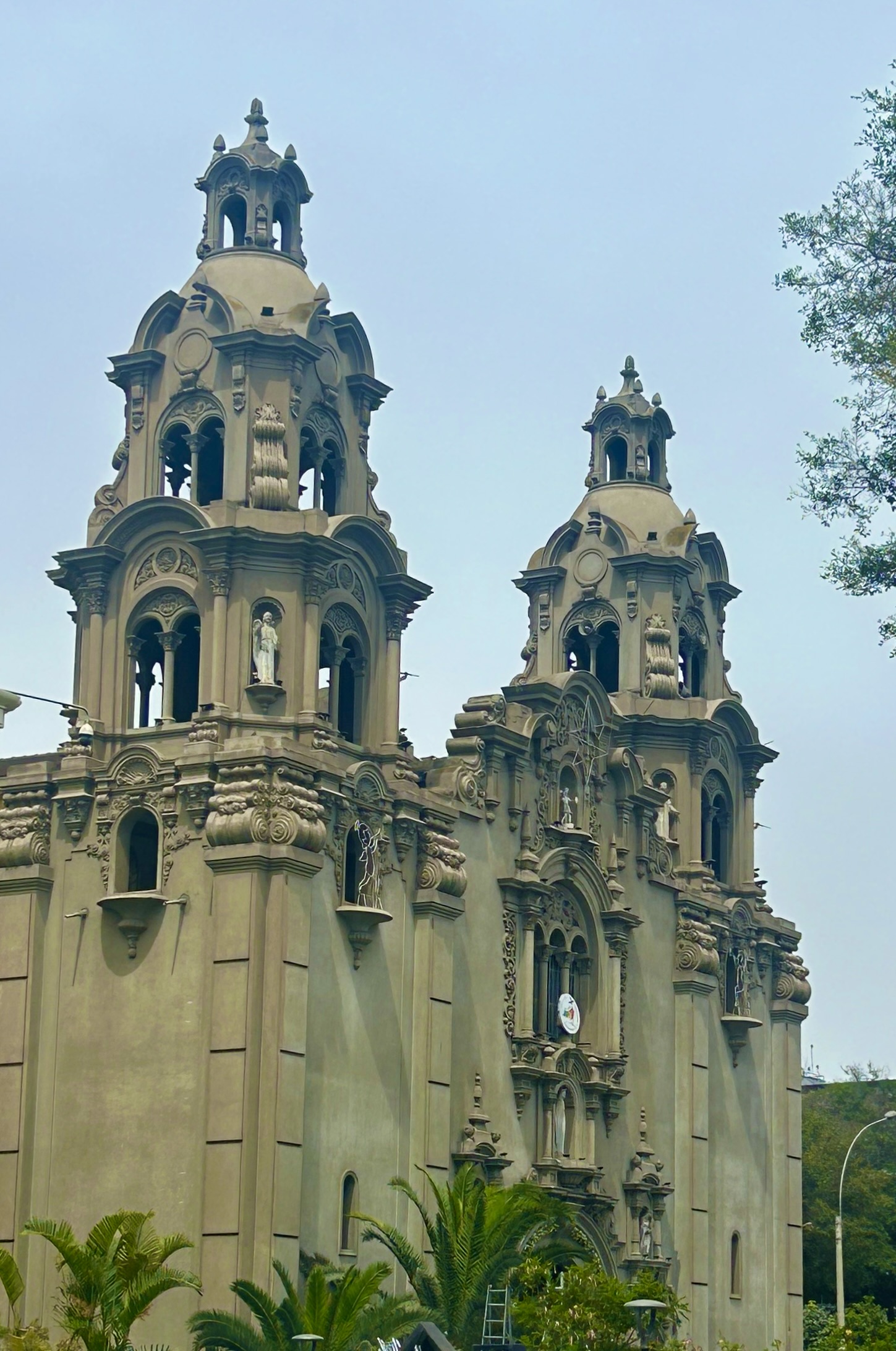
Once again backtracking, this time toward the malecon, I note the spires of the Church of the Miraculous Virgin which dates only to 1939. I’d like to go in, but I’m pretty tired and still have a long walk back to the JW Marriott.
Back at the hotel, I head to the bar where I have a ticket for a free Pisco Elixir, the barkeep’s signature cocktail, that’s been burning a hole in my pocket for the last hour.
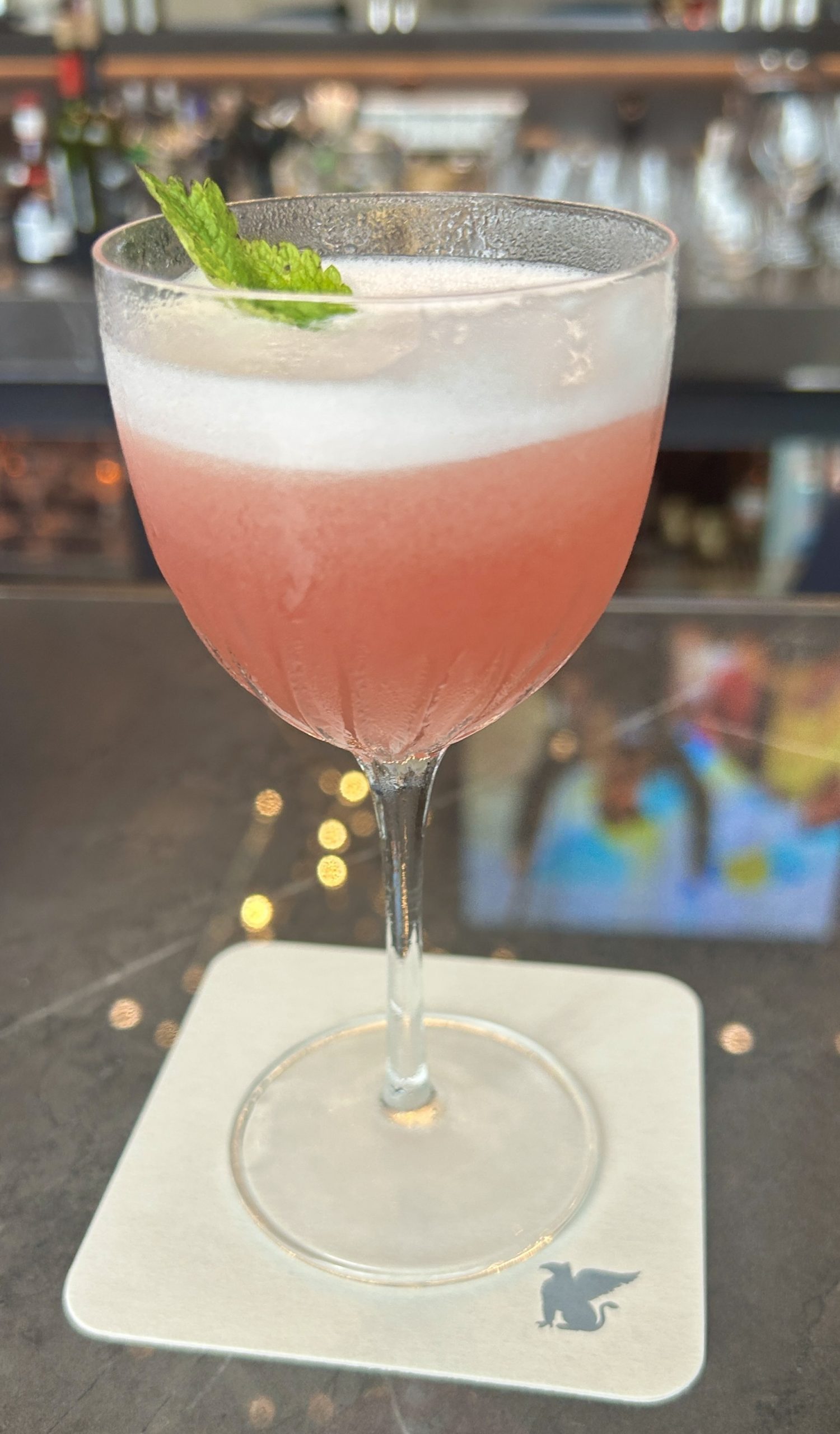
It’s a beautiful looking cocktail and tastes as good as it looks. I’m tempted to have a second, but opt instead for Peru’s national drink, the Pisco sour. Pisco is a type of brandy made from grapes and not a type of grain based whisky as I had always assumed, mainly because whisky sours are made from what else, whisky. Doh!
This is JW Marriot barkeep Eusebio’s version and man is it good!
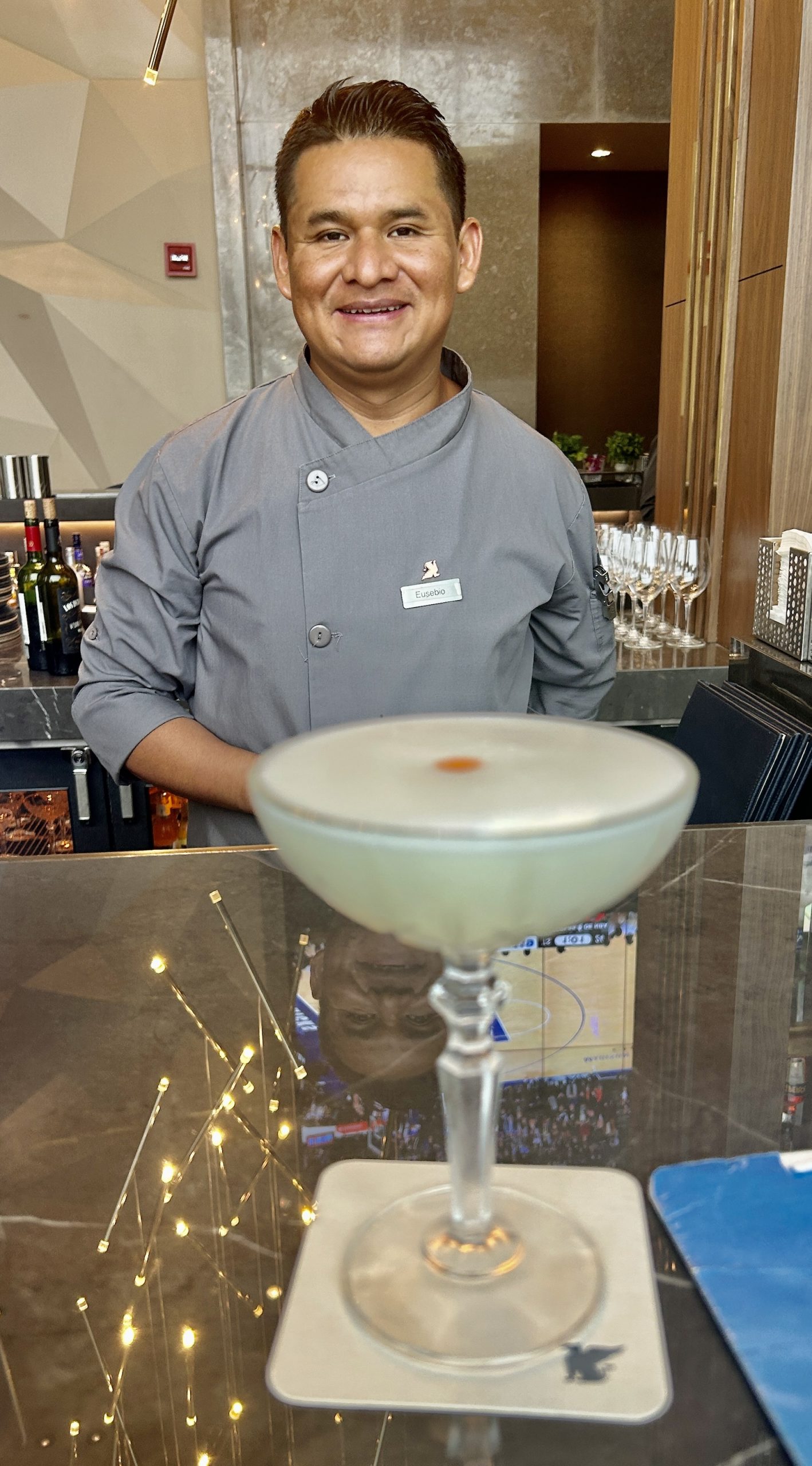
I have sense enough not to order another. So far it’s been a perfect day in Miraflores and now it’s time to call it a day. Tomorrow I will join the AA group at the Miraflores Holiday Inn. Hope to see you there.