
Melbourne – A Most Victorian City

This is my second post from a March 2026 tour of Australia with Adventures Abroad. In the first post I gave an overview of the entire trip from Melbourne to Sydney with stops at Canberra, Cairns, Darwin, Alice Springs and Uluru. In this post I’m going to examine the things that make Melbourne perhaps the most Victorian city in the world. We’ll visit markets, lanes, arcades, cathedrals and much more in this first of two posts from the city. So put on your walking shoes and join us.
As we do on almost all our Adventures Abroad trips, we like to arrive at least one day before the start of the official tour and Melbourne was no exception. We arrived from Auckland three days in advance and stayed at The Westin which is a great hotel in a great location in the Central Business District or CBD as locals call it. In North American cities the CBD is usually not a great place to stay because it’s mostly office buildings with day workers and can be a wasteland at night, but not in Melbourne. We stayed a further three nights at the Clarion Suites Gateway with the Adventures Abroad group. This also had a great location just up from the Yarra River and like The Westin, within easy walking distance of many of Melbourne’s major attractions. So all told we were in Melbourne for almost a week which is usually enough to get a good sense of a place. So what follows in this post and the next is a combination of our own explorations and those with the AA group.
History of Melbourne
Melbourne is one of the youngest great cities in the world. It was not until 1802 that English captain John Murray found the narrow entrance to a huge circular expanse of water that is now called Port Philip Bay. Aboriginal people of the Kulin nation had been living in the area for over 30,000 years, but their numbers were quite sparse. It was not until 1835 that a group from Tasmania of all places, led by a guy called Batman, purported to buy 600,000 acres from the local inhabitants on the site of what later became Melbourne. Although this sale later got annulled it did generate enough interest that a settlement was established near the mouth of the Yarra River in 1837 and named Melbourne after the then Prime-Minister of Britain, William Lamb, Viscount Melbourne.
Initially Melbourne did not thrive. There were the usual disputations over land titles and the mistreatment of the Aboriginal inhabitants which is the backstory to pretty well every Australian community. It was not until gold was discovered in what was now the state of Victoria in 1850 that things took off, and did it ever. From a population of only 77,000 in 1851 the state exploded to over 500,000 in 1860, a growth rate that must be close to an all time record. Melbourne’s boom days lasted fully 40 years, much longer than similar gold rush places like California and the Klondike. The result was a city that was built at the height of the British Empire in full emulation of all that was British with money being no object. Frankly, walking around Melbourne you might be seeing the most Victorian city on Earth.
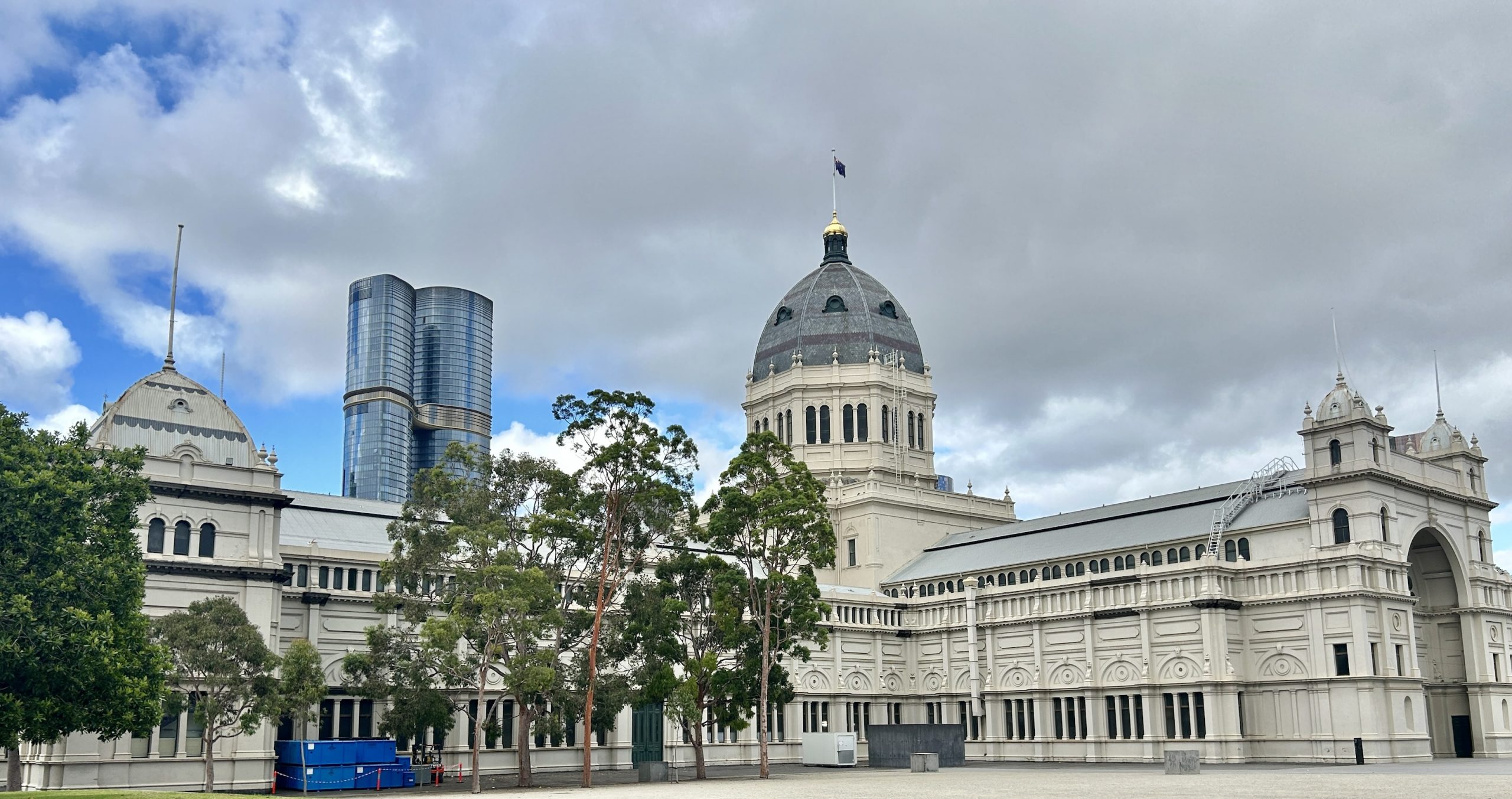
The culmination of the building boom was the massive Royal Exhibition Building shown above and about which more later. It housed the World’s Fair in 1880 and enhanced Melbourne’s reputation as the richest city in the world.
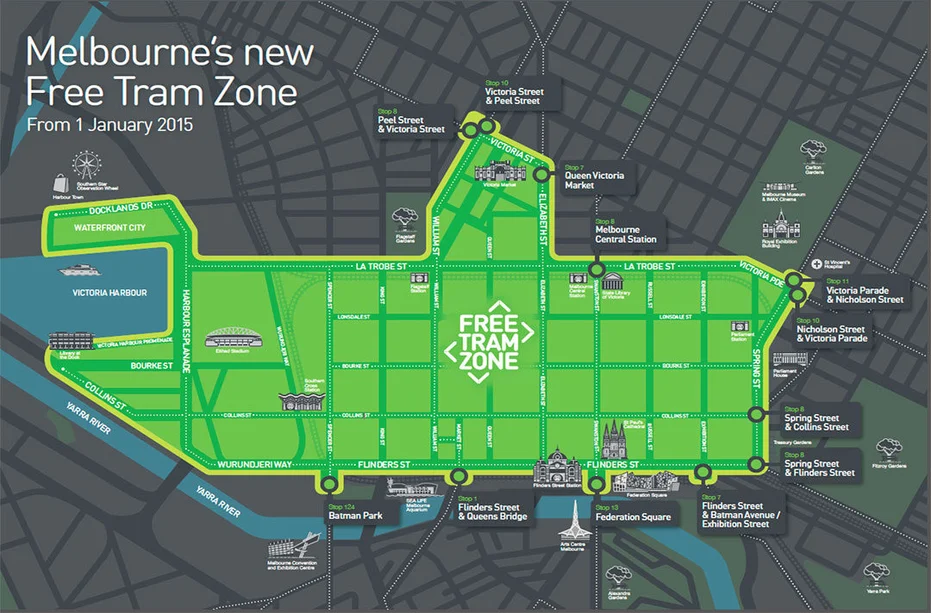
Along with the Victorian era building boom was the establishment of a world class train and tram system that continues to be a major part of the city’s image to this day. While many other cities have torn up their tram tracks, Melbourne has shown that they can still be an important part of a city transportation network. In fact since 2015 all tram travel within the CBD is free. Here is a map of the free zone which includes stops at or near all of the places mentioned in this post. While Alison and I chose to walk, the tram is a great option, especially for those with mobility issues.
While Melbourne’s boom lasted longer than anyone had a right to expect, it did end with a spectacular crash in 1890. For the next couple of decades Melbourne languished, but as the countries largest city it still became the capital of the newly independent Australia in 1901. It retained the title until it was moved to the compromise city of Canberra in 1927.
Melbourne, as with other Australian and New Zealand cities and towns, suffered horrific casualties in WWI with over 16,000 Melburnians being killed outright. Unlike Canada, where we seem to play only lip service to the sacrifices made in both World Wars, in the ANZAC countries they do not forget. The Shrine of Remembrance built in 1934 pays homage to those who served and we will visit it in the next post.
Before WWII almost all immigration to Australia was from the British Isles, but after the war huge numbers of immigrants from other parts of Europe, including a lot of Jews fleeing the aftermath of the Holocaust, made Melbourne their new home. After the White Australia policy was finally ended in the 1970’s, European immigrants were joined by South East Asians, Pacific Islanders and others, turning Melbourne into the polyglot society it is today. But despite these changes, Melbourne does retain a decidedly Victorian aura as we shall see.
Where to begin? How about with something to eat?
Queen Victoria Market
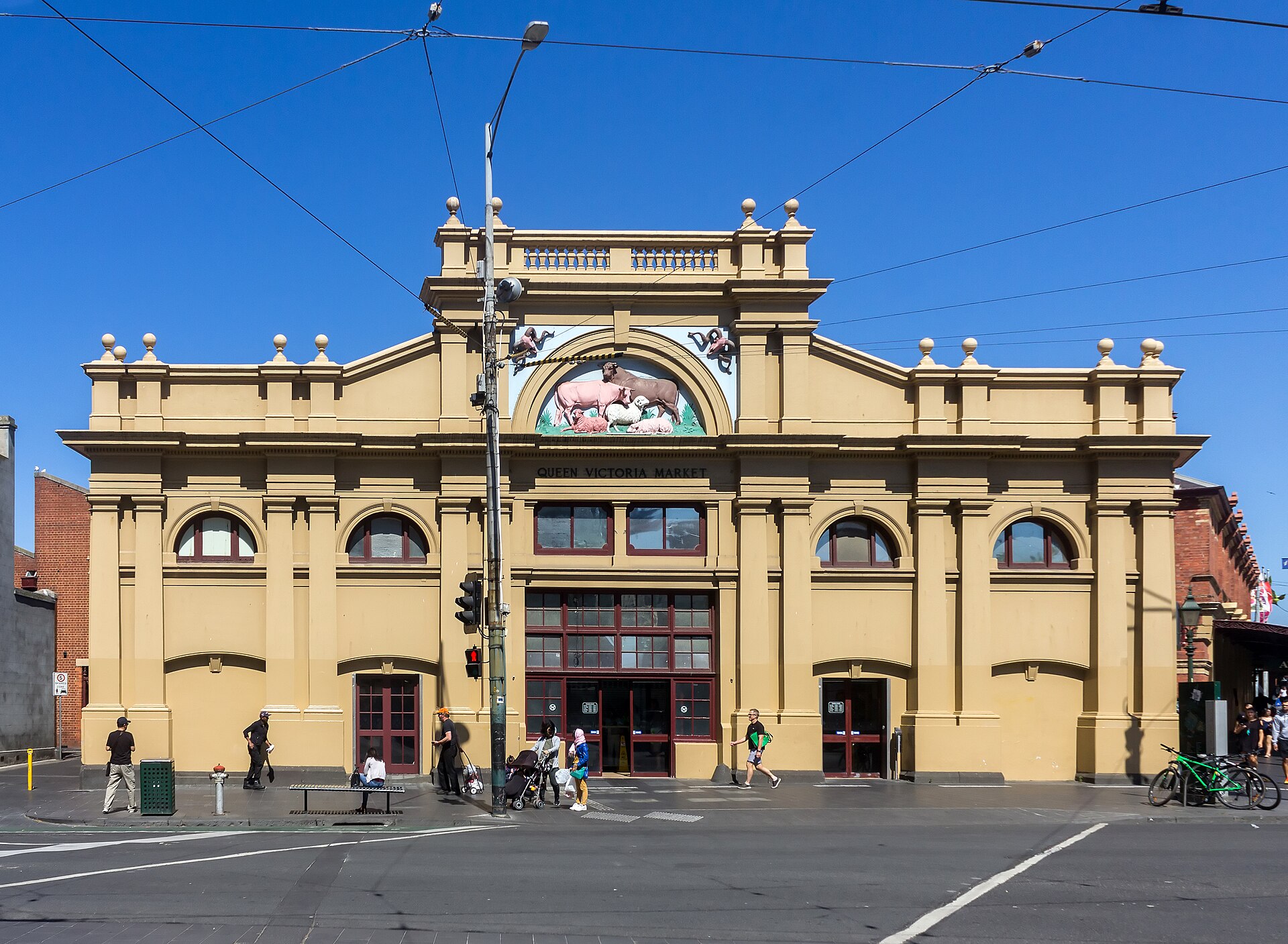
Melbourne once had dozens of Victorian era markets of which only three remain with the Queen Victoria Market being the largest. In fact it’s the largest open air market in the Southern Hemisphere. Opened in 1878 on the site of Melbourne’s first cemetery it is one of the largest tourist draws in the city. Alison and I went there on our own and returned a few days later with the AA group. If you love markets, and who doesn’t, this place has it all.
In the Meat and Fish Hall you can get just about any type and cut of meat imaginable as well as the seafood that abounds around the continent in numbers and variety of species we can only dream of in Canada. The dairy section is also enormous, while the fruit market has a lot of fruits for sale that you don’t see much of in North America. Double-click to open a photo and double-click again to enlarge.
-
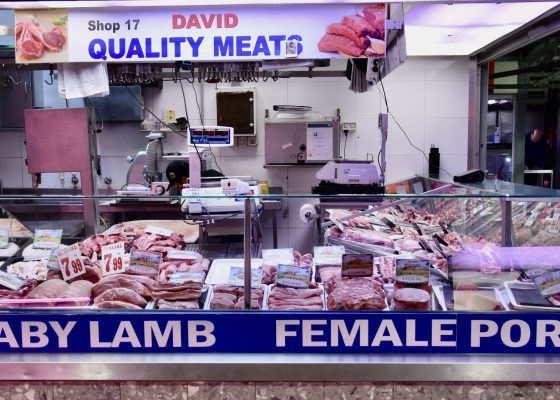
- Baby Lamb, Female Pork
-
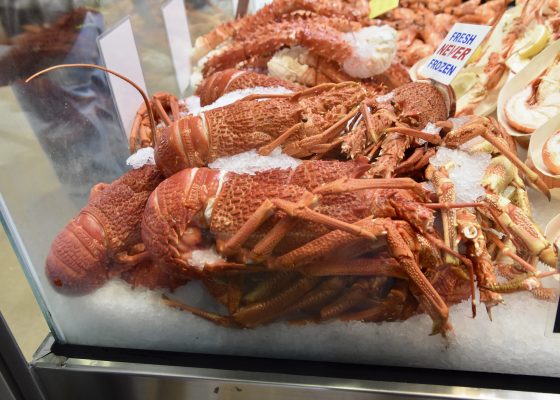
- Australian Lobster
-
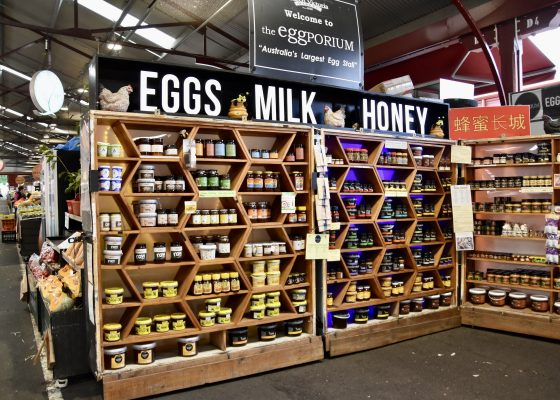
- Australia’s Largest Eggporium
-
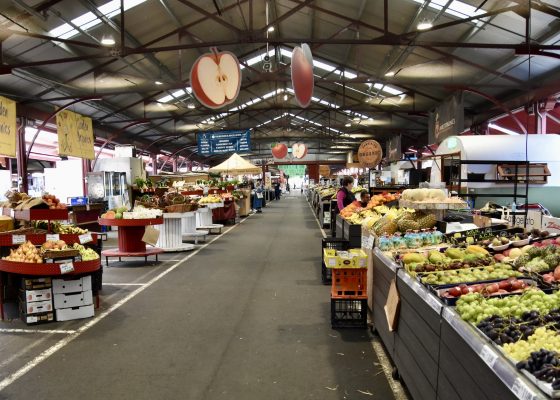
- Fruit Market
All told there are over 600 vendors selling a huge variety of products. My favourite section was the many food shops selling specialty items from just about every cuisine you could name. Many of them have been here for decades and each has a unique appearance. Here is a small gallery of just a few of them.
-
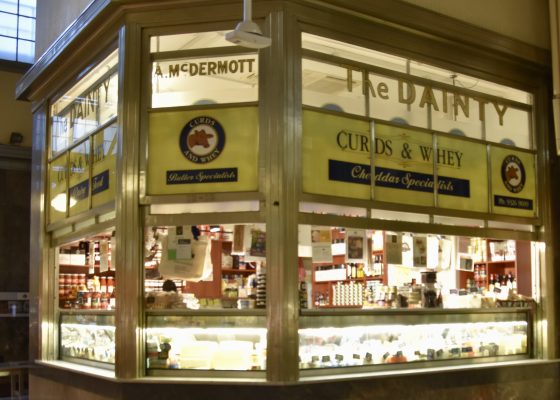
- The Dainty Curds & Whey
-
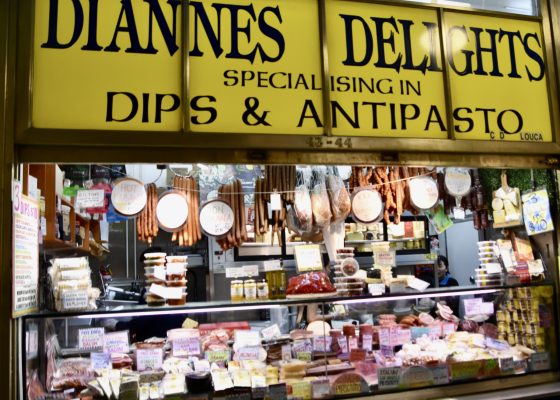
- Diannes Delights
-
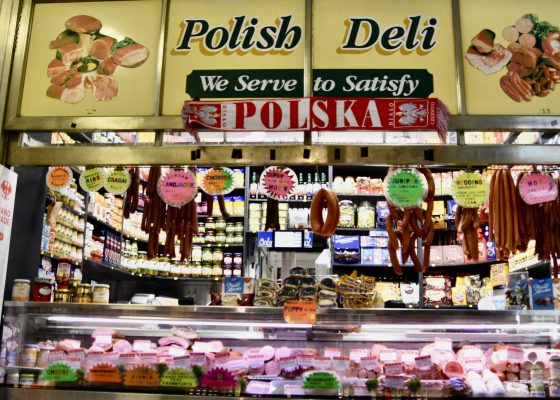
- Polish Deli
Last and certainly not least are the amazing baked products on offer.
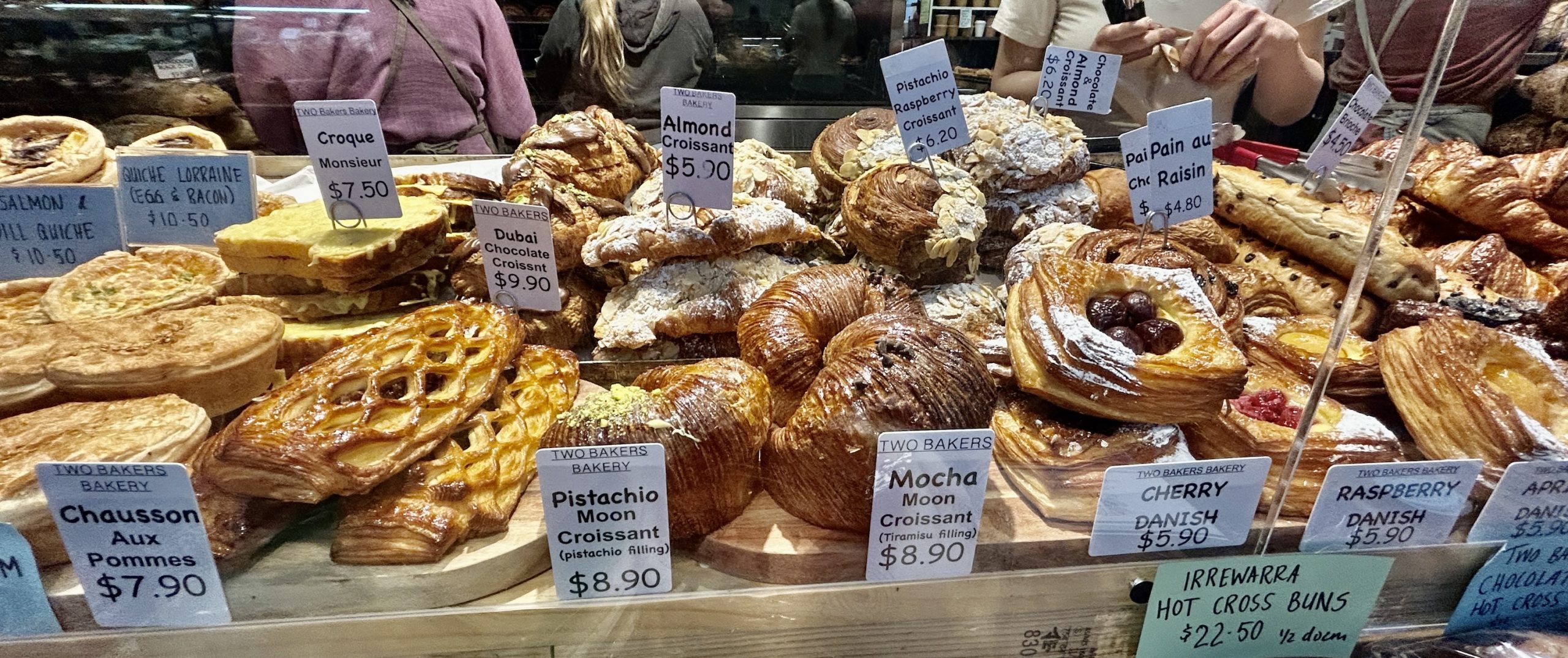
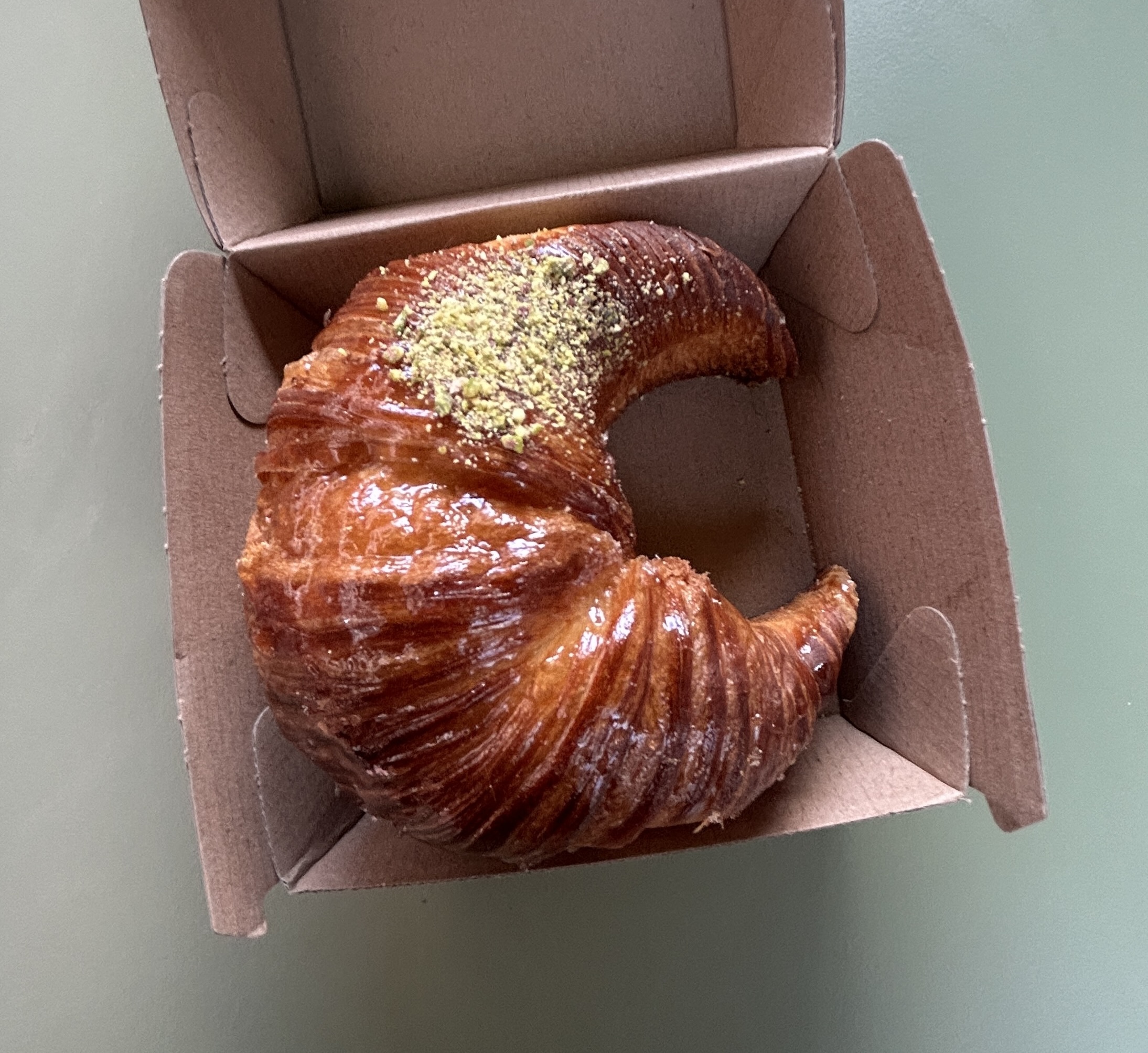
I had one of those pistachio moon croissants and it might have been the nicest pastry I’ve ever sampled.
So the Queen Victoria Market has to be on your Melbourne bucket list for sure. Where to next?
I had always heard of Melbourne’s famous system of lanes and arcades, but until you actually see and walk them you have no idea how unique they are and how they contribute to the city’s overall attraction. Follow this link for a complete rundown on 24 of the best known. Alison and I explored a few on our own and a few more with the AA group. Just to clarify, arcades have a roof, lanes do not.
Keeping with the shopping theme, although I’m doing more gawking than shopping, is the Royal Arcade Melbourne’s oldest and most elegant arcade. Opened in 1870 it is epitome of Victorian elegance, with the shops maintaining the same outward appearance that they had in 1894.
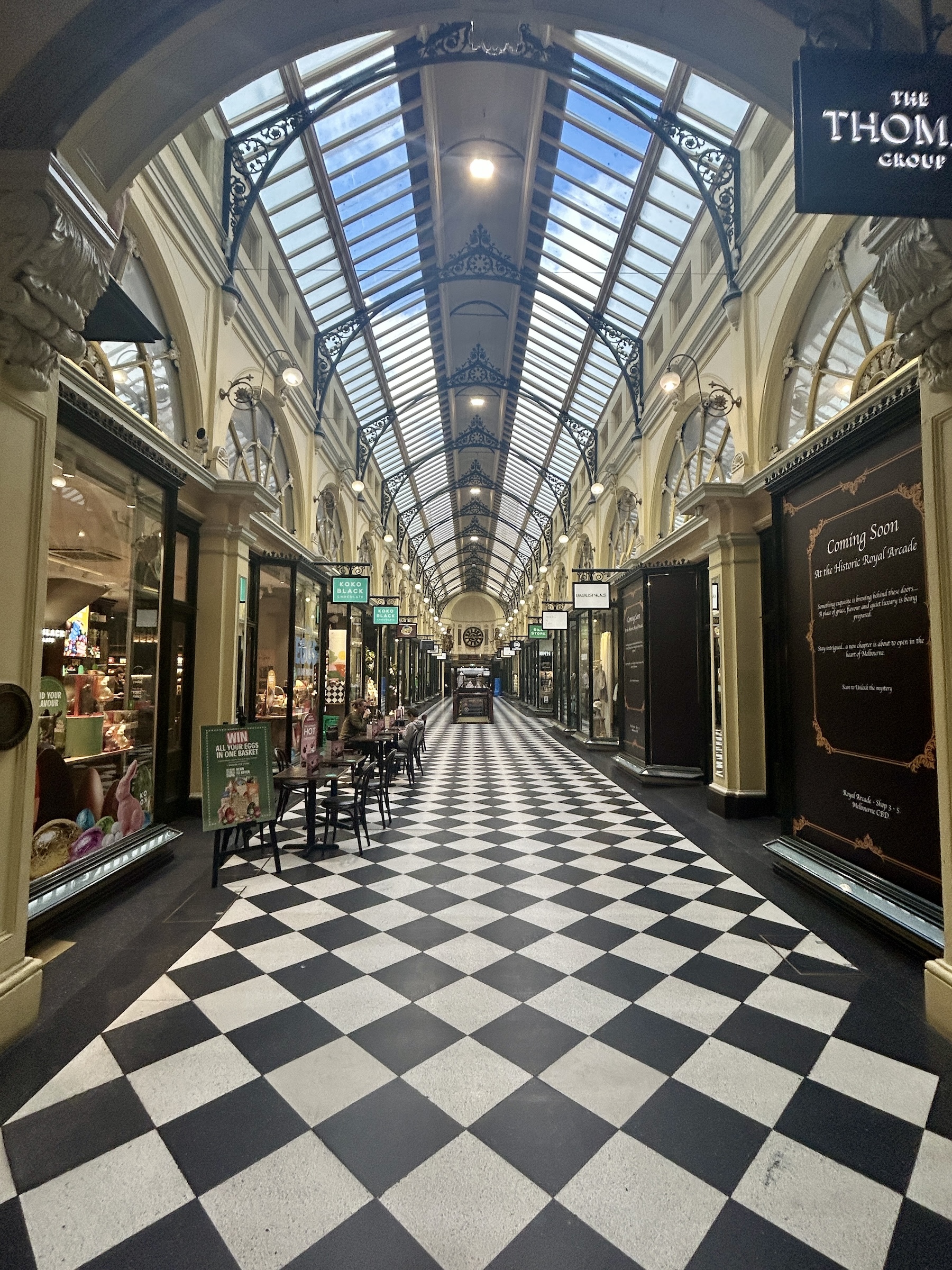
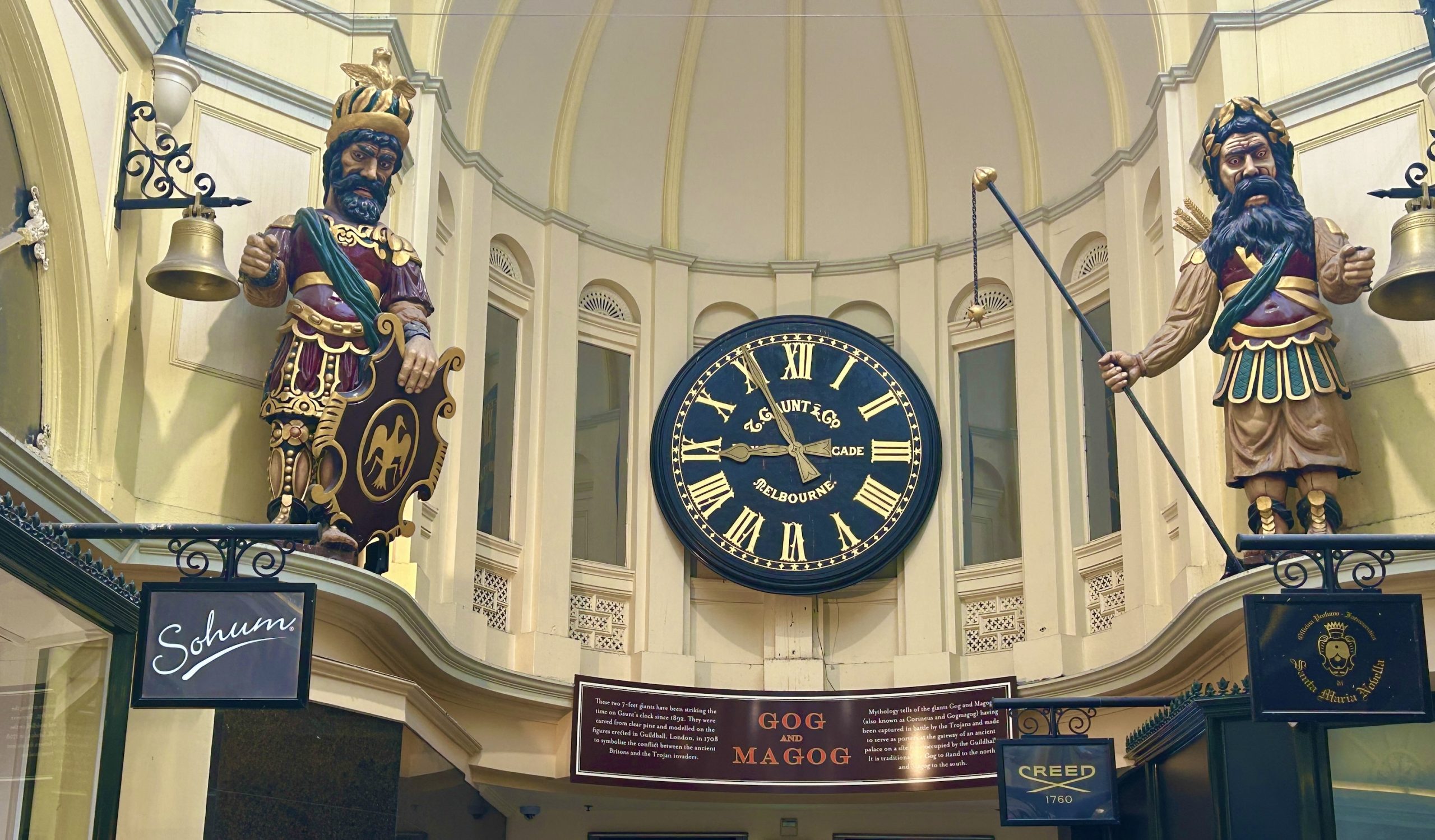
Even if you’re not here to shop you need to drop in to see the statues of Gog and Magog at the south end of the long hall. These giants appear in the Hebrew Bible, the New Testament and the Quran.
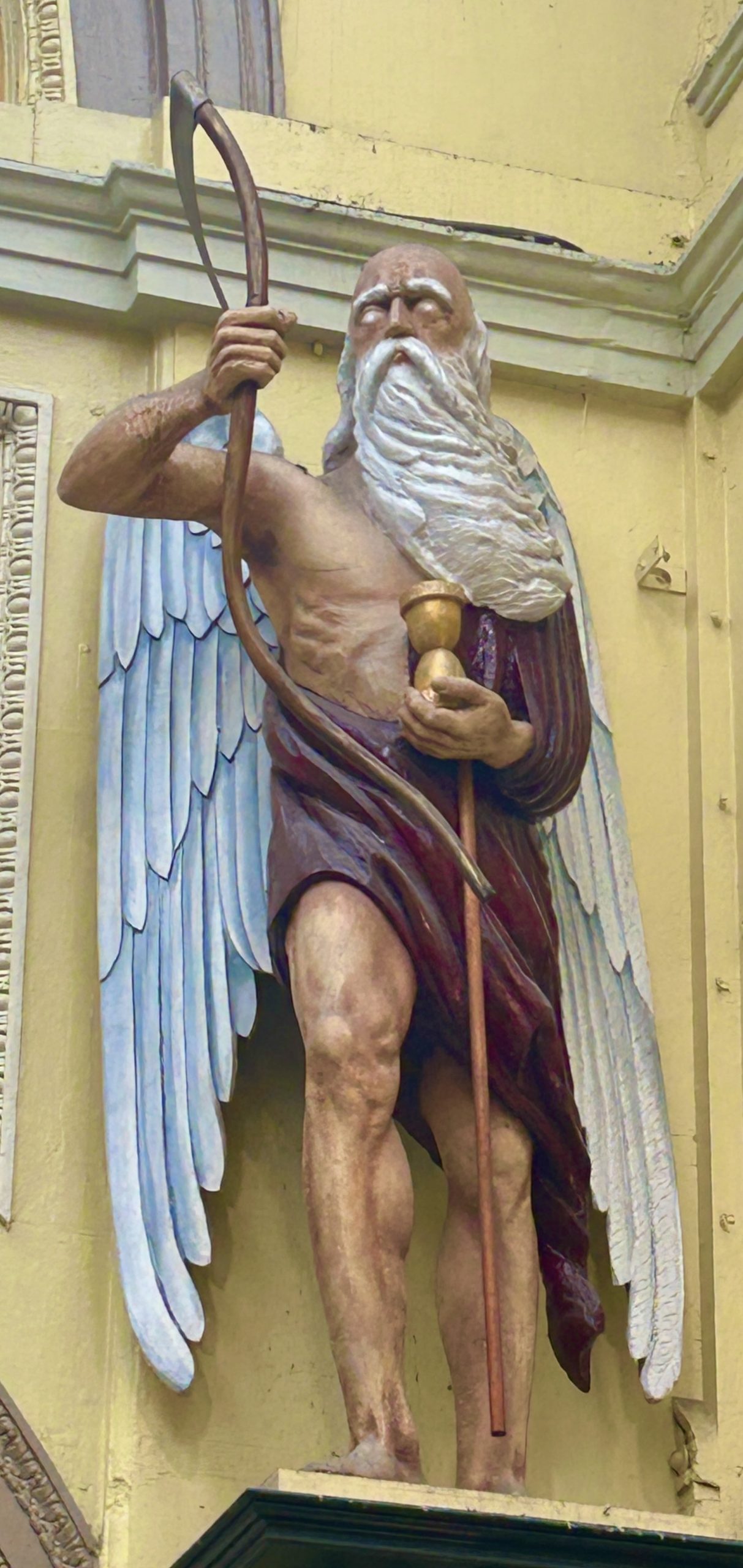
Also photo worthy is the statue of Father Time found at the north entrance.
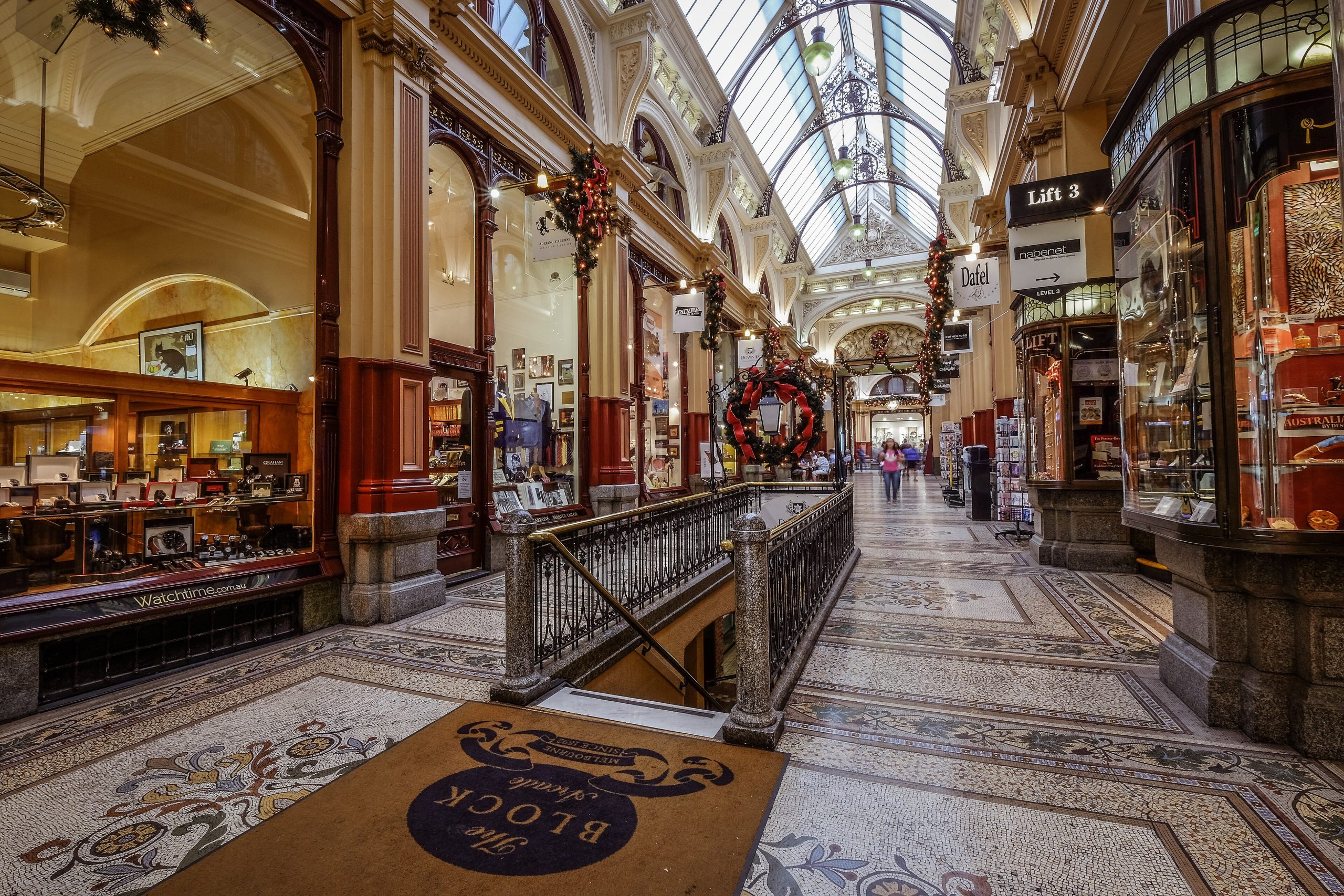
Not far from the Royal Arcade is the equally impressive Block Arcade which opened in 1893 and maintains its Victorian theme very well.
On the opposite end of the spectrum is Hosier Lane where anyone is free to try their hand at street art. This is our group standing before one of murals.
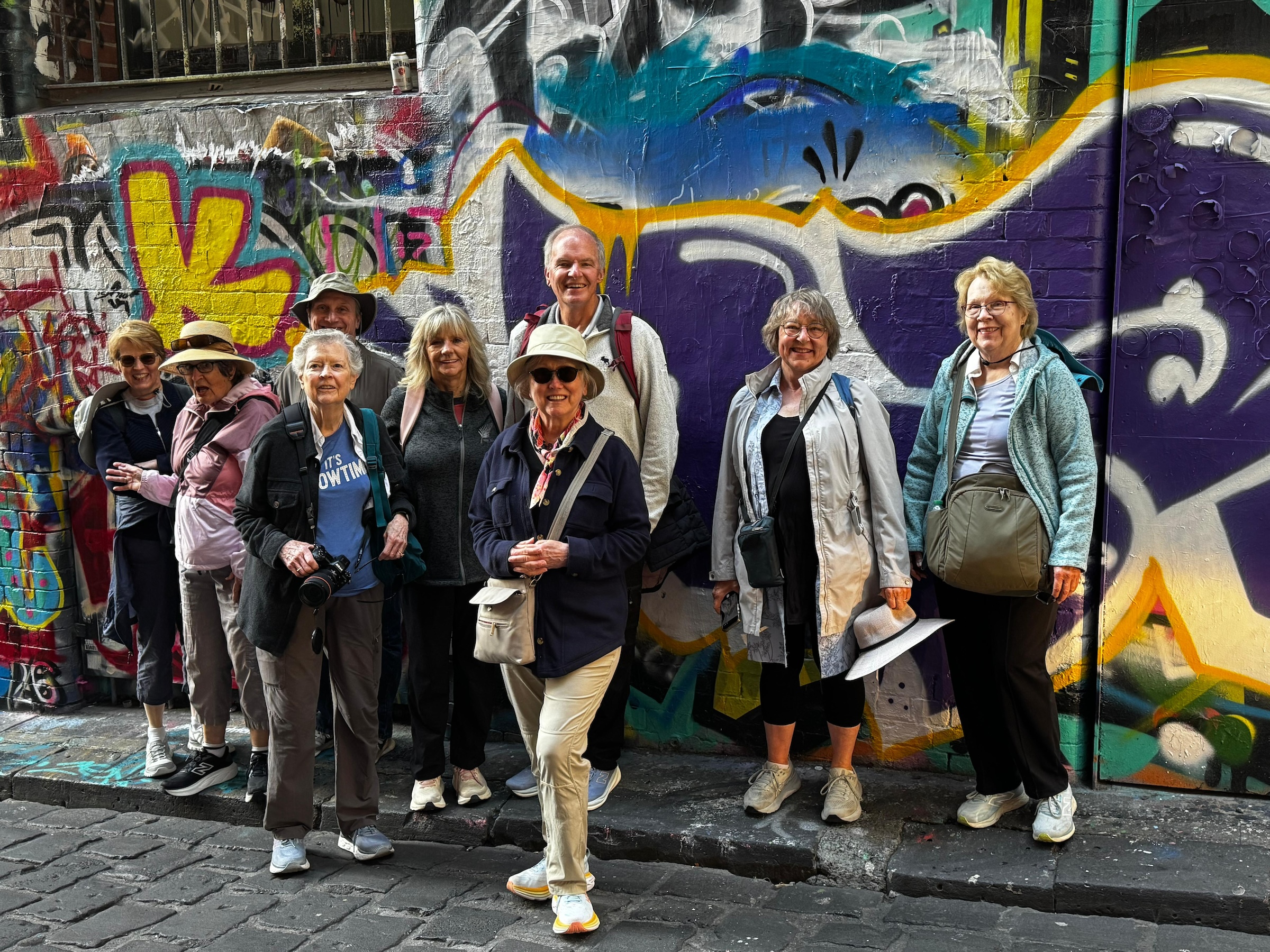
I’ve written previous posts on the great street art of Bogota, Medellin and Valparaiso and given the hype, I was expecting something similar at Hosier Lane. Sorry, but it’s not even close.
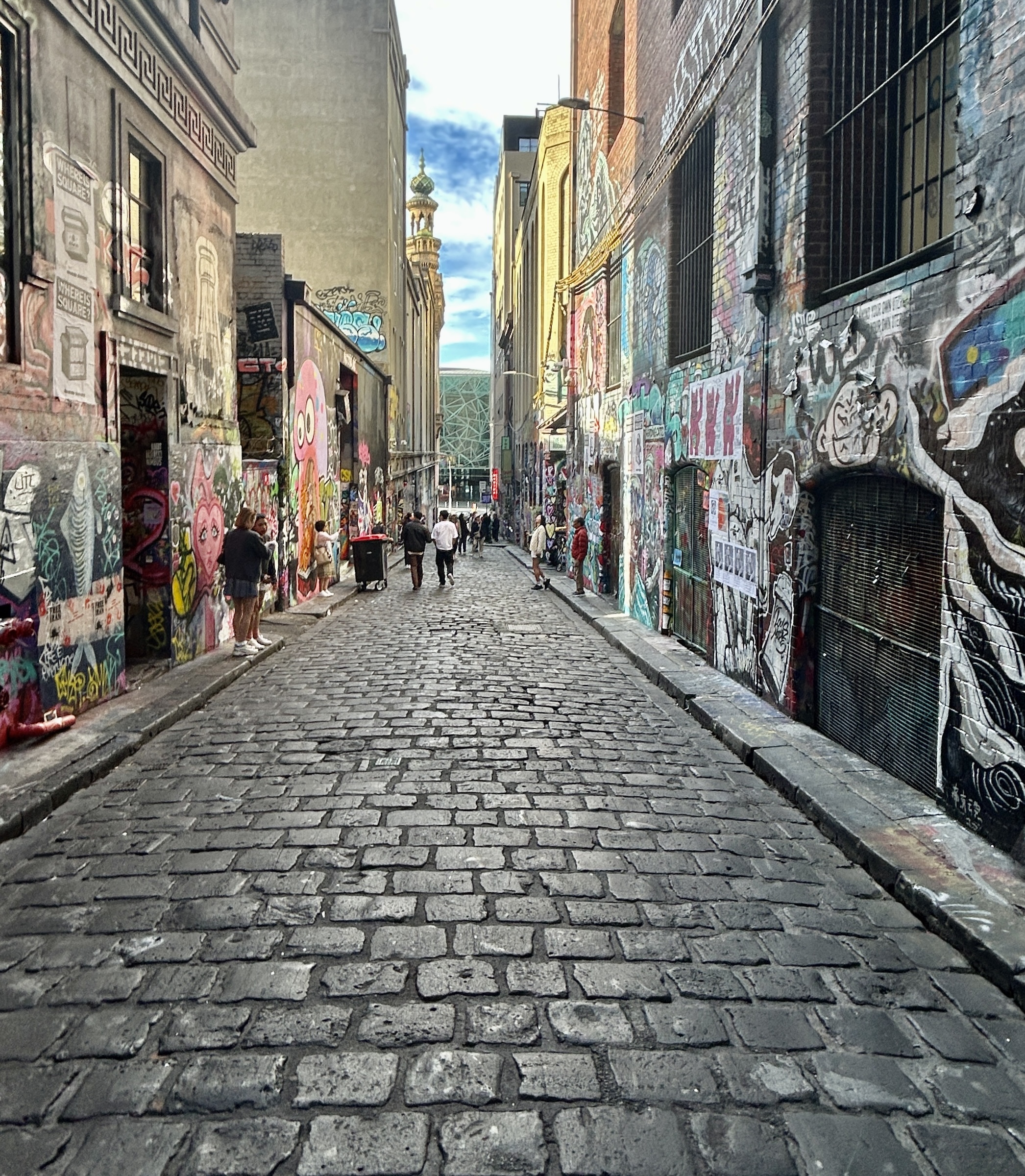
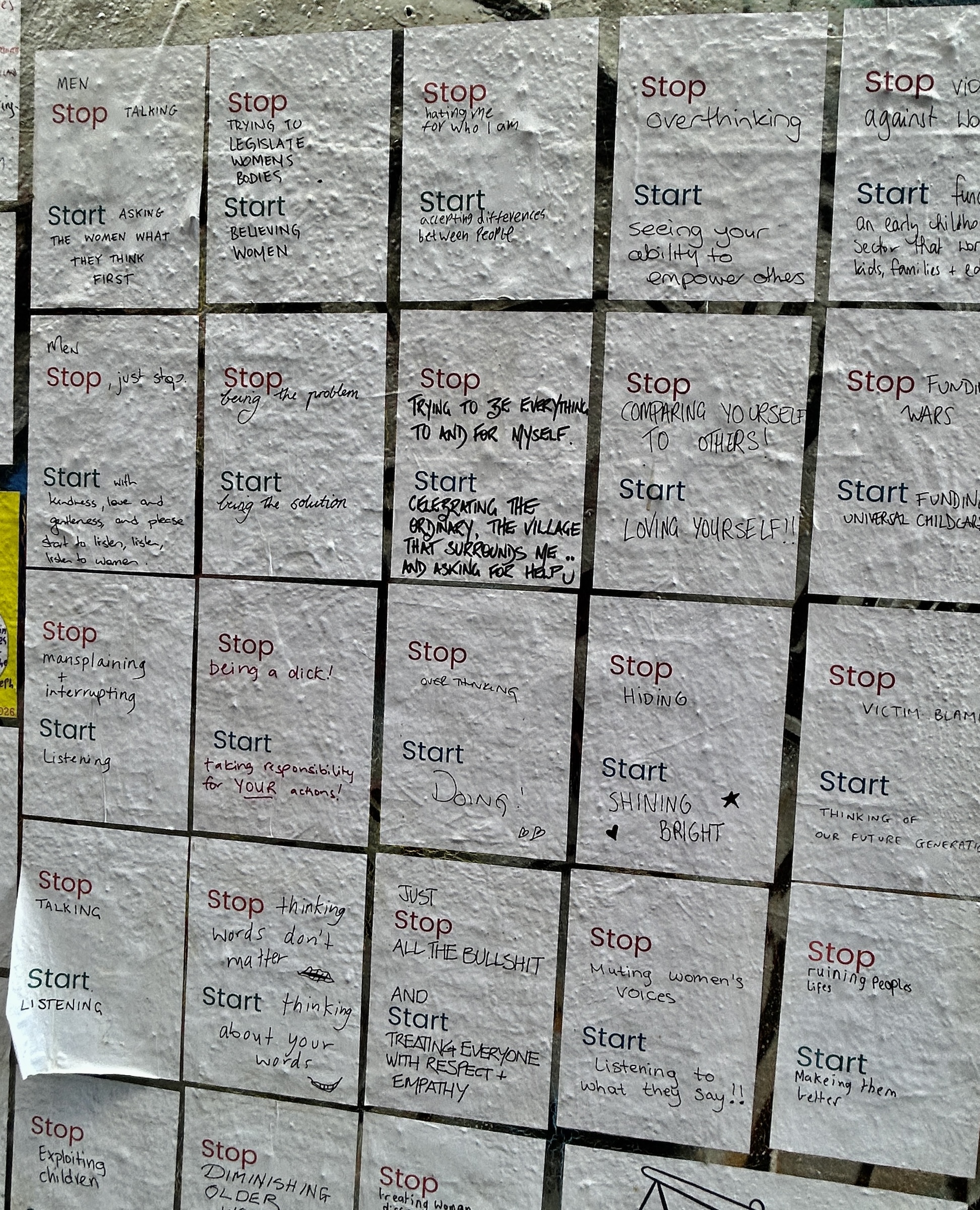
The problem is that there is more graffiti than true street art. That is not to say that there are not some interesting things to see like these stop:start notes.
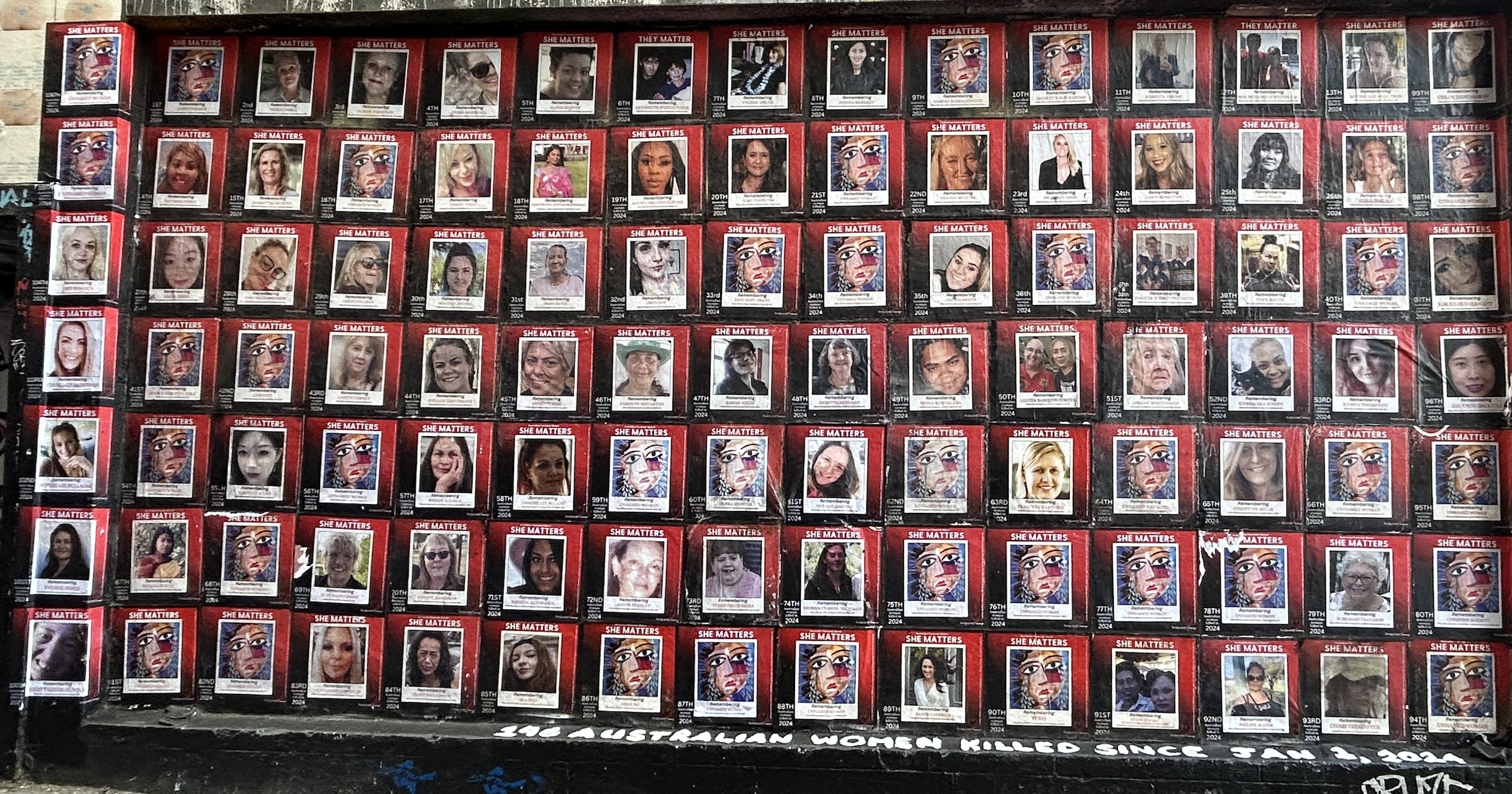
On a more sobering note, this list of women murdered in 2024.
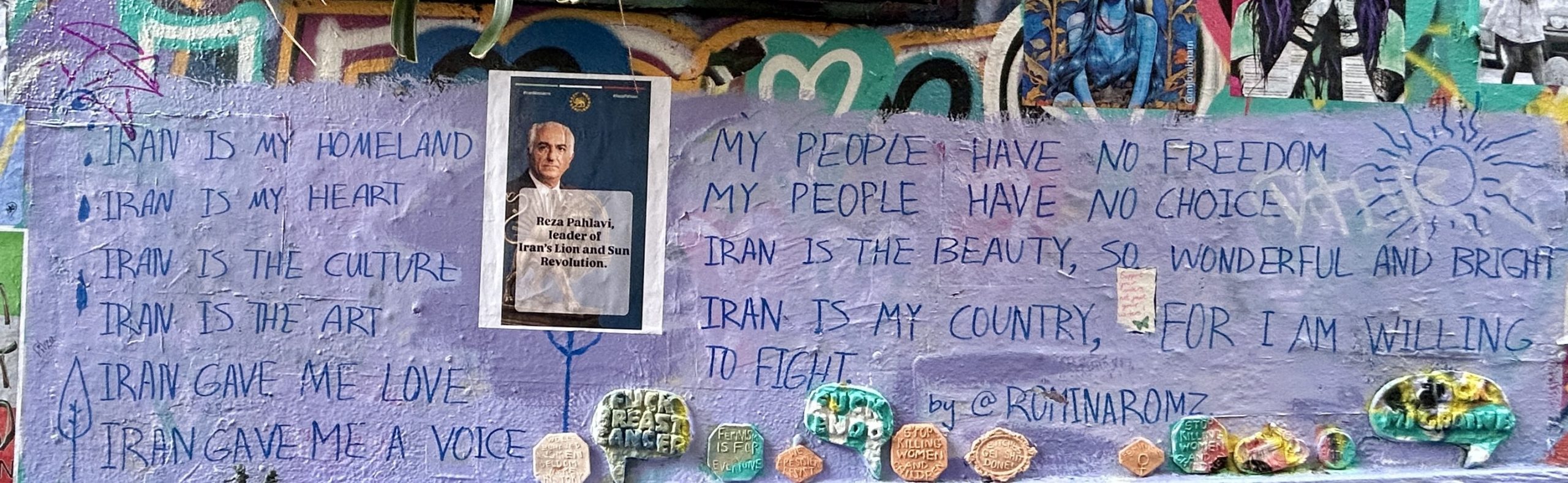
Or lastly, this support for the return of the Shah of Iran. Doesn’t look like that’s likely.
In between the arcades and the Hosier Lanes are most of Melbourne’s lanes which are where most off the happening restaurants, cafes and coffee shops that the city is known for, are found.
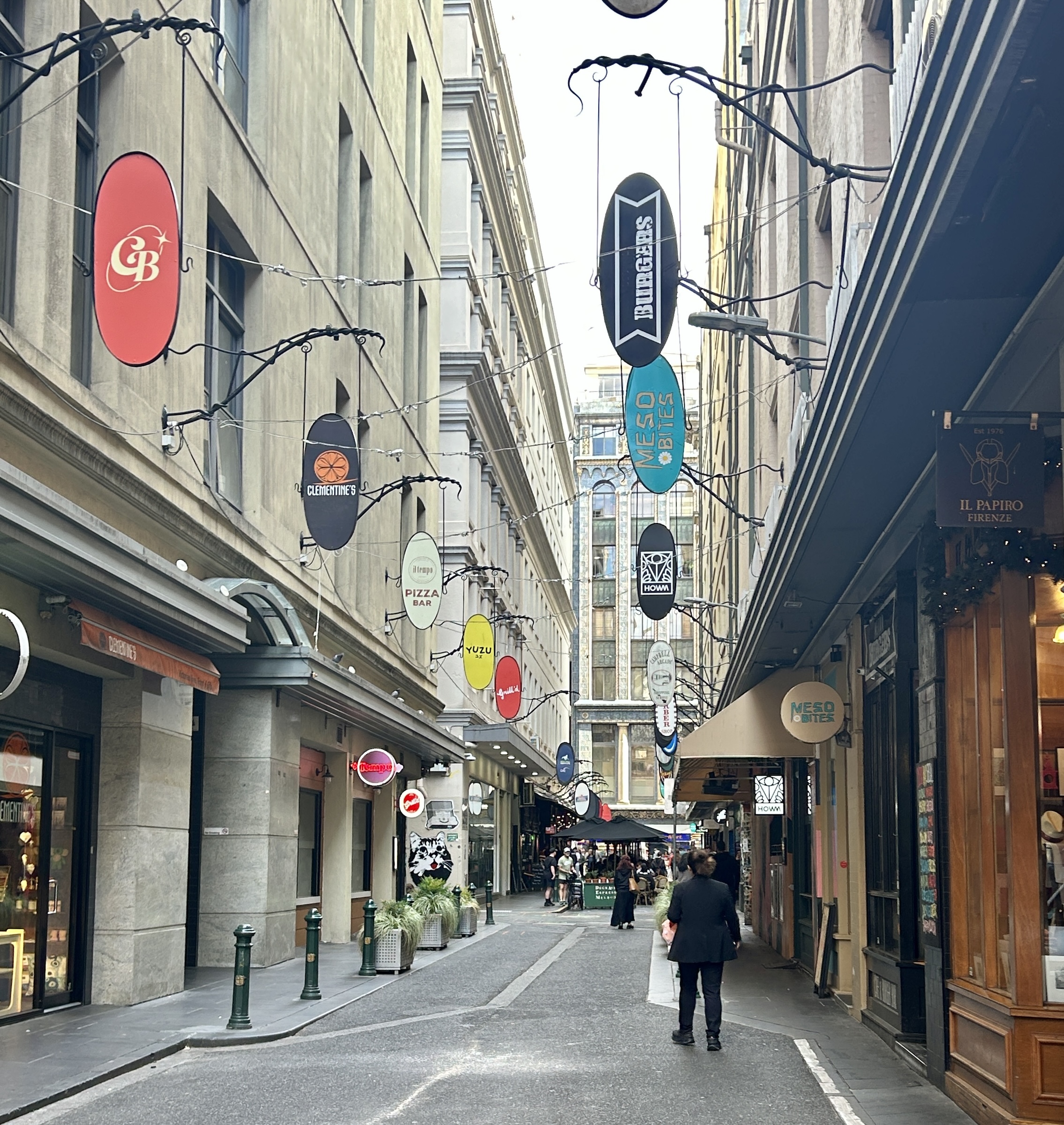
Chances are that some of your fondest memories of Melbourne will be from strolling the lanes and arcades with no destination in mind. For example, on our first night in Melbourne we wandered through a number of lanes running between the major streets in the CBD marvelling at the huge number of restaurant choices. We settled on a little place in Tattersalls Lane called By Korea and we had the best fried chicken we’ve tasted in years. In Melbourne KFC has nothing to do with the Colonel and everything to do with Korean fried chicken.

By the time we left there was a line up down the lane.
Time now to visit, if only from the outside in most cases, some of Melbourne’s most striking Victorian buildings. Once again, these are all within the CBD and can be reached on foot or by the tram system.
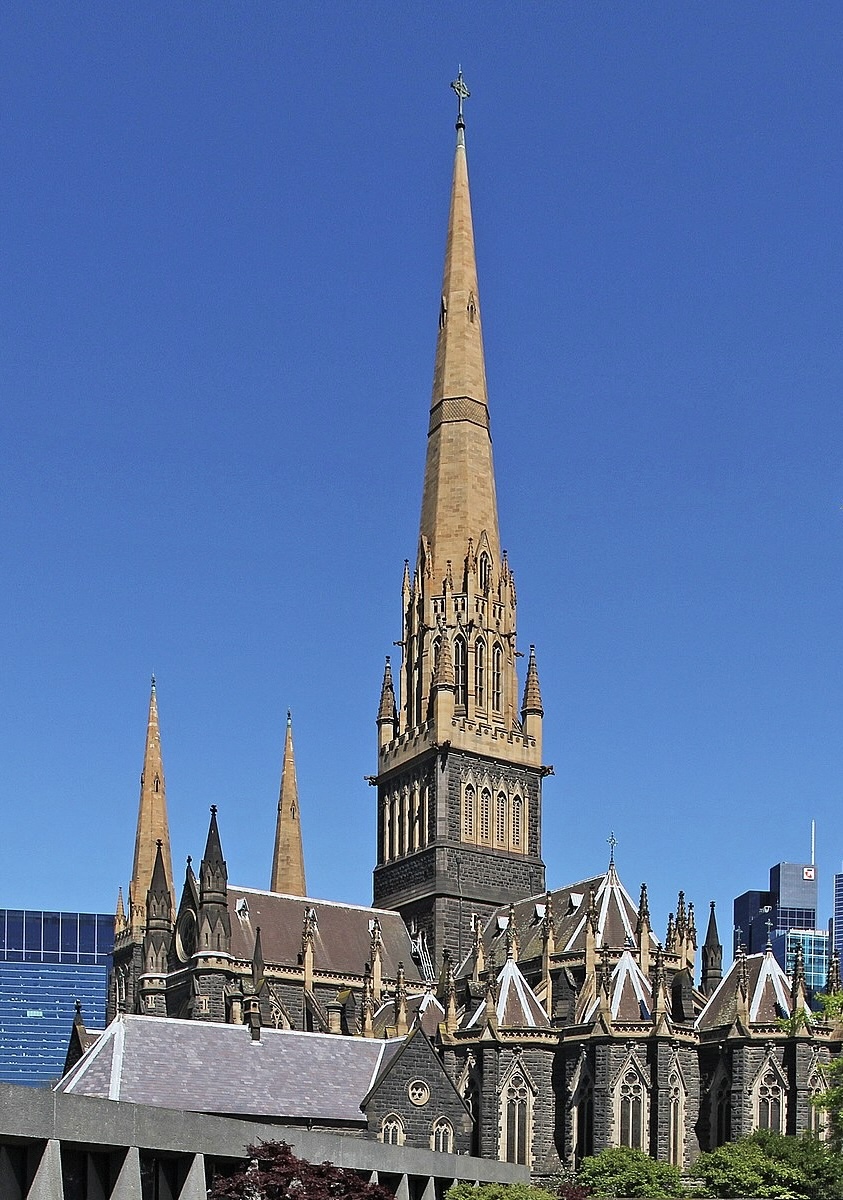
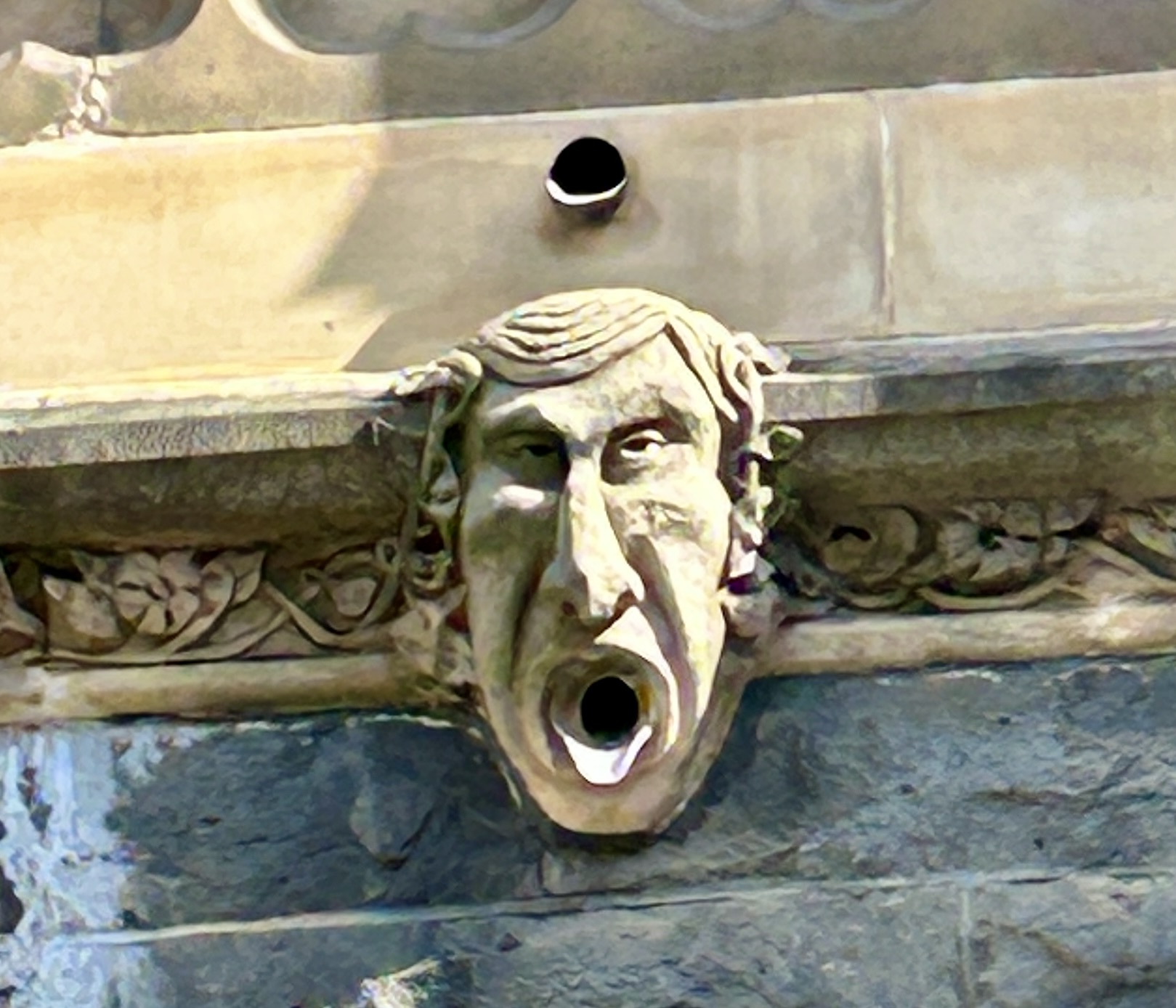
This is St. Patrick’s Catholic Cathedral which is a massive Gothic revival structure that took almost fifty years to build, being consecrated in 1897 and said to be one of the two largest churches in the world completed in the 19th century. The other is St. Patrick’s in New York City. The cathedral has a number of features that bear closer scrutiny such as this gargoyle carved in the image of politician Jeff Kennett who apparently was not offended, but rather delighted at being characterized in this way.
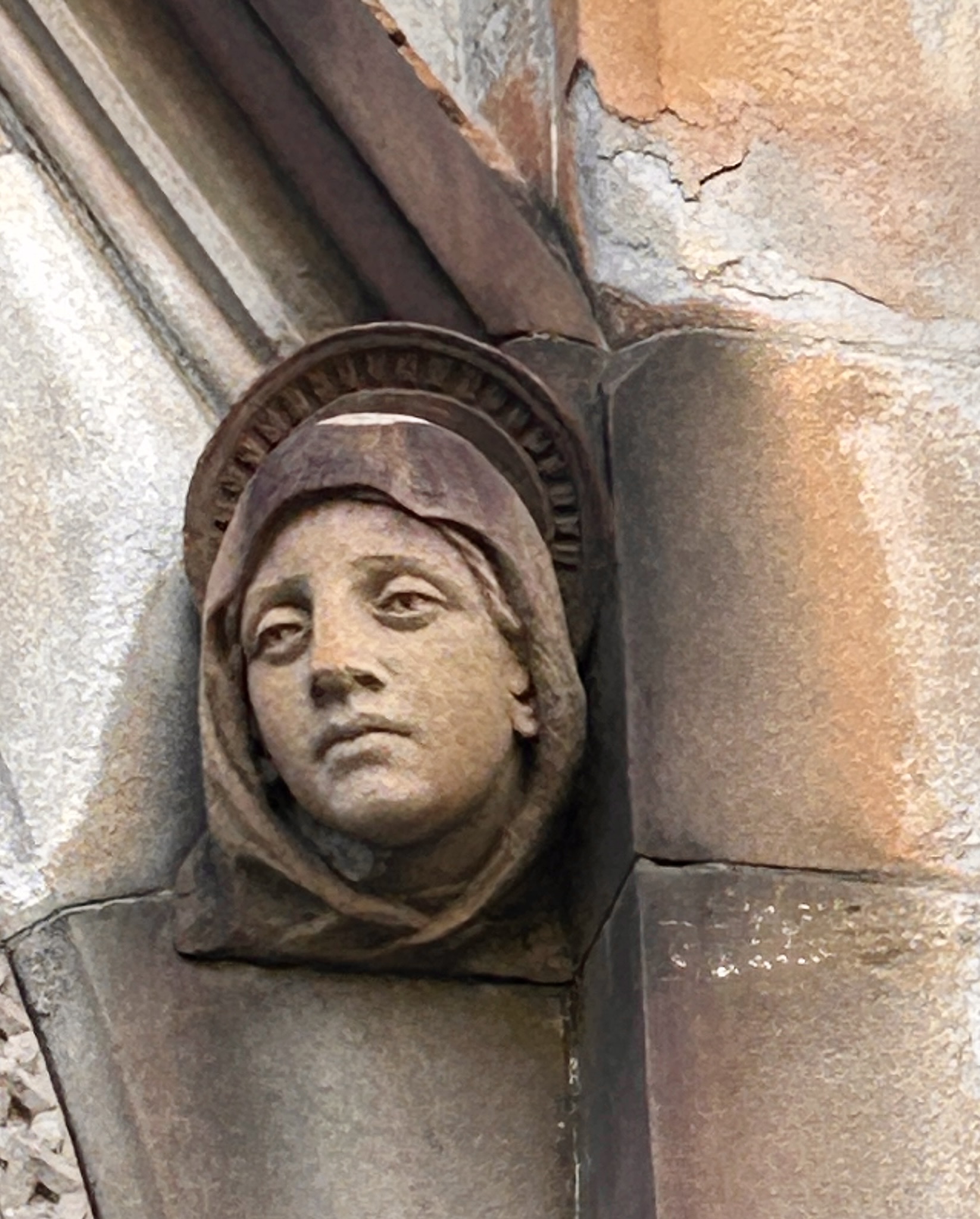
Another is this very sad-eyed, almost forlorn, Virgin Mary.
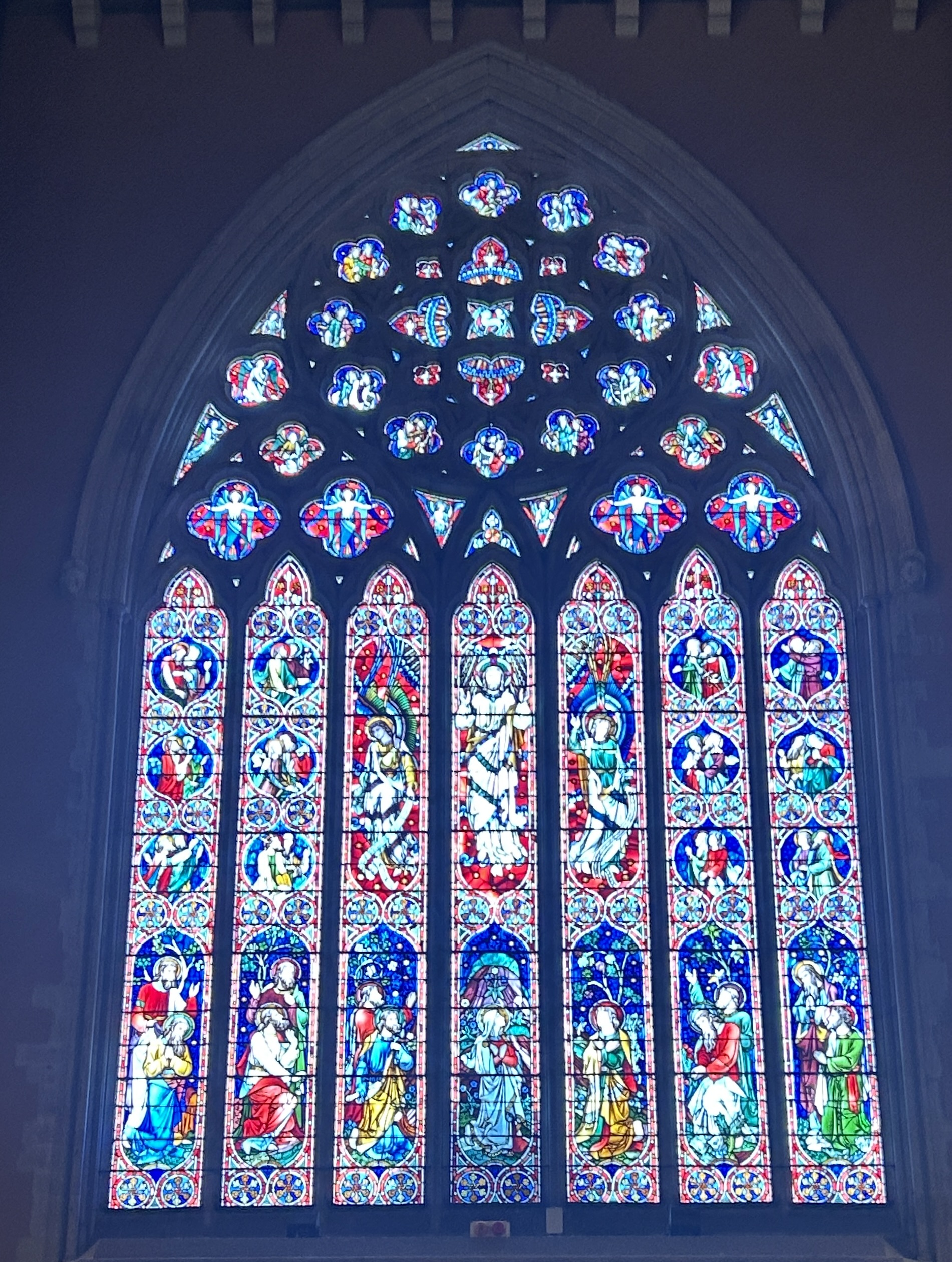
The interior is notable for its stained glass of which the Great West Window depicting the Ascension of Christ is the most remarkable. It was installed over 30 years before the building was completed.
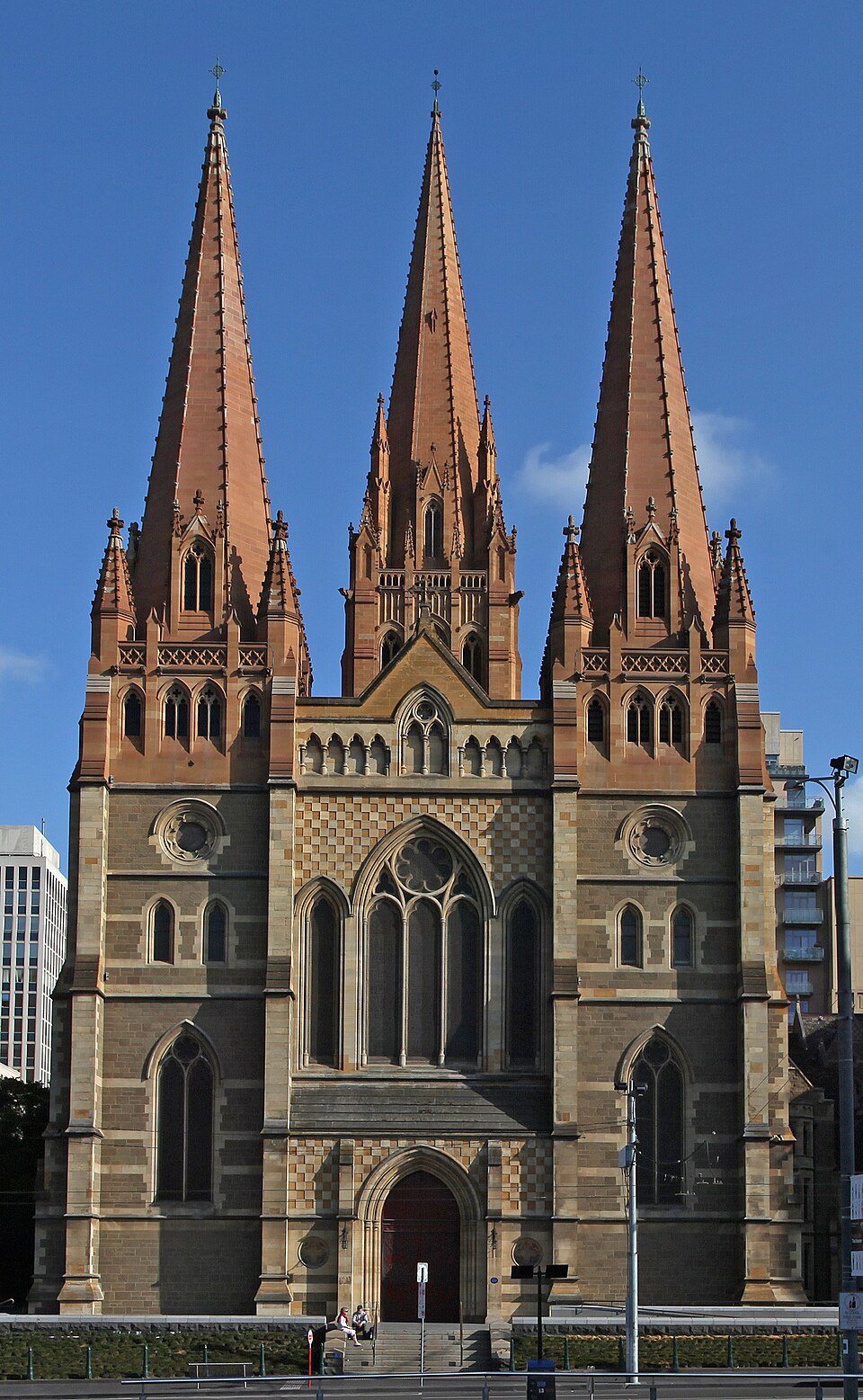
While the first Anglican church in Melbourne pre-dated St. Patrick’s by a number of years, it was to be dwarfed in size by the new Catholic construction. That was not acceptable to the Protestant parishioners of Melbourne who erected their own large cathedral from 1880-91, beating their opposition by six years. St. Paul’s Cathedral, built on the site of the first Christian ceremony in Melbourne in 1835, is the largest Anglican church in Australia and has an appearance quite different than St. Patrick’s.
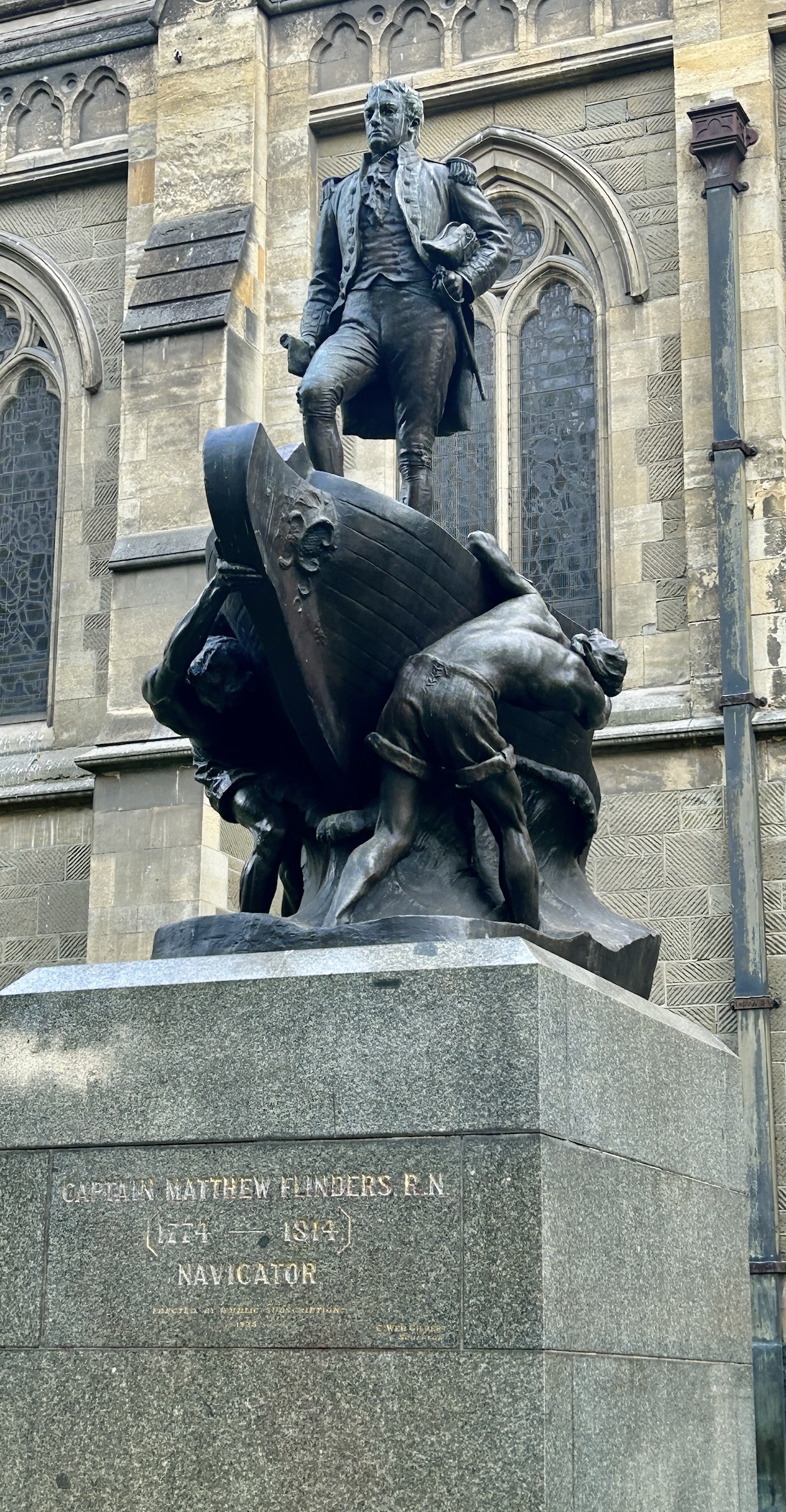
Just outside St. Paul’s facing Swanson street is the Matthew Flinders Monument, dedicated to a British Naval Officer who is credited with coming up with the name Australia. He completed the first inshore circumnavigation of the continent and now has over 100 geographical features named after him including mountain ranges, islands, bays, national parks, streets and the next place we are going to see.
Directly across from St. Paul’s is another iconic Melbourne structure, Flinders Street Station which was the first rail station in Melbourne and is now the terminus for over a dozen train lines, three light rail lines and a number of tram routes.
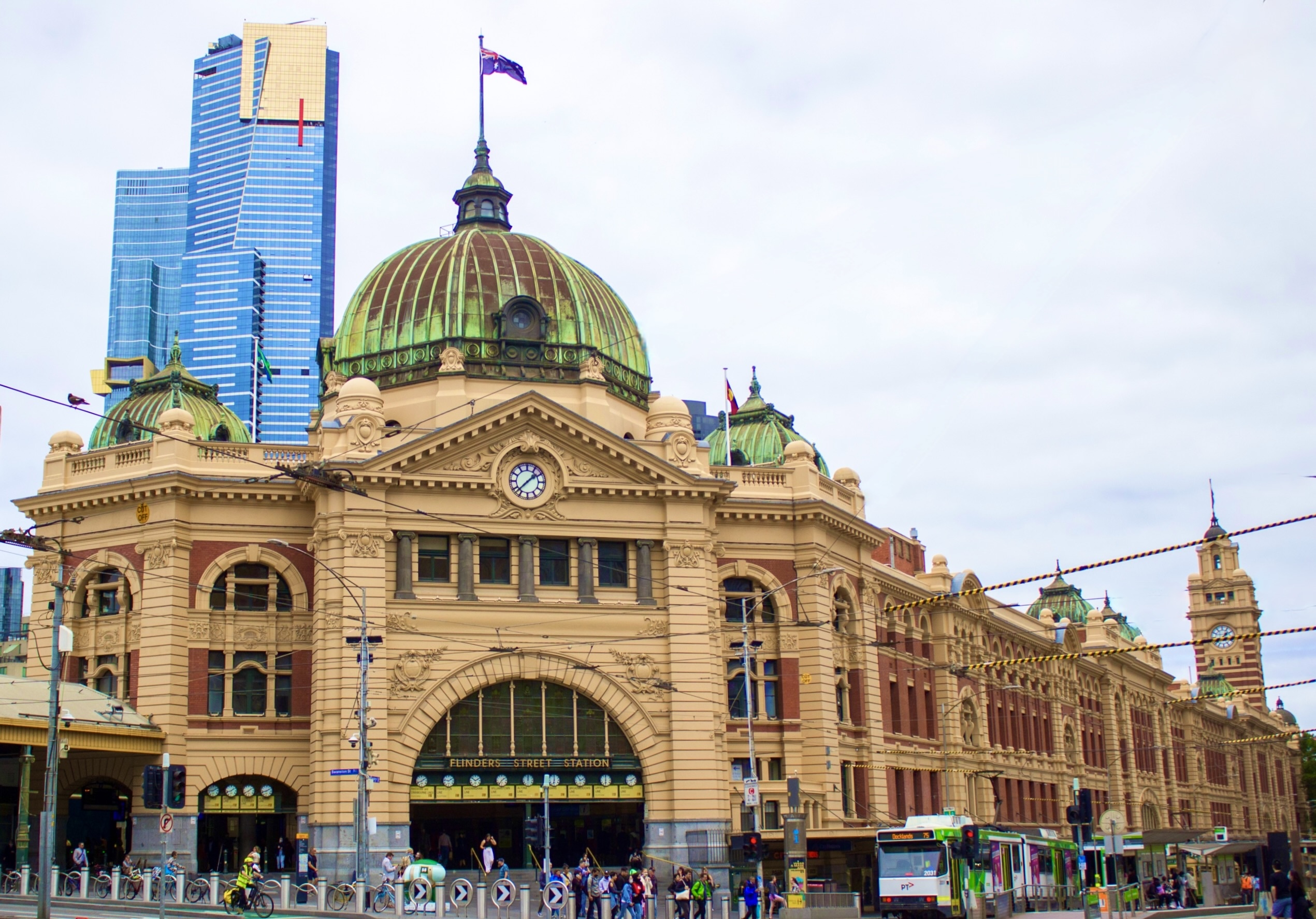
This massive building is not Victorian, but rather Edwardian, being completed in 1909, but the design was approved in 1900, so technically it spans both eras. It is an immensely impressive structure that has become a Melbourne icon and meeting place. No matter where you are in the Melbourne metro area you can make your way to Flinders Street Station and as a popular saying goes “meet up under the clock”. As train stations go I’ll put Flinders Street up against any in the world.
The Victorian era buildings just keep getting bigger and bigger. Just up the street from Flinders Station is the Victoria Parliament building which also served as the country’s capitol building from 1901 to 1927.
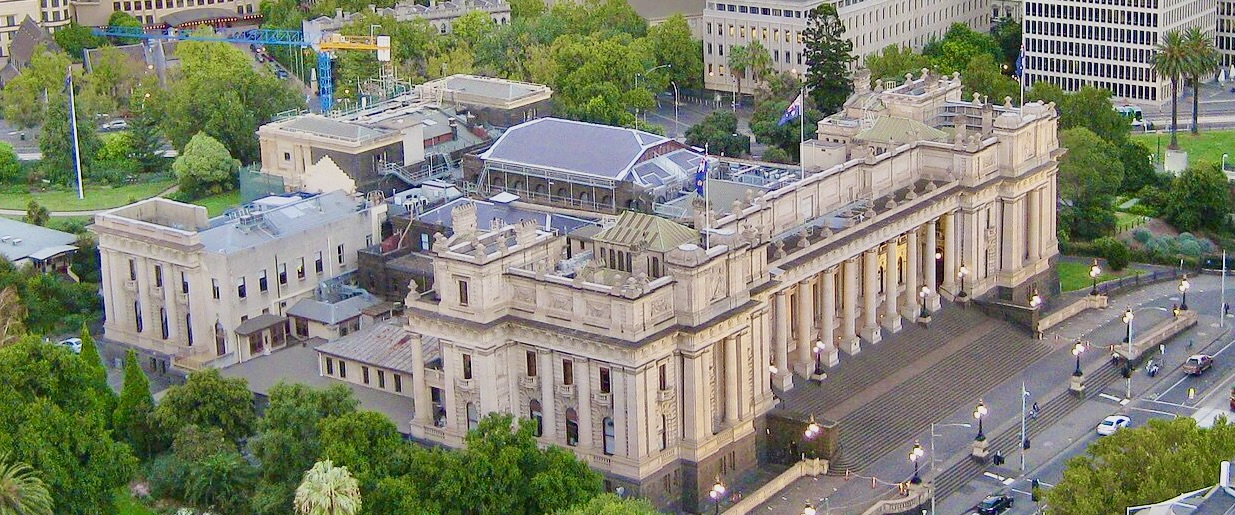
Built between 1855 and 1891 with many design changes along the way, it is a grand edifice that through its sheer bulk seems to epitomize both the power and prestige of government. We passed by it a number of times while in Melbourne and each time there was some type of minor protest going on including one where only three middle-aged white men were decrying the lack of Christian values to which nobody was paying any heed.
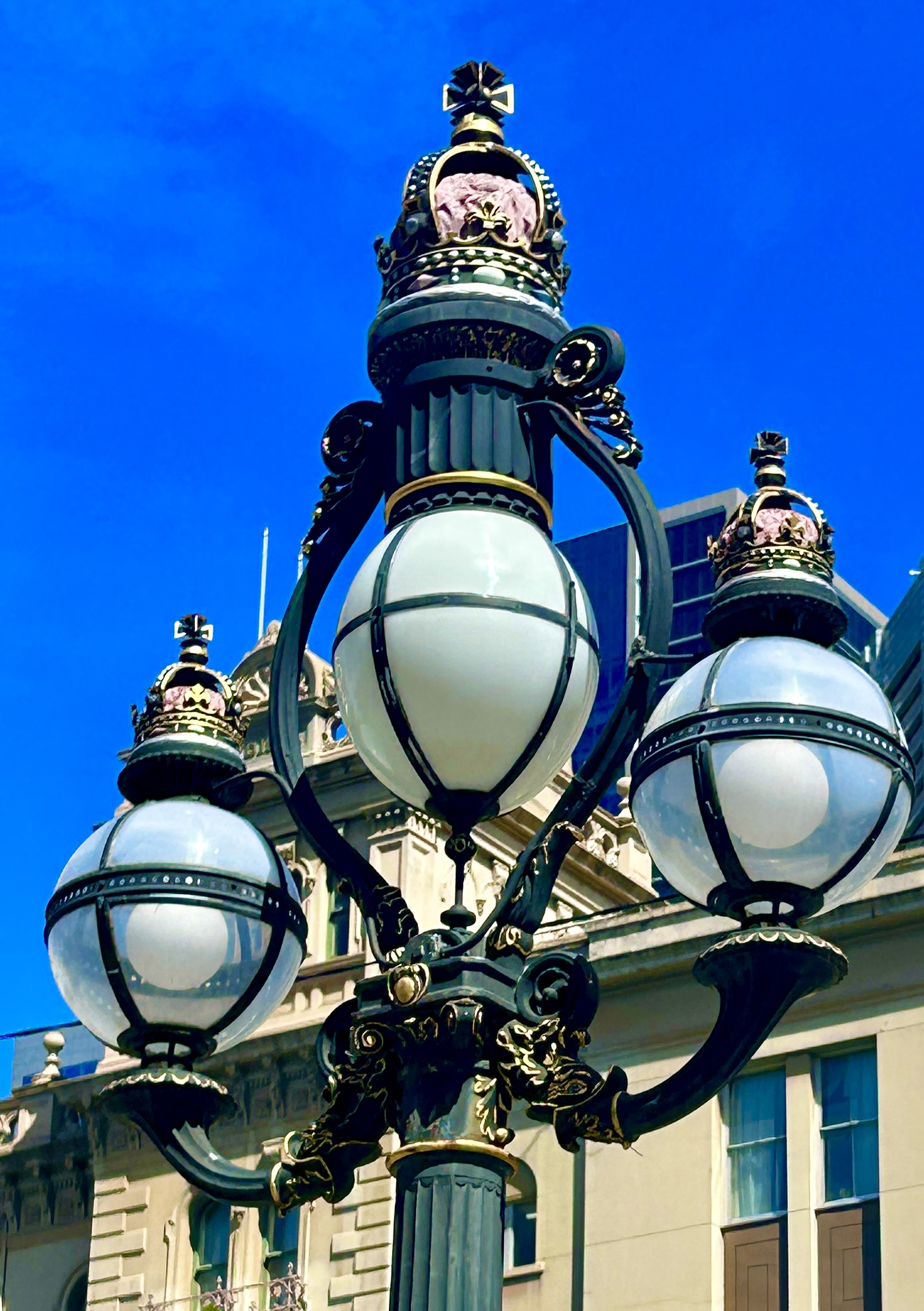
While the building is too large to photograph close up, its iconic street lamps with their distinctive crowns that look like they have brains inside of them, are very photogenic.
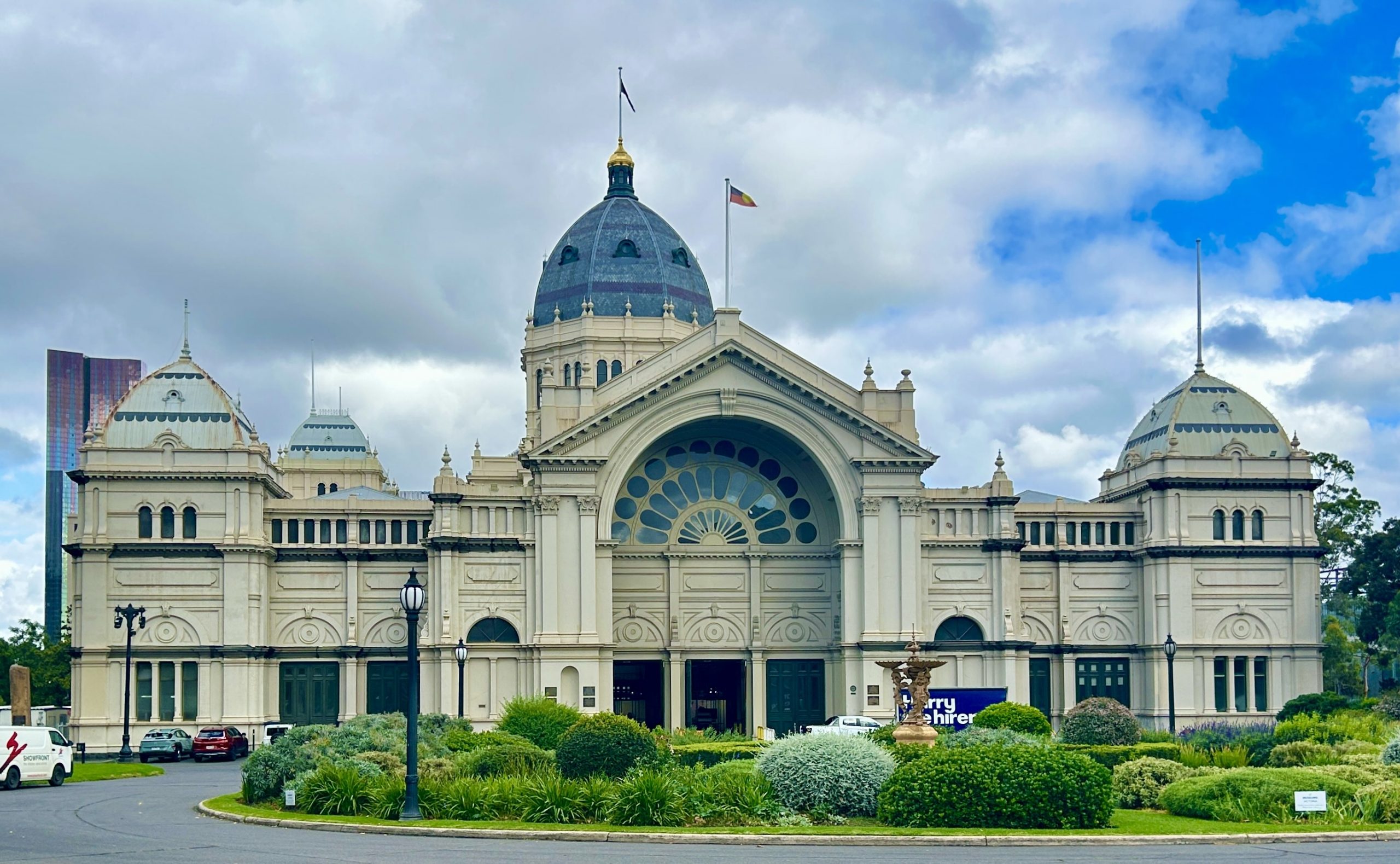
We now get to Melbourne’s most famous Victorian structure, the Royal Exhibition Building which seems to dwarf all the other buildings we’ve seen and which in 2004 was inscribed as a UNESCO World Heritage Site with this description:
The Royal Exhibition Building and its surrounding Carlton Gardens were designed for the great international exhibitions of 1880 and 1888 in Melbourne. The building and grounds were designed by Joseph Reed. The building is constructed of brick and timber, steel and slate. It combines elements from the Byzantine, Romanesque, Lombardic and Italian Renaissance styles. The property is typical of the international exhibition movement which saw over 50 exhibitions staged between 1851 and 1915 in venues including Paris, New York, Vienna, Calcutta, Kingston (Jamaica) and Santiago (Chile). All shared a common theme and aims: to chart material and moral progress through displays of industry from all nations.
Behold this mighty edifice. Because it is surrounded by Carlton Gardens you can get a much better sense of its grandeur than the other buildings we have viewed.
Although the UNESCO description states that the first great international exhibition was held in 1851, it fails to mention that it was the Great Exhibition of 1851 held in the Crystal Palace in London. This set off a worldwide competition to outdo the previous Great Exhibition which resulted in structures like the Eiffel Tower and the Palace of Fine Arts in Chicago. However, they are the exceptions as most of the Great Exhibitions used temporary structures or else, like the Crystal Palace were destroyed by fire or other disaster. So while you might think it odd that this one building has become a World Heritage Site, it is precisely because it is the best remaining remnant of this type of oneupmanship. It is still used today for a myriad of shows and exhibitions.
Not everything about Victorian Melbourne was about sheer size. We’ll conclude this post with visits to two smaller buildings that are just as much about the era as anything we’ve seen yet, even though neither was built during the 19th century.
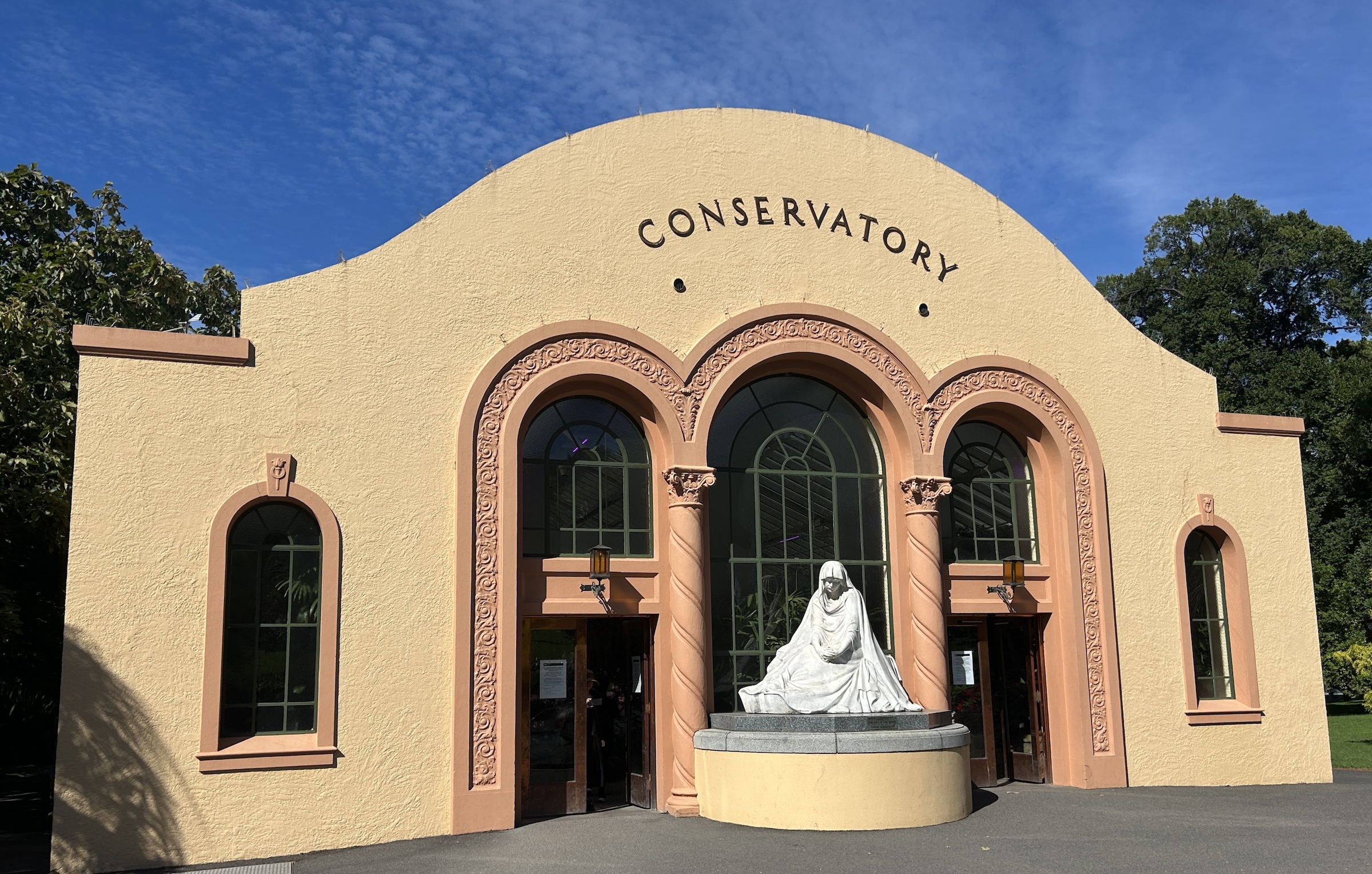
This Spanish Mission style building was erected in 1930 in Fitzroy Gardens which is at the southeast corner of CBD just behind the Parliament building. Conservatories were very much a Victorian thing with the Crystal Palace setting the example of what could be done using glass as a ceiling. Inside the flowers on display are changed five times a year to reflect the various growing seasons. On our visit it was begonias and the place was a riot of colour.
-
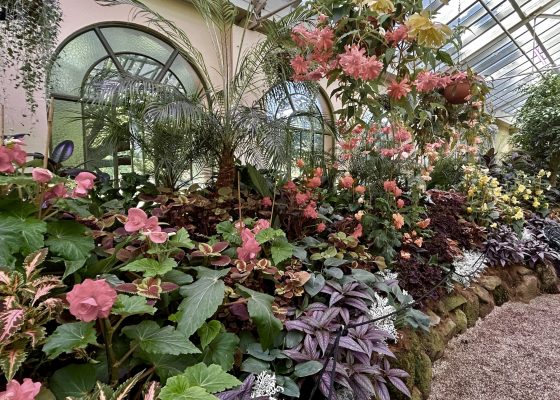
- Begonia Display
-
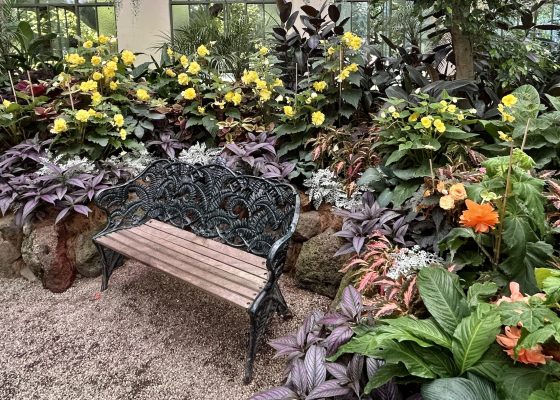
- Begonia Display 2
-
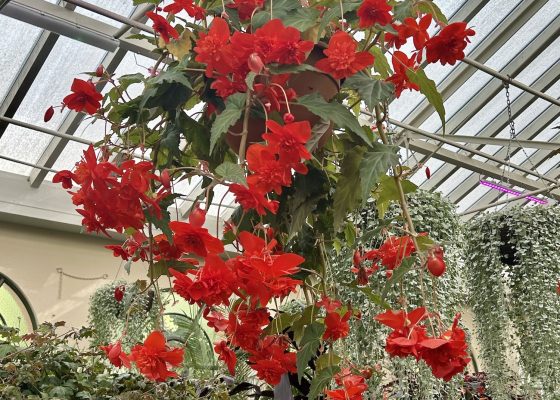
- Hanging Basket
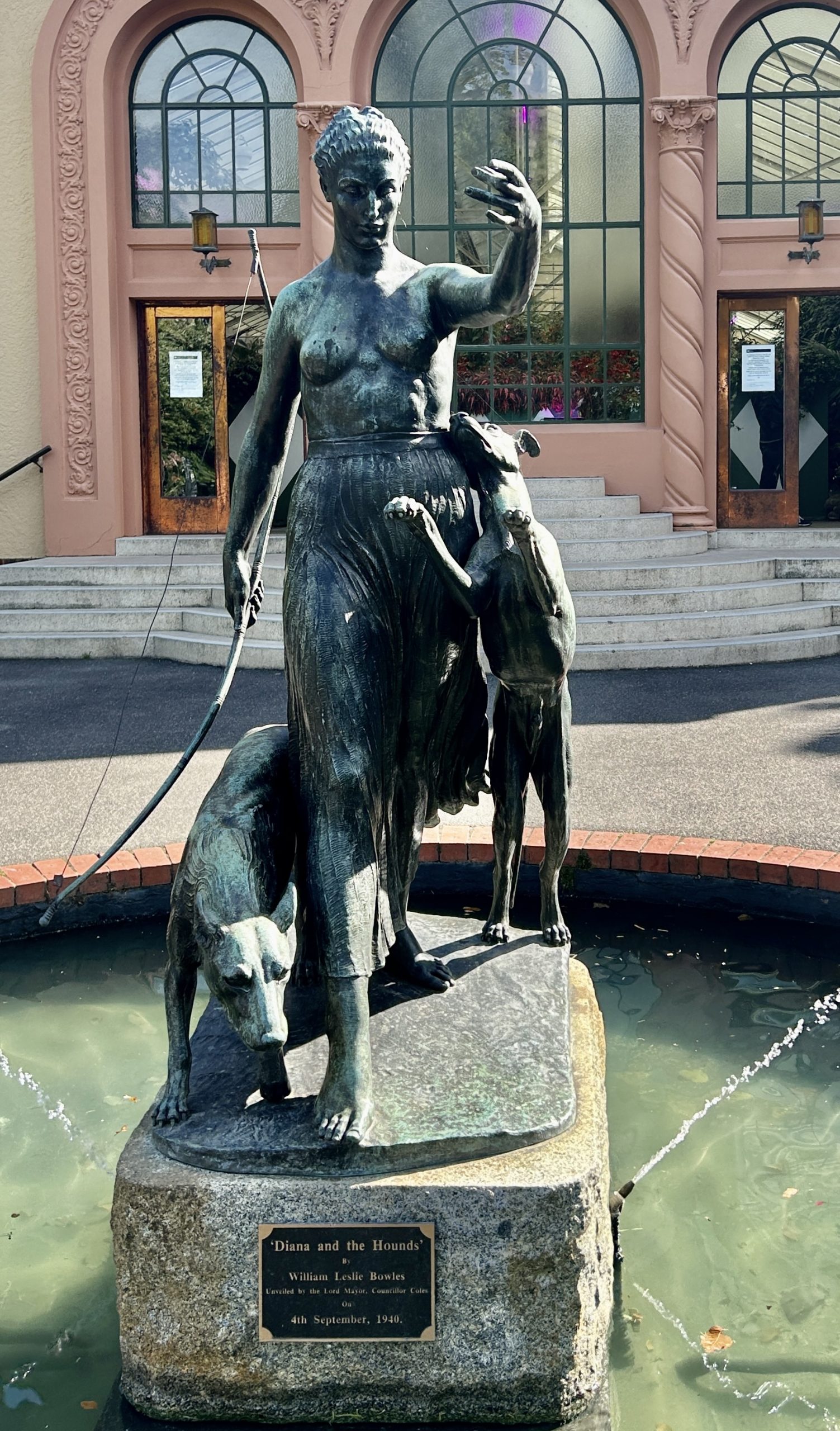
Coming out the other side there is this exquisite statue of Diana and her Hounds.
Only a short distance from the Conservatory is another small structure that was actually built in the 18th century, long before the Victorian era began. It is the cottage Captain James Cook’s parents built in the village of Great Ayton, Yorkshire in 1755. Threatened with destruction on its native soil, it was purchased by philanthropist Sir Russell Grimwade and presented as a gift to the city of Melbourne.
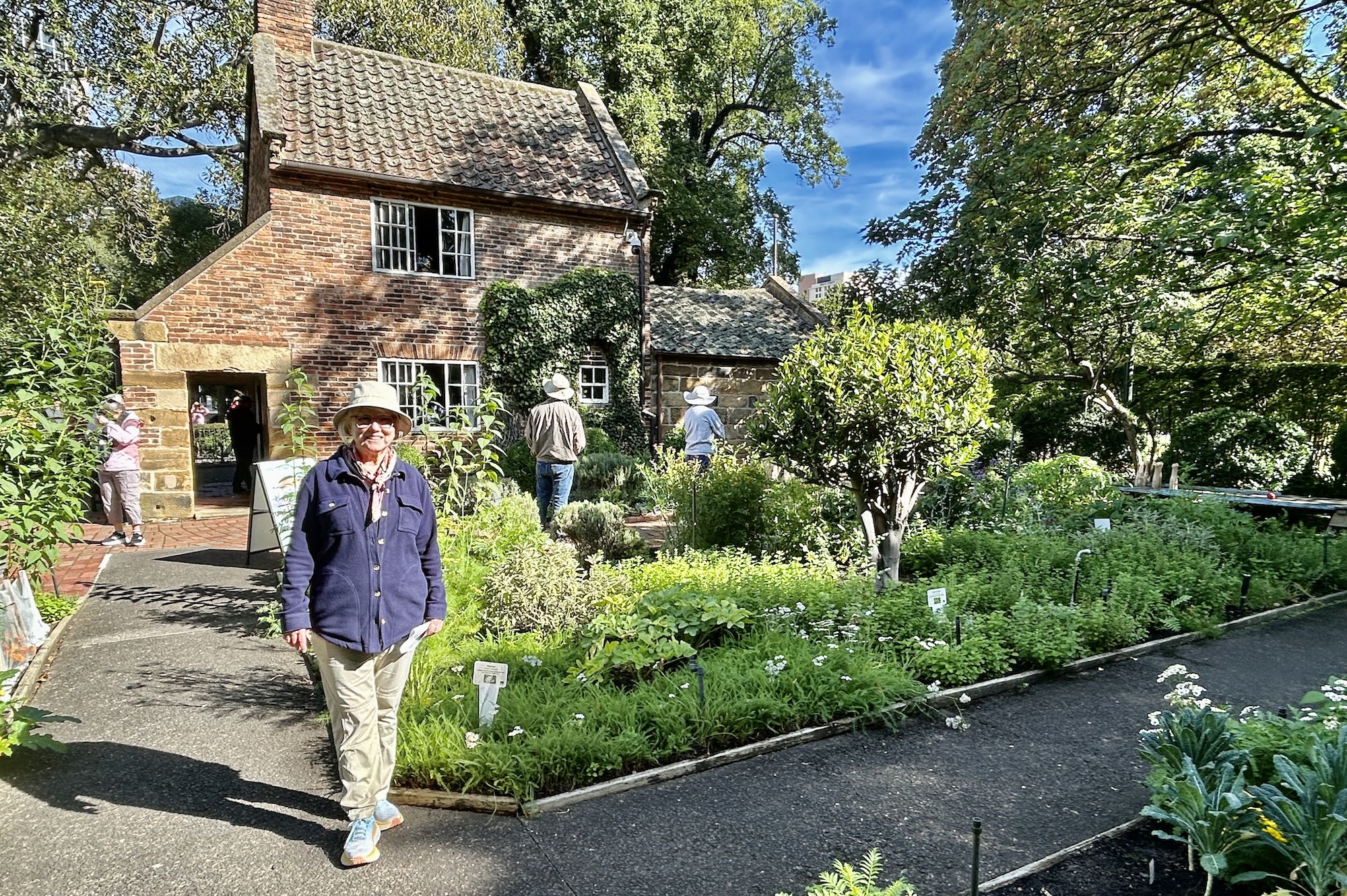
It’s a lovely little brick structure with a cozy interior.
-
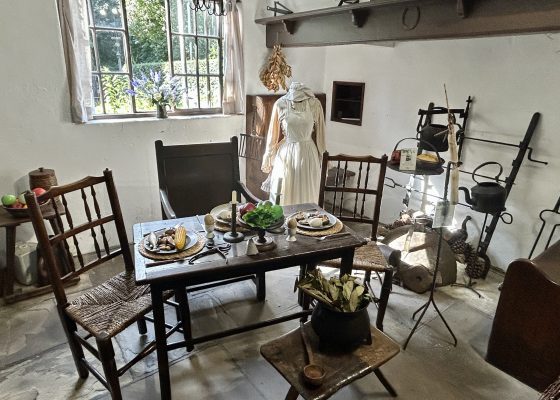
- The Kitchen
-
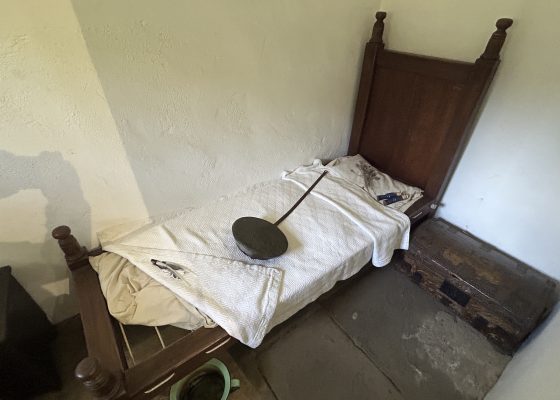
- Cook’s Bed when Visiting
-
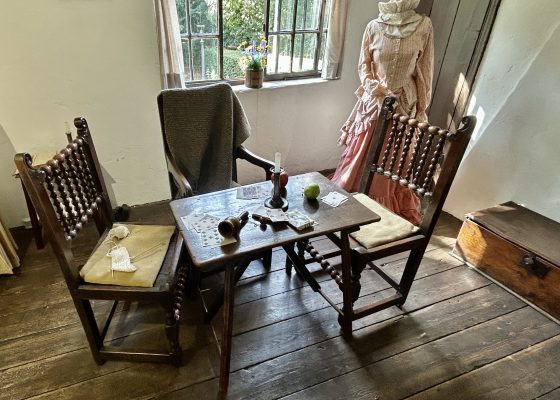
- Card Table
Near the entrance I had a chance to renew my acquaintance with the great navigator once again. Previous meetings have been in Newfoundland, New Zealand, Tahiti, Hawaii and British Columbia.
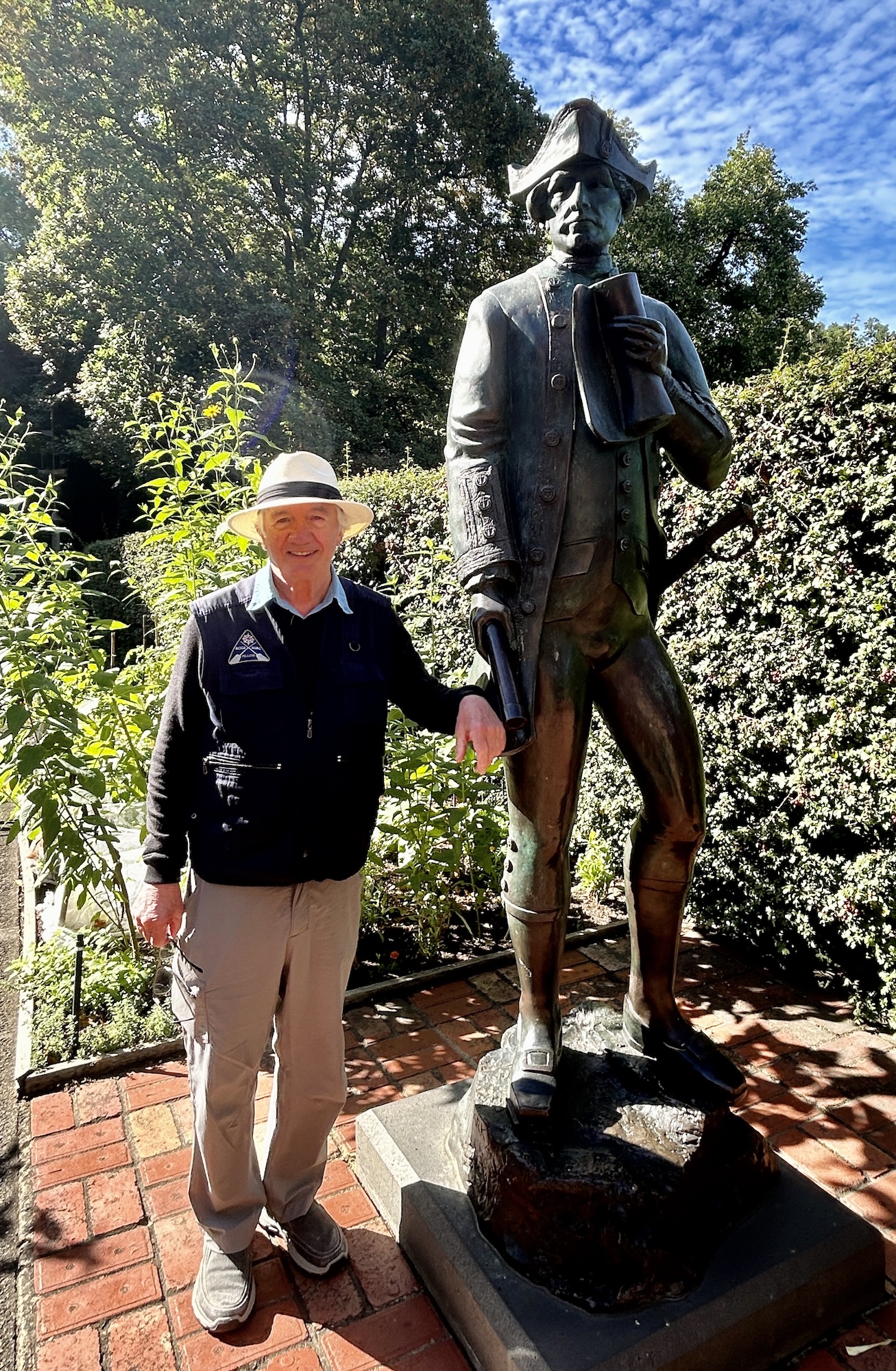
That concludes our building tour, but not this post as we need to visit one more famous Melbourne figure from the Victorian past.
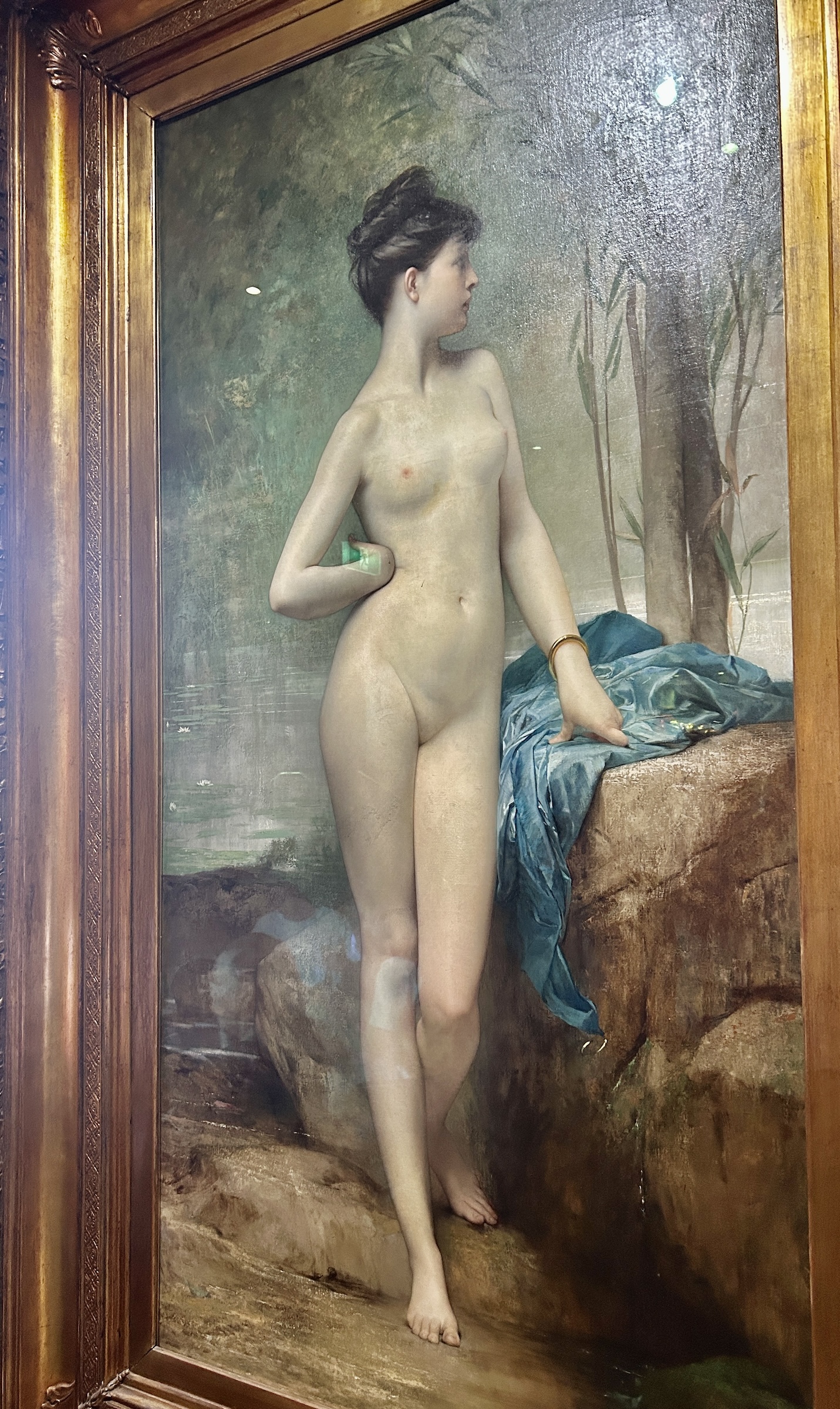
This is Chloe painted by French artist Jukes Levebre in 1875. It caused an uproar when put on exhibition at the National Gallery of Victoria in 1883 and had to be removed. In 1908 it was purchased by the owners of the Young and Jackson hotel which is itself a Victorian building dating from 1861. It has been on display in the elegant upstairs dining room ever since. This is where our AA guide Brandi McCarthy took us for our first evening meal and it was a great choice that fit in perfectly with the Victorian theme of this post.
In the next post we’ll venture further afield in Melbourne crossing the Yarra River to the Royal Botanic Gardens, the Shrine of Remembrance and other attractions outside the CBD. I hope you’ll join us.