
Lima – Peru’s City of Kings

This is my sixth post from a February 2026 Kingdoms of the Andes tour to Peru and Bolivia with Adventures Abroad. I had opted for this particular tour because it included the Nazca lines and the Ballestas Islands, two places not found on most Peruvian itineraries. The city of Ica with its famous winery, great museum and nearby desert oasis was an unexpected bonus on this prequel to the more expected sites on a tour of Peru. Our group of nine has now returned to Lima where we are joined by seven new travellers for the rest of the Peruvian section of the tour.
I had arrived in Lima a few days before the start of the pre-tour and stayed in the upscale Miraflores district of the city which I wrote about in this post. Today we will explore the historic centre of the city which is a UNESCO World Heritage site and then visit the Larco Museum, one of the largest collection of pre-Columbian Peruvian artefacts in the world. It should be a very memorable day so I hope you’ll join us.
History of Lima
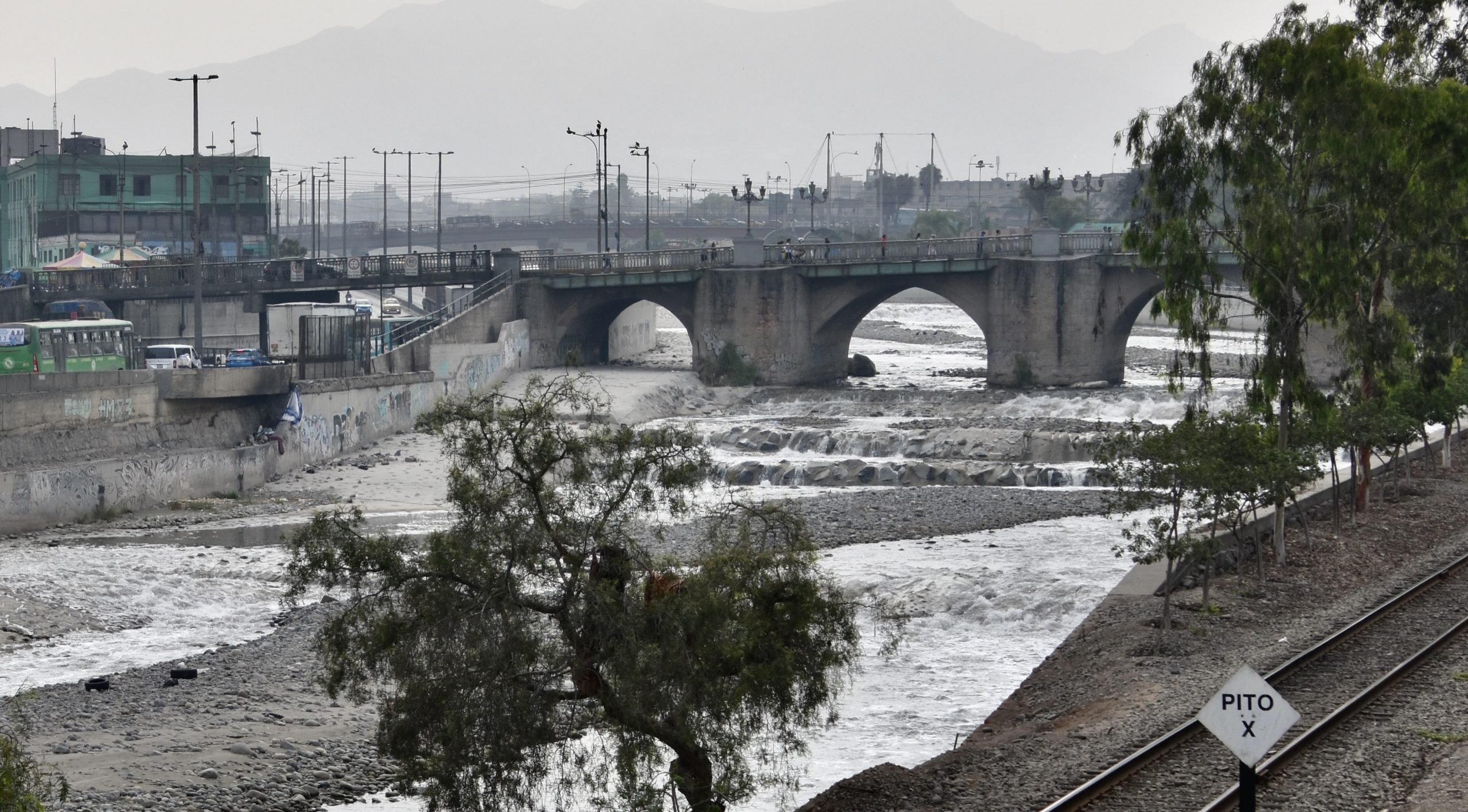
The city we now call Lima was founded by conquistador Francis Pizarro in January 1535 on Epiphany Day which celebrates the adoration of the Magi of the infant Jesus. Thus he named the new settlement La Cuidad de los Reyes which translates as the City of Kings. However this cumbersome name was gradually dropped in favour of Lima which is not a corruption of the word Rimac from the river that flows by the original site as is often claimed. Rather it was the Spanish pronunciation of the Quechua word Limaq that referred to the area around the Rimac River in general and had been in use for centuries.
This area of the coast had been inhabited for thousands of years before the Spanish arrived and there were a succession of various cultures that called the area home including the Lima (100-650), Wari (600-1000), Ichma (900-1470) and lastly the Incas who had arrived only a few decades before Pizarro. These pre-Spanish cultures left a number of important archaeological sites that still exist today with the city of Lima literally built up around them. One of the most notable is Huaca Pucllana in the Miraflores district of the city. It is a massive adobe pyramid built by the Lima civilization between 200 and 500. Although we did not visit this site on this tour, I note that it is included on the upcoming itinerary. I’m kicking myself for not visiting it when I had the time while staying in Miraflores before the trip began.
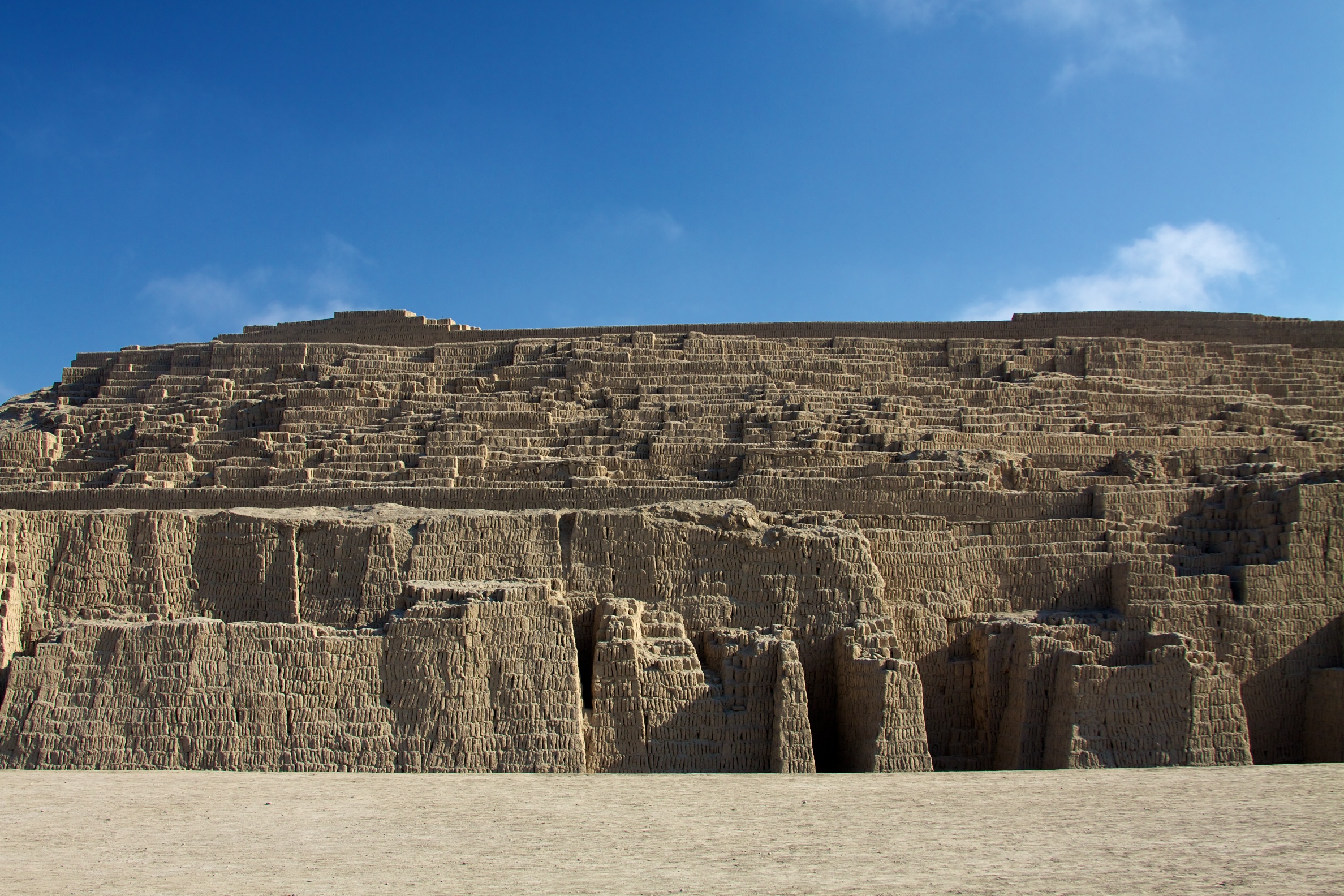
Back to Pizarro’s Lima.
The conquistador personally laid out the design for the colonial city and it remains today the historic heart of the city with a number of important buildings located within walking distance of each other. In 1988 UNESCO inscribed the Historic Centre of Lima as a World Heritage Site with this description:
The Historic Centre of Lima, known as the “Ciudad de los Reyes” (City of Kings), is located in the Rimac valley, and was founded by Spanish conqueror Francisco Pizarro in January 1535 on the territories led by the Chiefdom of Rimac. Lima was the political, administrative, religious and economic capital of the Viceroyalty of Peru and the most important city of the Spanish dominions in South America. The city played a leading role in the history of the New World from 1542 to the 18th century when the creation of the Viceroyalties of New Granada (1718) and of La Plata (1777) gradually put an end to the omnipotence of the oldest Spanish colony on South America.
Ok, we’ve parked our bus in a large parking lot overlooking the Rimac River so let’s get out and begin exploring this famous city.
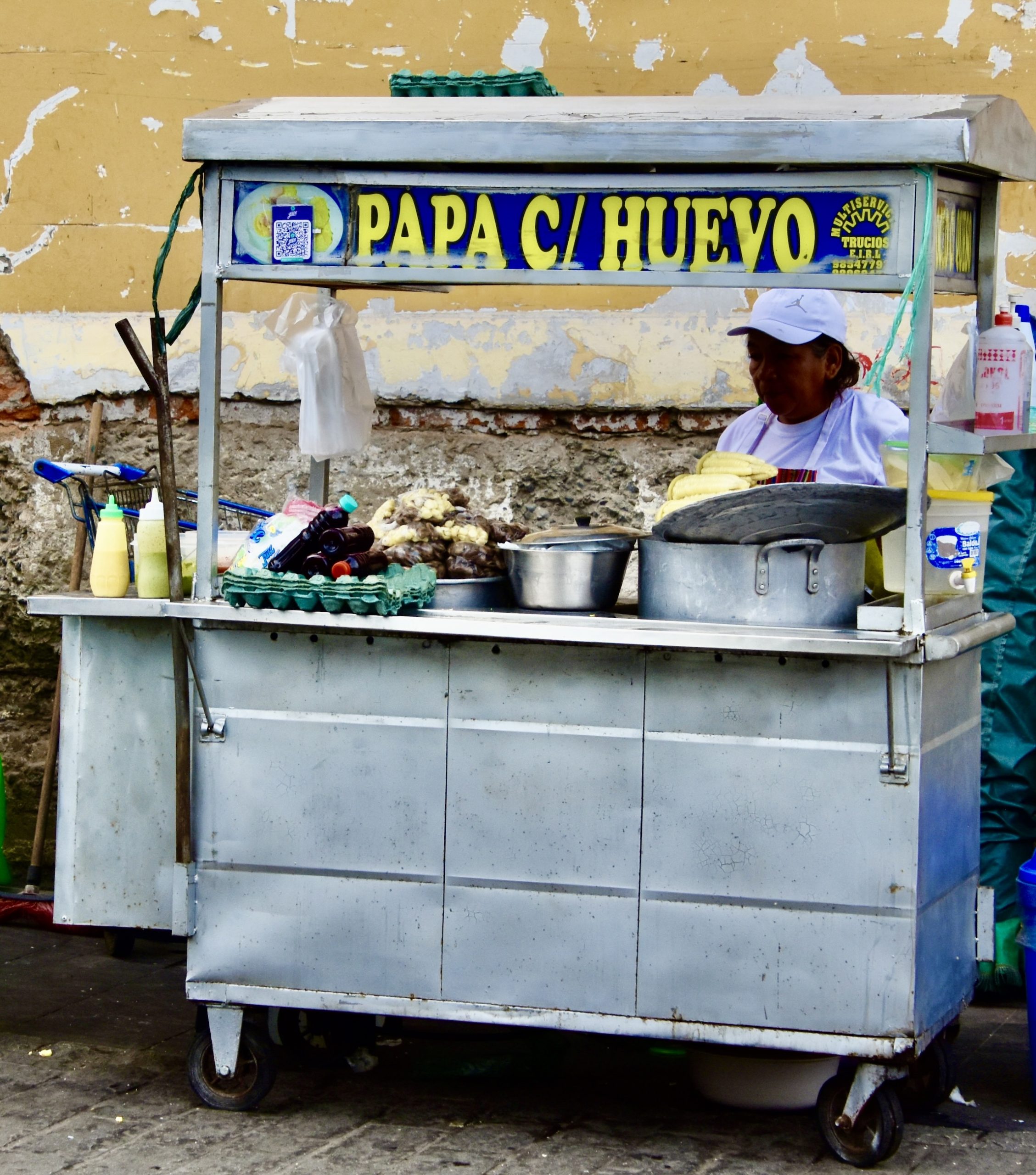
The first thing I notice is not historic at all, but rather one of many Lima street vendors selling papa con huevo (potato with egg) with each vendor having their own recipe for the secret sauce they put on the dish to make it extra special. There are a lot of people coming out of the Lima metro grabbing a take away breakfast on their way to work.
The Historic Centre of Lima
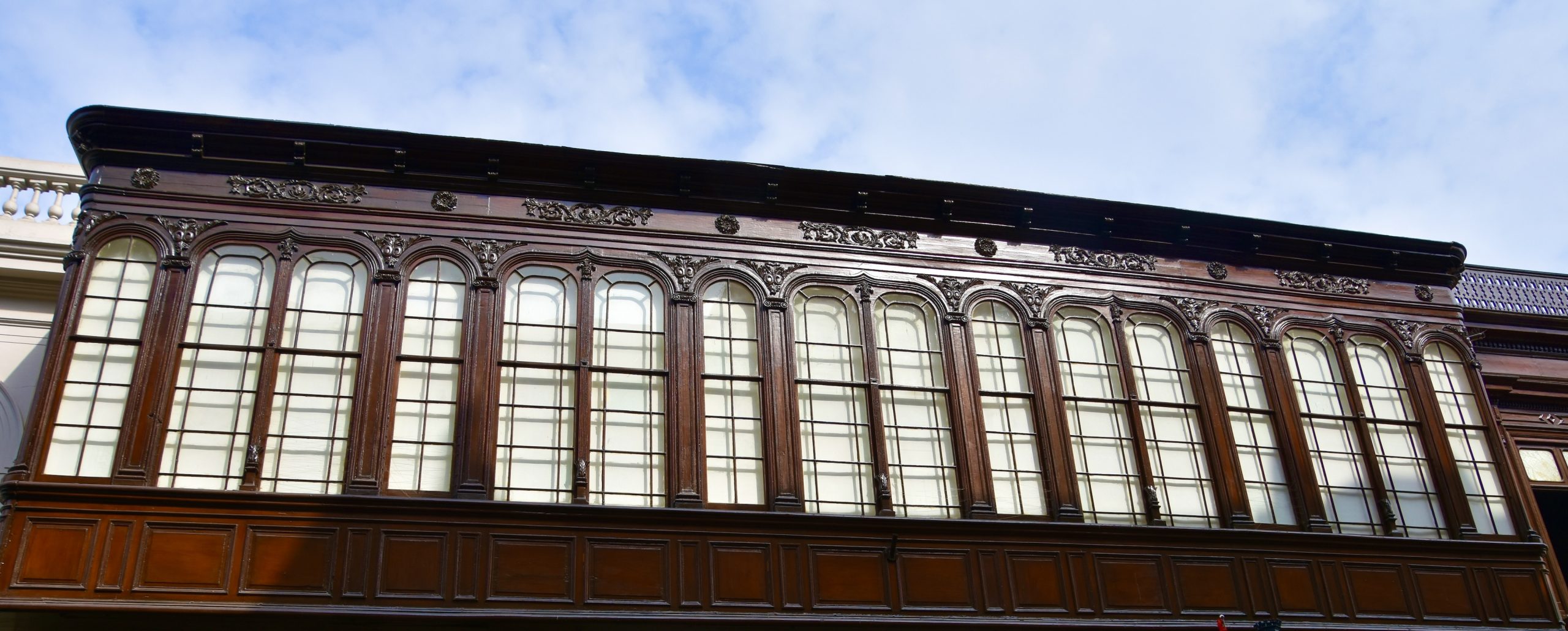
Our destination is the Plaza Mayor and we head there via this pedestrianized street lined with houses with distinct balconies that date back to the 17th and 18th centuries. They are one of the key features that make Lima’s historic district unique.
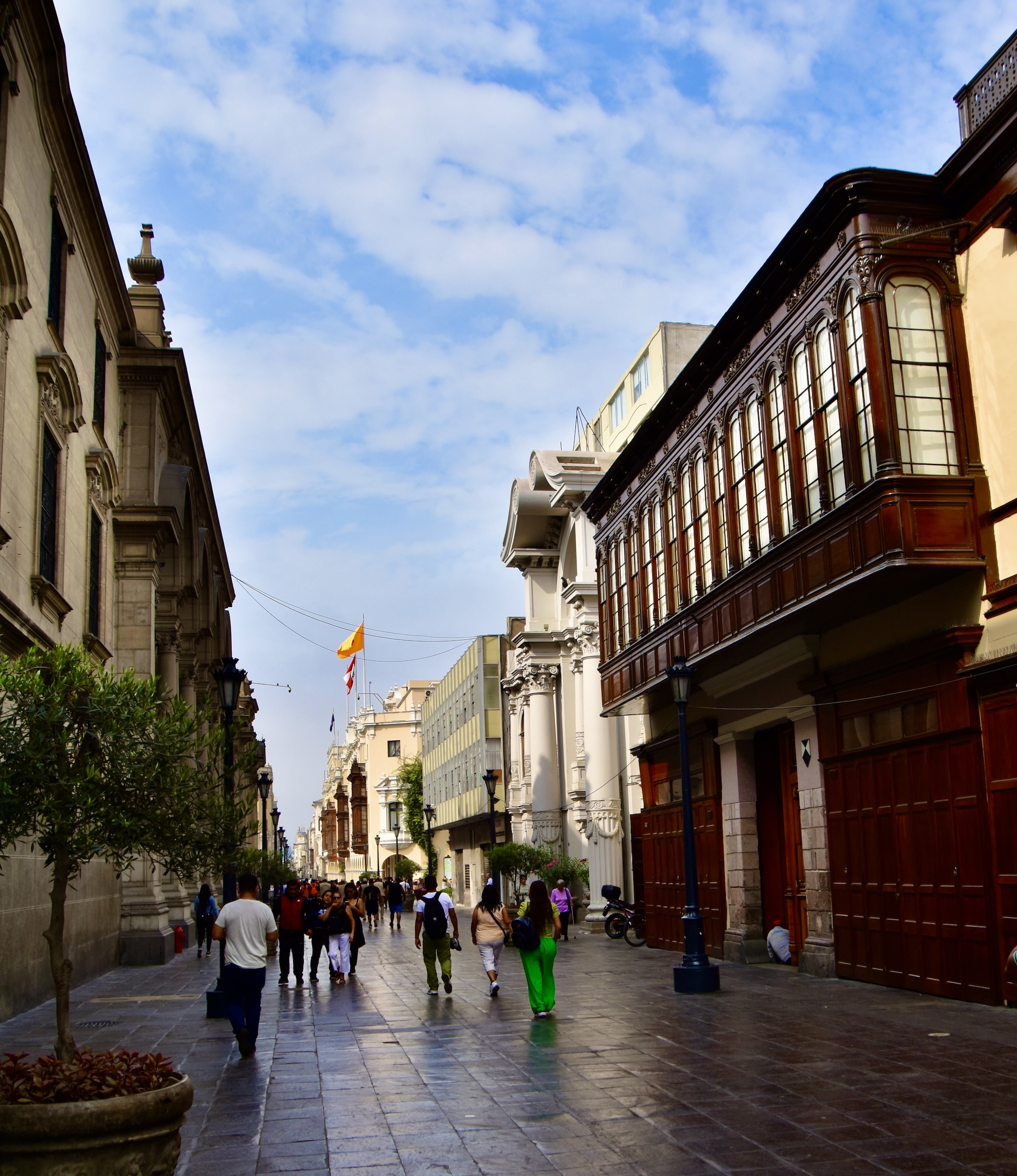
Our local guide points out this balcony as being part of the oldest existing European built house in the New World.
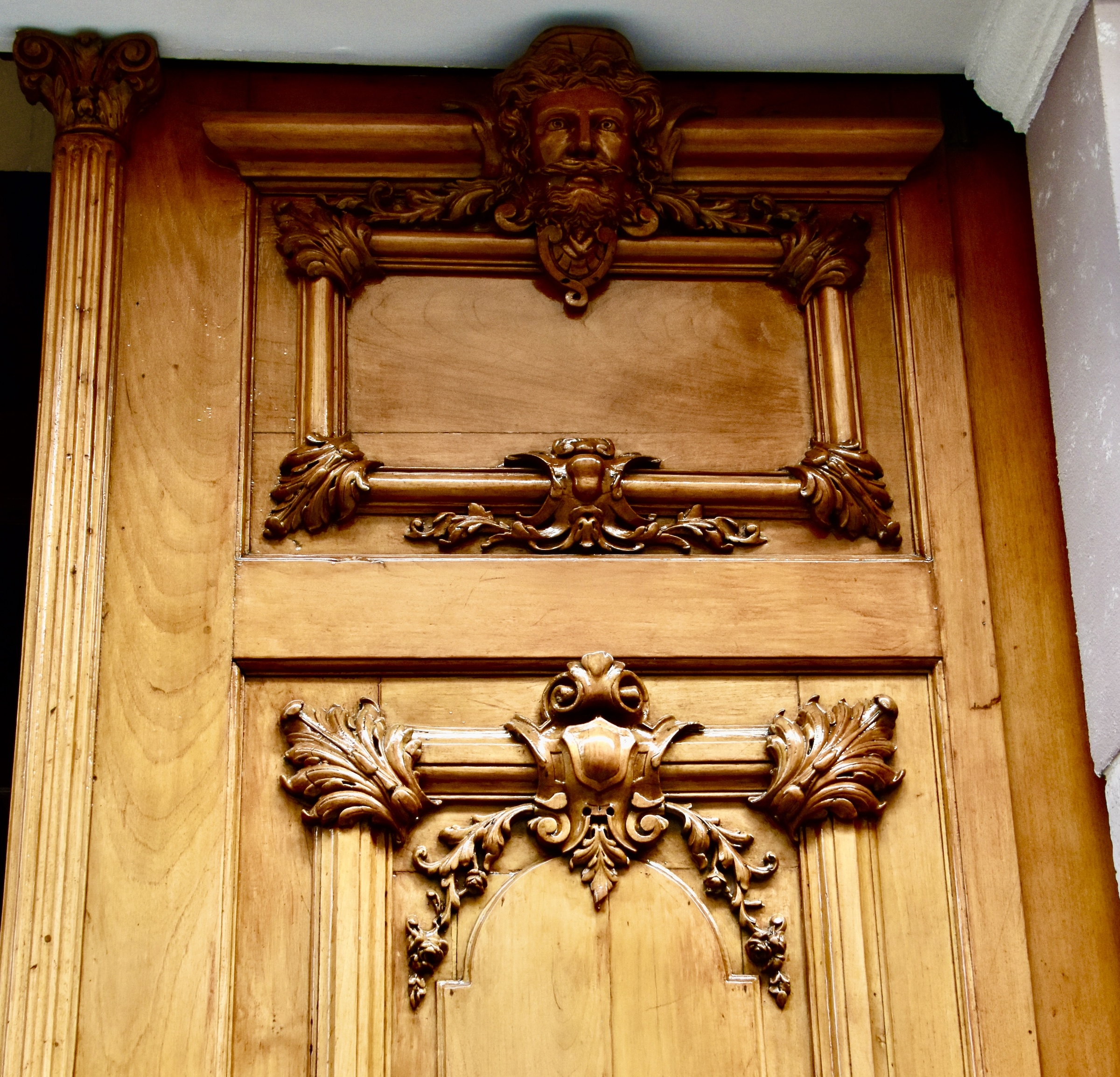
Many of the doors have exquisite carvings showing the faces of the original owners.
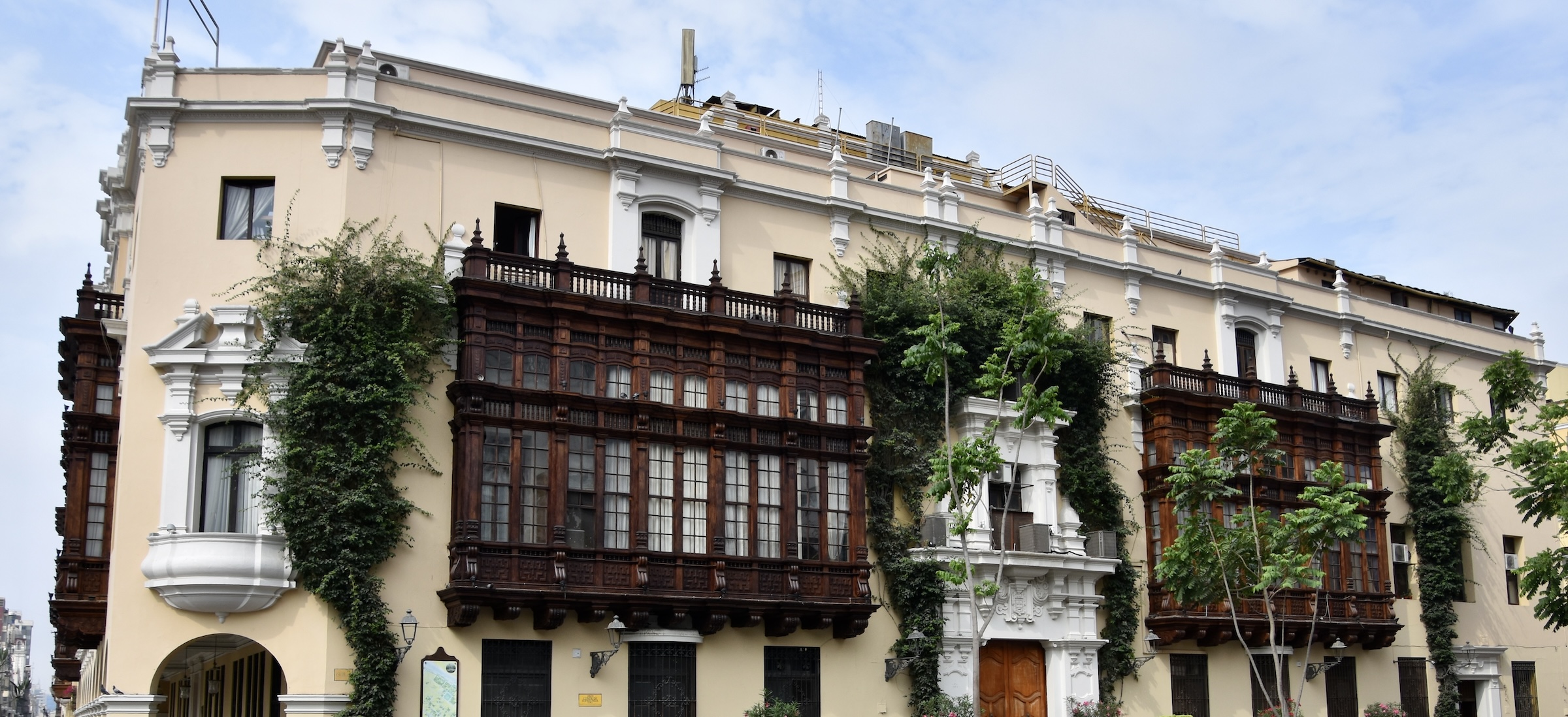
As we approach the Plaza Mayor the houses get bigger and bigger, some might be called palaces.
And then we come onto one of the largest and most majestic Plaza Mayors in Latin America. In 1523 King Charles I of Spain had designated specific rules for the foundation of cities in the Spanish colonies. The first consideration was always to be the location of the central plaza around which the principal government and religious buildings would be constructed. Pizarro followed that dictum to a tee, with the Cathedral and Archbishop’s Palace on one side, the Governor’s Palace on another side and the Municipal Palace on another. In the centre is the oldest fountain in the New World.
Here is a 360° panorama.
Let’s take a look at each building in turn starting with the Metropolitan Cathedral which is both the oldest and the largest church in Peru. Pizarro started it in 1535 on land that contained an Incan shrine and palace, continuing a practice of building over the remains of conquered peoples that is as old as time. It took over 250 years to get it into its present configuration with the final touches added in 1797.
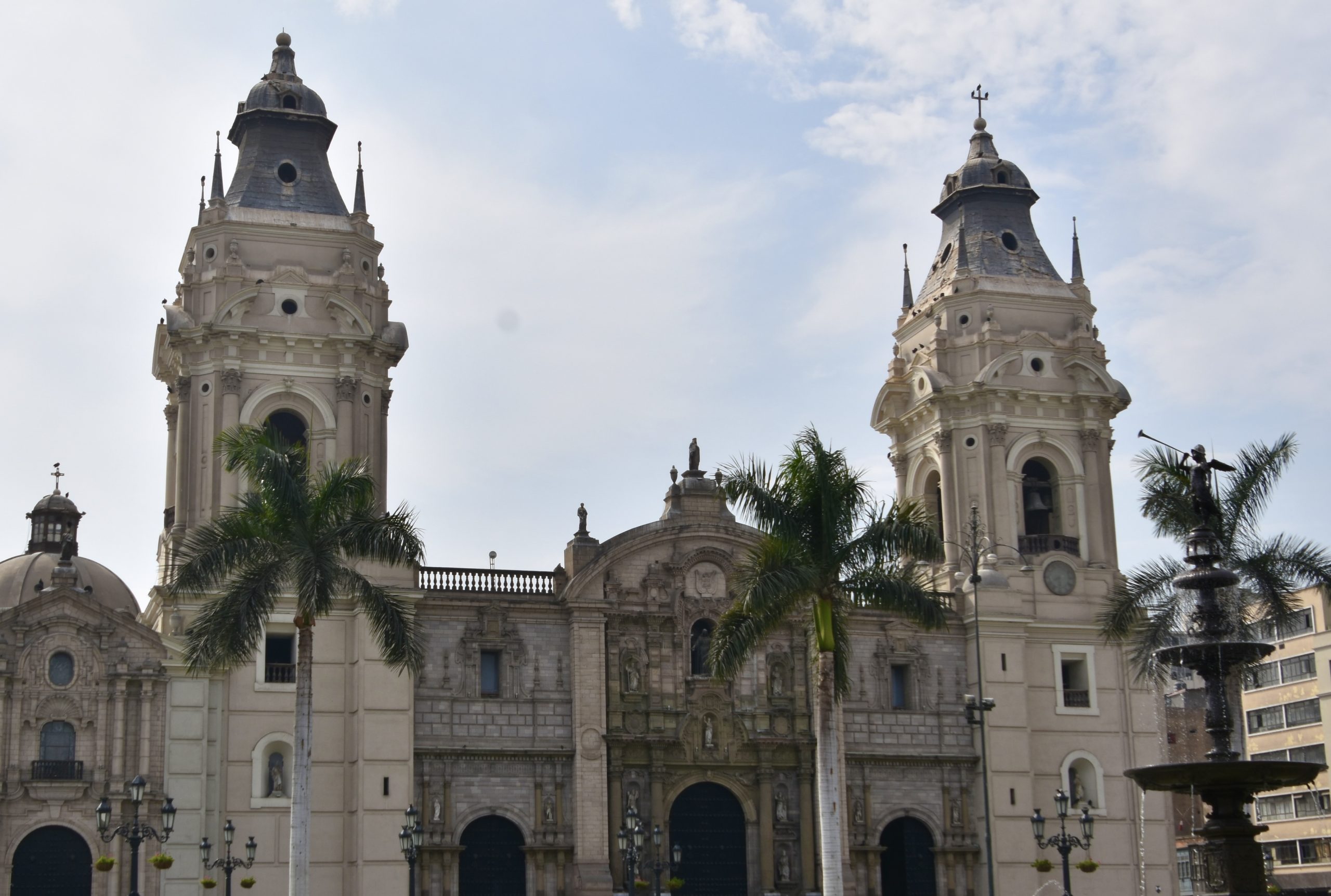
There is an impressive statue of Jesus above the entrance although the black vultures that seem to be ubiquitous in the historic centre of Lima, are not giving it much respect.
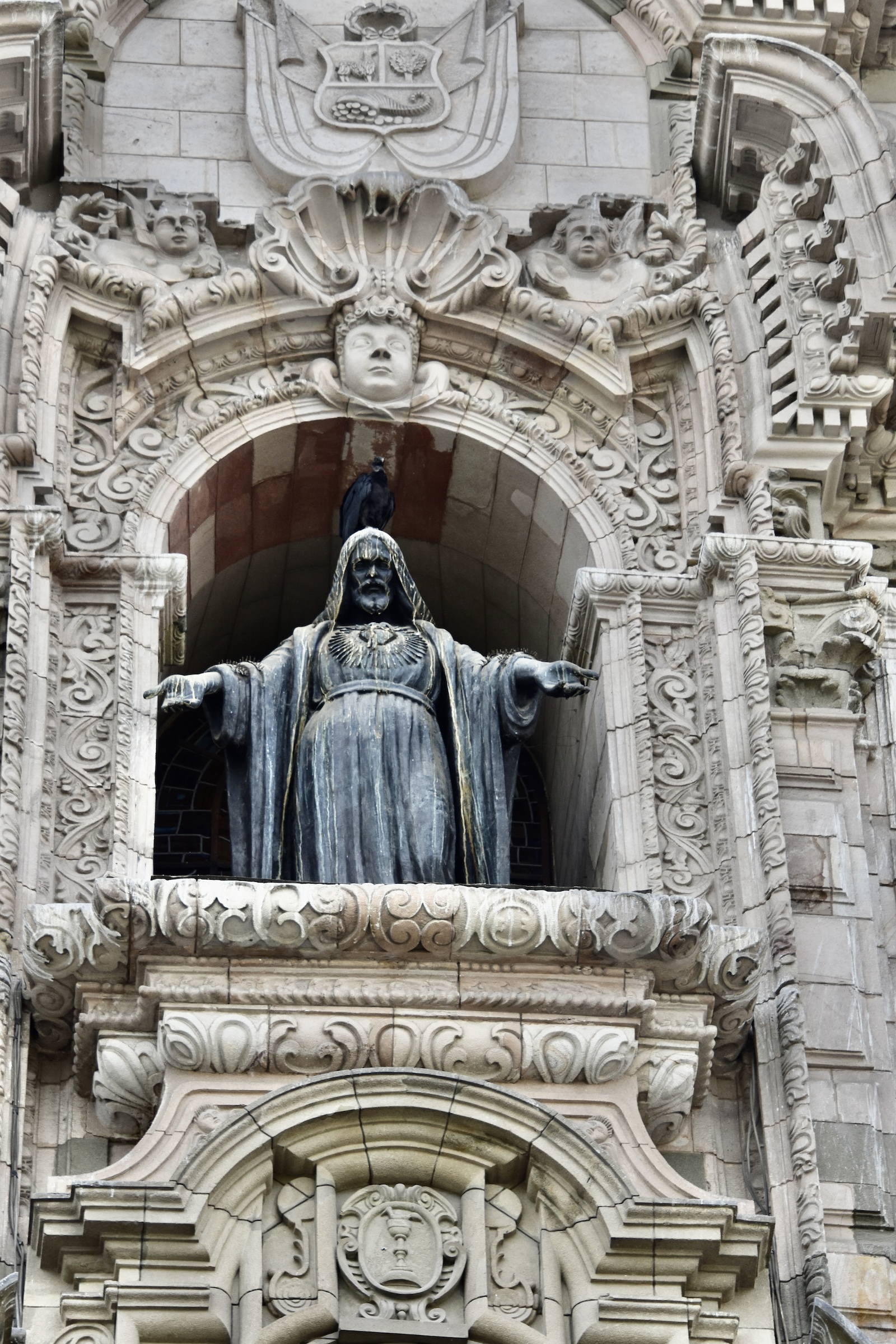
The woman’s face above Jesus is St. Rose of Lima, the first saint in the New World and the patron saint of Peru.
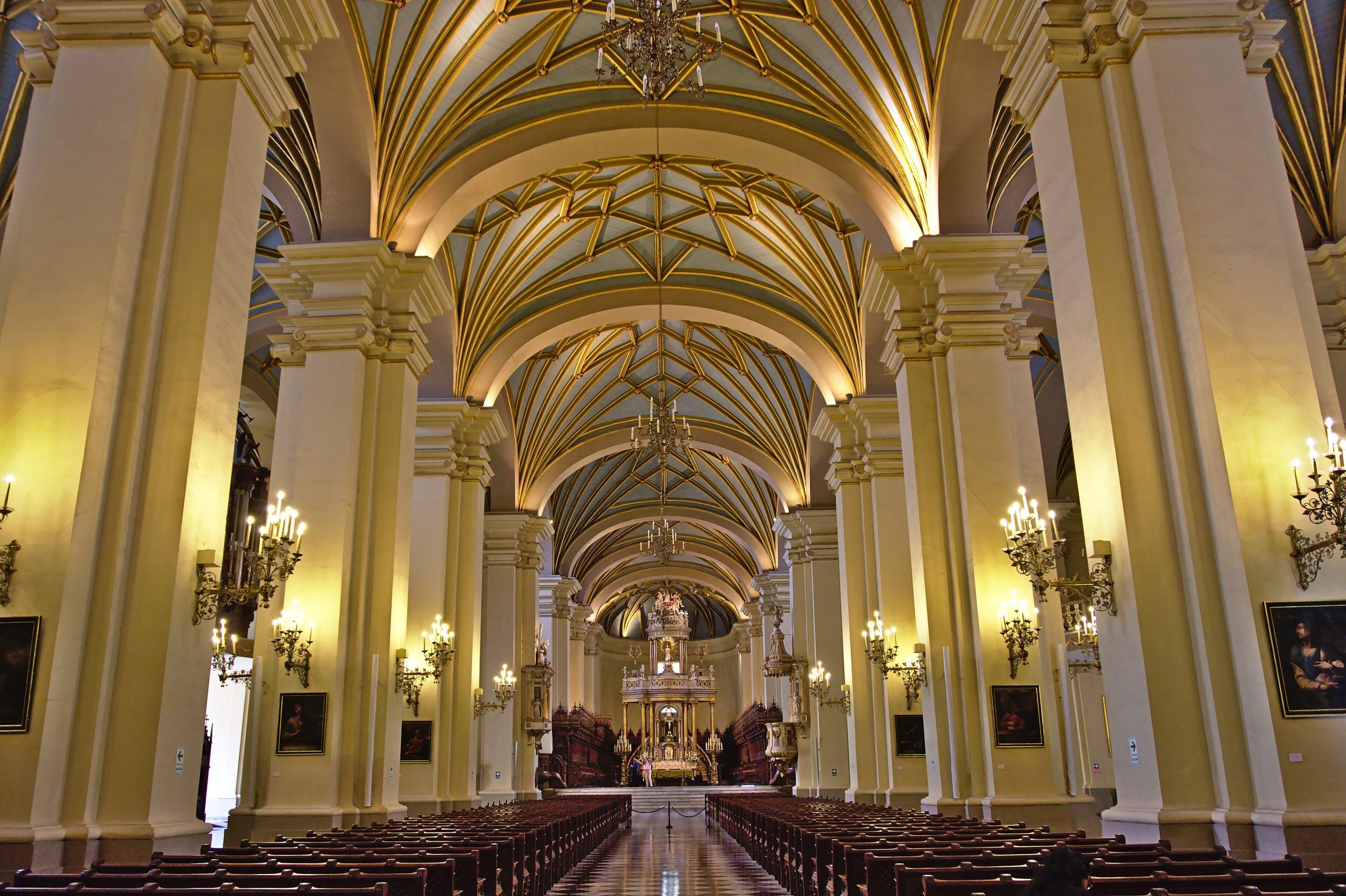
The interior is equally grand with over a dozen chapels.
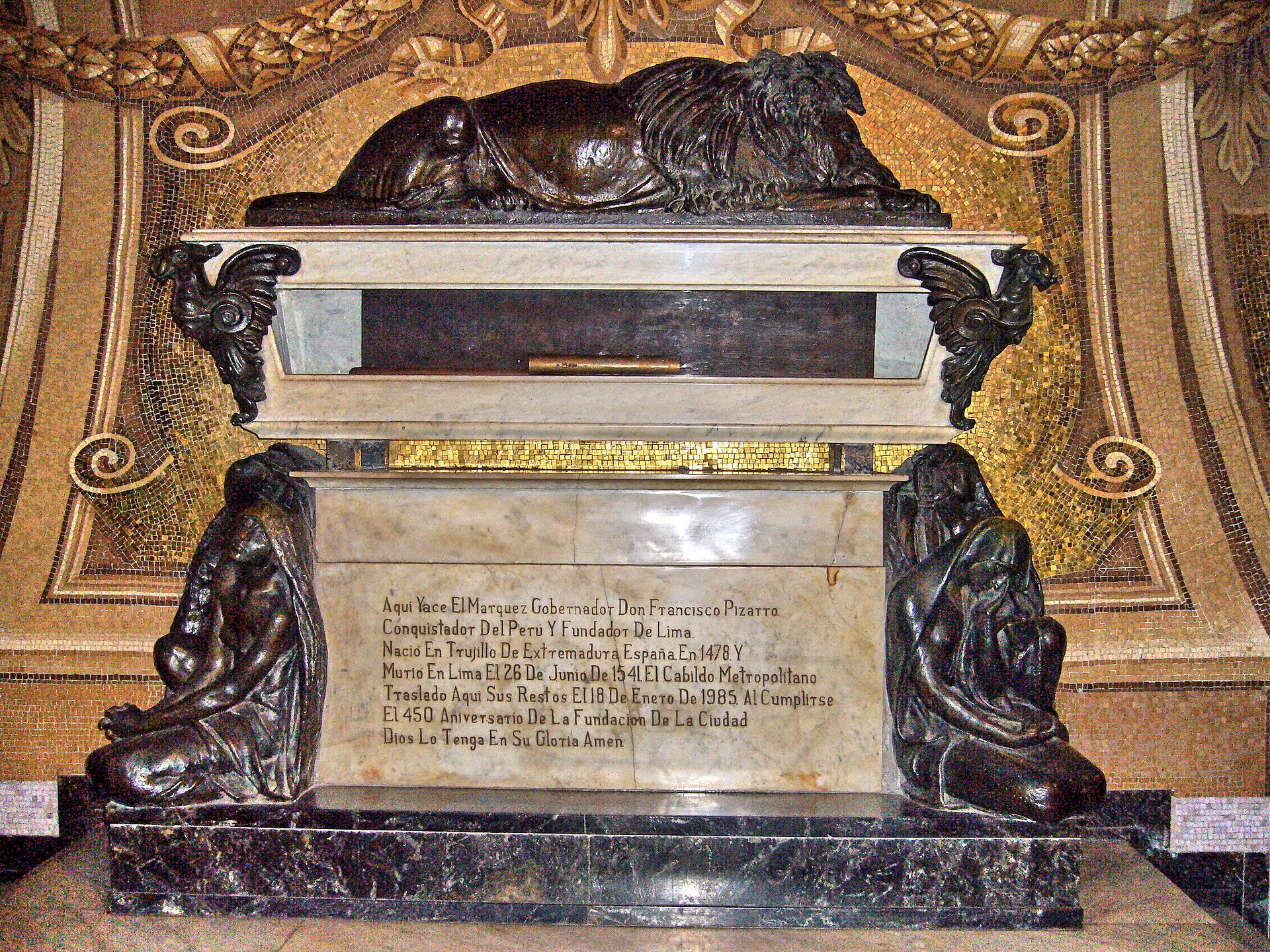
The most notable interment in Lima cathedral is of course Francisco Pizarro whose real remains were only confirmed by DNA evidence in the late 20th century. For over 400 years the wrong body was misidentified as that of the infamous conquistador who was assassinated, not by any of the Incas he persecuted, but by Spanish rivals. He remains one of the most divisive figures in Peruvian history and we will learn more about his misdeeds when we visit Cusco.
You will have some free time to explore the Plaza Mayor and I would recommend using some of it to at least pop into the cathedral for a quick look around.
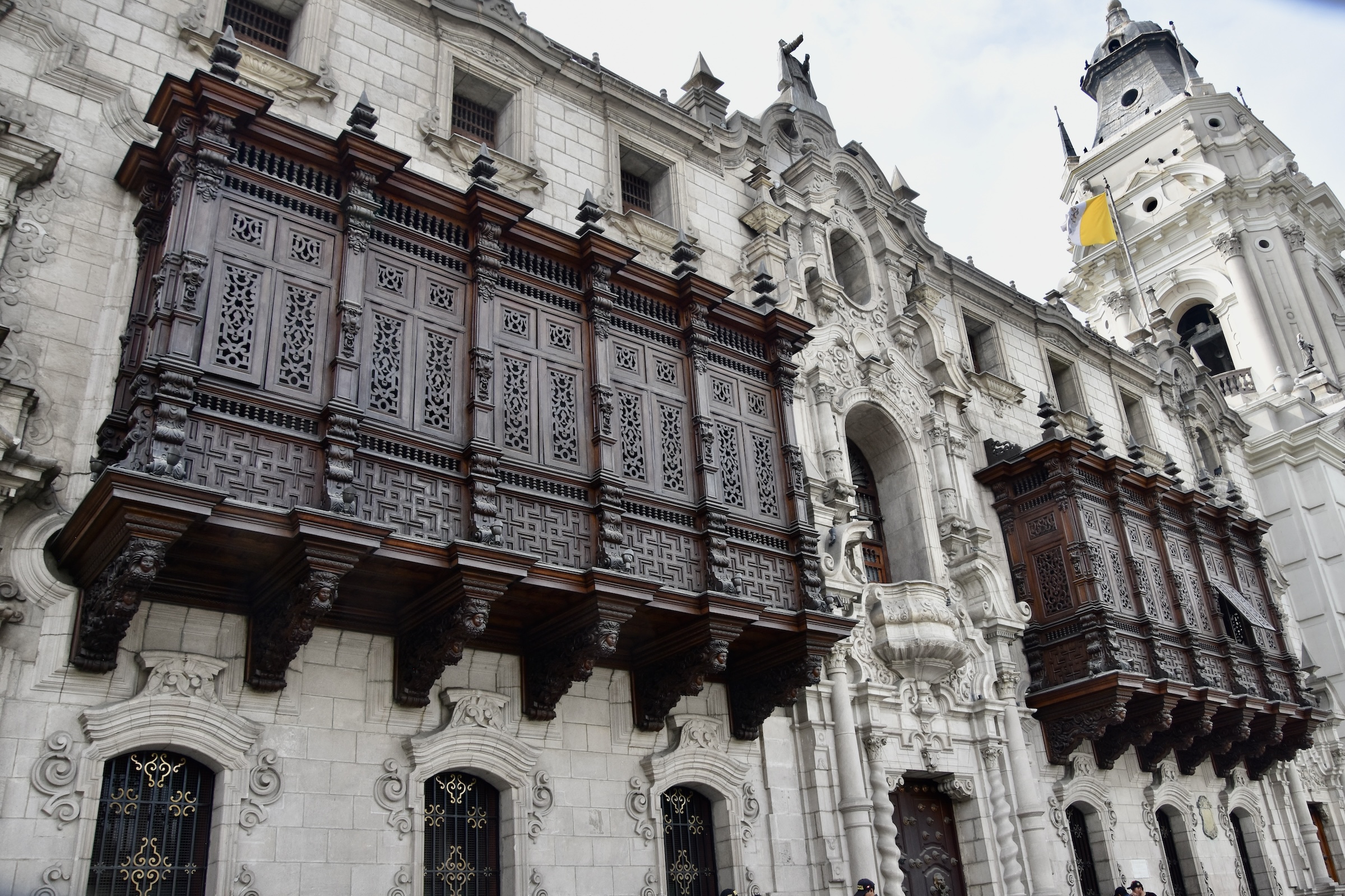
Beside the cathedral is the Archbishop’s Palace which has perhaps the grandest of the Lima balconies. Although it looks old, it actually was only built in 1924 in Spanish Colonial Revival style.
The grandest building fronting on the Plaza Mayor might be the monumental Government Palace aka The House of Pizarro. Although there has been a governmental seat on this site since 1535, this rendition dates largely from the 1930’s. It is in effect, the White House of Peru, although in recent years at least one President refused to reside there.
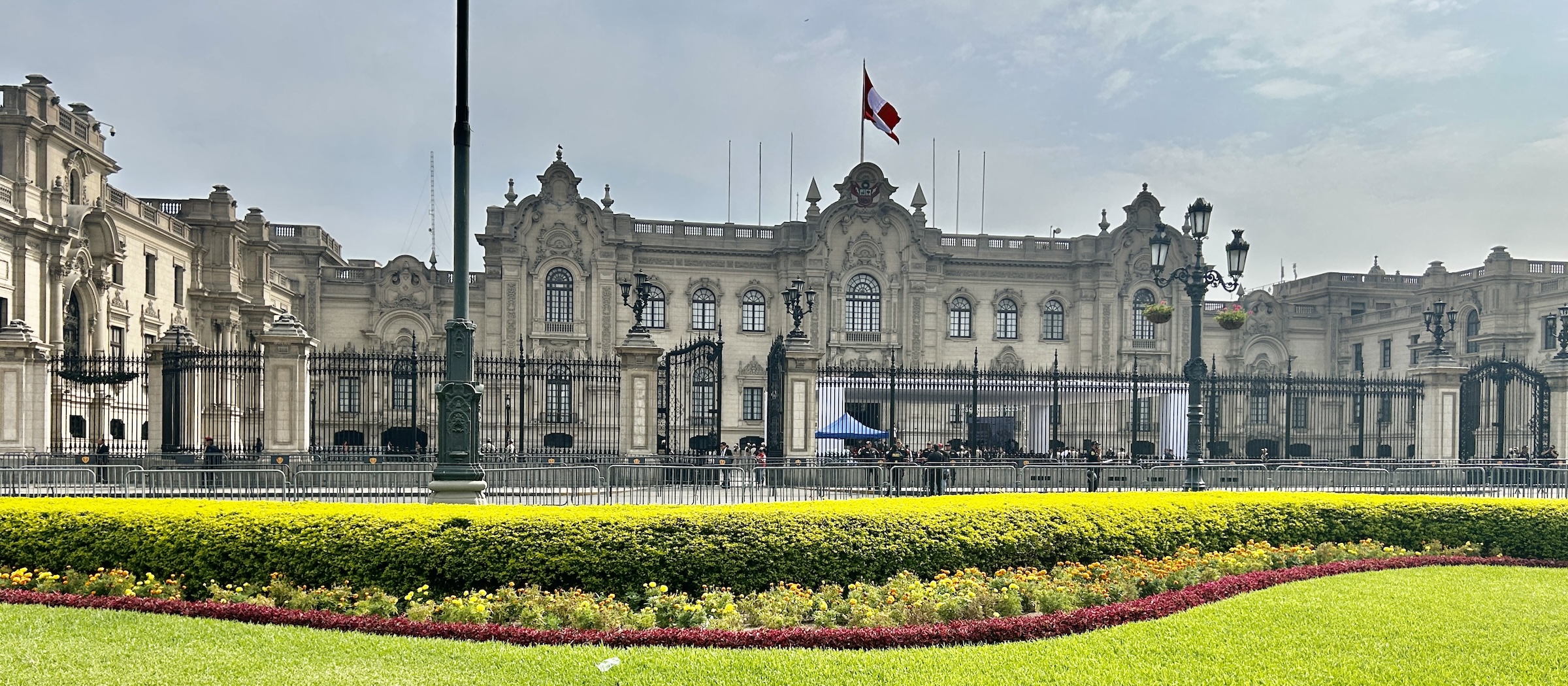
The palace is off limits to the public, but at noon each there is a Changing of the Guard ceremony that is a major tourist attraction.
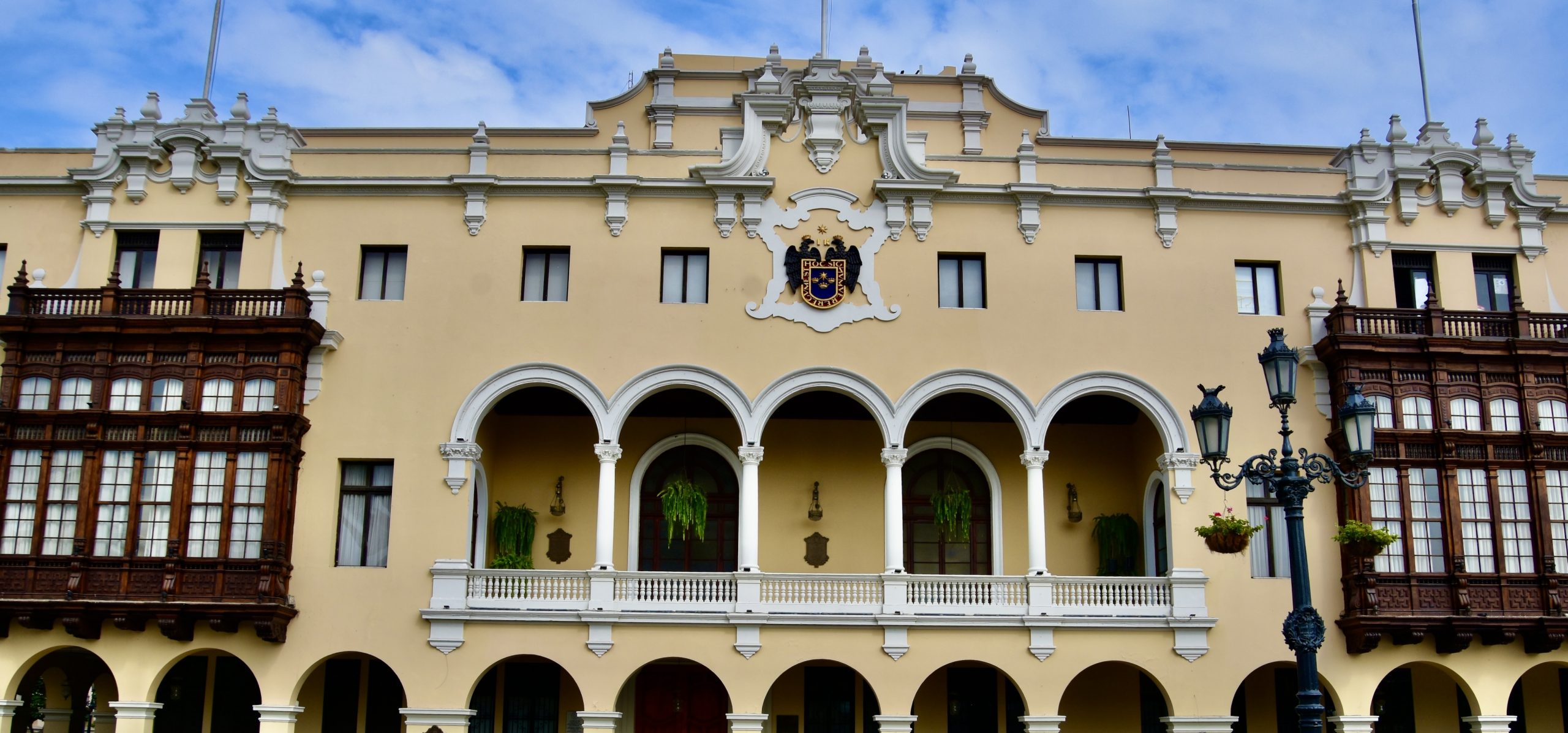
Facing the cathedral on the opposite side of Plaza Mayor is the Municipal Palace, the Lima city seat of government. Once again there have been various municipal buildings on this site from the mid 1500’s, but this building dates only from 1944.
My favourite structure in the Plaza Mayor was not a building but rather the exquisite fountain which is actually just called The Fountain of Plaza Mayor. It dates all the way back to 1578 and although alterations have been made over the centuries it is stated to be the oldest fountain in the New World.
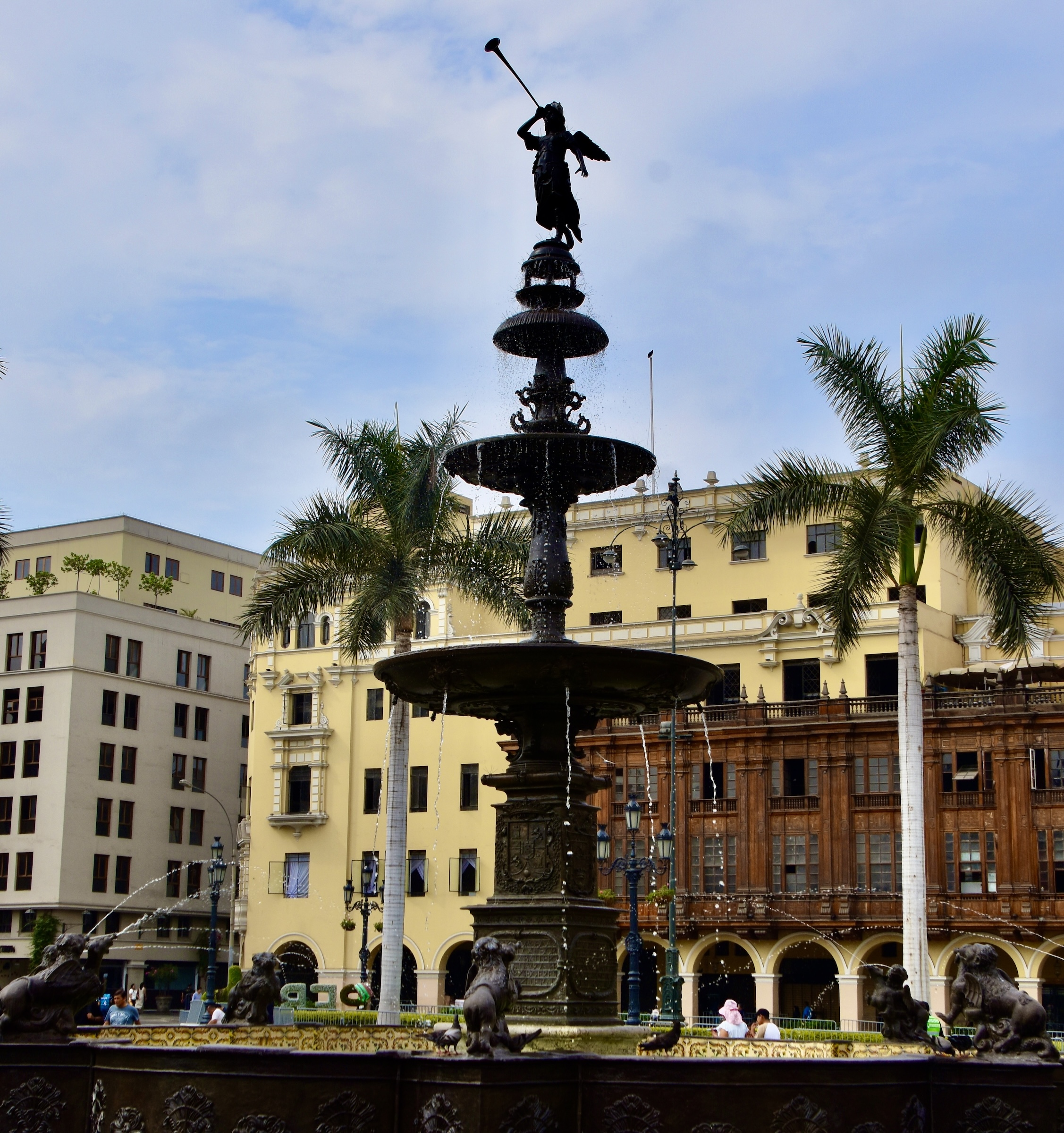
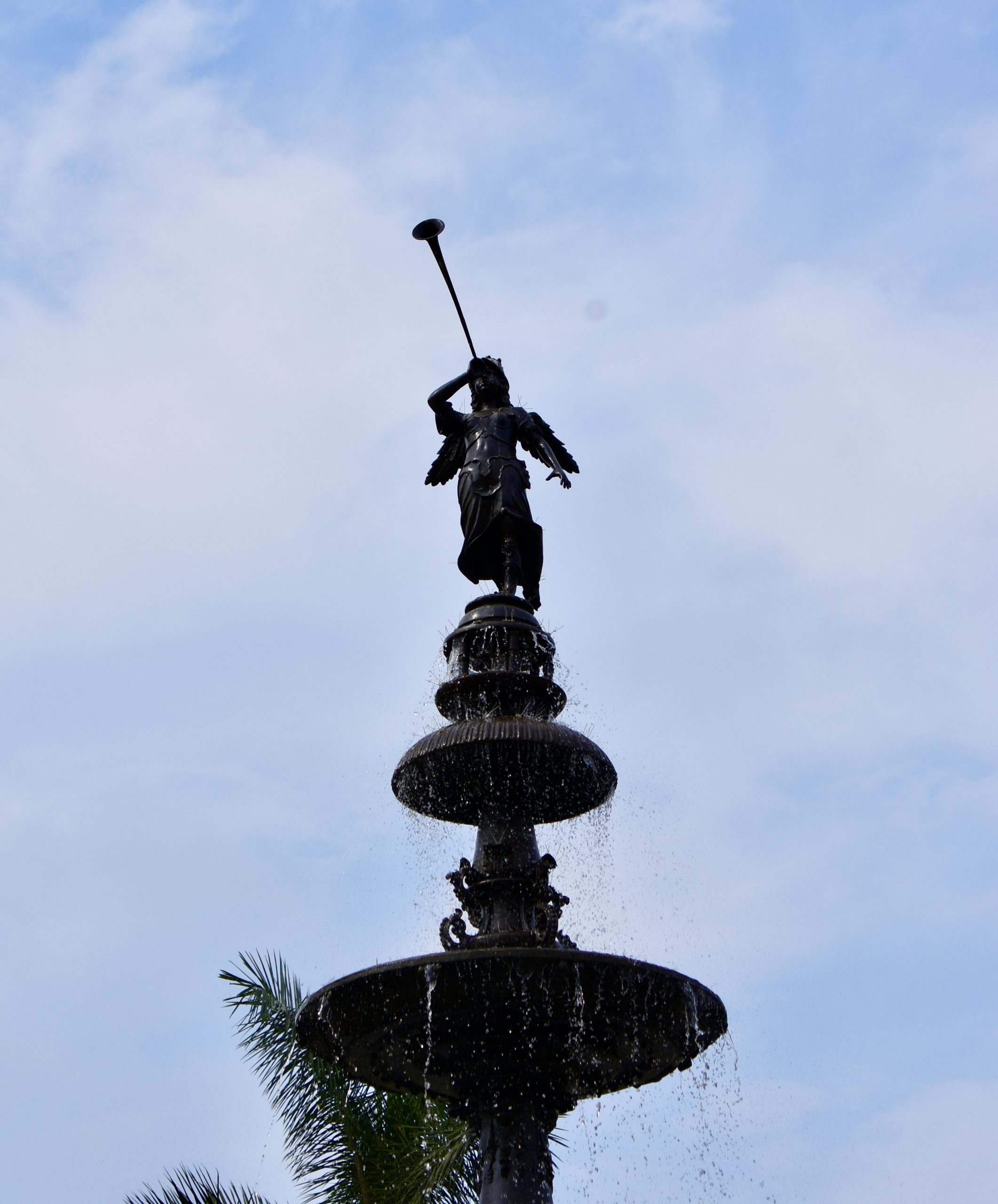
The woman blowing the trumpet is Pheme, a Greek personification of fame or renown, which the burgers of Lima must have thought appropriate for their growing city which at that time was the most important one in colonial Latin America.
I’ve been to a number of Latin American plaza mayors or plaza des armas including Mexico City, Guadalajara, Santiago, Bogota and Quito and they are all great, but to me Lima was the most compelling.
However, there are more grand buildings to explore in Lima that are not on the Plaza Mayor, but are part of the World Heritage Site. The most notable of these is the Basilica and Convent of St. Francis. Unfortunately large parts of it were under scaffolding which hopefully will be removed during future visits. If so this is what it looks like.
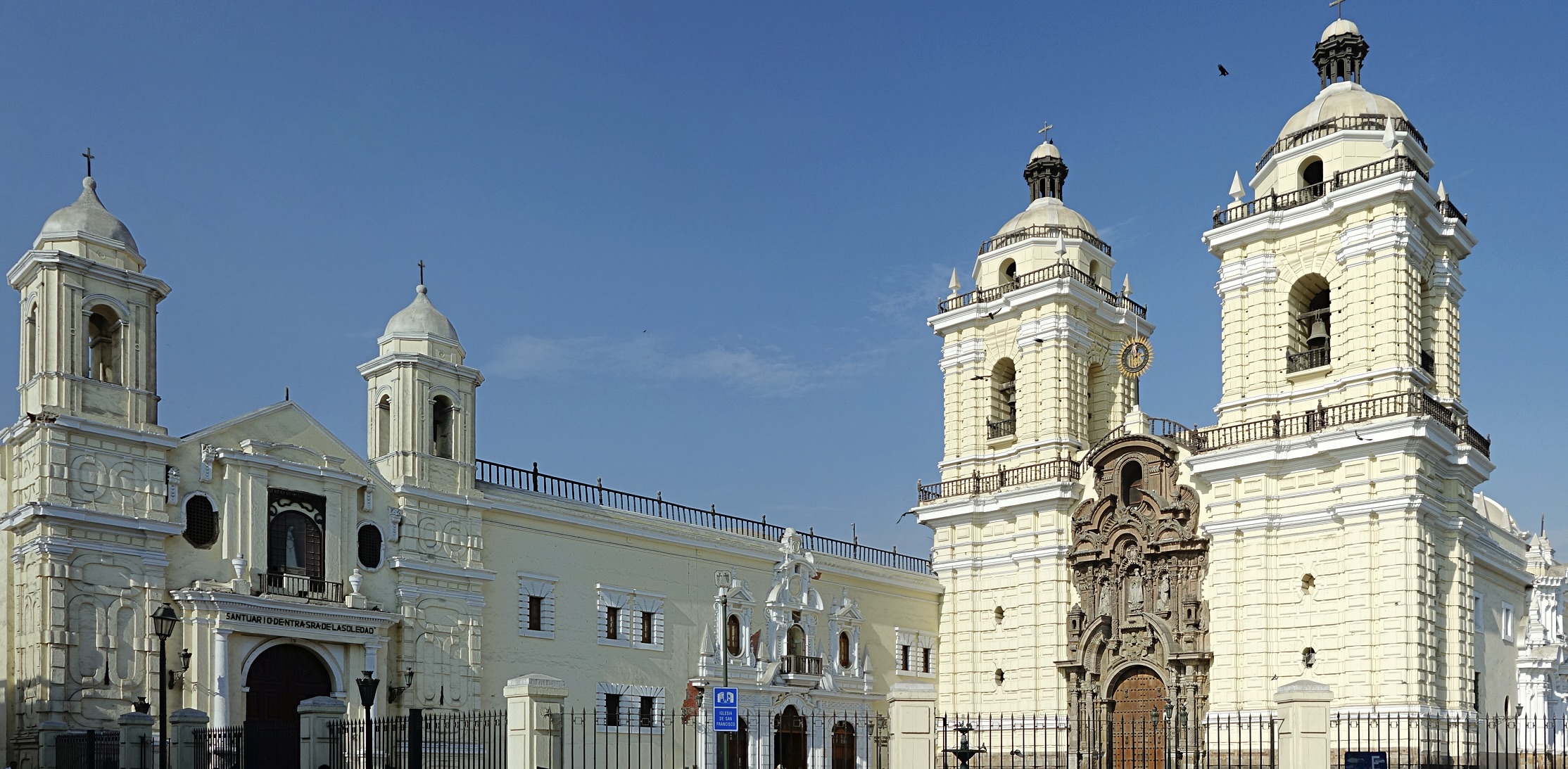
This entire structure, consisting of baroque and neoclassical styles, is considered to be one of the finest examples of Spanish colonial architecture in the New World. Sadly, no photography is allowed inside. This was the only photo I got,almost.
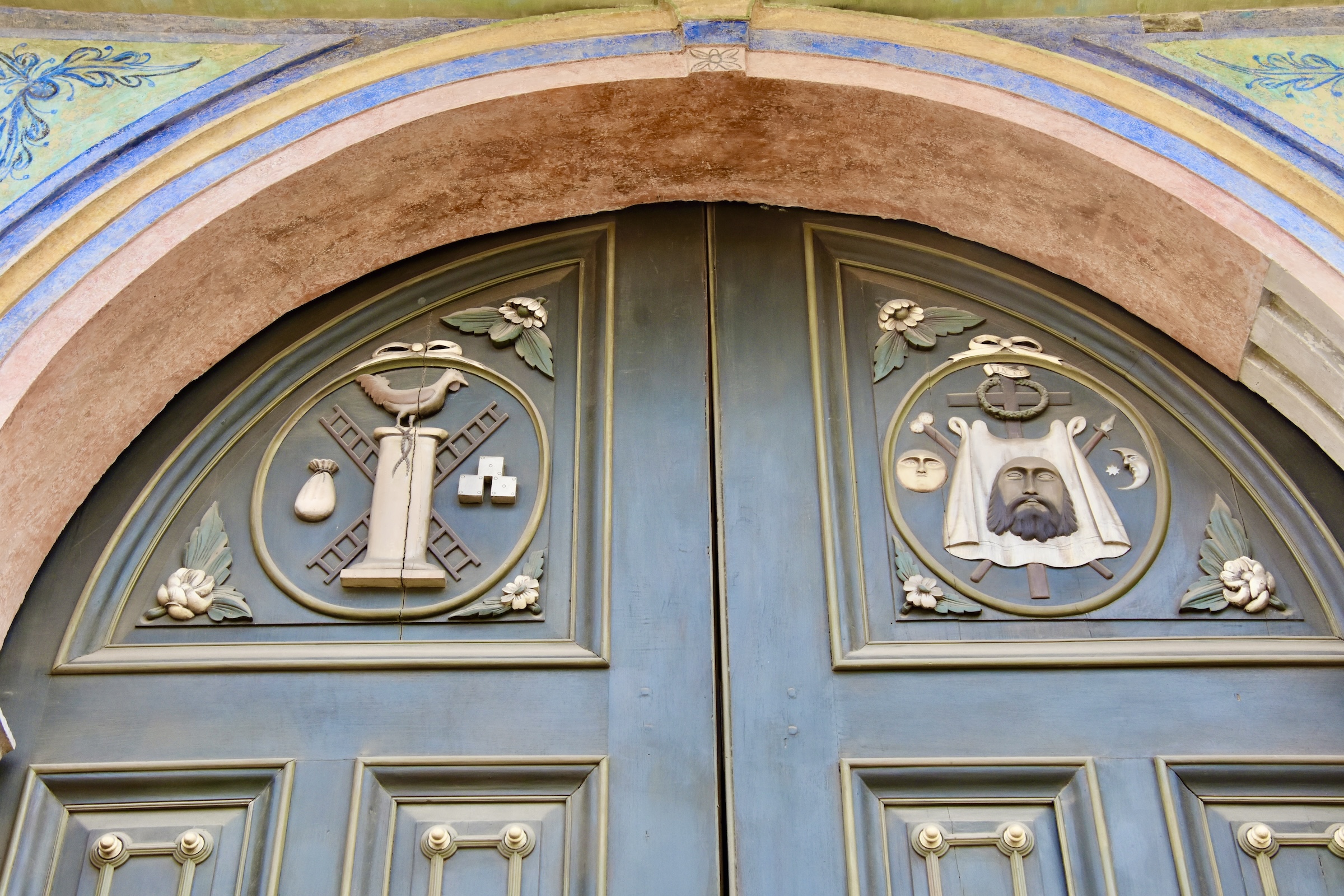
You’ll just have to trust me that the interior is magnificent as are the cloisters. One special treat for those interested in the outré are the catacombs. From the convent’s inception in the mid 1500s until 1810 it is estimated that up to 70,000 people’s bones were deposited in the catacombs that lie under the complex. Undiscovered until 1951, it is now the largest ossuary in the New World, by a mile.
By their very nature catacombs are pretty creepy and these were no different, with dim lighting, no sound and decidedly cooler than the temperature above ground. On the other hand looking at skulls and bones can be quite contemplative, just ask Hamlet. This was one place where our guide turned a blind eye to photos. I mean really, these guys are long dead, what harm can a photo do to them?
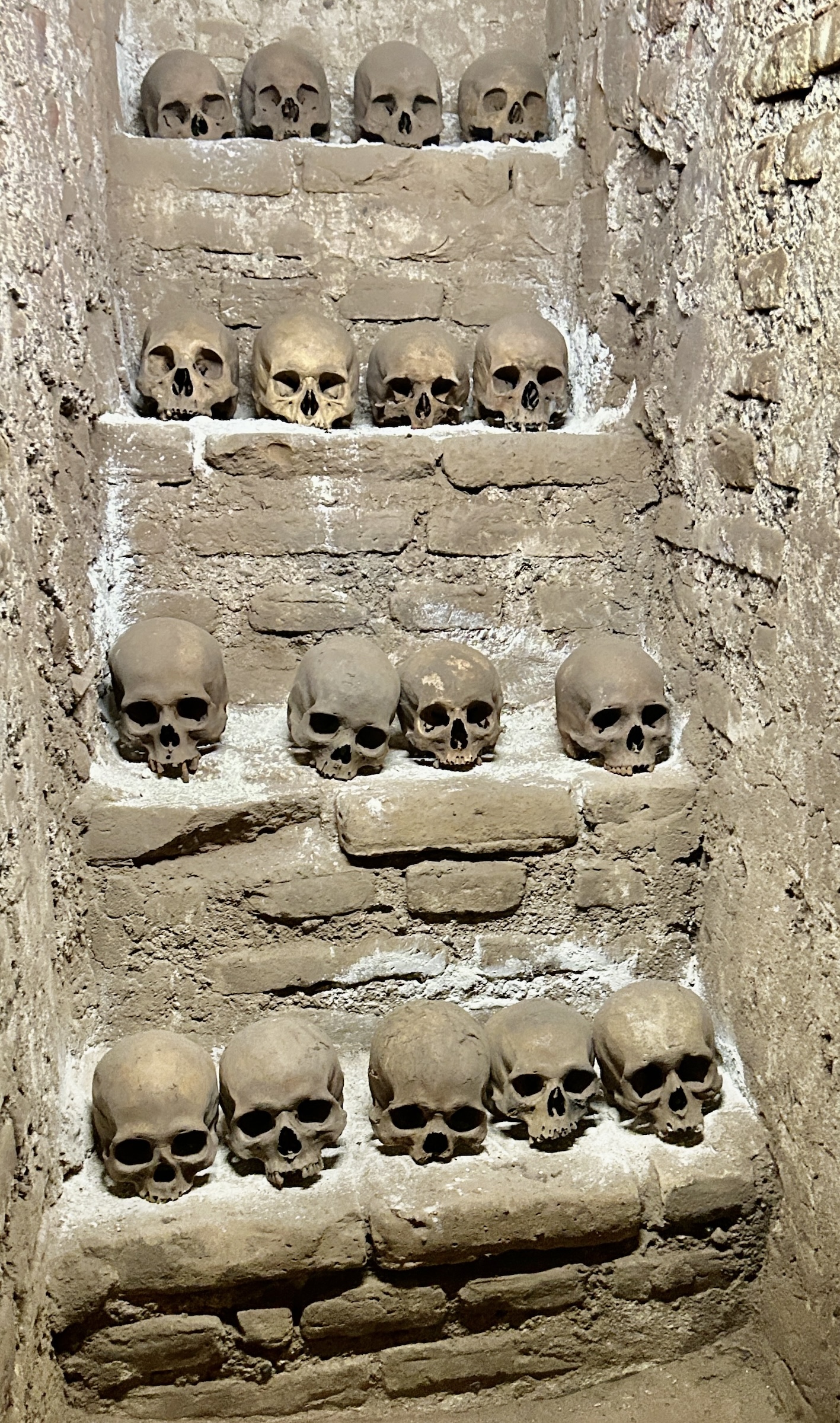
The Franciscans apparently liked to do some artwork with the bones of their deceased frères as evidenced by this display.
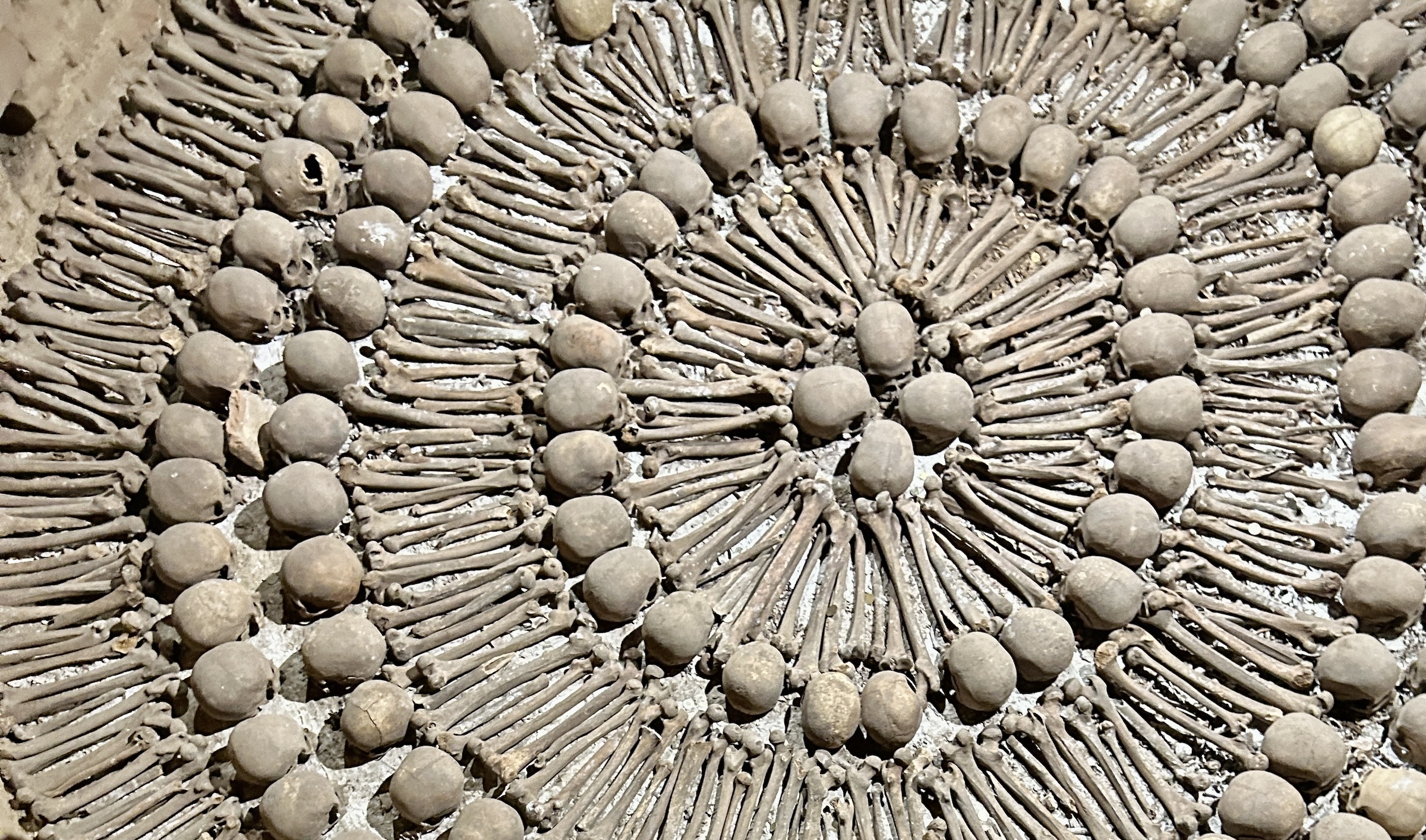
I can honestly say that the last thing I expected to see on this trip to Peru was a set of catacombs comparable to some of those in Europe.
Just a couple more buildings to note before we live the Historic Centre of Lima.
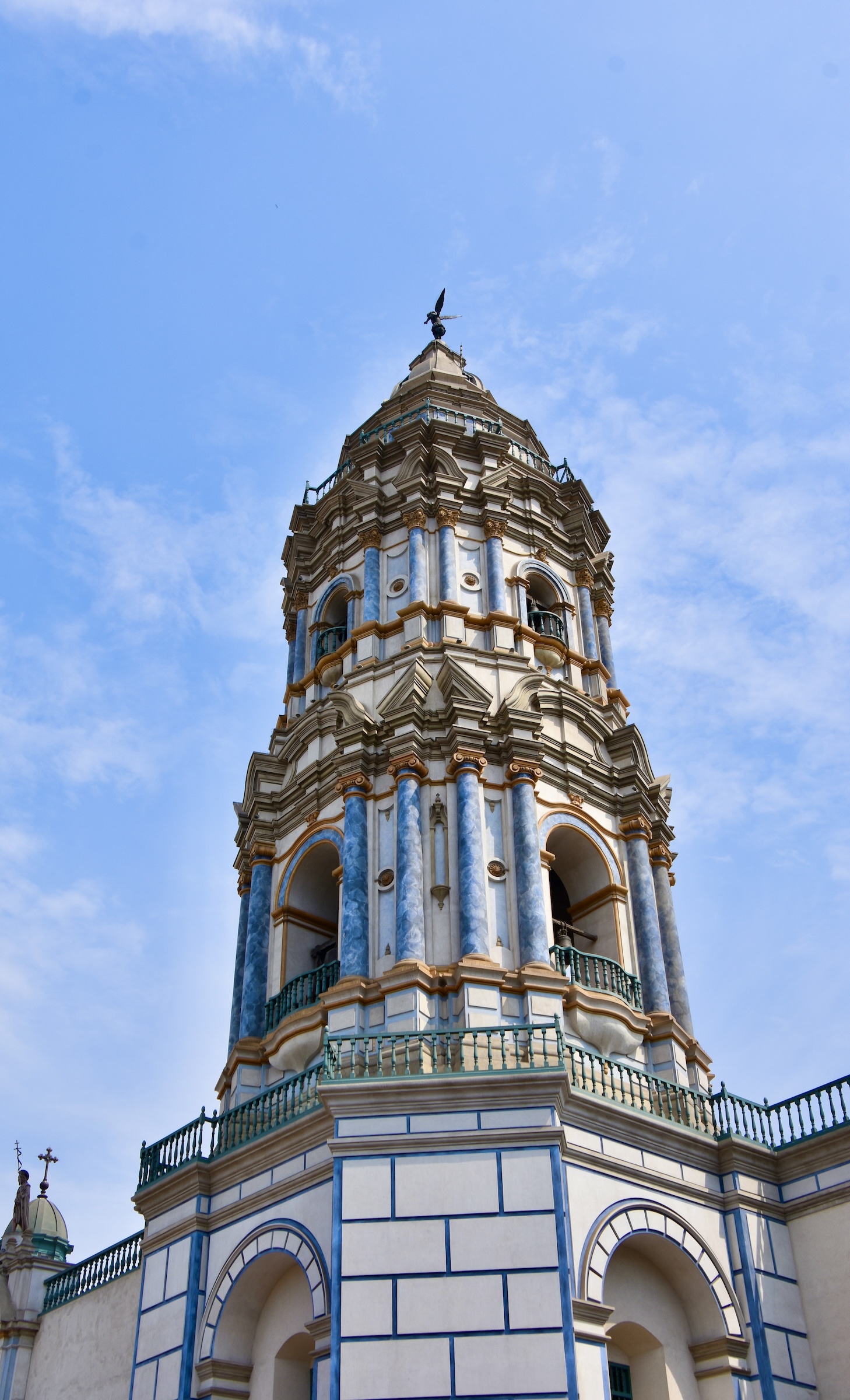
The first is the rococo bell tower of the Convent of Santo Domingo, a rival group to the Franciscans that have been here since the 1530s. Inside the remains of three saints, including St. Rose of Lima are interred.
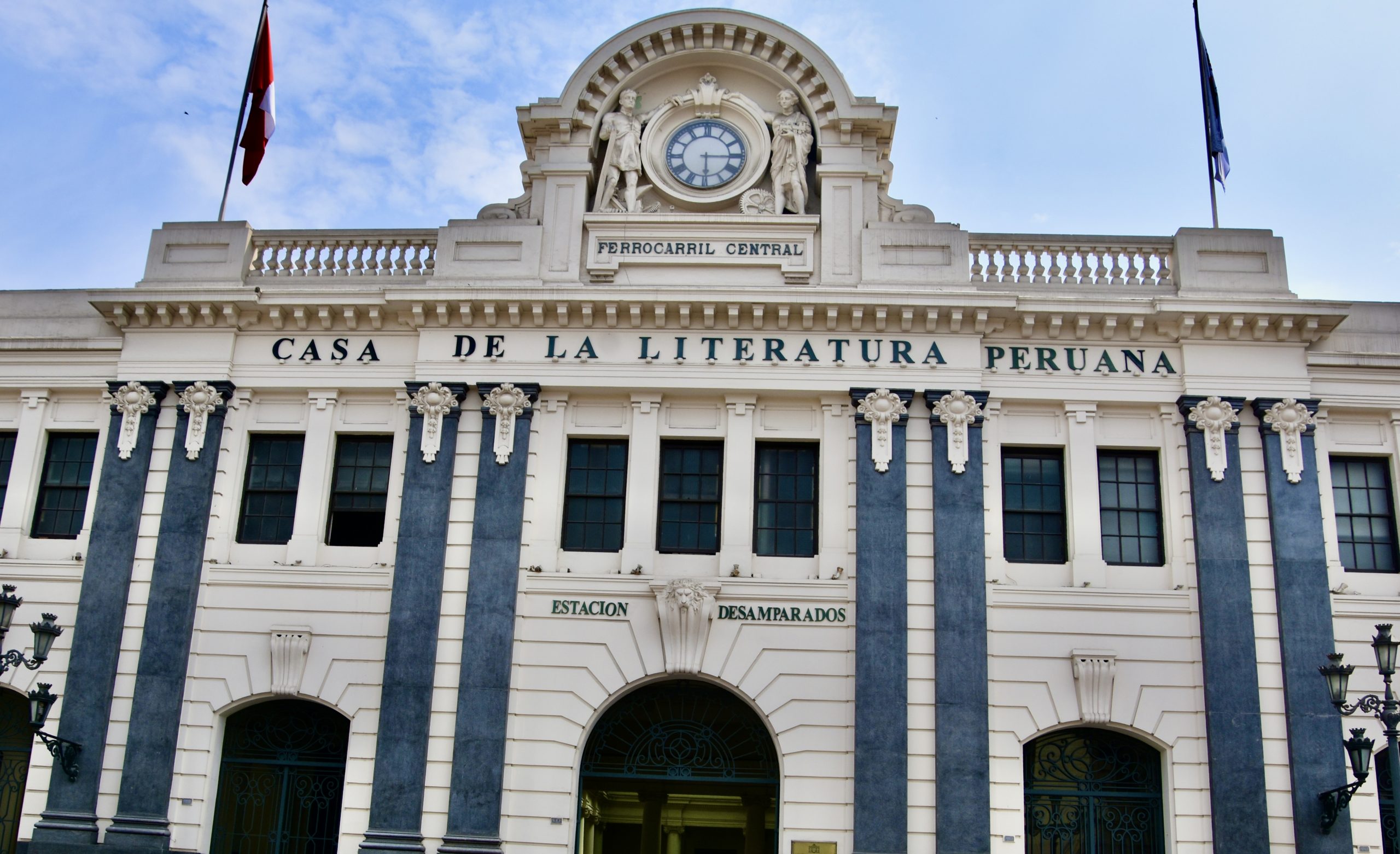
Our last building is the Beaux Arts facade of the former Central Train Station which now houses the Peruvian Literature Museum. In this day and age when function over form is the norm, it’s nice to see buildings that once demonstrated the opposite choice.
After a couple of hours of having our eyes treated to buildings on a monumental scale, it’s time to focus on things a bit smaller at the Museo Larco where we are headed next.
The Museo Larco
The Museo Larco is a private museum founded in 1926 by 25 year old Rafael Larco Hoyle who was one of the first archaeologists who took an interest in discovering more than just the Incan pre-Columbian history of Peru. Over his lifetime he amassed over 45,000 artefacts many of which are now on display. More importantly, the Museo Larco became one of the first in the world to digitally record its entire inventory and make that available to the public on line.
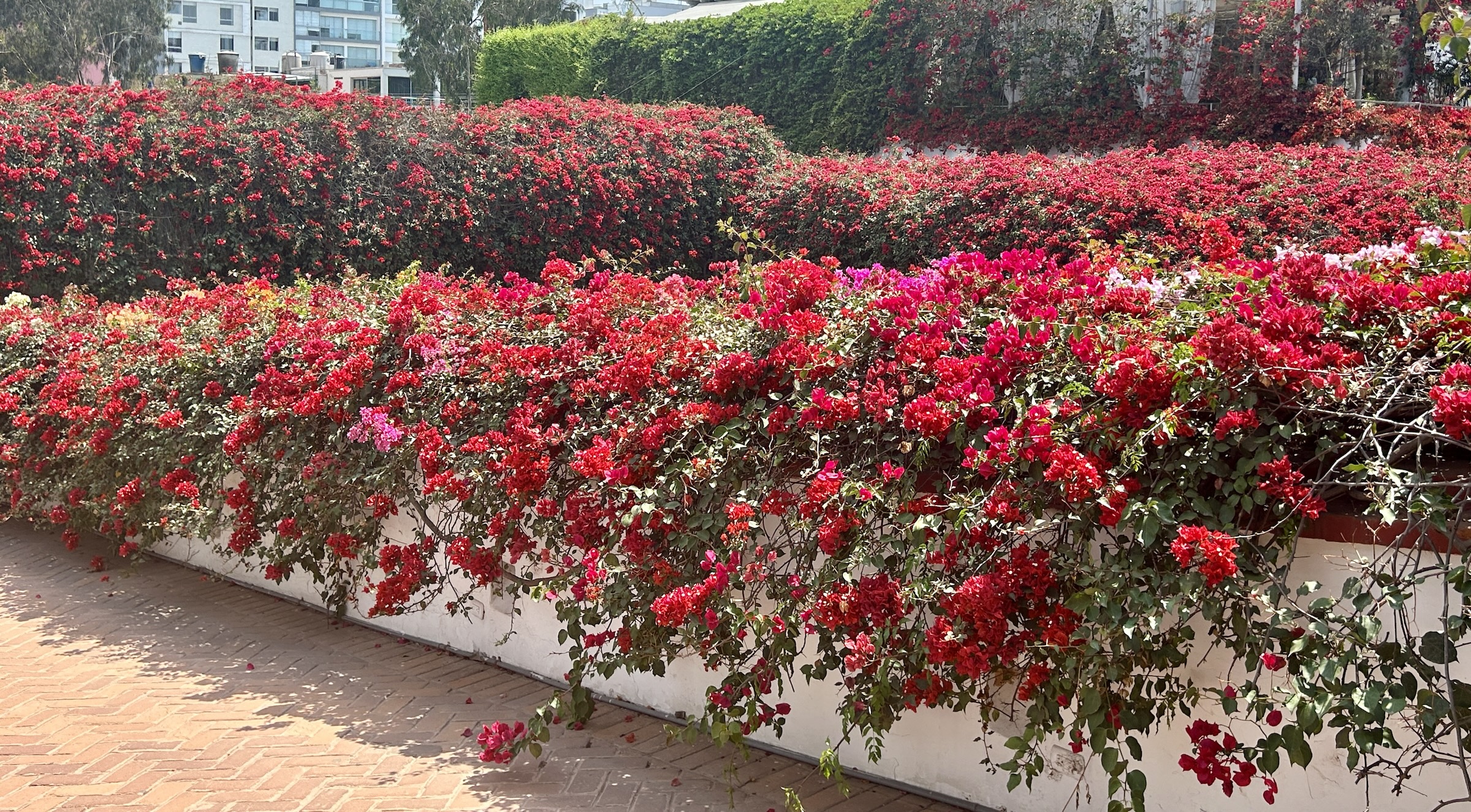
Today our group is fortunate to have an in person visit to the museum as since January 2026 access by the public has been restricted. The museum is located in an 18th century vice-royal building in the Pueblo Libre district of Lima where Simon Bolivar had his palace when he lived here. The profusion of bougainvillea surrounding the entrance way to the museum is amazing.
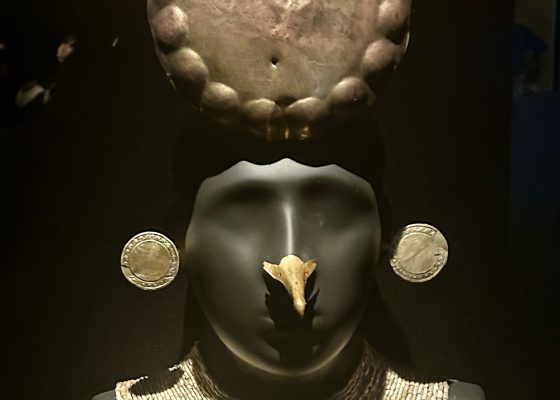
The museum is divided into two collections. The first and largest displays 10,000 years of pre-Columbian artefacts including a lot of ornamental gold, silver and precious gems. Frankly some of what you will see here is mind-blowing. While I could do an entire post of some of the most compelling pieces in the Museo Larco, I’ll confine myself to a couple of galleries. This first features the generalized collection. Double-click to open one photo and double-click again to enlarge it.
-
- Bird Runner
-
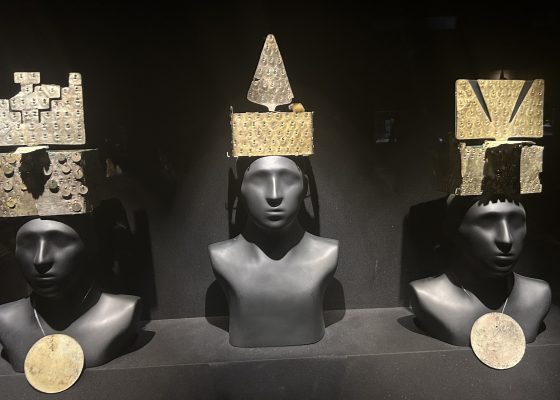
- Funerary Headdresses
-
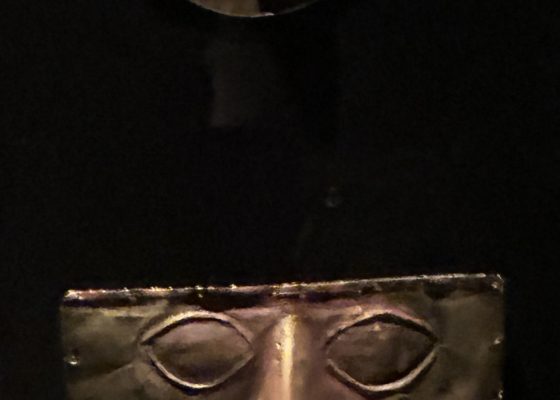
- Funerary Masks
-
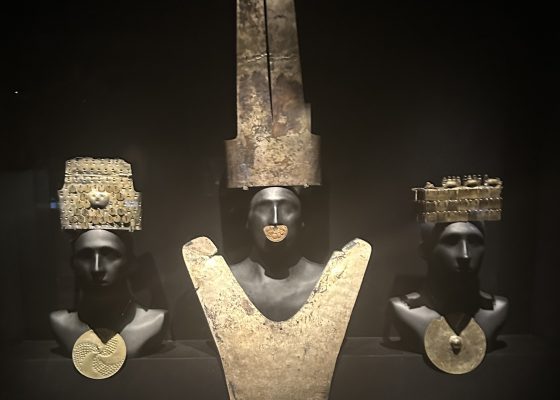
- Funerary Wear
-
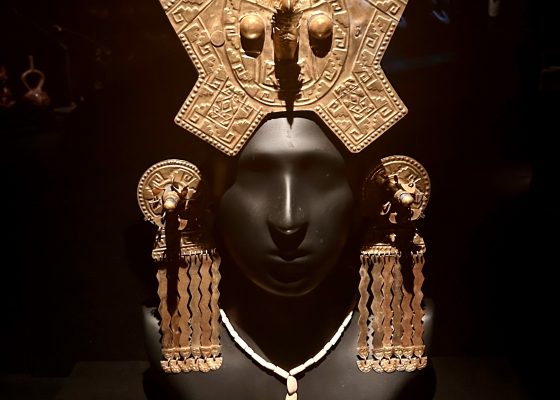
- Golden Headwear
-
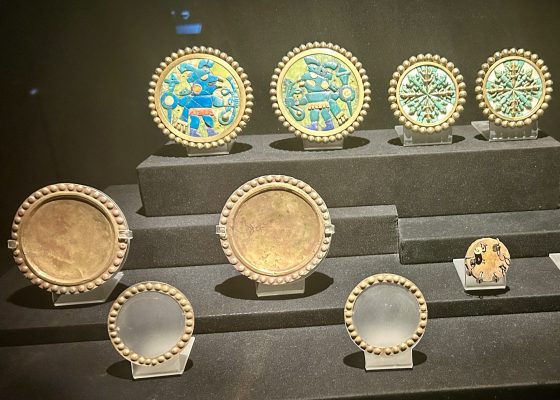
- Moche Gold Ear Ornaments
-
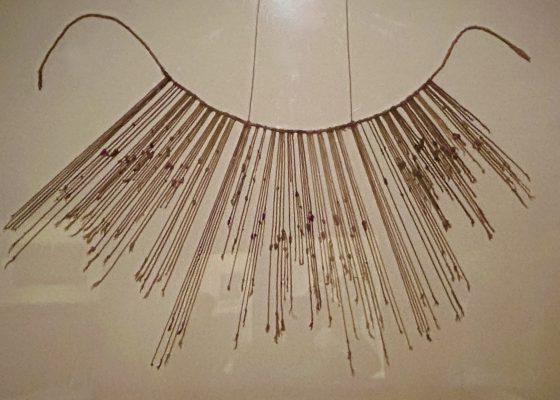
- Quipu Knot System
-
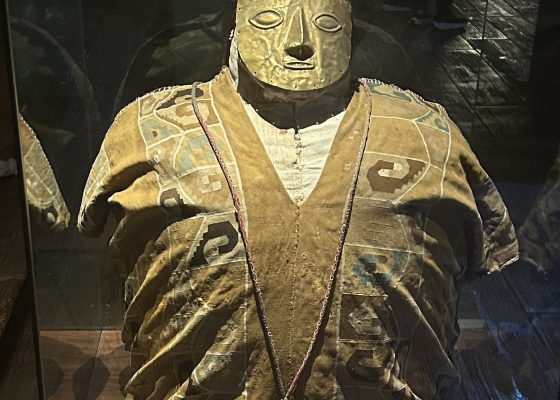
- Mummy
-
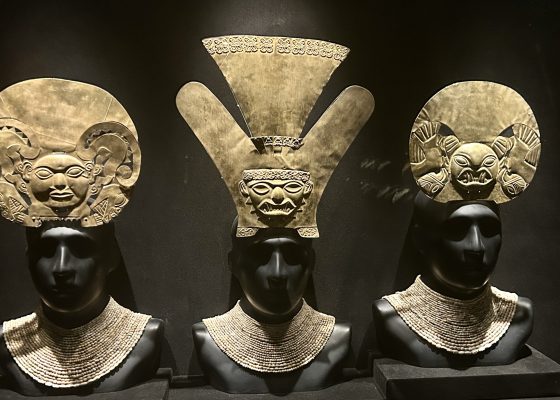
- Serious Funerary Headwear
-
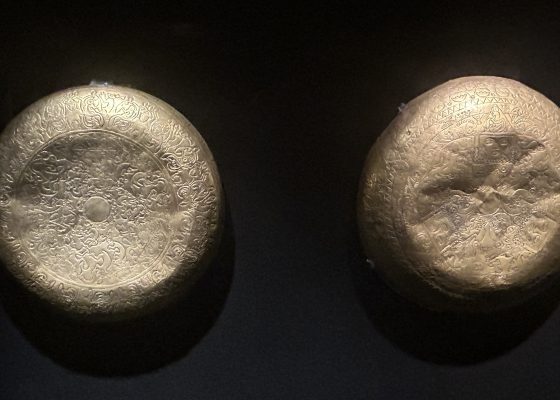
- Pure Gold
-
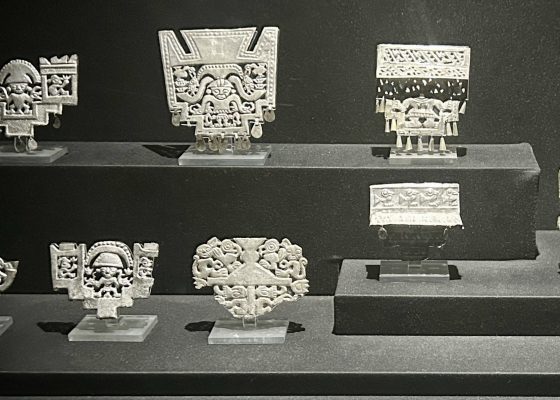
- Silver Nose Ornaments
The second smaller exhibit features pre-Columbian erotic art and this gallery is definitely not for children. Who knew that Priapus was a thing not just in Greek mythology, but in the Incan world as well?
-
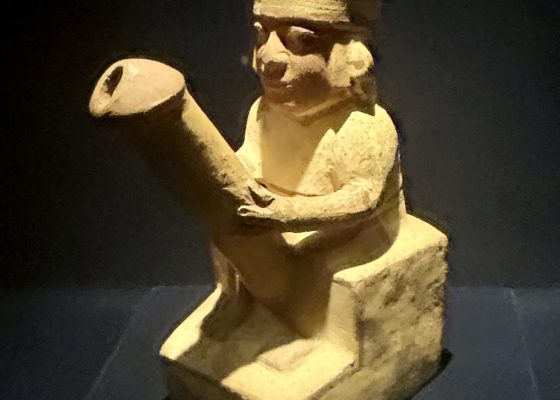
- Priapic Figure
-
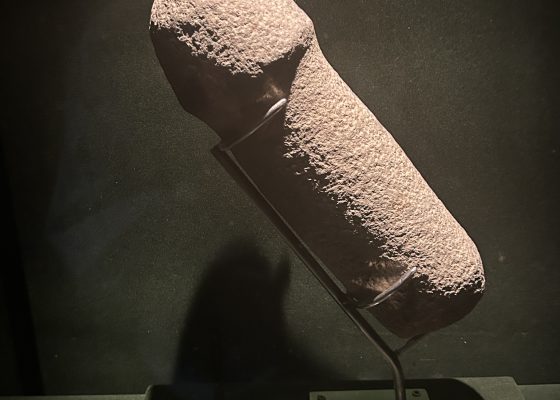
- Stone Penis
-
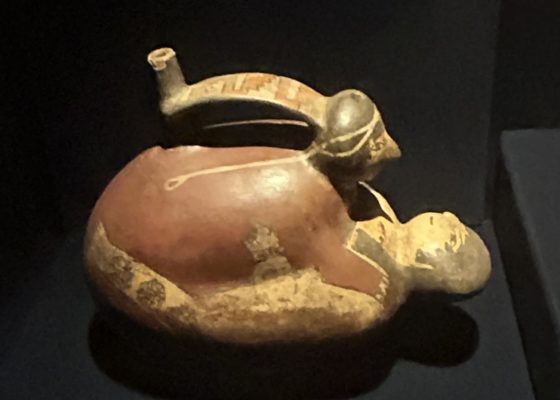
- Nazca Copulation
-
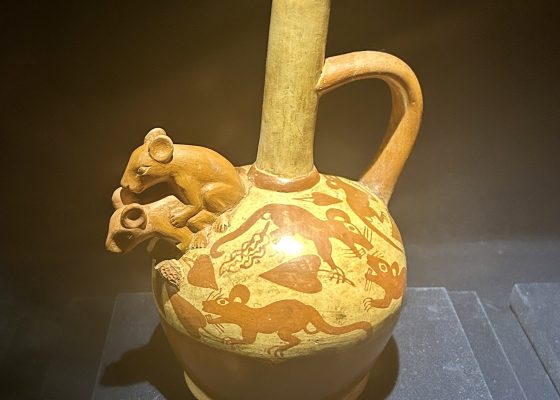
- Mice Copulating
-
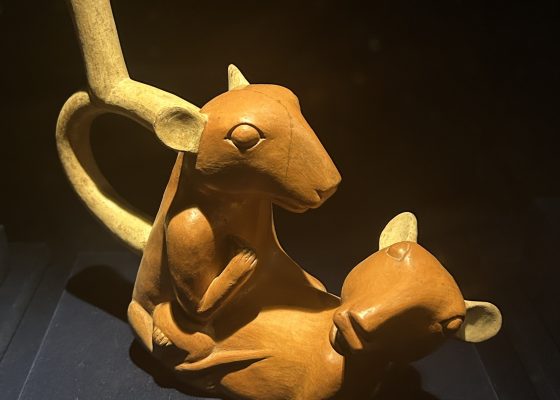
- Deer copulating
-
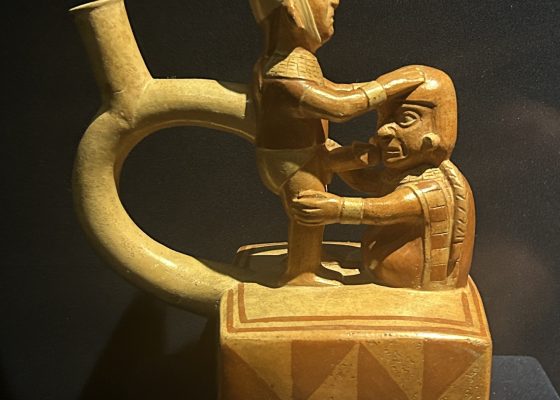
- Fellatio
After visiting the Museo Larco we returned to the Miraflores area for a brief stop at Love Park which I featured in the post on Miraflores.
Alas, it is time to say goodbye to Lima, the City of Kings. In the next post we’ll fly to Cuzco and begin our journey through the Sacred Valley of the Incas. I hope you’ll join us.