
Skofja Loka – Life in a Slovenian Village

This is my third post from the May 2026 Adventures Abroad trip to Slovenia. In the last post we visited the beautiful capital city of Ljubljana and enjoyed great weather while exploring the castle and the historic centre of the city. In this post we’ll leave the city behind and head to Skofja Loka, an ancient town that has one of the best preserved medieval centres in Slovenia. After spending some time exploring this place on a quiet Sunday morning we’ll move on to Radovljica where we’ll visit a pharmacy and alchemy museum before ending the day in Bled. It promises to be a day filled with many wonders so I hope you’ll join us.
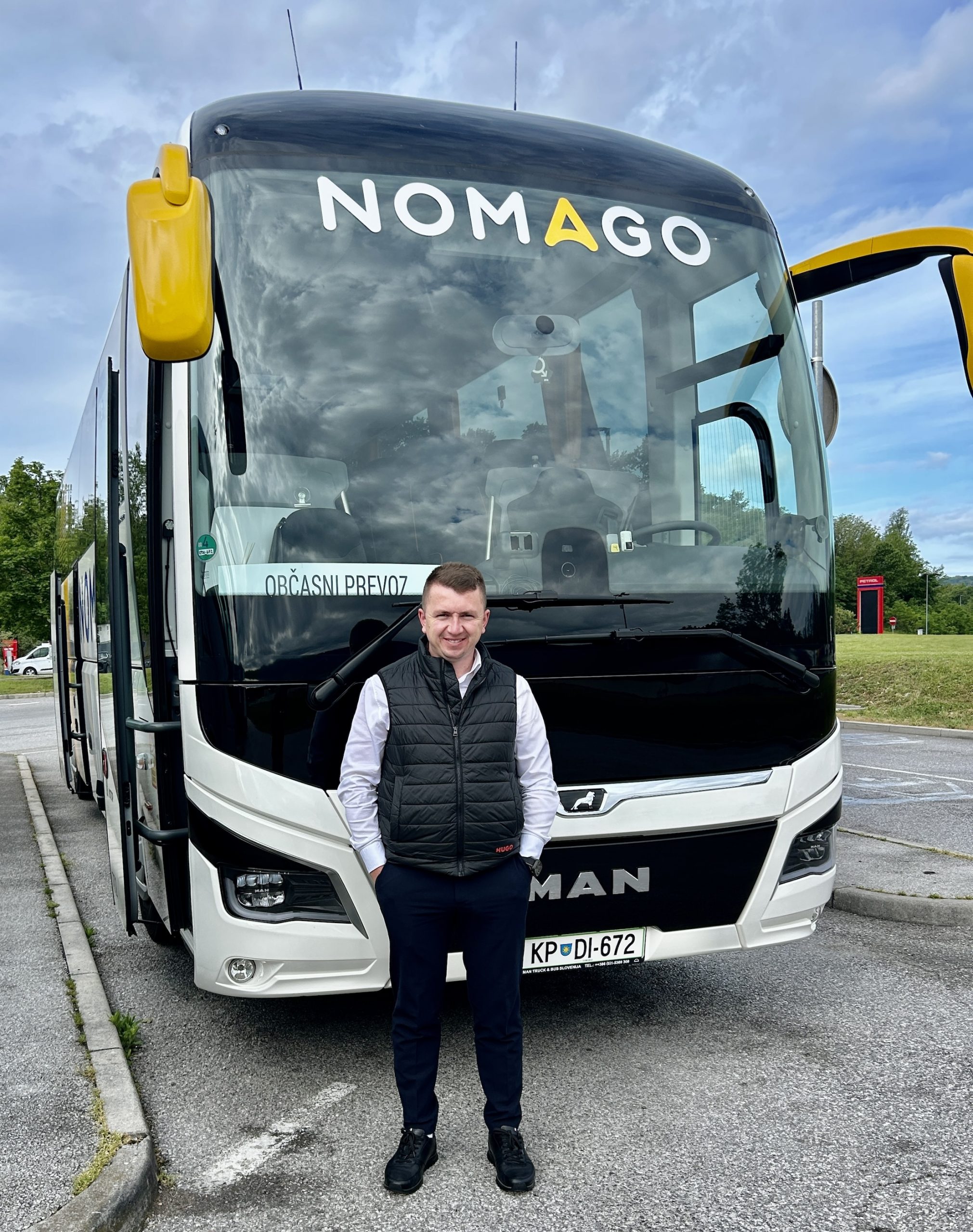
One of the things I really enjoyed about this tour was its relaxed pace with no really early morning starts and no late arrivals. Our tour guide Rob Ogden very much believed that trying to do too much in one day was not necessarily a recipe for a great tour. We departed Ljubljana around 9:00 on a Sunday morning for the 30 minute drive to Skofja Loka. We also met our driver for the entire trip, Sban and got into a bus that was more than big enough for all of to have our own window seat and plenty of room to store whatever we needed for these daily outings. We learned from Sban that the bus was brand new and had just been put into service in the past few weeks.
Skofja Loka
With little traffic on Sunday morning we reached Skofja Loka well before 10:00 AM and disembarked for a tour of the town on foot.
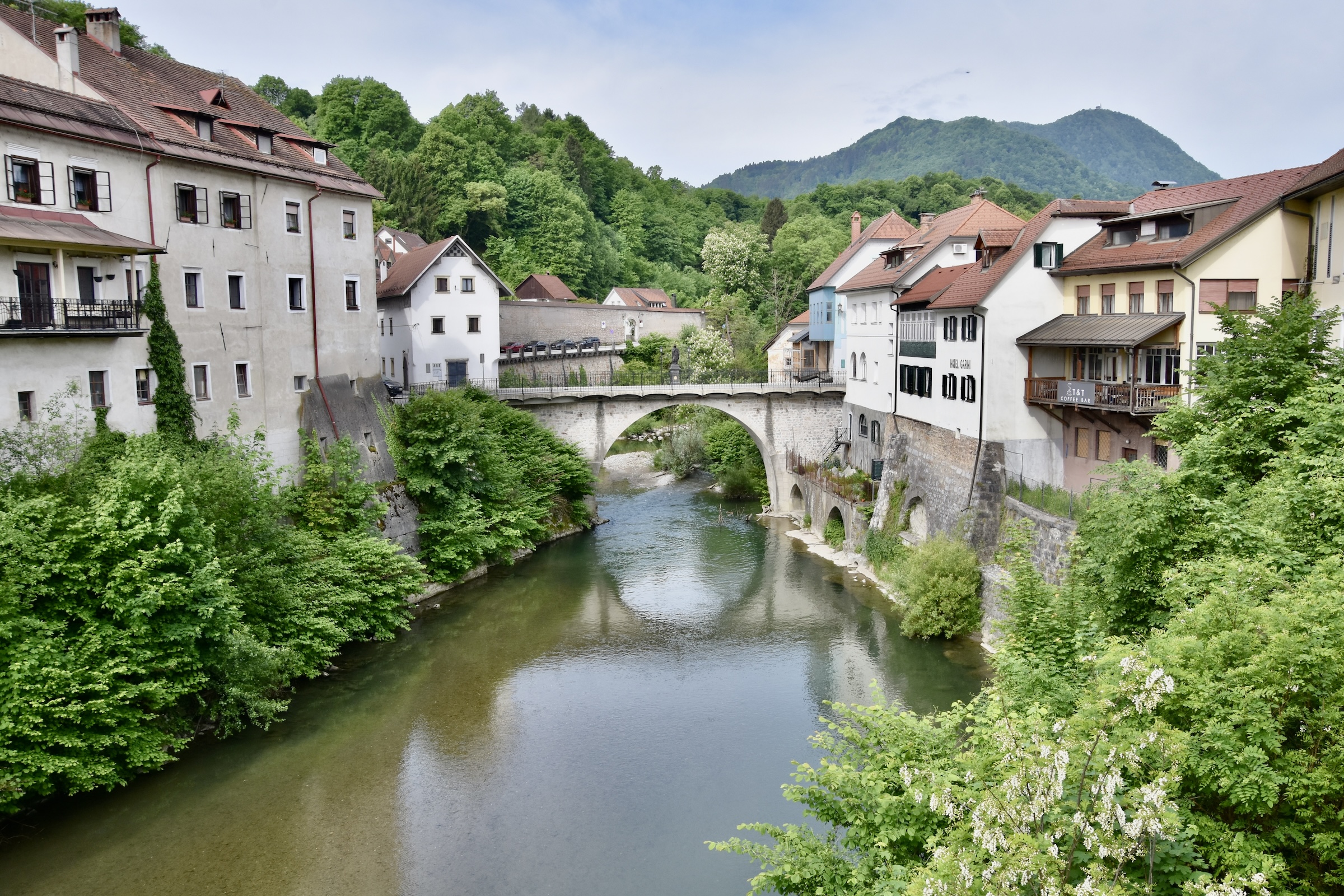
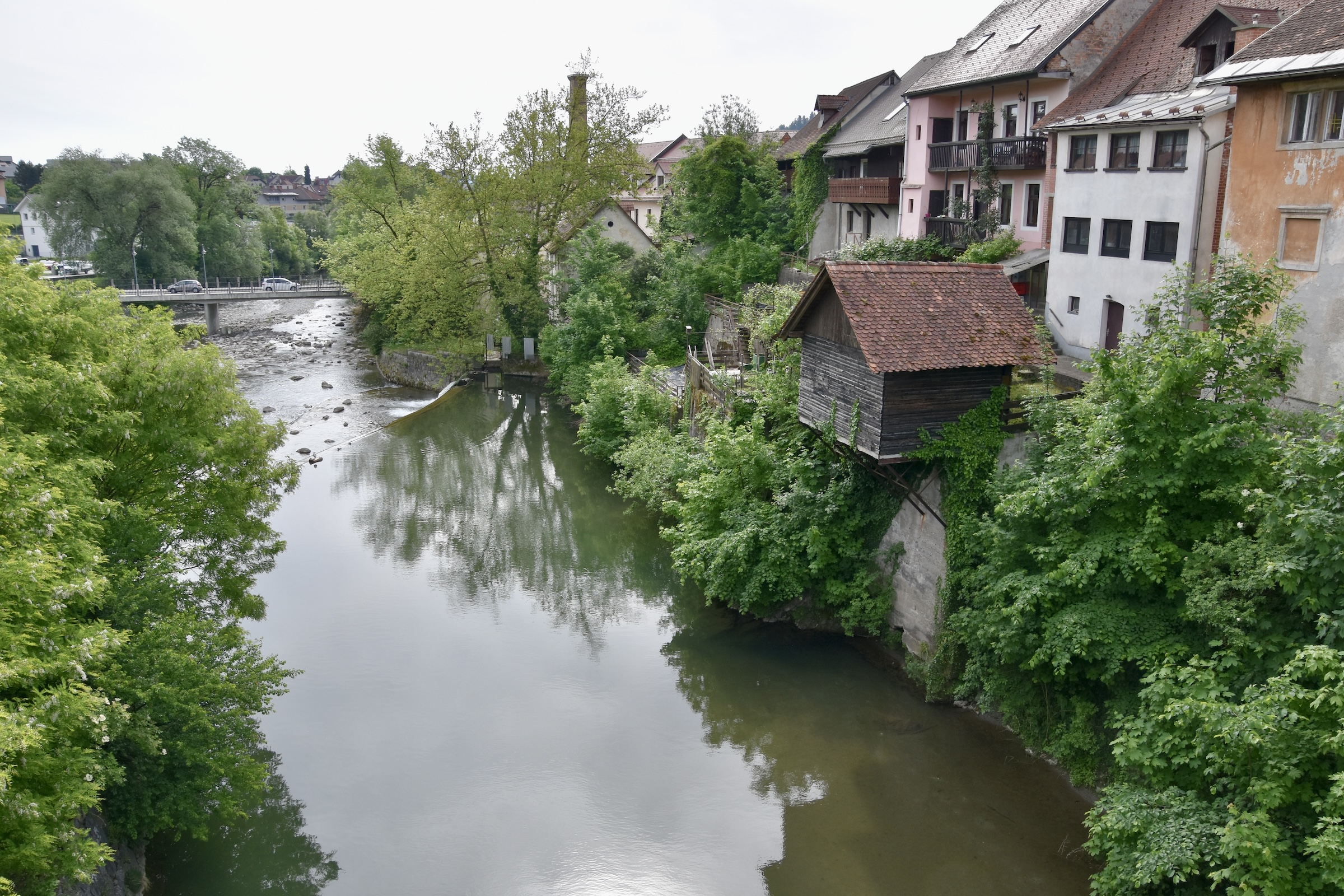
The town has about 12,000 inhabitants, but it seemed much smaller with few modern buildings and scenes like the one above with 16th century houses lining the banks of the Sora River. Like Ljubljana there is a castle that dominates the town and was the seat of government for over a thousand years. The current version dates from the late 17th century and is quite imposing although you do not see when you are wandering the narrow streets of Skofja Loka.
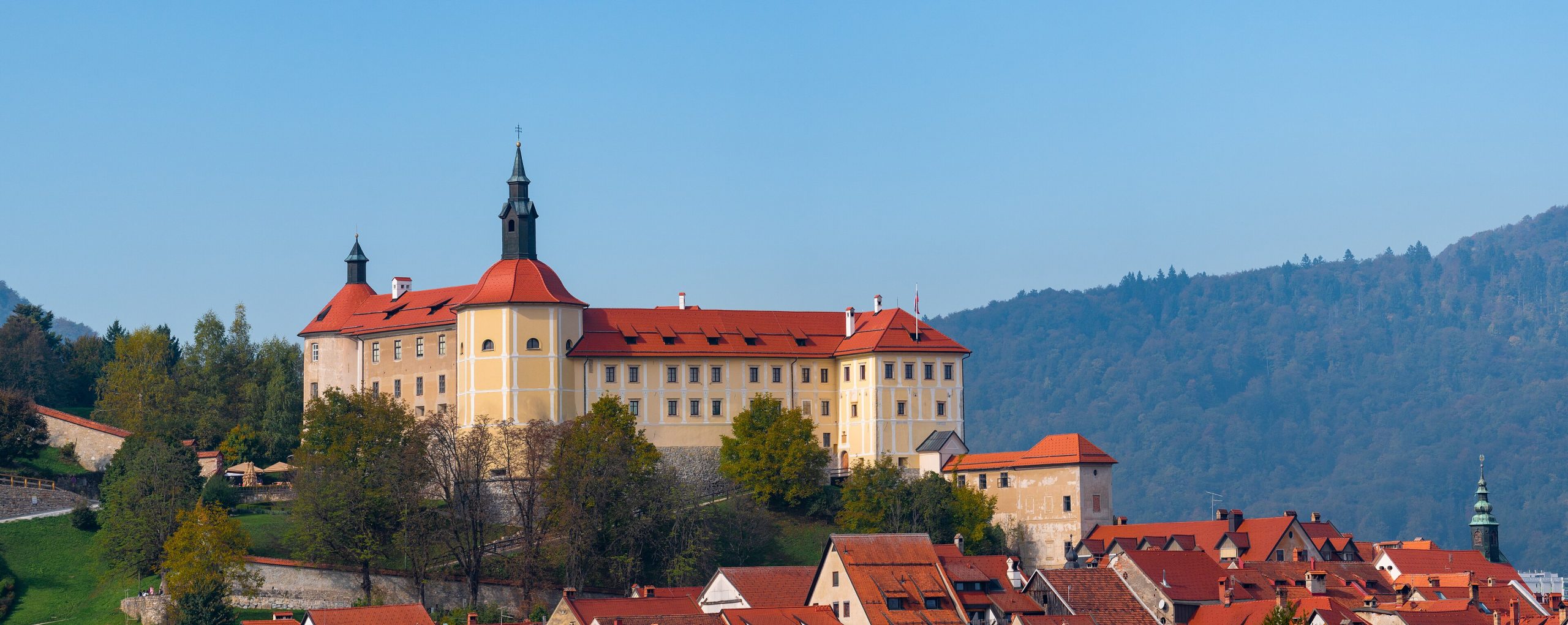
The name literally means ‘bishop’s meadow’ which is a reference to the fact that in 973 Otto II, the Holy Roman Emperor, granted the township to the Bishops of Freising who actually resided in Bavaria, nowhere near modern day Slovenia. This was a common practice in the Middle Ages and the result for Skofja Loka was that these foreign bishops appointed a governor to run the place for almost the next thousand years. During those thousand years the town could have been the poster child for stereotypical events associated with those times including plagues, peasant revolts, earthquakes, Ottoman attacks, religious persecutions and at least one complete sack with most of the place burned down. During WWII it was occupied first by the Italians and later the Germans with the Gestapo doing the horrible things that makes the name synonymous with evil. After the war there was a settling of accounts with hundreds of pro-Nazi supporters being massacred and buried in mass graves around the town.
Today it almost seems miraculous that with this sordid past, it is so picturesque and well preserved.
So let’s start exploring. That bridge you see in one of the photos above is the Capuchin Bridge and it’s the oldest surviving one in Slovenia, dating from the 14th century. We’ll take a closer look.
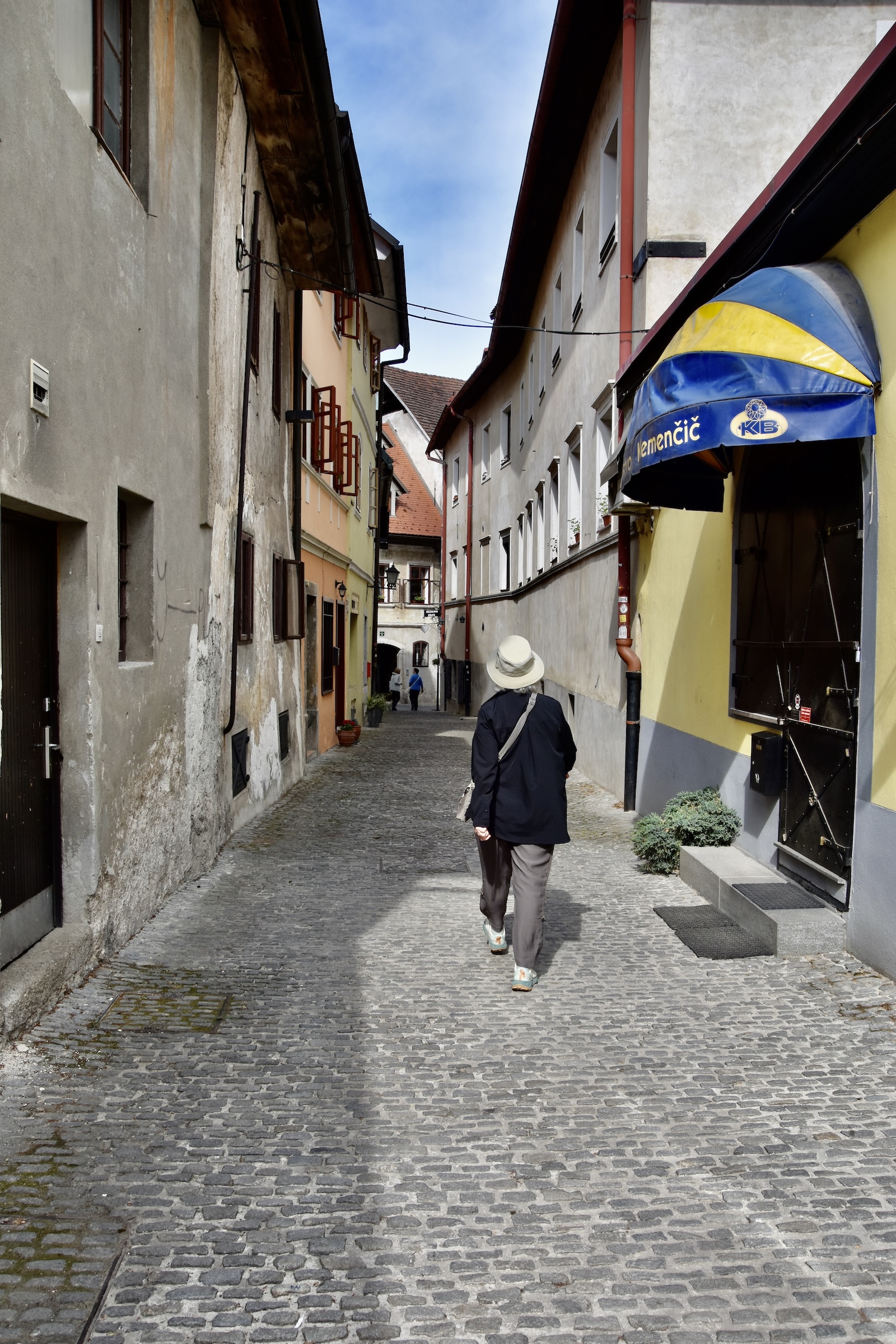
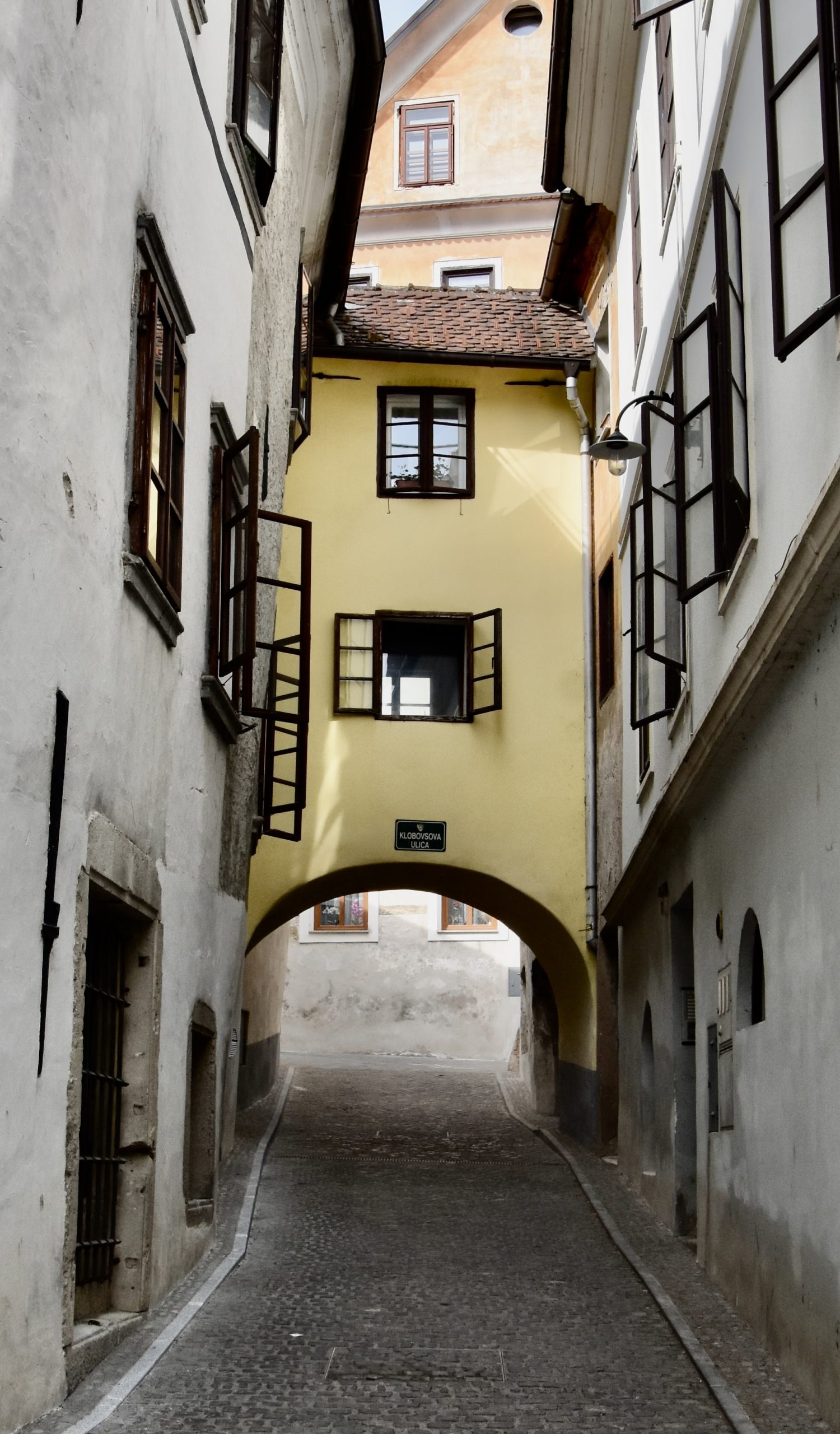
This is a typical side street in Skofja Loka and you can see why you can’t see the castle from most of the town.
Reaching the bridge we find this statue on it and it explains why this bridge has survived those earthquakes, fires and other misfortunes that have plagued (pun intended) Skofja Loka over the centuries.
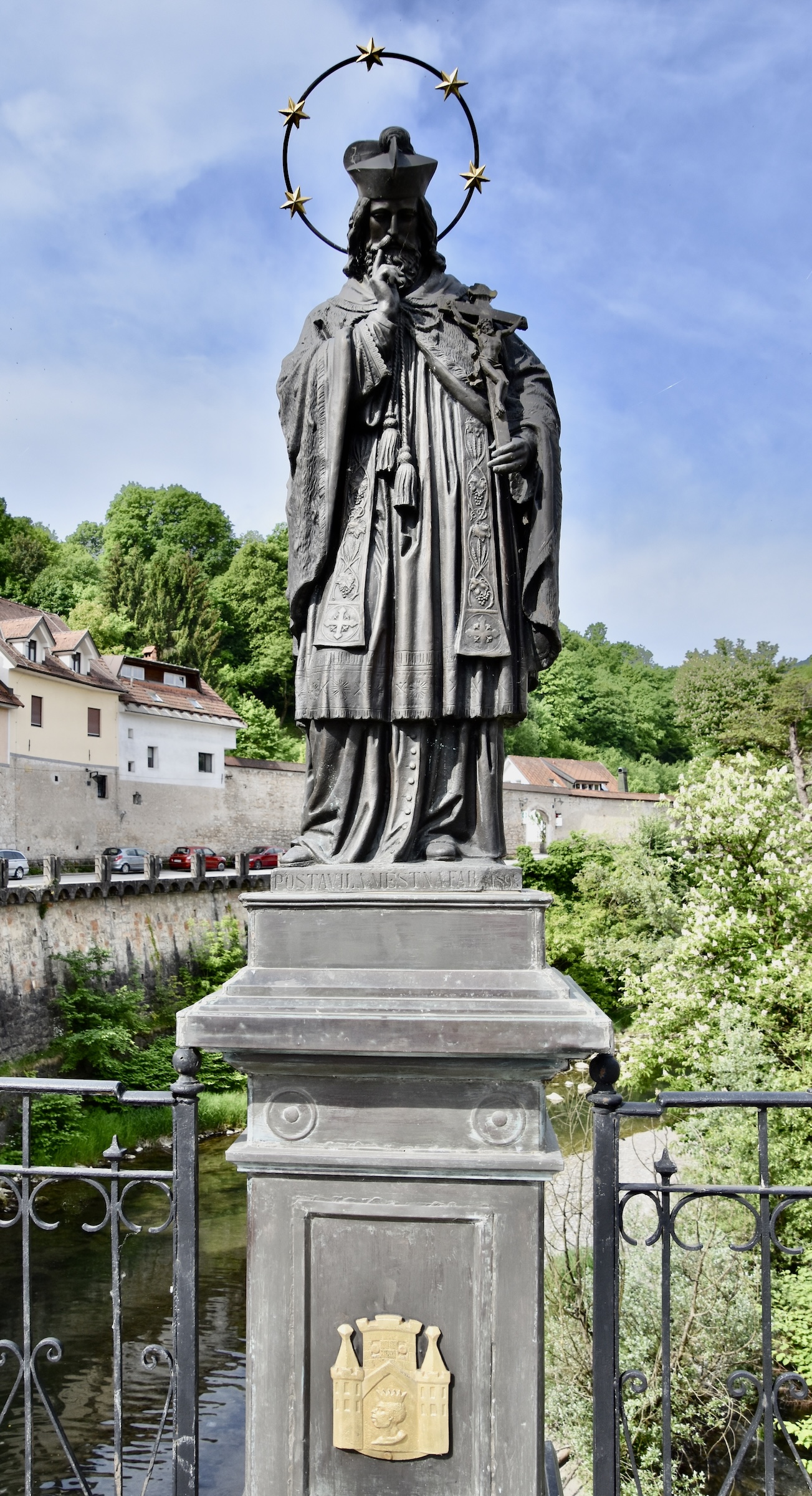
This is none other than St. John of Nepomuk, the patron saint of bridges. See you learn something every day from these posts. The reason he protects bridges is that he died being thrown off one in Vitava in the modern day Czech Republic on the orders of King Wenceslas II – apparently not all King Wenceslas’s were as good as the one in the Christmas carol. Note the Skofja Loka coat-of-arms featuring the castle and the head of what appears to be a black man with a crown. We’ll learn more about that later in this post.
This is the view of Skofja Loka from the bridge. That wooden shed looks a little precarious.
BTW this was totally free time to explore Skofja Loka on our own with no set agenda. I was exploring with Alison and our friends Rob and Janet Purdy. We now made our way toward the sound of pealing church bells passing under this house along the way.
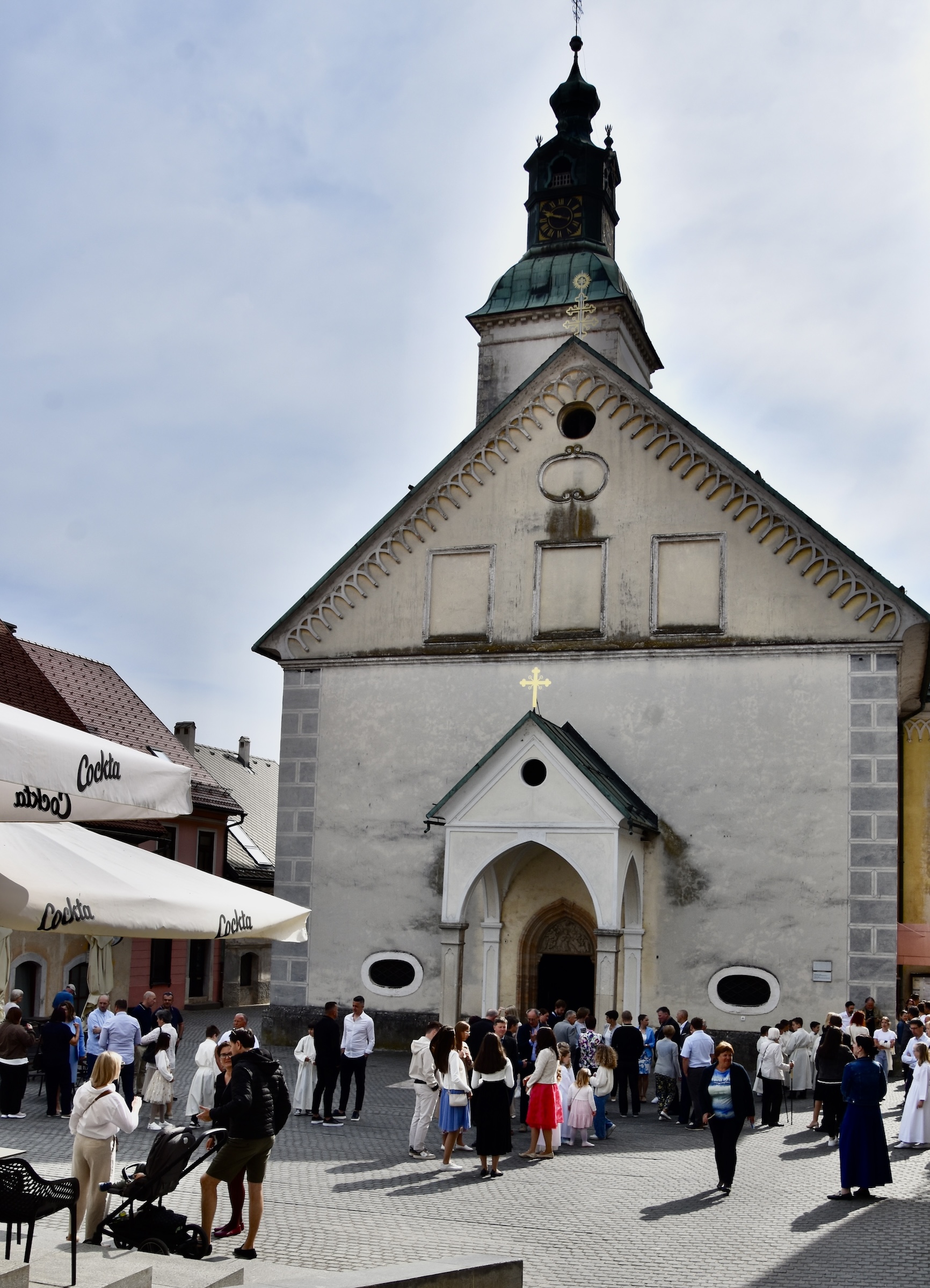
We had hardly seen a soul until coming across this mass of people at the entrance to St. James Church which dates from the 15th century. It turns out, in one of those serendipitous things that happen when you travel, that we stumbled upon the town’s annual confirmation day. There were dozens of little boys and girls dressed in the confirmation outfits – you can see a few in this photo, but I did not want to come across as a voyeur so I didn’t take any close ups.
I did take this short video that gives a better idea of the excitement in the air.
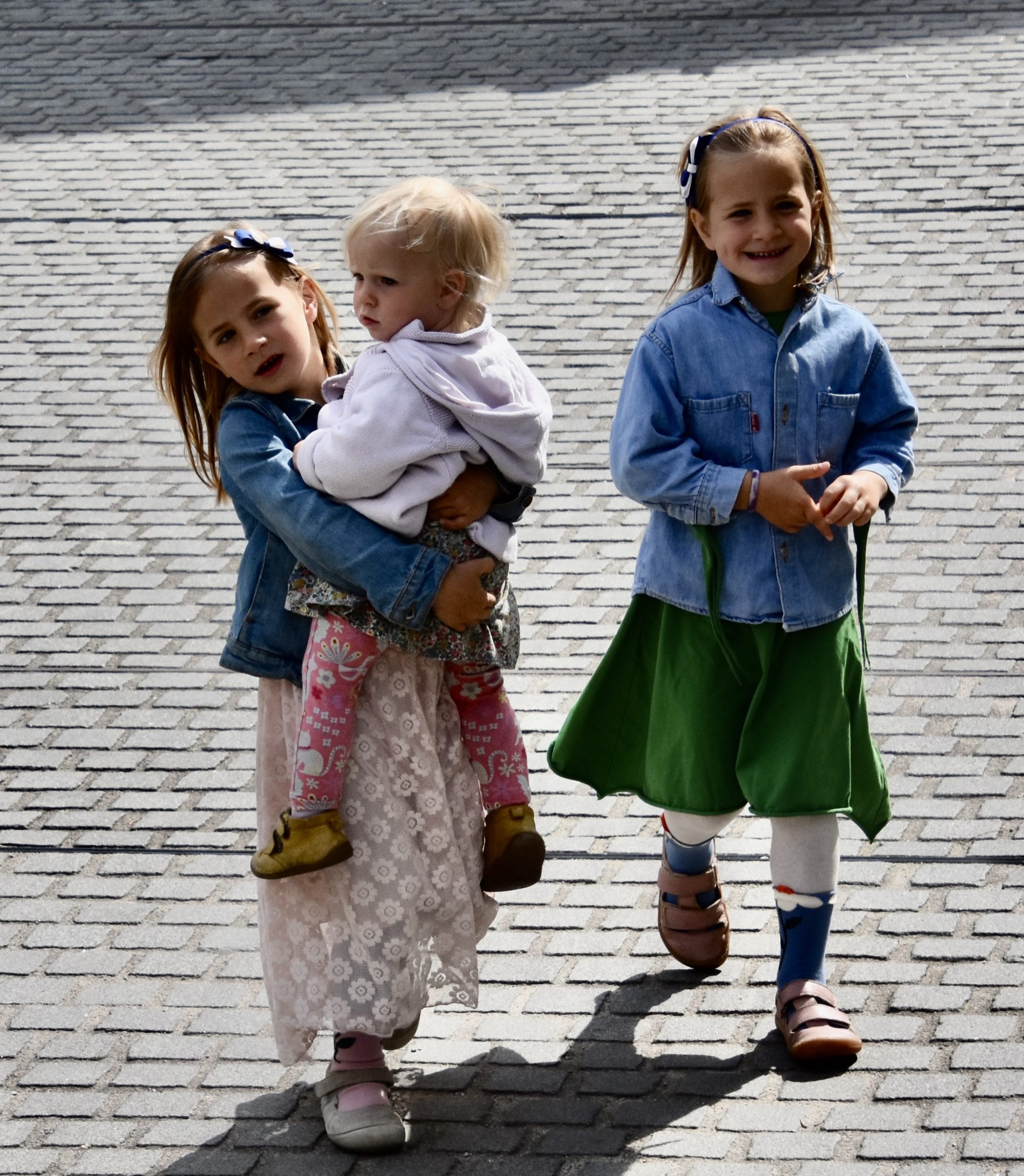
However, I did take a photo of these two small girls who were having a ball passing their little sister back and forth like a game of human hot potato. They wanted to be photographed.
After the congregants entered the church we made our way to the town square which was now almost deserted. It dates from the 13th century and many of the houses are over 500 years old. That column you see below is a plague pillar erected in 1751 in thanks for sparing Skofja Loka from a plague that was ravishing the country.
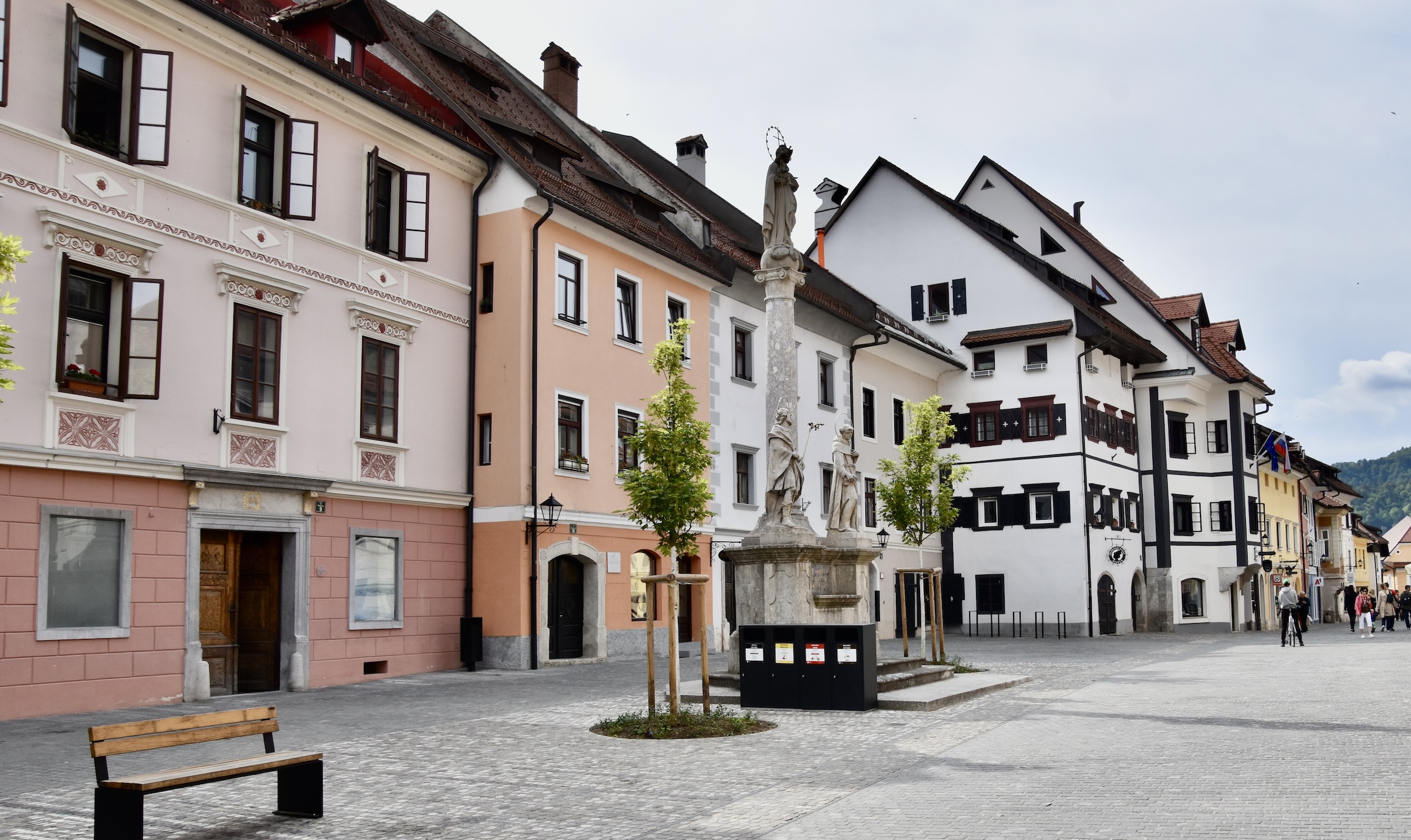
This really is a fascinating place as many of the houses have features that not only make them very distinct, but also photogenic. Let’s take a closer look at a few.
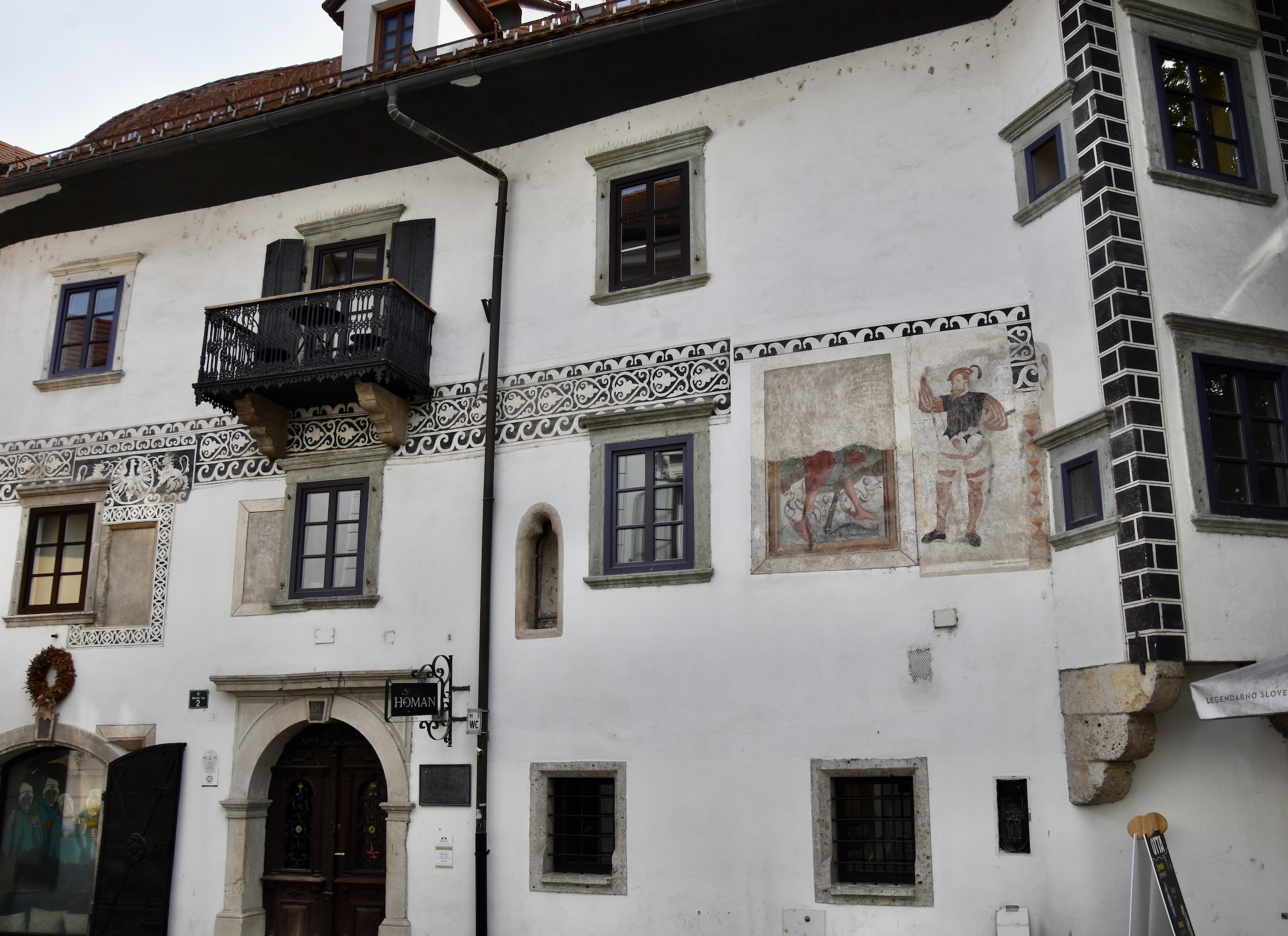
This is Homan House which was rebuilt in 1529 after one the earthquakes that devastated Skofja Loka. The two frescoes, one depicting St. Christopher and the other an unknown warrior, were only rediscovered in 1970.
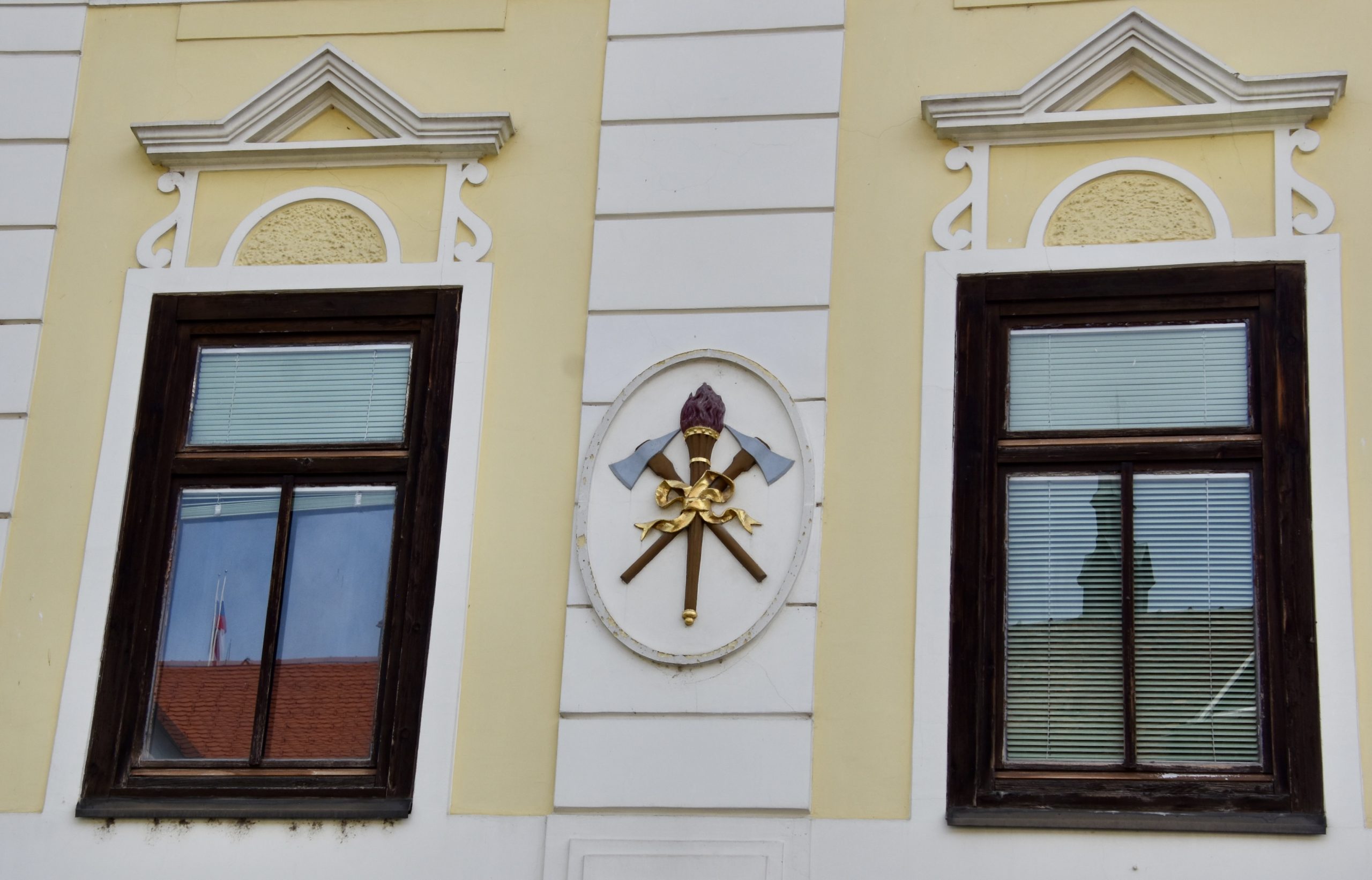
I wasn’t able to find out the history behind this coat-of-arms with axes and torch, but in heraldry axes represent might and torches enlightenment.
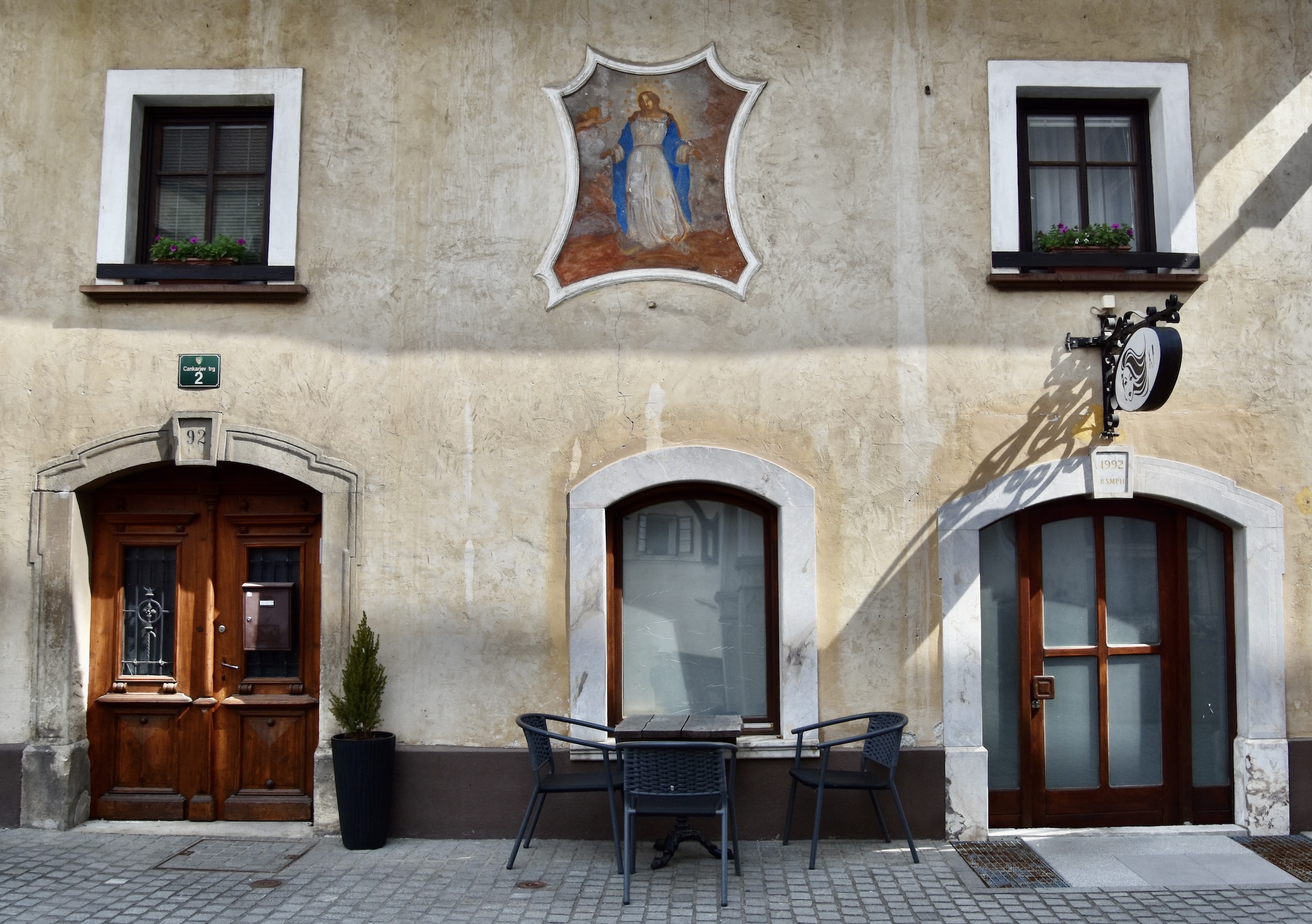
This was perhaps my favourite. I just liked the symmetry.
By now it was time for lunch and Alison and I split this wonderful looking Nicoise salad sitting outside a small cafe.
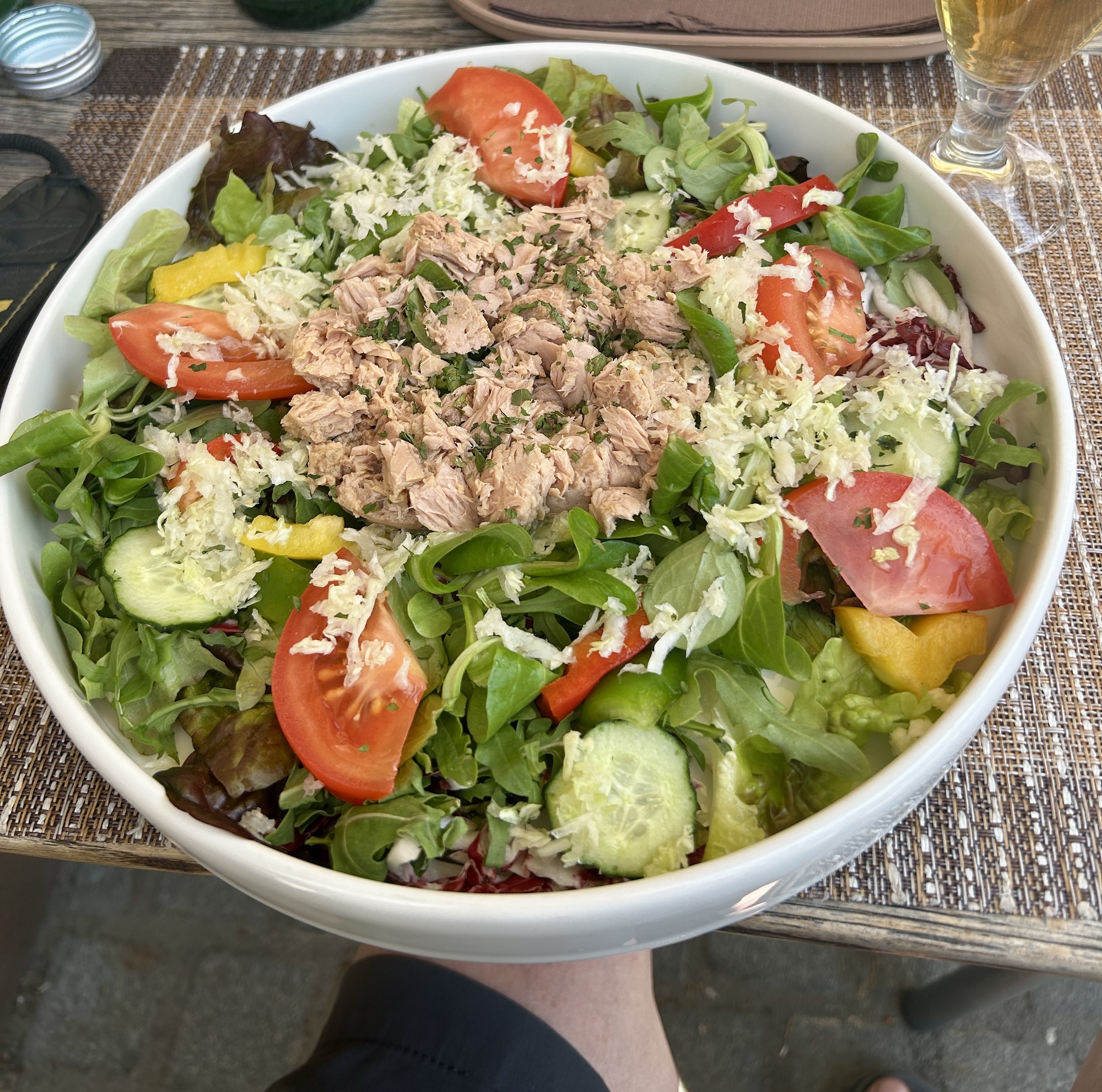
After exploring Skofja Loka on our own we met up with the rest of the group for a tour of the town museum which is located inside the castle. We were given a guided tour by a docent that was quite informative.
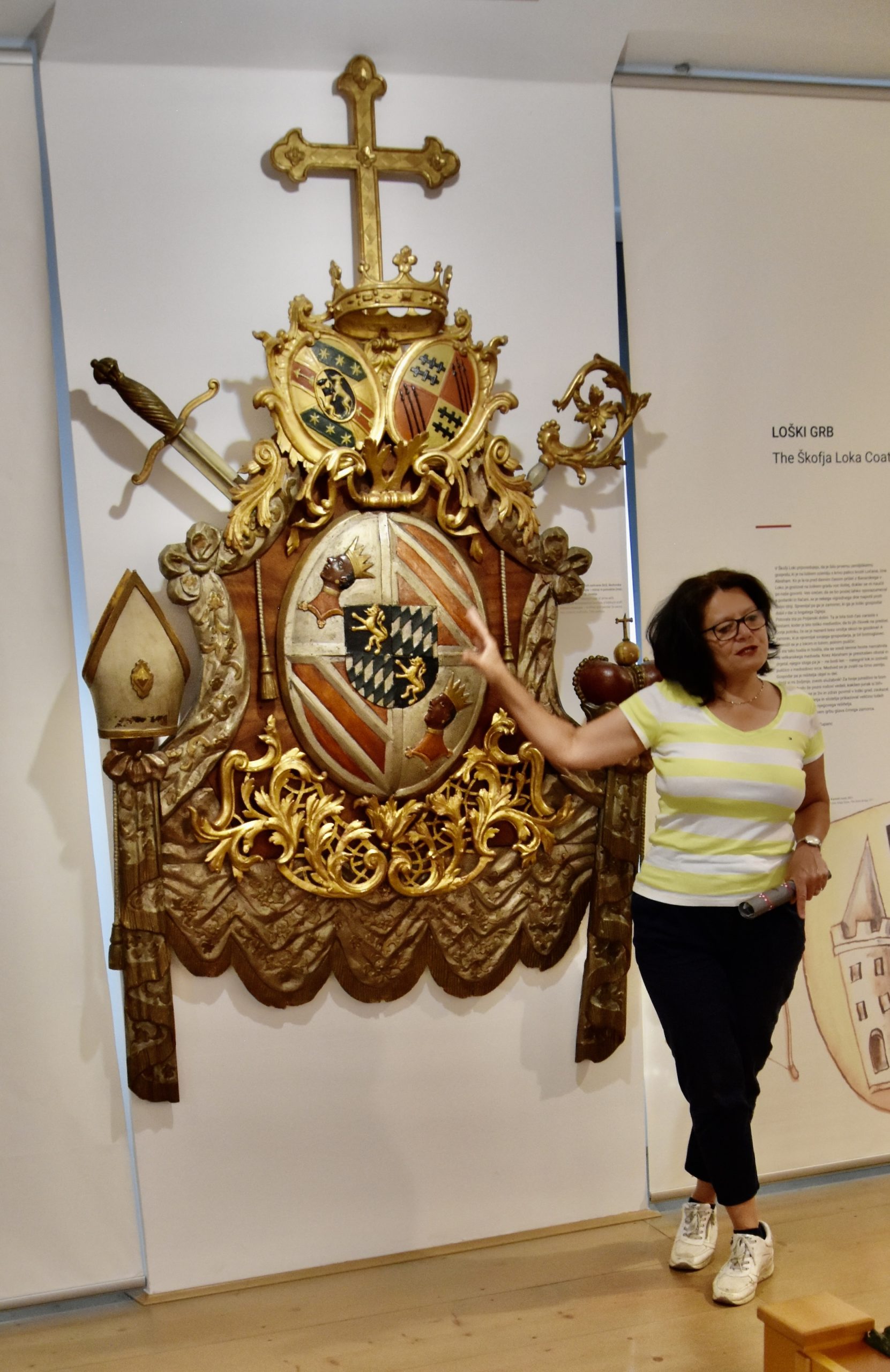
We saw a different version of the Skofja Loka coat-of-arms than this one on the Capuchin bridge, but both feature the head of a black man. We learn that this comes from a legend that one Prince Abraham was travelling through the woods with his black servant when he was attacked by a bear. The servant killed the bear, saving his master’s life and the grateful prince rewarded him by putting him on the town’s coat-of-arms.
Skofja Loka is the type of place that you might envisage when you think of medieval Europe and hope to get see and explore when you visit, but it’s not the only one we’ll see today.
Radovljica
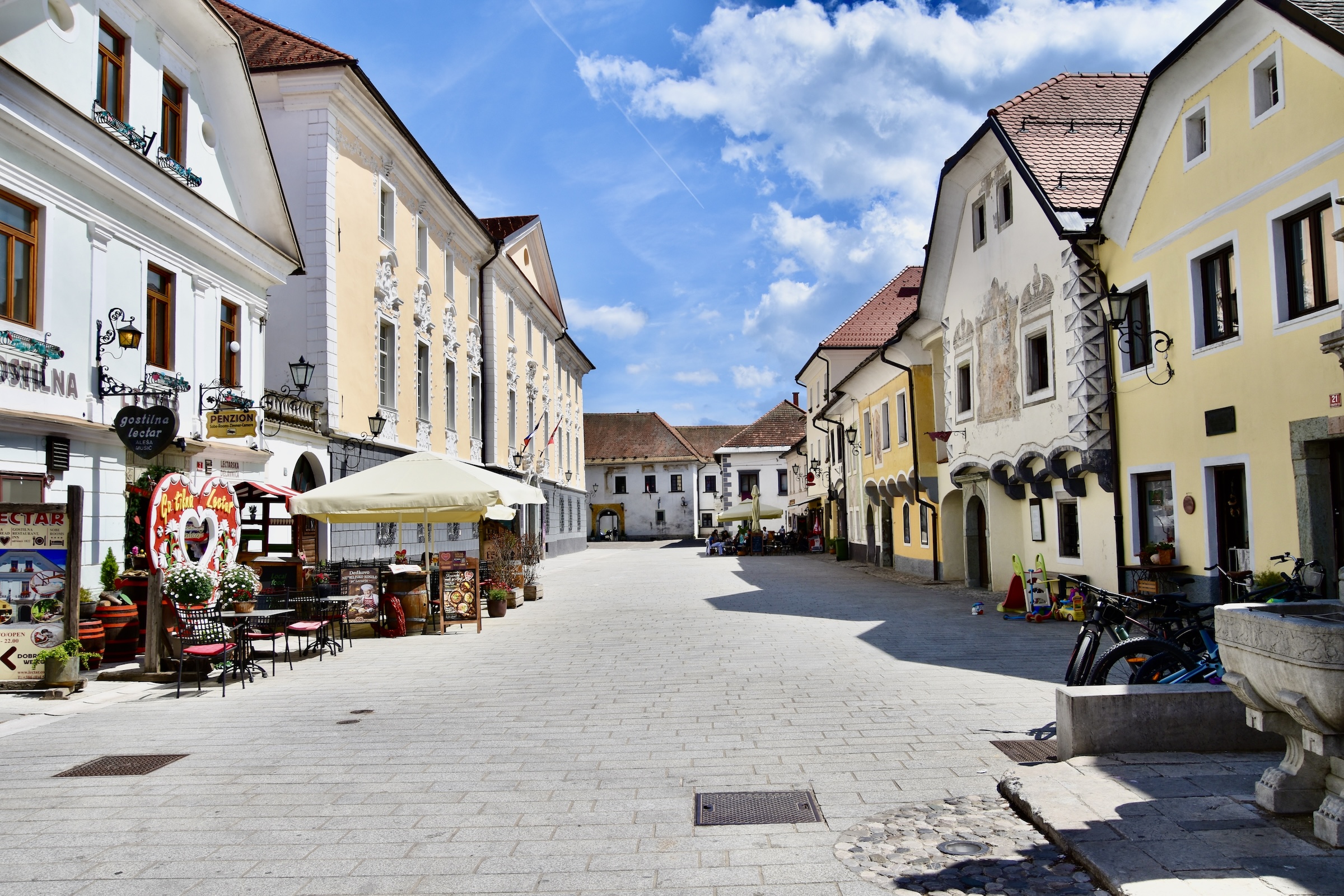
Just over 40 minutes from Skofja Loka is another well preserved medieval town, Radovljica which features 16th to 18th century houses around a rectangular plaza. As you can see, like Skofja Loka on a Sunday, it is virtually deserted. Once again we were given the opportunity to explore it on our own before meeting up for a tour of the Pharmacy and Alchemy Musuem.
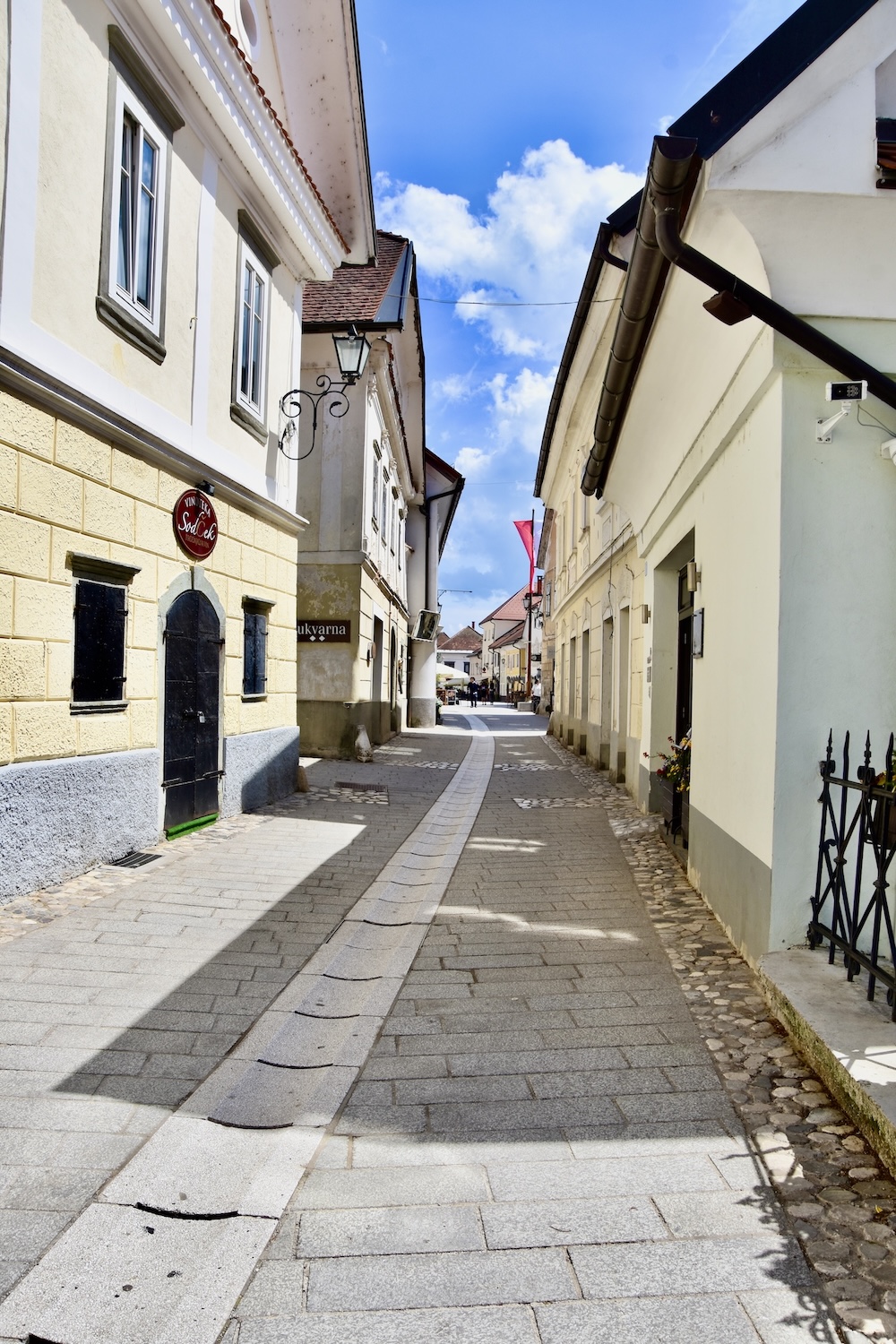
Much smaller than Skofja Loka, the historic area can be covered in about half an hour and features narrow lanes that radiate out from Linhart Square.
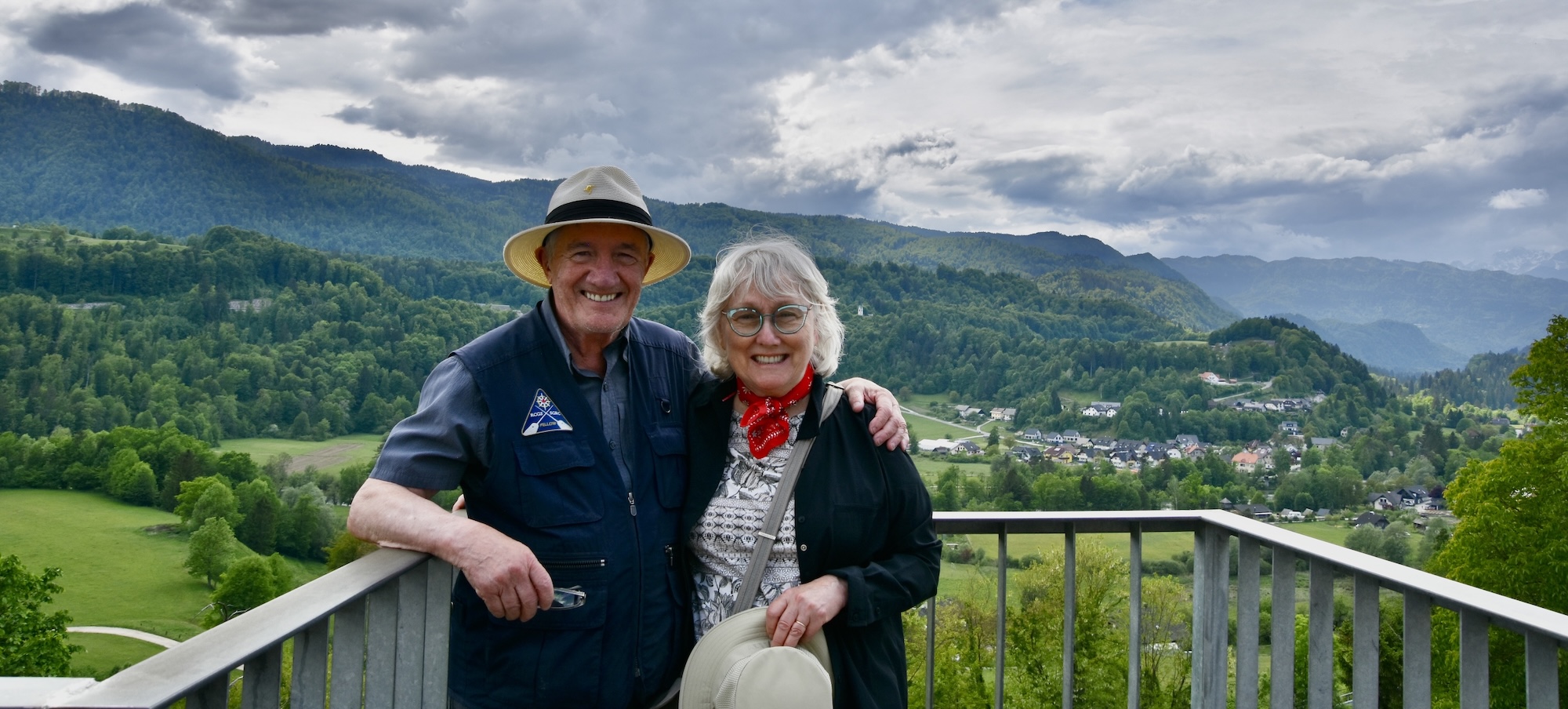
The highlight is the view from the mirador that overlooks the Sava River valley. We all dutifully took turns getting ourselves photographed there.
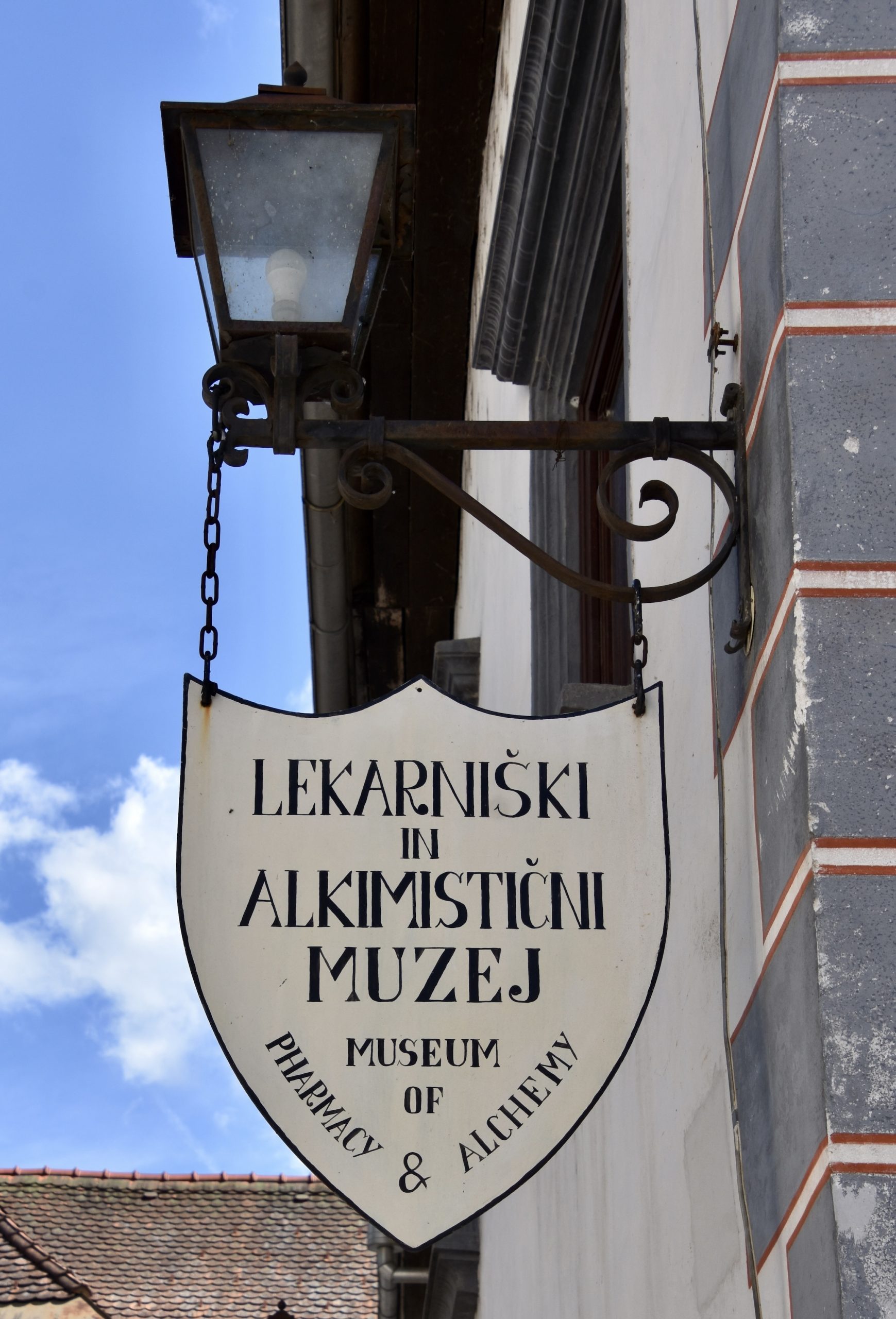
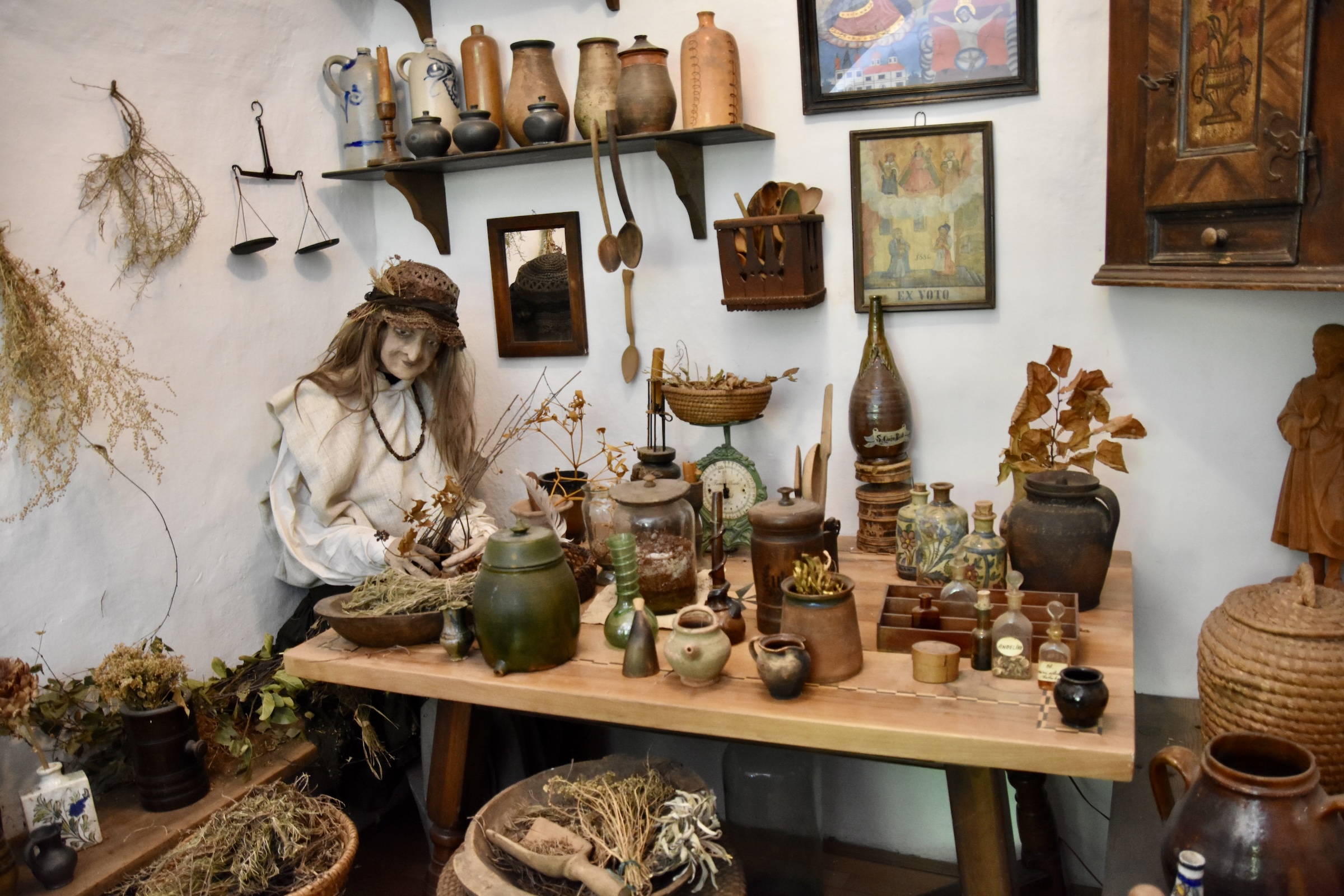
For such a small town, Radovljica has a surprising number of museums including one dedicated to the beekeeping tradition of the area and another to gingerbread, although it’s not in a gingerbread house. The one we visited was the Pharmacy and Alchemy Museum which has ten exhibition rooms with over 2,000 items on display.
We were given a guided tour by Anika, the daughter of the founder.
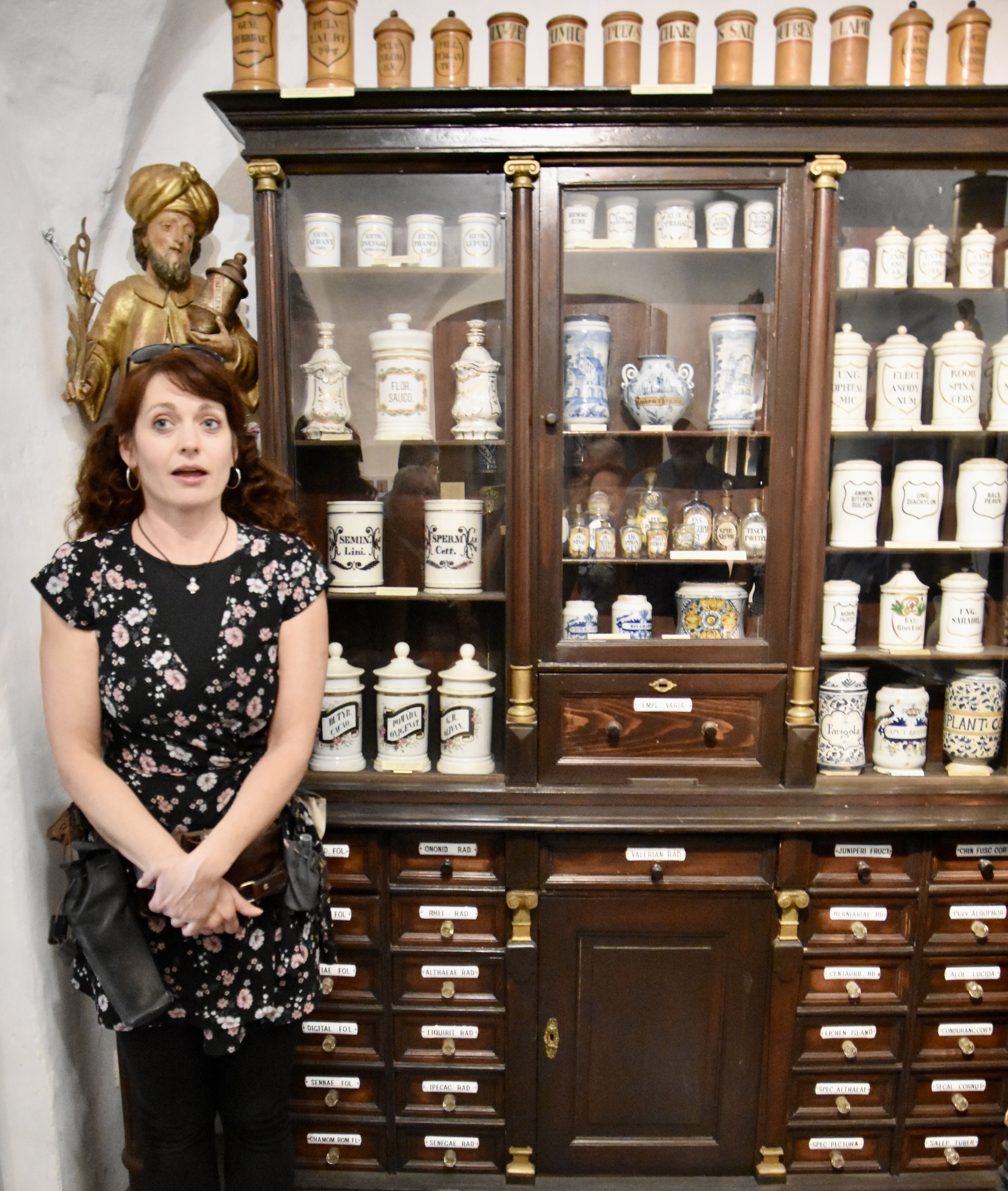
Despite the inclusion of the word alchemy in the museum’s name, the exhibits were actually more about the many folk remedies that are a part of traditional Slovenian medicine.
From Radovljica it was a very short distance to the town of Bled which I was very much looking forward to. We checked into the Hotel Kompas where we had this view of Bled castle from room 401.
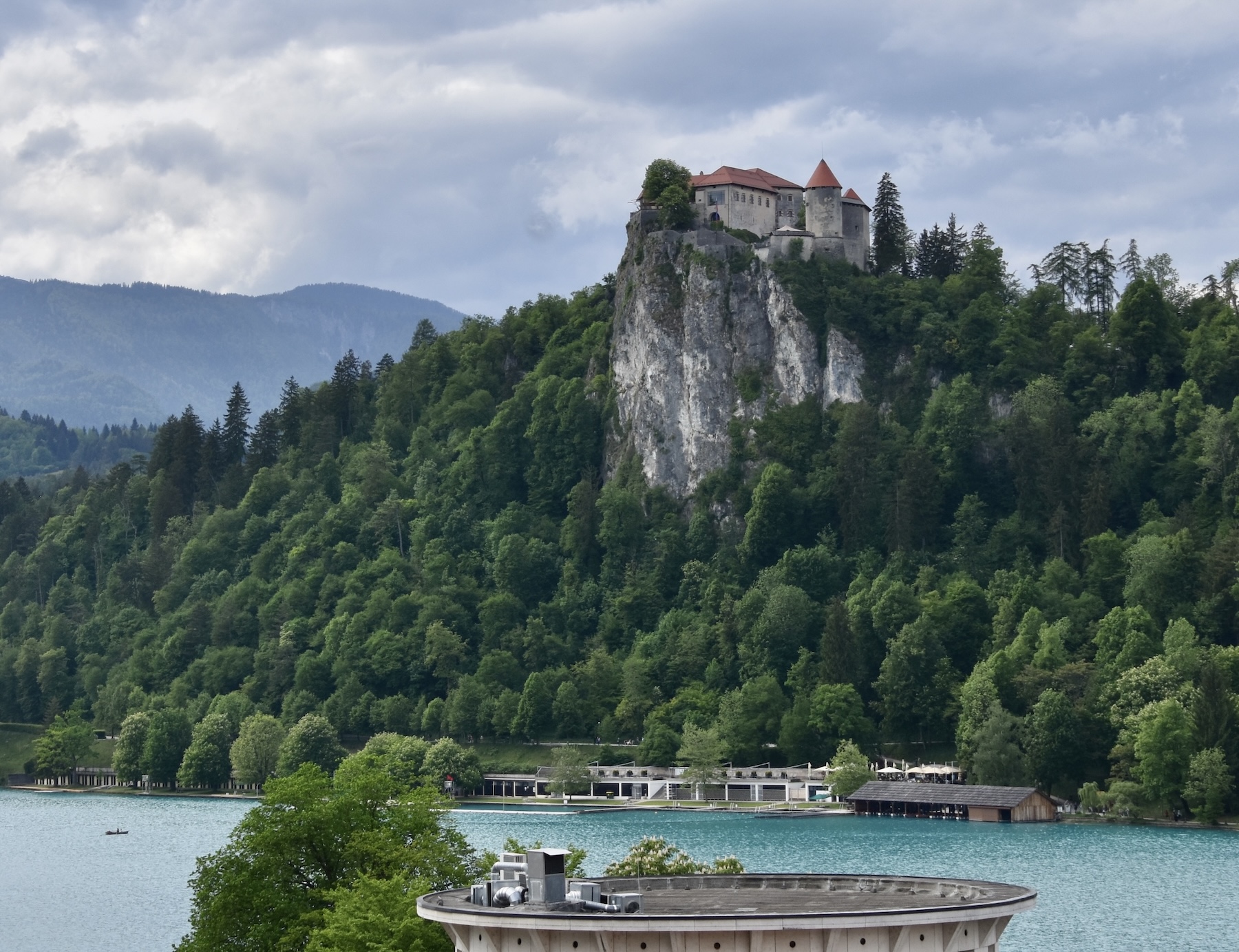
In the next post we’ll visit that castle and the famous church on an island in Lake Bled. Today has been a great day and tomorrow might even be better. I hope you’ll join us.