
Ljubljana – Slovenia’s Beautiful Capital City

In my first post from Slovenia I gave ten reasons why this country is definitely worth visiting and in particular with Adventures Abroad. In this post I’ll begin my detailed description of all that this country has to offer starting with the capital city of Ljubljana. So put on your walking shoes and let’s start exploring.
History of Ljubljana
Let’s start off with how to properly pronounce what at first sight seems like a complicated name. However, in Slovenian j’s are pronounced like y’s and it’s suddenly very easy to pronounce – Liu – bli- ana. Pronouncing it right does little to help determine what the name actually means – a quick internet search reveals no real agreement on its origin. In fact the city and river that runs through it were called Laibach, a German name, right up until 1918 so we won’t worry ourselves about name origins and jump right to the most interesting bit – the dragon.
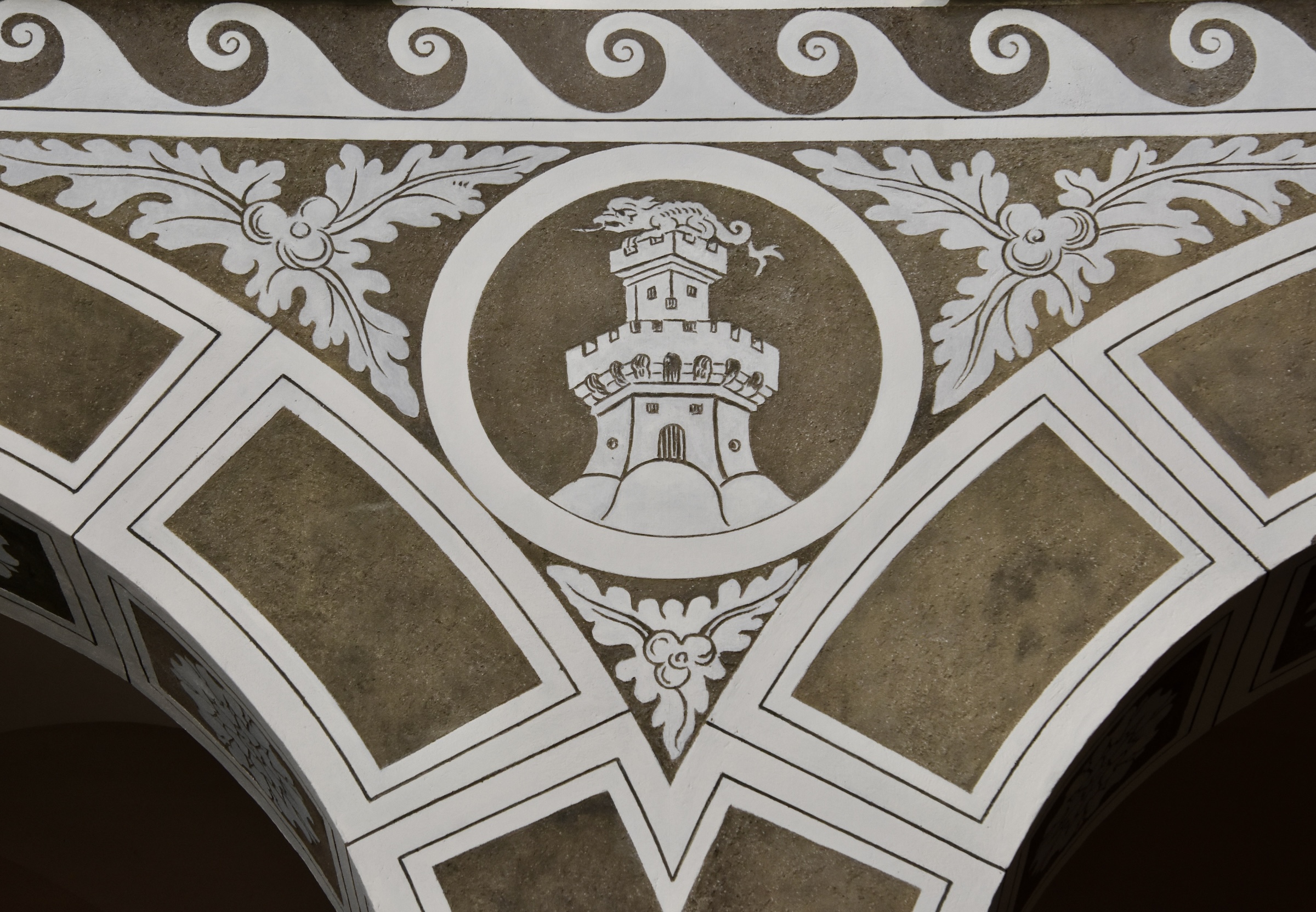
Everywhere you go in Ljubljana you will see the dragon which is the symbol of the city and believe it or not the story goes all the way back to Jason and the Argonauts. I’m a big fan of the Jason myths, but I really had to wonder how the hell Jason, who spent most of his time in the Black Sea, could possibly have ended up here. The closest saltwater is the Adriatic some 130 kms. (80 miles) away. But here’s the thing – the Ljubljanica River that runs through Ljubljana drains into the Sava which in turns drains into the Danube which empties into the Black Sea. So somehow Jason, returning home with the Golden Fleece, got so far off track that he went up those rivers and eventually found himself confronting a dragon near what is now Ljubljana. Naturally he slayed it (nobody just kills a dragon, they always slay it) and the legend was born.
Or maybe not. Others believe the dragon relates to St. George who is the patron saint of the Ljubljana Castle chapel which was built in the 15th century. One of the reasons St. George pops up everywhere is that he is generally regarded as a symbol of the defeat of paganism i.e. the dragon, by Christianity. An even more prosaic explanation is that someone just added a dragon to the top of the castle on the city coat-of-arms and gradually the dragon became more important than the castle.
Leaving myth behind, we do know that there were people living in pile dwellings on Ljubljana Marsh by as early as 2000 BCE. In 2011, UNESCO inscribed this site along with 110 other sites in six countries as a UNESCO World Heritage Site, Prehistoric Pile Dwellings Around the Alps. As noted in the first post, the oldest wooden wheel in the world was found in the Ljubljana Marsh.
The first permanent settlement appears to have been founded by the Romans in 50 BCE first as a fort and later as the city of Emona which lasted until 452 when Attila completely destroyed it. There followed a period of hundreds of years where little is known about the area other than that this was when the Slovenes arrived, but they never actually governed the city. The most dominant feature in Ljubljana is the castle which dates back to as early as the 11th century, although what you see today dates from the 14th century and later. It sits atop a natural hill and has been the base of power in the city seemingly forever. I won’t bore the reader with the many occupants over the hundreds of years who have wielded power from the castle, none of them Slovenes. It is the castle that is important in the history of Ljubljana, so much so that it, along with the dragon, make up the city’s coat-of-arms.
Much of the city was destroyed in an 1895 earthquake after which it was rebuilt in the Art Nouveau and Vienna Succession styles that, with the bridges and colonnades alongside the river, give Ljubljana its unique look today. It is a people first city with no out of place modern buildings that interfere with the laid back vibe that is quite unusual in a capital city where the structures of government are often the defining features. Between WWI and WWII Slovenian architect Joze Plecnik further transformed the city in such a manner that in 2021 his work in Ljubljana was recognized as a UNESCO World Heritage Site with this description:
The works Jože Plečnik carried in Ljubljana between World War I and World War II present an example of a human centred urban design that successively changed the identity of the city following the dissolution of the Austro-Hungarian Empire, when it changed from a provincial city into the symbolic capital of the Slovenian people. The architect Jože Plečnik contributed to this transformation with his personal, profoundly human vision for the city, based on an architectural dialogue with the older city while serving the needs of emerging modern 20th century society. The property consists of a series of public spaces (squares, parks, streets, promenades, bridges) and public institutions (national library, churches, markets, funerary complex) that were sensitively integrated into the pre-existing urban, natural and cultural context and contributed to the city’s new identity. This highly contextual and human-scale urbanistic approach, as well as Plečnik’s distinctive architectural idiom, stand apart from the other predominant modernist principles of his time. It is an exceptional case of creating public spaces, buildings and green areas according to the vision of a single architect within a limited time, the limited space of an existing city, and with relatively limited resources.
Over 20 hectares of Ljubljana’s historic centre is totally pedestrianized. That’s the equivalent of over 40 football fields and basically coincides with the UNESCO designated area.
As I noted in the first post, Slovenia became the first of the six states that made up Yugoslavia to secede from the union which it did after a referendum in 1990. Ljubljana then became a world capital for the first time in its 2000+ year history. Today it has a population of around only 300,000 with a further 200,000 making up the total metro area that accounts for about a quarter of Slovenia’s population.
So let’s meet our local guide and start exploring on foot.
We are staying at the Best Western Hotel Slon which has an excellent location within the pedestrianized zone, although our taxi driver was allowed to drop us off at the entrance when he took us there from the train station. The same applies if you arrive from the airport.
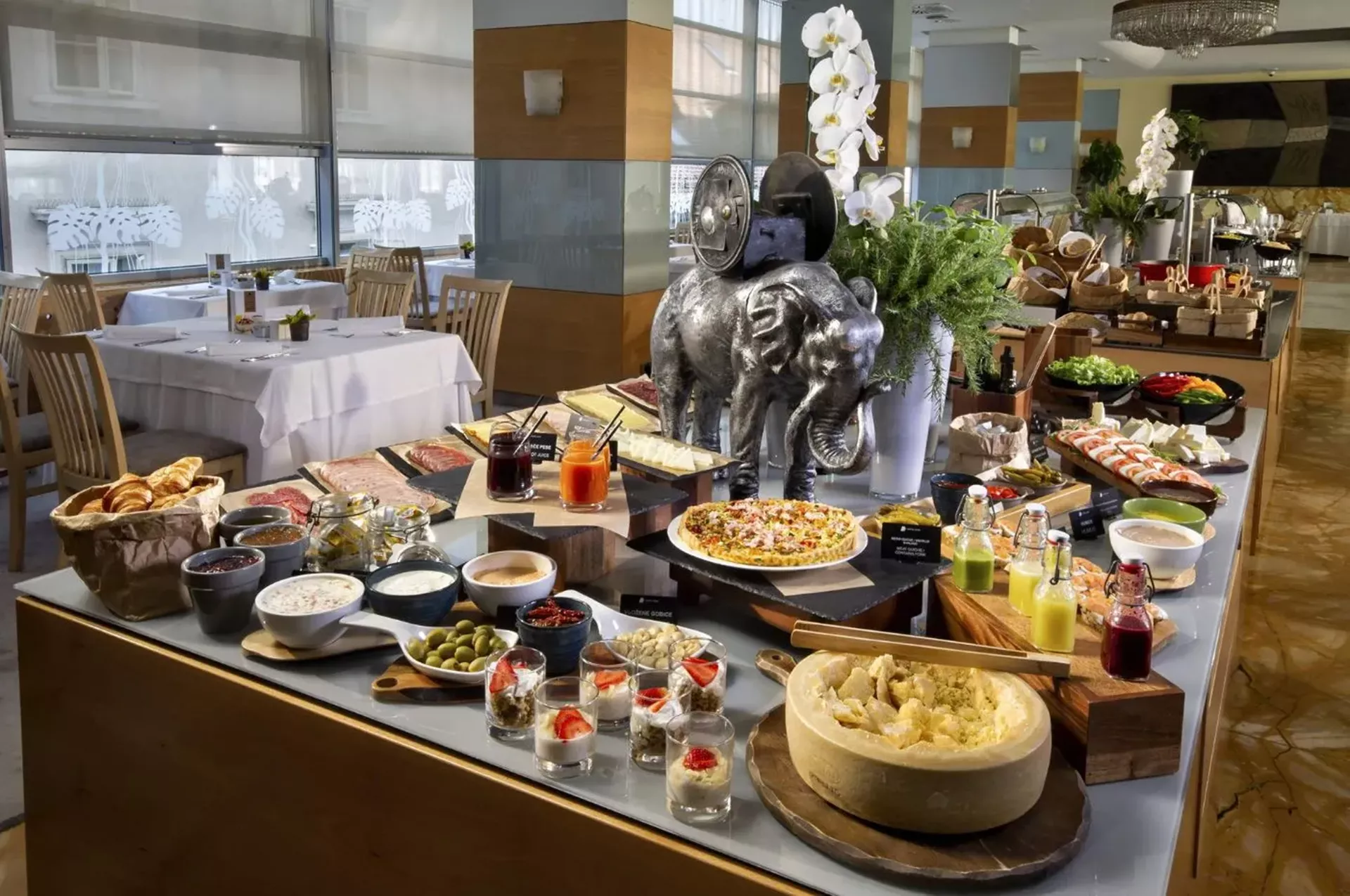
We meet our local guide Tina at the hotel after a nice buffet breakfast which features a wide variety of cheeses, pastries, prepared meats, sausages, salads and eggs.
Just after writing that Ljubljana is not overrun with modern government buildings like most capital cities, Tina takes us to a modern government building for our first stop.
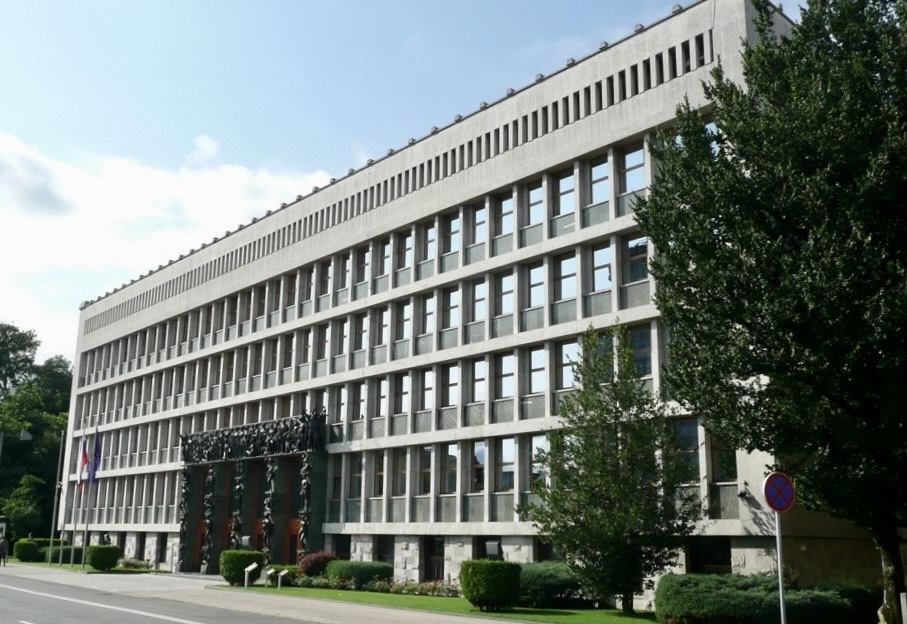
This is the National Assembly Building of Slovenia which is their equivalent to our Parliament Buildings or the United States Capitol building. It’s not much to look at until you get to the entrance.
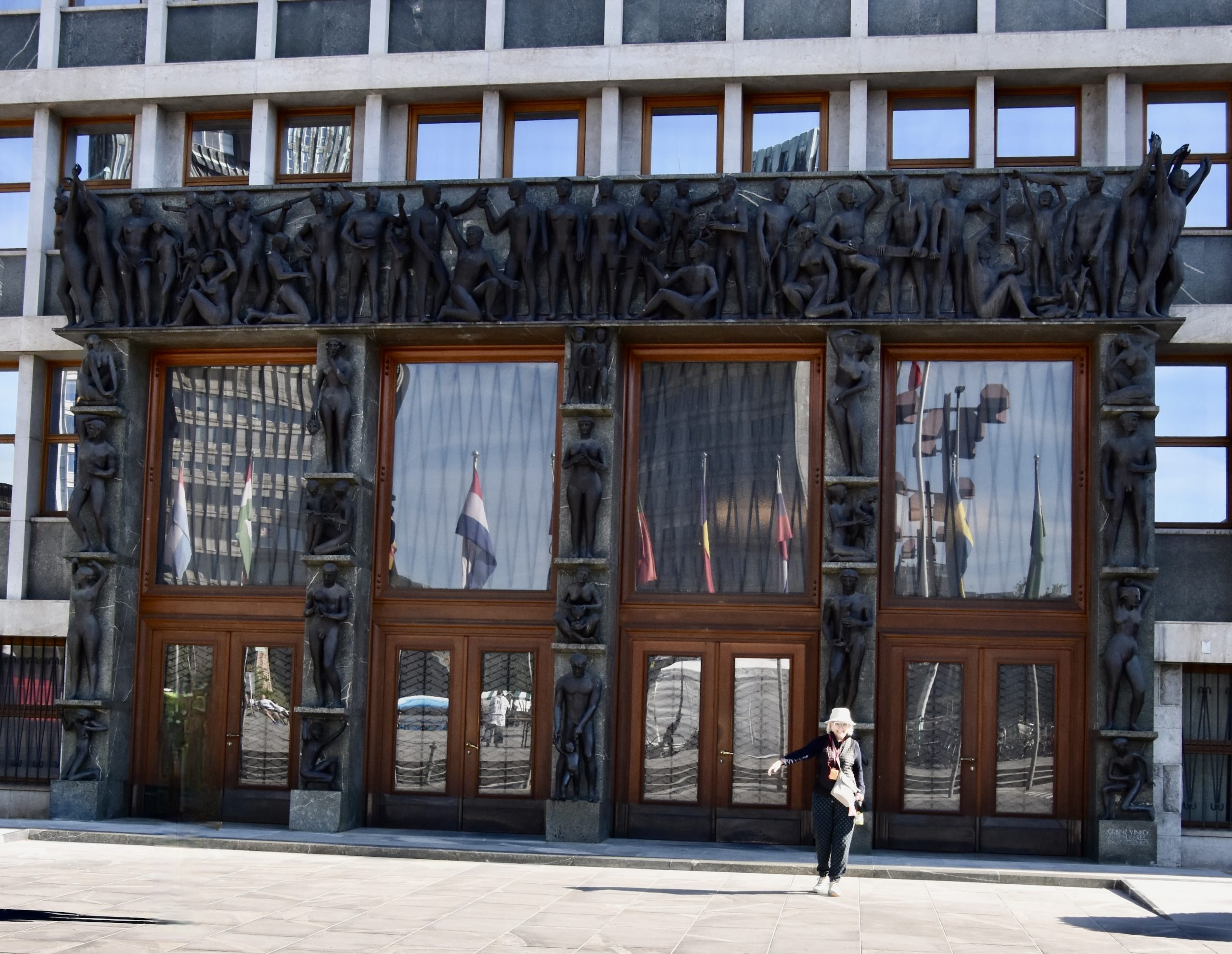
As a former Clerk of the Executive Council and Secretary to the Cabinet Alison has a more than usual interest in parliamentary assemblies around the world and I always try to get a photograph of just her in front of each one we visit. This is the Slovenian version. Originally built during the Communist era in 1959, which explains its boring exterior, it does have four oak doors surrounded by statutes of very Communist era looking workers.
OK, we’ve got the obligatory capital building out of the way, let’s go see some interesting architecture.
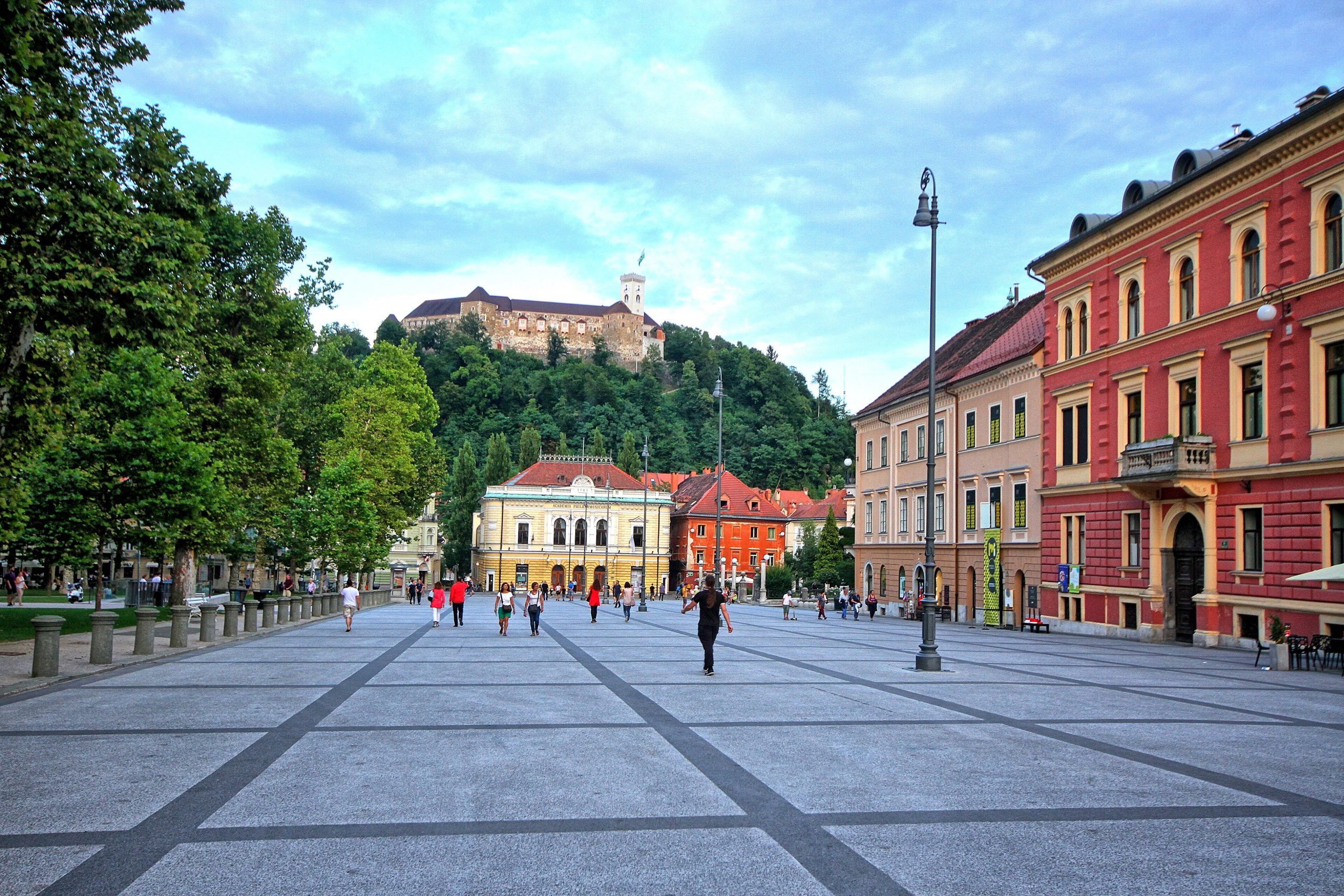
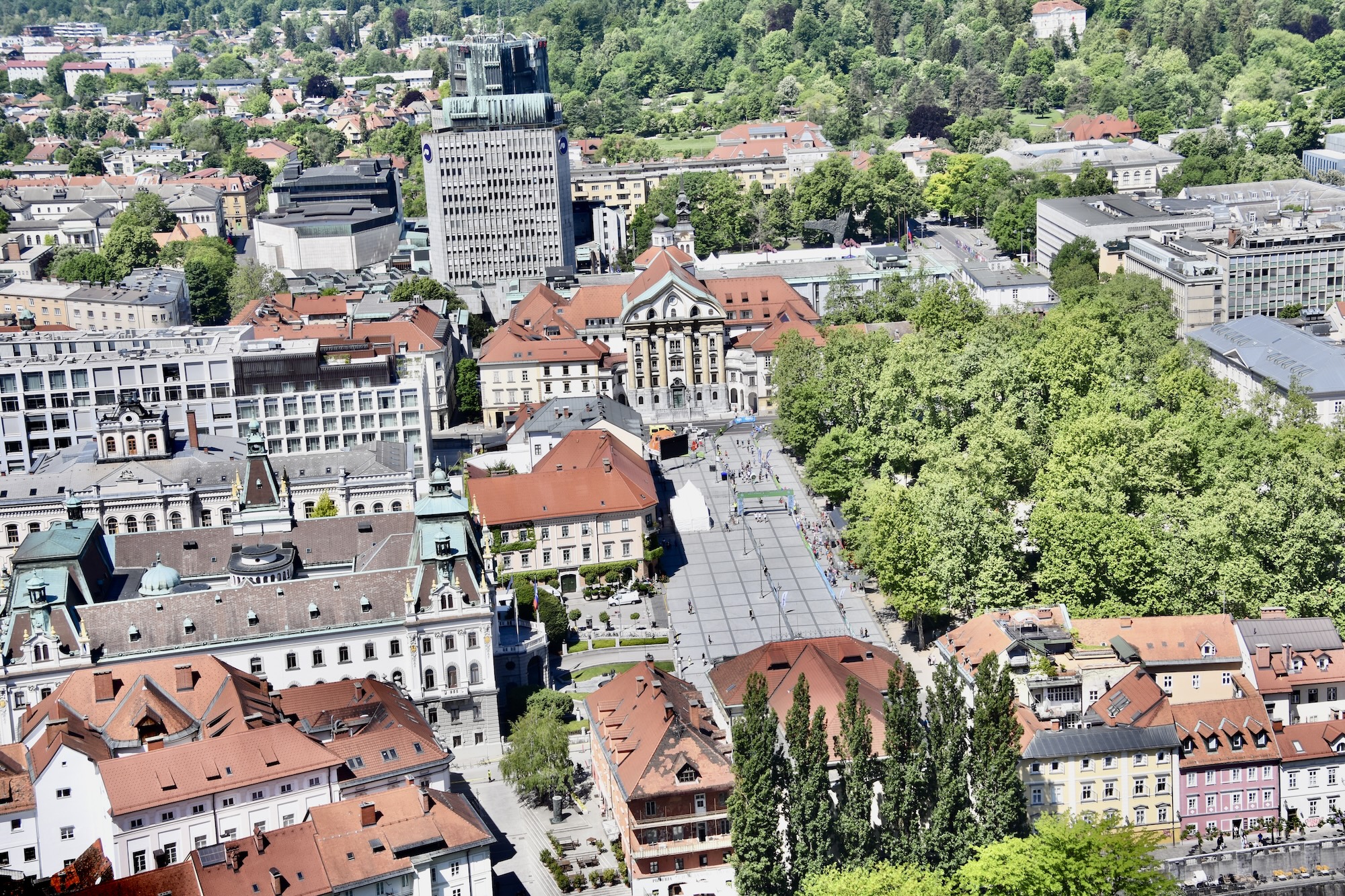
This is Congress Square which was built in 1821 and it has great meaning to Slovenes. This is where independence from the Austria-Hungary Empire was declared in 1918 and where massive protests were held beginning in 1988 that led to the Slovenian spring and eventual full independence. From here you can also see how the castle dominates the city.
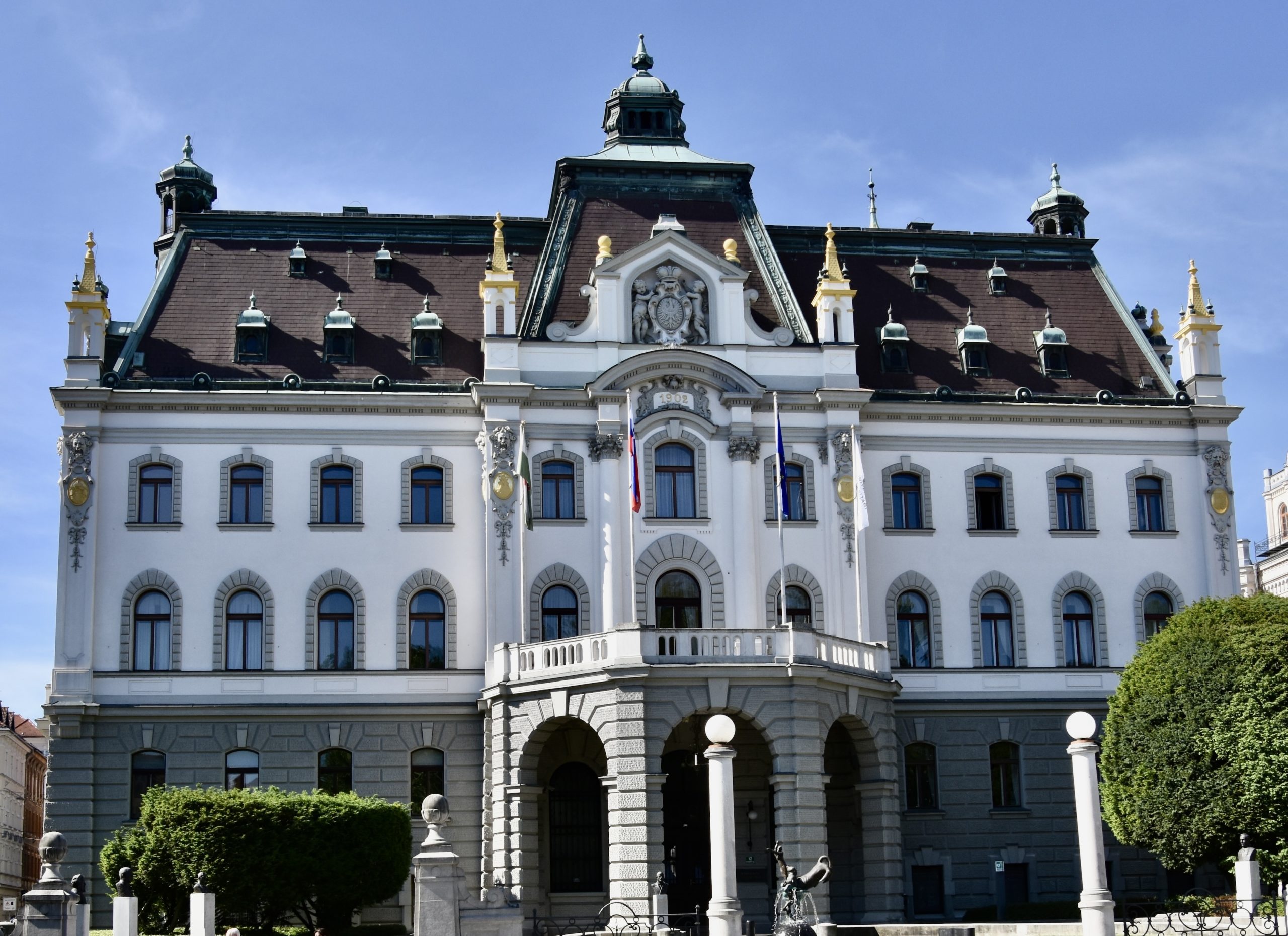
This is the administration building for Ljubljana University which sits at the far end of Congress Square. The university was only founded in 1918, but has since grown exponentially. Today there are 23 faculties with 38,000 students which explains why Ljubljana has such youthful vibe. Every second person seems to be 25 or under.
The reason I had to use someone else’s photo of Congress Square is that on the day we visited it was packed. There was a race taking place that celebrated the liberation of Ljubljana on May 9, 1945 following the route taken by the Slovene partisans who entered the city that day. The end point was at the square. Instead of individual runners there were teams of three and we spent some time watching the exhausted runners being cheered on by the spectators as they neared the finish line. It is these type of unscripted moments that I find make visiting a foreign country often the most interesting. There was a palpable aura of joy and freedom that permeated the entire city this day. How lucky we were to be there to experience it.
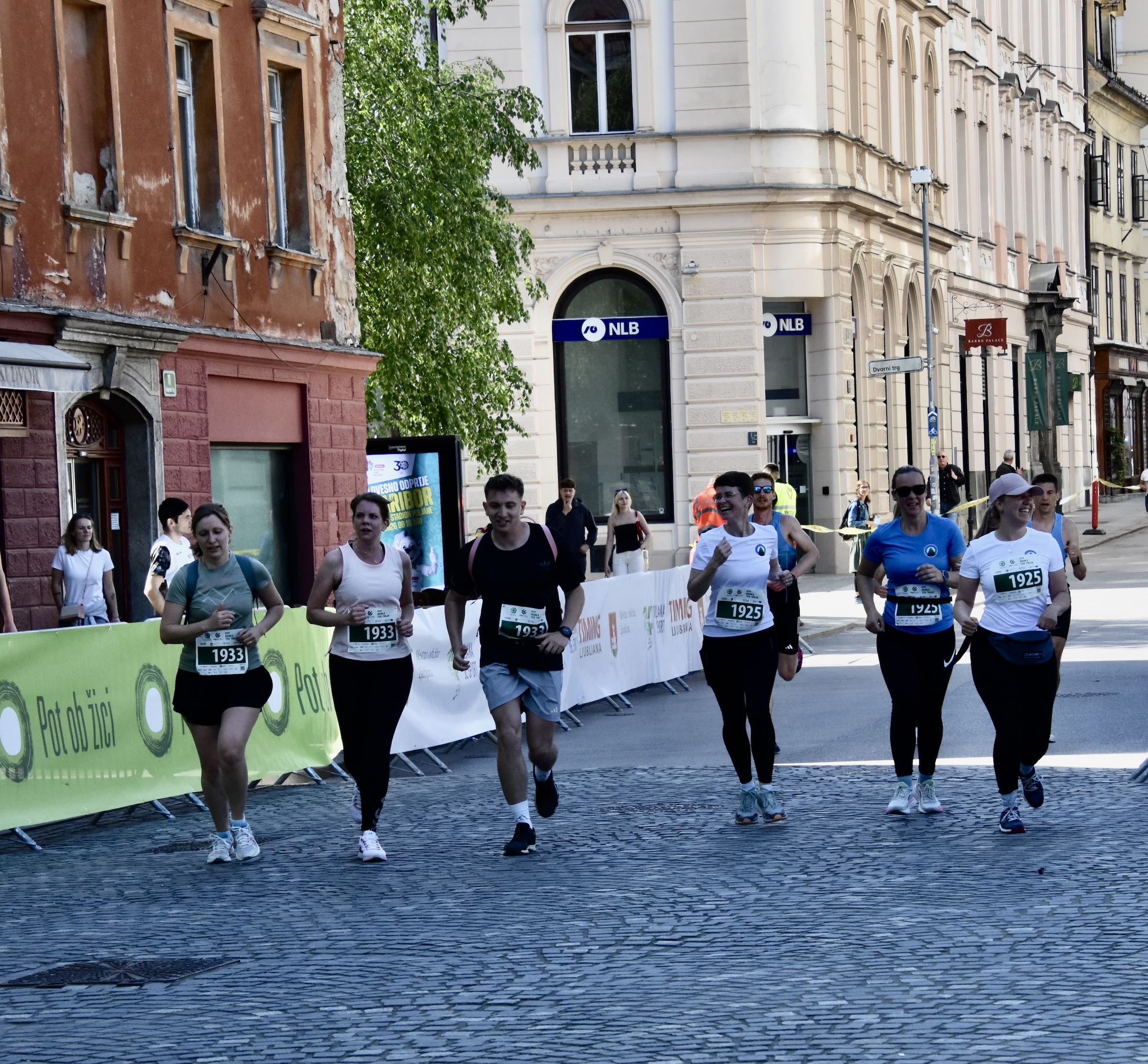
The bonus of seeing all the people thronging Congress Square is that there was hardly anyone else in the rest of the historic part of the city.
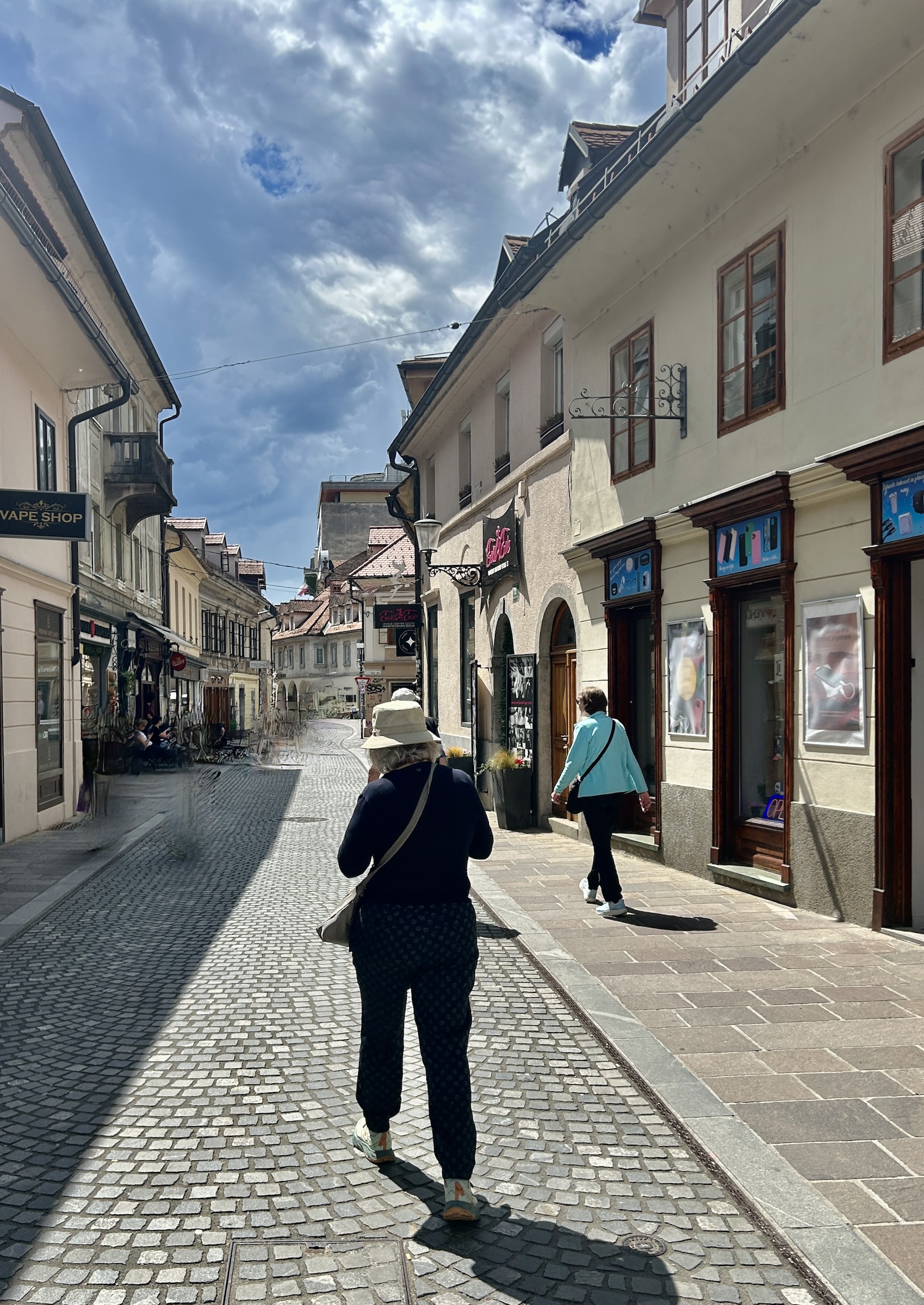
Tina led us to the Ljubljanica River and we crossed over on one of the many bridges one the way to the funicular that goes up to the castle.
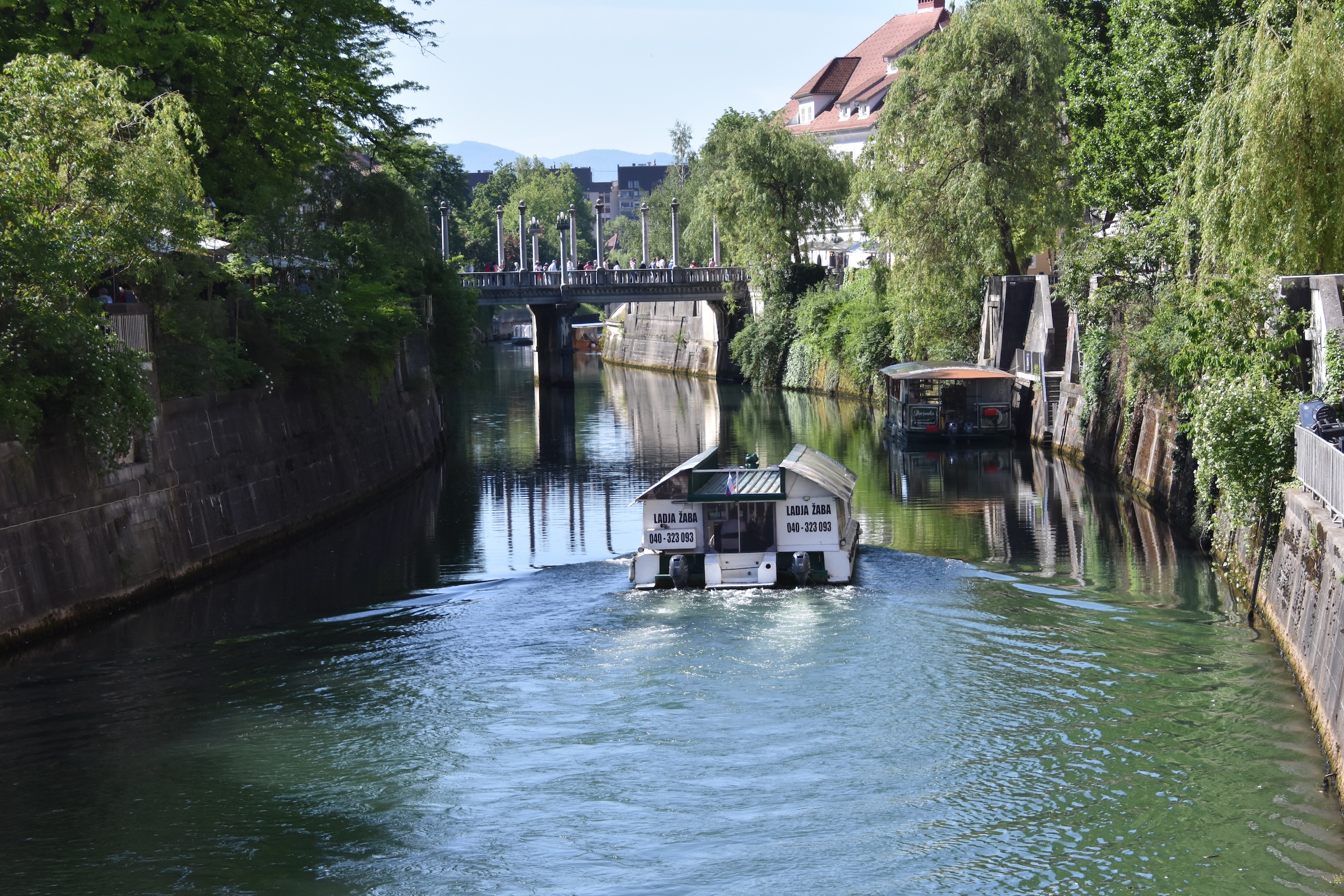
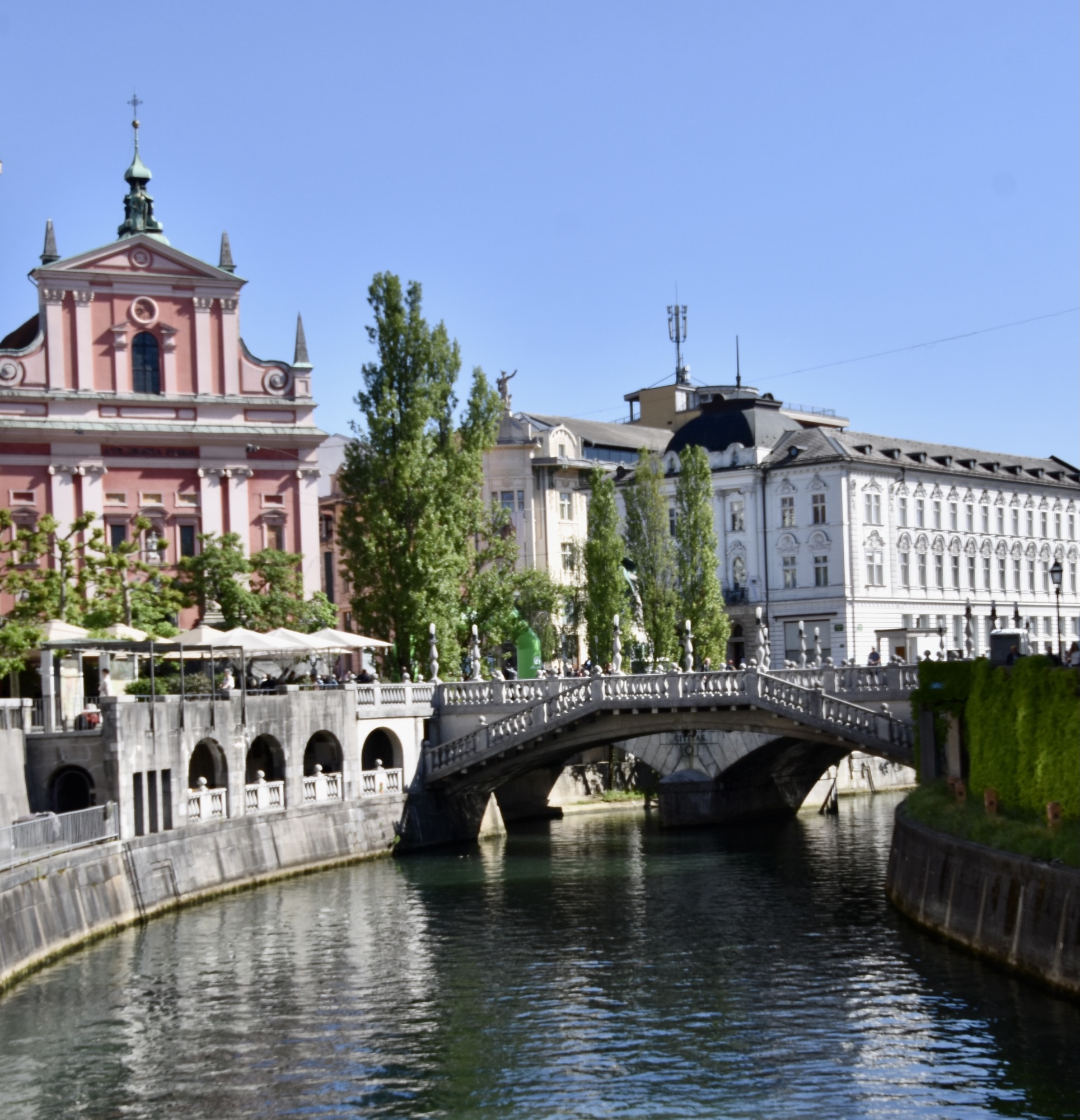
This is the view in the opposite direction towards Preseren Square which we will return to later in the tour.
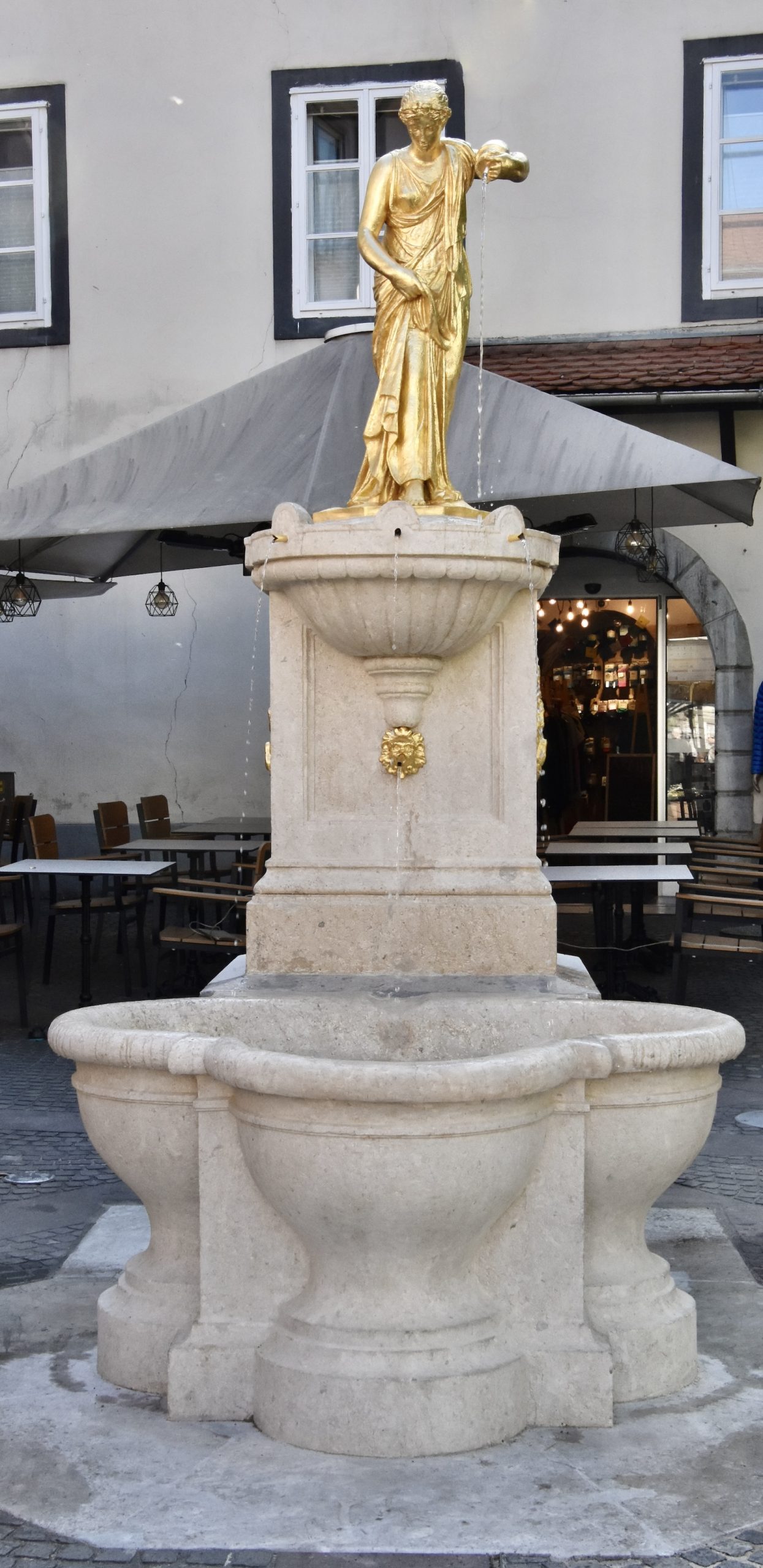
We had a few stops before getting to the funicular entrance starting with the Fountain of the Girl with a Jug or more commonly, the Golden Fountain. It’s really quite beautiful and once graced a private garden in the Tivoli district, but was moved here in 1981 for everyone to enjoy.
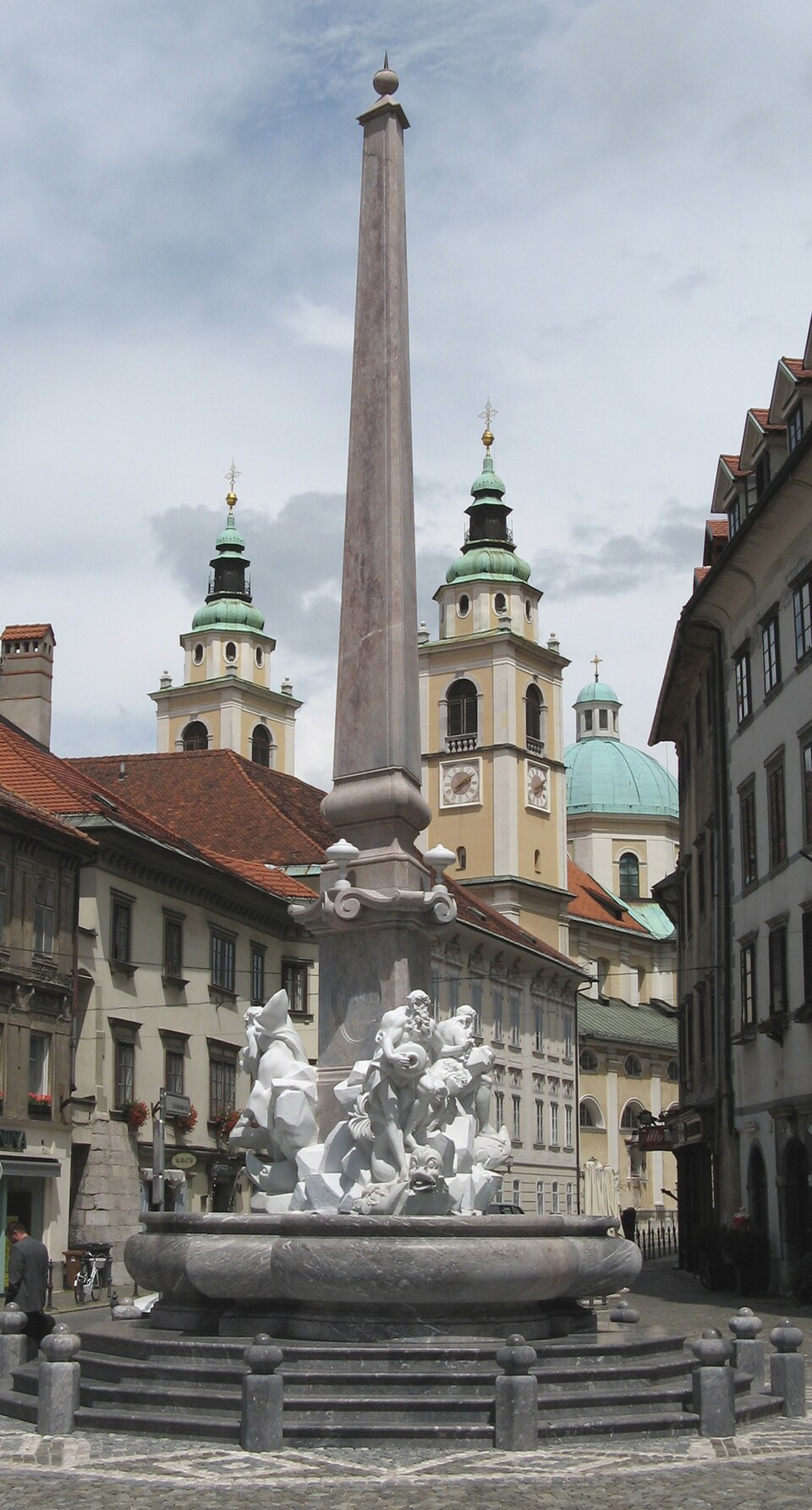
Just a little further along is another fountain which is situated in front of the Ljubljana City Hall. This is the Robba Fountain named for its creator, Italian sculptor Francesco Robba who moved to Ljubljana in the mid 1700’s and completed it in 1751. It was a commission from the City Magistrate who wanted something to symbolize the power and legitimacy of the Duchy of Carniola which controlled the city at the time. It’s actually a replica with the original sculpture in the National Gallery.
This is the Ljubljana City Hall whose origins date back to 1484, but it was completely redone in Baroque style between 1717 and 1719. Note the three flags of the European Union, Slovenia and Ljubljana.
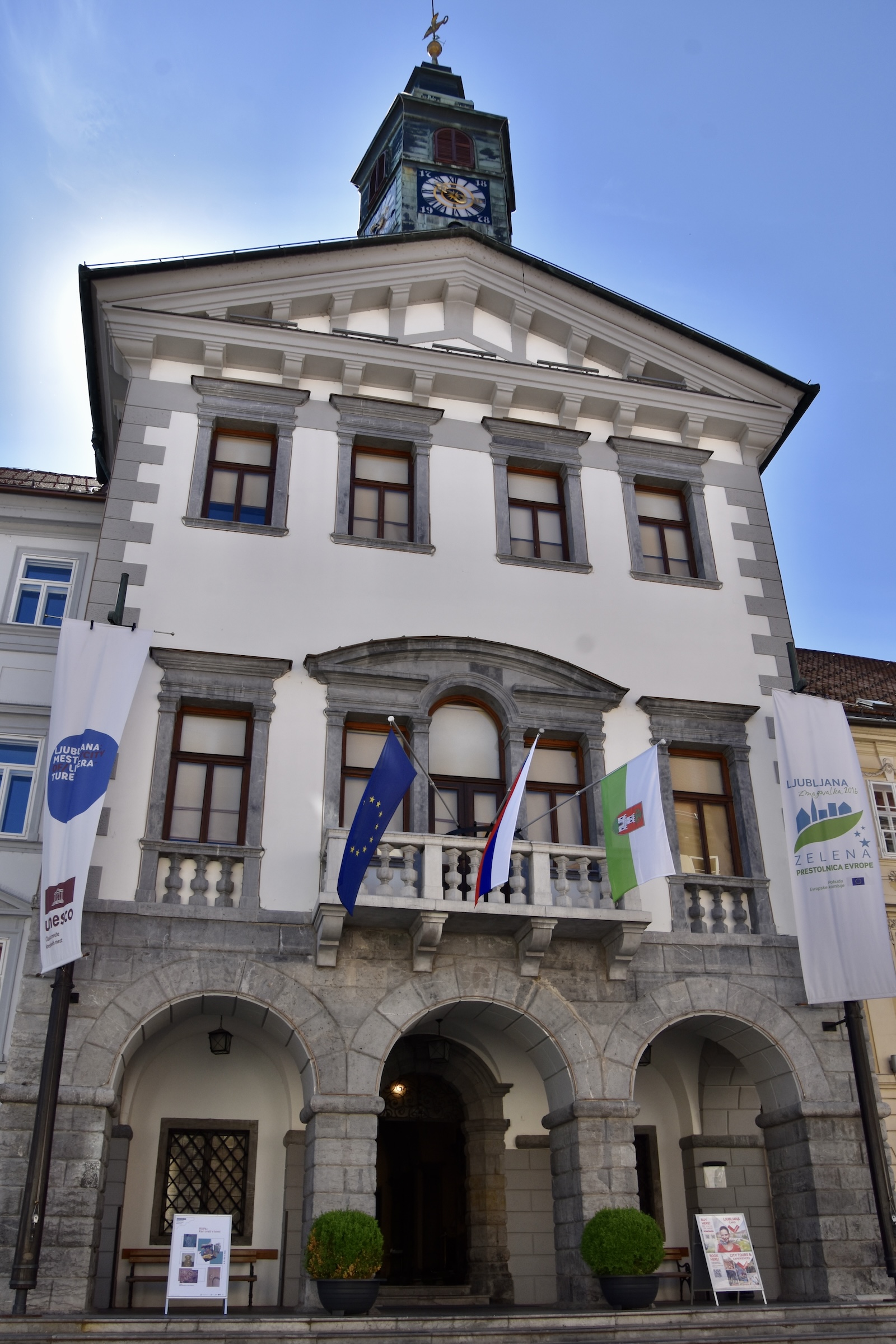
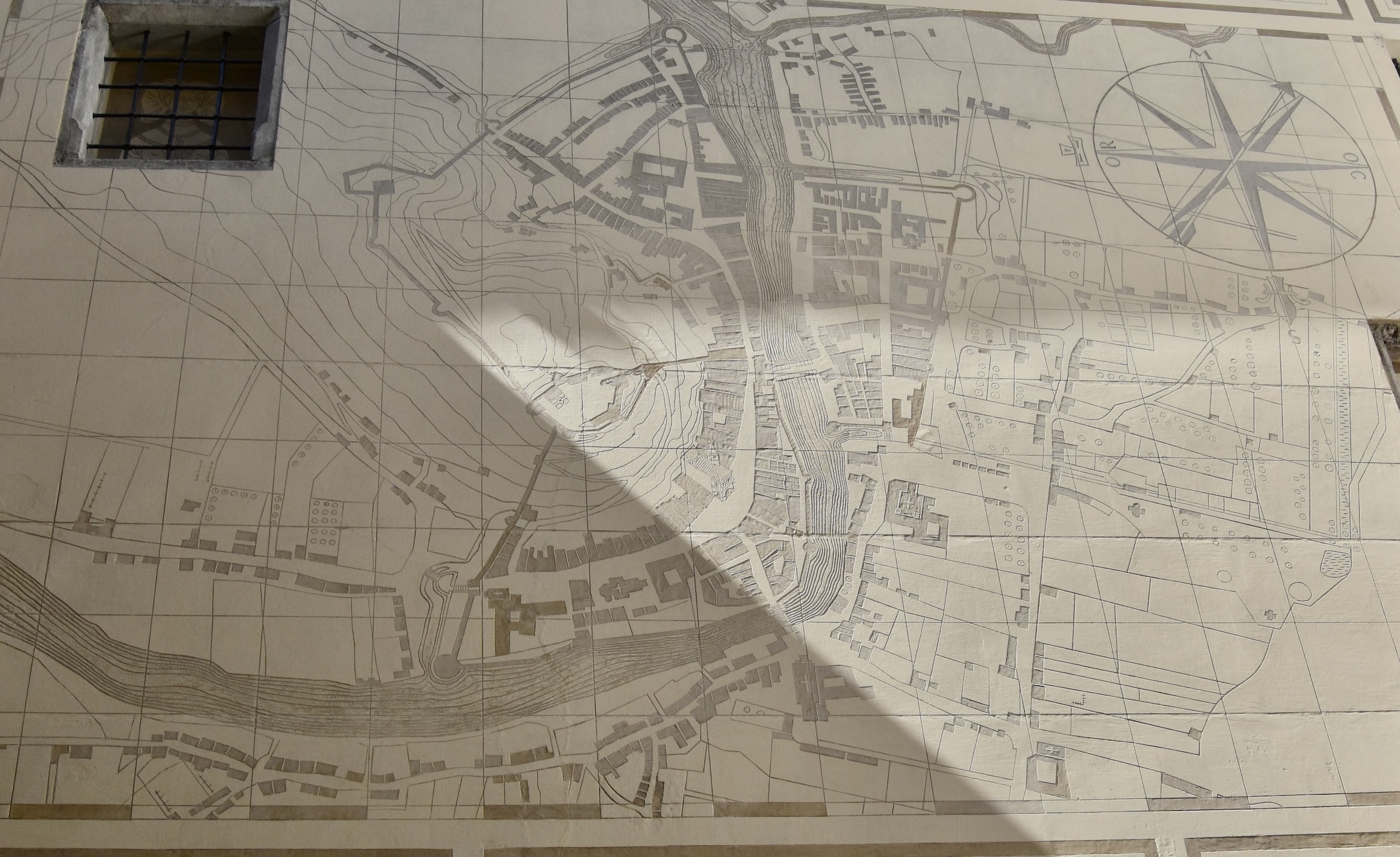
Tina leads us inside where we see the Ljubljana Coat-of-Arms and this incised map of the historic part of the city.
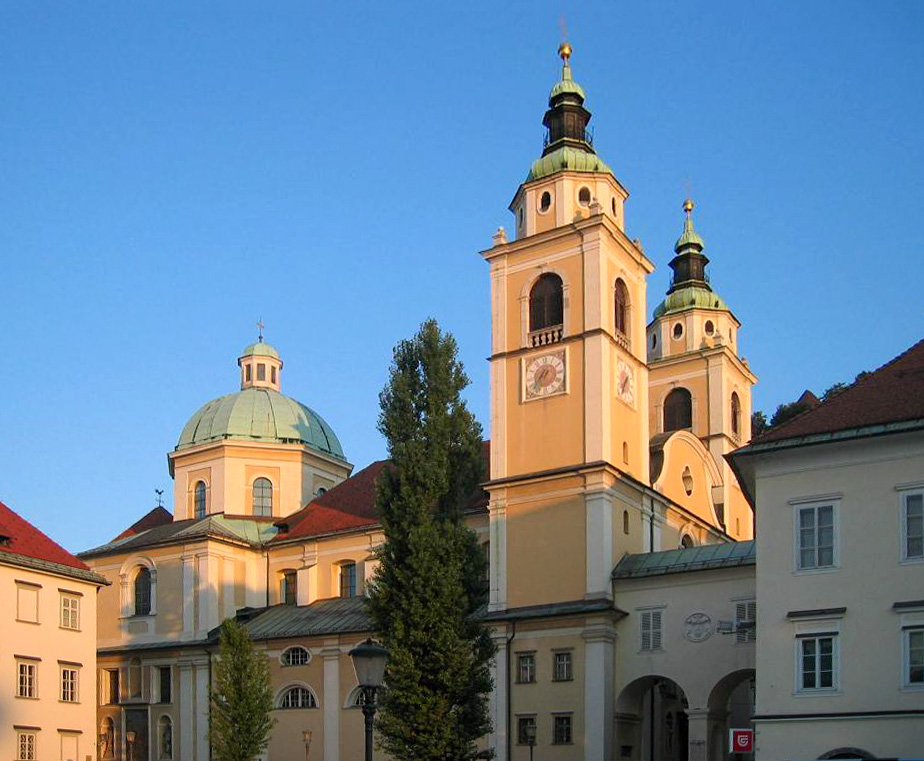
We continue on not that far to the entrance to the St. Nicholas Cathedral which like the city hall started out as a Gothic structure and was replaced in the 18th century with this Baroque version. Unlike many cathedrals it does not front on a grand square from where you can get a good look at it. In fact the entrance is off what is not much more than a large alley.
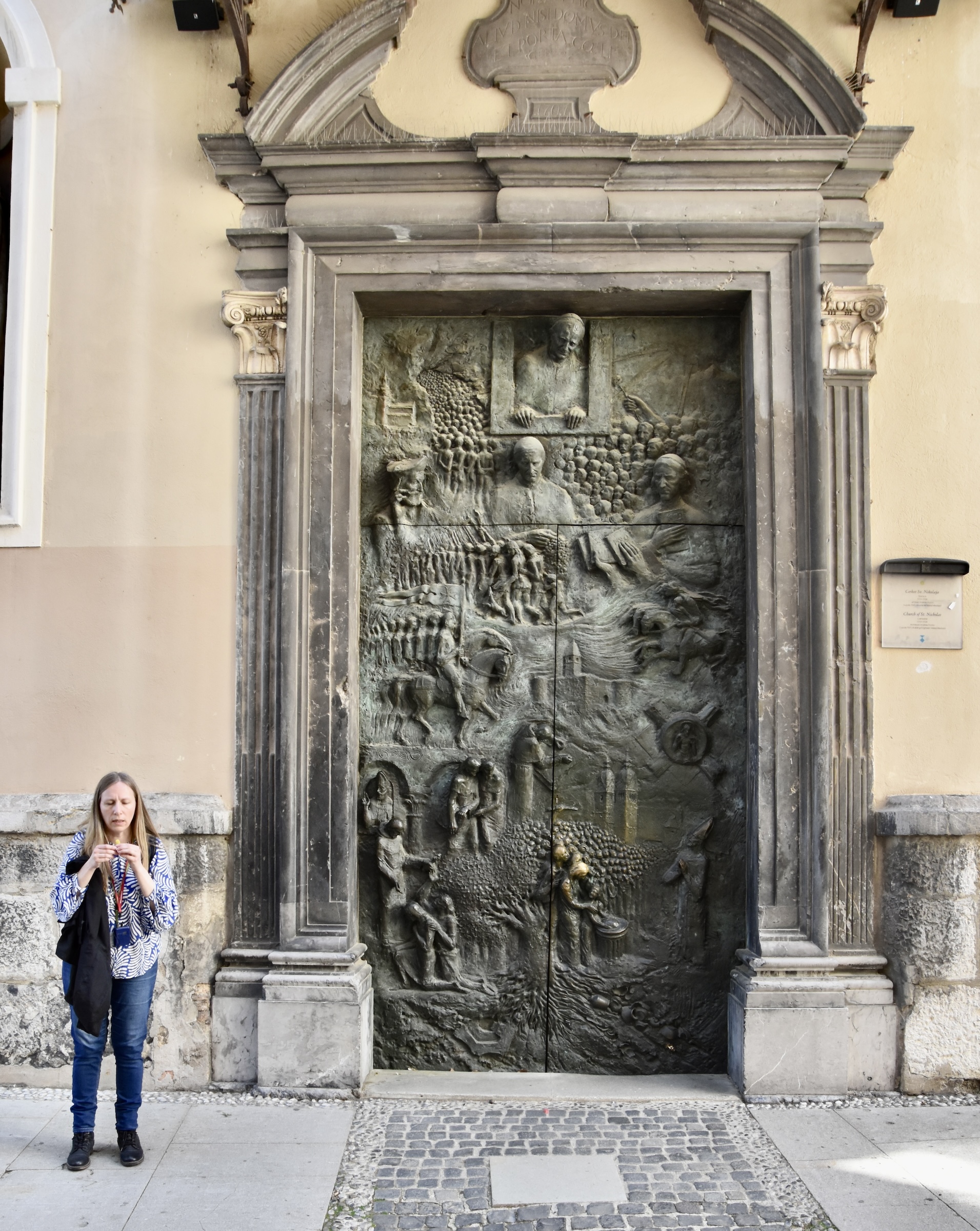
There are two very interesting brass doors that were installed in 1996 to mark the 1,250th anniversary of the coming of Christianity to Slovenia. They were officially inaugurated by Pope John Pail II. This is Tina in front of the door that illustrates that history from pre-Christian, Roman, Slovene arrival, the Baptism of Prince Goradz and literally right up to John Paul II himself looking down in benevolence on the entire scene. The spot that has been rubbed to a golden patina appears to be the head of Jesus.
Right beside the Slovene Door is the Ljubljana Door that features relief portraits of the six modern Bishops of Ljubljana, some of whom were executed by the Communists. They all look down at the body of Christ wrapped in his funeral shroud, an image you don’t see very often in Christian iconography.
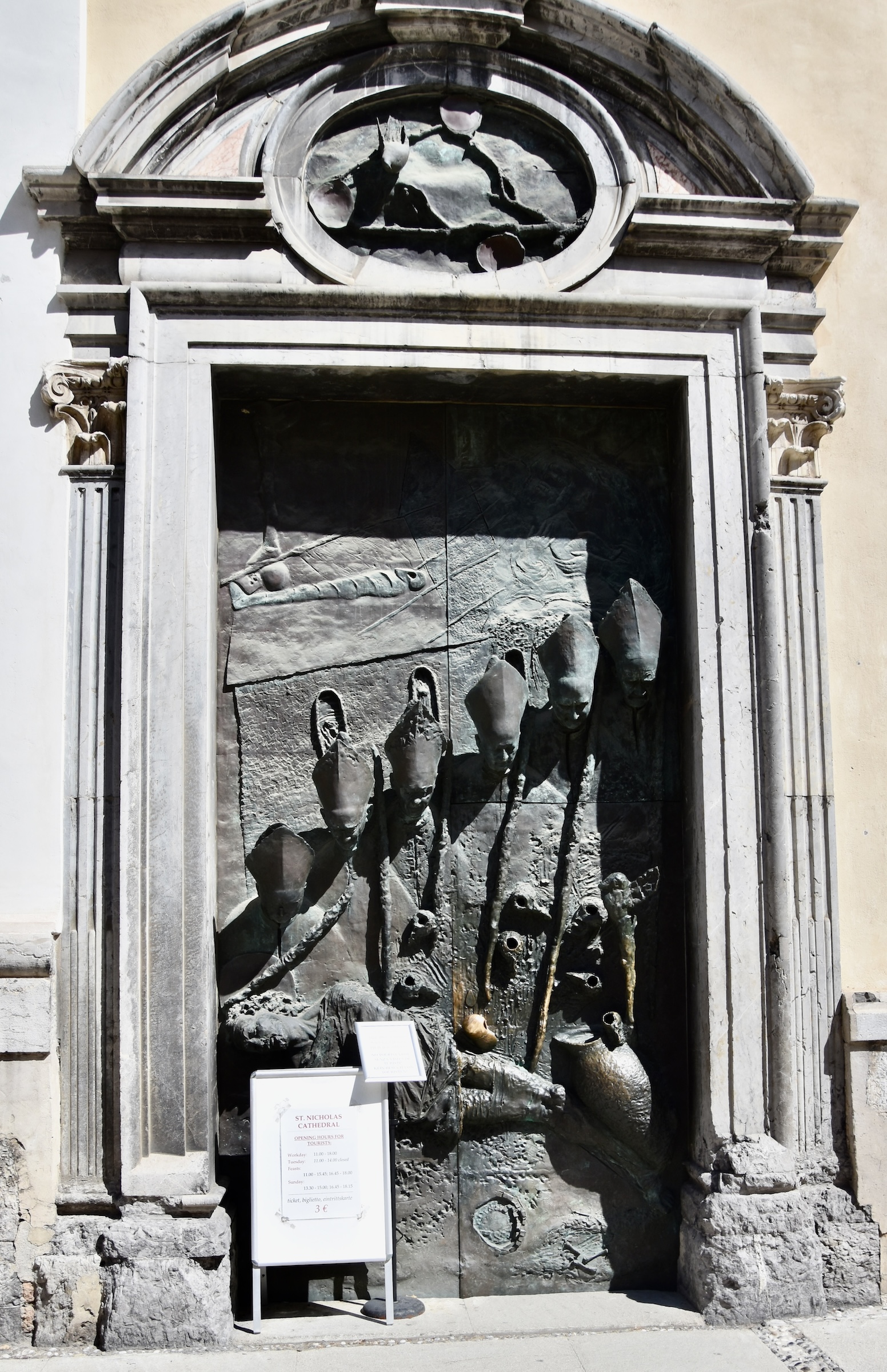
Both these doors are exceptional works of art that harken back to the fantastic Renaissance doors of the like of Ghiberti and are worth some time examining.
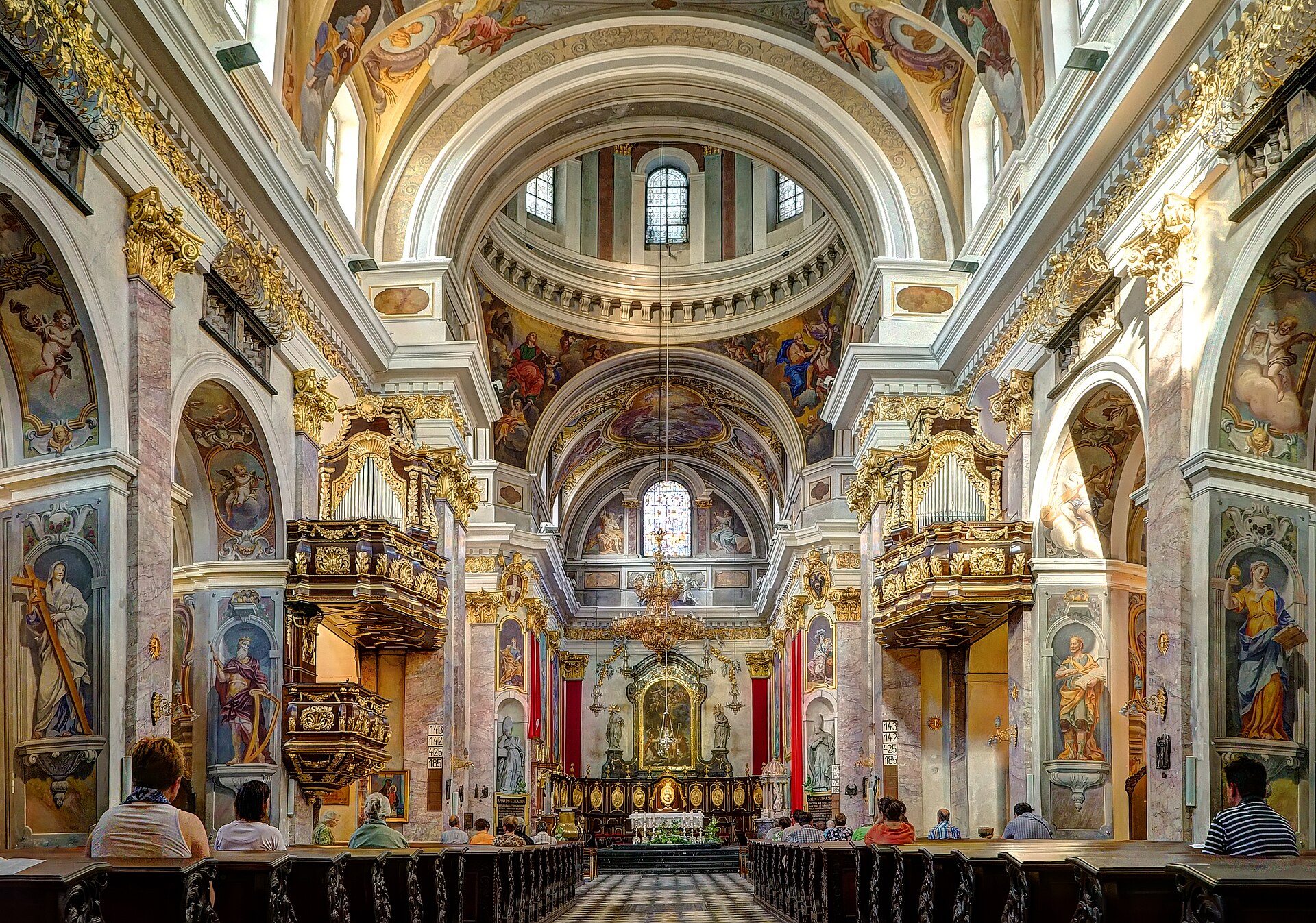
For some reason the Cathedral was not open so we didn’t get a look inside. If we had we would have seen this riotous interior as baroque as baroque gets. It’s definitely worth checking out on the free time you will have in Ljubljana.
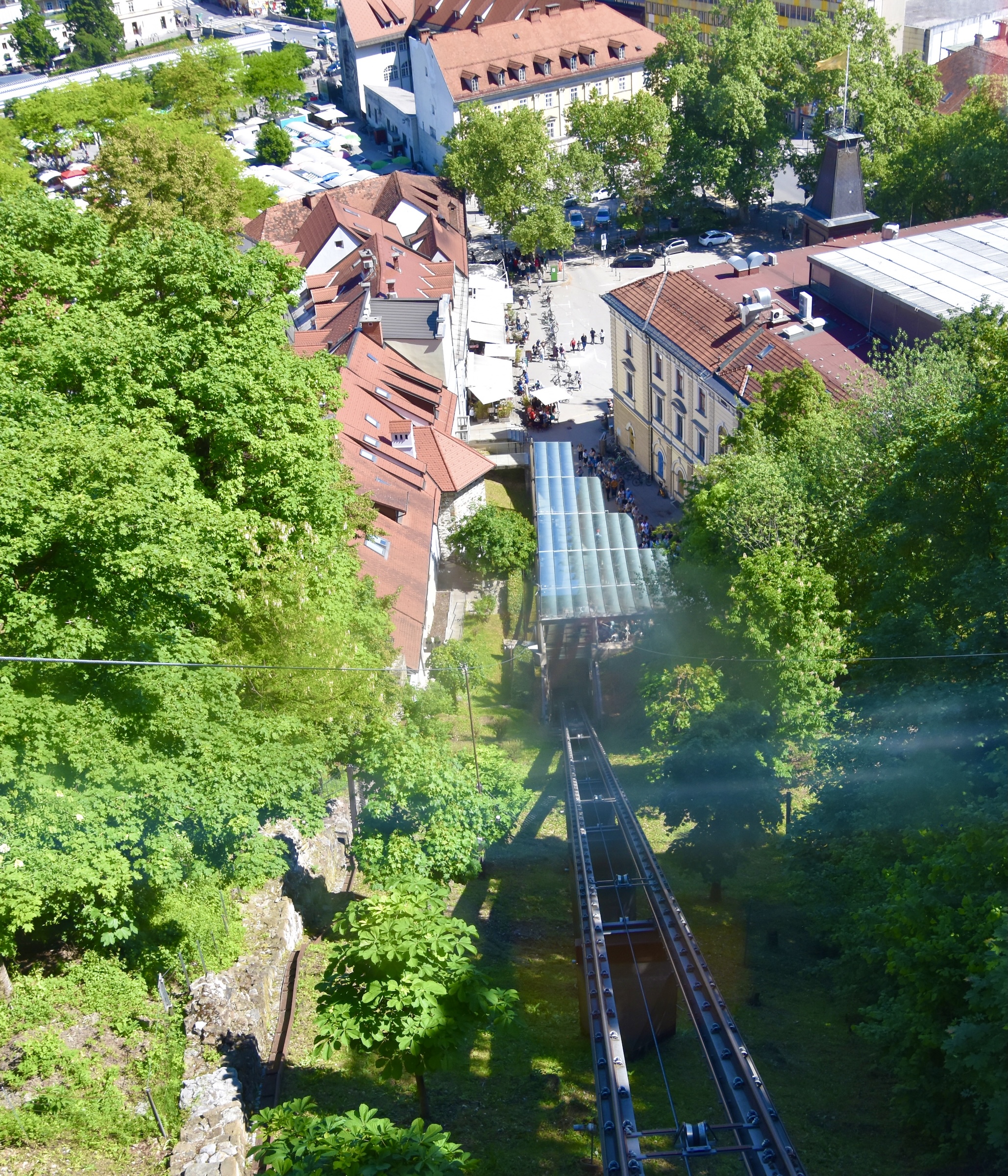
We now arrive at the Ljubljana funicular which only opened in 2006 and whisks passengers to the castle in a few minutes. This is the view looking back down from almost the top.
As noted the Ljubljana castle is over 1,000 years old, but what we see today dates from the 14th century. It has a long and fascinating history which you can read about here.
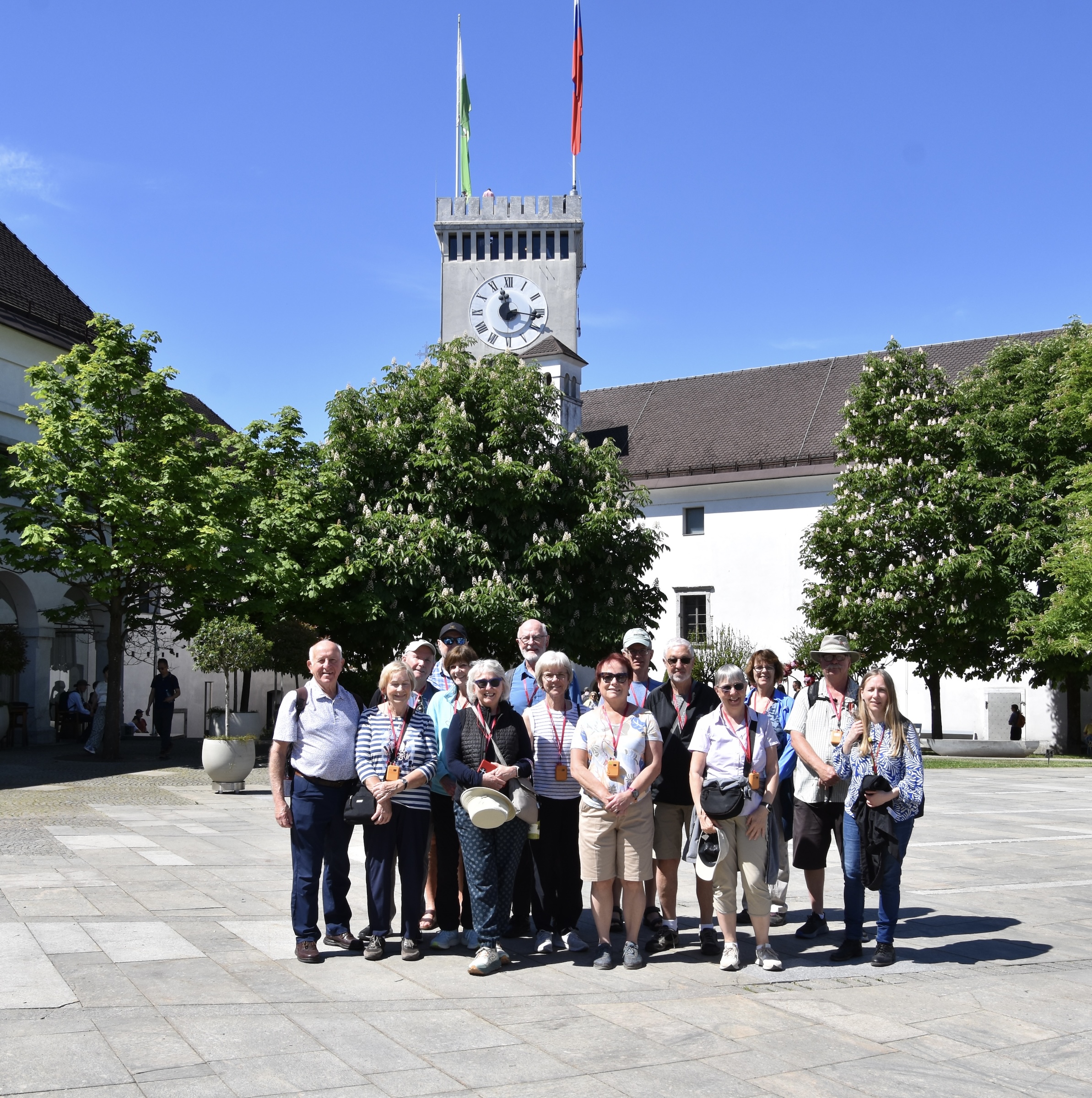
Out tour leader Rob Ogden gets us together in the central courtyard for one of the better group shots I’ve been taken after which we have spare time to tour the castle.
Truth be told, the most interesting thing about Ljubljana Castle are the views from the clock tower and the parapets. There are 95 steps up to the clock tower and you are rewarded with this view of the castle courtyard below.
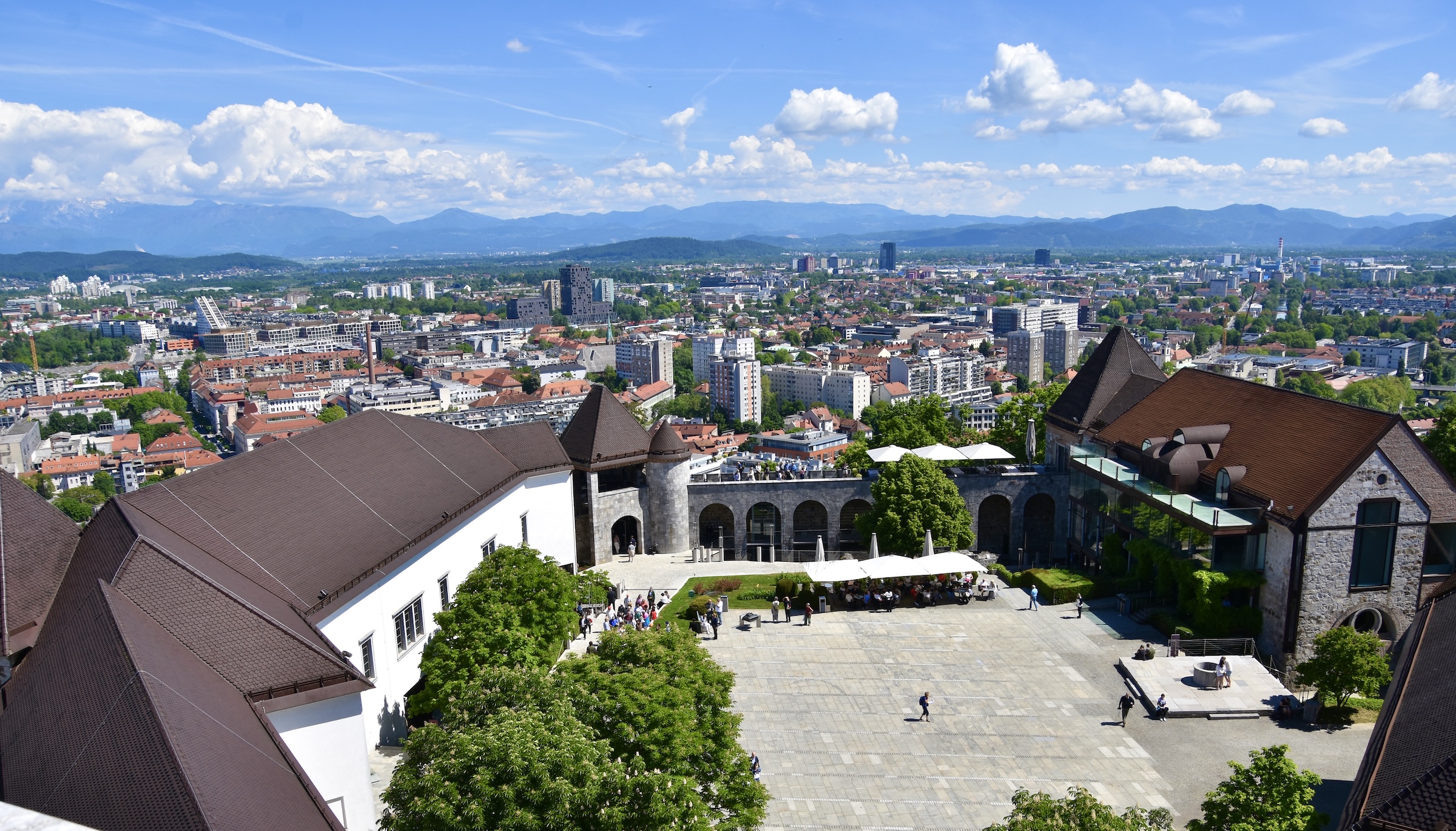
And this is the view of Ljubljana from the parapet. You can now see that the crowds at Congress Square have dissipated with many of them heading to the riverfront cafes to enjoy some time just relaxing on this warm spring day in one of the best cities in Europe.
Our tour ends at the castle and Alison and I opt to walk back down rather than take the funicular. It’s a nice walk through a leafy canopy that takes about fifteen minutes. I highly recommend it.
Perhaps the most famous dragons in Ljubljana are the ones that adorn the ends of the Dragon Bridge which was built in the early 20th century in the Vienna Secession style.
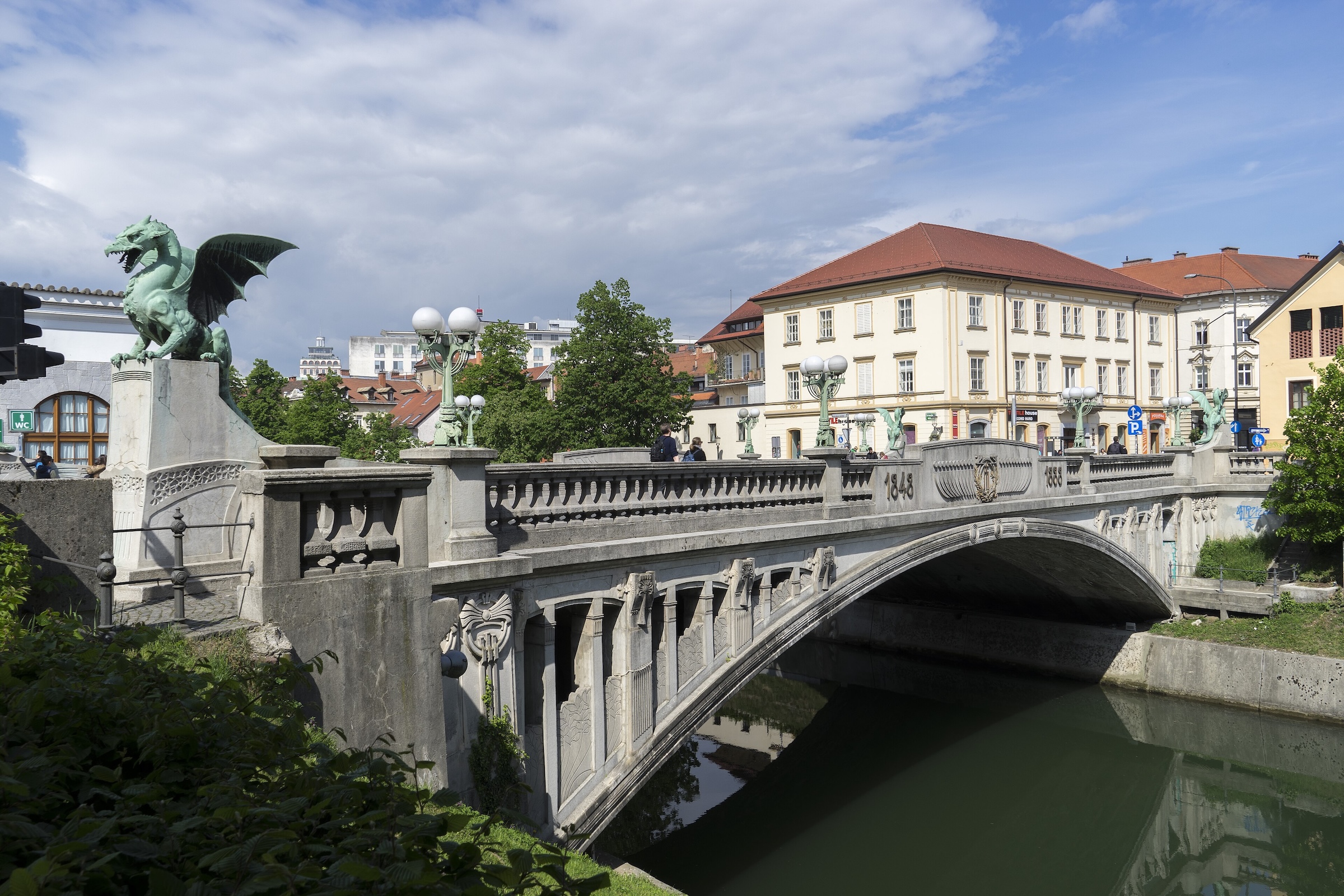
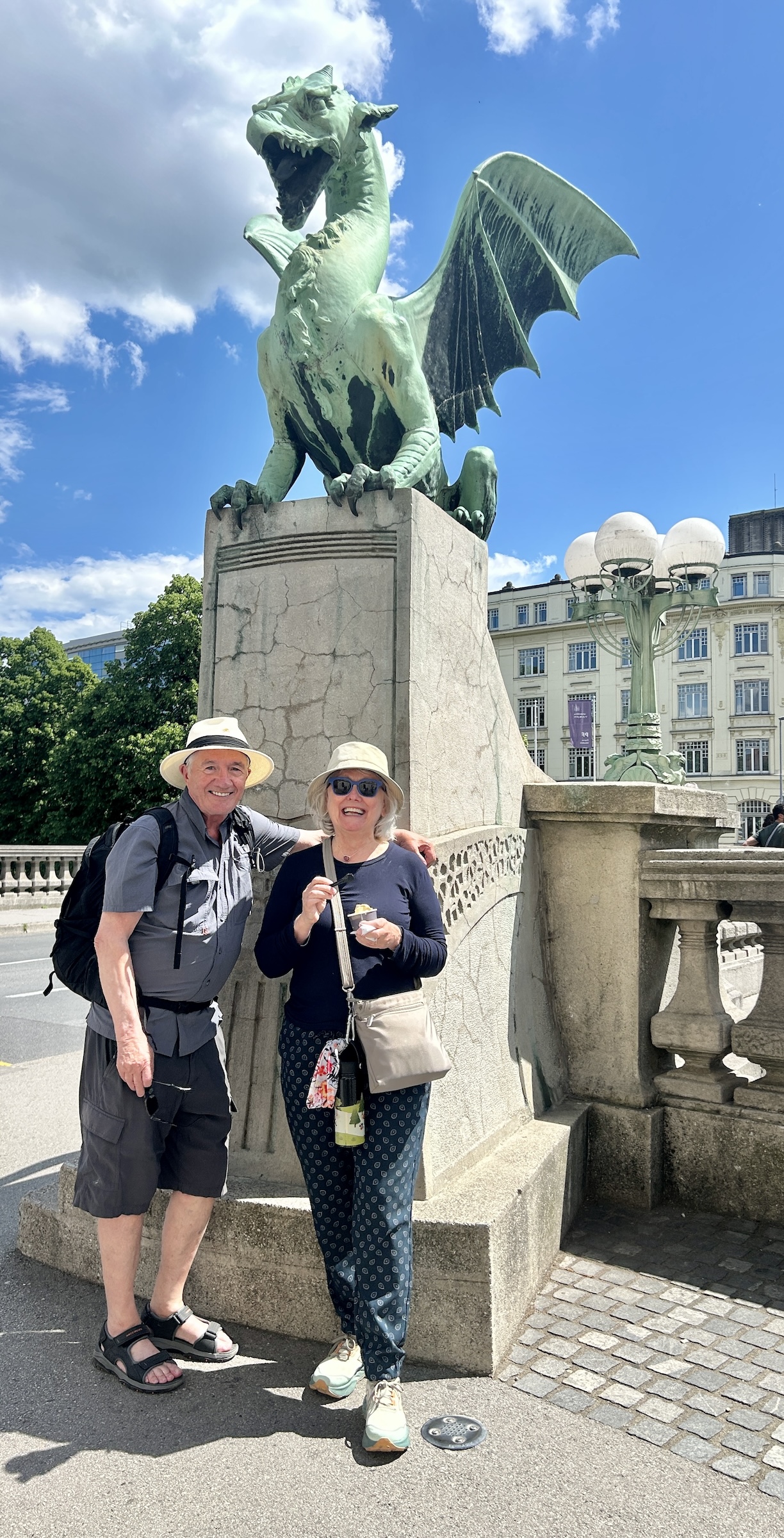
It is de rigeur to get your picture taken with one of the dragons and we don’t buck tradition. That’s one ferocious looking beast.
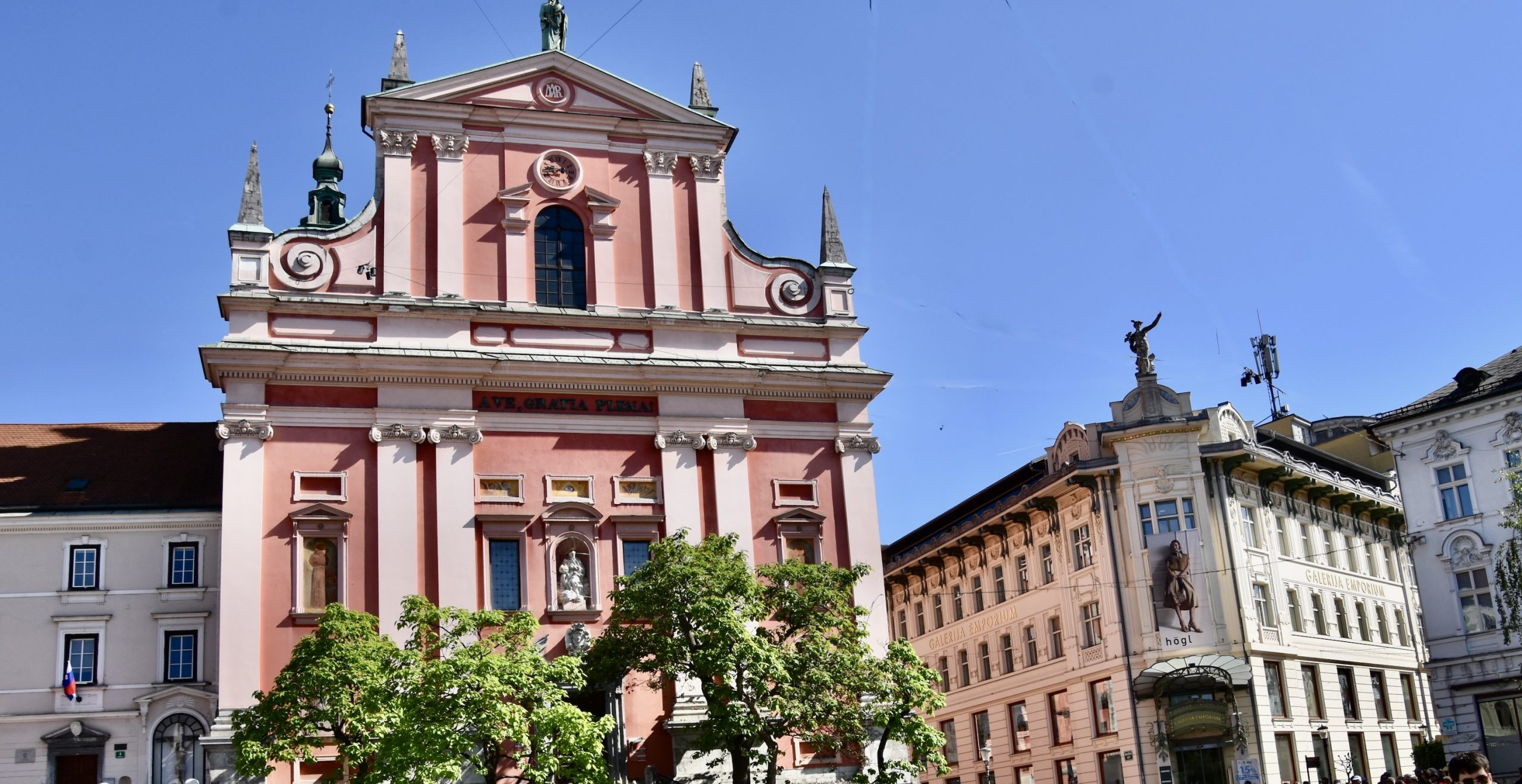
We now end our own tour of Ljubljana at Preseren Square which is named after Slovenia’s most famous poet, France Preseren, whose statue in the square is a common meeting point for natives and tourists alike. The square is dominated by the deliciously pink Franciscan Church of the Annunciation with its ornate facade.
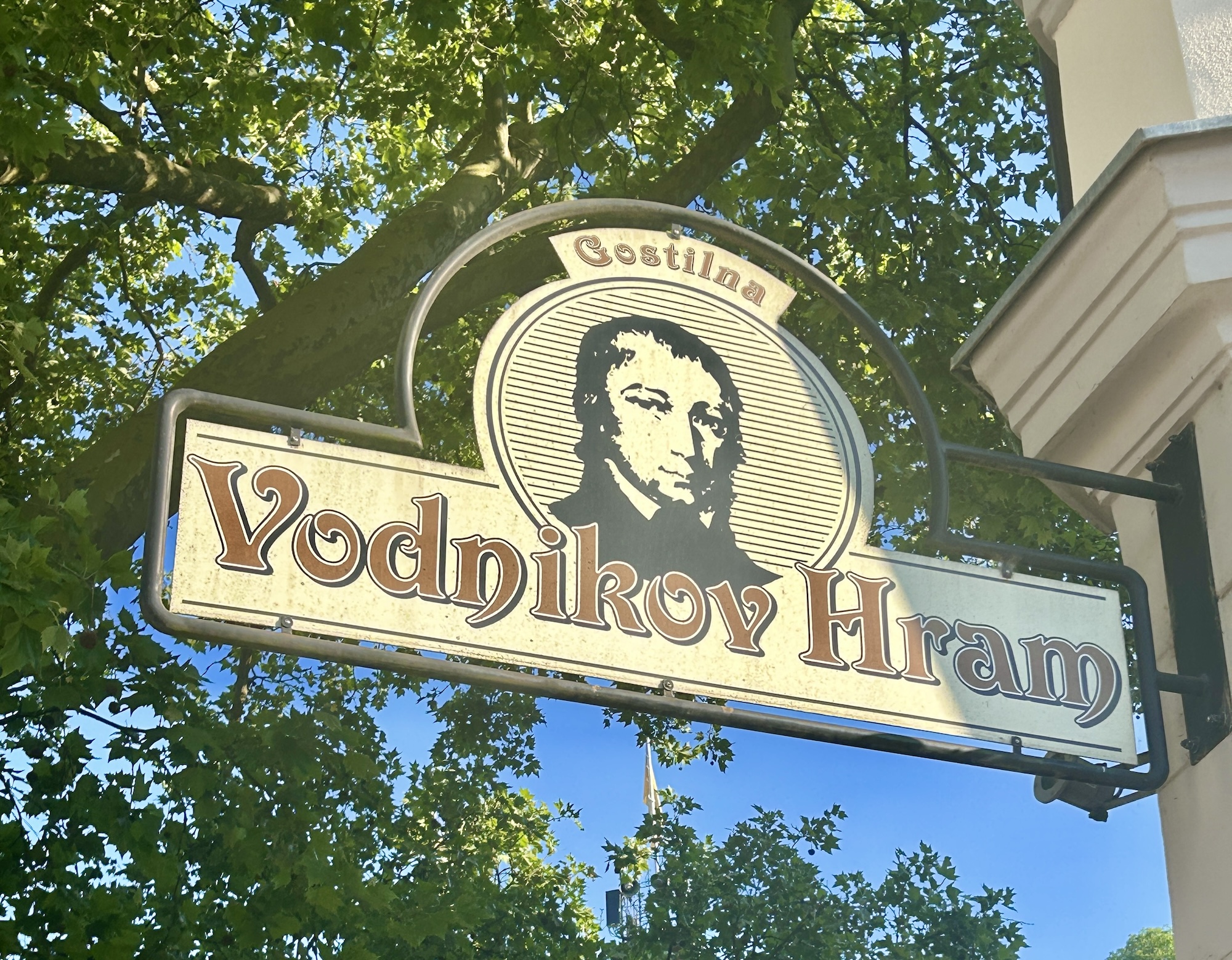
While out tour of Ljubljana is over, our day is not as we convene that evening at the Vodnikov Hram restaurant for a traditional Slovenian meal. Named for yet another Slovenian port Valentin Vodnik, it specializes in meals prepared from ingredients that are purchased at the Vodnikov Central Market, right next door.
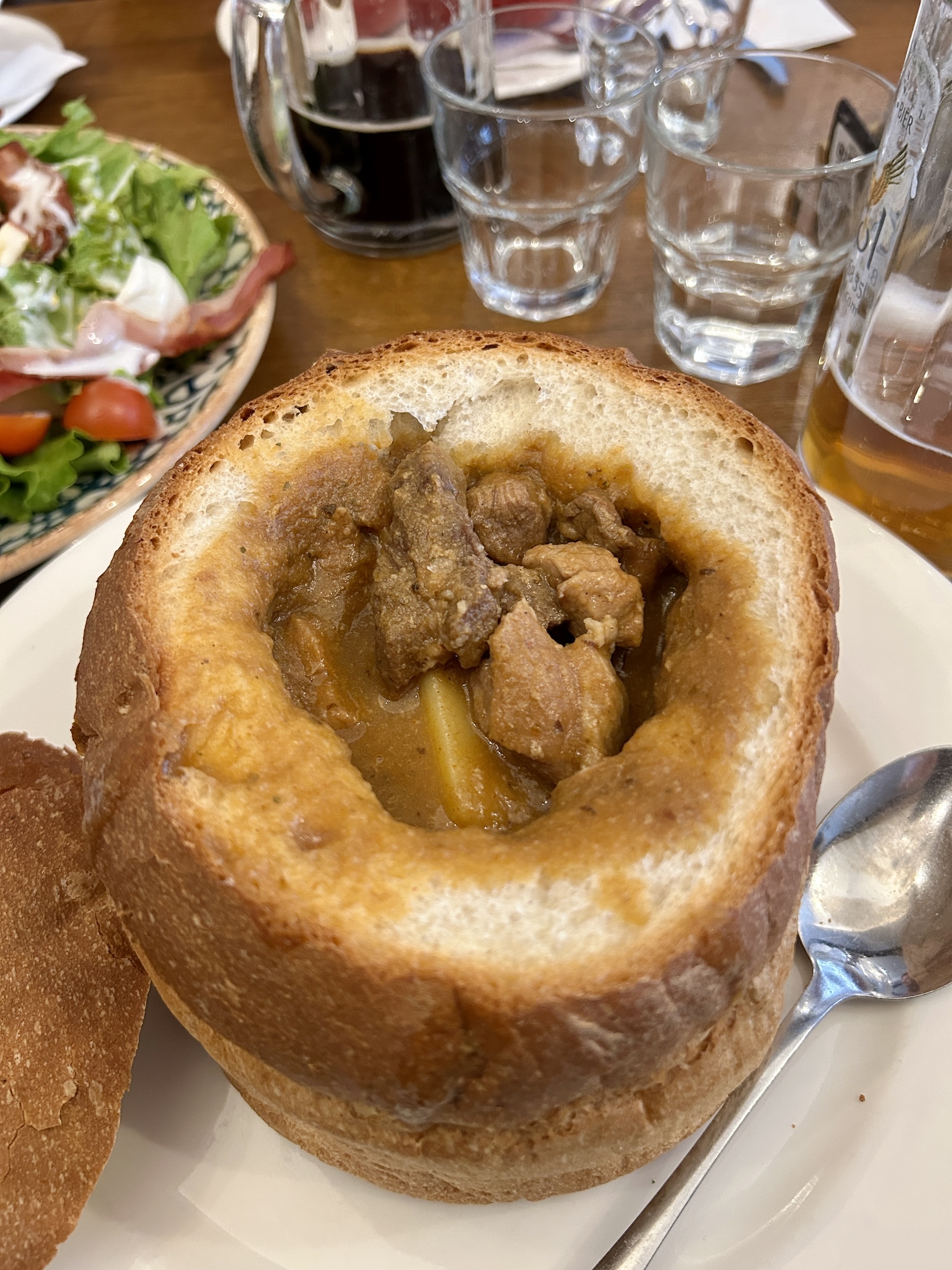
I opt for a very traditional dish, Slovene stew in a bread bowl. To say that it was a hearty meal would be an understatement.
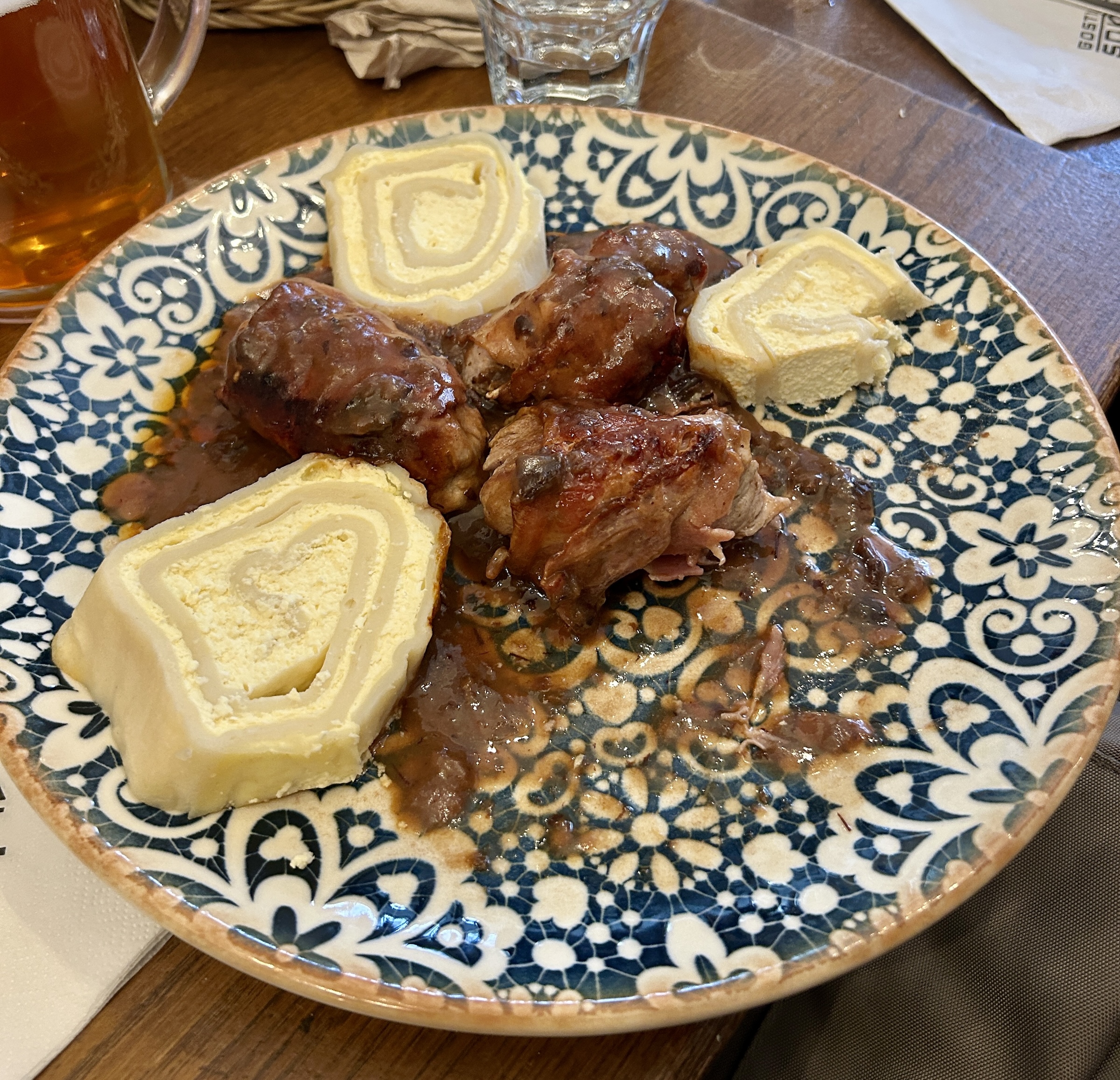
Alison chose beef tenderloin with cottage cheese rolls, also very hearty and delicious.
This meal was a great introduction to Slovenian cuisine and a great way to end a great day in Ljubljana. In the next post we’ll head to Skofja Loka for a look at life in a small Slovenian town. I hope you’ll join us.