
Cusco – Capital of the Inca Empire

This is my sixth post from the February 2026 Kingdoms of the Andes tour with Adventures Abroad. For the first week of the tour we have been exploring the capital city of Lima and the coastal area below it including flying over the fabled Nazca Lines. In this post we’ll leave the lowlands behind and go from sea level to 3,400 metres (11,500 feet) in a transition that I have been a bit wary about. I’ve never suffered from altitude sickness, but I’m told that doesn’t mean it won’t happen in the future. There’s only one way to find out, so please join our intrepid group as we head to Cusco and begin exploring the heartland of the Incan Empire.
Now I’m going to change things up a bit from the actual itinerary this tour follows. Rather than stay in Cusco the tour heads straight to the Sacred Valley and then on to Machu Picchu, returning to Cuzco a few days later. However, Im going to do Cusco first as I think it makes for a better sequence, because to be honest, nothing beats Machu Picchu on this tour. So I want to build up to that one fantastic day that I will never forget (and neither will you).
Diego Vidal, our AA tour leader, has arranged for our luggage to be tagged at the hotel and he had our boarding passes there as well which makes the airport experience about as seamless as it could possibly be. The flight to Cusco is less than an hour and a half and the airport is located literally right inside the city. We are met there by our local guide Carlito who also answers to Carlos. He will be with us for the rest of the Peru portion of this tour. Not only is Carlito extremely knowledgable, but he’s also both funny and approachable, an excellent trait in a guide.
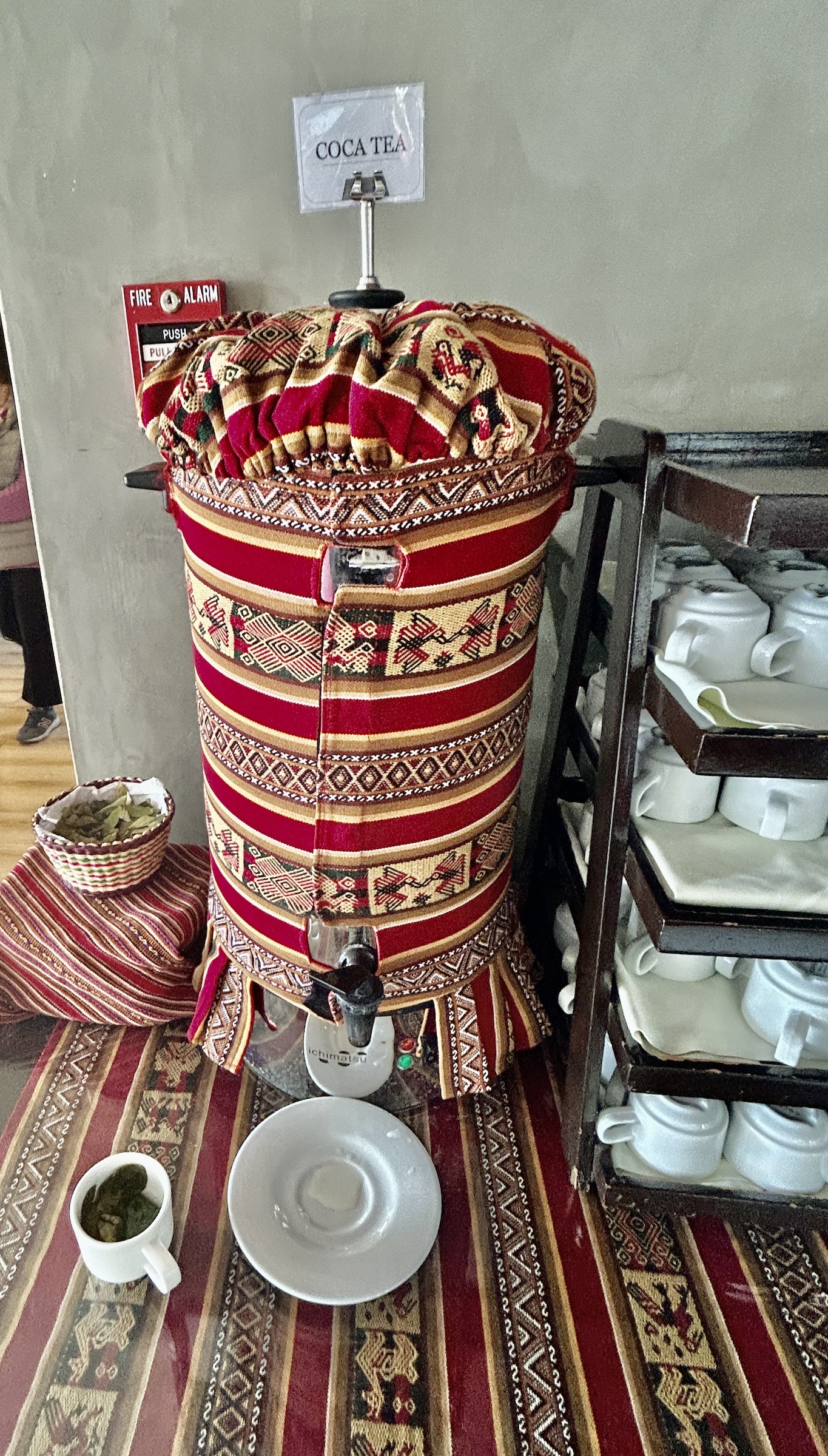
Even though the air is decidedly thin I’m not having any issues and it doesn’t appear that anyone else is either. When some issues did arise over the next few days for some on the journey, Diego and Carlito helped them deal with it by way of some extra oxygen. Chewing coca candy or drinking coca tea also helped. This is a coca tea urn that was in the hotel lobby in Cusco and I had a few cups each day we were in the city.
Hotel La Paccha
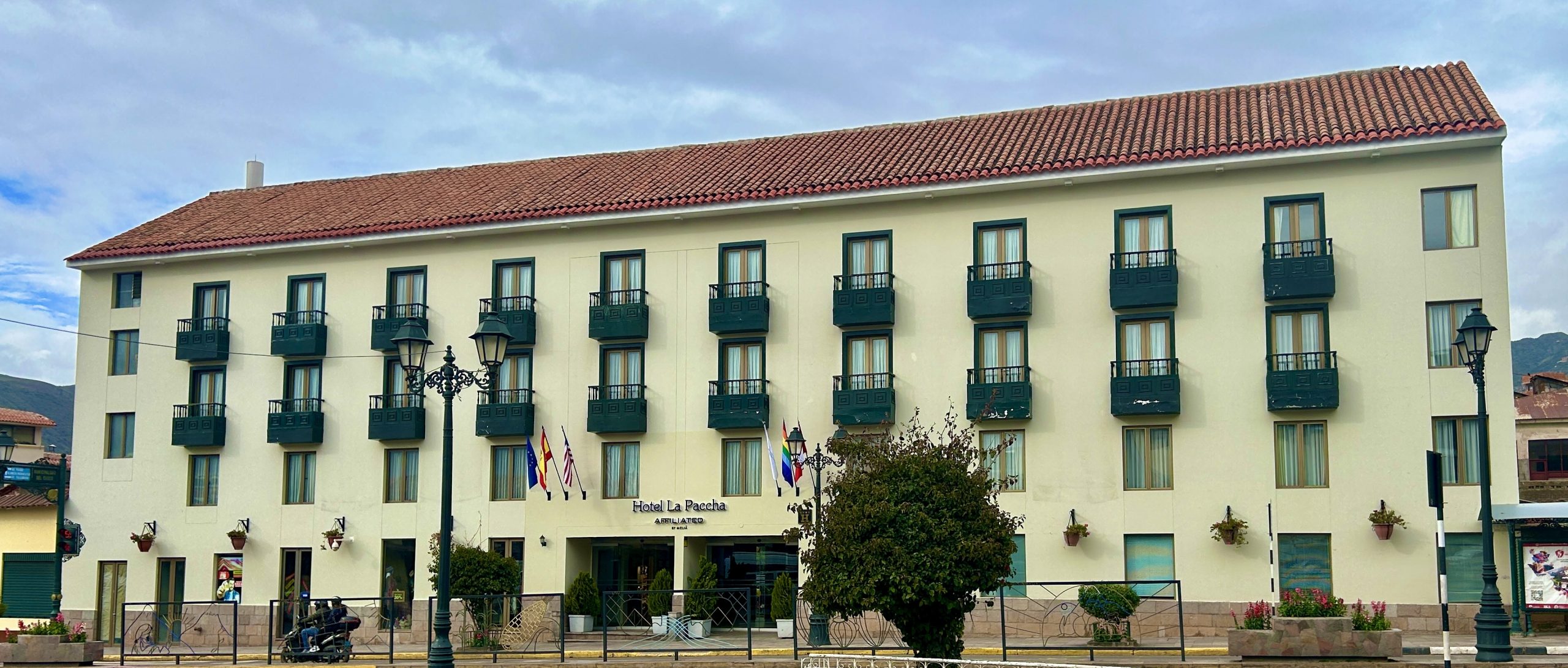
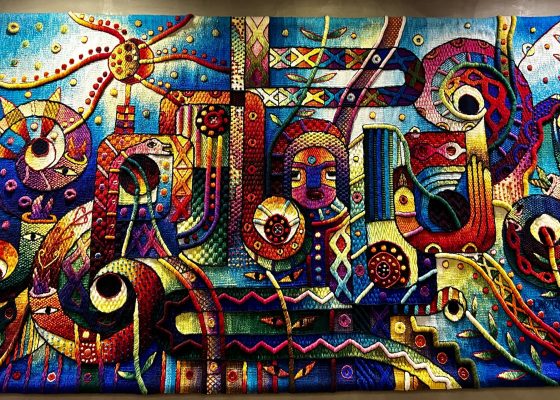
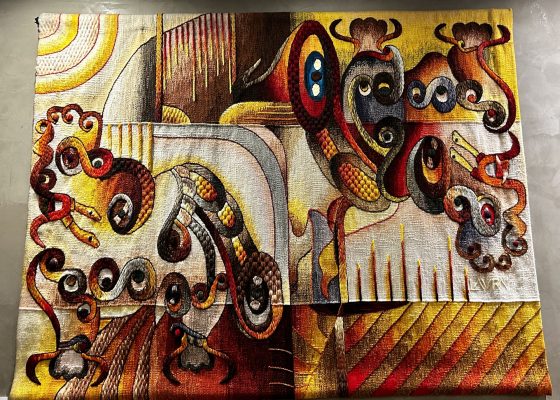
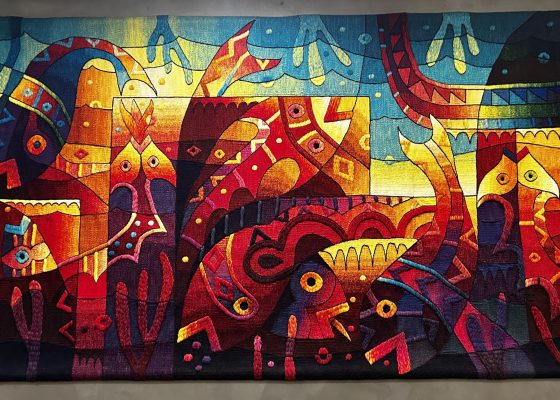
As I’ve often noted on many previous AA tours, the accommodations are sometimes an experience in themselves and I would put the Hotel La Paccha in that category for a couple of reasons. Firstly it has a great location just down the street from the Plaza Mayor and secondly it has a great collection of bright tapestries by renowned Peruvian textile artist Maximo Laura. Double-click to open a photo and double-click again to enlarge. These intricate designs were fascinating to look at over breakfast each morning.
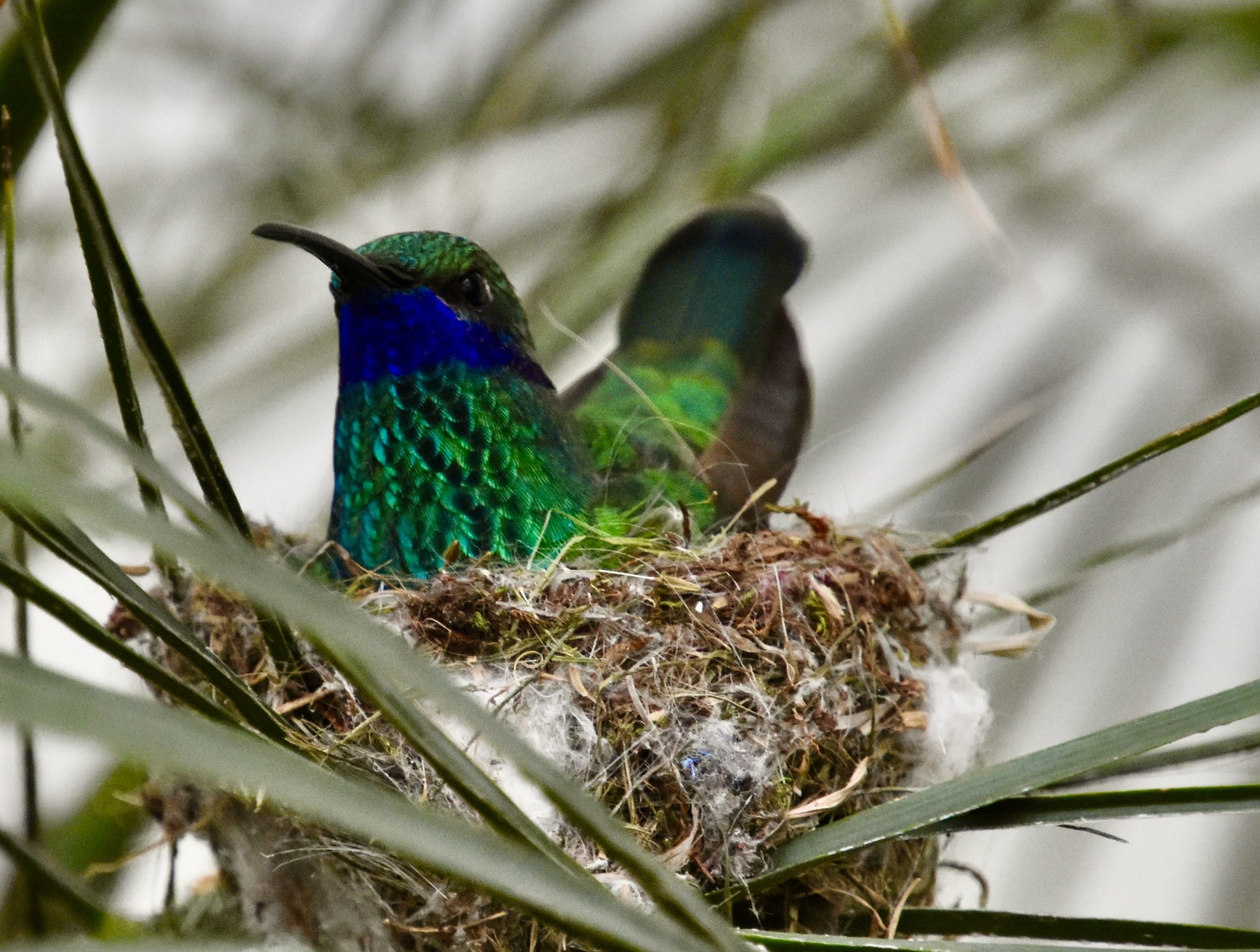
Now I wouldn’t normally expect to do some birding actually inside a hotel, but this place was the exception. This was a sparkling violetear hummingbird that was nesting at eye level in the hotel’s courtyard. I visited her on numerous occasions during our stay.
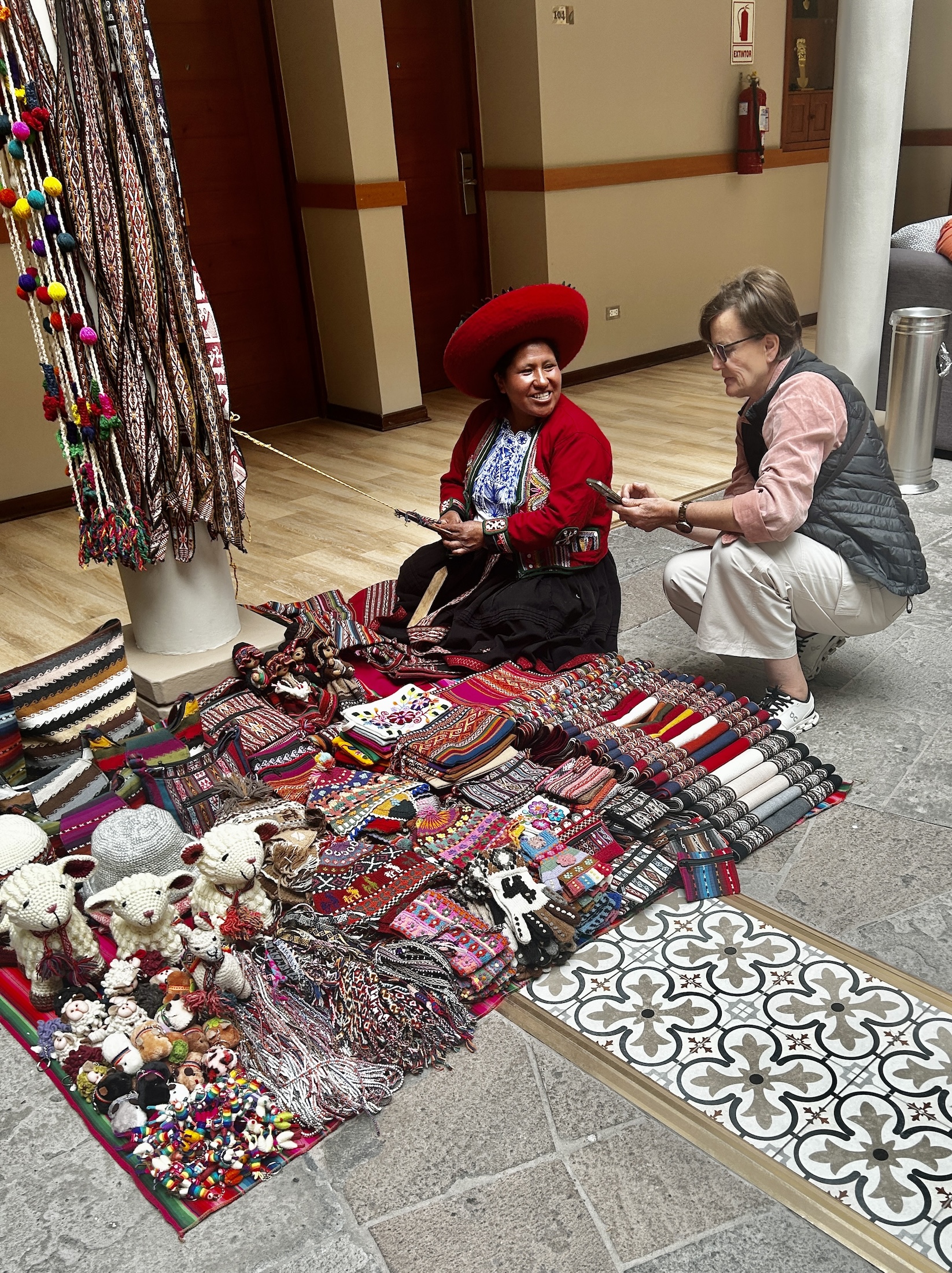
Cusco is famed for its local craftspeople and you didn’t even have to leave the hotel to find one. This lady set up shop each morning in the lobby and spent the day making her wares. This is tour member Joanna exchanging photos with her.
Ok, we’ve had a stressless transition from sea level to the Andes, got ourselves into a nice hotel and have the services of an excellent local guide. Time to go exploring, but first a bit about the history of Cusco so we know some background on the things we are about to see.
History of Cusco
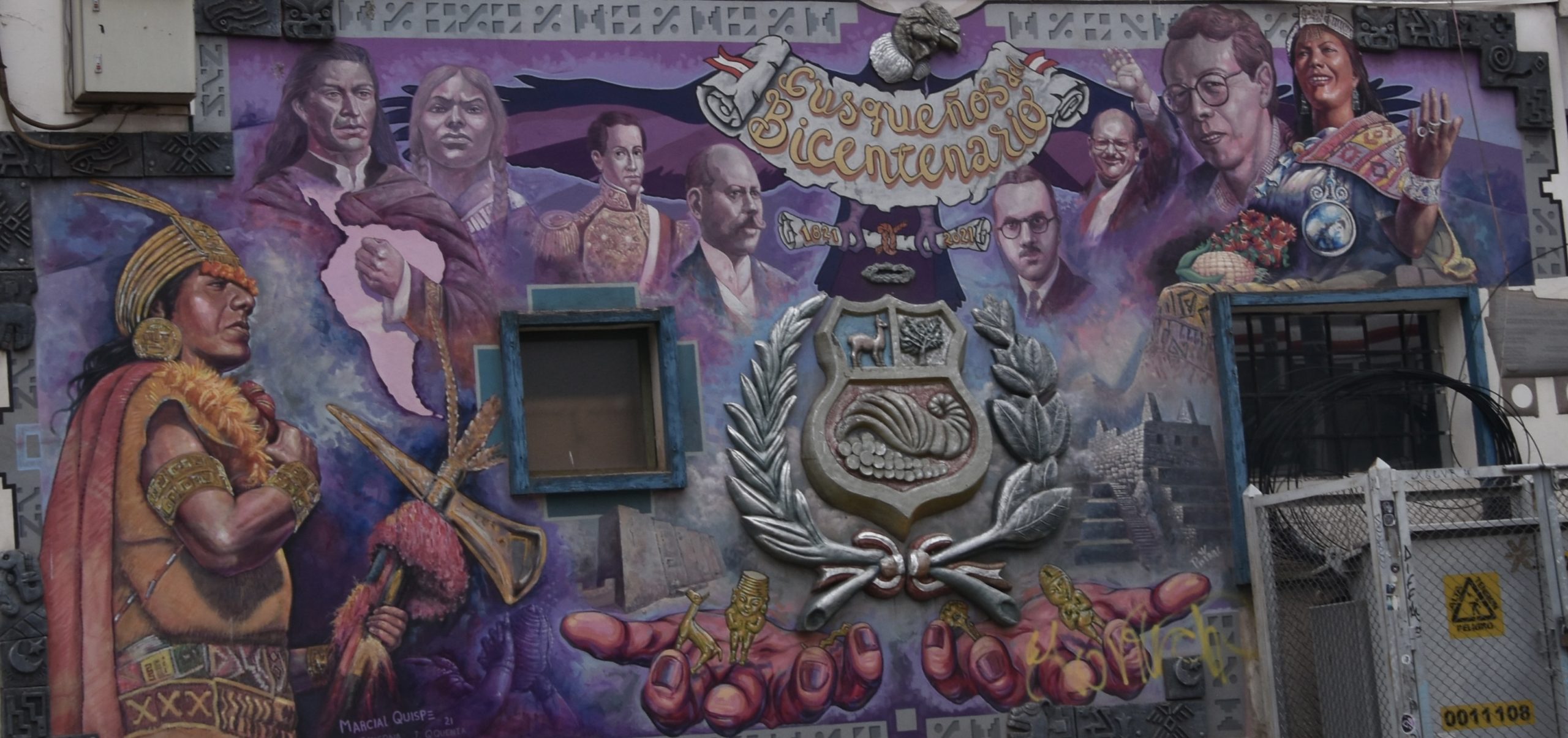
Although Cusco is indelibly linked to the Inca people, they were not the ones who first settled here. There is evidence of human occupation in the area for as long as 12,000 years ago, but it wasn’t until about 1,000 BCE that the first identifiable cultural group emerged with its own distinctive pottery. From that time until the arrival of the Incas in the 13th century no less than seven distinct pre-Incan cultures have been identified. At the onset of the Incan occupation, the Cusco area was the domain of the Killke people who had been here for about 400 years, building terraces, canals and the precursors of what became major Incan constructions such as Saksaywaman which we will visit in a later post.
It appears that the Incas supplanted the Killke people more by assimilation than annihilation, beginning a rapid construction project around a clearly devised urban plan that involved dividing the city into distinct quadrants. To this day no one knows just how they managed to build the city so quickly and by what techniques they cut and put in place the massive stones that are a unique feature of Incan architecture. Cusco became one of the two major Incan cities in the empire that stretched from Colombia to Chile. The other city was at the site of modern day Quito, Ecuador.
The term Inca actually refers to a title that would correspond to emperor. All told there were 14 known Incas that ruled from about 1200 until the arrival of the Spanish in the 1500s. When we get to Machu Picchu we’ll see statues of all of them. When Inca Huayna Capac died in 1527, possibly from smallpox, a civil war broke out between half brothers Huáscar who was based in Cusco and Atahualpa who was based in Quito. The war lasted three years with Atahualpa emerging victorious, but the scale of violence during the war saw tens of thousands killed in battle and perhaps even more in the massacres that often followed battle field success. The Incan empire was literally a bloody mess by 1532 and then the Spanish arrived.
How one man, Francisco Pizarro with a force of less than 180 men defeated an Incan army of between 30,000 and 80,000 remains one of history’s most amazing upset wins, along with that of Cortez in Mexico against the Aztecs. The bottom line is that within a few years of his arrival in Cusco the city began transforming from a great Incan city to the Spanish colonial city it is today. The Incan temples including Qorikancha aka the Sun Temple were razed and churches and monasteries built atop them. Cusco became the great centre from which Christianity was spread throughout the Andes. But things did not go all that smoothly for the city. Not only were there multiple earthquakes to deal with but numerous rebellions led by both Indigenous leaders and disgruntled Europeans. Cusco was the last city in Peru to recognize the independence of the country from Spain and the Great Liberator, Simon Bolivar did not arrive until 1825, four years after independence was declared in Lima.
Today Cusco is the number one tourist destination in Peru, no doubt helped by being the jumping off point for Machu Picchu and the Sacred Valley.
In 1983 Cusco was inscribed as a UNESCO World Heritage Site with these two criterion:
Criterion (iii): The City of Cuzco is a unique testimony of the ancient Inca civilization, heart of Tawantinsuyu imperial government, which exercised political, religious and administrative control over much of the South American Andes between the 15th and 16th centuries. The city represents the sum of 3,000 years of indigenous and autonomous cultural development in the Peruvian southern Andes.
Criterion (iv) : The City of Cuzco provides a unique testimony to the urban and architectural achievements of important political, economic and cultural settlements during the pre-Columbian era in South America. It is a representative and exceptional example of the confluence of two distinct cultures; Inca and Hispanic, which through the centuries produced an outstanding cultural syncretism and configured a unique urban structure and architectural form.
Okay, let’s follow Carlito into the centre of old Cusco.
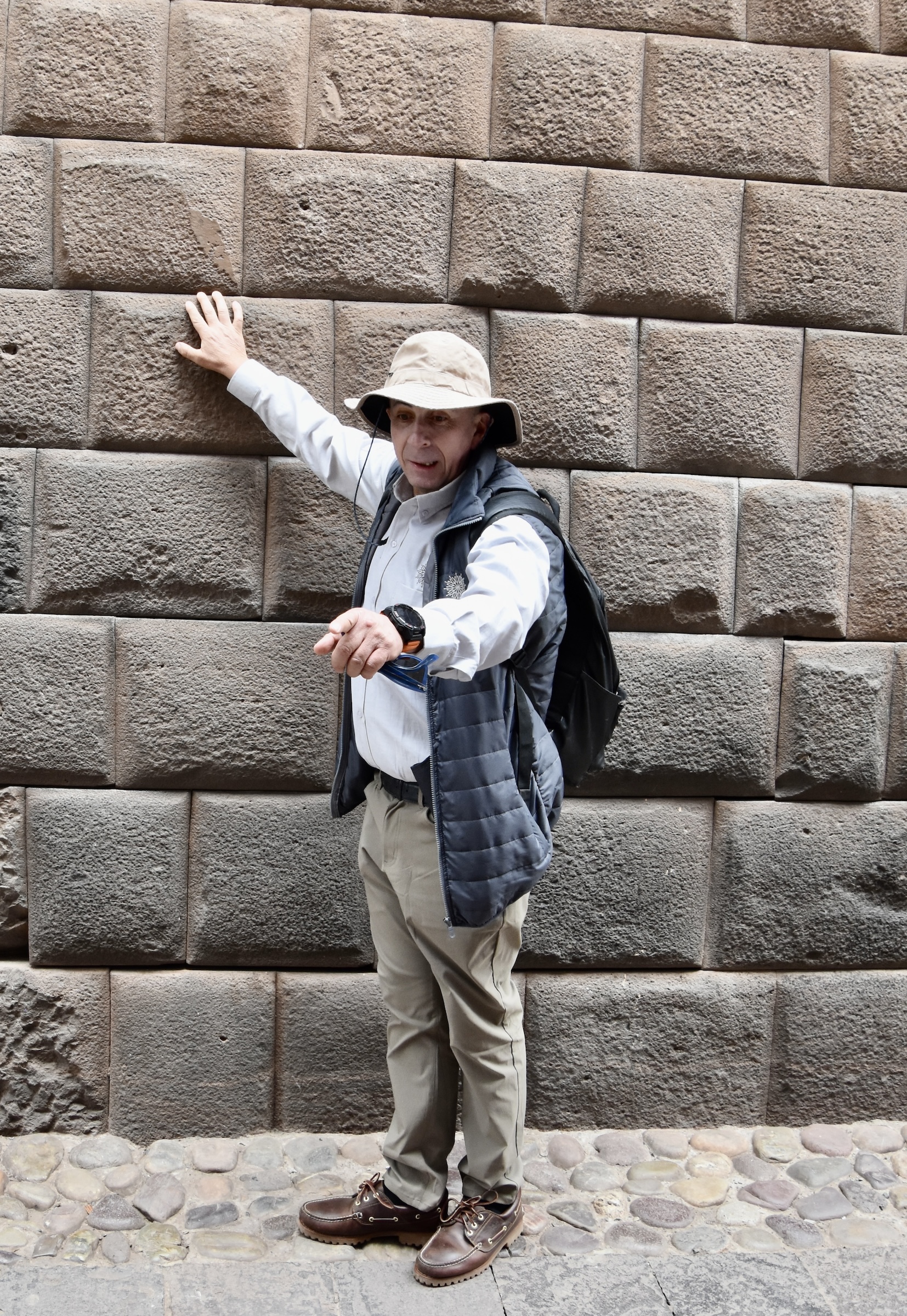
It doesn’t take long to get to the Plaza Mayor where Carlito points out the Incan foundations upon which most of the Spanish colonial buildings like the cathedral and the monasteries are built. It is incredible how the stones have been cut with a precision that would be difficult to replicate today with modern tools.
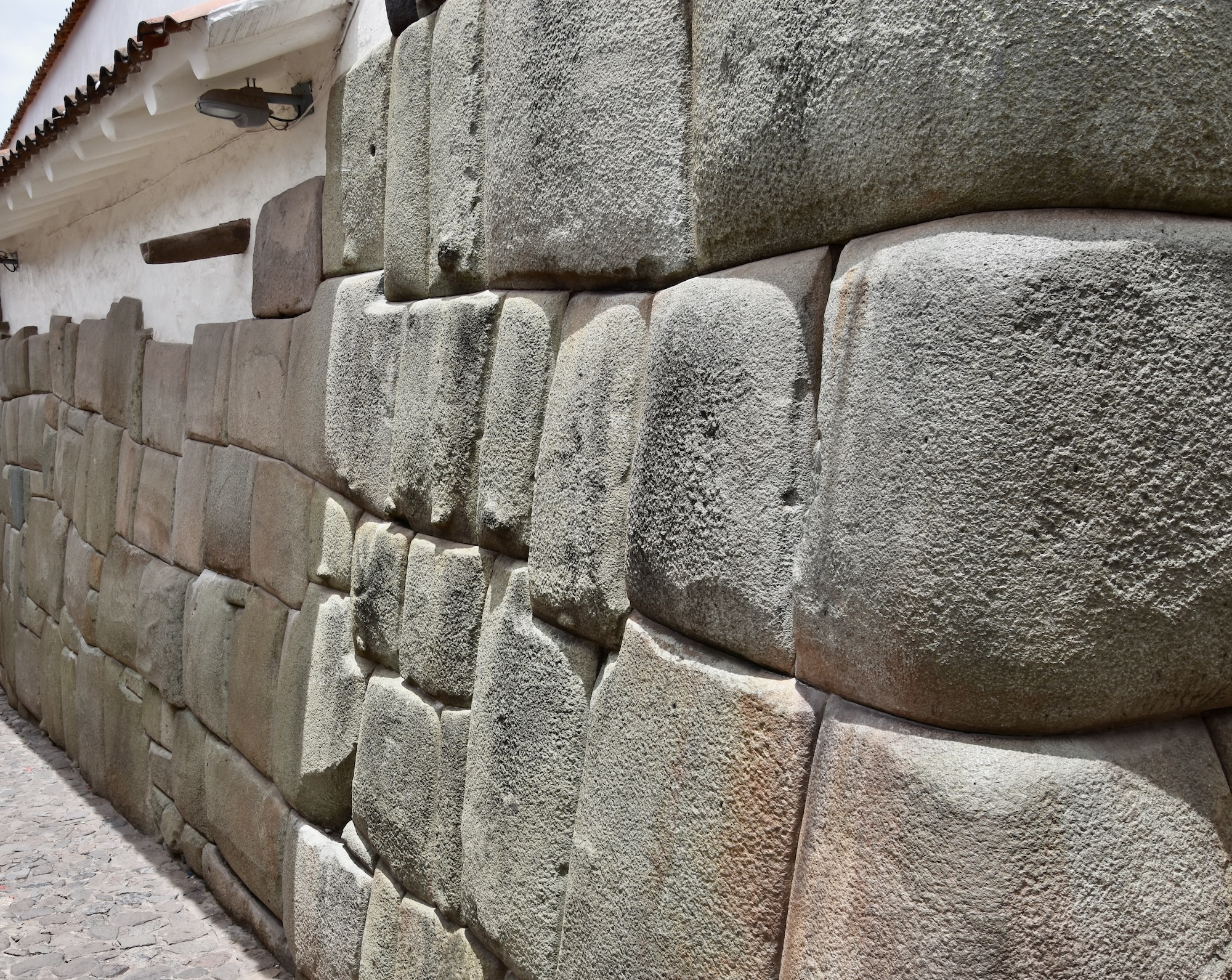
Almost every street in old Cusco has these type of Incan walls.
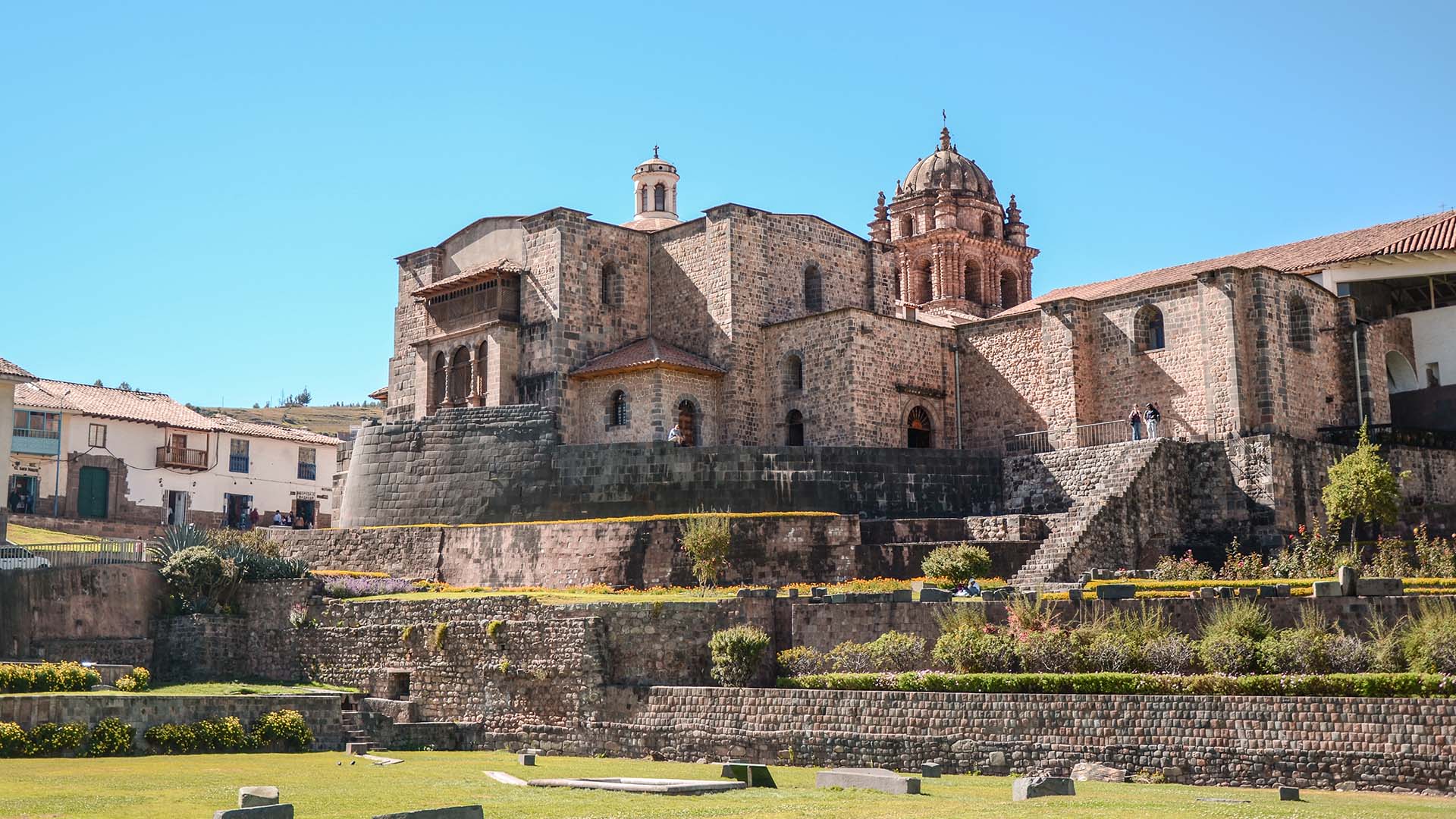
Our first stop is at the Convent Of Santo Domingo which was built atop the ruins of the Temple of the Sun. If you look closely you can see the remains of the Incan structure underneath the convent which was built literally on top of it.
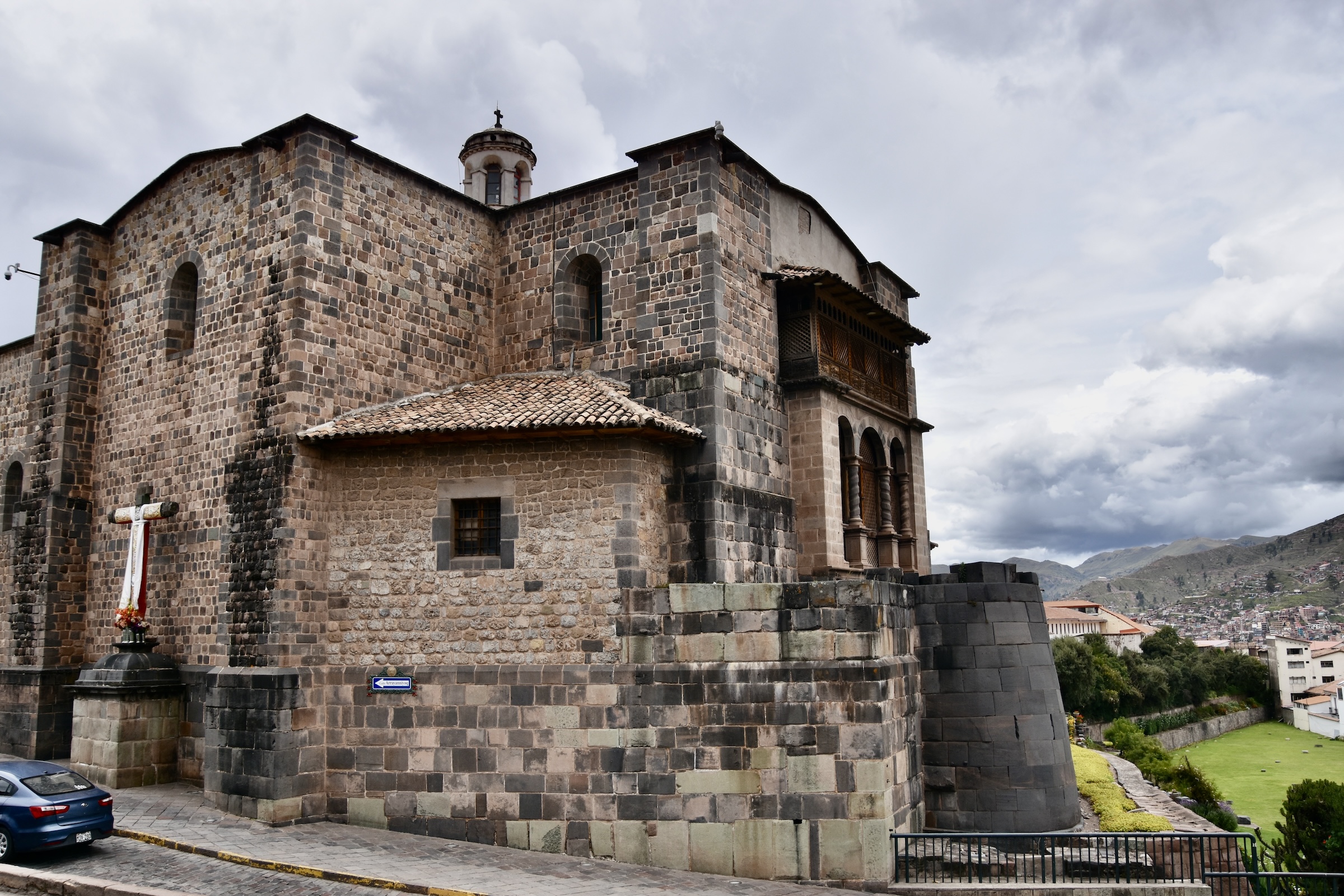
Coming up on the rear of the building you can see the remains of a portion of the Incan structure on the right side.
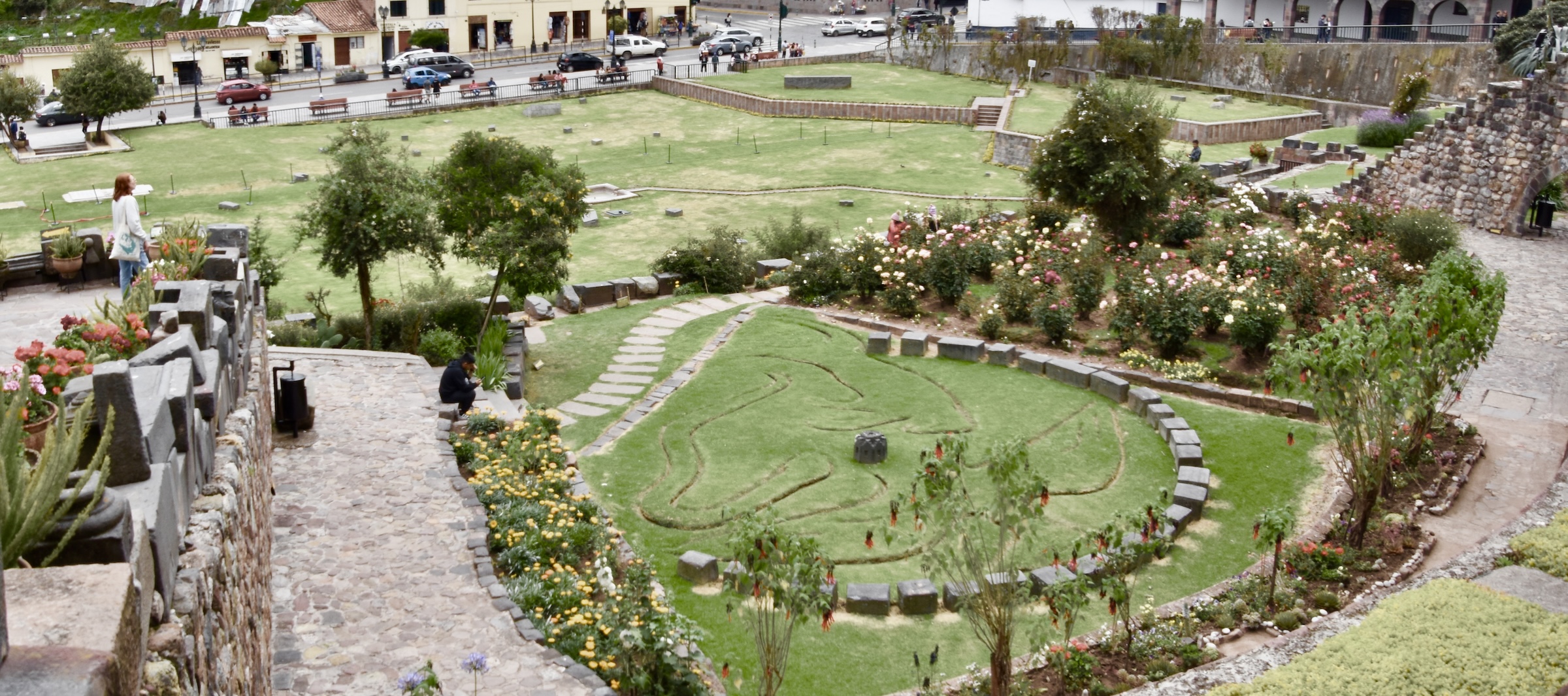
Looking down from here you can see the Garden of the Sun Temple which once held life size statues of Andes flora and fauna made out of gold and silver. It didn’t take the Spanish long to melt these down.
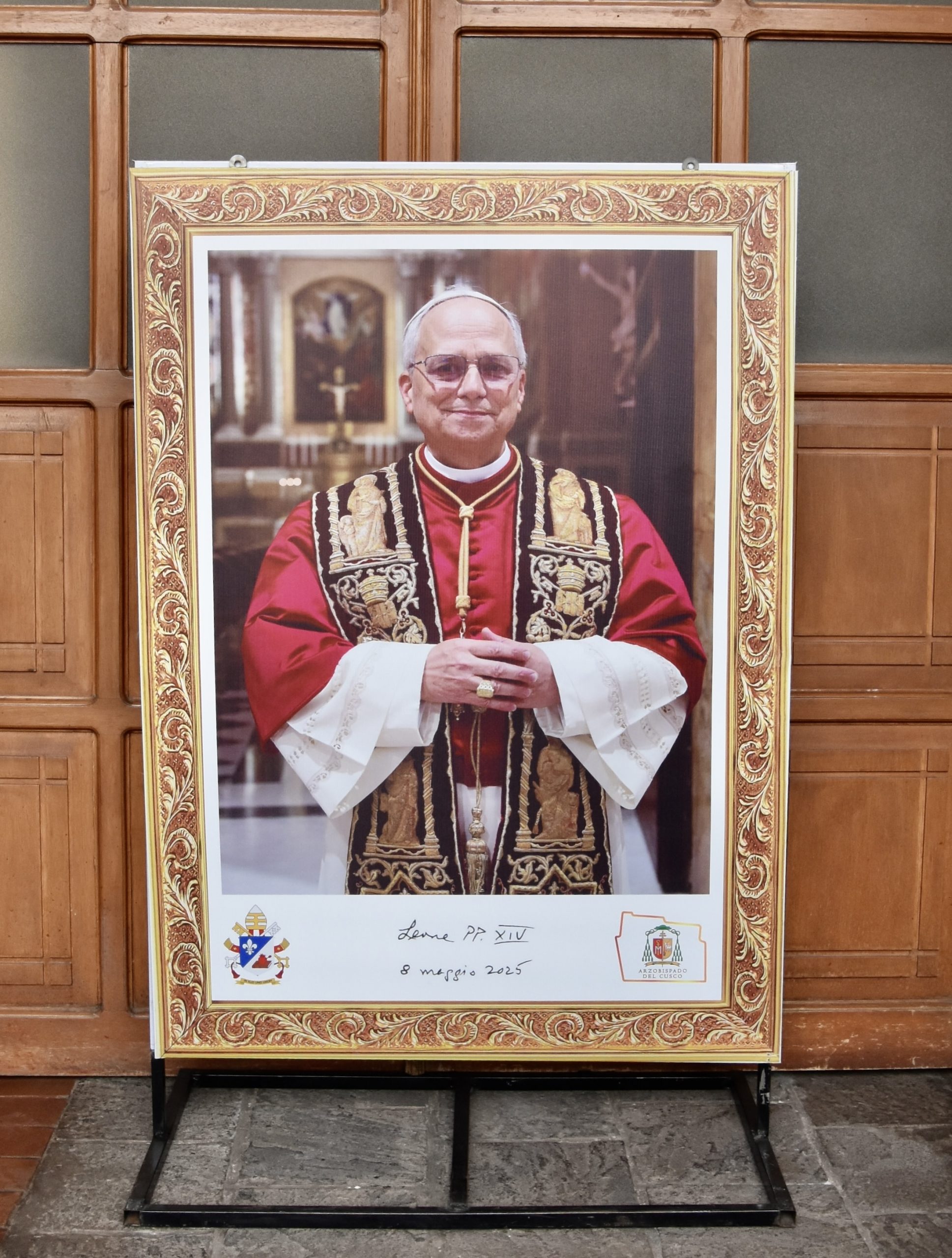
Entering the convent, which is still active, we see a portrait of the newly installed Pope Leo XIV.
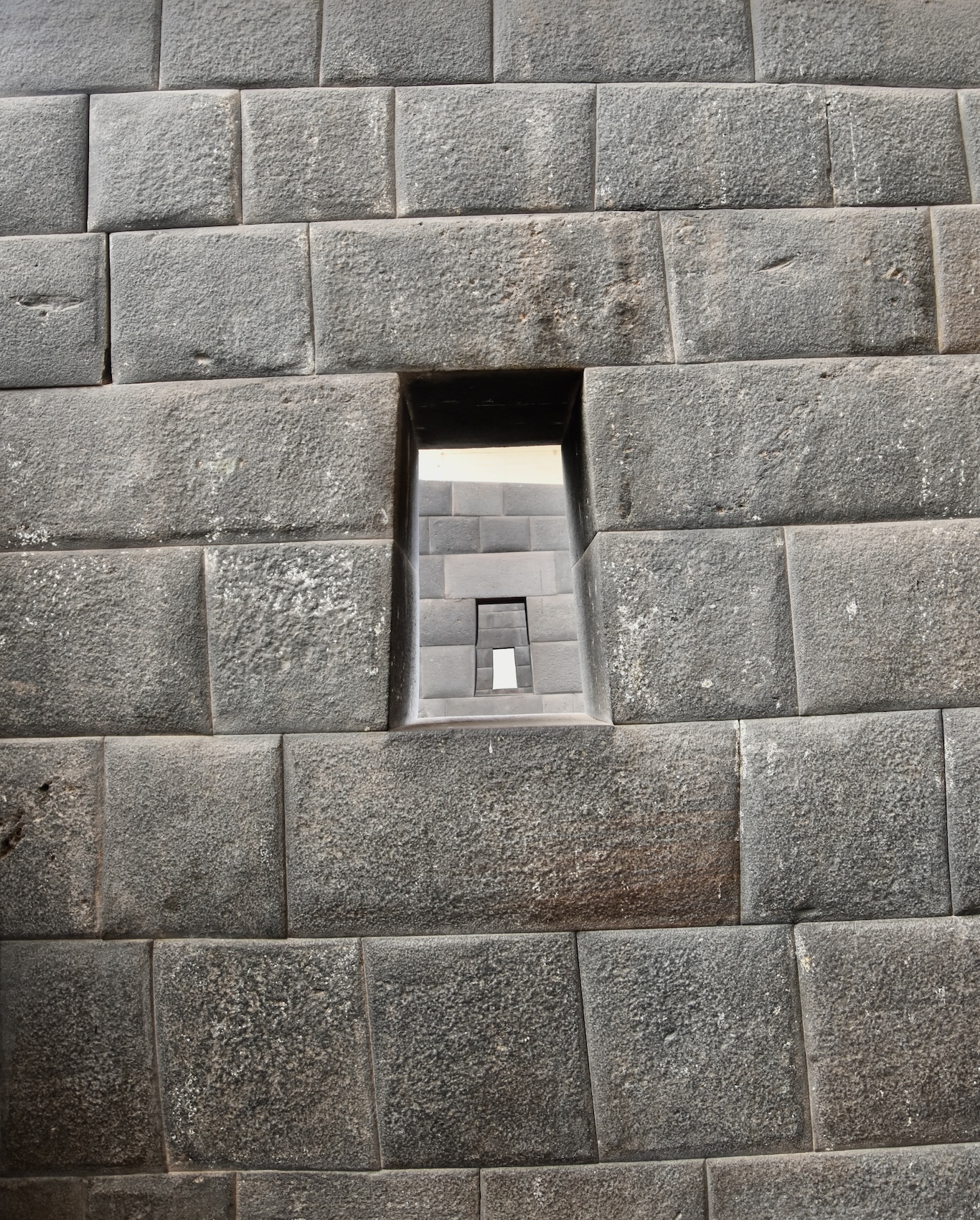
We also see that there are still some rooms that remain unchanged from the time they were built by the Incas. By standing on a small ladder you can see directly through to three other rooms which gives you an idea of just how precise the Incas were in their measurements. It is truly amazing to see and appreciate how difficult that would have been.
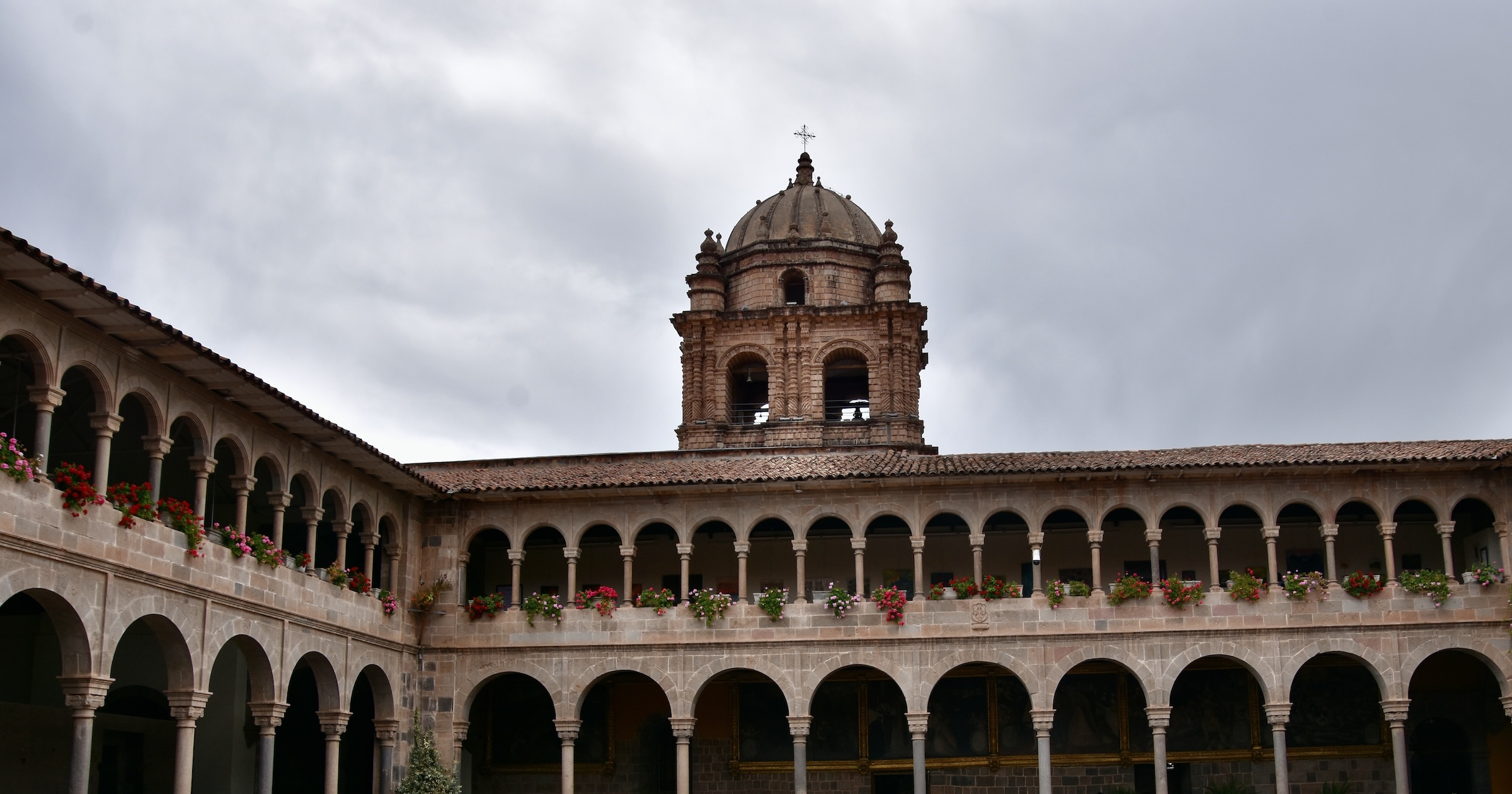
This is the Santo Domingo cloister and bell tower.
Exiting the convent we can clearly see that some major event is happening below us in the Plaza Mayour.
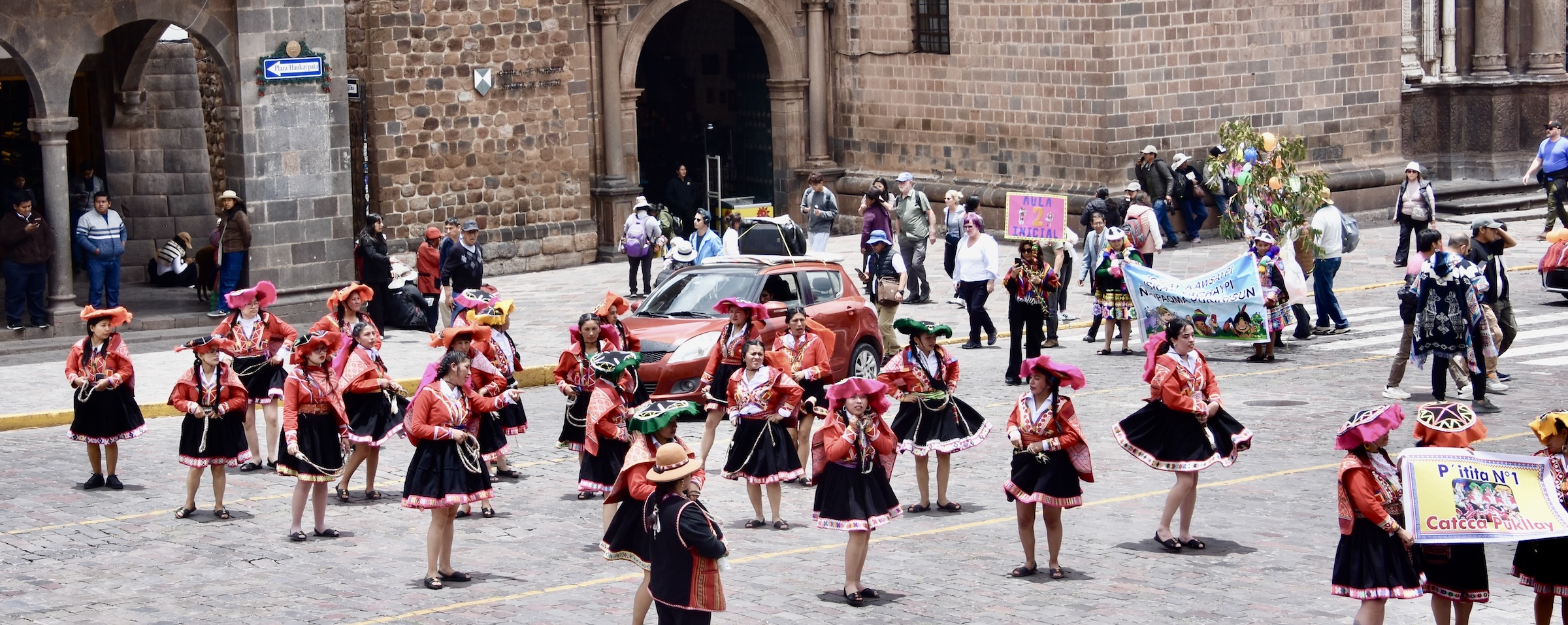
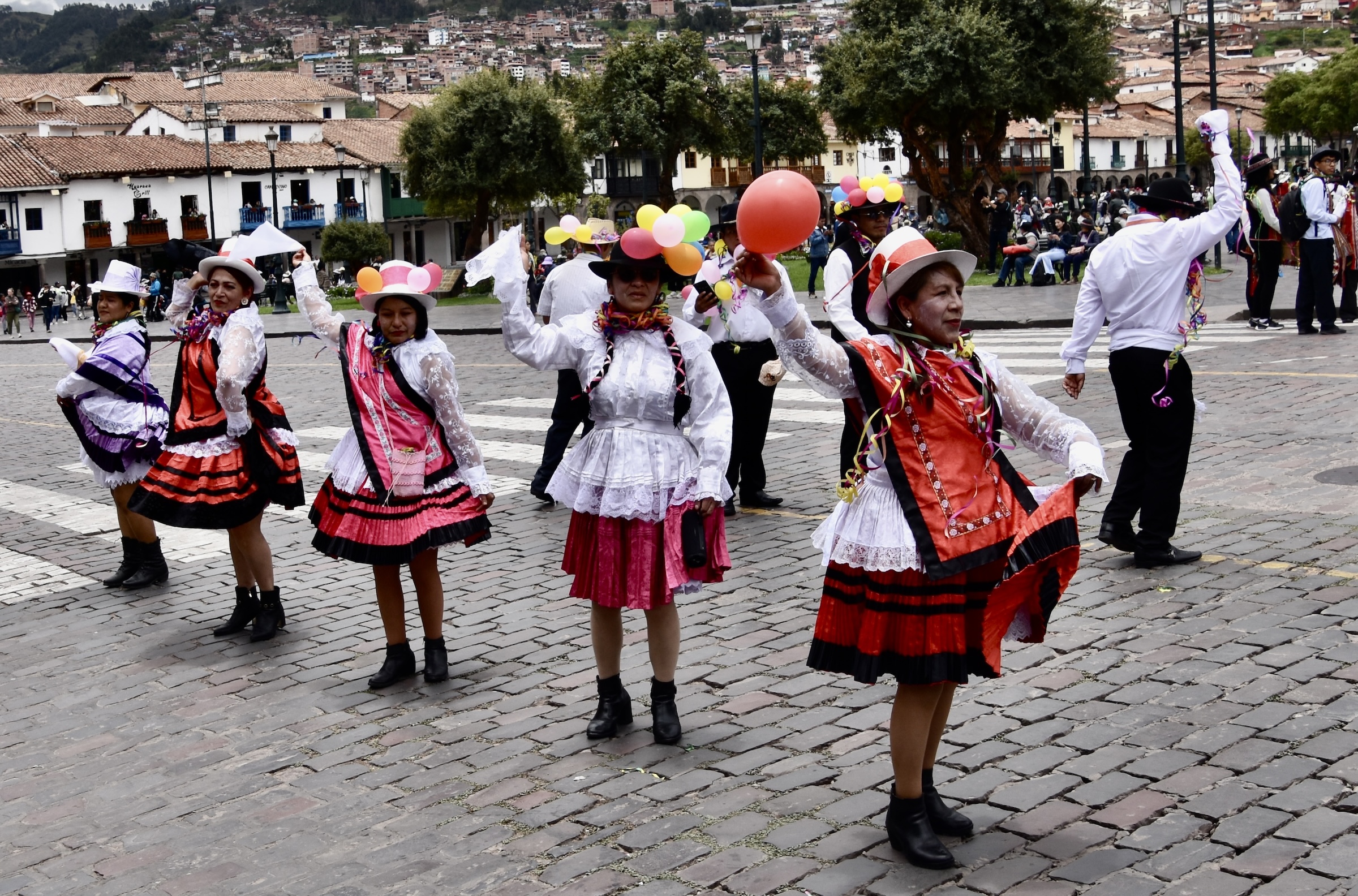
It turns out we are in Cusco on Valentine’s Day and a carnival parade has broken out. Let’s watch a few seconds of it. As I say in the video, these are the type of unplanned experiences that make unscripted travel so rewarding.
Here’s a closeup of some of the dancers.
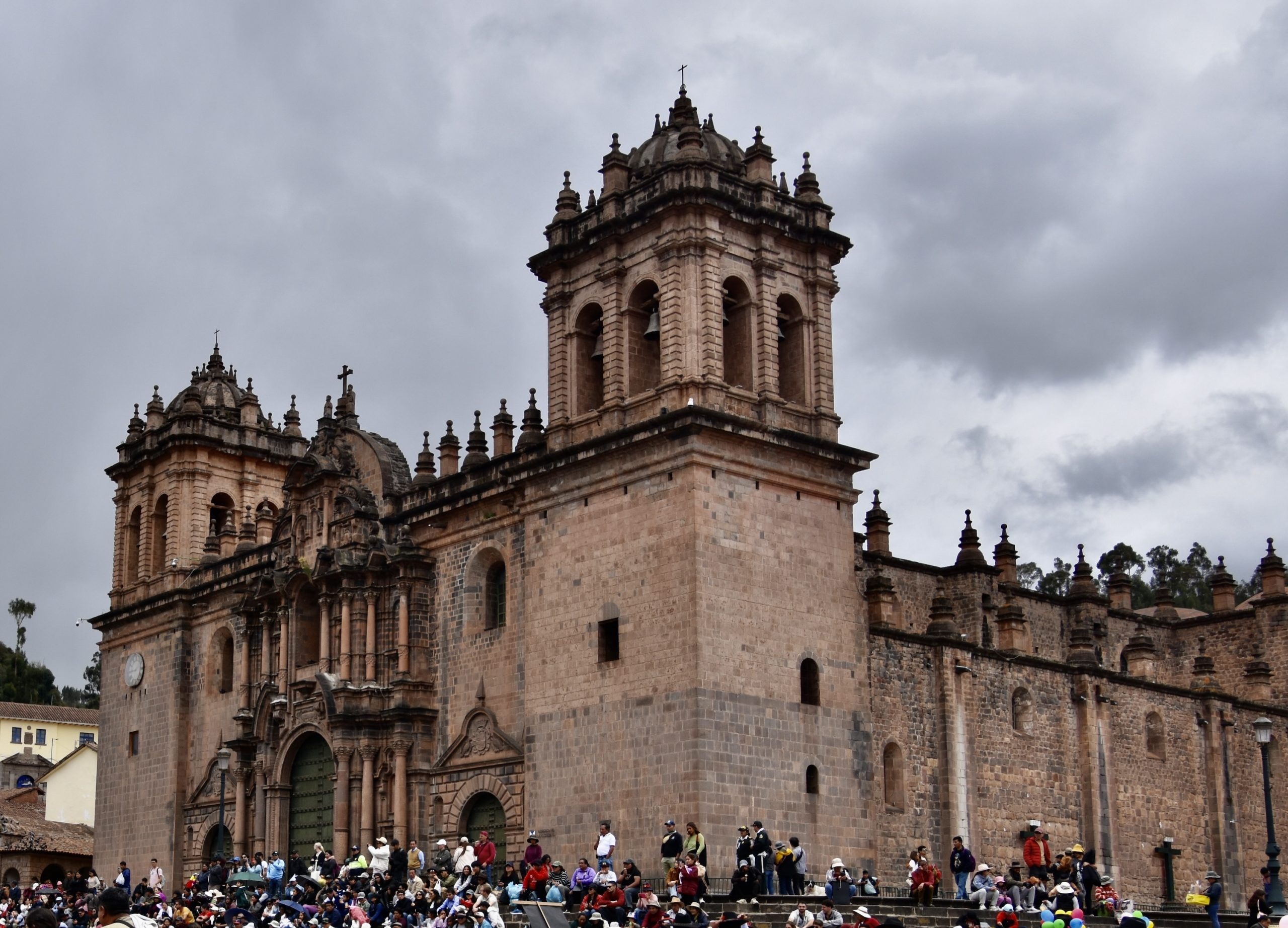
From our vantage point we can see Cusco cathedral across the street from where crowds are taking in the parade.
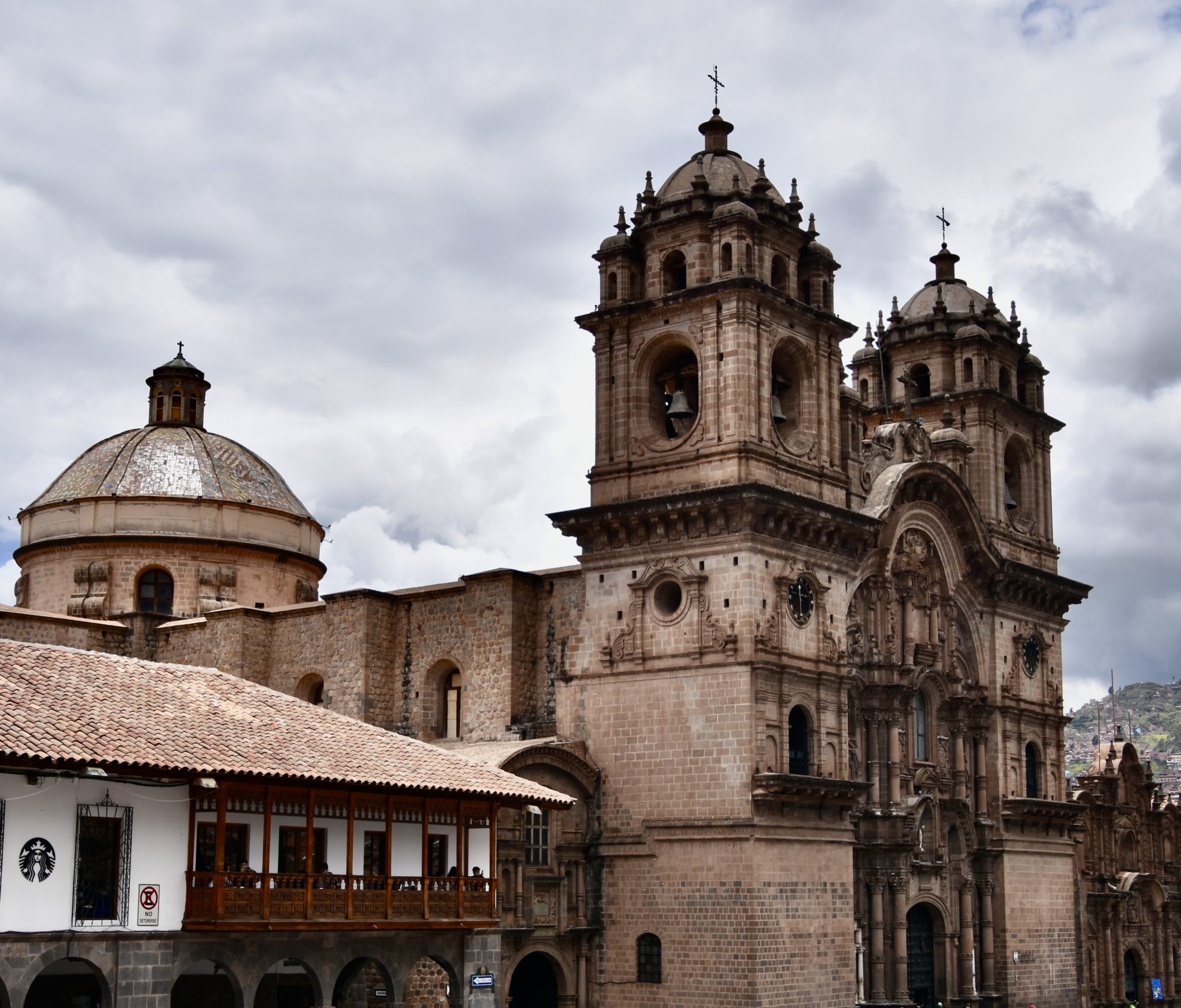
And across the plaza the bell towers of the Church of the Jesuits. The Inca gods never had a chance against this kind of all out Christian assault.
We take some time watching the parade before wandering off onto the side streets. On one of them there are two flags, one of which is often mistaken for what it is not.
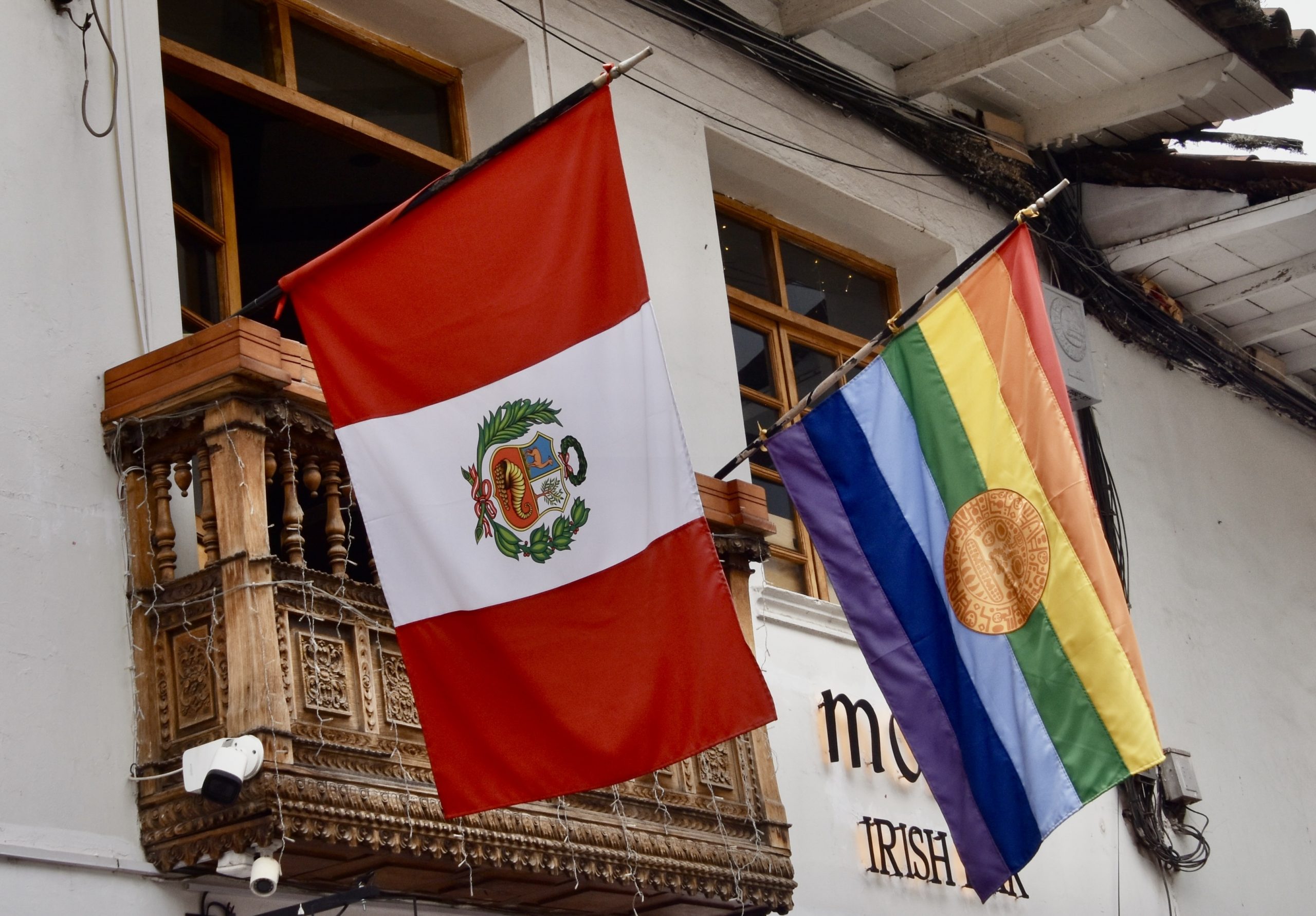
The flag on the left is the Peruvian military flag while the one on the right is not an LGBT flag, but that of the Incas with the sun in the middle surrounded by the rainbow. Carlito points out that many people seeing this flag, which is everywhere in this part of Peru, think that Peru is a very liberal country when in fact it is very conservative in matters pertaining to sexuality.
Moving away from central Cusco we arrive in the San Blas area of the city which is known for its artisans, many of whom congregate in San Blas plaza to sell their wares. There’s that Inca flag again.
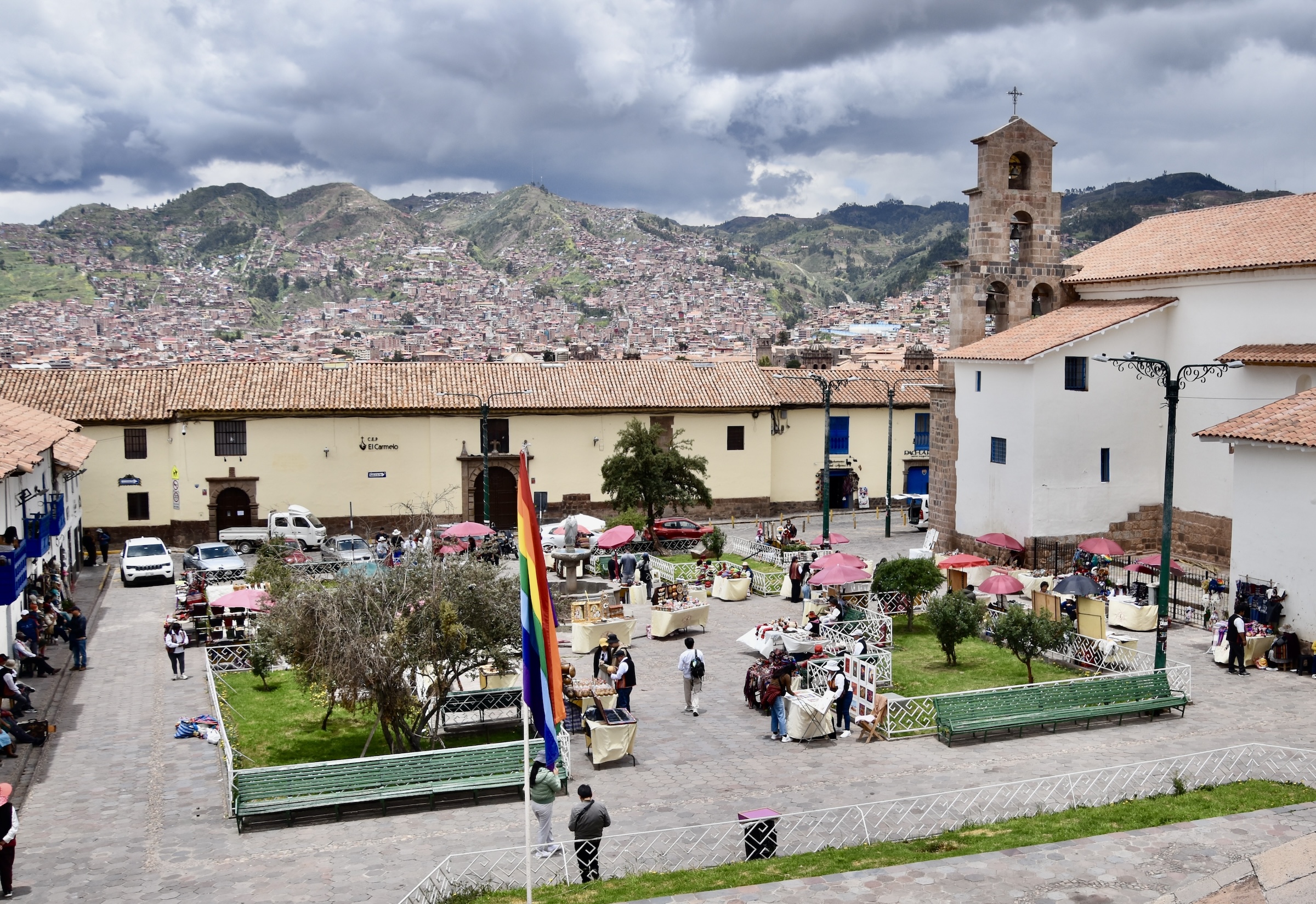
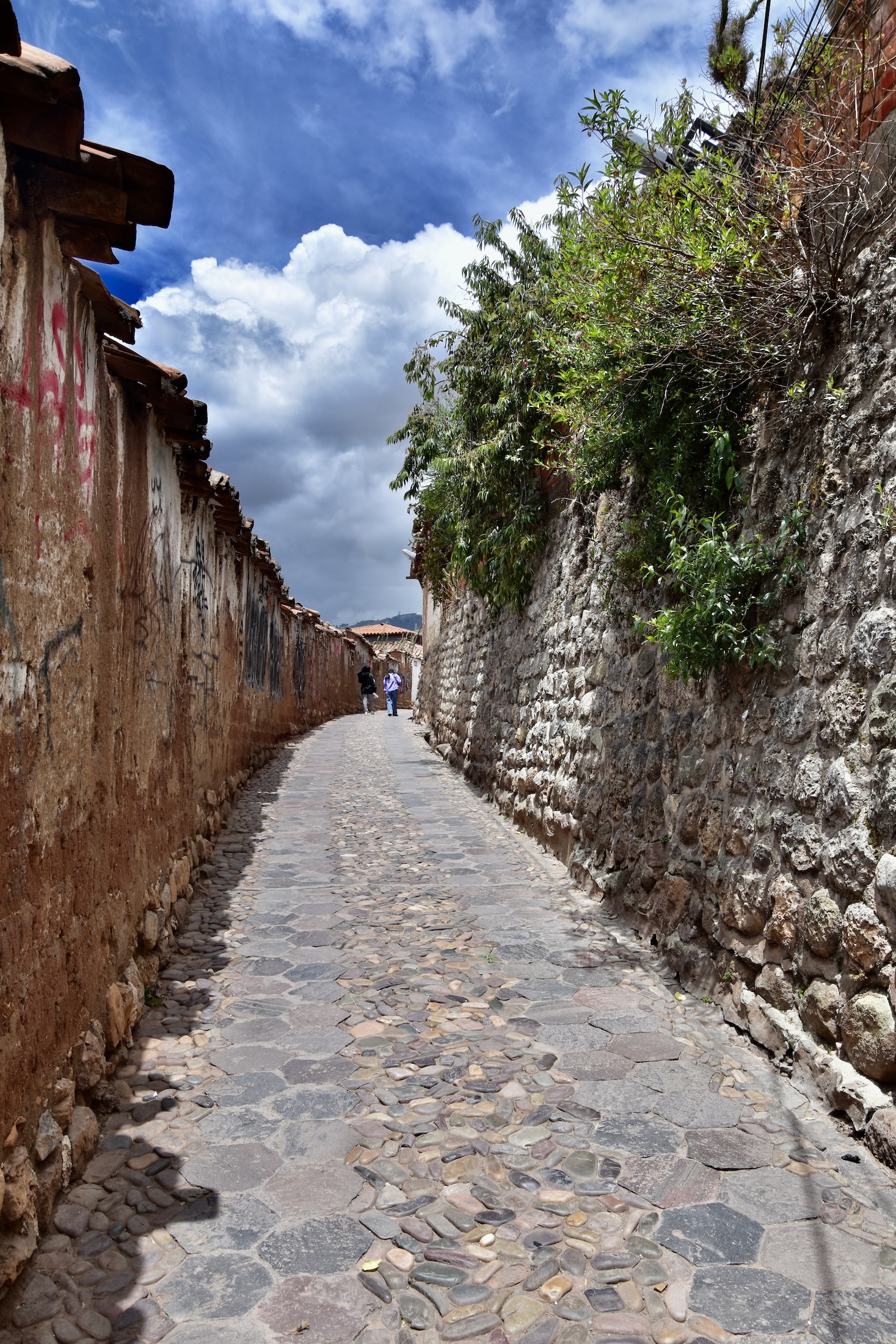
It’s an area of narrow cobblestone streets with an atmosphere quite different from the Plaza Mayor, much quieter and more laid back than the frantic activity around carnival.
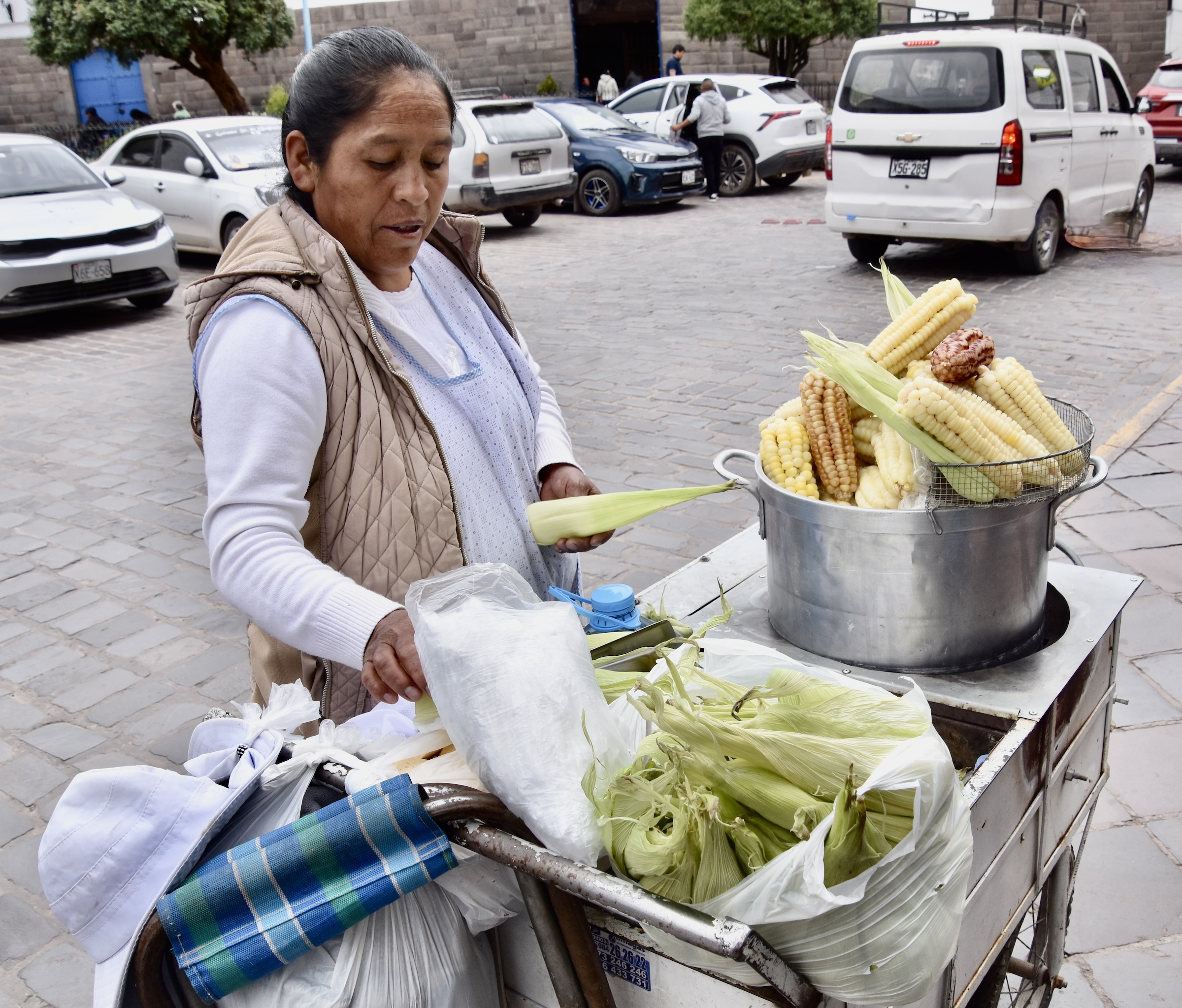
There are corn vendors selling their wares on almost every street corner.
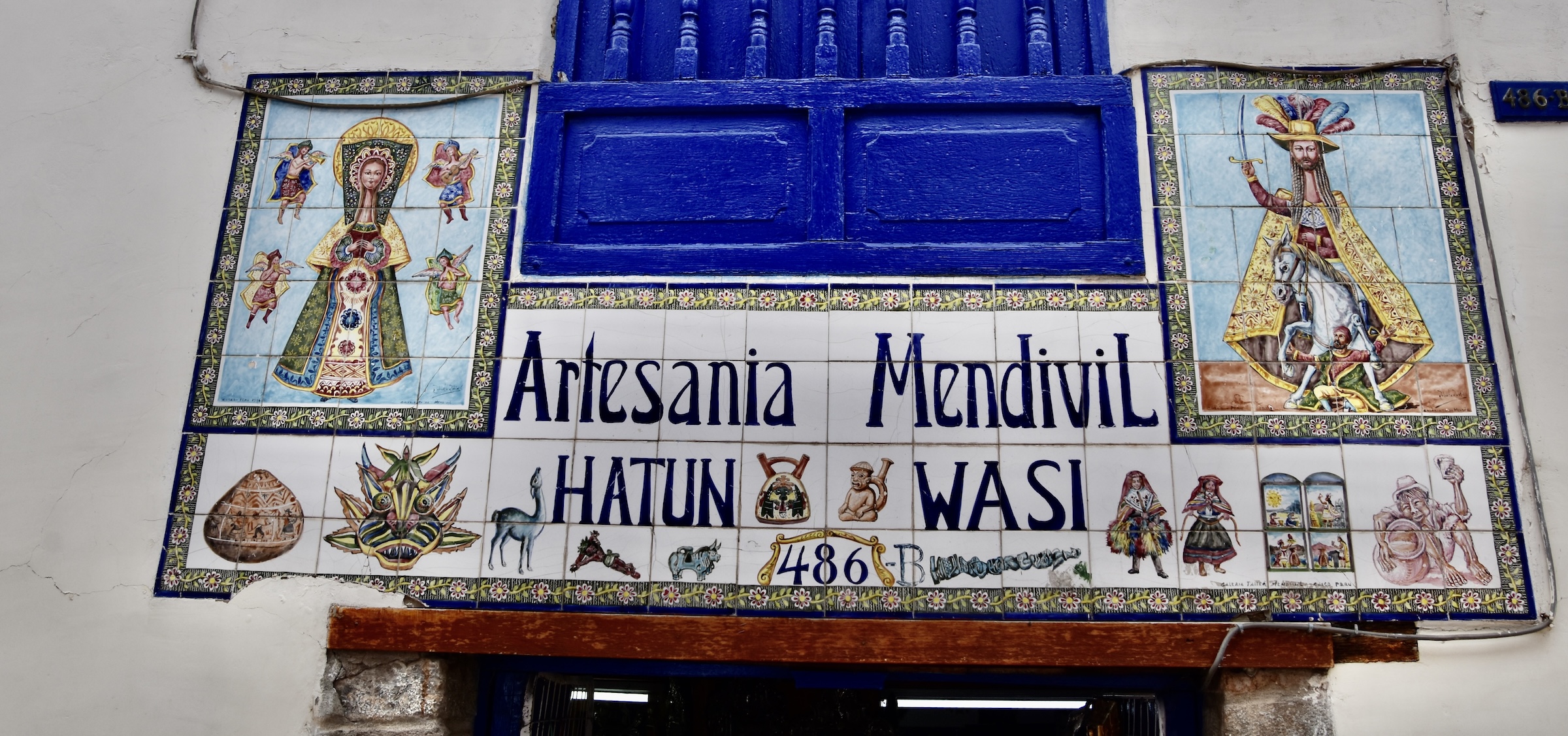
And artisans advertising their shops by way of painted tiles which are very photogenic.
We slowly wend our way back to the hotel for a few hours respite before meeting for dinner at Jonas Restaurant for what turned out to be the meal of the trip. Diego had arranged for a multi-course meal featuring modern Peruvian cuisine. Every dish was a knockout including the very tender alpaca medallions.
-
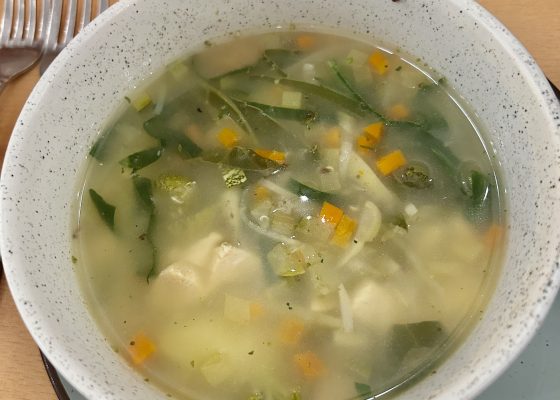
- Chicken Soup
-
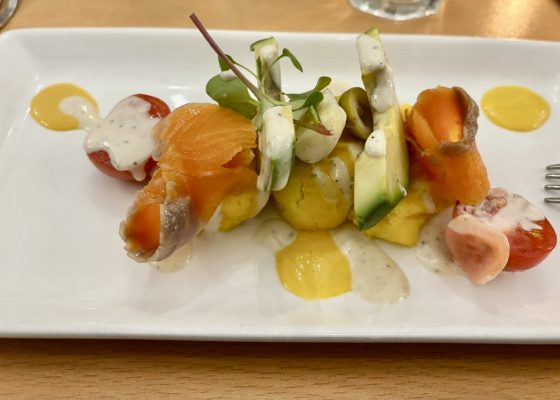
- Salad
-
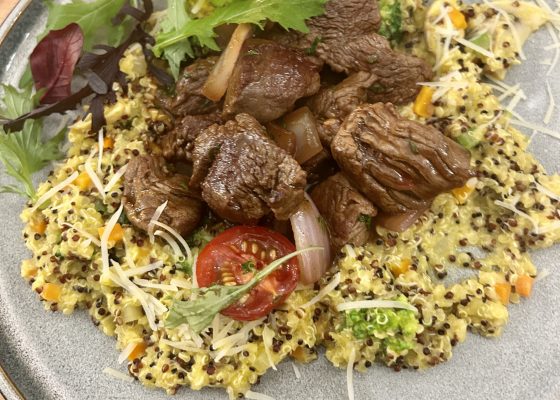
- Grilled Alpaca
-
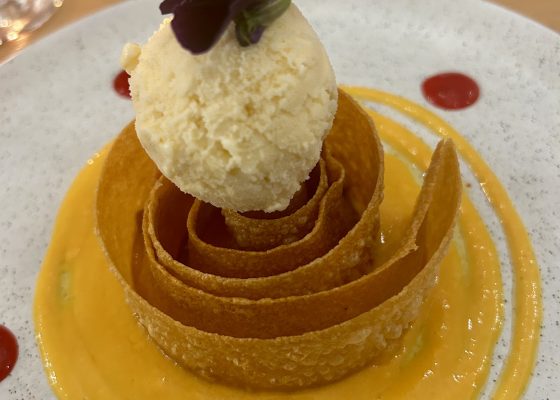
- Cookie w: Ice Cream
-
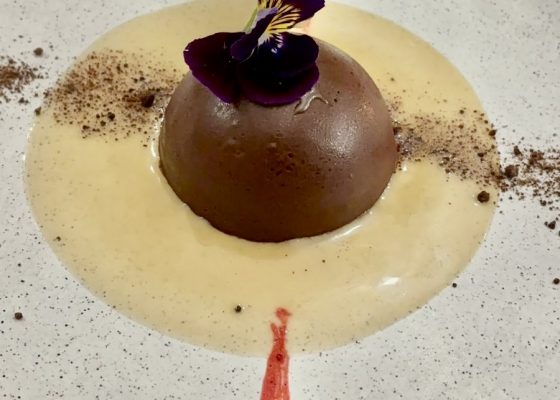
- Chocolate Bomb
It was a fantastic end to a great day in Cusco. In the next post we’ll explore the environs of Cusco including a visit to an alpaca farm. I’m glad I ate it today, because otherwise I would have felt too guilty after seeing how cute these little guys are. Hope to see you there.