
Machu Picchu – Here at Last

In the last post on this Adventures Abroad Kingdoms of the Andes tour we arrived by train at the underrated town of Aguas Calientes, the gateway to Machu Picchu. In this post, after a lifetime of expectation, I will finally get to visit this most famous of all Incan archaeological sites and one of the New 7 Wonders of the World. I hope you’ll join me in finding out if all that has been written, photographed and videoed about this place is legit or pure hype.
History of Machu Picchu
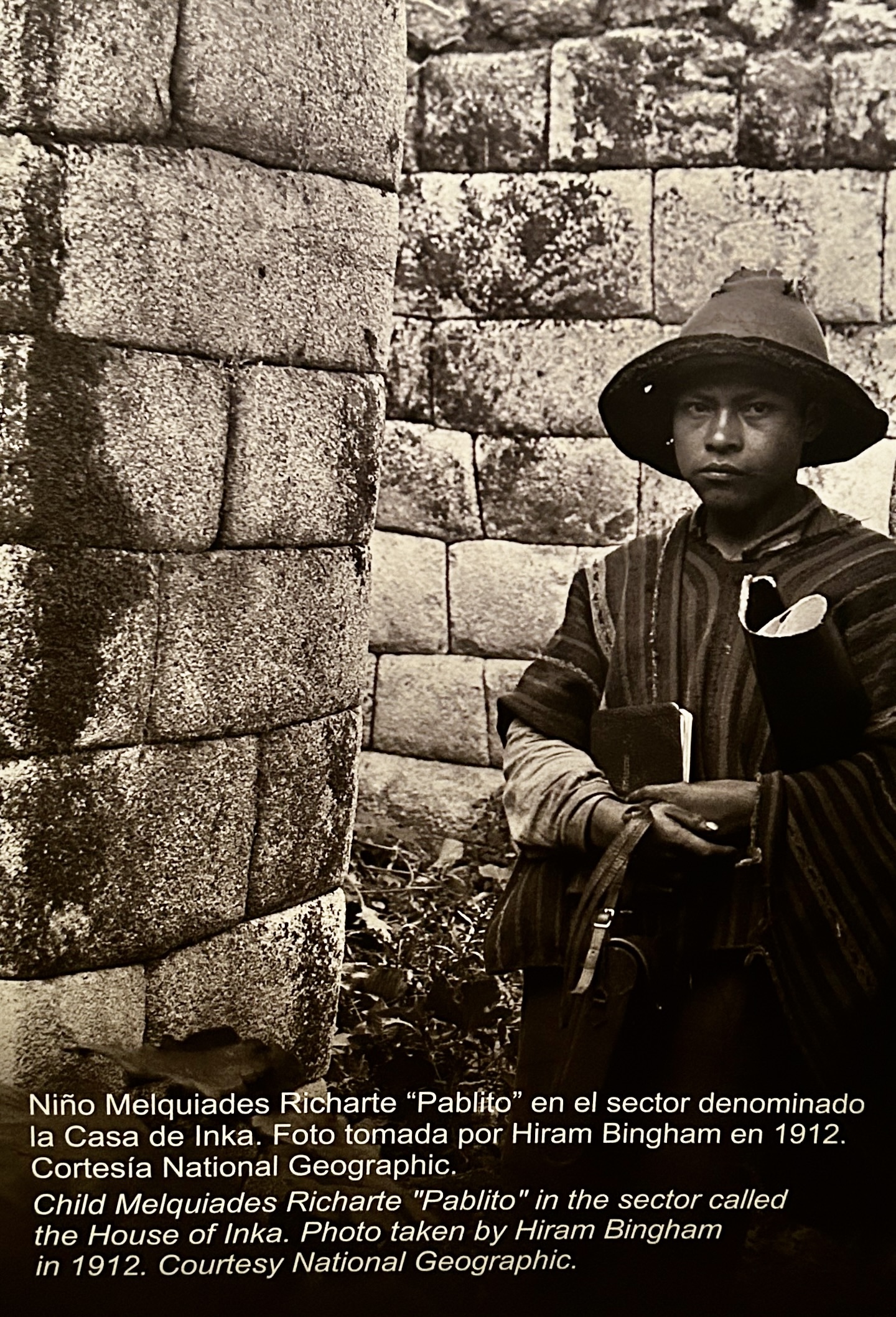
Here’s the thing that makes Machu Picchu unique among world famous archaeological sites – nobody but a few locals even knew of its existence until 1911 when American Hiram Bingham was led to the site by a 12 year old boy nicknamed Pablito. In fairness, Peruvian Agustin Lizárraga was definitely here a few years earlier, but just didn’t announce his findings like Bingham did. The irony is that Bingham was looking for Vilcabamba, the so-called Lost City of the Incas and had no idea that Machu Picchu existed. This is quite different than many other places that we know existed in the past, but have never been located such as the Hanging Gardens of Babylon or the tomb of Genghis Khan. There is absolutely no record whatsoever of who built it or when or why.
Using the most up to date archaeological methods we can say that it was probably built between 1438 and 1450 and occupied up until about 1530. With those dates the building is now usually attributed to Pachacuti Inca who had just completed the conquest of the Urubamba Valley. It is believed to have been a royal residence and not a fortress per se like Ollantaytambo with only about 700 permanent residents, most of whom would have been farmers. Why it was abandoned is also a mystery. While the Incan Empire was collapsing in the face of Spanish aggression, Machu Picchu was deserted before the conquest of Cusco in 1533. It is speculated that smallpox came to the area ahead of the Spanish arrival in the Sacred Valley and wiped out most of the inhabitants.
In any event, Machu Picchu slid into the realm of forgotten lore and for almost 400 years was unknown to the outside world. After Bingham and later archaeologists succeeded in clearing the site of centuries of overgrowth, they realized that they had the only known, so far, complete Classical Incan site that had not been interfered with by the Spaniards who had systematically destroyed every other one they came upon. To top it off, Machu Picchu is located in a setting of great natural beauty on a ridge between two mountains Machu Picchu and Huayna Picchu. Picchu is the Qechua or Incan word simply for peak or summit while machu is ‘old’ and huayna is ‘young’. However, since we know nothing about what the Incas actually called the place, these are actually modern constructs.
In this incredible setting there are over 200 structures including temples, astronomical observatories and many residential buildings.
In 1983 Machu Picchu was inscribed as a UNESCO World Heritage Site with this description:
Embedded within a dramatic landscape at the meeting point between the Peruvian Andes and the Amazon Basin, the Historic Sanctuary of Machu Picchu is among the greatest artistic, architectural and land use achievements anywhere and the most significant tangible legacy of the Inca civilization. Recognized for outstanding cultural and natural values, the mixed World Heritage property covers 32,592 hectares of mountain slopes, peaks and valleys surrounding its heart, the spectacular archaeological monument of “La Ciudadela” (the Citadel) at more than 2,400 meters above sea level. Built in the fifteenth century Machu Picchu was abandoned when the Inca Empire was conquered by the Spaniards in the sixteenth century. It was not until 1911 that the archaeological complex was made known to the outside world.
Machu Picchu is now Peru’s #1 tourist attraction drawing 1.6 million visitors in 2025. The huge numbers have forced the Peruvian government to put daily caps of 5,600 in the high season (June through August) and down to as low as 3,000 at other times of the year.
OK, enough build up, let’s visit Machu Picchu.
First of all, I would not even consider visiting Machu Picchu on your own. The logistics of getting here are daunting, including booking the train tickets, bus tickets to the site, entrance tickets and accommodations in Aguas Calientes. The train tickets get booked up months in advance as do the entrance tickets. Then there’s the issue of a guide. Visiting the site without one is certainly possible, but it will severely diminish your understanding of what you are seeing and probably your overall enjoyment of the place.
Until I actually made the visit with Adventures Abroad and our tour leader Diego Vidal and our local guide Carlos, I had no idea of the efforts involved in pulling this visit off without a hitch. It started by scheduling the visit in February when the Inca Trail is closed for maintenance. This means you can only get there by train and there are only so many seats available. The result is that we are here during the least busy time of year. The one downside is that it is the rainy season up here so we might get wet, but it generally comes in intermittent showers and not outright downpours.
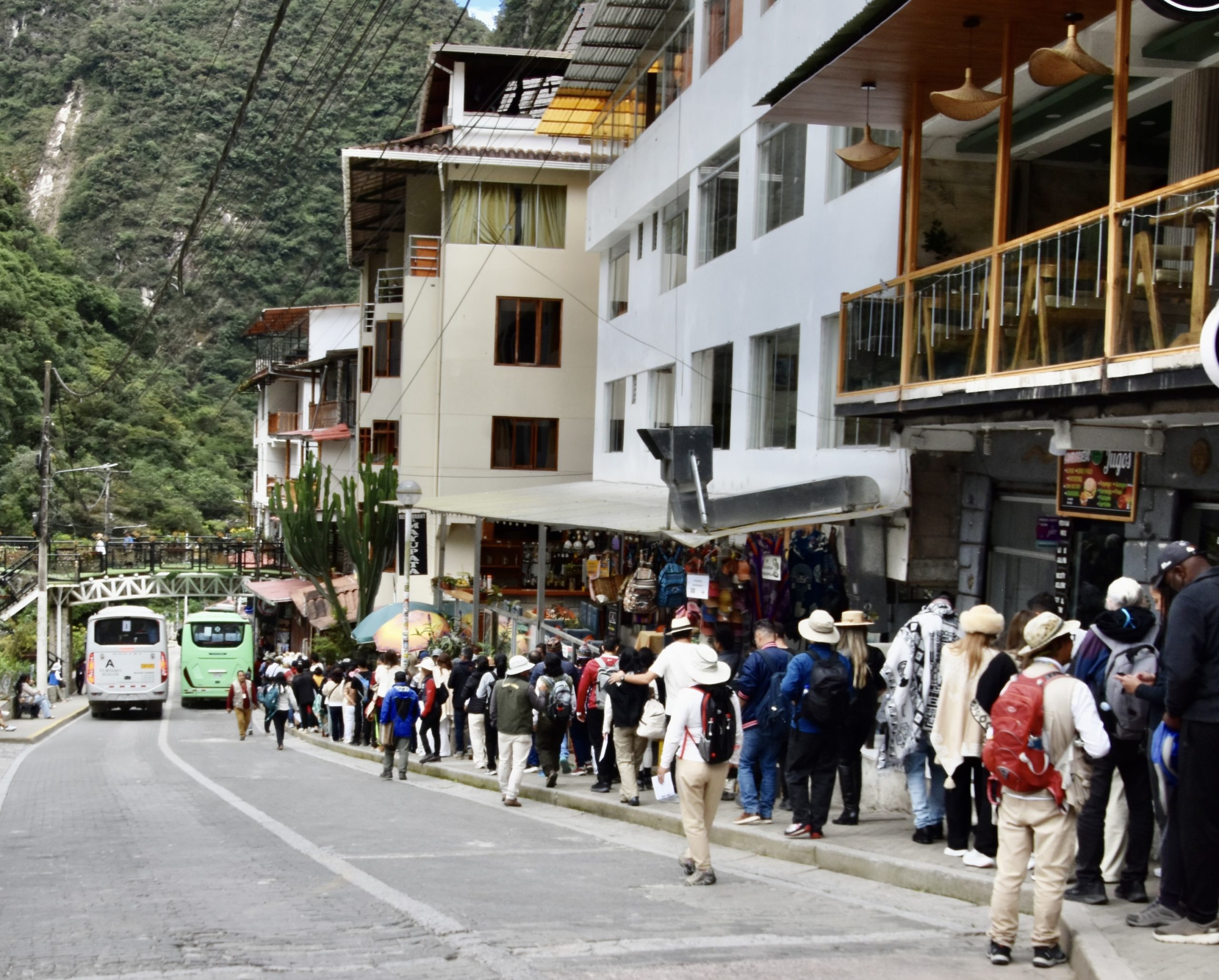
The photo above shows the lineup for the buses you need to take to get from Aguas Calientes. It might look like a ton of people, but it’s more like a hundred or so and we waited in line about fifteen minutes at most before getting aboard. It’s 8 kms. (5 miles) by way of a very winding road that ascends almost 500 metres( 1,600 feet) to the site and takes about 30 minutes. There are some splendid views along the way and you can understand why the Spaniards never found this place.
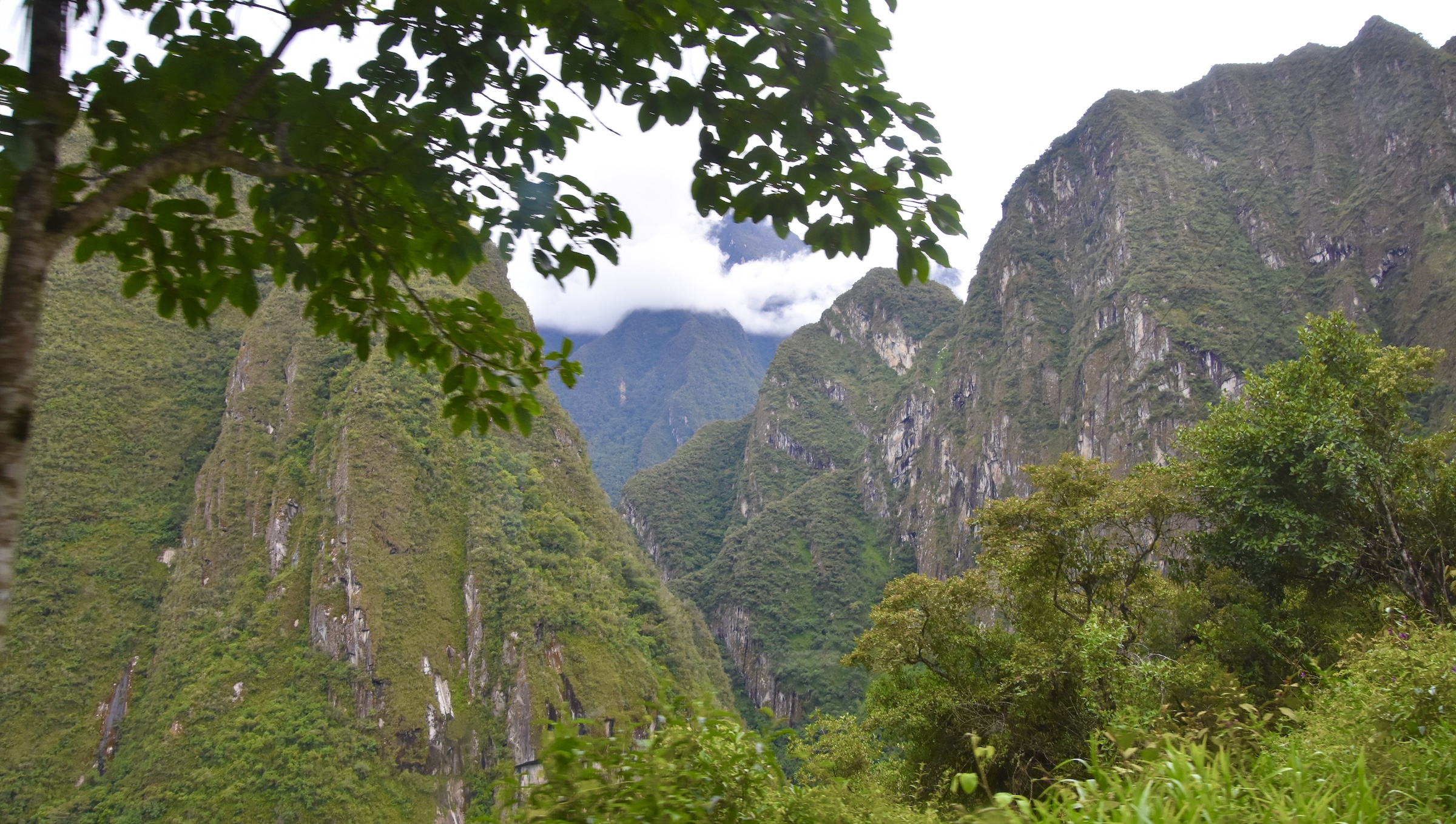
As we get closer there is a definite and palpable sense of building excitement among everyone in the bus. For almost all of us this is a moment we have anticipated for years. Will it live up to expectations or be a disappointment?
Have a look.
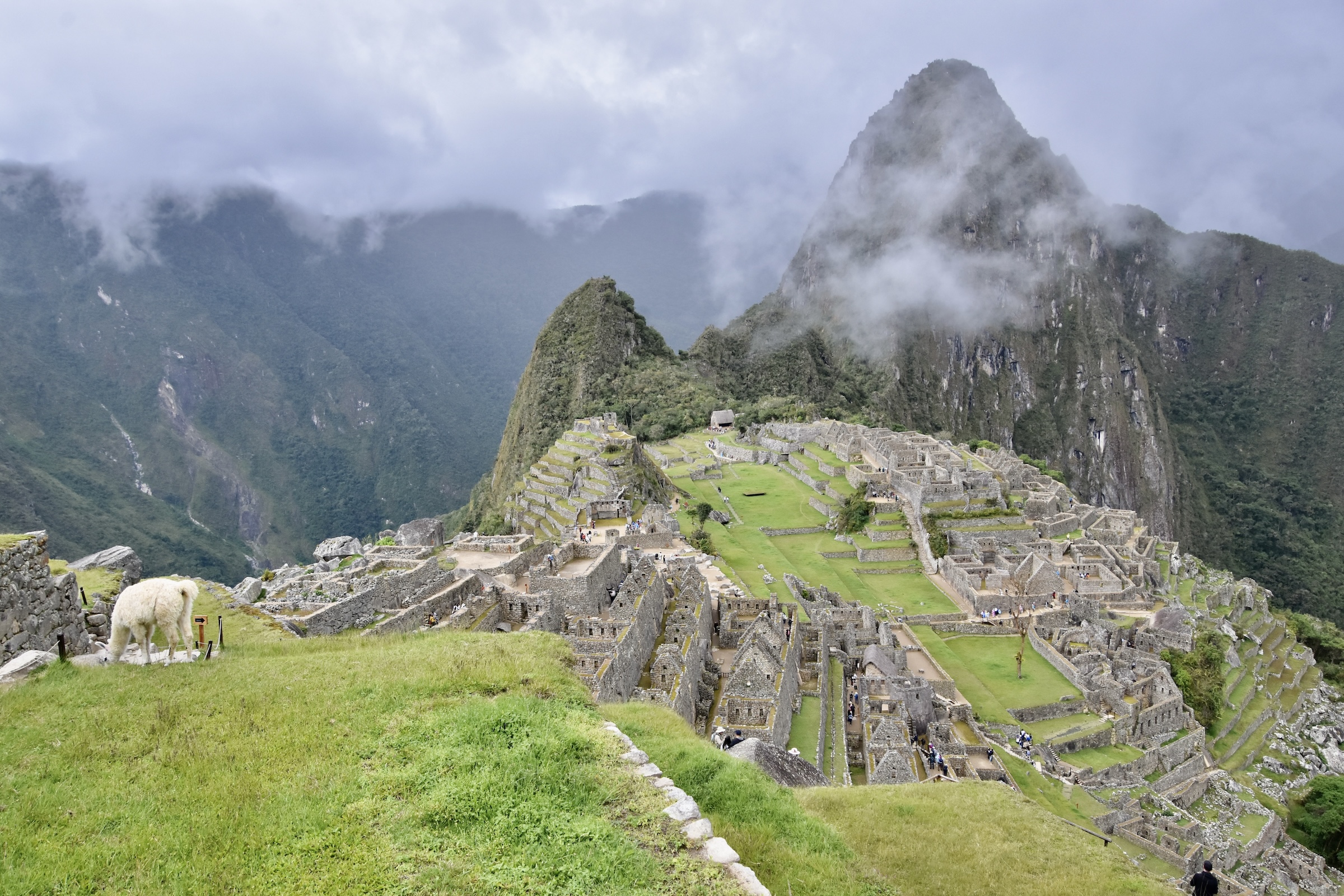
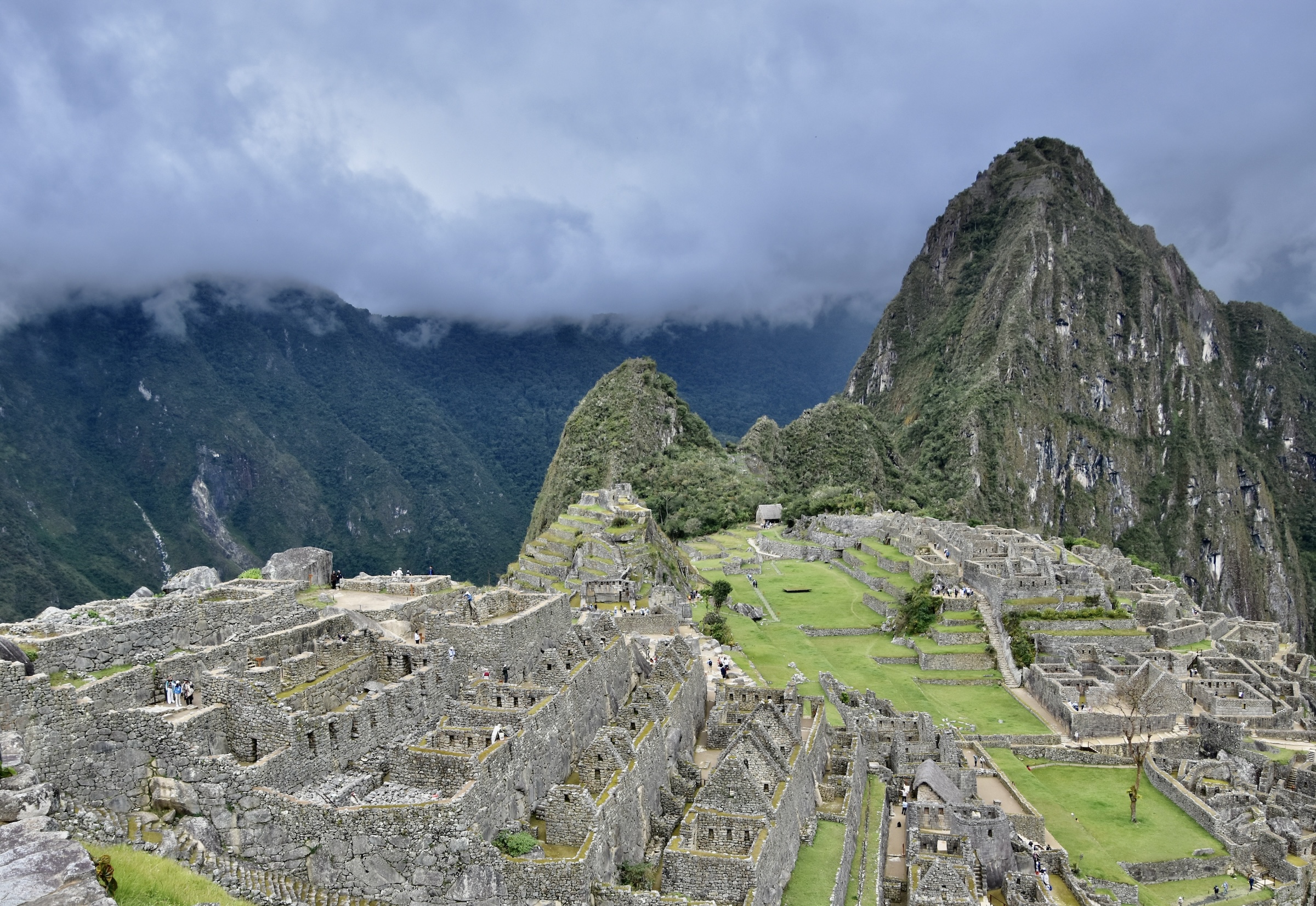
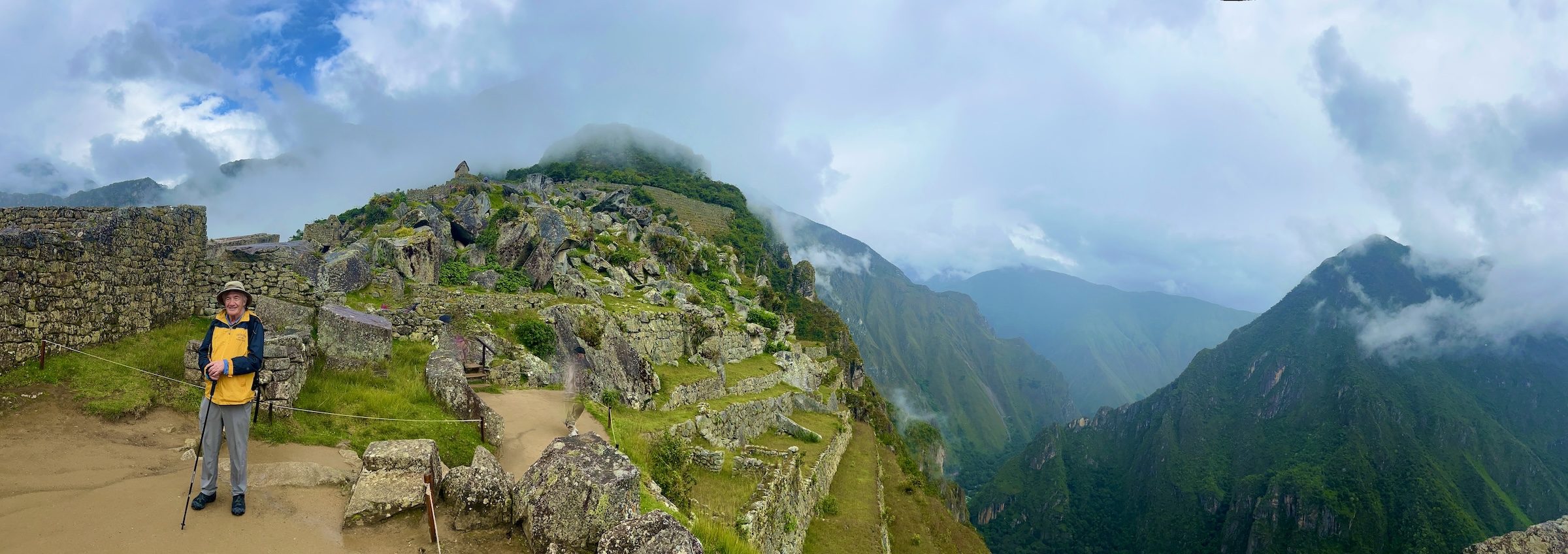
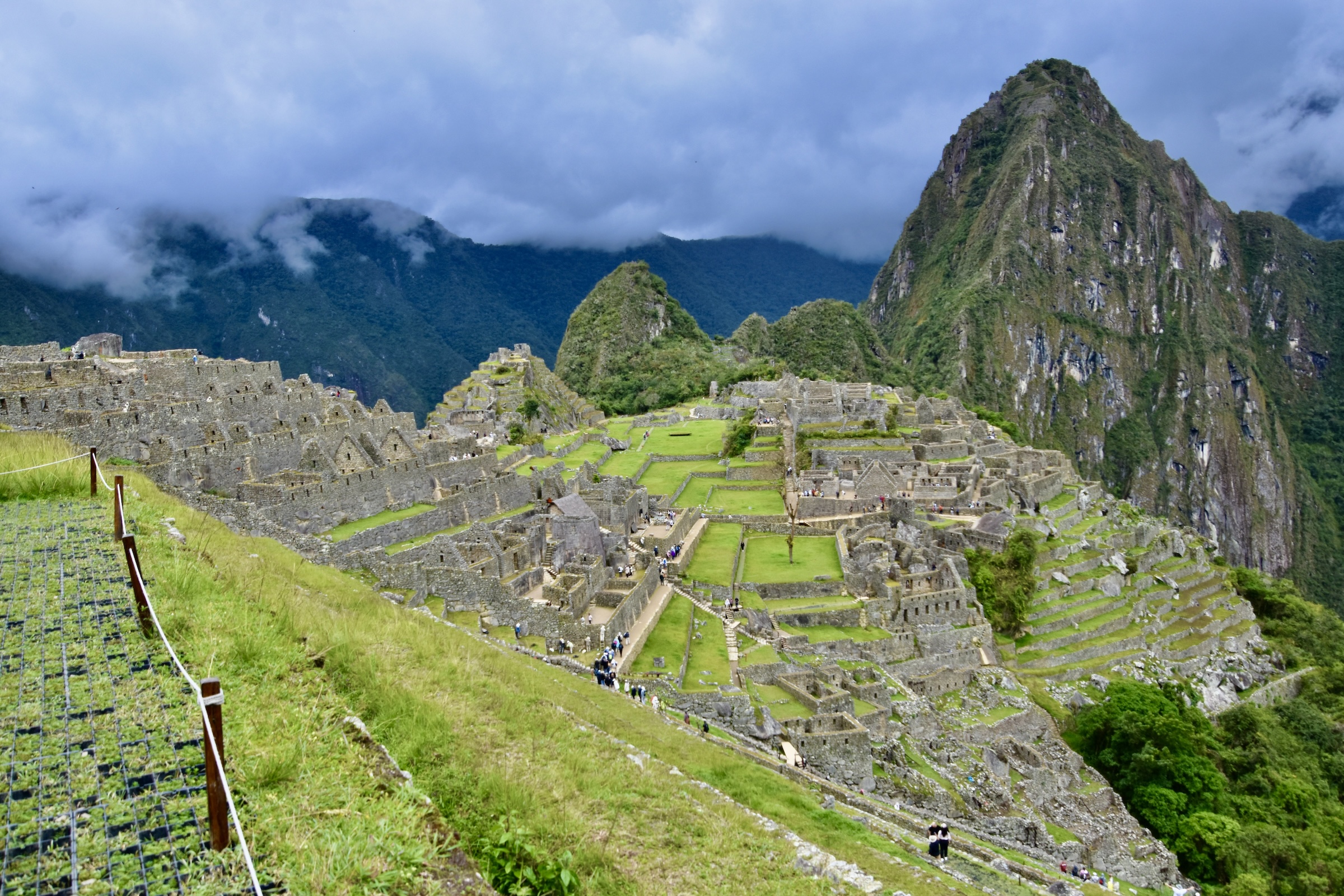
The first look is simply mind-blowing. I’ve never seen or experienced anything like it. Only by seeing it in person can you appreciate how it straddles the top and both sides of the ridge between the two mountains. Yes, this is a genuine wonder of the world and if we saw nothing else on this AA trip I would feel I got my money’s worth.
The wispy clouds and the grazing llama are right out of central casting.
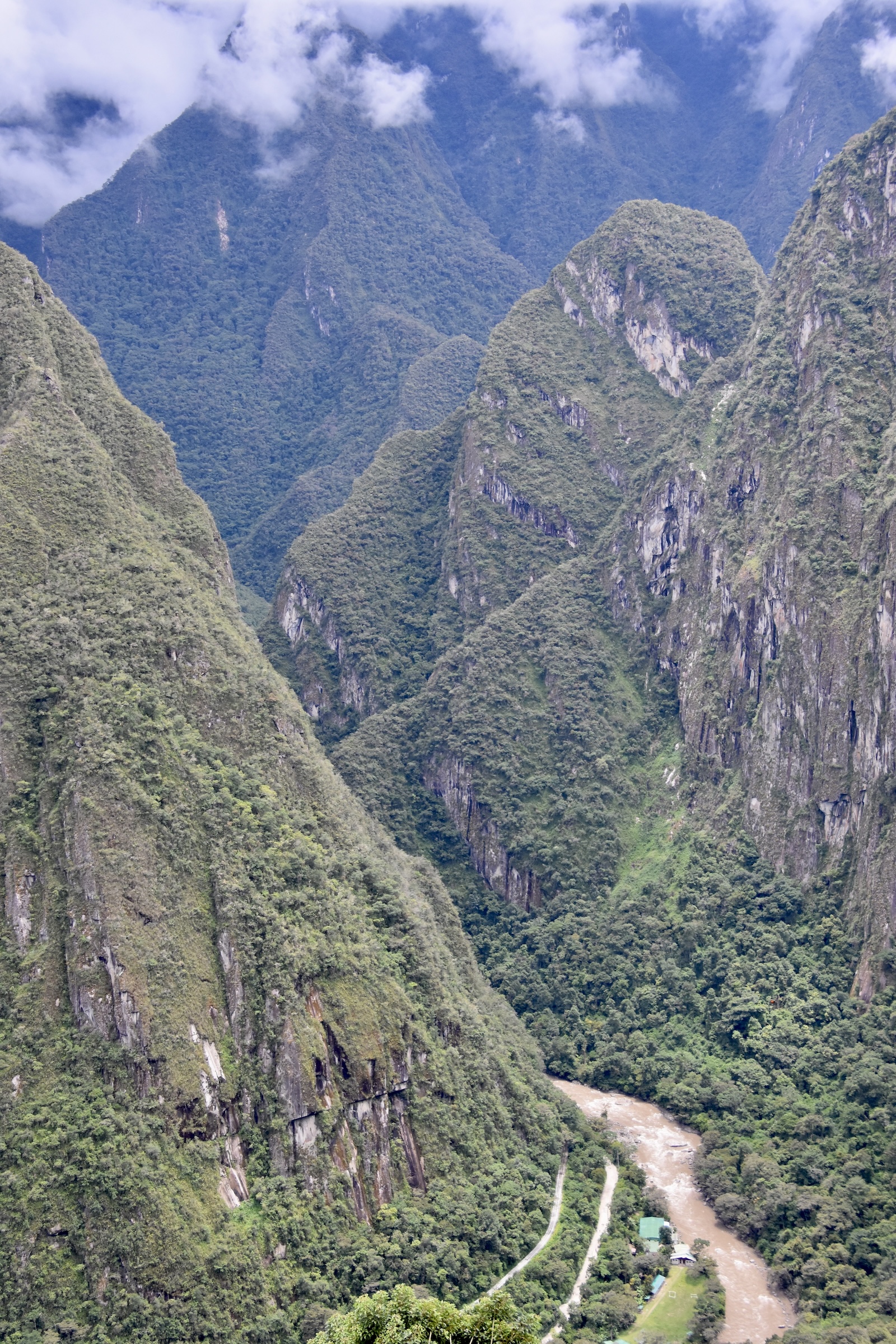
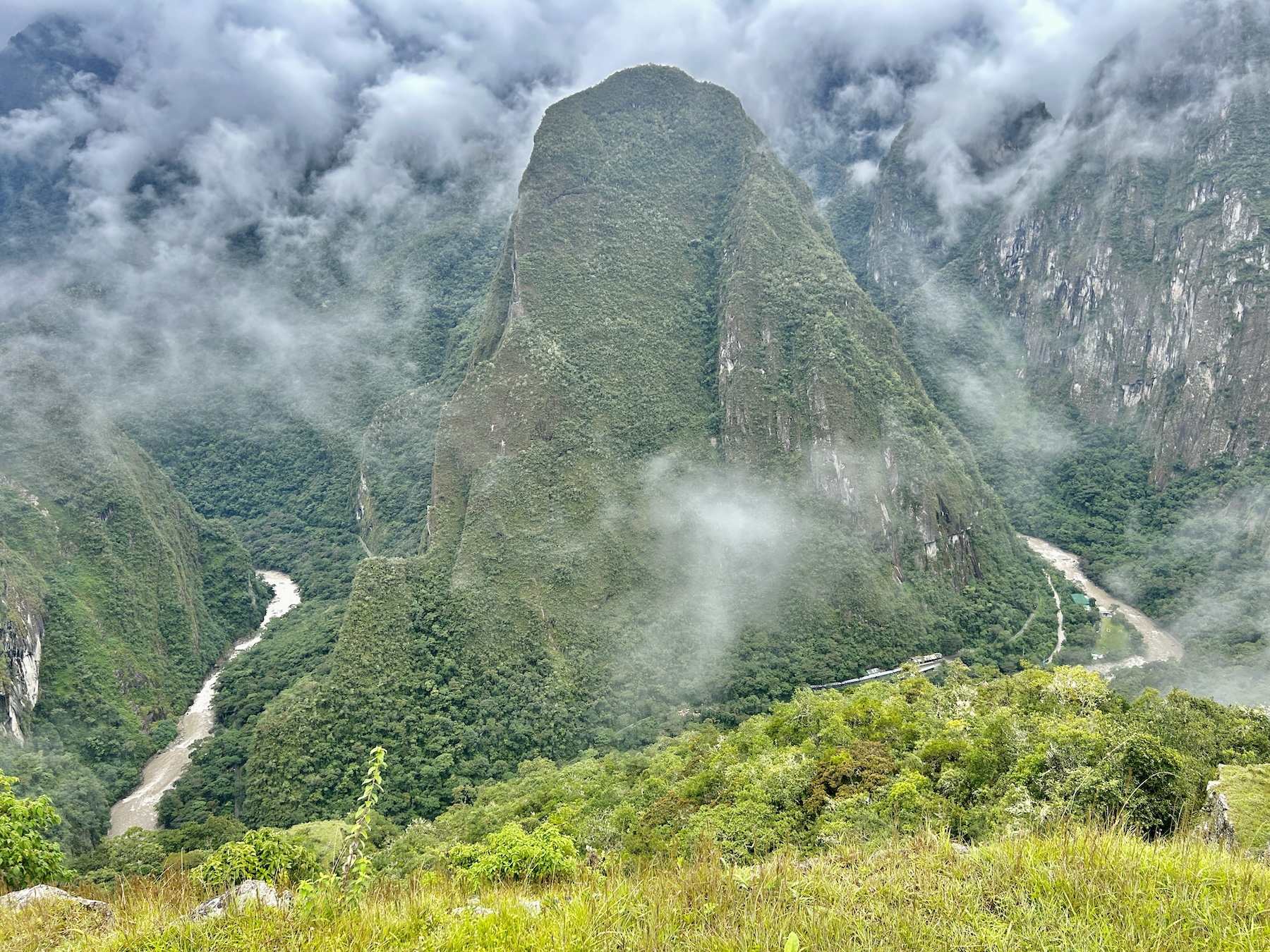
Looking straight down you can see the Urubamba River far below and realize what an achievement it was to ever be able to get up here, let alone build what I am staring at.
The other thing I notice is that despite that seemingly long line of people coming up here, the place looks virtually deserted. And no, I have not edited anyone out. You follow one of several designated routes through Machu Picchu and at a number of places there were signs telling you ‘Don’t stop here’ which was not an issue today, but gave me an inkling of what it could be like in the high season.
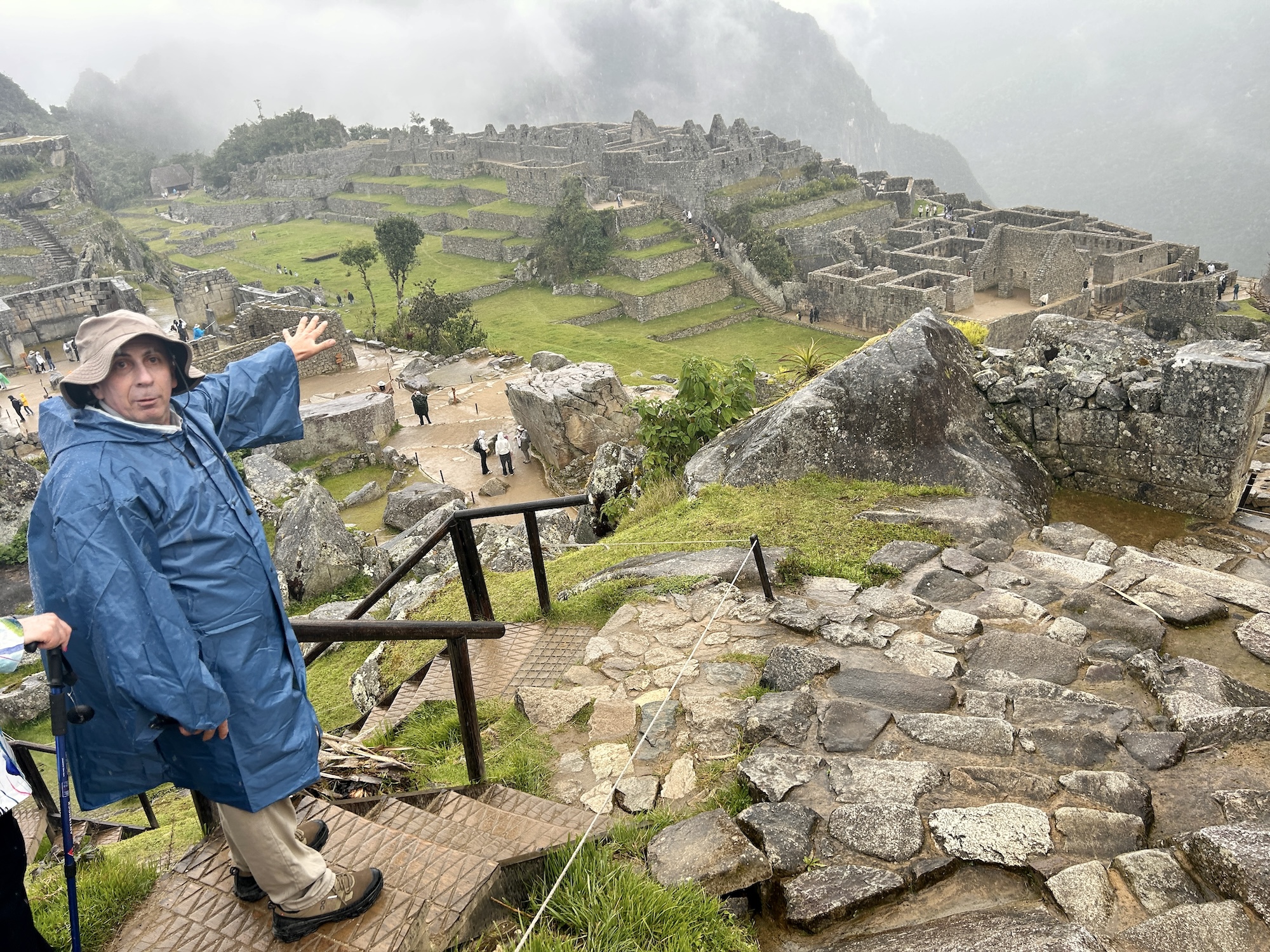
Carlos now takes us on a two hour journey through the ruins explaining things we wouldn’t have a clue about on our own.
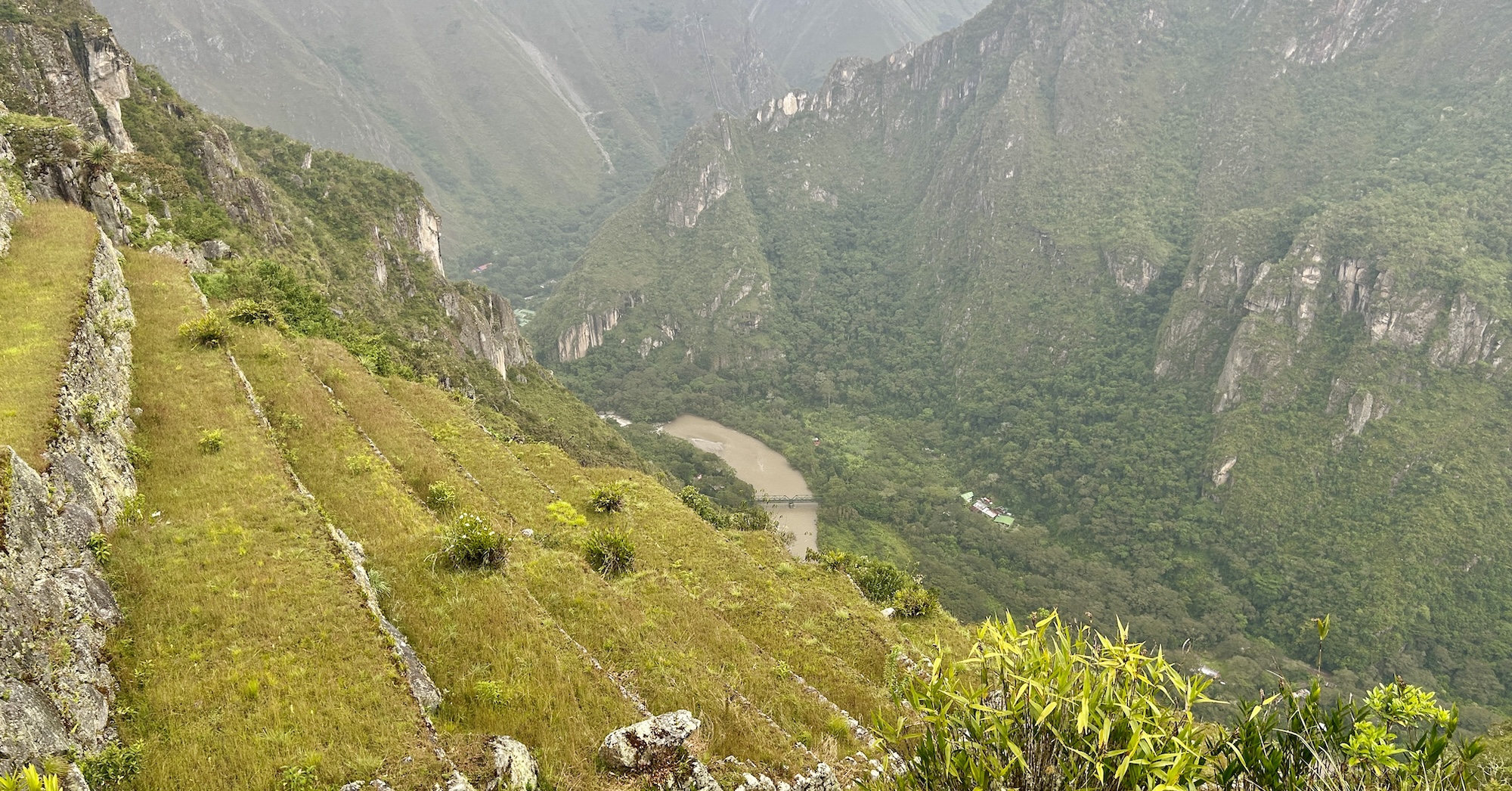
Here are a few features that you will see on your visit to Machu Piccu starting with the terraces which look simple, but are actually complicated agricultural platforms that consist of four layers – top soil, sand, gravel and a solid rock base. Designed to have excellent drainage while at the same time stabilizing the mountain sides upon which they are built, Machu Picchu could not exist without them. There are about 700 of them and they provided the maize, potatoes and quinoa that were the essentials of the Incan diet.
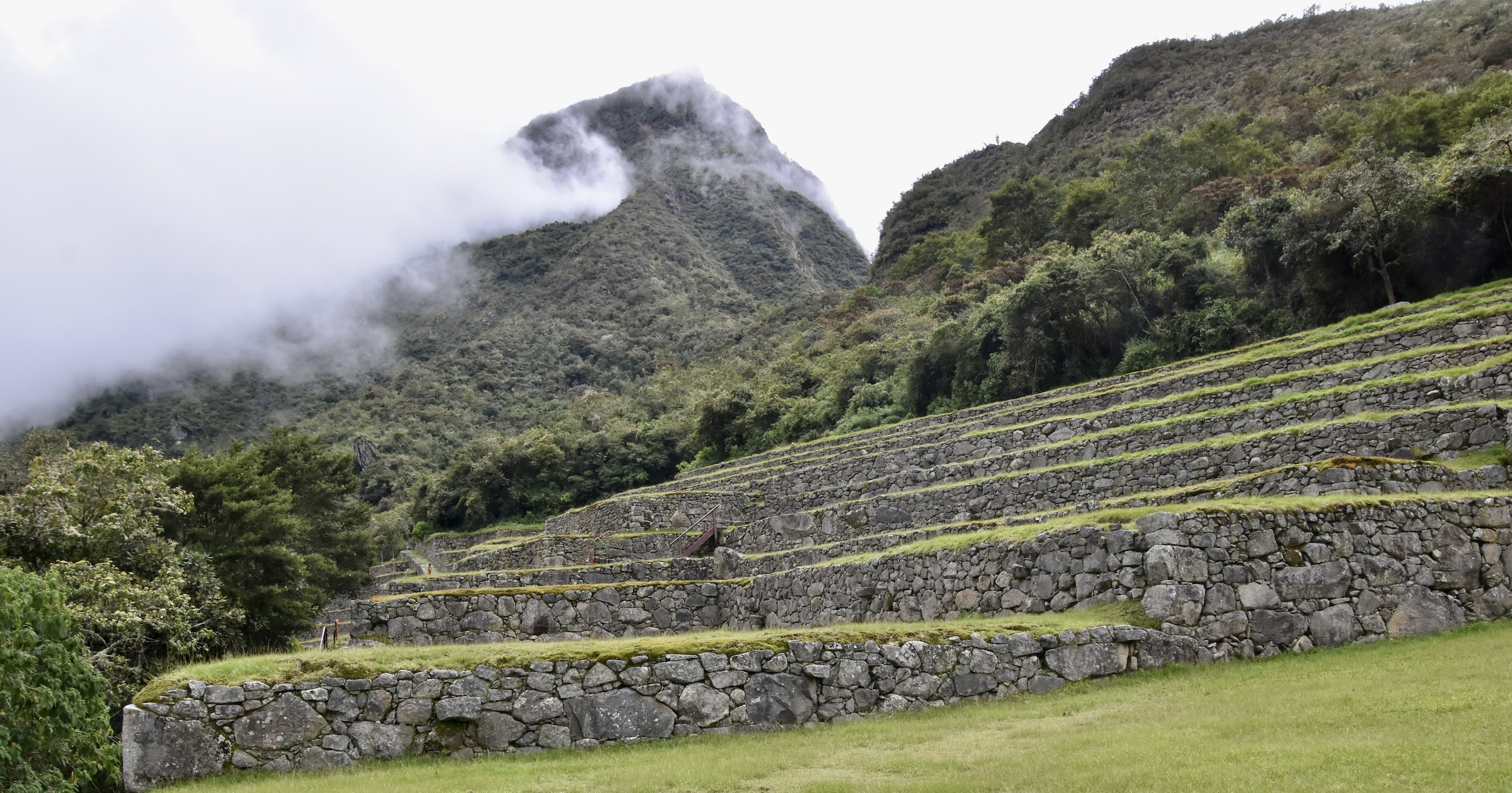
This is a photo looking down at the terraces on the backside of the site.
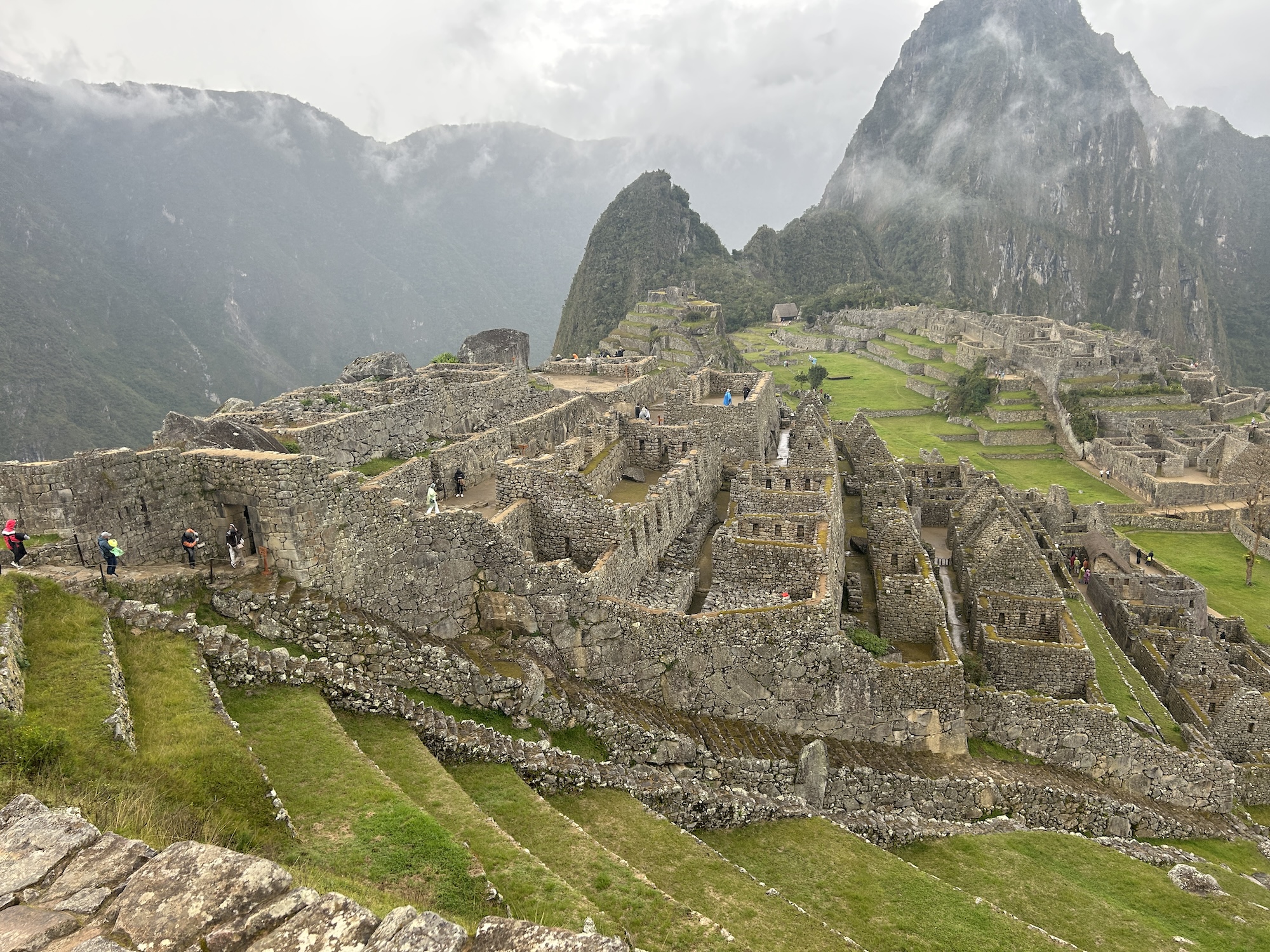
This is the residential area where most of the common folk lived. These included the farmers, craftspeople and labourers who essentially did the grunt work for the elites.
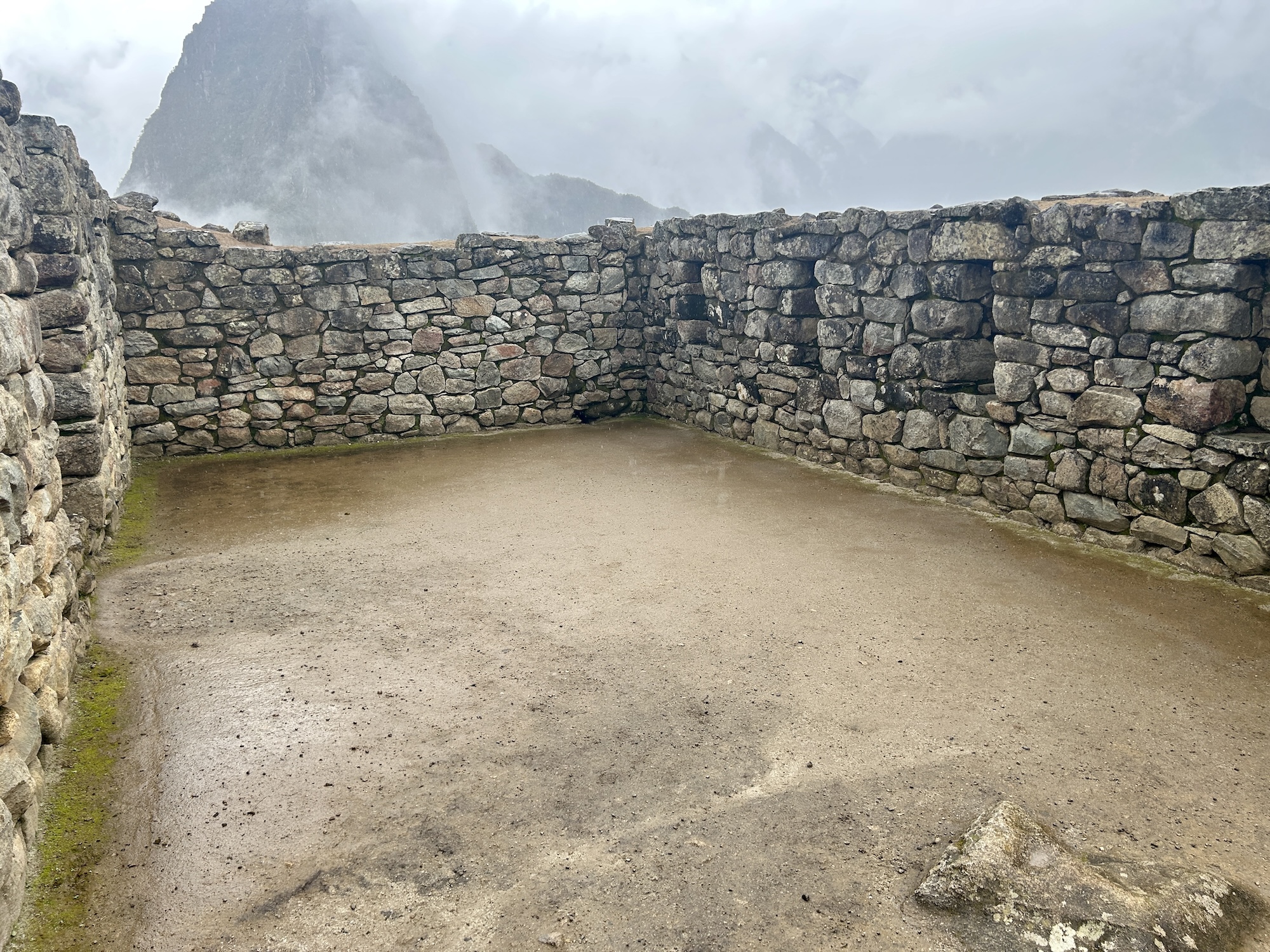
This is a fairly typical Machu Picchu residence.
And this is a restored version.
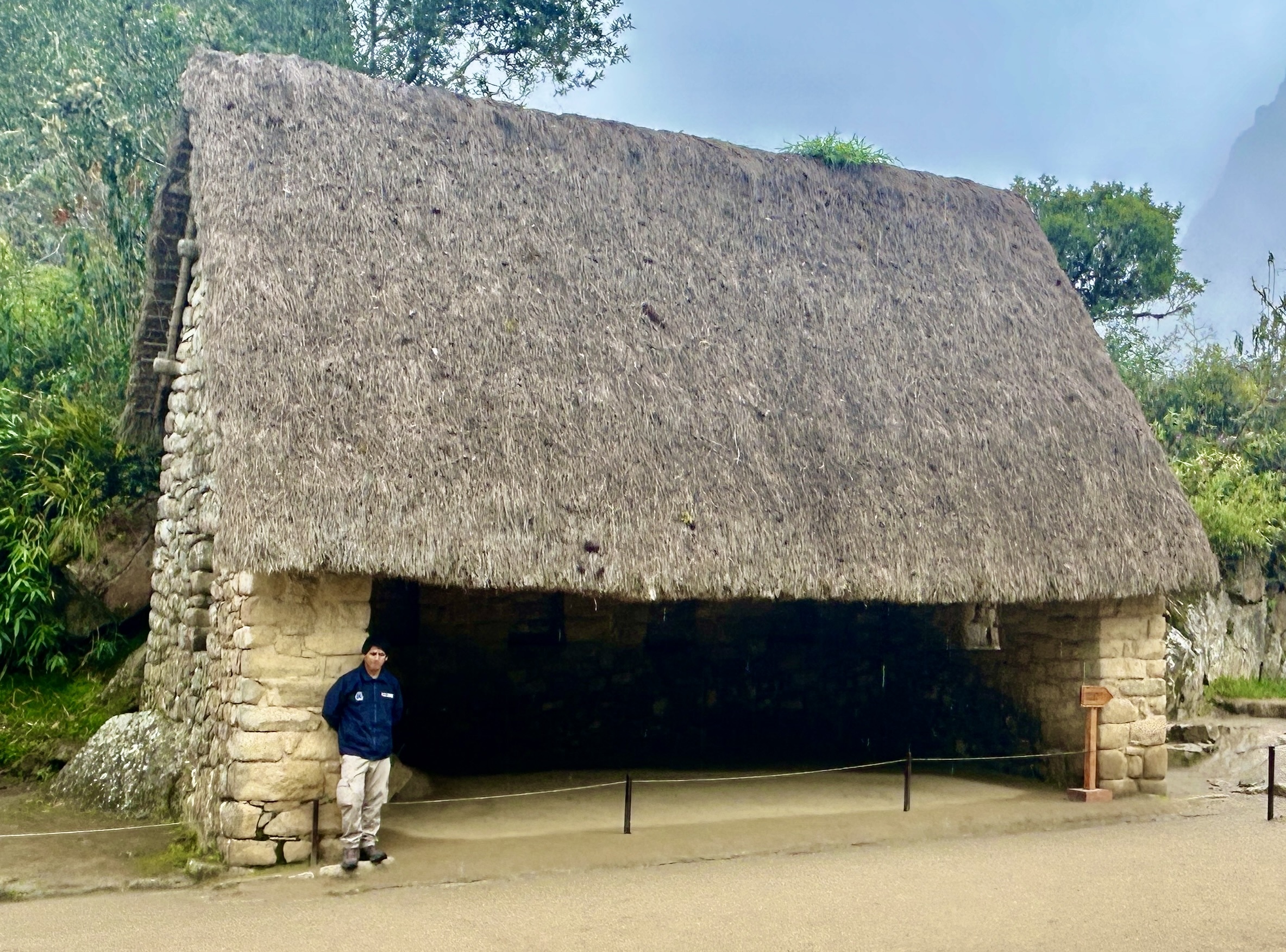
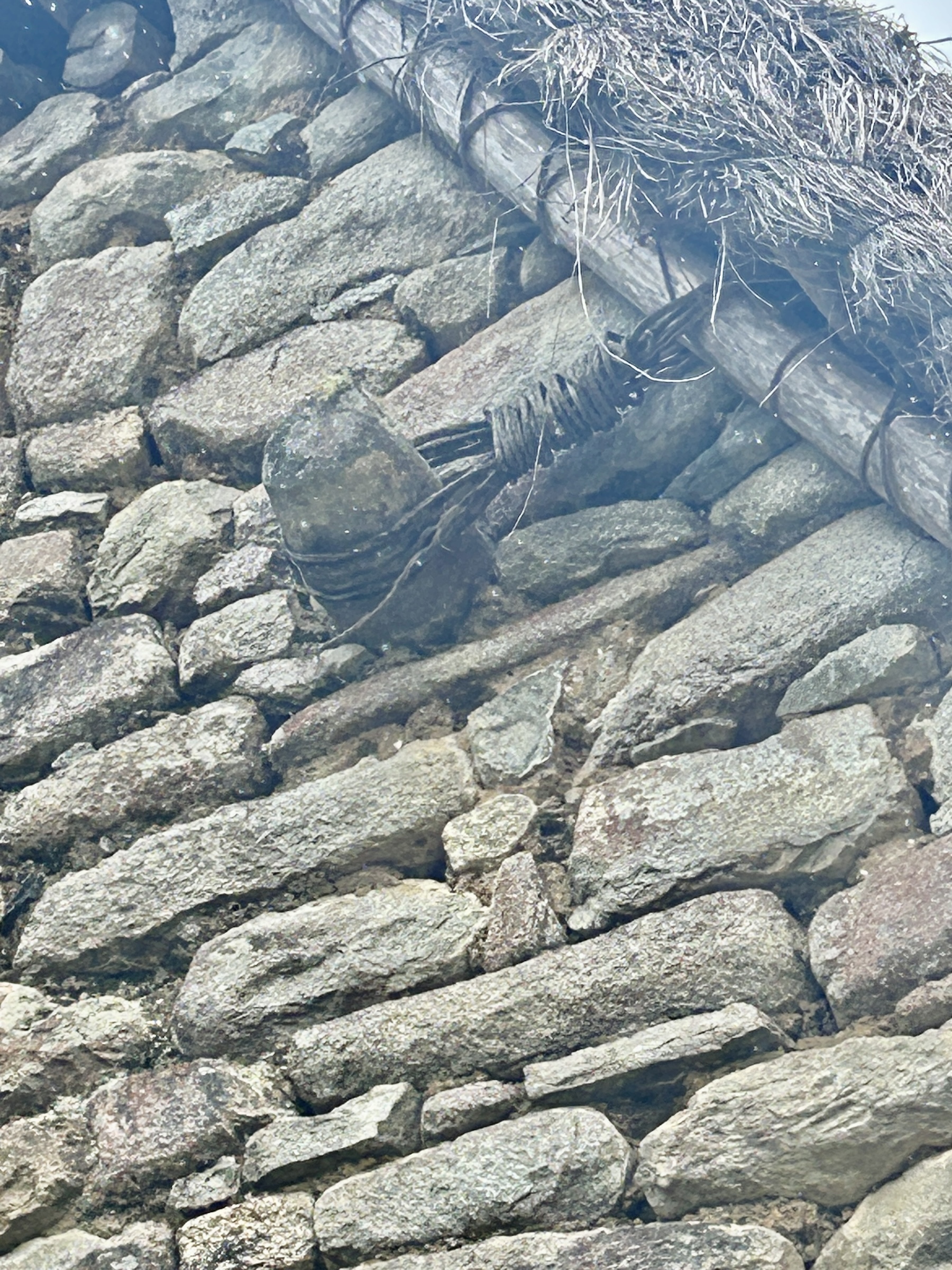
This photo shows how the thatched roofs were attached to the stone walls.
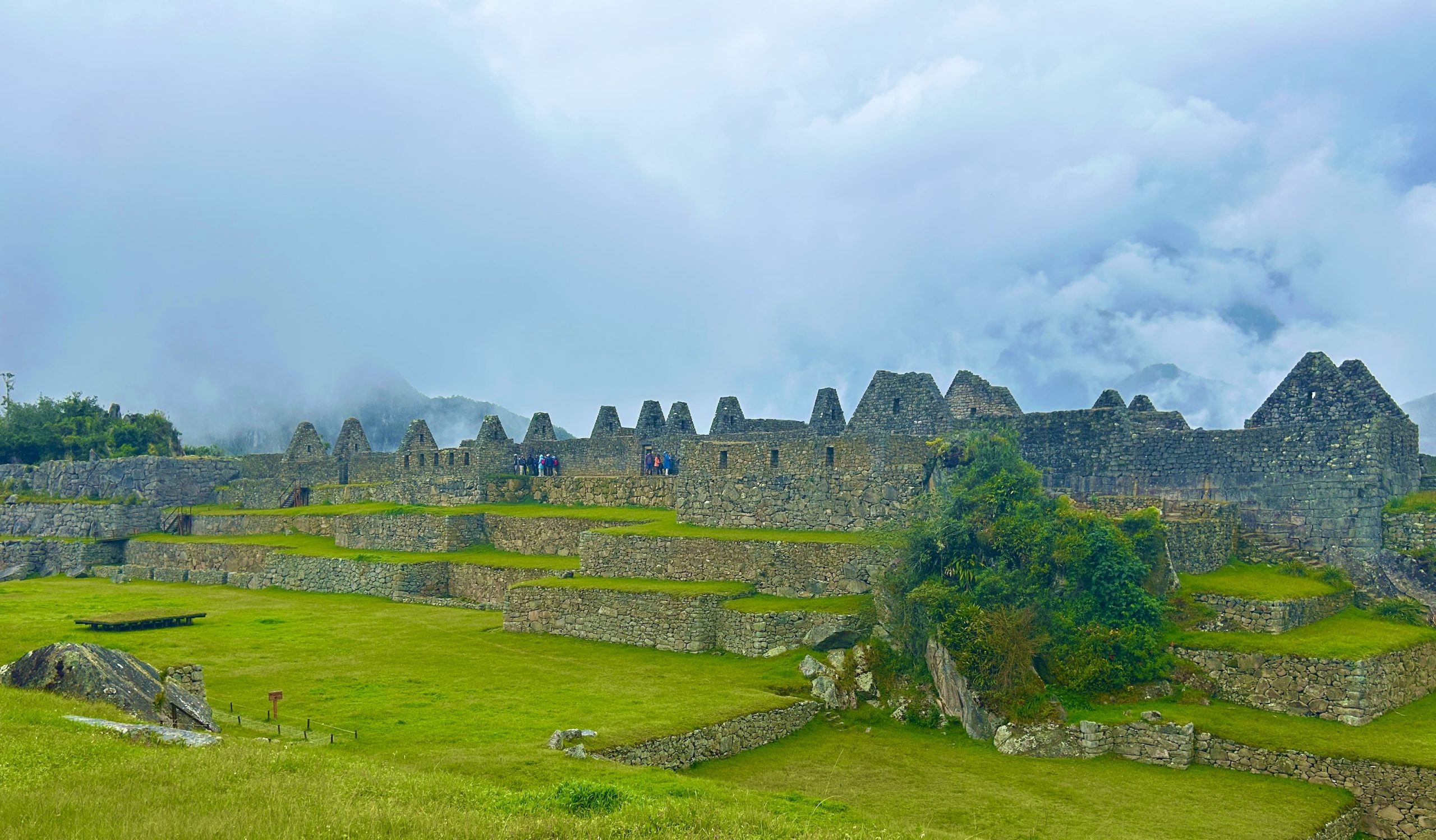
This is the common area that separated the palaces and temples from the residential area. It would have been used for communal gatherings and ceremonies.
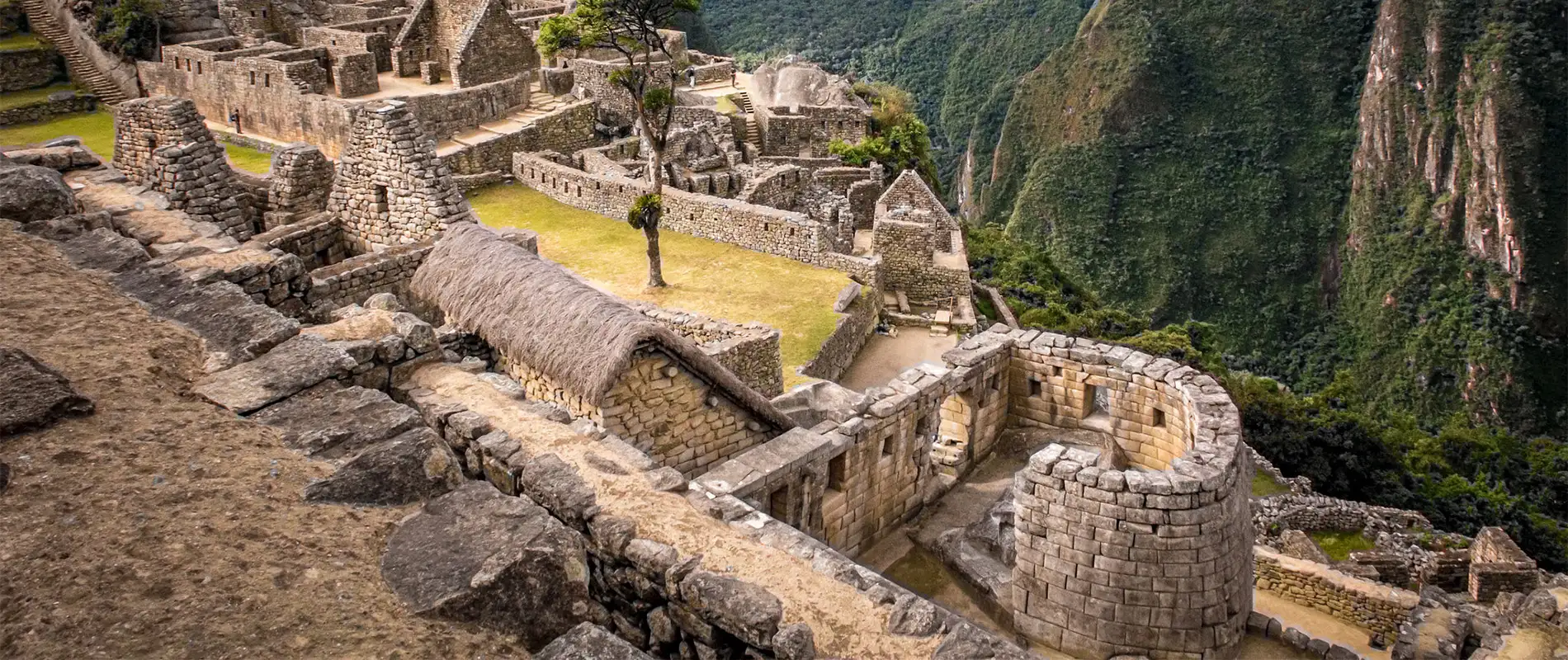
The most notable building at Machu Picchu is the Temple of the Sun. You won’t be able to see it from above, so I have included this public domain photo to give a better idea of its layout.
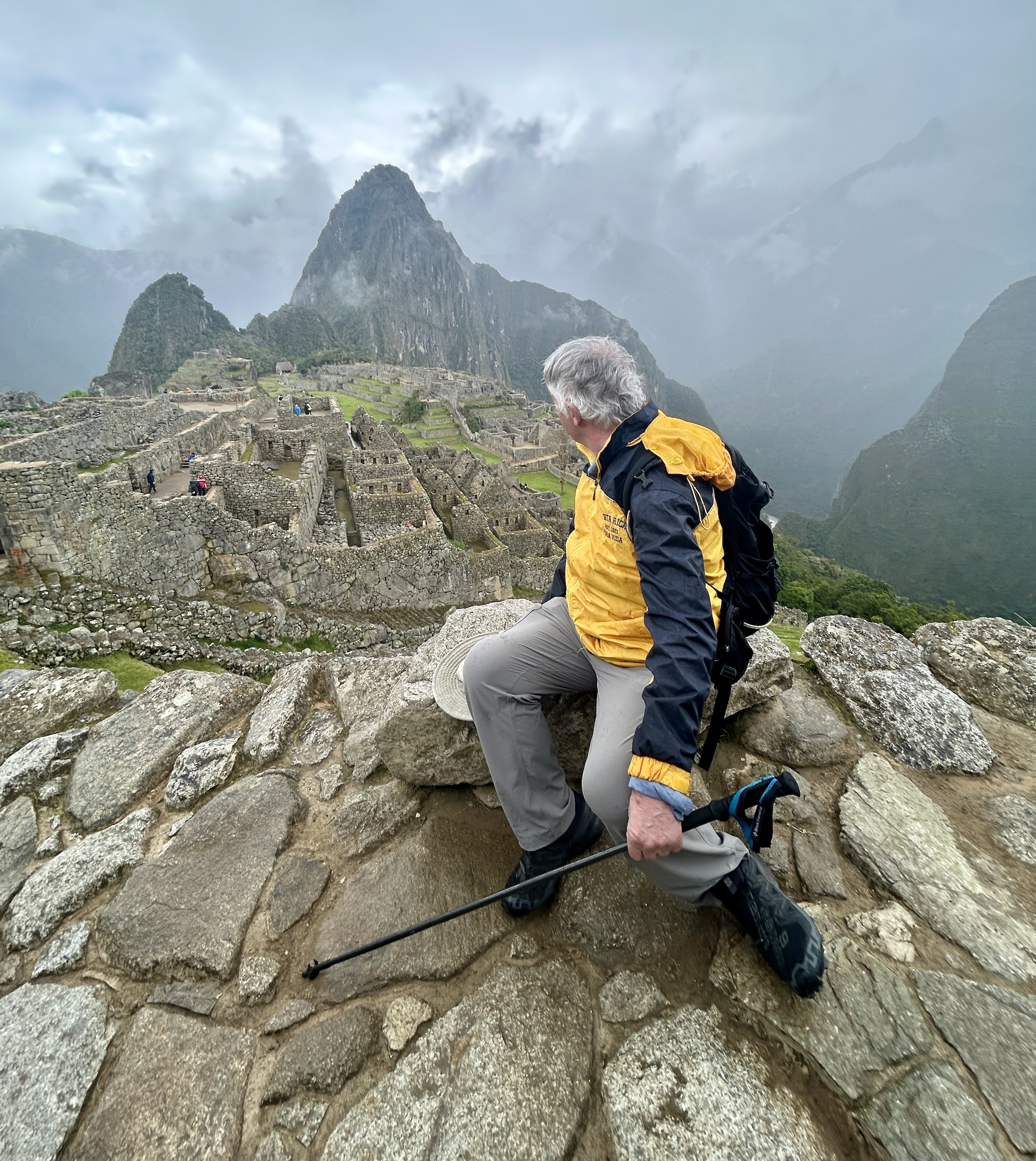
I could go on with many photos of other structures at Machu Picchu, but to be honest it’s the overall picture that really matters. You will not stop being over awed by the look of this place.
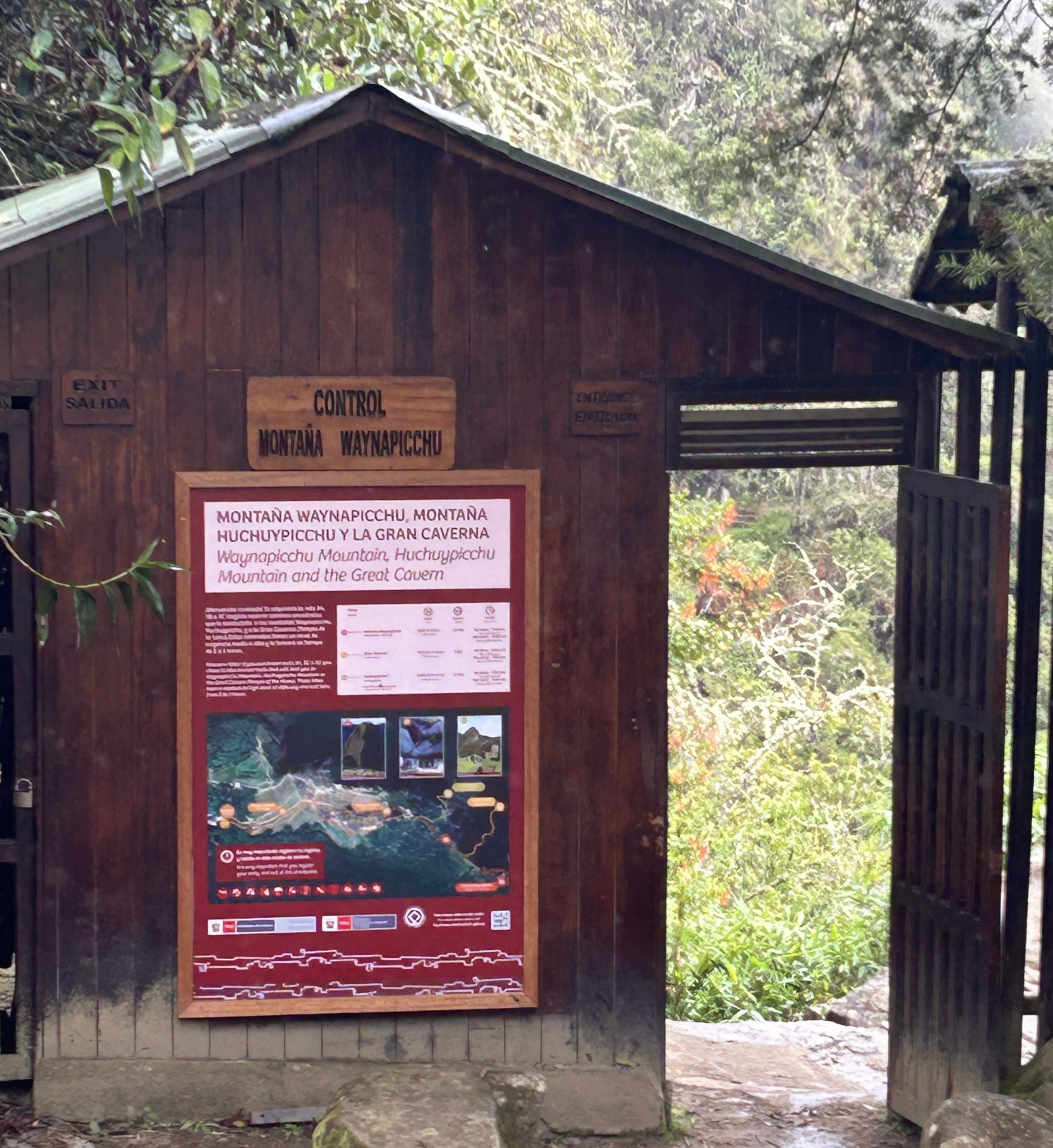
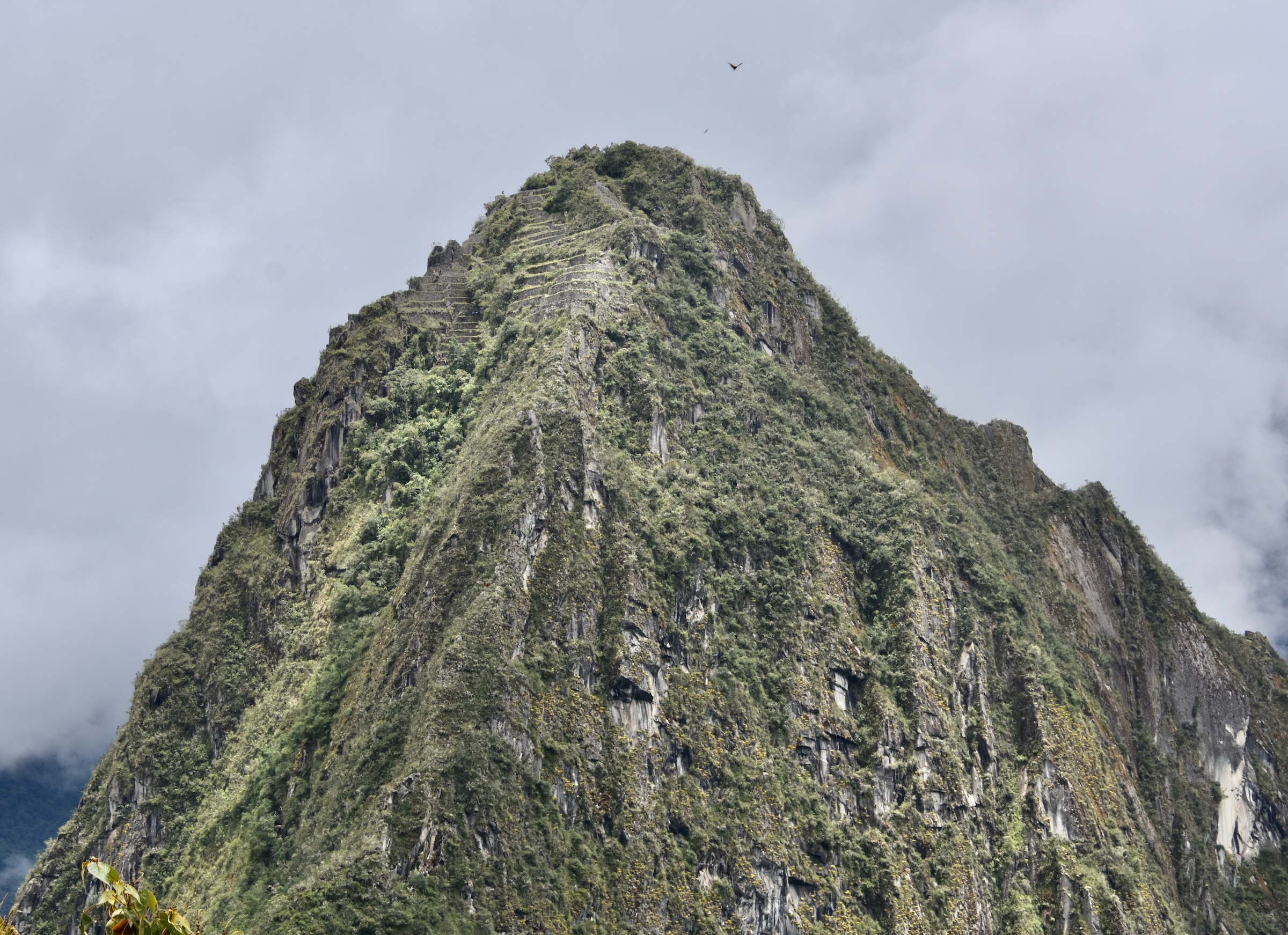
Now if you are truly crazy you can do something else at Machu Picchu – climb Waynapicchu. This is the beginning of the trail. It’s only a 2.4 kms.(1.5 mile) return trip, but it climbs 340 metres( 1,115 feet) on near vertical steps originally made by the Incas.
This is Waynapicchu and at first glance it looks next to impossible to get up there, but people do.
The circuit ends at a much lower level than the start and your final view of Machu Picchu will look like this.
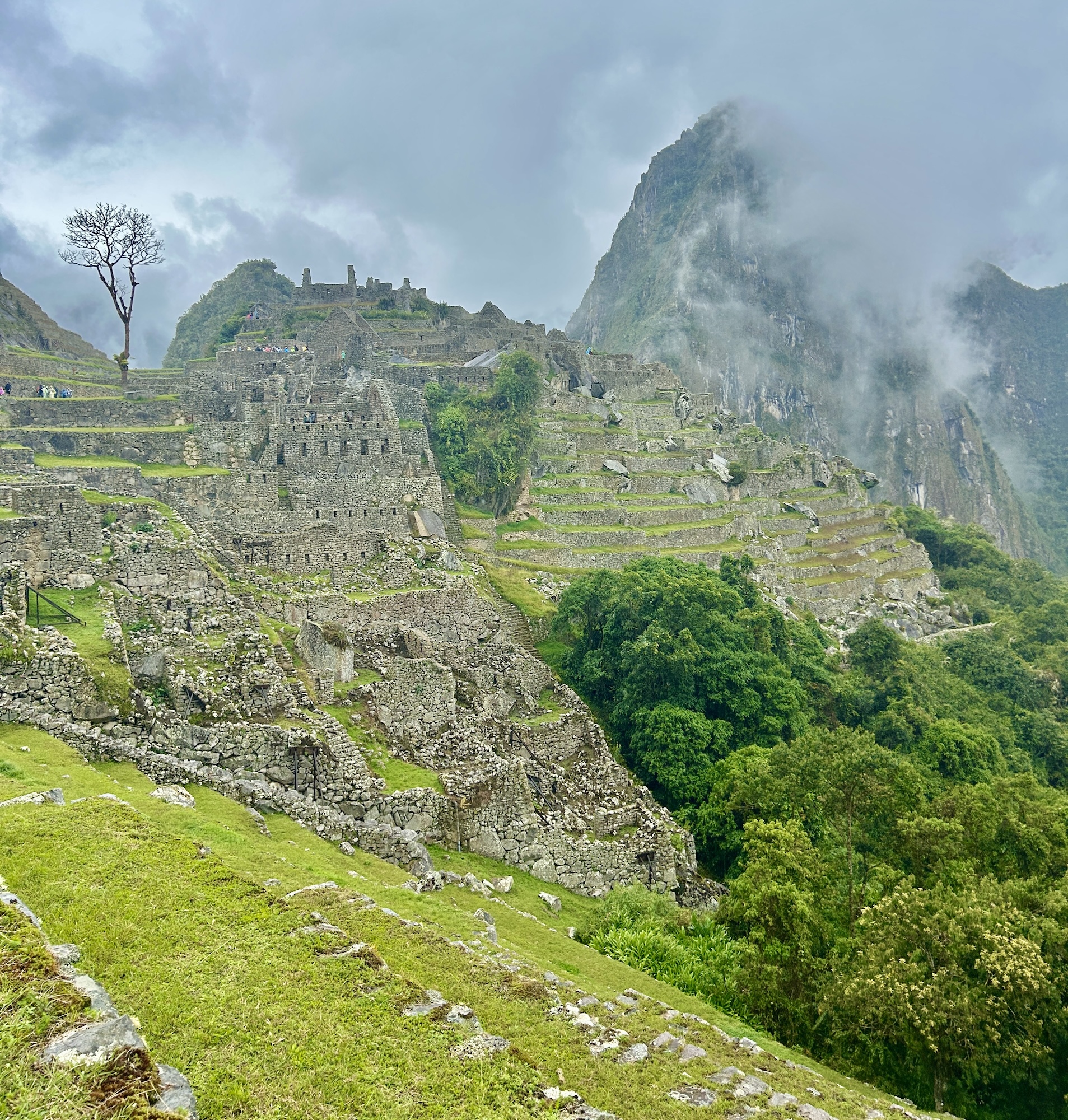
I simply cannot overstate how great this place is and if you are hesitant about whether it’s worth the effort to get here, don’t be.
One final word. You will have the option of returning to Machu Picchu on your own the next morning. Only one couple in our group had purchased tickets to do this, but decided not to go. I think that the first visit to Machu Picchu is so overwhelming that every visit that followed would be anticlimactic. As I noted in the post on Aguas Calientes there’s plenty to do in the and around the town.
In the next post we’ll visit Pisac, a place that is very much alive and in the Carnival spirit. I hope to see you there.