
Ollantaytambo & the Sacred Valley

In the last two posts from the February 2026 Kingdoms of the Andes tour by Adventures Abroad we explored the Incan capital of Cusco and then the surrounding area including the amazing site of Saqsaywaman. In this post we’ll begin our journey to the Sacred Valley of the Incas which will eventually lead us to Machu Picchu, but that is a few days away. Our destination today is the lesser known archaeological site of Ollantaytambo and the ancient town of the same name. I confess I had not heard of Ollantaytambo before this trip and was, as at Saqsaywaman, blown away by the building abilities of the Incas. So please join our group and I’ll explain why Ollantaytambo and the Sacred Valley are places you must see before you die.
The Sacred Valley of the Incas
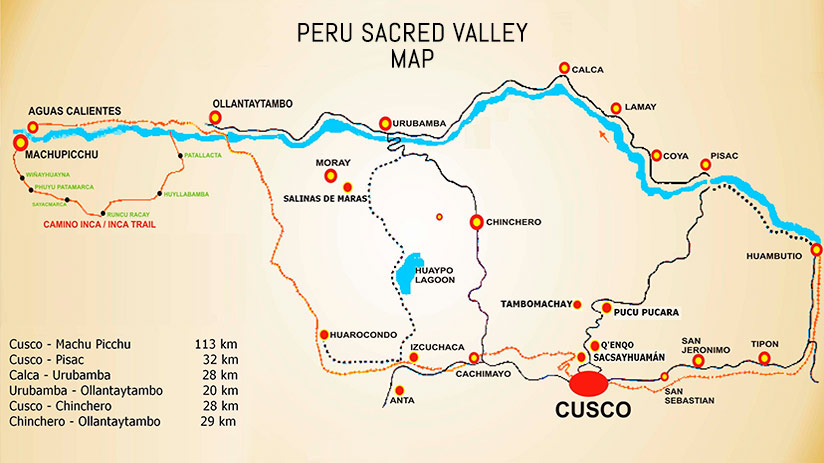
The Sacred Valley of the Incas is a 60 km. (37 mile) fertile stretch along the banks of the Urubamba River that has been occupied for over 2,800 years. It is generally considered to run from the town of Pisac, which we’ll visit later on this tour, to Ollantaytambo. Past Ollantaytambo towards Machu Picchu the valley walls become so steep that further progress is extremely difficult and agriculture next to impossible. This helps explain why the Spaniards who entered the Sacred Valley in 1536 and reached as far as Ollantaytambo by January, 1537, never knew of the existence of Machu Picchu.
The Sacred Valley lies at a much lower elevation than Cusco, ranging from 3,000 metres (9,800 feet) at Pisac to 2,792 Metres (9,160 feet) at Ollantautambo and there’s a further drop off to 2,430 Metres (7,972 feet) at Machu Picchu. The valley is actually located on the east side of the Andes as is Cusco and all rivers drain from here into the Amazon Basin and then the Atlantic Ocean which is 2,330 kms. (1,450 miles) away, while the Pacific is less than 580 kms. (360 miles) away. The soil and climate are quite different from the west side of the Andes and are perfect for growing maize which was the most important crop for the Incas who used it to make their signature beverage chicha.
The Chanapata people first came to the valley around 800 BCE and occupied it for about 500 years before disappearing from pre-history. The Qotacalla culture brought agriculture to the valley around 500 and lasted until about 900 followed by the Killke who seem to have supplanted the Qotacalla people. The Killke were in turn absorbed by the Incas in a gradual process from 1200 to 1420. After taking almost 250 years to fully control the Sacred Valley, the Incas only had dominion over it for about a century before the Spaniards arrived. We will take up the story of the Spanish conquest when we get to Ollantaytambo.
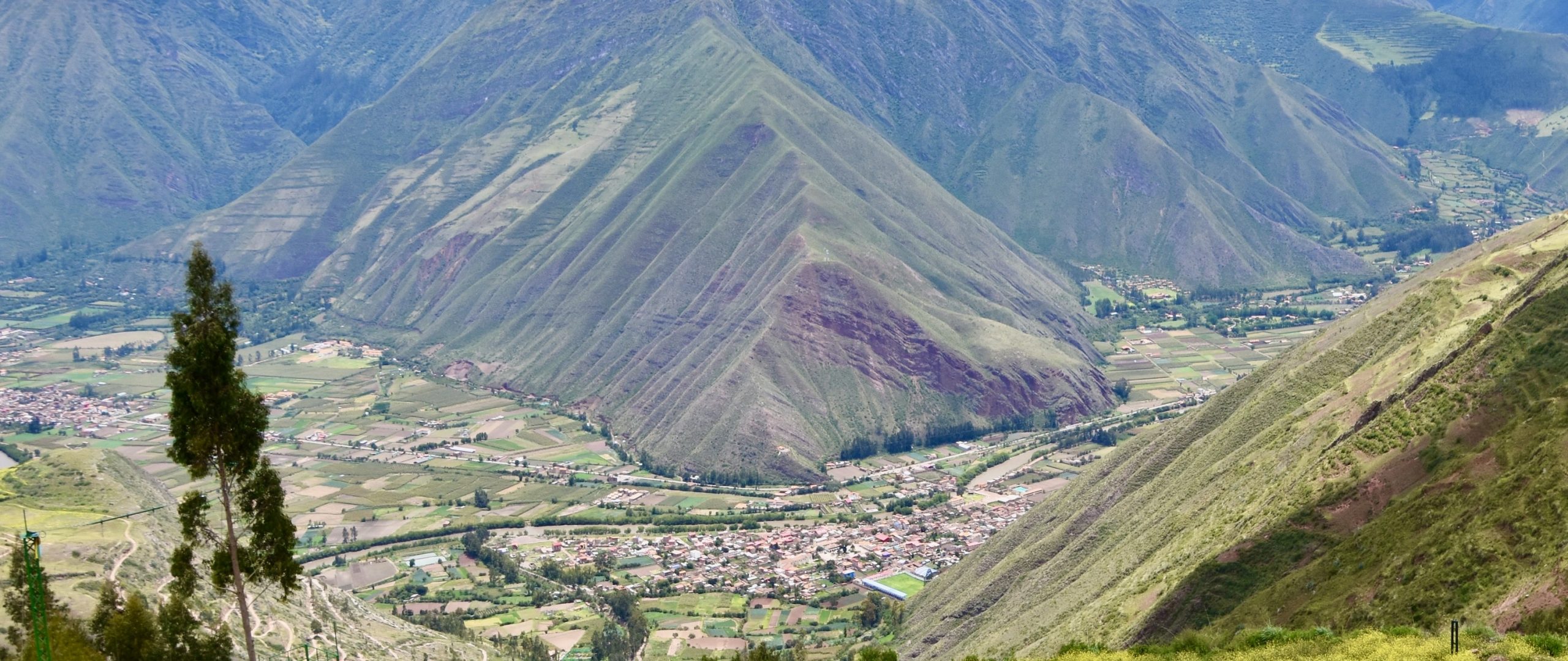
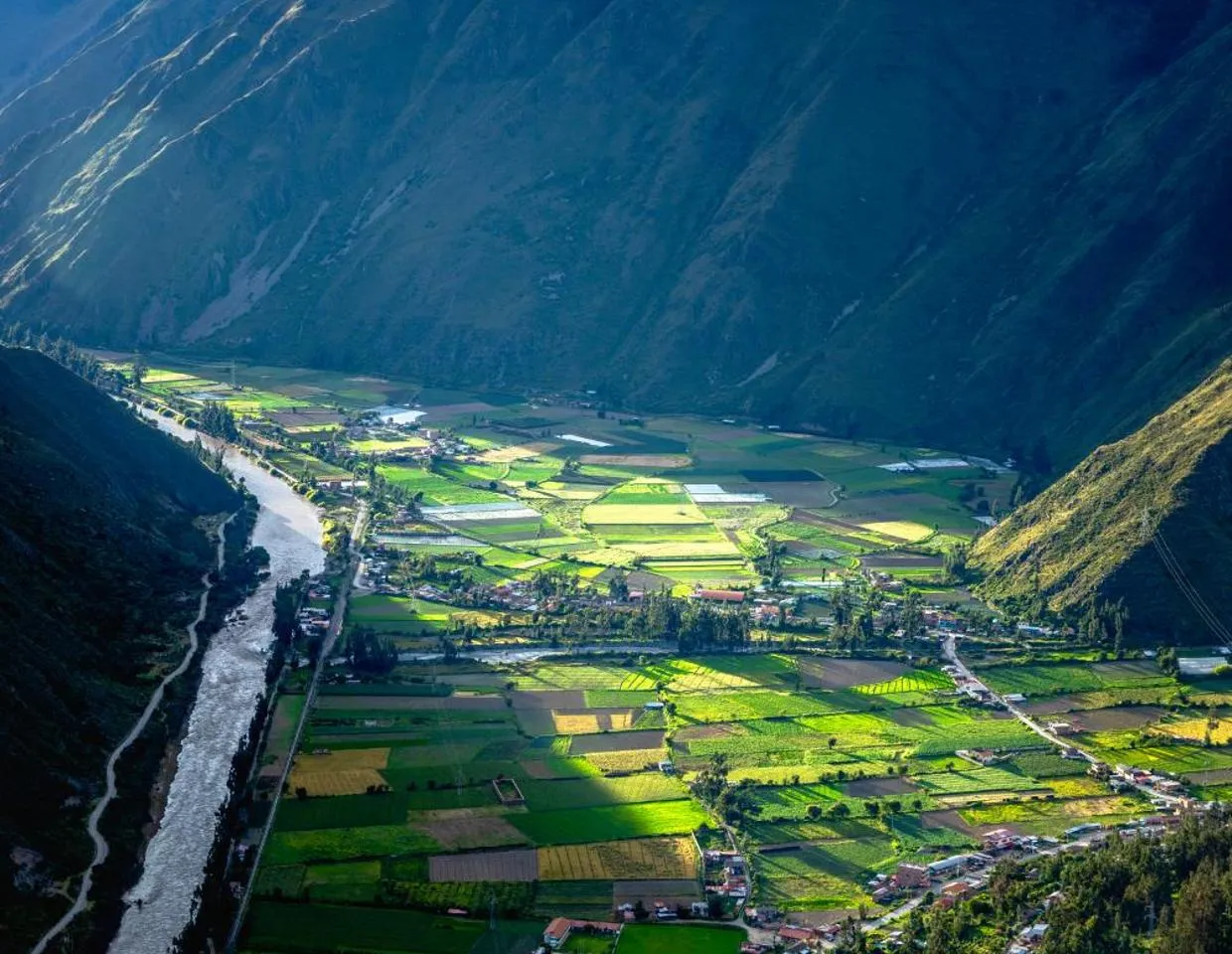
To get to the Sacred Valley from Cusco we must take a highway that will reach as high as 3,760 metres (12,343 feet) which is higher than many on this tour have ever been. After leaving the outskirts of Cusco behind we begin that long climb and make a stop at the highest point for this look down into the Sacred Valley and the small city of Urubamba.
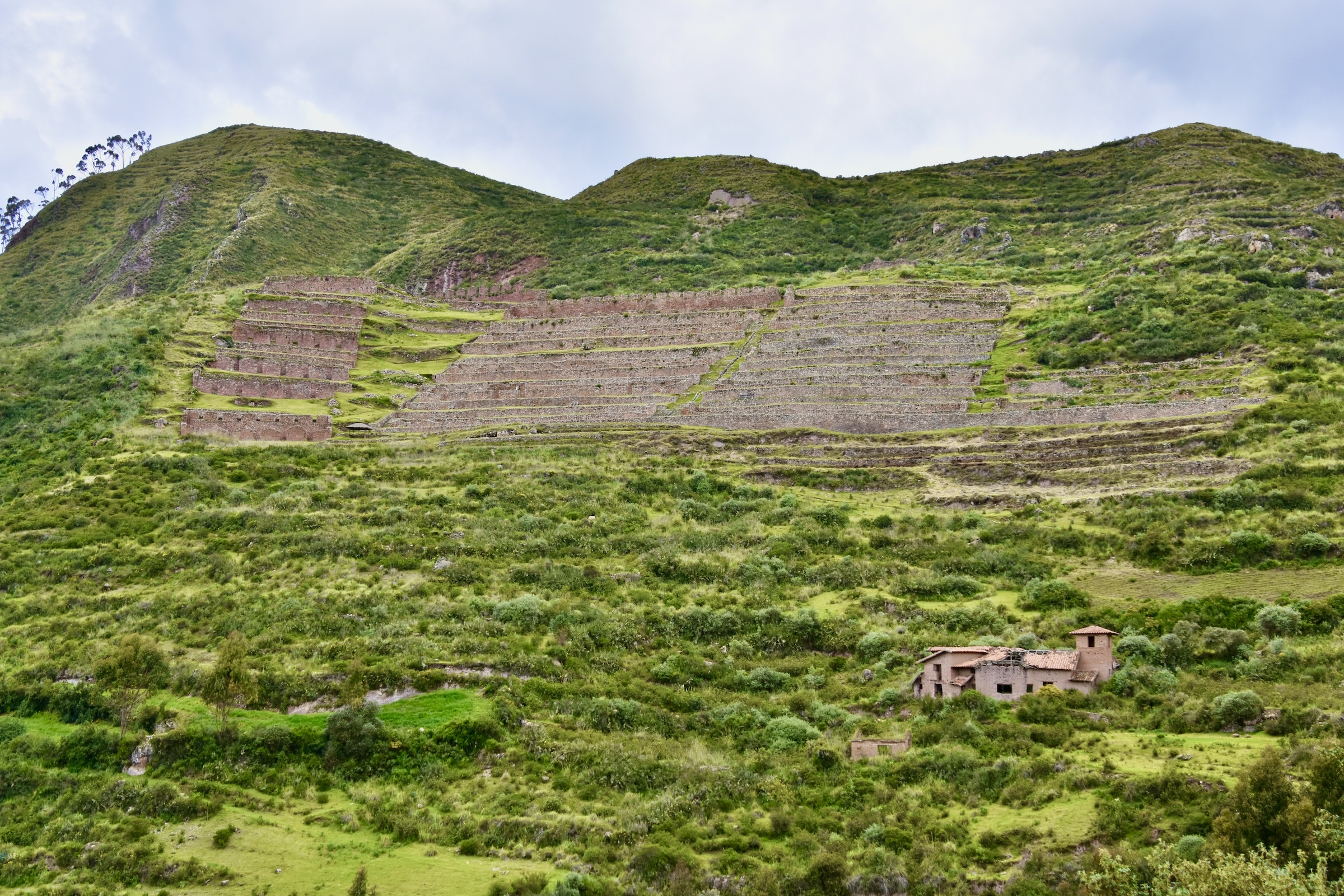
From here, it’s down, down, down, passing ancient terraces along the way.
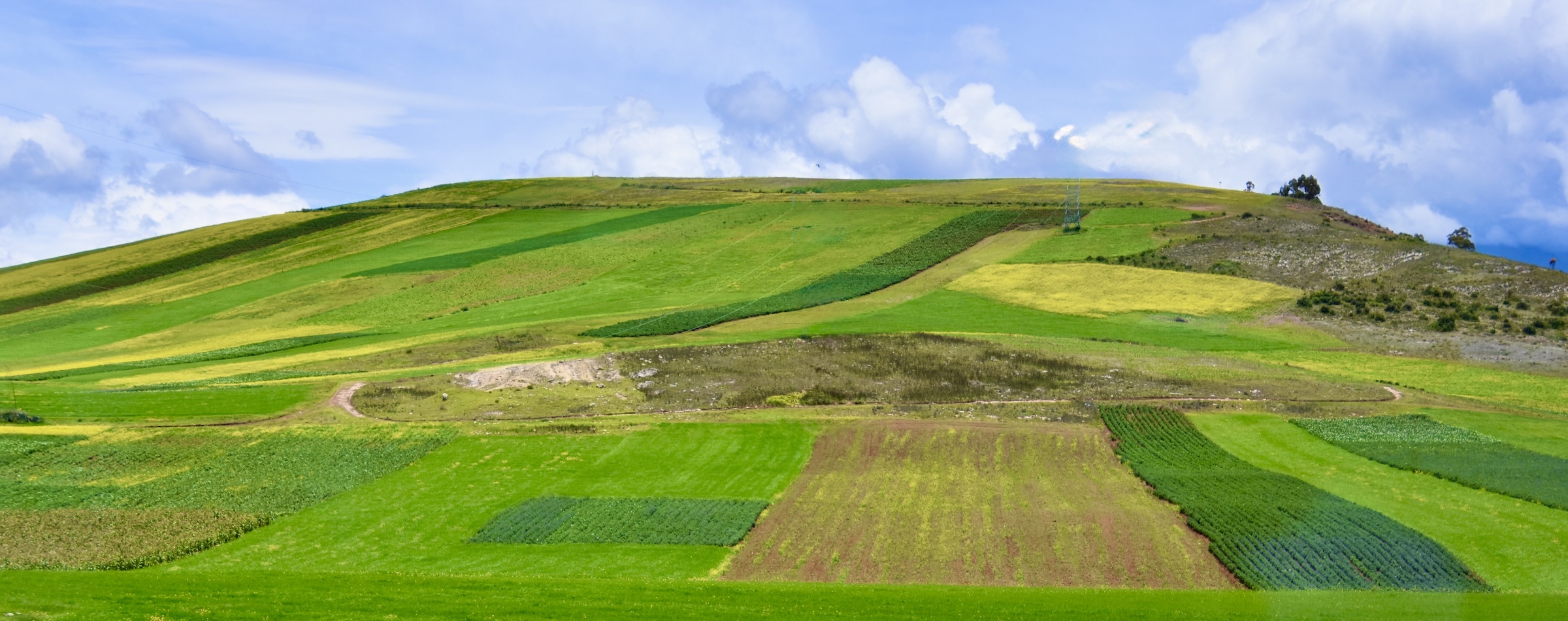
And amazingly green fields at altitudes that would be covered by glaciers back in Canada.
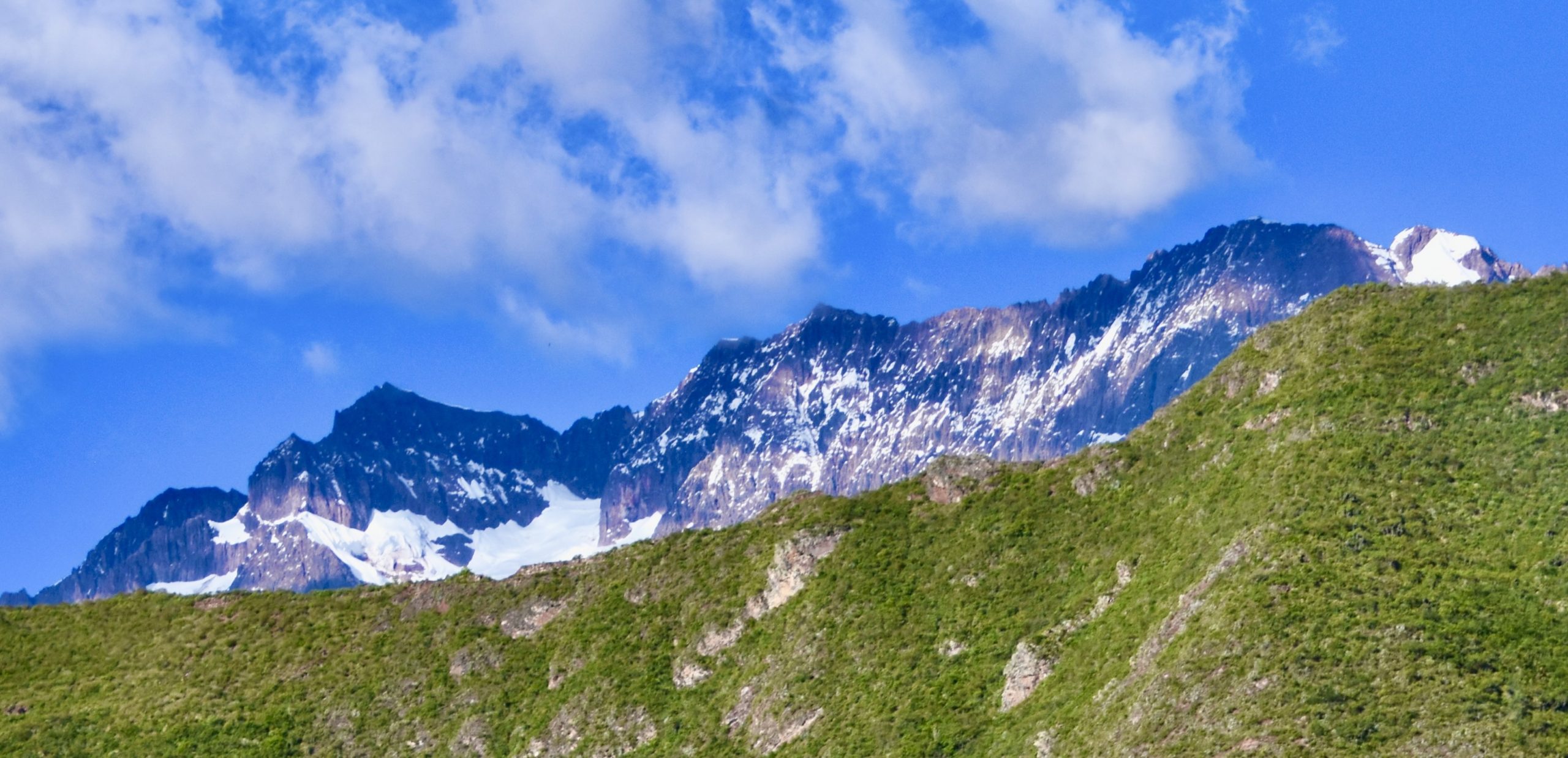
After a lot of ear popping we arrive at the valley floor and make our way through Urubamba on the way to Ollantaytambo, getting a glimpse of a few glaciers along the way, all above 5,500 metres (18,044 feet).
We also make a stop to look up at what has to be among the craziest and scariest accommodations on the planet.
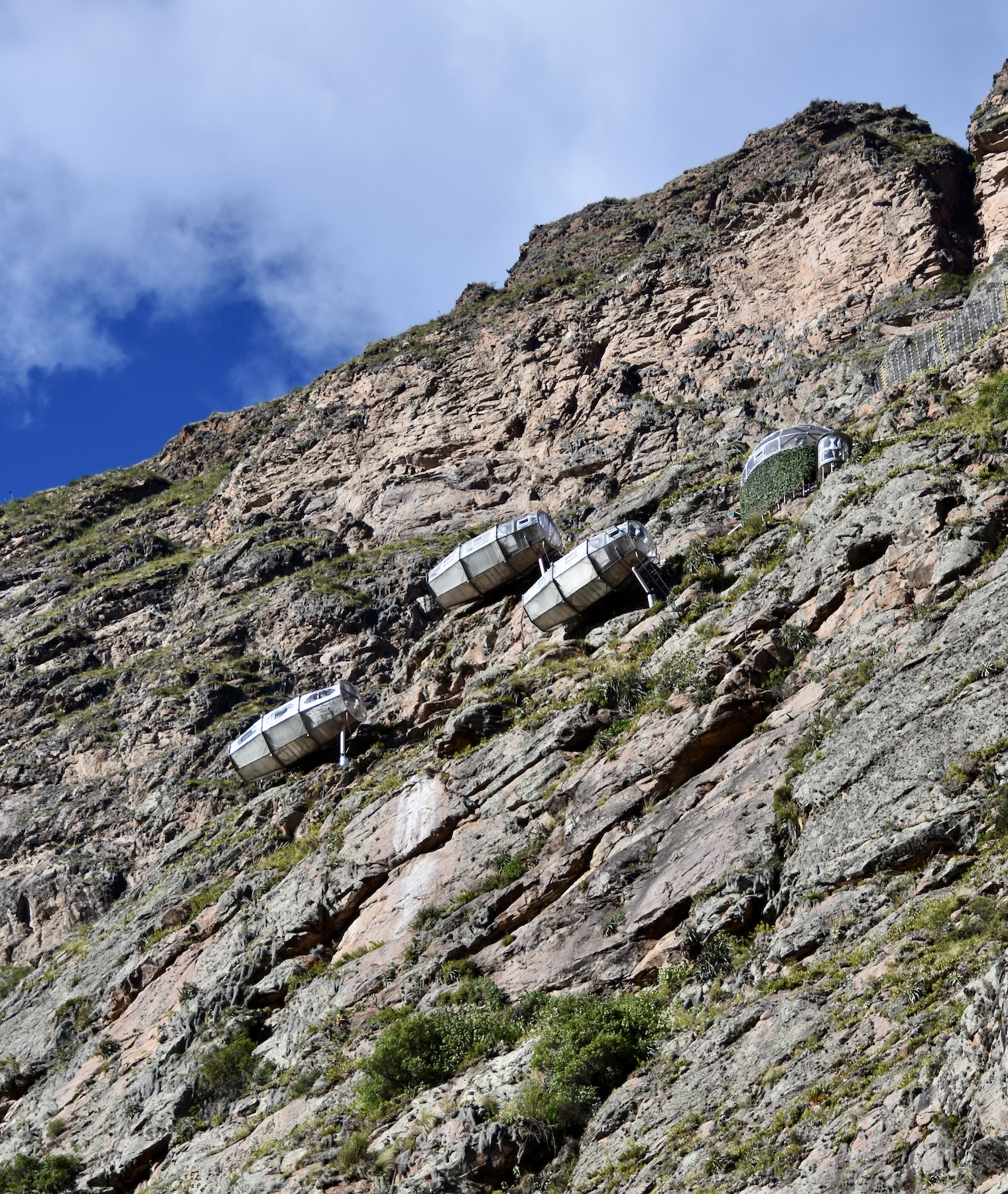
These are the Vertical Sky Suites and to get to them you have to scale this cliff and fork out over $500 a night for the privilege. On the upside you do get this few of the Sacred Valley below.
Shortly after this stop we roll into the sleepy town of Ollantaytambo and pull into the Plaza Mayor where we will stop for lunch before exploring the town and the Inca fortress.
History of Ollantaytambo
People have occupied the site of Ollantaytambo for as long as there has been human habitation in the Sacred Valley, but what we have come to see dates from the 15th century and was largely the work of one man, Inca Pachacuti. He was the ninth of the 13 recognized Incas (aka emperors) and one of the most ambitious in terms of constructing fortresses and monuments, including it is now believed, Machu Picchu. He razed the structures that already existed at Ollantaytambo and in their place built was is considered the finest remaining example of an Incan settlement and above that, a massive fortress and personal palace. We will visit both shortly.
After Pachacuti’s death his family clan resided at Ollantaytambo until the Spanish conquest, when the puppet emperor Manco Inca Tupanqui rebelled in 1536 and after failing to recapture Cusco, withdrew to the fortress here. The Spanish pursued him and in one of the rare outcomes of the day, were defeated by Manco Inca’s army at the Battle of Ollantaytambo in January 1537. Despite this, Manco Inca realized he could not win in the long run and abandoned Ollantaytambo for the remote Vilcabamba region where he established the Neo-Incan Empire that lasted until 1572.
In 1540 Ollantaytambo and its residents were assigned to Hernando Pizarro under the encomienda system that made them virtual slaves. The site gradually faded into obscurity until the 19th century when the ruins of its fortress attracted the attention of archaeologists including eventually Hiram Bingham, the man who rediscovered Machu Picchu. Today it is a town of just over 3,000 souls, many of whom live in houses first built in the Incan era.
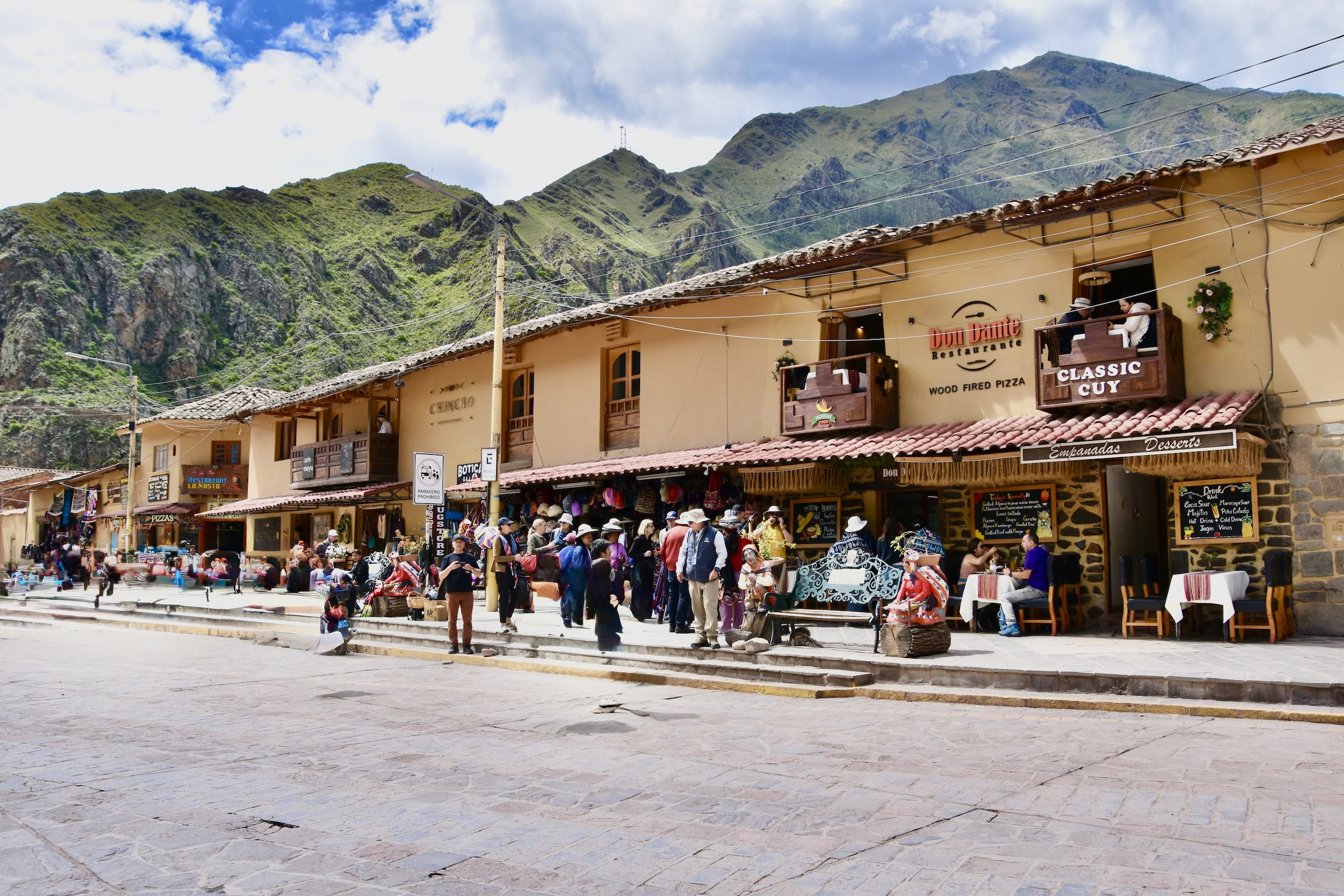
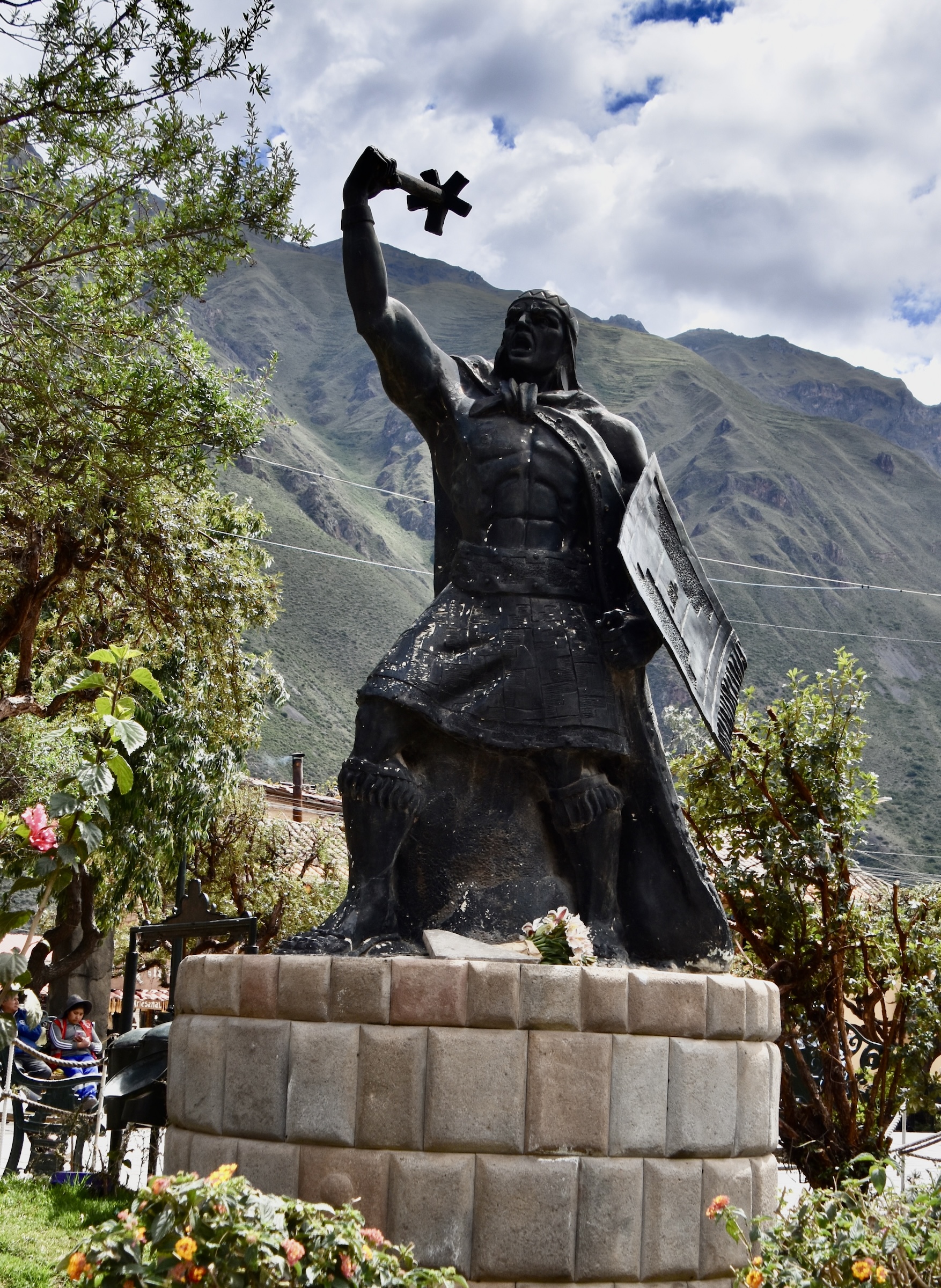
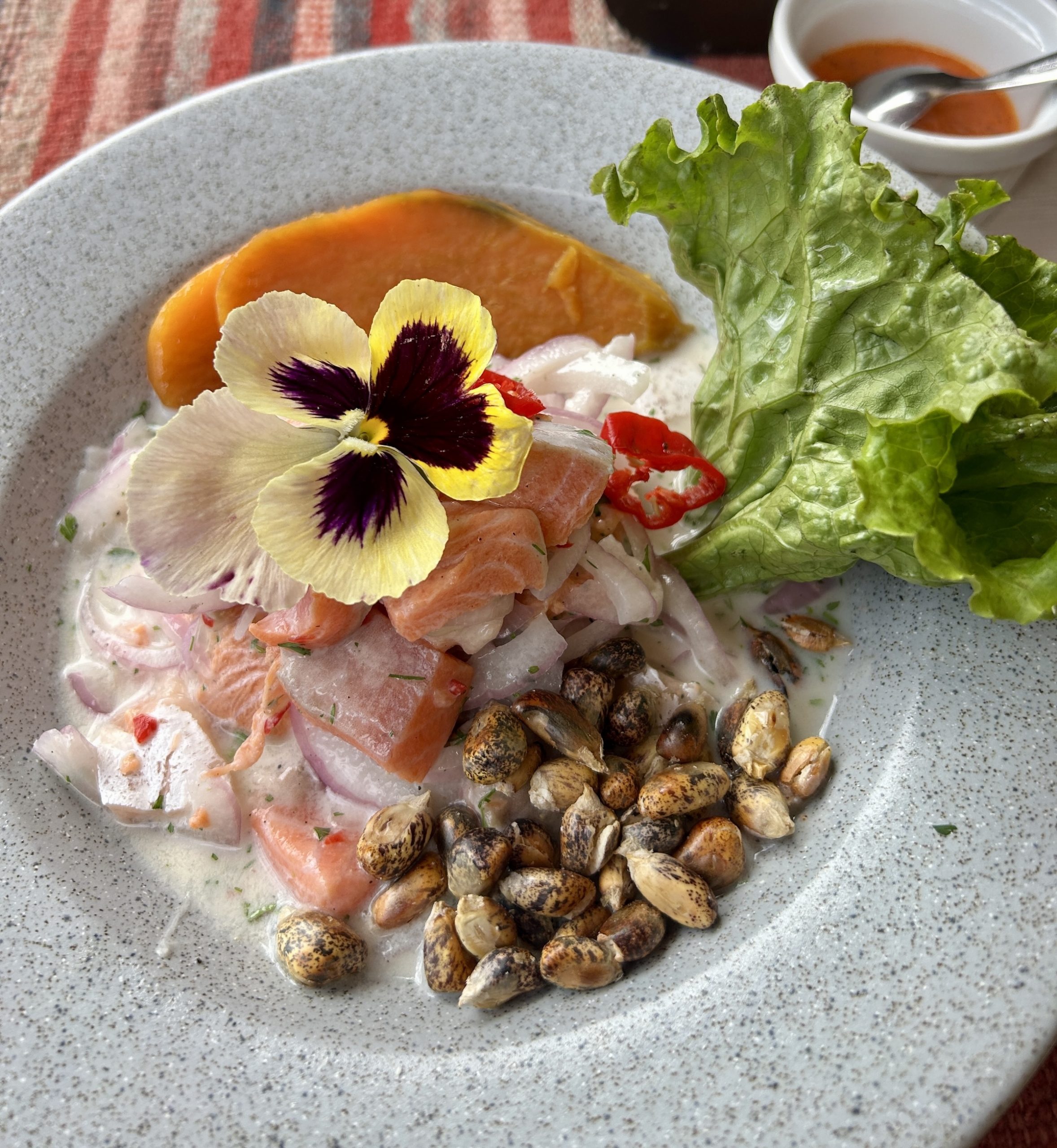
That’s our group just after exiting the bus in the plaza mayor where the statue of Manco Inca dominates the centre. We are having a lunch break and I’m headed upstairs to Don Dante Restaurant for some trout ceviche.
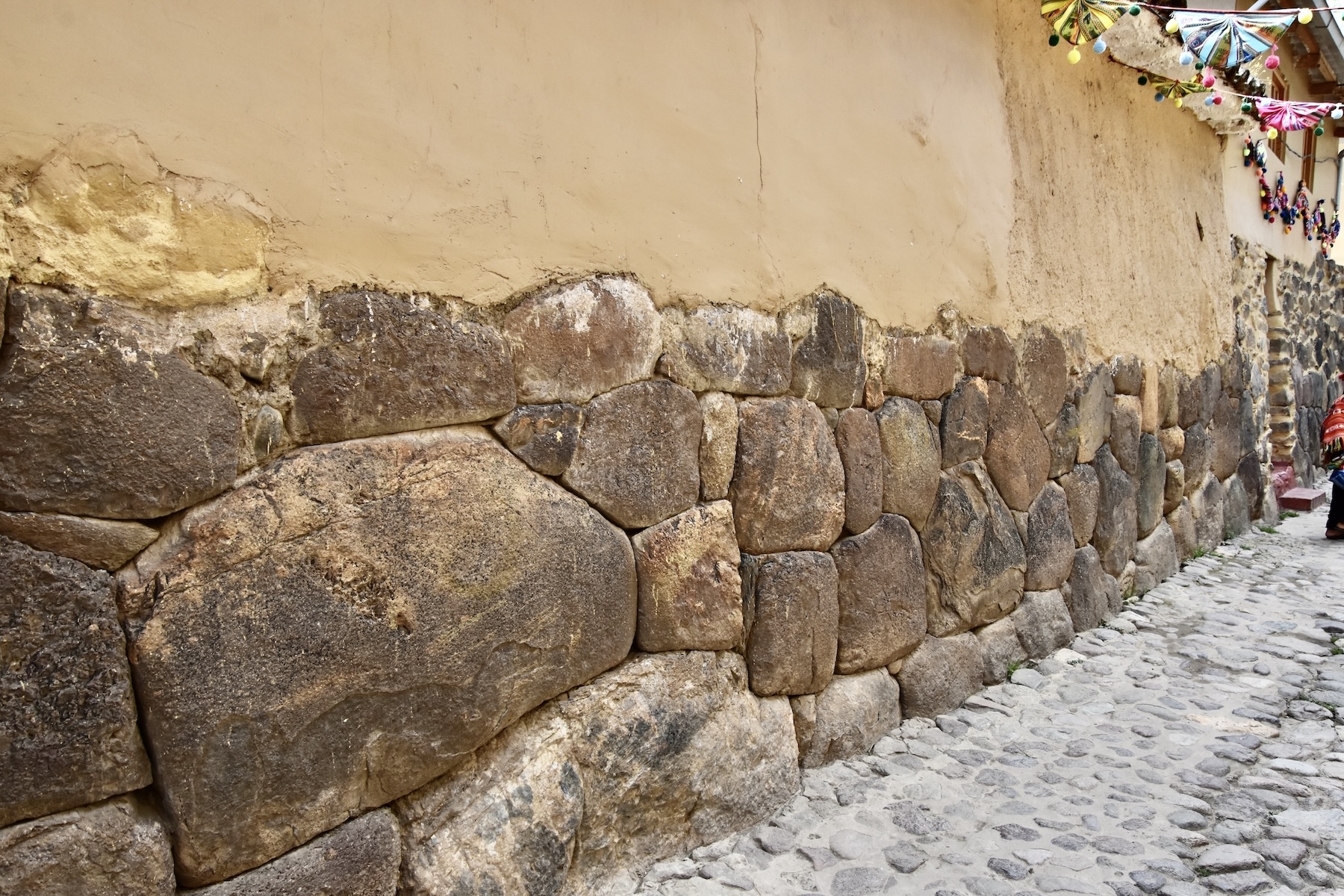
After lunch we gather in the plaza to begin our tour of the town and then the fortress. The first thing Carlos, our local guide who we’ve had since Cusco and who will stay with us until we get to Bolivia, points out is that, like Cusco, the buildings in Ollantaytambo are built on Incan foundations.
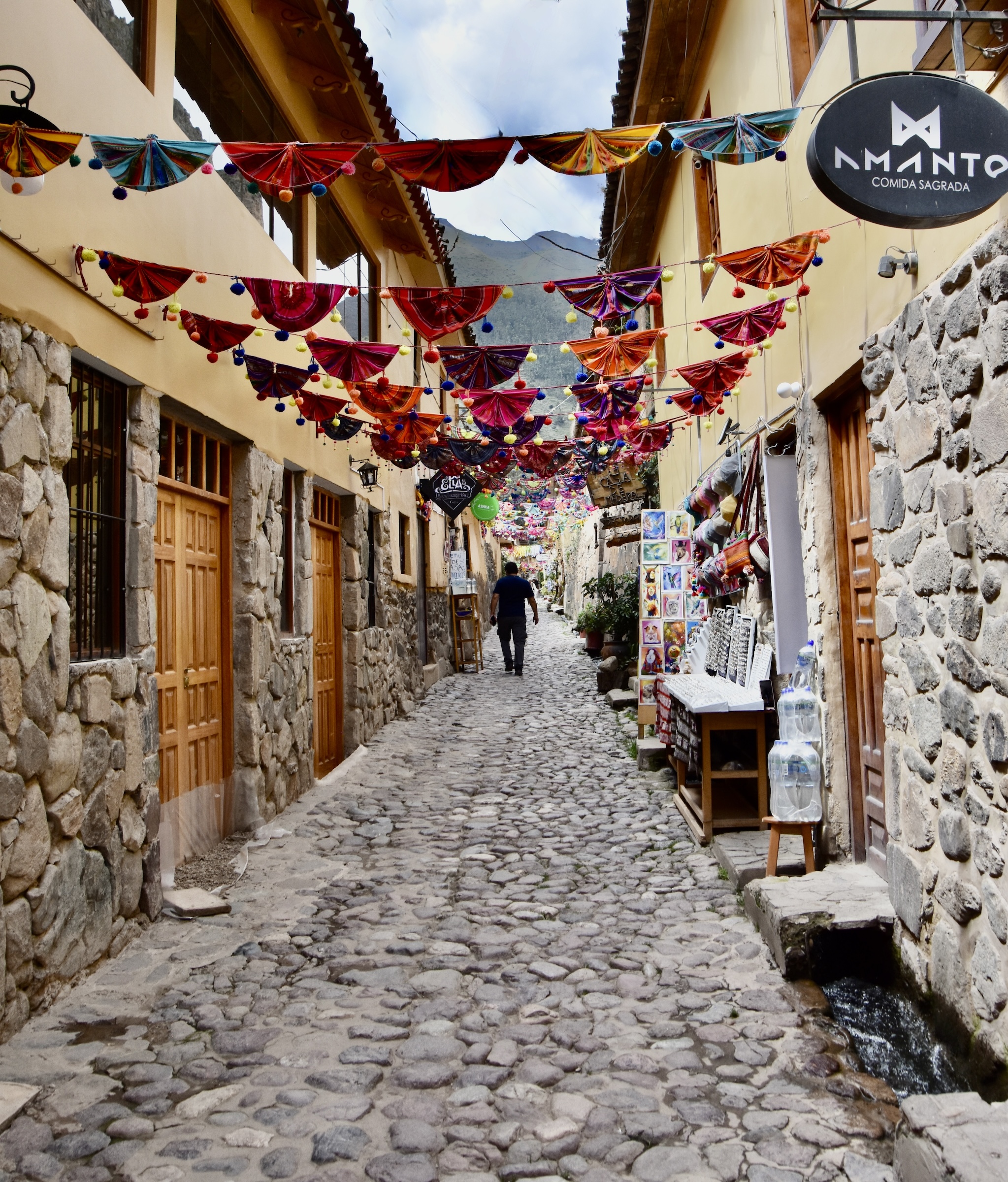
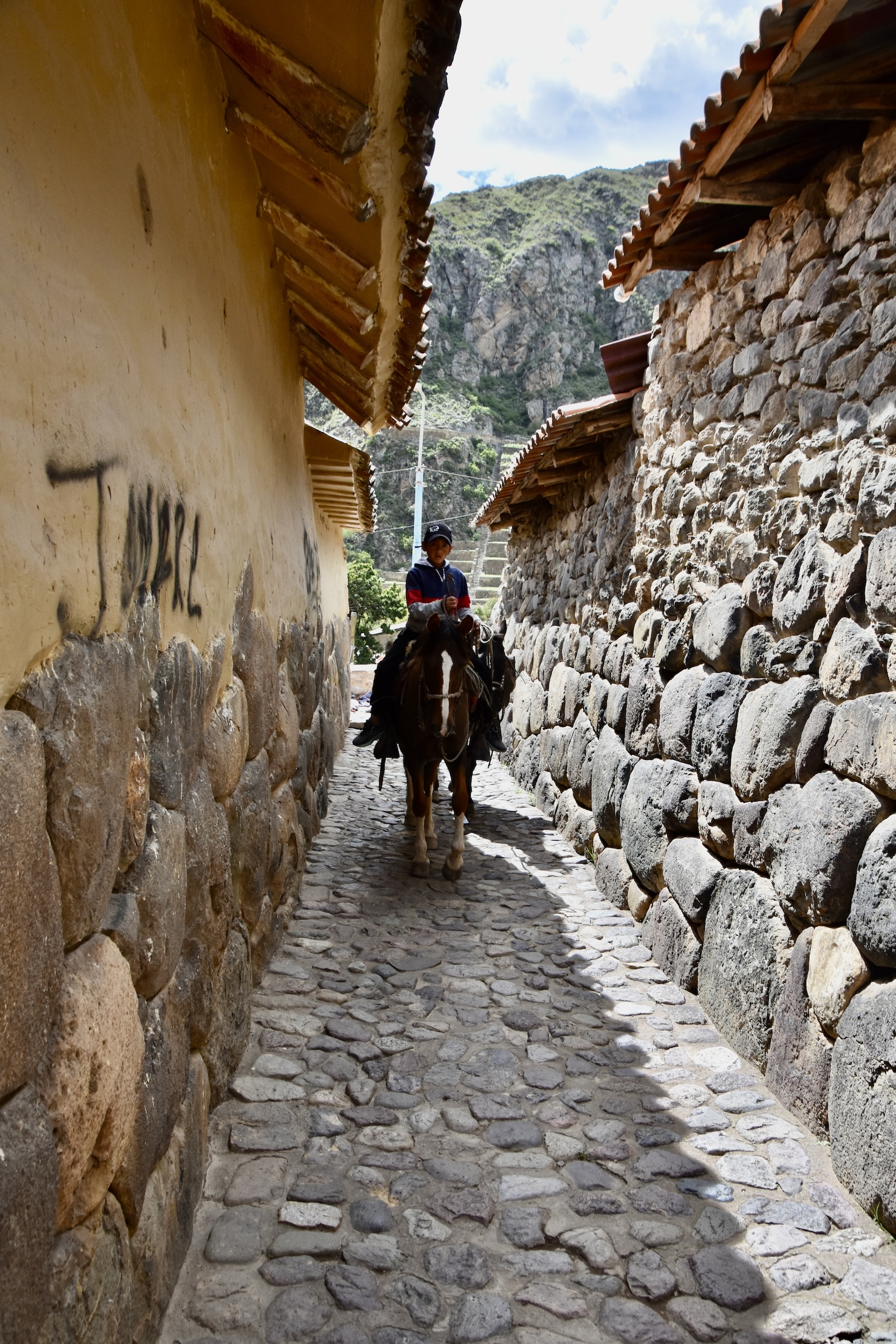
The streets are narrow and we are the only tourists in town despite it being carnival time.
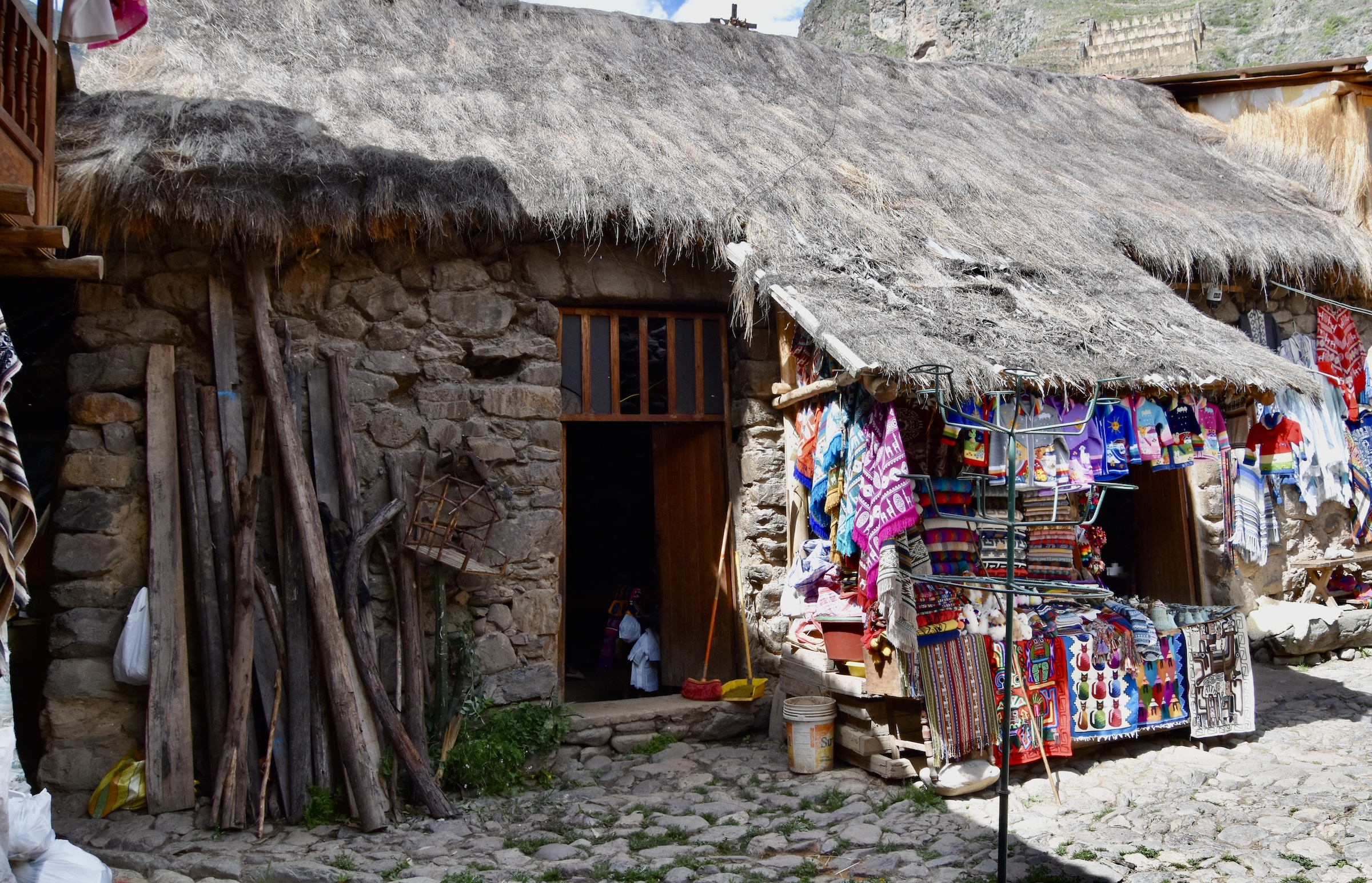
Carlos then takes us to a house that was built seven hundred years ago and is still occupied by a family that has roots going back to the Incas.
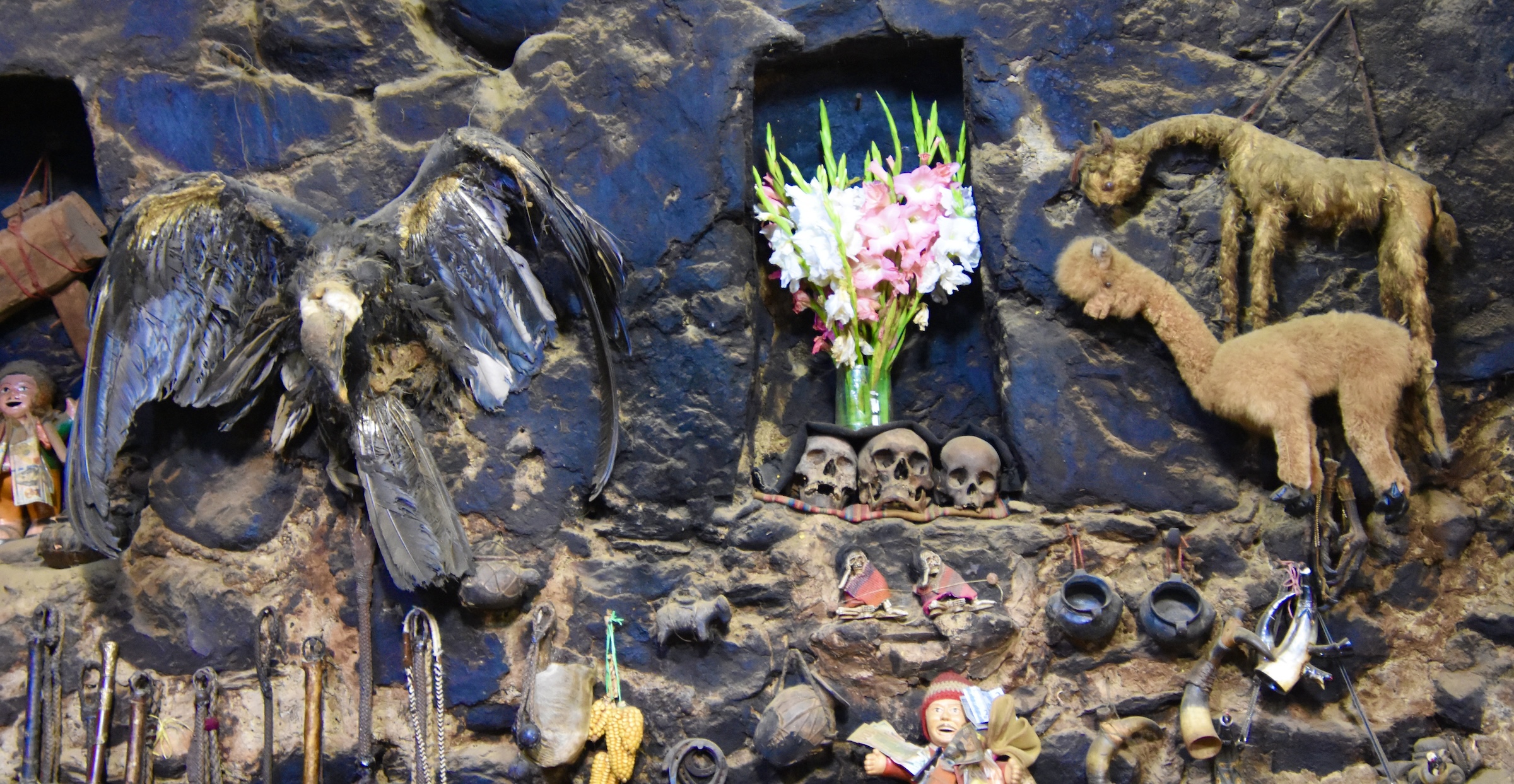
Inside there is a family altar with the skulls of ancestors along with a desiccated condor and baby alpaca. It might seem creepy, but actually it’s not; it’s more of an eye opener as to how other people venerate their past by living with it and not burying their dead in a communal cemetery like most North Americans do.
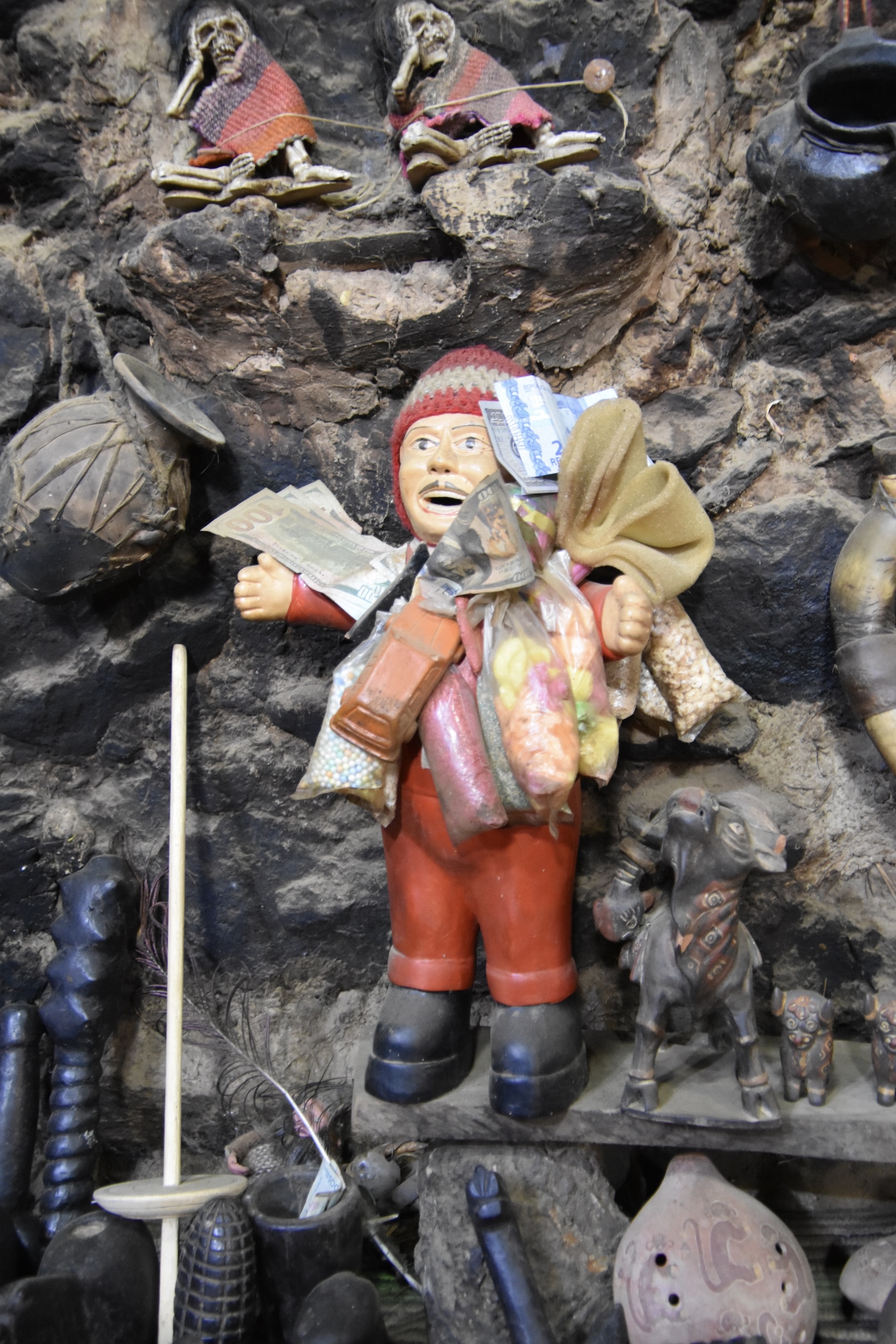
This figure is one I have seen a number of times before, notably in Guatemala where he is known as San Simon. He is a syncretic figure that combines elements of Christianity with pre-Christian deities that existed throughout Latin America. Offerings are made to him in hopes of good fortune, in this case apparently, lots of money and maybe a new car.
While many households around the world raise chickens, in Peru it’s often guinea pigs or cuy as they are known here. This house has a separate room where about fifty fats ones are milling about.
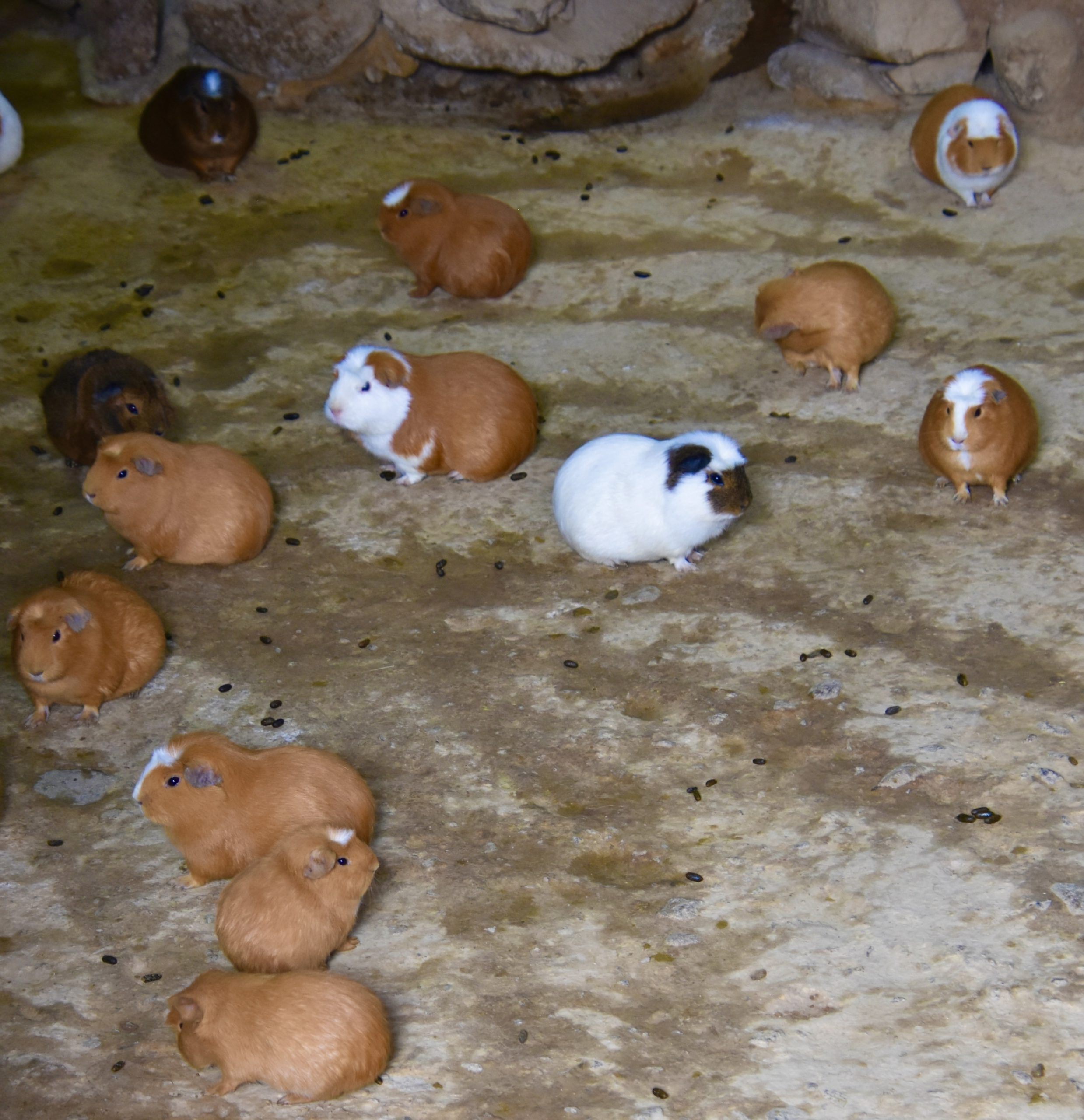
That is until it’s feeding time in which case there is a veritable frenzy to get the most food – you can see that the small ones get shut out. Little do they know that the fatter they get the more likely they are to become the next meal.
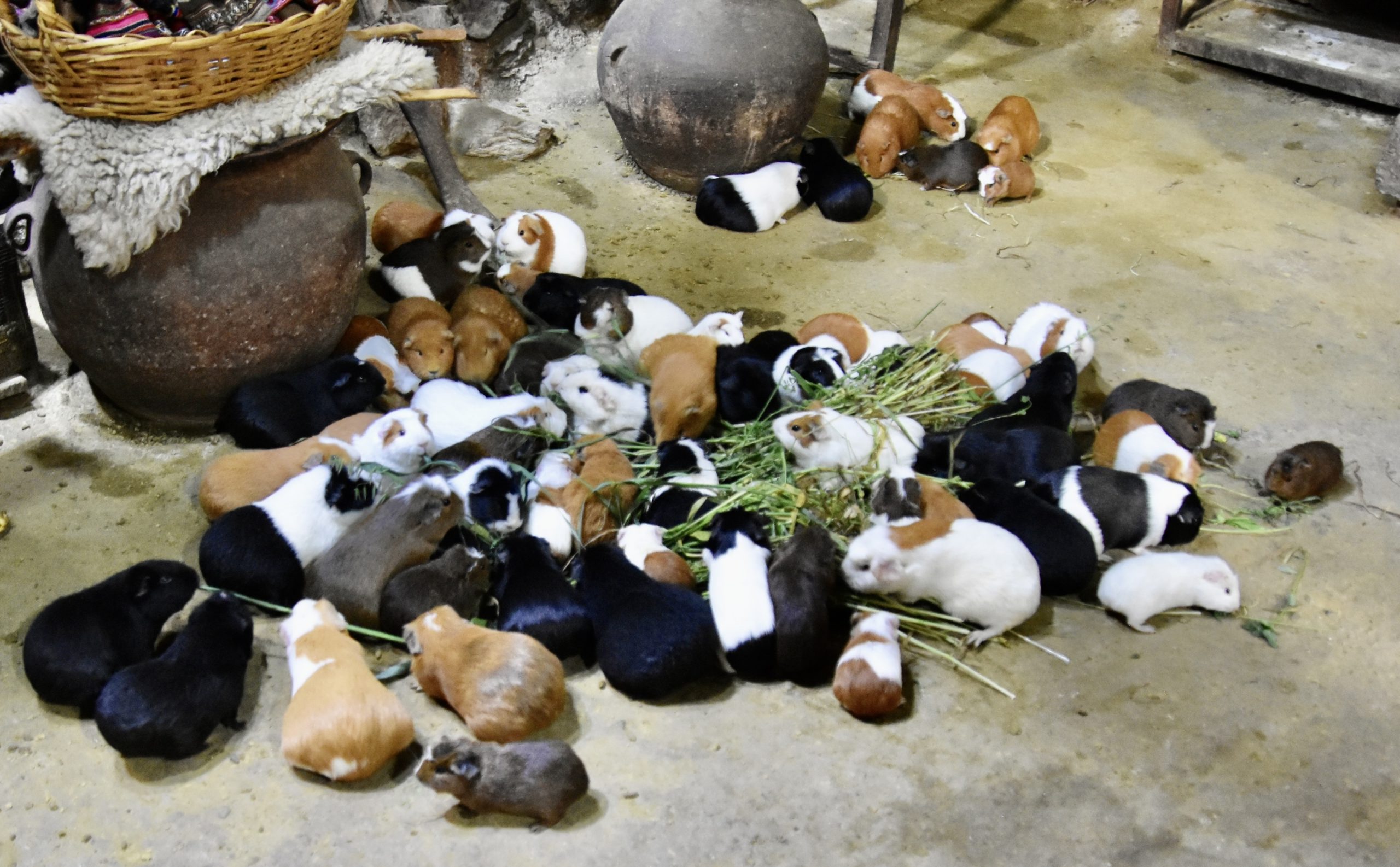
In retrospect, the visit to this house was one of the most unique experiences on the entire tour.
It was time now to thread the narrow lanes on our way to the fortress, passing a boy on a horse along the way.
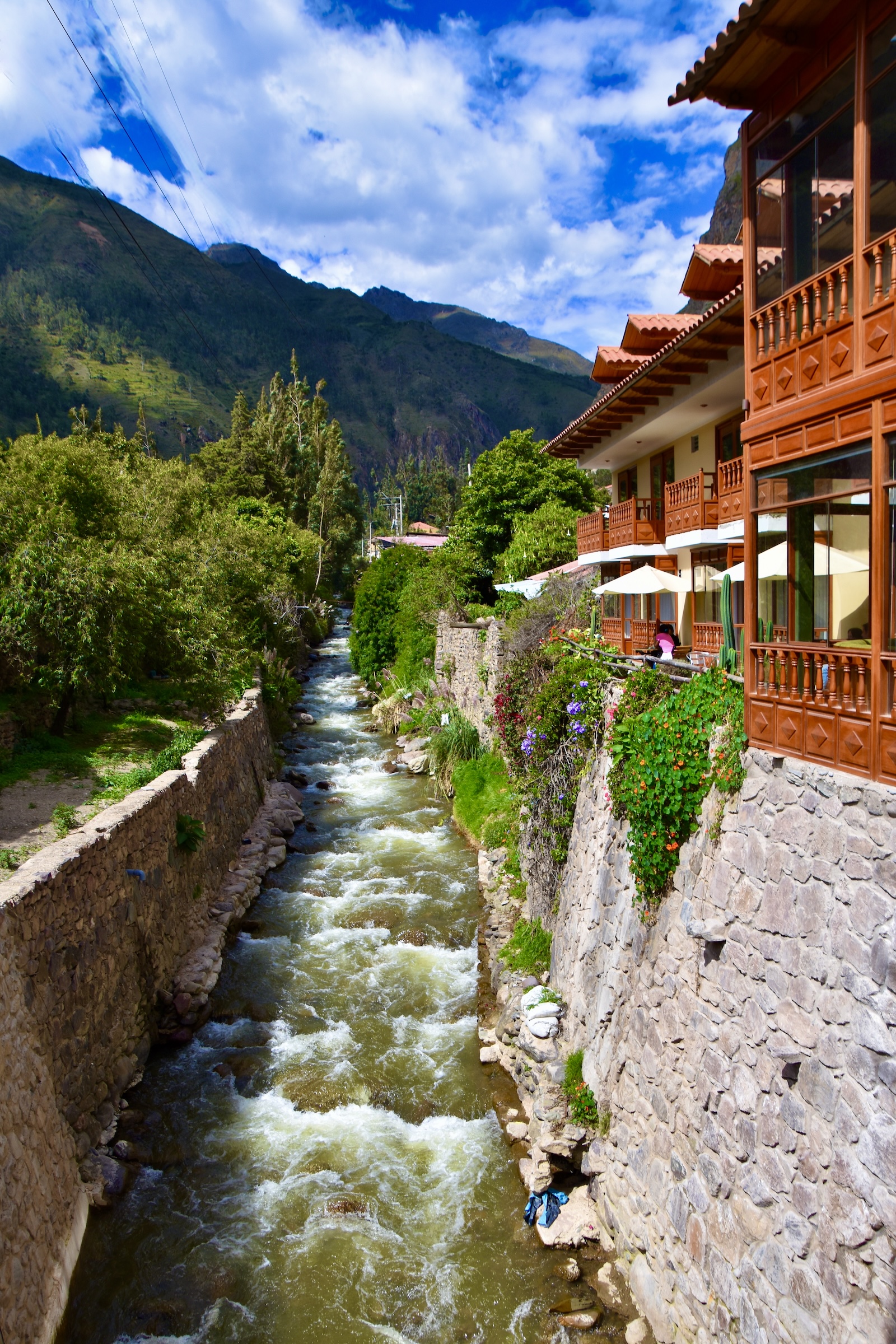
The dividing line between the town and the archaeological site is the Patakancha River which flows into the nearby Urubamba .
This is the view of the fortress from Ollantaytambo. There are 17 massive terraces that lead up to the Temple of the Sun.
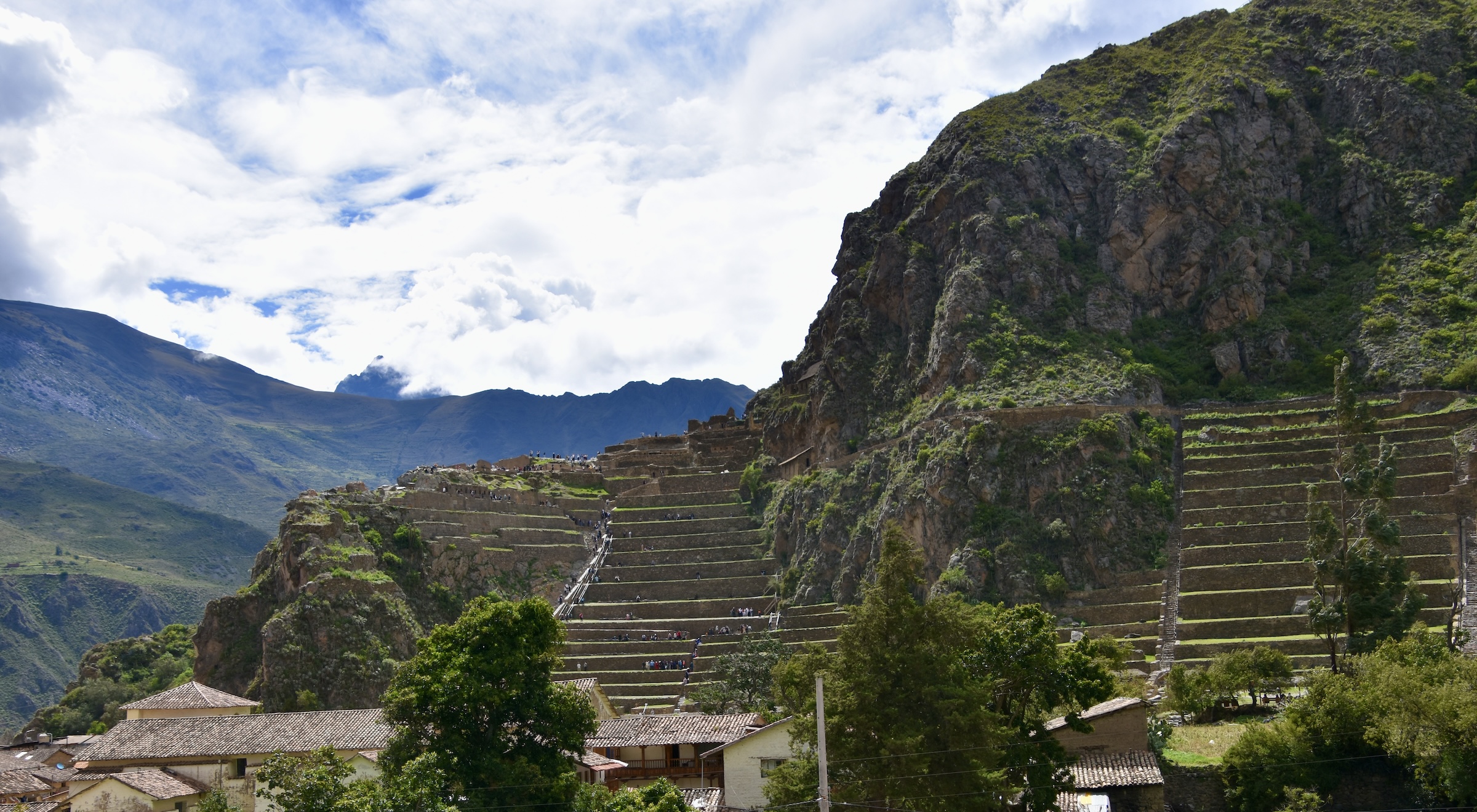
Even though Ollantaytambo is considerably lower in elevation than Cusco, it was a tough slog getting to the top, but I think everyone eventually made it.
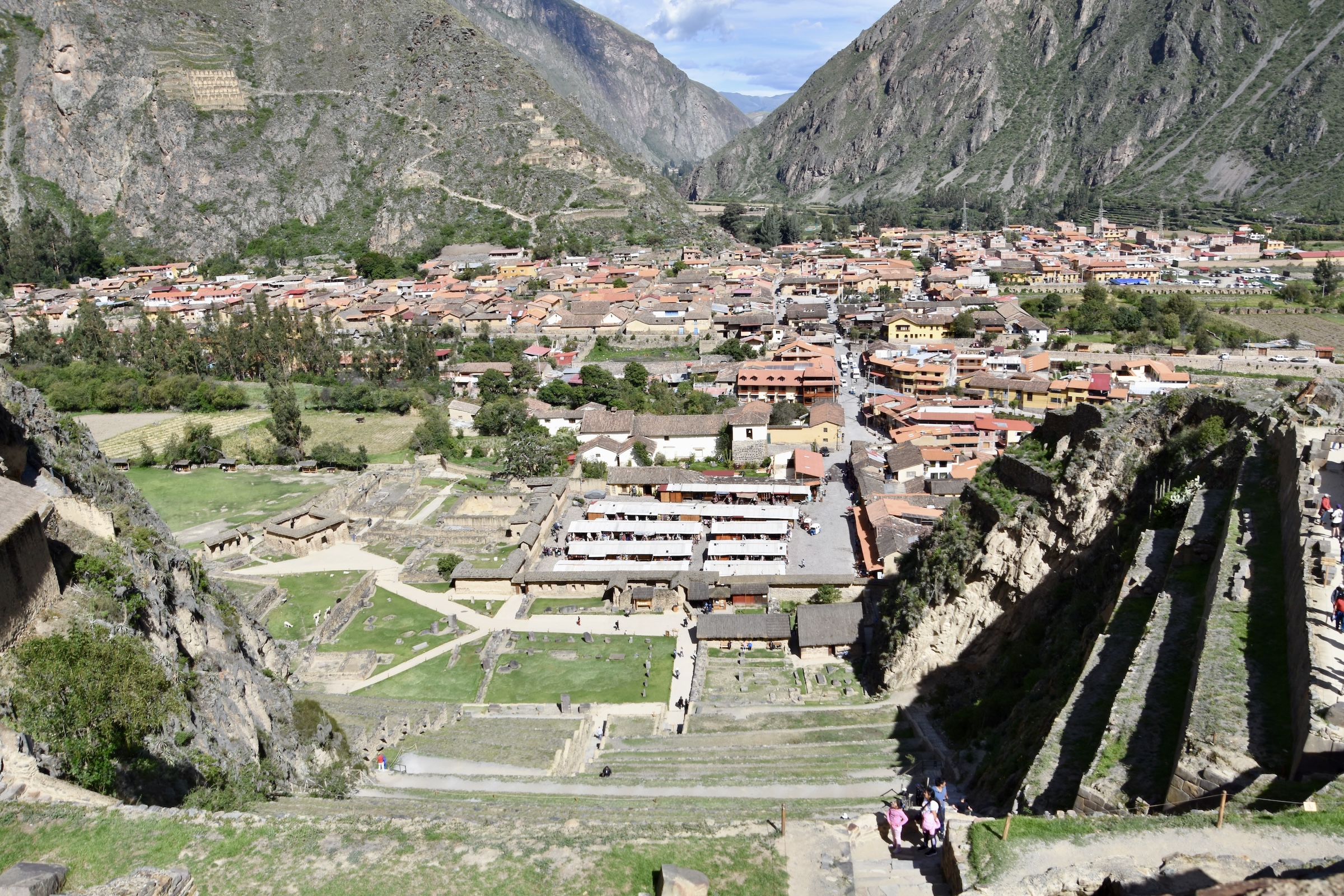
I went on ahead to get this photo of our group on their way up. As the photo shows, it’s a lot steeper than it looks from the bottom, a lot like the difference in perspective from the bottom and the top of a ski hill. But man, the view is more than worth the effort to get here. The white roofed buildings house vendor’s stalls of which only about half were open. Most of what was being offered for sale appeared to be genuine local crafts and not Chinese junk. There were also some great aromas coming from the street food on offer.
Here is a small gallery of our visit to the Ollantaytambo fortress. Double click to open a photo and double click again to enlarge it.
-
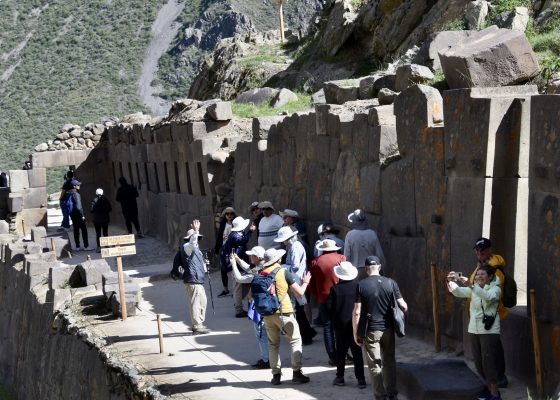
- Carlo and the AA Group
-
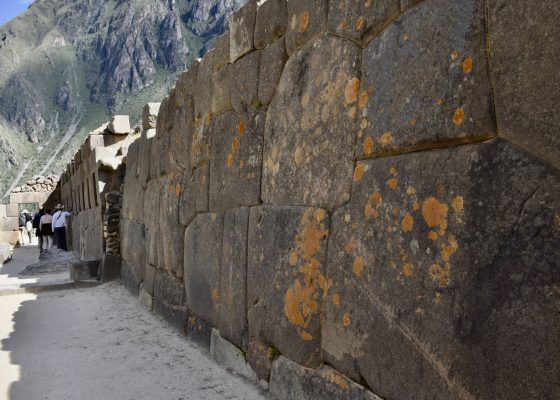
- Cyclopean Wall
-
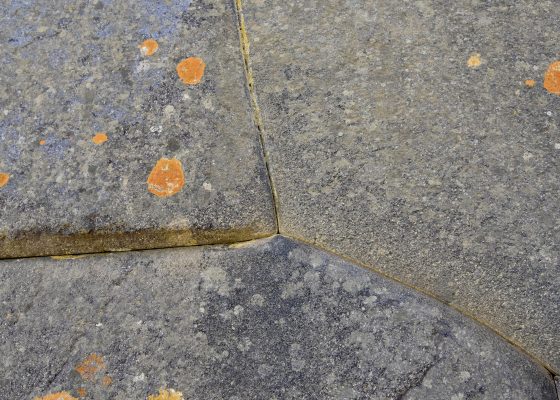
- Incredible Seal
-
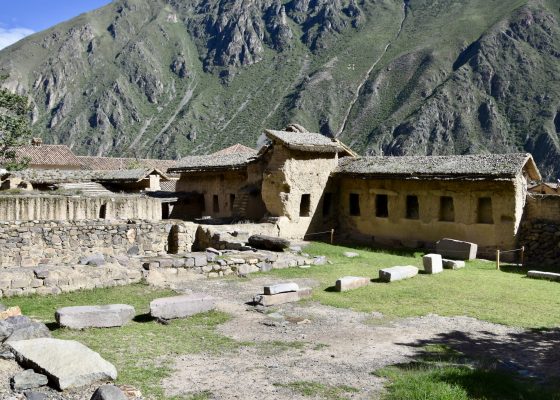
- Lower Buildings
-
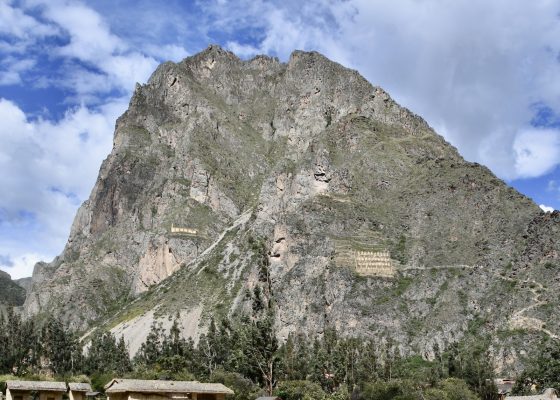
- Mountains Across the Valley
-
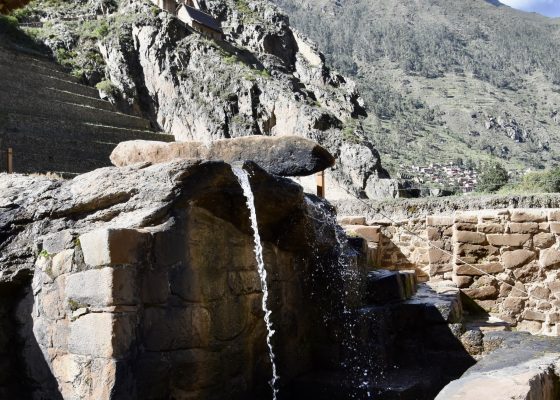
- Sacred Fountain
-
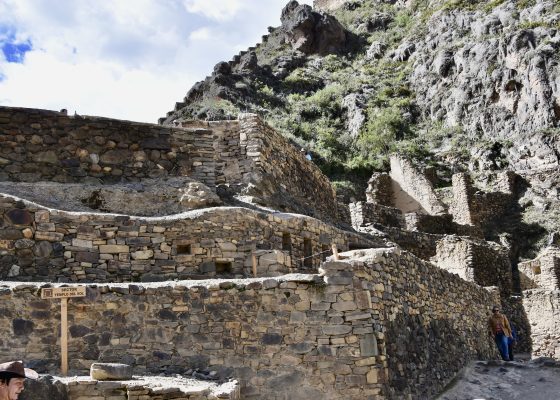
- Upper Terraces
La Casona de Yucay
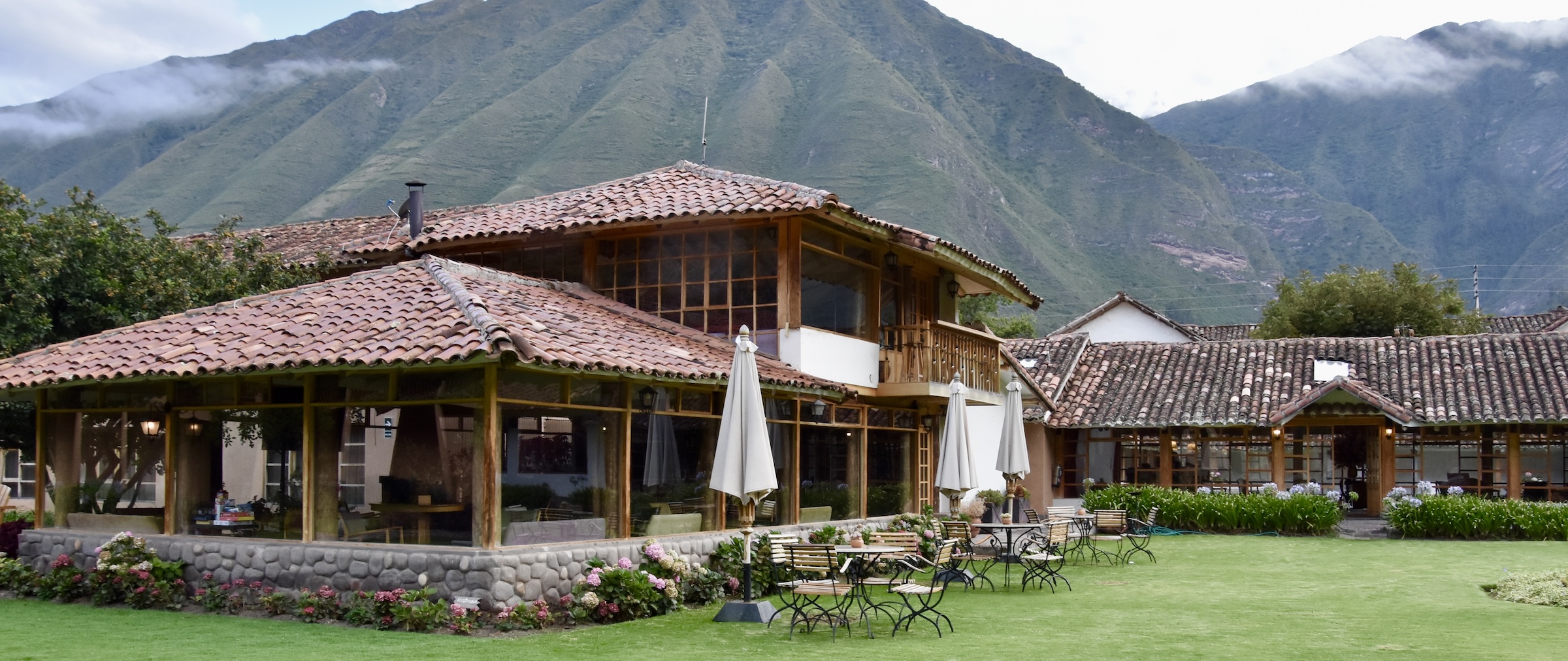
After our visit we headed back through Urubamba to La Casona de Yucay, one of the nicest spots we stayed at on this tour. It was built in 1810 and has remained in the same family ever since, becoming an historic hotel only in the 21st century.
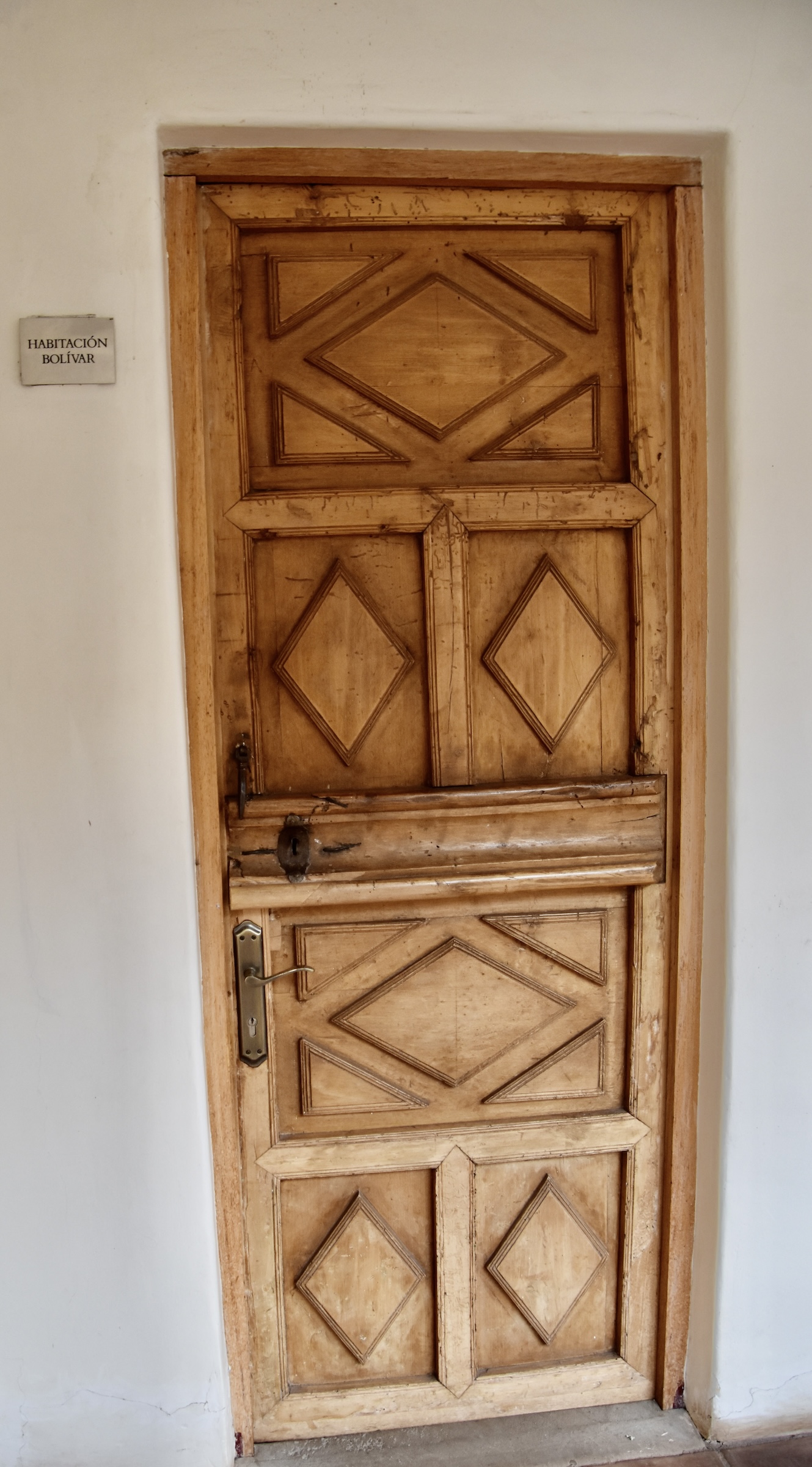
In United States one of the most prestigious things an historic house or inn can claim is that ‘George Washington slept here’. In Latin America the same can be said of Simon Bolivar, the Great Liberator and in fact, he did stay here during a visit to the area in 1824. This is the door to the room he stayed in.
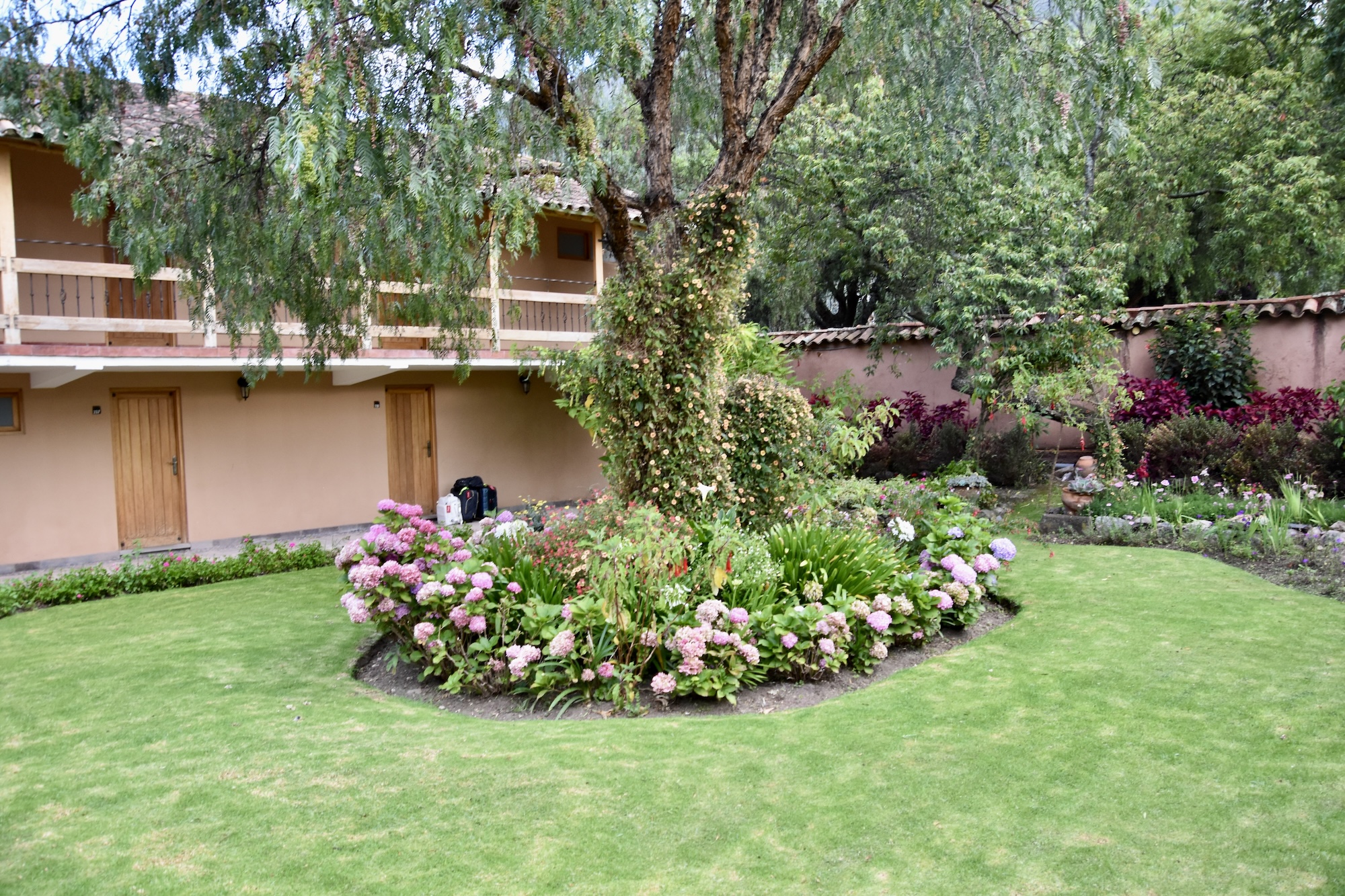
The hotel has beautiful grounds.
And a great restaurant where the mushroom medley was an unbelievably good locally foraged entree.
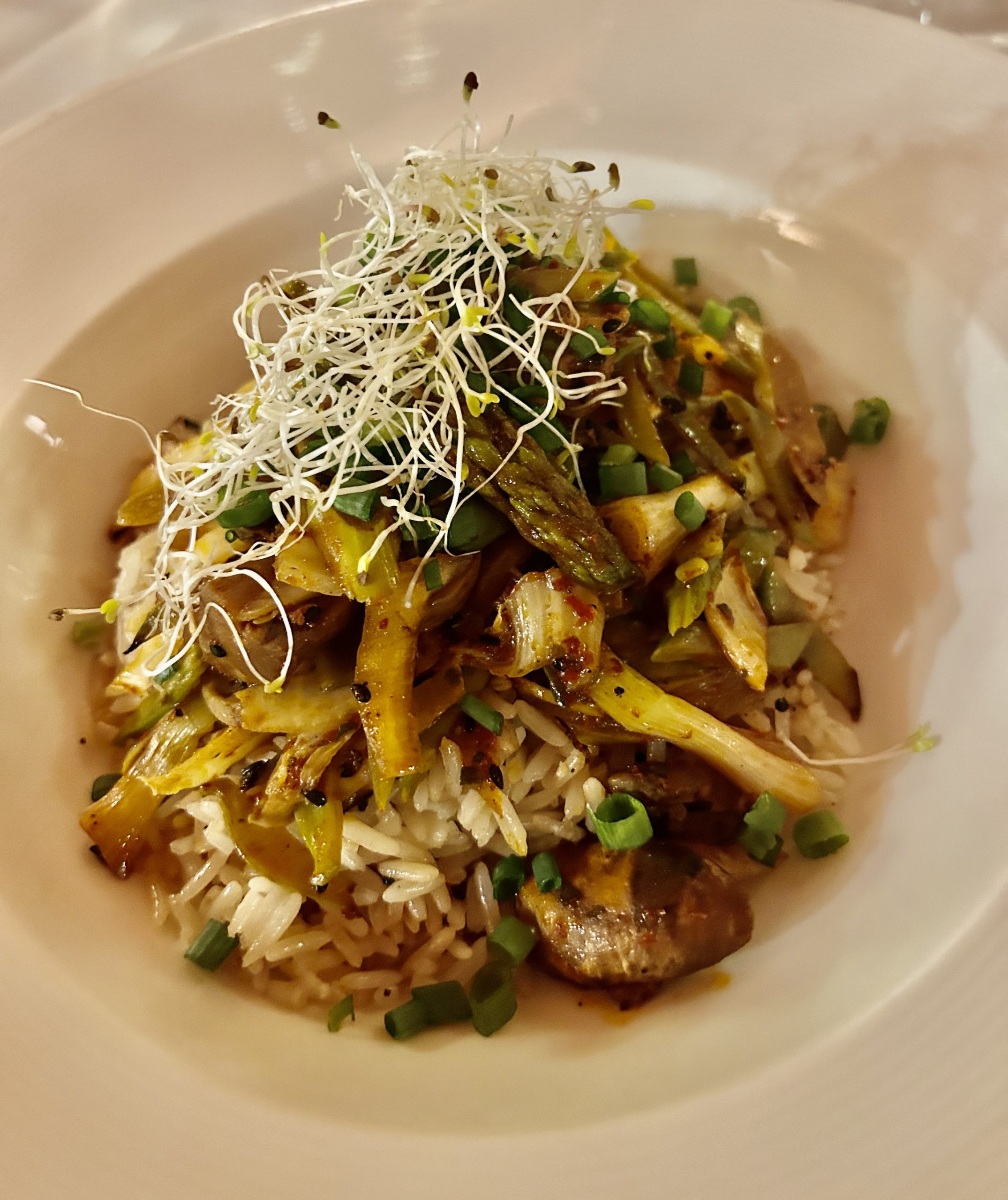
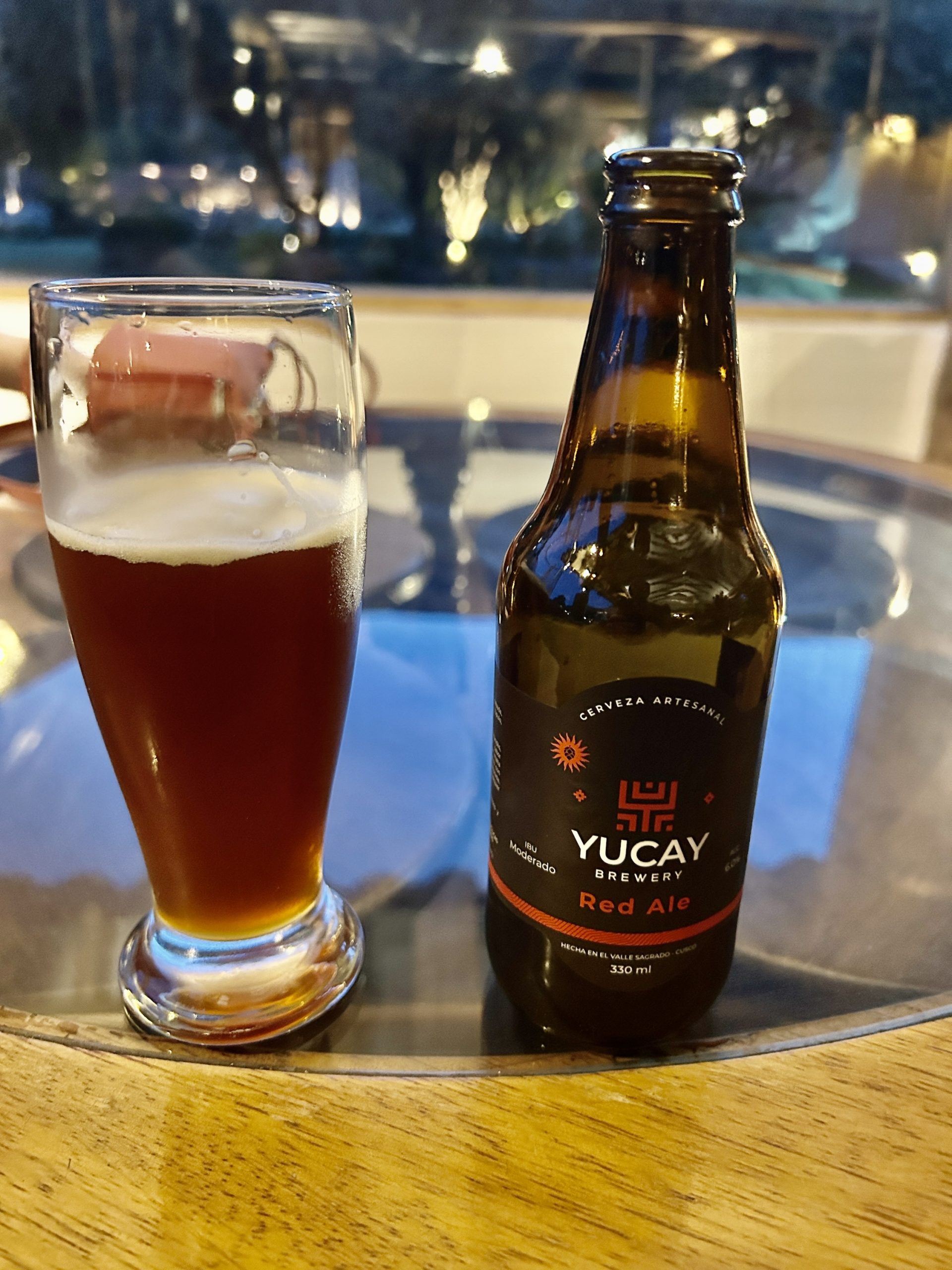
Washed down with a Yucay Red Ale it was the perfect way to end what was a very busy and exciting day.
Tomorrow promises to be even more exciting as we return to Ollantaytambo to board the train to Aguas Calientes the town that is the jumping off point for Machu Picchu. I hope you’ll come aboard.