
La Paz Bolivia – What an Eye Opener

Well the day has finally arrived when I must bid adios to my fellow travellers on the Adventures Abroad Kingdoms of the Andes tour. This will be my final post from that amazing February, 2026 trip that featured one highlight after another. In the penultimate post we visited the pre-Incan archaeological site of Tiahuanaco and I was able to ascertain that it was not built by aliens as claimed by Erich von Daniken in his book Chariots of the Gods. In this final post we are going out with a bang and not a whimper as we explore the Bolivian capital city of La Paz, a Latin American city that once again exceeded my expectations.
You would think by now with travel to almost every Latin American capital city I would arrive without any preconceptions about what to expect, other than that the cities would be much more modern, progressive and wealthier than anticipated. That was the case with Bogota, Santiago, Panama City, Lima and Quito; but NO, I fell into the trap of North American stereotypes about Latin America yet again. The image I was peddled about La Paz was that it was so high up that I might faint upon arrival and if I did survive I would find an impoverished third world city where the women all wore bowler hats. Wrong. What I found was a completely modern city with an incredible amount of high rise apartments and a unique transportation system, yet with enough elements of the colonial era to make it very interesting. So please join our group one last time as we explore La Paz and its surroundings.
History of La Paz
La Paz, which is actually a shortened version of Nuestra Señora de la Paz (Our Lady of Peace), sits in a huge bowl or canyon created by the Choqueyapu River that is part of the Amazon Basin. Prior to the Spanish arrival it was the site of both Aymara and later Inca settlements who were attracted by its subtropical highland climate and the gold that was found in the river. The Spanish city was founded in 1548 by conquistador Alfonso de Mendoza who also liked its location with Illimani mountain towering some 6,436 metres (21,122 feet) over the valley below.
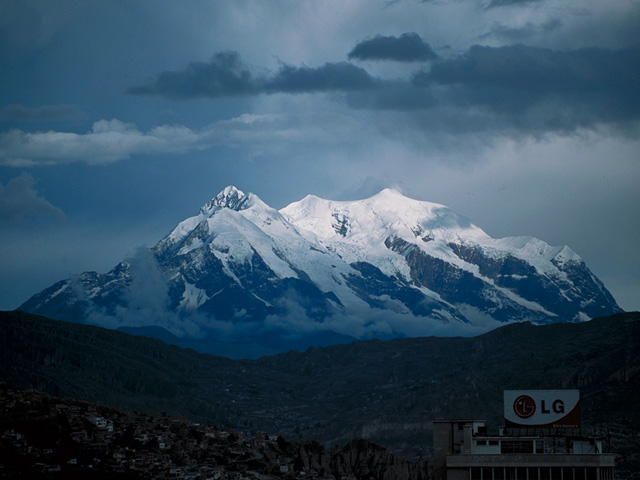
The one thing La Paz seems to have been noteworthy for during the colonial period was the number of revolts that took place there including an Indigenous uprising led by Túpac Katari in 1781 that last for six months before being quelled. In 1809 the final rebellion led by Bolivian patriot Pedro Domingo Murillo broke out and lasted until Bolivia gained its independence in 1821. La Paz was chosen as the administrative capital, becoming the highest capital city in the world at 3,650 Metres ( 11,975 feet). The interesting thing about that fact is that La Paz is actually at the lowest elevation of the metropolitan complex that rises up the sides of the valley to the city of El Alto that sits atop the altiplano at 4,150 metres (13,615 feet). Today La Paz has a population of only about 755,000 inhabitants, but the surrounding area including El Alto brings it up to 2.2 million.
To get to La Paz from Tiahuanaco you first have to go through El Alto which is in the middle of a huge building boom with a particular style of structure called a cholet that is a combination of cholo an urbanized Indigenous person and chalet. AI describes them as “Vibrant, multi-story Neo-Andean mini-mansions” and that they are as you can see from this small gallery I took as we crawled our way through El Alto. Double-click to open and double-click again to enlarge.
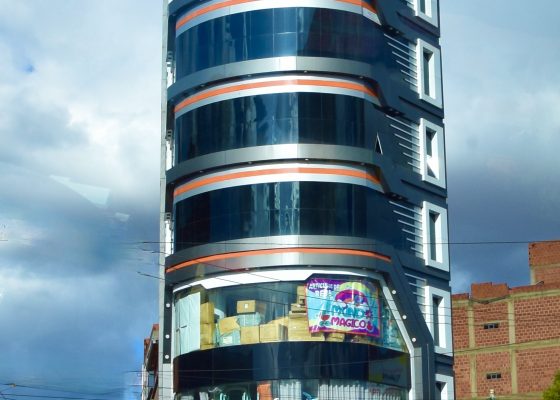
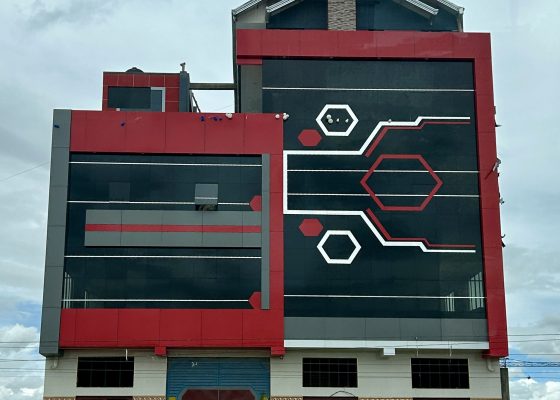
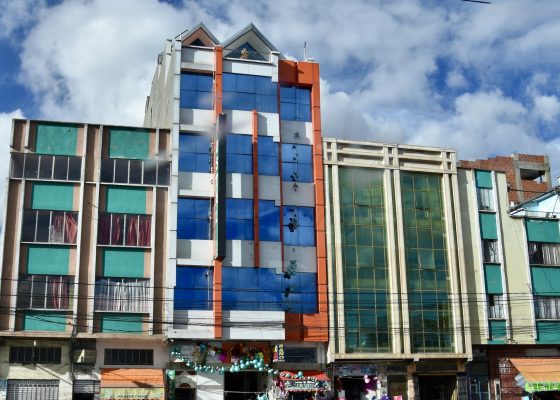
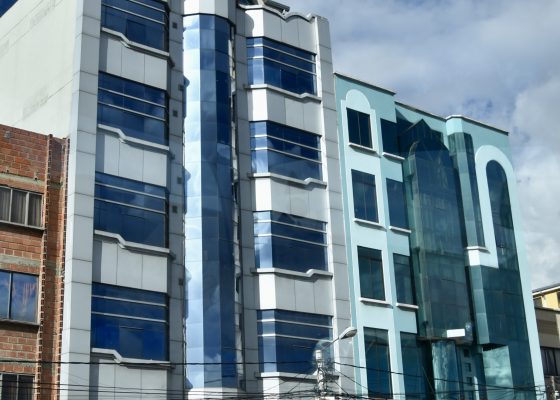
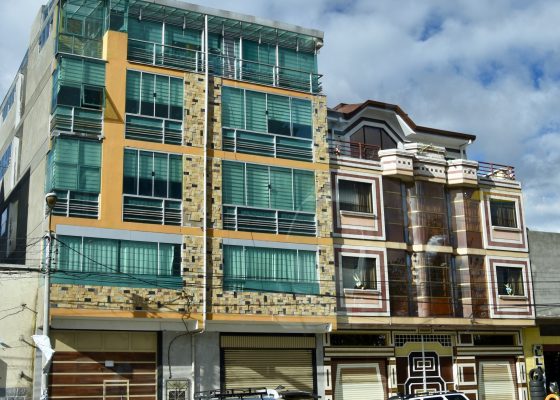
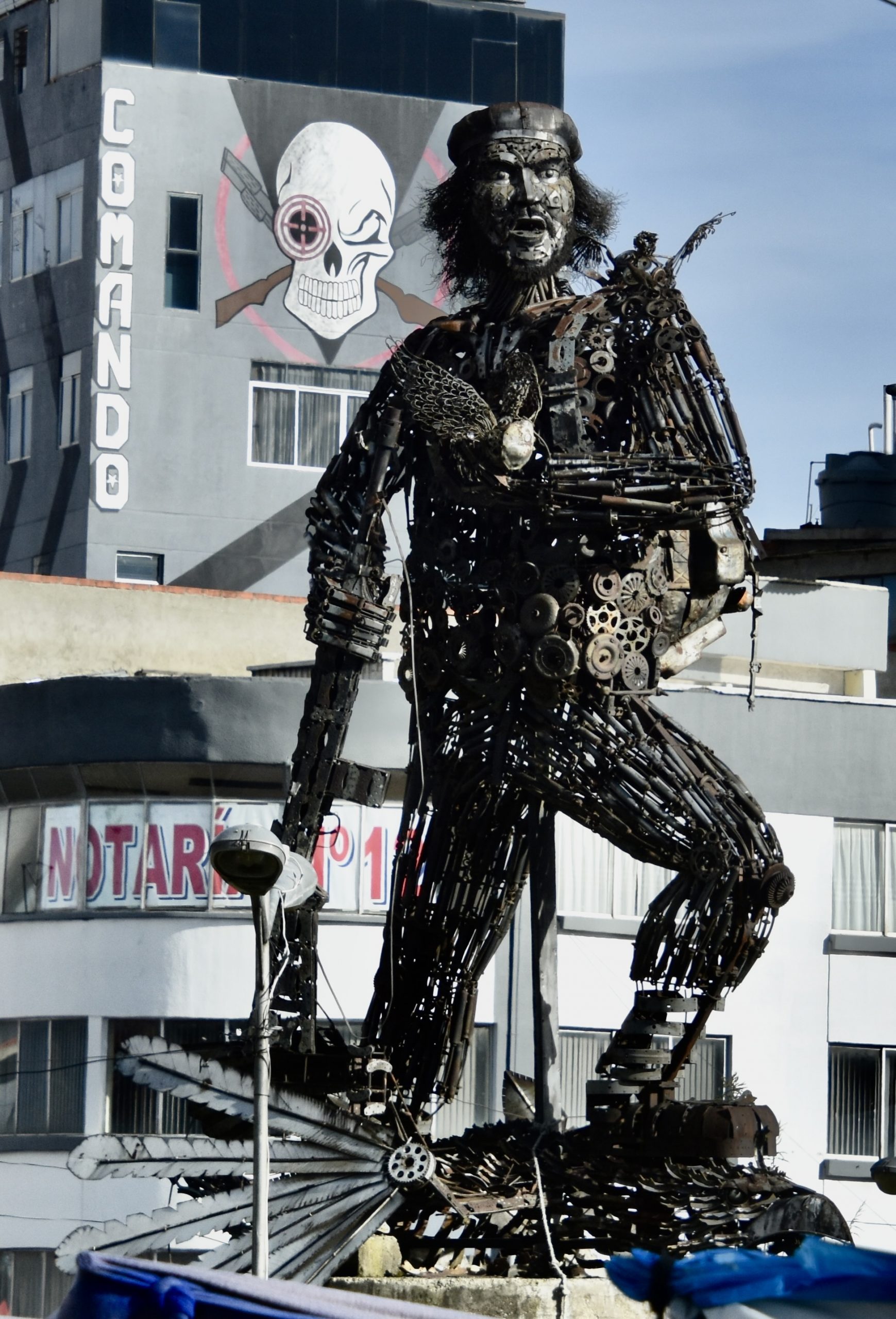
So instead of run down third world hovels we were greeted with modern mini-mansions. We also passed by this 30 foot statue of Che Guevara sculpted from recycled automobile parts. Guevara was executed in Bolivia in 1967 and remains a revered figure in some circles and a bloodthirsty killer in others.
We gradually made our way down into La Paz noticing that the neighbourhoods got wealthier looking the further down we went. Our lodgings, the Ritz Apart Hotel was in one of these well to do areas which was perfectly safe to walk around in. In fact there was a big shopping complex on the opposite side of the rotary from the hotel.
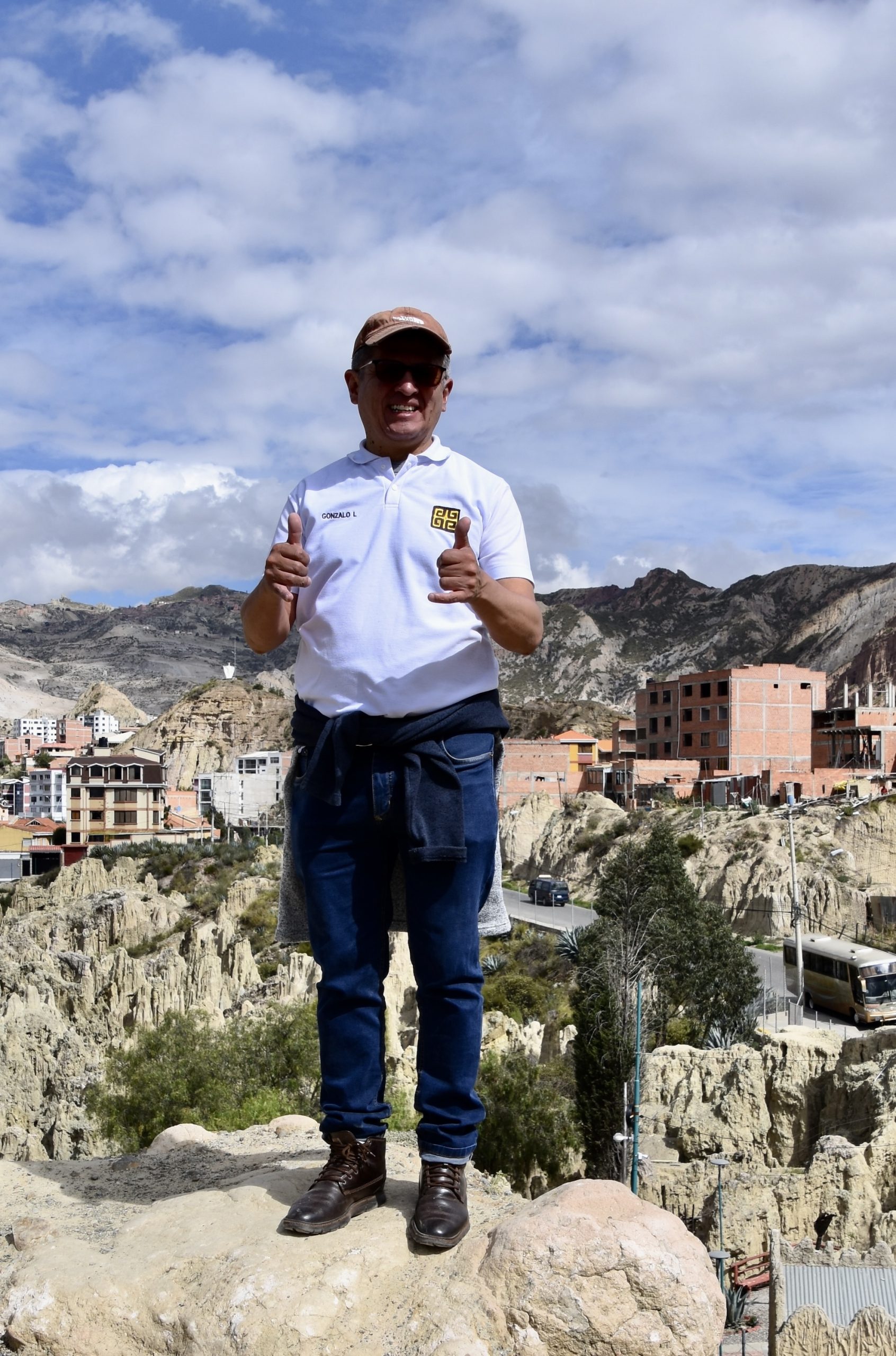
The next morning we began our tour of La Paz with our local guide Gonzalez or just G as he preferred to be called at the Valle de la Luna.
Valle de la Luna
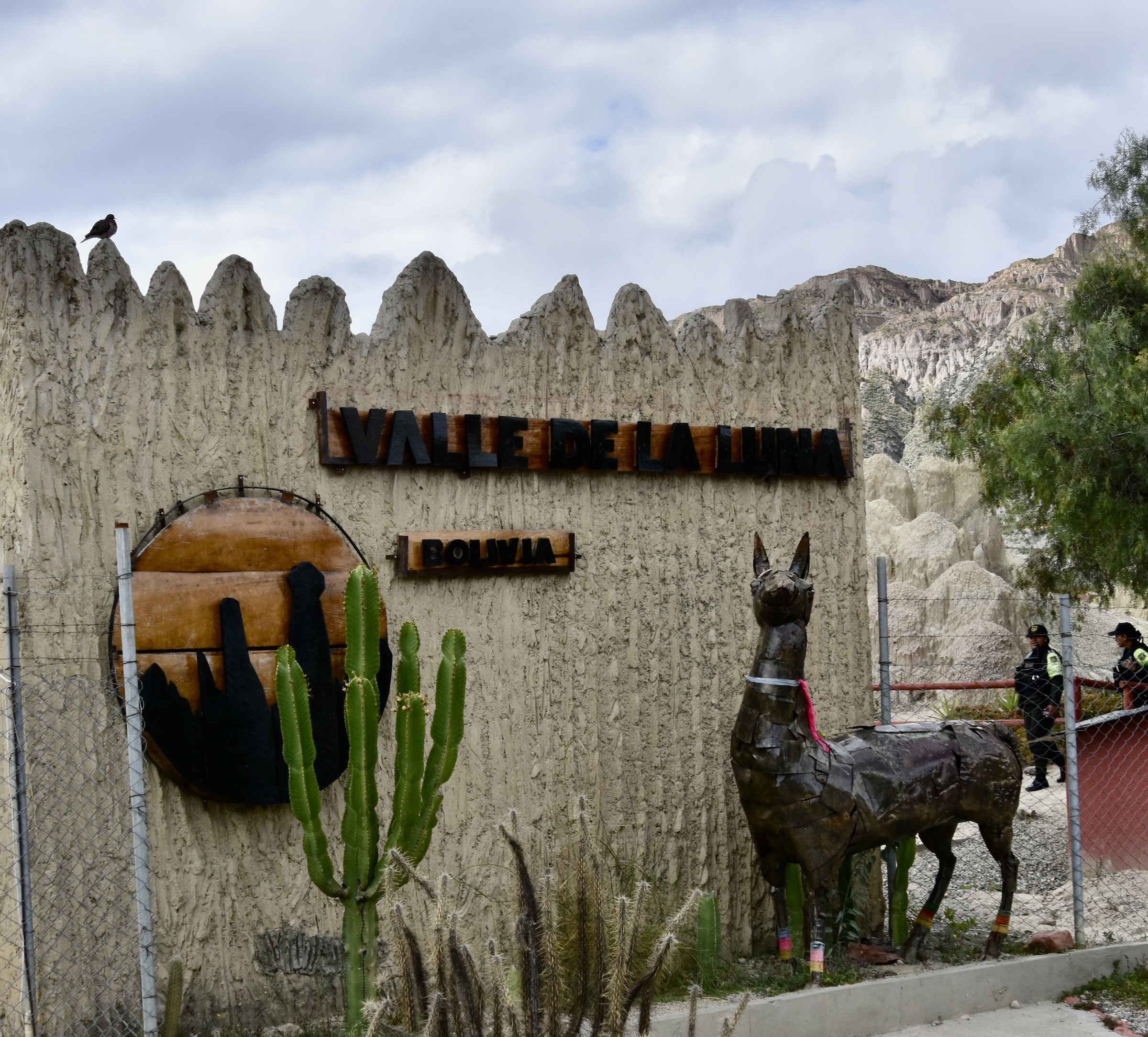
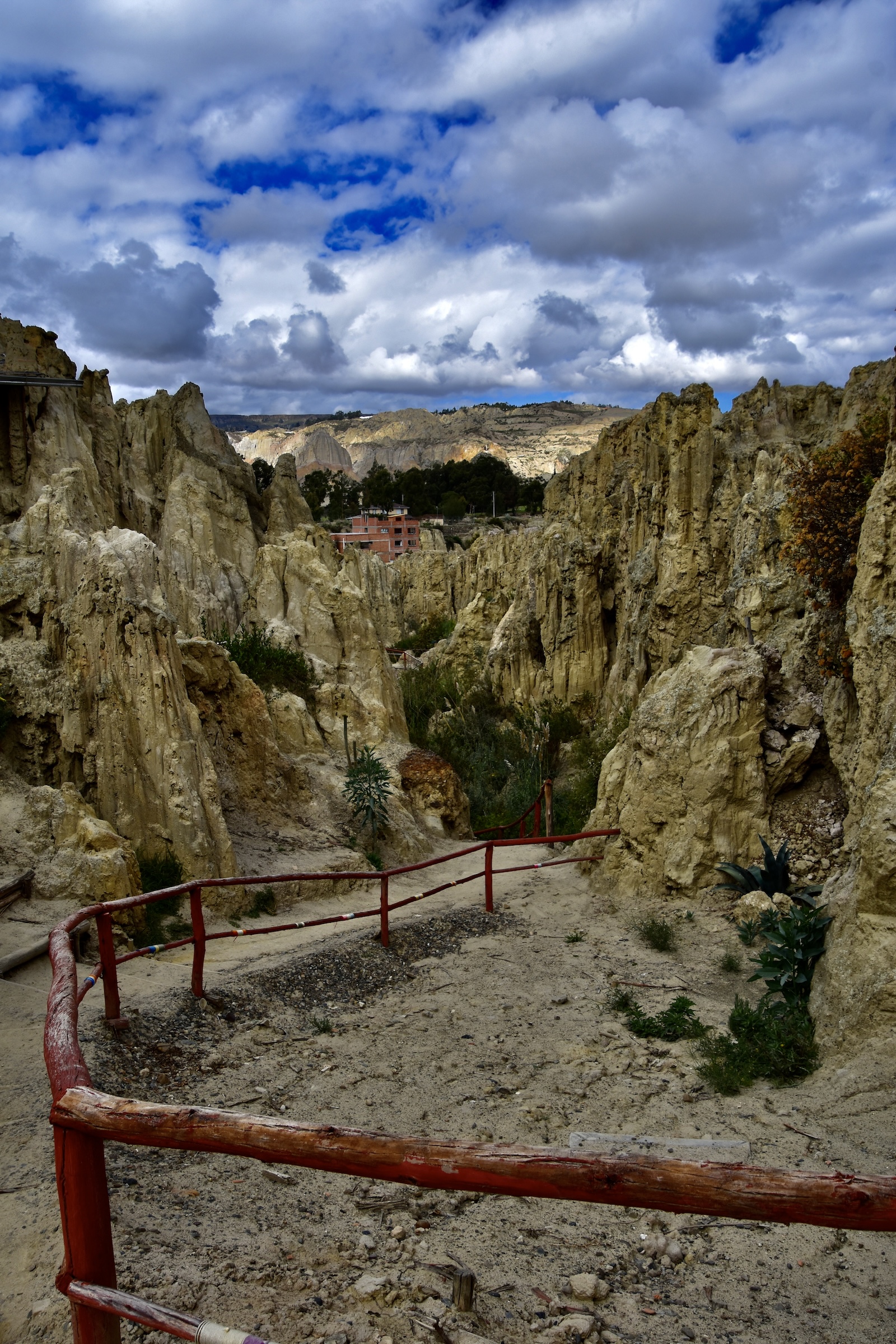
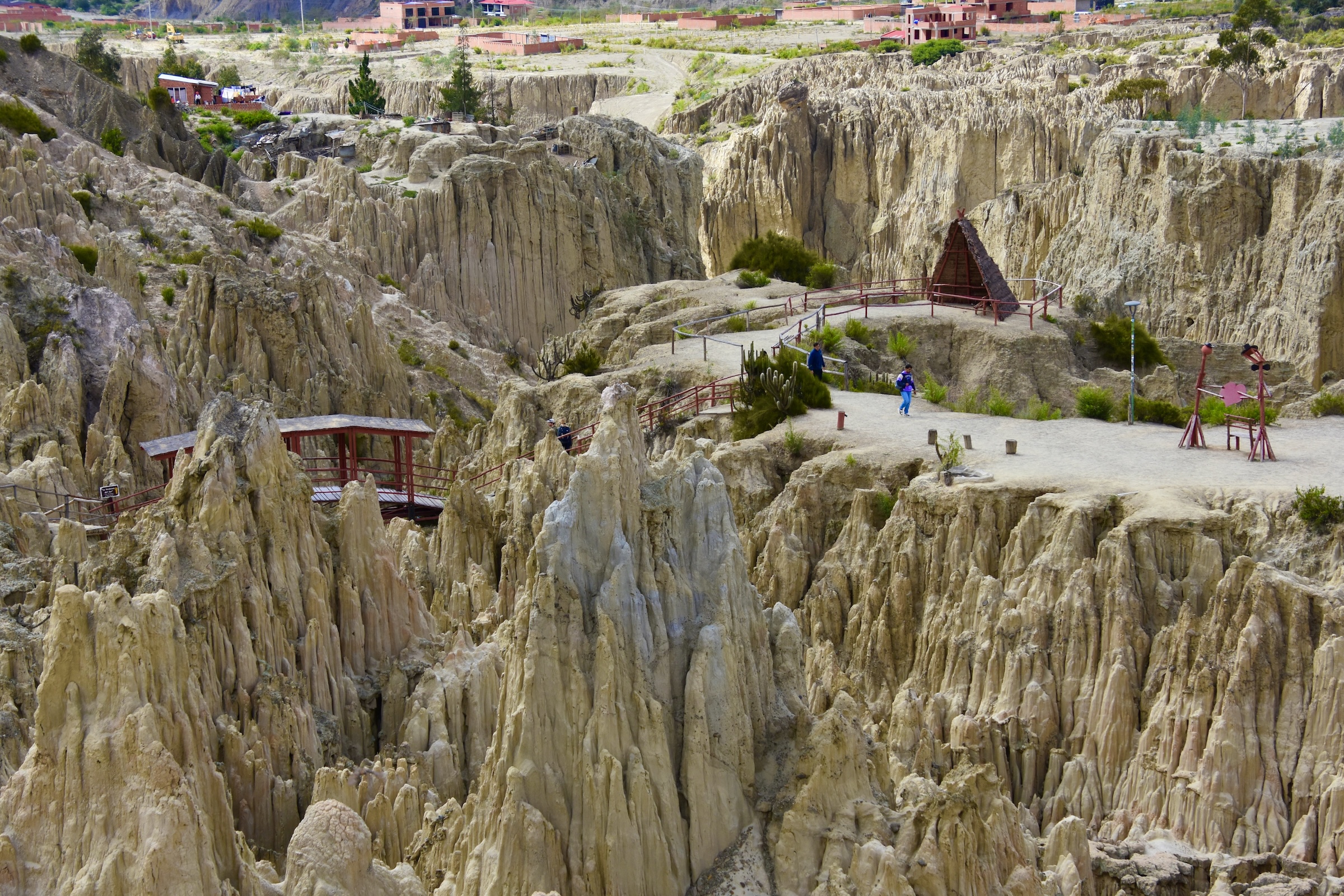
The Valle de la Luna or Moon Valley is a small protected area of unusual rock formations created by the erosion of the clay and sandstone that are the principal composition of the underlying sediment in this area. It received its name from Astronaut Neil Armstrong who visited shortly after his trip to the moon and commented that it reminded him of the moon. There is a dedicated pathway through the maze of the valley that includes many hoodoos and other similar rock formations. Here is a series of photos of some of them. It’s a really amazing place only a few kilometres from downtown La Paz.
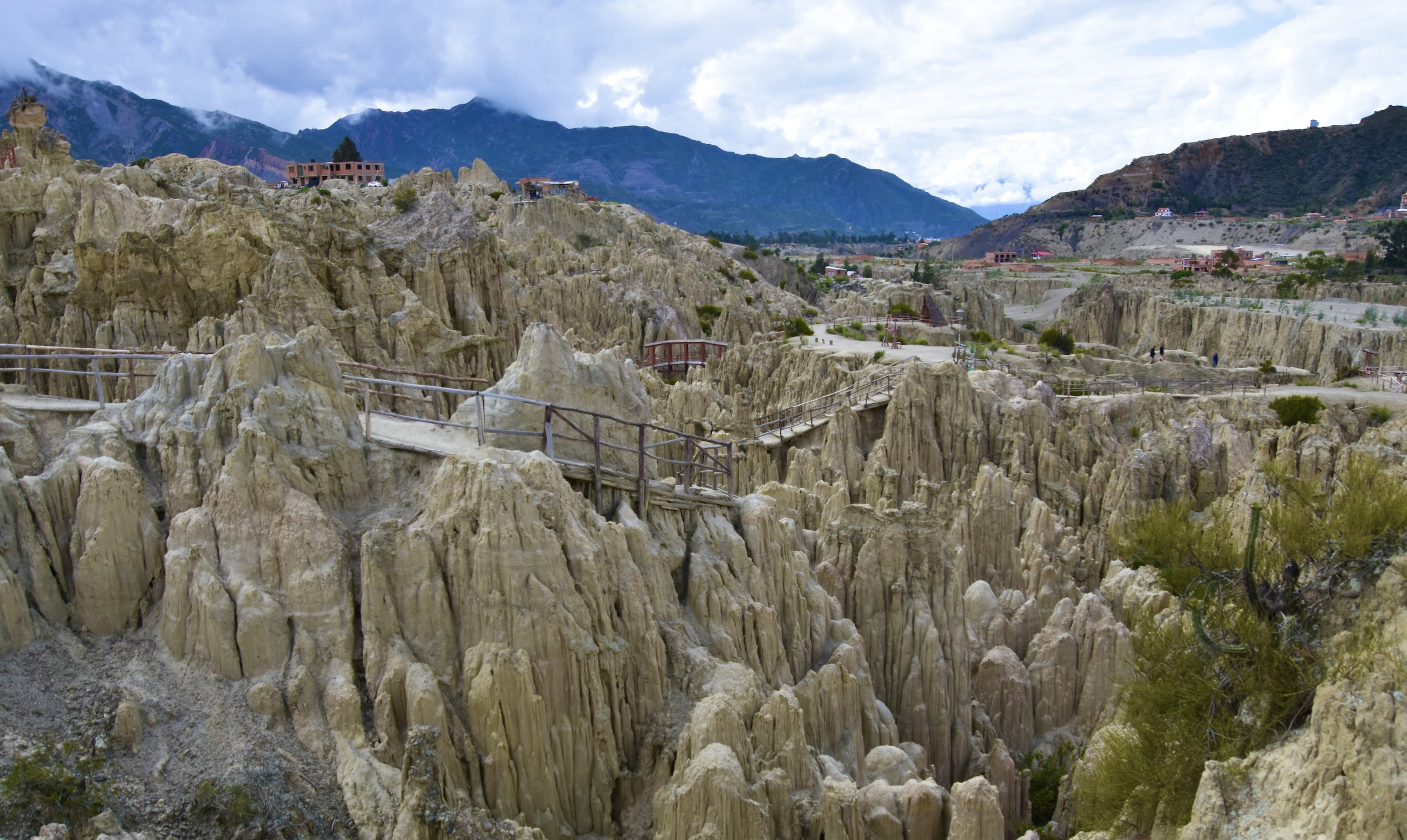
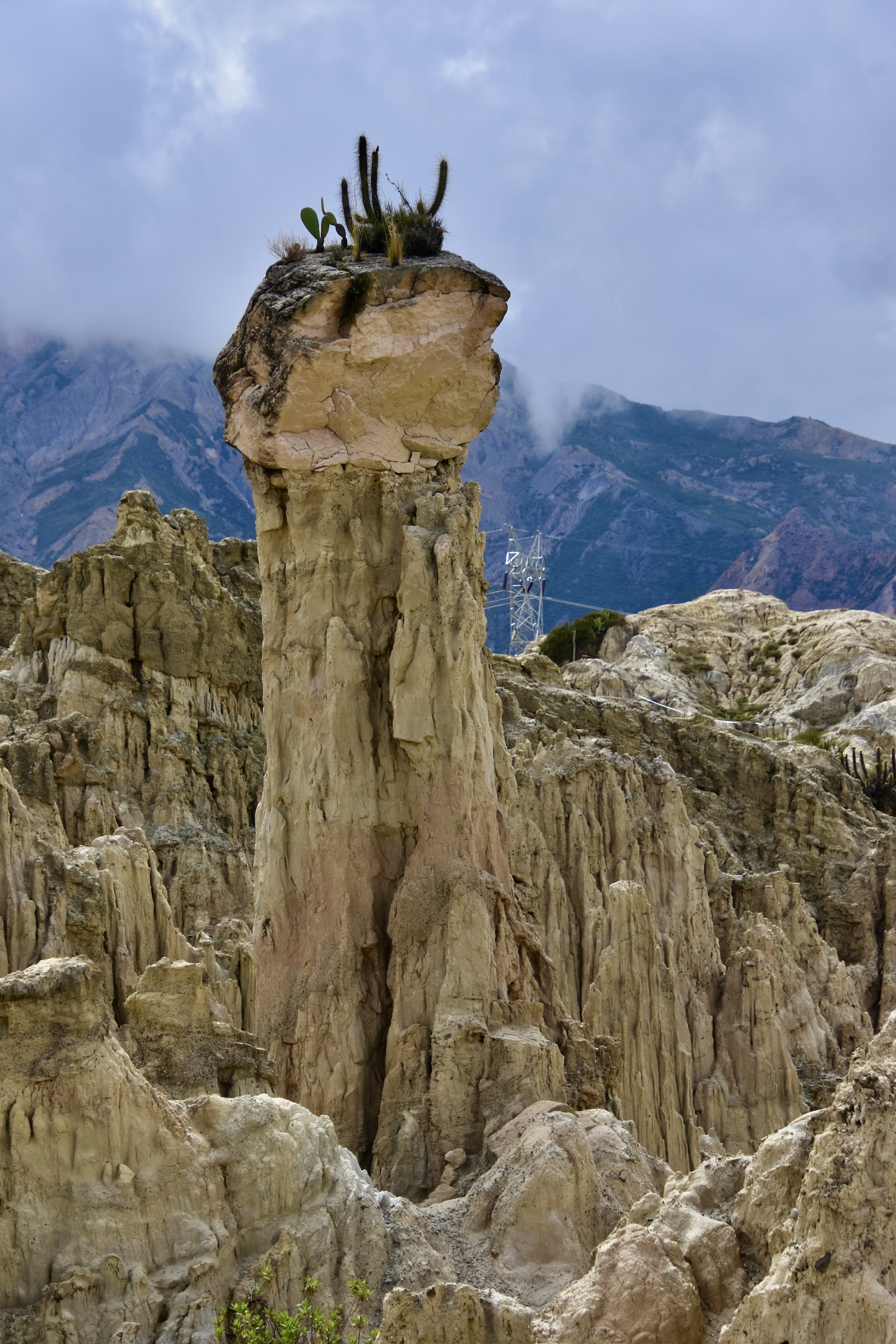
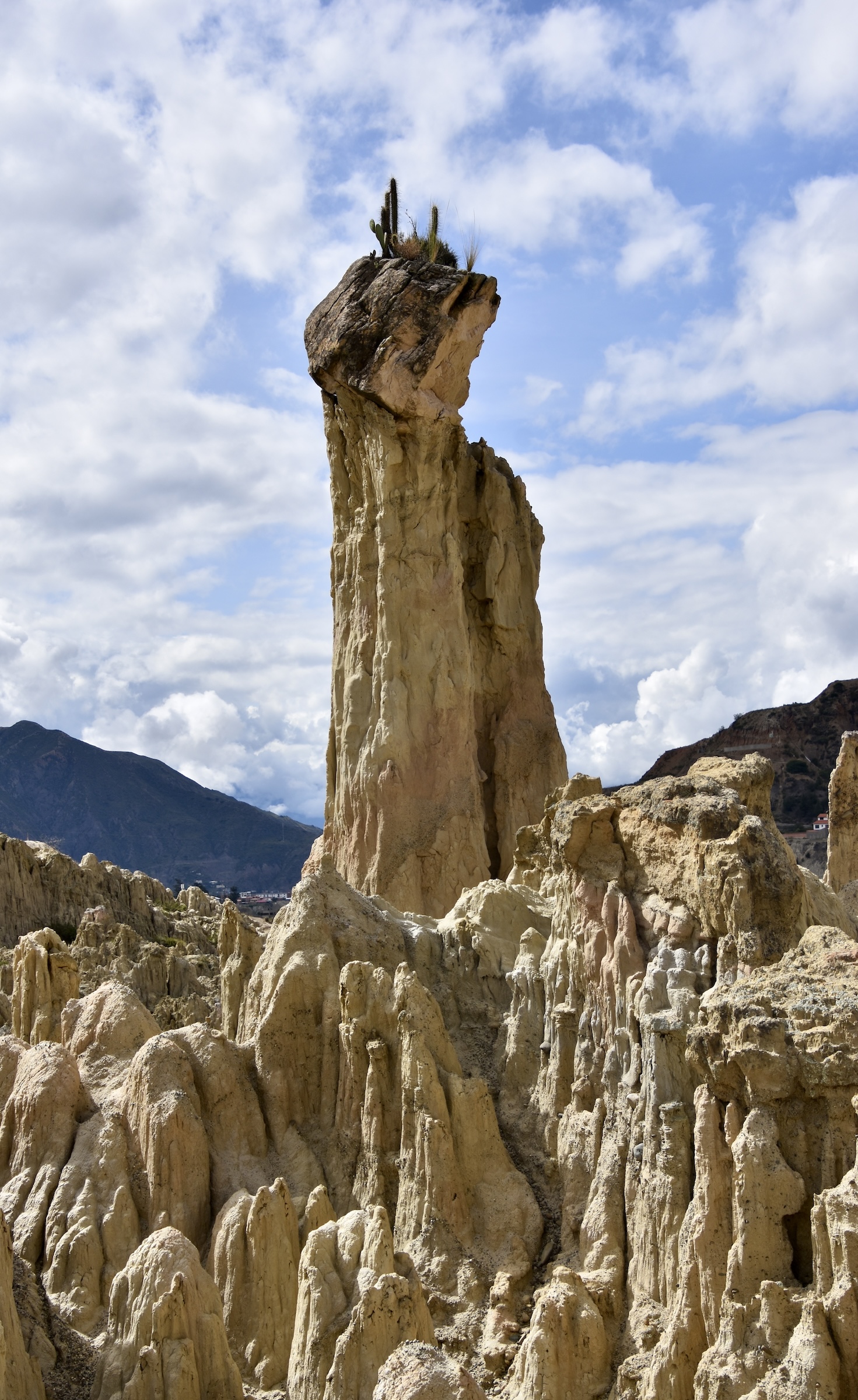
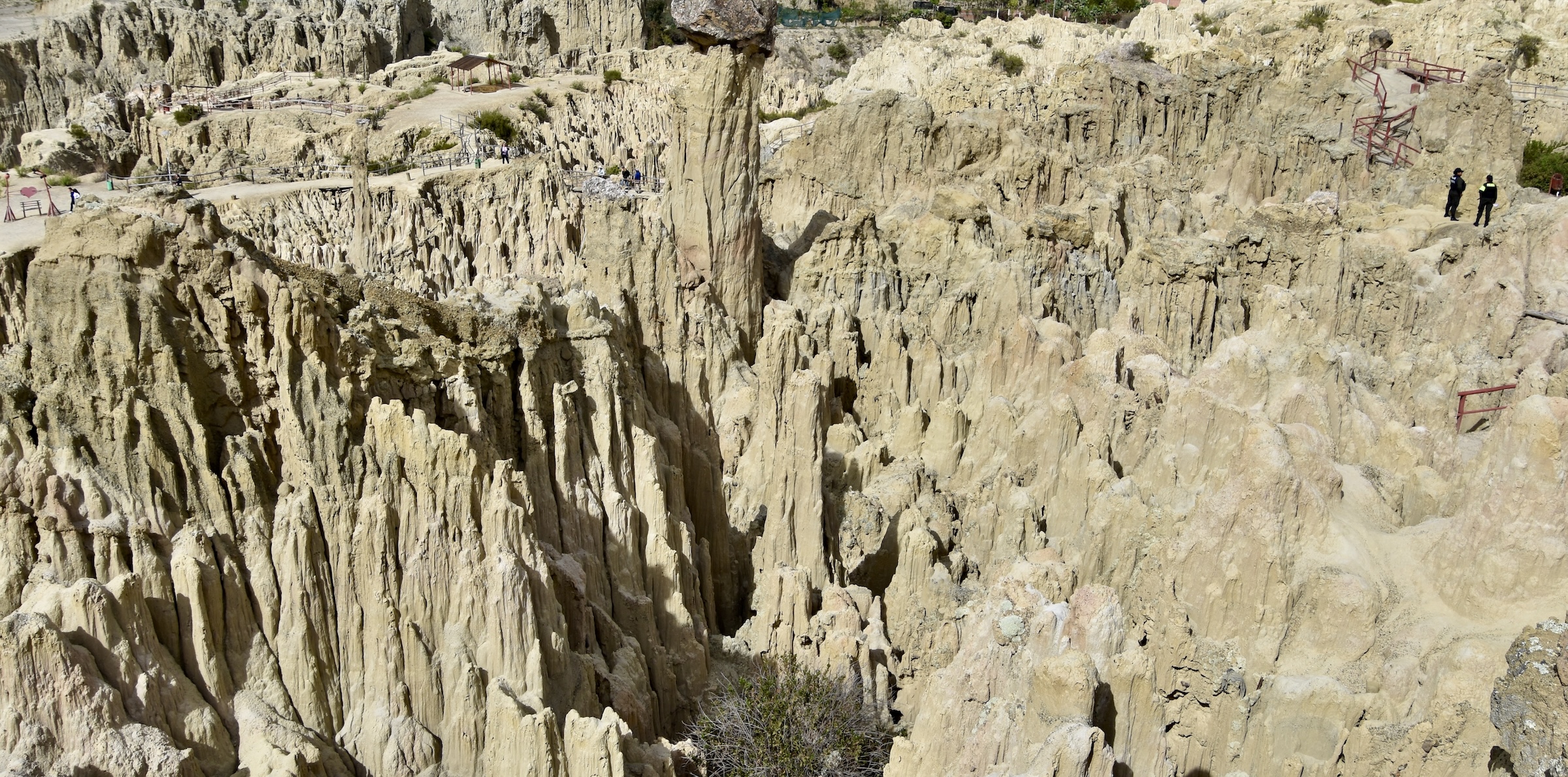
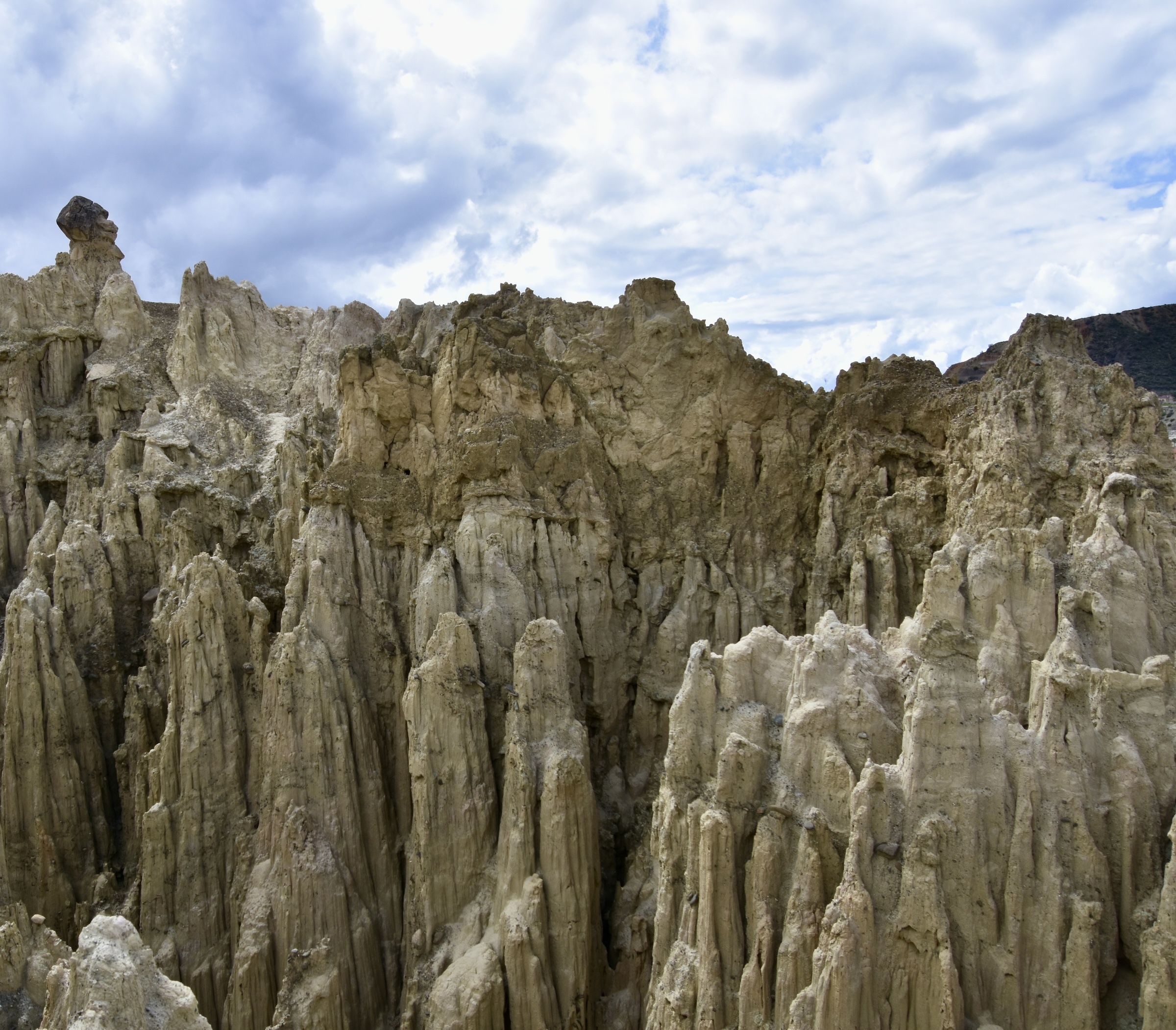
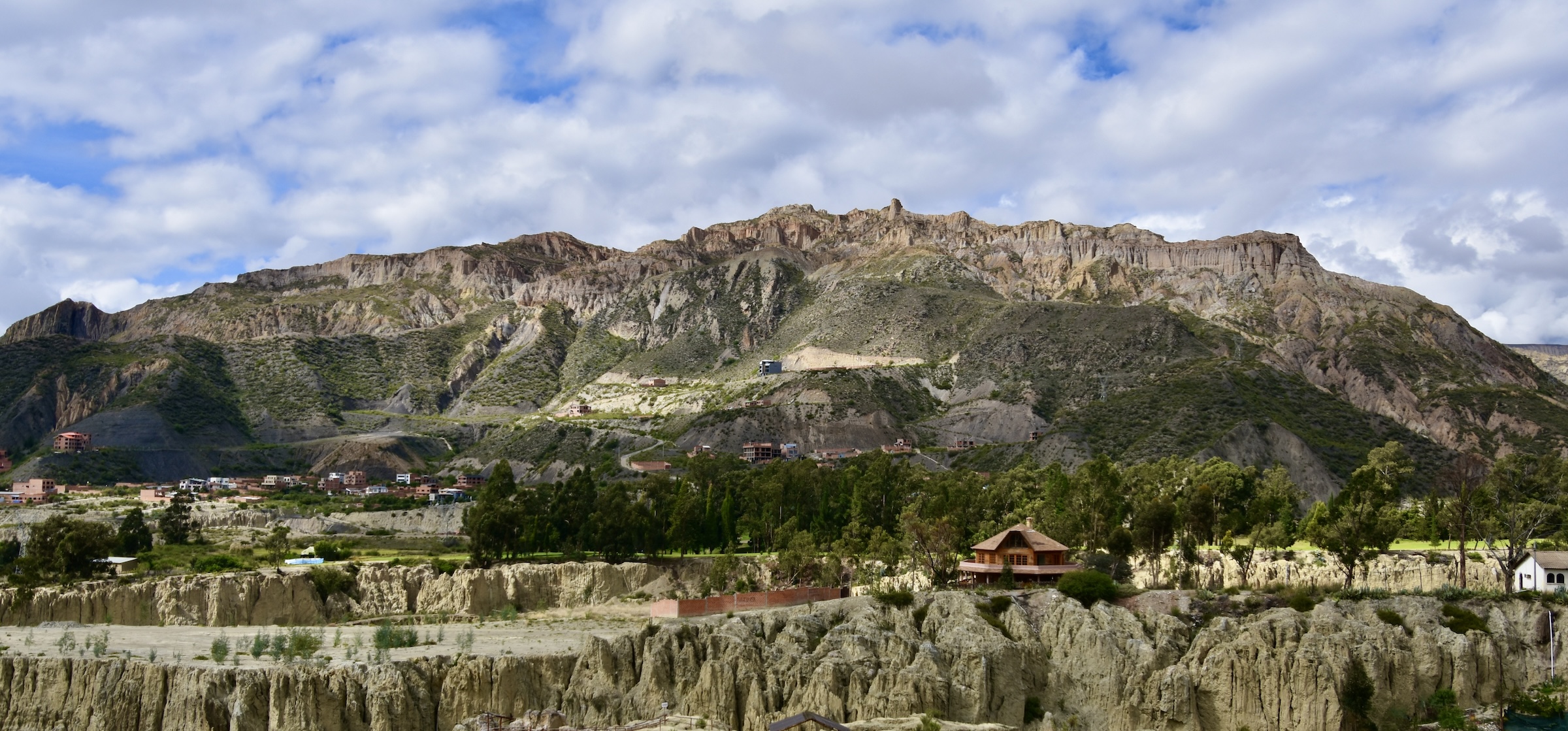
Aside from the close up views of the Valle de la Luna there some great views of the surrounding hills that change colour dramatically as the sun hits them, almost like Death Valley. This photo does not capture the light effects as well as you would see in person, but it will have to do.
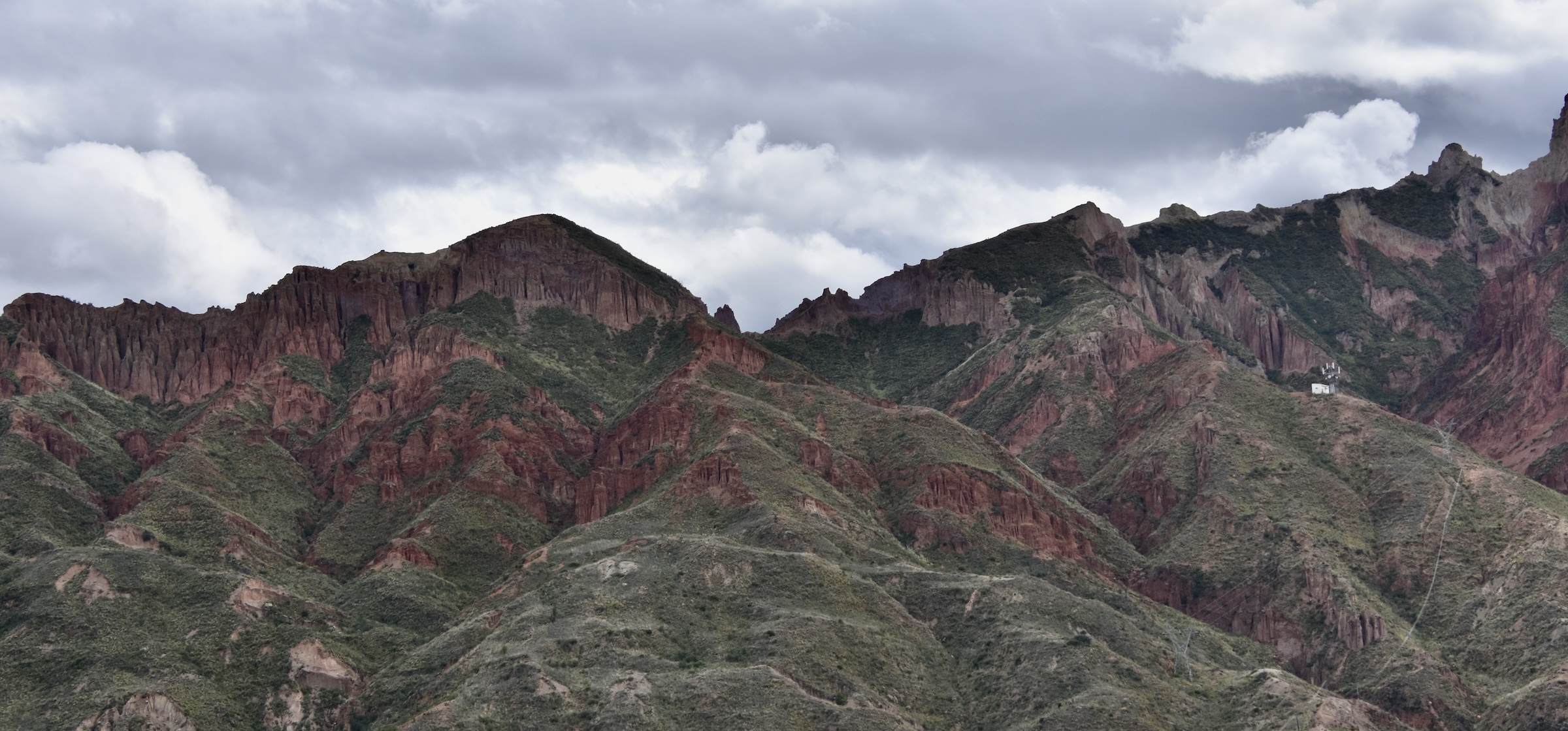
This is looking in the opposite direction.
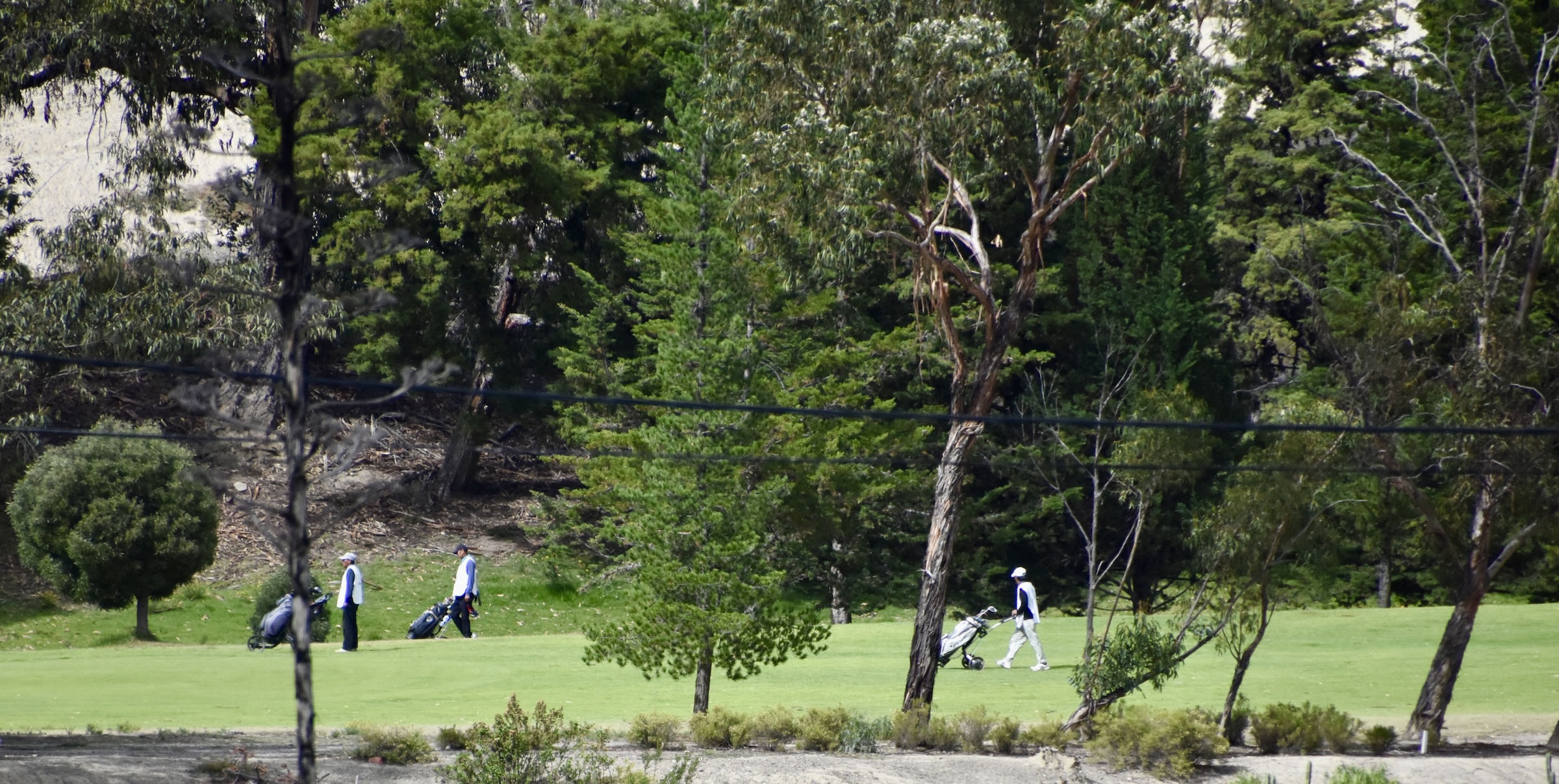
And there’s one more really neat thing you can see from the Valle de la Luna – the world’s highest golf course, La Paz Country Club. Man I would have liked to tee it up at 3,342 metres (10,650 feet) because the ball would go forever in this thin air.
Mi Teleférico
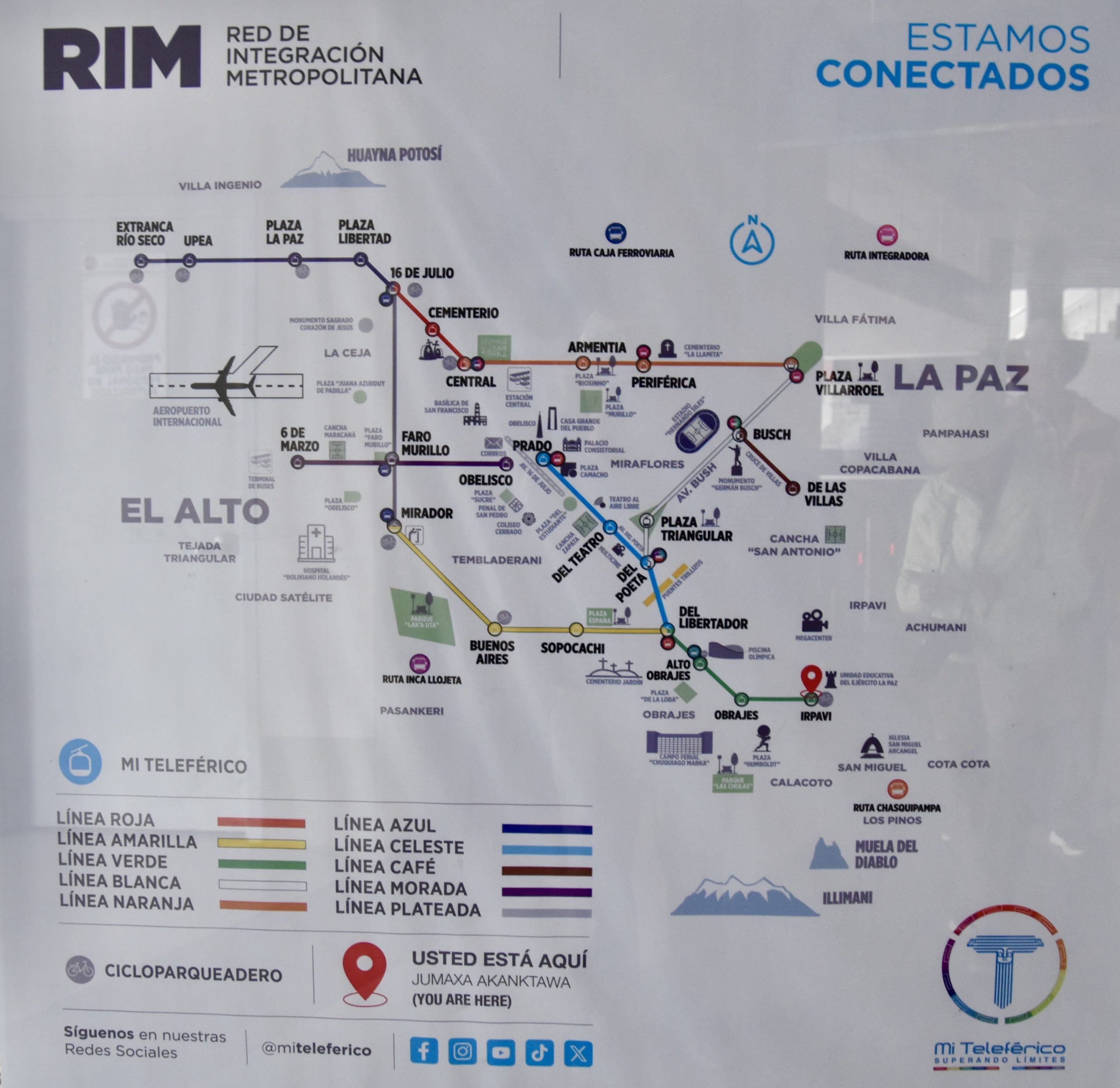
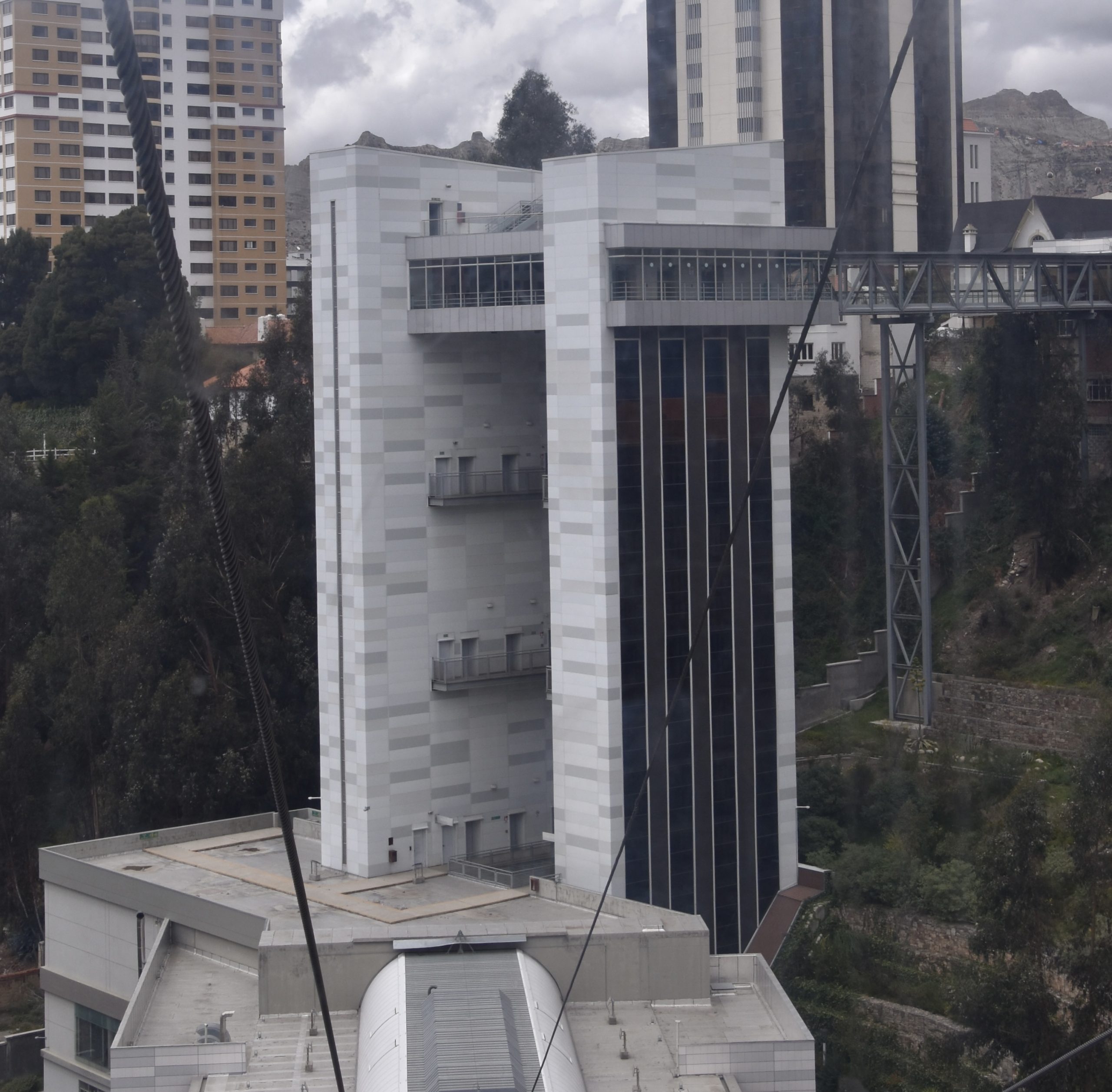
Our next adventure was something that knocked my socks off. Did you know La Paz has the world’s largest aerial cable car system with ten lines and 26 stations connecting La Paz to El Alto and all points in between? I sure as hell didn’t and when G took us on a multiple line tour of the city I was more than impressed. This system is super modern and efficient with each station the same colour as the line that emanates from it and each one different in architecture. This is the White Station
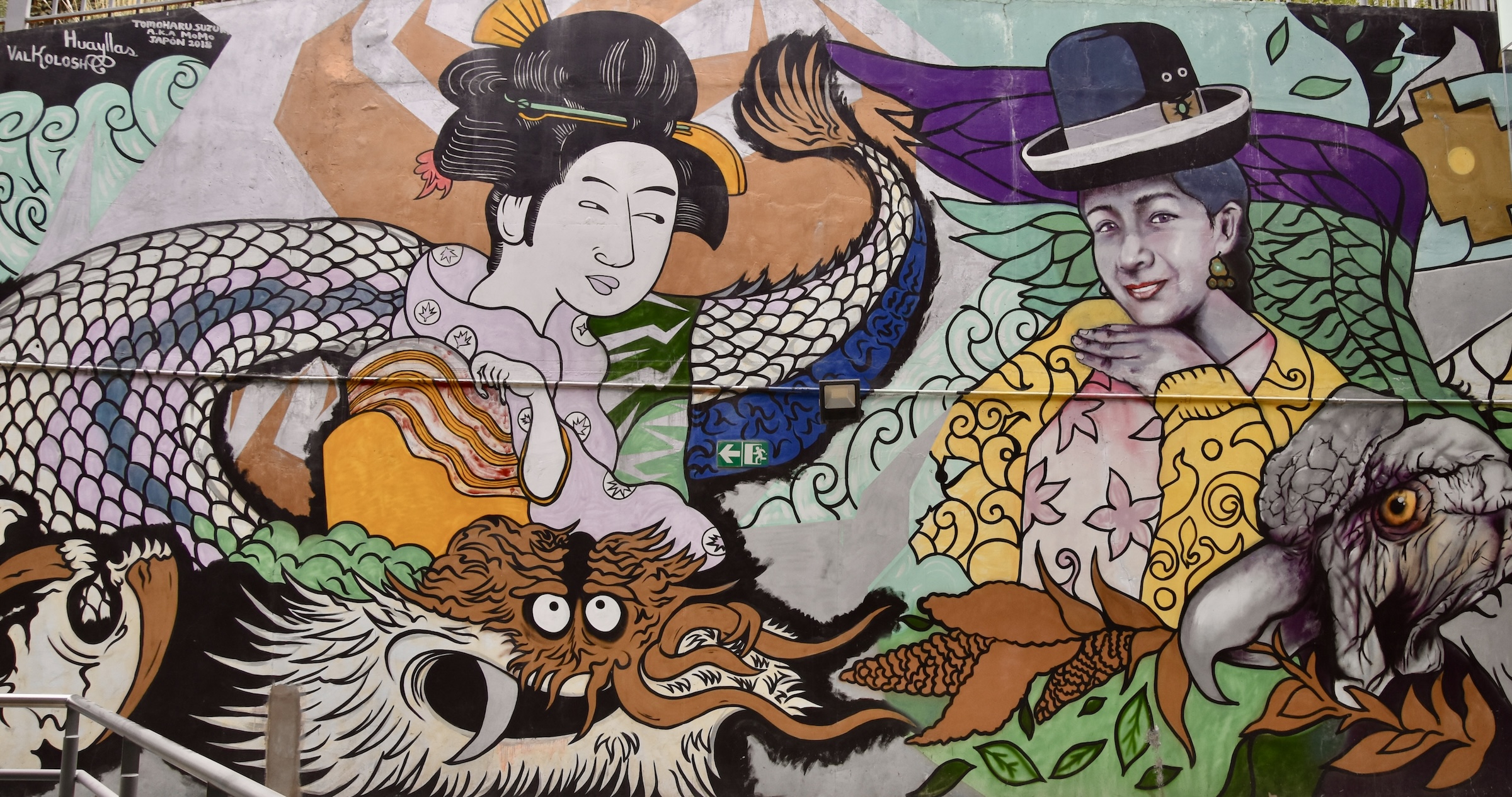
Much like metro stations in some cities the La Paz stations have works of art that enhance the travel experience.
Ok, let’s take a ride and enjoy the views of La Paz from the Teleférico system.
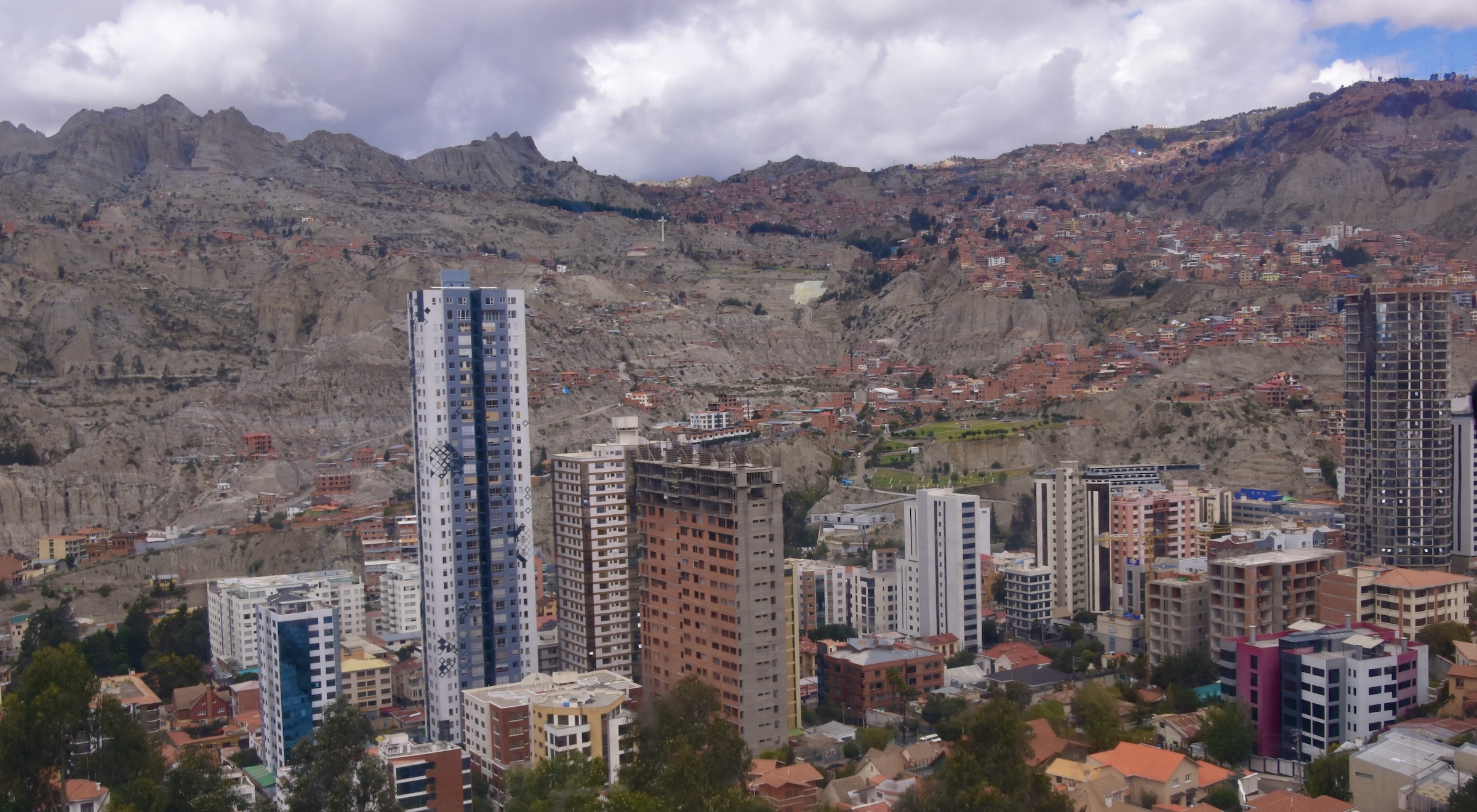
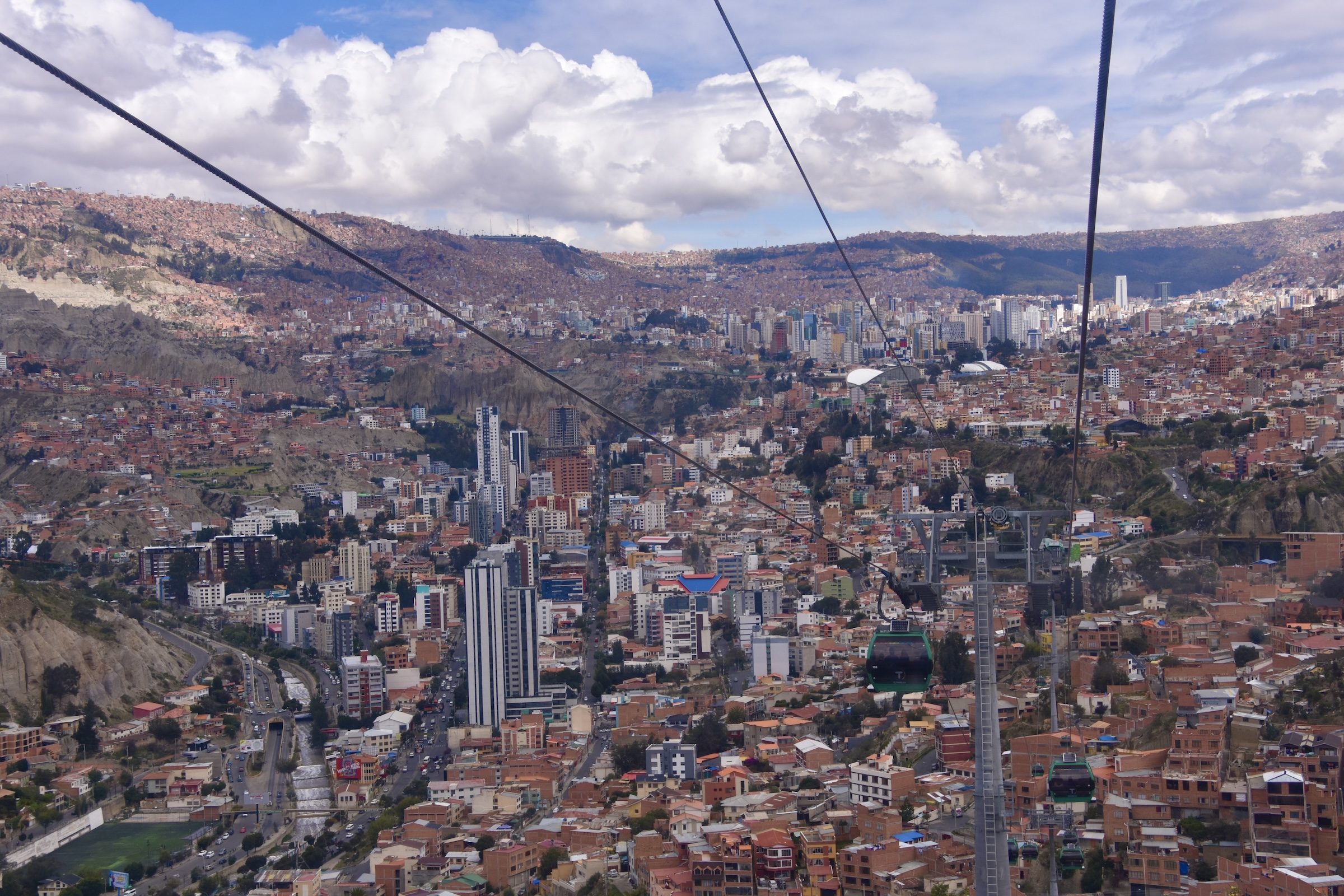
In the same spirit of the Cholets of El Alto, the apartment buildings of La Paz are brightly coloured and not the eyesore they could be.
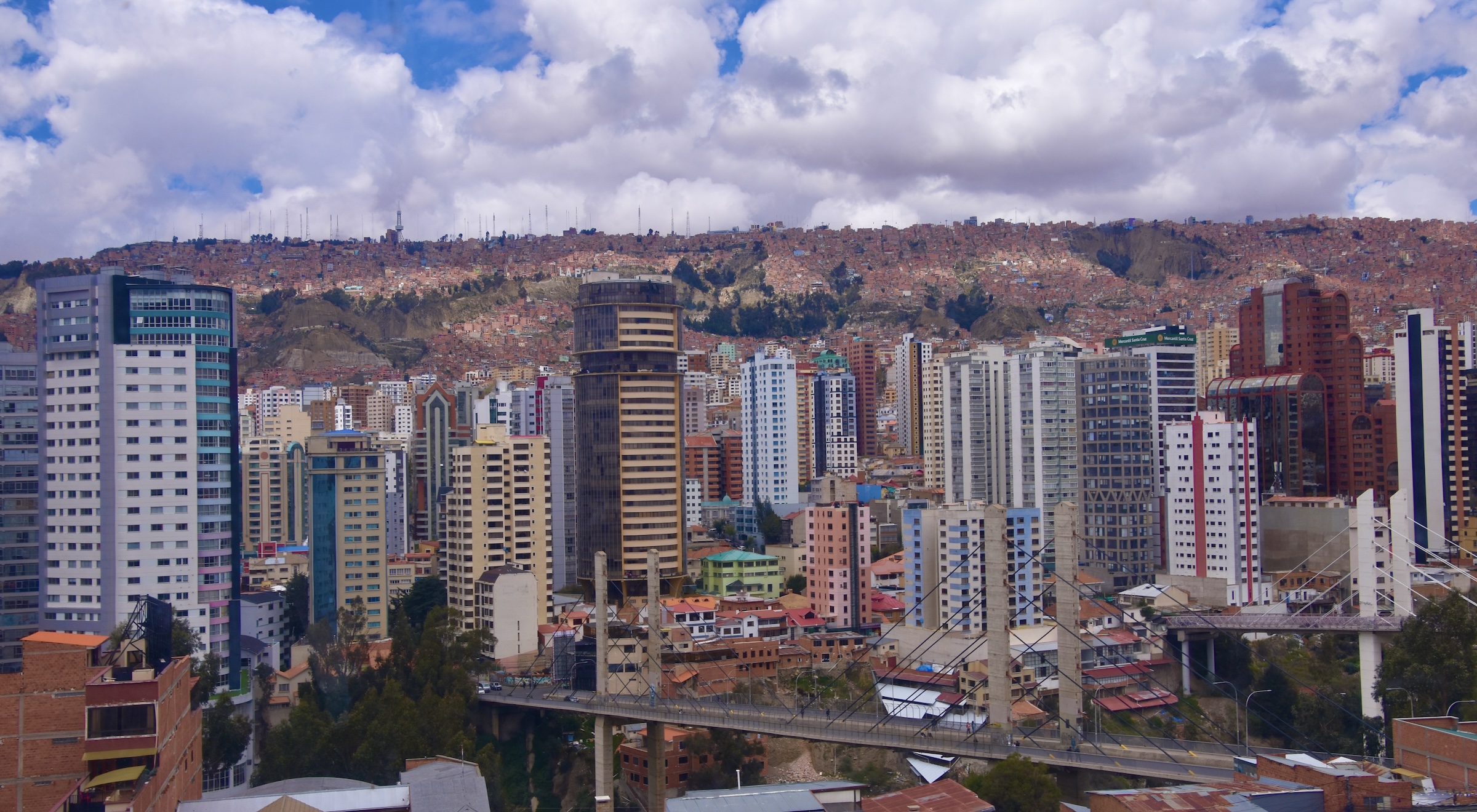
Seriously, if I showed you this picture and asked you to guess in what city it was taken, I suspect La Paz would be the last place you’d guess.
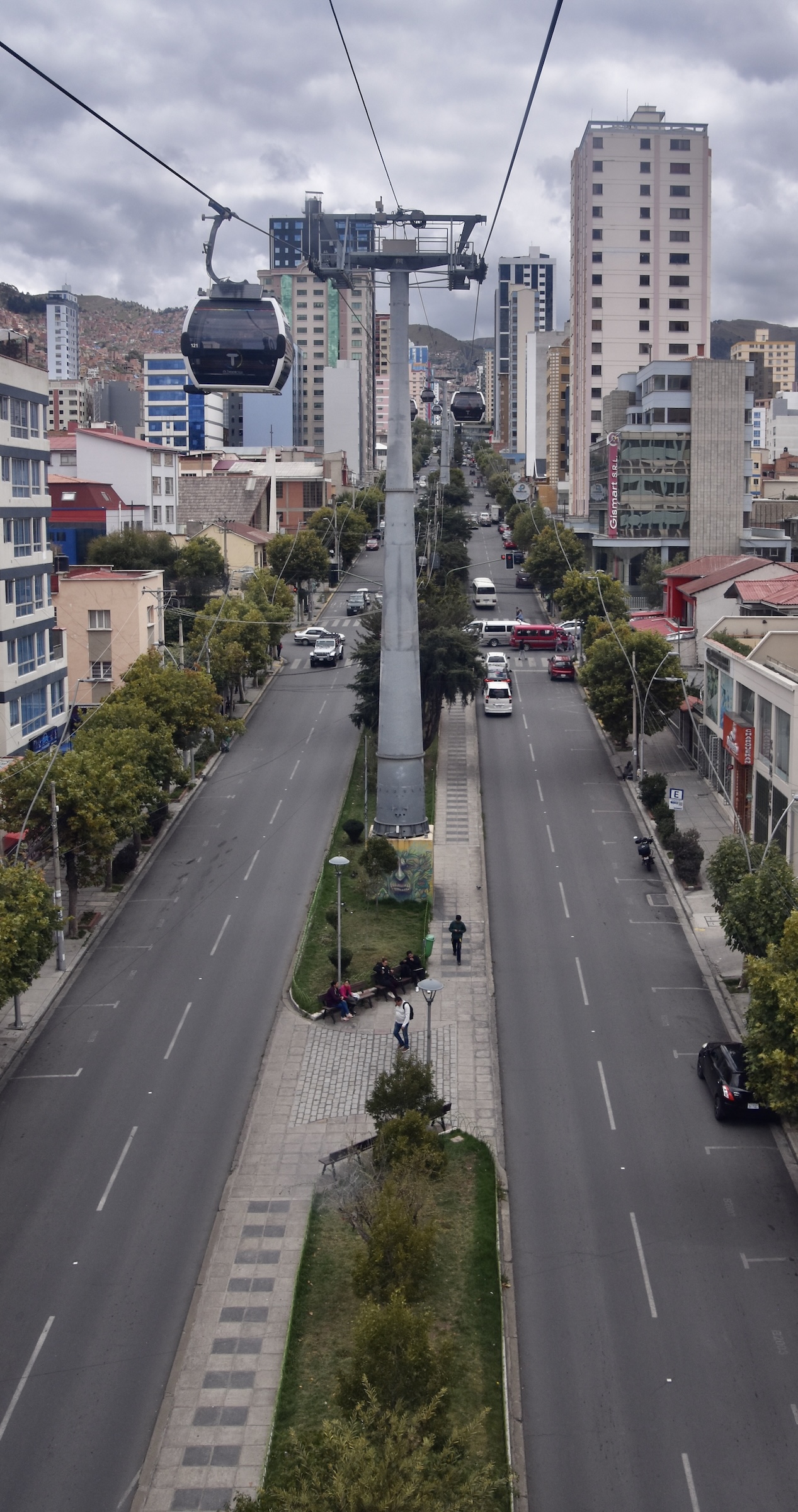
One of my favourite parts of the ride were places where the gondola was directly overhead a major thoroughfare and you could look down at the hustle and bustle below. I could ride these things for hours and if I were to return I would ride every one of the ten lines.
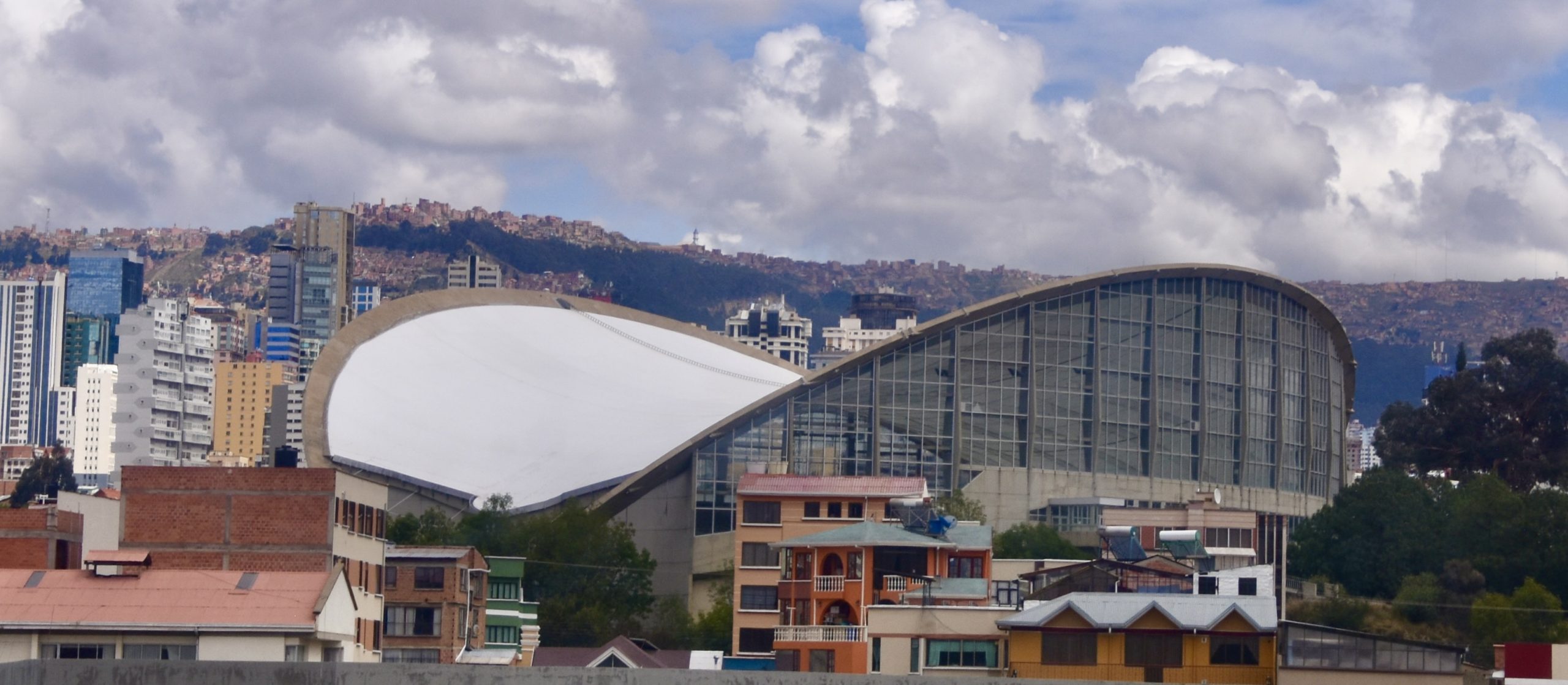
Here’s a building I’m familiar with – the Saddledome in Calgary. Not! It’s an Olympic size swimming pool in La Paz.
G dragged us reluctantly away from the gondolas to our next stop which was the Killi Killi mirador where we had more fabulous views of La Paz.
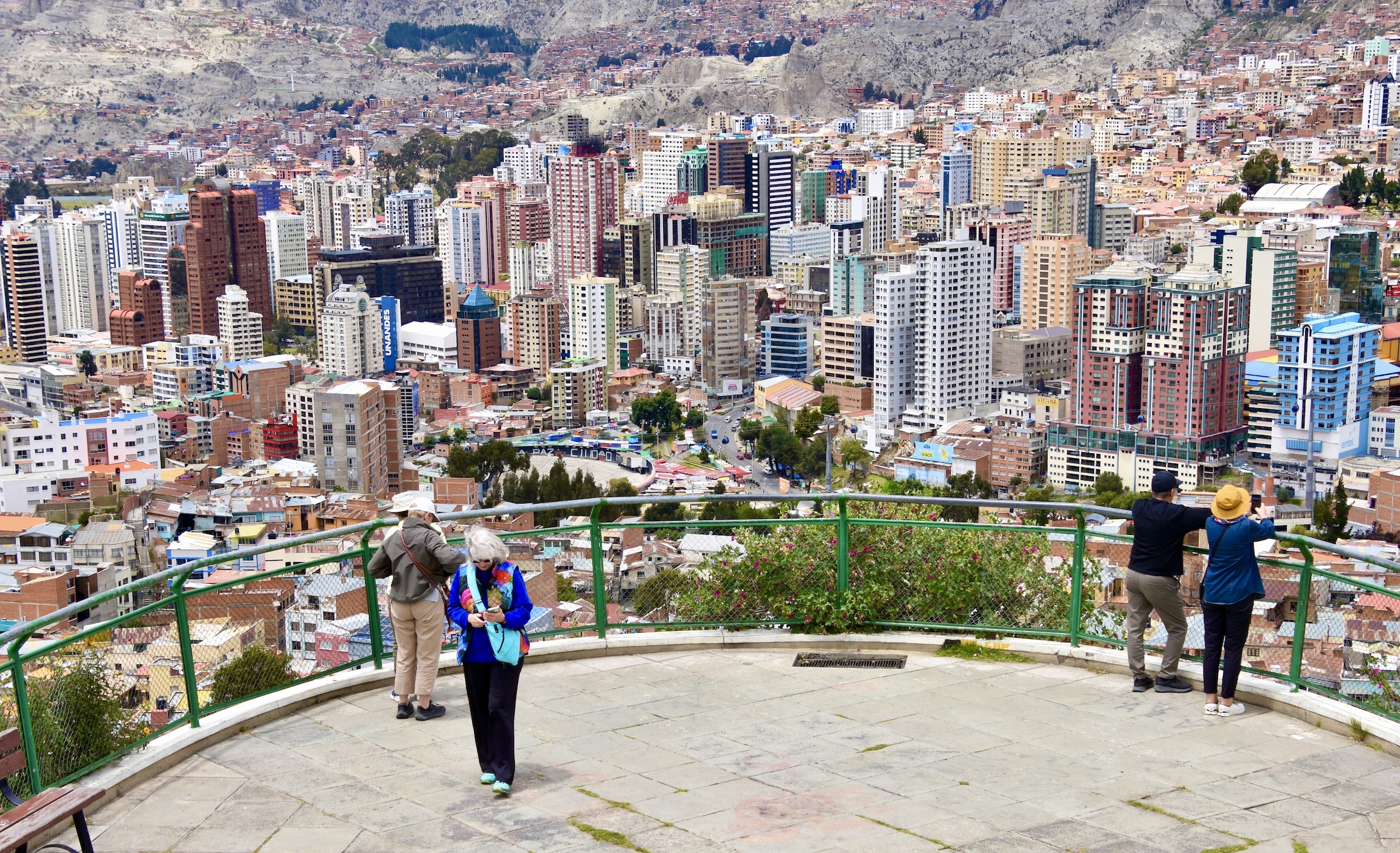
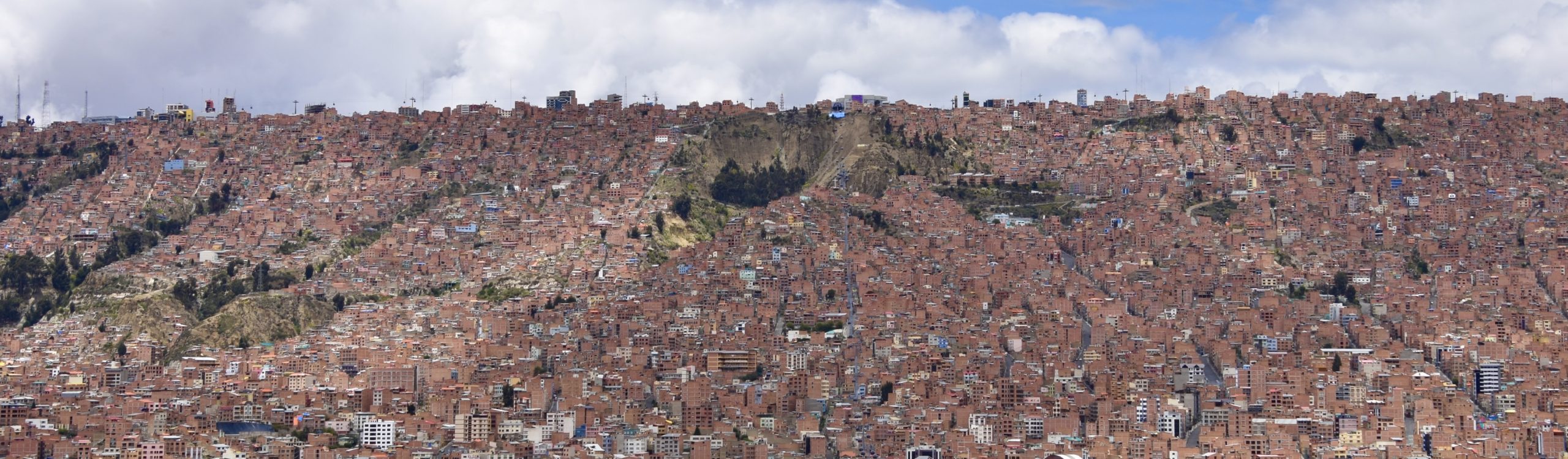
From here you could see the sea of red brick buildings that climb the valley walls. This was a far cry from the barrios of Guatemala City or the favelas of Brazil.
Colonial La Paz
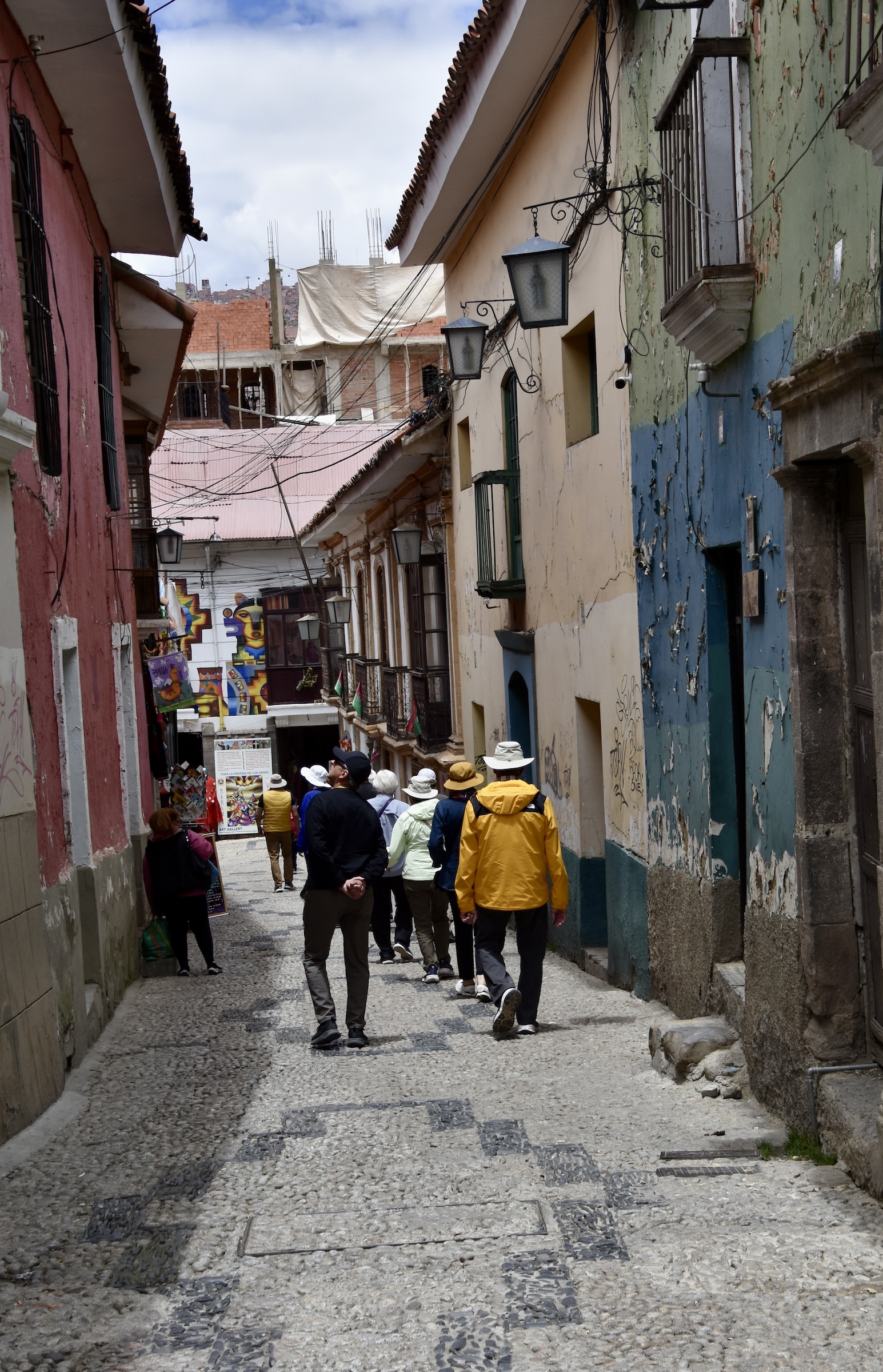
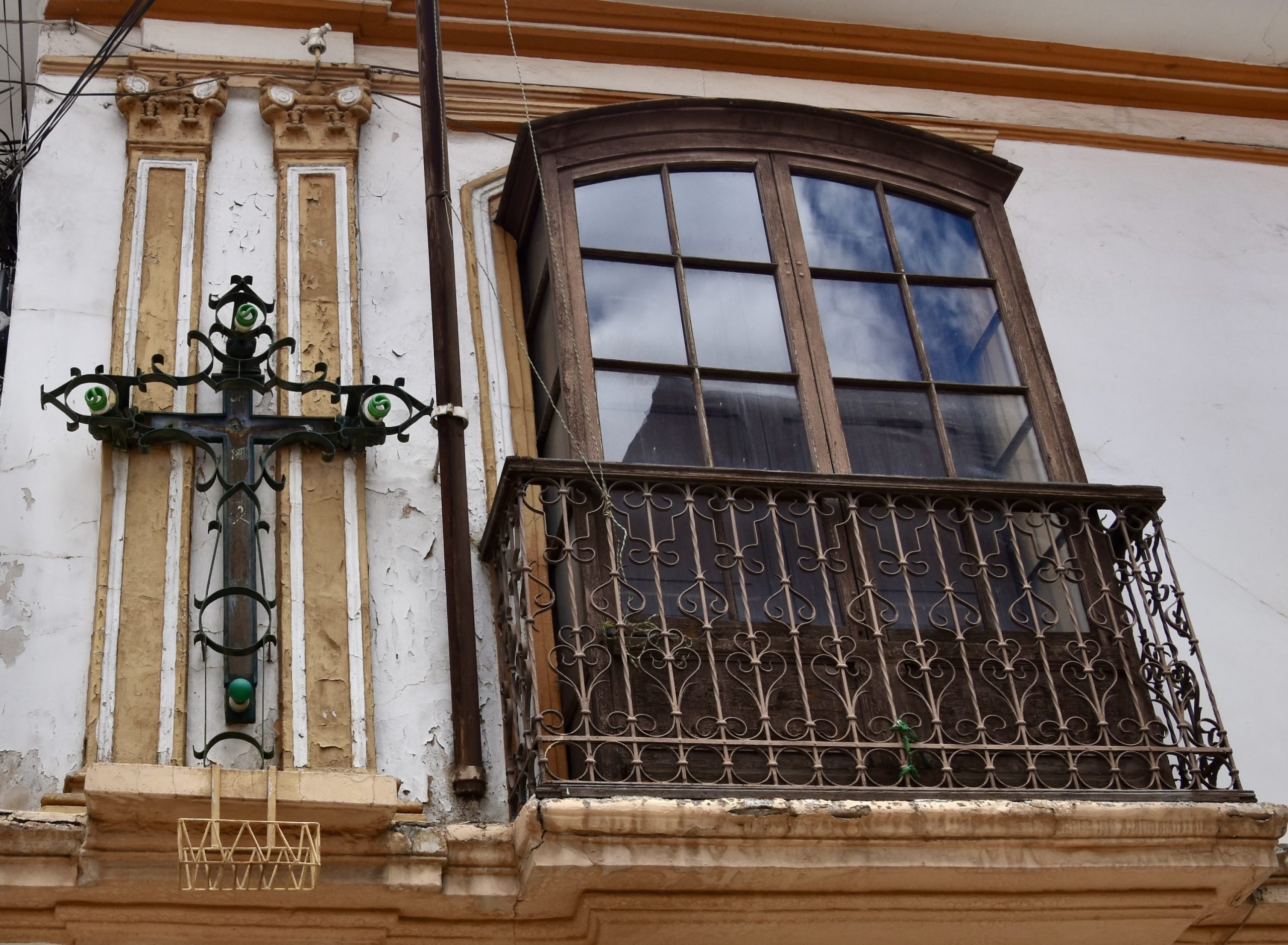
We ended our tour of La Paz in the relatively small area that comprises the centre of the colonial era city where as you can see the streets are narrow and in many places pedestrianized. There were quite a few interesting sites that G pointed out including the green cross of Calle Jaen which was and still is by many, believed to be haunted. The green cross was placed there hundreds of years ago to ward off evil spirits.
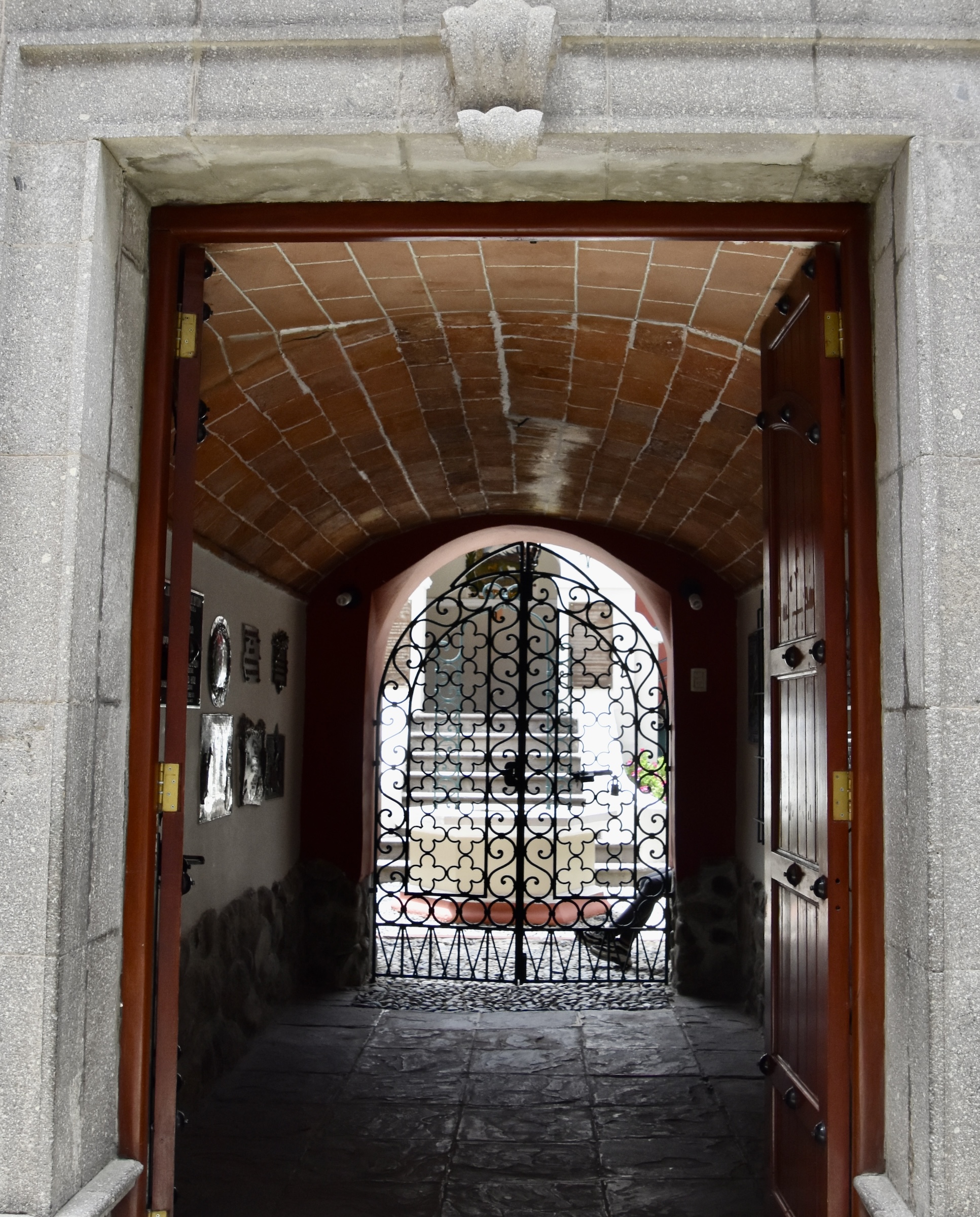
Just up the alley from here we got a peek into the home of Pedro Domingo Murillo, the person who started the rebellion from Spain in 1810 and got hung for his troubles.
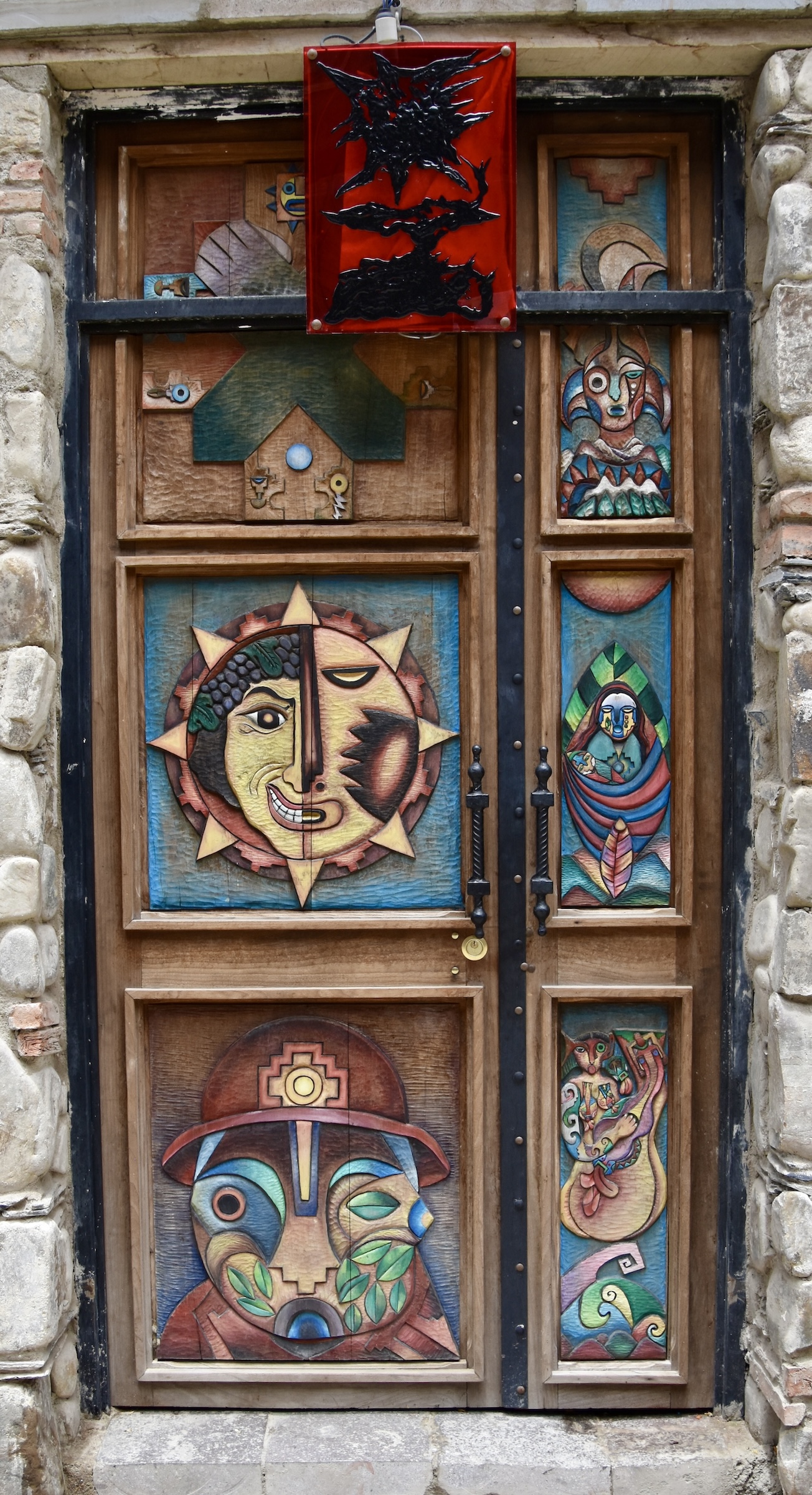
Calle Leon has some interesting businesses advertising their wares via decorated doors like this one.
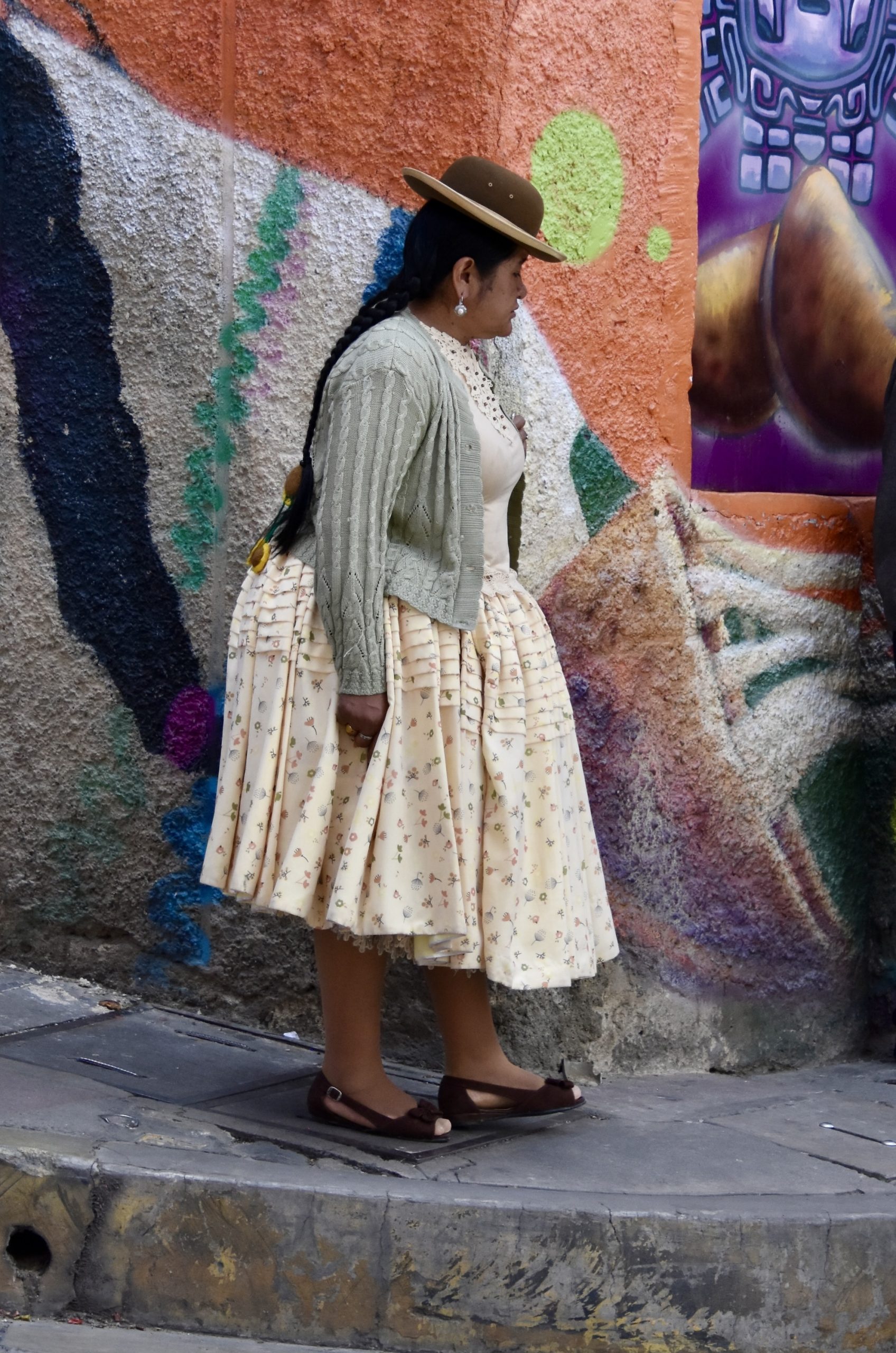
Remember I thought that most women in La Paz would be wearing bowler hats? Of course they weren’t, but at one time a lot of Aymara and Quechua women did wear them along with multiple-layered polleros (skirts), with long braided hair that gave them a distinct look. They were called cholitas by the upper class Bolivians and it was meant as a derogatory term. I did see a few in La Paz like this lady, but they were the exception and not the rule.
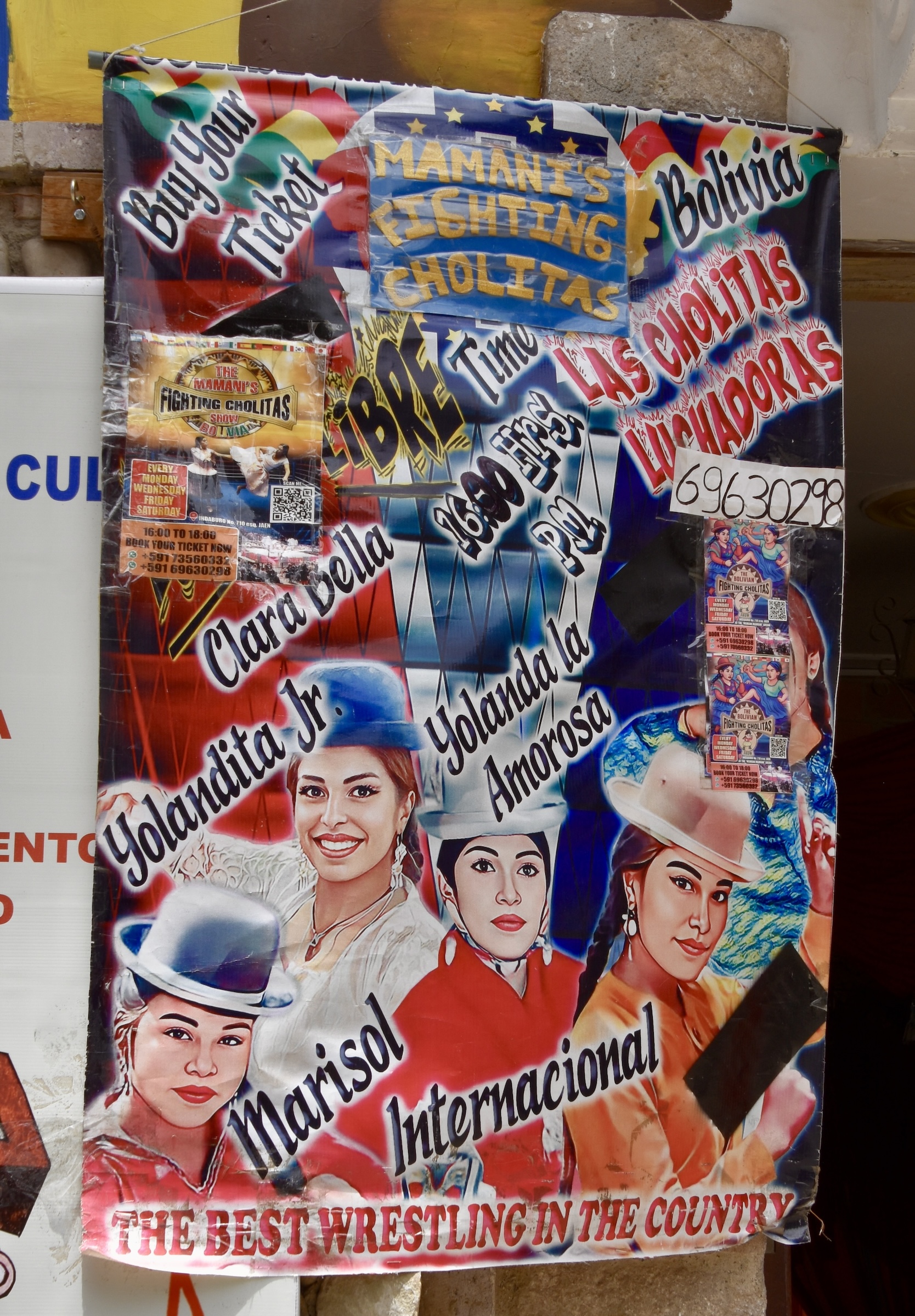
However, the cholitas have made a comeback in one circle and that is wrestling where a number of them are as famous in Bolivia as the WWE stars are in North America. This poster was advertising upcoming matches.
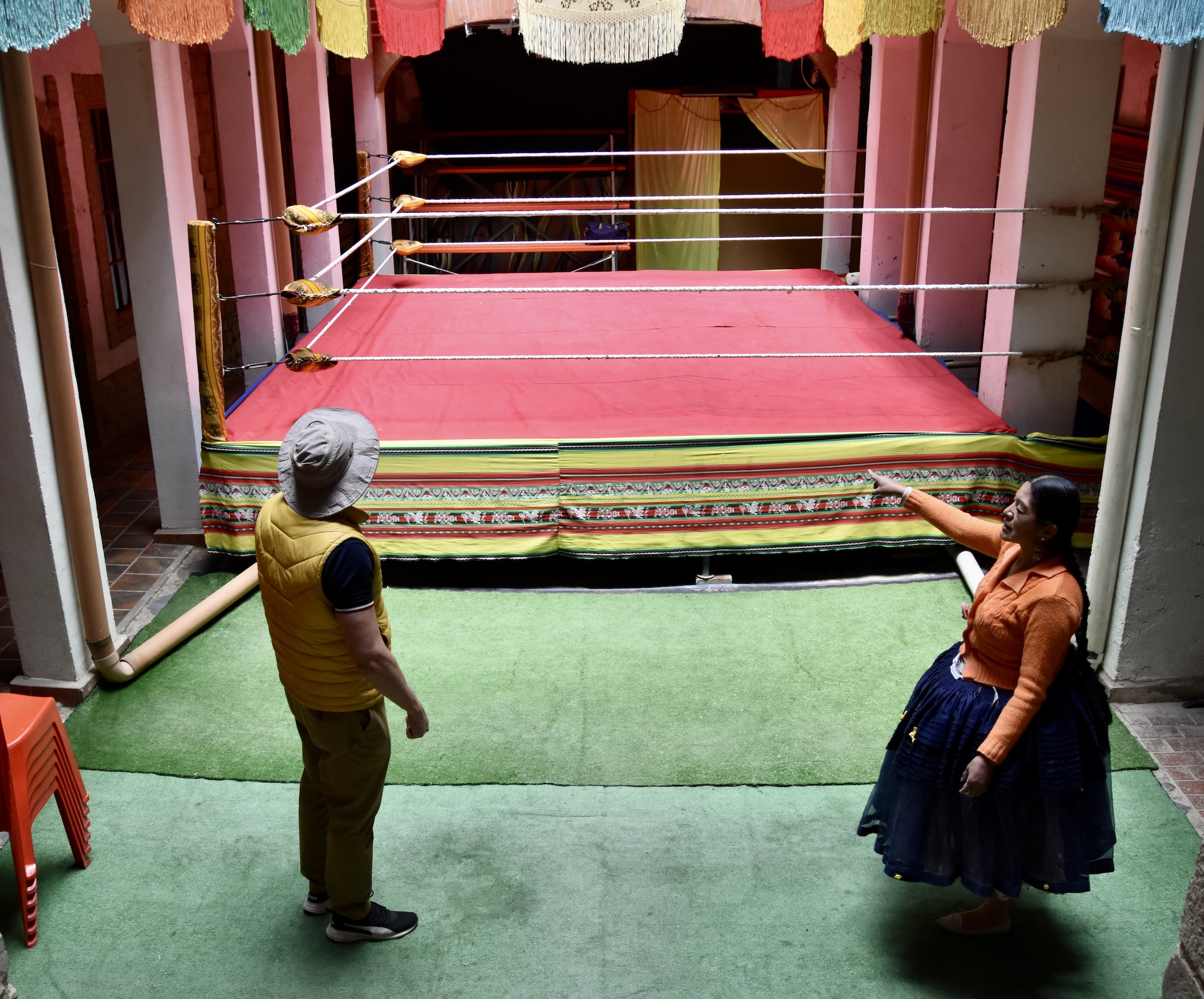
Although there were no matches on the day we visited we did get a look at a cholita wrestling ring which was pretty small. There are tons of videos on YouTube featuring cholita wrestling if you want to check out the real deal. It’s so ridiculously fake that it’s actually entertaining.
Not far from here our group emerged out into Plaza Murillo the centre of the city where the Parliament buildings and cathedral are located. Every Latin American capital has one of these and the one in La Paz is quite modest in comparison to say the Zócalo of Mexico City or the Plaza Mayor in Lima that we saw early on in this tour. This aerial view gives a better idea of what it looks like.
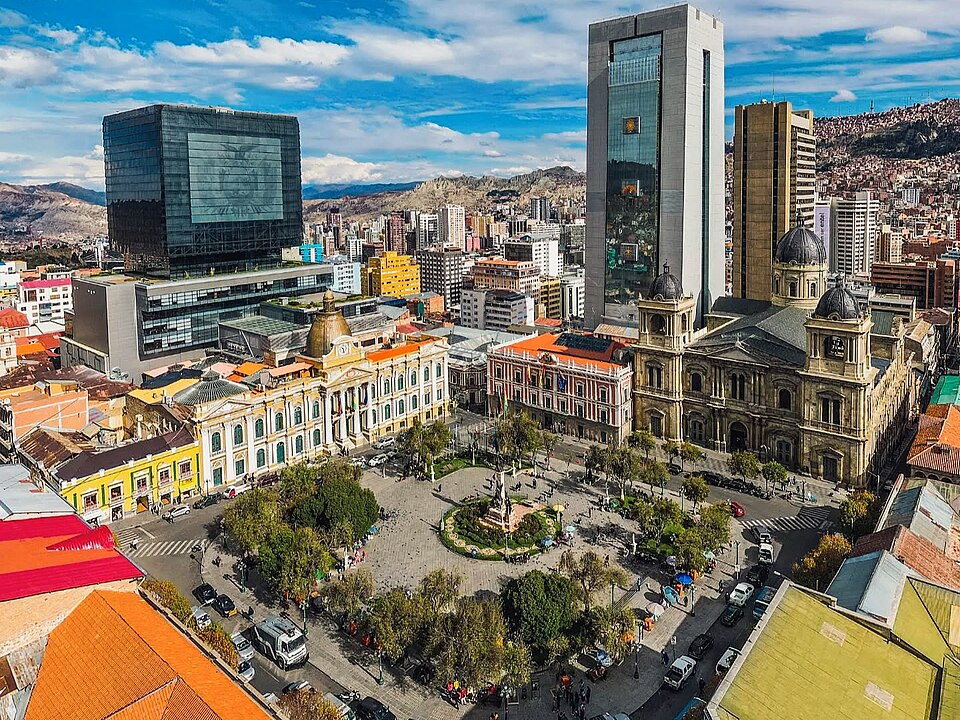
The Parliament building is in the upper middle with the pink Presidential Palace beside and then the cathedral. Let’s take a closer look.
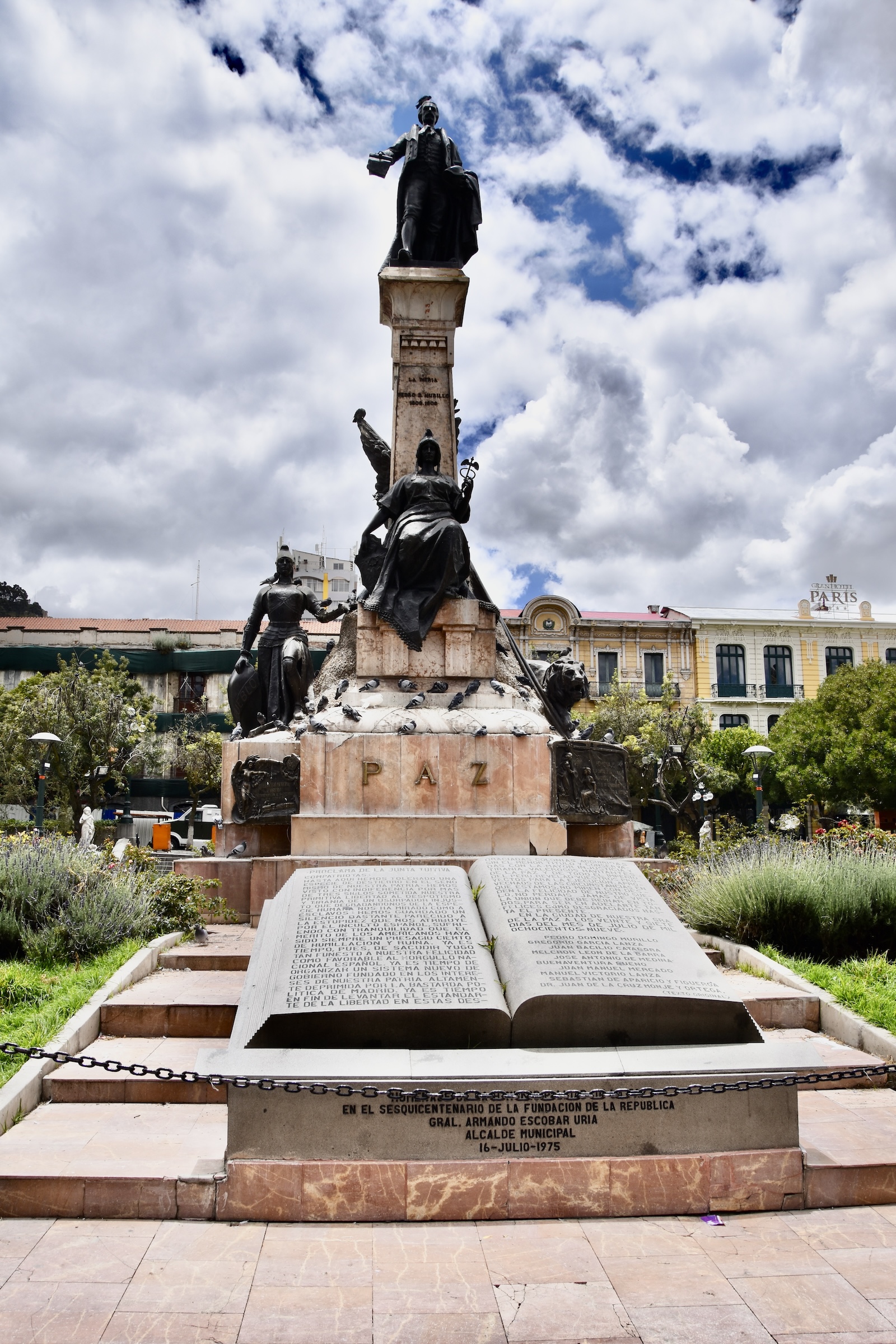
This is the statue of Murillo in the centre of the plaza. As usual, there’s a pigeon on his head.
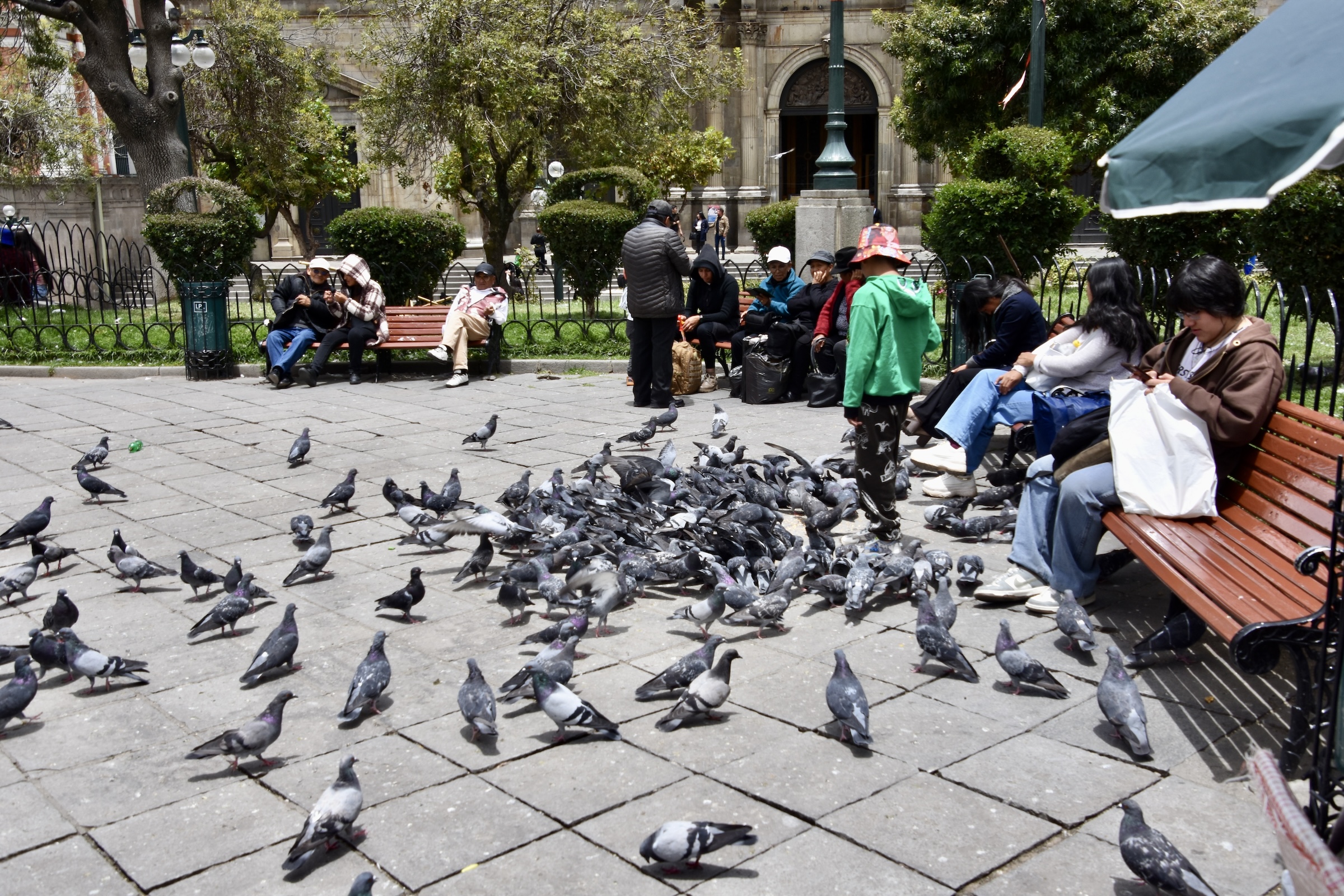
And they are everywhere in this plaza, being fed by these people who have no idea how many fatal diseases you can catch from these bloody flying rats.
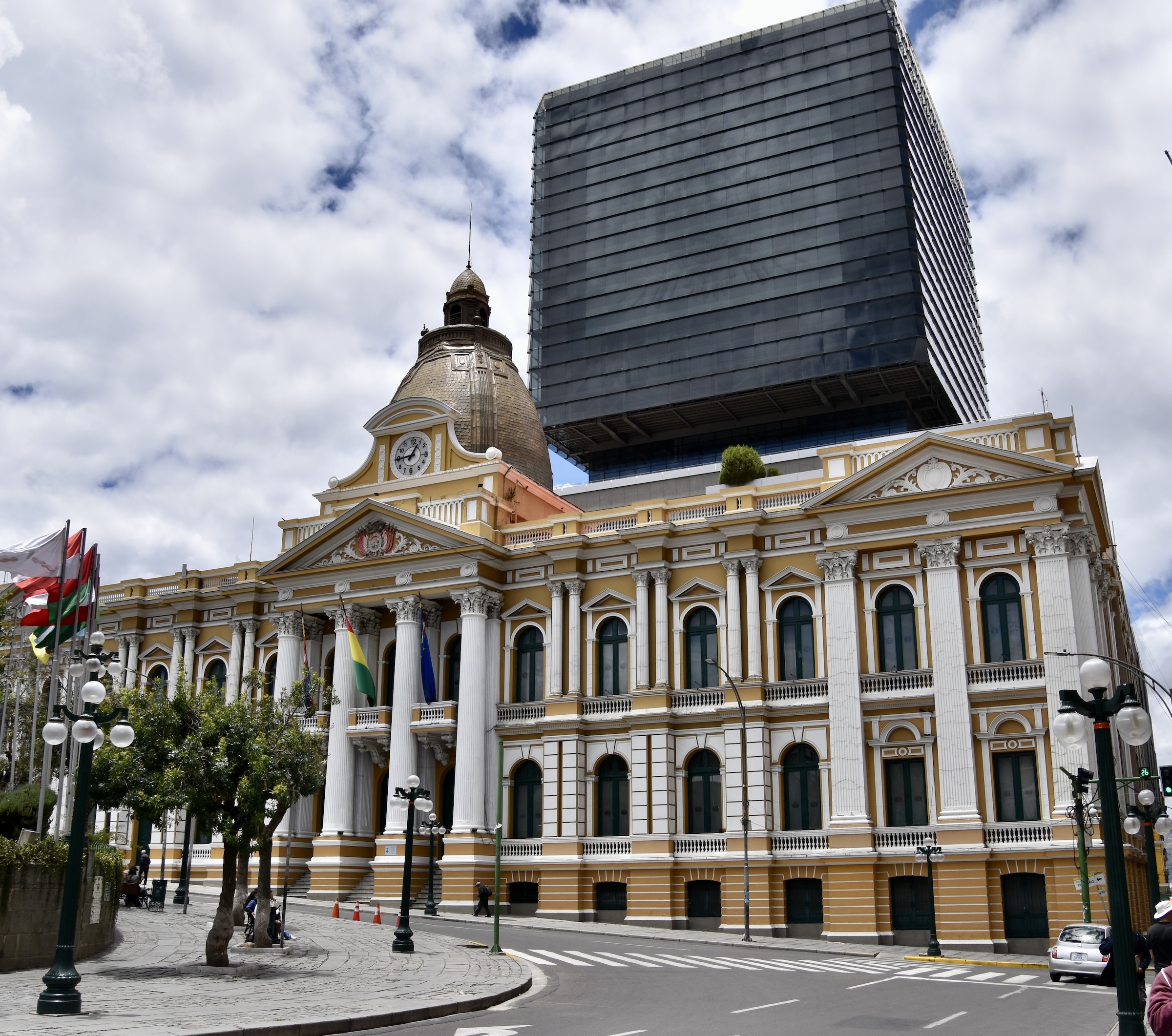
This is the Bolivian Parliament building which is overshadowed by this government office building which doesn’t seem quite right.
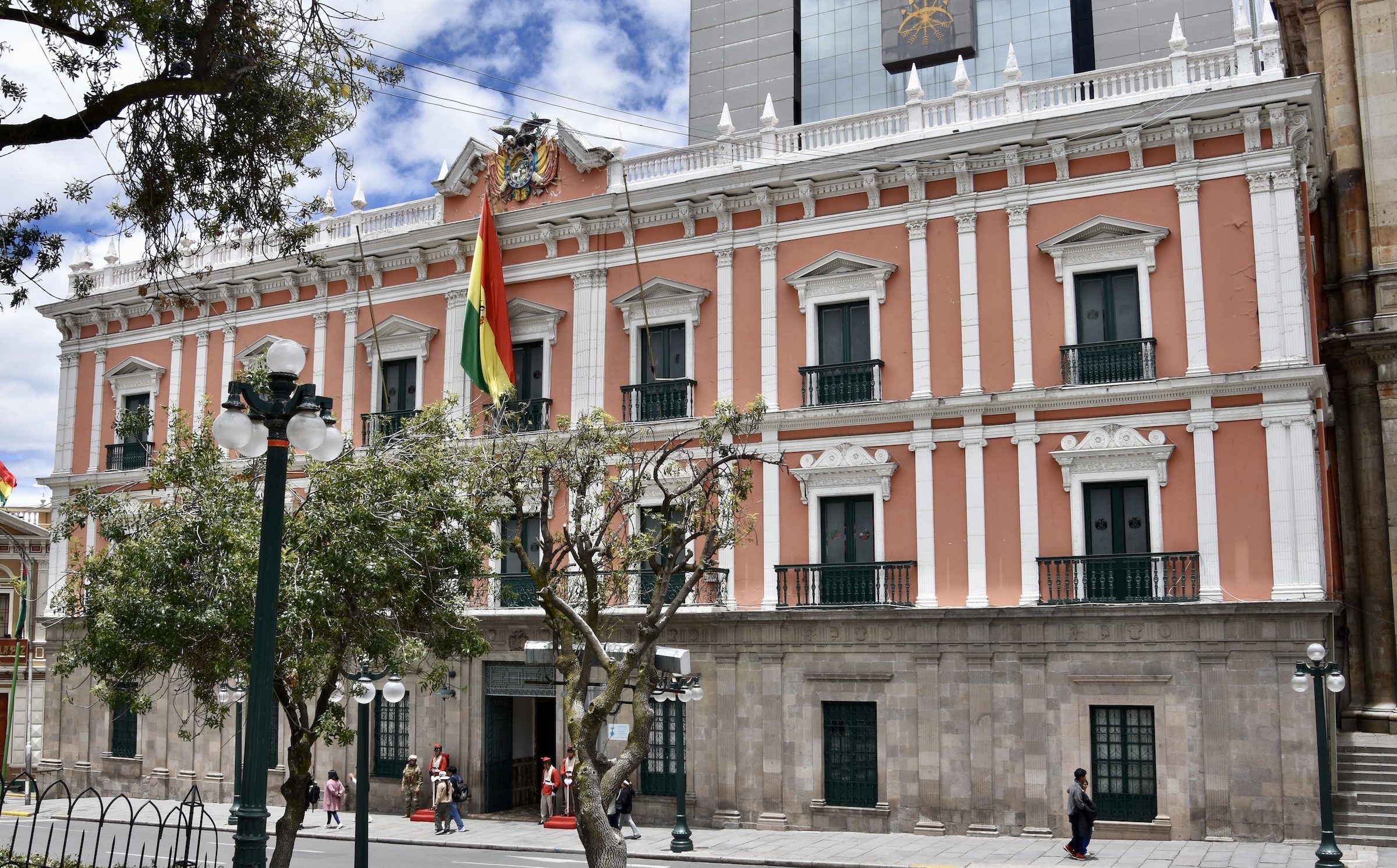
This is the Presidential Palace which unlike the White House or 10 Downing Street you can walk right up to the entrance.
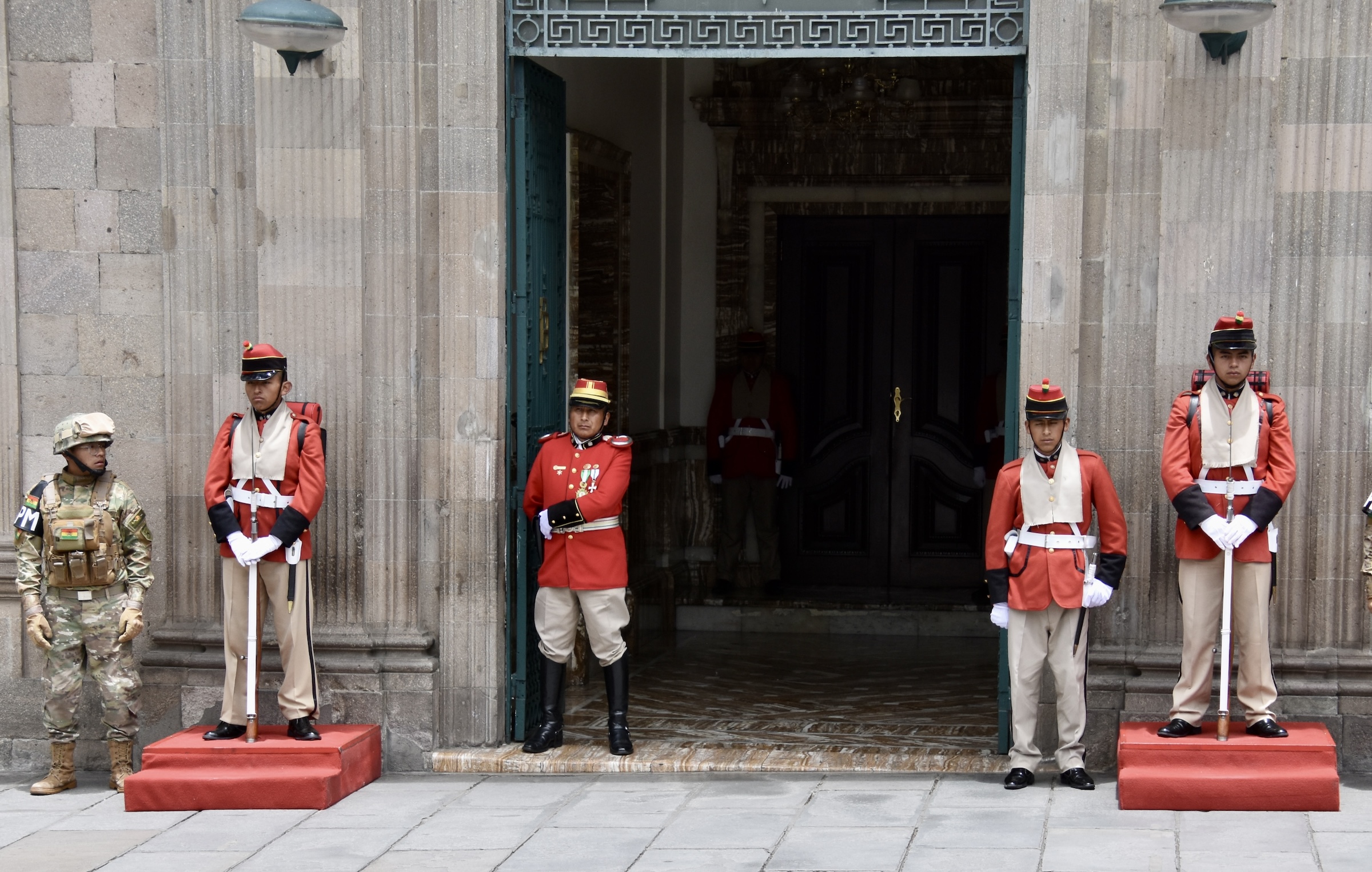
The guards won’t let you in, but they make for a colourful photo.
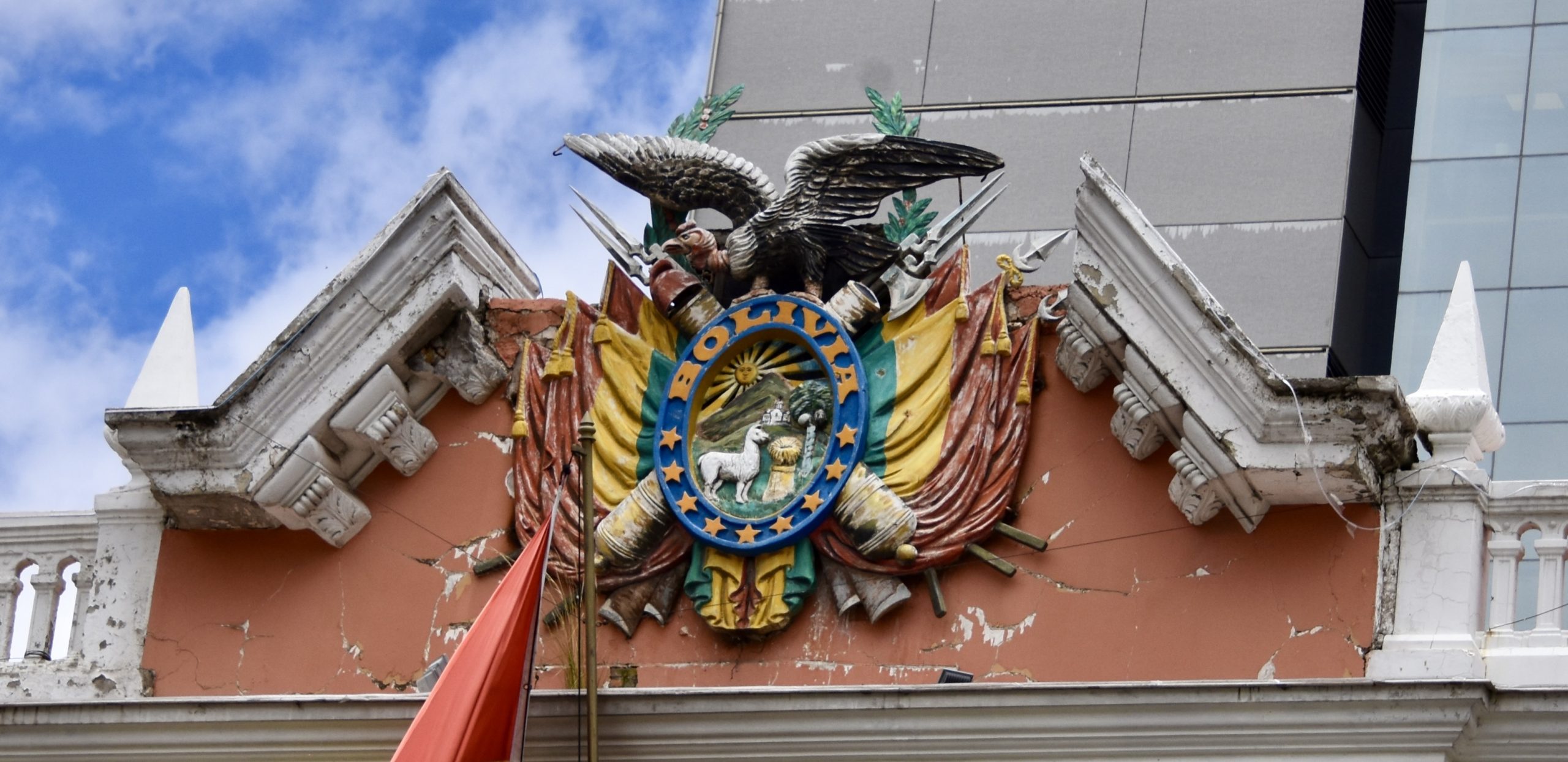
As does the Bolivian coat-of-arms atop the palace.
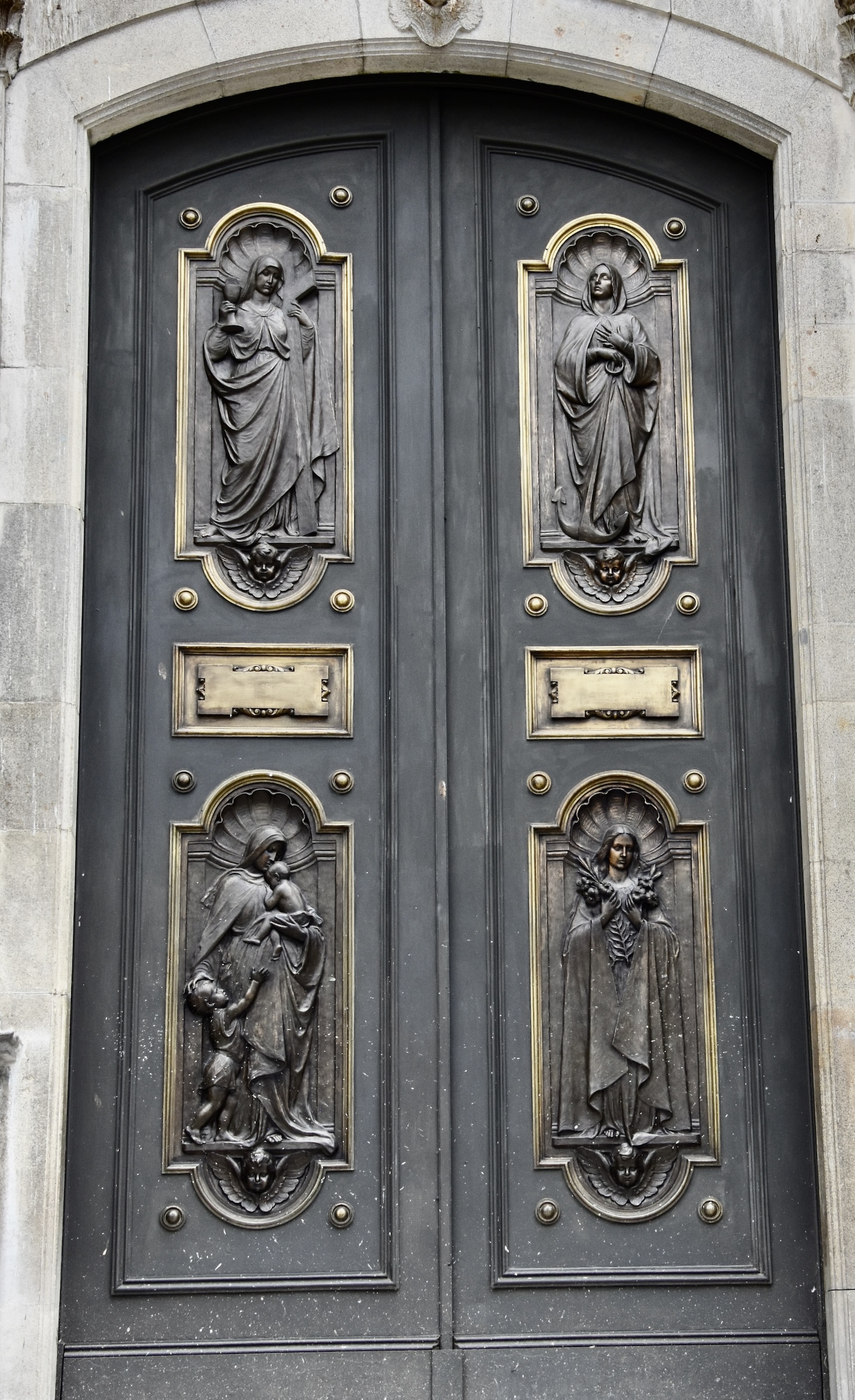
The La Paz cathedral is not old by Latin American standards and not particularly interesting either except maybe for its five bronze doors of which this is one depicting four versions of the Virgin Mary.
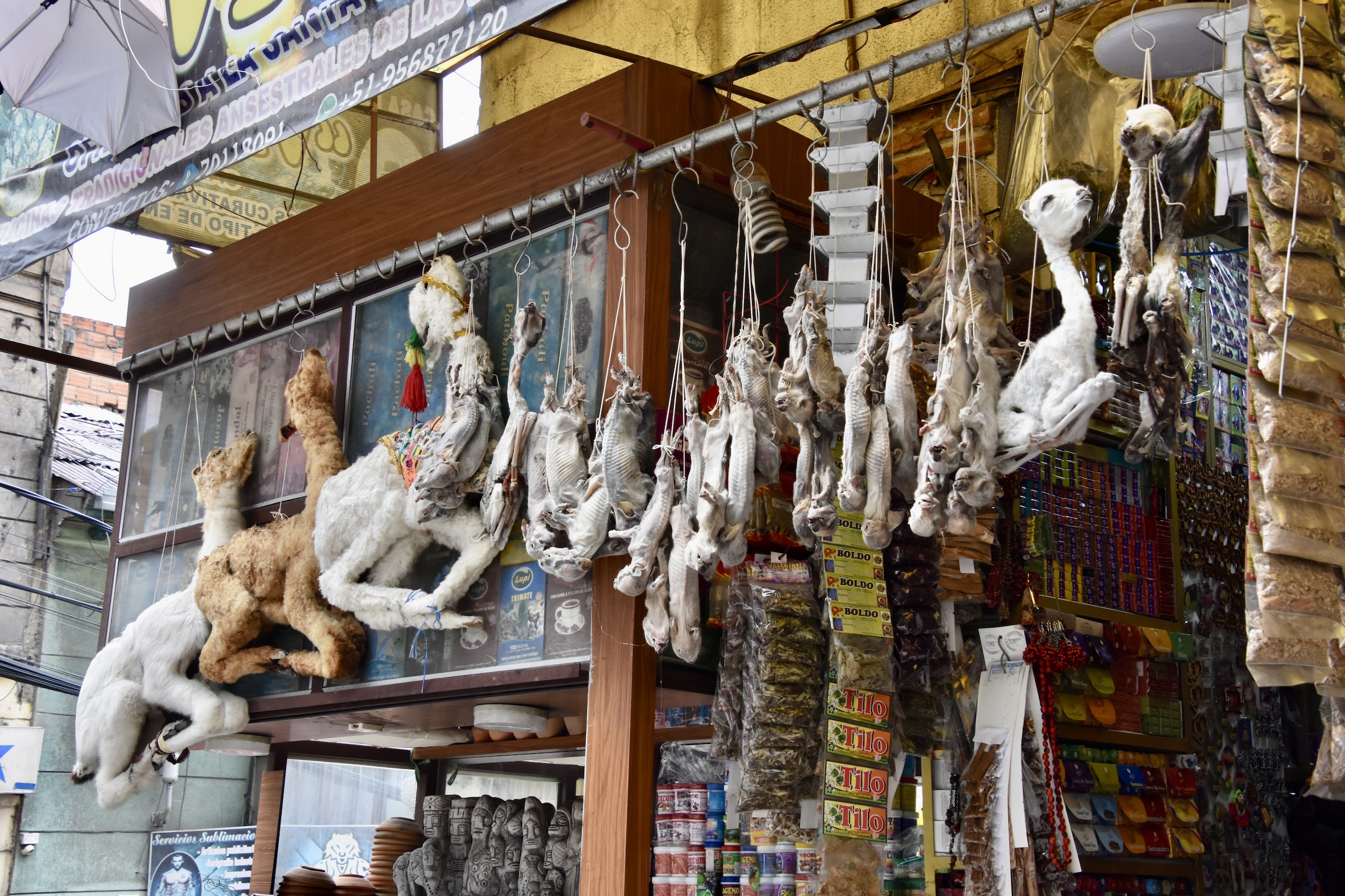
Our last stop in La Paz was at what is touted as one of the city’s most important tourist attractions, the infamous Witches’ Market where you can buy potions, spells and even curses. G took us into one shop which had llama fetuses and other ghoulish things hanging from the entrance.
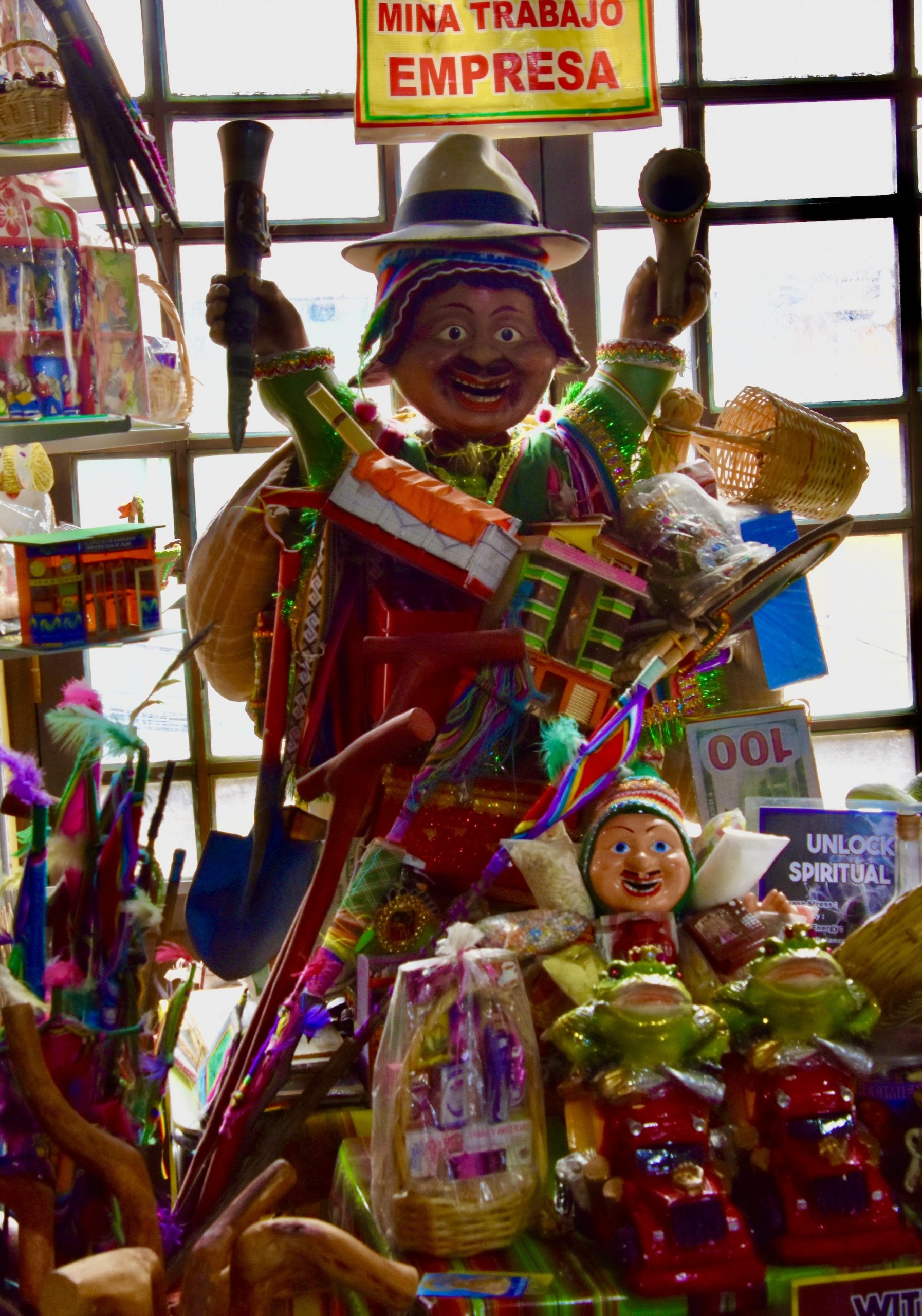
Inside there was a figure I’ve come to expect to see almost anywhere in Latin America, although he has different names and personalities from country to country, but all are syncretic figures that combine pre-Columbian deities with Christian elements. In Bolivia he is called Ekeko and is believed to have originated as far back as the Tiahuanaco culture. The bottom line is that you pay homage to Ekeko by giving him gifts and he’ll bring you good fortune. It’s that simple.
Mostly though I found the Witches’ Market to be a tourist trap with most items aimed at tourists and not at locals looking for genuine black arts objects. It was the only place in Bolivia where we actually saw a lot of other tourist groups. I couldn’t help but think of what they were missing out on – why weren’t they in Tiahuanaco, on the Isla del Sol or in Copacabana? It made me appreciate travelling with Adventures Abroad all the more. Yes, they had to include the Witches’ Market on the itinerary, but the Valle de la Luna, the gondola rides and the old city were far more interesting and these didn’t really seem to be on the other groups’ radar.
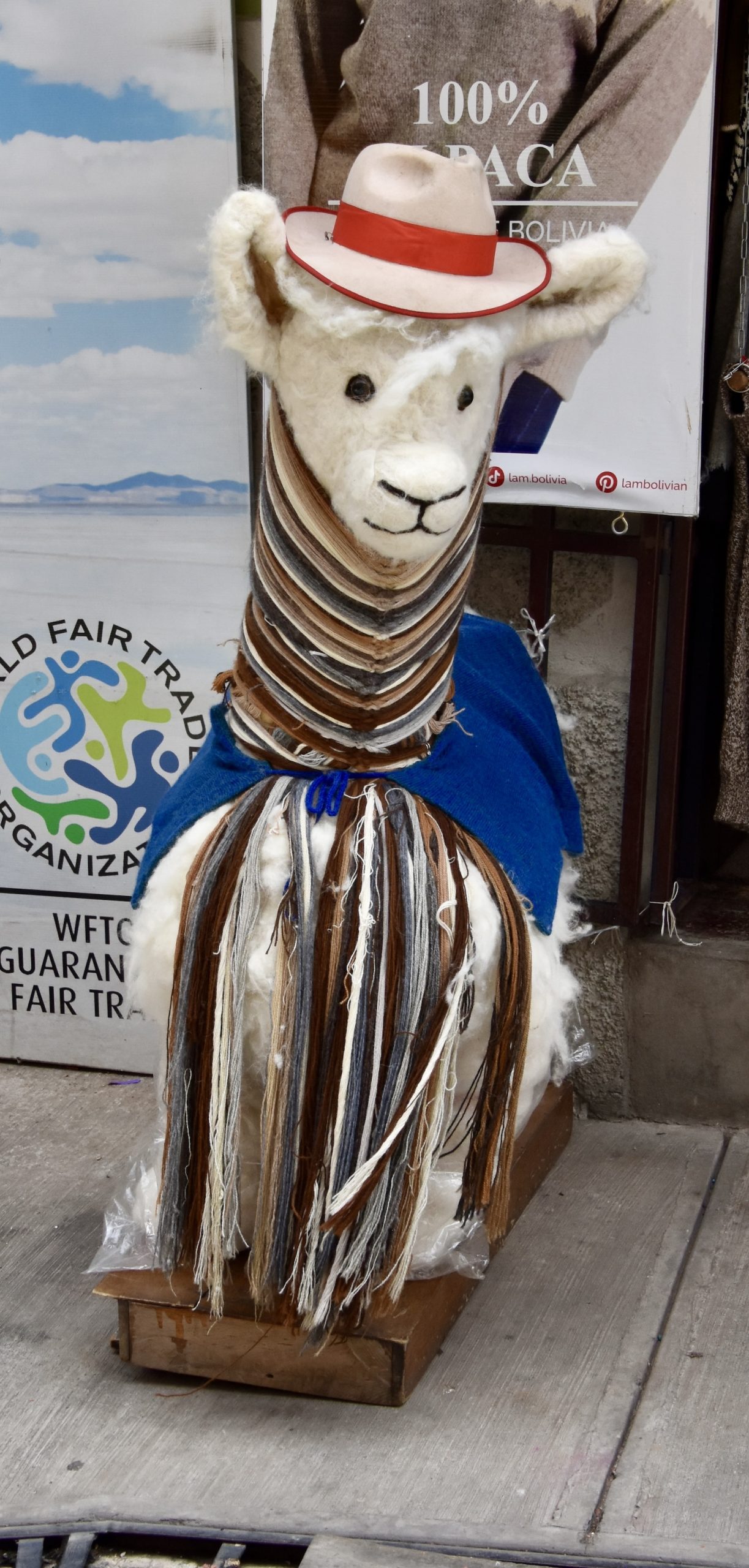
There were a ton of shops selling high end textiles and using things like this dressed up llama to draw you in, but I had already bought mine in Cusco so I gave it a pass.
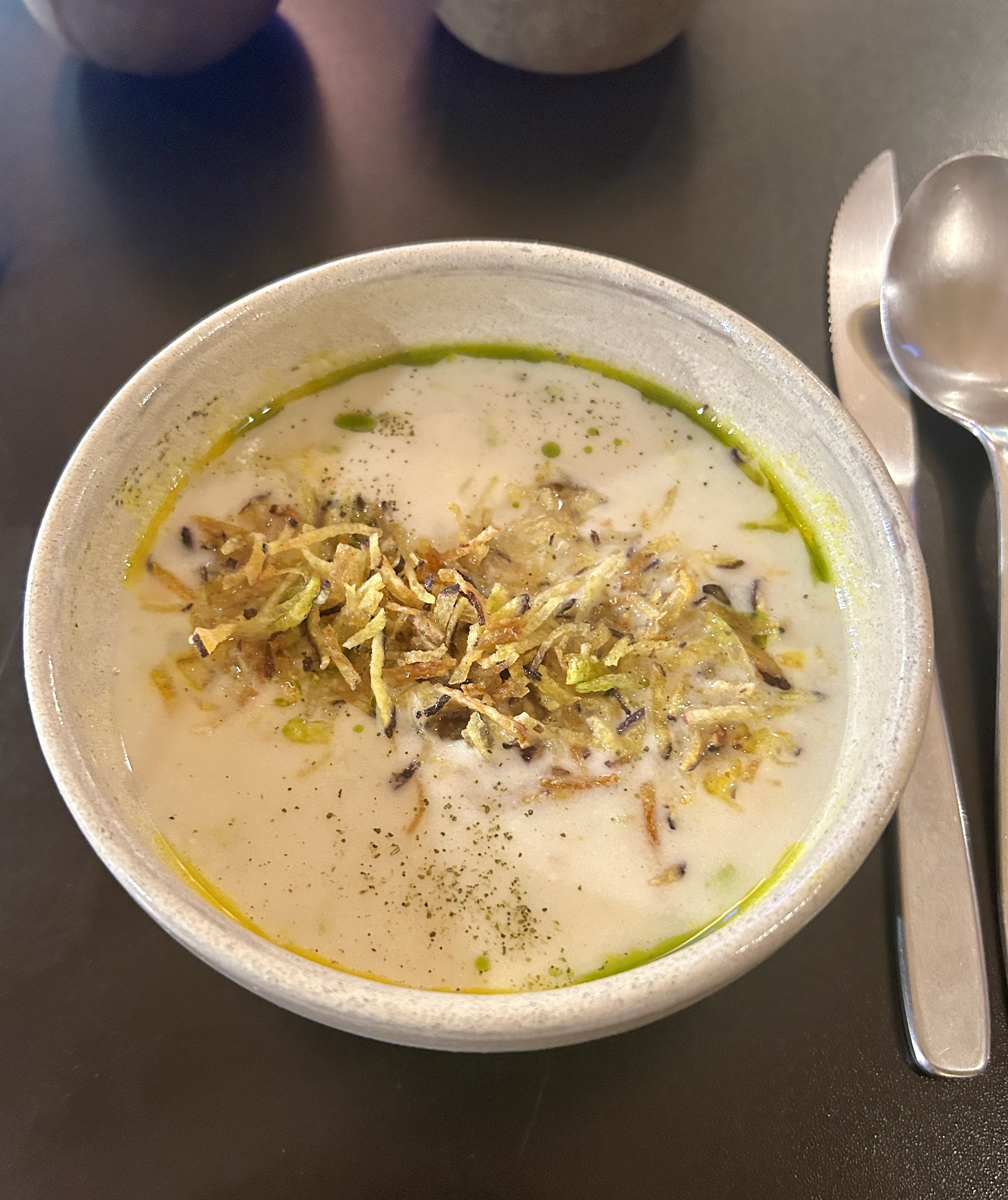
Our last supper on this great tour was at Manq’a a traditional Bolivian restaurant serving some things I had not tried yet and didn’t want to leave the country without sampling. Like this peanut soup which was really delicious.
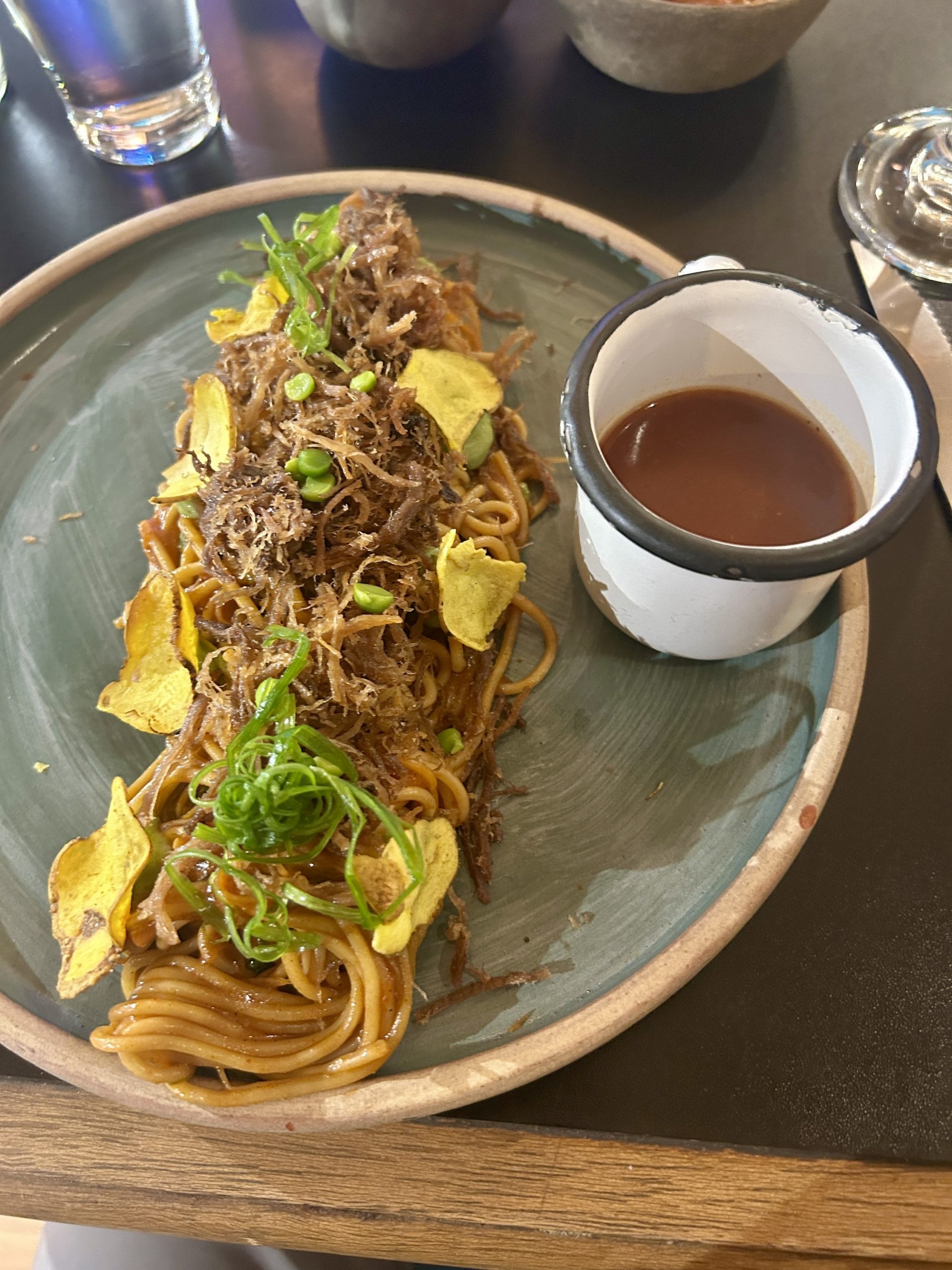
And Bolivian pasta which was unlike any pasta dish I’ve tried anywhere. This is not aji de fideos, the most famous Bolivian pasta dish, but a unique dish served only at this restaurant with a very intense umami flavour.
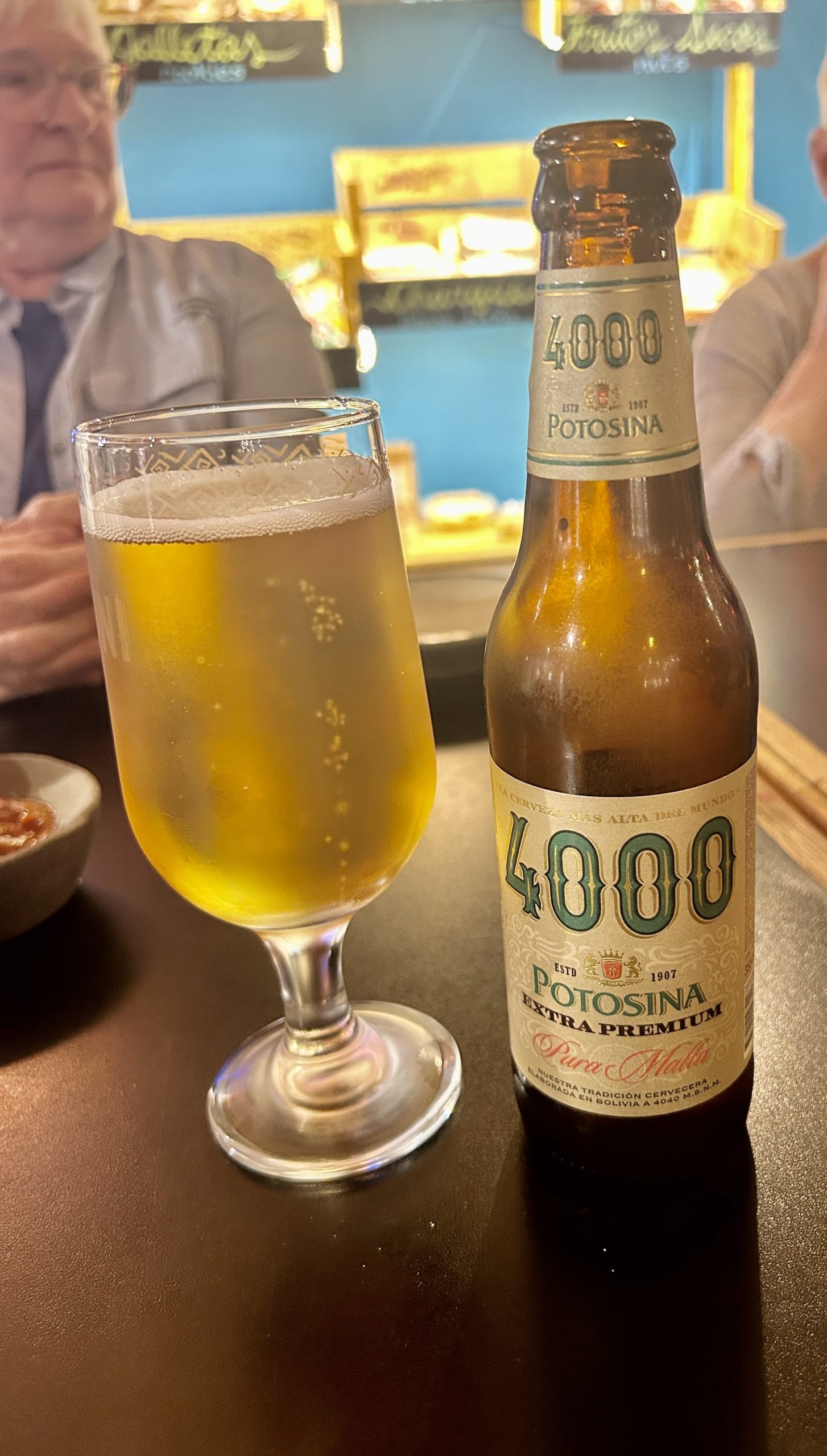
Usually you drink wine with pasta, but this particular one called for a very special beer – Potosina 4000 Extra Premium Lager. The 4000 stands for metres, the altitude at which this beer is brewed from pure malt and Andean spring water, the highest brewery on earth. Now that is something special.
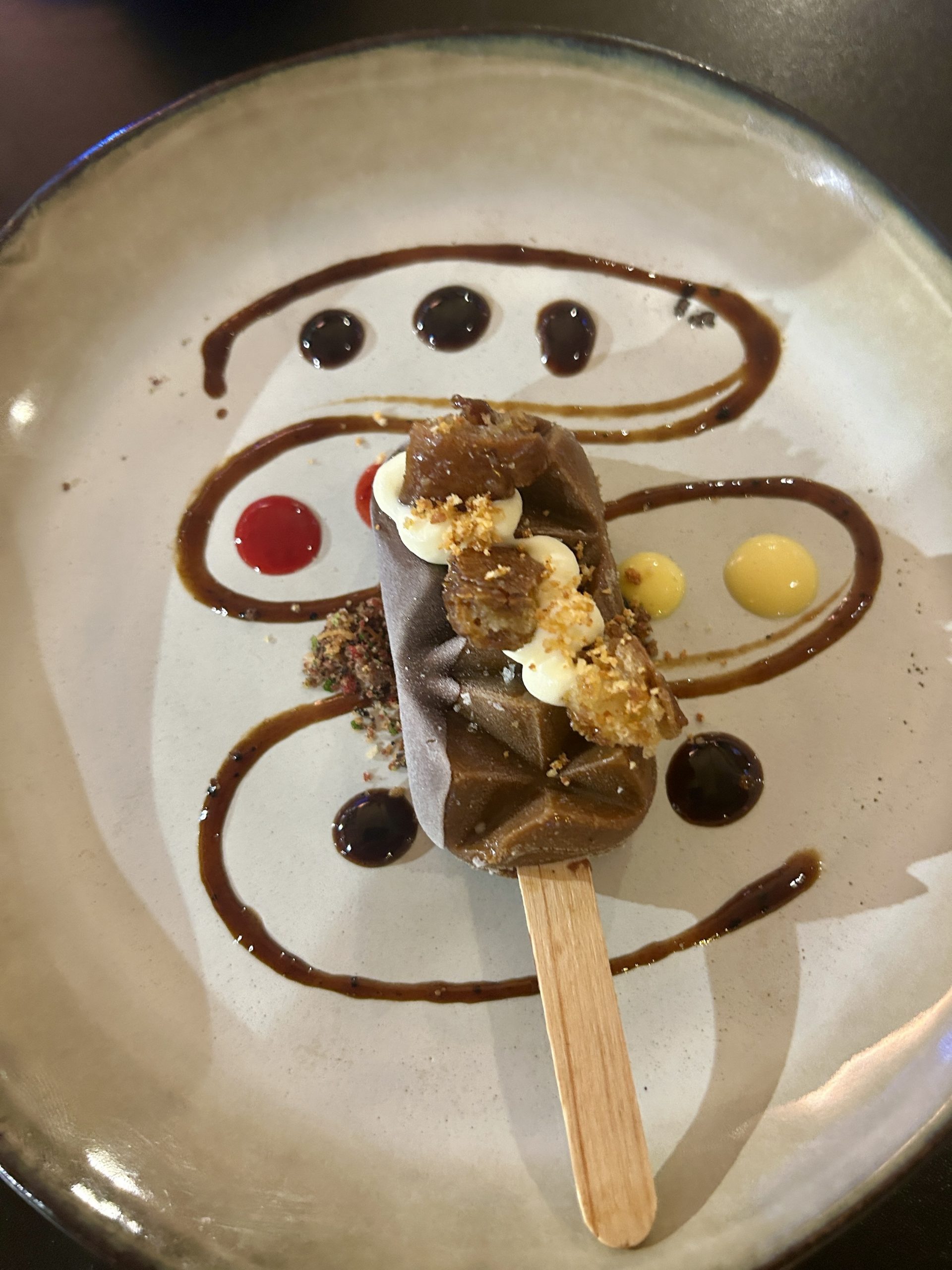
And for dessert, this beautiful serving of chocolate gelato. What a way to end a fabulous trip with great new found friends and a truly great tour leader in Diego Vidal. I sincerely hope to travel with you again my friend.
As I say goodbye to Bolivia and Peru there is much more on the horizon. From La Paz I am flying to Santiago via Lima and then the next day to Auckland, New Zealand where I’ll visit Hobbiton before joining Alison for a few more days on the North Island before we join another Adventures Abroad tour of Australia. So there are a lot more posts to come. Stay tuned.